
Thriving in Christ · 2026-06-12 · 14 min
Key moments - from our scoring
Substance score
22 / 100
Five dimensions, 20 points each
Dr. Ioana Popa examines how attention regulation - the executive function of directing focus - serves as the foundational lever for emotional regulation, resilience, leadership effectiveness, and spiritual growth in Christian women professionals. Drawing on neuroscience research showing that mindfulness strengthens executive functioning (inhibition, working memory, and cognitive flexibility), Popa argues that sustainable transformation requires training attention rather than accumulating more discipline, systems, or habits. She bridges modern neuroscience with Scripture (Romans 12:2 on renewing the mind, Philippians 4:8 on directing thoughts toward what is true and noble, and John 15:4-5 on abiding in Christ), demonstrating that Christian spiritual practice and neuroscience converge on a single principle: what we repeatedly attend to shapes our identity and flourishing. The episode targets Christian leaders feeling mentally scattered, emotionally reactive, and burned out despite knowing their values - offering concrete evidence that small daily contemplative practices (5 - 10 minutes) create measurable neuroplasticity gains through compound effect, without adding pressure to already full schedules.
Executive function - particularly attention regulation - drives emotional regulation and cognitive flexibility. Whatever repeatedly captures your attention influences your thoughts, emotions, habits, and identity. Strengthening attention regulation through practices like mindfulness has cascading effects on emotional control and decision quality.
A 2026 neuroscience review found that mindfulness strengthens executive functioning by improving attentional control systems (inhibition, working memory, and cognitive flexibility). Even 5 - 10 minutes of daily meditation and contemplation can improve productivity, emotional regulation, and leadership effectiveness over time, though results compound over weeks rather than days.
Romans 12:2 ('be transformed by the renewal of the mind'), Philippians 4:8 (directing thoughts to what is true, noble, and lovely), and John 15:4-5 ('abide in me') all emphasize that sustained spiritual transformation requires intentionally directing and returning attention to God repeatedly.
Cognitive flexibility - cultivated through curiosity and asking 'what else could be true?' - enables you to pause, consider multiple options, and expand your perspective rather than remain stuck in one narrative. This aligns with growth mindset and helps leaders adapt to change and unexpected challenges.
Through neuroplasticity, the brain's neural connections are shaped by repeated small actions. Small daily practices create compound interest effects similar to financial savings; a few minutes of consistent practice daily can produce significant changes over weeks and months without adding pressure to already full schedules.
Our reviewer’s read on each dimension, with quotes from the episode.
A handful of generic neuroscience claims about attention and executive function wrapped in extensive self-promotion and repetition; almost nothing a B2B operator would find novel or actionable.
current research is suggesting that as professionals and leaders, we might benefit much more by strengthening our attention regulation
Researchers increasingly identify three executive functions that drive performance
Recycles well-worn mindfulness/neuroplasticity and 'atomic habits'-style compound-interest metaphors merged with familiar scripture; no contrarian or first-principles thinking.
I love this Metaphor of a compound interest in finances
transformation begins where attention goes
Solo episode with no guest; host is a credentialed psychiatrist and coach but the content is thin and self-referential rather than demonstrating operator-level expertise at scale.
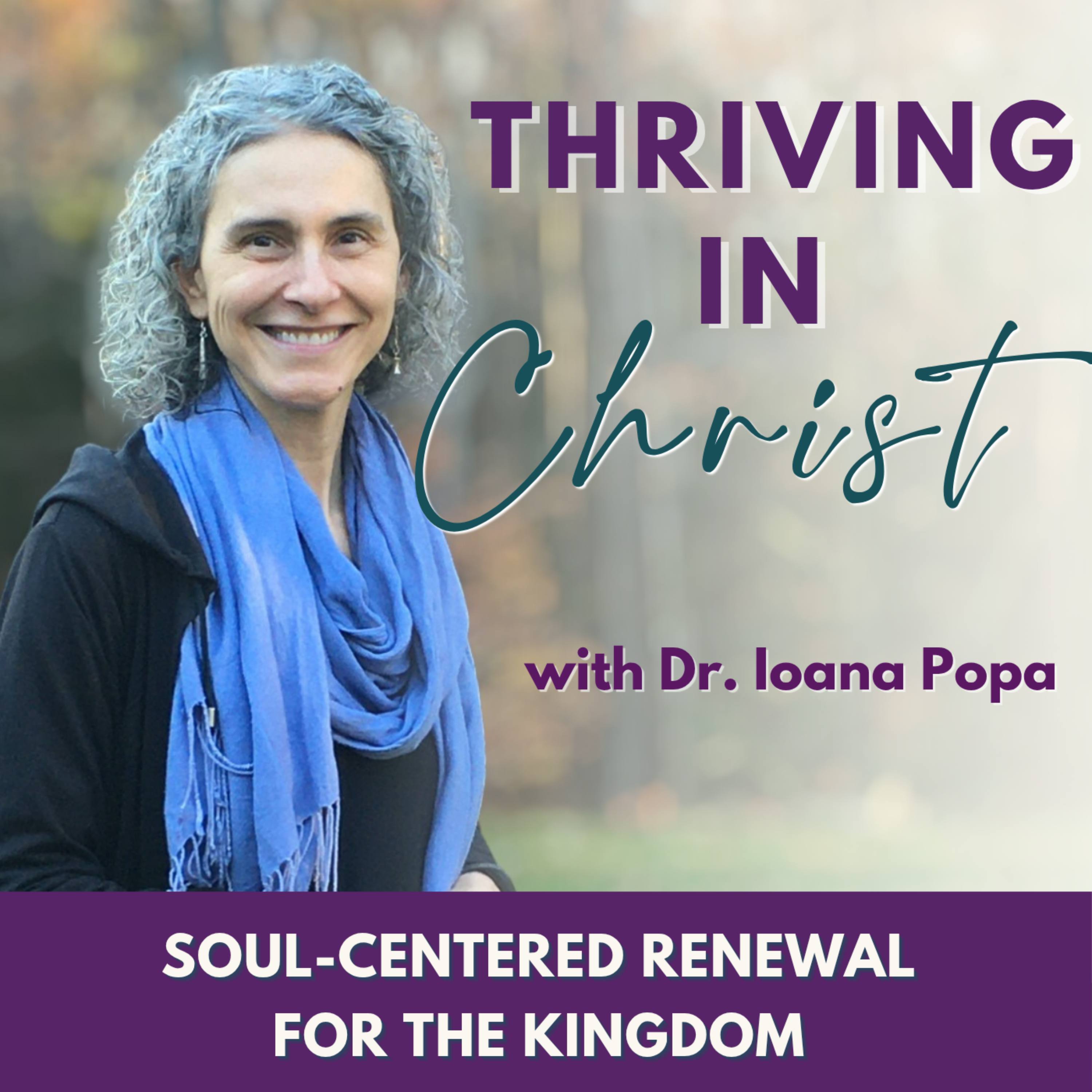
I'm Dr. Ioana Popa, co founder of Team for the Soul. I'm a physician, psychiatrist, educator, spiritual care and executive coach
Vague references to studies with almost no named institutions, figures, or verifiable data; the one cited 'review' is implausibly dated and unattributed.
A 2026 review found that mindfulness strengthen executive functioning
Another interested review on your imaging found that mindfulness is actually associated with structural brain changes
A one-way monologue with no interviewer, no questions, and no challenge; heavy promotional framing and a closing sales pitch.
when you're ready to learn how I can support you, specifically through one to one spiritual care
are you ready to grow towards your highest potential from a grounded renewed foundation
Computed from the transcript - who did the talking, and the words that came up most.
In today's busy culture it is common for most of us to get pulled in a hundred different directions - so no wonder that we can feel drained at the end of the day. And then somewhere between the endless demands of our lives and the desire to serve God well, it's easy to lose sight of what truly deserves our attention. We might not be able to change our external reality at all times, but is there a way to change our experience from inside-out? Interestingly, neuroscience and Scripture point to the same life-changing truth: what we consistently focus on shapes the person we're becoming. In this episode you learn: ️ How science is increasingly pointing to one foundational capacity that influences performance, emotional regulation, resilience, decision-making, relationships. ️ Simple shifts in one skill can make powerful changes in our mind and relationship with Christ. ️ How small daily practices can really create lasting transformation. Click PLAY to listen to this episode ▶️ __________________________ You carry so much for others - but who supports you? Join Wake Up To Your Soul (WTS) and begin each day with clarity, peace, and Spirit-led presence.
Transcribed and scored by The B2B Podcast Index.
Speaker A: Modern neuroscience is increasingly pointing to one foundational capacity that influences performance emotional regulation, resilience, decision making, process, relationships and even personal transformation, that of attention or focus. Researchers are finding that executive function, particularly attention regulation, has impact into the emotional regulation and cognitive flexibility and may be upstream drivers of human flourishing. While we repeatedly attend to shapes how we think and feel and act, and ultimately what we become. This resonates so deeply with our Christian faith. And Scripture has long emphasized the renewing of the mind, abiding in Christ and in the Eastern tradition, watchfulness and intentionally directing our attention toward whatever is true, noble and good. And in this episode we explore how executive function, mindfulness research, neuroscience and Christian spiritual discipline converge around a single and powerful idea, which what we repeatedly attend to shapes who we become. So imagine a Christian woman, professional and servant leader. She loves God, she leads a large team, cares deeply about her family, and genuinely wants to live a, uh, faithful life. Yet by the end of most days, she feels mentally scattered. Her attention is pulled in a hundred directions, emails, meetings, messages, responsibilities, worries and endless decisions. And she noticed herself becoming more reactive, less patient, less present with God. And she wonders why do I know what matters and struggle to live it from that place consistently? And if you resonate with this, listen many Christian women professional servant leaders do, including myself. And we'll um, unpack all this today. And if you're a regular, I want to welcome you back. And if you're new, I'm Dr. Ioana Popa from Team for the Soul and I want to welcome you into Thriving in Christ show for Christian Women Professionals and Servant Leaders. And this is for you. If you feel at times stressed, depleted on a busy treadmill with Sunday night blues, even though you love what you do, if you sense blocks in reaching your highest potential for the kingdom, in spite of already carrying significant responsibility and impact, if you wrestle to fully replenish yourself and access that PISA surpasses all understanding no matter how many programs you've done and worry that self care and deep renewal will add more to your long to do list. And if you wrestle to stay grounded, clear and expansive in your impact, especially in high stakes situations, if this is you, I want to welcome you. You are now lacking discipline. You're not lacking faith. More often, what's missing is sustainable and skillful renewal. See many of the solutions available today act like a band aid on top of our already burdened foundation that is shaped for us by chronic stress, past events, cultural misconceptions that do not take in consideration the needed alignment and wholeness that we need in order to have a sustainable life in Christ. See, I burn out twice not because of lack of knowledge as I'm in mental health field or for lack of faith. In this show we take a different approach through the integration of science, psychology, Christian faith and spiritual care. This show helps you to return to a place of inner renewal, accessing the living waters of Christ from within. Align your body, mind, heart and soul, reducing inner fragmentation and simplify your daily habits from inside out to build sustainable rhythm um that support your life and leadership without adding pressure in order for you to access clarity, peace, joy, grounded presence and purpose, especially in high stakes situations. This is not about doing more, it's about learning how to return skillfully again and again to God within where your strength is renewed like the egos and your inner life is restored and your leadership can flow from your soul. And as mentioned, I'm Dr. Ioana Popa, co founder of Team for the Soul. I'm a physician, psychiatrist, educator, spiritual care and executive coach, speaker and trainer and you can find us on the Web, teamforthesoul.com and on LinkedIn and make sure you sign up for Thriving in Christ Resources to get our updates right in your inbox. And if you love what we share, Please subscribe on YouTube and give us a five star review and share with other Christian women as we don't know who might need this. And when you're ready to learn how I can support you, specifically through one to one spiritual care, life coaching or executive coaching, you can set up a free consultation call and we'll put the link down in the show notes. All right, are you ready to grow towards your highest potential from a grounded renewed foundation with great Christ at the helm? Then let's dive in. All right, so let's imagine this Christian woman, professional and servant leader that is so in love with God and loves to lead and serve and work in her vocation at home, at church, in her neighborhood. And nonetheless, by the end of most days she feels mentally scattered. Her attention is pulled in so many directions and she noticed beginning to be more reactive, less patient, less present with God. And that makes her feel more and more displeased with herself. And guess what? Most of us will do in this situation will want to have more and more discipline. Oh, I might need to get a new planner or create another system or make another list. And yet a few weeks later we may find ourselves in the same place. And what's interesting that most neuroscience increasingly suggests that attention might be the most powerful force shaping our Human flourishing. Because whatever repeatedly captures our attention, it begins to influence our thoughts, our emotions, our habits, our relationships, and ultimately our identity in Christ. In other words, the battle is not really just about the behavior or even our thoughts and emotions. The problem which we can fix and train is actually a, uh, layer deeper. It's at the attention and focus level. And what neuroscience is showing more and more that executive function is the hidden engine of leadership. Researchers increasingly identify three executive functions that drive performance. One is the ability to inhibit other functions so we can stay focused. Number two, working memory, and number three, cognitive flexibility. And all these functions, they help us to focus better, regulate emotions, make wise decisions, adapt to change, follow through on our goals, and if you stop and think about it, many of our challenges throughout the day, it's actually an executive function challenge because if we have ability to control and self regulate our thoughts and our emotions, if we have the ability to hold in our memory an increased capacity, and if we have also cognitive flexibility, we are so much more grounded. So for example, for, uh, many professionals, when we're tired, the executive function is going to go downhill. So we're going to have problems. Difficulty concentrating with emotional reactivity, feeling overwhelmed, sense of impulsivity. At the end of the day, we might keep scrolling or using ice cream and chocol or food or substances to really downshift our nervous system, and we get into a space of decision fatigue. So rather than trying to improve dozens of habits simultaneously, current research is suggesting that as professionals and leaders, we might benefit much more by strengthening our attention regulation, which will impact our emotional regulation and cognitive flexibility. So those three things, attention regulation, emotional regulation, and cognitive flexibility. So here are some highlights from research. Number one, mindfulness improve executive function. A 2026 review found that mindfulness strengthen executive functioning by improving our attentional control system, which is involving inhibition in working memory and cognitive flexibility. So this actually explains why mindfulness, even just 5, 10 minutes of meditation and, uh, contemplation every day can improve our productivity, emotional regulation, leadership effectiveness, stress management. Now we're not going to get the results right away. It's not like I'm meditating for a day or two and all of a sudden I feel like, boom. I have so much more focus and productivity. It takes time, but a little bit every day. You'll be surprised after a month or two, we get to have that performance improved and a sense of groundedness because the common denominator is attention. That's why in the wake up to your soul program, I show up with daily contemplation And a Bible verse to help us stay grounded because I found that for myself is so helpful and I want all my clients and students to benefit from the same process. Another interested review on your imaging found that mindfulness is actually associated with structural brain changes because it enhances our self regulation, network and functional connectivity. All right, and one more research insight showing that cognitive flexibility can predict adaptability. In other words, when we get curious, when we get to think, what else could be true in this moment, when we pause and think of more options that in psychology is also known as growth mindset that helps us to shape and expand our cognitive flexibility and our ability to get unstuck whenever we feel stuck. An internal family system. This might be named as unblending from a part of us. How do we bridge it all together with our Christian faith? One of the most fascinating things is that Christian faith and our Christian predecessors and the scripture knew this all along. We hear in Romans 12:2, do not be conformed by this world, but be transformed by the renewal of the mind. So the renewal of the mind will require our attention, our focus, to be able to shift to something new and allow that transformation to happen. So that would bring cognitive flexibility. In Philippians 4. 8 we hear this. Whatever is true, whatever is noble, whatever is right, whatever is pure, whatever is lovely, whatever is admirable, if anything is excellent and praiseworthy, think of such things. St. Paul reminds us of the importance of focus. We want to really look into the fruits of our actions and our thoughts and our behaviors and dwell into them more and more. And this require daily practice of our focus. And here is one more Bible verse John 15:4 5 Abide in me, and I in you. He who abides in me and I bears much fruit. So the word abide means sustainability, means the fact that we're coming back and return to God over and over and over. And we can do that by training our focus. So as we wrap up, here are a few takeaways. Number one, attention is key and we can train it. And it doesn't require a lot of effort. Think five, ten minutes every day. And as you train your focus, your awareness to return over and over to God, it's going to shape and impact other psychological functions as well. Number two, takeaway executive function is trainable. We can not only train our attention, as mentioned before, but we can train our emotional regulation using coping strategies. And we can also train our cognitive flexibility through consistent practice, through consistently coming back to curiosity and our true self. Takeaway number three. Small daily practices matter. I love this Metaphor of a compound interest in finances. We know now that if we save and invest small amounts of money in time, In a year, 5, 10, 20, you can have a huge impact. It's the same in our brain. We are able to mold our connections between our neurons, our brain cells, through neuroplasticity. And a few minutes of practice every day can bring a lot, a lot change. So let's take some small steps every day, so small that you cannot fail. And to wrap up, I want us to stay with this message that transformation begins where attention goes. So the dominant message, both in neuroscience and also in our Christian faith, is remarkably similar. Train your focus and what we repeatedly attend to, it grows, it shapes who we become, it shapes our identity. So I will leave you with this question. Think about what are you paying attention through the day and through the week and see how you can pay attention more and more to whatever. It's really meaningful to you. And with that, I'm going to wrap up with a prayer. Dear God, thank you so much for everything that you bring into our life. For the listener especially, we lift her up. May you help her, train her, focus her attention to whatever is meaningful, to whatever is beautiful and full of wisdom and help her from inside out. Give her that light, that joy, that peace, that gratitude. So with you God, continue to co create and be your vessel to bring your light to others. In Jesus name, amen. And with that, thank you for all you do. May you be blessed. I hope you have a wonderful, wonderful day. Feel free to share the message to others. And if you want to sign up for a free consultation, remember to go to team for the soul.com and you can set up that session so so we can see if I can fully support support you in this season. And if you're interested in starting daily practices, we'll put the link in the show notes. You can sign up for Wake up to your soul, where you can connect every day with 10, 15 minutes of a daily practice of contemplation, a Bible verse. And with that, thank you for all you do. God bless you. And until next time, I say goodbye for now.
Other episodes covering the same guests and topics, from across The B2B Podcast Index.
 Liane Davey | The Real Reason Burnout Keeps Getting Worse Despite Everything Leaders Are DoingLeadership Biz Cafe with Tanveer Naseer · on Emotional regulation71 / 100
 EP # 3 Penn Lat: People-First Leadership Even in the Difficult MomentsLead Human · on Emotional regulation66 / 100
 You Were Not Born to Suffer: A New Way to HealMindful Management · on Mindfulness meditation65 / 100
 The Hidden Causes of Attention-Seeking BehaviourSchool Behaviour Secrets with Simon Currigan and Emma Shackleton · on Emotional regulation63 / 100
 Breaking the Leadership Identity Loop | Why High Performers Feel StuckLeadership From The Heart · on Emotional regulation59 / 100
 How to Deal With a Narcissist Without Losing Your Mind | The Ripple Effect PodcastThe Ripple Effect Podcast with Steve Harper · on Emotional regulation59 / 100
 310 | Feeling Successful But Empty? What God Says About the Work You Do, with Dr. Joy Dahl46 / 100302 | You Don't Have to Leave Your Job to Follow God's Calling, with Krystal Parker64 / 100293 | Centering Reset: Wisdom Is More Valuable Than Intelligence36 / 100292 | From Heartbreak to Hope: Healing Through Loss and God's Redemption with Felicia Brown44 / 100311 | Centering Reset: Stepping Into a New Season