
Thriving in Christ · 2026-06-26 · 34 min
Key moments - from our scoring
Substance score
24 / 100
Five dimensions, 20 points each
Felicia Brown, a licensed professional counselor and trauma-informed coach, shares her journey from classroom educator to mental health advocate, marked by two pivotal losses that tested her faith. After losing a foster son she'd raised for three years, she confronted the harmful platitudes churches often offer grieving members - experiences that drew her to therapy and deepened her spiritual understanding. Later, becoming an instant family during COVID with three Black children exposed her to racism within American Christianity, prompting extensive research into how the church has historically upheld rather than dismantled racial inequities. Brown discusses practical nervous system regulation techniques she uses with high-achieving women trapped in productivity-based self-worth: pre-defining success metrics before starting projects, body scans to reconnect with physical sensations, and 4-7-8 breathing (inhale 4 counts, hold 7, exhale 8) to signal safety to the nervous system. Her approach integrates faith, psychology, and somatic practices to help professionals move from burnout-driven achievement to sustainable impact without self-abandonment.
After three years of raising a boy from three days old with the intention of adopting him, the judge decided he should return to his biological mother, resulting in devastating loss that deeply challenged her faith and drew her to seek therapy for anger with God.
During COVID, she witnessed a mental health crisis in schools, particularly in her rural area where counseling wait times stretched 6-9 months, and simultaneously saw how specialized trauma treatment made a dramatic difference for her own adopted children, motivating her to pursue a master's degree in counseling.
Breathe in for 4 counts, hold for 7, and exhale for 8; repeating this at least four times signals to your nervous system that you're taking in less oxygen, which indicates safety and counteracts the fight-or-flight response of rapid, heavy breathing.
Before starting any project or activity, decide ahead of time what success looks like for that specific task - for example, 'today will be successful if I complete X' - to prevent the endless pushing for more that characterizes perfectionist thinking.
Experiencing racism and microaggressions while raising her Black children led her to research how American Christianity has historically upheld racism and remains segregated, fundamentally reshaping her understanding of what the kingdom of God should represent.
Our reviewer’s read on each dimension, with quotes from the episode.
Nearly all content is personal testimony and generic wellness tips (body scan, 4-7-8 breathing, defining success ahead of time) that a B2B operator would find obvious or irrelevant to actual business decisions. Very little non-obvious insight per minute.
another thing that I like to teach, and this might be something your listeners have heard before, but is 4, 7, 8 breathing
before starting any project or any activity, decide ahead of time, what does it look like for this to be successful
The frameworks offered (body scans, breathwork, parasympathetic nervous system, 'never enough' perfectionism) are standard, widely circulated wellness content with no fresh or contrarian angle for operators.
I call it a body scan. And I ask people to sit with themselves
it signals to our nervous system that we are taking in less oxygen. So we are in a safe state
Guest is a licensed counselor and former teacher with real credentials in therapy, but she is a solo coach/therapist, not an operator who has run anything at scale relevant to B2B founders, sales, or ops.
I currently have two master's degrees, uh, one in education and one in counseling
I am a licensed professional counselor as well as then, yes, I am a coach for women
There are concrete personal details (University of Chicago trauma clinic, 30-minute drives, ages of children) but essentially no business data, named companies, metrics, or dollar figures relevant to operators; evidence is anecdotal and personal.
the closest counseling agencies were at least a 30 minute drive away
we actually drove to Chicago for that, so two and a half hours
The host is warm and reflective but asks only gentle, affirming prompts with no probing follow-ups or challenge; the conversation is a supportive faith chat that ends in prayer rather than any productive pushback.
Well, thank you so much for sharing. So beautiful and just so moved by your experience
how about if we pray? Um, I would love if you wouldn't mind starting
Computed from the transcript - who did the talking, and the words that came up most.
Some of life's deepest wounds might come from what happened to us; and overcoming our past, reshaping our present, and recreating hopes for our future is all a part of healing. In this inspiring Renewal Conversation, therapist and emotional regulation coach, Felicia Brown, shares her personal journey through loss, adoption, faith, and healing. Her story is a reminder that adversity doesn't have the final word - and that hope, restoration, and purpose can emerge from even the most painful chapters. As a therapist and coach, Felicia also discusses why so many high-achieving women unknowingly tie their worth to productivity. She also shares practical tools to help calm the nervous system, break free from the "never enough" cycle, and experience the kind of sustainable success that doesn't come at the cost of your well-being. In this conversation, we discuss: ️ How defining success ahead of time is a crucial step. ️ The impact of trauma on not only our present life, but possibly on our faith too. ️ Really easy to implement techniques to reset your nervous system.
Transcribed and scored by The B2B Podcast Index.
Speaker A: A warm welcome to Thriving in christ show on YouTube and podcast. I have the honor today to interview Felicia Brown who is a therapist and also a trauma informed speaker, emotional regulation coach and self trust expert who helps high achieving women break free from burnout, overthinking and productivity based self worth. Through her work, Felicia teaches women how to move from survivor driven success to selfless success by healing the nervous system patterns behind overachievement, people pleasing perfectionism and chronic emotional exhaustion. She was before an educator in middle school and high school and transitioned to being a therapist and a coach. And you're going to love her witnessing in Christ and her life. She shares two important pivots in her life that had to do with her and her husband longing to have kids and you learn how she pivoted and you'll find a lot of inspiration from her journey. And Felicia's mission is helping women create sustainable success without self abandonment. They can feel calm, confident, emotionally safe and deeply worthy without having to earn it through burnout. And if you're a regular, I want to welcome you back. And if you're new, welcome to Thriving in Christ show for Christian women professionals and servant leaders. And this is for you. If you feel at times stressed, depleted, on a busy treadmill with Sunday night blues even though you love what you do, if you sense blocks in reaching your highest potential for the kingdom despite already carrying significant responsibility, success and impact. If you wrestle to fully replenish yourself and access that peace that surpasses all understanding no matter how many programs you tried and are worried that your self care and deep renewal uh will only add to your long to do list and might wrestle to stay grounded and expansive in your impact, especially in high stakes situations. If this is you, welcome. You're not lacking discipline, you're not lacking faith. More often what's missing is sustainable and skillful renewal. So many of the solutions available today are like band aids placed on top of our ready border foundation for us as Christian women with foundation that is shaped by chronic stress, past events, cultural conditionings and misconceptions without taking in consideration the needed alignment and wholeness that is crucial to have a sustainable life in Christ. See I burn out twice and this is not because of lack of knowledge as I mean mental health field or lack of faith. In this show we take a different approach through the integration of science, psychology, Christian faith and spiritual care. This show helps you to return to a place of inner renewal, accessing the living waters of Christ from within, aligning body, mind, heart and soul, simplifying your Daily habits from inside out to build sustainable rhythms to support you, to stay grounded in order to access clarity, peace, joy and purpose so you can expand your capacity and serve and lead in Christ. This is not about doing more. It is about learning how to return skillfully again and again to God within, where your strength is renewed like the eagles and your inner life is restored and your leadership flows from your Soul. Hi, I'm Dr. Ioana Popa, co founder for Team for the Soul Institute. I'm a physician, psychiatrist, educator, spiritual care executive coach, speaker and trainer. And you can find us on the web team for the soul.com and on LinkedIn. And make sure you sign up for Thriving in Christ resources to get our, uh, updates right in your inbox and very soon to have access to free resources on the app. And if you love what I bring in this episode, make sure you share and subscribe on YouTube and leave us a five star review on podcasts so this inspiration and hope can be brought to other Christian women just like us. And when you're ready to learn how I can support you, specifically through one to one spiritual care, life and leadership coaching, or executive coaching, you can set up a free consultation call and the links are in the show notes. All right. Are you ready to grow towards your highest potential in Christ? Then let's dive in. A, uh, warm welcome, Felicia, to Thriving in christ show on YouTube and podcast. I'm so delighted that you're here. Welcome.
Speaker B: Thank you for having me. I'm excited to have this conversation.
Speaker A: Yes, me too. And especially knowing a bit about your vocation and profession, what you do. So I cannot wait for you to share more about what you do and also extract the nuggets. This is a show for Christian professionals and servant leaders. And so we'll start maybe with your journey in Christ. I would love to hear what was your journey to come to be here where you are right now.
Speaker B: Yeah. So I feel like my story is not really necessarily unique, but I was raised in the church, like, you know, born in church the next Sunday. That's kind of how it's always been. My parents are very involved in their churches. They. My mom actually is currently serving as our children's ministry director. And we've just always gone to church. We've always had that relationship. It was always part of our home. And I, at this point as an adult and I have a younger brother and he's actually a family minister. So he oversees kids, youth and young adults. Um, and then the families. And so we will often tease our parents about Things from when we were growing up. And so just to give you an example, you know, if we were doing chores or something and we were grumpy or whining, my mom would always quote the verse, do everything without complaining and arguing. You know, just different things like that. And so we kind of tease her about that. But I remember growing up, we had the books of the Bible on our kitchen walls, and we would practice those as we. As my mom was making dinner or different things like that. And as we got a little bit older, as most kids do, there's some grumbling and complaining. I don't want to go to church. I don't want to get up early. Right. It was never an option. Like, this is what we do as a family. This is. These are our values. These are the things that we hold to be important, and that's how we're raising you. And so when I actually accepted Christ as my savior personally, I was at church camp, and I was 7 years old at church camp. And that was really when it was kind of became, I guess, more real to me. And so, uh, I was baptized in my home church when I got back home, and from there was very involved in m. Children's ministry, youth group, etc. And for college, I actually went to a Christian university. So I'm a graduate of, um, Olivet Nazarene University in Bourbon, A, Illinois. And my, uh, brother also went there. And so as kind of an adult, I would say there was definitely a switch, particularly around, I would say maybe two major shifts. One in my mid 20s and then one in my early 30s. Really had to do with life circumstances at that point. So not to go into too much, but, um, my husband and I experienced ongoing infertility that led us to doing adoption, and, well, first led us to doing foster care and adoption from foster care. And so we actually brought a little boy home from the hospital at, uh, three days old, and we raised him until he was three with the intention of adopting him. And essentially what happened was the judge decided that he deserved to go back to his biological mom. And so after three years being on this path, we lost our son. And so when something like that happens, it really rocks your world and your belief. M. Because I remember saying to my husband and my best friends, like, we are doing all of the things that we are supposed to be doing. We are literally living out the verse in James of, uh, caring for orphans and widows in their distress. Like, we are doing all of the things that we biblically should be doing. And now we're experiencing grief and hurt like we have never experienced before. And then to make matters worse, a lot of really well meaning Christians caused a lot of harm. Things like, well, it's God's will that you're going through this.
Speaker A: Oh my goodness, yeah, um, or, well,
Speaker B: God's not going to give you more than you can handle. God has better things coming for you. Right? Best of intentions, lots of harm. And so that was also a point where I was just kind of done, to be quite honest with you, I, I, uh, was just like, you know what? These people don't know what they're talking about. They have no idea the harm. Don't tell me that a God who is loving is wanting me to go through this intense grief and pain and that that's, you know, what I need to do for X, Y and Z. And so it was actually through the help of a, uh, professional counselor who. And I, I sought her out because in her kind of like description in her bio, she was an expert in dealing, in helping people dealing with their anger with God, like, I need that. And after I started meeting with her, I actually realized she did her undergrad at the same university I did. And so that very much felt like divine intervention. And her name is Mary, and I forever will say she was someone that truly saved my life and my faith. Because of how she interacted with me, I no longer see her. She actually moved away to be closer to her family. But she was wonderful and I worked with her for probably four years and, um, really moving from this place of not being able to function to getting to a point not that I was okay with what happened, but that I was able to move from being paralyzed because of that to being able to start to at least consider that there might be more for me in the future, that this wasn't the end of my story right now, through all of this, I will tell you. We stayed in the church and we would go on Sundays and sometimes things would be said and, well, I guess I'm staying for the music today. And then I'm leaving because that's all I can handle, right? And we stayed connected with people that were in the church and could support us and speak life to us. And then I would say the next big shift happened during COVID when my husband and I, so it had just been the two of us for quite a few years, went from being just the two of us to an instant family with three kiddos, overnight during lockdown, and the five of us were quarantined together and locked down together for the next, oh, five, six months. And this situation was different. These kiddos, we, um, knew when they moved into our house that it they something called legally free for adoption. And we knew we would be adopting them. And that was all said and done. We literally just had to wait for the courts to open so that we could be seen in court, because during COVID all of that was shut down if it was not a, an emergency case. So those kiddos, um, I have twins, a, uh, boy and a girl. They were, uh, four when they moved in and then their older sister was seven. And now those babies are 11, 11 and 13.
Speaker A: Oh my goodness.
Speaker B: And also kind of the shift with that too is my children are not white, My children are black. And so that was something that I thought I understood. But until we started walking through it and living through it and experiencing some of these microaggressions or just straight up racist behavior from others, I didn't fully understand it. And so that really led me into a lot of research and knowledge in kind of how American Christianity in a lot of ways has upheld racism versus tear it down. How American Christianity has kind of shifted in the last decade as far as the stance on race and what that looks like and really the segregation within the church today. And ah, that was a lot of reading, a lot of research, a lot of finding experts in this field that kind of again, made me not question my faith per se, but made me rethink the way that I had been, I guess, conceptualizing a lot of different issues that people face. And I say it's an ongoing journey. And it is one of those things that I think truly has deepened my understanding of the kingdom and what heaven will look like and, and why diversity is so important and how every single person is, is an image bearer of God. And if we know that every person bears God's image, then every person needs to be treated with dignity, love and respect. And so that's kind of my journey, where I'm at now. And I don't think the journey's over by far. I think it's something that continues your whole life or should continue your whole life. And I'm excited to see kind of what's coming next for us.
Speaker A: Well, thank you so much for sharing. So beautiful and just so moved by your experience. Absolutely. I cannot even begin to imagine what have happened. Right. With a, um, first adopted child. And I want to say I'm trained. I don't know if you're familiar with grief recovery method. And they bring up exactly these Myths is that this is exactly what people are saying and it's so hurtful. So my heart goes out to you that you've got all these comments and coming, especially from the church, from your place, that you're so connected. It's, it's not easy. So thank you so much for sharing and for your vulnerability and talking about these things. And I'm also touched by your, your love for the, uh, image bearer. I think that is so true. My experience has been when I was doing my psychiatry residency and we had a rotation in prison, see hardcore criminals and to hear those stories because we were there to support them and to see how their life started as children. And you could see that light and how it got squished in so many ways and it's just so moving. And I saw the light. All of a sudden it just dawned on me and it was just what uh, you said about the diversity and just how do we bring that dignity and respect to everyone. So thank you for that. And yes, it is an ongoing journey.
Speaker B: Yeah, for sure.
Speaker A: What brought you to. I know you're doing counseling now, right?
Speaker B: Yeah.
Speaker A: So you were in education before. So what was that journey like?
Speaker B: Um, I blame it all on my children lovingly. So yeah, I was a classroom teacher for 15 years. Oh, nice. During COVID and I taught middle school and high school. That's my favorite. The big kids are my jam. So during COVID and teaching remotely and, and just all of the things that were happening in schools, I saw firsthand the intense mental health truly like its own type of pandemic. Because so many kids were struggling, nobody knew what to do. The world was on fire, everything was unstable and we didn't have resources for them. Particularly where I live in a very rural area at that time, the closest counseling agencies were at least a 30 minute drive away in either direction and often had months long waiting lists. And so if you, you know, called and said, well, my kid's dealing with anxiety, okay, we'll put you on our list. See you in six to nine months. And it was heartbreaking. And then simultaneously while that was happening, my kiddos had, uh, experienced tons of trauma before they came to us. And we knew that they needed support and health. And so we really sought out people that were trained and well versed in trauma and trauma treatment, particularly with children. And we actually drove to Chicago for that, so two and a half hours that we would drive. And we, um, found through the University of Chicago, they had a research based trauma clinic and we were able to get our kiddos in with that. And I just saw the difference that quality care made for my kids and our family as a whole. And I was getting really to this point that I was just no longer happy in the classroom and it was never the children I loved. And I, and I would say to people, if I could just go in and teach the kids, it would be great.
Speaker A: Yes.
Speaker B: But in education today, and if you're somebody that is in education, you know, it's no longer that simple. And we are asked to do so much more every year with less. And truly during COVID the idea was you work and sacrifice and do whatever you can to try and make life as good or as normal for these children. Even when we ourselves were struggling, exhausted, burned out, and uh, I just was kind of disillusioned with this idea of education and especially once I understood a lot more about how behavior impacts learning and how mental health impacts behavior and then realizing like, we're addressing this completely.
Speaker A: Mhm. Wrong. So did you go and do, uh, training to become a counselor and you're a coach as well?
Speaker B: Yeah, I did a whole second master's degree. So I currently have two master's degrees, uh, one in education and one in counseling. And so I did a whole master's degree, I did my internship and took the test for Illinois. And so I'm a licensed professional counselor as well as then, yes, I am a coach for women particularly, who are burned out and overwhelmed and feel like no matter what they do, they don't feel content or it's not enough. And so very kind of similar to the experiences that I had in my transition from education to now, uh, my counseling career.
Speaker A: M beautiful. And from that, do you have any nuggets to share in terms of regeneration and preventing burnout? Uh, because this is so important, I'm in the same space in terms of the coaching and I think it's so important to hear different tips. But what I want to invite you to do is to pick something that you've also applied to yourself and you know it's working for you. So do you have a couple, two or three that help you regenerate throughout your day and stay grounded?
Speaker B: So one of the things that I think has helped a lot, especially when we're kind of talking about women who really crave success, is before starting any project or any activity, decide ahead of time, what does it look like for this to be successful. So what does it look like in my day for me to be content with what I've achieved and the reason I do this Is because it is so easy for us to achieve plenty of things and then tell ourselves, well, I can do more, right? I could have a little bit more.
Speaker A: And it's never enough, right?
Speaker B: Never enough. So if ahead of time, before we start anything, we kind of design our metrics for success. Today will be a success if. Or this project will be a success if. Because what happens is oftentimes we get to that point and we're like, oh, today was successful. And that feels weird for us, especially high achieving women, because we want to keep pushing and keep pushing and keep pushing. So that's one of the things I like to do and I like to kind of use that strategy. Another thing as far as like in the moment regeneration kind of connecting with ourselves is I call it a body scan. And I ask people to sit with themselves. And sometimes this is really hard, but can you just scan over your body? Can you start with your head all the way down to your toes? Notice what you're feeling. When was the last time you took a deep breath? When was the last time you moved your shoulders down? Is there anything weird that maybe you need to stretch or you need to move or you need to kind of just get in tune with that?
Speaker A: Mhm.
Speaker B: When was the last time you noticed it? And then another thing that I like to teach, and this might be something your listeners have heard before, but is 4, 7, 8 breathing. That's where you breathe in for 4, hold your breath for 7 and breathe out for 8. And then I ask people to do that at least four times. Because what that does is it signals to our nervous system that we are taking in less oxygen. So we are in a safe state. Because when you get really stressed unknowingly, your body is bringing in more oxygen because it wants to make sure that everything has enough oxygen so that it can fight or flight. And by slowing that down and being really cognizant of our breathing, it can signal to us on that deepest level we are okay, we are safe and it's okay to slow down and not run at a mile a minute.
Speaker A: I m love that. So if you're listening and multitasking, this is a time to come back. I think this is so important to circumvent our perfectionistic tendencies or inner doubt or by setting from the beginning. I love what you said. The matrix for success. Right before you start what success look like because it's so true. Then we reach like no, no, no. I needed to do more and more and more and more. And I think deciding that for the Day I would imagine deciding that for every project right ahead of time. And I love the second piece, the body scan. I think what you're saying, you're, you're doing the body scan, it helps us. We live so much in our mind. Right. It signals our body. But also I heard you say about emotions, I so appreciate that because as a therapist, I think we can see a lot the importance of the emotions. What, uh, I'm sensing in many Christian circles they talk about body, mind and spirit or soul. And I'm like, yes, but emotions, that's a total different land. We've got to address that. So I love also the regeneration. Body, mind, heart and soul. So the body scan is so simple. Right. We could do it. Do you want to when you lead it or you do it? How do you do the body scan?
Speaker B: So I will just say to people, first, just take a few deep breaths and just notice whatever you're thinking, whatever you're feeling right now. And now I want you to draw your attention to your head. Do you have a headache? Are your eyes tired? Is the tongue on the roof of the mouth or is it lower? What are you noticing about your head? How does it feel? And then move to the neck. Is it tight? Do you need to move around some? Do you have tension there? What about your shoulders? Can you roll those out? Takes deep breaths while you do that.
Speaker A: So we're moving into the nervous system, into the calming nervous system. The smart Vegas now.
Speaker B: Yeah, yeah. And I do that all the way down until. Can you feel your, your toes in your shoes?
Speaker A: Yeah.
Speaker B: You really feel that sensation? What do your socks feel like? You know, things like that, that make it very tangible.
Speaker A: Mhm.
Speaker B: But allow us to really focus on the here and the now M instead of all of the spiraling thoughts that we so often deal with.
Speaker A: Yeah. And what I love about the way you do the body scan, it checks with the emotions and the body and moving moves into that relaxing nervous system. But also we're unhook it from the mind. Right. Because we live in our mind all the time. So just by shifting our focus into our body, it's already unhooking from stories and images and unnecessary worries and whatnot. So I think that's very powerful. If you're listening to this, you may want to rewind and listen again to this body scan. And I love the third piece that about the breath calming the nervous system through the breath. I think that is so true. When I used to work in an emergency room, that's what we used to do when people come with panic attacks, they will have. We're not do the 4, 7, 8. I love the rhythm and I would love to hear more about how you came up with that. But, um, they were just breathing in the bag just because that carbon dioxide. A paper bag, you know what I mean? Like just for a few minutes safely, obviously, but just enough to bring the oxygen level to more. The more the carbon dioxide will signal, oh, we're good. We're safe to calm down. So could you say more about the 4, 7, 8?
Speaker B: So I can heard of that for that. Um, I did not come up with it. Actually. The therapist that I am currently working with, Dr. Michelle Rich, is the one that told me about that. And it's really grounded in a lot of science about how when we're in fight or flight, we want to take in and we naturally are breathing faster and heavier and all of that. And so by forcing yourself to take in less oxygen, forcing yourself to hold. Right. Breathe out longer.
Speaker A: Right.
Speaker B: It's really working on that parasympathetic nervous system, um, to kind of force you one to slow down. Because if you're really panicking and you have to hold your breath for seven seconds and then breathe out for eight, it feels. Feels really uncomfortable at first.
Speaker A: Yes.
Speaker B: Often feel like, I don't have enough air.
Speaker A: M do.
Speaker B: And so it's really forcing you to be in tune with your breath and it's forcing you to slow everything down. And also because you're focusing so much on kind of the. The counting the four, the seven and the eight, it's enough stimulation for your brain to have to focus on that. That it also helps kind of remove you from those spiraling thoughts.
Speaker A: Right, exactly. Which is key. Right. Once the mind can disconnect from emotions, emotions just go. It's just the constant stories that are making the emotion worse and are bringing all that. So it's a really quick way. If you're. If you're listening to this through your breath, slow down. See what works for you. If you're driving, I do not recommend you do that right now, please. Did try that afterwards. But just even taking a bit gentler breath and just exhaling longer, I found that practice so powerfully as well. Do, uh, you do that with yourself? Do you help yourself?
Speaker B: Yes, yes. Yeah. I will often try and remind myself even to do that, like between client sessions. Because it's something simple like as I'm walking somebody out or walking to get someone to bring them to my office. I can do several rounds of that and Just really center myself because in, as you know, in this work, it can be really heavy. We have the honor of being able to walk with people through some of the darkest, scariest times in their life. And I truly feel like that's an honor, but it's also heavy. And so how do we as uh, counselors, you know, take care of ourselves? And part of that is really being in tune and signaling to our own nervous system. Yeah, that was a really heavy session. But that's not mine to hold on to forever.
Speaker A: Right, right. And we can even imagine as we exhale, giving it to God, putting a feet of Christ and exhaling. Absolutely. Because we're not. Absolutely. I. The image that I have is that of a conduit, of a vessel. That is really not my work. So it just kind of constantly flows out and doing that with the breath is so good. So good. Well, thank you for sharing all this. Was there anything else, any other tip you wanted to share before? Before I have a. I want to ask you about the Bible verse.
Speaker B: I'm happy to move into that.
Speaker A: Very good. And is your, uh, before we do that, was there anything else? How can someone find you?
Speaker B: Yes, I know.
Speaker A: We'll have the links put in the
Speaker B: uh, show you're on Instagram, Facebook, TikTok, it's all the same. It's Felicia Brown, LPC. And that's my handle on all of the different social, uh, medias. I give tips, strategies, education about the nervous system, high achieving women, feeling burned out, et cetera. You can also find information on how to work with me if that's something that you would be interested in. I actually have a program that is self paced but also has support from me. It's called Success Without Stress. And all of that info is there as well. And even if you just want to stop by and say, hey, saw the podcast episode, loved it. I would love to hear from you. From you.
Speaker A: That's awesome. Beautiful. And we'll put the links in the show notes.
Speaker B: Perfect.
Speaker A: Thank you Felicia. And I'm curious, uh, what is your favorite Bible verse? The reason I'm asking, you know, we love obviously so many Bible verses. I went to a conference maybe 15 years ago and the question that one of the presenters had was if you would be to summarize your life and your vocation with one Bible verse. That's all you can choose.
Speaker B: Mhm.
Speaker A: What is it? And for me just popped right in my head. Love your Lord with all your mind, all your heart, all your soul. And love your neighbor. Bridge yourself. Because in A certain. That's what I do through everything that I do, help people to love others and. But love themselves as well. So I'm curious. What is yours?
Speaker B: Yeah, so for truly, where I'm at now in the work that I get to do, it is. Well, technically it's more than one, but it's the same section, so.
Speaker A: Well, that's what I mean. A Bible verse. I'm not just thinking of just, like, one line. Bible verse. Mean, like, Bible section.
Speaker B: Oh, good, good, good, good. So it's Matthew 11, 28, 30. And it says, then Jesus said, come to me, all of you who are weary and carry heavy burdens, and I will give you rest. Take my yoke upon you. Let me teach you, because I am humble and gentle at heart, and you will find rest for your souls. For my yoke is easy to bear, and the burden that I give you is light. And I love that because it doesn't say, if you are weary and carry heavy burdens, you need to figure that out on your own, or you need to have more faith in me, or you need to do more work. It says, if you're weary and you have heavy burdens, bring all of it. Bring it all. And I'm here and I'm big enough, and I can handle it. And so I really feel like that is a verse that sums up a lot of the work that I am honored to be able to participate in with. With people, and also sums up a lot of the things that I've been through in my own life.
Speaker A: Thank you so much for sharing. What a beautiful. What a beautiful Bible verse. And before we wrap up, how about if we pray? Um, I would love if you wouldn't mind starting. Or I can start whatever you prefer.
Speaker B: Yeah, I will start. Right. Dear Heavenly Father, thank you so much for this opportunity to be able to speak about the work that you have done in my life, the work that you have done through me, and the work that you are still doing. Father, I pray for anybody that is listening to this podcast that is feeling weary, feeling burdened, feeling that they are not enough, or going through something and feeling alone and that you have left them and forgotten them. Father, let them know that they are so, uh, precious, so worthy of dignity, worthy of love and compassion, and that you are there and you are with them. Father, I pray that people listening to this can feel your spirit and know that you are there and not to judge them, not to harm them, but to give them rest, hope, and a future.
Speaker A: Thank you, God, for listening and encountering Felicia and thank you for her life and her work and for witnessing to you. And may you bless her abundantly and her family and all her clients and just the beautiful work she is doing and supporting others. We lift up your the listener. May you bless her abundantly. May you bring her hope and purpose and joy and ability uh, to reset, reset her body, refresh her mind and her emotions so that connected through her soul and to you to bring more and more of your light into the world. So together as Christian women we can continue to serve you God and just bring inspiration and joy and really make you relevant God in this world for eternity, for all people. In Jesus name. Amen.
Speaker B: Amen.
Speaker A: Thank you so much Felicia. I so enjoyed um, getting to know you and learning about your work. Thank you me thank you so much Felicia for everything you're doing and thank you as a listener. You know I don't take your attention for granted. You could do many other things and the fact that here at the end, that speaks of volumes for your curiosity, for your sense of uh, wanting to grow in Christ. So thank you for that. And if you want to know more about Felicia, we have the links in the show notes. If you want to know more about us, you can find us on team for the soul.com and make sure you share the episode if you're really encouraged by this. And leave us a five star review on podcast and subscribe to YouTube so then we can become relevant so more and more people can get inspired and continue to grow and bring their light into the world. And when you're ready to set up a one to one consultation with me to see if I can support you through spiritual care, life and leadership coaching or a executive coaching, you find that on the website and we'll put that in the show links as well. And with that, thank you for all you do and we'll connect next time. Take good care. Of.
Other episodes covering the same guests and topics, from across The B2B Podcast Index.
 How To Ascend To The Next Level In Business with Authenticity and EQ, with Natalyn Lewis, Founder and CEO of Ascend EQ!Get Authentic with Marques Ogden · on Burnout prevention75 / 100
 Why Is Psychological Safety Collapsing on AI Teams? | AI for executivesAI Cafe Conversations · on Nervous system regulation67 / 100
 Bar Owner Burnout Does Not Always Look Like BurnoutThe Bar Business Podcast · on Burnout prevention65 / 100
 How to Move from Survival Mode to Thriving at Work with Jon RosembergfoHRsight · on Nervous system regulation64 / 100
 How to avoid "Wellness Washing"This Working Life · on Nervous system regulation58 / 100
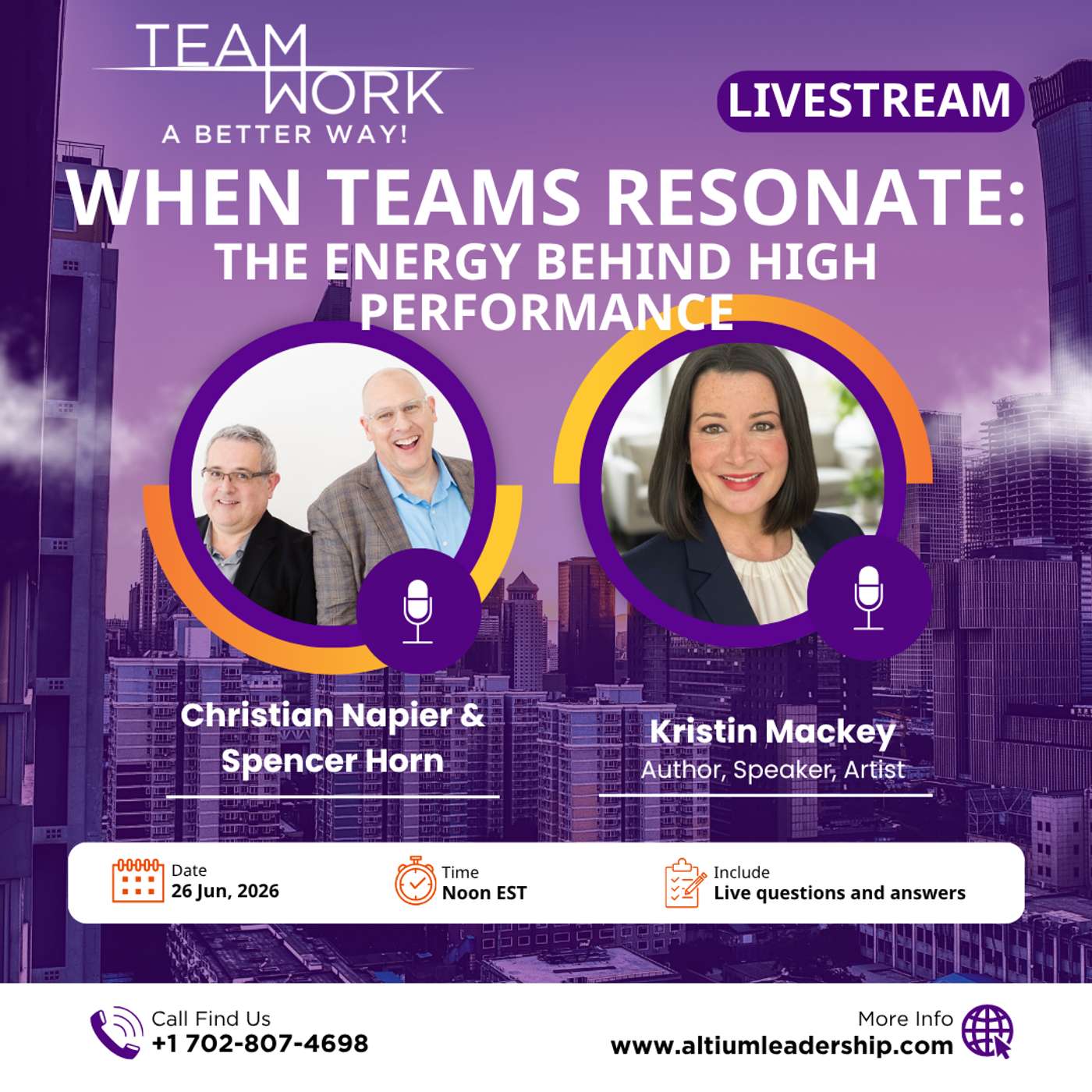 When Teams Resonate: The Energy Behind High PerformanceTeamwork - A Better Way · on Nervous system regulation49 / 100
 310 | Feeling Successful But Empty? What God Says About the Work You Do, with Dr. Joy Dahl46 / 100302 | You Don't Have to Leave Your Job to Follow God's Calling, with Krystal Parker64 / 100293 | Centering Reset: Wisdom Is More Valuable Than Intelligence36 / 100291 | Centering Reset: The Surprising Psychology of Hope37 / 100311 | Centering Reset: Stepping Into a New Season