
The Places We'll Go Marketing Show · 2026-09-14 · 43 min
Key moments - from our scoring
Substance score
62 / 100
Five dimensions, 20 points each
Sarah Holt's leadership at Centerparcs demonstrates how heritage brands maintain their magic through product excellence and customer experience investment rather than marketing spend alone. With 68% repeat guest visitation and record revenue of £758 million, Centerparcs has built something almost subscription-like - but Holt quickly identified that new competitors like Airbnb and Booking.com, combined with consumer confidence challenges, mean the brand must continually prove its worth. Her approach in the first 100 days was structured learning: working the front line at villages, validating hypotheses around NPS scores, and understanding guest segmentation. This led to three core pillars: brand elevation (refreshing the "Center of Your World" purpose to "We Build Better Worlds"), premium leisure guest segmentation and personalization, and capability building through team restructure and in-house creative talent. Notably, Holt sits on board investment decisions and consistently advocates for Capex in customer experience over marketing budgets - near £150 million invested in villages versus a relatively small marketing allocation. Her career trajectory (Ogilvy, St. Luke's, BBC, Lego, Merlin, Global On Capital) taught her that P&L accountability, despite reducing creative output short-term, builds the commercial rigor needed for CMO-to-CEO reporting relationships. She's now thoughtfully evaluating AI's role, taking measured beats before organizational redesign rather than chasing every new trend.
Centerparcs invests heavily in the customer experience - £150 million in village improvements - rather than relying on marketing spend, because guests return when they experience the unique 'bubble' of the subtropical swimming paradise, rewilded woodlands, and family-designed lodges. The brand must continually prove it's worth the premium price by delivering an experience that competitors cannot replicate.
Brand elevation (refreshing purpose and storytelling to better match the village experience), premium leisure guest segmentation and personalized journeys (moving beyond family-only positioning), and capability building (restructuring the team and bringing in ecommerce, planning, and in-house creative talent).
She discovered that while the village experience was exceptional, the advertising and ecommerce journeys weren't doing the brand justice - guests experienced the 'bubble' on-site but the brand story wasn't being told effectively to new guests who perceived Centerparcs as expensive without understanding the value proposition.
Holt recommends taking a measured beat before mobilizing the team around new technologies; she notes that if she had redesigned her team for AI a year ago, she'd do it differently now, so it's important to understand the moment to move rather than chase every new trend reactively.
Her role as London Marketing Director at Merlin, where she had direct P&L accountability for £800 million+ and reported trading figures weekly, taught her commercial discipline and how to make decisions based on business impact rather than creative preference alone.
Our reviewer’s read on each dimension, with quotes from the episode.
The episode contains solid practical advice on first 90 days execution, brand/experience integration, and the hypothesis-driven approach to problem-solving. However, much of the value is general marketing leadership wisdom rather than novel, non-obvious claims. Significant portions drift into personal narrative and soft advice (flexibility, high standards, support) that lack specificity or tactical depth for most operators.
I realized pretty quickly that the role of marketing was twofold. It was first of all to build that love and loyalty even greater because it isn't a given, people do drop out the funnel.
I had a very structured plan. I actually had to present my 90 day plan in the interview. And I had some working hypotheses that I was going to be validated effectively.
Sarah's framing of the CX-marketing link and the hypothesis-driven approach is competent but not contrarian or first-principles thinking. The 'forest' positioning for Aquasana and Centre Parks is product-derived rather than a novel strategic insight. Most of her frameworks (90-day learning, hypothesis testing, P&L accountability) are now standard practice in marketing leadership circles.
ultimately your repeatability and your love comes from what happens in the bubble on the Village.
we've got to completely redesign our workflows and we've got to work out where the agents sit
Sarah Holt is genuinely credible: CMO of a high-growth, profitable business (£758M revenue, 97.5% occupancy, 68% repeat rate) with direct CEO reporting and P&L accountability. She has worked at substantive brands (BBC, Lego, Merlin) and is actively solving real problems (LLM search, AI workflow redesign, brand elevation). However, she is primarily a brand/marketing executive rather than a founder or operator who built a business from scratch, which slightly limits caliber.
we just reported last week that we had record reven at 758 million and record EBITDA which I'm even more proud of at 323.9 million.
I had P and L accountability for the first time
The episode includes concrete numbers (£758M revenue, 97.5% occupancy, 68% repeat rate, 323.9M EBITDA, 9% Aquasana growth, 40,000 hectares of woodland) and specific examples (Merlin London recovery, Brixton Finishing School, Wackle programs). However, much of the strategic advice lacks concrete metrics or case examples - the AI discussion, hypothesis-driven approach, and leadership philosophy are largely presented abstractly without detailed evidence of outcomes or specific business decisions.
we just reported last week that we had record reven at 758 million and record EBITDA which I'm even more proud of at 323.9 million. Um, so that's great. We also recorded our highest ever occupancy at 97.5.
We have an army of foresters who bring it to life in new ways. So we're actually the biggest rewilder of woods outside of the Woodland trust in the UK. We operate and run 40,000 hectares of beautiful woodland
The hosts ask reasonable setup questions and show genuine interest, but rarely push back, challenge assumptions, or follow up with depth. When Sarah makes broad claims (e.g., about personal brand, AI strategy, or hypothesis-driven thinking), the hosts accept them without probing for specifics, trade-offs, or evidence of impact. The conversation feels warm but lacks the intellectual friction that would deepen insights for operators.
Tell us a little bit about that marketing journey that you've been on Whilst you're being CMO there.
So we've already got a glimpse of what makes you so good as a marketer. But, um, in a nutshell, what do you think are the three things that makes you the marketeer that you are?
Computed from the transcript - who did the talking, and the words that came up most.
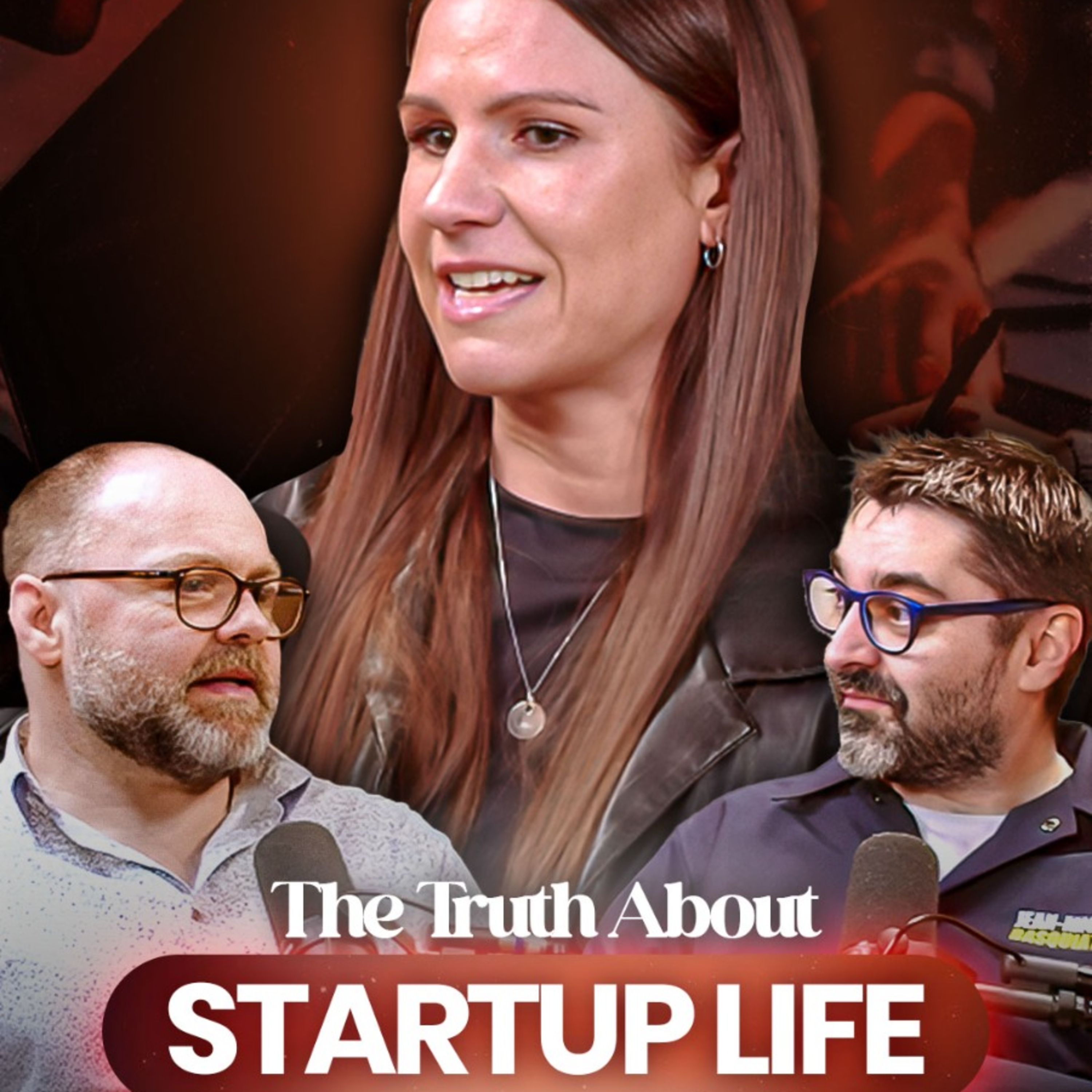
What makes a brand so good that customers keep coming back? In this episode, we sit down with Sarah Holt, CMO of Center Parcs UK & Ireland, to unpack the thinking behind one of the UK’s most loved experience brands, her approach to marketing leadership, customer experience, commercial growth and the rapidly changing world of AI. Sarah shares how Center Parcs achieved record revenue of £758 million, record EBITDA of £323.9 million and its highest ever occupancy of 97.5%, while revealing why the real secret to the brand’s success isn’t advertising. It’s the experience customers have once they’re there. We explore why Sarah would choose investing in customer experience over increasing the marketing budget, how she approached her first 90 days as CMO, why she deliberately spent her first 100 days learning rather than fixing, and how she identified three key areas for transformation - brand, personalization and capability.
Transcribed and scored by The B2B Podcast Index.
Speaker A: In my world of location based entertainment, I would always take Capex, where you enhance the customer experience over a marketing budget with one pound in one versus the other.
Speaker B: In this episode we sit down, uh, with Sara Holt, CMO of Centreparks UK and Ireland.
Speaker C: Tell us a little bit about that marketing journey that you've been on whilst you're being CMO there.
Speaker A: I realized pretty quickly that the role of marketing was twofold. It was first of all to build that love and loyalty even greater because it isn't a given. People do drop out the funnel. And also there's a lot of competition.
Speaker B: And in our conversation with Sara, we explore why the first hundred days in any leadership role should be about learning rather than fixing. How did you get through that challenge of the first 90 days?
Speaker A: I had a very structured plan. I actually had to present my 90 day plan in the interview. I had some areas I wanted to explore more. So one of the things I was trying to get my head around was why do they have such incredible mps? What is it that they do?
Speaker B: But perhaps most memorable from this conversation is Sara's leadership philosophy. High standards, high support, high trust.
Speaker C: Where do you see things going at the moment in this regard? And anything that's interesting you in the market at the moment.
Speaker A: It's quite hard to make decisions at the moment because there's just so many new things that keep happening. Just the pace of change just in the last three months alone.
Speaker B: If you're interested in marketing leadership or building brands that deliver both commercially and in terms of a human impact, you're going to love this conversation. Well, Sara, amazing to have you on the show and good times. I mean the business is flying right now, if I understand right. 80, 80 courses of growth. So wonderful to have you here and tell us a little bit about what's going on.
Speaker A: Uh, well, we just reported last week that we had record reven at 758 million and record EBITDA which I'm even more proud of at 323.9 million. Um, so that's great. We also recorded our highest ever occupancy at 97.5. So and just to be really clear, we would. We are technically full. The other percentage points are just to do with the fact that we have an amazing refurb program going on at the moment for our lodges. So brilliant business, right?
Speaker B: Riding high. And um, we were just talking in the green room. I went for many years to Centre Parks. It does seem to have a bit of a magic formula.
Speaker A: Oh it does, it really does. I mean, I know this myself, um, because I've been going as a guest for 20 years. Um, it has insane repeatability rates. Um, we've just reported 68% repeat guest visitation. Um, a third of our guests are people who have been with it rebooking within a month of coming. So it has got, it's got. It's almost a subscription service.
Speaker C: Subscription service. I love it.
Speaker A: Yeah.
Speaker B: And so you're the, you're the custodian of this. This is quite a. This is a biggie, right? You know, because it's.
Speaker A: Yeah. I mean, I've always liked to work on proper heritage brands with Real love. And Center Parks, I think, is 100% one of those. It's where people take their kids to learn to ride their bikes. It's where big family reunions happen. Um, it's where people go and, you know, really connect in ways that they just can't in other places. And to be a custodian of a brand like that that's got so many treasured memories is, is a real privilege. Um, even more so because, uh, when I was looking at the role and since I' I've realized that there's tremendous opportunity for growth within that business and to find a business like that with lots still to do with that level of love is a great, great, great privilege.
Speaker C: Boom. The point is, right, this stuff doesn't happen by chance, as we know, and it's, you know, it's a competitive environment. Indeed. The UK is going through its own trials and tribulations. So, I mean, what would you attribute some of the success of Center Parks to? I know, brand and the like, but perhaps a little bit of the magic in some of those core areas that you think people can learn from.
Speaker A: Yeah, I mean, look, the real secret to Centrepark success is it's just got an amazing product. A product which is almost impossible to copy. In the same way, it's got things like the subtropical swimming paradise, which is weatherproof in Britain. That's amazing. Like, boom. A place you can go with guaranteed, uh, ability for your kids to swim. It's also got amazing woods. And we always go in an area of natural beauty and then we rewild that wood. So we have an army of foresters who bring it to life in new ways. So we're actually the biggest rewilder of woods outside of the Woodland trust in the UK. We operate and run 40,000 hectares of beautiful woodland and we turn them into amazing, amazing places that we look after with great care. Um, then you layer into that there's the lodge formula, which has been designed with families in mind so families spend more time together in those lodges. Just the way it's been designed, it's been designed with family togetherness right at the heart. Um, so they have a brilliant experience together and then you layer in, ah, our people. Centre Parks has the best colleagues I have ever worked with. I mean, I knew this when I used, um, to go visit Centre Parks. They really do go the extra mile and that's reflective in our amazing service scores. Um, and the whole thing together is this amazing formula where you go and people and guests have told us in insight they feel like they are stepping into this unique bubble as they go up that drive. Um, and all of this has been created so that guests can get into that bubble with their family group or who, whoever they're with, and not necessarily feel like they're in the same world anymore. Um, it really is a place like no other, where you can be guaranteed to have an amazing family time. Um, and when you put that together with, it's probably only an hour and a half away from home. Um, it's catnip for guests.
Speaker C: It's catnip for guests. Brilliant. Um, you know, uh, what I think when you talk about that repeatability and certainly some of those aspects of the product, it feels like the core job of marketing is just to get people there. The first time.
Speaker A: Yes.
Speaker C: After that, hey, ho. You're kind of sold on the proposition.
Speaker A: Yes.
Speaker C: So then tell us a little bit about that marketing journey that you've been on Whilst you've been CMO there.
Speaker A: So I joined, um, 14 months ago, and I think I spent an awful lot of time understanding the business. Um, like, I was deep in spending time in the front line with all the, uh, amazing colleagues, listening to guest insight, et cetera. And I would say that I realized pretty quickly that the role of marketing was twofold. It was, first of all to build that love and loyalty even greater, because it isn't a given, people do drop out the funnel. And also there's a lot of competition now. There's new competitors that have emerged in the likes of Airbnb and booking.com. so I can tell you now, it was not guaranteed that we would deliver that record growth this year, um, because there are new competitors that have come in, but also because consumer confidence has been knocked and Center Parks is not a cheap break. Um, so the biggest thing that I realized, even for current guests, was we had to prove all the time that we're worth it. So. So that that worth thing is really important for current guests but even more so for new guests because the rhetoric around Centre Parks in the world of LLM search, et cetera is it's very expensive. I mean how far can you go without having a conversation about how expensive it is? And that's exacerbated by the fact that we have so many repeat guests who come in and book the best stuff and the cheapest stuff early. So if you're um, a new, you'll look at it and you'll think wow, that's so expensive. Is it worth it? So the job really that I've got to do is prove that Centre Parks is worth it. And that starts by deeply understanding that experience. Now I had some hypothesis, I knew the brand, it was part of the reason why I got the job because I've been going for 20 years. But it's not to. You're there and you see the care and the love that goes into this thing that we build. That comes from our colleagues, that comes from crazy things like if you go underneath the subtropical swimming paradise you see more paraphernalia about how to keep that water beautiful and clean than I have ever seen in any theme park I've ever been to. There's just so much love that goes into this, this weird otherworldly world that we build and it's that that is the bit that we've got to capture that, that love and but we do all of that in service of our guests. And the thing ultimately that we're selling I realized very early on is not the product, it's the benefit which is that moment, that bubble where you can go and there is nowhere else where you can get that so guarant fast. Um that's what led us to all the thinking around for the center of your world. Um and our new purpose which is we build better worlds.
Speaker C: Today's program is brought to you by two fantastic organizations. First up is Studio Space. A uh leading on demand marketing agency platform. Studio Space gives marketers complete control over their projects. From matching the right agency to your brief to managing contracts and invoicing and even tracking all of your spend data uh all in the one place. They take care of everything and it's totally hassle free. They even guarantee the work. So check out Studio Space today. Our uh second sponsor is the Marketing Skills Trust. A uh charity with a mission to make marketing a better place for everyone. They provide grants to help create a more equitable industry and support initiatives that really do drive diversity, inclusion and create opportunity. The Trust has been instrumental in leveling up the marketing skills across the board and do take a look at their website for more information. Now, let's get on with the show.
Speaker B: Um, the bubble, obviously big concept and never more relevant given everything that's going on in the world. Uh, lovely to get a bit of a glimpse behind the curtain of how that's maintained. Um, now, 14 months into you, through the first year, which is always perhaps the most challenging, we had a conversation about 14 months ago about the first 90 days. Remember, you helped me a little bit on that actually. And, um, your remit is so broad. Like, how did you get stuck in? How did you sort of pace yourself? You said you took the right time. How did you just sort of, how did you get through that challenge of the first 90 days?
Speaker A: I had a very structured plan. I actually had to present my 90 day plan in the, in the interview. And I had some working hypotheses that I was going to be validated effectively. Some thoughts I had, some areas I wanted to explore more. So one of the things I was trying to get my head around was why do they have such incredible mps? What is it that they do? So spending time on the villages was perhaps the biggest win for me. So I literally worked the front line in Winfell. Um, I sat on the leisure desk for the whole day. I saw how people would literally, in peak that first Easter, um, spend anything on any leisure activity, those types of guests. And then I worked in off peak, um, in other villages and saw that that was a different guest mix type. So I spent time really in the front line. I spent time, um, in the data, validating hypotheses, asking lots of questions. I spent time, um, with all of my board colleagues, talking to them at great length. Um, and I had lots and lots of questions and I didn't try to fix anything for that first 100 days. It was just building my knowledge, building my knowledge. And I landed on three core areas that I needed to move on fast. The first was the brand. Because whilst we had this amazing experience, the biggest insight I had very quickly was we weren't doing as good a job with the advertising and the E Comm journeys as we were on the village. Um, and, um, there was work to be done there both with the brand, like, elevate that story, tell it better. Um, I mean, my CEO even said to me, it's time to refresh our brand and purpose. And that was a gift to be given in the first 90 days. So we started that work pretty quickly with in Depth interviews that kicked off after my 90 days. Um, then the second piece of work was how are we going to build out proper personalized journeys for what became during that process what we've determined and called our premium leisure guests. Because we realized that we were on this premiumization journey but no one could really tell us what those guests and customer groups were. So the second thing we commissioned was a whole segmentation. Our aim is to be the number one business for premium leisure guests in the uk so we needed to know who they were. So the second thing we commissioned was a segmentation which just then led us to the second bucket of work which is how, how can we build out personalized journeys and true loyalty and tailoring for those different guest mix and different types and products as well. So we had lots of conversations around should we not just be for families because one of the opportunity areas became adults. Um and then we've realized actually we are going to keep as core as families for Centre Parks. But those were sorts of conversations we had which then led me to my third piece which is we're going to build out those personalized journeys. We're going to need new tech stacks, we're going to need new ways of working. So the third bucket was all around capability. So um, that led me to restructure the team and bring in some pretty heavy hitters both for E commerce, uh, for planning. We um, also brought in an in house creative director um, who is helping build out all of that capability internally for the whole guest experience end to end. Um, so the third pillar was all around capability build. None of those things have changed actually those three pillars, first around brand, second around um, personalization. So the uh, segmentation combined with what we're going to, with our tech stack and then the third around how do we build the team and the capability to match all of that.
Speaker B: Love it. A masterclass in how to land in an organization and make an impact. I love that um, many CMOs don't ever really think about customer experience. You know in cpg it's you know, it's like I get it to the retailer and they do the job but in many of the roles you've been in it's an absolute intersection. So I think you've been a top 50 cx leader for many years. So your perspective on, I mean I guess you're probably going to say they're synonymous but marketing and cx, how do they come together really well?
Speaker A: Well I mean I'm probably the only CMO who'll sit on this Podcast and say this and I said this during the interview process which is I would, in my world of location based entertainment I would always take Capex where you, you enhance the customer experience over a marketing budget. One pound in one versus the other and particularly in a business like Centreparks because it's high repeatability becomes because of the nearly 150 million we spent on the Villages in that last year. Right. So as a percentage of revenue uh, my marketing budget is actually quite small but that's because we have this huge investment in the customer experience And I think when I look around at people who don't get our industry well, they think it's as easy as building a brand. But ultimately your repeatability and your love comes from what happens in that bubble on the Village. So I mean it ultimately you can only market so far and it's wasted dollars if you don't have that amazing customer experience. So I sit in the board investment decisions where we talk about literally should we invest in um, a Martech stack or should we invest in ensuring that every single detail at the stsp, the subtropical swimming paradise is perfect in Windville. And I am the person who will always put the money there first because that is where you've got your next customer. The most of them having a great experience and also because we were looking at the data and seeing what does to throughput and all of those things. So I've always been a big believer in the role of brand like is product equally um and our brand lives and dies by the ability for people to find an amazing unique experience where they can go somewhere so different they connect properly in their family bubble.
Speaker B: There's an interesting paradox here which is you're very customer experience but you're very P and L. Yes. But I think what you've just described is the link between the two.
Speaker A: Yes.
Speaker B: That the greater commercial outcomes come from true customer centricism which gets. Yeah, yeah, lots, lots of chat. But that's a really, really good example of you know, it's where you actually put your investment dollars.
Speaker C: Sorry, no, no, it sounds fabulous. And more, more so I think when I look at your remit, I mean it covers a whole plethora across the marketing spectrum. But as you say you get involved because you're sitting on the board getting involved in a whole host of conversations even beyond that. And then it makes me sort of wonder, you know, when I think about your career and some of the organizations that you've worked in. I mean you know, all across the BBC right through to Lego Right through to Merlin. I. How did you carve out this incredible marketing career and how did you get to where you got to here today?
Speaker A: I think there's a story which actually people don't always know that I spent five years in ad agencies at the beginning. Um, so I started out at Ogilvy working on Ford and then I went to St. Luke's and I had a little stint at DDP before I went to the BBC. So I think in many ways those five years when I was very young were formative because I got to work across the full gambit of so many different brands, um, and with lots of different clients. And I remember being really, really clear that I was always happiest when I worked on media, entertainment and experience brands. Um, and that's why when I got a phone call to say, would you like to come to the BBC, I was like, wow, that, that's, that's my dream. And it was actually, I remember it being less money and more risky. I think I went on, I did go on a contract initially, but it was my dream really to work in those types of businesses and thereafter I never sacrificed that. I always made my decisions first and foremost around will I be able to impact the customer experience, will I be to working for a brand that I really truly believe in and love? I'm a very mission driven, purpose person and I um, really, really am happiest when I work in those sorts of businesses. So I made always my decisions first and foremost on the brands and the businesses and whether or not I could have an impact.
Speaker C: And then, and then when I think about this in the way that your role is designed right now, reporting directly to the CEO, I mean clearly a lot of marketers would love to be in that position where they've got direct accountability and indeed a uh, purview of across business estate. So I mean how did you sort of get to that and how do you sort of I guess advise other marketers who are um, perhaps not sort of directly to the, sort of reporting to the top person?
Speaker A: Yeah, I think the biggest growth area and where I learned the most was when I was at Merlin and I effectively had P and L accountability for the first time because if you think about my trajectory, it had all been very sexy, lovely brands and I'd always gone for the interesting um, things that were, were almost the magpies, bits of marketing. So I remember when I was digital marketing director at Lego, that was, I mean that's a magpie brand, isn't it? And a magpie choice job but what I had never had, um, when I, up until that period was any sort of hardcore commercial experience. And actually I got some advice around that time which was you've done a lot of like pure comms jobs. So which I know for many, many marketers that is the job, right? Communication end to end, whether it be digital brand or whatever. But you need to do something which is a bit more P and L. So, um, and I went to Merlin and what I absolutely loved about Merlin, I mean I am a numbers person, I love numbers, was that you had that direct accountability for the P and L. I went first as London Marketing director, um, and you know, I was having to report on the figures each week, I was having to be in depth in trading and I absolutely loved that. And it made me a very different marketeer. I probably didn't make my best creative work during that time, but I did my most creative things like setting up the London Tourism Recovery Board because they were the right things to do for the P and L and the business at that moment. So, so, um, I, that, that, that bit is the bit I think where I grew the most. I mean I kept getting more and more remit in terms of both P and L and brands that I was responsible for. So I started first as London, then UK for the indoor attractions, then UK for everything, then a big batch of Europe as well. By the end it was, you know, it was 800 million plus P&L accountability that I was looking at and driving each week. So I think if you can get to a big commercial role at some point in when you will really learn the most, and that isn't for everybody. It happened to be that I absolutely loved it. I loved being in the numbers all the time. I loved, I loved making those decisions. So I think that is, that piece of advice was really critical.
Speaker C: I absolutely love that. And just before passing by, but I want to, um. One of the, one of the terms you used was Magpie and I really love that. Um, and I think you said it in a positive way as opposed to anything else. So how do you today sort of combine commerciality with. I know you are still in a sense at Magpie and constantly looking out and scouring for the next few things that are coming across the height, like sort of the horizon. How do you sort of, you know, where do you see things going at the moment in this regard? And anything that's interesting you in the market at the moment?
Speaker A: Well, it's quite hard to make decisions at the moment because we were talking about this before, there's just so many new things that keep happening. Just the pace of change just in the last three months alone in is insane. Um, and I almost take a moment, take a beat now before diving in. When I was younger, I think back to when I was head of marketing at Global On Capital and we were in the depths of Foursquare launched one week and then something else launched and we were right in building social media and Facebook apps and all that stuff, I was totally there all the time, whereas now I take much more of a beat. Also, I am a bit more grown up because, um, I see myself as having a unique, um, ability to have commercial and creativity together. And you've got to really think about what is the moment that you mobilize everybody behind something and how and particularly at the moment. I think if I had redesigned the team for AI a year ago, I would have done completely different things to what I'm going to do right now. So it's difficult to know at what point to move. And I think I'm starting to get really clear with the team on where we're going to go next for AI and it's. If you'd asked me a year ago, I would have said it was all about super serving and humans. Now I think about it as, we've got to completely redesign our workflows and we've got to work out where the agents sit and everything. Um, and that's a very different insight to what I had a year ago, so.
Speaker B: True.
Speaker C: Yeah.
Speaker B: So we've already got a glimpse of what makes you so good as a marketer. But, um, in a nutshell, what do you think are the three things that makes you the marketeer that you are?
Speaker A: Oh, I think. I think. Well, first of all, I have to start from, um, I have an unusual background, so I have to pull that in. Um, I arrived as a refugee from South Africa, but that makes me have, um, an ability through the childhood that I had to see things differently. I'm also neurodiverse, so I will look at things from different perspectives. I think I am a very creative marketeer. But that combined with the commerciality, if you put those things together and then you put customer experience into it, I think that makes it all very unique. The ability to see things from a different perspective. Constantly be thinking, what about that person in the corner of the room? How are they going to see this? And then you layer that into what does the P and L need us to do right now? And then you put the creativity together and, um, the Fact that I do think differently to other people a lot of the time because of my neurodiversity. I think you put all of that together and it can be very powerful. I think where I've grown in the last few years and a lot of the work I've done with my own coach that makes me much better than I was when I was younger with all of that stuff is now I am much more measured about what does this mean for how do we bring the team on the journey, what does the team need from me to understand where we might need to go, how can the team learn the things that I'm learning? So a live example of that is I was probably one of the only CMOs who got their whole leadership team pretty much to Cannes this year. And the reason why I wanted to do that is I wanted them to see the things that I was seeing so that they would come back and ask the questions I was asking. Mission accomplished. So I think you put that with a grounding and an understanding of how to build other people and build leaders and teams and go at the pace that they need, which is all the stuff that I've been working on. And I think all of that together builds a very potent conversation combination.
Speaker B: Brilliant. Brilliant. And, um, credit to you to take some influence to get a marketing team to can. But yeah, the, the benefits of that. So Richie edged us into AI, so let's just jump into AI. I mean, I, I spoke to somebody yesterday and they said at the moment bot traffic is like 51 over human traffic. And but the number of reach outs that LLMs and other agents are doing is going to increase exponentially. So we might. Within 18 months, it's possible that less than 1% of the Internet is human traffic. Traffic. It's crazy now. So the world of search, the world of go to market is just turning on its head.
Speaker A: Yeah.
Speaker B: So, I mean, how do you keep up with that? What do you think about that? How are you staying ahead on that?
Speaker A: Yeah, I mean it's, it's super interesting, I think, because I've got two brands, I've got Center Parks, which is an amazing brand and then we've done amazing work with the brand with Bubbles and everything else. Um, but then organically in things like Reddit has, um, guests who have come who correct other guests who say it's not worth it. In the world of Centre Parks, what we're finding is whilst our traffic has gone down, our conversion has gone up. So all of those bots are directing people still to Centre Parks one way or another. So we're not finding that we've got the problem that we are having with something like Aquasana, which is a new brand that we're building and is going really, really well. But because it's Aquasana Forest Spa new brand, a standalone brand that I joined and the team just started to put paid media behind because it's a new brand, it's much, much harder to impact what's going on at the moment. So, um, where we were seeing huge growth in traffic, we now are having to spend more to get that traffic. And it's almost a drug, isn't it? Because then you have to pay more for paid search which then, you know, then impacts your ability to spend on brand and then that means that then you don't rank an LLM M search. So I think in some ways the dominant brands is my overarching hypotheses are going to, to win more. But how do I keep up? I mean I keep up when there's a risk and I think we started to see with ac, there's clearly a risk here. Um, so we've been diving into Reddit, we've been diving into all kinds of different things and also going back to old school things. If I just tell you something that I learned from you guys actually that um, news publishers are really important in the world of LLM search. Right? Like old school news is really important. In fact, lots of them are paying, are being paid by those companies. Um, so actually has become more important than it used to be at Centreparks because we need to make sure that we have the right authorities there, et cetera. So, so there's a lot of things that I just keep up to date with in terms of understanding all that stuff and I've got brilliant people on the team. So Sarah, my Ecom director is in this world all the time coming to see me with. Do you know that this is going on sometimes? She's actually ahead of me a lot of the time. Do you know this is going on with bots? Do you know what we need to do with Aquasana? Have you thought about this? And all our traffic predictions not coming true? She's, she's um, a deeply brilliant person at all of this stuff. So if I didn't have her on the team, I' be a lot more worried.
Speaker C: So a key attribute is have the right people around you and surround yourself with the right people to be able to then um, to execute in that sense. I don't know if you're aware. But a word that you repeated a number of times through the conversation is the word hypothesis. And I think it's really interesting because it kind of gives me a little bit of a view into how your mind works. And I wonder if this is a conscious choice about how you think that is. Formulate a little hypothesis about what's kind of happening and then go after it and almost. So it's like scientific way of then determining whether that's true or not. Is that kind of how you think about problem solving?
Speaker A: Yeah, I mean I learned that really at Merlin because we were overwhelmed with business and guest data and that because we think because it's a massive portfolio complex business. And so a lot of the time you'd be trying to work out why is this particular business not trading well when this one is. So you'd formulate a hypothesis, ask a load of questions and then you'd find out what was really going on. Sometimes you wouldn't, but you'd have a working theory. Um, but I think when you've got a lot of ranges of indicators and a lot of data, it's a really good way of examining and asking questions and getting to the heart of what's really happening.
Speaker C: It's really interesting and I like that thought process and the methodology behind it. Um, because then I guess it's a robustness and a rigor that comes with that with the solution. And I really love the thought when you've got Aquasana and you've got Centerparks, it's kind of like polar opposite polar ends as in established versus sort of Challenger as it were. Um, and there must be so many cross pollination of learnings. You can kind of take from one to the other. What would you say maybe are the top two or three things that you learn from both brands as to how you would operate your go to market?
Speaker A: Well, I think that the thing that both brands have got, which only they have is the word forest. Right. Data has told us time and time again that center parks, the real thing that people love and come for is the nature and the forest. And then when we really went to market with how are we going to talk about Aquasana? The number one thing we were told from data and Insight is say it's Akrasana Forest Spa because that is a unique thing that shortcuts to wellness well being, um, gives you a neat point of view against other spa operators. It's also true to the product. It's in a forest. We have sound bathing in forests going on we have rooms where you are lying looking up at the sky with forests all around you. You literally sit in a sauna. We have an amazing sauna in all of them where you sit out and you are looking into the forest. So that is what makes it unique. Aside from the. That fact that it's got, you know, the largest number of individual rooms of any SPA in the UK between 10 and 30, depending on which one you go to. It is like a theme park spa. It's amazing. It's my favorite place in the world.
Speaker C: But.
Speaker A: But that that brand had forest and so did Centre Parks. Those are the two things that were unique. And I think the other two things that I learned about both brands but in different stages was these were amazing products where they had. There was a need to elevate the story. Um, so Aquasanne had. I mean this was a brand that was just sitting there, that was at 50% capacity, just only being used by Centrepark's guests. Building that as a standalone brand and we're nearly at capacity now, is what led to the 9% growth in Aquasana last year in revenue and EBITDA. Um, right, so. So that was just a gift. Let's just do some marketing. And we haven't spent huge amounts on it. So both of them had those similarities. I'd say the difference is that Centre Parks has an inherent repeatability that comes from the family bubble, the fact that you go there and then you invite other people along, etceter. And that guest loyalty, we haven't found the same loyalty in the spa going guest. The new guests we've brought in are, um, you know, they're Spargo as they're younger that they are people who are less loyal by nature and they have less money. So. So it is a harder market to operate in.
Speaker B: All of this is really making me want to go on holiday. But, um, you did, you talked about purpose, um, and you're heavily involved in Waco. You mentor people from marginalized groups. Tell us a little bit about what aspect, what you get from that, what you to that.
Speaker A: Yeah, well that all comes from my background really. So, I mean, about four years ago I realized if I wasn't doing stuff to help marginalize groups, I wasn't happy. I just wasn't happy. Um, and I think a lot of that is to do with the fact that, I mean, I had no idea how I really ended up in this industry. I knew no one who did it. I sort of fell into it. Um, and it was just a journey that I went on. And I think what I learned after everything that happened with Black Lives Matter and Covid was we had serious blind spots in, um, our marketing team, in the way that we were marketing and the things that we were doing and the decisions we were making. And by bringing in people from different communities, um, it made us better at marketing. It helped those people with their life chances. Some of those people I still know today and where they've gone on to. And I realized that actually by holding a hand back to people who've come from different backgrounds, it was both amazing on a human level for those people, but it was critical for the businesses that I've been involved in. So that led me to really thinking through what could we do more in a structured way. When I was at Merlin, I was active in getting them involved in the Brixton Finishing School. We had, um, an active program to try and diversify our marketing team. And we have the same at Centre Parks, but at Centre Parks, um, it's just part of who we are, it's part of our culture that we do the right thing and we do it because it's the right thing to do. Um, but the work I do with Wackel, I mean, I do that because I've seen firsthand in my own journey in marketing. I mean, I didn't even have a male, female M marketing director as I was growing up. Till I got to the BBC, it was always women in the marketing team and then men above. It was just the way it was. And it wasn't until, um, I started really getting involved in communities like Wackle. I realized that you have to help each other because there is naturally a boys club in many environments. And that's not a criticism, it's just a fact. And actually that work in terms of helping inspire young women and show the possibilities is more important now than ever because there are more women dropping out of marketing than there has ever been before. Everything that happened during COVID showed that actually all the work that Wackel had done today had actually gone backwards. So I feel very strongly that women should be represented in all of those important decisions and just because they're 50% of society. But it's really hard. And it's not because there's just active, um, discrimination. It's really hard because women do bear the bulk of the childcare. That's just a fact. And I see this time and time again with young ladies I mentor where it's just too hard to make it work. Right? And so there are facts associated with why they drop out. What we do at Centreparks, which is pretty amazing, is we just give as much flexibility as they need. Um, and that is in our culture to do that is why I've been able to recruit some of the great people I have. I've had active conversations where they've said, can I pick my kids up on a Thursday and Friday? And I'm like, for you, whatever you need, whenever you need. And, um, and. But all of that is really important because if we don't do things like that, then, um, we will just lose brilliant talent from the industry. We just. And, um, that's also about men helping people from other backgrounds as well. So one of the things I'm proudest of that Claire Sadler, the latest Wackle president led, is the Male Allies program. So we've brought a whole load of men into Wackle, and that's because, um, you know, we're only going to win if we all do it together, right? Because parenting isn't just a women's issue. It's a men issue too. So the more men who do things like flexible working, then the more women we're. And then everybody wins. And then also it's better for men as well because they get to spend more time with their children. I mean, I'd love to ask you, Mark, about it. I mean, back in the day, you probably would never have felt okay to get up at 4pm and say, I need to go and pick my kids up now. Um, but I have agency CEOs who do that regularly and I ask them to do that as men because it helps the young women in their team and those are the sorts of conversations we need to have. So I feel very passionate about that because, um, I feel like I get a lot back. But also we as an industry and a marketing community, community get a lot back. And M Center Parks as a business gets a lot back from having those brilliant women involved for longer.
Speaker B: Hallelujah.
Speaker C: To that I completely agree. Um, and I'm learning so much from this conversation here today about both your background as well as some of your philosophy. Um, it sounds like you'd be quite an inspiring, empowering leader in your organization. Really trying to get people to, um, grab their roles and responsibilities with their own hands. And you talk about leadership flexibility. I love that thinking. What do you think people working for you would describe your leadership style?
Speaker A: Oh, I mean, in some ways I probably they'd say, in fact, I know because I ask for feedback all the time. I'm a feedback rich boss, probably their best boss. And their worst boss all at the same time because I said the best in the sense that all of that is true. Like I do believe in flexibility. I will always be shining a light on people. So I was extremely proud to be at the Marketing Society Awards um, because um, Carrie Sutton in my team was, what was she highly commended for being one of the emerging leaders of this year. And that was probably one of my proudest moments. I always am trying to raise people up, find the people don't really like to take credit to be honest for things that they've done. It's all about the team. Um, but equally I have incredibly high standards, like incredibly high standards. And um, I am relentless and driven and I can go too fast at times so they have to tell me when to slow down so that they can catch up and vice versa so that I can bring them on the journey, journey and all of that stuff. So I have and I will compare us to the best work in the world. That's why they had to all come to Cairns because I wanted their worldview to be opened. Um, and the training that I'm putting in for the team is really important because Centre Parks was a very, very successful business for a very long period of time so they didn't need to do any of that. It is tougher now. We now need to create world class marketing and customer experience in ways we hadn't have to before.
Speaker B: Seems like you create an environment where people can maybe have the best chapter of their career which is awesome. You did mention about coaching. It's obviously played a role. Tell us a bit about how that's helped you through difficult times or how that's made you more self aware as a leader as well.
Speaker A: Yeah. So I mean I, I think the biggest change to me as a leader happened when I went on the Marketing Academy program which happened in 2021. Um, and as part of that I met Sil Salah who is now my coach and mentor and she has been transformative um, in terms of um, both how I think about myself, how I think about others, uh, in my team. I think what she's been brilliant at is quite a lot of the time I have a blind spot and there's something I've not seen. And she'll just say you haven't thought about that, you haven't thought about that. And that actually came through when I was choosing which job to take. Um, and there was something in me which she pointed out which was you always like a problem child to fix, don't you? Um, and Something where you can really, you know, like, might be a bit broken. Why is that? Why are you choosing some of these roles and not that role? And actually she was very good at helping me crystallize the sorts of places where I could make a real difference. Because, actually, I think I just thought, well, wherever I go it'll be brilliant. Because, I mean, look at where I'd been. I've been at Lego, the BBC. Um, I've been at Merlin M. And Merlin had been hard, but, you know, during some really hard times, like post Covid, I'd still managed to drive significant success. And she was saying, well, you know, you need to think carefully about where you go next. And I think also something that I learned from her is at a certain point, the decisions you make are more important than at other points. And this was a very important move to get right. So I actually took a whole year to find that role. Um, and I turned down quite a lot of roles and I was quite picky and pulled out of quite a lot of processes because I wanted it to work for the whole Sara as a person. And part of the reason why I've landed somewhere that's so brilliant and is such a good fit is because the time has taken. And that really came from the work I did with Syl.
Speaker B: Yeah, it's a tricky market right now for people looking for jobs. This notion of in between, as there's a number of them around, it sounds different for you in that you had some choice and optionality to me that says, you know, you've built a personal brand. Um, so tell us a bit about the role of personal brand for you.
Speaker A: Oh, yeah, it's interesting. Interesting, isn't it? Because ChatGPT would tell me I actually don't have a good. Isn't that interesting? I definitely think that what I have achieved is because. And in terms of the roles that I got was because I've worked in a lot of different sectors for a start. So, um, I've done cpg, I've done entertainment, I've done hospitality. But then I think there is something about the way that I have positioned myself but just is also true, which is that commercial and creativity together. One of the headhunters actually said to me, I mean, look, look at the P and L sizes that you've taken, look at the impacts you've had. And I can literally talk through all of the reasons why and where, for all of the roles I've been in, where that has been. I think the bit where I started to get what I would call, um, virality. And, you know, interest was actually when I started talking about the work that I was doing with Wackle and the fact that my husband, um, does all the childcare at home.
Speaker C: Right.
Speaker A: Um, I remember going viral something like four or five years ago because I talked about. It was my, um, anniversary. And, um, I talked about how my husband did most of the childcare and the work that is statistically women's work. And I got all these messages from, um, places like Australia, from people I've never heard of saying, thank you for talking about your husband and thanking him. I thanked him publicly for all the work, um, that he does at home. Um, how he does an hour and a half more work work than me each day on what is traditionally women's work. Um, how he's supported me through my career, which he has. I mean, there was actually a conversation that happened somewhere like 2007. He's a teacher and he could have been a deputy head. And we looked at this job description of a deputy head versus me going for heads of marketing jobs and I was just like, this is an easier job for more money. Why, why wouldn't I do that? Ah. And you do more of the kids stuff. And we had this conversation which was, yeah, and he was fine with that. And also because I wanted to do it more, to be really clear, I wanted to do it more than he wanted to be, um, a deputy. He enjoys teaching, he enjoys being a head of department. And we just made this conversation happen between us where we made a choice. But how many people ever have that active conversation and choice? And I talked about that on LinkedIn and that's what went viral. The fact he does all the childcare. And he let me choose do what I wanted to do. He's always let me really do what I want to do.
Speaker C: I'm not sure he has much of a choice, Sarah.
Speaker A: He's always supported me. He's probably. I mean, he is my biggest cheerleader. Like, even now, um, whilst I actually am away from home less than I was at Merlin in some other global roles I've had, like Lego. I still am away from home at least two or three days a week and he looks after the kids and he's fine with that. And that just could not happen without him, for example, doing a job like a teacher and being off with the kids at the moment on holiday. So, um, that is part of why I am where I am today and talking about that stuff, but relating it back to personal brand. People love that. They love hearing about that. And that shows people it's real.
Speaker C: I mean, it's life.
Speaker B: Great team.
Speaker A: Yeah.
Speaker C: Big up, hubby.
Speaker A: Yeah.
Speaker C: There we are. We've come to the end of the segment, and it has been fascinating what a meander we've had. Um, so just the last question, really, through all the journey that. That you've had, if you were to turn back and look back in the rearview mirror and ask and to give your younger selves a bit of advice, what would you advise the younger Sara?
Speaker A: Well, I mean, I always say this, which is, there's been some real moments of darkness in my career, like, moments where I've just thought, am I. Am I ever going to go anywhere? Have I totally destroyed my personal brand, or is this going to work anymore? And. And actually, the reality is it all works out just fine. Um, it all works out just fine. And it's almost by getting to where I've got to now that I have that ability to see that. And I just think you find where you were meant to be, whether or not it's in this industry or out this industry. And I've seen it time and time again with my friends and family, that it will all work out all right in the end.
Speaker C: I love that.
Speaker B: But on that note, great way to end.
Speaker C: Amazing.
Speaker B: Fabulous.
Speaker C: Okay, thank you very much for coming on the show.
Speaker A: My absolute pleasure. Thank you, guys.
Other episodes covering the same guests and topics, from across The B2B Podcast Index.
 How CitizenM Mastered Hospitality Automation with Mike Rawson (Formerly CitizenM)Pillow Talk Sessions · on NPS (Net Promoter Score)86 / 100
 Unresolved.cx - Acting on Voice of the Customer still requires a human - Cati Brunell-BrutmanUnresolved.cx · on NPS (Net Promoter Score)84 / 100
 Is AI Marketing Helping or Hurting Growth? With Sheila Rondeau Ep. 146Talk to Th3 Doc with Steve Meek · on AI in marketing83 / 100
 Hotel Tech Pays More, But Is It Better? | Edouard ClarkSchulering HUB Talking Hospitality Podcast · on NPS (Net Promoter Score)80 / 100
 Marketing vs. CX: When Brand Promises Become Customer Expectations?CX After Hours · on NPS (Net Promoter Score)78 / 100
 Digital Transformation Strategy for Customer Experience that Drives Revenue GrowthDigital Transformation Success · on NPS (Net Promoter Score)76 / 100
 The Career Advice Every 20 & 30-Something Needs to Hear (From a Global Marketing Leader)68 / 100
 Why Most Marketers Will Struggle with AI (And How to Stay Ahead) | Tamara Rogers76 / 100
 Why Great Brands Win (And Weak Brands Get Exposed by AI) | Nick Emmel75 / 100
 She Applied to 200 Jobs Before Landing EasyJet - Jessica Houston59 / 100
 The Future of B2B Marketing, AI & Growth | Elly Sherwin, CMO of Fundament52 / 100