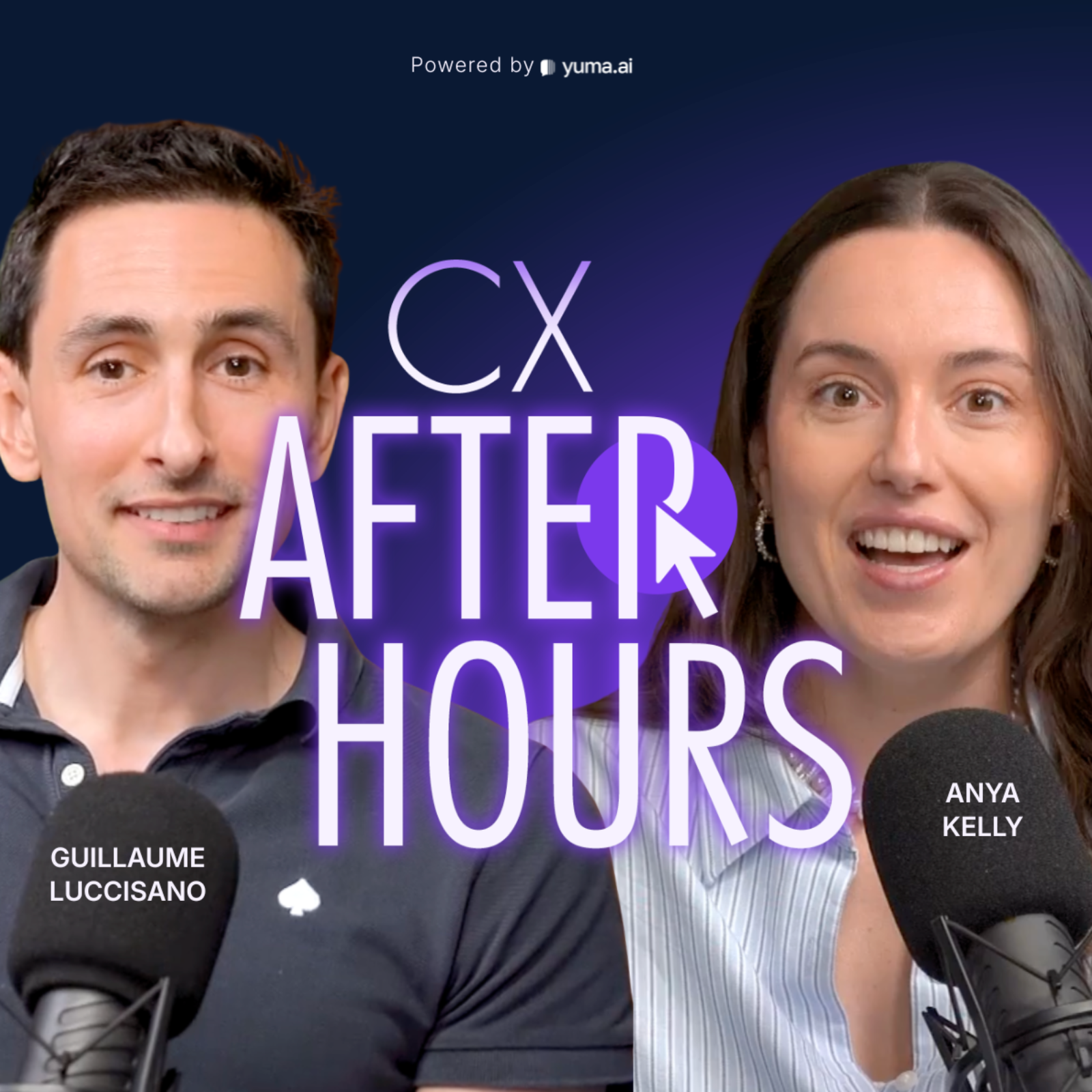
CX After Hours · 2026-07-22 · 49 min
Key moments - from our scoring
Substance score
58 / 100
Five dimensions, 20 points each
Marketing no longer exists in a silo from customer experience - every consumer touchpoint either builds or erodes brand trust. Elainey Makary, with a decade of experience at a beauty-focused creative agency and now consulting across pharmaceuticals and consumer brands, joins hosts Anya Kelly (fractional CXO) and Guillaume Lucizino (founder of Yumai) to unpack this convergence. The conversation reveals how brands like Ulta MD and Conair learned critical lessons from customer interactions: support tickets and social comments surfaced demand for tinted sunscreen, while YouTube comments on a Conair campaign exposed the need for textured-hair representation. Rather than treating marketing and CX as sequential handoffs, successful brands treat them as a continuous feedback loop. The discussion covers platform strategy (TikTok as discovery, but brand-dependent), the challenge of collecting authentic reviews without appearing transactional, and emerging opportunities in AI-driven product recommendations and user-generated content campaigns. Real insights emerge when brands stop pushing a predetermined narrative and start genuinely listening to where their customers congregate - Reddit, TikTok, support tickets, Amazon reviews - and adapt accordingly.
They don't have a clear handoff anymore; marketing creates the expectation (like a vitamin C cream promising brightness in three days) and CX delivers on it across all touchpoints, from shipping to product performance. Every interaction either builds or erodes trust.
Brands use education (packaging, PDP pages, owned content) to answer questions before customers search elsewhere, and employ 'ghost accounts' on Reddit to listen without overt marketing, since Reddit users reject brand promotion.
Brands should want reviews, but authentically and sparingly - focusing first on creating organic moments for people to share (user-generated content, in-person events with QR codes) rather than immediately incentivizing with discounts.
It depends on your target audience and brand goals; there's no universal breakdown - some brands don't have a heavy TikTok presence if their audience isn't there, but most should maintain presence across all platforms since they're increasingly connected.
There's no established playbook yet, but increasing overall web mentions (SEO, brand mentions, earned media) similar to Google optimization helps your brand surface in LLM recommendations.
Our reviewer’s read on each dimension, with quotes from the episode.
The episode covers marketing-CX alignment, customer feedback loops, and personalization strategies with some useful tactical insights (e.g., analyzing support tickets for product development, using sentiment scores for crisis comms), but much of the discussion remains at a medium altitude without deeply novel claims. Platitudes like 'listen to customers' and 'be authentic' recur frequently without substantial unpacking.
marketing creates the expectation...the customer experience side of it is more like, did it work?
I remember working with Ulta MD Skincare...we can give that to product development and say, there's this whole group of people who want tinted sunscreen
The thinking is solid but largely confirmatory of existing best practices: phygital retail, UGC, social listening, tone guides, and first-party data collection are well-trodden B2B marketing topics. The guest does not challenge prevailing frameworks or offer counterintuitive angles; she mostly elaborates on how to execute known strategies better.
it's a lot of like using your...almost like the mindset I take is like on a personal level
everything that we should be doing is trying to create like a little bit of a, a nice moment for people
Elainey is a practitioner with real operational depth - a decade in beauty/wellness, agency COO, client success leadership, and current consulting work on rebrands and strategic launches. This is legitimate hands-on experience, though not at the scale of a Fortune 500 CMO or founder of a unicorn. Her caliber is solid mid-to-senior practitioner, not exceptional thought leader.
for the past decade I have had one thing that's consistent in my career and that is my fascination with the customer
Ultimately became the chief operating officer and then finally focused solely on the client experience
The episode includes concrete examples (Conair diversity in comments, Ulta MD tinted sunscreen feedback, Sephora custom formulation stations, ELF and Rodeo brand mentions) and some tactical details (saves/shares as key Instagram metrics, sentiment score use for crisis comms). However, metrics are rarely quantified with actual numbers, timelines lack precision, and most examples are illustrative rather than data-backed.
I remember working with Ulta MD Skincare, like, some of the biggest things that we were able to gather were from customer experience interactions...there's this whole group of people who want tinted sunscreen
we worked with a, a menopause skincare brand years ago that was focused on people going through the three different stages of menopause
The hosts ask reasonable follow-ups and the conversation flows naturally, but questioning lacks edge and pressure. Anya/Guillaume rarely push back on vague claims, don't probe for numbers or timelines, and don't challenge Elainey when she dodges (e.g., budget breakdown becomes 'it depends'). Conversation feels warm and collaborative rather than interrogatory.
Where does marketing end and CX begin?
How have you kind of worked to gather that customer feedback across a bunch of different digital channels?
Computed from the transcript - who did the talking, and the words that came up most.
Marketing makes the promise. But when the product, delivery or service fails to live up to it, CX inherits the consequences. In this episode, Anya Kelly and Guillaume Luccisano are joined by Aleni Mackarey, Vice President of Client Success at Base Beauty Creative Agency. Across more than a decade in beauty and wellness marketing, Aleni has worked in project management, agency marketing, operations and client success - including serving as Chief Operating Officer. Together, they explore why customers don’t experience marketing, ecommerce and support as separate departments. They experience one brand - and every campaign, product page, email, review and support interaction either builds trust or erodes it. The conversation covers how customer feedback can shape products and campaigns, what brands can learn from TikTok and Reddit, creating reviews and UGC without making the relationship feel transactional, and how AI can support customer listening without replacing human judgment. They also discuss why difficult conversations often build stronger relationships, the value of curiosity when receiving negative feedback and what it really takes for a brand to keep the promises it makes.
Transcribed and scored by The B2B Podcast Index.
Speaker A: They don't separate things by departments the way we do in house. It's been here like we've had AI for years and we have to think about it as a helper, not an overtaker.
Speaker B: Rather than the defensiveness or even just the instinct to want to smooth things over, how do you actually like, lean into that emotion. Yeah, respectfully. And continue to stay curious and ask for specifics.
Speaker A: Finding like these different people who actually have real connections to the stories that you're telling, then become really authentic voices for the brands. They jump into so many things before other beauty brands and do a really great job of keeping beauty relevant in so many different circles.
Speaker B: Welcome to CX After Hours, the podcast for CX leaders and operators in the E commerce and retail space.
Speaker C: Foreign.
Speaker A: Today we are going to talk to
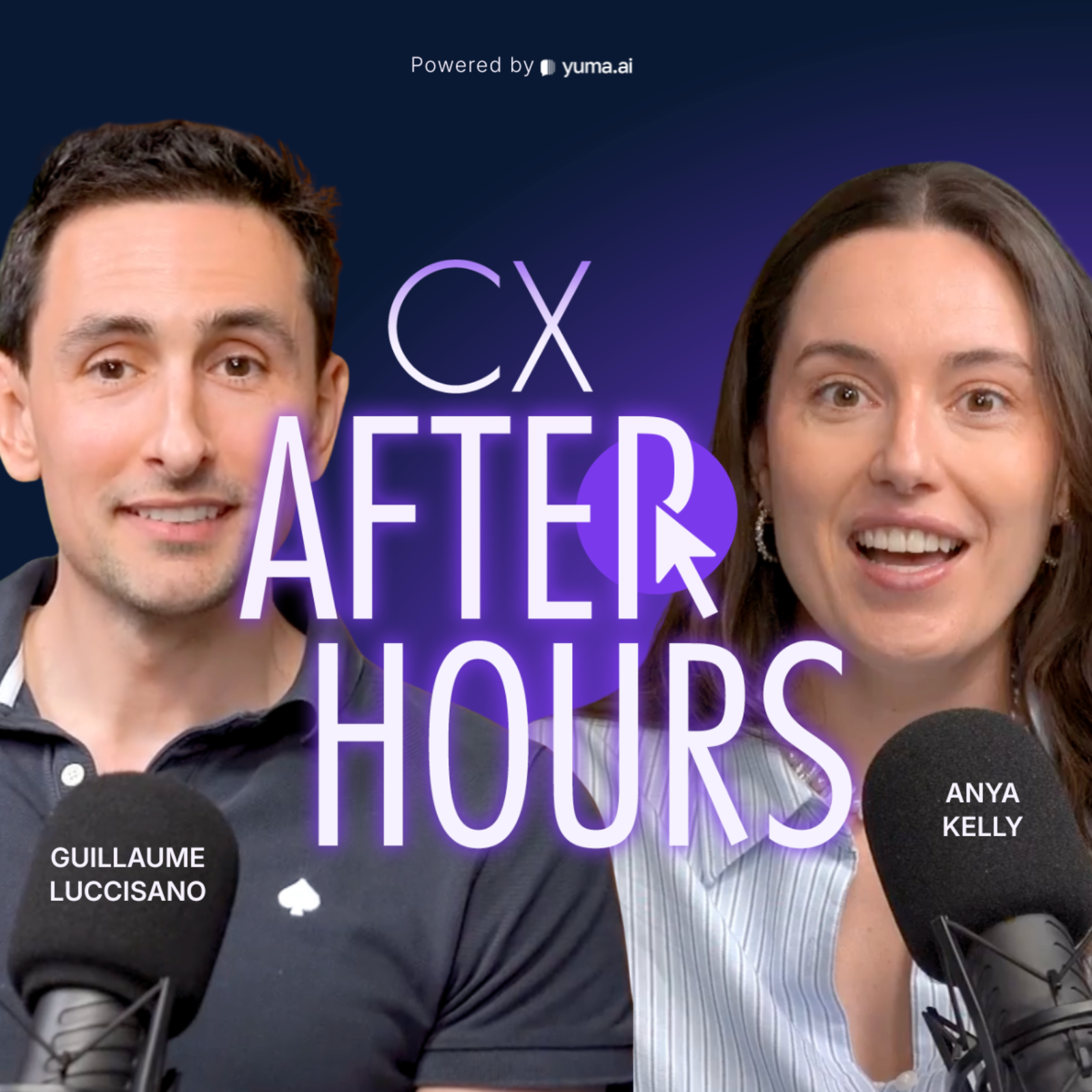
Speaker B: a very special guest, um, about all things customer experience and brand marketing from the agency side. I am Anya Kelly and I am a CX leader for over a decade. I'm now a fractional CXO working across multiple brands and helping build out their customer journey. And I am joined by my lovely co host Guillaume.
Speaker C: Hey. Hi everyone. I'm Guillaume Lucizino and I'm a three time uh, founder. After spending ten years in San Francisco in Silicon Valley, I decided to make a big uh, switch a few years ago and I'm now the founder and CEO of Yumai where we automate customer support for E Commerce brand. And we're back in studio in New York, like new episode of the CX After Hour. We are in New York. We are very excited to be back and today as, and yes, we're very special guests. It's going to change. It's going to be a bit less focused on just CX and we're going to bring some E commerce branding, marketing, uh, to the table.
Speaker B: Yeah, absolutely.
Speaker A: Thanks for having me. I'm very excited to be here. My name is Elainey Makary and um, for the past decade I have had one thing that's consistent in my career and that is my fascination with the customer, the client and their experience. I spent a decade working alongside a founder at a creative agency focused specifically in beauty, wellness and personal care and held a lot of different roles there. Ultimately became the chief operating officer and then finally focused solely on the client experience, client, um, program success for that department, built out a department focused on that. Now I'm working uh, in a consulting space with topics pharmaceuticals on a couple different brands. So I'm excited to talk today.
Speaker B: Amazing. Even more special, Elainey is my Best friend from college, hashtag rollpar. Um, and just an amazing human and someone who's truly brilliant and really excited to ask you our first question, um, because it's something that I think about a lot and very curious of your take. Where does marketing end and CX begin?
Speaker A: I don't know that there's so much of a handoff anymore. I think that like every interaction that a consumer has with a brand is, is something that they're noticing and it's going to either build trust for them or erode trust for them. So it's like the marketing creates the expectation in beauty specifically, if you have someone who's looking at a product through a marketing campaign and they see, oh, this vitamin C cream is going to make my skin brighter in three days, that's their expectation. And every different touch point that they have all the way through getting the product in their hand, all the consumer customer experience side of it as well, it's part of that. So I think, you know, the marketing creates the experience and the expectation and the, then the customer experience side of it is more like, did it work? Did we get them to become a repeat purchaser? You know, is, is the shipping happening on time? Are they getting the product in hand? Are they able to use it? Is it going to deliver based on what they saw in that marketing? So it's really like a more of a holistic circle in my mind I think like we have to, they don't separate things by departments the way we do in house. Um, they're just kind of thinking about like what is this solving for me as a consumer?
Speaker B: For sure. I, you know, nps Net promoter score is a metric that controversial. Ah, of course. Um, but it's used at times to, to measure loyalty and repeat purchase, um, as a proxy. And um, you know, every company that I've worked in house at, it's a huge focus. How do we increase our NPS score? How do we proactively engage? And it is definitely a challenging conversation to have to explain that you're, you know, to me, customer experience starts at ah, truly the first touch point with a brand. So I think your example with the vitamin C serum working, um, in three days, like if that is someone's first touch point and the results do not deliver what the ad copy says, that is going to, you know, decrease the, the NPS score. So I always say it's kind of like a countdown. Yeah. Um, and it really does start with that first touch point which is intrinsically tied to the overall customer experience. So that makes total sense. Yeah, yeah.
Speaker C: Um, to go back on what you said about marketing being the first, also the first foray, the customer is going to see that first. Right. And they're going to see the promise and everything. And, um, every time you have a new campaign or you have branding change, is this something that works with the world? You work with the customer success department on that? Yes, that's. How do you. How do you make that happen? I think brands sometime, you know, it
Speaker B: doesn't happen that way.
Speaker C: It doesn't happen always. Right. And you get to be surprised like a morning. You get like, well, what are people talking about?
Speaker A: And that's exactly true. And brands who do a good job are the ones who are paying attention to all these different touch points and who use all the data that they have, like those interactions. I remember working with Ulta MD Skincare, like, some of the biggest things that we were able to. Some of the biggest insights we were able to gather were from customer experience interactions. Either on social media or in their, like, support tickets. They would. Would write and say, um, where do I buy this? Or like, is this product available and tinted? So we can give that to product development and say, there's this whole group of people who want tinted sunscreen. And then, like, eventually they will put that into action and go through all the different hoops they have to do to do that.
Speaker C: So it goes both ways, basically. Right? Like, you nourish yourself from any insight that you're getting from customers directly.
Speaker A: Okay, absolutely. And if you're not listening to what your consumers are saying, you're missing out on your community that you're working so hard to build. And I think, like, brands who do a really good job are the ones who are listening and they're not just so committed to telling the story they kind of, like, set out to tell as a brand, you know, you have to stay true to what your brand mission is and what your brand voice is, but you have to really, like, listen to who's talking back to you.
Speaker C: Do you have any example of one time where this happened? Like, you learn something from the customer and that informed, like how you change your branding on your. The marketing?
Speaker B: Yeah.
Speaker A: Um, yes. Oh, my gosh. So many examples. No, it's a really good question. Um, I think years, years, years ago, I was working on a Conair campaign. It was a hair dryer campaign. Yeah. Um, and this was before there had been such a loud conversation in the beauty industry about showing consumer representation and showing diversity in models and bodies, in hair color, hair Texture, skin color. And there was um, this was like a campaign that went live as a YouTube commercial and there was so much conversation in the comments about like I would love to see how this hair dryer worked on textured hair, curled hair. And that became one of the first M like moments for that brand to say even though we're a heritage brand, you know, we have to think about these things and put different people in our campaigns. Like this is what the world wants to see. As a consumer you have to be able to see these things. So that's like one of the big standout moments in my mind. But there are so many instances where brands just hear little comments like this and can, can turn a bigger learning for sure. Yeah, that great.
Speaker C: That's super. And, and that I assume after that was very good for the brand right when they started, like yes, yes it was.
Speaker A: Brands that listen and make this a two way conversation I think can really, you know, grow from there.
Speaker B: As someone who has purchased ELTA MD sunscreen on Amazon.com not shout out to Jeff Bezos can how you know, as a marketer, as someone who is in brand, you know you will have products sold in different channels that you cannot totally control the experience. Right. That being said, you also have customers showing up there and leaving reviews and giving feedback. How have you kind of worked to gather that customer feedback across a bunch of different digital channels that might not be intrinsically owned by the original brand?
Speaker A: That is such a good question. And it's such a thing that happens all the time. And I think like a big thing with specifically beauty, wellness, personal care consumers. They are so educated. Like if you think about, about your own journey when you're buying a skincare cream, like you're looking at the ingredients, you're learning all these things. Like we speak like dermatologists now because like we know so much and you're watching creators who have so much knowledge on these topics. So you really. Education is like the biggest piece of it. So I think it's important for brands to try to put the education out there before the consumer asks that question. Otherwise they're going to go to somewhere where there might be an in your accurate piece of information and then that's on the brand because like you can't control every little thing. Like you want engagement and you want, want reviews on something like Amazon. Like you want those interactions but you know, you can't always put your brand name behind it. So I think trying to answer the questions like if somebody gets a retinol product and they're really excited about it. And then they wonder to themselves, like, can I use this every day? Yeah, that should be answered already in the packaging, uh, in the, like, PDP page or like, in something about that product so they don't have to go searching in a source that's maybe not going to tell them 100%.
Speaker B: Um, I mean, we have lived through the YouTube beauty influencer heyday. Uh, what is it? Gummy bear hair? Charles Meltdown?
Speaker A: Yeah.
Speaker B: Um, but I mean, also the rise of TikTok.
Speaker A: Right.
Speaker B: Um, how has that changed the space? I mean, to your point about educated consumers, it's like, how is it that a random dermatologist on TikTok is explaining to me, uh, skin cycling? And now that is the. The way that I, you know, do my skincare at night. Like, how. What has that done? And how. Have you seen it change?
Speaker A: It has changed.
Speaker C: Yeah.
Speaker B: I'm saying, like, there's the girly chat.
Speaker C: It might have been an AI instead of a real dermatologist. Like, I was in some ads the other day and was like, 100% sure those guys, you know, the models were AI. Uh, 100%.
Speaker B: It's a real dermatologist because now she has her own skincare line, um, which
Speaker C: still may be AI. I mean, the people be on every.
Speaker B: We don't know.
Speaker C: We don't know at this point.
Speaker A: No, you're so right.
Speaker C: If it was a few years ago, maybe not.
Speaker B: But I truly thought Obama was DJing. So, you know, that's what AI can do these days.
Speaker A: Yeah. You know, you really have to. You do your research and then it's not even enough. So, like, you have to find the experts in the space, which has to be coming from the brand. So, like, when the brands partner with creators, I think that's like a really safe way to get information. But it has totally changed the game. Like, hearing from so many different people at so many different consumer stages. Like, you know, you can hear from people who are young using the product, or, like, who have been using the product for 50 years, or, you know, brands who are just coming onto the scene. They have to. What I think is interesting is that everybody has the same toolkit. We all have access to these platforms, usually for free, to create a brand page on TikTok or Instagram or YouTube, whatever. And then it's how you use it and how you spend your marketing dollars to connect with the consumer. Like, every time they're interacting with your brand, they're getting to know you and getting to feel like, do I Trust this brand. Do I want to keep coming back to it?
Speaker C: Question on that. I'm very curious on the marketing front, like how do you know, um, what is a breakdown usually on the budget spend? Uh, at the moment, I don't know for the brand you work with or that you know, is it like 40% TikTok, like 40% Meta and 20% Google? Where are brands spending money at the moment and where are they seeing good roi?
Speaker A: It is so hard to answer that in a general standpoint. I think there are so many m.
Speaker C: It really depends on the product and a lot. But I'm wondering if TikTok is still huge at the moment.
Speaker A: Yeah, absolutely. I mean I think it's still a discovery platform. It's still the place where people are going for trends and um, it's newness. It's like the most authentic raw version of content so that you have to decide for your brand. Like we still have some brands who don't have a heavy presence on TikTok because it just doesn't match their audience. Like if you're selling to a different target who maybe is not as uh, frequently on TikTok, it doesn't make sense to put all your marketing dollars there. So I think it really depends on identifying what are your brand goals, who are the people you're trying to speak to and going from there. If you were just to say TikTok is where everything is happening and where growth is happening, like that is generally true. But I think you have to really figure out who you are as a brand first before making that budget breakdown.
Speaker C: Okay, so it really depends. So we didn't care.
Speaker A: It depends. Yeah. Mhm.
Speaker C: But TikTok is kind of mandatory nowadays.
Speaker A: I mean I think you should have a presence on everything and like a lot of the platforms are connected these days so like you have to kind of have one to have the other and have your business metrics all kind of looped in. That's where it's really helpful too to see like if you can do any community engagement and listening to your social conversation. It's helpful to have people on all different platforms.
Speaker B: Have you done any work on you know again from like a brand marketing, digital marketing perspective. Any work on getting products, products recommended in like chat, GPT, Claude, you know these LLMs that now, I mean again I especially skincare. That's where I'm going to search for, you know, I have X, Y, Z, you know, recommend a product for me.
Speaker A: I have not personally done this with a brand yet, but it's Like a conversation with many brands and it's kind of like, yeah, it's like, how do we get to be recognized? I think people understand how to like, you know, use SEO and get to the top of Google. Like you can pay for a lot of that. But it's interesting right now, I don't know that there's a playbook for getting into like a lot of brands are kind of creating their own versions of these tools. Um, I think it's just still feeding that marketing muscle because the more times you are mentioned in the general web, then you're going to be brought up more in these platforms.
Speaker B: And to your point about, you know, educated consumers, especially in this specific vertical, um, I am always like, you know, only source from customer reviews, like on Reddit, on the website. I mean again, we know that like reviews on site can be modified m or, you know, ignored, etc.
Speaker A: Right.
Speaker B: But yeah, I mean, I think being, you know, I, I think it goes back to the importance again of meeting your customers where they are, whether that be Reddit, whether that be TikTok, whether that be, you know, again, anywhere public, you have to show up as a brand.
Speaker A: Yeah, Reddit is really interesting right now too because people, brands are really keen to get onto Reddit. But like Reddit users don't want brand marketing there. So like, I feel like it's a substack. Yes.
Speaker B: Uh, which is another thing.
Speaker A: Right. So we have some brands who will have like a ghost account or something like that and try to listen in and get their insights there. But yeah, everything that I feel like either of our teams are doing, it's the collecting data to make the journey better for the consumer.
Speaker C: For sure. I want to go back on the review system. I assume you try to collect reviews. What tool do you use? Is this on the marketing front? Is this more on the customer service? And who is, are you answering those reviews? Like, how does it work, like for, you know, people listening to us? Any insight there?
Speaker A: I think it depends on the brand size. Like that's something that comes a little bit later. For most of the brands I've worked with, they have to grow to a point where they have the bandwidth either for in house people to kind of address those or for a bigger tool who will read those.
Speaker C: It's not something you want to do very early, try to like get reviews and get, you know, the world out and get traffic or like, uh, or apparently not.
Speaker A: It's definitely something you want, but I think like you want to be authentic about it. So, um, trying to create. You can put it on. I think what things we've. Strategies we've done are like using social media to try to get people to post about things. User generated content. That's big. Asking people to write a review if they purchase from a certain website. Absolutely. But I think it's like you have to create a moment that feels organic for these people to want to talk about you. So I think for brands in the beginning stages it's like let's try to be less salesy with the intention of creating sales.
Speaker B: Yeah, it's really hard. Right. Because it's like you know, you buy something and you know a week later you're getting a uh. Do you want 15% off for this review? And so it's, you're. I'm like way stingier.
Speaker A: Right.
Speaker B: You know.
Speaker A: Right.
Speaker B: It's, it is a weird kind of balance of, of how do you um,
Speaker C: do you have to. Yeah, what do you have to give a discount to get the review? I guess it depends. I mean it helps.
Speaker A: I assume it helps.
Speaker B: I mean that's kind of how brands for a while we're trying to incentivize. Incentivize it because obviously the more reviews it helps with conversion.
Speaker A: Right.
Speaker B: Um, but yeah, I think it's interesting. Um, an interesting tool that exists out in the ether that I thought was kind of fascinating is this tool called Hark. Um, and it's like an insights kind of customer video voice tool that um, you know it can like gather like real time like UGC and also provide a full dashboard like, like for CX leaders on what customers are saying. What about the product do they like, et cetera, et cetera. And I have seen brands I'm trying to think of which one, I can't remember, maybe Terror Cafe, I don't know. But there are some brands that are starting to use that like support generated content or potentially try to you know, market this as like a campaign and invite customers to again just show their tool. Like show whatever the product is and like talk about it and talk through and actually using that in marketing copy and content and video content. And I think that is something that feels so much more like authentic in a weird way.
Speaker A: Right.
Speaker B: Than just the email CRM push for reviews.
Speaker A: Agreed. The emails are so tough because you do need them. And as a consumer who sometimes like leaves a cart filled. Yes, sometimes an email really does help me like to get back to it. But yeah, it's like, I mean we're working on something right now where we're trying to find the balance with a brand that just relaunched, trying to find a balance of like talking so much about promotions and sales and also reintroducing them to the brand and the brand story and the products and the benefits, like figuring out that balance because you know, again, it's. It's another touch point with the consumer and they want to get to know you, they want to be part of something. Like that's what we're building with all these digital communities is like a conversation together. So yeah, you do have to find a balance and find a way to be authentic. Um, I've seen a lot of people doing a good job of like if you're at an event, like if you ever have an opportunity for an in real event, in real life experience, creating something where they can like scan to write a review and then get something that way or something like that, at least it's like they're part of it and feel a little bit of connection to whoever is talking with them or something like that. But just asking for reviews sometimes feels a little.
Speaker C: Yeah, transactional. Every touch. Want, I guess, matters and you, you have to save them for when you really have something important to say that ah, can bring value to the customer and to them for the brand. And so it makes. Well, there are some reviews you don't ask for, just like negative reviews that you can get.
Speaker B: Like at some point, um, you actually had a word. I'm not going to pronounce it because you know what I'm talking about, but
Speaker A: it's the mix of the physical and the digital.
Speaker B: What do you call it?
Speaker A: Um, Did I just say it?
Speaker B: No, it was, I had it in my notes. It was like fidgetal, but I don't know.
Speaker A: Oh, actually that's a word these days.
Speaker B: I didn't want to pronounce that because again, I don't even know your last name and I've been best friends with
Speaker A: you for over a decade.
Speaker C: We still don't know, but do you mind repeating your life?
Speaker B: But m. Yeah, I think that that's really interesting. And this has always been an issue for leaders who are in charge of survey and data collection. I mean, you know, so many D2C companies, obviously they start online, eventually they grow their customer base where they're able to go into retail and like negotiate. You know, again, you're not. If you just start, you have no kind of proof of concept customer base that's going to go into an ulta. Um, but yeah, I think, you know, this is something that we've seen a lot of innovation in is, you know, how do we track the customers, you know, make sure that we're getting them into our CRM if they encounter us in a physical location, a pop up, anything like that. And also you know, again I've, I've worked with food and beverage brands. You know, how do you get the customer to scan a QR code on the back of the packaging? Because you, you just get no information
Speaker A: from the retail of things. Mhm.
Speaker B: So yeah, tell us about Fizz Fidal Fidgetal.
Speaker A: I mean I think it's what every brand is trying to achieve right now. Like it does come back to. I mean it can be budget but you can have a budget of many sizes. Like you can be really scrappy and create something that you have an in person moment with people. Like we see a lot of brands now doing little mini mic interviews on the street. That's like uh, an example of something where you can have this, this conversation with real people on the street. And then you turned it into Instagram content, TikTok content. You put money behind it, it becomes your paid ads. Like you have generated reviews that you can turn those into quotes and like put them in.
Speaker B: Yes.
Speaker A: Different format, um, graphic design posts. Like so there are so many ways to kind of create that moment. But yeah, I think it's so important for brands right now to try to come back to the physical realness. Like we, I think there's so much of a push like even with all of the conversation about like get off the dating apps, go outside, like all these different things. Uh ye, yeah. And it's like it's easier to say than do. Obviously we're all spending so much time on our phones and brand marketers like we are saying let's be together in person but then we're also like right back on the digital side of things. Like so it has to be this blend because people want constant interaction and they want to have it conveniently. So if you're not there in person, you want to feel like you're experiencing it. So it kind of for me goes back to that like really strong brand mission and brand voice. We were talking about this before. Like the brand tone, it has to be so consistent so that any of these different things, things don't feel like you're just kind of like throwing spaghetti at the wall. It's like this makes sense for the brand and we thought about how you would want to interact with us and we're kind of giving you every opportunity to have this experience with us.
Speaker C: Question on that, um, do you use AI for that? Because it seems like it's, you know, the AI should do a very good job there. If you can like give all your ads, all your material, like all your, all the branding and tell you like, you know, where am I not consistent? Why am I consistent? Like, do you do that, that kind of exercise.
Speaker A: It's a really good idea. We have used AI in a lot of different ways. Not really that way yet. I mean, it's a good idea. Um, but I think what we've used it for. I remember when AI first started to be a conversation and everybody was feeling a little bit of insecurity around will this take over an entire copy department or like a concepting department? I don't see it as that. I see it as like a tool. Um, I was at an event, Kelly Fitzgerald, she's um, a managing director of retail at Google and she was talking about AI and how it's been here. We've had AI for years and we have to think about it as a helper, not an overtaker. It can be such a support for us. And I think that's how we've been using it in marketing. It's a springboard. So if you're thinking about what are other ways we can take our tone and put it into another platform, we'll do that. And then you have to think about it. But for any of our departments, I think it's still like AI can help with automation and taking away some of like the monotonous work. And then we have to kind of be the experts in the space for the culture and the nuance and the, the things that people. The humanizing of the experience 100%.
Speaker B: I mean, and this goes back, I feel like we've had these conversations just on what do you need to do as a brand, you know, a CX team before you implement an AI tool. And part of that is really ensuring that internally you have these foundational documents generated by the brand team, a voice tone style guide. Because you're able then to upload that to Claude or whatever and generate, you know, macros in the right voice tone style with the right punctuation, the right capitalization, you know, your FAQs that are public facing, even just, you know, responses to, to customer feedback. It's just, you know, uh, the issue is you always, you know, as a leader, you always want to be honoring the brand vision, but at times, you know, you're kind of grasping at straws to be like, does this sound right?
Speaker A: Right. Okay, yeah.
Speaker B: And so being able to utilize AI as that, like, proofreader is really helpful.
Speaker A: I think that's genius. Yeah, I think that's a really great use of AI so that the consumer still feels that trust and consistency from them. And I think like, before they even get to the point of asking this question, like, we as a brand have to do a good job of making them feel like they know what our tone is so that when they get. Then you have the style guide and this tone guide to even implement. So it can be this holistic experience,
Speaker B: like sending all of these emails in a certain, you know, I don't know, like a style or, you know, everything's lowercase and you know, blah, blah, blah. And then you're getting like a super formal, weird.
Speaker A: Right.
Speaker B: Email. It's like it can feel spammy.
Speaker A: Yeah. Like, who is it?
Speaker B: What is happening is phishing.
Speaker A: Right.
Speaker B: So, yeah, I mean, that stuff really matters. And it also is why one of the first things I do when I go into a brand is look at their Shopify transactional emails. Because, you know, uh, so many people just do it out of the box. They're not changing anything.
Speaker A: Right.
Speaker B: That, you know, every order is going to be seeing this.
Speaker A: Yeah.
Speaker B: How can you proactively, you know, address FAQs or push more product? Like, you know, it's an opportunity and
Speaker C: it's tough things go stale. Right. I mean, maybe those emails were set up like years ago and nobody looked at them and. And exactly. So it does, it does take some effort to make sure everything's up to date.
Speaker A: Right.
Speaker B: 100. Okay, we are ready for the first segment of, uh, the show the Ven elainey. You have 45 seconds to just go off about whatever you want in the culture, in the work environment, marketing, whatever. Your time starts in 3, 2, 1.
Speaker A: Okay, 45 seconds. I am going to talk about the importance and I think it's relevant to both of our departments of the hard conversations with customers and with clients. I actually think they're really helpful, like finding a way to navigate these conversations. That's when you're learning more about each other. If I'm thinking from the client side, like if you, something goes off track, if you have a project that went off the rails and you have to talk about this with the client and figure out a path forward, or if you are, uh, on the other end of an angry customer ticket and you have to kind of find a way to get them through this situation and keep them as a purchaser of your brand, finding those moments and like creating that trust with them. Those things to me make more of an impact than if everything was just smooth sailing and it was just kind of like every day is like, yeah, this is great, this is working. We don't have anything really else to say to each other, but if you have an engaged conversation with someone and you have to together solve it, to me, I think that's a really great learning moment, uh, for you and the person on the other end of that conversation.
Speaker C: Is this an argument for generating out conversation? Like find ways to mess up so you can get this out conversation?
Speaker A: Maybe, maybe I'm saying more fights in the world workplace.
Speaker B: No, I think that's super, super important and a very, very good kind of takeaway for CX leaders who, again, it doesn't matter how long you've been doing it. If you're talking to a customer and they are, you know, digging, you know, it, I don't know how to explain it. You're talking to a customer and they are super upset. And yeah, I mean, rather than the defensiveness or even just, just the instinct to want to smooth things over, how do you actually like, lean into that emotion respectfully and continue to stay curious and ask for specifics? Because quite frankly, it probably is going to help you optimize something, whether it's the product or whatever their, you know, shipping situation, whatever.
Speaker C: Mhm.
Speaker B: But it can definitely be very scary both from like a stakeholder perspective because, you know, diplomacy. M. But. And then also for a customer who's already irate, you might want to be
Speaker A: like, oh, uh, so. Yeah, yeah, but don't shy away. They're really good learning moments for sure.
Speaker C: All right, so we're going to take a short break here and be back, uh, right after.
Speaker A: Still to come in this episode, it's brands like that who are kind of thinking outside of the box and creating those personal moments too that are winning a lot. Like trying to really put the consumers into the experience.
Speaker B: We are back with After Hours. Thanks for staying with us. We have our lovely guest Eleni in studio. Elainey, we're just going to jump right back in. Um, you know, we talked a lot about what it takes to build trust with the customer and where brands can show up, but very curious from an agency perspective, like, what is your process for building trust with the actual client and the actual brand?
Speaker A: I think we're both kind of like flexing the same muscle there. It's a lot of listening and understanding what the people want to know about. And, and we talked about this a little bit before but for beauty, wellness, personal care, specifically in this industry. And I kind of think everything now because people are just so curious about what they're putting in their bodies, what they're putting on their bodies, like what's in their homes, all of those things. So I think it's a lot of education. And if we can do education for people and make things really clear, like I've seen one little copy change clear up an entire queue of questions that people have over and over and over. Like if we can find ways to come up with the responses people are looking for from the beginning, um, we're building that trust. But I think from my experience it's also a lot of like using your, um, almost like the mindset I take is like on a personal level, like thinking about people outside of the transactional relationship that you have with them and trying to understand what is it that they are trying to accomplish with interacting with my brand or with purchasing this product. Is it like, like a skin issue? Yes. But is it also. They're looking for confidence. They're looking for like uh, an experience of self care. They're looking to have a slumber party moment with a girlfriend and like a nail polish they're both using. Like it could be anything like that. So like trying to find those more personal ways in, to the consumer, I think kind of gets to the heart of both of those departments.
Speaker C: How do you know those, how do you get those nuggets? Like, does it go again through like customer service? So like this it's. Or you get some specific channel where you can get those insights. You mentioned Reddit earlier where you could potentially know things. Yeah, um, any other trick, any other place where it's a bit of a
Speaker A: blend, I think like having people like boots on the ground in community management, social listening is huge. Like, so whether that's somebody who's combing through the responses that an AI tool can pull and say like these are all the people. The comments are like reading brand sentiment in those comments, like trying to find trends, which is a great use of AI for community management. Like figuring out ways to kind of pull all of those different trends together and understand the data there. Um, but a lot of it is just like looking at other. Like I think in any industry it's important to look at other industries and try to see what's working for people in food and beverage, what's working for people in um, I don't know, technology, and trying to see like how we are talking to consumers and figuring out new ways into them. Because everything that we should be doing is trying to create like a little bit of a, a nice moment for people in an industry like beauty, wellness, personal care, like they want to have a little bit of enjoyment when they're interacting.
Speaker C: And the brand you work with do sell product in retail store, right?
Speaker A: Yes. Mhm.
Speaker C: Are you able to gather feedback from directly?
Speaker A: Yes.
Speaker C: Okay, how do you do that?
Speaker A: It's um, different retail stores have different processes with that. So like a lot of the brands that I've worked with will sell at Ulta, Sephora, um, Target, Walmart, like things like that. So it depends what they will share with you. But if you can kind of find ways to support the retailer's efforts as well, like we've done different events where you'll be outside of a Target or like something like that to try to drive traffic there and then like you can get more in, in information that way. Um, certain information from those retail stores they're not able to share with the brand. But um, yeah, you can try to understand if there's even like user generated content coming out of those different pushes or um, if people are asking more questions about a certain retailer over others.
Speaker B: A skincare, ah, brand that I worked with, um, that did a limited like pop up in Sephora, um, part of their kind of, you know, their value proposition was that the fact that this skin care product was custom formulated for, for customers based on an intake sort of quiz that they took. And so I um, just thought it was really interesting because you know they built these little stations that went into Sephora and customers were just like complet, almost like a touchscreen survey in order to be recommended with a specific product type. Um and so that was just you know, again I think to your point of how do you blend physical and digital? How do you retain the, the, the physical retail experience? Feedback, how do you retain that and you know, implement the changes, you know, what you can optimize across your digital tools. I think that's super important.
Speaker A: Yeah, yeah, it's brands like that who are kind of thinking outside of the box and creating those personal moments too that are winning a lot. Like trying to really put the consumers into the experience. People are. Look I, this was another stat that I heard from Kelly Fitzgerald. But like people are constantly googling for me the words for me after whatever their search is. So it's like what can brands do to make you already think that this is a product for you or a suite of products for you?
Speaker B: That's really interesting.
Speaker A: I know I was fascinated by that because it's very true. Even as our own Google searches. Like you're looking for travel routes or like different things. Like yeah, it's so it's. People really want to be part of the response that they get from a brand for sure.
Speaker C: Any trick there, like what have you done to customize like the uh, you know, the personalization. Uh, yeah, yeah.
Speaker A: Like, I mean if for brands who don't have um, the product development goals to create products that are personalized, it's a lot of like the, the storytelling that we're doing. So showing the different consumers within the marketing. Like one of the things I've loved to do are like different calls to action for user generated content and then like featuring people in the campaigns. We've worked with a lot of real people, real women. Um, we worked with a, a menopause skincare brand years ago that was focused on people going through the three different stages of menopause. And we've got real people who are going through menopause. Like one of them, we flew in from Texas. She was somebody who was posting a lot about her hair going gray on Instagram. So finding like these different people who actually have real connections to the stories that you're telling then really authentic voices for the brands. And I think doing things like that
Speaker C: show truth and is that like, do you try to keep the same voice for the brand or do you create segments or like to differentiate the marketing language based on the target? But I mean. Okay, so you definitely do that. Okay, yes.
Speaker A: That's like a huge project that should happen at the beginning of a brand's life cycle or at a brand relaunch. And you know that people will work with an agency or a copy team in house or like a strategist, just a suite of people have to work on something like that and to come up with what is going to be this brand tone, this brand um, style guide basically that's going to influence your photography, your eventing, your um, copywriting, like packaging everything. So that's where you're starting this journey of consistency with the consumers and brands who really put the time into that piece of the work. At the, the upfront, I think you do really see them doing well. Like road beauty. I was gonna say are we gonna talk about road?
Speaker B: Like who is the best in the game right now? And is it road?
Speaker A: I know it because. And you know, it's different. It's interesting with celebrity brands because people already adored Hailey Bieber. Like she had her own thing going on outside of road. But Road on its own is, has now turned into such a consistent brand story. Like it's just such a good um, player in the game. I also think ELF does an amazing job of their branding. They're another one who does like a ton. They, they just create so many new moments in beauty. Like I remember during COVID they were the first people to come up with a musical campaign that had like a trending sound. Like they just, they jump into so many things before other beauty brands and do a really great job of keeping beauty relevant in so many different circles.
Speaker B: Super interesting. I think going back to like the digital and where you can personalize a customer journey based on you know, what, why this customer thinks this product could be an option for them specifically is simply like having a pop up on site that, that segments like you know, hey, why did you, you know, what, what specifically are you kind of looking for? Um, I know I, I worked with a supplement brand that was for you know, targeting women with pcos and you know, there's a bunch of different side effects of pcos and being able to you know, funnel women into different paths based on, you know, the main reason for them browsing the site helped you know, really personalize all future touch points and just again you knowing more about who our customer base is, who's browsing and how we need to optimize the products for them.
Speaker A: Yeah, mhm. Yeah. Yeah, it's, it's great when people actually like follow those paths. That's when a brand has done a good job.
Speaker B: Yeah.
Speaker C: So we have here a segment that's called the 10% fix.
Speaker A: Okay.
Speaker C: It is basically something small that is going to have uh, outsized impact based on impute that you put in. So like, like something tiny that's going to um, have a big uh, big impact for brand uh, or anything. What, what, what would you do based on. Go ahead.
Speaker A: Okay. I, I love this question.
Speaker C: Okay, great.
Speaker A: Um, I think this is like a philosophy that I think works personally and professionally and definitely specifically for brands like go into things with an open mind and for brands if they kind of read comments that they're getting on social media or in a support uh, ticket or any forum with curiosity instead of defensiveness, you can really learn a lot as a brand. I see a lot of brands, I have seen a lot of brands who will you know, keep going back and forth in the comments or we'll see creators doing this like having snapping back at different comments left in their videos and for some people that works, that can be part of the brand it's like they're very sassy or they really stick up for what they're saying. But I think if brands, brands specifically as businesses go into it with this curiosity and try to say why are they confused about this? Or why did they have a question about this? Or why did five people ask me the same thing and try to like create data trends from this? We can actually learn from things and then give them the information that they need before we even hear things like that in the future. This, uh, I mean we've learned like this for many different brands I've worked on and if you start to see patterns, we'll say, okay, well we're launching a new brand tomorrow. We know now that, that we have to give them XYZ information upfront because so many people asked about it in the last time that we did this. So then it becomes like a blueprint for future launches within your brand or as an agency within multiple brands for sure.
Speaker C: So to summarize, when looking at feedback, be curious. Curious and open to feedback. Yeah, non defensive, right? Like it's not okay. Yeah, something's wrong, uh, we need to fix it.
Speaker A: Yes, we curious.
Speaker B: As someone who has always worked with startups, I mean you've worked with some institutional brand names.
Speaker A: Yeah.
Speaker B: Going through rebrands, which is a very sensitive sort of, you know, I feel like brand, it's, everyone is very, very, you know, precious about the brand and the image. How have you kind of navigated disagreements with again like a heritage brand or like uh, just like a name that's been around forever if they're coming to you for a rebrand opportunity. Be.
Speaker A: I've been through so many different rebrands and I think they're really fun projects but they are, they're so precious and it depends a lot on the team that you're working with too. Like if you're working with a founder led brand, you have to be really um, on the same page with them as what they want this to be. Moving into the future. We've worked with several brands where the brand is named for a person and like sometimes the person will move away from the brand and it becomes, becomes just the brand with their name because it's well known now. So figuring out like a path for those different stories to be told is interesting. Um, but I think you have to find brands that are ready for this and like that they, they have a reason for it. If it's because the packaging feels really outdated, that's a really valid observation that like you should lean into because you're probably missing out on so many new purchases because you just aren't competing anymore. But if it's like, um, you know, there's so many other reasons too, if your storytelling is not clear, if you don't have a message that you're telling for a reason, like coming up with a purpose. A lot of the brands we've worked with that are maybe owned by a larger parent company have started just because they're really amazing products and they have really great clinical research behind them. But a consumer can't really connect with that. So it's like finding new stories to tell. Is that going to be bringing in expert voices or is it going to be, um, you know, creating a panel of advisors who become the faces of these brands? Brand kind of what I think it comes down to for a lot of these brands and their relaunches is like connecting with the humans on the other side. So yeah, yeah, change of topic, change of topic.
Speaker C: I'll bring AI more into the conversation here. So we touched on AI a few times already. Um, but how do you. Can you tell us the other ways you have used AI currently and that you really feel made a difference? So it seems like you really see AI as an helper at the moment. Um, anyway, uh, it can be data crunching. It can be anything.
Speaker A: Yes, data is important. We will use different social listening tools that leverage AI to come up with a chart for our brand leaders to look at and understand what are the different things that people are talking about, what are the most loved loved topics of conversations, most loved posts, like what are the different campaigns and how did those metrics perform? So I think it's a lot about the data and then I think pairing that AI information with a human to think about it and pull the insights from it has been really helpful for the different projects I've worked on. Um, so again I think it is for my um, work right now like a springboard. Take the information that they can call for you and then take it as your next step. You take it as the next step. Ah, to, to bring it forward for the brand storytelling.
Speaker C: I want to bounce back on what you said about Dashboard, uh, and all any specific metrics that you follow, uh, that you think is key and everyone in your position should be following.
Speaker A: It changes all the time, um, I think dependent on the platform. But for example, if we're looking at Instagram metrics, it used to be a lot of vanity metrics like likes and follower count. Now brands pay such attention to these micro creators who are creating really awesome content because they have tons of engagement on their posts. But people are not so interested in going back to a grade anymore, like following one specific page. Like they'll just find content that they're finding entertaining. So I think big metrics right now are saves and shares. Uh, so yeah, like Instagram specifically. Instagram specifically. If they're like coming, coming back to it or um, sending it to people that they want to talk about this with. Like, those are some big moments for brands. Yeah.
Speaker B: It's really interesting how this is divulged on Instagram. I know no one wanting to like anything so that it doesn't impact their algorithm. But then potentially it still is. If you're saving, still is sharing it.
Speaker A: I know. And like sending it to. Now every platform, pretty much most platforms have like a group chat forums. Like you can send things to everyone. So it's all, it's listening to everything and it's like building a custom page for you.
Speaker C: On LinkedIn it is least like if you, if you on Twitter as well. I mean on X, if you save and share, like that's huge boost and huge signal versus a like or something like that.
Speaker A: Yeah. Oh yeah, definitely.
Speaker B: What do you, what are your thoughts on sentiment scores? Like again, how, how, how are brands that you work with like looking at this? Is it something that's relevant or is it something that in this day and age, especially if you're a large brand, like you're gonna have a blow up and consumers eventually move on?
Speaker A: It depends what the topic of the blowup is. Like, I think sentiment scores are kind of a nice to have. It's like one usually it's just okay and you're kind of like nothing crazy has happened and nothing, um, you know, when it's just a smooth line, it's like, okay, that's fine. If it's just like showing us things with like maybe a negative or a positive thing here and there, that's fine. But I think it's interesting to look at because sometimes it will show you and every brand, most every brand will go through something where there's a product recall or a scare about an ingredient or um, a creator you're working, working with said something that didn't agree with people. So there are always those things that happen. And when you have data over time to look at your sentiment score in those moments, then I think it kind of helps you with your crisis communications.
Speaker B: Yeah.
Speaker A: And like figuring out ways to bounce back from that so it is relevant. I, I don't think it's something that people spend the most time looking at.
Speaker C: And how do you compute this? It's nps, right? That's a. No, no, something else.
Speaker B: I mean it's a lot of like community, social community managed platforms will.
Speaker A: Yeah.
Speaker B: If you're doing it in gorgeous. This is like, mhm. Very like practical in the weeds. But you. They automatically will tag social tickets as positive or negative sentiment or neutral. So you can kind of like calculate
Speaker A: it that way as well. Yeah, right.
Speaker B: For a specific c. Like a certain period of time, blah, blah, blah.
Speaker A: Mhm. Mm. But yeah, I think it's interesting for brands to see when they have just launched a campaign or like spent money with a creator or partnered with a professional, um, like a key opinion leader or some like a doctor or a dentist or something like that, so they can understand if this really had an impact.
Speaker C: Before closing, where can people find you online?
Speaker A: I'm on LinkedIn. I think that's probably where I'm most active. Elainey Makary on LinkedIn.
Speaker B: Yeah.
Speaker A: Ah, right.
Speaker C: We'll do that.
Speaker B: Amazing.
Speaker C: Thank you so much for listening, uh, to us today. Again, uh, indirect from New York. Did you want to say something?
Speaker A: I didn't want to say anything. Okay.
Speaker C: Okay. Well, I'm going to close then. All right, well, thank you so much for being with us. Thank you for listening to us one more time. Please, uh, if you enjoyed the show, share this episode with your friend, uh, fellow CX leader or marketing operator, E Commerce operator. Anyone follow us, uh, on YouTube, on Spotify, in your podcast cast, uh, and leave comments and let us know if you like the show. I, uh, received, uh, last week some comment from Robin Margot saying she loved the podcast. So thank you. Shout out, uh, to you, Robin. If anyone else want to, uh, send us messages, please do. So, uh, we'll keep going, uh, and see you next time on CX after hour. Thank you.
Other episodes covering the same guests and topics, from across The B2B Podcast Index.
 How CitizenM Mastered Hospitality Automation with Mike Rawson (Formerly CitizenM)Pillow Talk Sessions · on NPS (Net Promoter Score)86 / 100
 Unresolved.cx - Acting on Voice of the Customer still requires a human - Cati Brunell-BrutmanUnresolved.cx · on NPS (Net Promoter Score)84 / 100
 How to Build a Brand People Love | Sarah Holt on Marketing, Leadership & AIThe Places We'll Go Marketing Show · on NPS (Net Promoter Score)82 / 100
 How We Helped a Healthcare Business 3x RevenueThe Revenue Room · on User-generated content (UGC)80 / 100
 Hotel Tech Pays More, But Is It Better? | Edouard ClarkSchulering HUB Talking Hospitality Podcast · on NPS (Net Promoter Score)80 / 100
 Amazon Product Photography: How to Increase Conversion RateHumans of Growth · on User-generated content (UGC)80 / 100Getting the AI Foundations Right in E-commerce CX (to Avoid Scaling Problems), with Leeor Cohen75 / 100Empathy Has Limits: The Reality of Frontline CX, with Caroline ON WilsonCX Is a Goldmine of Data (& AI Can Finally Help You Use It), with Cati Brunell-BrutmanWhy Your CX Will Always Be Broken (& How to Hire and Scale Anyway), with Michael Bair
 Eli Weiss on Why Your Best Customers Leave - And Why Better CX Starts Before They Complain