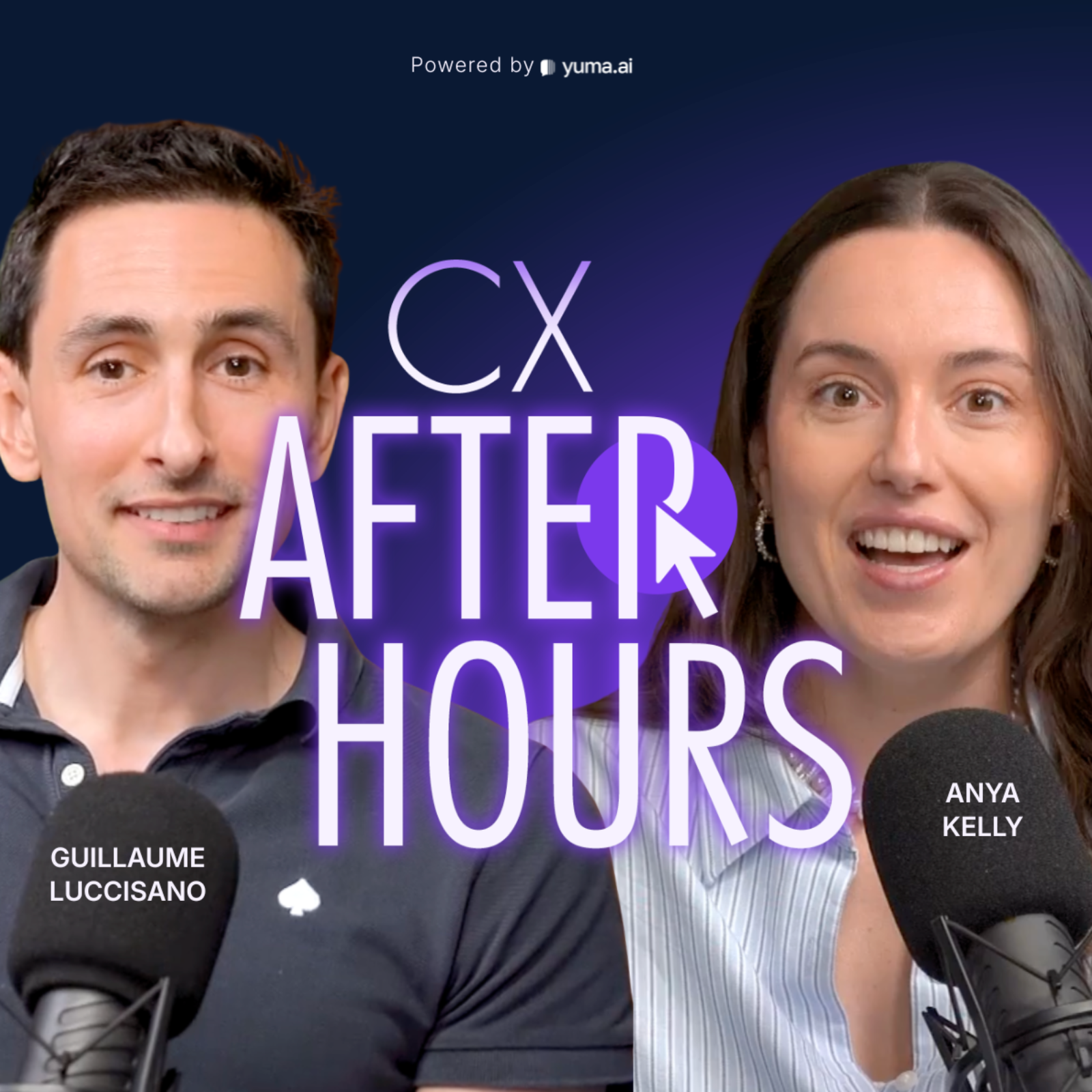
CX After Hours · 2026-06-24 · 47 min
Key moments - from our scoring
Substance score
55 / 100
Five dimensions, 20 points each
Lior Cohen, founder and CEO of Create CX and Scale your Team, argues that AI implementation in e-commerce customer experience isn't about adopting new tools - it's about getting foundational elements right before scaling. Drawing on seven years of consulting across 70-80 brands and his experience as head of E-commerce Operations and CX at Coterie Baby, Cohen emphasizes that AI amplifies what's already there, so weak processes, poor documentation, and unclear customer journeys will only scale your problems faster. The episode walks through a practical framework: auditing your current help desk setup (whether Zendesk, Gorgias, or others), creating a comprehensive playbook of the 90-95% of recurring customer questions (status updates, shipping, refunds, product education), then implementing AI incrementally using a crawl-walk-run approach. Cohen reveals that most brands target 70-80% automation rates, keeping human agents on higher-value work like retention, loyalty outreach, and complex escalations. He also discusses how forward-thinking brands are using AI to free up agents for proactive outreach (handling Trustpilot reviews, managing supply chain delays via Klaviyo segments) rather than just replacing headcount. For fractional CX leaders, operators scaling e-commerce operations, and brands evaluating help desk migrations, this episode reframes AI as a staffing strategy, not a technology bet.
Start with a three-month audit sprint covering your help desk setup, documented processes, and customer journey mapping. Identify the 90-95% of recurring questions customers ask before, during, and after purchase - order status, shipping, refunds, discounts - then document these as playbooks or guidelines. This foundational work must be done identically whether you're training human agents or AI systems.
Most forward-thinking brands target 70-80% full automation as an ideal scenario. Cohen reports that brands are getting closer to these targets, with AI handling routine inquiries while humans manage complex escalations, technical issues, and high-value customer retention work.
Most Shopify-based D2C brands have feature parity across platforms (Zendesk, Gorgias, Help Scout). The real gains come from optimizing what you have - what Cohen calls 'CX hygiene' - rather than constant vendor switching. Migration takes months and disrupts your team; better to prove your current system works with clean data and documented processes first.
Treat AI as a junior employee handling predictable, low-complexity tickets (order updates, basic troubleshooting). Reserve humans for sensitive moments, revenue-impacting decisions, proactive outreach, and customers with high lifetime value. Use AI deflections first (e.g., pause subscription options before escalating cancellations), then escalate to humans when the customer pushes back or the issue requires business judgment.
The AI operates as a black box on outdated information. If you change your free shipping threshold on your FAQ but don't update the AI agent's knowledge base, the AI gives wrong answers. You must keep your agent playbooks and AI knowledge bases synchronized whenever campaigns launch, products change, or policies shift.
Our reviewer’s read on each dimension, with quotes from the episode.
Contains a handful of genuinely useful operational points (help desk hygiene, updating AI docs alongside agent macros, proactive shipping-delay notes, human-first BPO economics), but much is padded with agreement and repetition of familiar CX advice.
it's not the tool, it's what you're doing with it
some AI tools will be able to automatically understand that the website FAQ has changed Some, it's static PDFs
Leans heavily on circulating takes - 'AI amplifies what's already there,' 'crawl, walk, run,' AI as a 'junior agent,' 'grass isn't always greener' - with little contrarian or first-principles thinking beyond the BPO-economics angle.
it's largely the same. Right. It's what you like. Inputs create good outputs
it's like crawl, walk around is like the cliche, but it's true
Genuine practitioner who ran E-comm Ops and CX at Coterie from prelaunch and has a Bonobos background, now running a CX consulting firm and BPO across 70-80 brands - relevant and hands-on, though at SMB/mid-market scale rather than enterprise.
most recently I was the head of E Comm Ops and CX at Coterie baby, uh, through prelaunch
we've done it for 70 to 80 brands over the last uh, seven years
Offers some concrete numbers and a named brand anecdote (Majority's proactive refund) plus revenue tiers and automation targets, but most claims stay directional with vague percentages and few hard metrics or timelines.
70 or 80% is what people are like. This would be a dream
I always use this example of um, the brand majority
Both hosts are CX practitioners who ask relevant follow-ups and raised the pointed BPO-stock-decline question, but the tone is largely agreeable and affirming with limited genuine pushback on the guest's claims.
I was pointing out that ah basically those companies lost stock market uh, price lost like 90%
Why don't you like Playbook?
Computed from the transcript - who did the talking, and the words that came up most.
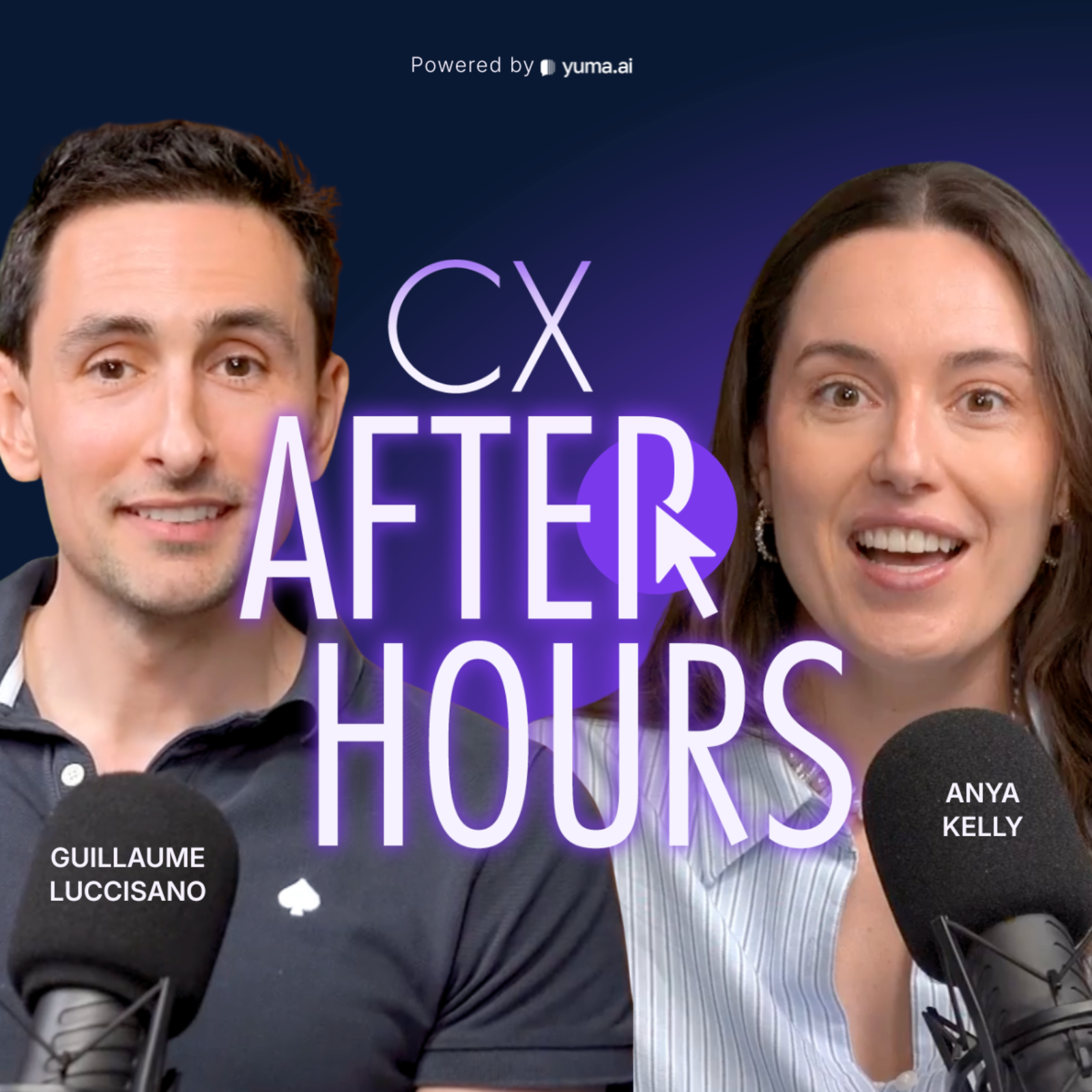
AI will not fix your CX. But it will expose whether your foundations are strong enough to scale. In this episode of CX After Hours, Anya and Guillaume are joined by Leeor Cohen, founder and CEO of CreateCX and Scale Your Team, for a practical conversation about what ecommerce brands need to get right before they try to automate customer experience. Leeor has worked across frontline CX, e-commerce operations, consulting and BPOs, with experience spanning Bonobos and Coterie among several others. That gives him a clear view of where brands often go wrong: chasing new tools before cleaning up the foundations. The episode covers why CX teams should be cautious about rushing into helpdesk migrations, AI platforms or new outsourcing partners when the real problem may be poor CX hygiene. That means unclear processes, outdated documentation, messy playbooks and systems that do not give human or AI agents the right inputs. Leeor also explains why AI should be treated more like a junior team member than a magic solution. It needs training, maintenance, oversight and clear rules for when to act, when to escalate and when to hand over to a human.
Transcribed and scored by The B2B Podcast Index.
Speaker A: AI won't fix your cx, but it will expose whether your foundations are strong enough to scale it.
Speaker B: Because AI doesn't create great customer experience, it amplifies what's already there.
Speaker A: And if your foundations aren't solid, you know, your systems, your documentation, your processes, you're not scaling excellence, you're actually scaling problems.
Speaker B: So instead of asking how do we use AI in cx? Maybe the better question is what actually needs to be in place for it to work at all.
Speaker A: In this episode we're joined by Lior Cohen, founder and CEO of Create uh cx, to break down how to think about AI in a much more practical way. From building the right foundations to a crawl, walk and run approach. This is CX After Hours. Let's get into it.
Speaker C: Foreign. M.
Speaker A: Welcome to CX After Hours, the podcast for retail and E commerce CX leaders scaling customer experience in the real world. We take a step back from the queue to talk honestly about the trade offs, pressure and decisions that shape whether customers come back, spend more, and ultimately stay loyal. I'm Anya and I'm a fractional CX in the CPG space. And I am joined by my lovely co host, Guillaume.
Speaker B: Hi everyone, I'm Guillaume. I'm a French style, um, entrepreneur and after spending 10 years in San Francisco three years ago I made a big switch. I moved to E commerce and AI and I'm now the founder and CEO of Yuma AI where we automate customer service with AI.
Speaker A: And now we're in New York City recording a podcast.
Speaker B: We're back in studio, uh, episode four here, uh, in New York. Very excited uh, to be back and today we're extremely lucky to have Lior Cohen with us. Lior, welcome, welcome. Do you want to give us a quick intro about yourself?
Speaker C: Thank you both for having me. Honored to be number four. Uh, I'm Lior Cohen, founder, uh, and CEO of Create CX and Scale youe Team. Um, we are a fractional customer experience consulting firm focusing on fractional leadership process playbook AI implementations and we also have a BPO called uh, Scale your team as well. Uh, my background, I started my career in the front lines of cxap and Nobos way back when. Um, and most recently I was the head of E Comm Ops and CX at Coterie baby, uh, through prelaunch up until the first three and a half, four years of the business. So applied a lot of that E Com uh, work and just wanted to focus on CX full time and uh, I love it.
Speaker A: Wow. Bonobo CX back in the glory days.
Speaker C: The OG uh, a D2C. Darling, dare I say yes, yes, yes, yes.
Speaker A: Oh my gosh. Well, that's incredible. And now we're gonna actually make it a little bit negative because we are diving into our first segment, one of two. So stick around for the second, which is called the vent, as this is CX after hours again, we are actually finishing our eight hour shift at the call center. We throwing those headphones, headsets away and walking to go get some drinks to blow off steam. So lior, you have 45 seconds to vent about anything pertaining to CX and AI, whatever you want. Your time starts now.
Speaker C: Okay. Um, I think an easy vent to make would be, um, you know, in especially CPG and D2C, customer experience and E comm in general. Like businesses that are on Shopify, they all have similar tech stacks. You know, people think that this is rocket science. It's not rocket science. It's making one right decision after the other. And so I think the vent specifically that we see all the time is should we switch help desks? Should we switch AI platforms? Should we switch BPOs? And the grass is not always greener like it is always about the decisions that you're making inside of the tech stack. Obviously there are edge cases, but by and large there's so much effort into looking for the newest tool. Um, but most of them have a lot of feature parity and it's about putting one foot in front of the other. And so I think people are always looking for the new shiny thing and sometimes what they have just needs to be optimized.
Speaker A: And when you say tech stack, because. Yes. Is there a specific part of the tech stack that you view as the biggest mistake for people to kind of jump the gun and switch?
Speaker C: Yeah, I mean, I think up until a year and a half ago, two years ago, since we are on a podcast, the help desk is the most obvious thing. Um, and you know, they, they sent, they help you send emails, they help you aggregate your social comments, they help you with live chat, categorize your phone calls. And so, you know, by and large like that it's not something that needs to be switched, it's something that has to be cleaned up or a lot of. Somebody said this to me on a sales call a couple months ago, which really stuck with me is like what you do is help desk hygiene or CX hygiene. And it's like the hygiene is important because it's not necessarily the tool, it's what you're doing with it. Um, and I think AI tools similarly now in this era it's largely the same. Right. It's what you like. Inputs create good outputs.
Speaker B: Right.
Speaker C: And those inputs are so much more important, uh, in this age especially because you have to be very specific. And so always shopping for new vendors fills up your calendar. But it's not always the right way to spend your time.
Speaker B: So what do you tell to your clients when they tell you, hey, I'm thinking about changing LDESK or changing Tool. Do you have a specific pushback? Because usually that kind of migration is going to take months. It's going to be a huge pain for the team. Right. And they expect to get some win out of it.
Speaker C: I think it's like um, give us some time to show you that it's not about the Help desk. Like we start all of our engagements on like a three month audit Sprint refresh. If at some point in there we decide some core feature that you're looking for is not there, or the pricing model of Help Desk A versus Help Desk B is cost prohibitive. Um, but we asked to show them the way versus just rip it out and change it. Changing from one to another might not take months if you, if you know what you're doing. But um, I think like when you come in at a level like Anya does or myself, it's like we are the experts. We've seen this multiple times. Let us show you the way and prove to you that it's not about the tool that you're on. M. Um, and that's not for 100% but for the majority.
Speaker A: That being said, I do have preferences and I think it is, I don't
Speaker C: want to say preferences. That's why I said A, ask at some point. I mean bnb, the A and B,
Speaker A: I'm like, I do have preferences. Um, UX UI is a huge part of it because it's like how difficult is it to pull the data that you need? Um, and then I mean again you're dealing with, I, I really say like I'm platform agnostic because you also as a fractional, you know, you're, you're serving the client and their budget needs and that I feel like in recent years it's not just been about what's going to give us, you know, a better experience. It's like what, what, how, how do we decrease this cost?
Speaker C: Yeah, decrease or maintain and get automation out of it. Um, you know, cost per ticket versus license based pricing. Now with AI, it's like it's all shifting very drastically, very Quickly. And so you have to model those out and like actually make the right decision.
Speaker B: Back to what you said like uh, a few minutes earlier about the, you know, importance of the impute in CX and um, what sits behind that? What is a great impute? Like when you talk to your clients, like, what do you need from them to be able to deliver good quality?
Speaker C: Yeah, yeah. So we always say like, um, we are not the experts on your business. Like you know your business better than we ever will. But what we can do and do very thoughtfully is predict all the questions or bottlenecks that customers are going to encounter before they buy, when they buy, after they buy, when they have an issue. And what, you know, when I started doing this seven years ago from a consulting perspective, you know, I didn't realize in like, I didn't realize that, you know, those simple questions and answers when you're full time W2 at a brand, you are answering to people up, down on the side. You never take the time to think through those simplicities. And they are like, if you do a, uh, ghost shop right on your brand and you're like, I don't know anything about this. Let me just click through the website homepage, PDP checkout, get that confirmation email, like you can put yourself in the customer's shoes and really predict what 90 to 95% of those questions are going to be. And so that's what we do with all of our brands, is itemize out. And now we've done it for 70 to 80 brands over the last uh, seven years. And so you can steal from one to the other. And then there are nuances to every business, um, that you have to take into account. Do they ship internationally, do they have a subscription, all these things. But I think like that's the cool part about coming in as a consultant is the person in the seat at the brand is so wrapped up in their world that we allow them to take a step back and say, we're going to put this all pen to paper, we're going to go answer and create these inputs. Um, and it's not set it and forget it. The business changes, new products roll out, um, new campaigns go out. And when those things happen, those are moments to adjust. Edit that Playbook. And you know, Playbook I think is a dirty word in cx. But uh, it's really a guideline. Like it's just a guide to the answer. It's not the 100% answer to the test.
Speaker B: Why don't you like Playbook?
Speaker C: Yeah.
Speaker A: I'm like, wait, I love play.
Speaker C: I love it too.
Speaker A: But it's not. Reinvent the wheel here, people.
Speaker C: I think people see the word playbook, and especially from a consulting perspective, and they're like this, this is, for me, this person has. Is taking what they did with brand A and doing it with brand B.
Speaker A: There sometimes there's a reason for that.
Speaker C: Exactly. And that's why I say like 70, 80%, whatever that number is, is rinse and repeat. Right. Like we're talking about, what's the status of my order, or can I get a discount code, or can you retroactively refund me? Those inputs create escalations and SOPs and decisions that you have to make as a business. And so I think I just see people on social say, like, playbook is a dirty word. It's just creating a handbook to then build off of for the business.
Speaker A: Yes. Speaking of inputs and their importance, how have you seen, again, the inputs that you're requesting from clients and brands actually help not just AI agents, but also human agents on the team?
Speaker C: Yeah. I think, um, the irony of, like, where things were two years ago to now is like, as I said, like the four focus areas of our business. First being platform, second being playbook, third being agent. Now the fourth is AI. The irony of agent and AI is that the first two steps have to be done the same. There's no difference. Um, and so, you know, it's. It's the same process. It's just then, uh, okay, so then what do we want to do on the AI side? What's the brand's decision on the A side? Some don't want it. Some want it for the 30% or 50%. Um, and it's about, I think, like, crawl, walk around is like the cliche, but it's true. It's like, let me show you that we're going to handle a Wizmo ticket really well with AI and that it's going to really work. And once you see that both internal notes or draft, draft inputs or whatever that might be into the help desk, they get confidence that, um, okay, what's next? Or I'm really happy with just this. Let's focus on the rest. They just get focused on retention or, you know, proactive outreach or whatever that might be.
Speaker B: You still see brand that don't want any AI. Like, that was actually a zero. Like, do. What's the breakdown? You know, like 20% of brand.
Speaker C: Is it, uh, percentage tough. But yeah, I think I. We've encountered a couple founders that are Scared to use it or they don't think that it's going to be cost prohibitive for whatever reason. And that is super brand led. Like, we have to follow their lead.
Speaker B: And you think it's because, like, the brand doesn't want it, it's not part of the brand identity? Or is it because, like, you know, being scared of not being confident the I can do it, or is it like just.
Speaker C: It's definitely a little bit of both. Like, some are just like line in the sand, completely not interested. Some are. I'm terrified of what this is going to be. What we're doing is working really well. Let's just keep it going. Um, and then I think third is like, and you and I talked about this privately, like, does the cost of automation actually outweigh, like our super strong BPO team? Um, and the decisions that those people are going to make? And it varies very heavily.
Speaker A: Super interesting. That's exactly what I was going to ask is like, wait, why is AI not part of the platform, you know, product in Create cx? Um, and more on that. I think, you know, there is a tendency, you know, maybe you're probably like, I am going in, seeing clients that have implemented AI in air quotes and no one's looked at it in gear. You know, they're treating it like a black box. And what goes wrong? Tell me some examples of what goes wrong when you do treat your AI system as something that you do once and never look at again.
Speaker C: Yeah, I think like simple examples, it's like we change our free shipping threshold. So like, obviously you change it on the FAQ page and you change it on the agent guidelines or in the macro that the agent uses. Um, some AI tools will be able to automatically understand that the website FAQ has changed Some, it's static PDFs, and so the AI is running on its own because that's what you've told it, right? And so a lot of the brands that like keep us, that's like part of the pitch is like, let us also, when we're updating an agent document, we're also updating an AI agent document to make sure that those systems are walking in the same direction and doing
Speaker A: the same things 100%. And you know, you've talked in the past and described AI kind of like a junior, a junior agent, a junior employee. I think Mike also talked about this and I really believe this as well as it. It's really a staffing strategy. Um, but because of that, like, how have you helped brands kind of build the rest of the organization from a staffing perspective around their AI platform.
Speaker C: Yeah, I think um, sort of an answer to that question and sort of just like another thought around it. Like most people are going to come to you and say let's solve subscription updates, let's solve wizmos.
Speaker B: Yep.
Speaker C: We've had a couple of brands that that's not a huge issue for them. Um, but what is an issue is um, product education, product feedback, setup. If it's like a hardware like sort of device. And it's interesting that like some AI tools you can't do the hardware exploration without educating it on the simple wizmos. And some uh, you can be very prescriptive about what you're solving for and we only want to solve these super detailed product issues. Um, the light's not turning on or this piece is that piece or something's missing. Um, but it's like that's the difference of some AI tools is like you need to define the simple stuff before going to the complex stuff. And some you can just start with the complex because you don't actually it understands intuitively that it's different.
Speaker B: Yeah. So create cx. You are implementing AI and you have the BPO side as well. Right. So you are an expert into deploying AI and deploying people as well. Right. Any tips or lessons learned with all those deployment between how do you marry the iPad on one end and the human side on the other end? Like in terms of ends off in terms of what goes where?
Speaker C: Yeah, I think um, again it's brand specific. Right. If there are tickets that agents can do social media or whatever and they can do a ticket every one minute, every two minutes, then it's like we need to be confident the AI is doing it well because we're just going to let it run. I think on the BPO side we haven't seen a lot of businesses get smaller with agent headcount. They've retained those same agents who know the business super well. And it helps on those peak moments, like holiday moments where we don't need to think about hiring 25 more agents for this two month period and worry about training them and upskilling them. Because we know, I think is where a lot of CX misses is that you can use, work with finance, order projections, work with marketing, marketing calendar and you can actually model out like what does the next 12 months of CX look like for our business for these big brand moments and be more thoughtful about human versus AI. And then the other inputs are like what do you want your response time to be like what, how? Like what do you want the output to actually be? Do you want it to be six hours? You want it to be 24 hours? Um, but people still want people doing the jobs and being there in those moments. Um, but for the brands that are more forward thinking are also wanting to implement AI. Like there is just a constant balance of. If you're reeducating an agent re educating AI, what does this look like for a business long term?
Speaker B: How do you like, you know, I'll say the, the brand that are the most AI, you know, the m. Most into AI at the moment, how do they see themselves and you know, right now, you know, in terms of performance and how do they see themselves, you know, in a couple years? Did you answer that con conversation with them? Like, do they push you to do something specific in t. Is it automation rate? Is it like, you know?
Speaker C: Um, yeah, well, it's fully automated. Right, right. There's a response rate for AI, but then what happens? Um, so fully automated and then what percentage of our tickets can we completely fully automate is the, the biggest question. Um, from my perspective, like 70 or 80% is what people are like. This would be a dream. Okay, this would be incredible.
Speaker B: And do you set some brands at the moment? Do you have that kind of like
Speaker C: brands are getting closer to it for sure. Yeah, yeah, yeah. Getting closer to it.
Speaker B: Yeah.
Speaker C: So I think like that is where they see it. They don't see that. They wouldn't have a human team. They would see, okay, we know what our AI agent is going to do and do very well for us. And we know what we want our humans to do. And then that comes back to the help desk and the setup and the routing and the prioritization of those specific tickets to then provide answers in an hour to these customers. Right. And the more technical things that used to just get like shoved down are now being prioritized because you don't have to deal with the fluff on the top.
Speaker B: Yep. Okay, so those targets is 70, 80%. That's pretty awesome. Um, do you see agent. Okay, so you said like, you know, technical stuff that was maybe less prioritized before. Like, uh, do you see brand that move agent more on the outbound side trying the revenue side, trying to do more of those that you couldn't do before.
Speaker C: Yeah, definitely. Yeah, definitely, definitely. Like those agents that's like, all right, we're going to reduce from 10 to 5, but then holiday comes and we need those 10 agents. So it's like let's just keep these 10 agents and they can answer trustpilot reviews. They can um, handle more operational fulfillment things that customers need help with. They can um, brand switches three pls and they know that there's going to be a shipping delay. We can. Because AI tools by and large need a trigger to interact with the customer. Humans don't. So can we build these segments from Klaviyo or from Shopify or wherever it is to actually be proactive with these customers? Put them in a separate inbox. This is not like a tier one, tier two inbox. This is like unique shipping issue inbox. Right. That we need to handle with care and agents being proactive about that. Um, that know the business, they know the processes.
Speaker B: Right.
Speaker C: You don't have to retrain in holiday and then in the you know, lulls, they're still there to be able to help.
Speaker A: I love that. That's, that's really interesting and agreed in terms of my clients that is, I mean one, I always want to be moving to something more proactive versus reactive as all CX ers know. Um, but yeah, I think really leveraging the human agents for those sensitive moments or you know again I'm obsessed with retention, loyalty and I'm always trying to turn our human agents into like perfect personalized stylist shopper, you know, experience. Like you know we have an early access sale. Like are they sending a personalized SMS to someone of like hey, we spoke a few months ago, just checking in. I just wanted to let you know, blah blah blah. You know, I think that there's a lot of value of having humans really own the intimate needed, you know, the intimacy of the relationship with clients, especially your, your highest spenders.
Speaker C: Yeah. And like uh, or like using AI for like, you know, the brand spends so much money and time top of funnel to bring these customers in. They subscribe, they reach out. Can you cancel or pause or whatever that might be? Could I handle the first deflection of like did you know that there's an account management portal that you can delay for the next month but if they come back and they push back further. Okay, let's bring in like a human to like actually handle this and understand that we've already tried that one save tactic. Like what are the other. We call them accommodations. Like what are the accommodations that we want to make for the customer? Yeah, that changes. If they're a first time purchaser, they've ordered five plus times, they've been a customer, they have LTV of a thousand or two thousand. Like those, those inputs matter.
Speaker B: It seems like hearing you, it seems like the AI, you know, there is no conflict between AI and human. Basically it seems like AI is taking some share of tickets, but the human on the side are taking shares that are just like more important, more revenue driven and actually like both are good for the business basically. It seems like. Right, totally.
Speaker C: Yeah. And you have your trained agents that could handle the easy stuff but can also handle the hard stuff and that, that like unlocks so much for the business. Um, and yeah, yeah, it's great.
Speaker A: It weirdly makes the business more human.
Speaker B: You know what I mean?
Speaker A: It's really interesting.
Speaker C: Yeah, I completely. I, I find it. I like a year and a half ago I'm sure you were like, where is this all going? Like, what's going to happen? Um, but now I think it's like settling in. Um, and people have more comfort in where they both can play together. And it's not like, okay, we need to automate 100% of our tickets like tomorrow, like it's not going to go well.
Speaker B: That's great. I mean that's, that's good. That's optimistic view. That's bringing like. It's great to see that. Yeah. Cool.
Speaker A: Try to be m. We are going to take a quick break and we will be back in a few still to come.
Speaker C: In this episode you created some like, existential questions for our business. Like we need to bring in marketing. We need the words that we're using here extrapolate out to the rest of the business.
Speaker B: Welcome back everyone. And we are back, uh, for our second part of this episode with Lior Cohen. And we're going to start with our second segment of the show and this one is called the 10% fix. It is what something simple you could implement that's going to have the largest, big impact on your cx. Lior.
Speaker C: Yeah, I told you I had one ready to go. It was an easy one. And it is a, ah, 10% fix. Um, love it. I deal with uh, let's call it shipping delays. Whether they're switching three PLs or they run out of inventory but they don't want to stop top of funnel. So they're letting customers order, order, order, order, order. And sometimes they want to hide away from it, whatever that might be. And I just think like the 10% thing that people don't realize and this is the proactive reactive is and every time it surprised or it's like a pleasant surprise to me where you're going to take that customer COHORT they ordered April 1st and it's now the end of May and they sell it on their product which is bad. But if you write them a proactive plain text, I think you probably know the same. The same tip plain text note of we apologize. This is what's happening. This is a realistic expectation of uh, when your order is going to ship. You will get a tracking confirmation the moment there's a tracking number there. So that is creating another contact for lack of a better description. But it's always really fun to do that and see that. Great. Thanks you right. Like there's going to be people that are pissed and refund us. Refund or cancel.
Speaker A: Sure.
Speaker C: But they're like great, thank you. Like and, and that's like that's the 10% fix that. I just think people are so scared to do that.
Speaker A: Yes.
Speaker C: And if it's thoughtful and honest and human.
Speaker B: Yeah.
Speaker C: So it goes pretty well.
Speaker A: It goes really well. It really does.
Speaker B: Good.
Speaker C: 10% good.
Speaker A: That's.
Speaker B: It was a good one. So like basically being honest and transparent is a good. Is it good attribute for a brand. Right.
Speaker C: I think it's just crazy. But it goes a long way and realistic. Right. Like yeah, we're not you know we expect your order to ship by next Friday.
Speaker A: Yeah.
Speaker C: You will get a shipping confirmation when it goes out. Giving them that like confidence that you're on top of it, that you haven't thought about it or forgot about it
Speaker B: is so important and that's something you see like most brand just don't think um. Is it because they jump too much into you know to dealing with fires. They don't think of it or like is like they just don't.
Speaker A: I think a lot of brands don't like to customers.
Speaker C: They don't want their customers. They don't want to admit, they don't want to admit defeat in the situation. They think that more customers are going to be like I don't want my order, cancel it. Um. But they ordered from you for a reason. Yes. And just setting realistic expectations.
Speaker A: Yeah.
Speaker C: Is all people want because if they don't hear from you especially if it's a first time customer, they're gonna like
Speaker A: scam, scam, scamming m. Society is just going to fester.
Speaker C: Yes.
Speaker A: I always use this example of um, the brand majority which I absolutely love. And um, I will never forget I ordered something it of course out of stock after purchase and I got a proactive email that was like hey, this is happening. We're really sorry. It was around Christmas so it's like we're really sorry if this was a gift. We've already gone ahead and proactively refunded your order 10%. Um, but you know, here's the new shipping date that said let me know if you want to cancel the order and just giving that choice and then the proactive make good. I mean I'll be a customer for life. I think that you know again that's a risk, you know a lot of brands and again not saying that you have to offer you know a 10% off future purchase or like a retroactive refund but you know just the transparency
Speaker B: is, I mean this is turning an issue into an opportunity. Right. Basically branded the issue and now they'll threw that into a. Um.
Speaker C: Yeah, people are just afraid of what they don't know. So if you don't communicate with them and you've taken their money, they don't exactly, they don't know what's happening because people in the Amazon era uh, are, they're used to getting shipping confirmation or they're used to getting their order within two to three days max. Right. So if it goes past that they're looking at their credit card statement, they're wondering, they're like what was this thing I ordered? Oh, I didn't get it. I'm going to write an email and I'm going to write another email which was my first email at the bottom of the queue and just like it's like a never ending cycle of bad.
Speaker B: You know let's shift gear here because you know we uh, are lucky today. You are, I mean you're running a bpo. You are really an expert about that. Uh, I have some uh, tricky uh, question for you. Right. Like uh, a few weeks ago I posted on LinkedIn about uh BPOs in general especially is a very large one like teleperformance Concentrics looking at their stock
Speaker C: price, not naming names.
Speaker B: But yeah, oh yeah, well I mean I guess it get, it's getting more interesting if you do nao we might end the show with help Desk names at some level might not resist. Abcde. Abcde. All right, um, okay. And that post took off on LinkedIn because I was pointing out that ah basically those companies lost stock market uh, price lost like 90% basically in uh, a year or so of years. And so uh, with AI the uh outlook for outsourcer BPOs is grim in a sense because we don't know exactly what they're going to do. But I'm sure you have a great answer of what A great BPO can do in this new era of AI. And we'll love to hear that.
Speaker C: Yeah, no, I mean I think like higher level, right? Like SaaS Apocalypse a couple of months ago, the stock market like that whole thing and now it's, you know, it's a bit overblown. BPOs 2 years ago. Humans are dead. Humans are not going to be answering tickets anymore. I um, think having the right BPO partner is, is just the most important thing. Like when we, I like don't even talk that much about scale your team because it's just a piece of what creates CX does. And um, not the core but the way I thought about it when we started it was a boutique staffing business that helps businesses find one or two people, dedicated people that want to commit to your brand, that want to be a part of something that they're going to be invested in. When you talk to people in the Philippines or wherever the BPOs might be, and most of our agents are in the Philippines, um, they, it's funny because they're like, you know, I'd be grateful to have a client or like this client I had and I'm like no, no, like it's a job. Like we want you to work for this brand hopefully for years to come. Like that is the goal. And so a lot of the BPOs, you know, they have big fancy offices, they have account managers, they have all these things and they charge a premium for that or for this like team lead that is working across eight different brands. It's like not really a team lead. Like we've taken the approach of you know, one to one human hiring. And so um, essentially like we started with small businesses and now we're working with some pretty big brands. We've taken some from some of the bigger BPOs because we take like a human first approach to hiring these agents. And so the things that the common BPO does, charges, charges a management fee, charges time and a half for those agents. All those types of things like we've stripped out entirely. Our agents work from home. If you want to hire three agents, we're going to show you 10 to 15 agents that are pre qualified on your tech stack resumes, 90 second loom, introductory video. You can interview each of them, you can pick the agents that you're going to work with and you're not locked in. Some of these BPOs lock in the brands because they're afraid to lose it or whatever that might be. Um, and so we really create like a foster a relationship of like you're hiring these people just like you would hire a domestic team lead or CX agent. And then we don't charge, you know, time and a half or any of those things. We pay our agents more to work from home. And my philosophy is agent works for a business for longer, they should make more, we should take less. Like that is 100% like the only way a BPO should be thinking because it is human first. Like these agents want a job, they want a career, they don't want a reason to go work for. I'm sure you've seen it like this agent's moonlighting for another one and they have two or three brands and like my goal is work for this one company.
Speaker B: Mhm.
Speaker C: Show up to work like any of us would for eight hours a day or whatever that shift is and then go live your life, be with your family, be with your friends, like be comfortable in your life because you have a job that actually cares about you. And I think that's the tough part about running a large BPO is that they are operate, they are large operations.
Speaker A: Oh uh, yeah, yeah. I mean I could go on about this having you know, off boarded BPOs, onboarded BPOs. I think really trying to understand the humanity at the core of a BPO is incredibly important in determining the quality that you're going to get. And like honestly, who you feel good about partnering with. I really think that that's so important. And yeah, I mean, I guess, Question, question on just choosing the right bpo. Right. Like I remember, you know, the VP of marketing was like Anya, uh, we, you know, we can no longer staff 10 LA based employees. You gotta cut half the team on and you know, as a manager I was like, I don't even know how to go into these conversations with a bpo. I don't know, there's so many to choose from. This was back in like 2020, um, you know, sitting on your side of the table, what would you say, you know, you recognize as a manager who is prepared to have this conversation? Like what have, what homework have they done and how do you kind of have a productive conversation?
Speaker C: Yeah, I think there's like the easy stuff which I just mentioned about like how do you charge? What are the minimums? Like am I locked in for a year? Which is nonsense. It's like, it's just like all of us, like we have to earn it every day. M and so that alone like I've had CFOs message me and been like your contract's great. Like Month to month, like if it doesn't work after a month, like we can go elsewhere. I'm like, that's the whole point. Like we should be getting you people that want to stay with you. Um, but I think so many brands are tired of uh, and I say this on every call when I, I, I'm on a sales call is like the, the traditional BPO is going to put a wall between the agents and the brand and that there's a reason why they're putting the wall up. Um, because they're trying to protect their bottom line. They're trying to protect their agents, they're trying to protect the metrics, they're going to juice the metrics, they're going to do whatever they have to do in the background to make the metrics look better for those specific agents. Um, and so when I tell people like there is no wall, like if you don't even want to work with create CX and you just want to work with scale your team because you have a really great head of, and a great trainer on your domestic team, these agents are going to be part of your team. Um, we are not going to get in the middle of it unless you want us to have a conversation if things aren't going well or setting expectations or ah, you know, buy a new computer or whatever that might be. Um, but I think that wall piece or curtain, whatever somebody said that to me this morning a couple hours ago. Curtain, um, removing the curtain in between the agent and because it's you. There wouldn't be that if you had 10 agents in LA that wouldn't exist. And so that part drives me nuts.
Speaker A: It is crazy actually. I mean again I've worked with a bunch of different BPOs, some very big, some boutique and I think to your point, like not being able to have a one on one with an agent without their fake team lead being present, who again is just managing their shift calendar is not doing any sort of like quality control, nothing like that. Right. Um, you know it's, I have bullied my way very deeply into the hiring process for all of these, you know, BPOs that I've worked with. And it's an uphill battle but I think it's incredibly important so that you can find the right talent and also set expectations. Day one of like to your point, like we want you on this team, we want you to view this as like a potential career. We don't, you know, we want people to stay and enjoy working here. Um, and also these are expectations is, you know, Brand, voice, tone, style, like really getting in there. Which again is not something that these large BPOs want you to have access to.
Speaker C: No, I think like the large BPOs are like, oh, we have our playbook, Corrective playbook. Yeah, but it's like that doesn't work when you're, you know, you have I don't even know how many like clients they are. With a thousand brands, like, it just simply doesn't work. Um, but that's like the cool part about the way we do it. Like if you have a great team.
Speaker A: Yeah.
Speaker C: We'll get you great agents that are excited to work for your company and that want to commit to your company. And if you have a really lean team or we work with a couple of prelaunch brands where they hire Create CX to be the head of. We start with one agent who's been with them from day one. Yeah, that's upskilling. And then once it's time for a second or third agent, that agent is helping us with the training. Like everyone, it's like it's a collaborative experience. And then I think the hiring piece, like people always say like the loom video and the resume is like so novel. And they're like, how do you think of it? I'm like, I don't know, like it's just like a good way.
Speaker B: Is it good?
Speaker C: It's a good way to meet a person.
Speaker B: But um, I do like how you separate things. Right. There is a Create CX on one side, scale your team on the other side. It definitely makes sense. What do you recommend? Uh, brands that are in that situation, they need help. Why should they internalize what should say? Should they look someone like you for Create CX or why should they look for scale your team? What are the steps, how as a brand I'm growing. What do I think of with the trade offs?
Speaker C: On the BPO side, if you're looking shopping for a new bpo, we'll put our hat in the ring. Some people say like we want more infrastructure, we want our agents in an office. Like we want those things fine. Like we might not, we might not be the one for you. Yeah, I think, um, then on the create CX2 scale your team side, uh, on the crazy X side, I don't know how you've experienced it but like super lean, like they don't even know what, how many tickets they're going to get. Like they don't know anything about what the volume is going to look like. We like being the first head of CX at this company. Um, because you arrive early. Like we are pre launch. Yeah, pre launch is fun for us because we get to create it from the day one. There will be then a point where, okay, let's hire one agent. Like, let's start building this tech stack the right way. On the Create CX side, let's find the right single human agent to train up on everything from day one or day M, day 30 because they've just went live on their website and they're starting to get tickets. Um, but then also I think the super. The value of Create CX is for the larger brands, whatever large can be defined as 50 million a year, 100 million. We have a couple 250, $300 million brands that we work with. They have a director internally and we need that director internally. Right. Like they are the internal customer champion. But we allow the business to stay lean because we're going to handle the processes, we're handling the reporting, we're, we're handling the back end of the help desk and all the integrations and the AI and so that unlocks what used to be. We have a domestic team of 25 and we have 50 offshore agents. Like do you need a domestic team of 25? You probably need a domestic team of 3. I would argue like at most with create CX and then whatever the right size BPO is. Um, so, you know, people always ask like, what do I prefer like the bigger businesses with smaller businesses? And the answer is like kind of tough because I like both so much. Um, the bigger businesses are really fun and they're more challenging because there are more senior people that we have to report to. Not just cx people but CFOs, VP of digital, ah, product team. And we're building returns reports or product feedback reports or going really deep for them on specific things, um, or exploring new technologies. And so they get a VP level operating partner for a fraction of the cost was the philosophy behind the business. Um, and it's been proven out. But yeah, there's a couple of businesses that we work with now that were at zero, you know, 18 months ago and they launched and now they're doing, you know, 5 to 10 million a month and we're still ahead of because we've been with them since day one
Speaker B: and it's good to be here early. Yeah, yeah.
Speaker C: And they trust, they trust us.
Speaker B: Yeah.
Speaker C: And it, and it shows then that like they don't, like if I were in the operator shoes, it's all about like, what's our, what's our bottom line, like, what are we spending on team.
Speaker A: Yeah.
Speaker C: Um, and I think, you know, we've proven it out. I'm sure you've proven it out too, Anya, where it's like you don't necessarily need the shiny director of CX internally yet.
Speaker A: No.
Speaker C: Because we can speak to it probably at a higher level than that person might be in sometimes. And then when the time is right where you need that internal advocate.
Speaker A: Mhm.
Speaker C: We will gladly help you hire them. We will gladly work with them because we're going to make them better at their job and they're going to make us better.
Speaker A: That's something. And I mean, I don't know about you, but I have reached inflection points with brands where I'm like, okay, you actually need to hire a full time director and I'm happy to help you source that person and you know, create, you know, the interview panel for them. Um, this is actually a kind of an AI question. But um, I know you've said in the past that you think AI really needs to be, you know, thought of internally and managed, you know, kind of internally. But how do you square that as like being also an external vendor that, you know, comes in and manages AI? I am the same. You know, it's, it's this constant balance of, you know, embedding within a, and absorbing as much context as you possibly can. But then, you know, ultimately you are outside of the Org managing something that.
Speaker C: Yeah, yeah, it, it, um, I will get to the AI piece of it, but it goes back to like the start of this where we talked about building the, the like playbook input and output. The cool, the, the, the cool part is like we're going through this with a brand right now that is taking like a month with this document. And the reason why they're taking a month with this document is because, well, it's not a short document because it's defining everything in their business. But they said to us like, you created some like existential questions for our business, like we need to bring in marketing, we need to bring in legal, we need to bring in all these people to make sure that we're. The words that we're using here extrapolate out to the rest of the business. And so that's actually the fun part is like building a CX playbook when I first started doing it is like, this is for cx. Mhm. But very quickly. And there have been so many moments over the last seven, eight years where we build this and they're like, we're sending this to every employee at the company to read whenever we have a new employee start. This is like an internal operating handbook. Like, this is defining what we are as a business and how we speak to all these different components. And so once we have that wrapped up or V1 of that wrapped up, then it's okay. This is approved. Brand has approved it. Um, legal has approved it, The CEO has approved it. Now we will take what's been approved and stamped and start build the bedrock of what that AI implementation looks like and build off of it from there. And so, you know, we are going into the AI tools every day, multiple times a week, to look at the things that we want to improve for our brands. And you're seeing this right now with my team M Literally this morning in Slut. You have to care for it every single day. It goes bad. When you trust somebody like us and somebody's like, it's been a month. Like, have you looked at the exceptions? Have you looked at what's going on in here? Um, so that is part of our job that we don't take lightly at all. And even an offshore agent that is shown to be very proficient and really, really strong can help with that QA as well, because they know what a good conversation looks like.
Speaker A: Absolutely.
Speaker B: I like the playbook sayings like, uh, having that great document before you actually start, that's so important. We have brands, sometimes they don't have credit cx or they come on their own and they're unprepared and they want to adopt AI. You know, like, okay, but what's your sop? What should we do at, you know, no id? So, like, you do need that strong foundation.
Speaker C: Um, we used to get our business from the help desks when I started five or six years ago, and we still do, but now we get our business also from AI companies that are like, we met with this brand, they have no idea what they're doing. Can you work with them? And I'm like, that's also a perfect implementation.
Speaker B: But I do wonder how it works with human, though. You know, like, if, you know, if there no processes for, you know, even with human, like, right. Oh, it's, it's random.
Speaker C: It's also. It's also. It's humans. Yeah, exactly.
Speaker A: Yeah. I mean, it is shocking how many very large brands do not have any sort of internal knowledge base and have never actually, like, taken the time to come together and, to your point, hash out some of these fundamental questions. Um, and yeah, it is. It is really, really fascinating. But yeah, referrals from, from tech partners and stuff is, it's. Those are always really good because you can kind of come in and blow things up and rebuild the right way.
Speaker B: Yeah.
Speaker C: And once you get proficient, you can do it again.
Speaker A: Yeah, yeah, totally.
Speaker B: I guess we're getting close to the end here. Um, Leor, uh, any final thought for um, a CX manager that's trying to do more with AI? Any low hanging fruit, anything. You feel that because you have your team and yourself, you actually, I think have deployed a lot of different tools. So you have good overview of the market. Probably one of the best overview, like the best. I mean it's one of the best for sure, I think. But like, uh, anything tips for, you know, brands or like, you know, people just CX manager.
Speaker C: Yeah.
Speaker B: Trying to get more out of AI.
Speaker A: Yeah.
Speaker C: I mean the first point, I don't remember what the section was called, but when we talked about like the grass isn't always greener.
Speaker A: Yeah. New tools.
Speaker B: Oh yeah.
Speaker C: You know, uh, I, uh, a like. And if the, if the vendor is not willing to do this immediately, red flag. But they should be working with multiple businesses in your same sort of industry that are working with them already. If they don't have a proof of concept that they're willing to introduce you to the head of CX at this other company that's actually living in it right now. I m don't know why you wouldn't take a, you know, a referral, but you, you should be taking a referral call and a reference call. Um, and uh, yeah, I mean I also think like, I think I did this with you too. I was like, I don't really want to see a deck. Like, I just want to see the platform. Like, I just want you to show me the platform and like, yeah, show me where I'm clicking. Show me where I do this, X that and the other thing. Um, and I think so much of sales has become just following what the CRO is putting you through and the pacing of it all. But like break that cycle to be like exactly what you want to get out of this. Uh, because they are selling to you and your preferences. And I think yes. Uh, or they just, you know, they're like, I saw this, you know, vendor on LinkedIn is talked about a lot. It's like, we're just gonna work with them. And then a year later they're like, I want to find a new vendor because it's not where we wanted.
Speaker A: It's like, well, did you see a demo?
Speaker C: Did you see a real demo, like did you negotiate, did you negotiate a 30 or 60 day opt out? Like if there's confidence in the platform,
Speaker A: like they're gonna be fine.
Speaker C: Get that, like get that. And if you don't get there in 60 days, like somewhere of there, it's not 100% the way there's then like you should know and they should be confident about that. And so I think those are some tips.
Speaker A: I think. I mean I know this is where we're wrapping up, but I think CX leaders and again we've talked about this across conversations about courage and like speaking up. So many people have a hard time advocating for themselves with vendors and do it. You're paying them, force them to do a quarterly audit on your setup. Compare, you know, what automation rate is with other brands in a similar vertical. Um, you know, and what they're doing, I mean use these vendors who have access to a bunch of other brands to your advantage.
Speaker B: Yeah.
Speaker A: And don't be scared of them just because they have a fancy deck.
Speaker C: No, they, they want your business and they want you to grow with them. And uh, you know, it's from the salesperson also to the implementation account manager. I think like that's always so lost too is like the salesperson's going to say one thing. The implementation manager or the onboarding manager.
Speaker A: Yeah.
Speaker C: Is going to be doing this for 25 brands. Like you have to feel a little special. You have to make your voice heard and don't just take it at face value.
Speaker A: 100%.
Speaker B: Ah, where can we follow you?
Speaker C: Uh, online. Uh, you can email me liorcreate cx co can find me on LinkedIn, you know, all the regular places. Not a huge poster. I'll repost this obviously. Thank you. Um, but yeah, you can uh, find me on all the regular places. Um, we'd love to have a chat about anything we talked about today. Um, or if it's just to shoot the shit, I'm available, I'm available. Those are the most fun calls oftentimes.
Speaker A: Absolutely. Yeah, absolutely. Thanks for joining us.
Speaker C: Thank you both for thinking of me and having me. I really appreciate it. Fun conversation.
Speaker B: Well, thank you both and thank you for listening. Uh, that was our fourth episode, uh, of CX After Hours. So we'll see you next time on the show. But before, don't forget to subscribe on your favorite, uh, podcast app. Watch us online. We're on YouTube, we're on Umar AI podcast, uh, on Spotify, whatever, uh, podcast, uh, app you use. And don't forget to share this, uh, with your friend? You know, fellow CX leader. Uh, we are a lot here in the industry and lots of great feedback today and great insight. So do that. See you next time.
Other episodes covering the same guests and topics, from across The B2B Podcast Index.
 Stop Blaming Marketing: The Real Reasons Your Emails Land in SpamEmail After Hours: The Podcast for Email Senders · on Shopify85 / 100
 Summer Break Replay: How Dylan Jahraus Turned Etsy into a Multi-Six-Figure BusinessMOMetize Your Passion · on Shopify76 / 100
 The Rising Cost of GrowthThe Fractional CFO Show with Adam Cooper · on Shopify75 / 100
 Meta Ads: Leverage UCP and First-Party Data for Meta Ads Success with Yiqi Wu, AimerceKeep Optimising · on Shopify72 / 100
 Define the Message and the Roadmap Follows with Jamie Domenici, CMO of KlaviyoThe B2B CMO Podcast with Jon Miller and Sydney Sloan · on Klaviyo70 / 100
 The Trust-First Approach Behind Carter Eve Jewelry’s Rapid RiseeCommerce MasterPlan · on Shopify68 / 100
 Marketing vs. CX: When Brand Promises Become Customer Expectations?78 / 100Empathy Has Limits: The Reality of Frontline CX, with Caroline ON WilsonCX Is a Goldmine of Data (& AI Can Finally Help You Use It), with Cati Brunell-BrutmanWhy Your CX Will Always Be Broken (& How to Hire and Scale Anyway), with Michael Bair
 Eli Weiss on Why Your Best Customers Leave - And Why Better CX Starts Before They Complain