Talk to Th3 Doc with Steve Meek · 2026-08-05 · 51 min
Key moments - from our scoring
Substance score
63 / 100
Five dimensions, 20 points each
Sheila Rondeau draws from 30+ years at enterprises like Anheuser Busch, Procter and Gamble, and Kellogg's to explain why most businesses misuse AI in marketing. The core issue: AI lacks judgment, taste, and authenticity - it cannot assess whether messaging sounds genuine to a brand's voice or understand holistic business outcomes. Rondeau works with small and medium-sized businesses as a fractional CMO, starting with voice-of-customer research (scraping Google reviews, analyzing competitor reviews) and voice-of-brand exercises (examining how executives actually speak, their passion, cadence). She then layers in SEO, AEO (Answer Engine Optimization), and GEO strategies before deploying AI and automation to amplify - not replace - the strategy. Her key metric framework moves prospects through awareness → consideration → purchase, tracking conversion rates, lifetime value, click-through rates, and engagement metrics. Rondeau warns against chasing every new AI tool (ChatGPT, Claude, etc.), recommending instead that executives pick one or two platforms and master them rather than perpetually jumping between tools. She emphasizes that 'done is better than perfect' and advises reading AI-generated marketing materials aloud - if executives wouldn't naturally say it, it shouldn't be published.
Record yourself speaking, analyze articles you've written, review your emails and presentations to identify your natural cadence, passion, and word choice. Feed these samples into AI tools so they learn your voice, then read all AI-generated output aloud - if you wouldn't naturally say it, reprompt the tool or don't use it.
Track the full buyer journey: awareness (visibility in search and social), consideration (engagement and click-through rates), and purchase (conversion rates and lifetime value). Every metric differs by industry, but visibility, conversion rate, and customer lifetime value are universal starting points.
No - pick one or two platforms and master them before switching. Jumping between tools means you never properly train them on your data or see their full benefit, and you waste time learning platforms instead of running your business; done is better than perfect.
Run, don't walk - a $99 lifetime offer means the company's revenue model is unsustainable. Evaluate any vendor by requesting case studies, testimonials, mathematical proof of results, and third-party validation, not by price alone.
Only act on feedback from actual customers who fit your target demographic; verify it's statistically significant (enough people saying the same thing), and don't change your product for non-customers unless you're confident they'll actually buy if you make the change.
Our reviewer’s read on each dimension, with quotes from the episode.
The episode covers solid tactical marketing fundamentals - strategy before tools, voice authenticity, metrics tracking, and awareness-to-purchase funnel. However, much of this is conventional B2B marketing wisdom (e.g., 'measure everything,' 'know your customer,' 'strategy first'). While AEO/SEO/Geo differentiation and the 'indexing party' concept add some substance, the episode relies heavily on restating basic principles and lacks novel frameworks or counterintuitive insights that would surprise an experienced marketer.
Your strategy needs to be grounded in your goals and objectives. Once you have a strategy, then you can amplify it with automation and AI. Till then it just helps you fail faster.
You read something out loud and it doesn't sound natural coming from you, your voice, then it shouldn't be in your marketing materials.
The guest reframes AI as a tool requiring human judgment and strategy, which is useful but increasingly common in mid-2024 discourse. The AEO (AI Engine Optimization) framing alongside SEO/Geo is somewhat fresh, as is the 'indexing party' concept for training AI models. However, most arguments - voice authenticity in AI content, avoiding tool-hopping, measuring ROI - are well-trodden in AI-marketing conversations. The episode lacks contrarian or first-principles thinking about marketing itself.
AI does not have judgment. It cannot choose the right option for you. It can just give you options or pick the one that is most frequently spoken about.
So we are training the tools to make our clients the answer.
Sheila Rondeau brings 30+ years in enterprise marketing (Anheuser Busch, P&G, Kellogg's, Vitamin Water scaling to $4.1B acquisition by Coca-Cola), then transitioned to fractional CMO for SMBs. This is legitimate operator experience at scale, though the details of her current work with SMBs are less granular. She's clearly practiced and credible, but the podcast-guest polish sometimes obscures whether she's actively doing the work or consulting about it.
I have spent 30 plus years in the marketing arena. I started it working with big enterprises. I worked at Anheuser Busch, I've worked with Procter and Gamble and Kellogg's
One of the best ones was building out the field marketing team for Vitamin Water. It created so much disruption that it was purchased by Coca Cola for $4.1 billion.
The episode contains some specific examples - Vitamin Water's $4.1B acquisition, Coca-Cola's New Coke mistake, Gamma PowerPoint tool mentioned - but these are illustrative rather than data-driven. Metrics discussed (conversion rates, lifetime value, click rates, engagement) are named but not quantified with actual client cases. The guest references 'industry standards' for benchmarking but provides no concrete numbers. The discussion of 'indexing parties' and FAQ optimization is practical but vague on results.
One of the best ones was building out the field marketing team for Vitamin Water. It created so much disruption that it was purchased by Coca Cola for $4.1 billion.
Gamma has done beautifully and it has changed how other AI tools and how other platforms perform.
The host asks solid setup questions ('How do you make that authentic?', 'How do you qualify feedback?') and follows up on metrics and tool selection. However, most exchanges feel procedural rather than probing. The host rarely pushes back on claims or explores contradictions - for example, the guest warns against tool-hopping, yet spends considerable time discussing multiple tools without critical examination. Softball moments include allowing vague assertions about AI capabilities to pass unchallenged, and the host's own anecdotes (podcast delays, outsourcing epiphany) feel more self-focused than press-style.
So I hear you saying, uh, that it struggles with that authenticity. How do you make that happen?
Now, when people are getting that feedback, how should they, uh, mention the Coke example of where maybe it's them down the wrong direction? How do you qualify that?
Computed from the transcript - who did the talking, and the words that came up most.
Is AI marketing helping your business grow, or just helping you create more noise faster? In Episode 146 of Talk To Th3 Doc, Steve “The Doctor” Meek sits down with Sheila Rondeau, CEO / CMO of MOGXP, to talk about AI marketing, business strategy, customer trust, and the real risk of letting tools outrun leadership. Sheila’s core message is simple: AI can amplify your message, your mess, or your momentum. The difference is strategy. For DFW SMB leaders, nonprofits, healthcare practices, professional services firms, manufacturers, and local organizations, this episode explains why AI marketing should start with goals, customer understanding, brand voice, clean data, and measurable outcomes before adding more tools. At The Fulcrum Group, Inc., we see the same pattern in managed IT, cybersecurity, Microsoft 365, compliance, cloud, co-managed IT, and AI readiness. Technology works best when it is aligned to the business, secured properly, and reviewed through a practical roadmap. That is why our SPOT Managed IT Services, SPOT Managed Security Services, STARPower Framework, and “No IT Jerks” philosophy all start with listening, clarity, and smarter execution.
Transcribed and scored by The B2B Podcast Index.
Speaker A: Is there a doctor in the house? Doctor, you have a visitor in the main lobby.
Speaker B: Hello and welcome to the Talk to the Doc podcast where our guest here today is going, uh, to help us unpack why AI and marketing can uh, it can multiply your message, it can multiply your mess or generate momentum depending on whether uh, you've got it all aligned with your strategy. So I'm your host, Steven Dr. Meek and the Dr. Isan. Uh, so let's start off. Let me welcome Sheila, uh, Rondo, CEO and CMO of MOG xp. Sheila, welcome today.
Speaker A: Thank you. Thanks for having me.
Speaker B: Sure. Uh, could you tell our uh, guests just a little bit more about you?
Speaker A: So I have spent 30 plus years in the marketing arena. I started it working with big enterprises. I worked at Anheuser Busch, I've worked with Procter and Gamble and Kellogg's and, and all the huge companies. And what I learned was that they are the ones who have the best technology, who get the best creative minds. And when Covid happened it forced us to look at marketing differently. So I was able to reach out to small to medium sized businesses and change my offering. And when I did I started looking at fractional CMO so I can take the learnings I got working with some of the largest marketers in the world and bring that to small to medium sized businesses to help them grow.
Speaker B: Oh wow, that's a great story. I like to think that we try to do something similar which is scale down enterprise networking, cybersecurity, AI tactics, some of those kinds of things and distill it down to a ah, more functional level uh, for kind of the way that smaller organizations tend to consume things. Now, now in your time doing that, uh, besides convincing me to drink a beer, uh, when you're working for Anheuser Busch, any other really uh, great stor stories that you have from, from your child?
Speaker A: One of the best ones was building out the field marketing team for Vitamin Water. It created so much disruption that it was purchased by Coca Cola for $4.1 billion. But I got to work on some amazing programs. Everything from super bowl activations to Olympic activations to pop ups and um, just crazy, crazy programs. And there's nothing like the surprise and delight of exper.
Speaker B: That's awesome. I'm sure there's a lot of unique uh, value you bring from all that enterprise variety. Uh, you know, trying to fit that into whatever makes sense for a smaller organization getting going or trying to uh, scale up to that next level.
Speaker A: Yeah. What I learned one of the best Learnings was that even the big companies don't always do the math. So what I found for almost every business, and it is not sexy, but it is so important, especially for small, medium sized businesses, is to track all of your marketing dollars and figure out what brings you value and to figure out what it should bring you before you spend the money. So for us, our ARCs learned that if we could model it out, we could make assumptions that were wisely made based on industry standards. We could tell them what their program would garner before they spend a dime.
Speaker B: Well, you'd make, uh, because uh, we're also managing by the metrics as well and you know, just getting that value out is important. Uh, I'd like to kind of go ahead and dive into kind of the vitals, you know, get some more numbers from you, get some more insight from you so we can kind of dive uh, in even deeper. Uh, I love outcomes based, uh, so, uh, let's start off with the pulse. You, uh, know I think of the pulse as in your mind. What's that current state of the market or what industry trend, uh, speaks to you and your way of thinking.
Speaker A: Right now everything is turning towards AI. When you look at marketing, people think they can use AI to replace their marketing team. It doesn't work that way. As much as we would love to be able to turn on a switch or turn on an AI tool and tell it to everything happen for us, it doesn't work that way. It still needs a person to manage it. And when you think about it, you think about the fact that AI does not have judgment. It cannot choose the right option for you. It can just give you options or pick the one that is most frequently spoken about. So it doesn't have judgment, it doesn't have taste. So it doesn't look at something and say this looks more eye appealing than this. It just gives you what it thinks you want. And the other real piece is when it talk about that it really cannot look at something holistically and say we can move these levers and change these outcomes. Does this sound sincere to our voice? Are we reaching people the way we need to be reaching them? Is it authentic to us? It doesn't have that type of judgment either.
Speaker B: So I hear you saying, uh, that it struggles with that authenticity. How do you make that happen? Or how do you in endeavors with your clients kind of bring that to bear.
Speaker A: So the first thing I do is I work through and I do use AI as a tool for it, but I sit down with clients and I record Them I look at different things that they have produced, articles they've actually written, even how they send emails and then if they've done any presentations. So I can see the cadence of their voice, the passion they use when they're, when they're excited, when they're really calm. What, what that personality of the brand and, and how do I make it authentic to them? Some people have that corporate speak. It's, it's the jargon and, and sounds perfectly natural for them. For some people, they can't. I speaking to a counselor that we work with the other day and talked about the words that would or would not work for them. We're separately talking to a cpg, a consumer package good brand where they, they high, you know, that hype kind of thing and the two should never meet. Like a counselor should not be a hype and, and um, consumer package brands should not be the voice of reason. Like they should be the fun and the funky and you know, out there and the voices have to be so different. And we work through lots of questions of who you are, how you do you like this better or this better. And then we have to go through from that and decide what the messaging is. How do you make the message authentic but then how do you make it matter? So we go out and do things like scrape, um, Google reviews to look at what our Google reviews say for our clients versus what the industry is saying about it. What, what all of the Google reviews in that industry, whether they're the big companies or the small ones, you know, what are consumers saying? Because in their reviews they're giving you insights to what matters to them. So we build those into a document. So I have a voice of the customer and then I are of the client and then a voice of the customer and the customer is the end user, my client's consumer. And when we build those documents it allows us to then go to the next step which is looking at SEO, AEO and geo. And each of those have a different place and they bring a different audience through different funnels. And when we yield use that it's about creating the verbiage we need. So making sure we're using a consumer's jargon or their. The they look and speak of a product versus how we do because it's so often we talk about it in how we think about it and what it means to us. Instead it's not about us, it's about them and how it fits their lives. So they ask about it and they call it things differently than we do. And so we combined all of that and that's where we start. Then you can use automation, then you can use AI to do overlays so that you start with a strategy and then you amplify it. Because if you don't, what happens is no strategy, you just use AI. It helps you fail faster. If you use a strategy and then amplify it, it allows you to, to and exponentially see the growth that you're looking for.
Speaker B: Gotcha. So I hear you trying to reframe the story less about the organization, more about uh, you know, the way the client wants to hear it or what the client's going to get out of it. And you're taking in signals from the client's voice, the clients, uh, you know, what clients are saying about them, you know, other areas that kind of fully feed that what that voice is going to be and then kind of marry it to your all around marketing strategy.
Speaker A: Correct.
Speaker B: Gotcha. Now, uh, is there where you can uh, help a small organization a suggestion you might have for them to go back and self evaluate and say, hey, I know you're not working with me today, you're doing whatever you're doing, but do this small exercise and truly think about whether you're the things you're generating with AI or the things you think your clients want.
Speaker A: I ask them to read it out loud and if they wouldn't have said it, it shouldn't be in their marketing materials. It's that simple. If you read something out loud and it doesn't sound natural coming from you, your voice, then it shouldn't be in your marketing materials. It's not authentic to you. So instead go reprompt the tool and give it samples of your voice, speaking engagements, even conversations. You can do a zoom call with someone and talk about your business, drop it into AI tool and it can learn from your voice and how you speak of your business and the passion that you have for it.
Speaker B: Now I'm sure in your effort to meet all kinds of organizations, uh, you know I, you know I have to think that am marketing is kind of a normal trend, uh, you uh, know for SMBs or a normal tool, uh, and not a future trend. Do you have any, uh, do you have any thoughts or beliefs, uh, around that? You know how many organizations are already using uh, uh, AI for their marketing?
Speaker A: You know, we all think everybody's doing it because most of us who things like podcasts and so on, we tend to be keeping up with trends regularly. Most everyday business, they're not involved just the sheer numbers aren't there. They want to be. They're concerned that they're missing the boat on it, but they're too busy with their everyday tasks. And most major corporations want to incorporate it. But what we're finding is most of them are afraid to do it yet. So they are going through, if they do use it, they go through a very safe platform like Copilot that really locks everything down and isn't necessarily known for its creativity, but consistency in, you know, their, their particular software package that they use and it kind of ties it down. But what we're seeing is that companies that are innovative, that embrace technology are jumping on. But what they're learning is that it can be a black hole. You can end up spending so much time in it learning all of these, you know, the new shiny object that it takes you away from your business. So what we ask them to do is to pick one or pick two, get comfortable with it and stick with it long enough that you can see benefit from it. Because if you literally jump from one to the next, you never get it trained properly and you spent all the time learning the platform versus actually doing your job. And in most cases it's the CEO or one of the executives who's working on things and need to go back to running their business.
Speaker B: That's so true. Uh, you know, we spend, you, uh, know, over the years just the nature of technology. There's always going to be something that comes out that's 10% different, 5% faster, 3% whatever. And uh, you know, the tendency is for us to kind of jump thinking, hey, this is going to be a lot better. But it's that uh, it's the devil you don't know and you miss out on all the knowledge you've acquired on the prior tool.
Speaker A: And what I really concern it, what concerns me is those handful and I handful. So many business owners plan and they're the same guys who, who um, don't ever get a business launched because they're still working on their business plan. And they're the ones who get into an AI tool and try to build all these new plans and the new strategy and the new this and new that. But they never get to the point of implementation because the next new tool comes out and before they get it finished, they have to move it to the next new tool. And it summed good is better, you know, done is better than perfect. It will never be perfect. It will never be the most cutting edge thing because as soon as you launch it, something new is coming up right behind it. So at a certain point, make use of great tools, but it is not the end all, be all. You as a business owner need to run your business.
Speaker B: Yeah, that's so true. Uh, uh, I commiserate with that because it took me a couple of years to start the podcast. And, uh, I was on a podcast with somebody and I asked him if I could ask him a few questions afterwards and he said, well, so I was asking him about his tools. He goes, why do you even care? And, you know, being a technologist, I'm like, you know, well, I want to blah, blah, blah. He's like, no, no, no, you even care. Just, you're an outsourcing company. Just outsource that part. And, uh, you know, it. Sometimes things like that hit you like a bolt of lightning when you're not expecting it.
Speaker A: Yes, at a certain point, do what you do well and hire people to do the other things.
Speaker B: Absolutely. Now, uh, as we, uh, you know, as we kind of move along into, uh, what I think of as the blood pressure, you know, I kind of think of those as, uh, you know, kind of the performance kinds of things. Uh, you know, what performance, uh, metrics tell the story for you right now?
Speaker A: For me, it really depends what type of client it is. What it comes down to is you want to have visibility. So are you being seen in search? Are you engaging customers? I want to know what your conversion rate is. What is the lifetime value of a customer? Can you expand the lifetime of a customer by providing them a better service or a better package? Can you, um, for me, it is always about the analytics. Um, like what's your click rate? What do you, what is your conversion? What is your engagement? So many people want to look at influencers. If you look at an influencer, the first thing you need to do is see what their actual engagement rate is. Because very often those, um, influencers aren't actually influencers. They're followed by a ton of bots. And you're paying for every one of those bots to be followed.
Speaker B: Gotcha.
Speaker A: And so there are so many metrics, but when you're really look at it, and forgive me, I, I love to say there's one thing every business owner should look at, but I think for every industry, it's different. For a CPG company, it's how many people are buying your product, Is your product moving? Are you. And for everyone it is, are, are you gaining visibility? So you are increasing your awareness and what is, uh, you seeing awareness wise? And then are you Moving from awareness to understanding and fit that you are part of the consideration set and then from there are you moving up to actual purchase so you don't spend dollars until you can measure those.
Speaker B: Now out of that are there specific numbers you focus on as far as uh, you know, websites, conversions, you know, all of those kinds of things. Are there specific metrics that you would tell people hey, I understand your interest in that but you really need to focus on this.
Speaker A: Again, it depends on the brand. Some every company needs to have a website. Whether they do or not, they need a website as a credibility check. People want to know they're doing business with a real company. Even if you work from home, you need to have a website. You need to have social media. For me I tell you consumer, consumer and when I say consumer like there's B2B and B2C. If you are consumer facing then you need to have the right social media and it has to show longevity even if you're not getting a huge following. Um, you can do all the ads and things once you start getting momentum, once you are on shelf and things like that. But people don't buy if they go to your, your Facebook, your Instagram, your TikTok and don't see that there's a longevity your product because people are afraid to buy online. Sure. They want to know that it's real. And most people before they will buy on your website, they're going to go to Amazon to see if you're on Amazon.
Speaker B: Now um, as part of your conversation earlier you mentioned you know, selling and uh, I guess reaching your clients but also heard you talk a little bit about uh, improving your services, improving your product. Can you talk a little bit more about things you do around what you do around that particular area.
Speaker A: So when you're looking at improvement you have to look at what, what is market asking for. So you know a ton of R and D to find the best product you can. But sometimes it's not even changing the product but change how you package it or you talk about it to get it into the hands that that will give someone who will appreciate it and it fits a need for. Because if to everyone you really market to no one. But if you can look at your or your service and make it more focused to a particular group. Most people see substantial growth when they really find that niche instead of being such a broad, a uh, broad product. And so yes we always want to do improvement and that you get constant feedback and you look for, you know, do I need to get rid of this particular item that's in my package, do I need to increase, you know, the flavor of it? Do I need to change the flavor profile? You know, sometimes those work really well. And, you know, years and years ago, Coke really messed up with all of that. And we, We've seen go both directions. But one of the mistakes they made was they didn't listen to what consumers wanted, and they waited too long to go back to the. To the original. And so, more than anything, if you want to make changes to your product, if you want to improve your product and your services, you take the lead. You give that lead to your consumers and ask for feedback and be prepared for it. It's not always pretty.
Speaker B: Now, when people are getting that feedback, how should they, uh, mention the Coke example of where maybe it's them down the wrong direction? How do you qualify that? Or how do you help organizations arbitrate that? We're getting feedback, but is this feedback legit? How do we measure it? How, uh, do we test it?
Speaker A: Well, first of all, you have to do the statistics. It comes back to math. Is it statistically valid that do we have enough people with the same type of response or concern? And then are they actual customers? You don't change a product for somebody who doesn't buy your product unless you know that they will buy your product. Instead, you look at the people who are currently buying your product who fit that demographic and fit that niche, and say, okay, if we changed it, would it make it better or worse?
Speaker B: Now, um, as far as doing that, um, are you forming panels of clients, or is there an electronic method you're doing? How are you typically doing that for organizations?
Speaker A: It, again, it depends on the client. Some of them, it can be an electronic survey. For others, it is. You go to a market research company, you set up a sampling, and you have statistical analysis done. They bring in focus groups, you get to see their responses, and a certain number of people come through the door, and how they market is their true opinion. But that is when. When that is brought in, you know that they are. They are statistically the demographic you're looking for, that they m. Meet enough of your criteria that it matters that they should be in that room and that their opinion will hold weight against what you consider your normal demographics.
Speaker B: Gotcha. And then, uh, you know, something I've seen a lot of lately is, uh, these little, little bitty companies popping up, saying, $99 lifetime AI powered everything for marketing. What's your. What on, uh, what's happening there?
Speaker A: Okay, $99 for lifetime I would run because 99 is their lifetime, which means they won't be in business for very long. Uh, I look at, are they credible, are they really good at selling themselves or are they really good at what they're trying to sell? And there is a huge difference in that there are people who are really good at the marketing of themselves to get people to buy into their services but then don't always deliver. So I look for referrals, recommendations, and
Speaker B: I want, what are some of the typical proof points you're looking for?
Speaker A: Um, I want case studies, I want to see testimonials, I want to see mathematics.
Speaker B: Now are those things that you would suggest organizations do for themselves as part of their own marketing efforts? Uh, you know, trying to, you know, reinforce that, uh, hey Mr. Client, here's my success story. My m. White paper, my, you know, whatever it happens to be, I think
Speaker A: should and it's great to lead with it. Like here's, here's our um, but then here, here's case study that, that is validity. Now something else that is great for some brands is to be able to do a. Anytime you can have a third party test it and get those results and share them. They do wonders. But you know, going back to longevity, whether it be social media or the product itself, the fact that a consumer has bought it year after year and you know one of the first things they look at on Amazon is how many reviews do you have? You always pick if you've got two, two or three products that are very similar, you pick the one that has 15,000 reviews versus that might even be a little bit lower where it might be a four and a half or a 4.3 versus a five star and they only have five reviews.
Speaker B: Gotcha. Yeah. Um, you know I think you hit several times on the fact that uh, uh, people are uh, you know, so often trying to focus on the tool or look at the tool. Uh, you know, if they're not looking at the particular tool, is there something else they should be focusing on as far as making a decision on what going to be doing with their marketing strategy?
Speaker A: There's lots of tools out there. I say measure everything it can done through something like an AI tool or you can run an old fashioned spreadsheet and literally track everything. And you look at where the dollars go and where the customers come from. And so every time you talk to a customer, how did they find you? And you give credit where credit is due. But also you have to remember I talked about the cycle where there is awareness There is consideration and then there is purchase. People need to see your brand multiple times, multiple places for it to be valid to them. Even if they see it, they don't always recognize it or think about it until they've seen it multiple times before. It actually clicks that there's something there that they want to look at. And it doesn't matter if it's the biggest hype on social media or if it's something that you see in the store and you walk by a dozen times and maybe that 13th time you actually stop and look at it because you've seen it there enough that it's familiar.
Speaker B: How does uh, that organization getting started with AI, uh, or how do you lead them down the path of trying to figure out where, you know, you're marketing, where on that buyer's journey as far as content or whatever, uh, you know, what, what goes your, your whole of putting together a whole program for somebody?
Speaker A: So I first ask them what their goals and objectives are. A lot of people confuse AI with automation and they work beautifully together. But why use AI when there's already a tried and true automation where the framework's already built that you just overlay an AI to? And for me I uh, look at their goals and objectives. What do they want to do? Is it already out there, tried and true and trusted, or do they want to do something custom? And there are times where custom makes sense, but you also have to look at. If you go custom, is the partner you're counting on always going to be there? Or are they building it so that they don't need to be there? But what happens not on your, on um, day but on that day where you can't reach anyone and something's happening. Somebody who, who builds a website on AI through, through an platform and then there is a glitch in the software and they are running a special and they can't get a hold of the person when all of a sudden the, the orders in. Except the, they're not taking the money, they're just accepting the orders. Those things happen.
Speaker B: So as you see these uh, these tools and platforms and other things uh, pop up. You know, I'm sure your clients, uh, your prospects, everybo talking about them, what do you, are you them that you know, hey, you uh, you know, get what you pay or something like that, or how are you helping them understand the differences?
Speaker A: The, the old age in marketing is you can have it fast, cheap and on budget, um, and quality or like you can't have all of them. Typically you can't keep it cheap and fast and quality. So which one's going to get. So if you want to invest, you can probably have it fairly quickly and you can have it fairly custom. If you want it um, inexpensive then you probably get what's off the shelf and you don't get it customized. So we walk through what, what are the high priorities, we look at who's out there and who is reputable and what has been successful and successful is such a short period now for AI and for a lot of these tools because there's not a lot to judge it against. Some these tools are literally changing over day after day after day. Uh, ah, a year and a half ago we all started using for example Gamma. You know, Gamma has done beautifully and it has changed how other AI tools and how other platforms perform. Even, even folks like Microsoft have had to take a look at Gamma because Gamma is producing PowerPoint that, that really, really rivals anything Microsoft has been able to put out in years. And all of a sudden Microsoft is competing and has started really upping their game on what type of automation and what type of AI you're getting in the regular um, package now. And that is in all of the packages very quickly. And um, what we're using today we probably won't be using a year from now.
Speaker B: It uh, has definitely been a space race of changes and innovations and uh, hey, this now works. This, now this is different. This is you know, whatever. And it's been definitely as a technologist it's been uh, an incredible to watch and you know originally I focused in the around chatgpt and then I really got heavy in the co pilot uh, and Claude. But just now all of them, it just seems like across the board everyone's uh, adding something new uh, all the time.
Speaker A: Um, it is and it's hard to keep fingers in all of them and keep them up to date with all the current information. You know some of them you can link and some of you, you can't. But the, the biggest thing is to make sure that it is flexible enough to take on new things so that you don't use something so custom that you have a hard time expanding it when technology changes.
Speaker B: Right now for yourself, you know, obviously you understand and are using AI uh quite a bit in your marketing efforts. So where do you find that it's most uh, successful or where it requires the least human intervention?
Speaker A: For me I have it do a lot of menial tasks so I have it do a ton of research. But again when you're winning an AI tool you have to sit set boundaries and guidelines. So for me I might have coworks go out and pull a bunch of competitive data. I want to know that the CEO of the company, I want to know contact information for the company. I want their LinkedIn profile, I want their um, their. I want to know how big their company is revenue, like all of those different things, how do they position themselves in the market. And I will literally have cloud coworks go out and, and verify all of that for me and bring that in the experiential world. I have it go out and find events for me me. So what events for what type of demographic I'm looking for. And it saves my team days and days of time. So I look for things that take my team an incredibly long time to do but they have to do often. And I give that task to an AI tool to do it for us and then it goes through and verifies.
Speaker B: Yeah, ah, that uh, um, definitely uh, and in both our worlds, uh, that's always the biggest challenge is identifying those uh, do it multiple times a month. M just those time eaters trying to get those off the back to leave time for higher thinking, higher focus, whatever
Speaker A: it happens to be anytime we get rid of those tasks. What a great thing. Now one thing I would caution people on is those menial tasks you don't want to give to your teen because it saves so much time. We also have to make sure that they understand those tasks though because if they don't, when they start getting to that intermediate and advanced levels. We all learned by doing those tasks. We learned to ask better questions, we learned to have judgment to dive in a little deeper and not just take information for its face value. And we are setting up a generation not to do those types of tasks. That really gave us an opportunity to kind of hone our skills a little bit and into more insightful and they're missing those steps. So you have to give them other things and you have to spend the time with your team to get.
Speaker B: I think that's, that's you know, I think it's uh, so important to have. Someone has to have that true domain expertise in addition to the uh, technical or AI expertise, the ability to build or manage agent and uh, you know, kind of count the processes. But someone's got to be able to call BS or go hey, I know that isn't quite right. Let me double check here and see what's happened. Um, it's just so, so easy for a little bit of drift to get introduced or there'd be challenges with the information um and having the right person to detect that could a terrible from happening uh for your for your brand, for your identity, for your marketing. Now uh, what about uh you know we haven't really talked about uh marketing to AI. Um are any things there or um helping organization doing a ton of of it.
Speaker A: We do a ton of it and what we're again we we talked looking at all those Google reviews and pulling that information because it really gives us those nuggets when when the tools are being used. Most people go into a tool like they used to go into Google and ask questions but they're getting a lot more specific and they continue and to move on and and go deeper when when those are being asked AI has to give you an answer. So we are training the tools to make our clients the answer. So one we want them to be cited. So if you say you know I want 10 contractors near me we want to be listed and we want to make sure that those are true sometimes AI I had a client who m they the first day I got the phone call that said hey you know somebody called me because they they use GPT and and I the third one on the list and he said and the take they weren't even real companies like yes you know we did our job and and to him you know turn around and get multiple clients after that we know that it works and a lot of the big the bees will tell you no you can't really train them. Yes you can. And we create documents that allow us to do things like index experience and articles and who we are what we specialize in. And for geo you really need to take take location into heart and if you're constantly training the the tools do it. I get together a bunch of of fellows owners and I do what we call an indexing party where it is one thing for you to tell a tool who you are, what you do and that you're good at what you do but to have 20 other people at different locations telling it the same thing does amazing for your response rates. And instead of worrying as much about SEO I ask people to be more cautious about aeo. So I have them do things like you know the frequently asked questions used to be a throwaway area on your website and they might help with SEO if you're good at it. But we're finding that those frequently asked questions are some of the best best opportunities give information to be able to get cited not just listed but cited as a response is when you put it in as a frequently asked question and you respond to it when that question, very often you are coming up as the, as the source. So the, all that information and there are lots of ways of doing it, but that is great. The other is that there are tools that you can hook up to your website with SEO, AEO in Geo and literally go through your website line by line by line and make modifications to it by its suggestion to help you in each of those areas. And it tells you why you're doing it. It finds all the metadata spots to be able to build those up. And in doing that you are teaching the, the AI how to find you.
Speaker B: Now as far as your typical with an organization, I know it's going to vary, but are there kind of rough percentages how much time you're spending on, on strategy versus SEO versus uh, the AI of things?
Speaker A: Well what we find is strategy is up first and so we spend a significant amount of time on strategy because once you nail the strategy it helps everything else and then it really is all those tactical things. And then we do check ins regularly to make sure that the strategy is still sound based on the results we're getting getting. So if you look at percentages, it changes as you go through the process. But you start with strategy where you're doing almost nothing else and then you start using everything that you've created in strategy to build out all the tactics. Once the tactics are going, then you do regular strategic check ins.
Speaker B: And when you first engage with organizations, is there like a, ah, usual suspect, uh, besides strategy that uh, you always ask right away, you know, aside from the, you know, small and tactical as opposed to the uh, uh, you know, the full um, strategy and big picture.
Speaker A: You know, for me, um, is the phone ringing? How do you get your, how have you received clients in the past? Is that well still working or is it drying up? Do you want to change wells? Do you need to change to a pond? You know those types of question of where you know you're going for the walk, water. And for me it is about trying to find out um, how they're changing and what is causing them to come to me. Do they have an agency? Are they working? Have they been working on a strategy? Are things not working? Are they not tuned up right? Do they not really have a strategy and they have a spaghetti approach, all of those types of things. So it's uh, a cut and dry. But I usually ask them to send me their social media, their brand guideline, their website and any marketing documents. They currently are using. And what was their campaign before this one?
Speaker B: Oh, nice. Okay.
Speaker A: And then you can see what they moved off of and if they are investing, where are they investing and what's the roi? Then of course as a marketer you have to get into, you know, what is the lifetime value of a customer and how much can we spend to get a customer knowing that you want them for a lifetime. So the math doesn't always equate and you have to look at all of those things before you start spending. And that's why AI is so appealing to so many people, because they think it's the step that they take to miss all the homework and no, you still got to do it. It.
Speaker B: So true, so true. Well, uh, let's go and uh, move on to uh, you know, I saved strategy for last. But uh, uh, weight, to me weight is, you know, what strategy metrics, what strategy thinking, what strategy philosophy should uh, leaders know about or be thinking about as they deal uh, with their AI marketing.
Speaker A: So I typically set up what I consider a scorecard and it's a weighted scorecard based on goals and objectives of the company. So I look through and figure out what is most important and I measure my spend based on meeting those objectives. So it's AI or event, um, sponsorship or anything else you do. You run a spreadsheet or a um, scorecard where you can weigh out what matters most and then I give them values. I remember back in the day when everything media impressions and follows on social media and clicks and of course they're all arbitrary numbers. Like just because somebody follows you on Facebook doesn't mean they're going to buy your product. It means that they think what you put out there is entertaining or whatever. It doesn't mean they're a fit for your product. However, brands made a value to it. Now Nielsen is pretty easy to rate. So you can look at Nielsen and know, okay, this is this many eyeballs were on my brand and at, at this time um, of day, which is equates to this amount in media dollars. And like each line item, if you do print, you know how many, how it goes out to, so you want to do the same thing. And all of those algorithms are built into some of the tools. So I like a third party verification. I don't necessarily want to use the, the one comes with that particular AI tool. I want it to integrate with one of my overall dashboards so that I can evaluate if it does what it says it does and then I want to compare it against the analytics they give me from that tool. I hope that makes sense. Uh, I don't mean to get too much in the weeds, but, but I, and then verify, you know, and I
Speaker B: thought, you know, it's easy that the challenge AI is always over reliance on whatever, whatever it's near, whatever you're taking away from it and always having a way to quality check those things, whether with a human, another tool, uh, specific facts, uh, you know, it's, it's critical.
Speaker A: Would suggest anybody who's taking on AI into new areas of their business is to actually track the amount of time you spend on it. Because time gets away and people do things and, and check things that they normally wouldn't. And in some cases that's good. In some ways you're wasting time playing with the new shiny object. Get back to work. Work. Nice.
Speaker B: Uh, so how should, uh, in your mind, how should leaders, I guess, decide which AI experiments deserve, you know, kind of that budget time, executive attention.
Speaker A: It has to go with their goals and objectives. Like what are they trying to get out of it and what is the time commitment they're willing to spend to see it either succeed or fail. Put a budget to it and stick to the budget.
Speaker B: Got it. I guess, uh, you know, AI without, it's a, uh, little bit like walking into central market hungry. You know, you may leave with a lot of impressive stuff, but none of it's necessarily going to make dinner tonight.
Speaker A: That's exactly what we're seeing. I am the naysayer. I use AI all the time, but I know what I want to use it for. And if I'm going to find new technology and go down the rabbit hole, I do it after hours. Hours. That's, that's my creative time. And it gives me an opportunity to, to think and look at new things and, and just let it go where it goes. But during your golden hours, and I believe in the golden hours, I protect the hours when my customers are at their desks or, or in job sites or whatever where they, they can be most likely to, to reach out to me. Those are the hours I'm having meetings. Those are the productive hours of the day. If I want play on a tool, play on it later. But we're finding people are spending so much time on so many of these tools that they're, that they're, they're getting this, this rabbit hole or this black hole and then they don't know how they've spent their day. And I really worry about big companies doing that. And then the number of non Productive hours they're having, definitely.
Speaker B: I've, uh, some people, uh, they feel like they're working really hard, hard, but they're going through the motions or doing something. And it, uh, was always a struggle in the past to. Just because somebody's stayed late working doesn't necessarily mean they're adding value to the client or, uh, to the relationship to the organization, whatever it happens to be. And sometimes, sometimes it's a difference, uh, you know, quality check in to make sure that that person's output or that that role's output is what your expectations are.
Speaker A: Are busy doesn't equal productive.
Speaker B: Right now, one of the errors that we haven't really, uh, tackled yet, um, you, uh, know, I suspect that when you're going in and helping organizations first get started, uh, you know, some of them don't have metrics or don't have the numbers or they give you numbers that aren't necessarily correct. How much time do you spend, uh, or work on trying to verify that? Uh, you know, the data is there, you know, the metrics are right. The, the things they tell you are facts.
Speaker A: I can usually, I've been doing this 30 years. I can look at it and tell if it's fairly close or if it's not. And then I can look out. And uh, again, it's. Another great use for AI is I can go out and say, okay, based on industry standards, you know, I'm looking for this type of metric, what is normal for this type of business under these types of scenarios. And I can pull that information and use that as a benchmark. And, and what I love about it is I make my AI tools verify the source so I can go find the source documents to see whether or not it's a source I would trust.
Speaker B: Gotcha. Now, what about in content development? Uh, you know, you're doing these interviews, you're, you're doing these other things. Uh, you know, I don't know if it's taking months or how long it's taking, but how, how accurate do you find that that is representing the brand? Uh, or is it something that always needs to be tuned, uh, over time?
Speaker A: It always needs to be tuned over time because AI will gradually get away from your voice and you have to reteach it. What I find is if you teach it up front, the content for a long time is good and you continually tweak it. And then you, even though we're doing the AI content, you're still creating personal content as well. So anytime you do a speaking engagement, you're in a meeting you can record, you still drop that into the tool. And what it does is it looks at your voice again and how you're talking. And if your point of view has changed any of those types of things and it refreshes that voice and that content can not only be a representation of your voice, but also you pair it up with all the, the SEO and AEO things so that when you're posting it to your website and you're pushing it to social media, it helps you with, with the. Bringing all the that in.
Speaker B: Got it. Well, uh, Sheila. Wow. Uh, you know time's, time's gotten from us. It's uh, it's like quick. I, I love thinking about all the uh, ways this is going to help organizations get going. But if you kind of had to, if you kind of had to take all the different things we, we maybe I'll add how many times we said AI uh in the, in the case uh, in the, the notes for the episode. But if you had to send the audience home with just, just uh, act like one main lesson for them that you wanted to take away today, what would you say that would be?
Speaker A: Your strategy needs to be grounded in your goals and objectives. Once you have a strategy, then you can amplify it with automation and AI. Till then it just helps you fail faster.
Speaker B: Gotcha. Uh, and now if this was a real doctor's visit, uh, you might get a couple of prescriptions. Any other uh, tag alongs, additional ideas, additional thoughts that you'd like to share
Speaker A: with the audience that this doesn't have to be overwhelming, that take baby steps, pick one at a time and if you're going to use an AI, pretend it is the best intern you've ever had. And what you do is you train it and you spend time with it just like you would with an intern and you check it regularly because you wouldn't let an intern work for weeks without checking on um, the outcomes.
Speaker B: Absolutely. Um, if uh, the episode in the audience found uh, the uh, content particularly appealing and wanted to know more. How can I reach you?
Speaker A: My website, which is mogxp.com is probably the best way to reach me. I'm also on LinkedIn.
Speaker B: Okay. Uh, and I'll make sure and include that with uh, as, as for myself, you can reach me uh, always at the doctor. All spelled out T H E D S E T O R. Uh, you can also reach me on LinkedIn. But please make sure and mention you saw me through the episode so that I know it was you. And goodness. That brings us to the end of our episode today. How do you feel?
Speaker A: Fabulous.
Speaker B: Well, I aim to please. I'm still working on the bedside manner, but uh, I feel that if I can get you to the end and you're feeling okay, then uh, uh, this will be better. And you know, honestly, I think the diagnosis was pretty close. Clear. You know, I think you sent us away feeling that uh, AI can, AI can powerful accelerator in your marketing efforts. But without strategy, uh, it can just make you do the wrong moves faster. So, uh, so make sure that you start with strategy, uh, and moving forward is one of those key things to, to get in value. And if you found this episode helpful, uh, please subscribe to Talk to the Doc. Share with a friend. Share with your dog. Share it with an enemy. I don't care. Just get it out there. Get it in front of people. Somebody's always trying to learn something more. Uh, sometimes it's just trying to modernize their marketing. Don't forget, send me any ideas you have for future guests or topics. I'm your host, Steve the Doctor Meek. And the Doctor is out. See you next time. Thanks so much, Sheila.
Speaker A: Thank you. I'm sorry. Mhm. It.
Other episodes covering the same guests and topics, from across The B2B Podcast Index.
 Discounting is slowly killing your brand: the hidden cost of promo dependence and how to break the habit with Nabeel SiddiqiMore 2 Marketing Podcast · on Customer Lifetime Value86 / 100
 Growth: Turn Discounts into a Profit Engine with Smarter Promotion Strategy with Dan Bond, RevLifterKeep Optimising · on Customer Lifetime Value82 / 100
 How to Build a Brand People Love | Sarah Holt on Marketing, Leadership & AIThe Places We'll Go Marketing Show · on AI in marketing82 / 100
 Guest data and direct bookings with the top 3 CRM solutions on Mews MarketplaceMatt Talks Hospitality: Real conversations for innovative hoteliers · on Marketing automation79 / 100
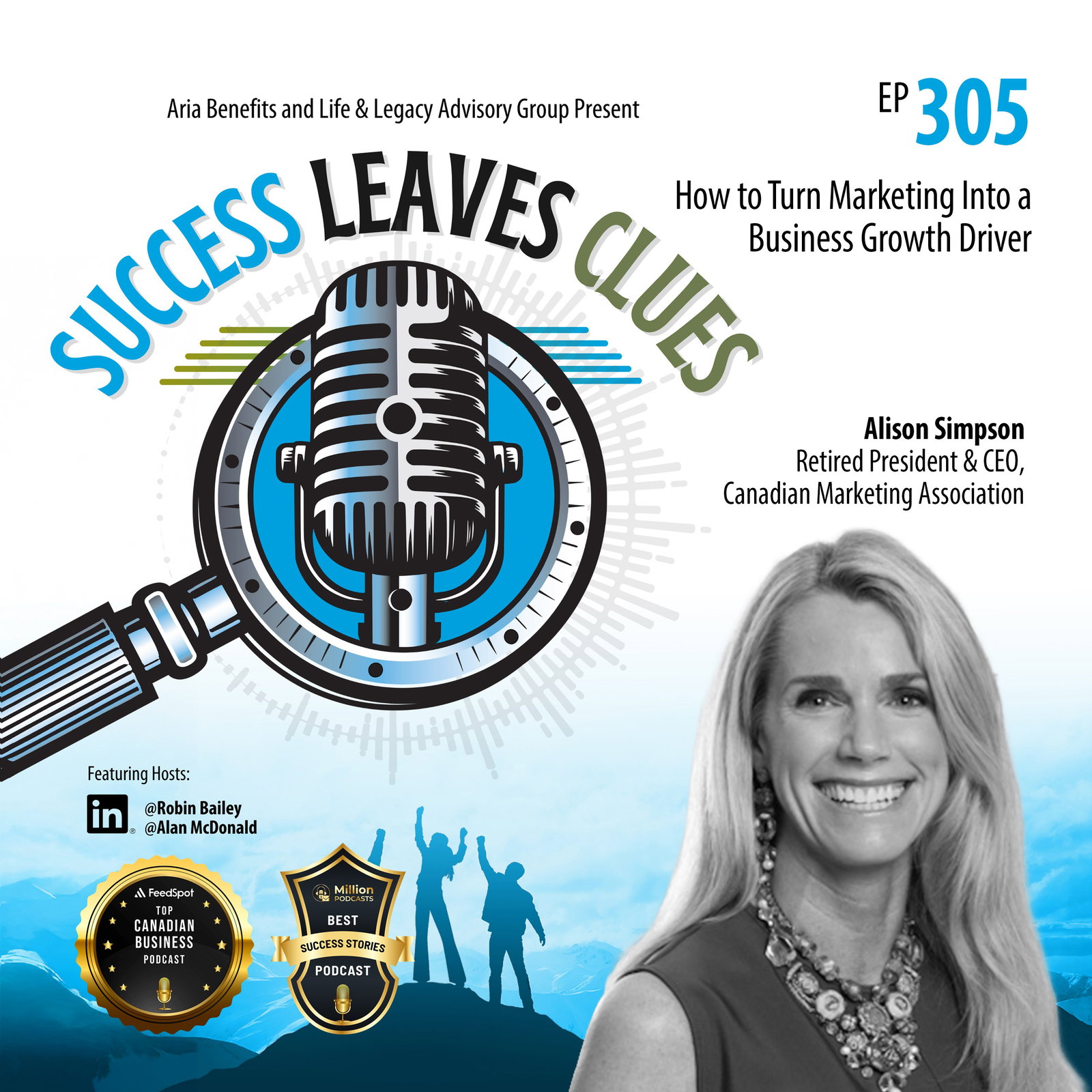 Success Leaves Clues: Ep 305 - How to Turn Marketing Into a Business Growth Driver with Alison Simpson, Retired President & CEO, Canadian Marketing AssociationSuccess Leaves Clues with Robin Bailey and Al McDonald · on Customer Lifetime Value71 / 100
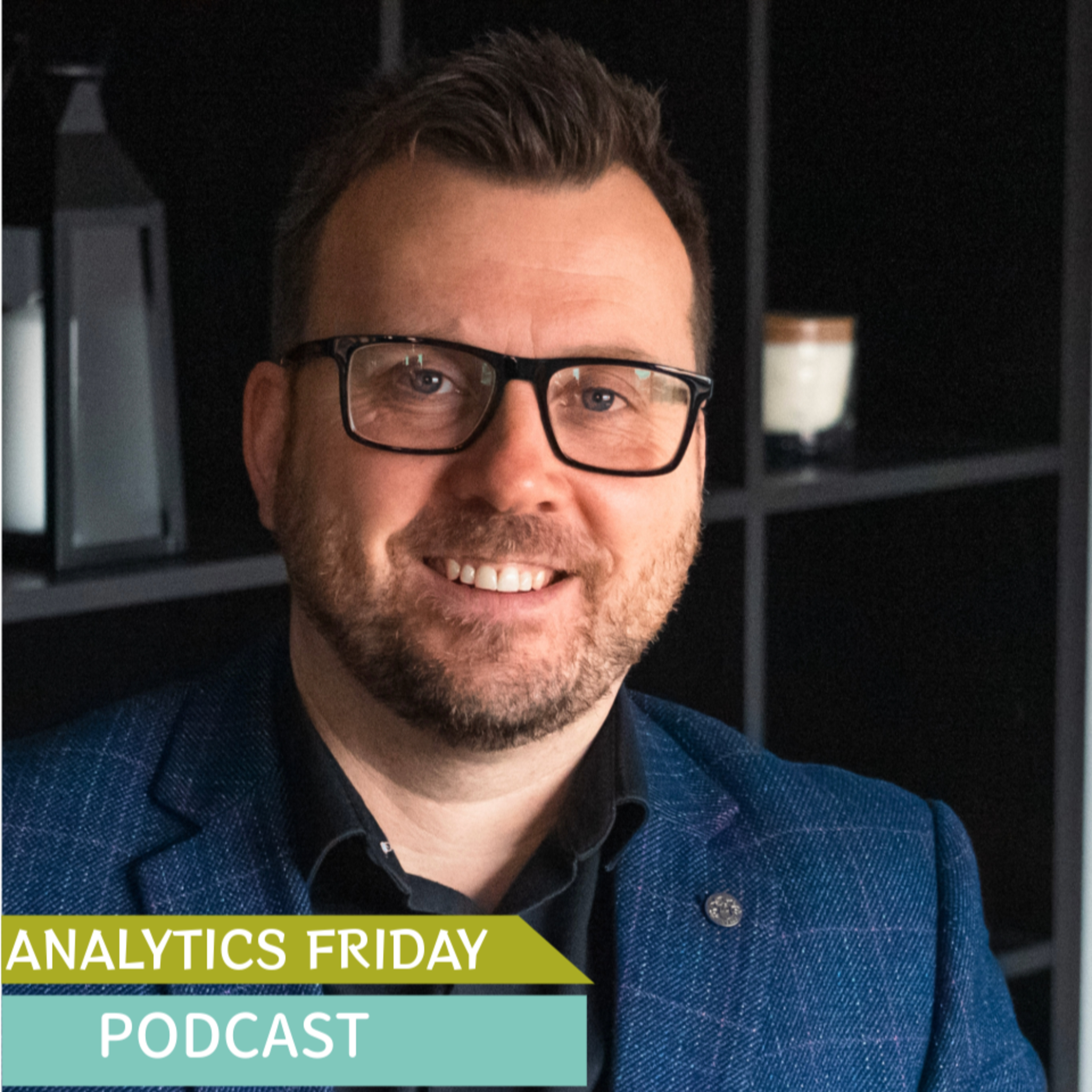 Pull Up a Chair: A Conversation with Si ElliottAnalytics Friday · on Customer Lifetime Value63 / 100
 Is Your Back Office Ready for Growth? | Walt Lotspeich | Talk To Th3 Doc Ep. 14460 / 100
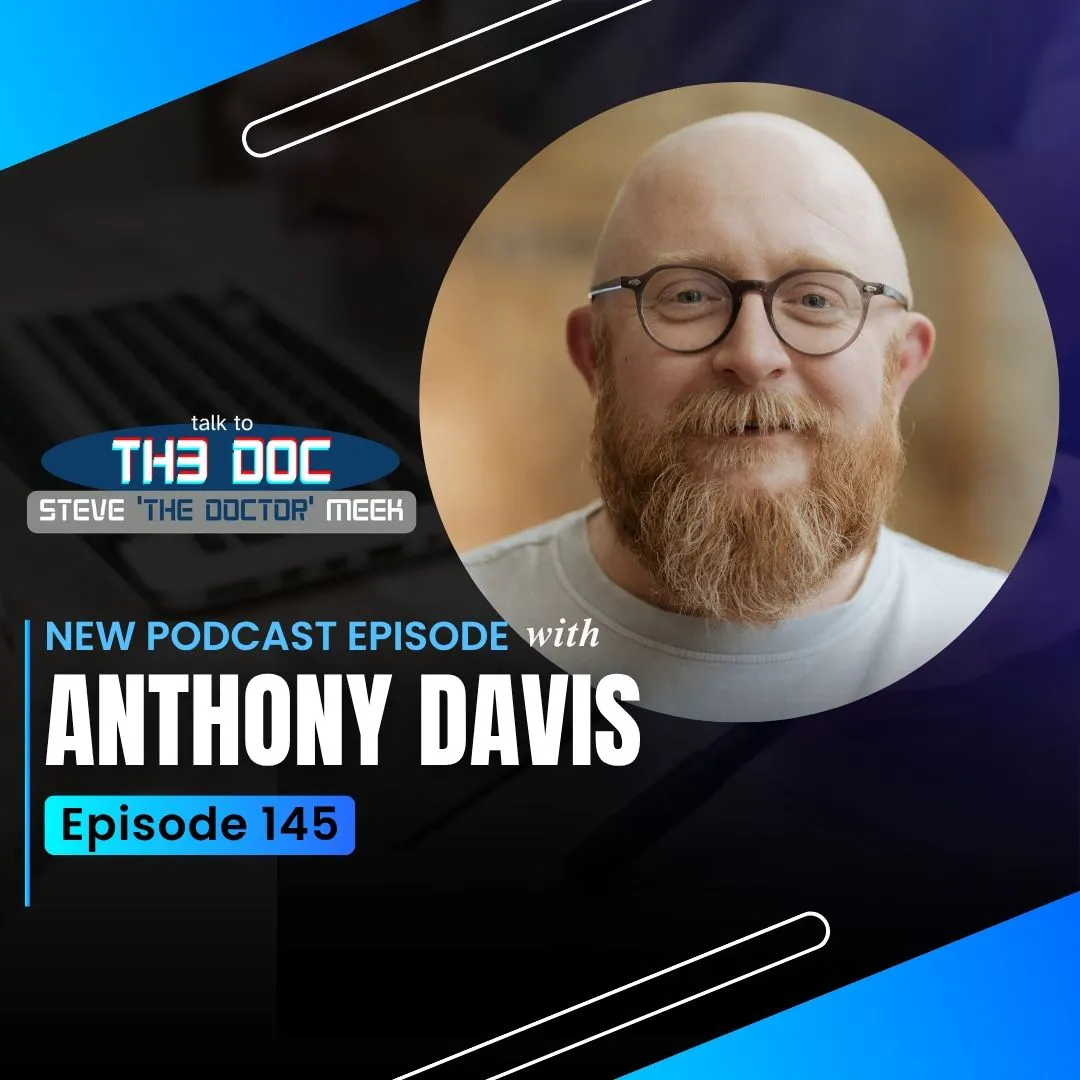 Is Your Security Culture Putting Your Business at Risk? | Anthony Davis | Talk To Th3 Doc Ep. 145
 Are Your Hiring Gaps Hurting Growth? Mark Mitford | Talk To Th3 Doc Ep. 143
 Are Hidden Cash Flow Problems Holding Back Your Business? With Paul Whitley of C-Suite Support Ep. 141
 How to Build an SMB Cybersecurity Program With Peter Gailey Ep. 140