
The Experience Perspective: An Ipsos Podcast · 2026-04-02 · 43 min
Key moments - from our scoring
Substance score
55 / 100
Five dimensions, 20 points each
The Ipsos Global Voices of Experience 2026 study examines how CX and EX leaders are navigating six major challenges: AI's central role in reshaping strategy, persistent maturity gaps despite improvements since 2023, limited strategic AI integration (only 4% have full ops-to-strategy integration), weak ROI connections between experience initiatives and business metrics, governance and silo issues, and change management obstacles. Francisco Acuña, Moira Haoli, and Cyril Duggan lead discussion on core initiatives for maturity advancement. Key insights include that companies measure experience rather than run business around it, change management is critically underestimated (exemplified by an automotive company's failed smart goggles rollout that ignored employee pain points), and leaders use advanced analytics linking CX metrics to financial outcomes - mapping NPS and CSAT to revenue per customer, churn, and retention. The study shows 31% of CX leaders prioritize understanding the "silent majority" of non-survey respondents through behavioral data, text analytics, and propensity models. Strategic moves include education, cross-functional collaboration, robust data platforms, and combining quantitative ROI (CLV uplift, churn reduction) with compelling customer stories to drive organizational change.
Only 13% of organizations qualify as leaders in both CX and EX maturity according to the study's framework, despite improvements since 2023.
Only 4% of organizations have achieved full integration of AI across operations and strategy; most applications focus on operational efficiencies like chatbots rather than transformative strategies like synthetic data, journey automation, or personalization.
Half of practitioners report no connection between CX metrics and business metrics or that connection fails to drive concrete actions; only a minority use advanced analytical models to link CX to financial outcomes like revenue, churn, and retention.
Change management is the primary blocker; organizations significantly underestimate the effort required and underestimate how quickly people will embrace new behaviors, often missing the people side while investing heavily in technology and processes.
Leading organizations map CX metrics (NPS, CSAT) to financial levers like revenue per customer and churn, use cohort and regression analysis to isolate CX impact, prioritize customer lifetime value by segment, and combine quantitative financial data with vivid customer stories to drive decision-making.
Our reviewer’s read on each dimension, with quotes from the episode.
The episode delivers a mix of survey findings and practitioner commentary, but much of it consists of accessible platitudes about CX maturity, AI adoption, and change management rather than novel, non-obvious claims. While Cyril's framework on ROI analytics (CLV, cohort comparison, regression models) and Moira's specific automotive goggles example add substance, the majority relies on restating familiar tensions (speed vs. strategy, human vs. digital) and broad recommendations (break silos, improve governance, align leadership). A B2B operator would gain some tactical takeaways but encounter significant padding and obvious advice.
most companies are still just measuring experience instead of running the business around it
The first one is turning CX metrics into financial levers. Too often NPS or CSAT are nice dashboards, not business tools
The thinking is largely derivative and circulates widely in CX circles: silos as inhibitors, leadership buy-in as critical, the need for change management, and AI governance gaps. The integration of CX and EX is presented as novel ("next frontier") but amounts to standard cross-functional alignment advice. Cyril's multi-stage ROI framework (descriptive → predictive → prescriptive) is more structured than typical, but the underlying ideas (linking CX to revenue, behavior analytics, CLV) are not new. Few contrarian or first-principles arguments emerge.
experience transformation is a journey, not a destination
Technology and AI are scaling faster than cultural matrix
The panel consists of credentialed practitioners: Francisco (Head of CX, Latam), Moira (SVP CX/EX, US), and Cyril (Service line leader, France), all with hands-on portfolio experience and data from a 700-executive study across 45 markets. However, they function largely as Ipsos researchers presenting and discussing their own study rather than external operators scaling businesses or solving novel problems. Moira's automotive goggles anecdote and Cyril's Belgian client video example show field experience, but the guests are somewhat limited by their vendor perspective and reliance on secondary research.
I'm the global head of CX Advisory here at Ipsos
we conducted this project across 45 markets and it captures the opinions of more than 700 executives
The episode provides quantified survey data (13% of organizations are CX leaders, 4% have full AI integration, 31% prioritize silent majority understanding, 47% lack strategic AI adoption plan) and a few named examples (automotive company, French insurance client, Belgian client, bank CDO). However, most claims lack specifics: no company names for the survey examples, vague timelines, no actual metrics from case studies, and limited dollar figures or concrete outcomes. Cyril's ROI framework is explained conceptually but without real worked examples. The qualitative quotes from clients are illustrative but not substantive.
only 13% of organizations qualify as leaders according to our framework
no more than 4% of organizations have achieved full integration of AI tools
Helen's hosting is competent but largely transactional: she introduces speakers, tosses questions, acknowledges chat comments, and moves on. Follow-ups are rare and soft (e.g., "Fantastic. Um, and from your experience, Moura..."). Panelists deliver pre-packaged points with minimal genuine pushback or productive disagreement. When a LinkedIn comment on AI limitations is raised, Francisco and Cyril give safe, general responses rather than engaging critically with the constraint. The conversation reads as scripted panel discussion rather than exploratory dialogue. No one challenges assumptions, asks for evidence of claims, or presses on trade-offs.
Fantastic. Um, and I wish I had a pound for every time I've heard a client say
Great. So Cyril, in light of these insights, how can companies better employ analytics to demonstrate roi?
Computed from the transcript - who did the talking, and the words that came up most.
Join Helen Bywater-Smith , Global Head of CX Advisory, Francisco Acuña , Head of CX in Latin America, Maura Howley , Senior Vice President, CX & EX in North America and Cyrille Dagorn , CX Service Line Leader, Ipsos BVA in France as they delve into the exclusive insights from our recent Global Voices survey. Where only 57% of organisations report consistently delivering customer experiences aligned with their brand promise. They explore the shifting landscape of customer and employee experience (CX & EX) and discover how well you’re keeping pace in a rapidly evolving world. What’s Inside This Episode: • Fresh Insights: Uncover the newest trends and changes in experience priorities from our extensive global research. • Global Perspectives: Gain insights from our Ipsos experts in France, Latin America, and the US as they share regional differences and common global themes. Whether you’re addressing employee experience challenges, refining customer journeys, or simply seeking an understanding of the current and future experience landscape, this podcast episode provides actionable insights.
Transcribed and scored by The B2B Podcast Index.
Speaker A: Hello and welcome to the Experience Perspective. This is an IPSOS podcast which is for anyone interested in improving experiences for your customers and colleagues across all sectors. Across this series we will bring you insights and inspiration from around the world whilst we have a chat with experts within the field. Now let's get started.
Speaker B: Welcome to the IPSOS Global Voices of Experience Experience 2026. My name is Helen Bywater Smith and I am proud to be the host today for uh, this LinkedIn live. I'm um, the global head of CX Advisory here at Ipsos and I am joined today by our uh, experts from across our markets. Uh, Francisco Acuna, the head of CX in our uh, Latam region Moura Haoli, who is the SVP of CX and EX in UH us, and Cyril Duggan who is a CX service line leader in France. And we've gathered insightful uh, data from across our market so over 700 global CX executives from around the world to address the evolving challenges and priorities in customer and employee experience today. Shortly I'm going to be handing over to Francisco who's going to be taking us through some of the highlights from the study. And then the four of us are going to have a discussion about the findings afterwards. But now I'll hand over to Francisco to share the key findings from the study.
Speaker C: Thank you Helen. I'm thrilled to guide you through the key findings from the Global voices of experience 2026 study. This study is a cornerstone in understanding the evolving landscape of customer and employee experience. As Helen mentioned, we conducted this project across 45 markets and it captures the opinions of more than 700 executives in the field. It covers insights from 13 sectors, reflecting a broad spectrum of the customer and employee ecosystem. This diversity ensures that the findings are not just numbers, but actionable insights for both B2B and B2C sectors alike. With this in mind, let's explore what these findings mean for all of us. And as I mentioned, this study followed a two stages approach, both covering quantitative and qualitative phases. Regarding the latter, I believe adding this contextual lens, it's key to identify exactly where and how experienced leaders perceive these tensions. Today they face the pivotal challenge of balancing fast value delivery again against strategically positioning their brands for the future. It's a delicate dance between harnessing digital tools and maintaining the human touch that consumers crave. And as you can see in the slide, these tensions. First, to delight customer and deliver return of investment to their companies. Second, being able to anticipate the tomorrows. Third, go all the way with digital but at the same time keeping the human touch. And fourth, move at speed and be patient because the backlog intake it's quite high within the organizations and as a client of us says, I think we all can agree that fast it is the new normal. So all these tensions, this reality affecting organizations ability to deliver an experience that meet customer expectations, the fact that more than half of practitioners say they deliver experiences aligned with their brand promise tell us something important. The volume of tensions combined with the speed of business, it's creating internal frictions. And these frictions directly impacts the the experience and the business link KPIs such as preference, customer lifetime value among others. So this without a doubt lead us to reflect on how we manage these challenges. So with this I would like to walk you through these six key findings of the study as a way to summarize all the opinions practitioners made globally. First, priorities AI takes the center stage. We will explore how to leverage it to turn it into a new strategic asset that drives differentiation. Second, the maturity gap. When comparing 2023 to 2026, the gap persists. Strikingly only 13% of organizations qualify as leaders according to our framework. Third, AI adoption. While AI is central, it is still largely adopted and widely so for operational tasks. Fourth, return of investment. While it's recognized as UH key, organizations still needs to work harder to move from intuition to data driven approaches. Regarding governance, which is the fifth topic, there is a critical need to break down silos as ah, they act as a major inhibitor to maturity and customer centricity. And finally the challenges improving use cases for CX and managing organizational change for EX are central themes. So the question is evolution or transformation? This is how one of our UH clients in Asia is describes the current landscape. To navigate this, it's key to understand how priorities within the experience practice are set. And as you can see for customer and employee experience priorities sits with AI. Automating processes via uh AI is the dominant one highlighting technology's critical role in shaping the future experiences. And definitely this is a call for organizational shift aligning culture with these technological improvements. As a second main takeaway, our data reveals that despite improvements, many organizations remain within the practice or even foundational stages. This means for CX is indeed an evolving journey and one that demands persistence and innovation. And looking at uh the 2023 versus 2026 data, the leading group hasn't changed. So we believe that is because AI has accelerated and shifted priorities as well. It has become a never ending story. There's always something new to chase which can easily distract us from the core of the strategy. However, some things remain constant. When we cross reference maturity levels in EX and CX practices, we find a high correlation and this allow us to identify that despite the technology, it all start with people. And I believe this quote from a, uh, French insurance client illustrate this point perfectly. It describes a content state of adaptation in which experienced practice operates. So moving forward, while AI adoption is widespread, strategic integration is still in its beginnings. And as you can see, since 2023 no more than 4% of organizations have achieved full integration of AI tools across the continuum of operations and strategy. And these allow us to dive in both into the why and the how. This low level of integration, using AI as a vehicle to accelerate the strategy undoubtedly speaks volumes about the current focus organizations are giving it. And most of the applications right now focus on operational efficiencies such as deploying chatbots, rather than truly transformative strategies such as synthetic data or journey automation for customer experience and training or simulations. From an employee experience perspective, keeping with AI, but from an employee experience angle, the focus has been on virtual assistance and employee support, as well as specific stages of the employee life cycle such as recruitment tools. Looking ahead, or perhaps sooner than we think personalization, for example in benefits for employees could make AI a, uh, truly powerful tool that could drive return of investment to the company from an employee perspective. And this perfectly illustrates the sentiment regarding AI. In the words of our clients from Europe and Asia, in the case of cx, there's a risk of amplifying mistaken result if not managed properly. Meanwhile, in ex, it is seen as a potential enabler of personalization that could drive business impact, such as reducing turnover of employees, among other benefits, which allowed me to talk about return of investment in customer experience or as we say it at Ipsos Roxy so this slide proves that the link between CX and business metrics, uh, is still unfinished business. Half of the practitioners say there's no connection or that it fails to drive concrete improvement actions. Moreover, the data show us a ah, clear governance issue. Merely four in 10 people say the metrics of experience are understood and used within the organization and this gives us a clear signal regarding how we should approach governance. It is not just about working on a structure, but also about educating the organization on the what and the why of the metrics, as well as the impact on the business. And this reflects exactly what we have been discussing with the practitioners. When we talk about customer centricity and maturity, we are referring to, among other dimensions, to tangible business impact, cultural enablement and value of customer Insights. Therefore, the more embedded CX is, the more mature it becomes. Wrapping up in talking about the challenges of the experienced practitioners, there's a couple of points I would like to say to you. Our findings highlights that AI dual role, uh, as both a transformative opportunity and a strategic challenge for CX and EX leaders. And also achieving optimal success in customer experience necessitates not just technological adoption, but strategic foresight and rigorous governance. I would like to thank you all and hand over once again to Helen Bywater Smith, uh, our global head of CX advisory, who will be leading and hosting the, the next part of this conversation. Thank you very much.
Speaker B: Brilliant. Thank you so much, Francisco. So before we head into our panel discussion, can I just remind our listeners we really, really would love um, to hear your comments, your questions. So please use the chat, ah, area on LinkedIn and if you are listening to this or watching a recording of it, please do use uh, the comments as well because we will keep up to date and uh, keep responding to that. So I'd love to welcome back Francisco, Moira, uh, and, and Cyril, um, to our discussion. So please make sure, um, you've got your mics off when I'm talking to you. Um, but I'm going to start with you first of all, Moira, uh, so we just saw from the data that Francisco showed that 13% of organisations from both a CX and an EX perspective, which was really interesting, are leading in terms of CX maturity. What core initiatives, um, are necessary from your experience to encourage that growth up the maturity ladder?
Speaker D: Absolutely. And thank you Helen. I'm thrilled to be here. Firstly, building a culture of continuous improvement and innovation is essential. Starting with having a very clear understanding that an experience transformation is a journey, not a destination. Embracing that mindset is so critical. Uh, the experiences your customers and employees are expecting are continuously evolving. So you've got to understand that your experience journey will be continuously evolving as well, making the importance of a culture paramount. As we saw, only 13% of organizations are leading in CX and EX because most companies are still just measuring experience instead of running the business around it. And I'm going to say that again because I think it's important most companies are still just measuring experience instead of running the business around it. To really move the needle, you need to have executive ownership and accountability. You need to be connecting the customer, uh, and employee experience together. They're so intertwined and they both really need to be tied to business outcomes and you need to be managing holistic journeys. Too many organizations are still stuck in these silos where they're managing by function. Ultimately managing, uh, the maturity in CX and EX isn't about having more dashboards, more data, more initiatives or more surveys. It's really about embedding experience into how your organization runs, how it measures success, designs journeys and empowers employees.
Speaker B: Fantastic. Um, and I wish I had a pound for every time I've heard a client say, um, we want to make our organization more customer centric. We hear the word customer centricity in our world every single day. Um, and in terms of from your experience, Moura, um, to be really truly customer centric, what does that mean? And what are some of the key blockers that you've seen in the projects and the programs that you've run to stop and hinder customer centricity?
Speaker D: Yeah, the biggest blocker I see really comes down to change management. Um, and you'll see my face light up when I talk about change management because I'm super passionate about it and it's so critical. Um, we all experience, right, internal silos, competing KPIs and legacy ways of working that make it really difficult for ourselves and our teams to truly prioritize the customer and be customer centric. Most organizations significantly underestimate the level of change management required to improve CX and ex. Common myths, and I'm sure we've heard these is, well, you know, people will always adapt to change or change just happens. It doesn't have to be managed or you know, we're paying employees. Uh, the project will just get done. It has to, um, it's not about new process or structures. It comes down to the people and how about how quickly those people will embrace and execute the change. To succeed, companies need to be super deliberate and plan out and guide stakeholders towards the new behaviors that support the desired business outcomes, while also proactively anticipate what resistance and putting in, uh, the right support systems to get ahead of those and to address them head on. I'll share a really quick example. An automotive company that we work with was rolling out an AI initiative like a really cool service Goggles, uh, for their service team. The headquarters invested significant time and money in developing this technology and the product itself was pretty cool. It was essentially a new way of working for the services team. What they missed was the people side of the change. When the goggles arrived in the field, the team didn't understand the value and what they were supposed to do with them. There was some cool features, but it actually didn't solve for any of Their true pain points. They were never asked what they needed, what pain points they should be solving for. They didn't get sufficient training and to be honest, they actually felt threatened by the technology and instead of being empowered by it. So as a result these really cool goggles largely sat on the shelf instead of achieving their intended goal of helping employees do their job better and ultimately um, improving the customer experience. So the number one thing for me here is definitely the importance of change management.
Speaker B: Fantastic. Um, and Francisco, we're going to talk about AI and technology and we can see comments already popping up in the chat. So thank you to those people commenting. Um, considering AI's potential, what strategic moves should businesses prioritize to bridge that oversight gap? From your experience?
Speaker C: Uh, thank you Helen. And I think uh, it's a crucial question in today's rapidly and evolving business environment. And as we look at the strategic potential of artificial intelligence, the key is not just in adoption, but I think in a smart integration. And also we have ethical considerations and governance to have in mind. But apart from this, I would like to say three things uh, on that respect. First one is to effectively breach the oversight gap. So business needs to develop multi phased strategy. First, education and training should be prioritized when every team member understands the basic applications and also limitations of artificial intelligence initiatives can align more seamlessly with the strategic objectives. I would say the second one is cross functional collaboration which plays a uh, pivotal role. AI should not be siloed in IT departments but integrated across marketing, sales, customer service and beyond. And thirdly, investing in robust data platform is also essential because at the very end AI is only as strong as the data ah it analyzed. So business needs to ensure that their data infrastructure support real time analytics and insight generation. And considering that only 4% of organizations have a full integration between ops and strategy regarding AI, I think we have a depth for the future which can be addressed now by the organizations. But in all my answers there's a constant in here which is people centering on the tech plus human combination is how we change the game. So we are already helping clients to navigate this. So for example finding where to add AI but focusing even more on, on emotions because that's what truly uh, connects with the customer and ultimately give us profitable relationship between the brands and the customers.
Speaker B: Great. So um, thank you for that and I couldn't agree more. Um, and you mentioned earlier you said that AI is a never ending story, which I really like. I love the film as well. Um, and from our qualitative insights we could really See that coming through from our clients. They are struggling to keep up with all the advancements. It's changing, isn't it? Every single day. Um, so what's the impact here and how can our clients really keep up with uh, the technological change?
Speaker C: Uh, indeed I do believe that the root cause it often, uh, the lack of roadmap that could enable iterative testing in sandboxes, for example, ensuring that we are capturing the business impact of the uh, addition of technology for a customer, uh, experience perspective. So I see there's two critical success factors in here. First of all, to break down the silos without the proper governance, we have multiple teams duplicating efforts, creating a fragmented experience for the client ultimately. And the second one would be to embed customer centric metrics. We need to define the success based on the impact that we are delivering to the customer, but at the same time that we are defining return of investment on those metrics.
Speaker B: Great. So Cyril, in light of these insights, how can companies better employ analytics to demonstrate roi?
Speaker E: Thank you, Ellen. Uh, looking at the data, there's a clear paradox as we have. On the one hand, almost half of organizations say six is, is improving financial performance and leading six organizations are uh, three times more likely to report a big financial improvement. So intuitively we uh, all feel that CX works and that's good. But analytically, on the other hand, one in five organizations have never explicitly evaluated CX financial impact and only a minority really use advanced method models, uh, linking CX to money flow. So indeed, how uh, do we close that gap? How do we use uh, analytics to understand erro? I'd focus on three moves. The first one is turning CX metrics into financial levers. Too often NPS or CSAT are nice dashboards, not business tools. So you should start mapping CX metrics to odd outcomes like revenue per customer churn and retention. Then go beyond description. Start simple uh, with a before after comparisons. When you launch a CX initiative, for example, then run a uh, cohort comparison. Customers exposed, customers not exposed. What differences do we see? And finally use regression models to isolate the impact of CX from other drivers leading organization, the famous 13% uh, are those doing this and they are the ones reporting the strongest financial gains. So that's one. The second is putting lifetime value, the customer lifetime value, CLV and the silent uh, majority at the center. If we want to talk ROI seriously, we must move from this quarter NPS is to lifetime uh, economics and we cannot ignore the customers who never answer third base. So on The CLV side first of course you need to compute CLV at least by segment, then overlay say X data so NPS complaints, channel usage etc. And quantify for example how much more valuable a promoter is than a detractor or the retention uplift ah from moving a customer from neutral to satisfied is X. And that will allow you to say improving the experience of this high value segment by X points should raise the CLV by this many, which is uh, that much million uh in incremental revenue over three years. So that's one. And at the same time what we saw is that CX leader Arnaud uh prioritizing a deeper understanding of customers and specifically that majority who never uh respond the survey. So we need analytics, uh, we need analytics to give them a voice and that's behavioral uh and operational data, that's text and speech analytics at scale to add emotions and themes behind the numbers. And that's propensity and risk models built on all customers, not just the survey takers. And that's how we quantify the upside of acting on the silent majority. And finally the third move, uh, moving from descriptive dashboards to predictive decisions and tell the story. Most CX analytics are still very descriptive and we need to move through three stages. Descriptive, uh, what is our nps, what are the main pain points predictive? If we don't change this journey, what churn or cost uh will we see? And eventually prescriptive with limited budget uh, where do we invest first to maximize return? In the report you will see that one of our Belgian clients uh shared that a simple two minute video of a customer quotes did more to change strategy uh in his organization uh than a deck of slides. So that's the magic so to speak is combining the hard numbers I mentioned. So churn reduction, CLV uplift, lower cost to serve and one or two vivid human story. You can say that this one customer who represents uh 50,000 other customers with the same behavior, if we fix this issue we expect to protect X million in revenue. And this story can come from the speech and text analytics that I mentioned of course, but it can also come from a more qualitative approach. For example leveraging a um, real customer journey, mapping, not a mapping in a boardroom through the lens of um execs but really understanding customer needs and expectation and how uh the experience is measured against this. And that's how uh, CX through analytics stops being something we believe in and it becomes something we can price, something can prioritize and something we can Scale
Speaker B: just to really highlight one of the points that you talked about serial just uh, the silent majority. It was really interesting in the qualitative interviews this came out quite a lot. Um, and we can see from the data that 31% of CX leaders want to prioritise um, that deeper understanding, gaining that deep understanding and as you say our qualitative approaches to journey mapping, getting that deeper richer understanding of customers is really important um, to listen to that silent majority who are the people who are maybe not answering the surveys as well. So I'm just going to take a pause from the questions here um, and just have a look at our ah LinkedIn, ah live comments to just see what interesting questions that are coming through. So I'm just um, going up, I can see a comment here about um AI here. So I guess every AI interaction integration should come with a clear racy uh, across the organization and give a role for the brand ambassadors to embed it within their daily routine and CX journey. Uh, do you want to make a comment um, on some of those AI questions there? Ah, ah Francisco.
Speaker C: Okay, yeah, totally. I would say that this is an excellent point because when we frequently discuss AI, uh often we make it in an inward looking perspective within the organization. So I do believe that the real challenge is how often do we assess the customer journey to quantify the value creation of versus the value destruction for example on these interactions. And it is about point pinpointing exactly where AI adds value rather than diminishing it. It's not only about going all in across the board with AI but about finding the right fit which could lead to a better a, uh, more longer and also profitable relationship between the brand and the customer.
Speaker B: Great. And Moira, do you have anything to add there from the EX perspective?
Speaker D: Yeah, absolutely. I think from the EX perspective it's definitely um, always around with AI solving for pain points on your customers but also for your employees. Where is AI really going to help them? Um, and then very much around the governance of AI as well. I think that's something where um, governance is a great way to allow accountability and decision making. Um, that's really going to help actually teams accelerate where they're going to be able to go with um, the usage of AI and not actually hinder it.
Speaker B: And we have another question here. Um, shouldn't the limitations be um, a built in semantic layer that can help users not have to keep track of changes after rollout and changes that might affect business outcomes due to model changes, drift and data changes. So I don't know, um, Francisco, Cyril, if you've got any ideas, there definitely
Speaker C: there should be limitations on the use of any AI tool. But at the very end the governance is very important to have in mind and how we are using this and what are the business objectives behind it. Because usually we're trying to make all the things with the use of AI instead of saying what will be the best case to identify and ultimately to work uh, around it with a positive outcome for the customers.
Speaker B: Going back to the question. So Moira, uh, um, you're up next. Um, so how can organizations leverage data to break down those silos and improve CX and EX integration?
Speaker D: Yeah, absolutely. Most companies are still just data obsessed. They're not actually customer obsessed. Although a lot of them um, say they are customer obsessed. Um, they're still really looking at customers through screens and squares. Uh, but do they really actually truly understand what their customer and what their employees needs are? Uh, organizations need to really start by treating that data as a shared asset rather than a departmental one that you know, often some people actually, you know, gatekeep, um and companies customer data sits with marketing. Um, operational data set might sit with service in the employee data. With HR implementing an integrated platform to actually unify the data systems really helps to boost the visibility and collaboration. Uh, when those data sets ah, stay separated, you miss this huge connection between what the employee experience and what the customers feel. Um, it's an absolute huge miss. Uh, the opportunity is to really bring those signals all together again. Look at combining customer feedback, your operational data and the employee insights to really understand what's driving that friction in the journey. Often the root cause of a poor journey. Uh, a poor customer experience is actually an employee pain point as well. Right? You've got a broken process, you've got an outdated policy or you've got a tool that makes it impossible or hard for them to actually deliver. Uh, organizations that do this really well create a single view of the journey where CX and EX data are actually analyzed together and shared across teams. That allows leaders to move beyond reporting metrics uh, to identify the operational changes that are critical that will actually improve both experiences. A uh, simple but impactful suggestion I have is the cross, uh departmental workshops and how much they can foster and help share um, vision and break down barriers. Uh, this also does wonders for change management. I'll bring it up again um, as it starts that conversation earlier with the broader team you'll really understand what barriers uh, may pop up that you could get out ahead of. Um, you'll see Some of your blind spots that you might be totally unaware of and really what support and alignment you may already have that you can highlight and leverage coming on to you.
Speaker B: Cyril, what um role does leadership play in transforming organizational culture to adapt uh, modern CX demands Today there are some
Speaker E: very strong signals in the survey and I assume, or I suspect it will resonate with many in the audience. Technology and AI are scaling faster than cultural matrix. There's a large tool adoption yet only 13% of organizations are leading in CX. So as we have between us, um, the bottleneck is no longer tools, uh, it's really leadership and culture. And I would like to highlight three leadership actions or behaviors to really transform uh, an organization's culture. The first one is for leaders to stop being CX project sponsor, but really to become CX architect. In most organizations CX is still a program or a project or a department, um, more attached based on this. But leaders only sign off budgets, but they do not redesign the system around the customer. Where it is the case, where there is a formal CX governance with real authority, we see that higher CX maturity is in place and we see stronger financial performance on the other end where government is weak, CX stays peripheral and it cannot transform culture. So leadership needs to elevate CX to a, ah, strategic to a transversal role, not just a measurement team. To put in place a dedicated CX governance board to uh, allocate budget across silos typically and regularly review CX and EX data together. And that's the difference between CX as a support and CX as a structural driver of how the company makes uh, decision. So that's one the second move M. The second behavior is use EX and AI as cultural multipliers, not just efficiency levers. We saw that leadership capability and workforce AI enablement are top priorities. But you cannot simply deliver a modern personalized omnichannel experience if your people are not empowered, lack the right tools and trainings or experience an employer reality that contradicts the brand promise. So leadership has to articulate your clear experience promise outside and inside. This is what we stand for as a brand and this is what we stand for as an employer. It is also important to design EX to support cx, ah, so rewarding behaviors that create great and memorable experiences, not just volume or speed. And of course I mentioned it to connect, uh, the data show that where engagement is high, NPS is higher, churn is lower and upsell is better. That's how you prove culture is not soft. It's A performance driver. And then there's AI. Uh, the report puts it, uh, something like this. AI is scaling, but are we around the stable? Are we collectively scaling around? 3 in 4 organizations already use AI to analyze VoC or run chatbots, but far fewer. I don't have the figure in mind have strong governance or clear CX for focused AI strategy. So leaders must set boundaries. And this I think answers a bit the question that was asked earlier. What do we automate what remains human by design? Balance efficiency with humanity, Resist optimizing costs at the expense of trust. Typically you must define journeys where human assistance is non negotiable. Not everything can be AI assisted and invest in workforce enablement, not just to upskill the people so that AI becomes an augmentation of human capability, not a source of anxiety. And that's real cultural transformation. Making EX and AI as part of how you serve customer better, not just how you cut costs. And finally the third move is embodying role model customer behavior, uh, customer centric behavior and embrace continuous transformation. One of my favorite lines from the survey is not a figure, it's a quote. Stories drive change better than smiles. Culture shifts when leaders behave differently in very visible ways. For example, a uh, leader who's spending time with real customers and the frontline teams listening to calls, joining branches and then who brings that voice to the executive discussions. When a senior leader brings to the table a short customer video, a short verbatim, and is able to ask the board, if this were you, what would you expect? It sends a very positive, a very powerful signal. Then of course the importance of rewarding experimentation and learning. The leader must tell his team it's okay to run tests, it's okay if a pilot does not work as we expected as long as we are able to learn quickly. And that's how you unlock innovation in CX and of course simplifying and democratizing uh, insights. So overall the leadership's role in that transformation is to frame CX as a continuous journey. It's not a two year program. Um, so if I put it differently, in the end leadership, the difference between we have some CX tools and we are a customer centric organization.
Speaker B: Francisco, with the, the rapid technological changes, what um, future trends should organizations be preparing for now?
Speaker C: Totally. I think as we look towards the future there's a lot of possible outcomes with how are the things right now? But if I have to make a choice would be the following. First I would say that going back to basics is often key. When I say this, I mean knowing how to strike the balance uh, between understanding when and where the technology adds value, but also recognizing where people emotions and the drivers of emotional connections are essential. This is undoubtedly a ah, differentiator especially in sectors such as banking and telecom. And take this for example, we are with uh, several clients working on redesign their journey by adding the combination of AI integration but the emotions throughout our CX forces framework making this last, last tangible for revenue purposes in the organization. So that's why the balance is so key to address this problem. The second one would be the momentum of AI within organizations. And I think it's not surprise that AI is not just here but the state to evolve uh, profoundly. Some of you would remember probably the concept of Metaverse, which after a couple of months and several investments basically vanished. And this is not the case. So in this evolution however the bottleneck lies in governance. And our study shows a significant operational versus strategic gap where AI is heavily used for day to day tasks like analyzing customer feedback and personalization. But only 47% of companies have a strategic AI adoption plan. And um, everything at the very end needs that processes and structures. So therefore breaking down silos for total experience orchestrations. So silo, the structure remains the biggest hurdle to achieving experience maturity in this sense. And connecting data across customer, employee and user experience is crucial. And our evidence indicates that transformative growth when organizations integrate their CX and EX data ecosystem and this is not merely about technical integration but redefining collaboration as the norm. And finally cultural agility as ah, technology scales, cultural agility must match its pace. And this requires cultivating an environment of continuous learning and adaptation. So developing leadership capabilities to support and guide these transformations will ensure that the organizations are not left behind.
Speaker B: Thank you. And it's interesting that um, integration again of cx, UM and ex and one of the quotes from the qualitative talked about CX and EX being the next frontier and UX actually as well. And what does that mean in practical terms, Mara?
Speaker D: Yeah, for me that means stop thinking you can actually improve customer experience without improving the employee experience. It's honestly as simple as that. Companies that are trying to improve CX by measuring more, uh, having more surveys, more dashboards, more metrics are really missing the point. The reality, uh, the next frontier to me is designing experiences for the employee and the customer at the same time by looking at the journey holistically. Uh, I'll share a quick example. I was working with a chief digital officer of a bank that was going through a very significant digital transformation, um, and it was super successful because one of his core tenets that he always reminded his team and his stakeholders was that they couldn't quote, unquote, wizard of Oz. This transformation, whatever the customer was seeing as an improved experience, um, had to equally be matched to what the employees were experiencing behind the curtain. Uh, what they got right was not treating CX and EX as separate initiatives, separate silos, different functions, uh, but really managing the shared journey with shared business outcomes.
Speaker B: So we're going to, um, bring this to a close now, so. Well, first of all, I would like, um, to thank all of you for, uh, taking to work. Thank you, Francisco, for taking us through, uh, the findings today, and thank you, Cyril, and thank you, Moira, for helping out with the panel discussion. So thank you everybody and have a great rest of day.
Speaker A: Thank you for listening to the Experience Perspective, an Ipsos podcast. Make sure to subscribe to us on all your favorite podcast apps to have new episodes sent straight to you as soon as they're published. We're also available on Spotify. If you'd like to reach out to us, please send an email to experienceperspectivespsos.com.
Other episodes covering the same guests and topics, from across The B2B Podcast Index.
 Understanding Your True LTV and Company Value | Prof. Daniel McCarthyD2C Diaries · on Customer Lifetime Value (CLV)96 / 100
 50% of your job needs to be finance transformation: Anders Liu-LindbergFP&A Today · on Change management84 / 100
 S1Ep291 Customer Experience Growth Laws with Jim TincherFORDIFY LIVE · on Net Promoter Score (NPS)80 / 100
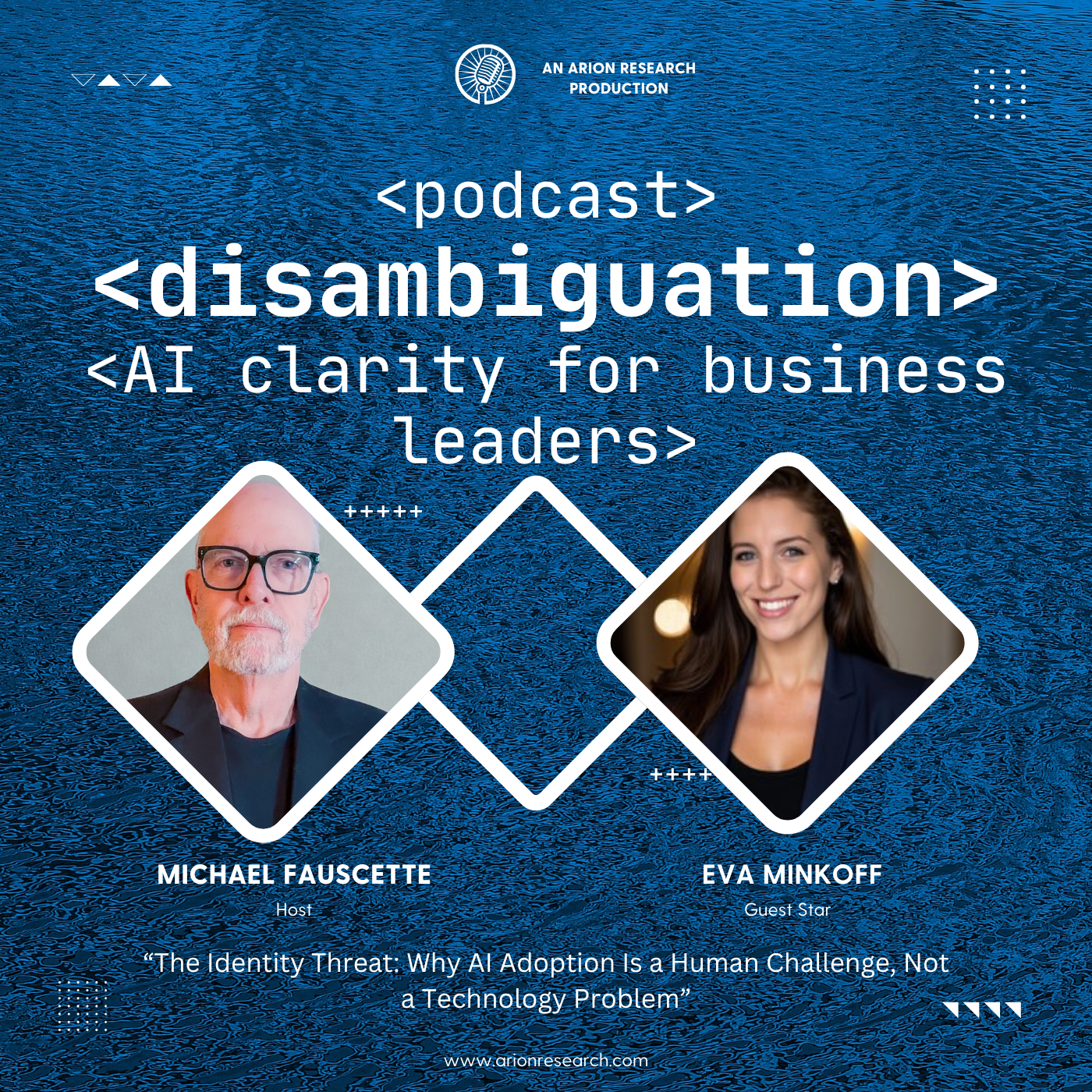 The Identity Threat: Why AI Adoption Is a Human Challenge, Not a Technology ProblemDisambiguation · on Change management80 / 100
 #299 What It Takes to Become CFO by 33 Audrey Lagresle CFO, Automobile En DirectGrowCFO Show · on Change management78 / 100
 What AEC Marketers Need to Know About Pursuit Intelligence ToolsSpill The Ink · on Change management78 / 100
 Season 9, Episode 10: The Neuroscience of Scent in Experience Design65 / 100Season 9, Episode 9: From Measuring Engagement to Driving Impact: Rethinking Employee Listening 70 / 100Season 9, Episode 8: Designed for Insight: Blueprints for Mystery Shopping55 / 100Season 9, Episode 7: ESG and Customer Experience: Why It Matters More Than Ever79 / 100Season 10, Episode 02: Generations at Work: Moving Beyond the Stereotypes