
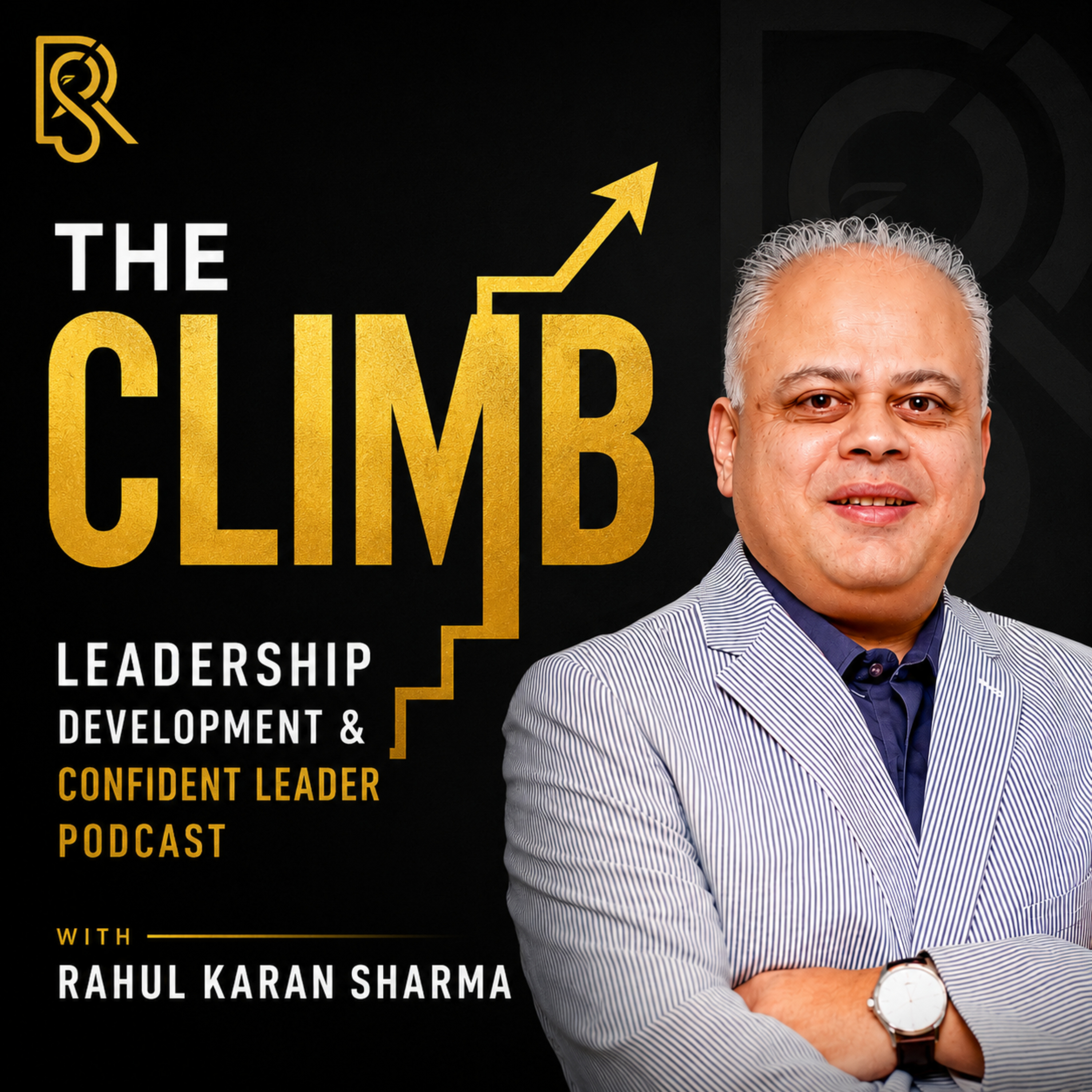
The Climb · 2026-08-25 · 41 min
Key moments - from our scoring
Substance score
32 / 100
Five dimensions, 20 points each
Psychological safety has become a leadership buzzword, but Daniela Russo distinguishes between the internal game (individual fears and limiting beliefs) and the outer game (organizational culture and context) in her approach. Drawing on Amy Edmondson's foundational work, she explains that psychological safety means people feel safe to speak honestly, raise issues, admit mistakes, and challenge ideas without fear of punishment. However, the perception of safety often diverges from reality - some hold back due to unfounded fears while others face genuine retribution. Russo highlights that silence, artificial harmony, and lack of healthy debate are red flags often masked by survey data showing high engagement scores. She shares a case study of an HR director whose pulse surveys showed 80%+ psychological safety metrics while field observations revealed burnout, absenteeism, and a 'cold wind' through corridors. Cultural factors compound this: hierarchical cultures, implicit communication norms, and cross-cultural teams create different safety expectations. Leaders bear primary responsibility due to their power over hiring, evaluation, and promotion, but employees share accountability. The path forward requires tough, sensitive conversations - both one-on-one with struggling individuals and team-wide dialogues - rather than relying solely on quantitative data.
Psychological safety, coined by Amy Edmondson, is the belief that you can speak freely, raise issues, admit mistakes, and challenge ideas without fear of punishment or job loss. It's distinct from comfort because it specifically addresses the safety to do unpopular or difficult things - not just the general work environment.
Key signs include excessive silence or agreement in meetings, artificial harmony where people avoid confrontation, behind-the-scenes conversations about disagreements that don't happen in the room, rising absenteeism, burnout, and stress-related illness - often masked by positive engagement survey scores.
Surveys often capture aspirational or surface-level responses that don't reflect field reality; one case study showed 80%+ psychological safety scores while the organization actually experienced widespread burnout, absenteeism, and disengagement visible only through direct observation and conversation.
Hierarchical cultures (like Japan) discourage challenging authority, implicit communication cultures prefer one-on-one conversations over public disagreement, and Dutch directness differs from more reserved approaches - meaning the same leadership behavior creates different safety perceptions across cultural groups.
Leaders should not panic or feel guilty, but recognize their central responsibility due to their power over hiring, evaluation, and promotion. The first step is to have difficult, sensitive conversations - one-on-one with individuals showing stress, and team-wide to address systemic issues - rather than relying solely on data.
Our reviewer’s read on each dimension, with quotes from the episode.
There are occasional non-obvious observations - harmony as a warning sign of suppressed conflict, and the inner vs. outer game distinction in psychological safety - but the episode is padded with host storytelling, post-answer summaries, and platitudes that dilute any useful-per-minute ratio significantly.
Another element you wouldn't expect is harmony...it looks really nice on the outside, but underneath there is a lot happening
I might think it's not safe to speak and I might hold back in reality, that's not validated by the environment
The episode leans on Amy Edmondson's well-known framework (credited but not extended), deploys the ubiquitous FEAR acronym, and repeats widely circulated coaching mantras like 'assume positive intent' - there is no contrarian or first-principles argument that challenges conventional leadership wisdom.
this term was coined by Amy Edmondson, uh, and her book Fearless Organizations
fear a lot of time, it is our fear that we don't want to share
Daniela Russo is a working executive coach and facilitator with multi-country client experience; she has genuine practitioner knowledge but is not a senior operator who built or scaled a business, and the Forbes Coaches Council affiliation is modest-prestige at best.
I worked with an HR director who was sending very punctually pulse surveys in the company
I work with that team for five years in a row. Every year we did a three day, uh, retreat
The episode contains one semi-specific statistic (the 30% figure) with no source cited, and client stories are anonymised and vague; no named companies, measurable outcomes, dollar figures, or reproducible frameworks with evidence are offered.
30% of all the days that people take off for, for health issues are linked to psychological and emotional issues
all the results are very good above 80% engagement
The host asks reasonable framing questions but routinely derails the guest with lengthy personal anecdotes, re-summarises answers verbatim rather than probing deeper, and never challenges a single claim - resulting in a PR-friendly chat rather than a rigorous interview.
There was one employee who came into my office and said that I have a question for you
So what I was hearing from you is it's more about our internal thought process of our mindset and, uh, fear
Computed from the transcript - who did the talking, and the words that came up most.
What if everyone agreeing in your meetings is actually a warning sign? Silence, harmony, and good engagement scores don't always mean your team feels safe enough to speak honestly. In this episode of The CLIMB Leadership Development and Confident Leader Podcast , host Rahul Karan Sharma sits down with executive coach and Quantum Leader Solutions founder Daniela Rusu to explore what psychological safety actually looks like inside real teams and the warning signs leaders often miss. Daniela challenges an important assumption: a team can appear collaborative on the surface while difficult conversations are happening behind closed doors. She explains why silence can be a warning sign, excessive harmony can hide unresolved conflict, and psychological safety may look different across cultures and individuals. Rahul also shares an experience from his own leadership career in which an employee directly challenged one of his decisions and why a leader's response in moments like these tells employees whether speaking up is truly safe.
Transcribed and scored by The B2B Podcast Index.
Speaker A: Have you ever been in a meeting where everyone agreed but no one really agreed?
Speaker B: Many times.
Speaker A: Okay, yeah. Or worked on a team. When people stay silent not because they lack ideas, but because they didn't feel safe sharing with them, many organizations they invest in strategy, technology and talent. Yet one of the biggest barriers to performance often comes down to something much simpler, which is, can people speak freely or openly when it matters most? So today we are exploring a topic that sits at, uh, the heart of leadership trust, team performance, and psychological safety. I'm your host, Rahul Karan Sharma, and you are listening to the Climb Leadership Development and Confident Leader podcast where we bring stories of leaders moving from being invisible to becoming an influencer. Joining me is someone who has been spent years helping leaders and teams create environment where honest conversation can happen, trust can grow, and people can do their best work. I'm excited to welcome Daniela Russo to the Client podcast. Daniela is an executive coach, lead facilitator, and founder of Quantum Leader Solutions. She works with leaders and organizations to strengthen communication, build trust, and navigate the conversation that many people avoid, but that often matter most. Daniela believes that leadership is not just about driving results. It's about creating an environment where people feel respected, heard. Huh. And empowered to contribute their best thinking. Through our coaching and leadership development, she helps teams move beyond surface level communication with build stronger, healthier and workplace relationship. Daniela, welcome to the Climb podcast. How are you doing today?
Speaker B: Thank you, Rahul. It's a pleasure to be here. I'm doing great and I look forward to our conversation.
Speaker A: Absolutely. Thanks to, uh, Forbes for making us meet. And we love the contribution that you do on the Forbes Coaches Council. Really appreciate that. Like, uh, Daniela, every leadership journey has a defining moment and my audience are very curious. What were some of those moments that actually helped you become the leader and coach you are today?
Speaker B: Yeah, thank you for that question. This, it makes me look at the span of my career and look back in time. Uh, I do an exercise with my clients often that's called a, uh, lifeline, where we look at moments in life that are actually our moments when we made a big choice or that actually redirected us in our careers in our lives. And I think for me it goes way back in my childhood. I grew up in communist Romania and I always had leadership roles in my childhood in the school. So I was school president and at 11 I had to speak to a conference with 2,000 children and teachers from all over the country. So, uh, needless to say that I was so afraid and I was so nervous this is when I first learned how to breathe, to be able to cope with stress and to be able to realign with myself and be able to walk and actually speak in front of people. And then I realized, realized something else. I couldn't see everyone in the audience because of the lights, but I could see a few faces that were smiling at me. And I learned to love the audience and to love the people who were there and consider them almost like friends or people that I already knew. So that really helped me throughout my life because it took the edge of that speaking fear that many of us have. And another one maybe was when I became a teacher because. And that was very early. Back then In Romania, at 18, we were primary school teachers. And, um, So I had 6 year olds looking at me with wide eyes, ready to learn, ready to be shaped. So that was a lot of responsibility. And I learned how to, how to feel the engagement, how to feel. Because children are so sensitive and you can see them immediately when they're engaged, when you lose their interest. And that was probably the basis of my facilitation work today, because I see the same in the, uh, teams that I work with. And later in life when I moved to different countries, I lived in Belgium and Canada and I became a manager. And then one time somebody told me that she wanted to shadow me. And I realized that I had an impact without even knowing that people were watching, people were interested or were influenced by how I was speaking or what I was doing. And this also was very important because now in my work that's something I work with leaders on. Not only your power of influence, but also what's the impact that you might or might not be aware of that you're creating around you. And I think the last moment was when I became a coach because I was a tutor for a student who was failing his exams. And I helped him. And, uh, when he got his diploma, his father comes to me and says, you know, Daniela, thank you so much. I'm so happy if you could get this guy to get his diplomas, you should coach me. And that was when the pin dropped. Because I've never wanted to be a coach. It was not on my radar. I wanted to be a consultant. I was consulting management and, uh, entrepreneurs. So I was very much attracted by that field, by psychology. And I, I felt something was missing. And this is when everything came together and I understood that coaching was the missing link for you. The rest is history.
Speaker A: Wow, what an amazing experience. And what I'm learning from your experience is breathing helps you, when you are having that nervousness, when you have that anxiety. And I really like that idea about looking at the audience and then when they are smiling, it really gives you that strength. And this is something I learned, uh, early on in my career where I was sitting in a training. We were like 20 of us and there was a technology leader who was giving us a presentation on what he is doing in terms of technical advancement for the company. And yes, as you know, technical topics can be very boring. Uh, but he made it very interesting. And one thing which I took to the heart from that presentation was he was looking in the eyes of people. And when he was looking at the eye, what I learned that, okay, we are engaged. And I do understand when you have a group of, uh, 500 or 1,000 people, you may not be able to look at each and every one eye. But even if you are able to look at few people, when you get that, ah, smile, when you get those pleasing faces, those nodding, that really pumps you and that really brings uh, your energy back. So thank you for sharing. I'm sure there are many of us who are very hesitant in speaking in public and uh, this could be one tip for them is breathing as well as look in the eyes of people. So thank you. Thank you for sharing that. Now, uh, Daniela, one of the aspect that we see with uh, Many Corporation, and this is a buzzword that we are hearing as well as reading on many, many articles, which is psychological safety. It has become so popular a leadership term, but many people define it differently. So from your perspective, how would you explain psychological safety to leaders and employees?
Speaker B: Yeah, yeah. And this is a really good question and uh, a very good observation. We all have a different way of looking at things. And it's important to know that this term was coined by Amy Edmondson, uh, and her book Fearless Organizations. If this audience has the time to, to read, book and listen to Amy's interviews and videos, I think it's, it's very powerful. And I have, like everybody else, I, I'm taking this and, and I put a little bit of a spin to it because in my work, everything that I do and I, and what I observe in teams and individual leaders is that we need to develop our inner game and outer game. So there is an inner game and outer game component of psychological safety as well. So when we, if, if we look at the terms, uh, yes, of course it's feeling safe. It's about the beliefs that we have. Do I believe that I'm safe to speak? And I'm Safe to bring up issues or bring up, uh, questions that are maybe not as popular? Do I bring up the failure that I just experienced, the mistake that I made? So am I safe to do that, or am I working in an environment where I'm going to be punished for that or even lose my job? So that is in essence what psychological safety is. And what I observed is that there is a component of inner game, of what we, our mindset, our own fears, our own beliefs and limitations that might not be true. So I might think it's not safe to speak and I might hold back in reality, that's not validated by the environment. And I see this many times and I make this distinction, not discarding the fact that, yes, in certain organizations there is this real context and real culture of punishment or of being laid off. I have many, many stories of people who were victimized and who spoke up to power and then they got laid off for speaking up. So I have those stories and I also have the stories of people who hold back and don't dare, uh, and they hold back, even giving feedback that might help someone, might help the team because of non performance. So these are very difficult conversations, speaking about non performance. And they hold back because I don't want to create waves. I don't want to disturb the harmony. What would people think? Even this morning I was coaching someone and she says, I don't want to be the bad guy. Um, and this has to do with what we perceive, what we think it's safe or not. It might not be the threat might not be real on the outside. So it's always when we speak about psychological safety, I ask people do, uh, a self assessment and see is the threat real in the organization, the team you're working with, your line managers, is that threat real or is it something that you perceive?
Speaker A: Yeah, so what I was hearing from you is it's more about our internal thought process of our mindset and, uh, fear. Sometimes fear is a liar. Fear is a liar because FEAR acronym is false evidence Appear real.
Speaker B: Appearing real. Exactly. Yeah.
Speaker A: So psychological safety from a leader perspective is about creating that environment where people are feeling safe to speak whatever they think is right. Maybe it may not be in your with agreement to you, but they feel comfortable, they are feeling safe. And when you were explaining this about psychological safety, Daniela, uh, one instance, uh, was coming to my mind. It, uh, goes back very early in my leadership career. There was one employee who came into my office and said that I have a question for you. And I said, yes, I feel that whenever there is any referral, a candidate referral coming to you from a C level executive, you try to not take that seriously. And it really intrigued me. And uh, I asked, okay, what makes you think, no, it's just my experience just coming in my mind. And I said, well I asked him to sit in my office and I told him that for me I will do whatever is in the right interest of the company. Whether the candidate is coming from a CEO, whether is a candidate is coming from an entry level person or maybe a receptionist or for that matter my security guard. If that candidate is on her or his merit is applicable for the role, yes, we will take it forward. So I don't have any uh, grudges against my senior executives. I thank them for giving me the opportunity to work here. So the reason I brought it up because uh, the environment that we created, that people were willing to say things that they know, that's not comfortable. And till date I'm in touch with that employee, this employee is still with, working with my previous organization. So leaders again think, when was the last time when you had an employee who spoke something that they were not in agreement with you? How did you handle that? And if it is not coming very often, uh, that could be a uh, sign for you to think that, okay, you have not created that environment and coming back on the sign. So Danila, I would like to take your inputs. If I am a leader, what are that subtle signs that psychological safety may be missing from a team? Even when everyone uh, or everything looks great on paper, everything looks fine on the surface.
Speaker B: And before we go there, I think it's linked to that and it's linked to what you were saying because it's very interesting also the perception that people might have because clearly you didn't have an intention of discarding people coming from upwards. Right? So uh, there was a perception and linked to that. I want to make the distinction. We have different cultures, not only company cultures, but country cultures, personality differences. And some people are very implicit. Some people don't like to be, to say things directly and uh, because they feel they're too aggressive or uh, too forward. And that might not be okay. We know we have cultures like Japan for example, where it's not okay to be too confronting and too direct. Right. So for this there is like a real rule and real set of structures around those cultures where uh, we can't really trespass, you know, beyond some boundaries. And in some instances I also see cross cultural teams that I work with where we have um, the Boss, the country manager, for example, who is Dutch. And then we have French people or Italians on the team, and they all have very different cultural expectations. And so we looked at what are the signs, because the. We were looking like, what's happening in the team. We could see there was a lot of silence. So that's the first sign. In meeting rooms, everybody agrees or nods or, um, the boss is asking questions or is asking for, like, challenge me. He's open to be challenged. He wants different ideas around the table and people to come with, opposing or with something that will challenge his thinking. And people are refraining from doing that because in hierarchical societies and hierarchical cultures is not done to challenge hierarchy. So this is something that we worked with and it's a process. People are still, ah, we're doing individual coaching. We work with, uh, as a team, together, through different lenses to go and gradually get to where everybody wants. Because Dutch culture is very straightforward, very direct, very, um, hierarchy is very open to hearing criticism or hearing competing ideas. And so it's not very easy. And I remember when I used to work in, in Canada, we had one Dutch colleague and, uh, she was lovely, by the way, thinking back, she was one of the loveliest people I've ever worked with. And we were scared of her coming in the meetings. When we knew that she was coming, we were like, all of us, we were like, almost like bracing for impact. And. And all she was doing was asking honest questions. So she felt very safe to ask, um, the question. From her perspective, psychological safety was there for us. Um, it was not there because it was not done, not because m, we were not safe to speak, but because we had this culture of more implicit drawing conclusion or speaking one on one behind the scenes to if there was something, a disagreement or something that we had to align on. So you see that it's very nuanced. It's very like you need to consider who is in the room, who's in the team. If we have different cultures to consider all these elements that might come into place. So we can't put all this in one bucket.
Speaker A: Yeah, but from your perspective, I think silence is the number one sign that leads where psychological safety may be missing. And the second aspect you're talking about, the cultural aspect, if you have people from different countries, different culture, uh, you need to really see how things are going in their culture. And that's where cultural alignment is so important for leaders in today's world as they are leading global teams, you cannot expect the way you have been working.
Speaker B: Exactly, exactly. Another element you wouldn't expect is harmony. And I had teams, uh, that started working with me and said, Daniela, really, we don't know what to work on because we're very nice to each other. And that to me was the first signal because the harmony usually doesn't mean that we are addressing the real issues. So it's almost like a nice coating. It looks really nice on the outside, but underneath there is a lot happening. And indeed, like I work with that team for five years in a row. Every year we did a three day, uh, retreat and we had like a lot of different levels to work on. And it was very. Being nice doesn't mean caring or being kind. So being nice, sometimes it's like I'm not gonna confront, I'm not gonna speak up for fear of not making wa. And I had bosses myself who were telling me I don't really like them because they, they make waves and they disrupt the harmony. So that's another signal that people are holding back because it's not okay to disrupt the harmony in a team. Wow.
Speaker A: So now we spoke about what psychological safety means. Uh, we also spoke about the subtle signs that leaders can look. Now, as a leader, how can I assess the environment in my team to really know whether psychological safety is there or is missing? So what could be some of the steps, uh, that we as leaders can take? What are the things that we need to pay attention? I know you gave us the sign, but what are the ways we can assess and probably take few actions.
Speaker B: Yeah. So linked to that, we can. And maybe one of the first things that usually people will react immediately because we know there is something that's not adding up, uh, and it might be psychological safety. We don't know yet. But that one thing. So first look for harmony when people are smoothing too much or keeping back and, uh, they don't intervene. But we know that there are rumors and people talk behind or outside of the boardroom that we know there is an issue of psychological safety and we need to address. So they need to look and if they have blind spots. Because as a manager we don't necessarily see what's happening. So we need to see how am I gonna address and find those blind spots? And c. Be. Be sensitive, like, are there rumors or conversations that don't happen in the meeting but happen on the outside behind the scenes? Another sign is when people start becoming sick. When there is a lot of absenteeism, people are starting to burn out. So this is more visible because people start to show signs of stress. And I think in the workplace, psychological stress is the number one derailer of performance. And this is very, very serious because if you look at numbers, I think 30% of all the days that people take off for, for health issues are linked to psychological and emotional issues. So it is a real heavy workload doesn't have such a big impact on our health than psychological stress.
Speaker A: So I think that's, that's the golden nugget. I would say that heavy workload is comparatively okay than to have a psychological, uh, unsafe environment because that leads to more psychological stress. And as Daniela was mentioning, that is a number one derailer in the corporate environment. So from. I'm just going back in the seat. I'm wearing a hat of a manager. So I know now there is an absentism. I know people are silent, people are too nice to themselves. Now, uh, this is okay for me to know that my environment is not safe if I am a leader and if I know that all the situation is there. Is there any one or two tips or one or two steps that you would recommend?
Speaker B: Absolutely.
Speaker A: To a leader.
Speaker B: So first of all, not take it the wrong way. So not feeling guilty or thinking this is bad, what am I going to do with this? And make it bigger than it needs to be and it needs to be addressed immediately. The leader has, has responsibility for creating the environment and addressing the real issues. And everyone in the team has their part of responsibility to contribute to this. But the leader has.
Speaker A: So it is just not. Sorry. So it is just not the leader. It is also the employees. They also need to contribute to build that psychological system.
Speaker B: Absolutely.
Speaker A: Awesome. Yeah.
Speaker B: Uh, and the leader has a central role because of the hierarchy, because of the authority that the leader has in the team. And there is. They come with the power. They are the ones evaluating people. They are the ones sometimes giving bonuses, having the power to fire, hire, promote. Right. So they have more power than the others. So they need to hold a little bit more of the stake of what is going on in the team and taking the first steps. I'm going to tell you a quick story. I worked with an HR director who was sending very punctually pulse surveys in the company. And because for her it was very important to know and psychological safety was measured in this poll survey and she hired me and we sat down and she said, Daniela, there is something that's really strange. All the results are very good above 80% engagement and psychological, uh, safety collaboration, like all the metrics looked very good. So the quantitative data told a story that was not what she was feeling and observing in the field. So she says, when I'm walking through the corridors, I feel this cold wind. I know people are not happy. I see a lot of people absent a lot of sick leaves. Some people are in burnout. I know there is something going on, but it doesn't show up in as data. Uh, so taking that with a grain of salt and digging a little bit deeper to actually sit down with the team, seeing what, how is going on, having those conversations, uh, if there is something that is probably more difficult to address one on one with maybe a person who we see is in difficulty and we can spot immediately, we know the people who are holding back, who are feeling sick, who are underperforming. So we need to sit down and see what's behind. And I would say one of the things that leaders need to do is have those tough conversations. It takes courage.
Speaker A: Absolutely. Sensitive conversations as well as the difficult conversation is very, very important. What I'm taking away from that story, Daniela. Uh, and I think it's important for leaders as well because I do see that many organizations, they rely on that survey, climate survey or employee satisfaction survey. And depending on the type of the organization, small, mid, large, uh, they tend to just do the analysis and then think everything is good without doing a deeper dive. So what I'm learning is just do not go just based on the data. Do also those checkpoints, data points, and do a dipstick check to make sure that what data is showing is actually true. So thank you for sharing that story, Daniela. I really appreciate that. Now, uh, let's say I don't have a psychological safety. We know everything, the signs, the part from the employee, the part of the manager. Now I know that there is no psychological safety. On the other hand, there is a trust deficit. So in that situation, when I know as a leader, psychological safety is missing and I also know that there is a trust deficit, is there something that leader can do to really come out from that, that situation? Are there any tips from your perspective?
Speaker B: Yeah, yeah, very keen observation. Usually psychological safety goes hand in hand with trust. So when one is eroded, the other also goes down. Or, or the lack of trust might also trigger lack of psychological safety. So they, these two components are very much linked and it's very important to address both. And as I was saying, sometimes in the team we know that we have issues of trust with one person, for example, so we can address that one on one. And if not, if it's something more general and we feel that in the team where, uh, we cannot Pinpoint some people in particular, everyone feels kind of the same. Then we can address it with the whole team. What I've seen and in my work and I've seen the transformation in actually a morning from 9am to noon, the team was transformed. And before there was lack of trust, lack of psychological safety. Two people were coming back from burnout. Uh, the situation was kind of dire and uh, the manager was leaving, uh, and he was asking me like, should I come to this day retreat? Because I'm leaving and the team is not doing well and how are we doing this? And I said, no, you're part of the system, you're part of the team. You need to be there. And that's going to be good for him as well to complete the cycle and leave on different terms. Right. So I have this team who were even on not looking at each other in the morning and I, uh, could feel that, um, how uh, the ice cold stare, resistance to speak. And all we did that morning is to get to know each other. And I have a certain process and certain things that I take them through. But all they did was to get to know who they were as people, to share things about themselves that they hadn't shared before, to learn that all of them were human beings. And they learned they had so much in common. They learned some had like different childhood memories and experiences and studied the same thing. And so at least two had something in common in that team. Various things. So by noon they, there were hugs, there were, they cried, they laughed and they looked at me, Daniela, we can go home now. And I said, well wait a minute, we have still work to do in the afternoon. But that human connection, you asked me what is one thing a leader can do is to take a look and see if I would give it from 0 to 10 that human connection in my team. How strong is that? Because if people don't have strong relationships, if we don't know each other, if we work in silos, we interact very transactionally. We only speak about the agenda and the work and the project and the KPIs, then trust can be eroded very easily and psychological safety as well. So we need to get to know each other. First thing I would do, I would just bring pizza, uh, for everyone, or go out, have lunch together and just get to know people as human beings and have them and then bring up, okay, let's talk. I noticed there is something in this team. Let's put it all on the table. And not being afraid to do that because people need to bring the Elephant out. That's uh, literally there for years in some cases.
Speaker A: Absolutely. And I think uh, great learnings coming from this story and I will give kudos to you as a facilitator because I have done this multiple times and I have hired various instructor what differentiate the success of these kind of programs versus just being a uh, regular program is the facilitator because it is very common nowadays. You go to Google, you will be able to find what things you need to do. Okay, ask these five questions and anyone can ask those five questions. But the way the facilitator build that trust, build that comfort level that allows people to share what is inside them and just in three hours what you were able to accomplish, probably people cannot do it in three years. So leaders who are in a situation where they have lack of psychological safety, whereas there is a trust deficit, I think you need to consider a program where uh, probably connect with Janiela and see how she can help you and your team to bring to consensus and make sure that it is a win win for everyone. Because no one want to work in a toxic environment. You know, it's actually three way lose. It's a lose for that employee, lose for the team and it is a loss for that organization. So thank you for sharing that. Now I want to take you to a moment where you have been part of the best team. So in your experience, you were mentioning about your Canada experience where you had this Dutch employee who felt very safe. So if you have to go back to those memory lanes, think of the best team that you have worked in. What are some of the things you were doing that really allowing you to grow together, challenge ideas and make sure that still there is harmonies in place. So any thoughts from your uh, past experience?
Speaker B: From my own experience and the one that I notice in people and that I also work for towards with all the teams. It's exactly what you said right now it's about caring. So is bringing back this notion when people genuinely care about each other and they care genuinely about the work, about the project, but also personally about each other. Because nobody comes to work to fail. And that's something I tell leaders uh, all the time. Everyone comes in the morning thinking I'm gonna do my best, I wanna succeed, I wanna meet the deadline, I'm gonna do whatever I can. And I'm tired and I didn't sleep well and it's hard and the pressures are high. So everyone wants to win. And sometimes we have people who are making us late or happening or reorganizations. There is so much happening in the world and at all levels that put pressure on us. So when we understand that we're all human beings and we all have this good intention, so assume positive intent. That's the mantra that I repeat sometimes in my work. Assume positive intent. Even if somebody comes across as being a little harsh or assume positive intent, there is something there, there is a need that's not met. So caring personally for the human being in front of us because sometimes we forget that we're human beings and we play only from behind our roles and we lose that humanity. So when I see that sparkling back, people are way better at performing, then we can talk about any issues that come across our desk. And also something else that's very important and it's linked to this is not to over identify our, with our work. The PowerPoint that I made, if somebody makes, uh, some adjustments and some criticism about it, it's not going to be stabbing me in the heart.
Speaker A: Sure, yeah, yeah.
Speaker B: Because, okay, that's so this, this distancing ourselves from the work that we produce, it's still us, uh, who did the work, but not taking it personally. And I know it's hard for me, it was the work of a lifetime. And when I finally got it, now I can take feedback, I can hear, of course from some people, it's still hard to take feedback. And some things are still touching us because we have those buttons that are being touched. But actually understanding that what I have to say is in front of us, we're putting it on the table. And I'm telling people and leaders and teams speak in those terms, use the language, let's put the problem on the table and look at it. And this. We feel that we are in the same team looking at the same issue. And the issue is not us, it's on the table. So now we can be more objective, we can be even controversial. Uh, we can discuss it and then we can go have coffee.
Speaker A: Awesome. Yeah, I think, uh, the important point that I'm, uh, getting is that intent, that positive intent. As long as that input, that constructive criticism is coming through that positive intent, it is well received by people. So thank you for bringing that up. Now we are coming, uh, close to our final segment and before I move to that rapid fire round, uh, Daniela, for leaders or people listening to us or watching us on YouTube, if they want to build a leadership system that actually work, that has that psychological safety environment, how can they connect with you or work with you, engage with you?
Speaker B: Absolutely. So one way is to, to link on LinkedIn to connect with me on LinkedIn. I'm always happy to connect and answer an exchange. I'm also reachable through the website quantum-leader.com. uh, that is a website that has all the solutions that we work on and the team and, and that's only the, the core team because we have many collaborators around Europe and the globe and maybe there are some interesting ideas that can spark your curiosity and uh, you can reach out to me from there.
Speaker A: All right, thank you. We will include your LinkedIn, uh, profile link as well as your website on the show notes so that is easier for our listeners to connect with you. So thank you Daniela.
Speaker B: Thank you.
Speaker A: Now we are moving to the rapid fire round. It's the round which has five questions. We want you to respond instantly. It will give our audience a different flavor of your personality. All right?
Speaker B: Mhm.
Speaker A: Are you ready my friend?
Speaker B: Ready.
Speaker A: Okay. What is one leadership skill you wish someone would have taught you earlier?
Speaker B: I think it's that non attachment that I was just speaking about. If I knew that I can distance myself and not feel responsible for other people's happiness, I think that would have made a difference. And uh, speaking about it, it just made me, I think that has made a real difference for me in my life. Yeah.
Speaker A: Nice, Nice. A quotation that you live by.
Speaker B: A quotation that I live by. Well, I have one that uh, is at ah, the end of my email all the time. And it's when you change the way you look at things, the things you look at change, change. Wow.
Speaker A: Very well said.
Speaker B: Nobel Prize physicist Max Planck who said that. Um, and it means that reality is how we perceive it. So the moment we change the meaning we give things also the reality starts to shift.
Speaker A: Absolutely. What is one biggest uh, misconception about psychological safety?
Speaker B: I think the biggest one is that it is the same for everyone because we assess it. There are assessments that on Amy Edmondson's website, there is an index I have on my website, a sheet that you can use to assess it with a team. But it's not the same for everyone. So I think that's something we need to consider. Even though we have a mark for the team, we need to go and see what it is for everybody. Got it?
Speaker A: Got it. So this is not same for everyone. Thank you. Daniel, are you a morning person or a night owl?
Speaker B: I'm a night owl. Training to become a morning person.
Speaker A: Okay. All right. Very good.
Speaker B: I love very alive at night. Uh, and I learned that sleep is very important and the deep sleep that's Restorative for ourselves happens before midnight. So that's why I'm, um, in training.
Speaker A: Okay. All right. All right, the final question for you. If your career were a Netflix series, what would be the title of season one be?
Speaker B: Season one. So that would be in early, early times, right? Season one would probably be, let me see, Dany of the Green Gables.
Speaker A: Okay.
Speaker B: Or maybe Heidi, I think in a setting like that. Yeah.
Speaker A: Okay. Okay. All right. That's a very unique, uh, title. I'm sure our listeners will love watching it. Well, Daniela, thank you, uh, for being on the show. And one of the biggest takeaway from today's conversation is that psychological safety isn't built through policies or slogans. It is built one conversation at a time. It is built when leaders listen with curiosity. It is built when leaders, or as well as employees, feel comfortable sharing their concerns, asking questions, as well as speaking honestly. And I think, uh, the most importantly, it is built when we choose communication over assumption. And as you mentioned earlier, that, uh, fear a lot of time, it is our fear that we don't want to share. So, Daniela, thank you for sharing your insights and helping us understand how trust, communication, and leadership come together, together to create stronger team. I think this topic that we discussed today around psychological safety is very, very critical. And, uh, to everyone listening, here is a question to reflect on what conversations are not happening on our team today. What might change if people feel safe enough to have them? So if they're not having conversation, if they will be having that conversation, how it will change. This, uh, is Rahul Green Sharma, and you're listening to the Climb Confident Leader podcast, where we help leaders grow their confidence, streng their influence, and create a lasting impact. And before I let Daniela go, I also want to share my learnings from the show. And now this is a time for you. If you're watching us on YouTube or listening to us on Apple or Spotify, pin down your comments. Your comments will be very, very beneficial for us as well as for the other guests who are excited about learning this topic. Psychological safety. So, uh, the first one, uh, Daniela mentioned about was every time when we are nervous, we have anxiety. Take a deep breath. Breathing is very, very important. It will help you calm down. And if, uh, you're speaking to an audience, look in their eyes. Look at these people who are smiling at you. Look at the people who are nodding their head to you. That will help you regain that strength, that confidence that you already have. You have never lost it. But it's just that nervousness, that excitement for that initial couple minutes, that's something very important take away for me. Another thing Daniela mentioned about the subtle sign that leaders can look if their psychological safety environment is missing. Number one, she mentioned about the silence. It's about the culture, the cross culture. If people from different culture are in the team, they would be, uh, there could be some ways or there could be some miscommunication that may be happening. So you need to look like that culture aspect. And number three, she mentioned about harmony. If people are too nice, too goody goody to everyone, uh, that could be a problem of. Not that, not in every case, but in most of the cases. The third one I would say is how or uh, what kind of culture really help people grow together as well as ask those difficult questions. And to uh, which Daniela mentioned about that culture of caring, uh, when you have a caring culture, caring just not from a leader to an employee, but, but from employee to an employee, employee to a leader. And two, that caring is coming with a positive intent. When you have these two things going in, that's where you will have people challenging each other, ideas, people having that difficult conversation and build the psychological safety environment much stronger and come out as a winner. So with that again, uh, thank you, Daniela. And uh, people, you are listening to the Climbs, the conference leader podcast. Keep sharing your love. Keep showering your love by liking and sharing this episode to anyone who would be in need of this topic, psychological safety. All right, thank you. You have a great rest of the day. Bye bye now.
Speaker B: Thank. You.
Other episodes covering the same guests and topics, from across The B2B Podcast Index.
 #57: From Pressure to Performance: How Great Leaders Find Their Mojo and Flow, with Ben CroweWorld's Greatest Business Thinkers · on Psychological safety90 / 100
 Workplace Culture & Psychological Safety | The HR Leadership Blind Spot with Seema BhansaliThe HR L&D Podcast · on Psychological safety86 / 100
 Your Best Employees are Quitting Quietly - Warning Signs You Can't IgnoreHigh Octane Leadership · on Psychological safety84 / 100
 Reframing Cyber Risk with Jane Frankland MBEBCG on Compliance · on Psychological safety84 / 100
 Engagement, Retention, and Employee Career Planning Part 1Informed Decisions · on Psychological safety80 / 100
 The Superhero Leader Trap: Why Doing More Can Make Your Team Do LessThe Mason Duchatschek Show · on Psychological safety80 / 100
 AI Won't Replace Leaders. It Will Expose Them.52 / 100How to Build Trust Across Remote Teams When Titles Disappear78 / 100FINE is a 4-Letter Word: The Toxic Lie Destroying Workplace Teams57 / 100Why Your Executive Team C-Suite Is Operating In Silos55 / 100How to Transition from Individual Contributor to Strategic Leader53 / 100