
The Climb · 2026-06-23 · 36 min
Key moments - from our scoring
Substance score
37 / 100
Five dimensions, 20 points each
Morag Barrett, an executive coach and author who has worked with over 20,000 leaders across six continents, shares how workplace collaboration breaks down and how leaders can rebuild trust across functional teams. The episode challenges the common assumption that leadership impact is made through headline decisions - Barrett argues instead that reputation and influence are built daily through small actions: being present, listening fully, and asking genuine questions about what's working and what's not. She introduces her "relationship pulse check," a three-question framework leaders can use to understand stakeholders without formal authority, and discusses why middle managers face the toughest challenge in breaking down silos. Barrett also addresses the post-pandemic shift to hybrid work, emphasizing that building relationships through cameras requires intentional "scheduled spontaneity" - brief personal connection before diving into work. She's authored *Cultivate: The Power of Winning Relationships* and *You, Me, We: Why We All Need a Friend at Work*, and her frameworks apply directly to engineering teams, defense contractors, tech companies, and other complex organizations where cross-functional collaboration determines success.
The relationship pulse check is a three-question framework: (1) What's working well?, (2) What's not working so well?, and (3) What's one thing I can do or we can do to help each other succeed? Leaders can ask these consistently with key stakeholders - peers, senior leaders, or direct reports - to build influence without formal authority and understand what's blocking collaboration.
Leaders build influence by getting to know the human behind the job title, sharing their own career journey, and asking consistent questions about what's working and what's blocking success. This curiosity about what drives others and collective problem-solving increases leadership reputation and impact regardless of title or direct reporting relationships.
Middle managers are squeezed from the top, bottom, and sides, managing competing priorities between senior leadership and frontline teams. However, most are not deliberately trying to slow down other projects - recognizing that others are trying their best, even when coordination fails, shifts conversations from blame to problem-solving about where teams are stepping on each other's toes.
Many leaders applied old in-office behaviors to Zoom calls without checking what actually works through camera. Barrett recommends creating "scheduled spontaneity" - a few minutes of personal connection before jumping into work - and being intentional about when and why people gather in person, rather than defaulting to back-to-back virtual meetings.
Leadership reputation is made or broken in small daily actions: whether people feel heard, seen, valued, and like they belong. Multitasking during conversations breaks contact and erodes trust faster than occasional wrong decisions; consistent presence and full attention accelerate impact and team productivity.
Our reviewer’s read on each dimension, with quotes from the episode.
The episode occasionally surfaces a concrete tool (the three-question relationship pulse check) and the 'FINE as a mask' reframe, but the vast majority of runtime is occupied by general leadership platitudes, host self-narration, and mutual affirmation. Insight-per-minute is low.
what's working well…what's not working so well…what's one thing I can do or that we can do to help each other to be successful
fine, it isn't just harmless deflection. it is a mask
The 'FINE is a four-letter word' reframe is a mildly fresh hook, but nearly every other idea - abundance mindset, psychological safety, scheduled spontaneity on Zoom, collaboration beats competition - is well-worn territory in leadership content. No contrarian or first-principles argument is mounted.
It's called cheating. When we do it at school, yet at work, it's how we survive
fine, it isn't just harmless deflection. it is a mask. And that's why I call it a four letter word at work
Barrett has genuine practitioner roots - 15 years in commercial finance, Kaizen facilitation inside a bank, 19 years running her own firm - which gives her more credibility than a pure thought-leader. However, she is primarily a coach and author now, and the transcript leans heavily on book promotion rather than hard-won operational specifics.
15 years on the numbers side of what makes for a successful company
I was one of the first facilitators…working with leaders old enough to be my father, most of them men, to understand the inefficiencies within our industry
References to 'over a thousand leaders' in research and a passing nod to Gallup engagement data are the only quasi-quantitative anchors. No client names, revenue figures, outcome metrics, or before/after case studies appear. The frameworks are described in abstract terms throughout.
from our research from over a thousand lists, leaders distills it down into five practices
Gallup talks about in their engagement data
The host's questions are consistently long, self-referential, and affirmative rather than probing; he frequently pivots to anecdotes about his own family dinner or personal work history instead of pressing the guest. There is zero pushback, no challenging of any claim, and the rapid-fire segment is entirely generic.
Wow. I think uh, that's goldmind as an amazing golden nugget was dropped by you
one, hiring Morag for a keynote. And two, make m sure that you are not getting the true picture
Computed from the transcript - who did the talking, and the words that came up most.
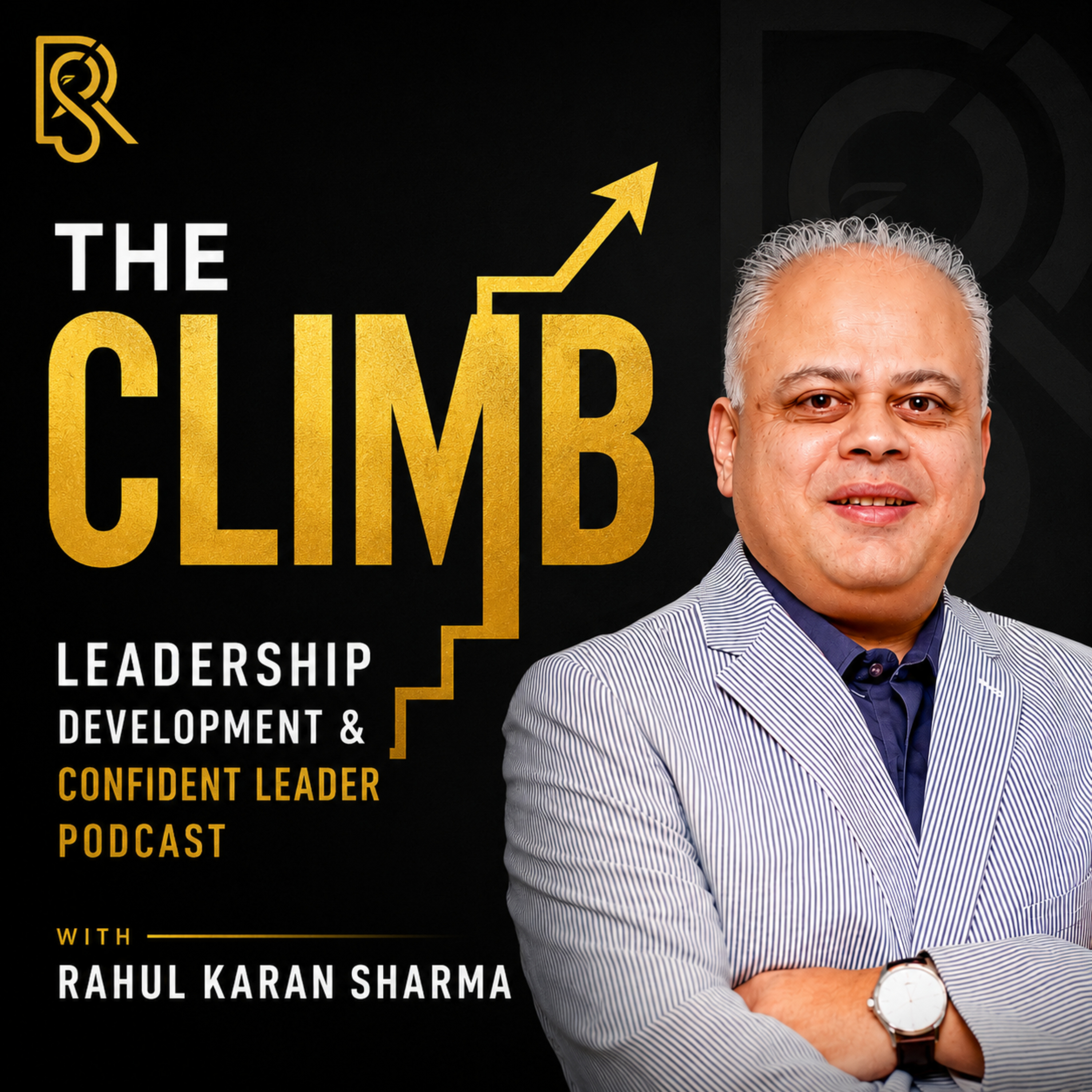
Master Cross-Functional Collaboration and Executive Relationship Building. Rahul Karan Sharma and Morag Barrett reveal why "FINE" is a 4-letter word at work.Ranked in the Global Top 1.5%, The Climb: Leadership Development and Confident Leader podcast is your executive blueprint for Business Growth and Personal Capacity.If your organization is drowning in internal friction, department turf wars, and managers who refuse to communicate outside their immediate bubble, your business cannot scale. In this conversation, global leadership expert and author Morag Barrett joins host Rahul Karan Sharma to dismantle the myths of modern team alignment. Having empowered over 20,000 leaders across 6 continents, Morag exposes why the common response "I'm fine" is actually a dangerous mask hiding workplace anxiety and friction.
Transcribed and scored by The B2B Podcast Index.
Rahul Karan Sharma: Hello and welcome to another episode of the Climb the Confident Leader podcast where we share stories of leaders moving from invisible to becoming an influencer. I am your host, Rahul Karan Sharma, and today I have an amazing guest coming in who is an executive coach, a leadership expert, and an author who helps leaders unlock their full potential by cultivating the power of professional relationship with over 20,000 leaders across 20 countries and six continents. Empowered by her work, our guest brings actionable strategies to help individuals and teams build trust, foster connection and drive exceptional results. When she's not working or coaching, she works on creating more connected workplaces and sparking the Ally mindset through her books, workshops and resources. Ladies and gentlemen, please put your hand together for one and only Morag Barrett. Morag, welcome to our show. How are you doing today?
Morag Barrett: I'm doing great, Raul. I'm excited for our conversation.
Rahul Karan Sharma: Absolutely. Same here. It's. It's so good to read your bio, the kind of work that you have done. The essence of your work is truly visible based on the number of people who have been blessed to, to know you and to work with you. I'm excited to learn more. Would be great if you can share with our audience your leadership journey, what has gone through in the making of Morag.
Morag Barrett: A little bit of this, puppy dog tales and a few things. Nice if I go back to the nursery rhyme and mix the metaphor. But it's interesting, the leadership journey that I look back on, it's not necessarily the leadership journey I anticipated and looked forward to at, ah, high school. Do you know what I mean? It's funny how life, we're raised, we were just talking about our kids, but we are raised with a certain expectation of life and the leadership journey. The whole point is it's nothing like the book or what we're told and it's what you make of it in the moment. And I think that has been the highlight of my career. It's the twists and turns. So when I was at high school, I wanted to be an engineer. So I was doing applied mathematics, physics and economics at high school, ready to go to university. And, and then there was a chapter in economics on how banks create money. So I ended up pivoting and going straight into finance and not going to university. I decided to do my degree at night school. It's nothing like that chapter, but spent 15 years on the numbers side of what makes for a successful company. And then another door opened, which was the bank, which in England at that time had hundreds of years of history and bureaucracy and paperwork. Introduced what was known as, um, Kaizen training. So Six Sigma as it is now, reducing errors, reducing paperwork. And I was one of the first facilitators and I found that I enjoyed facilitating. Prior to that, it was, give it to me, it'll just be quicker and easier to do it myself. But the coaching, the mentoring, the working with leaders old enough to be my father, most of them men, to understand the inefficiencies within our industry and then look at better ways of doing it is what sparked my curiosity. So I went back to school and then also joined the bank's leadership and executive development department. Because I realized that the numbers are only half the equation. If you don't get the hearts and minds of people engaged, if you don't focus on the community, the relationships, then you're not going to have a successful business. And so it was that pivot into leadership and executive development that I left the bank, joined an American telecom company. Another door opened. It was, hey, come move to Colorado, where I live now, now. And then 20 years ago, I started SkyTeam. 20, no, 19. I'm exaggerating there. Let's round down. It'll be 19 years this year that I have been leading SkyTeam and now focusing on leadership and executive development, mainly for highly educated, complex engineers of various flavors. Whether that is defense contractors, whether that is it technology, gold mining, health, oil and gas, those are, uh, our ideal clients who are working in complex environments where emotions and opinion may be raised and differ. Um, there's no one right answer. Uh, and how do you lead at your best? And it all comes down to relationships, which is at the heart of my books, my research, and the work I do today. So there you go. That's up and down, round and about.
Rahul Karan Sharma: Yeah, I think that has been definitely, we can say it as a roller coaster ride for you and, uh, when you were sharing about your ideal clients, what was coming to my mind is just this weekend I was, I watched this series called Copenhagen Test on Peacock. And it is about, uh, military or, uh, intelligence U.S. intelligence group. And what I, when I was watching it, I was considering that it's so easy in corporate that we say that this particular leader is good or particular leader is not good. And we decide based on the process they follow, based on the blue book or, uh, based on the blueprint we have created. What intrigued me is at times it is not just those blueprint, it is also that individual leader. The decision that they make at the time when it is required, are they able to take the right Decision, because that, that is very, very important. Everything. You cannot write it in a, uh, you know, a blueprint. It's, it's at times, it is that moment what you are taking a decision. So I do understand that in that complex environment, it is just not about what you are learning in the books. It is about what you are reading in the room, what you are sensing. Are you able to connect with the energy of the individual? Are you able to read the person's mind? All those things really matters in becoming, uh, a professional as well as a great leader. So when you were mentioning that, who you work with, it's so ironical that in the space that you are dealing, many times these folks, they do not see leadership as the core. For them, it is more on the technology side. For them, it is more on their domain rather than leadership. Well, that has been my experience. So I will, uh, love to, I will defer to you. I mean, in your experience, have you seen, seen that stands true or the people that your clients are really focused on improving the leadership acumen of their people.
Morag Barrett: So I think we all fall into the same, A similar trap. I know I do. Which is when your inbox is full, when your Slack messages are binging, when the phone is always going, it is all too easy for any of us to just focus on busy, busy, busy, busy, busy. Got to get it, um, done. Got to get it done, Got to get it done. And the real skill this the best leaders. It's never about smarts. It's not that anybody isn't smart enough, whether they're the double PhD rocket scientists that I'm coaching, or whether it's somebody who's just emerging into the workforce and joining a new team. It isn't about smarts. We all know intuitively that we should pause, listen to others, give them their full attention. But all of us have a little bit of our mind. Who's thinking about, what do I have to do next? Is my day going to go, go? Well, when we're on zoom, the number of times I've seen leaders who think, well, my hands are below the camera, I can multitask. I'm just going to do this email. But as soon as we look away, we break contact and the other person does know. And that's where leadership gets eroded. It's not in the big headline, wrong decisions. Because in the moment, I would hope that my smart leaders are making the best decision that they can with the information that they have. And it's whether or not they can learn afterwards if they've made the headline wrong decision. That's what differentiates. But those are the exceptions. Our leadership, reputation and impact is made or broken every single day. In the small actions, the do you feel heard? Uh, do you feel seen? Do you feel valued? Do you feel like you belong? That's how any leader can accelerate their impact. And it's not by doing more, it's by, by being present in the moment.
Rahul Karan Sharma: Wow. I think uh, you're bringing uh, a very good point. Being present in the moment and in today's hustle and bustle life we are just focusing on the things that is not in front of us. We are either focusing on think on the past or we are focusing on think in the future. So being present in the moment is so important. Especially when you are doing that one on one conversation. Especially when you are speaking uh, or uh, with, with your team or maybe family member. That is so very important. Mar, when I was uh, doing my research for you, I got to know that you talk a lot about professional relationship. And the way uh, you mentioned that professional relationship is, is more like a strategic advantage. So what is the ability to collaborate across silos or how can leader in today's complex environment they can collaborate across all their cross functional departments and make sure that they are visible, make sure that they are not just doing that goody goody things, but they are really doing the things that matter.
Morag Barrett: Well, I'm going to do a quick plug for both my books here, Raoul. So my first book, and it's now on its second edition is called Cultivate the Power of Winning Relationships. And I wrote that after I came out of my corporate career for the very reason you've just mentioned that cross functional collaboration. And I don't mean department on department though that matters too. Even cross functional collaboration within departments was suffering in my experience of my team is better than your team. My team has to beat your team. And it seemed ironic because we're all playing for the same company, the same overarching team. And this internal fighting and friction that happens either between leaders who don't like each other or teams on team or department on department, it just slows down and undermines the success of everyone. So in Cultivate, I introduced what I call the relationship ecosystem which started to say hang on a minute, the world of work is the biggest team sport that any of us get to participate in. Your success is dependent on others. Even if you are that double PhD subject matter expert, the only one in your company that knows whatever it is that you do, you are uh, Dependent on others in order to bring your ideas to life. And if you are dependent on others for your success, then it's in our interests to ensure each other's success. Because if you're successful, Raoul, with this podcast, Top One and a Half percent Excellent. Then by inference, I'm going to be more successful because this episode will reach more people. But for whatever reason, many leaders don't see it that way. I mean, our school system teaches us it's me versus the exam board. Can I regurgitate the facts from the textbook? It doesn't really encourage critical thinking or different thinking. It doesn't really encourage to the same extent collaboration and teamwork. It's called cheating. When we do it at school, yet at work, it's how we survive. And so cultivate, introduce. Why do we need to worry about our relationships? You can't just leave them to chance. And who are you dependent on? And then the sequel, you, me, we, why we all need a friend at work and how to show up as one then takes the concept of that ally or the friend at work that, uh, Gallup talks about in their engagement data. And from our research from over a thousand lists, leaders distills it down into five practices that if we're demonstrating them consistently, means that we're showing up as a friend and ally for others. But we're also, Raoul, showing up as a friend and ally for ourselves so we don't become a doormat. And so if I bring both of those back to your question, collaboration is critical. Collaboration across leaders, teams, departments, regions. That's how you get creativity, innovation. That's how we remove inefficiency and friction that allows us to bring our product or service to market sooner. It's everything. But when it's me versus you versus me versus we, that's when we start to lose out.
Rahul Karan Sharma: Sure, sure. I think, uh, great point that you are bringing up is the collaboration. And the collaboration is sometimes people see it as a threat, sometimes people see as that why should I'm good, uh, at my own work, why I need to collaborate, why I need to share. And in that process, they miss that larger piece. They may see success, uh, eventually or probably to start with, but as an organization, they will become a bottleneck, they will become an obstacle if they are leading the team.
Morag Barrett: That's why the first foundational practice in Yumiwi, um, is abundance and generosity. Because the old world thinking you're right, there is only one CEO seat. And at some point maybe you and I are going to be in competition for that chair. But if I can't celebrate, if you get that seat and I don't, then that's unhealthy competition and it may well be again for organizations. There comes a time when the time is right for me to leave and go somewhere else. Either to broaden my experience or because that CEO seat in this particular organization isn't going to become available at the right time and the right place for me. So I'm going to go elsewhere. And how do we make that okay versus being mislabeled as disloyalty or um, a failure? Because then that encourages us all to strive to be the best version we can. Knowing that as long as I'm learning and growing, hopefully it's to bring those talents to this organization. But if it isn't, it allows me to springboard elsewhere. Either way, I'm now leaving and saying yeah, that company was excellent because look what I learned and look what it enabled me to do versus yeah, I left because there were no career opportunities. So there is a win win. When we shift our mindset to one of abundance generosity, how can we help ensure others success? Because in return it does ensure our own.
Rahul Karan Sharma: Um, correct. And you are bringing this up again about uh, having such a close knit environment because sometimes people see them, the other team members as their enemy, as their opponent. And uh, one of the things that probably I practice at my home like every weekend when we go out for dinner we do a ah, healthy conversation on the best cuisine or probably the cuisine of choice. But what we have discussed or decided as a team is that everyone will have different opinions. But once we calibrate, once we decide on one decision that okay, we will go to X cuisine, then everyone needs to support it.
Morag Barrett: Yes.
Rahul Karan Sharma: What I see in corporations is we do that healthy conversation. But when the decision is made and if your decision is not considered then you become more like a sore loser and vibe that you are bringing, the energy that you are bringing to the table is not good for the overall uh, growth of that team of that organization. So yeah, so that's what we are practicing at home. And then hopefully when my kids grow up and when they go to corporate they will be able to relate it as well.
Morag Barrett: I love that you're role modeling that because I saw that and I do see it with the leaders I'm coaching that passive aggressive back channeling which again then undermines credibility, yours and them. Uh, it erodes trust faster than anything that you can imagine. And the key here is to create a team environment where I can say it to your face, either the my spidey sense says something's off here or we've just agreed this but I'm still not clear what my next steps are or how my team are supposed to deliver that milestone as well as anything everything else, what's got to give? We've got to be able to dissent, ask the awkward questions, clarify in the room and then to your point, we're one voice to the rest of the organization. It can't be, oh yeah, they said no, we owned it. And you can say, you know what, we all disagreed. We weren't sure, we listened to different point of view, but this is what we've agreed and here's why. And then that way everybody can get behind it and again we accelerate then the productivity and the uh, the route to success or the route to new information and learning and course correction in the future.
Rahul Karan Sharma: Absolutely. One of the another thing that is coming to my mind, especially when people work in different departments or cross function, most of the people, they do not rely or they do not take them seriously because they are not their direct leader or direct chain in command. So what happens is these many managers who work cross functional, they have to probably lead without a formal authority. So in your experience, how a manager or a leader can build their influence and alignment with the other teams without relying on their title, without having any control onto that team. Any thoughts, any perspective on that? Um, Moir.
Morag Barrett: Yeah, absolutely. In Cultivate, I talk about what I call a relationship pulse check. And I encourage leaders to do these. Well, you can never do them too often, put it that way, possibly not every week. But if you're doing it every month, if you're doing it as by way of habit, every time a new working relationship starts, somebody joins your team, um, a new project, so you've got a new team together, then you can avoid some of the items and symptoms that you've described there. And a relationship pulse check. And how do you influence without authority? It's getting to know the human being behind the job title. So sharing your career journey, like you asked me at the beginning of this podcast, and then listening to the other person allows you to understand hidden talents that you may not otherwise know about. For me, 15 years in commercial finance, I know my way around a profit and loss balance sheet, a cash flow forecast. I understand what it takes to build a successful business, but if I don't share it, you would never know. You'd just think executive coach, keynote speaker, uh, leadership expert, author. So getting to know people. But the relationship pulse check takes it one step further. It is an explicit check in with three questions. Firstly, what's working well, if it's a new team, what are you excited for? The second question then is what's not working so well? What's getting in the way of our uh, success? And you might find it's systems, it's technology, it's equipment, and it might just be. You know what Morag, you keep emailing me at 8am every day. I'm not a morning person, I'm an evening person. You know, our, our working rhythms aren't aligned. Okay, well I can schedule send at 3 o' clock in the afternoon if that helps. So it's what's working, what's not working? And then the third question is simply what's one thing I can do or that we can do to help each other to be successful? And if you're asking those questions, you don't have to ask them all three in the same conversation, but if you're asking them consistently of your key stakeholder relationship, I guarantee that your leadership, reputation and impact will increase whether or not they are direct reports, peers or senior to you in the organization. It's a curiosity about what drives others, what's getting in the way of success and then ownership collective and individual for how do we make that better?
Rahul Karan Sharma: Wow. I think uh, that's goldmind as an amazing golden nugget was dropped by you Again, uh, those relationship post check. We will definitely make sure that it is. We uh, include it on show notes as well. This will be very, very important and integral part for a leader. Uh, now Morag, I know you have worked with clients globally in your experience, uh, what are some of the habits or mindset shift they need to have or they need to probably inculcate to avoid the cross functional work to go down. I have experienced that it is not the senior or it is not the C level leader who creates an issue or who creates a problem. Many a times it is that mid level uh, middle management which is not allowing these two departments or these two functions to work. Well. What has been your experience?
Morag Barrett: Poor middle manager. Oh my goodness. Directors. The middle manager, manager of managers. They get the toughest job of all. They are squeezed from the top, they're squeezed from the bottom, they're squeezed from the side. They're between the proverbial rock and hard place. And think about it, when you were a middle manager, When I was the manager of managers in corporate, at no time did I wake up one morning go and think I m wonder if I can slow down Raoul's project today. I wonder if I can get my team to get in the way of his team. Now that doesn't mean it didn't happen, but I think that's one of the key mindsets is that recognizing that other than the less than 0.1% of people, everyone is trying to do their best. And if we can recognize that from the get go, it makes the whole conversation around. Here's where we're getting in each other's way and stepping on each other's toes A, uh, lot easier to handle. But I think the biggest thing in terms of where it comes to collaboration that the pandemic really exacerbated is this whole business of building relationships through camera. So whilst we had some hybrid working before the pandemic and certainly my IT technology teams were follow the sun and had teams on all 24, um, hours time zones, they weren't necessarily skilled in how to build a high performing team or a one on one relationship through the camera. And unfortunately for many leaders during the pandemic it was emergency evacuation from the office. We'll go home, we'll get the camera set up. It's all a bit wonky and wobbly. We'll just do what we did when we were in three dimensions, through two dimensions and we didn't stop and check in on what's working, what's not working and how do we make this better. We just kept using the old muscle memory. And so for me, collaboration, I see it in the return to office demands being made. On the one hand, I get it, I love being around people. But there is no point coming back to the office. If I'm going to spend all time in my office on zoom calls, talking to other people on other zoom, uh, time zones or in other offices, I may as well have done it from home. So bringing people together in person, make sure it's intentional with a clear purpose, with the right people in the room or the right two teams showing up to together so that they can collaborate whilst in person. But the other thing to recognize is that it is possible to create really deep, meaningful relationships through the camera. But it requires intentionality and scheduled spontaneity. So since the pandemic, one thing I've noticed with cameras we get on the zoom call, we might be 30 seconds late. The first thing somebody says is, I'm sorry, I'm late, I'm in back to back zoom calls. Well, when we're in the office, you could roll into the meeting five minutes late because you were Coming from another building or another floor, you stopped to make a coffee, you jump, and you bumped into somebody who asked for your advice on the way and nobody batted an eyelid. And so what I'm encouraging leaders to do is when you get onto your zoom call, don't just jump to what are you doing? Where's the project plan? Where's the work, work, work. Create a few minutes of how was your year end? How do you celebrate? What are you most looking Forward to? To 2026. Making that scheduled spontaneity where we can connect on how we're doing makes for a powerful then transition into what we need to do together. Because if I understand what's happening in your whole life and where the stress and the impact of that might be helping or hindering, then I'm better able to, to support you in the business goals that we need to achieve together.
Rahul Karan Sharma: Wow. I think, uh, when you were explaining this aspect, I, uh, was smiling because I was able to relate to myself. And I really like the point that you made is when you are making people work, come to office, make sure it is intentional. Don't bring them to office just because it is the norm or just because you want everyone to come. In my case, I was the same person where I, the moment I used to step into office, I was locked in my closed door because I was managing a, uh, global team. And, uh, the only time I used to step out is to use a restroom or probably grab a coffee. And when I look back, yes. And whenever I used to travel to meet with my team, it was very different and I was not on calls. I'm, um, talking to them. I'm meeting people. The true essence of you bringing up people together, you are calling people in office. I was making it sense or making it work only when I was traveling, whenever I was in my home, office, Home office in the sense office near my home, I was all in the, locked up in the office. So I'm glad that you're bringing it up. It's a great point for leaders to make sure that when you are calling people to work, make it intentional, make it worthwhile. Well, uh, we are, uh, coming towards the end of our show, uh, because it's so intrigued, so lovable to speak with you and so much enjoying. But before we move to our rapid fire round, Morag, I have this question, uh, that probably I hear from my charo friends, C suite leaders. So if our C level executive who are really focused on building a culture where they want people to work together, where they do not want that the silos culture is creating in the back burner. What would be your, uh, advice for them to make sure that the silo culture is not created?
Morag Barrett: Well, it happens, and it's broken down one conversation and one relationship at a time. So start by looking at their immediate teams and where could they lean in and nurture those relationships a little more? And, um, my signature, a keynote is called Fine is a four letter word and it specifically addresses that question that you've just asked. Because when I ask leaders, how are you? How's it going? The stock answer is fine. And so fine, it isn't just harmless deflection. It is a mask. And that's why I call it a four letter word at work. Because behind the scenes, the stress, the anxiety, the friction, the frustration, they're just being hidden with, hey, yeah, everything's okay, except the reality is different. And so that's what the C suite and leaders can be doing is looking for. When are they pretending? When they're anything but fine. In which case, what can they do to increase the trust and the candid around the tables they're sitting at? But also be thoughtful when they're hearing fine and fake perky from others, what can they do? What questions can they ask just to go one step deeper to understand what's happening behind that and therefore what barriers can they remove to help accelerate everyone's success?
Rahul Karan Sharma: Wow. So, listeners, if, uh, next time you are hearing Word find, two things should come to your mind. One, hiring Morag for a keynote. And two, make m sure that you are not getting the true picture. There is something underneath it. So you need to dig more deeper and have the conversation so that you allow people to, to open up. So, so thank you for bringing that up. And I never looked at from that perspective, but yes, the moment you mentioned that word, I am now realizing that how many times people have said the same thing to me and I just moved on to the next, uh, problem or the next question. So thank you. I would be more mindful now whenever I'm hearing that kind of a response. All right, so, uh, Morag, if anyone wants to work with you or wants to get your framework to their organization, what is the best way for them to start working with you?
Morag Barrett: Well, the easiest way is the two books. So again, I'll put them up. Cultivate the Power of Winning Relationships. My first book and then the sequel. You, me, we, why We All Need a Friend at Work and How to show up as One. Written with my friends at work, Eric and Ruby, they go hand in hand. You can read them in either order. And then from there, connect with me on LinkedIn. It's me that replies, not a bot, not an assistant. It is me. And, uh, then of course, skyteam S K Y E team dot com. And if your audience would like to help contribute to our ongoing relationship research, then our Ally Mindset profile that you mentioned in the introduction is available for free, and that is at SkyTeam S K Y E Team Cloud. You me.
Rahul Karan Sharma: We will include that in show notes so it's easier for our listeners to, uh, to find out. Okay, so now we're moving to our, uh, last segment, which is a rapid fire round. Moraj, uh, where five questions coming to you. All right, the first one, a quotation that you live by.
Morag Barrett: It's a phrase from the film Bridge of Spies. Would it help? And it helps me to pause. Will this help if I speak up? Do this. Would it help?
Rahul Karan Sharma: Okay. All right. Are you a morning person or an idol?
Morag Barrett: Neither. Now, definitely never a morning person. And to be honest, as a teenager, um, would beg my mum to stay up after nine. Now I love to be in bed by nine.
Rahul Karan Sharma: Full circle, full circle, full circle. What's one Daily routine you never skip
Morag Barrett: morning coffee or a cup of tea.
Rahul Karan Sharma: Okay, what's one, uh, leadership skill you wish someone had taught you earlier that
Morag Barrett: now is the best time m. There you go.
Rahul Karan Sharma: Uh, and the final one, uh, if your career were a Netflix series, what would be the title of season one be?
Morag Barrett: Expect the Unexpected.
Rahul Karan Sharma: Ooh, nice. Expect the Unexpected. All right, so you did very well. All right, before we let, uh, you go, I would share my learnings from the show and listeners or people who are watching, uh, us on YouTube. This is the time for you to, to mention your biggest takeaway from the show so far. And, uh, I'm very confident that you would have already gone to the, uh, Morris website and completed the Ally Mindset questionnaire, if not, do it right away. So for me, uh, there have been many aspects that probably stand out. But in, uh, the interest of time, I will share a few. Number one is, numbers are only the half side of the equation, and many leaders will look at the numbers, the dashboard. It's more important that the heart and mind are together. And when you are able to bring that heart and mind together, that's where the magic happens. So as a true leader, as a confident leader, you should be focusing on that aspect. Another bigger, uh, learning I had when Morag mentioned that it is, most of us, we try to do big Thing, try to think on the big action. But it is the small action that matters the most. It is the tiny action that you can implement in your day to day life really makes a difference. And what's one such small action, uh, she mentioned is about being present, being present in the moment. It's so valuable, it will create a different impact for the people around you. Maybe it's your team members or family members. They will really love you for being present in that moment. The other, uh, two aspects when she shared about her two books around. One is the cultivate if you are looking from the relationship perspective, if you are looking for your cross department teams to work in harmony and in peace, have them read this book. It's about the relationship ecosystem. The second book of hers is you, Me, we, which which talks about the friend and work. And in my uh, experience I have noticed that every corporate employees, they have a lot of things going in their mind and if they find someone at work to whom either they can dump things or to whom they can just pour their heart in, it would be very, very valuable. The unfortunate part is that person is never the manager and that person is somewhat different than the manager and uh, it is not the HR as well. So you will have to find that person with whom you can talk your heart out so that you are feeling very lighter from inside. Read that book, you, me and V. You will get some insights on how you can create that friendship at work. Finally, uh, the relationship post check in is another tool that Mourag has explained in her book Cultivate where which she recommends you use it at least once a month, if not more. And the three questions that you can ask is number one, what's working well, what you are excited about and what's not working and finally, what we can do together to make it work. If you do that, uh, check in on a monthly basis, you will be able to make sure that your relationship with your team members as well as cross team members will improve. With that said, it has been pleasure to have you Marag on our show. I'm very excited for the release and I'm very excited for all the learnings that you have shared with our audience. So thank you again and wishing you the best in 2026.
Morag Barrett: Thank you Ra.
Other episodes covering the same guests and topics, from across The B2B Podcast Index.
 Learning TogetherAll Things Product with Teresa and Petra · on cross-functional collaboration75 / 100
 #294 The Skills Every CFO Will Need by 2030 Myles Corson EY Global Financial Accounting Advisory Services, Strategy and Markets LeaderGrowCFO Show · on cross-functional collaboration72 / 100
 DigitalTransformationTalk: Closing the engagement divide in the age of AI driven customer expectationsDigitalTransformationTalk · on cross-functional collaboration72 / 100
 From Engineer to Executive: Learning People Skills the Hard WayThe Step UP · on cross-functional collaboration68 / 100
 Tim Woodall (Faber & Faber) on what the arts can learn from publishing (and vice-versa), the reality that your audience is not “everyone” (and that’s fine), and the value of brand-buildingDigital Works Podcast · on cross-functional collaboration64 / 100
 S2E4: Navigating the Intersection of Product and Sales with Richard CawkillProductly Speaking: Real Stories for Product Managers · on cross-functional collaboration60 / 100
 Your Team Is Too Quiet: The Hidden Signs of Low Psychological Safety52 / 100AI Won't Replace Leaders. It Will Expose Them.52 / 100How to Build Trust Across Remote Teams When Titles Disappear78 / 100Why Your Executive Team C-Suite Is Operating In Silos55 / 100How to Transition from Individual Contributor to Strategic Leader53 / 100