
She Sells B2B · 2025-07-27 · 34 min
Key moments - from our scoring
Substance score
26 / 100
Five dimensions, 20 points each
Gabrielle Oldaker leads the marketing and digital team for Experience Melbourne's tourism and events division, overseeing major campaigns like Moomba and Now or Never Fashion Week, plus the city's what's on guide. Her conversation spans her unconventional career trajectory - from the Mail on Sunday in London through film distribution at Madman Entertainment and Disney to her current role relaunching Melbourne post-lockdown - and how workplace culture has shifted for women since the male-dominated, sexually-harassing industries of her early career. She contrasts the autocratic, profit-driven leadership of corporate entertainment with the servant leadership and psychological safety practices at City of Melbourne, where employee wellbeing and permission to speak up are genuinely embedded. She discusses the challenge of building diverse skill sets in marketing teams (AI, social media, martech, B2C) without imposing outdated expertise hierarchies, and flags ethics and governance around predictive analytics as the next frontier leaders must address. Her perspective emphasizes that speaking up about harassment, though frightening, breaks silence and creates change - and that younger generations are increasingly refusing to tolerate what previous cohorts normalized.
Corporate environments tend toward autocratic, profit-driven leadership, while local government (specifically City of Melbourne) emphasizes servant leadership, putting employees at the heart of practices, giving permission to speak up, and training managers on psychological safety - creating a measurably different culture where employees feel safer voicing concerns.
First, recognize it's never okay, find a trusted person or therapist to discuss it with, and speak up in a way you feel comfortable - because silence allows it to continue; consider the impact on others if motivation for yourself feels insufficient.
Imposter syndrome and the fear that you don't know enough, but the key is recognizing that AI and new technologies are new frontiers for everyone, so curiosity and collaborative learning matter more than pretending to individual expertise.
She moved from the Mail on Sunday in London to the Herald Sun, then Census/CitySearch, Madman Entertainment, Roadshow Films, Disney, a PR agency specializing in film, and finally to City of Melbourne during lockdown.
Through regular one-on-ones, open sharing and vulnerability from her as a leader, explicitly stating it's acceptable to say no, creating space for team feedback, and avoiding the manager-says-yes mentality.
Our reviewer’s read on each dimension, with quotes from the episode.
The episode is almost entirely personal career narrative, harassment anecdotes, and generic leadership commentary. The only concrete operational data point (93% retail spend decline) is mentioned in passing and never analysed. The AI commentary amounts to repeated 'lean into it, it's happening' platitudes with no actionable takeaways for a B2B operator.
lean into it. It's happening. You can't stop it. So you have to lean in and you have to learn
I think it's about the attitude behind that, the curiosity to learn
Every major frame is borrowed and recycled: Lean In, MeToo as catalyst for change, imposter syndrome, 'good and evil' framing of AI, positive self-talk in front of a mirror. There is no contrarian argument, no first-principles reasoning, and no claim that would surprise a moderately well-read B2B professional.
lean in being such a huge success. You know, um, something that spoke to the heart of so many women
I think obviously with everything there's, there's, you know, there's good and evil
Gabrielle Oldaker is a genuine senior practitioner leading a 21-person team with a real track record across media, entertainment, and government tourism marketing. However, her work is predominantly B2C events and destination marketing, making her relevance to a B2B sales and marketing audience marginal, and she does not speak at scale or with cross-industry authority.
I'm heading up the marketing and digital team in Experience Melbourne
So there's 21 of us
A handful of real names and figures appear - the 93% retail spend figure, Madman Entertainment, Roadshow, Disney, the Natalie Miller Fellowship, City Search in 2007 - but none are explored with depth or tied to transferable lessons. The leadership and AI sections are entirely abstract with no metrics, frameworks, or documented outcomes.
retail spend in the city had gone down by 93%
his name's Seth. And he said, came to me and he's like, gab, you should apply
The host asks open-ended questions but never challenges a claim, pushes for specifics, or introduces productive tension. She frequently validates the guest ('Yeah, I totally agree'), inserts her own personal stories, and transitions between topics abruptly without mining the previous answer for depth.
Yeah, I totally agree, uh, that there's definitely been environments where the female leadership has perhaps been unfortunately more toxic
I think that, you know, you yourself are uh, a role model
Computed from the transcript - who did the talking, and the words that came up most.
What does it really take to lead, grow, and speak up in workspaces when the rules were not written with women in mind? In this episode, Gabrielle Oldaker, Head of Marketing and Digital Experience in the City of Melbourne joins me to unpack what ethical leadership actually looks like today. From film and media to local government, Gab has led marketing teams through change, disruption, and industry shifts. In this episode, she shares why psychological safety matters, how she navigates imposter syndrome in a tech-driven world, and why leaders must speak up for themselves and others. Listen in if you're interested in: Creating psychologically safe teams in fast-paced B2B environments Embracing AI and upskilling without fear or perfectionism Recognising and navigating toxic work culture Leading with empathy and vulnerability Building ethical marketing teams that put people first Encouraging your team to speak up and set boundaries How to lead as a woman in male-dominated industries Whether you’re managing a team, navigating leadership yourself, or finding your voice in the workplace, this is a conversation you won’t forget.
Transcribed and scored by The B2B Podcast Index.
Speaker A: Not okay for anybody to take advantage of you in any way, finding a way that you feel comfortable to speak up, but to say something. Because if you don't say something, it continues to happen and silence is making things okay. Think about the people around you and the actions of those people doing that on others.
Speaker B: Gab, welcome to the SHE Sales Podcast. I'm really excited to get into this conversation with you. I. I'd love to learn more about your role and what you're doing today and how you've actually got into this role, uh, from the very beginning of your career.
Speaker A: Sure. Thank you. Thanks so much for having me. Feeling very privileged to have this opportunity to speak to people about my experience. And at the moment, I'm working for the city of Melbourne. I'm heading up the marketing and digital team in Experience Melbourne. So essentially the remit is really across tourism and events for the city. All the major premier events like Moomba, now or Never Fashion Week, Firelight Festival, also destination marketing. So positioning Melbourne as a number one city for leisure activity. Oh, yes, I shouldn't forget also the what's on website, which is essentially a website that's a city guide that educates people on what's on in the city.
Speaker B: I use that all the time.
Speaker A: Oh, do you?
Speaker B: Yeah.
Speaker A: Oh, there you go. Always checking out what's on the team in my team that work on that are absolutely extraordinary and quite recently won a few umbrella awards and other awards for that. So we're very proud of the. But coming into the city of Melbourne, I mean, if I was just to start there and sort of work backwards, that was essentially at a point in my life where we were in lockdown and quite a few things had happened where I had moved on from, um, the industry I'd been in for 12 years, which was the film industry, working across local production. So heading up, I guess, all of the, uh, marketing for films that had been made in Australia, I'd left there to go to sort of my dream job. It didn't quite work out. I ended up in a situation where I was working, um, for an organisation based in Sydney and because of, um, the lockdowns, I couldn't travel. I started to feel quite isolated and I really missed having a team and that local connection. And I sort of started to think, well, I need to be around people more, and was looking online and a job came up at the City of Melbourne to do this role. And I thought, you know what? I'm just going to give it a go. I got the job and, um, went into the city of Melbourne to relaunch the city, I guess, after, um, 260, 62 days of lockdowns, you know, retail spend in the city had gone down by 93%. I did start my career in London at the Mail on Sunday, and I was working on events there. Came back to Australia and wanted to work in a newspaper again because that's sort of where I'd cut my teeth. I went to the Herald Sun. I didn't quite really know exactly what I wanted to be doing. I just knew that I knew newspapers now, so I'll go there. Yeah. Then I started to think, oh, I'm not. I'm not quite sure that was necessarily where my sense of purpose was lying, that I was getting that sort of feeling of, like, contributing to something bigger and deeper and something that motivated me beyond, you know, my pay packet. And so I started to think, okay, well, what does that look like? And I found myself working in Census, which was part of Telstra at the time. It was the digital arm, um, of Census. And I worked on a. On a website called City Search, which was very much like, what's on? So it's quite funny to go from. From City Search back in. I think it was like 2007 to be working on another City guide all these years later. I got made redundant, actually, I found out that I was being made redundant, uh, via Facebook, which was quite interesting. Weirdly, like, just weeks before going on the holiday, a recruiter had reached out and said, oh, you know, we're sort of headhunting, and we'd heard a few names and we thought it would be good to come and have a coffee. And so while I was away and that happened, I reached straight out to that person and I said, oh, you wouldn't believe it, but I've actually, you know, know, found myself kind of in a situation of not having a job. So when I got back, I went and met with this recruiter. And through that recruiter, he knew someone who was recruiting for a film distributor called Madman Entertainment. And he said to me, look, you know, your CV is way more kind of entertainment rather than like finance and banking. And the area he covered. I'm going to refer you to this person. You should go meet them. So anyway, they had this job at Madman Entertainment. I hadn't done anything in film before. From there, I went from Madman into Roadshow Film Films and then into Disney into PR agency that specialize in film. So that's kind of.
Speaker B: Yeah, your career spans across media, newspapers, film, entertainment, pr. That's really amazing. Since you started in your career way back when, all the way through to today, do you feel like the way that women are seen within those industries has changed? And what would you say the key differences are from then to now?
Speaker A: I think absolutely there's definitely some significant changes. I think a lot of the broader, uh, zeitgeist has had a lot to do with changes. So people speaking up, the MeToo movement, people talking about how it's okay to say something. I think, you know, launching into a career that was in an industry that was very male dominated, rife with sexual harassment, it was a very sort of fast paced, do what you're told, get the job done, hit your targets kind of industry. I feel that even though that's still there, obviously profit, profit is always going to be at the heart of any corporate job. I do feel that there's a move towards embracing an opportunity to be your real self, to be authentic, to. To show up in the room and lean in. I think, you know, lean in being such a huge success. You know, um, something that spoke to the heart of so many women have been in rooms and have not felt they could. It gave people permission and I think that it shifted a lot. I think that people recognizing the importance of focusing on their mental health and delving deeper into their why, access to content through podcasts, through. Through all of these different sources that allow us to be able to hear that we're not the only ones having that experience. I think it's allowed people to be way more accepting or understanding that they should say what they want to say and they should be themselves. Um, and I think that's changed the environment. I still do think that there's a way to go with a lot of things. My experience going from corporate into local government and that kind of culture shock was I, uh, bet was really interesting. And the difference in those leadership styles as well.
Speaker B: Yeah, I'd love to touch on that actually, when I first decided to start this podcast. Originally the she Sells podcast was meant to showcase women in leadership, specifically in sales and marketing. But since having had many conversations with females like yourself, the conversations do end up down what I would call a rabbit hole that none of us want to go down, which is around this sexual harassment and across multip different industries. Whether you're talking accounting and finance, media, tourism, it doesn't matter. There's so many stories that I've heard just through conversations with women. And what I know is that is still going on today. And I know that, you know, us as leaders We've been there, we've been through the years. Would you say if someone was dealing with a situation at the moment in the current day, what would you advise them? Um, what would you suggest and the best way to handle those situations?
Speaker A: I think the first thing I'd say is it's absolutely not okay, no matter what. And not to have any doubt whatsoever that it's not okay. Because it's not, it's not okay for anybody to abuse you in any way or take advantage of you in any way, regardless. And that's something I've had to kind of learn myself, you know, just through relationships that I've had, you know, my sort of, you know, my own traumas and my own, I guess, attachment style, uh, and things that I've put up with. And I think I would say to anyone in that situation, it's not okay to speak up, but to obviously, you know, reflect on how you feel comfortable speaking up. Because I do recognize again, that some people might feel a little bit, you know, not as, as I guess, able to say something because it's not their natural personality to, to speak up or to have conflict. And it's not so easy. So I would say that, you know, finding someone they trust that they could, you know, speak to. I think that having a psych really helps. Having someone, a therapist of some sort that you can speak to and get advice on how to frame it and present it in a way that makes you feel comfortable. That's something in my life that I absolutely 100% recommend is seeing, um, seeing someone on a regular basis to talk about your mental health. And so much comes up. And if that was happening at work and that came up, there's no doubt that my psychologist would be giving me some great advice. So knowing it's not okay finding a way that you feel comfortable to speak up, but to say something, because if you don't say something, it continues to, to happen and people think and silence is making things okay. And I think I would just say for everybody else, even if you can't see that you're worth it, which you are, but if you can't see that you're worth it, think about the people around you and, and the actions of, of of those people doing that on others. And maybe that's a way to sort of give you the, um, drive or motivation to speak up. It can be really, really harmful, even just in so many ways you probably don't even realize.
Speaker B: I mean, we talked about it previously on our, on our call about certain situations that have come up over many years of being in the industry that you've been in. I think it's a shame that that happened in the first place and just knowing how to handle those situations. And time and time again we keep saying speak up, don't let it slide. And I think that's super important to make sure that you don't shrivel and keep it to yourself because there's no way we're going to make any change if you do. In the organization that you're in now. You talked quite a bit about how the generations that are coming through are much more vocal than we used to be. So tell me a bit more about that.
Speaker A: I've definitely noticed. So partly I think it is coming from a more autocratic, authoritative type of leadership style that's generally seen in the corporate world to a more servant sort of people focused leadership culture that I've noticed. It's quite, quite different because I was really just trying to understand why does it feel so different in the local government council culture versus where I had been before and having to adjust to that.
Speaker B: And so private versus government, private versus government.
Speaker A: And in unpacking that it became very evident that in, in the city of Melbourne they do focus on really genuinely putting the employee at the heart of um, the practices, really empowering employees, um, looking leadership through the lens of empathy, development, you know, really sort of trying from that perspective and giving employees permission to speak up. And you know, there's signs around the building that you know, say things around, we respect all gender, you know, definitions or, um, how people, you know, see, you know, define themselves from a gender perspective. There's lots of opportunities to talk about um, psychological safety. It is just absolutely not, not okay in the culture of the City of Melbourne to do any of those things. And they make it very, I guess, obvious that they don't support that and they give you tools to be able to speak up. So I think there's that and I just think generally speaking there's change in the, in the way that people are starting to feel like the younger generation are starting to feel that they shouldn't put up with it and they're seeing other people speak up and they're like, no, that's not okay. And so you really have to take a step back and go, okay, you're right. Um, check yourself, Gab. Yeah, yeah, you know, that's, that's not okay. And so, and, and even just things that, you know, our parents would have said it to us. Now I start hearing myself going on Back in my day and.
Speaker B: But we didn't have any of this. Yeah, we just didn't. I've just remember so many occasions where I felt like I couldn't speak up. Have you got any examples that personally that you've gone through where you wish you had spoken up?
Speaker A: There's heaps, which is sad. And, uh, I didn't speak up because I felt like I didn't want to come across as not being someone who fitted in. I didn't want to be seen as uncool. You know, I was young and impressionable and kind of wanting to be one of the. One of the crew. And so I think when it happened, I just kind of laughed it off. And also just because it felt so. Like that was the norm. So it just happened. And I didn't even really, half the time even notice it being that bad until it was a few times where it was really, really kind of obvious. And, you know, like one manager once saying to me that after wanting to talk to him about, you know, I'm like, I really need to talk to you about something really important to me. And I'm thinking, I just. I just want to ask him for a pay rise because I was feeling,
Speaker B: you know, just get the courage to ask for a pay rise.
Speaker A: Yeah. And he was like, well, I really want to speak to you about something too. And I was like, okay, you go first. And he was like, uh, oh, well, you know, last night I. I basically. I dreamt about you. And I was like, I dreamt about you. Well, yeah, in a. More. Yes. And I. I was quite shocked because I was like, aren't you married? And I've. I've got a partner and you're my boss and this is really weird. And, you know, and I just like, laugh it off. And I'm like, you know, oh, yeah, no, but like, you know, you know, I've got a boyfriend and I can't do that. And then he was like, oh, uh, you know, we could just spoon. You know, you could just come to my room and we could spot spoon because we were away at a conference and I just sort of brushed it off and that was it. And you just don't even think about it again. It's just like a moment that happened. Yeah, I kind of do. And there was a situation where I did speak up once quite a number of years later after seeing the impact of some people's behavior get called out and then them get. Get in trouble from, you know, from the organization and. And actually you have to pay Sort of money out to.
Speaker B: So someone finally spoke up and raised awareness around the issue. And there was a payout situation.
Speaker A: Yeah, there was a, a thing that happened and. Yes, and so that happened. And then fast forward to another situation and a thing happened that was quite uncomfortable in terms of something that was said. And I said to the person, look, I just wanted to give you a heads up that what you said wasn't appropriate and just to be careful because this happened in the past. And the person, um, actually got taken to court and this happened. And just so, you know, like, be careful. And then I found as a result of that, and maybe, maybe it's not exactly that, and maybe I'm making excuses now even just talking about it, but I did find soon after that, apparently my work was no longer as up to scratch. I was getting a little bit in trouble from the head of the department on how disappointed he was that I was. Um, my attitude had changed and all of a sudden somehow, um. Yeah. And so I don't know if it was that, but I do largely think that it was connected to that. And that's why you fear speaking up, because there's going to potentially be some implications if you do. So, um, I don't know if that would have changed now. That was quite some time ago and maybe in the last 10 years might have changed. And if you speak up, maybe people take it more seriously. Uh, but at the time that's. That's what happened.
Speaker B: Yeah. I think that that feeling of, uh, a shift in dynamics purely because you spoke up, your intuition is so high and it's likely to be right.
Speaker A: Yeah.
Speaker B: So to feel like, you know, to say you don't know, but you had a feeling, I think that, that you should rest easy knowing that that is something that probably was a ripple effect of you speaking up to that person.
Speaker A: Yeah.
Speaker B: And it's really unfortunate that happened and it's really unfortunate that it keeps happening and there's still more stories. It's really frustrating, but I think that you spoke about psychological safety and you as, uh, a leader, you have a team. How do you go about creating psychological safety in your team?
Speaker A: It's mainly been around trying to create an environment people feel safe to speak up, giving lots of opportunities for one on ones and chats and being open and sharing, I guess myself more openly and being vulnerable. You know, I think trying really hard to make it known that it is totally acceptable to say you don't want to do something as much as you do, because that's, that's also you know, I think people have always felt that they need to just say yes because you're the manager. Definitely notice that's an absolute difference in current employment, place of employment. And I think that difference in the servant leadership versus the autocratic leadership style. My team have largely a, uh, very strong kind of. They feel very comfortable to say no, that's not good. Or, or the team don't feel comfortable as listening and going, you know what? Actually thanks. Probably not the time to say X because you, you told me that even though I was all gung ho, we were going to go down this route. I mean, nobody's perfect and you know, there are times where, you know, I don't show up as my best self and in amazing and I say something that's potentially, you know, upsetting and you know, it's just. No one's perfect. You can't get it 100% right.
Speaker B: Yeah, I think, yeah, definitely having more awareness and I, I think as women in these situations we naturally create quite a nurturing environment and where we can be, some of us, a lot softer, uh, in that approach. I think that. I wonder what that would look like if it was a male leader and how they might be able to create a nurturing environment.
Speaker A: That's a really interesting one actually. Predominantly in the branch that I work in at the moment, it is a lot of women, yeah, only a few who are male. And I was just trying to think of some of the leadership styles there. But the people that I do work with that ah, um, identify as male. They say that I wouldn't notice real difference in their style so much because I think that they are also given the feedback around the ways to behave and encourage the best out of teams. And I think, you know, it's just not accepted to not accept people the way that they show up at work because of the way that the organisation has really tried to put the employee at the heart. So I think that's a good thing. I mean, of course there's lots of long way to go there too. Like, uh, nothing's perfect in that environment. But I just think that at least reminding employees on a regular basis that they value psychological safety, giving training on it, making managers really aware of what that means, giving us principles to sort of, you know, work.
Speaker B: That's amazing. It sounds like it's coming from the top down and it's all across the whole organization, which is really wonderful to hear and I'd love to see, you know, perhaps more on the private side of things that being adopted. Um, I'D love to talk a little bit more about the marketing side of things. Managing a team. How big is your team?
Speaker A: So there's 21 of us.
Speaker B: Wow, okay. One of the things that we spoke about yesterday was having the skill set that you need today that you probably didn't need to have like 20 years ago. Now we have to be so diverse. Like we've got to have AI, social media, digital ads, martech, B2B, B2C. All of the things happening. How do you as a leader feel like is that really overwhelming?
Speaker A: 100 it's, it's so overwhelming. But I think it's generally not any different to any point in time. Things are always changing. It's I think again around being curious and one of the things I came to realize, you know, a big thing that people talk about is, you know, imposter syndrome. And you've always got this feeling you never going to know as much as anyone else and as you get older. Well, as I've gotten older I've found it even stronger in my head with changes in technology and you know, are they going to think I'm not as in touch because I'm not a uh, young, you know, 22 year old coming in with all the knowledge of digital. We're all learning. Nobody has experienced AI before. It is a new frontier for all of us. So we're really, it's an equal playing field and not to feel that you're not as knowledgeable because we're all learning. I think it's about the attitude behind that, the curiosity to learn. I think some of the things that are coming as a result of the changes in AI are going to make our work so much more efficient and processes around, you know, some of those sort of more basic tasks being automated. I think some of these things around personalization and uber personalization. A big area that I'm super interested in, which I think will come largely to a massive sort of peak of interest is ethics and governance around that. Uh, you know, I mean it's already obviously a huge topic but I just think, you know, we really have to start thinking about what our uh, ethical and I guess, I guess governance policies are going to be to set our ah, sort of moral compass around as an organization and whether leadership styles and just styles of, kind of cultural styles will adopt different ethics around that. I don't know. But I do know that you know, if there's going to be the introduction of you know, predictive sentiment and analytics and data that's sort of done from a Predictive perspective and consumer behavior that's done from a predictive perspective. What degree of accuracy is it not accurate? Inaccuracy. And then what does that mean ethically? So are we just making assumptions? But there's a percentage of inaccuracy that we're making an assumption on that's in ethical or you know, how do you sort of, you know, work through some of those things? So I think that's going to be a big.
Speaker B: Yeah.
Speaker A: Thing for the future. And I think it's just understanding this next phase of the world and that we live in. What are the opportunities it's going to create, you know, a lot of new jobs. I mean my daughter the other day she said to me, she was on Canva, doing her first um, thing on there. She's making a magazine, she's 10. And she goes, oh mum, is it bad that I like used AI? And I was like, oh, what do you mean bad? And she goes, well, I used it to help me make the magazine. And I was like, no, you should use AI. You should learn everything about AI because you're going to need to know that. So go and use it as much as possible. That's the point of it. And it was just interesting to see that her uh, her point of view is always that bad. Like I'm cheating. Yeah, well no, because yeah, it's such
Speaker B: a difficult one I imagine as a parent to be coaching your daughter. Go use the AI, but also use your own creativity as well. Right.
Speaker A: Yes.
Speaker B: I can remember trying to create my own newspaper or magazine. Like I wanted to be a journalist back in the day as uh, we were talking about newspapers before. So it's interesting the way in which we're encouraging the use of AI. But you were talking about before the, the AI and the machines learning and looking at sentiment analysis. But as humans, how are we analyzing that as well? And are we more analytical in a different way than a machine would be? Yes, I think that there's so much around that, um, AI conversation at the moment. Is there anything that makes you worried about it or excited for it?
Speaker A: I think obviously with everything there's, there's, you know, there's good and evil. Some people will use it for opportunities that are not so good for humanity and some people will use it for, or some ways in which it will be used. Not necessarily. People will turn out to be good things again. Same age old problems that the world, challenges that the world faces. I think it's really around leaning into it. It's happening. You can't stop it. So you have to lean in and you have to learn. This is my perspective anyway. And that's why with my daughter, I'm like, you learn as much as you can, you use it as much as you can. That's your future. That's your kid's future. Uh, you know, even though it's happening at a rate at which most transitions or revolutions have happened or evolutions, revolutions have happened, um, with new technologies is happening at a rate that we've never experienced before, again, it's happening. So we have to just accept it, lean and learn, and, um, try our best to set up, uh, the governance and the ethics around at least trying to do it for the, for the good of humanity. I think at the end of the day, that's the thing we're probably the most scared about is how is it going to, you know, be destructive. And I think we all genuinely want to create a better future for ourselves. So I think that's probably what's at the core of it. But I think it's up to leaders to make sure that they do ask the questions and challenge and make sure that it isn't going to be just for profit, um, driving outcomes. I mean, obviously everyone wants to make profit and that's what's hard. Because at the core of it, it can, it can translate to something being, you know, maybe not so good. But I just think that it is up to leaders to have, uh, perspective on always questioning whether they do genuinely ethically think it's the right thing to do. But you can't avoid it. So lean into it.
Speaker B: I love that. So we talk a lot about, uh, women in leadership. What I'd love to ask you is, is there been any situations in your whole career where you have been championed by a man that you felt really empowered by them?
Speaker A: Yeah, absolutely. I've had some, some really great champions. One of the previous, the CEO of a, of a company that I was working for not too long ago, you know, he really got behind me, um, and helped me to, you know, believe in myself. And he was always pushing me to, to sort of lean into opportunities for women in film. Also at that same company was another person who actually headed up all of the, the Australian film content development. And um, you know, he saw this opportunity to go for a grant through the Natalie Miller Fellowship, which is a fellowship in film to support women leaders who are at points in their career where a little sort of training course or an opportunity to get a mentorship will help their career. So I looked at the Criteria. And I didn't fit all the criteria of the things like how long I'd been in film. I think it was something like that technicality. And he was like, his name's Seth. And he said, came to me and he's like, gab, you should apply. You should apply for this. I was like, but I haven't been in film for as long as he's like, gab, he's American. He's like, gabby, you gotta go for it. So I was like, okay. And then I, and I rang Film Victoria, Screen uh, Victoria. And I said, oh, look, just wanted to get some advice here because. And they said, well, look, actually you do fit the criteria because you've got all of these things that you have done have brought you to where you are in the film industry and that is relevant. So they gave me some advice and then I did qualify and then I actually did get a, um, grant and went and studied at Oxford and I did a course called Women's Transforming Leadership. It was absolutely unbelievably inspiring and so good. And I really grateful for that opportunity. But that was because Seth stood in and he said, believe in yourself, apply, you know, um, so I think that's an example of that.
Speaker B: I love that. And I think that as women we always doubt ourselves a little bit. So it's really great that you were endorsed, encouraged, and there should definitely be more of that. We've also talked about unsupportive women and environments where that's been quite toxic. Tell me about that. I know you've got some thoughts around that.
Speaker A: Definitely. There's a lot of really great women out there that genuinely have your back and they're like always giving you advice at times you really need it. And I have so many of those amazing colleagues throughout my career that I've worked with that are always like, you know, in your times of doubt, they're in there like, you're amazing, come on. You know, and they're really, you know, they're great. But I have also had, you know, some people that, for whatever reason, you know, haven't been supportive. And that has really played an impact on my personal, I guess, mental health at the time, um, my self doubt, you know, I had a particular, particular situation with the person that I was working with. And when we were sort of, um, equal level colleagues, you know, we were, we were friends and, and I felt, I felt like we really had each other's back. And then a situation occurred where this person, uh, left to go on maternity leave and it was Always sort of described that there was a very good chance that I would step into her role. Um, you know, we sort of, you know, giving each other, and then all of a sudden, that opportunity was no longer on the table and someone else was brought into the role. And it was this weird kind of feeling of like, you know, not being supported. And I don't know if it came from a place of, um, fear on the other person's behalf or what it was, but it basically, it made me feel very conflicted because I was like, I thought we were really good friends. I thought you had my back. And then it really took me a little while to get over it. But the good part about the situation was, you know, it brought out the fight in me to go, no, I'm going to believe in myself. I'm not going to let that get to me. But, um, I really did feel that that situation was not great. And I had another situation with the girl who was just being really, like, mean and not nice. And I kept thinking, oh, does she not like me? I'm pretty sure she doesn't like me. And I said to another colleague, I'm like, I'm pretty sure that girl doesn't like me. She's like, oh, you're imagining it. And then we were downstairs doing something in the. Getting some lunch at the Mail on Sunday. This person came over, and she was really rude. And my friend goes, yeah, she doesn't. Yeah, she doesn't like you, gab. So I was like, okay, I'm gonna have to address this. So I called her up.
Speaker B: Imagining it.
Speaker A: Yes, exactly. So I rang her up and I said, uh, hey, look, you know, said person, have I done something to upset you? Because I just. This happened. And she was like, yes. Well, you know, you've been here for two minutes, and already you got a promotion. And I've been here longer. And you shouldn't be working on that because I've been here long. Longer. And I was like, whoa. Okay. And so there was a lot of stuff going on over there. And I think, uh, I came to realize that. I'm not saying none of it was my, you know, I did nothing or whatever. What I'm trying to say is sometimes you just don't know what's going on for the other person. And maybe their behaviors are, uh, because they're feeling threatened or whatever it is, and to try to maybe realize that, but it's not cool. And don't do that to people. Yeah, back people. You know, pay it forward. Be supportive. Like, you Know, we've had it hard enough as women to get to an even playing field. We have to champion each other and, and, and get in there and really, you know, we've got a long way to go. Like we need to help each other.
Speaker B: Yeah, I totally agree, uh, that there's definitely been environments where the female leadership has perhaps been unfortunately more toxic than you might get from your male counterparts, which is so disappointing. It's one, um, that also knocked my own confidence as well. So I can completely understand that. You have a daughter.
Speaker A: Yeah.
Speaker B: Right. If you were advising your daughter what she could do to help her career over the next 20 years, uh, her future, what would you say to her and other women in the industry to
Speaker A: believe in yourself and to try your best to not listen to the negative voices, but harness the strong positive voices in there that tell you you are great and you are capable and you are someone worth it? Because I found that there were times where I really struggled to believe that. I, uh, remember a time when I was walking into work one day and I was having a real challenge with a manager and um, I started thinking about Kylie Minogue and how they used to call her the singing Budgie. And they were like, you know, she's just a singing budgie and this and that. And I remember thinking, well, look where she's now. And everyone said she was a singing Budgie, so whatever. And like, you know, kind of really, you know, like looking for those role models that have fought through that self doubt, I think, I think it holds us all back a lot.
Speaker B: I think that, you know, you yourself are uh, a role model. Having a team, being a female leader. I really appreciate the conversation that we've had today. Really opened up and showed us vulnerable side of uh, being a, uh, female in leadership. And I think that's going to inspire a lot of women as well. If women do want to reach out to you or not just women, but anybody would love to find you, where can they find you? Are you on LinkedIn?
Speaker A: Yes, absolutely. Reach out on LinkedIn. I think it's the best, best mechanism. And yeah, I'm very happy to talk to anyone that, you know, feels that they really need some advice in that space. It's, you know, really challenging. I think it's really important that we recognise we're just human, you know, and we all make mistakes and none of us are perfect and there are times when we're going to be imperfect, but as long as you, you know, just realise that every action we take has an impact on other people and be conscious as humans that the way that we operate has an impact on other humans. I think that we will recognise where our behaviours are right and wrong and when we think about those behaviours on humans. Think of yourself as one of those humans. The positive voices that you need to say to yourself, like, would you say to other people, you look terrible today or you're not very good? No. So don't say it to yourself. I mean, I can honestly say that I suffer from that. But, um, someone recently said to me, you know, stand in front of the mirror and say things like, I'm beautiful, I'm amazing. Don't look at yourself and say, oh, my gosh, look at my wrinkles, I look so old. Or oh, my gosh. Like. Like positive self talk.
Speaker B: Yes.
Speaker A: Try to, you know, be your best support.
Speaker B: Yeah.
Speaker A: Because at the end of the day, you know, no one else is going to do it. No, you need to be your. Your number one support, but just. It's not that easy sometimes.
Speaker B: Yeah.
Speaker A: So, um.
Speaker B: Yeah, and I like that you said that, you know, what you say really impacts other people, but the lack of saying stuff also impacts other people.
Speaker A: 100.
Speaker B: Um, thank you so much for the session today. I really, really enjoyed it.
Speaker A: It's been great.
Speaker B: Thanks again.
Speaker A: Thank
Speaker B: you.
Other episodes covering the same guests and topics, from across The B2B Podcast Index.
 #57: From Pressure to Performance: How Great Leaders Find Their Mojo and Flow, with Ben CroweWorld's Greatest Business Thinkers · on Psychological safety90 / 100
 Workplace Culture & Psychological Safety | The HR Leadership Blind Spot with Seema BhansaliThe HR L&D Podcast · on Psychological safety86 / 100
 Drones Are Changing the Future of FarmingFood Tech Talk · on Predictive analytics81 / 100
 Engagement, Retention, and Employee Career Planning Part 1Informed Decisions · on Psychological safety80 / 100
 The Superhero Leader Trap: Why Doing More Can Make Your Team Do LessThe Mason Duchatschek Show · on Psychological safety80 / 100
 Standing Out in the AI Age: How to Stay Visible, Valuable, and Relevant with Sally HelgesenThe Good Leadership Podcast · on Psychological safety80 / 100
 The Biggest Salary Jump of My Career - As a Woman | Laura Erdem of Dreamdata Ep 1073 / 100
 Career-Proof Yourself with AI: Every Women’s Advantage | Danielle Zikman of LinkedIn Ep 0971 / 100
 How to Turn Being 'Different' Into Your Sales Superpower | Della Zhuang of Ataccama EP 0869 / 100
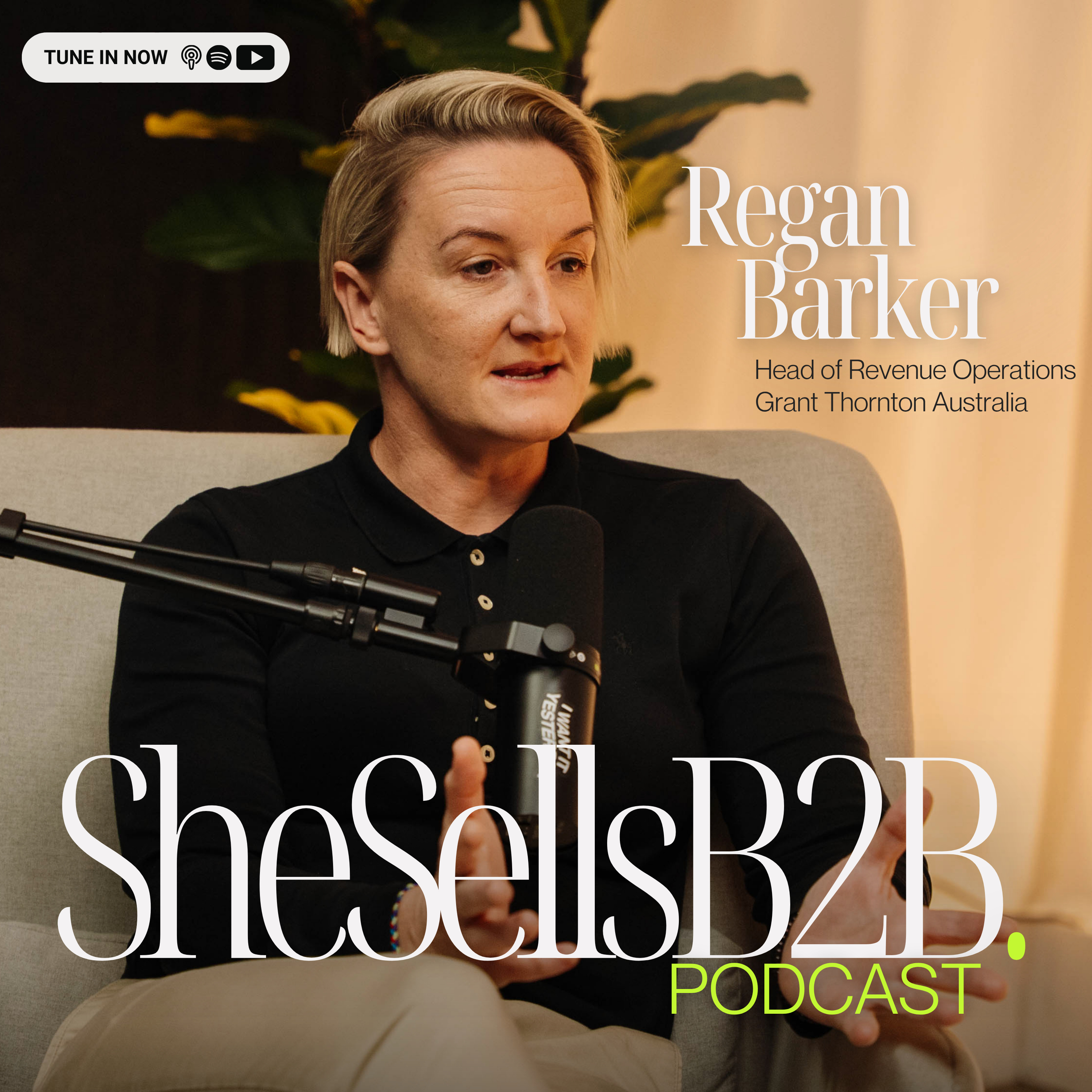 Why Women Are Built for Modern B2B Sales | Regan Barker of Grant Thornton Australia EP 0775 / 100
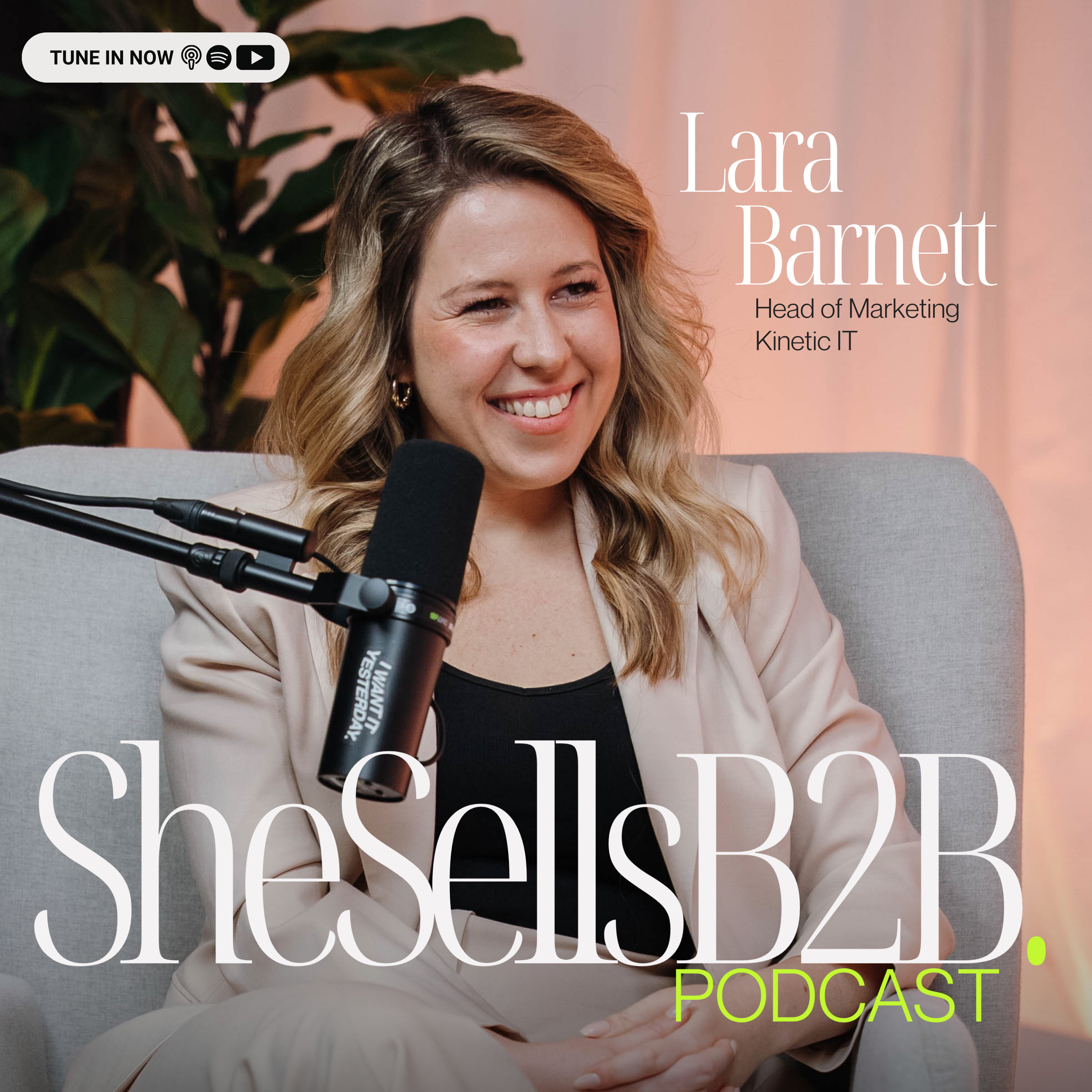 How to Lead When You're the Only Woman in the Room | Lara Barnett of Kinetic IT EP 0568 / 100