
She Sells B2B · 2026-02-22 · 1h 2m
Key moments - from our scoring
Substance score
53 / 100
Five dimensions, 20 points each
Laura Erdem, Director of Sales US at Dreamdata, shares how she built a demand generation engine that prioritizes data-driven alignment between marketing and sales. Having jumped from Gartner (where her salary increased 40%) to Dreamdata as a startup (taking a 50% pay cut), Erdem discusses how LinkedIn personal branding, paid media, and intent-based outbound create inbound momentum rather than cold outreach. The key differentiator: marketing sits in every sales pipeline meeting, adjusting bidding strategy and content based on which accounts actually close and which customers renew. She emphasizes that hiring world-class marketers requires detail-oriented operators who obsess over data - not just brand builders - plus mandatory sales-marketing collaboration from the hiring stage. Erdem's career arc from middle management to inside sales to account executive shows how women can thrive in technical sales by embracing risk, finding cultural fit, and prioritizing impact over title. Her LinkedIn presence (posting daily on B2B marketing topics) doubles as both demand generation and personal brand-building, exemplifying how individual employee voices drive B2B visibility at companies like HubSpot and ZoomInfo.
Marketing participates in every sales pipeline meeting to track which leads convert and close, then adjusts bidding strategy and content targeting for the best-buying accounts and annual renewal customers. This feedback loop ensures marketing builds demand for accounts that actually close, not just high-volume leads.
Detail-oriented data analysis (understanding why tactics work or don't), involvement of the sales head in the hiring process to build trust from day one, and prioritizing operational rigor over flashy brand-building. Strong sales-marketing collaboration is essential for long-term alignment.
She wanted to build processes from scratch, felt a stronger sense of belonging in a small team (especially during COVID), clicked with the CEO and CMO, and saw her direct impact on company growth through warrants. The startup offered creative freedom and ownership that large enterprise structures couldn't provide.
Employee personal profiles (Laura, the CMO, and team members) post daily about B2B marketing topics to stop scroll, build brand awareness among target buyers, and drive inbound demand. This extends the company's reach beyond paid media into creator economy and influencer-style engagement on the platform.
Dreamdata focuses on warm, intent-based outbound by identifying buyers already showing signals they're searching for solutions, then reaching out proactively. They avoid volume-based cold outbound because inbound demand is strong, but plan to expand into creative outbound (content engagement, events) rather than traditional cold calls or emails.
Our reviewer’s read on each dimension, with quotes from the episode.
There are some useful operator-level points - marketing attending sales pipeline meetings, signal-based outbound, hiring-for-time vs overhiring, the chicken-and-egg of attribution tooling - but much is interspersed with generic sales/LinkedIn commentary and platitudes about 'world-class marketing.'
Marketing is in every single sales pipeline meeting, which means that they follow the leads that are actually converting
The reason I love Dreamdata is because it is hiring for the time and not overhiring to try to reach some impossible goal
Most takes are widely circulated B2B ideas (personal branding on LinkedIn, ABM is just targeting, cold outbound is changing, introverts can sell). The reframing of ABM as account-based sales+marketing and credibility-over-gimmicks for C-suite are mildly fresh but not contrarian.
account-based marketing sounds like a very fancy word for something that everybody is actually doing
For C-level, it's not creative. Credibility. Works.
Laura Erdem is a genuine practitioner - Director of US Sales at Dreamdata, with real experience scaling from employee #9, plus background at Gartner and Red Hat - so she has actually done the thing, though at a relatively small startup rather than at large scale.
right now I'm the director of sales in the US team, so I'm directly contributing to revenues
I took a 50% salary cut from Gartner and joined as an account executive at Dreamdata
Some concrete numbers appear - Dreamdata pricing of $2-3k/month, 40% and 50% salary changes, reverse IP lookup mechanics, budget thresholds for tooling - but many claims lean on vague references to 'world-class marketing' without supporting metrics or named outcomes.
it is around $2,000 to $3,000 a month for a tool like Dreamdata
I think my salary jumped by 40% by just taking that job
The host asks relevant follow-ups and contributes her own operator anecdotes (19,000 stale HubSpot leads), but largely agrees and validates rather than pushing back; claims about 'world-class CMO' driving all results go unchallenged in this fairly warm, complimentary conversation.
So would we say that it's not called account-based marketing, it's actually called account-based sales?
going into a company recently, they had 19,000 leads sitting in their HubSpot
Computed from the transcript - who did the talking, and the words that came up most.
Imagine this: You're at a prestigious company, making great money, and then you decide to take a 50% pay cut to join a startup with literally zero revenue. Everyone thinks you've lost your mind. But what if I told you that "crazy" decision led to becoming Director of Sales for the US market? That's exactly what happened to Laura Erdem from Dreamdata, and honestly, her story is one of the most inspiring I've heard. Laura and I sat down (well, virtually, she was in NYC at 7am, I was in Melbourne at 5pm with my dog causing chaos in the background ) and she got so real about: How she negotiated a 40% salary jump as a woman in tech Why she then took that massive pay cut (and why it was actually genius) Being a mum of two while leading a sales team across the US Why she thinks introverts make BETTER salespeople than extroverts (yes, really!) How to break into B2B sales when you have zero "sales background" Here's what I love about Laura's story: She didn't follow the "safe" path. She took risks. She negotiated. She bet on herself. And she's proof that you can have a demanding career AND be present for your kids.
Transcribed and scored by The B2B Podcast Index.
Marketing is in every single sales pipeline meeting, which means that they follow the leads that are actually converting to see how it's going and are we closing. If we're not closing, what is happening with the rest of the leads? And they are adjusting their bidding or in general content strategy for the accounts that are our best buyers, not just for the leads that we can convert. That goes even further for the customers that are renewing year by year.
Who are those best clients, what type of teams are they, and then our targeting is being adjusted accordingly as well. Welcome to the She Sells B2B podcast, and today I have Laura Erdem all the way from the USA. Thank you so much for having me on your podcast. I actually found you through stalking you on LinkedIn.
I love your content. I think especially the ones where you're walking around New York in the streets and just giving us the lowdown on sales, marketing, and the world that you're in. So huge fan. How did you get into posting on LinkedIn and sharing your stories like that?
Thank you so much for the comment. I have to do more of those videos then because people keep on referencing to those, but I think I only made like 3, so it means that it's working. So I need to do much more of those because it kind of stops the scroll for the people. But how did we start?
It was very random and unplanned, and when I say we, it was not just something I started to do by myself. When I started at Dreamdata, I came from Gartner, and when you work for a big brand, you have the brand presence already. So as a salesperson, you don't need to build brand and the demand is just coming. And that was pretty easy.
When I joined Dreamdata, nobody knew us. We had no revenue at all and we had an amazing product. It's like, what can we do in order to start driving that demand? Our CMO, he is world-class performance marketer and he knows how to do paid ads, capture the demand, but building that brand was also a bit more new for him too.
Since our buyers are mostly on LinkedIn, we sell to marketers, said let's start posting, and we did. It's around 4 years ago when we started this, and it was very random. We started posting and then experiment after another. Then we got the grip of what it is to be posting, what do people react to, which type of posting brings in revenue as well, or at least brand awareness of the right people that are later going to be our buyers.
And nowadays everybody's saying, oh, I see them all the time. By saying them, it's either myself, our CMO, and once in a while some other people in the company too, because it's stuck with both of us. And some of the people do post once in a while in the company too, because we encourage that very, very highly because it is a big demand generation motor for us. We had LinkedIn on our podcast as well, so the power of LinkedIn is immense.
And I think that in B2B in particular, if you're a B2B marketer, you need to be using the platform, but not in the way that most traditional marketers would think, like, let's do some ads, let's promote some posts, let's take over the company page. It's the actual people in the organization that are the faces and the personalities of the brand. And I think I'm seeing that a lot come through at the moment with companies like HubSpot, SalesIQ, and even smaller B2B teams that actually have almost like their own little pod of representatives on LinkedIn posting and engaging with each other, and the visibility is just imploding from that.
So it's something that I've added to my strategy as well over time, and it is evolving a lot. So LinkedIn has been started as a job platform for people to look for jobs and for employees to find them, and then LinkedIn started to look for getting companies, their company pages, starting to post from their company pages as well. And then here's the next enabling the people who are on LinkedIn to do their personal content. And smart brands do use those people as their speakers to doing more of demand generation on the platform as well, because this is your extended arm.
In a way, this is another strategy besides your paid marketing too. If you do it smartly and define how you want to do it, it's a very heavy demand generation motor. As you're mentioning, HubSpot is great at it. ZoomInfo, another example, amazing at it.
Plus, where it's going right now, not just the employees, but now the creator economy is picking up on LinkedIn too. So we see a lot of B2B creators who are shouting out brands or engaging with their content because they're also paid for that. So it is becoming a paid channel too, and in a much more social way as well. So it's more fun to see those.
You could call them advertisements, but without it being too salesy or too polished marketing way. They're almost the influencers of the platform, uh, having a, a share of voice. I I do think that it's definitely changing. I'm seeing much more people now than 2 years ago posting regularly, and that I think there's a lot more founders, especially in tech and SaaS, posting more.
You know, build in public is another word that has come out more recently, how if you're building a company and you're actually documenting it every stage of your growth, the good and the bad and what's happening on each day, what happens behind the scenes, I think that's really powerful tool to use. I'm really curious about your go-to-market strategy. Them because you've got LinkedIn, you mentioned paid ads as well, or paid media. In terms of the outbound and the traditional outbound, what are the things that you and your team would use to get into market and reach your audience?
Yeah, we are very fortunate to have the world-class CMO. He is so good at marketing that most of our leads are coming inbound. For outbound, this is an initiative that we already started a couple of years ago, but lucky enough, so far we're working the signals that the buyers are showing that they're on the market looking for the solution. So then we reach out proactively to book that meeting, to meet with them while they're looking for the solution.
And that is enabled by DreamGate as a platform. But that said, so far, totally cold, cold outbound, we are not doing that. That is only because there is so much demand to capture so far. So we're building on that on the back of the warm demand that is coming in so far.
And then as soon as that part of DreamGate is built out, then we will be doing more of cold outbound as well. But the thing is, the buyer behaviors have changed so much, and that type of cold outbound, when you would be thinking like crazy cold calling to people out of nowhere and trying to reach them through email, it doesn't really work anymore. So we have to find creative ways to meet those people as well. So by saying outbound for cold, that's probably is more what I mean of creative outbound, like engaging them into the content that we're writing, engaging them into events and so on.
So that top of funnel demand build is totally different than it used to be before in time for, for any type of like volume-based cold outbound. I think most of the businesses that I work with really want to create that engine where they are getting the inbound and they are getting the demand. The other challenge to having a lot of demand is actually what is the quality of that demand, because, you know, your sales team taking those meetings are not converting. They might say the quality of the leads aren't that great.
In terms of building demand, what would you say the secret source is to Again, it goes back to world-class marketing. So if marketing is building demand for the leads that don't close, there is a disconnect. Again, we're fortunate enough to not just have Stefan in the team as a world-class marketer, but also the alignment between what type of demand marketing is creating. Is it converting further?
Are we closing deals of that type? And that loop is being closed all the time. Marketing is in every single sales pipeline meeting, which means that they follow the leads that are actually converting to see how it's going and are we closing If we're not closing, what is happening with the rest of the leads? And they are adjusting their bidding strategy as well, bidding or in general content strategy for the accounts that are our best buyers, not just for the leads that we can convert or even close to them, but that goes even further for the customers that are renewing year by year.
Who are those best clients? What type of teams are they? And then our targeting is being adjusted accordingly as well. So you mentioned world-class marketing and finding that kind of talent.
If you were giving advice to a CEO who was hiring for a world-class marketer, what would you say the top 3 things that you would say, especially if they're in SaaS and tech and they want to create demand, what qualities or skills are they looking for in a marketer? Perhaps even experience that they've had at doing certain tactics or activities. Yeah, I usually see those two types of marketers, the high flies, the brand builders, the scene takers and so on. It's probably good for really big companies because you need a spokesperson, you need somebody to speak the brand and represent it.
And then for the SMBs like we are ourselves, you need that very detail-oriented person who is going to roll up the sleeves and figure out in the data what's working, why is it working, and why it's not working between marketing and sales. And that type of orientation to data is absolutely key to build that demand engine. And brand comes on top of it. But I see that detail orientation, even for building brand, it's not high fly, like which color should we be using and how our website should look like.
Yes, it's important, but it's not the key thing. If you have the person who has this attention to details, then it's much easier for you to see the gaps, what it is that you're missing, plus A very important part when you're hiring your marketer or the leader for marketing, make sure that your sales team is involved into that hiring process too, or at least the head of sales, because you have to create that bond from the very beginning. And those two persons will have to work together for them to trust that each and every of them and their teams are doing the best work and align in the future.
If something is not working, why it's not working and what is it that we should change. So that type of trust will need to be built between them as well. Yeah, I think That's so imperative because the amount of times I've gone into a company and the teams are working in silos and one blames the other, it's so common. And it is the lack of that culture and the lack of that bond is actually impacting the bottom line, is impacting the pipeline, the revenue, the goals.
Like they're not working together. What would you say if you were to walk into a situation where they aren't working together? What would be your first port of call to try and create that bond? I would first start looking into the data.
And understand where the disconnect happens. So those two people, I repeat that over and over again, they don't have to be best friends, but they have to respect each other's work that they're doing their best. And if something is broken somewhere, we need to unpack and figure out where it is. Is it just the disconnect between the data?
It could be that both of them are doing their best work possible, but the data is so disconnected that marketers are saying, oh, we're creating all this demand, and salespeople are saying, oh, but this is shit demand and we have to create our own and cold call and so on. So We have to look into the data and see where the disconnect is happening. And if it is a data disconnect, we have to have operations involved to join the dots or get a platform for yourselves to start working together and see the full customer journeys to unpack what's working so you can finally work together towards the common goal.
But it's not easy. It's like, it would sound like, oh, two people should come into a room and somebody should look into data and then we're kind of good to go. Customer journeys in B2Bs are insanely long. So for you, when changing the strategy, you will to wait several months to see the changes in the results.
So you would have to set up some certain goals and milestones for you to see, are we on the right path as well? So what type of demand has been created? Did any of that convert? How many of those moved to the next pipeline stages?
What type of touches in the marketing tactics are working to move the needle towards the next step of the pipeline as well? That's absolutely the most important part because, I mean, marketers also like to do like events. Oh no, actually salespeople usually push and say, oh, let's do more events, we need to go out and meet clients. Of course, yes, it's fun.
If you're a good marketer, you would take a loop and start looking into which ROI marketing campaigns are bringing in, which are the highest ROI-bringing campaigns. Let's start looking into which of them should be scaled. Do we actually need that many events? Do webinars work at all?
And these types of tactics, then unpacking them, you will be able to change the further pipeline in the future. It's the data that's the glue, regardless of which role you're in, whether you're in the sales team or the marketing team, both of them need to be utilizing that data and getting into the systems and actually seeing. Like, I spend a lot of time building out those B2B buyer journeys, and sometimes it is guesswork, and, and sometimes you do have to look at the data, but if the data isn't there, what do you do, right?
So going into a company recently, they had 19,000 leads sitting in their HubSpot. I would say 95% of that was engaged. Yeah. And so, you know, I'm playing with the 5%.
I'm like, why are we spending all of this money on HubSpot if we're not utilizing the system? Nobody's using it the same way. There's no hygiene. And therefore the dashboards and the reporting was, was just non-existent.
So it really is one of those things is that trying to find the data to make the right decisions, and it is difficult, you know, especially coming in and as a fixer. But I do agree, like, the data is the glue. So tell me a bit about your role. What is your position at Dreamdata?
How does that tie into the revenue generation? I joined Dreamdata almost 5 years ago. It will be 5 years, 1st of September. That's insane to think about it.
Back then, I started as an account executive at Dreamdata, and we quite quickly figured out that US is a market for us that is excited about Dreamdata. And this is a Danish company, so I started in Copenhagen in Denmark, and I was pretty good at selling to the US market. And when we split the two markets, I took on leadership of our US sales team. So right now I'm the director of sales in the US team, so I'm directly contributing to revenues.
Like, whatever we're closing of revenue, that lands in people's salaries and our next marketing budget as well. So that's direct correlation. But the role itself is also a bit broader for demand generation too. So as we started speaking about the LinkedIn presence as well, I use it a lot for both direct outreach to the buyers, to possible buyers, but I and we at Dreamdata use my my social presence a lot for brand building as well.
So whenever we have some specific campaigns or something needs to be pushed out into the market or our messaging has changed, so I'm one of those profiles that is posting every single day about the company, or at least topics that B2B marketers care about. So it is a part of demand generation as well. Tell me about the world of going into sales. Sales as a female, right?
Because one of the things that we talk about a lot is that we're showcasing women from around the world that are doing it in sales, especially in tech sales, and it's not very common that we meet women in this space. So first of all, what made you get into sales? Was that your career path when you were younger, like, I'm going to be a salesperson? No way!
Who wants to be a salesperson when they're younger? I mean, maybe now when you see more young people saying that you can actually make good money by, yeah, having - I mean, I wouldn't call it an easy job, but the entry level, if you have a lot of energy and are quite detail-oriented, it's pretty easy. But you gotta make it there as well because it's also very stressful. Anyway, about my career.
So I started in tech without actually knowing a thing about tech. So back in the days, for me, when I got my first job interview offer for a tech my first answer to the recruiter was, I can take the call, but guys, do you know that I don't even know Excel? That was tech for me back in the days. I was like, I cannot even build proper things in Excel and so on.
I was like, no, no, they want to like meet you and so on. So I started there. I was there for 5 years and already working there, I was doing a lot of work as a resource manager. I was managing a team of developers and it's like all that middle management work.
I always aspired to work in sales and and actually also applied internally if I could join the sales team too. So no, no, no, you're really good at this job, so maybe just stay and continue doing this, and we will just continue sales. And sales was a very much bro team as well, but I thought I could make it. Then that's where I started to look for another job.
Got two offers in the sales teams of either Salesforce or Red Hat, and I chose to go to Red Hat. And actually moving from the path of the career of management where I've already been and already was good at it, I took a step down. You could say, in the career ladder too, because I took on a junior sales role, which is called inside sales at Red Hat. And from there, then climbed further into account executive, senior account executive, and it was a lot of fun.
It was very good learning experience. I worked with very big clients in Copenhagen, actually the whole Denmark. And then Gartner came by. A recruiter asked if I would like to speak with Gartner.
And I mean, who doesn't want to speak with Gartner? Even though I was working at Red Hat, it was a great brand, an amazing company for if anybody's interviewing with them. It's a great company to work at. And this - all right, so Gartner, you - I would be selling to the CTOs and CIOs of the largest companies in Denmark.
What's not to like? I would be - I think my salary jumped by 40% by just taking that job. What's not to like? Even the office was closer to my home.
So it's like, I gotta take it. When I took the job, it was everything I was looking for, even the training, because they sent us for a month to London to learn Challenger Sales. So it's like I was leveled up in so many ways, which was amazing. We can talk about the other parts of some of the jobs that what has been happening in those companies.
I chose to leave the company for a startup. So pretty fast after working at Gartner, I left for Dreamdata and it was a very big - like it took me a lot of guts to do that step, but I really wanted it and it's like, why not? Because the product was great. So I took a 50% salary cut from Gartner and joined as an account executive at Dreamdata.
Again, another step step down. And step down at a startup like Dreamdata, when I was, I think, number 9 when I joined, they had no salespeople. So they didn't even know who - what to call people, because you would like, should we call you account executive, salesperson, whatever? Because like, they never had any.
So being a senior would not even make sense that they have started. This is like, I don't care about the titles, just let me sell and let's figure this out. Because we would be building processes and so on. So the process was more exciting.
And then, then they - we put the name, the label on the name, senior account executive. And after I over the team. Then I became a manager and now a director of sales in the US as well. So that's the whole full story of my journey into sales.
That's a risky move, going from such a big organization with layers and training and guardrails and rules and systems and everything there for you at Gartner to then uproot and take a risk and go work for Dreamdata. What - can you remember that moment where you decided that this was the path for you? And what made you switch from going from such a big organization to such a small - was it 9 people that you said at the time? Yep, I was number 9.
What was the switch? I want to know. I was a risk taker all the time. I moved away from home when I was 17 to study at the university and was a risk taker all the time.
And I think also it was during the COVID times, so also that type of feeling of belonging, I was searching for it too. And in a smaller company, it's much easier to find it as well. While working at Red Hat, we were feeling as a tiny amazing team because it was a small Danish team, so it felt like a startup in the big company. And I was, I think I was searching for that rather than the huge enterprise to work at.
Also the unknown of how do we sell this amazing product, how do we build the processes around it, that was very exciting too. And for a startup, they actually were offering a pretty good salary, plus they of course offered warrants. Seeing how the product was, I knew that my my success of sales at this company directly impacts the company growth and my returns of the investment of taking a salary cut versus getting some warrants in the company. I think it was exciting.
I think from the nature, that's why I did the move. But I think COVID did its thing as well. It was quite a big thing, like searching for that type of belonging. I really clicked with the CEO of Dreamdata back then, and then we became good clickers with the CMO of Dreamdata as well, because, because you gotta find those people who you can directly work with, which is - makes it so much easier.
Then you feel like you do belong and you care for each other's work as well. I think that's what made it. And I signed the contract while I was on vacation as well. So it's like, there are a lot that made it.
Oh wow. I think there's so much there around - yes, you could go work at a big enterprise company, but the things that you get to do and the impact that you get to make and create creates your own processes, your own style, you can try and test things really quickly. You wouldn't get to do that at Gardiner, right? It would just be too much for them to be able to move.
It's like having, you know, an elephant and trying to push it down a hallway. Whereas if it's got the elements of that creativity, and it's rare to have creativity in sales, I feel. It's something that I'm really passionate about, but I get that excitement from you as well as you're describing it. I'm like, yeah, that's exactly what I would do as well.
You want to feel like you're actually making an impact. And one of the things that you said there was risk-taker. Now I have to say that I feel like anyone in a sales role, as you know, who's doing it and is successful is likely to be a risk-taker anyway, right? Would you agree?
Oh yeah, for sure. Because I mean, usually half of your salary depends on how much you sell. Yeah. And there's so much turbulence in like in the market and the buyers' journeys and I don't know budgets whatnot.
Yeah, so, so it is a huge risk to take it already that, okay, I'm fine to have my half of my salary coming from the commissions, which most of the people would not dare. That's insane. That's so cool though. I love that story.
And so did you move straight to New York for that role? Oh no, I started in Copenhagen and I still remember the amazing tiny office we were in. And I was there for, yeah, 4 years. That's correct.
And then moved to New York after that once we've opened up the office. So our New York office is a bit more than a year old since we hired our CRO, now CMO, now CEO, Nick. And that's when I moved along with another colleague as well. Now you're in New York, right?
The transition from Copenhagen to New York, like, I have worked for a very small time in the US in San Francisco, and then I did a stint in New York as well. It's a different beast. Networking, trying to make headway. I think you probably picked the most difficult city to try to make new connections and get your foot in the door, especially in sales.
I don't know if you agree with that. Have you felt that you'd had to change the style in which you approach the market? I think I felt like I got more power when I moved to New York. I mean, I was selling internationally all the time, and remote selling to Americans is - it is working because this is what we've learned during COVID and, and those types of connections are built like that.
So we had to travel to some of the meetings or events and so on to build those relationships. But I think moving into New York has actually added some more power for me. Our buyers are still all over the US, so not that a lot of buyers are in New York, there are quite many, but we're starting also the more top of funnel demand generation with various events, or at least brand awareness, inviting the marketers to come over to the office and yeah, starting to learn us and meet us.
But I think my personal brand also helps to build those relationships even closer. So, so now when I'm here, it's easier to reach out to those LinkedIn friends to meet up, to get new connections, to be referred to the new people as well. I feel that it was just a superpower that I got, an additional one, to be able to do that. But not all the salespeople feel that way.
A lot of salespeople I know, they're not keen on going out and networking because it requires a lot of energy, and it does drain me out as well, even though I'm an extrovert. After the bigger networking meetings, I say, oh, okay, give me one day of just working in front of my computer. But creating those very targeted meetups and meetings and lunches, it gives you a superpower of that demand that is later upcoming as well, because not every meeting can be a good quality meeting, and you have to make sure that you prioritize your time as well for right happy hours, for the right lunch meetings, and so on.
I think that just touches on the fact that we talk to many females that are in sales now, and one of the most challenging things is balancing that work-life balance with all the commitments that you do give to sales, because you do have to be out there, you do have to connect, you have to go to events, you have to fly places. It is highly demanding. Sometimes you're taking meetings late at night or really early in the morning. It is one of those highly demanding roles, I find anyway, and it may be the reason why we don't see a lot of women in sales.
I don't know what you think, but I'm curious to hear why do you think it is that there's not more women in sales? And I absolutely agree, it is the pace of work, the expectations from you as a woman. When looking from afar, it feels like 'Oh, would I be able to do the job? Because I need to travel a lot.
I need to take those, I don't know, company lunches and take customers out. And at the same time, then I need to pick up the kids. I need to make sure that they're not hungry. I need to make sure that all the rest of my life that is not work is taken care of.'
And it just feels too much. My second superpower of being in sales is my husband. I mean, we're two. And also in the culture of the Nordics that we're from, it's literally 50/50.
He's very, very supportive. Not just that the 50/50 way, but it's more like, this is a very difficult time for me right now. Let's say quarter end. You'll have to take some more load from this.
And yeah, whatever that is, is that making dinners or is that the whole picking up kids for the whole week or that I will be 2 nights out for a trip. And then we do balance it out because I would know when he has busy times and he would know when than I do. So, so we're able to balance it out and hopefully once in a while stop both of us and just be at the same place together and present together with the kids as well. And having that superpower, I also think that it's amazingly inspiring for the kids and for the kids of the future too.
I've got two girls and them seeing me working - oh, they do complain a lot that I work a lot and love me to not be working as much and so on, but them seeing how much I get from work, not as of just salary, but also work satisfaction and happiness that work gives me. I also once in a while take them to the office. If it's holiday, come over, come with me, or it's just some kind of events where there are more people gathering, come over, stay a little bit, and then we would leave a little earlier together.
And that inspires them as well for the future that I want them to be in. As well. They enjoy that type of work. Doesn't have to be sales, but in general, to have that balanced life where you can aspire your career, but at the same time have a good and balanced family life where everything is very well playing together, that's possible.
And I think it's also another thing that I can give back to my kids. Would you recommend to them sales as a career? I mean, very different personalities, and one of them could be a good salesperson. A salesperson.
And of course I would support the crap out of you for you to be able to do this. And I would trust you more than you trust yourself or your manager does, because that's that, that type of a push that you would want and need in the future too. So I think one of them could definitely be a good salesperson. The other one, I know that she has a lot of other aspirations that has mostly nothing to do with tech in general.
That's That's so interesting that you managed to pick out which one had the personality or the aptitude for sales. We'll see. We'll see. I wouldn't say, but we'll see what it brings them, and I will support them no matter what they choose.
It's really great because my next question is going to be about when you're actually looking for salespeople to join your team. What do you look for in both personality and skill set? Nowadays, you have to come in with analytical thinking and creativity. And these are the two parts of your brain.
And then as the leader of the team, you have to figure out what type of team players do you need at this time, depending on what type of players you already have in the team. So do we need more analytical thinkers or do we add in more creativity and we will build the analytical thinking and the structure in those people as well, because you have to have both in a strong team. You have to have both in sales. And comparing to what usually people think that sales is, is a very extrovert position and people have to be talking all the time.
I think the opposite. That's another balance. You do need those bubbly salespeople too, but I think introverts are doing just as good, if not a better job than extroverts in sales. Sometimes you need to put a bit more boundaries on the extroverted salespeople, and that also takes the energy from the as well.
If you have a good balance of both introverts and extroverts, it's a perfect, perfect team because they learn from each other and also are energized in a different way from having the different personalities added in. Because your buyers are different too. There are buyers who are excited to meet the person who is always in a good mood and helping you out and so on. And then there are the introverted buyers versus like, I don't care, just let's get the thing done and help me out.
And the thoroughness of sales comes through as a very positive trait for a salesperson too. Yeah, I totally agree with you. The introverts definitely, for me, have a way of making a customer feel like they're not being sold to. I have a team that I'm coaching at the moment, and one of the, the amazing salesperson, such Labrador energy is the only way I can describe it.
He's just got so much energy and he's excited and he wants to prove himself and he wants to go out there and meet people and he thrives off of that networking. I said, that's great, but there's so much coaching around what is waffle and what is actually very pointed towards what we want the client to feel. And asking really good questions and not saying anything is so hard for a Labrador energy, I have to say. But it's the removing that waffle.
I think that traditional salespeople, you know, would think that I have to do the tap dance, I have to be on, I have to put on a show and say all the right things and speak a lot. It's not that. It's so different. So yeah, I definitely agree with you on the introvert.
There's obviously spectrums of it. You've got to enjoy interacting with people. So when you're hiring, for example, do you look at what tools what CRM that they use, how they would attribute their success. How do you ask those sorts of questions or look for that in, in new sales hires?
No, we're still a small team, which means that we are looking for people who have tried to sell a similar solution or something more complex, but at the same time for a high-level buyer, because this is what we're doing. We're selling a very complex data mapping for a marketing team. So there's a complete two disconnects. And that's why you need both types of people in the team, somebody who can speak with marketing, but at the same time, somebody who can explain complex data mapping back to a marketer.
We do look for something similar. It does not have to be a marketing solution that you've been selling, but have you been able to talk through the solution so a less technical person can understand this? And this is one of the key traits. Besides that, of course, the track records that you would be looking for and some of the examples of how they have been selling, what type of tools they have been working on.
I really don't care if you've been working Pipedrive, Salesforce, or an Excel sheet for your CRM, because you can learn that. That's no problem as long as you're able to put the data back into the CRM and everything is logged automatically anyway. So it's, it's not that much of teaching either. So it's like good storytelling, unpacking the data for a simple story for another person.
That's a key trait for, for a good salesperson at Dreamdata. That's a hiring for attitude rather than how well could they can use the CRM is super important. But you mentioned earlier that you guys don't necessarily do traditional outbound and you have demand gen. So would you say that the need for an SDR in your business is like redundant?
Oh, absolutely not. This is where the next step of Dreamdata's growth will come from. And so far, since we have this much demand and we are still a growing company. The reason I love Dreamdata is because it is hiring for the time and not overhiring to try to reach some impossible goal.
Usually when you are a growing company, you would hire 10 new salespeople, 5 of them SDRs, 5 of them AEs, and then let's go get any of the clients with a lot of outbound. And what you would do, you would empty out the market and spread not the best name for yourselves. So rather very stable growth, especially in the nowadays these times when everything has to be very growth and making sure that every hire that we do, we're able to both justify it, but also that, that person is able to hit their goals.
So we do have two SDRs. One of them has just joined Dreamdata as well. We are setting up playbooks and trying them out with them. And as soon as we have both the demand and are hitting the goals for each and every SDR, we're going to be hiring more and more and more because this is where DreamGators growth is going to come from in the future as well.
Okay, so you're designing the playbook at the moment with hiring like an SDR. What would you say your - the tactics and the tools that you would start to build that playbook with? What are you seeing working in the early stages of building those blocks? I would like to start explaining what type of SDR that I think are going to win in the future.
Yes, so there 2 things, creativity and grit. And creativity because all of the playbooks that used to work before are emptied out and not working anymore. There is still a possibility to do good cold calling and it still works, but like setting up sequences and in emails, people don't need to really open them anymore. And there is so much that is being tried out and not working anymore on your buyers.
So you have to have the creativity of thinking and figuring out how. We will provide the tools. We will create and build together with you as an SDR, but there has to be a level of creativity that why don't we just do this or adding something else to the pool of ideas of what is it that we could try out, because that's what's going to bring you forward as a good SDR. And then grit.
Well, everybody's saying no. It's like you should see our SDR Eve working. She comes in every single morning and grinds out her cold calls every single morning, and she's just fresh out of college. That type of grit, it's the only thing that will make her succeed in her career forever.
So if you're an SDR and you're able to do this type of job, both have the grit to try to book all of those meetings, succeed, be creative to figure out new ways of selling, I mean, so many doors are open for you in the future too. I do find that it's not necessarily the activity of constantly picking up the phone and hammering away, right? It's actually having the common sense or the EQ to be able to direct and make such minute changes to your script to try and figure out what worked, what didn't work.
You know, even just when you answer the phone or the person answers the phone and the way in which you engage that person in the first 7 seconds. There are so many things that you could try that just make an SDR good to great. It's something that I look for is how proactive are you in coming up with those creative ideas around how do I sound, which phone calls work better than others, what do people respond to, and getting really creative through just what you have is your voice.
It's definitely one of those skills. I mean, I did it back in the day, you know, I had a landline, I had a notebook, I had a spreadsheet, and I was crossing off names as I was calling them. But I will say this, whenever I did work in sales, I was already working for amazing brands. So picking up the phone and saying, hi, I'm calling from MasterChef.
Everyone knows MasterChef the show, you know, my job was to get brands partnerships and the like. And there's a show here in Australia called Better Homes and Gardens, which is really well known. And So I would say that was easy because you already had the brand name. When you don't have the brand name and you're like, I'm calling from Smith Co, and you're like, what is that?
You're going to be met with resistance. But we have a whole team of SDRs and actually all female SDRs, and we are seeing such an elevated amount of results compared to the way that I was hiring before. But I am putting them through a training program, and it's actually come because of Sales B2B, so nice, and everything that we've learned. So that's been super interesting.
So cold calling is dead or isn't dead? Oh, it's not dead. It's not dead. It's definitely one of the channels that is working the best at the moment.
So nope, not dead. So can I go back to your go-to-market strategy then? At the moment, you've got paid media, you've got your LinkedIn content, you've got your new SDRs on the phones, and it sounds like you'd have like some sequencing around the SDRs, around like emails. And tell me a little bit more, how do you glue that go-to-market strategy together?
Yeah, and in addition to that, we also do events. Most of the times it's our own events. It's very rare that we would join other events, but if we do, then it's very targeted where our buyers might be, and then we host event ourselves as well. And so marketing is doing their their own job, right?
So we paid events, all of those pieces. Whenever we need to be involved from sales, we would do that. Like, we're arranging an event, go out and invite your prospects. We would always do that, and we would discuss what type of activities they would have to start over.
And then sales are picking up all the demand, making sure that we've got processes and all of the ducks in a row to help the prospects when they're already in the buying cycle. That - let's say another very important part when somebody books a demo but the demo does not come through. Let's say they submitted a form but the demo booking did not come through. If you are not following up within the same hour, you're already missing out.
So we got to have that speed of sales as well to pick up the good quality leads as well. And then we've got SDRs with calling or having some sequences as well. In addition to that, then, uh, yeah, sales are working through all of the leads they're getting. And if sales teams, salespeople would like to add to that demand as well, they're very welcome to do outbound too, because that type of creativity is very welcome at the moment, because we would like to see what else is working.
Let's say if a senior reaches out to a prospect buyer, or sometimes we're even using our founders' brands through LinkedIn or to, through regular outreach to see if that helps us book meetings. So why not use that as well. And so you've got events, LinkedIn, sales, people booking demos, obviously the paid media is pushing people through the website as well. So I know you mentioned about signals, intent signals, and I know that Dreamdata, that's what you guys are about.
So tell me about how do we use buyer signals and how important is it to your stack? Yeah, so, well, in general, the key Dreamdata Data's product is full go-to-market revenue attribution for you to understand what's working. But for sales, the most important part of Dreamdata is the signals. It starts with proper website tracking, because if you don't have proper website tracking, your marketing demand is just dripping through.
You're not capturing everything that you could be doing. So we are using reverse IP lookup to see which companies are visiting our site, and if seeing companies that are our ICPs evaluating Dreamdata, and our signals would inform us which of the touches that they're doing on the website - let's say they visited pricing or read some specific blog use cases or something like that - are the ones that are the highest closing triggers for a salesperson to reach out. So we would have a signal pinging them on Slack.
This specific company is on our website. Here's a a good signal, then if we don't have them converted at all, then the SDR would find the key buyers in that type of committee who would be the right people to reach out for calling or doing outbound sequences, or even getting the C-level to connect with those people as well to see if there's an easier way to connect the more senior people at the company to get that meeting booked as well. So having a tool like DreamDay, so imagine that, you know, I I work with a lot of mid-sized businesses.
How expensive is having an attribution tool like that? Because imagine I've got HubSpot, I've got a range of other tools, maybe I'm buying data from Apollo or ZoomInfo. I've got to pay my SDRs, etc., etc.
How can I integrate that into my ecosystem? And is it expensive? Yeah, well, it really depends on the use case and the traffic to the website because that's where the pricing starts from. So we need to know how many tracked users do they have on the site, because even the mid-market company might have like millions of users logging into the site, then we would have to see like how that can be limited or what's relevant to include or exclude.
But I guess mid-sized companies, it is around $2,000 to $3,000 a month for a tool like Dreamdata. But I imagine using a tool like that, you're not having to spend time having your SDRs call cold leads. You're looking at more, okay, there are signals, they've had these attributes, and therefore there's already a warm feeling around that lead rather than an absolute cold one. That's correct.
And in addition to that, before you start getting signals, some companies do a lot of outbound without having signals because marketing is not so present. So if companies are starting their marketing or just don't know what's working because they, they have, there's that type of joke that marketers know that half of their budget is wasted, but they just don't know which half. So you have to figure out where are you putting your bets, what type of campaigns and channels are working to bring in that demand that is quality demand for you.
And then the signals come because if you're able to attract the right companies to start showing signals over to you, then sales can take it over. Because if you have very low traffic and sales are doing outreach, you would not be able to expect that many signals, companies showing signals, and it would be, yeah, very scarce if, let's say, I don't know, you have 2,000 visitors a month and only 5% of those are good quality visitors. So signals would not be working just as well.
That's why understanding what's working in marketing, bring in more traffic, and then turn on signals would be a very good tactic for very well-oiled machine. So just to get clarity there on the chicken and egg scenario, if I'm a marketer that's going into a new role and I'm trying to work out whether certain things are working and to demystify what is actually working, would I plug in something like Dreamdata to help me then make better decisions? It depends on the amount of budget that you're going to spend, because if you're a new marketer and you're assigned, I don't know, $10,000 $1,000 a month for your marketing.
I would not buy Dreamdata to start with. To start with, I would probably, I would start the free solution of Dreamdata that would track your historical tracking. And then later you're able to join all of these dots together. But then I would start investing into paid and starting to understand how to bring in quality traffic to the website because you can go pretty far with Google Analytics and with HubSpot.
HubSpot, if let's say you're using HubSpot, for you to join those dots and to kind of - marketers have a very good gut feeling and it would take you very far if your budget is low. But if you're having a $1 million a month budget or even, I don't know, if $50K a month budget, it already becomes more significant to start to understand, okay, where am I wasting and where can I be growing even faster on which channels? And which sources are bringing in our demand, and then so sales can strike in.
So that would be my tactic, depends on the budget size. Yeah, I would agree because I think that if you do have a budget of say $50K plus a month, your diversification of what you're trying at that budget, you'd be doing a range of activities and you would want to know, but also you'd have to have a really good understanding of the performance marketing side of things more so than the brand marketing side of things in order to really want to really understand signals and what it means to the sales team.
I love that. I work with a lot of companies as their Chief of Revenue Officer on a fractional basis, and it does help me then understand at what point would I spend my budget on a tool like that because I see value in it, but it also has to mean something. And again, it's another tool that we have to work out how to integrate it into the system. And no, I think I think that it's got a huge amount of value for the right size of business.
I'd love to ask you about account-based marketing. Yeah, are you doing it? When did you start knowing that it was a thing, and in what ways have you experienced account-based marketing? Yeah, so to unpack account-based marketing, to start with, it has actually started in sales.
Sales only works account-based, so you usually either have an assigned list or you choose a list of accounts and make a strategy. How am I going to tackle those accounts. Let's say you have no demand coming in from the website, and here's a list of companies that you'll have to attract and figure out how - the messaging, the right buyers to reach, the right time to call, the right events to take them to, and so on. And this is where marketing comes in as well.
If you look into a bigger perspective, you've got several salespeople with lists of companies to reach out to. What those lists are, are actually your exact ICP buyers. So, for marketing to To start with, I depends on the product you're selling, of course, but for me, it's the most important to identify your ICPs, ideal customer profiles. So that would be what type of companies you're selling to, what type of personas, is there a specific trait on their go-to-market that it makes them a good fit for you as well.
And then you start to approach your marketing through account-based, and by that, That, because what I'm trying to get to is that account-based marketing sounds like a very fancy word for something that everybody is actually doing, but just you need to be very targeted for this. At Dreamdata, we work account-based towards our ICPs. So we don't have a list of target accounts that we want to reach by, I don't know, 2026. We do have target buyers, ICPs accounts that our marketing dollars are being directed towards to.
All of our reporting is going towards how many ICP MQLs that we create, how many ICP SQLs have been converted, and how many new business has been closed out of those. So we're able to distract the sizes of companies, the industries, and the traits of those clients. And by working account-based, meaning that all of our reporting is account-based. So even when we're saying a lead, it's a company.
It's not a person who submitted a form or whatever, attended an event or something like that. So we constantly work account-based, and that is the ABM strategy, you could say. For other companies that are selling to very niche companies where they're saying like, we only have 1,000 clients that could buy our product in the world, and those are huge companies, but this is the exact list of companies we can sell to. Then they have to work only towards those accounts.
When you are a SaaS product that you can sell to so many other companies as well, you have to constantly define your ICP to see how are you going to target them, how are they going to convert, and are they actually buying our solution at the end. Super interesting there. So would we say that it's not called account-based marketing, it's actually called account-based sales? No, we can take it back.
It could be account-based sales. Account-based sales and marketing. Account-based BMS. Good point.
There we go. We've got a complete connection between two because that has to be connected as well. If you're thinking about ABM of the classical way most of the marketers nowadays think, we've got a list, marketing is targeting them, but then sales has to do something there as well. Like, do we want us to be calling those accounts at the same time?
How does that collaboration work? No matter what you need account-based marketing and sales. Definitely. And so I always looking at ways to get people's attention, right?
So in sales, you have to try and get in front of that C-suite, and they're being bombarded by other cold messages, DMs, cold email, cold calls, you name it. I think it's around 100 touch points per day that they're getting outreach. So I know that they're getting recipient fatigue and they're just pushing it straight to spam and ignoring a lot of our attempts, right? Tell me, have you done any amazing sort of creative ways to win attention of C-suites?
And what have you seen work? And maybe what have you seen hasn't worked? I mean, outside of attempts to, you know, I know that you've done events, etc., but tell me, what do you think is like really creative?
For C-level, it's not creative. Credibility. Works. So if you have some references that could refer you further to other C-level people or VPs that might have use for your solution, that is your best, best tactic, but it requires a lot of work.
It means that you have to have happy clients, happy prospects, somebody that's willing to do the work for you to, to introduce you as well. This is the best tactic overall, and it brought us happy clients on top of happy clients. As well. Besides that, personal brands of the C-level is very important because a C-level person would not connect with a salesperson as well as another C-level person with another C-level person.
So you need that type of credibility balance. So you have to start enabling your leadership to basically do cold outreaches. So if we're working the account, that is either showing signals or we would really like to reach out to, and we can see that one of our leaders is connected to a specific person in the company or is closer to somebody who could refer them to those people, then again, you would use the warm intros and the profile of the leader for that type of outreach because it's really, really hard.
I mean, without that, they're not just bombarded with emails that gets deleted, but they don't even have the time. Like, you could do the best C-level events, you could fly them into, I don't know, football matches or air balloon flights and so on. They would love to, but they don't have the time for that either. It's like saying, let's go and fly air balloon in Cappadocia for a meeting in that air balloon.
Let's do that. Sure. But no, it's nice thought, but it's so difficult to get that type of attention due to scarcity of time that you have to work them through introductions as well. Yeah, I would agree with that.
And also, are they going to go on that hot air balloon if they have to be with you, the salesperson? They'd much rather be like - I think they'd take it actually. I don't think it's a bad idea. I think they would take it.
I have done some of those like stupid creative outbound meetings as well. I was booking meetings for people to bike with me in Central Park in New York last year? Oh, you would imagine how many people said yes. And we were just doing a conversation.
So it was not a sales conversation. We were filming some content, just like what's working for you in marketing and so on and so forth. But you already then have a connection. So if you're able to offer something and the timing seems to fit, one thing that - that's a good tactic actually.
So if you have some certain event going on that you know that there will be a lot of your target get buyers, they're already there. We do running events, we do like - I did those biking videos, interviews, and a lot of other stuff as well where it's easier to get a yes for that type of thing. That's actually creative, that biking around Central Park and getting people to say yes to that. That for me is creative for sure.
I'd say yes, that sounds fun. And also when you say that we're gonna do some content together, then they know that it is additional exposure for their brand too. So if you have quite okay brand presence of you as a person or your company too, then they would say yes because they will want that additional exposure from your audience as well. So you're kind of joining the audiences too.
I have loved our conversation. I really appreciate your time over in New York. I know you're a very busy lady. I would love to ask you just one last question.
If you were talking to someone who was considering getting into sales, in particular a lady who wants to get into sales, how would you advocate for sales and say do it? Why should they go for that role? And especially if they're feeling imposter syndrome, you know, a lot of us experience that. Why me?
Will I be good enough? What would you say is a piece of advice or, you know, giving them an insight into your life? Yeah, I would first like to know what the person is excited about sales, what it is that it seems What do you like attracts me to sales? To be able to answer that exactly correctly.
For me, sales have given me the highest salaries I could ever earn. And sometimes women are not as excited about the salaries, like, oh, what's the impact that I would be able to do? Then if you're looking for an impact into the company, then join a smaller startup and see how the revenue that you're bringing in is actually impacting not just the bottom line, but literally the salaries of each and every person month by month. That's impactful.
And then another part, you will be a part of the culture, your day-to-day coworkers, amazing work of living together. Because I have that all the time. It's like, oh, I'm working at a startup, it's some tech company. What is the why, the impact that I'm doing for this company?
And women often seek that much more than men do. And for me, being able to work at a company where people are enjoying it and I can be a part of building that type of culture and being a puzzle in the whole big picture of making it impactful for people to come to work. The tech does not have to solve the world problems for me. If people have been happy at their workplace during the day and I was a part of that group of people that made made your work nice and lovely.
I think it's impactful enough because we often overthink those big goals. Because if you're able to spread that type of positivity into the other people, they would go home happy and would be able to do even bigger things with the impact that you have done. So the ripple effect is amazing. And of course, it doesn't have to be just in sales.
But for women, I would say, first of all, do it because you will be able to see how much more you're able to do rather than you're trying to figure out, can I actually do this? And that type of empowerment, I could close that deal or I could book that meeting, is already really rewarding. And then as soon as the salary comes in, you will, you will want more. That's, that's definitely that too.
And, uh, yeah, I think just literally do it. And if you need advice on how to get into the job or you have imposter syndrome and think that, oh, I would not be able to do this because I you don't have all the skills that they list up, reach out to me and we can definitely have a chat and find either the skills that they're looking for or the path of how you're going to grow those while you're already in the role. So go get the role and then we'll figure out how to do it. Yeah, absolutely.
It is one of those roles, probably one of the only roles where you can figure it out and get quick wins as well. And it's, it's like those micro things I talk about, you could just try and test things in 1 hour and see if it works in sales. In marketing, I feel like things are a little slower. Things take a little bit longer.
You have to actually invest in things. This is a quick hit here and there. You can get that. You can pick up the phone and just try it.
Try a different script. And I just love that about sales, that it's so agile. It's a combination of, like you say, grit, the creativity, but also the EQ and the psychology behind how do I get someone's attention, How do I speak to them? What is that trigger word that's going to get them to go, oh, I'm going to lean in and listen?
So I love all of that stuff, and it's juicy stuff for sales that I find really engaging and fun. And I highly recommend people getting into sales, of course. But again, thank you so much for your time, Laura. I've loved the conversation, and keep doing your amazing work.
Keep showing up on the streets of New York and pounding the pavement, doing your content. I love your content. And thank you again. Thank you so much.
Next time you see the video from the New York streets, you will know that this one is just me because you have encouraged me to do it again. Thank you so much. I love that. Thank you for, for having me on the podcast as well.
I love the conversation.
Other episodes covering the same guests and topics, from across The B2B Podcast Index.
 Why Traditional Sales Tactics Are Dead (And What Social Selling Does Better) with DreamData’s Laura ErdemGrowth Leap · features Laura Erdem81 / 100
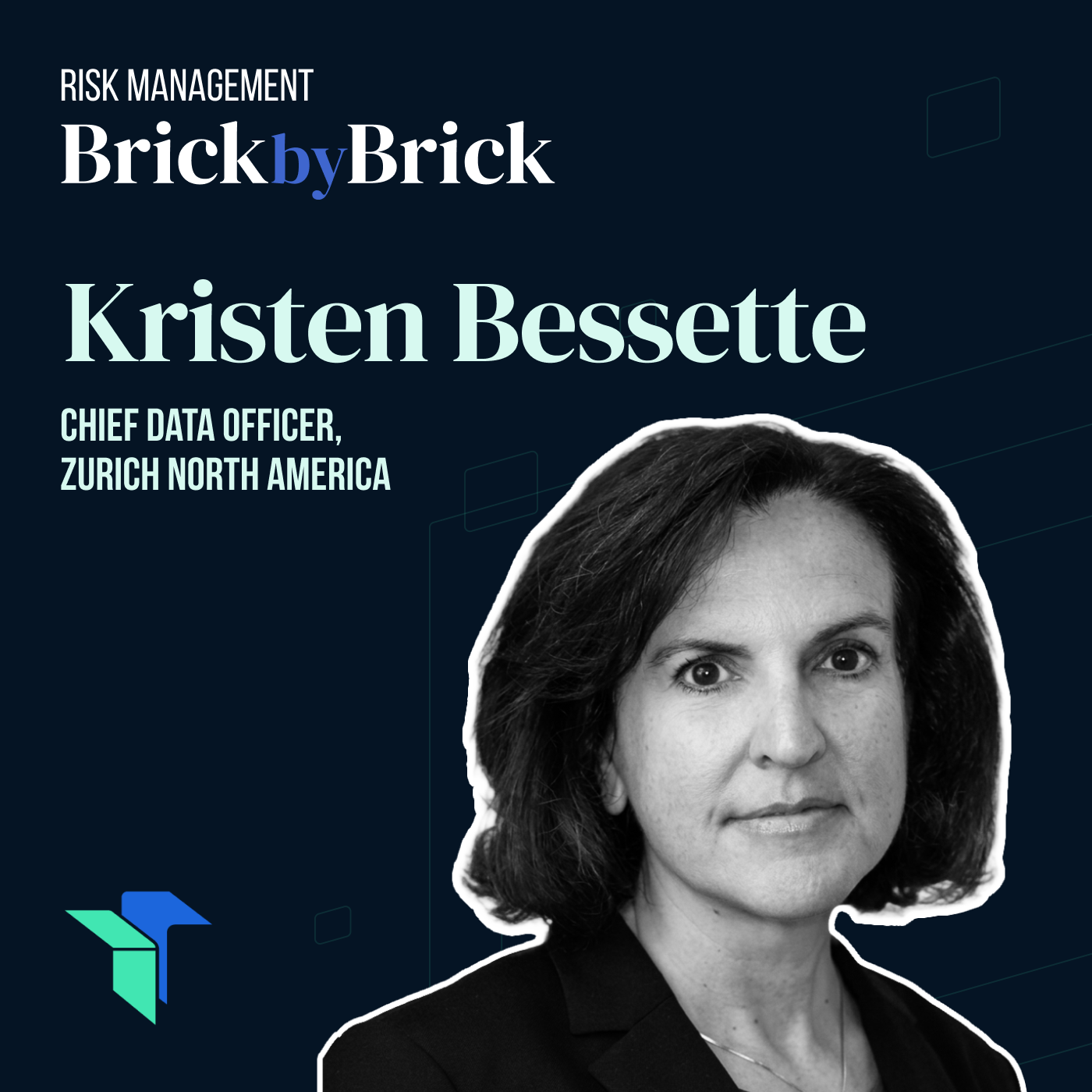 Why AI Will Replace Risk Managers Who Don't Adapt | Kristen BessetteRisk Management: Brick by Brick · on Salesforce85 / 100
 Adamma Ihemeson on Building Autonomous AI Systems You Can TrustBack on T-R-A-C-K · on HubSpot84 / 100
 How to Hire a VP of RevOpsGTM Science · on HubSpot83 / 100
 The End of Software as We Know It: How AI Agents Are Rewriting HR, SaaS, and Organizational DesignAI First with Adam and Andy · on HubSpot81 / 100
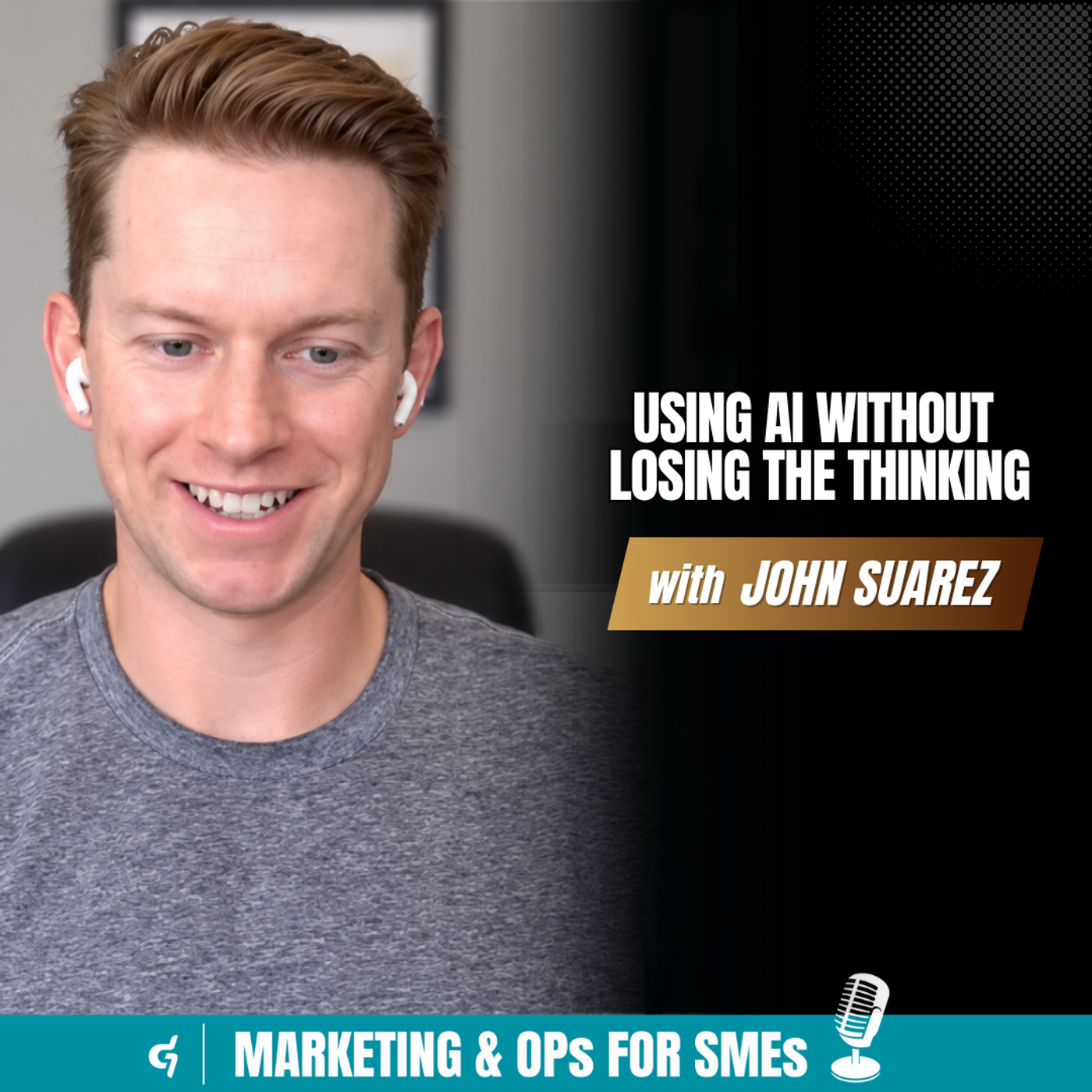 John Suarez on How Businesses Should Actually Use AI Without Losing Human JudgementMarketing for SMEs · on HubSpot78 / 100
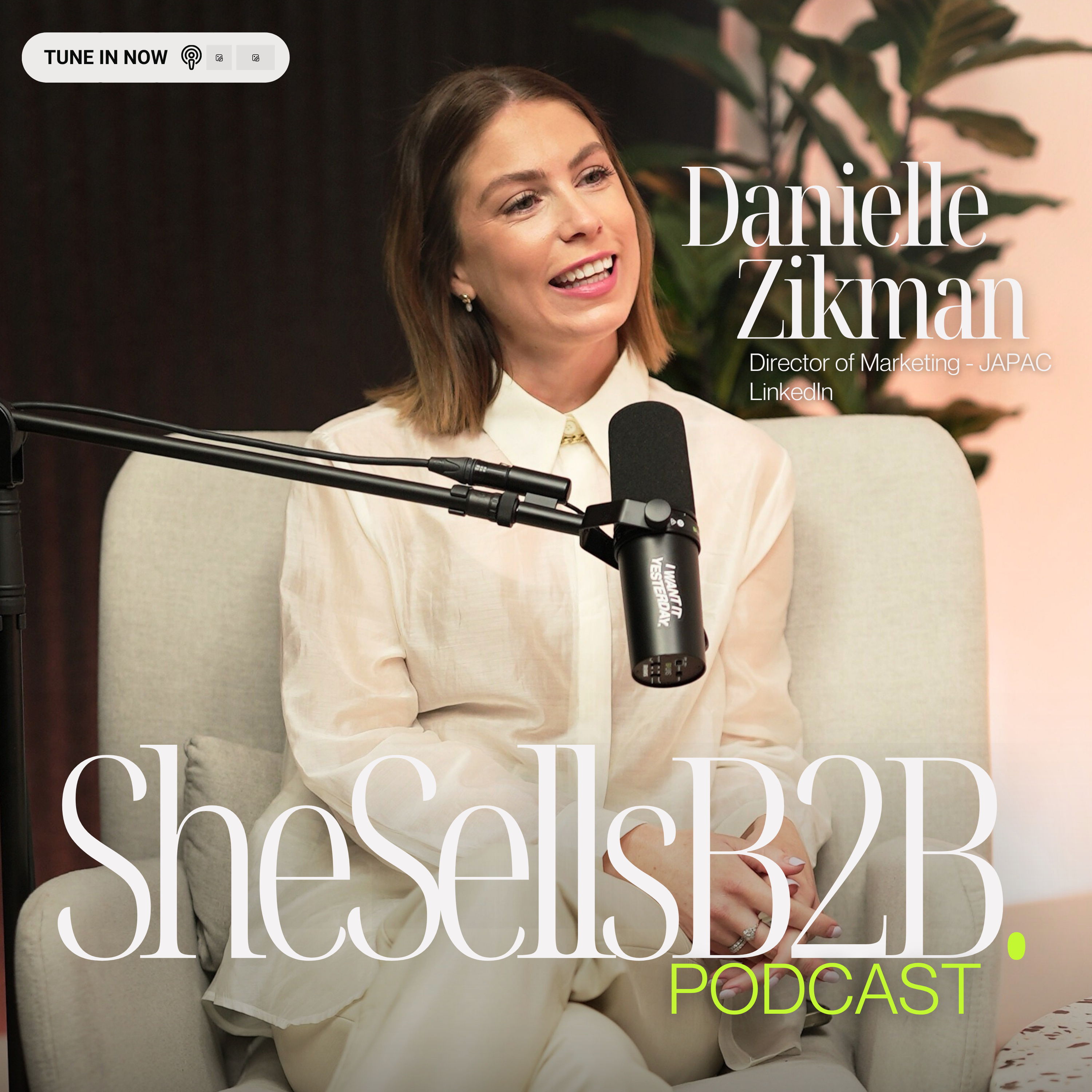 Career-Proof Yourself with AI: Every Women’s Advantage | Danielle Zikman of LinkedIn Ep 0971 / 100
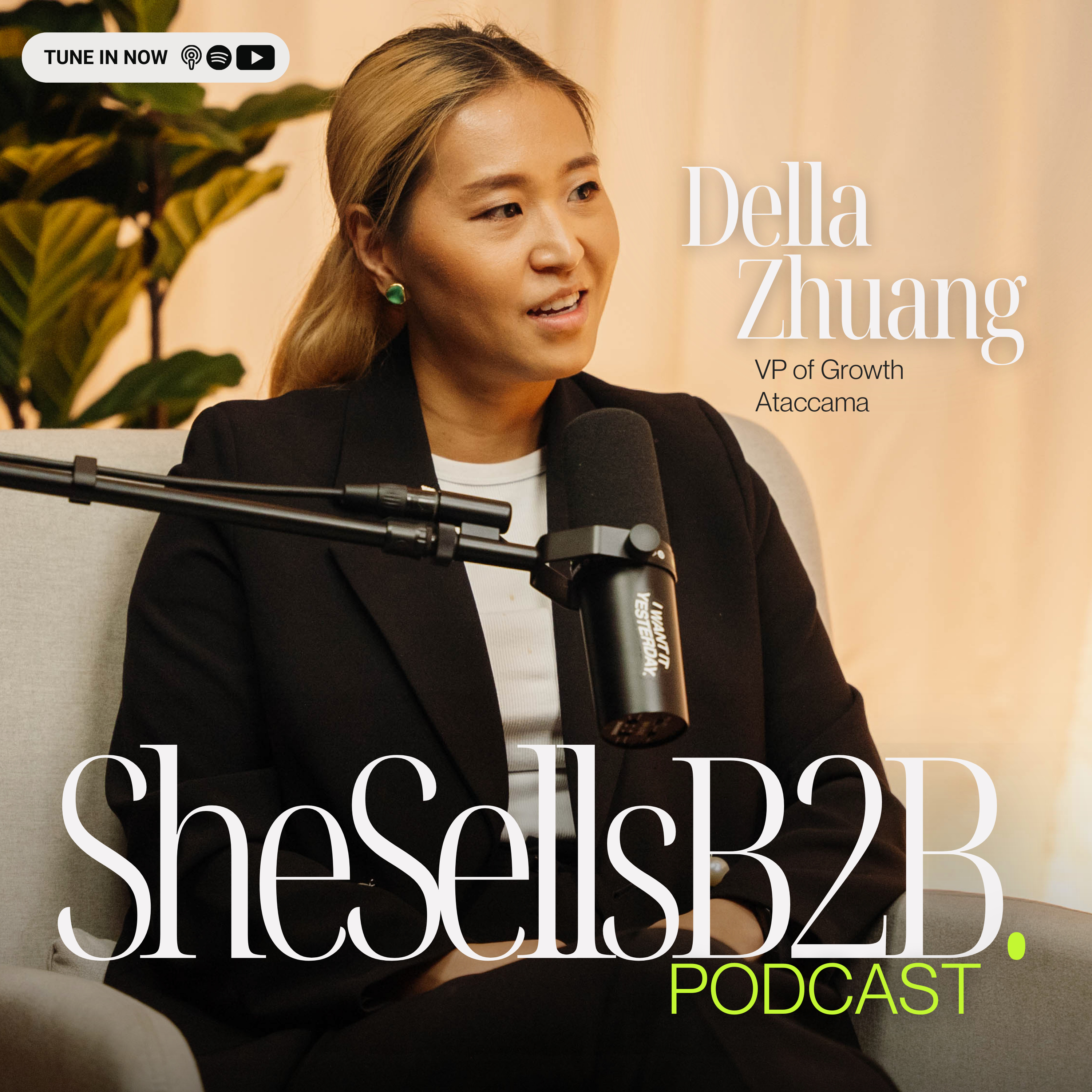 How to Turn Being 'Different' Into Your Sales Superpower | Della Zhuang of Ataccama EP 0869 / 100
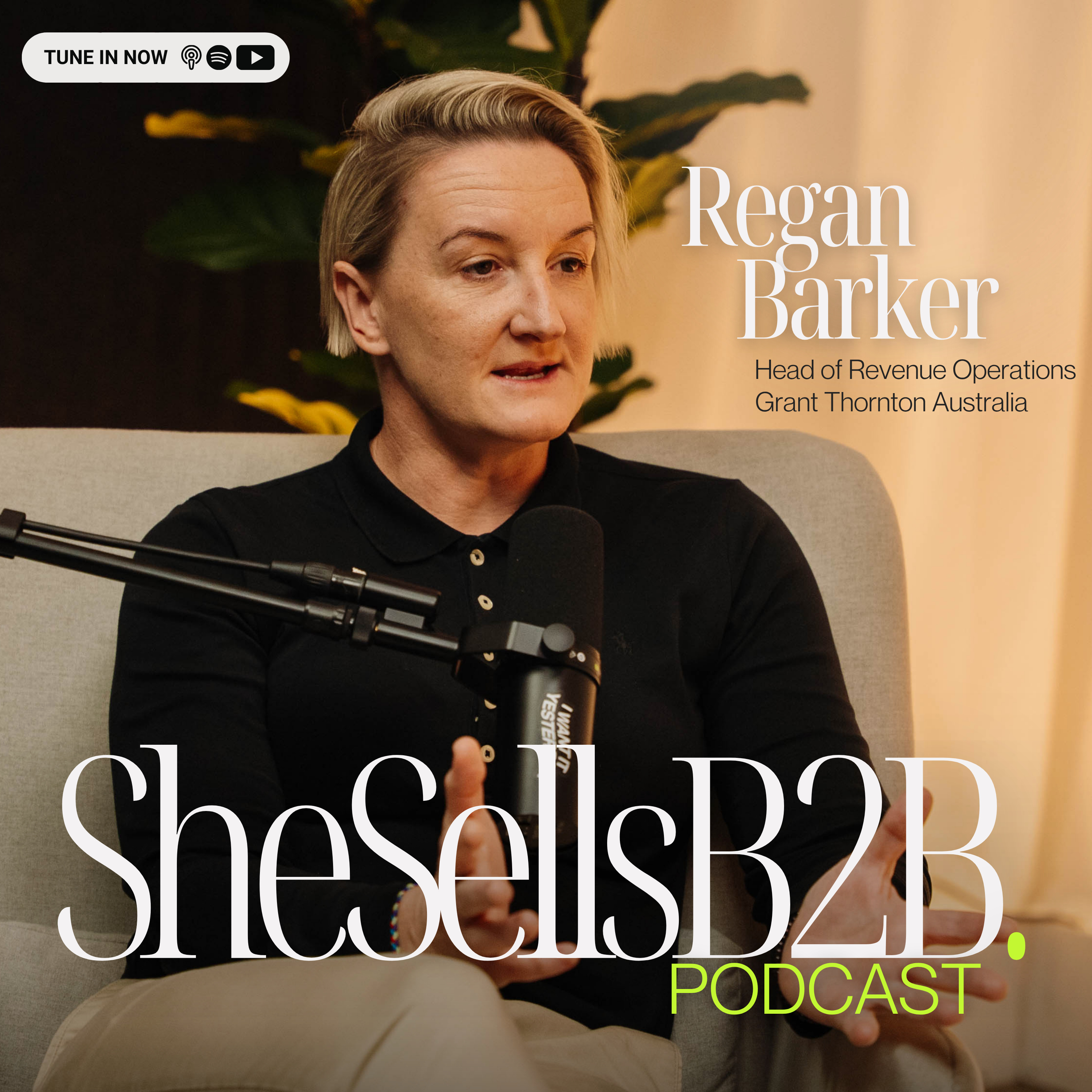 Why Women Are Built for Modern B2B Sales | Regan Barker of Grant Thornton Australia EP 0775 / 100
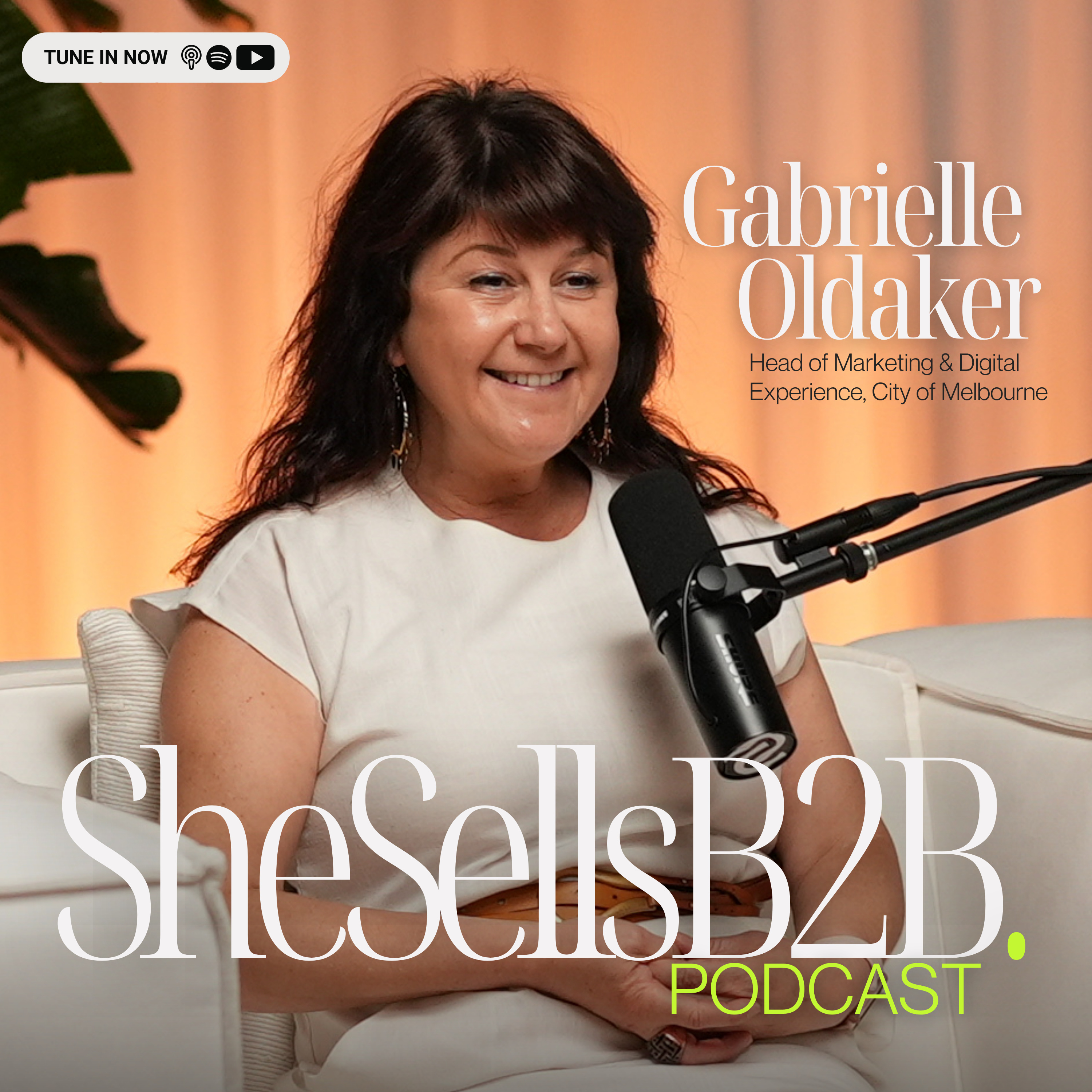 Why Empathy Wins More Deals Than Aggression | Gabrielle Oldaker of The City of Melbourne EP 0646 / 100
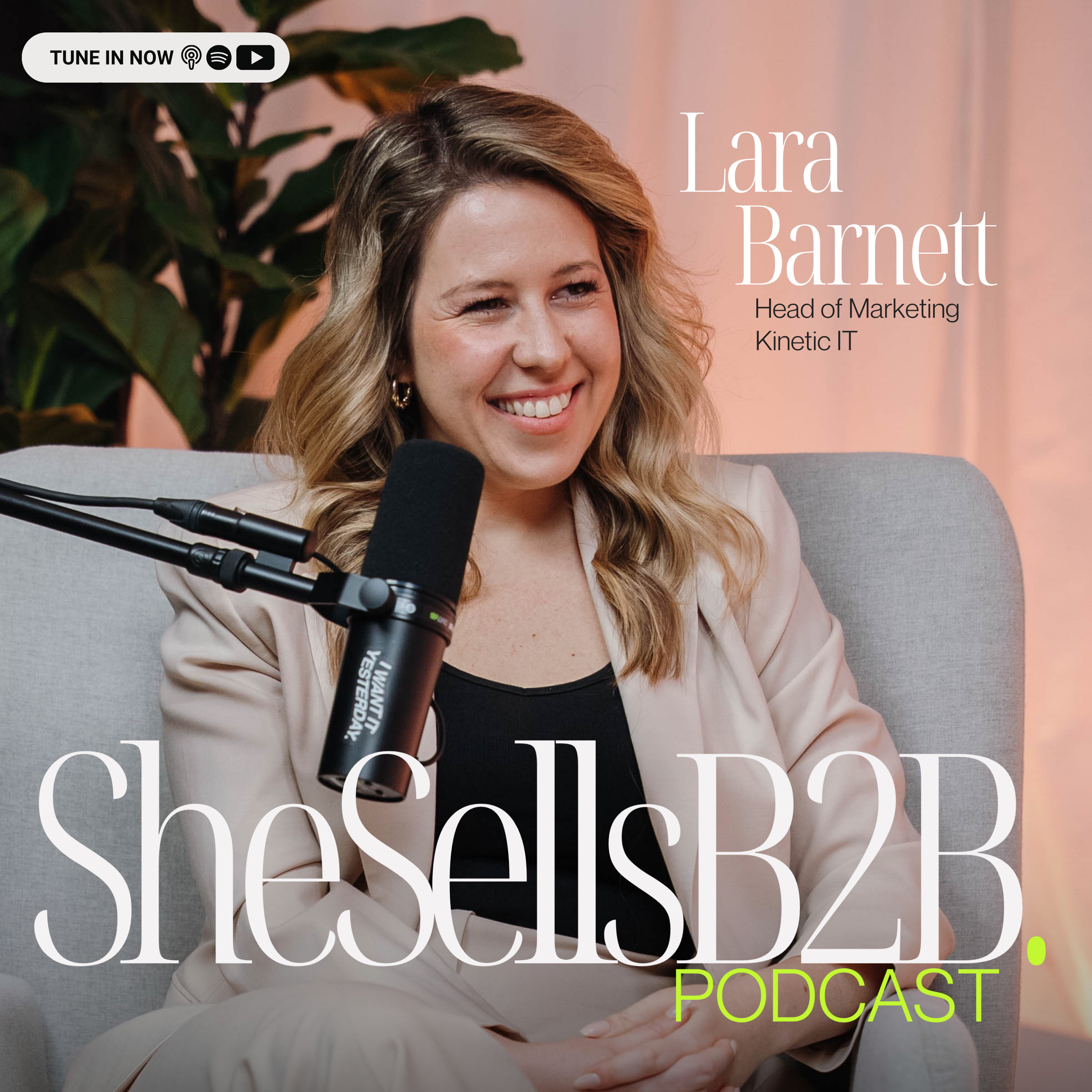 How to Lead When You're the Only Woman in the Room | Lara Barnett of Kinetic IT EP 0568 / 100