
She Sells B2B · 2025-07-13 · 57 min
Key moments - from our scoring
Substance score
48 / 100
Five dimensions, 20 points each
Lara Barnett shares her career journey from construction trade services through IT, where she discovered that effective modern leadership relies on traditionally feminine traits like empathy and active listening. She breaks down how B2B marketers can bridge the persistent sales-marketing divide through structural alignment, shared systems, and collaborative planning - using her framework of living together (structurally and digitally), building together (joint strategy workshops), and winning together (aligned metrics and shared accountability). Barnett emphasizes the critical link between brand awareness and pipeline revenue, especially in complex B2B environments with multi-year buying cycles like Kinetic IT's three-year sales cycles. She discusses account-based marketing not as a standalone tactic but as part of wider strategy, drawing on a cornerstone event campaign that generated $30M in attributed revenue. Barnett also explores the distinction between attention span and consideration span - how modern buyers make faster decisions about what deserves their focus - and introduces Generate, a Slack-based B2B marketing community across Australia and New Zealand designed for in-house marketers to collaborate, learn, and share expertise without agency gatekeeping.
Align marketers with sales teams by the same dimension - whether that's sector, segment, target market, or geography - so they work in parallel on the same motion. Additionally, ensure both teams access the same systems and portals so they absorb the same data rather than operating from separate information sources.
Account-based marketing focuses marketing and sales efforts on select, targeted accounts built collaboratively with the sales team, using one-to-one or one-to-few motion accountable to pipeline and revenue rather than just marketing metrics. It's a tactic that can be essential within a broader marketing strategy, not a replacement for it.
Use the marketing funnel (awareness, consideration, preference, purchase) to show stakeholders that optimizing awareness by even a few percent gains revenue at the end of the funnel; the difference is time lag. In B2B with long buying cycles, brand builds top-of-mind so when the 5% of the market in-market to buy moves, your company is top of mind.
Common errors include insufficient staffing on the booth, having staff hidden behind laptops rather than engaging, and no hook or conversation starter to get attendees to stop. Training both sales and marketing to step in, start conversations, and use merchandise or games as engagement hooks is essential for event ROI.
Attention span hasn't shortened - people spend hours on TikTok in hyper-focused viewing. Instead, consideration span has shortened; buyers decide in under a second whether something deserves their attention, making the initial hook or first impression critically important.
Our reviewer’s read on each dimension, with quotes from the episode.
A handful of genuinely useful reframes (consideration span vs. attention span, the live/build/win sales-marketing framework, tying brand to pipeline via funnel optimisation) are scattered across a 57-minute runtime that is heavily diluted by career biography, gender-in-the-workplace anecdotes, and motivational content that adds little tactical value for a B2B operator.
it's not attention span that's shortening, it's consideration span. We are much, much quicker to decide if we're going to give attention to something
live together, build together, win together
The consideration-span reframe is a genuine conceptual contribution, and the 'I'm not incapable, I'm just unfamiliar' imposter-syndrome reframe is memorable, but the bulk of the episode recycles well-worn ABM, sales-marketing alignment, and women-in-leadership territory without a contrarian or first-principles angle.
not a short attention span. It's actually a short consideration span
doesn't mean that I'm incapable. It just means I'm unfamiliar
Lara Barnett is a credible mid-senior B2B marketing practitioner with real multi-industry experience and a community she co-founded, but she is operating at Australian mid-market scale and the episode does not surface evidence of exceptional or unusual results that would distinguish her from a competent peer.
we had a big cornerstone event... there was I think up to 30mil revenue kind of attributed post the event
at Kinetic it our buying cycles can be upwards of three years at uh, times
A few concrete numbers appear (three-year buying cycles, ~$30M attributed pipeline, the 95/5 rule, 2h10m TikTok stat, 1,000+ community members) but the flagship ABM campaign example is thin on execution specifics, the $30M figure is heavily caveated, and many claims lack named sources or verifiable data.
I think up to 30mil revenue kind of attributed post the event. It's ongoing because as we know, sales cycles
on average the length of a feature length film on TikTok every day... 2 hours and 10 minutes of hyper focused
The host scores a genuine moment by catching and challenging the repeated use of 'lucky' to describe professional achievement, but most questions are open-ended and biographical, the conversation drifts repeatedly into personal territory, and interesting tactical threads (e.g. the $30M event campaign, attribution methodology) are left unexplored.
I watched over all the episodes. The word luck comes up a lot... lucky to win the award, but you were outstanding because of attributes, skills
what do you feel like has changed in the landscape in terms of. In the marketing landscape?
Computed from the transcript - who did the talking, and the words that came up most.
What does it really take to show up, lead, and grow in an industry where you don’t always see yourself reflected? In this episode, Lara Barnett, Head of Marketing at Kinetic IT and co-founder of Generate, shares her story of navigating B2B marketing, leadership, and self-belief. From her early career in construction to finding her voice in tech, this is a conversation about showing up with both strategy and heart. Listen in if you're interested in: Navigating imposter syndrome in leadership roles Building brand equity during years-long sales cycles The mindset shift from campaigns to long-term marketing motion What great sales and marketing alignment actually looks like Why women are more than suited for B2B and tech How to create inclusive spaces that let everyone lead authentically The difference between time and experience in career growth Whether you're a woman navigating leadership, a marketer trying to prove brand impact, or someone who’s ever questioned if they belong, this episode is for you.
Transcribed and scored by The B2B Podcast Index.
Speaker A: If you actually look at the research and the data today and what is associated with great leadership in a modern context, it's things like empathy and great listening. And these things are traditionally associated with femininity. So funnily enough, great traits of leaders are actually traditionally feminine traits. And whether you're a man or a woman I guess is feminine traits are the actual ones that make you uh, a great leader very often or you know, a combination, but a large amount are feminine traits. So embrace your femininity, embrace the fact that you're a woman in the workplace and own it.
Speaker B: Hi, I'm Sarica Chotai, this is the she Sells podcast and today I'm in Sydney with Lara Barnett. Hi Lara.
Speaker A: Hi Sarica. How you going? Good, good, thank you.
Speaker B: You're uh, head of marketing at Kinetic IT and also the co founder of Generate. But we were just talking before like you started your career just around the corner.
Speaker A: Yeah, actually started, started my proper marketing career, yeah. A couple hundred meters from here at a trade services construction sort of company. Yeah. Just up the road.
Speaker B: Yeah.
Speaker A: Small world.
Speaker B: So we're just in Alexandria now, so that's like just a few hundred meters away.
Speaker A: Yeah, yeah.
Speaker B: And so when you first started out your career in the construction industry, right I imagine that would have been quite a male dominated environment to walk into as your first marketing role.
Speaker A: Oh yeah, absolutely. It uh, was an incredibly male dominated environment for as you'd expect in a construction trade service company. But I didn't actually start in marketing in the role, I started in customer service and prior to that was actually in sales. So even though I'm a marketer, I have actually done some sales and I think that was a really great grounding to have because I knew the business, I knew the customers and that's a great landing off point to go into marketing. It was, you know, a quite a male dominated industry and then I swapped that one out for tech for another male dominated industry in it. Um, you know, quite a few years ago now. But it was a great environment in a lot of ways. Family run business and they were really supportive and spent close to 10 years, I think just over 10 years in that business.
Speaker B: Yeah.
Speaker A: Overall.
Speaker B: So as uh, a head of marketing now, when you first started your career, were you gunning for that being your career at the beginning or where starting in sales and then customer services and getting to marketing. Tell me about that journey in terms of what your aspirations were at that time. Were you trying to figure it out?
Speaker A: So I think like a lot of marketers, I sort of Fell into marketing, um, but I didn't not study marketing at university. Um, I actually studied theater and English literature. So it was quite different to where I ended up. But I do like to say that when I decided on marketing or found it as a career, I kind of fell with intention. I went, okay, this is actually really suited to what I want to do. Yeah, it was. I kind of never looked back from there. It's been quite the journey.
Speaker B: And looking back to the begin your career to today M, what do you feel like has changed in the landscape in terms of. In the marketing landscape?
Speaker A: Well, in B2B especially, I mean it's a really exciting space to be in now. I think when I started my career I was B2C and B2B and I loved the mix of that. But I could never really decide which I liked more. And you know, nowadays I'm very much on the B2B side and sort of through and through a B2B marketer. And I love it. I love the fact that, you know, the complexity around it and we're understanding more and more about that. You know, you look at account based marketing and how much it's just changed B2B marketing, you look at the understanding of the importance of brand and what some B2B brands are doing is really exciting now. So yeah, yeah, the landscape has changed a lot. But I've also changed as a marketer and I can't, you know, it's hard to separate how much the industry's changed and all the uh, you know, B2B marketing as a, as a function versus myself because I've had so much change in that time as well.
Speaker B: Yeah, it's funny saying B2B and then also exciting at the same time, but yeah, it is. I think that I came across account based marketing by actually doing it and then realizing it had a name.
Speaker A: Yeah, I think a lot of marketers would probably be in the same.
Speaker B: It was like, I reckon I was probably doing it for about two years and I went, oh, actually there is a name for this. But it's actually I feel more well versed in the US than it is in Australia. Like if I talk about ABM or about account based marketing on my posts or in front of a client, a lot of people go, sorry, what is ABM? And I'm um, in B2B. Right. I work with a lot of B2B clients, so it's fascinating. How did you stumble upon, uh, account based marketing?
Speaker A: Oh, same as you. Yeah, we're doing it. Didn't realize yeah. Then heard about this account based marketing sort of motion and started to listen to podcasts about and things and I was, oh, I do this. Yeah, this is already how I approach my strategies. And yeah, yeah, you just label it later. So look, I definitely think of ABM as a tactic as uh, part of a wider strategy is sometimes an essential core part of your marketing strategy and the lead part of it. And for my role at Kinetic, it, it absolutely is. But it's still part of a wider marketing strategy that you have to, you know, take a, a bigger lens to.
Speaker B: And for those people that actually don't know what ABM is, how would you describe it?
Speaker A: I would describe it as focusing your marketing and your efforts on select and very targeted list of accounts that you have usually built or I would encourage to be built with your business, mainly your sales team and kind of really focusing on uh, a one to one motion or one to few motion that really drives results and is accountable to pipeline, not just marketing metrics.
Speaker B: I love that. And I also think similar to you, I've worked in both sales and marketing and I think that when I'm thinking about marketing activity, I'm always wondering how that's going to actually contribute to the pipeline. Obviously there's brand activity where you're building brand and awareness and you use the word motion, which I'm hearing a lot at the moment, like go to market motions or ABM motions. What is that buzzword at the moment? How does that relate? Or do you feel like it's just something that people are saying instead of tactics? Yeah, maybe.
Speaker A: Oh, I think it is. Emotion is different. It's probably different to a tactic. It feels like a whole, you know, it's in the word a movement. Right. So it's a movement towards something. So I think it's really fitting piece of jargon probably that people are throwing around to say, okay, we're going to move towards this, we're moving towards that. One thing you mentioned there in terms of the gen versus brand and you know, tying your lead generation to pipeline is really important. One of the things that I think is really essential is that every marketer knows how to tie brand to pipeline and to actual revenue. So one of the ways I've done that in the past because that can be difficult as we all know, but use and leverage the marketing funnel. So when I have conversations at honestly all levels, executive levels, board levels, versus also, you know, talking to a really wide audience, maybe you're doing a uh, presentation at your company, all hands or you're speaking to a group of salespeople. If you show the marketing funnel and just show the connection between awareness, consideration, preference and purchase, how everything starts at awareness and if you just optimize that awareness even a few percent, you'll gain revenue at the other end of that funnel. It's all connected. Right. It's just the difference is time.
Speaker B: Yeah.
Speaker A: You know, there's time that it takes for people to move through that funnel.
Speaker B: Yeah.
Speaker A: And in B2B we've got the extra special challenge of really, really long buying cycles. At Kinetic it our buying cycles can be upwards of three years at uh, times. So that's long. That's long.
Speaker B: Yeah.
Speaker A: And B2C you might have a buying cycle. I don't know. Sometimes it could probably exist in a matter of seconds.
Speaker B: Yeah.
Speaker A: You might see a bottle of shampoo for the first time, become aware of it, look at the others on the shelf and consider them, realize you prefer the packaging of that one and then purchase it in B2B. That can take years.
Speaker B: Yeah.
Speaker A: So it's when think about things like the 95.5rule from Aaron Burp Bass and you know, all the acknowledging that most of your market are not in market to buy anything right now, then you know your job is to build brand. Yeah. A lot of the time. And when they're ready to move in that 5% that are actually ready to buy.
Speaker B: Yeah.
Speaker A: You'll be top of mind.
Speaker B: One of the conversations that comes up a lot is sales and marketing working in silos. It's something that I talk about becoming one revenue team and that we need to be working in collaboration on a daily basis, not working in silos and collaborating, especially in account based marketing. Right. So tell me about how you've had to try and bring that together in, in your roles of uh, getting closer to sales and opening up the two way conversation.
Speaker A: The first thing is that I think everything starts with trust. There's a layer of trust you need to build relationships. We're all humans at the end of the day working in a job and we all have lives outside of that. So let's learn a bit about each other and not just think of someone in a box of like that's a salesperson and you know, I'm a market marketer. So I think, you know, having a foundation of actually getting to know the people you work with is really great. But there is a bit of a model I guess that I've previously sort of thought it covers all the bases or a framework I guess of a uh, really great sales Marketing relationship. It's live together, build together, win together. And so the live together one is really acknowledging that there are. There's two sides to that living together. The first side of living together with sales is structurally living together. So if it's possible, you know, and this happens at a leadership level, but align structurally your marketing team with your sales teams. What that looks like practically is if sales is, for example, aligned to sectors or segments or target markets or geographies potentially. Right. Align the marketers in the same way and build campaigns alongside those sectors or those geographies. But, uh, align those two people together so that they're kind of, again, motion. They're working with the same motion.
Speaker B: Yeah.
Speaker A: And so that's the first one. And then living together also in systems, because we are all pretty much mostly, I would say, hybrid workers nowadays. So the physical space which I work in, it's not an office building. It's my laptop, right? And it's wherever that is I'm working. And it's not even the laptop. It's actually the systems I log into and the portals. When I log into the laptop, if I'm logged into a different system in any way, absorbing different data to my sales team, then we're not even in the same workplace. We may as well be in two different buildings, right? So that's the analogy for living together. Building together is just building plans with your team, with your sales team, right? Getting them in the room, have whole workshops, ask questions, find out their pain points, and find out, you know, through them, the customer pain points and get them bought into your plan. But build it together and winning together, aligned to the same we talked about before, aligned to the same pipeline metrics, align to their targets. So win together, but also lose together. Because, you know, if sales lose a big customer or a big tender or, you know, customer leaves, marketing should also look to what happened, you know, what. What retention strategies could we have implemented? Why did that customer leave? Or why did we lose the, you know, the deal? And how could we have helped?
Speaker B: Definitely, because there's so many variables to why sales might lose a deal. You know, it could have been at the brand level if they preferred this other brand than yours, and therefore they trusted that one more. And then we go, how do we build more trust or how do we build more education as to what we. Or is it a feeling that they had? And that's, uh, again, like, so hard to measure as well, because we're all
Speaker A: people at the end of the day, right? And as much as we have buying Groups, they can be, you know, a dozen people or more. Everyone has an emotional response. And there's data that shows that 82% of the time the first vendor that's called for a uh, B2B purchase is the one that ends up winning. And that's, you know, top of mind. That's what marketing can contribute. So that awareness piece and how it ties into revenue, we come full circle back to that and we go, okay, actually there is a link here between awareness and revenue and we just need to make that in the minds of our stakeholders. And everyone will recognize that when marketing do brand activations and you know, put investment into brand, it's just as important as when we do the lead generation.
Speaker B: Yeah, absolutely. Is consulting a client just a couple of days ago. And I asked them, um, when a lead comes in, who responds and how quickly? And they were like, well it could be this person or it could be this person, but someone will pick it up in the, you know, a couple of days. And I was like, geez guys, speed to response.
Speaker A: Think about the customer experience in that.
Speaker B: Uh, I said we just be losing, losing out based on not responding within the first few hours.
Speaker A: Yeah.
Speaker B: And so switching that up really quickly, like as soon as an inquiry comes in, we're on it. Going back to ABM account based marketing, have you got a campaign or an instance that was one, um, that generated great results or was hyper creative one that you sort of can call out that would explain how you could build an account based marketing approach?
Speaker A: Yeah, I can speak to one. Absolutely. We're building some really amazing stuff at the moment at Kinetic IT in terms of our four target markets that we have. And I'm in the process of building out this uh, structurally aligned team that you know, will work closely with sales. But it's, it is early days. So I think the one that comes to mind is probably one from my more recent career, the role I just left. And I think that that was sort of an end to end example of kind of building an ABM campaign around all the way from brand and targeting those exact customers from a brand perspective and then also all the way through to convers. So yeah, we, we had a big cornerstone event. That event is a huge investment. But when you run an event, don't just run that event in isolation. Yeah, it was an end to end multi channel campaign that ran either side of it before and after. And that really was targeted because we knew our ICP was at the event. So it was just targeting the attendees of that event. That was our you know, target account list and then those that fit our ICP best. It was really effective. There was I think up to 30mil revenue kind of attributed post the event. It's ongoing because as we know, sales cycles.
Speaker B: Yeah.
Speaker A: So we're still revenue. Yeah, there's still revenue being attributed.
Speaker B: That must be really hard to attribute. Right. So you do an event and then you know, okay, 30 mil, but then that will essentially compound over time. Hard to sort of say okay, when it's going to actually land and actually be able to pull a report and say in three years time. Well, we did that event in 20, um, 19 and now we're actually still making the money from it.
Speaker A: Yeah, it's impossible almost in that sense. I mean it's probably not. But you, when you have these really long buying cycles, I think you do have to acknowledge that there is an element of a little bit. Sometimes marketers probably don't like to admit it, but with a little bit of creativity as well as science in marketing and we have to acknowledge that we know it's working. We can attribute what we can. But I have incredible team members that kind of do all the attribution and figure it all out and I'm very lucky to have them to rely on because I'm drowning in data.
Speaker B: Absolutely. We're actually talking about events in the digital world that we live. I'm um, hearing that people are still investing heavily in that face to face interaction. Being in person really counts for a lot. Having that handshake and you know, that engagement. Tell me a little bit about your event strategy and how do you thread that through? Because there's obviously multiple touch points that would happen after the event.
Speaker A: Oh look, events are really interesting channel. Right. They're probably quite unique in the fact that you can do brand building and lead generation at the same time.
Speaker B: Yeah.
Speaker A: In one channel and I think that's it provides a certain energy. But the thing is, a lot of marketers I think possibly don't think of events as the, the right channel or uh, we did an event and it didn't provide roi. And I'm think I'm thinking specifically more in probably the sort of trade shows and you know, big sponsorships that are out there and there are common mistakes. Honestly that you know, I do see and when I'm at these trade shows, show events because I make an effort to definitely be on the ground and be there amongst it with the customers and the team and I see other maybe sometimes competitors who are there with us and I see them making these Errors on site. And some of those, you know, m are things like, where are the people on your booth? You know, sometimes it's not. There's not enough people. And uh, the people that are there, are they sitting, you know, back behind on their laptops? Are they ignoring the person that's walking past them? What's your sort of get for getting people to stop and actually speak to you? You know, what's the hook? Right. Merchandise. Right. Sometimes can be enough to get that one person to stop and go, oh, I like the look of that. Whatever it is, a little game or something. I could take that home for the kids. Oh, what's this company? What do they do? And it's all happening in an instant. And you need that person who's willing to step up, step in and say, hey, would you like this game? Or hey, what do you do? Whatever your hook is to, you know, open with. And that's quite difficult sales to do. Right. It's very different to a lot of the sales that that a lot of the salespeople in B2B do day to day. It's not picking up a phone. Right. It's face to face that it's cold, essentially. I mean, we're at an event, it's not fully cold, but yeah, I think that training your sales team and marketing as well can help in this sense to not be afraid to actually step in and say, hey, yeah, would you like to chat to someone? Or, you know, you interested in something and starting that conversation. So yeah, I think that there's lots of elements of events that can be really exciting if they're the right channel for your strategy.
Speaker B: I talk a lot about the art of winning attention from, like how to grab someone's attention online. Even, you know, making sure your LinkedIn profile has something hooky on it to hand, delivering someone's desk to CEO, uh, and getting their attention that way. But at an event, I can definitely see that being something I walk past. Have you been past Loon Bakery?
Speaker A: Yes.
Speaker B: And there's always a queue.
Speaker A: Yes.
Speaker B: I didn't even know what it was. I'm like, what is this thing? And there's always a cue. And I was like, that got my attention. So, uh, if you're at an event and there's lots of people and there's bustle and there's something happening, you're like, oh, am I missing out? What is that?
Speaker A: You know, a bit of fomo. There's something in that. So interesting. So in this modern context, right, we've got, everyone says We've got an attention deficit or a short, a short attention span. Right. I actually heard something else which I think is much more accurate. We don't have a short attention span. If you look at people nowadays, they'll spend, I think it's on average the length of a feature length film on TikTok every day. Right.
Speaker B: Wow.
Speaker A: So it's 2 hours and 10 minutes of hyper focused.
Speaker B: Yeah.
Speaker A: They can hold their attention. Right. It's not attention span that's shortening, it's consideration span. We are much, much quicker to decide if we're going to give attention to something. Right. We won't give it 10 seconds thought, we'll give it one second thought. So you have a very short period in someone's mind to actually capture enough of their share of mind to go, yeah, actually I'm going to consider this. I'm going to give it some attention. Think of TikTok. How long before you'd flick to the next one before you actually go, I'm going to watch this. So, uh, not a short attention span. It's actually a short consideration span.
Speaker B: I love that because while she was saying that it just reminds me of, you know, when I sit down to write content or something and I open up a tab and I then go down to another tab. Then I'm in this rabbit hole and 17 tabs are open. But I'm still doing the same thing. I'm still researching the same kind of topic. Mhm. To get to my article, my post, I go, oh, I got distracted. But no, I'm just, you know, in the same zone.
Speaker A: Yeah, the journey. Oh my gosh, I've got too many
Speaker B: things happening at once. Super interesting. And with the event side of things, you're also part of Generate. And uh, tell me, how did that come about?
Speaker A: Yeah. So firstly, I guess what is Generate? Generate is a B2B marketing community across Australia and New Zealand. We are a engaged online, uh, community mainly basically on Slack. It is a space for marketers to come learn from each other, collaborate, network. And the philosophy or uh, vision of the community is that no question goes unanswered. And that started practically because we would actually post questions to each other all the time and you know, we'd make sure that every question did get an answer personally by someone who was, you know, running Generate, one of the team. But nowadays there's so much going on and there were over a thousand members that, you know, there's always no question goes unanswered. And that's really amazing to see that come to life. So Generate. Yeah, in, in reality it's a slack community. You can go to generate.community to join if you're an in house B2B marketer. In Australia and New Zealand we have a very strict policy of no agencies. No agency, yes, remember that and can hear agency unfortunately. But there are sponsorship opportunities that we can run as well if agencies are interested and I'm actually the person to contact. So there we go. Enerate.community but yeah, we, we held quarterly meetups as a community where we can actually get people in major cities together in person. We have a weekly newsletter, uh, we hold masterclasses online, you know, giving opportunities and raising voices of people in the community to actually give them a chance to show their expertise and educate and others can learn from. So that's all been going for quite some time and it's actually evolved into, to an event. So we had the inaugural Generate Summit which was a one day B2B marketing conference that we held last year and that was incredible to see come to life. It was a bit of a dream that we thought, oh, would this actually, could we pull this off? And you know, to see it, you know, happen is incredible. And, and there was such an energy on the day and so we're doing it again. So we have, on August 7th we have Generate Summit 2025 at Ah Illumina in Sydney. And yeah, we have some incredible speakers that we've sourced from within the community and also without on the other side as well outside the community. We've got Mark Ritson speaking who I'm very excited to see and yes, some incredible people from within, uh, as well. And all the content is sort of sourced from the questions and the conversations that happen inside the community. So we know that it's the stuff that B2B marketers really want to hear about.
Speaker B: Yes.
Speaker A: As well as the networking because that's always essential part of going to any, any event.
Speaker B: So what's trending? What are B2B marketers actually talking about? I'm curious.
Speaker A: Gosh, a lot. This community is buzzing. Right. Uh, we have channels for, you know, digital channels, we have channels for events, we have channels for Martech. It's going off all the time. I mean it's very often, you'll see, you'll have this problem and you go, I'm um, alone in this. I feel like this question about, you know, this funny thing that I've been thinking about for my SEO and why isn't that working? And then someone pops a question in and you're like, oh my God. Yeah, that same. And you know, you can collaborate on it. And actually I've seen people figure out answers. We've seen organically, people just, you know, threads of conversations of 20, 30 responses. And people end up just jumping on a call together and workshopping things and helping each other. And you've got marketers who are part of teams of one where it's just them. And I've been there, so I know what that's like. And marketers that are teams of 20, 30, 40 people that jump in and have opportunities to collaborate with others in different companies, different industries.
Speaker B: Sounds really active. And it's like, you know, sometimes diversity of thought is so important. Yeah. Be able to go into a forum like that and have someone from a different business, a different industry be able to sort of help you with a, uh, problem and a problem shared as a problem solved. So that's really cool that you've managed to be a part of creating that. And so the event is that one day in Sydney in August.
Speaker A: Yeah, August 7th, one day B2B marketing conference. And you can get tickets that generate Summit2025.
Speaker B: We'll put a link in the bio for the podcast. That's really exciting. I do want to go back to. Our podcast. Here is showcasing women. The stories that have come about from women who are now in leadership and over the years have you seen, especially in male dominated industries that you've been in, from construction to it, how that's landed in terms of when you first started and the female representation in the business to how that's evolved and seeing
Speaker A: that come to light, huge changes. There's always more to do though. Yeah. Look, when I started in the construction side, that's obviously a very male dominated space and I had to find my voice in a room full of men. And I think I became quite accustomed to that from an early age. I was in that business from when I was 18. So, uh, it was a space that, you know, I was quite comfortable in eventually. And I think that, you know, I do of course owe that to some of the great men I've worked with, but then also just, just gaining that confidence myself. And you gain confidence, I think, through bravery and experience and it's a mix of both. And you start to get braver the more experienced you get. Yeah, I think the, the spaces I've been in have been, I've been lucky, very welcoming. But you also. Yeah, you have. There is an element of raising your own voice in the room. I went from that job where I was in the, you know, in the business for over 10 years to going into the tech industry, which was, had always excited me. And my first day on the job in the tech industry was actually in Las Vegas at a conference at the Microsoft Inspire conference with 10 of the male leadership team, most of whom I'd never met. So I went to Vegas day one, um, and started at this conference, I think at the time referred to as a baptism by fire. Yeah, and it absolutely was. And that was, yeah, a wild ride since then in tech. But again, just a space where you would expect, you know, a female wouldn't be welcomed. But I made space for myself as well as being lucky enough to have the people I was working with make space for me. So yeah, yeah, I think there's definitely elements and times where you go as a woman, am I being treated differently in this situation? And you know, what would the outcome be if I was a man right now? And you do question those things, but at the same time you can't change reality. And I'm thankful for the journey I've had.
Speaker B: It's kind of a silent thing, isn't it, where you know, in a situation that there is some level of treatment where you feel like you are being treated slightly differently or your voice isn't being heard as much. Have you ever had a situation where that you felt that and how you've overcome it?
Speaker A: Yeah, look, I think embrace that. I mean I think every person, male or female has experienced that. Possibly women experience it a little bit more than men in some situations. There is a course I did a, uh, program I did relatively early on in my time in the tech industry called Women Rising Shout out to Megan Della Camina, who runs that program. And one of Megan's core concepts, that's from her book, her books, Lead Like a Woman, you know, is that all the traits that are traditionally associated with leadership that we would, I guess in a, yeah, kind of an old fashioned context we would say, you know, assertiveness and dominance and all of this, they're traditionally masculine associated. But in reality if you actually look at the research and the data today and what is associated with great leadership in a modern context, it's things like empathy and great listening and these things are traditionally associated with femininity. So funnily enough, great traits of leaders are actually traditionally feminine traits.
Speaker B: Yeah.
Speaker A: And you know, that's Megan's whole concept is that she's saying is, you know, everyone should lead like a woman, whether you're a man or a Woman, I guess, is feminine traits are the actual ones that make you a, uh, great leader very often or, you know, a combination. But a large amount are feminine traits. So embrace your femininity. Embrace the fact that you're a woman in the workplace and own it. I've never felt particularly like I'm a masculine sort of person. I'm very much try and be myself, which is sometimes a bit goofy, sometimes a bit, you know, what it could be, but that, that authenticity is as who I am. And people are going to see straight through you if you try and be someone else.
Speaker B: So you've never felt like you've become slightly male adaptive in any of those environments?
Speaker A: You know, I don't think so in terms of m. My own behaviors. I don't think I've become traditionally the mascul sense or, you know, I think that what I've done is sort of embrace that femininity a little bit and, and just be who I am. Yeah. Um, whether that's masculine, feminine, whatever it is. And we're all probably a combination of both of those. So, yeah, I think just being yourself and it's not possible to really get ahead, I think, or build good relationships unless you really are authentic. And, um, I'm not saying I pass every day. There's probably times where I come to work and I go, was I really myself today? Or did I. Did I approach that situation with the right attitude? And you go away from things and you go, take a moment. I'll should I've done this different way. I actually have a really good example of that. It was from when I was interviewing for a job. There was a question that was thrown to me by an ex colleague of mine who she asked. It's a great interview question if anyone wants to use it in future. It's, uh, what's the biggest misconception that people make about you? I thought that was just brilliant. And I completely stumbled across the question. I think I did really well in the rest of the interview. And then I. She asked that question. I went, oh, God, I have no idea. And I fumbled through it. And then I did, you know, went on to. The rest of the interview was like, oh, God, hopefully that didn't stuff me up. And then, um, afterwards I was thinking about it, I was like, I. I really am right for this job and I know I can do it. Um, I messaged the person on LinkedIn and I said, said, thanks so much for the time. Again, just want to say that question you asked about the biggest misconception People make of me. Um, I don't think I answered it very well and I'd like. This is actually my answer. And I sent that to her and the recruiter. Screenshot. Uh, sorry, the recruiter sent me a screenshot that she had screenshot and sent to the recruiter of that message and said I love her self awareness and the fact that she acknowledged she stuffed up and she, you know, didn't answer it correctly and I think just it ended up, you know, that she, she really appreciated that and that probably, you know, helped in my overall, you know, getting the job.
Speaker B: Yeah.
Speaker A: Which, uh, I did get the job. So.
Speaker B: Yeah.
Speaker A: Yay. Um, all right. Yeah, yeah. I mean that was an excellent role. I think that, you know, don't be afraid to acknowledge when you have made a mistake because very often people know you've made a mistake. And again, that's just about the authenticity piece.
Speaker B: Yeah.
Speaker A: You're going to say, all right, look, I stuffed that up. I made an error there. I'm human. Um, but you know, how can I be better next time? Or what do you think?
Speaker B: Yeah, yeah. Emotional awareness and also accountability. I think that's so important in any kind of relationship as well. But you know, when we're in an interview situation, you can feel under pressure, but it's great that you were able to consider the answer and go back and feel brave enough to like step out your comfort zone and still write in and. Yeah. Establish what your feelings were around that.
Speaker A: Yeah. And I was lucky enough I could find her on LinkedIn and message her. Right. So, you know, these, these opportunities. Don't take action.
Speaker B: Yeah.
Speaker A: And don't be afraid to kind of. Yeah, that's that bravery piece again. Right? Yeah, just, just do it and um, put yourself out there.
Speaker B: So we did touch on it and I brought a thought to mind recently in another conversation I was having with a male leader. And it was just a coffee chat and it's like I'm just so confused at the moment of what masculinity really is. You know, people talk about toxic masculinity. I mean, we don't really talk about toxic femininity, which is strange to me because it definitely exists. And you know, if we've been in environments where, you know, in a male dominated environment and there's only one other female, it ends up that you and end up going up against each other rather than together. But the masculinity versus femininity thoughts there. And I do agree, the empathy, active listening, the nurturing nature, building relationships over time and applying A sense of warmth to things I think really lends itself to sales, especially three year uh, sales cycles, you know, where we don't forget to do that thing and touch base and check in and it doesn't feel salesy, it feels like a relationship. So in terms of sales, why do you think that there's not more women? And I know like tech sales in particular, 1 in 10 sales leaders is a female. And I always ask this question, why do we think that is what you thought?
Speaker A: Oh, uh, you know, many, many reasons. I have known some incredible female salespeople and this was the, actually the exact same in the trade services company as well. The females that are in there are usually uh, you know, outstanding in their field. It's absolutely been the case as well. And so yeah, as you say, when females are in the roles they're actually really well suited. And there's actually a huge opportunity for more women to come into this space. The reasons why I'm sure we could speculate on all sorts of things. It starts with education and you know, women seeing more women in that space. And I think, you know, in tech it's been traditionally male dominated and driven or a lot of tech has been driven by sales and therefore the men in the business are probably driving that, that business forward with the sales motion. There's lots of reasons I think, but the way we change it is what's important. And I was recently at the Wicters, which is their Women in ICT awards that arn a channel news run and I think it was John Walters, uh, from NextGen, he's a CEO there. He got up and he said, said I can't wait until we don't have these awards anymore because they'll be redundant. They won't need women in ICT awards, they'll just need ICT awards because there's equality and we just acknowledge great performers. I thought that was really powerful to get up and say I can't wait for this to never happen again. And you know, I was actually really lucky to win the Rising Star Award last year at the, the Wicters. And the uh, the thing for me that stood out was just how many incredible stories when I was, was looking at, you know, you scope out your other nominees, your finalists and you, oh my God, these people are incredible. And you know, raising their voices is so important. We try and do it in generate, giving the opportunity to more people to speak and become part of the community and you know, be ambassadors and things like that. What you're doing with this podcast as well, like Just giving those opportunities for people to be acknowledged, and I think that's really important.
Speaker B: You said something there that really struck a chord with me. And we've done, um, I think recorded nine episodes so far. The word luck comes up a lot. I feel like it's like 37 times exactly that I. I watched over all the episodes. I was like, wouldn't say the word luck, or you said, like, lucky to win the award, but you were outstanding because of attributes, skills, things that you've done in your career. And none of that was luck. That was you driven towards it. And I think that, you know, there are other words that a lot of women use. When I'm coaching how to handle yourself in a. In a sales conversation or following up or not to be excusing yourself. Luck is one of those ones that we say as women, and I think that I don't hear it as much from men, and I. I feel like we need to stand in our own and go, no, I deserve that.
Speaker A: That.
Speaker B: Congratulations on the award. Yeah.
Speaker A: I wasn't lucky. You worked hard and deserved it.
Speaker B: Yes, yes. And it's just what it is.
Speaker A: It doesn't sit right, though. Does it feel weird? Yeah, it does. And maybe that's slightly as well, not just a female thing, but an Australian thing. Because I do think there's an element of tall poppy syndrome in Australia. You don't want to see people kind of get out. And I do think, you know, places like the States, they're much, much more encouraging and things like that. There's an element of that. There's an element of, you know. Yes. Being a woman. Maybe you just feel lucky to be there. And sometimes in some rooms and have seats at tables.
Speaker B: Absolutely. And congratulations on it. Yes. That definitely leads into imposter syndrome. I've felt it. I, uh, once went for an interview for a leadership role, and it was my first leadership role. And I remember thinking, I'm up against a guy. I'm likely not to get it. And then when I got it, and I remember walking into the office the first day, I'm like, holy shit. Like, you got this, you know, like, majority. I would say 90% of the people had been there for years and also older than me. So it's not just, uh, a female thing. It is like an age thing as well. Yeah. And I very much felt. I put myself under the microscope of whether I'm deserving of this M. Even though they gave me the job.
Speaker A: Job, Exactly. They gave you the job.
Speaker B: Yeah. Right. And I was like, boy, we're Lucky. Yeah. See you. Like, no, I wonder what they did. They missed something, you know, And I think, like, the imposter syndrome is, again, it's one of those things that sits in your gut. It's there. M. But to get rid of it. And I push past that by just doing and working my ass off. Yeah, but. But, you know, in doing that, in certain situations, I feel like. I felt like I had to prove myself, but therefore, I would overwork over, deliver over hours.
Speaker A: Yeah.
Speaker B: And just put my all into it to prove a point. And I think a lot of women do that.
Speaker A: I was gonna say, is, uh, this familiar to any women? Because I'm here. Like, yeah, yeah, yeah. Been there. I mean, great. Good on you. Right. For. For that being the, you know, enough grit and resolve to kind of. Kind of just push past it. But you shouldn't have to as well. Like, you were given that job, and you did deserve it, and you should be there. Imposter syndrome. I don't think I've met a single person, really, who's never said that they haven't experienced it. And again, it's one of the things that maybe women experience more of it, but more often or whatever it may be, and, uh, it's relevant to everyone who's experienced it. I think you. I. I think about something that a woman said to me. It was actually last year, and it just stuck with me. And probably to her, it was like a passing comment. Yeah, she's incredibly senior, uh, in her career. She's CMO of a global brand that, you know, everyone would know. And in passing, in this. This roundtable session at this conference, she said it was just a small group of us. And she said, oh, imposter syndrome is definitely real. I've experienced it. But she said, doesn't mean that I'm incapable. It just means I'm unfamiliar. And that just stuck with me. I think that acknowledging you are not going into a situation that you can't, you know, handle. It's just that it's new. And that's maybe part of why the imposter syndrome exists. So, again, you know, thinking about that, um, Women Rising program and going back to that, it was. It was incredible because we talk about catching your stories that you tell yourself. This is, again, helpful for everyone. But if you feel imposter syndrome, stop yourself for a moment and go, is this just a story I'm telling myself? Is this real? Is. Are there facts that could actually back this up, this thought that I'm having? Or is this actually just you know, just a story and I'll move on because it's probably not real.
Speaker B: Yeah.
Speaker A: So that's one element of, you know, maybe dealing with imposter syndrome that's definitely helped me. That phrase, you know, I'm not incapable, I'm just unfamiliar.
Speaker B: Um, it's that newness in a situation and. Yeah. Especially going into a new job. Yes. You're going to feel that quite early on. And the amount of times I've heard friends or colleagues or the uncertainty within the first three months or six months in a row where you're still trying to buzz down, I think that you. The imposter syndrome is really large at that point. And to that point, actually, a conversation I was having recently around women returning to work after having kids and feeling that lack of. Or will I still be good at my job or have things moved on so far beyond that I won't be able to keep up with the trends or the, you know, and will I be able to commit as well, the effort that I was able to put in before I had child? Yeah. I just wondered if you had any experiences around that from other women that, you know in the industry as well.
Speaker A: Yeah, well, I had a personal experience in more recent times. I was actually asked in a job interview, do you have a family? And I did feel like targeted as a woman in that question because, you know, would you ask a man that question? Yeah, probably not.
Speaker B: Yeah.
Speaker A: And it was, it was, you know, the implication being, well, if I, if I do, I might have young kids that I can't give my all to the job. Um, and if I don't have kids, maybe I will. And so, you know, soon. And so maybe they shouldn't hire me because I'll go on maternity leave after a year. You know, it. That sort of loaded question, and it's like, incredibly inappropriate and, you know, in hindsight, probably shouldn't have been asked. I also had, you know, you touched on a question or, um, a piece around, you know, age and imposter syndrome. And that's absolutely been a factor for me. But something recently, again, that I've, I've recognized has, has helped with that a lot. And that is that experience is not measured in time. So again, I was actually asked an interview question which, you know, again, looking back, maybe would they have asked a man this question? I don't know. Said, looking at your resume here, I can, I can see you have about 15 years experience in marketing specifically, is that right? I said, yes, that's right. And they said, uh, well, how Are you. How are you this senior? And I said. And I sort of paused a moment m. Because I thought I could definitely do this job that I'm applying for and I know I can. I felt confident going in. And they said, how are you, the senior? And I said, well, yeah, experience isn't measured in time. I've thrown myself into a lot of different experiences and I've been able to learn in those situations. And if someone else, uh, didn't do that, but also had spent 15 years in marketing, I'm probably more experienced than that person. So I would encourage anyone speaking to anyone listening to. Yeah. Throw yourself into experiences because you're going to be more experienced. That doesn't mean that you've spent X number of years, months in a role in, in an industry. Yeah, it's, it's. How experienced you are is completely irrelevant to time.
Speaker B: Yeah.
Speaker A: Yeah.
Speaker B: I reckon I could write a book on inconsiderate questions asked. Ah, yeah. At leadership level.
Speaker A: I know. And we're all human and you know, we'll make mistakes and I think that it again come back again comes back to that empathy piece and, and thinking about almost as a marketer as well, thinking about the customer, thinking about how the audience is taking that question on board. And it's easy to forget that sometimes we're so in our own heads. Yeah. Having that constant mindset of what's this person thinking and feeling in that moment is powerful if you can. It's a skill set.
Speaker B: Doozy.
Speaker A: I've had some doozy questions.
Speaker B: I'm like, there's one question, as you were saying, about the kids thing and so you don't want to have children. Yeah, that question.
Speaker A: Yeah.
Speaker B: It's not even bloody business.
Speaker A: Yeah. Like we've all been asked that. Uh, why is that?
Speaker B: And I'm like, like, well, why would I like.
Speaker A: You, uh, know, it's just like how
Speaker B: am I answering this question? Just to entertain.
Speaker A: And why is it relevant to the job that I'm going to execute? There's many, many times where I've felt uncomfortable with interview. I think interviews is where maybe your most vulnerable is. Right. So you're, you are. There's very much a power imbalance because generally you want the job and you know, maybe you don't want the job and what you're interviewing them. There are those situations, but generally, uh, there is that power imbalance. So maybe in those situations those questions tend to come up more.
Speaker B: Yeah, yeah.
Speaker A: Something I just realized. But that's probably the space where it does tend to happen. More.
Speaker B: It's interesting because I was an employee for many years up until Covid, and then I started my own business. But I can think now. I would not answer question. I would actually throw it back if I was to go back into being an employee. As someone said, I just don't think I could sit there and allow them to ask that kind of question without me confronting it. Uh, and it just takes me back to a situation. When I was an employee. A very senior person in the business said to me, so, Sarica, I know that you're from m the uk, but where are you really from? I went really from the uk, but it was the way that it's framed. And I think in Australia, I've noticed that the way in which people communicate, especially around culture differences, is quite different. And that's my perspective. You know, I've worked in the us I've worked from the UK and I've worked there. But those kinds of questions, it's such a micro thing to pull up people. And I said, really? From the uk, but what you're asking is, what's my ancestry? Yeah, but it's like you're really not, you know, it's just the language. And I'm. I think as an individual, I'm hypersensitive to it. But there is the inconsiderate questions that get asked.
Speaker A: I don't think you're hypersensitive. That would make me uncomfortable.
Speaker B: Yeah.
Speaker A: Situation. If someone else was asked that, what's the relevance to, you know, if you're just making conversation. Sure. But yeah, if it's going to make someone uncomfortable or.
Speaker B: I don't think people realize. I don't think it's conscious, but the moment that you highlight it, they go, oh, that's how it sounded.
Speaker A: Yeah.
Speaker B: So I'm happy to help highlight it. I'm happy.
Speaker A: Exactly. That's what we should do.
Speaker B: I delicately, but also, you know, with confidence. And I think that that only comes over time. Had I been put in that situation earlier in my career, I probably would have just answered and gone with it. But felt odd about it.
Speaker A: Yeah.
Speaker B: But I think as the older and more true.
Speaker A: Maybe more experienced, not.
Speaker B: Yeah, yes. Yeah, true.
Speaker A: More experience.
Speaker B: Yeah. Ask me enough stupid questions, I'm not gonna answer m them.
Speaker A: Yeah. But you know, we always associate experience with age or time. Right. You're saying, okay, well, now that I'm older, now that I'm this age. It's just the amount of times you've been asked that.
Speaker B: Yeah.
Speaker A: And, you know, maybe it's 100 times it takes, or 50 or 30 or 200 and whatever, however many times it is for you to go, you know what? Actually I'm going to respond differently this time. And that's experience. And maybe you've experienced that in a space of three months or you've experienced that in a space of 30 years, but either way you're going to get to that point after X number of experiences.
Speaker B: If I could just say one piece of advice to Australians and if they're not from an immigrant story, that be careful when you ask people, what's your background?
Speaker A: Absolutely.
Speaker B: Because that's the question I get a lot. What's your background? Out of curiosity, what's your background? And, uh, none of my Caucasian friends get that question.
Speaker A: Right.
Speaker B: I get it. I've got an accent, I have a skin tone. But what's your background? I mean, it can be asked with care and curiosity. But if it's the first. If it's the first conversation I'm having with someone and it's in your first five questions, I'm not going to be impressed answering that.
Speaker A: Yeah. Nor should you be. And, uh, like, what's the. I would just, yeah, respond with, what's the relevance? If it's an interview situation, you know, especially as we talk about, about this, there's already that power imbalance there.
Speaker B: Yeah. Uh, then I get gaslit. So. Oh, you're offended.
Speaker A: Oh, I go down this. I think them being surprised that you're offended is quite something because I think there should be a moment of self reflection. Yeah. And go, oh, of course. Sorry, that was inappropriate or something.
Speaker B: Yeah, absolutely. And I don't mean to make it awkward, but you're making it awkward for me.
Speaker A: And I think you realize.
Speaker B: Yeah. But going back to interview, um, interviews and interview questions, one of the things that comes up quite a lot with a younger generation trying to get into sales and marketing, into the corporate world, a lot of people nervous and worried about AI taking jobs. So as a marketing leader and hiring, I imagine, for roles, what do you look for? And should they be worried about AI?
Speaker A: No, not worried. Unless they're not using it. You know, I think we're hearing a lot now, it's not AI that will take your jobs, it's someone who knows how to use it. Take your job. There is probably truth to that because when I'm hiring, I am going to be asking questions around. So how to use AI? What's a clever use case that you've come up with as a marketer and how does it make your job easier and you know, I want to hear great stories for that. And I, uh, think AI is. We're obviously in that hype cycle and there's an element of, you know, things will core use cases are going to start popping up and M become more common. But if you don't have anything to say, you don't have a story to tell. Oh, I use ChatGPT to like help me do my holiday itinerary or something. You know, that's not going to quite cut it. And so I want to hear about, you know, what's the, what's the innovative thing you've done or what saved you X hours in the week. And you know, stories are the best way to interview. So if you can tell that story and say, yeah, this is what I did, this is what I saw and I thought as a result that's going to be really powerful. So yeah, I think AI is not going to take jobs necessarily or it might create some eventually as well. But yeah, it's definitely going to be important to know how to use it.
Speaker B: But what are you looking for when you are interviewing in candidate dates?
Speaker A: Yeah, there's a few things. I mean you want to be looking for someone who you think is going to be a great culture fit. I think that generally you can feel that and acknowledge that from the answers you're getting relatively early on. And it's hard, it's a hard thing to interview. People call it like dating and then, you know, and then you're going to marry someone, but you don't date based on two, two hour sessions or so. You know, you date much longer than that, I hope, before you marry someone. So I think it's much more hardcore than dating because the uh, probationary period is forever, so. Exactly. And oh, uh, it's just, it's so hard to interview. Right. And on both sides because you've got this situation, you've got 45 minutes or 30 minutes or something to figure out is this person someone I could work with eight hours a day? Is this. Yeah, no, like that's my um, production me, my, my team and my colleagues. And yeah, and so there's so much pressure on both sides. But yeah, three. Oh, three things you asked for. So I think cult.
Speaker B: Yeah.
Speaker A: Culture fit in terms of attitude. I think attitude is a huge part of culture fit. You know, if you're positive and you come at things with a positive energy. I always tell my team, we, we come to work because we sort of have to. So let's just make it like something that's enjoyable at the very least. Like also, we're quite lucky in our role. Lucky I use that word again. But all marketers, not just women are ah, are lucky that at the end of the day we are not brain surface surgeons. No one is going to have any traumatic things happen if stuff up a social media post or anymore. I mean yes, it could be bad consequences to these things but we don't work in these high pressure life or death situations. We are at work to enjoy our time there, you know, achieve results, build our careers and have a bit of fun potentially while we do it. So I think attitude is the first thing if someone's like, oh, I don't like this part of marketing or that part, you know, know I want to see energy and enthusiasm for what you do and I think, you know, the hard skills piece, having a bit of generalist knowledge is going to be something that I always look for. So even if I'm hiring for a role that's quite specific or niche, you know, say it's a social media person or, or someone who works in automation or something.
Speaker B: Yeah.
Speaker A: I still want to see that they have an understanding of other marketing channels and possibly even take a wider strategic lens to a business.
Speaker B: Yeah.
Speaker A: And understand how they play a part in a bigger piece and that's also for their career progression. Because you want people's careers to grow in your team and if they're interested in other areas as well or they have some bit of experience over there, want to learn more, you know, you can then foster that and build on that and keep them in the team and retain them because then you're saving yourself. It's a smart decision. Right. You're saving yourself that churn of them leaving and because they just can't progress. So yeah, in terms of hard skills, I'd say having that bit of a generalist perspective and then yeah, maybe a bit of an experimentation, an appetite to kind of try new things and see what they've done in the past.
Speaker B: That's.
Speaker A: Yeah. You know, tried and failed and learned.
Speaker B: Yeah, curiosity.
Speaker A: Yeah, curiosity.
Speaker B: Curiosity is of what you're saying there in terms of you imagined curiosity about new marketing tactics or you know, we didn't even have social media managers 10, 15 years ago. But even curiosity about learning what is a sales role, what is a customer service role, what is happening on that side and curiosity about, about the deals that we're trying to close and getting invested in, that too, I think is definitely something that I look for. And also, you know, thinking about that diversity of thought of. I'm not just pigeonholed. Like, marketing is so broad, you know, and as an individual, you're not going to be good at SEO and ads and this. And it's just so much. Right. So I guess, guess what my final question would be. If you were to give your younger self, when down the road, 100 meters away, starting in your first role, what would you give yourself advice back then that would have helped you throughout your career?
Speaker A: Could you say to your younger self, I think that it's cliche, but is, you know, the. Believe in yourself a bit more the amount of times you. I, uh, look back and I go, go, actually I had the right idea in that situation and I just let someone else come up with it or someone else's voice be heard. And actually I could have probably been a bit braver and stood up and said something. And yeah, so I think, you know, having that and backing yourself, but at the same time it's a combination actually, because it's being confident in what you know, but very. Also confident in what you don't know. Yeah, there's. There's a couple phrases that my old boss from that roll, literally 100 meters away, he's still there. I might go actually say hi after this. He always used to say, funnily enough on the work thing, used to say, he said, we have to work, but let's at least make it fun. Something like that. Which I think is that a philosophy I've definitely kept.
Speaker B: Yeah.
Speaker A: And yeah, and he also used to say, you don't know what you don't know. That really applies if you, if you don't know something, don't be afraid to ask a question. And I was probably a bit more afraid to ask questions. You know, back in, earlier in my career, in more recent roles, I've probably been known as the person who asked the questions because I just want to get the full picture and not as afraid to sort of put my foot in it. And that's, I think, something that has definitely helped me leaps and bounds. The amount of times you find you're in a room and you go, oh, God, I have no idea what they're talking about. And then you leave the room and you find out that like 90% of the other people in there didn't either. Yeah. And you weren't alone. And if you just asked the question, you would have looked really brave and like the person who actually acknowledged they have some empathy and understanding for everyone else in the room. So, yeah, I think, think being more confident in yourself of what you know and what you don't know would have been probably what I would have encouraged myself to try and embrace. It's hard, but try.
Speaker B: Yeah. I do say that to new hires. Like no question is a stupid question. Mhm. Especially you know, the first. You're still learning. Yes. And you know, that goes down to ideas as well. Like you might come up with an idea and go, oh, I think it will be good, but I just don't know. Yeah, you don't know until you share it. It. Exactly right. Exactly. And you know, there's been so many occasions like I've got a fair amount of team members that are under the age of 30 and you know, it's one of those things where someone says something, I'm like, yeah, so good.
Speaker A: That's why diversity is so important, of course, as in, in the workplace. And I actually start something I do with my teams is every strategy session we run, I start, start and I spend like a good 5, 10 minutes at the beginning explaining overly like over explaining. There is no stupid question and no stupid comment in what we're about to do. We're in a safe space. We're in a place where you can, you know, just workshop things. Throw something out there. It might spark something in someone else. You know, all these things. I say it repeatedly because I think really want it to stick with them throughout the next hour, two hour, three hour session. We're gonna do. Your brain is what we're here for. We the company pays you for, for this brain. Please give us as much of it as we possibly can get, warts and all. You might have a feeling towards something you thought, but someone else might have a different feeling and it sparks something and yeah, let's just get it out there. And there's no stupid or silly question.
Speaker B: Yeah.
Speaker A: Or comments.
Speaker B: Well, I'd like to say thank you for creating environments like that and thank you for coming on the podcast and sharing all of your thoughts.
Speaker A: Thank you for creating this podcast. It's amazing.
Speaker B: I really enjoyed it and I think that it. I'm excited to see how the generate event goes. Yeah, good luck with creating that, that event in August. I know ticket sales are going really, really well.
Speaker A: Yeah, it probably will sell out. So grab a ticket.
Speaker B: Yeah, you can get in there. So it's on the 7th of August, 7th of August, yes.
Speaker A: In Sydney we do have people that have flown in last year we had, you know, a few dozen from other states as well. So um, yeah, it's gonna, it's gonna be Great.
Speaker B: Is it the event exclusively for B2B marketers in organizations or can people like myself.
Speaker A: Of course. Yeah, absolutely. Um, yeah, if you go to the website, there's different types of tickets, so we have. It's a room that's for people in the community as well as outside of the community. Anyone can buy a ticket.
Speaker B: Yeah.
Speaker A: Yeah, Perfect.
Speaker B: Thank you so much.
Speaker A: Thank you so much for having me. It's great. Hey, awesome.
Speaker B: That's it.
Other episodes covering the same guests and topics, from across The B2B Podcast Index.
 Why B2B Brands Fail at Account Based Marketing AttributionThe Marketing Operator Podcast with Fexingo · on Account-Based Marketing (ABM)88 / 100
 Why Ploy.ai is more than another website tool - 60 MINUTES with Bryant Chou20 MINUTES by Noco · on Account-Based Marketing (ABM)87 / 100
 How B2B Marketers Use Predictive Lead Scoring for Enterprise SalesB2B Marketing with Fexingo · on Account-Based Marketing (ABM)85 / 100
 Userpilot: Why SEO stopped being enough, and how they rebuilt acquisition with ABM in 2026The SaaS Growth podcast · on Account-Based Marketing (ABM)82 / 100
 Episode 223: Bare-Knuckle B2B: Peak martech, AI hype, and the tyranny of the clickB2B Marketing Podcast · on Account-Based Marketing (ABM)80 / 100
 How to fix your GTM playbook without starting a revolution with Andrei ZinkevichAPAC's B2B Growth Podcast · on Account-Based Marketing (ABM)80 / 100
 The Biggest Salary Jump of My Career - As a Woman | Laura Erdem of Dreamdata Ep 1073 / 100
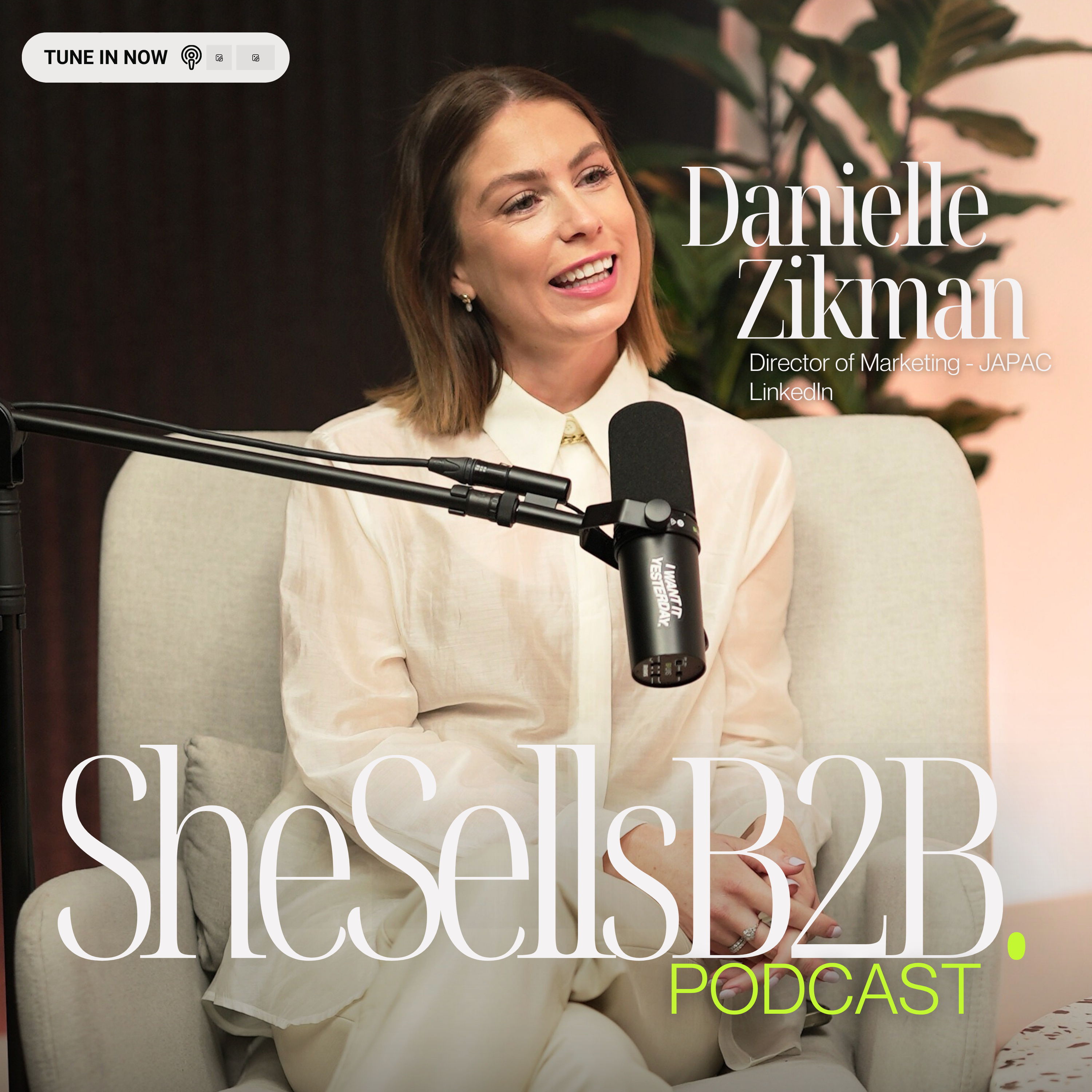 Career-Proof Yourself with AI: Every Women’s Advantage | Danielle Zikman of LinkedIn Ep 0971 / 100
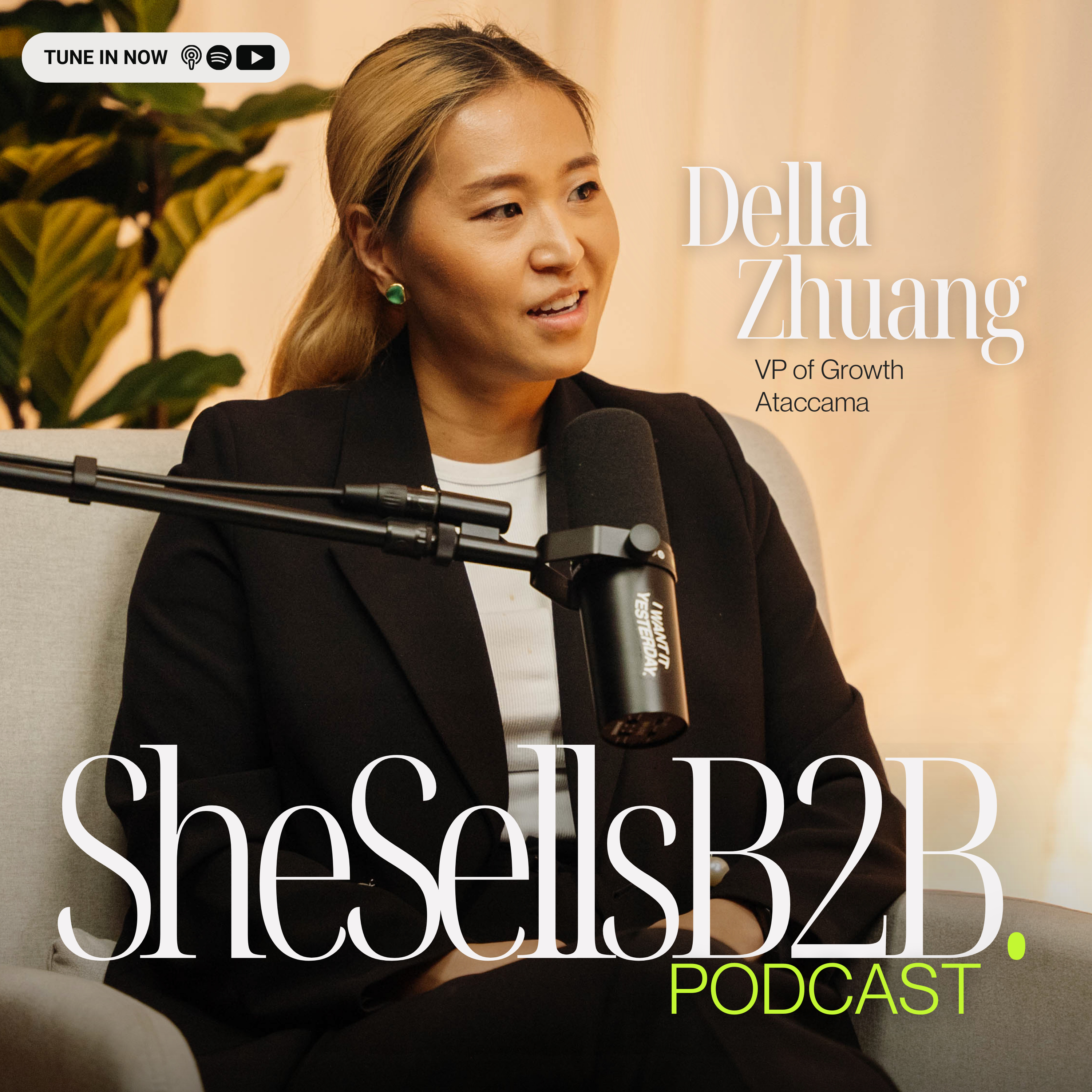 How to Turn Being 'Different' Into Your Sales Superpower | Della Zhuang of Ataccama EP 0869 / 100
 Why Women Are Built for Modern B2B Sales | Regan Barker of Grant Thornton Australia EP 0775 / 100
 Why Empathy Wins More Deals Than Aggression | Gabrielle Oldaker of The City of Melbourne EP 0646 / 100