
She Sells B2B · 2025-08-10 · 48 min
Key moments - from our scoring
Substance score
55 / 100
Five dimensions, 20 points each
Regan Barker brings a distinctive perspective on gender dynamics in B2B sales and the emerging discipline of revenue operations. As Head of Revenue Operations at Grant Thornton Australia - reportedly the only rev ops leader in Australian professional services - she explains how rev ops functions as a channel connecting sales and marketing to maximize activity productivity and ROI. Her career trajectory spans marketing, business development, and leadership roles across professional services, banking, and accounting, giving her unique insight into how different industries approach sales. The episode explores why women gravitate away from sales (citing job security concerns) and why they excel when they do enter the field - particularly through active listening, emotional intelligence, and relationship nurturing skills. Barker addresses imposter syndrome, the dangers of becoming "male adaptive" as a female leader, and the importance of authenticity. She also unpacks Account Based Marketing (ABM) strategy, explaining how the shift from one-to-many marketing to one-to-one/one-to-few targeting changes both sales and marketing, and how buying committees now average 15.3 people requiring coordinated multi-stakeholder engagement.
Revenue operations (rev ops) focuses on how all activity - across sales and marketing - becomes most productive and aligned with ROI. While traditionally sales-driven, it functions as a channel connecting sales and marketing teams collaboratively, rather than owning a single function. In professional services specifically, it's a relatively new discipline that helps connect top-of-funnel marketing activity into middle and bottom-of-funnel outcomes for client acquisition.
Women often prioritize job security and consistent take-home pay over variable bonus structures, making sales - with its less predictable compensation - less appealing, especially for women considering family responsibilities. This is compounded by traditional male-dominated cultures in banking, law, and professional services that can create bias and cultural friction for female entrants.
Account Based Marketing shifts from one-to-many broadcast messaging to highly targeted one-to-one or one-to-few strategies focused on ideal customer profiles and specific buying committees. Rather than pursuing marketing qualified leads, ABM targets marketing qualified accounts and nurtures all 15+ people in a typical buying party with role-specific, relevant messages across all channels.
Regan recommends acknowledging that leaders trusted you for a reason and consciously challenging negative self-talk by recognizing wins alongside mistakes. Building a growth mindset, creating supportive networks with mentors, and modeling confidence for junior women helps shift the narrative from self-doubt to ownership of capability and space.
Modern buying committees in professional services average 15.3 people with different roles, motivations, and concerns (CFOs, CEOs, finance managers, tax managers, etc.), and buyers now progress 60-75% through their research before contacting vendors. This requires coordinated multi-stakeholder engagement and longer sales cycles - now averaging 16.7 months in professional services.
Our reviewer’s read on each dimension, with quotes from the episode.
The episode contains some substantive discussion of revenue operations, account-based marketing, and the changing B2B sales landscape, but is heavily padded with motivational rhetoric about women in sales, imposter syndrome, and career advice that rehashes well-known concepts. The ABM and rev ops sections offer decent practitioner insights (15.3-person buying committees, 16.7-month cycles, Gartner's 17% stat), but much of the conversation devolves into generic leadership platitudes and feel-good anecdotes rather than novel, actionable frameworks.
if we think about buyer journeys, buyer decision making, parties more and more complex. I guess on the other side of that we need to make sure that we're matching that complexity with a level of behavioral and scientific data to be able to get the most out of sales teams
the buying party has now moved to 15.3 people
The episode recycles mainstream frameworks (account-based marketing, growth mindset, imposter syndrome, mentorship) without fresh angles or counterintuitive insights. The guest articulates existing ABM theory competently but doesn't challenge or reframe it. The commentary on women in sales largely echoes familiar narratives about confidence gaps and authenticity rather than presenting novel or contrarian observations about gender dynamics in B2B.
treat people how they want to be treated. So it's not necessarily how I want to be treated
you can be taught any skill, but you can't be taught attitude, right?
Regan Barker holds a legitimate Head of Revenue Operations role at Grant Thornton Australia, a Big Four professional services firm, and has demonstrable experience in law, banking, and accounting. However, she is not a prominent founder, board member, or widely recognized industry expert. Her experience is solid mid-to-senior practitioner level, relevant but not exceptional caliber for a B2B leadership podcast.
I'm at Grant Thornton and she's head of revenue operations
if I was to think where this sits naturally, to me it's sales, what I would say is that it's a channel to connect the two teams
The episode includes some valuable data points (15.3-person buying committees from Forrester/Six Sense, 16.7-month sales cycles, 17% Gartner stat on sales rep time, 3.45 hours saved per week from AI pilots, 1% MQL-to-customer conversion) but relies heavily on these few citations. Many claims about buyer behavior, sales process improvements, and organizational approaches lack named examples, specific results, or concrete metrics. The Grant Thornton initiatives described remain largely anecdotal.
the buying party has now moved to 15.3 people. So if I'm going to be nurturing and going to one individual, I still have 14.3 other individuals
buying cycles being much larger now. 16.7 months for professional services
The host asks competent open-ended questions and demonstrates familiarity with ABM and sales concepts, but rarely pushes back or probes ambiguities. When Regan makes broad claims (e.g., about AI adoption or generational preferences), the host accepts them without challenge or requests for specificity. The conversation flows smoothly but lacks intellectual friction; it reads more as mutual affirmation than investigative dialogue.
Tell me Rev ops, it's kind of unusual
How do you go about mapping that out? It's complex
Computed from the transcript - who did the talking, and the words that came up most.
“There’s a reason why we have incredible female sales leaders, and it’s time for us to own our space.” Regan Barker, Head of Revenue Operations at Grant Thornton, joins me on the podcast to talk about reshaping sales, marketing, and leadership in male-dominated industries. With a career that’s taken her from law to banking to professional services, Regan now takes the lead in building high-performing RevOps systems. In this episode, we explore why women hesitate to apply in roles unless they tick all the boxes, the importance of challenging outdated norms, and having a growth mindset. We also dive into how she's applying account-based marketing in a complex B2B landscape, what true sales-marketing alignment looks like, and how her team is using AI to drive smarter workflows without losing the human touch.
Transcribed and scored by The B2B Podcast Index.
Speaker A: But it goes both ways. We need women to believe in themselves enough to be able to say, you know what, I don't tick every box, but I'm still going to go for it. Your male counterparts, they tick two of those boxes, they will go for it even if they don't have the experience. Really putting yourself out there and it's okay if you don't get it. If it helps you be like, you know what, that was a great experience to learn from. I can continue to go.
Speaker B: Hi, and welcome to the she Sells podcast. Uh, today I have Regan Barker here. She's at Grant Thornton and she's head of revenue operations. Welcome.
Speaker A: Thank you so much. It's so wonderful to be here with you. I really appreciate your time.
Speaker B: Yeah, glad you can make it. I know that you're up in Brisbane normally and today we're here in Sydney. So tell me Rev ops, it's kind of unusual.
Speaker A: It is. It's quite a new, I guess, area. So if I was to break down revenue operations or rev ops, essentially, for at least me in professional services, it is about how do we make all activity the most productive activity aligned and assigned with an roi. So for me, very much sales driven. I'm, um, a sales leader. But also how do we connect that into marketing and making sure that we get the most out of our marketing as well and how, you know, our top of funnel moves into our middle of funnel and then eventually and hopefully acquiring new and wonderful clients.
Speaker B: So it does sit between the sales and marketing team. Or would you say it skews one slide more?
Speaker A: Well, I think because traditionally I'm more a salesperson. If I was to think where this sits naturally, to me it's sales, what I would say is that it's a channel to connect the two teams. So while I may not be the owner of one particular area of say, marketing, it is about working collaboratively with them, um, to be able to get the most out of all activity. So I think we'll see it evolve over time as it, you know, becomes more ingrained. It's. It's quite new to Australia and I think I am probably the only Rev Ops head or lead in professional services that I'm aware of. So I think we'll watch this space and see how it kind of continues to evolve. Like most roles, we saw it with sales enablement as well. Sales enablement now has evolved into revops. For example.
Speaker B: I love it because I think that, you know, you started seeing the chief of growth offices pop up and then you've Got this now. Sales enablement, sales, sales ops and it's breaking down the role of the sales team. There's so many types of roles that you can have from uh, a hunter to a closer to uh, now managing really complex CRM builds and finding the opportunities and then focusing on retention. So I finding that department of sales is becoming so much more intricate and you know, people don't really think of sales as an actual profession.
Speaker A: You're right. If we were to think about it as a profession traditionally it would be like door knocking if you think about that or you know, the car salesman or real estate. With sales becoming more complex, that's the answer of well, what's happening to the buyers. When we think about buyer journeys, buyer decision making, parties more and more complex. I guess on the other side of that we need to make sure that we're matching that complexity with a level of behavioral and scientific data to be able to get the most out of sales teams and then also to make sure that we're able to support the requests of those buying parties as well. How do they manage risk? How do you manage um, objections, access to information. There's so much, much of it. Most buying parties now will are so big that say they wouldn't necessarily make a decision if there's no consensus for example. So of course that's going to make it more complex on the sales side as well. Right.
Speaker B: Back in the day when I went to uni, I'd wonder if there is now a degree that you could do in sales because I went more marketing and PR and then you've become just really good at dealing with people and account handling and then your boss says you should help us with business development and that's how you sort of stumble into it. But there's so much psychology and I love like the negotiation and understanding people and you know, taking them on a journey. But your journey, it started out in law, then banking and then back to law again.
Speaker A: Or to accounting. Yeah. Professional services. Yeah.
Speaker B: Yeah. So tell me about that and, and how you feel like the sales landscape's changed over that time.
Speaker A: So if I think about my journey, professional services, I accidentally landed there. Right. It was a time when I graduated with a business degree during the gfc. Roles were pretty tight at the time and I was fortunate uh enough to be given an opportunity in a marketing role. I wasn't good at it. I was like, you know what I learned at university versus professional services Marketing were completely different over time. Obviously absorbed, uh, through a lot of hands on experience, through further Education And I saw this opportunity like with law, you know, the benefit of good brand marketing. And then eventually I moved into business development there as well. From there I was given an opportunity to shift over into banking. And that to me was the biggest eye opener. Because while professional services is B2B essentially they're ran completely different. It's a partnership model. Everyone has equity in a business. They're all decision makers, multiple stakeholders, where if you think about banking generally listed entities, chains of command, but then it's very much hunt, you know, bring in money, focus on the win sort of thing. Great sales cultures, obviously they'd have to be to be high performing. But then when moving back into professional services in accounting at Grant Thornton, I moved there, there primarily because of their values, like I loved their values. And so moving there I saw this huge opportunity to bring in what is happening uh, in banking around really quality sales and bring that back into professional services. Professional services being the service you have to make sure things are efficient and you know, like really, I guess protect partner and client time. So overlaying proper sales methodologies, good practice, really understanding your clients. I think it's, it's a huge and potentially missed opportunity across the industry and it's something that I'm driving at Grant Thornton. But hopefully I'm hoping the rest of the industry really jumps on board with this transformation as well.
Speaker B: The stereotype for me is in banking, accounting and law. To me it's like a male dominated environment. How have you seen that as a, as a female leader now? How did you get there? You know, from the very beginning, how was it coming into those spaces and wanting to sort of rise in the ranks and get into sales?
Speaker A: I think there's a few things there, uh, there's in professional services marketing, sales teams sit together. A lot of the marketing teams, female, male, will like, will generally be on the sales side for banking. Those uh, females that are in there, probably some of the most highest performers I've, I've ever worked with as well. So it's been extremely fortunate for me at least to have these wonderful mentors. I have seen it change over time. Absolutely. Which is fantastic. You want to make sure you have that diversity in the workplace. And for me I think that there's a big piece around representation of you know, a range of genders, a range of people with different backgrounds and uh, that diversity of thought. Like you have to focus on that. You want to be able to learn from everyone around you. So I think that yes there has been traditional male dominated industries but we're really seeing that shift and I see it as a really exciting time.
Speaker B: To be honest, as a female in sales. Has it always been easy for you?
Speaker A: No, absolutely not. It hasn't always been easy. I think there's a few things that have, I've definitely seen over my time. You know, coming uh, into professional services. You have to think a certain way, dress a certain way, be a certain way. Very, very early on in my career. I was once told by someone in HR to like dress more feminine for example. And I'm a very proud lesbian and I don't dress according to what would be a traditional feminine sort of, I guess fashion. I think you are going to like encounter I guess a uh, level of bias. And you know, I think everyone encount a certain level of that as a part of their career. But really I think now there's a huge opportunity for us to lean into our authenticity and our, and to be our own selves. I think that the more uh, I rejected it, I wasn't necessarily successful during those times, but the more I lent into my authenticity, the more I focused on who I am. Androgynous woman. I found that people actually they would gravitate more towards that as well. It's a level of vulnerability, it's a level of trust. And whether or not that says as a leader but then also as a salesperson, I think that that's really important as.
Speaker B: So I started this podcast because I wanted to get more women into sales. Why do you think that there's not enough women in sales? Why consider a role in sales especially when you think about, you know, it being quite male dominated, especially in banking and finance, even law. What can a female perspective bring to those situations? Because I've seen excellent salespeople whether they are male or female, especially in the hunter mentality. The ability that I've seen from women who can nurture, nurture uh, and build a relationship and really listen to the client's needs. I feel like that is a touch more present in female attributes.
Speaker A: I think that that attribute and m. The active listening piece like that to me would be the one uh, that I would truly think that what I've seen at least women do really, really well. The flip side to it as well is if I was to think about drivers of why to or not be in sales a lot of the time it's safety. If I was to think more about, you know, as a, as a woman, I would lean more into the safety side of things that to me is job security, which sometimes Sales cannot be. I would think about it in terms of, you know, what is my absolute take home consistently where bonus structures definitely drive that performance as they should. But you know, if you were a woman with, you know, a family that you're thinking about, you're naturally going to sway towards uh, a career where you have that security more than necessarily a big payout potentially if you hit your targets as a. What's in it for me, those drivers would evolve over time depending on what stage of life you are. And I think that sometimes as we probably need to think about what's more appropriate at what stage of my life, you know, as a career, your career shifts and changes along with the rest of your life. Right. But then in terms of, on the flip side to that, why women would make and do make such fantastic sales reps, it is uh, a level of consistency, active listening, more the EQ side of sales, which I think that you know, know we're so bombarded on a digital side these days. I think that eq, um, that human element of sales is going to continue to be like, while, I guess smaller in size, a huge impact in, in the broader sales process as well.
Speaker B: And with sales cycles becoming longer and longer, you kind of have to have that persistence, that nurturing, that ability to build that relationship over a long period of time. And I think that the old school, assertive, closer, uh, sort of go in hard, negotiate hard is less and less needed these days. It really is. I think that some people who are in marketing would do really well to also move over to uh, a sales role because they have that ability to understand tone of voice messaging, getting the right message across to that prospect that you're trying to close. And if you think about how marketing has to come into the RFP processes to enable the sales team to do the closing. So I think there's a good sort of overlap there in skill sets. In terms of being male adaptive. I've found personally in my 30s in particular, found that in order to be a leader in a sales environment, I'd have to be really assertive, pretty tough, never crime, like, like builder armor, which was quite male adaptive in my opinion. And now having my own business, I feel like I've definitely leaned into being more empathy driven, softer, opening up, being a bit more vulnerable. And it's funny because one time one of my bosses said to me, tricky, you know, you should be more vulnerable. And I just kind of looked at him. I'm like, you'd be more vulnerable. Like, you know, it's kind of what does that even mean? You know, have you felt that you've had to be male adaptive over the years?
Speaker A: Yes. Oh, absolutely. I have to be more maladaptive at times. What I would say to that though is my mentors, particularly, uh, three fantastic mentors of mine, being men over my career, have actually challenged me in the sense that I've tried to be male adaptive. And they're just like, it's not you. Like, be more you, lean into you. That's when you'll start to see things. When I was in banking, I had this one male leader who would say, you know, I'd meet with him and I'd be like, I did this wrong. I should have done this, I should have done that. And he's like, whoa, hold on. Your male counterparts right now are coming in being like, I've done this, I kicked this goal, et cetera. And he's like, half of them you're like outperforming and you're coming in here critiquing. It's actually, uh, fortunately, and I know not everyone is, is like this, fortunately for me, that in those adaptive moments, I've actually been called out to be more myself and, and trust myself more than, than ever before. And I think that if I was to think for women, you know, have, create a supportive network around you, have male leaders and mentors challenge you to be yourself more as well. Because I think that, yes, vulnerability now as a leader, I think is wanted more from younger generations as well. And I find that I use vulnerability to, I guess, inspire and, and to motivate and to help drive. Like, you know, if, if someone's made a mistake, don't jump down their throat. It's more like, yeah, I've, I've made those mess ups too. I've made those mistakes. This is how I've kind of adapted to that. And it's okay. You, like, you can make mistakes. I encourage it because it means that you're going to learn from it as well and really kind of like fail forward. So I know I'm talking in a bit of a roundabout way here, but I feel like we're in this new evolution of what leadership can be. And to an extent, it's not necessarily, you know, male or female. It is for me, that authenticity, that vulnerability. And really to understand, I guess your audience as well, because generationally, we have four generations in the workplace now, four different sets of motivations, cultures, belief, you know, you name it. So I think that you have to be able to change and adjust to that. As well.
Speaker B: Yesterday I was at a networking event and we all sat around a table and it was good balance, actually. Male, female. And I brought up the topic of imposter syndrome. And every single female leader I've had on this podcast has brought up imposter syndrome. And, uh, one of the older gentlemen who's a founder. What is that? And I was like, wow, okay, that really tells us a lot that a lot of men don't feel it. And I know that it is tied to, you know, imposter syndrome is a female's thing. 1. Have you felt that yourself? And how would you mentor someone junior who's feeling the imposter syndrome to step up and take the lead?
Speaker A: I have experienced imposter syndrome multiple times throughout my career. When I first shifted into the role of, well, what is now head of Rev Ops, but originally it was head of sales enablement. When I first moved into that, you know, I'd been pushing for this for some time and I got it. And then as soon as I got it, M, I'm like, oh, my God, can I actually do this? Am I capable? Like, surely. Oh, I'm going to fail, like, whatever it might have been. And I realized then, um, that, you know, for me, the only thing kind of holding me back was my own set of beliefs around what are my limits really. And I think that that's where we as women do feel that imposter syndrome. But then, yes, the importance of how do you overcome it? How do make sure that you can, you know, continue to push those boundaries and own your space. So, first of all, you know, I checked in and M was like, well, of course, you know, my leader and he hates, like, he's getting too much Credit. Fraser M. McNaughton, he wouldn't have made me like, or put me in that role if he didn't trust me. So, first of all, there's a reason you're there and own your space. Second of all, you have to, over time, continue to change that narrative, like, mentally as well. So more recently, I was an emcee at a book launch of my own mentor, Luigi Preston Enzies. He, you know, chose me as well, to be that mc, uh, and a huge part of, like, his life and what a great achievement that was. I had the opportunity afterwards to reflect and there was a moment where I was about to critique all the little mistakes I kind of made. And I'm like, yeah, but I also did a great job. And I feel that a couple of years ago I wouldn't have given myself that credit. So you do need to, I think, continue to challenge your thoughts, thought process to overcome that imposter syndrome. And that's through checks and balances, right? There's a reason why people put you in those positions and trust you. You know, you should own and trust your own capability like most female sales leaders. There's a reason why you are in that position. So own your space. I would say then teaching the next generation of that show that you are owning your space. That first of all is like, okay, here is a woman that's proud of who she is, that's owning what, what she does. And then encourage them to shift their mindset to. I think, I think no matter whether you're in sales or whether in something a completely different function, if you're focused on growth, mindset, then that imposter syndrome has no chance.
Speaker B: Yeah, I totally agree with that. I think if you have a really strong vision, ambition, like just keep doing the things you know. Sometimes, you know, you do sort of have to take that job and maybe it's not quite where you want it to be, but it is a stepping stone in the right direction. And it is that opportunity to just to build your confidence, uh, up and go, tick. I can do that. What's next? Take on the challenges. So let's switch gears a little bit because I love talking about account based marketing and a lot of people don't know what that is. And I feel like I'm hitting my head against a brick wall sometimes because I'm like, it's the new way. It's not really new, but it is. And so tell me, if you were to describe account based marketing to someone who had no flipping idea, but they are in sales and marketing, how would you explain that to them?
Speaker A: Okay, so traditional marketing is very much one to many, right? Uh, if we think about distribution channels, it's you go out, you send out information, people receive that information. You know, there's obvious stages around like your top level brand awareness, et cetera. How I would say in terms of abm, it does really flip marketing on its head and also flip sales on its head. So it is a highly, I guess programmatic, um, strategic way of grouping uh, a level of customers. And it's in the one to one. So me to you, my organization to your organization, one to few. So being that my organization out to a set of like an ICP, whether it's 10 or 20 customers, with the same firmographic detail, so same industry location, you know, revenue, those sort of things and really targeting the messages to that organization but then also the buyers within it. So say for example for professional services a lot of our uh, buyers would include include CFOs like CEOs, non executive directors, finance managers, tax managers, et cetera. So when I'm thinking about sending out, you know, a particular piece of information, irrespective of channel, is it relevant to that role and that particular buyer? So it becomes very programmatic to the point where you end up shifting away from this idea of a marketing qualified lead. Right. And you're now thinking about a M marketing qualified account. So if I was to look at a buying partner, particularly in professional services, you know, and this figure comes from Six Sense and Green Hat Research across APAC is that the buying party has now moved to 15.3 people. So if I'm going to be nurturing and going to one individual, I still have 14.3 other individuals, different drivers, different opinions, different motivations within an organization. So really ABM helps me, helps out like you know what I'm hoping to achieve with abm, go out and nurture the whole buying party based on issues relevant to them. I hope that helps.
Speaker B: Absolutely. I love it because obviously I'm doing this day in, day out and it's so great to hear it from someone else. So just to clarify, ideal customer profile is not the account, it's the people within it. So for me I pick an account and look at does that the characteristics of that account suit the business that I'm trying to get a new business meeting for and then within that company. So I'd look at the company profile, I look at, you know, who's who within that organization. Oh wow, look, there's a new CEO that's been there for nine months. That is perfect because they'd be looking for something new and fresh in that space and we should talk to them. But then I do look at connecting the dots and think, okay, well we probably want the COO in there and the cfo. And like you say M, most buying committees are getting larger and larger sales cycles longer and longer. So it is really important to have those people in the room. How do you go about mapping that out? It's complex.
Speaker A: Very. Yeah, absolutely. And so I almost even take a step back from that. There's for us, us in professional services. I'll just talk specifically to that for the moment. An ideal client profile for me helps give my, the partners that I work with like a guiding star, like that, that North Star that we can kind of focus on. So historically if I asked A partner that I'd be coaching or advising, you know, who is your client base. They'll be like, oh, bid in this industry, bid in that. Over here, this size, that size, public, private, like whatever. This here with ideal client profile is like right, let's be really precise. Because what we can do is then we can look at, not just say your biggest client, we can look at the details of that client, break it down and then find more clients exactly like that with the same issues that are uh, tackling the same, you know, challenges across the market. And then we're able to repeat, you know, that process but then gain insights to deliver to these organizations true value. And so then you go down one layer of buyer Personas, then that's the, that's the roles within those organizations. So you know, it is that cfo, coo as you mentioned. For me it helps create a level of efficiency. We look at buying cycles being much larger now. 16.7 months for professional services. And so a lot of that, you know, buyers are going through 60 to 75% of the way without even engaging with vendors. So they're already going through, they've done their internal research, they've spoken to their stakeholders, they've almost developed their scope before even coming to other accountants, which is just incredible. So we need to make sure that we use that ideal client and the science behind it to be very precise in uh, our, in our sales outreach and approach going forward as well.
Speaker B: Have you heard of the is it 7, 11, 4? So there's 7 buyers typically in an organization that need to be involved around 11 touch points to get them to say yes to a meeting. And you should focus on four channels to reach them. But I actually think that the touch points probably more around like 30.
Speaker A: Yeah, it will be similar to that that m ours is the 15.3. The touch points have to be separated into human, non human. So the forester research a few years ago was around, I think it was 17 to 19 touch points. You know, half of those were human, the other half were non human. So you have to think, you know, your human being, phone call, face to face meeting, coffee catch ups, et cetera, event and then your non human being. Yes, your distribution channels of email, webinar, LinkedIn, whatever or any social media for that matter. But you have to really, it has to be a very ecosystem approach if that makes sense.
Speaker B: You could end up investing a lot of money into several different approaches and connecting that. But I think that if you look at how long the buying cycle is and spreading out Those touch points over a period of time to have one event in that year that then has a follow up of a phone call and then something in the post post and then you know, a digital touch point. I think that it's worthwhile investing in that long thought out journey because your buyers need to be feeling connected with you over a long period of time.
Speaker A: And isn't ABM the answer to that when we think about it account based marketing because it is so programmatic over time and then it takes them on a journey to eventually become a marketing qualified account rather than that lead again. So I think that's really, really important to think long term and not just about one individual TR transaction. The, the piece is that that goes very much into shifting into key account management as well. Right.
Speaker B: When you think about how sales and marketing need to come together in an account based approach, that's my biggest challenge. A lot of organizations, they work in silos. How important is it that they work together on this ABM approach?
Speaker A: I think so. Marketing and sales is two sides of the same coin and they have always, you know there is that misalignment across a range of organizations. You know I've even heard in broader teams that, that, that I work in or have worked in around. Well I don't need to know that because that's marketing. I've become a much higher performer learning more about both sides than focusing on one. And especially in today's world marketing isn't now just a top of funnel. It goes all the way through. And in fact you're going to get more interaction through marketing channels than you will on the, on the human sales side. Only 17% of time is spent with, with sales reps now of, of a buying journey and that's through Gartner research that was released a couple of. If that's happening salespeople need to know what like the roles of marketing and potentially leverage it more or be a part of it. You know I'm not opposed and I probably see that a fusion over time. You know we've heard a uh, bubble up around like smarketing sales marketing together but, but I do wonder if that's going to be the new way going forward. We definitely see it in B2C organizations like I think that how we can kind of grasp it in B2B and you know particularly professional services may take a bit long but it's already kind of, it's already there. Right. So you know if you are only looking at one way of doing things, uh, your competition will Outdo you.
Speaker B: So if I was a CEO and I have traditionally hired a sales head of sales ahead of marketing and they currently working in silos. Have you seen along the way how from the top down we've been able to bring those together?
Speaker A: So fortunately for, for me it's under the same banner the sales and marketing. So it makes it a lot easier. You know I have this fabulous extended that I work with and some of the best marketers that I've ever been exposed to. Um, our head of marketing operations gets it like he. In fact I wouldn't be as successful as I am at Grant Thornton if it wasn't for him and his team like hands down incredible. But this as well is, is this the evolution of where you know, instead of your cmo, instead of your cso, it is your CRO because that is your combined making sure that you get the most out of your marketing and be able to close on the sales side and bringing the two together. So to me I'm already kind of seeing it and in fact we're driving it. What's fortunate for me is that while I'm in revenue operations, uh, I have this incredible extended team that really know what they do to continue to teach me on being better as well. So let's see.
Speaker B: Absolutely. I actually wrote down yesterday about how doing ABM is 15% more profitable, suitable for the business and 19% faster to close the deal.
Speaker A: To close deals.
Speaker B: Yeah, yeah.
Speaker A: There's a, there's a book called uh, ABM is B2B and backed by Forrester, uh as well. It's only 1% of marketing qualified leads become clients or customers as well. So very much to that is that uh, you know, if you do push into abm, it actually gives you, you know, forget the number of marketing qualified leads. You are now looking at creating those faster um, sales cycles and also uh, opportunity for account growth. So having to really reduce that acquisition cost as well.
Speaker B: Yeah. I had the conversation this morning with a business in the enterprise SaaS space. Their biggest problem was lead quality and then being ghosted. Right. So if it's a lead quality problem then the way that account based marketing flips that you said it flips it on his head. Right. The lead generation model. Because, because you're no longer wasting time filtering all of the inbound inquiries. You've pre selected your most ideal clients that if you look at that list and you go that's golden. If we get any one of those in front of us, we know that's a perfect fit. We're not going to be meeting with tire kickers. Right. So have you found how that works in terms of improving lead quality? And do you also look at the inbound as well?
Speaker A: So my team owns inbound. In fact, that's how we started out. So if I think about, you know, the end to end, uh, piece, SaaS companies will always have challenges around quality, but hands down will always kind of occur. We did have, I guess or we still do, inquiries come through that are potentially a sole trader and things like that. What used to historically happen is those would be filtered out through partners. Partners really busy. They'd look at it and be like, oh you know what, I'll get to that later. And then they may get to it later. And some of the very good, sometimes it will slip through the cracks. Right. So we'd wanted to like isolate and say hey, what if we use this channel? We'd own it and then we'd qualify or pre qualify to get you to a discovery call with the right ideal client profiles and go through that process. Now what we found is that we were able to quickly say no, saving partner time. That's wonderful, right? And then saying yes quickly, quicker. So I have two wonderful up and comers in this area. They, you know, responding within the uh, 20 minute to an hour period. Your most ideal time to reach back with that. Because we've created this client experience around it and overlaid uh, like best practice sales. We have been able to increase that channel by revenue. It was double, it's now triple. We hit last year's targets last month. So it's continuing to grow. So that to me is like if we know our ideal client, we're out there, you know, from a marketing perspective, generating the right leads, then that inbound channel continues to grow. And then also we're pivoting to also look at that abm which I'm still very much in the build stage of that. It's still quite new to us. But we do want to make sure that we're looking at every channel as best as possible. Because for us in professional services it's still a human LED like organization and we never want to lose that. So it's more about what levers do we pull, what can save partner time, what can help increase revenue. And also for me a big passion project is like making sure these partners get their dream practice. So uh, I want to work with people that like love what they do and really support the clients that they want to work with and create this like ecosystem where you know, we're all proud of our contributions as well. So pulling each of those at different times I think is um, really important.
Speaker B: So AI is a big topic at the moment and there's various different ways that it can be applied I guess on the sales and marketing side. And there's a lot of fear especially in the younger generation that AI is going to replace roll goals. How are you using it and do you think that they're right to be fearful of it?
Speaker A: So AI is a pretty incredible topic. It can be discussed as a full podcast right for me and I was talking to our, our head of um, IT training yesterday around AI and she was telling me about how a lot of organizations say here are your use cases, use them this way and that way. It almost like decreases curiosity but then it also increases this fear of like oh um, I'm one day going to get replaced by this. But if I look at what we've done at GT more broadly is that we've actually been able to say here is, here are some platforms, be curious, explore you tell us where you're gaining efficiencies. You know we're an organization with a nine day fortnight, right. So which is extremely like fun it's and uh, what a privilege to be able to have that as well. But that to us means that we have the onus on us to be more efficient making sure that we're looking for new ways to work but also make sure that that quality and our client experiences is still ah at the forefront of what we do. So what we've actually done is roll out like a lot of Microsoft AI and from our original pilots to now I think it's a 3.45 hours saved per week and if we're on a nine day fortnight that gain there gives us that leverage. So I think that's pretty fantastic and where I'm kind of driving it from a sales perspective at the moment. And this is where my like a big part of what is on LinkedIn particularly with our ideal client profiles we're able to build out our targets. I have this great support network at LinkedIn where they've given us the opportunity for the second time in a couple of years to be a part of their beta testing process. So they have launched and publicly known around seller um, agent and we're able to use that technology to test and trial and be more efficient or how we can be more efficient in our sales processes as well. And then that will then soon be rolled out to uh, like the rest of the world but to Us, it gives us almost this, like, I guess, opportunity to have a head start as well, which is fantastic.
Speaker B: No, that's really amazing for me.
Speaker A: You know, it's like, don't get caught up in being fearful about it. I think for me, it's more about if we can be. Have that growth mindset, you know, no matter what, if you have that growth mindset, you will be able to be more adaptable and adapted to that, this new pace of change. With that as well. Keep investing in learning. I think that, you know, trial new things, don't be scared of failure, because the best thing you can do is use those learnings to continue to propel yourself forward.
Speaker B: I think it's interesting, isn't it, the. The term growth mindset. I think you need to have that as an individual. How do you look for that in a candidate if you were hiring?
Speaker A: Actually, two questions that I always ask in terms of, like, candidates when they're coming in is what research did you do to prepare for this interview? And that to me is the, I guess the proactive activeness. So if they might say, oh, I looked at your website, I did this, I read this article, whatever that's like, oh, great, tell me something you learned that you didn't know yesterday. It could be anything. But if they fumble over that, that to me is like, okay, you're not learning from the opportunities that you're given. I think the other piece for me is around, like, if you were to get this job, what's the first thing you do? And to me, I think that if it's talking to other people about their experience, you're more likely going to get people that will adapt and change and that like a, uh, very, very questions, they're not that complex at all. But I want to know how people would deal with new things coming their way, essentially. Because, you know, I've worked with people that have a growth mindset and those who haven't. And to me, you can be taught any skill, but you can't be taught attitude, right? Like, it's a very hard thing to kind of change fixed mindset to growth. Whereas if you have that, uh, already, like, the world's your oyster, honestly, it's only you that can, like, create limitations, essentially.
Speaker B: I always say that. I always say the attitude, attitude, not necessarily skill. And especially in sales, right? You've got to have that tenacity that get up and go. And I think that when you're talking about having job security and safety in sales, it's also one of the most diverse and challenging roles that you can have. Because if you think about, you've got to be on the numbers, you've also got to articulate a message, you've got to work out the timing. You've got to have the psychology of trying to work out, you know, what the person really needs and when. And you'll be able to use data, pull reports together. It's just, just so much multifaceted I feel. So we talked about adaptability and change. What do you see over the next five, 10 years? You feel like it's going to change in the landscape quite a bit.
Speaker A: Changes that I'm already seeing that I think will kind of continue. The fact that a lot of buyers will want less human interaction, we're seeing it at a B2C level. It's. Yeah, if you look at the, forgive me, I don't, I don't know the stats off the top of my head. But more and more we're seeing growth of not wanting to have a human seller in the back end. But what I think will happen is it will almost come360 because what's happening with those transactions is that they're, they end up being like SaaS. There's integration and change management failures as a part of those. So I think that we're going to see it much more as like uh, this evolution into more buyer enablement from a uh, sales and buying perspective. I think it's still going to continue to be more complex, but this is where I see where AI can help you. Like let's kind of use AI to break down some of those barriers and challenges to be able to give you better access to those buyers or better information to help enable buyer decision making as well.
Speaker B: Actually it reminds me of a bit of uh, a different, completely different industry and how it's boomeranged around. So you take like dating apps like Bumble for example and everyone did a mad dash on a gotta be on an app and that was fantastic. Fantastic. But I've noticed more lately people exiting apps and actually wanting to go to traditional speed dating in person, run clubs. Right. And they want that human interaction. They're tired of the digital swiping and not, you know, you'll see people craving that human interaction and the, the swiping. And I feel like that doesn't necessarily stop at personal relationships. I do think that that TR translates to business relationships and how people, I get asked all the time, can we meet face to face? So I've made that a part of my sales process where I'll reach out randomly to a hot list and say, hey, I'm up in Sydney. Which I did this time. I'm up in Sydney for two days wondering if you're around for a coffee. The response rate was really high because I wasn't pitching anything. I actually just want to meet people and see who I'm going to connect with. And it's surprising how many people do. Do you still want that? But I wonder if that's also a generational thing because I think the younger uh, generation coming in are probably going to be more in the tools than they are in person.
Speaker A: Maybe there's two pieces to this I think we can kind of deep dive on. There is the uh, the platinum rule, which is treat people how they want to be treated. So it's not necessarily how I want to be treated and I shouldn't treat you how I want to be treated. I should treat you how you want to be treated. So if you want face to face, I'm going to come and meet you face to face to, to face how you buy as an individual consumer. It's how you buy in B2B right? So if you think about for example cost of living, you're going to be more cost conscious in the boardroom as well. If you are thinking about I want efficiency, I don't want a human like how I love Uber or whatever that's. You want that in your B2B experiences. So for generations it is like I'd much prefer to you know, go to the shops, be served by some ah, like a human and then walk out that you will want the face to face and you have to think that that is very generational as well. So the way I guess your older generations would buy very much with the human element, you know, but that will continue to evolve over time with, with your new entrance of, of generations being more digital. But like you said, full circle. If you know in a couple of years we're so sick of digital, we will start to kind of see that creep up again.
Speaker B: One of the passions that I have is still having that uh, experiences in the sales journey and maybe making it experiential and bringing to light. How can you use some of that experiential? Like you see some amazing events out there. But how can we put that into the B2B world rather than it just be like lunches and conferences and the usual. And I think the larger companies out there like the sales forces and the AWS's of the world, they'll put like on events with concerts And Dua Lipas there. And, you know, they've gone really wild with it. But it. That's, I guess, for a select group of people. But to do that on a smaller scale I think is really important, especially that one to you selling. Um, have you seen any examples of that where it's worked really, really well?
Speaker A: Look, I mean, in professional services, we're still pretty traditional, so there's been, I guess for us, the experience side. And this is something that I'm incredibly proud of. We have a brand ambassador, just Jess Fox, Olympian, you know, phenomenal human being being. What professional services firm has this incredible athlete as their brand ambassador? And, you know, we've been very fortunate, fortunate for her to have come and speak, like, spoken to a lot of our clients. Um, she's spoken at conferences of our, of our people. You know, she's done a national tour around our offices. That has been a different experience at really bringing the human story back into the conversation as well, which I think is quite brave for professional services to do. And we've seen great impact from that. And I think that, you know, to focus on, I guess, this fantastic athlete, a female athlete, and celebrate her success and see the synergies between, you know, what her individual, like, core values are and how they match to ours, like, it's something that I think we at, uh, Grant Thornton can be very proud of.
Speaker B: Yeah, it's very unusual actually, especially in that industry. And how do you pick who that person is?
Speaker A: Yeah, well, I mean, that could be a whole nother podcast. Right? And to be honest, I can't have any claims came to that. Our extended marketing brand team, the, like, our cmo, Fraser, uh, you know, our executive team, all, all kind of worked on that. And it's. Yeah, it's. I think if I was them, I would say that was a real win in their careers. It's fantastic.
Speaker B: We talked a bit at the beginning about getting more women into sales is definitely something that this podcast is showcasing. How do you feel like organizations could or should enable that to happen? How do we create more diversity, reduce the gender gap? Lots of really big questions. I know that's a whole nother podcast again, but how can we help get more women into sales, do you think?
Speaker A: As organizations access, I think first and foremost, and then ensuring that we don't try fit a mold, you know, what I've found for my team and the women coming into sales is that, you know, you try not to, I guess, recruit for the, for the role as much as recruit for like an opportunity of what they can kind of become. And so, you know, for, for me, like skills like active listening, the growth mindset, the attitude, look for that. And to be able to give that opportunity to those that are thinking about it, though, I would say, you know, a lot of women would not put themselves forward for a role unless they ticked every box. So I would say to that, if there is a role, go for it. If you think that you'd be great or if it's on career path, whether you're skilled or not, try work hard in preparation to give yourself the best opportunity. But it goes both ways. We need women to believe in themselves enough to be able to say, you know what? I don't tick every box, but I'm still going to go for it. Whereas, like, your male counterparts are more likely, if they tick two of those boxes, they will go for it even if they don't have the experience. So really putting yourself out there and it's okay if you don't get it, if it helps you be like, you know what, that was a great experience to learn from. I can continue to go forward. And the gender pay gap piece as well. Like, I think that a lot of organizations have to learn around that. I've been fortunate enough to work in an organization where, you know, we covered that and addressed that many years ago, which is fantastic, wonderful work by our PNC team there and our executive. But, uh, for a lot of organizations, start looking at that and start looking at it now, because people do talk about their pay, whether they're. It's on their agreement to keep it silent or not. If you're known as an organization that favors, you know, one gender or over or another, you're not going to attract the right talent.
Speaker B: The brand perception starts from the inside, doesn't it? How people talk about the business. That's really fascinating. I think that what's interesting as well, from my personal upbringing, I think that firstborn child, my father, was quite tough. And I don't think that I was ever treated like a girl. I think he actually wanted a boy. So I think that there's that sense of resilience and going. And I. I've rarely felt like, oh, I should not apply for that job. I've actually been the opposite. Just give it a go. Maybe they'll say yes. You know, just on the off chance, I wish I could put, you know, give that away to people, women in particular or people who. Anyone who just feels a sense of not enough. And I think that it's like, why not think of it like a lottery. Obviously you have the right skills and attributes, but, you know, sometimes, like we say, attitude goes a long way.
Speaker A: Absolutely. And I think, I think that you need to put yourself forward. Because what if you do succeed? Like, really, what if you just, like, jump right in and you're actually given the recognition straight away, like, or given the opportunity? Um, I think that that's kind of what I've learned along the way. And if I was to think back to, oh, uh, you know, early on in my career, if I had belief in myself, I would have arrived here much, much earlier because I had the capability or the learning or the growth mindset, et cetera. But you, you do need to back yourself. You are in the driver's seat of your career. If you want to be in sales, be in sales. It doesn't, like, start off in one organization, get something on your CV to then work towards that dream, like, of where you want to work. Know that no one's going to come tap you on the shoulder and be like, hey, come work in m. Like, it might happen, but, you know, you have to be in the driver's seat. So really own that. So if I was to say one piece of advice for someone that wants to be in sales or someone that wants to do a dual role, marketing, sales, whatever is that? Get a great mentor. Not a good mentor. A great mentor, even test a few out. Like, get someone in your corner that backs you, that believes in you, that helps you believe in yourself. Because sometimes it is that the belief that someone else has in you will eventually come through and be like, oh, yeah, like, I can own my space now. So get a good mentor. Start out, put yourself out there, and that will hopefully push you and propel you forward to that role in sales.
Speaker B: Some of the female leaders that we've had on this podcast have said I've been super lucky. I was lucky at this point in time, but I think that there's need to reduce the word lucky because you evidently went for it. You were in the right place at the right time, and there was something about you that got that opportunity. It wasn't someone else.
Speaker A: So I worked hard. I put myself forward for an opportunity. I was given the wrong right to for that.
Speaker B: So, look, it's been a really wonderful and diverse conversation. Thank you so much for coming onto the podcast and joining me. I've thoroughly enjoyed it. I think we do have another episode in there somewhere.
Speaker A: I'm down for it.
Speaker B: Absolutely. And if anyone wants to reach out to you or connect with you, what's the best way to do that.
Speaker A: LinkedIn. Uh, Regan Barker. Definitely connect with me. I'm very happy to talk to particularly women in sales that want to be focusing on developing their career. Feel free to reach out. Absolutely.
Speaker B: Thank you so much.
Speaker A: Excellent. Thank you. M.
Other episodes covering the same guests and topics, from across The B2B Podcast Index.
 How G2's SVP of GTM Strategy evaluates sales comp plans, scales teams & runs M&AThe Sales Compensation Show · on Revenue operations86 / 100
 CELab - Ep 185 - The Four Faces of AI Resistance: Eve Kedar on Why Customer Education Should Own the AI RolloutCELab: The Customer Education Lab · on Sales enablement77 / 100
 #109: Why top-of-funnel content is crucial to building pipelineSaaS Marketing Weekly · on Ideal customer profile (ICP)75 / 100
 Maisa Fernandez on Transforming Partner Marketing into a Revenue EngineNever GTM Alone · on Account-Based Marketing (ABM)74 / 100
 5 Keys to Partner Account Management Success with Carmen SoriceSales Game Changers · on Ideal customer profile (ICP)71 / 100
 Stage Before Strategy: How PMM and AI Priorities Shift as B2B Companies ScaleA Go-To-Market Perspective · on Sales enablement71 / 100
 The Biggest Salary Jump of My Career - As a Woman | Laura Erdem of Dreamdata Ep 1073 / 100
 Career-Proof Yourself with AI: Every Women’s Advantage | Danielle Zikman of LinkedIn Ep 0971 / 100
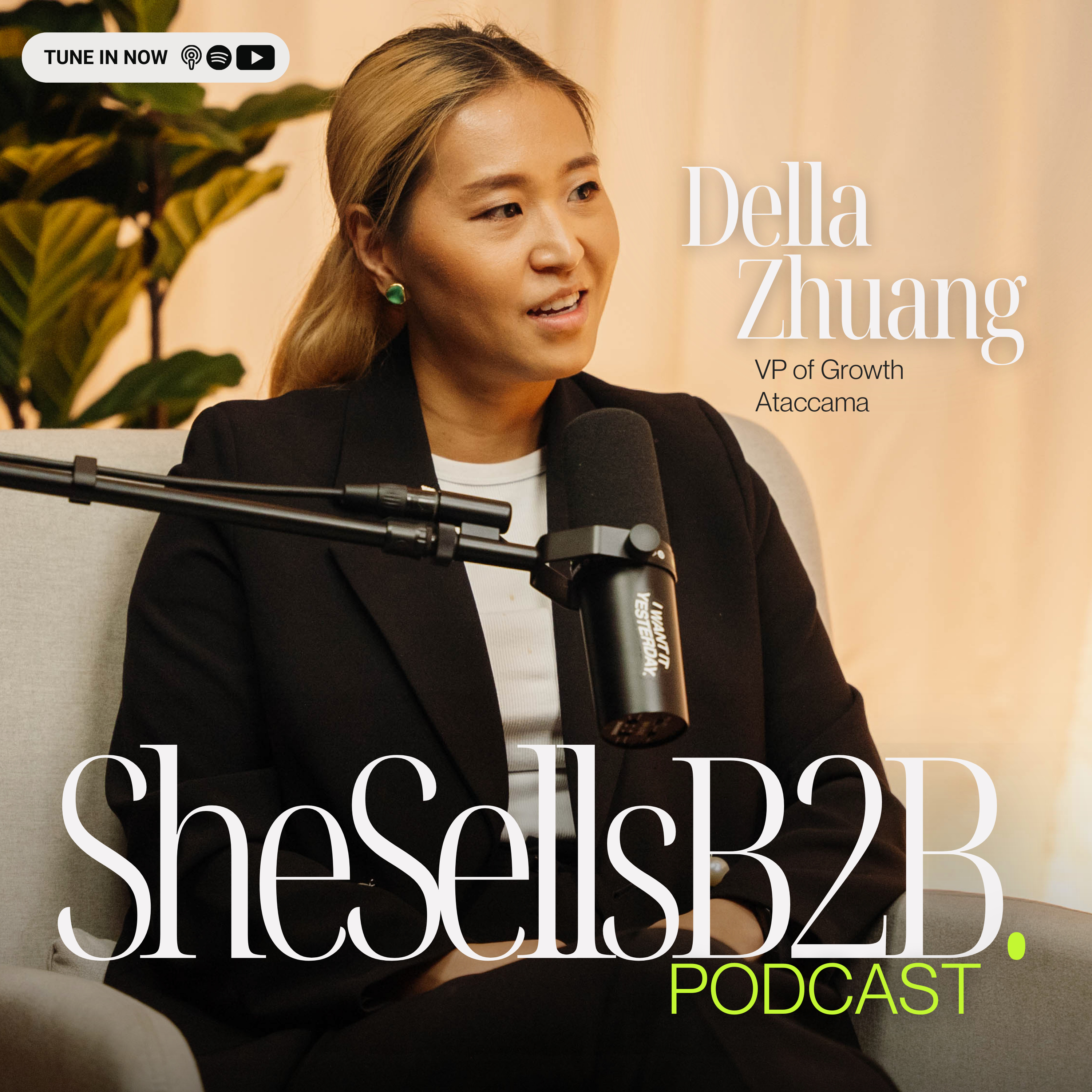 How to Turn Being 'Different' Into Your Sales Superpower | Della Zhuang of Ataccama EP 0869 / 100
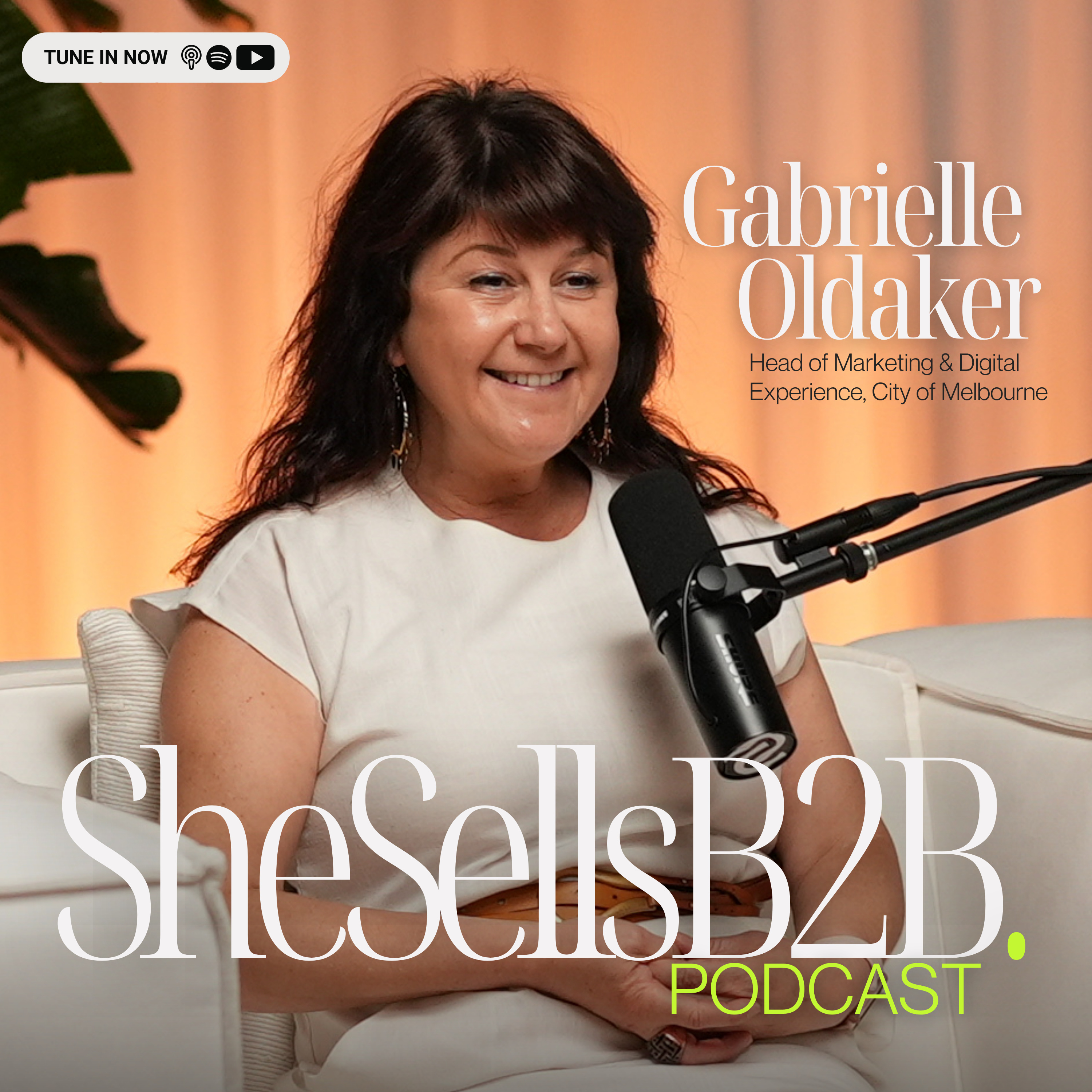 Why Empathy Wins More Deals Than Aggression | Gabrielle Oldaker of The City of Melbourne EP 0646 / 100
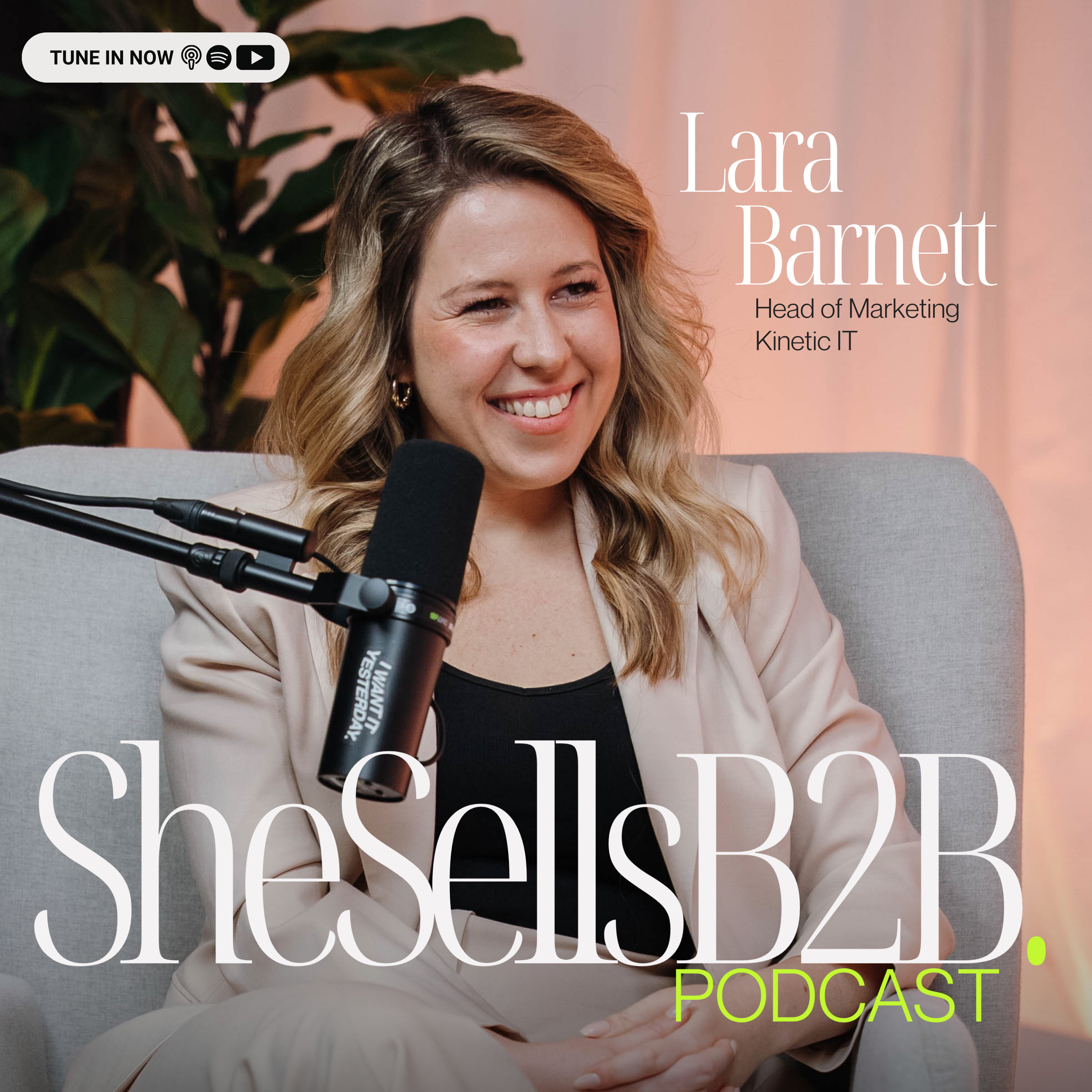 How to Lead When You're the Only Woman in the Room | Lara Barnett of Kinetic IT EP 0568 / 100