
The Trades Podcast · 2026-04-23 · 51 min
Key moments - from our scoring
Substance score
31 / 100
Five dimensions, 20 points each
Danny and Jeff continue their deep dive into 2026 Bureau of Labor Statistics employment projections, moving beyond part one's big three trades (HVAC, plumbing, electricians) to examine welders, carpenters, construction laborers, heavy equipment operators, and industrial machinery mechanics. The episode emphasizes job security and career longevity across these trades - AI and robotics won't replace them - while highlighting concrete pay data: welders earn a median $48,940 annually with 2% growth; carpenters median $56,000 with 4% growth and 76,500 annual openings; construction laborers at $51,000 with 151,400 openings yearly as entry points. The hosts connect macro trends (military shipbuilding, oil industry expansion, AI data center infrastructure) to trade demand, and explore how BlackRock's $100 million investment in skilled trades training signals private capital recognizing infrastructure needs. Critical insights include California's workman's comp system driving wages above median rates, construction labor as a rapid stepping stone rather than decade-long career, and the progression from laborer to equipment operator to industrial machinery mechanic. Essential listening for career counselors, vocational educators, construction company owners, and young adults evaluating post-secondary paths.
The median pay for welders is $48,940 per year nationally, with entry-level positions starting near $45,800 annually and 2% projected growth.
California's workman's comp system charges higher premiums for apprentices, making it economically cheaper for employers to pay experienced carpenters journeyman-level wages ($100,000+) than pay the higher comp insurance, while also improving employee retention and satisfaction.
There are 151,400 construction laborer openings per year. Most workers use this entry point briefly before transitioning to specialized trades like equipment operation or apprenticeships, rarely staying in the role for a full decade.
Heavy equipment operators run machines like bobcats and cranes on job sites, while industrial machinery mechanics maintain and repair the motors, hydraulics, conveyors, and electronic systems within manufacturing plants.
BlackRock recognizes that AI and data center expansion require massive infrastructure buildout - warehouses, electrical systems, and construction projects - creating sustained demand for skilled trade workers that directly impacts their portfolio companies' profitability.
Our reviewer’s read on each dimension, with quotes from the episode.
The episode does cycle through real BLS statistics trade by trade, and the California workman's comp wage-structure insight is genuinely useful. However, the bulk of airtime is filler affirmations, repeated restating of numbers, and obvious observations, keeping actual insight-per-minute low.
the workman's comp system in California is based on whether you're an apprentice or A journeyman...it's easier to pay them or cheaper to pay them a journeyman wage to lower your workman's comp cost substantially
BlackRock's invested $100 million into skill trades training out there
The episode leans heavily on the omnipresent 'trades good, college debt bad' narrative with virtually no contrarian or first-principles framing. The workman's comp angle is a rare moment of non-obvious thinking, but the rest recycles widely circulated talking points about AI not replacing trades and baby boomer retirement gaps.
Robotics is not replacing it. We'll adapt. They'll have some integration in there, but they're not going away.
if you're unsure of what you want to do and you love working with your hands, you like being outside...jumping into the trades without a trade school
There are no actual guests - two co-hosts discuss BLS data they read online. Jeff has some tangential restoration-company background and a Simpson Strong-Tie plant visit, but neither host demonstrates deep practitioner expertise, and their sourcing is explicitly partial ('I only read part of the articles').
I only read part of the articles when it came out last month on um, fortune, uh, dot com
great honor for you and me to be on the podcast and talk about opportunities
Concrete BLS figures are cited throughout - median wages, growth percentages, and annual job-opening counts for seven trades - giving the episode a real data backbone. However, several numbers are hedged or approximated, sourcing beyond BLS is thin, and broader claims (oil industry 'best it's ever done') go completely unsupported.
elevator, escalator installers, repair mechanics...you're looking at $99,000 per year...6% growth...2,400 job openings per year
the median pay...was $48,940 a year...there's been a 2% growth...openings...You're starting at $45,800 per year
The host occasionally attempts a genuine follow-up ('Why would you say that's the case, Jeff?') but the vast majority of exchanges are affirmation loops with no pushback on sweeping or unsubstantiated claims. Questions are largely leading and predictable, and the conversation meanders without productive tension.
Why would you say that's the case, Jeff? I mean is that just demand? Is that the quality of work?
Yeah, yeah, absolutely. Yeah. Those are those opportunities that people should pay uh, attention to
Computed from the transcript - who did the talking, and the words that came up most.
In this episode, Jeff and Danny explore current workforce data and projections from the U.S. Bureau of Labor Statistics (BLS) , focusing on the growing demand for skilled trades professionals across the United States. They discuss how industries like construction, energy, and infrastructure are creating increased demand for roles such as welders, carpenters, electricians, plumbers, and HVAC technicians. The conversation also highlights newer opportunities connected to renewable energy systems, electrification, and AI-driven infrastructure development . The hosts break down median wage insights, job security trends, and long-term employment projections, showing why trades careers continue to outperform expectations in stability and earning potential. They also emphasize the importance of awareness, mentorship, and training programs to help close the gap between open positions and available skilled workers.
Transcribed and scored by The B2B Podcast Index.
Danny: Welcome to the Trades Podcast, a podcast about the business of home improvement and promoting the trades to young adults. Check it out right here. This is the Trades Podcast. I'm Danny.
Jeff: And um, I'm Jeff.
Danny: We're excited to one get you some more information. This is part two of the Bureau labor and Statistics podcast show. Right here at the Trades Podcast, we're going to dive into one some of the new findings, the statistics, the numbers, and obviously the demand that's out there for the trades. We're excited to learn more about some of these professions that one the country's looking for. Um, and really if anything, it might be even across the globe for some of these jobs that are needed around for high developing countries just like ours in the U.S. so we're excited, right Jeff?
Jeff: Absolutely. I gotta tell you, this show's pretty, uh, meaningful to me. And if you watch some of the nudes and the geopolitics and stuff, uh, the world's changing very quickly and the need for trades, that boat is, um, a huge boat, tough to turn. But we see the turn happening and there's a lot, a lot, a lot of opportunity out there for somebody getting into the trades. So.
Danny: Yeah, for sure. Yeah, for sure. I mean, so again, this is part two. If you caught the part one, be sure to share it with everybody or just, you know, skip this one and go back and listen to the first one. Because it all ties into exactly what we're going to talk, talk about today. Because we got through at least three of those big topics of, uh, what was listed on the Bureau of Labor Statistics website and their findings and reports that they put out for 2026. Last time we left off with H Vac. You want to give a little wrap up? Uh, well, we talked about three things. We talked about H Vac, plumbers, pipe fitters, steam fitters and electricians. Those were the top three that we found and that we wanted to share out there in the first one. But Jeff, you want to give like a little kind of uh, wrap up around, you know, those three, those big three, uh, professions.
Jeff: Well, they're definitely, uh, stable trades that are not going away. Um, if you're jumping out of high, uh, school into working for a construction company on one of those trades, you can follow that trade for the rest of your working career is not going away. AI is not replacing it. Robotics is not replacing it. We'll adapt. They'll have some integration in there, but they're not going away.
Danny: Yeah, yeah, that's, that's a, that's a Key piece that I think a lot of people do look, uh, when they are looking into a profession, you'd hope so. Uh, but if you're not, you know, job security is a huge thing that you might have heard or haven't heard. But job security is going to make sure that that profession like, like Jeff said, it's not going to go away. So yeah, I mean I think this is another one. You know. Moving on to the next topics of, of um, of the, of what we found. But welders. Welders was a big one. Welders. Shout out to all the welders out there if you're listening. Uh, this one's for you and or aspiring welders. Um, we found that the median pay um, that was put out there was $48,940 a year. Again what. This is just the medium pay coming across the full.
Jeff: The whole country.
Danny: The whole country. And uh, um, there's been a 2% growth. Now there's uh, openings that you can start out almost close to your medium pay openings. You're starting at $45,800 per year. You know and again that's, you're looking at you know, certain areas of the country could be less, could be more. But what does that number tell you Jeff?
Jeff: Well, I think it's um, hard to define some of the real opportunities behind that. I mean look at our military right now, what's happening um, in the Middle east and our uh, military budget just building submarines right now that are welded. There's some robotics built into that but a lot of that is guys on the scaffolding with ah, arc welders, stick welding, um, thick sheets of ah, steel together. Um, that, that's huge industry right now, shipbuilding and stuff and uh, bring it, bringing back the shipbuilding industry to America. Um, and there's huge opportunities for growth um from the bottom floor up into management on that and welding. Um, the oil industry in America right now is off the hook. Best it's ever done exporting oil. That's thousands and thousands of jobs out in the oil fields running pipe densing units. I mean there's a whole. I wish I knew more about that field. I find uh, uh, driving through the Texas area a few times, seeing the oil rig stuff out there. It's huge, absolutely huge. That massive amount of uh, temporary housing out there.
Danny: We want to thank our sponsor, Superior flooring. Cabinet Designs is one of the landmark family owned businesses in Encinitas. Owner Cheryl Robertson, with years of customer experience managing her family's hardware and cabinet Business in North Park. Sheryl Robertson and the Superior team dive deep to learn about your project and help you find the perfect solution for your flooring and cabinetry needs. Call today at, uh, 760-436-0900 or visit www.superiorfloors.com. yeah, I mean talk about some of the headquarters out here in, you know, San Diego. You have big companies like Nasco, um, that are a huge branch of, you know, uh, in need of, you know, one all of those topics of uh, professions that we talked about in the first episode for the bls. But now you're talking about, you know, like you said, the shipyards. You're out there, you know, welders, you got pipe fitters, you got H Vac that's going into all those systems, um, even engineers that kind of fall into that category for everybody as well. If you're in that space to uh, um, and, and in that education realm where you know, the, the engineering part and putting together these plans for the pipe fitters for the uh, uh, welders to be in there and do their jobs correctly, you know, and again, bringing back some of that geopolitics, uh, uh, certain things that are happening in the world, there's a demand for it.
Jeff: Absolutely. I was talking with a fellow just a few weeks ago and he was talking about how he really enjoyed his um, first decade in the field, uh, using his hands, building stuff. And he's seen a, um, an opportunity to move into as being a safety officer. Um, so he took his um, experience working in the field and applied that to safety. Took a few uh, night courses, transitioned, made a little bit more money, a lot more freedom, not as hard on the body. There's all kinds of career paths once you've got your basics down, you know, your core, your core skills.
Danny: Yeah, yeah, yeah, for sure. Welders again. Yeah, the, the medium pay, $48,940. Um, so that, that's a good number. I mean, you know, you ask anybody out there, um, you know, for opening pay again it's 45, 000, so closer to 46. But you know, when you start out at that number, it's definitely a tremendous uh, uh, um, help for, you know, your way of life and you know, cost of living, I'm sure throughout the country.
Jeff: Absolutely. Right now one of my notes I was reading, I only read part of the articles when it came out last month on um, fortune, uh, dot com, uh, 11th blackrock's invested $100 million into skill trades training out there. Yeah, that's a private company dropping a, you know, they're, they're absolutely a huge, huge Corporation. But 100 million is not a drop in the bucket either.
Danny: No, no, absolutely not. No. I'm sure everybody out there, you may have heard of the um, I think they're just a big company, BlackRock Hedge Fund Company. But they have big investments through Meta, Microsoft and something that we've touched on through the podcast, which is the AI craze, you know, artificial intelligence. But you got to understand you can open up an app us as consumers. But imagine on the back end, where is all this data going to be held? There's centers, there's huge warehouses that need to be built for these companies in order to operate their AI intelligence, uh, to be able to hold, store and send data. So that's definitely a piece where uh, BlackRock had invested definitely on that skilled trade workers. Why? Because they see the demand of infrastructure needed for their business to grow, their profits to grow, et cetera, et cetera, you know, so it's, it's a big thing. You know, when you have big companies like this, like BlackRock, um, to invest in in areas like this, it's definitely a place to look and understand. Don't just shy away from it. I know there's a lot of things maybe behind of what, what certain companies do and how they invest and use their money, but this is a piece where if you're in the trades and you see this as an opportunity, please don't, don't, don't shy away from it. And you see this as an opportunity for you to advance yourself in your career. Uh, these are important things to look at.
Jeff: Absolutely. What about carpenters, Danny? Carpenters is medium, uh, pay there, says 56,000 a year. But I gotta tell you, I know of a lot of companies in the San Diego, Southern California region simply based on the workman's comp system that's out there.
Danny: Mhm.
Jeff: There's a lot of carpenters out there making 100,000 a year right now, building decks, rebuilding balconies, framing houses, anything the carpentry wise. On a legitimate company that's paying a workman's comp. They're pretty much. That's the minimum rate right there. Otherwise you pay higher for the workman's comp.
Danny: Why would you say that's the case, Jeff? I mean is that just demand? Is that the quality of work? What do you think?
Jeff: Um, the workman's comp system in California is based on whether you're an apprentice or A journeyman. If you're an apprentice, you're more likely in their view to have an accident. So therefore you pay a higher premium for somebody that's making a lower wage as an employer. The math works out that if you've got a guy that's almost at that skill level of a uh, journeyman, it's easier to pay them or cheaper to pay them a journeyman wage to lower your workman's comp cost substantially so that you're making your employee happier. They're making really good money, a lot more loyalty. But the benefits and everything, when you put, look at the whole payroll package by paying them the higher wage, the workman's comp is a huge uh, percentage of that total package number. And it's worthwhile to pay the extra wage as opposed to the extra workman's comp wage for an apprentice.
Danny: Mhm. Yeah. And let's talk about kind of like the, the levels to carpentry because I know you've dipped into that through your restoration, uh, company, um, a little bit as well. I mean what, what, what levels are there for carpenters out there and where does someone, you know, I guess necessarily start?
Jeff: All right, now from what I'm seeing, you can come into a, a uh, company as a journeyman, really, you know, give a good uh, presentation in your interview. I worked with my dad, we built a couple decks. I took the high uh, school carpentry, uh, class I got, you know, and built a box in wood shop or something type thing. Just give a good presentation on an interview and start at 20 bucks an hour right now in California.
Danny: Yeah, yeah. And that, and like you mentioned, it's given all the levels of the uh, workers comp, your journeyman level. Um, that's obviously where it gradually will build up.
Jeff: That's not union work, that's private companies working on uh, homes or small uh, businesses, things like that, apartments or condo complexes. You don't need certifications to work for a private company like that doing private uh, construction work, you get into public works, there's a lot more rules, the unions are involved, things like that. But sure, uh, yeah, you come in, you got show up to work every day, you invest in your own tools. You know, doesn't have to be the top of the line tools. I've met many guys that are happy with some lower grade tools and they last almost as long and you know, but you keep extending your uh, tools and your capabilities. You can work your way up the ladder real quickly and it's.
Danny: Yeah, yeah. And Imagine, you know, just compare this to the growth percentage, you know, between welders to carpenters. Uh, well, welders was at 2% and carpentry is at 4%. So the demand is growing. And you know, the, the actual openings per year of the job, job openings are 76,500 per year. Those are the openings that are popping ah, up. So um, you know, if like Jeff said, if you have that experience just even working with family, you know that it was a wood shop class at school, this is, this is something that you can take that skill, move it on to uh, ah, to a, to a company, get it, land a solid, uh, interview and like you said, a great presentation and let them know that you can jump on the job, ready to work and you know, be of use and be of, be of help. So uh, that's a big thing. So I mean, you know, from your house shortages, your remodel booms, uh, decade deck and outdoor buildings, your forms, builders, highway bridges, storm rebuilds, um, I think we have been able to see it just throughout the past, you know, handful of years of uh, you know, tragic incidents that are happening just from mother nature that, you know, we really don't have any control of. But what happens after those tragic incidents, we have to rebuild and, and help people around the community. And that's definitely where carpentry, I think falls in a big piece to it. So uh, it's something to think about, something to definitely keep uh, in mind on that part. For sure.
Jeff: Absolutely. And um, construction labor says got the same percentage of growth, so it's 4%. Uh, okay, yeah, 51,000. And this too is kind of deceiving in the sense of what is a construction laborer? What do they do?
Danny: Right.
Jeff: Are you picking up the scraps, keeping the job site clean, or you helping dig the forms and watching the carpenters, um, do the forming. And you're picking up skills through an osmosis of just being on site, um, doing the forms for a concrete slab, prepping for the concrete pour. There's all kinds of construction labor positions out there that I think are undervalued in the sense of it does take skill you do. You can learn those skills very rapidly without going to school or trade school and get paid, uh, you know, decent little wage to start off, you know.
Danny: Yeah, yeah. I mean, uh, people, people say, you know, construction laboring, you know, the, the physical demand that's, that's definitely comes behind it. People can be shied away from. But as uh, if you, as you do you, if you listen to the podcast, you'll definitely hear from specific companies that do handle heavy machinery, that handle uh, um, big, high risk areas, which a lot of construction just may be, especially if you're in the electric area, you're in heavy, ah, machinery, you're in, um, you know, heavy machine operators. That's a big thing too. So safety has absolutely been something uh, that has absolutely improved through the construction trade. So the physical demand, yes, you may be expected to lift some heavy items, but now there's tools to make those jobs just a little easier. And companies are definitely adopting those practices to make sure you understand when you come into a construction entry level, a position, you're going to be taken care of. And um, that's something that you can definitely count on when you do start thinking about moving into the construction piece. So yeah, and like you said Jeff, it could definitely be any type of job on the construction labor side. Um, but I mean just look at the number of openings. Uh, I think this is definitely a stepping stone that, you know, bureau labels, labor statistics really want people to pay attention to is that, you know, these are entry points into the trades. And I think we've talked about it before. Um, what does that look like for someone, you know, starting as a construction laborer and then moving on to maybe a very specific area of the job? What, what are the opportunities as, as an entry point and moving on from there? Jeff.
Jeff: All right, you just. So I was in Vegas, uh, last, last fall, hanging out on the balcony, watching the construction site next door. And there's a couple bobcats and a couple skip loaders moving dirt around and uh, prepping stuff. But there's also guys out there with a flat nose shovel cleaning up the edges and stuff. And I actually watched a couple of the guys like, uh, the guy with the shovels, uh, hey, like flagged them down and they switched positions, you know, like trying to give the guy with a shovel the opportunity to learn how to use the little bobcat there. You know, it's you, you get on a job site, you pick up the other skills very quickly. Opportunity presents itself, you know, some basic, uh, um, work ethics, showing up on time. You, um, know that construction labor field I think is so hard to define because it is such a quick stepping stone. Uh, not too many people are going to spend a decade as a construction laborer. It's a stepping stone really quick. So there's a lot of transition in that area.
Danny: Yeah. And I think that's why we see the number of openings per year for these positions, you know, 151,400, you know, openings per year. So, you know, what does that tell you? Uh, uh, um, from, from a different industry terms. Imagine this is your entry point into the workspace on um, ah, in fast food. You know, this is just a transition job to kind of get neck to the next level and uh, take your experience, go to school, get, go to your apprenticeship, get some education, and then you can advance a little bit quicker. So this, this is for that reason why you see growth and yeah, it grew 4%. It's interesting, you know, but imagine it was. That number was high last year. Just as much it is at this year for openings. So yeah, construction labors. You know, this is a key thing. Again, this is coming from the Bureau labor statistics of the U.S. so, um, you know, definitely something to keep in mind for anybody out there just looking to get an entry point into the construction trade. So um, and just like we mentioned, uh, um, like you mentioned, Jeff, uh, the bobcats out there, that's heavy equipment that needs to be on most job sites that are, uh, that are out there for construction, whether it's you're building a home, whether you're building, um, you know, a big old skyscraper building, at some point there is going to be a heavy, heavy equipment operators on, on set.
Jeff: 100%. Yeah. You do not build a high rise without moving some dirt.
Danny: Yeah.
Jeff: Without moving some, uh, um, you know, building materials, you know, through whatever methods appropriate. Yeah. Same, uh, with the road. Same with, you know, even your basic house. You got to dig a trench, you know, for the footings for the house in most cases, or pouring a slab. You know, you're digging, you know, you're prepping the road, you're digging pipes coming in for the water lines, sewage lines, electrical lines coming in. Most housing developments right now, I'd be hard pressed to say that anybody's doing telephone poles anymore.
Danny: Right?
Jeff: Yeah, yeah. And just uh, put that into the electrical grid, you know, um, prepping, uh, for expanding the grid and increasing the capacity of the wires for the telephone poles along the freeway. There's all kinds of stuff going on that and now people don't really think about is that's a job opportunity. I get to travel.
Danny: Yeah, yeah, yeah, absolutely. Yeah. Those are those opportunities that people should pay uh, attention to, you know, especially on, you know, even just the medium pay. You're at $52,460 a year, and these openings are a little bit slimmer than the other at ones, but they're at 45,003, uh, 45,300 openings per year. You know, you're. We just got done speaking with uh, Amanda Long. Amanda Long, she uh, she handles the, the sector for ah, for heavy machine operating and the program and she had a lot of experience all throughout her life. Um, to understand that the transition between you know, the safety and the equipment, the technology, the opportunities, the advancement that's out there for heavy equipment operators is important and it's needed, it's absolutely needed. So it's, it's a big thing that I think a lot of people can look into. And, and like you mentioned Jeff, I mean, do you think how long can someone really be a heavy equipment operator for?
Jeff: I think if, if you have some basic, um, take care of yourself m routines in life, you know, um, the physically demanding part of the heavy equipment, you can do it a whole 40 year career if you really wanted to.
Danny: Yeah, that's a key thing to look into and, and think about, you know, versus again, you know, whether you are starting out as just a laborer but then you do want to dive into your heavy equipment operations. Uh, what would you think that transition of time would be for someone, Jeff?
Jeff: I think it depends on the company and the operation you're working with. And if you're coming into a large company that um, you actually start off as a labor cleaning up around the job site, but you put in the effort to talk with the management, uh, your boss, whatever, and you can get in the extra schooling at night to be a heavy equipment operator. You know, it's not just like one school you start off with, you know, how do I prep a load for the crane to pick it up properly? You're not actually running the crane, you're just prepping the load, strapping the things that make it safe. So it is going to pick up properly without sliding off the end and killing people or dropping on the, you know, expensive materials on the ground. Now there's all kinds of career paths just transitioning in a big operation like that.
Danny: Yeah, yeah, yeah. And I mean that kind of falls into the. The following one that us uh, Bureau of Labor Statistics came up with and found, which was your industrial machinery mechanics. What, what's the difference between your heavy equipment operator to industrial machinery mechanics?
Jeff: Well, you come into um, a manufacturing plant that has high overhead cranes. You know, that's some of the crane work that you know is under the crane operators things. But there's also the electric motors that run them. There's pumps for um, running hydraulics. We've done a tour Of a, uh, uh, Simpson strong tie in Texas once. You and me did a while last year, I believe. And the machinery for just stamping the materials in there was huge, actually. You know, I never seen nothing like it. You know, the. They started on one end of the building with the big heavy stuff and worked their way down to the small little corner, uh, straps that they had for Simpson strong tie. And there was a massive amount of machinery. Some of it was, uh, automated for not so much. Uh, the stamping part was automated, but in the conveyor belts were automated, but there was a person running the machine on every one of those places. And then we went in the back and the dies that they used to be able to change the stamping layout for different things. That was a huge, uh, uh, shot back there. Um, anything that gets stuck on the conveyor belt system, somebody needs to be able to fix that. Um, the electronics, um, the motors and stuff to be able to run all that stuff. There's all kinds of things that happen in manufacturing. That was just one plant we've seen. I'm sure there's stuff out there that, you know, would blow our minds if, uh, we ever had the chance to walk through them. Yeah, yeah.
Danny: I mean, if you're, uh, an, uh, industrial machinery mechanic, please, please give us a call. Please, please reach out to us. We'd love to dive into that a little bit more because, I mean, the numbers don't lie. The medium pays at $61,170 a year. And this is definitely, definitely something to pay attention to. And this goes on both spectrums. Someone that's already interested in mechanics and, you know, repairs and fixing and maintaining, um, the. But even on the other side, where if you are on your way out, almost on your path to retire, the growth percentage in this area is at 15%. And you know, as you. As you heard, we had 2%, we had 4%. This is almost triple, triple the percentage of growth. So this is much faster than the average growth that's needed within the industry, uh, for. For machinery mechanics. And those job openings are close to the 49, 50,000, uh, per year that are opening. Definitely something on both spectrums for someone that's interested in this space, but also exiting like for a quick moment, Jeff, who would you. How would you speak to the people that are almost heading out, retiring? What do you think opportunities are out there for them, seeing these numbers and the growth that's happening within?
Jeff: Well, to be able to fill those positions, we need to train people to be able to do them so if you've got the knowledge, um, definitely find a way to give back. Be a part time teacher at a trade school of whatever industry you're in, um, make a little extra money, um, you're giving back. You're still involved with the associations probably that you um, have put a lifetime into making friends and acquaintances with um, mentors, you know, be a mentor to somebody else. Um also in the industrial machinery mechanics thing, I want to bring up the point we're trying to build out ah, AI data centers in America to be the leader in this country. The world with AI and AI produces the computers produce a lot of heat so there's a lot of need for cooling system. One of the ways they're doing that is through water and evaporation. So there's a lot of H Vac going on to be able to cool down buildings on a massive size. Um, so not only do you have H Vac but you have the piping systems, the mechanics to make the water flow, you know, big electrical, uh, um, driven pumps, all kinds of opportunities that weren't here 10 years ago and just that area.
Danny: Yeah. And yeah, with new technology comes new practices, comes uh, uh, new reasons to advance what's already here and what's already items that you're working on. Um, I think there's opportunity just on uh, new technology advancements within the H Vac to help these companies find those solutions to what Jeff had just mentioned to cool these places that are massive. And when we went to that machinery, um, uh, the headquarters out there in Texas for Simpson, strong tie. It was massive, massive, massive. And those machines don't need cooling, they just need, need more oil. Yeah, they were working them and it was a non, they said it. Some facilities are 24 hours. So imagine a 24 hour data center just constantly blowing hot air and need all those mechanics and those electronics to be cooled down. It's a lot of work. It's a lot of, it's a lot of uh, demand and um, power, power that's needed to, to keep these places uh, running uh, if this, if these are the technologies that we're going to continue to use as a society.
Jeff: So yeah, absolutely. I mean I don't know crap about nuclear power but they're talking about uh, many reactors to power some of these places. So yeah, there's some high end skills to design and build those but there's also a lot of infrastructure uh, it's going to take to keep those things working also. Huge opportunities out there.
Danny: Yep. Oh you know that huge opportunities and kind of something that um, you know, it's a little bit niche in another area as we move on to this next one. But it's, it's. We were talking about it earlier. When you build your skyscrapers, when you're building malls, when you're building, you know, multi story, uh, um, residential buildings, uh, somehow instead of stairs, how are you going to get up to those areas? You know, you got to, those are elevators, those are escalators. And you know, God forbid you were in an escalator, an elevator, and it just turns off or it gets stuck. And, and who are you going to call? You got to call some installers, you got to call some repair, you got to call uh, mechanics, you got to call people that are specialized in this area. And you know, Jeff, being here in San Diego, um, we can absolutely see, you know, plenty of H Vac, plenty of plumbing companies and trucks out there. But it's rare that I see a specific elevator or escalator repairman, truck, uh, out there. So would you say this is like a niche, um, area?
Jeff: It is in the sense of um, they're not as visible a lot of times. But I tell you, I've done some traveling and there have been a lot of hotels in there that you know, seems like one out of three or complaining about the elevator clunking up, clucking up and down, taking too long, out of order. Well that's, that's a field that ah, specialized in um, being able to fix those, make them, uh, install them. You know, the technology that, that's behind that is something I'm not too familiar with. But um, it's, it's not going away. As we build more and more high rises, that's more and more elevators, uh, that um, need to be built. And um, the old ones, you just keep fixing them are huge retrofits.
Danny: Yeah, yeah. I mean. But uh, so when, when we were digging into this, um, you know, I, for me at my age, I'm always looking at like, okay, well what's the number? What, like if I jumped into, if I told someone, hey, um, look into this a little bit more. This is definitely one where it's, it's a very specialized area. So I imagine there's going to be different levels on how you get to this, uh, to these positions, but the median pay, median pay throughout the whole country for elevator, escalator installers, repair mechanics, etc, you're looking at $99,000 per year. 99,000 plus per year. Um, so that's, that's, that's almost close to a hundred thousand dollars across the whole country per year that you'd be looking for as an elevator escalator installer. And that's a 6% growth since the last uh, uh, BLS report came out. And uh, since it is a lower in demand trade, there's at least 2,400 job openings per year. That's when I hear that, that just economics of jobs. You're looking at your demand and your supply, your supply and demand. You know, there's a low supply of installers, but the demand is pretty high. Uh, with the 6% growth and the demand of trying to get that pay of $99,000 per year just to start, that's a great number to look at and say if I have some skill or some knowledge in this area, it could be a pivot, it could be an idea, an add on uh, a um, service that can absolutely be included in on a lot of what it is that you're doing already.
Jeff: Absolutely. And you go to the airport or some of the big malls and you see those escalators out there when they uh, do a retrofit on those, you know, you're there for you know, a couple weeks I imagine, and there's probably an opportunity for travel or that's one of the reasons it pays longer, it pays more. You have multiple skills with the electronics, the mechanics that are in there. Um, and you're, you have to travel a little bit to handle these bigger projects.
Danny: Yeah, yeah, it's, it's, and it's a big uh, uh, again, almost anywhere you might go or walk, um, you know, around in big buildings, you're going to end up running into a escalator or um, or elevator, you know, unless you really like the stairs. So thank you to all those uh, big sky high rises, skilled laborers that are out there building those stairs. But most likely like, if you're like me, you'll probably be taking the stairs or an escalator or excuse me, the, the elevator escalator. That's cool. So I've again high pay, high specialized, you know, limited apprenticeship slots. So uh, if you're serious about that area, um, it's definitely going to be fulfilling and most likely be exactly what uh, what you'd be looking for, uh, to cover for cover your uh, your cost of living around the country. So love it. So, I mean we're, we're, we're coming up on towards the last few here. But let, let's talk about something that we've heard maybe in the past Like Jeff, you know about a lot of the homes a little bit more, but solar. Tell us a little bit about solar and when you first heard about solar.
Jeff: Um, well I, I think one of the, the key points on solar is uh, we have lots of it um, depending on the area of the country you live in. So um, in Southern California, uh, some of the desert states where you get a lot of sunshine, um, you can drive down the freeway and see massive, massive fields of solar panels out there. Um, building those, huge investment maintaining them. Um, not as lot as much but they do have mechanical problems with the uh, um, electric motors making them change the angles to hit the sun or follow the sun during the day. Um, but it's not going away. And I think personally, I mean I like space. We just had the Artemis 2 thing going on. Um, this solar panel system is going to, it's already in space. But the opportunity here, getting into it now, um, I think is huge. So the 22% growth they're talking about here, um, I think that's going to continue to just keep growing as our vision, as humans grows, our vision to enter space. Uh, the data centers use huge amounts of uh, electricity converting solar energy into some um, of that um, power to run data centers that are, they're building data centers that take more electricity in the small towns that they're putting them by. That's why they're building their own energy producing things. This is just uh, it's uh, a growing field that I don't think is going to go away for a long, long time.
Danny: Yeah, yeah, yeah. There's, I mean just the um, I mean the demand is out there. Um, just like we, we read it earlier with the much faster than average growth within, you know, your, your, your trades like we were talking earlier, which was the industrial machinery mechanic, this solar installers are at 22% growth. 22%. So I uh, I'm not too sure exactly what it was last year, but this growth between 22% is much faster than any average of any of these topics that we talked about or the positions and, and opportunities out there. And the median Pay is at $48,800 per year. The openings at 4,100 per year definitely kind of not as uh, um, of a bigger space that you can jump into. But it is needed. And like you mentioned Jeff, just to certain areas of the country that do get more solar or more sun than, than other areas of the country, I imagine those demands may just be a little bit higher. So you know, absolutely.
Jeff: It's A lot more regional as far as the uses of it. I mean you got clouds in the northern part of the country a lot more than you do in the southern part of the country. But. And you go from houses to uh, businesses putting it on the parking lots out here. And uh, California all have these massive carports that are solar driven.
Danny: Yes. Yeah, that's right. Yes. Almost every school that I've seen, um, had transitioned into a, ah, um, a solar parking lot where you know, their shade is all solar on top. And um, hopefully like you mentioned or that, that we took notes on, is that there's, there's federal incentives to have solar, um, you know, because of the transitions and because of the talk about different ways to collect energy and uh, for fossil fuels in that sense, you know. So the green economy trades is growing and like you said, Jeff, I don't see it going anywhere.
Jeff: Well, we survive on solar. We have to have it as humans to be able to uh, capitalize on it to produce energy. Um, that is not going to go away.
Danny: Absolutely.
Jeff: The politics behind it, that's a whole other subject. But um, the opportunity to be in that field and grow. Absolutely there.
Danny: Sure. Yeah, absolutely.
Jeff: I think anybody that had a desire to go into space in the next couple decades, there will be opportunities for workers to install stuff on the moon or Mars. You know, just, um, ask Elon.
Danny: Right. Send him a quick email, you know, Elon will tell you exactly what he's got planned.
Jeff: Absolutely. That's the visionary man.
Danny: Yeah. Again, you know, pay attention to these things. These are things to keep aware of. Um, you know, one, you know, you're living in the US and you're, you're in a field that you can take a lot of your skill, um, to different professions within the same trades of construction or skilled labor. And uh, uh, the solar piece is one thing, but again, you know, to recap, we talked about solar, we talked about elevator escalator installers, industrial machinery mechanics, heavy equipment operators, construction laborers, carpenters, welders. And that was just for today. The first one that we really covered, you know, on the first episode. Again, go back, listen to that one if you haven't already. Um, it's the uh, Bureau of Labor Statistics, BLS Part one. Um, we talked about electricians, plumbers, pipe fitters, steam fitters and H vac technicians. And again, average growth that I've seen through all these numbers are going to be around the 4 to 5%, you know, from, you know, and then you have your outliers that are definitely on the Higher demand which would be in your uh, solar, your machinery, uh, mechanics and even on the top part for H Vac, H Vac is definitely growing, uh, for everybody as well. But, but again Jeff, I mean what would you take away? Um, you know what the real issue that you might see from, from all the numbers that it came out and what we talked about through these past these, these two episodes.
Jeff: Well, I think one, one of the points we can look at is the trades are definitely growing. You have a baby boomer, um, uh, retiring out of the trades. Definitely find a way to give back and teach. Um, that's one of the ways we are going to help the next generation get into the trades. But also if you're thinking about what do I do? Go to college or um, get into the trades. If you're college bound and you have a very clear path and a, ah, outcome, uh, defined what you want, what you're going to do, what the job market is on, what you're going to college for. You know, we need doctors, we need scientists. I'm not bagging on college, but what I am talking about is if you're unsure of what you want to do and you love working with your hands, you like being outside. No, um, jumping into the trades without a trade school or going to a short trade school to learn a skill, to jump into it with a small investment, um, the four year path, how much in debt are you going to be as opposed to jumping into the trades right away? And what can you do, you know, if you jump in on the uh, company's retirement plan, you know, the cash flow, you know, be able to buy that pickup truck or you know, enjoy your hobbies and have some fun in their early 20s before, before the family comes on, you know, there's just a huge m difference in the financial outcome, um, that you can control. Jumping into the trades.
Danny: Yeah, yeah, absolutely. So that um, that, that, that spoke to a lot of the people that you know, are, are thinking about it now. Can you comment what you would tell business owners to think about when they hear these numbers?
Jeff: Well, I think we've talked about this a few times, Danny. The sense that uh, if you're a business owner, you, you want to, you know, have your accounting and such that you're, your instinct is I don't want to pay any more than I have to. But if you take care of the people that work for you, create a good culture, keep them there, you know, have some loyalty because you're loyal to them, um, that's great. You're going to have people that are going to work for you for a few years and decide they can do a better job and want to move on and give it a try. You know what, that's the American way. But wouldn't you rather have an employee that you've helped train, you've helped grow, work uh, for you for a while and then move on? Then an employee that you haven't put any effort into is constantly making mistakes, but he won't quit. You know, costs you money, costs the company money. You know, lower some morale with the other people that are working there, uh, put the effort into helping people grow and be successful. Mhm.
Danny: Yeah, yeah, absolutely. And this is where, you know, we've definitely uh, also uh, spoken with other guests where they have programs, they have ways to implement this into your company to advance people at a faster pace. You know, whether it's training, whether it's safety, um, and those opportunities are out there to collaborate with new companies that are looking to help you as a business owner to retain and advance your employees as long as you have them there for you. As Jeff said, the culture, the morale, the camaraderie within the company, that's important. But the things in the back end, if you don't have those in place for yourself, one to maybe step off and take, take a little time to, to work on the, on the business and let your employees grow within, um, that's something to pay attention to, especially when I hear these numbers, uh, you know, the growth is there, this 2, 22% growth. If you're already in solar and installing at 22%, absolutely, I think would fall under your actual company. You see a 22% growth in your company, um, is possible because of what these numbers are coming out to. So take advantage of these numbers that you're reading, uh, act on them. And I think that's something that, you know, our call to action for everybody is, you know, if electricians, you know, alone need 80,000 plus workers per year, H vac needs 40,000 plus per year, construction labor needs 150,000 plus per year, um, we're talking about hundreds of thousands of skilled workers annually. You know, these are careers paying from 50,000 to 100K. And this is again, uh, we're not bagging on your college and your pursue for other professions in the workforce, but this is without a four year degree. You know, again, this is, you know, where you're going to get paid to go get trained to do these jobs. Generally, you know, nine times out of ten you're going to get paid to, to learn how to do these jobs. So um, this. Any uh, closing thoughts, Jeff?
Jeff: No. I think it's been a ah, great honor for you and me to be on the podcast and talk about opportunities and you know, hopefully make some uh, uh, changes in the world out there doing a little bit of part and you know, definitely enjoy uh, sitting down and talking reality. Uh, on the trade.
Danny: Yeah, yeah. Again this is uh, this is a trades podcast and we speak to business owners, we speak to anybody that's looking to get into construction trades. This is definitely for uh, uh, your, your people in the, in the office to learn about culture, morale, uh, how to build systems and processes, your KPIs. So um, if this is something that you feel hit you and your company, your boss, your coworker, share it with them, talk to them about these topics, ask them what they think and then come back, uh, go ahead and send us an email, hit us up on Instagram, YouTube, all the platforms that we have to uh, to listen to the show. It's important. It's numbers that are true. Numbers don't lie. Uh, so again go look into it yourself. Um, it's the Bureau of Labor statistics findings of 2026. You can look into it and just a simple Google you'll find some information that may be useful to you and, or reach out to us. We'll uh, we'll be glad to um, either have you on the show and talk about it, some of these specific topics or just ah, comment on what you uh, what you like today.
Jeff: So look forward to a honest debate if needed.
Danny: Exactly. Yeah, we're, we're always up for that. Um, you know, I think it's ah, a, it's a healthy way to um, to one break down barriers for everybody to understand a little bit more about what's happening in the country when it comes down to skilled labor workers and uh, in construction trades. So, so awesome. Thank you. Again, this is the trades podcast and we will see you next time.
Other episodes covering the same guests and topics, from across The B2B Podcast Index.
 131: What Companies Will Never Tell You About Negotiating Your SalaryLeading Her Introvert Way · on Bureau of Labor Statistics84 / 100
 Only 65,000 H-1B visas exist per year! This is what decides it - Jeff JosephTruthWorks · on Bureau of Labor Statistics82 / 100
 How Private Equity Is Buying Up Plumbing and HVAC ContractorsThe Buyout Show with Fexingo · on HVAC79 / 100
 How Do 90% of Your Graduates Come Back to Live & Work in the Same County? - with Dr. Rosalie Mince, President, Carroll Community CollegeThe EdUp Experience · on HVAC67 / 100
 Inside Influence #26 with Catlin O'NeillInside Influence: The Evolution of Corporate Affairs · on Bureau of Labor Statistics64 / 100
 007 The Problem with Choosing the Wrong Engineering Major | Engineering vs Engineering TechnologyProduct design and development with Rebel Engineering · on Welding47 / 100
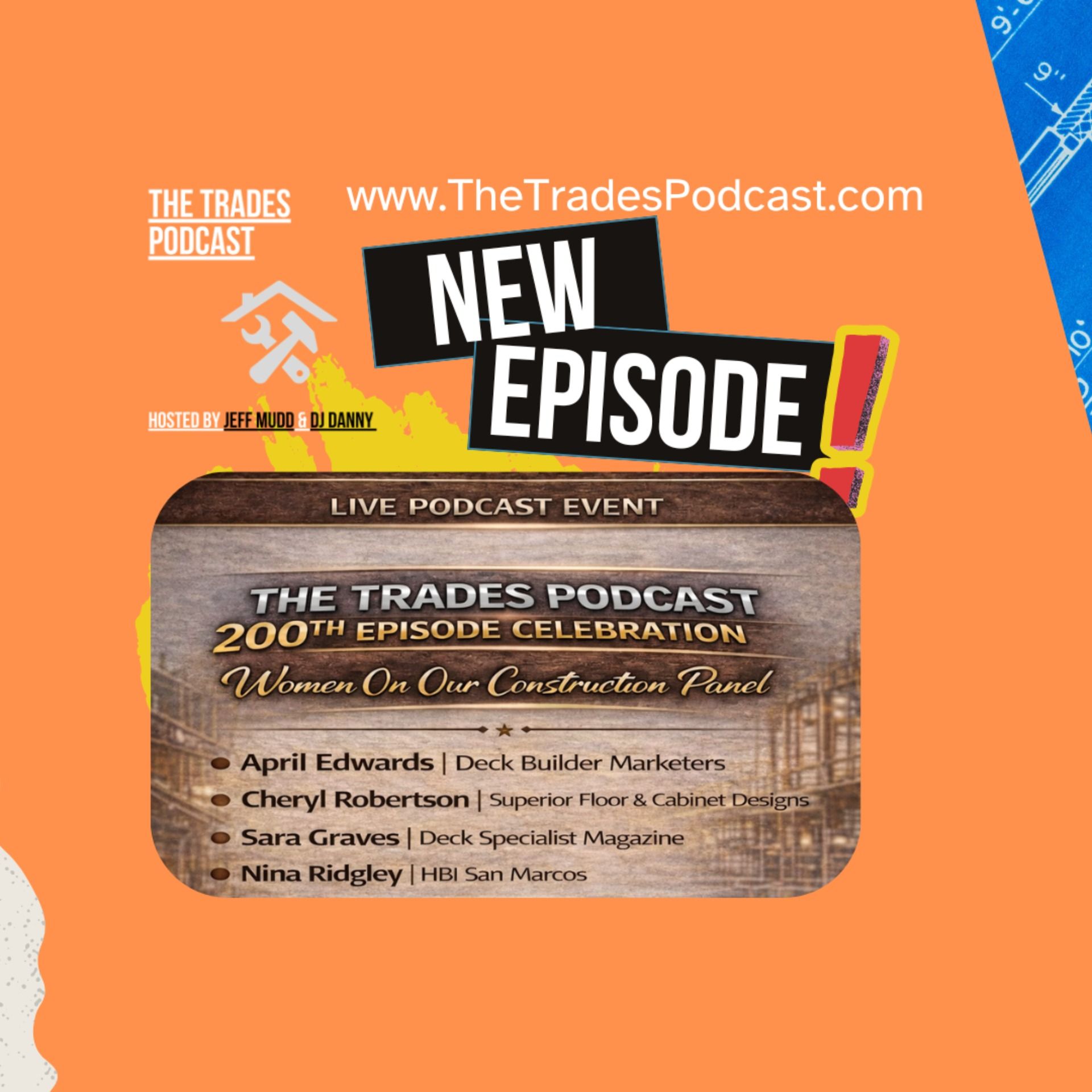 Ep 200 Women in Construction - TheTradesPodcast.com57 / 100
 Ep 199 Jason Napolski - ATexPest.com48 / 100
 Ep 197 Scott Levene - LevCo.io78 / 100
 Ep 196 Are You Losing Employees?- TheTradesPodcast.com46 / 100
 Ep 195 PHCCweb.org - Mark Valentini & Taylor Bray81 / 100