
The Trades Podcast · 2026-04-08 · 55 min
Key moments - from our scoring
Substance score
26 / 100
Five dimensions, 20 points each
Employee retention in the trades requires intentional structure and culture-building, not just competitive wages. Jeff Mudd, a seasoned tradesman with experience managing 20-30+ employees across repair and construction operations, outlines a systematic approach: define clear position responsibilities and key performance indicators (KPIs) for every role - from phone scripts for office staff to tooling requirements and jobsite check-in procedures for field crews. Rather than generic handbooks, he emphasizes creating visible career ladders where employees understand their five-year growth path and the specific skills they must master. This might mean tiering advancement through branded systems like "High Five Levels" at plumbing companies or "Viking Warrior" ranks at roofing firms. Equally critical is articulating and reinforcing company mission and values through weekly safety meetings, community involvement, social media transparency, and genuine one-on-one conversations - especially annual reviews with seasoned staff. The episode targets contractors and small business owners struggling with turnover, showing how structured employee development directly impacts job profitability, team cohesion, and ultimately sellability of the business itself.
Start with specific, measurable tasks: for office staff, create phone scripts with expected timeframes for gathering customer data; for field crews, define tooling requirements, check-in procedures, and quality standards. KPIs should adapt as technology changes (e.g., moving from manual timecards to mobile app check-ins).
A career ladder is a documented five-year advancement path showing employees how to move from entry level to senior roles, including pay grades and required skills at each level. It reduces turnover because employees see a clear future and understand exactly what's needed to progress, rather than feeling stuck.
Seasoned, high-performing employees need annual reviews focused on career goals and life goals rather than quarterly checkups (which waste time). Newer employees may need more frequent check-ins over their first few months to track onboarding progress and skill development.
Post mission and values on your website, employee handbooks, and office walls; reinforce them weekly during safety meetings; demonstrate them through community donations, sponsorships, and social media transparency; and validate them in hiring interviews by asking about employees' personal values and passions.
Micro-cultures form naturally within departments (office staff celebrating holidays together, small sales teams collaborating on pricing) and within trades crews. A strong owner sets an overarching company culture that allows these micro-cultures to thrive, creating cohesion and reducing the friction that drives departures.
Our reviewer’s read on each dimension, with quotes from the episode.
The episode trudges through standard HR management concepts (KPIs, career ladders, mission/values, conflict resolution) at a slow conversational pace with heavy filler. The single genuinely practitioner-specific insight - Jeff's workers' comp timing dilemma - is buried late and underdeveloped; almost everything else is generic advice a quick Google search would surface.
In California we have workman's comp. And workman's comp is based on an hourly wage. Well, that goes up every year. So every year at renewal time, it's like, okay, we're going from paying a guy as a journeyman from 25 to $28 an hour. Now how do I give them that raise?
Yeah, yeah, no, I mean, uh, I mean with websites, they've been around for over 20 years. It's, it's absolutely, you know, something that, you know, can be adjusted, changed, literally customized down to the T.
The episode recycles entirely standard management platitudes - KPIs, career ladders, open-door policy, 'employees don't leave bad jobs they leave bad managers' - without adding a contrarian angle or first-principles reasoning. The mildly creative idea of branding the career ladder with company identity (e.g. 'junior Viking') is a surface flourish, not a substantive insight.
employees don't leave good jobs, they leave poor managers
So we've had, um, High Five Plumbing out of Denver on our show...you can build that into the same skills ladder. You know, one High five, you're level one. Two High Fives, you're level two.
There is no external guest; this is a two-host format. Jeff Mudd has legitimate practitioner credibility - he ran a trades repair company of ~25 - 30 employees for 20 years - but the scale is modest and co-host Danny explicitly admits to being very inexperienced. The conversation rarely draws on Jeff's depth in a way that would distinguish it from general management advice.
when I handed the reins off, basically we were in the mid-20s or so. Um, right now they're um, slightly above that, probably in the low 30s.
I was only in business 20 years. Um, so to have somebody that's you know, there for...several half dozen that were there over a uh, decade.
Concrete detail is nearly absent. The most specific content is a California workers' comp wage-band anecdote ($25 - $28/hour) and vague references to named companies like High Five Plumbing. The vast majority of examples are hypothetical characters (Sally, Debbie, Bill) with no real data, timelines, or dollar outcomes to anchor the advice.
we're going from paying a guy as a journeyman from 25 to $28 an hour
Sally came up with a new method of doing this. It saved us, you know, 10 minutes on every invoice or whatever
Questions are functional and occasionally structured (the 'new tradesman hiring 2 - 3 people' scenario is reasonable), but Danny consistently validates every answer with 'yeah, yeah, no' and never pushes back or probes for evidence. There is no productive disagreement, no challenge to vague claims, and the conversation frequently drifts into mutual affirmation rather than extraction of insight.
Yeah, yeah, no, that, that's, I, I definitely get that.
it's a seasons trademan, he got his license, he wants to create his own business...he's never had any manager training and he's now looking to employ at least two to three people within a year. Now what would that look like for him?
Computed from the transcript - who did the talking, and the words that came up most.
In today's competitive job market, retaining skilled employees is more crucial than ever, especially in the trades. In a recent podcast episode, Danny and Jeff delve into effective strategies for keeping employees engaged and happy, ensuring they stay loyal to your business. Here, we break down their insights and recommendations into actionable steps that can help you build a thriving work environment. Understanding the Importance of Employee Retention Employee retention is not just a buzzword; it's a vital component of a successful business. Danny and Jeff highlight the volatile nature of the trades, where skilled workers often have various job options. Therefore, retaining good employees means not only keeping them on payroll but also ensuring they feel valued and engaged at work. As Jeff emphasizes, "If you've got a good person, you want to keep them employed." Creating a Strong Company Culture A strong company culture is the backbone of employee retention. Jeff shares his experience with his previous company, where he fostered a culture that allowed different departments to develop their own microcultures.
Transcribed and scored by The B2B Podcast Index.
Speaker A: Welcome to the Trades Podcast, a podcast about the business of home improvement and promoting the trades to young adults. Hey. Hey, what's up everybody? This is DJ Danny.
Speaker B: Oh, Jeff Mudd here.
Speaker A: Yep. And this is the Trades Podcast. We're super excited to jump on. Uh, Jeff and I, we've been just hustling away getting these awesome recordings out, these um, interviews out that we have with our awesome guests that we've had throughout the whole 2025 year. And it's going to be an exciting 2026. Uh, more guests, more knowledge, more opportunities to hear more about everything that's happening within the trades and but we're excited to talk a little bit more about uh, some employee retention. Today we want to thank our sponsor, Superior Flooring. Cabinet Designs is one of the landmark family owned businesses in Encinitas. Owner Cheryl Robertson. With years of customer experience managing her family's hardware and cabinet business in North Park. Cheryl Robertson and the Superior team dive deep to learn about your project and help you find the perfect solution for your flooring and cabinetry needs. Call today at uh, 760-436-0900 or visit www.superiorfloors.com.
Speaker B: Absolutely. Employee retention out there with this job market, if you've got a good person, you want to keep them employed, you want to keep them happy, you want to keep them engaged, you want to keep them on your payroll and paying them so that they are happy and stay with you.
Speaker A: Yeah, exactly. Yeah. The uh, employee retention is a key thing within a business and within you know, just the trades because there's obviously volatile, um, you know, opportunities for, for a lot of apprentice, um, apprentices to be able to move on to different companies or different trades to uh, to, to explore their options which is what they, you know, know, have more than, more than able to be able to do. But when it comes down to your business and just looking to keep your employees because that's going to be a key thing for all those that are listening and working for a company and looking to build their own. How do you keep your own employees? Uh, that's a key thing.
Speaker B: Absolutely. And there's a lot of different ways to do that. Everybody's got their own opinions but we've got a bunch of bullet points that I think will help, um, most employers with uh, starting a good platform to engage their employees and keep them employed with you.
Speaker A: Yeah, yeah, we uh, Jeff has been working on uh, um, and as everybody knows, Jeff is a seasoned tradesman, um, has and, and has his company and he's still in the works of uh, making um, sure that those companies are running smoothly, helping out and you know, ah, still hands on. So Jeff has a lot of that experience with having employees. And Jeff, remind everybody how many employees, employees that you have in your company.
Speaker B: So when I handed the reins off, basically we were in the mid-20s or so. Um, right now they're um, slightly above that, probably in the low 30s. The, the new owner of the repair company ad has definitely taken it to the next level and uh, he's doing very well at uh, it. They've definitely uh, narrowed in a new focus of uh, customer base. So yeah, very happy to see there's a lot of employees still there and still happy and still working, finishing, you know, working through their careers.
Speaker A: Yeah, that, that was gonna be my next question. I mean through. While you had the company, uh, uh, how long were, you know, say an average of how long were employees with you?
Speaker B: So we definitely had a lot of seasoned employees that were definitely there over a decade. I mean I was only in business 20 years. Um, so to have somebody that's you know, there for, you know, we had several salespeople that you know, were there for, came in the first two or three years of me starting up and you know, they helped build the business. Um, but yeah, definitely several half dozen that were there over a uh, decade. So I was very happy with that. And that that included not just the tradespeople out in the field, but some of the office staff too. You know, you can't forget about the office staff. Mm, mhm.
Speaker A: Yeah, no, that they're, that that's a backbone to a lot. Well at first imagine there's a lot of the um, business owners, small, you know, very single op, um run companies where it's going to be just one person or maybe one or one, one or two other people that are handling all those office back end things. But when you grow you definitely need people to be in that office piece to help you out no matter what.
Speaker B: Yeah, absolutely. As the owner, you don't want to be doing all the administrative uh, things and not working on your business. So a side note, before we really get started, Danny, uh, I just wanted to talk a little bit about culture since we're talking about the different uh, parts um, of your business. So yeah, a lot of people have a, ah, office staff and people uh, that work in the office create their own little micro culture. You know, completely different than the trades people that are out in the field or the sales staff. You know, there might not be as many salespeople in a company. But, you know, even at two or three, they create their own little micro culture also because they do have to work with, with each other in the sense of asking pricings, how do you handle this customer? And all the different nuances that come with a very small sales staff. They created their own little micro culture. The office staff is obviously, you know, like decorating for the holidays and celebrating and dressing up. They, you know, doing a little, you know, bringing the buffet food into the office for everybody. You know, everybody has their own little micro cultures. But if you, as the owner can't set, you know, what, what the company culture is that, you know, overall and allow the micro cultures to flourish within that company culture, you're doing something wrong. Yeah. Uh, or got some growing to do.
Speaker A: Right. That's great. I mean, and I mean, that all ties into everything that we were going to talk about too, you know, because, I mean, uh, what it sounds like you're talking about is just having, like, a clear description of each department role. You know what I mean? Um, and I mean, that's what we have.
Speaker B: Ah.
Speaker A: First on that list was, you know, just keeping that clear position of every role. Uh, what did you find in that?
Speaker B: Well, obviously, you know, each department has a purpose and their primary responsibilities. Um, so whether they've been there for a decade or they're in the door, you need to be able to, as an owner or a manager, define what that purpose is, what the employee's individual responsibilities are. And that can't be just like, okay, here's the third ink binder. Got any questions? Go ask Debbie over in the corner. She'll tell you what to do. That's not how it should work. Um, it should be, um, very detailed in having that written structure someplace. But it shouldn't be just throwing it out and, you know, see how you check in Friday and see how their week's been. It should be a lot more than that. It should be several, uh, steps that happen over the next few weeks, steps that happen over the next few months that everybody knows what they're, you know, uh, how. How do I tell a new employee I'm doing a good job? Do you have key, uh, performance, uh, indicators on how well I'm doing if somebody comes in and, hey, you have to learn this new software program for an office staff position, you know, or, you know, you're in the, uh, the crew and you have a new app on your phone to do your timekeeping and things like that. You know, all those are gradual steps to being Graded on your performance, you know, and sometimes if you're doing good or the, those are really important goals, steps that you're going through. Create a certificate program for each one of those, you know, people, pile those up behind the desk, you know, take them home, show the family, you know, those things. Create a culture of growing, create a culture of learning, create a culture of you know, striving to do better at your job, being recognized for the different levels of uh, things that you've overcome at the job.
Speaker A: And I mean you brought it up right there. I mean where it has to be something specifically that can be explained and shown. And uh, um, I think we talked about it a little, we've been, it's been popping up a little bit more. But KPIs key, uh, performance indicators. This is something that you uh, uh as a business owner is going to provide. Say like these department heads or whoever is going to be in that specific position. Help us dive a little bit into the KPIs.
Speaker B: Well, here's a simple one. You bring in the newest person into the office. You know, the phone rings, you know, do you have a script for that person to kind of guide them through the conversation with a customer, Guide them through the conversation with a potential uh, supplier. Somebody's trying to sell a new product to your company. You know, all those have basic different scripts or you know, procedures that the uh, new person in the office needs to do that. You know, is there a time limit that you expect all these done because you're a high volume business, you know, is there a time, uh, is there no time limit? You want them to spend lots of time with the customer. You have 20 bullet points that you need some base, you know, what's the address, what's the phone number, how long you lived in the home, you know, uh, all these little things that you want to collect the information from the homeowner that takes time to do it, especially if you're doing it in a conversational way. Because if you know, you're Mrs. Homeowner, call the office and you get grilled, you know, with data download, you know, that's not very customer service thing. So that's an example of KPI, new guy in the field, carpenter. You know what, what's a KPI for them that you show up to work on time, you know, here's your check in process. And are you required to have you know, this list of tools the company provides tools with the tools like you
Speaker A: mentioned, like the reporting, you know, coming back to talk about it, you know, through Promotions, the you know, corrective actions, performance reviews that, that all will tie in, you know, to make sure that those key, those KPIs are being uh, completed and or met.
Speaker B: Yeah, absolutely. Um, um, a lot of these things too. We've talked about in a couple other shows that if you do all those correctly, the next step is it creates a career ladder or uh, success ladder. Somebody comes in to interview with you, you've got that career ladder already detailed out. You know, here's our five year career ladder. You know, you can get to X, um in five years by doing all these different things. It's, you know, these are the pay grades you can get as you're going through there. You know, like we've talked about in the past, this is not a, uh, sit down Friday afternoon and put all this stuff together. This is a constantly evolving task that needs improvement, needs changes, adaptations to new technologies that come out. If you switch from a manual, everybody going to the office and checking in for your time clock and as opposed to now you're using a new digital app on your phone to check in at the job site, things change. You have to be able to adapt to those. Technology is definitely changing. Uh, um, using different apps and softwares to check in on a job site is getting to be standard procedure for a lot of companies now. Mhm.
Speaker A: Yeah. And I mean the career path, the career ladder, um, we're asking questions to these employees and everybody that we have within the culture, you know, which is usually, I mean a quarter, I would say a quarterly effort is at least the minimum. Right Jeff? I m mean, or is that a little over?
Speaker B: It depends on what you're addressing. Um, I mean if, if you've got a lot of seasoned employees and um, they're all doing, you know, same level of uh, skills and things like that. You don't need a quarterly review with these guys now. Uh, they're going to look at that. They're wasting my time, you know. And what, and what, what's the outcome, uh, of doing that quarter, but annually? Absolutely. Even if that's a sit down, you know, how, how's the family going, Bill? Yeah, I'm glad to hear that. You know, here's what the company's doing. How do you feel about that? You know, do you see yourself growing into this step in the next few years? M uh, sometimes just a, um, quiet conversation without interruptions goes a long way to build trust within your own company. Yeah, and for a busy executive running a company, you know, that was a heck of a lot easier to Say than do.
Speaker A: Yeah, no, and that's, that's the roadmap. I mean, you know, what, call it whatever you want, you know, whether it's the career ladder or roadmap, you know, get creative within your own company. But that's, that's, that's what I think. Uh, we can always allude back to what, what culture do you want to create when you are explaining this to the potential, uh, um, uh, apprentice. The person that's coming into the office to help out with administration needs. It needs to be, you know, put into your own words, your own mind of what that career path is going to be explained and how it looks for what it would look like. Um, I, I'm sure, Jeff, that maybe, you know, with within time, maybe the, the one business owner is not going to come up with all those decisions. They may have one employee that's been with them for a while and they're working on, you know, communication on, hey, like, what's, uh, what's my future look like two years from now? You know, where it doesn't have to be so, you know, cookie cutter structured, just almost. Sometimes it's as simple as a conversation with you, you're with the person that you're employ or potentially putting on as an employee.
Speaker B: Absolutely. So we've had, um, High Five Plumbing out of Denver on our show. You know, rock and roll company. I really like the way they're doing a lot of different things, but they're, you know, High Five is definitely a brand that's built into the company. Well, you can build that into the same skills ladder. You know, one High five, you're level one. Two High Fives, you're level two. You know, um, play that on a roof, you know, uh, Viking, you know, roofing company out there. You know, you're level one, you're a junior Viking, right?
Speaker A: Yeah, absolutely. Put the name, yeah, put, put your name, you know, the brand included on that. And you know, if, if, uh, um, obviously there's definitely marketing teams out there. You know, shout out to deck builder marketers. Uh, April, she helps a lot of business owners in that sense and the traits, um, to, to how to incorporate those, those ways of your business into your culture and how do you market that to your clients, but also market it, uh, within your company. It seems like as well that she can help out with.
Speaker B: Yeah, like Viking Roofing out there, you know, you're, you know, seasoned, seasoned warrior, you know, top level. Yeah, yeah. You go out there and do battle with, you know, your projects every day. You Know, come home a successful, uh, you know, warrior.
Speaker A: Yep. Or like a pest control, you know, pest control, you get pinned with a, uh, um, you know, a black widow or something. Um, you know, you know,
Speaker B: definitely fun ways that you can incorporate your brand into your, uh, skills ladder, you know,
Speaker A: and, and I think, I think I want to emphasize this for anybody that's listening too, because obviously this might sound like, oh, this is the boring part of business. You know, what about we're getting these jobs done and making the money. You know, this is, this is just as, as important, uh, in creating a business and building a business where you're, you're set, you're setting yourself up for the future. Um, um, and I'm sure we'll probably dive a little bit into that.
Speaker B: Ah.
Speaker A: A little bit later. But you just, just keep that in mind while you're listening to a lot of these points that we're making that you're, you're building it up for the future and we'll find out. I'll kind of explain at the end of what that, what that end of the future goal might be for you, and maybe it might not, but most likely in this day and age, the way that the job market is, is moving towards you, you'll understand at the end. So.
Speaker B: Well, just take a quick scenario, Danny. It's really solid point. If your deck building team requires four seasoned employees that know what they do, they cohesively work together doing the different steps. But you always got that one guy that just can't get it together. Um, that cohesiveness is broke down having a skills path ladder in there to bring somebody new in that fully understands in six months I better be up to par with the other three guys that are working there. Um, these five set of skills so that we all can work together. That makes for a very smooth, uh, job site, profitable job for everybody involved. You know, if you're always battling, trying to get done on time because you got one guy that's messing up the operation, the sequence of events, you know, that's where having a very defined roadmap, KPIs, all this comes together for a very solid team in the field. Solid team working together with the office that makes everything run smoothly. And if everything's running smoothly, you're probably on the way to profitability.
Speaker A: Yeah, yeah, no, I mean, that's, that's a key. That's great. That's a perfect point. Um, um, you know, because I mean, it comes down to, um, you know, creating an image for yourself. Creating an image for you? Like, why do people want to work, work for you, work with you? Um, you know, whether it's the quality of work, the jobs, the uh, the amount of work that there is, but there it needs to be, you know, clear on what, the reason why, uh, why people should stay and work for you, you know, so that kind of goes into like, well, what. Why would you be the employer of choice? You know, so what, what did you find on that piece?
Speaker B: Well, one of the things that people strive, I think, for in um, different segments of their life is you, um, know the why, you know, is there a clear mission for what the company is doing? You know, you take that home to your, your wife and your, your family. You know, what's our goals? You know, family vacation once a year for two weeks, time off time, you know, time alone. Those are all part of the mission of a family thing, you know. Um, but as a company, you know, what, what's the company mission? What are the values? You know, do you, do you value, you know, high, um, high end jobs, very detailed work, you know, you know, proud of craftsmanship, you're able to show all that off, you know, are you a production builder in some other ways? You know, is volume more important than, you know, high end, you know, is what you're working on, not even a high end product, you know, you know, you can install a toilet, six a day and be a profitable plumbing, uh, company. You know, other companies are out there designing fancy stuff and installing very high end products for customers. You know, there's a room for everybody in different fields. So what's your mission? What's the values of your company? You know, what are your goals?
Speaker A: Yeah, yeah, I mean that, that should be listed on your website. That should be listed, you know, in any employee handbooks. That should be listed inside the office. Inside. When people are walking in, they see this, you know, because it's that, it's that, it's that reminder of like, this is why I, this is why I chose to work this company. Because, you know, that that's all spoken within the first, you know, interview or you know, uh, onboarding in a sense of like, hey, like, you know, before you even, uh, bring these people on, obviously you want to make sure they fit, you know, do your best to make sure that they fit within that mission and values. Um, but that's where it should be listed. And then, I mean, but how is that reinforced? How is that brought back into, um, say two, three years down the road? Jeff?
Speaker B: Well, one, it starts right off with you Have a clear mission and values. Like, um, you were just saying on the website, from m. A customer's perspective, you ought to be able to tell what the values are. But you know, looking at the website, probably predominantly, maybe some social media to tell what the values are of the company. Let's just take a plumbing, ah, company as an example. If you value customer service, time, time on site to make the customer happy, you know, you're versatile enough to handle everything the customer, you know, wants from pay, um, this side of town. And I only just need the toilet to work to this side. You know what that bathroom in the hallway is a showpiece. You know, you come in, UPS guy and I say you, you happen to use the best bathroom and this guy's like, wow, this is, you know, those type of things are, uh, sometimes hard to articulate, but they're a lot easier to show in pictures or videos, you know, which can be hosted on a website. Dealing with your employees, though, they should have a absolutely 100% clear picture what the mission and the values of the company are. Well, how do you get that though? Weekly meetings integrated into the weekly safety meeting. What do you do outside the company with um, outside marketing? Do you run, um, donations? Are you involved with, you know, the little league? Supporting them? You know, how, how do you present that, you know, you know, you don't want to be out there, you know, toting your own, hey, look what we did. But it's more, we were, we were so gracious that we were able to help this particular, uh, family with a donation. And you know, this is how we did it. The approach makes a big difference. So from the employees perspective, public recognition and how, how you do donations or involved with the community makes a difference, you know.
Speaker A: Yeah.
Speaker B: When you're hiring somebody, you know, are you asking some questions? You know, what's the, what's the, ah, biggest uh, thing that's made you happy outside of work? At least some people like, you know, hunting and fishing. I don't care what the wife thinks.
Speaker A: Right.
Speaker B: Others is, you know what, I'm so involved with my church and you know, we did this great project. You know, those are different things. Other guy might be out of high school and thing with him is, um, you know, I was really, really focused on academics, but man, I just love sports. Everything I did in sports, I just had to win. You know, I was all American this, I was doing that. You know, that's, that's somebody that's got drive, ambition, that says they do not want to fail. So all Those in the interview process makes a difference of who you're hiring also what position will they fit into?
Speaker A: Yeah, and I want to emphasize on, you know, just kind of like the day and age that we're in. Like you mentioned the technology and how things are shared. Things are um, uh, really influenced. As we know, social media has a huge influence on business culture, on uh, reputation. I mean almost Yelp and Google are, um, maybe not necessarily as the same level of where, you know, social media would be on reputation wise yet. But I say social media is moving its way up to, you know, finding itself as, you know, if, if you, if you have videos of your business, um, or updated videos or pictures of your business on social media, it adds some reputation to your name. It adds some reputation to say, hey, these folks are active and, and you get a double point if you're showcasing who your company is. Ah, educating, uh, clients through social media. Um, you know, because let's face it, you know, we've all been there, we're on social media scrolling and we find a business or we find a demonstration video that we, you know, find interest in. And that's just knowing that you have a reputation online is uh, just as important as what you're, you know, presenting to not just customers, but also people that potentially want to work for you because they see that and they saw you through social media showcasing your culture.
Speaker B: Yeah, absolutely. I always remember, I never knew this with April Edwards. You know, your, your website is an owned asset. Social media, you don't own that. You pay for it, but you can pay for it, but you don't own that. You have no control over what they, you know, Instagram or Facebook's going to do with your page. They take it away in a minute, it's gone. So just a little side note there, I always, I found that very interesting when we heard that from her earlier this year.
Speaker A: Yeah, yeah. No, I mean, uh, I mean with websites, they've been around for over 20 years. It's, it's absolutely, you know, something that, you know, can be adjusted, changed, literally customized down to the T. You know, you can literally almost do anything with a website.
Speaker B: Um, should be customized, should be updated.
Speaker A: Yes, all the above. For sure. All the above.
Speaker B: I made my 20, my website 20 years ago. Man, we were still rocking.
Speaker A: Yeah, no, and everybody knows, everybody's seen that website. Um, when you click on one or it's, you know, and you gotta be honest, you're usually gonna click right past them, you know, or look at the next potential opportunity once you See that, you know, some people will, I guess, but, you know, you really gotta know the person behind the business if you see that for the first time. Um, so it's a good thing to again, work on, uh, uh, your company's missions, your values, your weekly meetings, um, you know, your decision making, making it fast, reinforcing all those items and invest back into that, um, how you're involved in, in showcasing, you know, why you should be the employer of choice.
Speaker B: Absolutely. I think you bring up a really, really good point there in today's age, and I, I want to nail it down very clearly for you.
Speaker A: Yeah.
Speaker B: If a customer is out there, they have a choice of Googling you. Are they going to find the website or your Facebook or an Instagram post first? Are they going to see it on somebody else's social media? So if that social media and your website and the collateral that you have out there do not highlight your values. Crews working cohesively together in uniformed, you know, or everybody's branded the same way. You know, whether it's a T shirt or a safety vest, if they're not branded the same way, the nuance of what somebody's looking at shows that cohesiveness, you know, of with the company, as opposed to, you know, I got one post here and the guy's got a tank top on because it's summer and wintertime. You know, it's got a jacket on and says, beers are great. You know, uh, um, that's not building your brand for not just your customers, but it's not building your brand for your workforce either. They should be, you know, working together. They should be, you know, showing that not only do you give great customer service, but you also have a great place to work.
Speaker A: Yeah, the cohesiveness is going to be key. You know, what you see on social media, you should most likely see, you know, bits and pieces, if not similar pieces on your website, on your Google profiles, your Yelp profiles, all the above. You should see some sort of cohesiveness and what it would look like, your branding, even just down to your logo. Uh, we've talked to, um, marketers, uh, uh, before, where it can be as simple as just having the same logo spread out through the whole, um, your whole online presence is going to be something that will absolutely make sure that when people click on your name, they'll see that consistently and they'll know that, okay, what it looks like, it's just brand recognition. Everybody knows a Nike swoosh and you know exactly what that looks like if you saw it From a mile away. If it was, you know, a big billboard, you know exactly what it would do be because of that brand recognition. Always having the consistency behind it.
Speaker B: Yeah, Yeah. I don't care what age you are now, if you're looking for a job, there's the high probability that you are looking at social media as part of that job search. What's. Oh, XYZ company is hiring. What's that, uh, look like on Facebook? What's that look like on Instagram? TikTok? LinkedIn. The platform. You know, it used to be, you know, the old guys were, you know, never only looking at the newspaper. That's changed now. You know, everything's online. You can see a lot of things that even you don't want seen anymore. Somebody else post. So, uh, what's your response on Yelp? You know, sorry, sorry, Mrs. Smith, we made a mistake and I fired Bill. That's not the way you write it. Sorry, we made a mistake, Mrs. Smith, you know, thank you for letting us know. We have created a new safety program or checklist program able to hand, uh, handle that in the future. Everybody in this company is now on board and trading on that. Yeah, you know, that's much better way of responding to a complaint, you know.
Speaker A: Yeah, yeah, no, that all that matters. And I mean, and this is something that we know that is understood that it needs to be consistent, you know, um, especially through the leadership. I mean, that's what it'd be down from, you know, from your CEO. Obviously, you're starting with. Usually you're starting with one person in the business and they're building it on. So now imagine your years in. You have employees, and what do you want to. What do you want to do as a leader?
Speaker B: Sometimes I just want a vacation. But, um, no, it's. How do you. How do you manage people? How do you get people to constantly be invigorated towards building towards, you know, your goals, your values of the company? You know, it's constant communication, it's constant coaching, you know, um, delegating, you know. You know, as a leader of a company, you do not want to be the bottleneck. You need to delegate and give clear, um, directions on the delegations and timelines and expectations. You know, um, there's always going to be conflict, you know, how do you handle that? Tell the two guys to go out and, no, you guys work it out. I don't hear about that crap, you know, or do you have a conflict resolution, you know, style that you want to go through? You know, you can Bring the guys in and you know, let's talk it out for a half hour. If we can't figure it out, then we'll take it to the next step. You know, what's the emotional, uh, intelligence of the different people that you have? You know, some people might be complete introvert, some people might be outgoing and that might clash. Um, as a uh, two man team out there might work great. One guy just sits around, listens and does his job and the other guy talks the whole time, tells them how to do the job. Mhm. Depends on your, your company, what you're doing.
Speaker A: Yeah, I mean, uh, let me give you a scenario Jeff, and tell me what you would uh, suggest for this, for this scenario. Um, it's a seasons trademan, he got his license, he wants to create his own business. Great. So now he has never been in any leadership position, um, he's never had any manager training and he's now looking to employ at least two to three people within a year. Now what would that look like for him? Or what would you suggest for someone like, like that person that's gonna be hiring two to three more people, um, in order to create some like leadership roles below him, like you mentioned, to be delegated. Um, but he's never been a leader, he's never been in manager training. What would you, how would you suggest for him to go about that?
Speaker B: Well one, I think being honest with everybody you're working with, it's like, yeah, this is going to be a tough step for us moving up. Um, my commitment is I'm going to get an HR company to help us so that we're all doing the right thing. And two, I'm going to take some management training. You know, we'll learn together. I'll bring home my homework, you know, we'll practice. You know, I, I am committed as the owner of this company, the manager of this company, to bring this to X level. I need your help. We need open communication to be able to do that. You know, if you want to experiment like one day, let's see what uh, yelling at him does and then, you know, the next week it's, you know, hey guys, I really need your help. I sorry I yelled at you last week. You know, that up and down crap's not going to last too long.
Speaker A: Yeah, yeah, yeah, no, that, that's, I, I definitely get that. Um, you know, and, and one thing that we had, you know, that you had written down right here, Jeff, was like, employees don't leave good jobs, they leave poor managers. And you know, when that, when that culture and the leadership piece is um, not clearly understood and, or even respected in a way because like you said, you know, every single time something like that might happen, whether it's a uh, up and down emotional roller coaster, the consistency, um, looks, looks, looks to diminish in, in commitment.
Speaker B: Also I think people are very reasonable when you're open and honest with them. So it's okay to make a mistake and it's also okay to say I'm sorry, you know, that didn't work, I'm sorry, let's try this a different way now. If you do that for five years, um, back and forth on the same subject, nobody's going to put up with it. But if you're constantly growing and getting better at it and you make a mistake along the way and you, you know, stand up and say I'm sorry, that goes a long way. People respect honesty and whatever else you call that as being open.
Speaker A: Yeah, no open door policy in a sense. Um, but even, I mean just the consistent consistency through leadership and manager training like you mentioned, um, you know, if, if, if you do, like you said, be honest with yourself, if you do find yourself in that situation where you just not might not have the resources or know how, or knowledge on how to go about moving that next step in your company to one excel employees yourself or allow for, you know, just new opportunities within, like you said, the HR space of you know, providing uh, now being able to provide, um, dental or you know, medical and, and 401ks and you know, those are all a lot of new foreign things for um, tradesmen or business owners that, you know, stuck to their craft and that's what they want to work on. Not necessarily. Again, it's not anything towards employees but trying to, you know, provide more. It's always give back to the business. But this is a way to give back to your business and to your employees that are helping you grow that business, you know.
Speaker B: Yeah, uh, absolutely. And some, some things can be done very quietly. Like read a book.
Speaker A: Yeah.
Speaker B: You know, there's one of the books out there. I can't say it's like the best management book, but at one point I thought like this is going to be a great starting point. A little thin book, one minute manager, you know, a lot of great little tools in that book. Mean and you take it from there. There's, you know, if you want to management tools, you can, you know, spend a lifetime reading on it for sure.
Speaker A: Nice. Yeah. And, and uh, there's a key thing that we had a little tip for everybody. You know, put, just put together a little scorecard, um, you know, get some team feedback for manager scorecards. Um, obviously when you're in that leadership role and you can't be afraid if you got to put yourself on the chopping block too. Um, you got to put yourself on that chopping block because you know there's going to be c. There's going to be things that you won't notice that others will do. Will, but they'll just be a little too scared to tell it to your face at that time. So you know, I would say, uh, every six months or however m. Many times, uh, you'd like to throughout the year to make sure you're just measuring the effectiveness of what you're implementing, your communication, your delegation, your coaching, etc. Etc. So build that manager scorecard for your company. It'll help.
Speaker B: And even if like, if you're the, the owner and you're looking at, um, I know what everybody's handwriting looks like, nobody's going to do it because they know that. Then make it A, you know, a, B, circle A, B, C or D, you know.
Speaker A: Sure.
Speaker B: How do we do it?
Speaker A: Your, your scale of 1 to 10. Satisfactory.
Speaker B: Yeah. Dumb it down so you, you can't tell. If you can't tell, your employees will probably feel the same way. Yeah, you know, making anonymous. Mhm.
Speaker A: Yeah. And we're like leading up to it, but we've already been building it up. But I mean just you know, really emphasizing culture and I think in fact should be nice though, like it's, we have it written down right here. What do you do with culture when there's problems, Jeff?
Speaker B: Well, uh, if there's two different subjects. So if you have a problem and you as the manager, the owner are consistent on how you handle it and you always come up with a fair resolution to that, then that is integrated into a micro part of your culture. You know, the culture is, you know, we have great problem solving tactics here. You know, so if you as a manager do good at that, or uh, the owner good at that, you know, your, your project manager can learn the same skills by learning from you of here's, here's how we do it at this company. So that creates a, a good culture from top to bottom. Somebody, somebody new coming in. It's like first week there, you know, had a little problem that went to my supervisor. They handle it in a very clear and concise way, same way the owner would. They probably don't know that, but over time they will see that that's part of the culture of how we handle things.
Speaker A: Mhm. Yeah. That the, those problems are going to come up. And that's where, you know, I think we've heard and we've seen that when, you know, problems do come up, those, those, the culture can be just slightly affected, uh, in a sense. But um, I think like you mentioned, you know, just, just the, the, the levels of how you treat it is going to be the exactly what, how it moves forward.
Speaker B: Here, here's, here's a couple, uh, I think common examples. You know, you got two, two crew guys working together. One of them has a very detail oriented, you know, step by step mindset. The other ones like always on the grind. The guy, the guy that's always on the grind has been there a little longer, a little more dominant personality, always slammed. Get, get moving, man. Quit thinking about the job. You just stand there looking at it. You know, if he's constantly parading, you know, his teammate and there's no conflict resolution in the field, the solution, then that's one thing. You know, you need to find a way as a company to bring that internally. That might not be in a weekly huddle with everybody in the company, but you've got to be able to walk these two, you know, people through a, uh, conflict resolution. And you can have the same thing in the office. You know, Sally's always five minutes late,
Speaker A: you know,
Speaker B: Debbie keeps yelling at her, blah, blah, blah, blah, you know, you know, creates a lot of tension in the office. Now they're not working together, they're not communicating well enough to keep the paperwork or task flow going. So as a manager, if you put in the time to handle those things that are more private, you know, conflict resolution, but you put in the time to, you know, give people the tools to handle that, that's fine. Other things are, you know, um, open things. You know, Sally keeps doing this way on the, you know, the invoice processing and it's different than what the protocol says. Debbie says, well, it's faster. Those are things in a daily huddle that you can not necessarily do personality or people conflict. It's more of a process conflict. And you can solve those in a daily huddle or a weekly meeting, make things a little more smoother. You know, sometimes the person that's not following the rules is. Right, that's.
Speaker A: And those are absolute things, like you said. Yeah, the small little details that, you know, if one person, all it takes is usually one person not to, you know, kind of Break up the flow and consistency of what you're looking for. And um, I mean, I would imagine through those daily huddles, weekly team meetings, monthly updates, you're, you're going to be able to find that, you know, one that's sticking out just a little bit more, right? I would imagine.
Speaker B: Absolutely. I mean, the, the person that's not following the rules. And you might find that if we made the change, you know, at the, uh, monthly meeting, you're going to celebrate a win. You know, Sally came up with a new method of doing this. It saved us, you know, 10 minutes on every invoice or whatever. Ah, you know, um, you can celebrate that. Give her a certificate, find a new, you know, protocols for office paperwork flow. Yeah, you know, or you might find, you know what, Sally just really did not know the, the full big picture. And she was looking at a very small thing, so saying five minutes in her perspective, but, um, on the end it cost us 15. So sometimes you gotta bring things out in the daily huddle and give people a bigger picture to, you know, so they can help solve that themselves.
Speaker A: Yeah, no, I like that. And I mean, on top of the manager scorecards, like we said earlier, um, imagine that's, you know, specifically, you know, maybe geared towards a, a department or just, you know, uh, to engage how your communication's going. But even a quarterly survey for your own company, you know, asking, you know, collectively to your employees, anybody that's, that you're working with, with its contractors and what, uh, what not, you know, your subcontractors, what's one thing, you know, perfect. Sample, sample question. What's one thing we could change that would improve your work life? You know, that asking that simple question right there will help you tremendously make the right decisions and really be able to communicate that to your leadership team to make sure that it's being implemented and then fall back. Then you get the manager scorecard, you ask for it to be implemented and it's not. And you hear that through the manager scorecard, then there you go, you start putting those things together and then you can absolutely just enhance your business and your operations because you're doing your due diligence and learning what it is that you can change. Uh, and uh, upgrade.
Speaker B: Yeah, absolutely. I mean, you, yeah, if you built a company with 50 employees, they're all going to have a different perspective on, you know, what's, how can we make our work life balance better? You know, you're going to get a percentage of people, say 30 hour weeks and get another percent of the Friday's off. You know, you're also going to have other people that look at it seriously and it's like, it'd be nice to have some flexible, uh, flex days, you know, that way I can come in a little bit early so I can get off without being so stringent on, you know, because the phone rings till 5 o', clock, you know. But I got kids I want to take to, you know, baseball practice. I couldn't be there at 3:30. Be nice to be able to get up early or get off early and take them to baseball. You know, that's going to make for a lot happier workforce if you have some flexibility to do things like that.
Speaker A: Yeah, yeah. And, and I mean that, that, that kind of goes into, you know, um, one structuring the way that you're, the way that you're going to structure how people are getting paid, how much they're going to work, you know, what roles and the skills that they bring to the table. Um, like Jeff said, if, if it's a, if it's in the sales position and they want a little bit more flexibility but they're not pulling in their sales for the month, it's going to be a little tough to want to say that, yes, we could be a little bit more flexible. But you have a team that's you, you set the goals of what's expected for them to give them a number on sales and they say, hey, we would like to a little bit more ah, flexibility because we have been hitting our sales goals. That makes the decision a little easier, I would imagine, to say.
Speaker B: Yes, absolutely. You know, having some, some goals and things to strive for, definitely, ah, um, make people step up to the plate so well.
Speaker A: And does that, does that coincide with what it would be on like performance, ah, based compensation or how would you, how would you, uh, talk a little bit more about that on, you know, strategic compensations and not reactive.
Speaker B: So I'll give you, uh, an honest answer from one of the challenges that I actually never solved in my business. In California we have workman's comp. And workman's comp is based on an hourly wage. Well, that goes up every year. So every year at renewal time, it's like, okay, we're going from paying a guy as a journeyman from 25 to $28 an hour. Now how do I give them that raise? You know, so I get the lower workman's comp bill and do a performance review at the same time. I was trying to do two things that were not cohesive and, and I, and I failed at that. So I started trying to break it up like okay, here's your two month, uh, or here's your annual review two months beforehand. But they knew better. I had already that most guys that had been there a while already knew the routine, already knew the ah, the predicament I was in as far as meeting the goals on that, having that stuff set up for a new employee well ahead of time. Even if you're in under the same, you know, circumstances that you have to make pay raises to make workman's comp because of the, the rate, the wage range changes.
Speaker A: Mhm.
Speaker B: Make that. It was like, you know, I'm willing to take it in the shorts. If you don't accomplish X, Y and Z in the next six months, I'll pay more workman's comp. And you're going to stay at the same hourly rate. You're not getting a raise. But it will cost me more as an employer. So I'm going to be under even more of a gun to, you know, find ways of saving and making up for it. So that's a tough conversation. But having um, that set up ahead of time, you'll be in a lot better position.
Speaker A: Yeah. Just because it's, I've been saying it'll be set up more ahead of time just because it's more clear where you don't have to um, I mean, kind of like what, what we wrote down here where it's not reactive to the situation that you know, maybe could have been avoided a little or just not as of, of a, uh, like you said, awkward conversation in a sense, having to tackle both at the same time.
Speaker B: Yeah, absolutely. Yeah. So yeah, I was starting to get on the path of making that change, but it was a tough one. I know. Mhm.
Speaker A: Well, we've been talking about it recently and I think we've actually been hearing it more often with uh, our guests that we've had on the show. Even like Greg, huge handyman, uh, high five. I think even had a little piece onto that too. Uh, but like performance based compensation, you know, based on KPIs, you know. You know, you know really your apprenticeship, your apprenticeship, uh, uh, skills that you're building throughout the years, you know, usually it coincides with more money and compensation because of the skill. But um, within a company that, you know, whether it's in the office and or uh, out in the field, you still want to have a clear path of what that would mean to say, hey, if you got here, this is how much you're going to be paid. Now if you're not there and you're asking for a raise, it'll be pretty hard for you to be able to justify the reason for having this race.
Speaker B: Yeah, absolutely. So we've hit some major points here Danny and um, we've still got a bunch of information that we compiled on this subject. So I again would invite anybody who wants to see the full uh, uh PDF of this. Just drop uh us an email at info@thetradespodcast.com Be happy to send you the uh, uh full uh write up we have on this for you know includes a reduce hidden sources of turnover, actionable tasks for improving retention. I mean I got, we got eight bullet points on this with uh, lots of little tasks underneath it that will help you uh, become a better employer for keeping people in the house.
Speaker A: Yeah, you know it's, it's as simple as we've talked about it on our podcast many and many a times, soft skills are going to be a key thing. So as a leader, as an owner of a business, communication is going to be key. Um, those weekly meetings, those huddles and again I um, was saying it earlier about what this, what this whole point of us bringing this together is, is you know you may have different visions of your business of what you want it to be in the future. If you want it to be a family business passed along to your kids, to someone within your company that you saw a uh, special talent through them, that you saw them being part of ownership of the business and, or at the end where you had a great career, you're ready to retire and it's ready to sell the business. This is why all these things are important that we talked about. Um, wherever you may see the vision of your business, this is the opportunity that you will be able to have to implement when you're ready to do that if you take these steps. It's again it's not an end all, be all this is just one piece. But we through talking with a lot of our guests and uh, Jeff having his business, myself, having the business, a very young business for myself. So I still learn a lot through Jeff and everybody that I uh, that we have on the show. Um, but you know when you, when you look forward 10 years, this is what you want to ask yourself, am I doing these things, um, to help my business to be sold, to be passed along or to be allowed new partnership in. Um, then, then if you're not doing these things, it might be just a little harder for you to, uh, make that decision on what you want to do in the future.
Speaker B: Absolutely. Well said, Danny.
Speaker A: Yeah.
Speaker B: Well, cool.
Speaker A: Awesome. Hey, again, like Jeff said, if you want this, please just reach out to us. Um, a direct way to get this, uh, um, PDF, this whole breakdown of everything we talked about today. Um, email infothetradespodcast.com and if not, you see us on social media, like it subscribe it, share with everybody. Uh, thanks everybody, for again listening to, uh, us and talking up a little bit more detailed topics of, um, of how to run your business.
Other episodes covering the same guests and topics, from across The B2B Podcast Index.
 Workplace Wellbeing and Evidence-Based Hiring with Dr. Paul JonesHRchat Podcast · on Company culture60 / 100
 Ep 167: The Promotion He Never Wanted Changed His Life with Nestor GutierrezThe Limitless Leadership Podcast · on Company culture54 / 100
 Episode 326: Jenn Lim - What Comes after Happiness?The Limitless Podcast with Nick Jonsson · on Company culture51 / 100
 211. Hot Takes: Company Culture Do's and Don'tsThe Business Reboot · on Company culture43 / 100
 AI Images they are the worstMarketing Espresso · on Social media43 / 100
 Amber Master on Building High-Performing Remote TeamsAsk Ashley · on Company culture
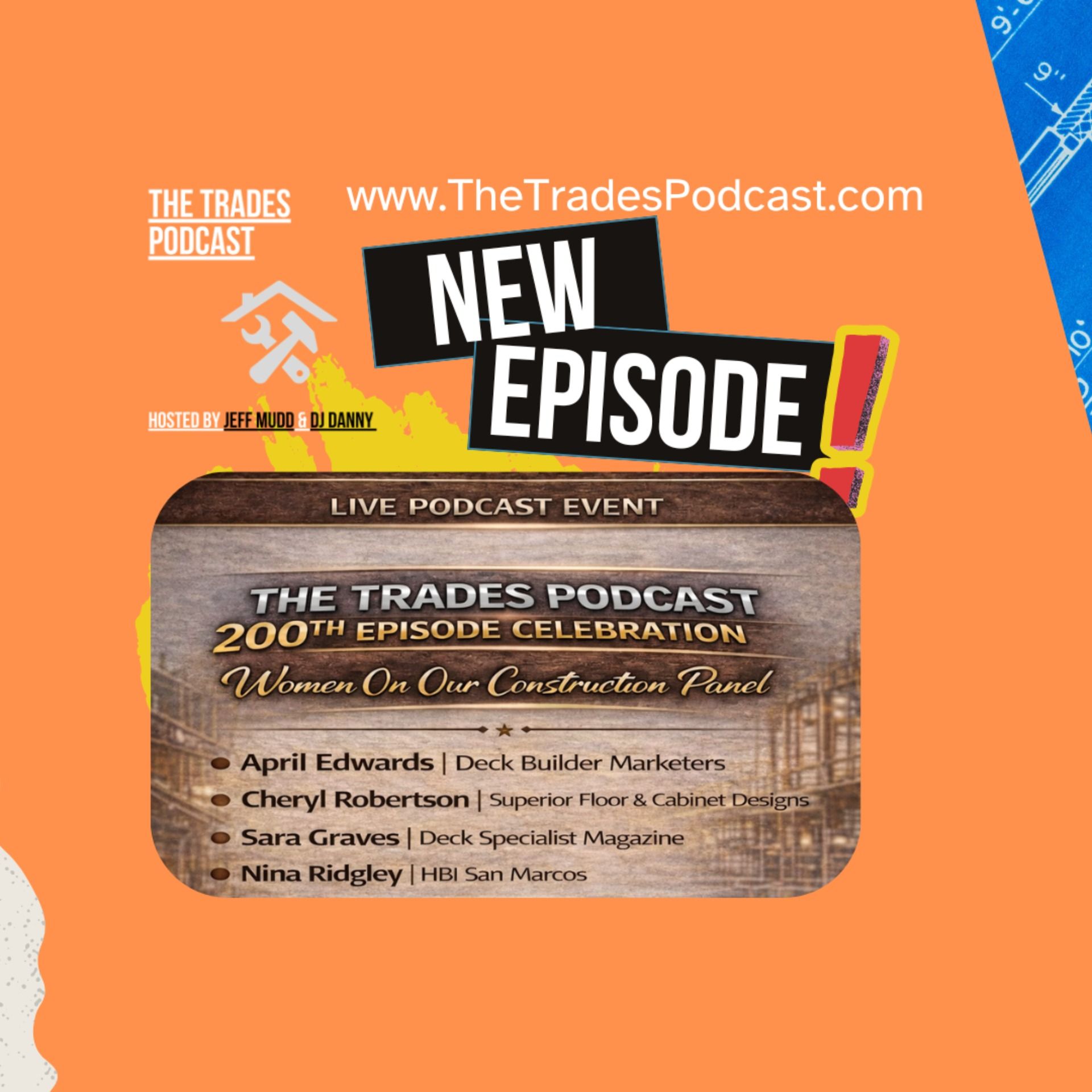 Ep 200 Women in Construction - TheTradesPodcast.com57 / 100
 Ep 199 Jason Napolski - ATexPest.com48 / 100
 Ep 198 TheTradesPodcast.com - 2026 Labor Statistics Pt. 251 / 100
 Ep 197 Scott Levene - LevCo.io78 / 100
 Ep 195 PHCCweb.org - Mark Valentini & Taylor Bray81 / 100