The New F*Word · 2025-05-15 · 35 min
Key moments - from our scoring
Substance score
42 / 100
Five dimensions, 20 points each
Kieran O'Donnell, founder of Own Your Numbers and an experienced fractional CFO, discusses the critical financial gaps that most founders face and why fractional finance has become essential in early-stage businesses. Rather than waiting until they can afford a full-time CFO, startups can now engage fractional CFOs for as little as two days per month to plug holes in their financial understanding across four key pillars: actuals (current performance), forecast (projections), capital structure (dilution and funding), and metrics (KPIs that drive decision-making). O'Donnell emphasizes that founders often mistake finance for mere compliance work - tax filings and investor reporting - when it should actually be a strategic tool for understanding and steering their business. He breaks down why metrics like EBITDA matter not as finance jargon but as leverage points: understanding your EBITDA multiple directly impacts your valuation at exit. The episode tackles founder resistance through relationship-building and concrete examples (VAT audits, due diligence checklists, payroll visibility), and stresses that visualizing one critical metric - like cash flow on a single graph showing six weeks ahead - transforms founder behavior far more effectively than complex P&Ls or spreadsheets. Ideal for bootstrapped and funded founders rethinking the growth-at-all-costs model and operators seeking to extend runway efficiently.
The four pillars are actuals (current performance), forecast (future projections), capital structure (funding, dilution, and valuation), and metrics (KPIs that underpin both current business and forecast business).
EBITDA (earnings before interest, taxes, depreciation, amortization) allows founders to compare their business fairly against others regardless of debt or asset differences. It's crucial because most businesses are valued as a multiple of EBITDA at exit - for example, being valued at 10x EBITDA means every £100k reduction in costs adds £1 million to your business value.
Fractional CFO work means engaging a financial leader part-time rather than full-time, often as little as two days per month (roughly 10% of time) or even less, to fill financial knowledge gaps until a business grows large enough to need full-time finance leadership.
O'Donnell recommends building trust by explaining real consequences (VAT audits, due diligence processes, valuation impacts) rather than pushing theory, and using relationship-building and clear examples to show how financial discipline directly affects their exit value and ability to make payroll.
A one-line graph showing cash flow forecast six weeks ahead, which gives founders visibility to upcoming payroll, VAT, and PAYE obligations and time to take action (collect receivables faster or delay payments) rather than discovering problems too late.
Our reviewer’s read on each dimension, with quotes from the episode.
There are a few genuinely useful operator frameworks - splitting the P&L into direct costs, acquisition, and overhead buckets, and using a forward-looking cash flow graph - but they're surrounded by basic finance 101 and long meandering explanations that a smart operator would already know.
actually you can just split them up into three distinct blocks
So the four kind of key pillars I would look at would be actuals, how we doing? Forecast, where are we going? The third would be the capital structure
The content recycles well-worn finance concepts (EBITDA, gross margin, CAC, cash runway) and even leans on the ubiquitous Dale Carnegie reference; little contrarian or first-principles thinking.
Dale Carnegie, how to Win Friends and Influence People
EBITDA gets a bit of a kicking
Kieran is a genuine practitioner - ACCA-qualified, ex-corporate finance, 15 years as a fractional FD to startups - so relevant and hands-on, though a solo operator rather than someone who has run finance at meaningful scale.
I qualified as ACCA in 98
since 2010 I've been working with startups
Almost entirely abstract - hypothetical payroll numbers and illustrative multiples, with no named companies, real client data, or concrete outcomes; the one company name is vague and there are no verified figures.
I was in kind of a senior finance role with Carfield warehouse
you could just say you have 20 people on your payroll, your payroll could be 80, 100K
The host asks reasonable open questions and shares relevant context, but never challenges or pushes the guest, and the episode reads as a friendly promotional chat for the fractional model with no productive tension.
what are the typical mistakes that people make
what is the secret to getting it actually Implemented
Computed from the transcript - who did the talking, and the words that came up most.
Wondering how to tame your startup’s financial chaos? I’m with Ciarán O’Donnell , fractional CFO and Own Your Numbers founder, who equips startups with the financial savvy to grow. We uncover how to spot cash flow traps, decode KPIs, and why EBITDA isn’t just jargon - it could shape your business’s exit value. Packed with wild stories and actionable insights, we explore how a part-time finance expert turns confusion into clarity without the hefty price tag. Whether you’re buried in spreadsheets or just want to boost your financial know-how, this episode’s got the spark you need. This is a public episode. If you would like to discuss this with other subscribers or get access to bonus episodes, visit newfword.substack.com
Transcribed and scored by The B2B Podcast Index.
Speaker A: Hey everyone. Great to welcome Kieran o' Donnell today to the new effort podcast. Kieran is the founder of Own youn Numbers, a firm dedicated to empowering startups and entrepreneurs and fast growing businesses with robust financial strategies. He has extensive experience as a fractional CFO and he specializes in bridging financial gaps that many founders encounter, particularly in the areas like cash flow management, KPIs and overall financial visibility. Kieran's mission centers on educating founders about critical financial metrics, implementing effective financial practices to drive informed decision making and sustainable business growth. Today we'll delve into the evolving role of fractional CFOs and startups. We'll explore common financial challenges faced by founders and um, discuss the importance of financial literacy in steering a company towards success. So much to take away from this one and I really hope you enjoy it. Let's get into it. Welcome to the new F Word podcast where we cut the fluff on business finances and lift the lid on the new F Word, the fractional finance revolution. It's a game m changer for small businesses. I'm your host, Colin Hewitt, co founder of Float Cash Flow Management for Xero on QuickBooks. We believe that really understanding your business finances makes all the difference in the world and having a strategic partner like a fractional CFO is the key to unlocking that. So join us as we dive into personal stories and actionable insights from forward thinking finance leaders and seasoned entrepreneurs to discover why fractional finance leaders have become an irreplaceable part of small business leadership. Kieran, it's great to have you on the new F Word. Welcome. How are you doing?
Speaker B: I'm um, very good. Thanks for the invitation to share our thoughts about finance, startups, small businesses and cash flow.
Speaker A: Yeah, no, well, we've had many chats over the last year about um, all this sort of stuff. So I'm really um, excited to dive in. Why don't you start by giving us a bit of a background to, you know, how you got involved in this, in this world of um, fractional CFOing and finance and all that kind of stuff.
Speaker B: Yeah, there's, there's obviously a longer story, but the short story is I qualified as ACCA in 98 a long time ago, came straight to London, did around 10 years in the corporate world and around 20, just 2009, I was in kind of a senior finance role with Carfield warehouse. I was 35 and um, I thought if I'm doing this when I'm 45, I'm going to have A midlife crisis. So the world of the corporate space, although I thought it was where I wanted to spend my entire career, I realized that if I wanted to create value or have a stake in creating value, I had to go right back to the start and startups. So since 2010 I've been working with startups. I come into businesses that have either raised money, might need to raise money. Typically some are out of managed, self funded, they need some financial help or insights to just help them run their business better with one view of either growing it, scaling it and uh, one day potentially exiting. Although some business owners will have a view of just wanting to build a lifestyle business and that's their thing for the next 10, 15, 20 years.
Speaker A: And do you work on your own or are you working with a team? How's that work?
Speaker B: So I tend to work, I'm um, a solo FD but I work with a whole group of portfolio FDs, bookkeepers, tax advisors. So we're in that kind of space where it's very connected. So rather than building out a traditional practice of partners and building a partnership, there's a lot of um, a lot of collaboration, a lot of referrals. It's the type of space that, especially in the fractional FD space, some everyone has their own different view of whether you want to have three clients, four clients, 10 clients, 20 clients. It really depends on the scope and scale of practice you want to build as to what your personal reach is. As you'll know, some businesses will start to really take off and it will help or it'll give a fractional FD a bit of a challenge as to how does the fractions not, not flex but, but basically you might have to hand over like a business does, uh, an A round. It might bring in a full time FD CFO at that stage. So I guess the portfolio lives and breeds as the client bases progress through their journey.
Speaker A: Makes sense. That sounds great. I mean that's the modern model, isn't it? It's like it's a very, it's a different model than you know, has been in existence for the past 50 years. Um, it feels like this is the way things are going.
Speaker B: Well, I used to think that, I mean if you Talked to me 20 years ago, I would have said the corporate world was the safe place. I've completely reversed my view on that. I don't necessarily see any employment to say for then going out on your own and building your own portfolio. What I like to think though is I've kind of Diversified it. So by working with a number of startups, each on their own is quite high risk. They all have their own growth plans, exciting business plans, some need funding, some cash flow can get quite tight. But I feel diversified. So by that I mean that I'm actually kind of the calmer head in the room to have an objective view with founders on um, finance stuff rather than feeling like all my eggs are in the one basket in a startup. So I've enjoyed that diversity and it's really odd that 15 years ago I would have been quite risk averse by working with founders who are remarkable and building businesses. I think it's opened my eyes to becoming a bit more, or having more of an appetite for risk, which, which personally I've really enjoyed.
Speaker A: And I think this is an episode that we're sort of targeting maybe more towards businesses that are thinking about working with an fd, uh, fractional cfo. I think it'd be interesting to. You got a lot of experience. What typical things do you find when you come into a business that uh, a finder does, just doesn't really often grasp when it comes to the numbers, the finances, like what are the typical mistakes that people make and then we'll come on to other kind of KPIs and stuff that we can, we can sort of dig into?
Speaker B: Yeah, I think it's a great question. Through no fault of their own, there are just gaps in the finance function or the finance stack. So the four kind of key pillars I would look at would be actuals, how we doing? Forecast, where are we going? The third would be the capital structure of the business and then the fourth would be the metrics. So the metrics that underpin the actual business today, but they're the metrics uh, that understand or sorry, underpin the forecast of the business we're trying to build. So a lot of businesses will have the forecast where on paper it looks great. I mean you'll have seen a few as well. The lines go up, up and out to the right, everything goes up. The reality is that loads of those assumptions might just be complete leap of faith assumptions that today we might not have proven. So when you combine actuals, forecast metrics and the share capital structure, meaning if we need to raise, how much do we raise and uh, what valuation, who gets diluted? All those usual complexities with founders, they, they, their leading skill set is just naturally going to be probably something else. Sales, marketing, product ops, tech. Could be something where they might have some degree of financial knowledge from previous experience. But there are gaps. And um, the gaps again through no fault of their own can just be filled in. Not I suppose the traditional. 20 years ago maybe the model was you just suffer until you have the money for a full time fd. And now the model, I think it's just rapidly increased since COVID More people realize that instead of working as a full time FD in one business, this kind of, this new cohort of fd, shall we say, are moving into an earlier stage business space which doesn't need them full time. But that knowledge is still really valuable to just helping a founder get upskilled I suppose fill in the gaps in their own understanding on what is theoretical to what is actually a reality for their business. And um, by doing so it really probably helps the distress state that a business can get into. Because you know, in your business you'll see with cash flow, cash flow is, you'll always hear these statistics that cash flow is the thing that kills a business. But in reality cash flow, that's just the endpoint. So if you hear three out of four businesses fail because of cash flow or five out of six or whatever the statistic is, it's almost like that, that is purely the end point. And uh, some businesses might with some financial steering sooner either uh, be able to if they're profitable, have better cash flow if they're not profitable, like a startup that is just incurring losses and profits is going to happen later. It might just be having a better story to raise the right kind of investment that can help it get through those startup losses. But this is the relationship I guess between the fractional FD and the founder. And just for your viewers, the fractional piece is this new buzzword just to explain if you don't need a full time FD, you might only need somebody two days a month, which is in theory say 10% or maybe less than 10%. You might only need somebody for half a day a month, which is in theory less than 5% of their time to just be able to plug a hole until your business gets a little more complex, a little bigger, a little more going on. I need a little more time from an FD just to help support the growing business.
Speaker A: Yeah, I mean I certainly felt like in the early days uh, of our business that the model was we'll raise a bunch of money and are will grow very fast and we'll figure it out later. You know, everything is about growth, everything's about just getting to become a success and then we can fix the mechanics of the finances. Under the hood. And I think that model is obviously changing. People are starting to rethink that. Um, but I do wonder if people really like grasp like what they can do with, you know, things like understanding how pro, like I mean, even profitability for us, like a, a tech scaling company. They might not even consider that, uh, in the early days. So I suppose my question to you is where have you seen businesses like, where have you seen it go wrong when people have missed, like, they've missed something fundamental? And where do you feel like. I know one of your LinkedIn posts, uh, we were talking about earlier, WTF is EBITDA? You know, like, what is the point of EBITDA and a lot of people if you've not been in finance, you know, it just, it's, it can be, it feel like, it feels like a meaningless term. I'd love to hear your views on, you know, yeah, any of that. Uh, where do you feel people get it wrong? What metrics are important?
Speaker B: There is this element maybe that founders look at finance as just being a piece of compliance. Filing accounts, filing personal tax returns, corporation tax returns, when actually the whole finance game is built to help founders. So it helps them understand their business rather than just being a piece of compliance. So some founders might see, for example, turning to a board meeting, meeting their investors. It's a finance obligation just to have some financials just to show them, when actually in reality it's really to help the founders and the board, which is quite often investors just be on the same page to understand what is going well and what is not going well. So if we take EBITDA for example, as an acronym, EBITDA gets a bit of a kicking on. I say on LinkedIn gets a bit of a kicking from people who are anti acronyms. Whereas the reason it exists is just if you picture that people just had net profit or net loss, it's obviously the bottom line of your profit and loss. It's not cash flow. It just shows when you look at your revenues and your costs, what's your net position? And just by stripping out for example an ebitda, uh, earnings before interest, taking out interest because a business might have no debt versus another one that has debt tax. Some businesses may have tax losses and pay no corporation tax, some might pay a lot of taxes. Depreciation, amortization is just writing off assets on the balance sheet. In this day and age, many startups have no assets, really. No fixed assets, no big machinery, no buildings, no big plant. So if you want to compare a business that has loans, debt, buildings, maybe goodwill, some stuff on its balance sheet. And you compare it to a business that doesn't, you can't compare the two. It becomes impossible. So EBITDA as an example is almost like an acronym to embrace that. It's not just about you and your business in your little hole in your own echo chamber. It's about understanding how other people outside are going to look at your business. And if you're going to raise money, most startups will need funding from somewhere. Or if you're looking at some sort of exit even in five years time, the right time to start understanding these things is today. And if you don't understand them, it's absolutely fine because you've just not come across them before. But the key thing is just don't stick your head in the sand. If you think about it, if an investor, you run your own company and in five years time, someone else, you get the phone call which is we want to buy your company. And the number that you, as the founder can say is our EBITDA is X. It's X percent of revenue. You know, it's in a strong place. It's going to determine for most businesses which will be valued on EBITDA as a multiple or its profits as a multiple. You're in the complete driving seat, the acquirer who's calling. And here's this financial intelligence coming out of a CEO is going to view that business on a completely different level to a CEO, uh, that is instantly just scribbling, taking notes, going, what the hell is ebitda? Uh, so the things matter. And the reason they matter is not just because it's a financy term loved by financy people. Let's just embrace more acronyms. They can be really powerful to understand. Now you don't have to use them every day, but at least you know them and understand them. And when they matter, if someone wants to add to value your business at five times EBITDA, uh, or 25 times EBITDA, you, uh, know what that means. And also because you know what it means, you will take steps to make sure that your EBITDA is uh, efficient, your cost base is efficient, it's not too bloated. Because if you picture if you had a business being valued at 10 times EBITDA, uh, if you knock off a hundred grand of your cost base at that point in time, just through efficiencies of the size of your team and the performance of your business, I mean it's adding a million onto the value of your Business feels like it's got a bit of substance to just be a little curious as to say if you're not up to speed on ebitda, uh, maybe now's a good time just to check in with your finance function, your fractional fd, your accountant and just go what should I be doing? Just to understand this a little better I think.
Speaker A: You know, in days when funding was widely available and it was just very easy to, there was access to, you know, we were in zero interest rates world and yeah, I felt like there's a lot of, a lot of cash swashing uh, about, you know we, a lot of people just thought well we'll just keep going, we'll just keep raising more. Nowadays it feels like really understanding can you extend the Runway to allow yourself to raise much more efficiently. And you know we're seeing startups just operating out, you know, small less people growing faster, uh, on their, with you know, the resources that are available to them. I think starting to understand some of those, those key metrics and really tracking them as a, something that they care about, not just growth at all costs. It's a very different world that we're living in.
Speaker B: I um, think so. I think there's some very investor friendly metrics that do get used a lot and it's even as a finance person working in this place for a long time and considering I used to have dark hair, there is an element of a lot of these metrics might not be relevant to your business but at least you feel up to speed that should they become relevant you're going to be able to embed them in how you talk about your business.
Speaker A: You must have come across founders that are slightly stubborn or not interested in what you're saying. They're not converted yet. Uh, maybe they're first time founders and they only learn it the second time around. But um, what have you found is a good way to convince founders of uh, businesses that you know they actually this is important like how do you go about getting your methodology into their, into their heads, into their systems?
Speaker B: There is, I have to say I know everyone's has their own reading list of what was on the top of the reading list. The book that is top of my kind of recommendation list for a finance professional, whether you're full time employed or whether you're in the fractional, fractional side of the line is Dale Carnegie, how to Win Friends and Influence People. Because even though it was written, I'm going to have a guess when it was written by the 50s or the 40s, the same issue pops um up time and time again that if you want to have the impact of changing someone's opinion, which I appreciate we're in a position slightly nuts world at the moment, but just park, park the global macro situation. When you're working with a founder who might be set in their ways, it can be quite a challenge. But I think you have to take an approach with a founder which is you have to understand their position could be resistance, could be just an ignorance of the law or you have taxes or whatever for them just to understand actually that you're an immovable, likable resource on um, playing it straight. So for example, the risk of getting a VAT audit is quite low. The risk of getting a PAYE order, an R and D compliance check is quite low. But when you sit with founders, for example doing an R and D tax credit report, the jokey comment I guess I'll always say is, I mean it's a self assessment tool putting in percentages into a model that throws out a number that gives you ultimately a tax rebate back from HMRC is when you go through the process first time is that if HMRC were on the call, I'd be more than happy for them to listen in when we're justifying elements of people's time going into a project because ultimately if we do get reviewed, that's the conversation we're going to have to have. It's the same with vat. There's no point putting something through a set of books that if we end up in a VAT audit we're all just going to look red faced. And I appreciate there's fines and penalties, but there's also just the disruption, the hassle, the embarrassment. So it's very kind of clear to people to just help them look forward at the repercussions or implications. And uh, that's just the taxman. If you look at building a business, if you look at investors, it's difficult to explain to a founder what the due diligence process is like. It's great to show them examples that when we go through due diligence and uh, they want to see 36 months of management accounts, all we'll be doing is dragging potentially 36 PDFs into a folder and it's going to be done in five minutes. If we don't have it in 36 months time, we're going to have to be either a bit embarrassed that we can't even explain the financial performance of the business. It's Going to, back to the earnings as a multiple, sorry, valuation as a multiple of earnings. It's going to come back to some very easy to explain metrics that it's going to ultimately affect the valuation of the business at the point they'd like to be cashing in their chips and leaving the casino. But I think that the financial professional in this space isn't just about doing clinical finance work and thinking. It's great. It's actually being somebody who is a sounding board for, for a founder or CEO. Uh, it's about building a relationship. I mean I can say collaboration, it really is truly a collaboration to work with a founder and understand their position on, on certain things. It can be quite extreme. You can have someone where you have to explain vat then you got to explain corporation tax and you got explained dividends and they just realized that although they thought they were going to make a mill, when you knock off the VAT and costs and pay corporation tax and then pay your dividends and then you've got income tax, they'll just think that you just lost them half of their income. There is just a natural piece of education that the million pound turnover going through the business or the sales going through the business, including VAT is not their money. It might have been at the start of the conversation.
Speaker A: Yeah, yeah, it's kind of uh, it's a lot to take in in those early days. It feels like, yeah, it's, it's worth kind of understanding and learning and just. But I think something you shared with me that makes a lot of sense and certainly are would be our uh, in line with our thinking at float is sometimes it's just one line on a graph. That's the, that's, you know, you try to look at a big table of numbers or lots like an advanced P L Like that.
Speaker B: That's.
Speaker A: It's hard to read and it's hard to really get the narrative of what's going on. But one line on a graph sometimes or some KPIs that are, you know, moving like comparing to last month, that kind of thing really just, you know, make it pop from a, from an understanding point of view. I know you've put a lot of work into building up those dashboards. Like do you want to talk us through what the kind of, you know, what are the key metrics that you put on those are?
Speaker B: Yeah, I think the one line on a graph is a great. I mean if you can get it to a graph and you can get it to one line like cash flow Being the obvious, I think at least you've got visibility. So for cash flow and if you take float, if you're running a business, you could just say you have 20 people on your payroll, your payroll could be 80, 100K and it's a big outgoing on one day. And it just means that if you've got more than 80k on the 24th of the month because you're running payroll on the 25th, it's the type of thing that keeps founders awake at night making payroll, VAT bills, paye, they're probably the three big ones for most and then also paying themselves some sort of dividend, whether it's monthly, quarterly or something in that space. The interesting thing about the graph is the graph can just give you notice. So it's not like a graph that says right, uh, in two days time we're screwed. Because that's not giving anyone any time and notice and breathing space. But if you're middle of the month and you can show somebody with a high degree of certainty the next six weeks. So February payment payroll run and March payroll run. If, if the line looks a little shaky, well, you've got six weeks to do something about it. People owe us money. Nudge, um, them quicker. If we owe people money, when do we, when do we um, can we delay it for whatever reason? Even if we can, for example, a profitable growth driving business will still still be reusing its cash flow. So it's not as if it's just losing cash, it's just reinvesting its cash flow in more marketing or more activities. So this, this visibility, bringing it down to one graph is huge. And the reason it's, it's huge is because it can actually just work as a tool that the founder and also the finance people can just talk about a line kink and align the dips, the peaks. What's going on, how confident are we and what it's doing is you're not looking at the bank of numbers necessarily behind the graph. You can dip into them if you want to, but it's very difficult to spot the kinks or dips in a row of numbers across 30 columns that don't even fit on a page. When a graph just does it for you. And it's, I mean I'm not trying to just sell graphs, but the, the finance professional agreeing what is the graph we need to see? You might have two graphs but the same principle applies which is can we see what's going on? So some of the metrics, I guess I really kind of push is a graph can just do the heavy lifting for you always. Uh, I feel like anyone projecting cash flow without a graph is just making it more difficult. They're going to have to use more words to explain it. Just let the graph do the work. You need to have some sort of notice of why we're doing this. So a graph to show you what you've done for the past six months or two years. I mean it's got limited use. If what we're actually looking forward is can we do payroll without a hitch at the end of Feb, at the end of March, the end of April, can we do payroll and VAT? Because VAT's if it's the 7th of the month, can I do payroll on the 28th and then nine days later I've got VAT going out. There's just a few things where again, these are items sitting on the balance sheet that have hit the bank. They're all kind of connected. And uh, the nice thing is that between a profit and loss, a balance sheet and cash flow, there probably only are three or four main metrics for each business. So if you're profitable, you understanding the left hand side of your P and L is you m might picture this as well in the business. Rather than just listing all your costs in one block, actually you can just split them up into three distinct blocks. You'd have your direct costs which when you take off from your revenue gives you your gross profit or gross margin. It just at least confirms how much money are we making on that thing that we sell, whether it's a product or a service. And to most businesses that don't separate direct costs might never know if they're really making the money or the value from their customer base that they should be making. So if you're a PR agency or if you're a firm where most of your cost is headcount or people related, not knowing if you're making money on what it is you do just leaves you in the dark as to whether your pricing is the right level of pricing to just back up how you think you price up your services in the first place. So gross margin is hugely important. The second block, if you picture it, is acquisition costs. So again, to businesses that are growing, how much are you spending on acquisition and how much does it cost you to acquire new customers? The reason you want to separate that out is because the decision to invest in acquisition is not measured in terms of revenue that month. It could be measured in terms of customers who signed that month or the following month or the following three months. So sometimes you just want to see what are you spending on acquiring customers because they behave differently or the decision to spend an acquisition is different to the top block which is direct. And then that just leaves you with overheads which is everything else. So it's not servicing a customer, it's not acquiring customers, it's the other thing. So it's the core team, it's professional fees, it's the office baby. And just by splitting those three buckets out down the left hand side of a profit and loss can just open the eyes of a business owner. As to endorsing, if you think of them living in, living in fear, thinking is this ever going to work? It actually just helps them endorse that. If we're not making the gross margin, let's start making the list of things that are going to improve the gross margin. Whether we're providing too much service and um, not charging enough, maybe we're providing not enough service and we're making too high gross profit. But at least it just shows and endorses what they're doing well. And if, if there are improvements to make, what are ah, the improvements. But you can only start making that list when you see the wood for the trees. As to what is your, is the profit of what you're making. Some businesses are scared to invest in marketing. So it kind of backs you to do some marketing. Don't do no marketing and have this feast or famine P and L over, you know, over a 12 month period or uh, for one year to the next. And then the core overhead is how big a bloated an overhead do you need to grow this business? So some costs as you know you can't get away from but at least you can start to address the design of the business as some are uh, fully remote, some are hybrid, some have a full time office still in some vanity addressing some city center location. It's like it starts pushing the business saying if you're getting value for this, it ticks the box. But if you're not getting value for some of these overheads, you should either renegotiate, restructure or uh, do something about it. Because if you picture it, the profit from those customers is covering the direct costs is then covering the cost of acquiring. So it needs to be a high enough number to then cover the rest of the overhead to, to make a contribution to the profit line.
Speaker A: Yeah, I think it sounds really good. I guess my next question is like what is the secret to getting it actually Implemented because, you know, I can imagine, you know, you come into a business, their chart of accounts are a mess. They're, they don't have those kind of, they don't know what their cost of acquisition are or which, which marketing lines, you know, that you'd put into that. There's so many little things like what's your secret for when you go into a new business to get that in place? Do you have some kind of template or do you have like a really good financial controller that starts to, to re, rewire things? How does that, how do you do it?
Speaker B: Yeah, it's another great question because I think the back to linking it to how do you, how do you get the backing, I guess of a founder? This is just a great example where uh, the best thing about a forecast is that you use a forecast to describe where you want to take the business. So that's always step one, where are we going? What are we doing? What services? And when you understand the forecast, it starts to map out what that profit and loss looks like. What are we selling? How do we articulate the profit? How profitable is it? How much do we spend on marketing? So that's all the nice blank sheet of paper, spreadsheets, planning tool, whatever's the right fit for the business, just to see where are we going? And then step two is what do we got right now? And it could be, I'm going to say cluster shambles, but it could be just a bit of a mess because again there was just no one stopping them chucking stuff into zero or Sage or whatever accounting system. It's so easier to start with where do we want to go and what's this going to look like? Because then once we got that clear view, there might be little tweaks, there might be an overhaul, but it's easier to map out what needs to change to the current accounting system. And a classic would be just say your business plan has three key channels and three key income streams in each of those channels. You might look at Xero today and say it's just got sales. Because I was the coach that was opened up on day zero, just got us what is sales. And it could be without getting into the accounting terminology, you might say, well actually it's revenue or it's income from channel A, income from channel B, income from channel C. So you might instead uh, of having one code called sales have three codes. Income A, income B, income C. Because it just instantly marries up with where we want to take the business. And then if you look at your cost base, which might be a mess as well. You could start actually having, for example, in very simple terms, instead of just wages and salaries, you can actually have three codes, which is just wages direct, if that's the top direct cost, you could have wages acquisition, which is the sales and marketing team, which is the acquisition block. And then you can have wages G and a general admin, uh, or corporate, which is the overhead. And instantly now your books are starting to give you just a better split between how to map M, for example, just one wages and salaries previously into three different areas of your P and L, or one sales bucket, which isn't sales, into three different income buckets. Which again shows you it's not a dark arc to do this, but I think to make it easier for people watching, you start with where do you want to go? And then it becomes quite easier to say, how do we get to that point from this slight mess?
Speaker A: Yeah, Kieran, thanks so much.
Speaker B: Pleasure.
Speaker A: Thanks for tuning in to another episode of the new F Word. I hope you enjoyed it. Remember, expert financial advice shouldn't be limited to those with just big budgets. You can access the same level of advice for a fraction of the costs thanks to this fractional revolution. I believe that every great growing business needs to know how much a game changer this can be. So if you love the episode, please consider subscribing to the show. It'll help us keep doing what we're passionate about. And feel free to share this episode with others who might find it useful. Finally, we'd love to hear your thoughts. Feel free to connect with us on LinkedIn. See you in the next one.
Other episodes covering the same guests and topics, from across The B2B Podcast Index.
 What Private Equity Looks For Before They Buy with Wayne Marhelski (#79)Exit Algorithms · on EBITDA91 / 100
 What Good Financial Leadership Looks Like in PracticeThe Fractional CFO Show with Adam Cooper · on Fractional CFO model80 / 100
 Why Private Equity Is Buying Up Dental Support OrganizationsThe Buyout Show with Fexingo · on EBITDA79 / 100
 Ep. 23 | The Pizza Express Finance Playbook: Scaling to 500 Restaurants Without Chaos | Dan Jarvis | Supy Talks PodcastSupy Talks · on Cash Flow Forecasting77 / 100
 The Truth About Selling Your E-Commerce Business | EP. #235The E-Comm Show · on Valuation multiples73 / 100
 293. Andy Weins | Stop Avoiding Your NumbersBookThinkers: Life-Changing Books · on Cash Flow Forecasting69 / 100
 What Fractional CFOs Really Do For Growing Businesses with Alison Bolt58 / 100
 The CFO Skill Nobody Teaches: Coaching and Human Leadership with Alastair Manson55 / 100
 How Fractional CFOs Actually Add Value with Jonathan Rosenzweig57 / 100
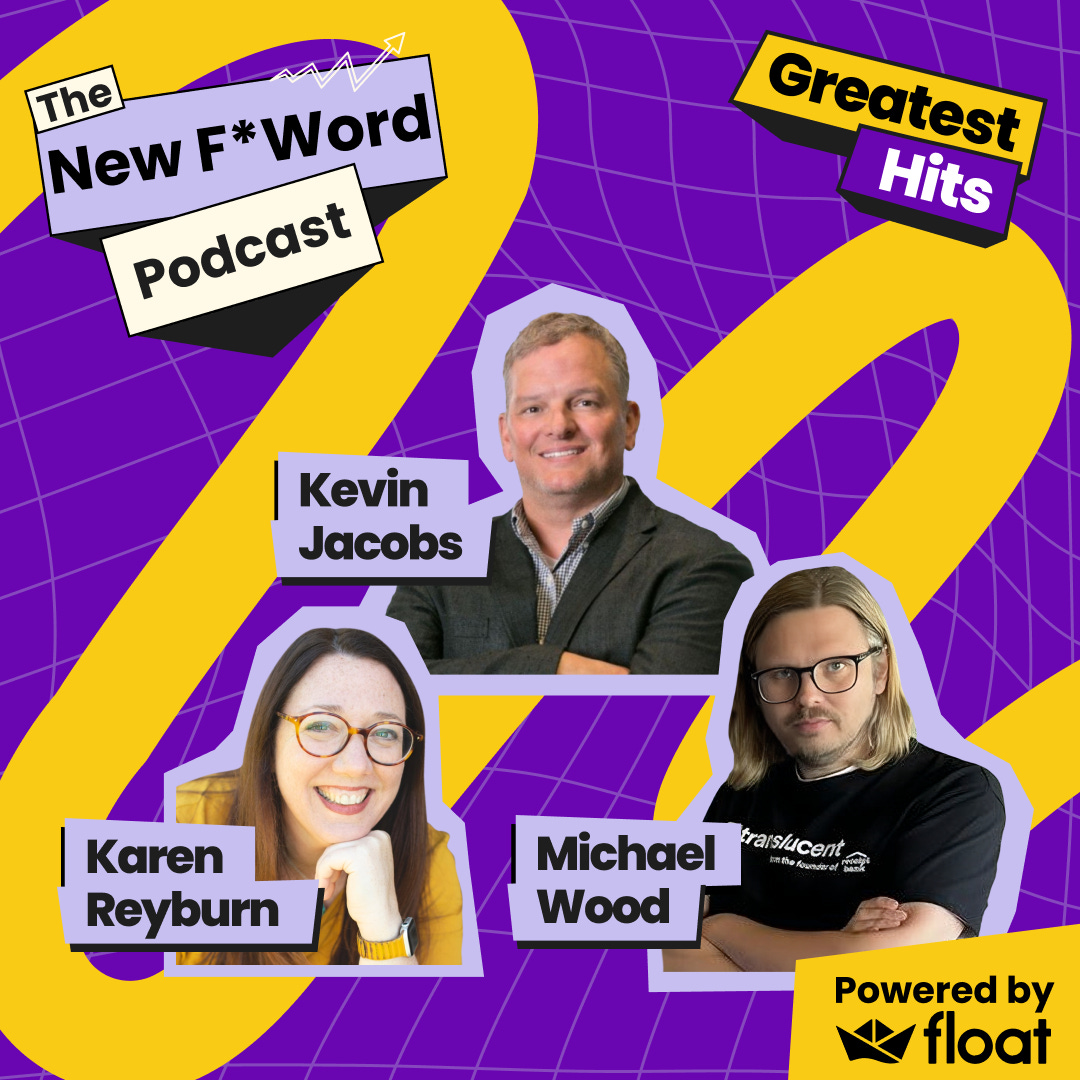 Greatest Hits: Cash, Clients, and the Secrets Behind Growing Businesses82 / 100
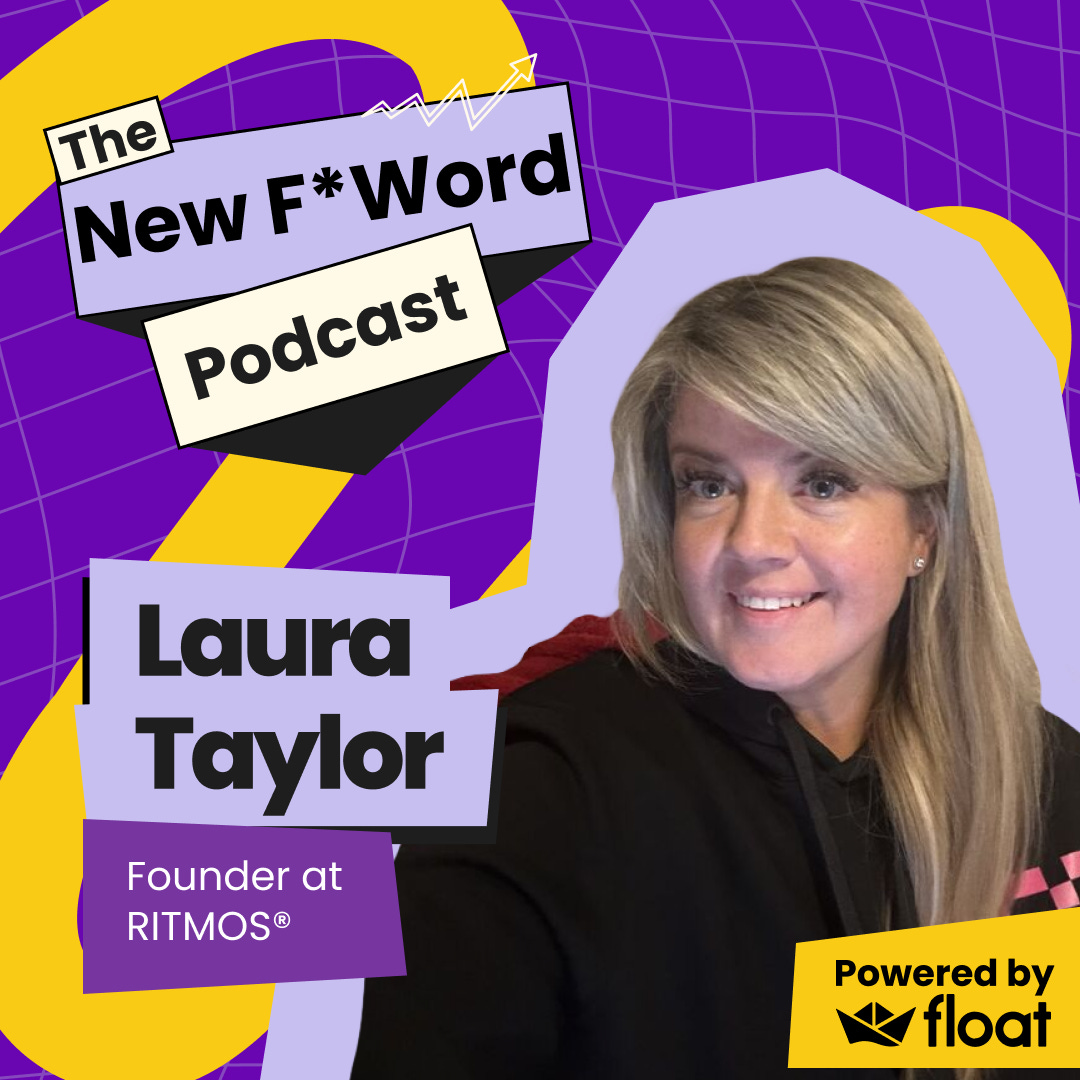 How Laura Taylor Built a £1M+ Firm That Won The Advisory Game72 / 100