The New F*Word · 2026-03-05 · 34 min
Key moments - from our scoring
Substance score
35 / 100
Five dimensions, 20 points each
Alastair Manson, fractional CFO at Ascendant Accountants and leadership coach at Kinetica Coaching, explores how the skills finance leaders rarely develop - coaching, emotional intelligence, and growth mindset - are what separate effective executives from technically proficient ones. He argues that while technical competency gets CFOs to the boardroom table, people skills and communication keep them there and amplify their impact. Manson discusses the mindset shift required to move from directive, command-and-control leadership (natural for finance professionals trained to deliver right answers under pressure) to collaborative, coaching-oriented leadership that develops teams and builds psychological safety. He shares how Ascendant uses a full-service model - from bookkeeping and compliance through strategic CFO advisory - enabling them to grow with clients and position advisory services as clients' needs evolve, emphasizing the storytelling around numbers rather than mere compliance. The episode is valuable for fractional CFOs, finance directors, founders, and accounting practice leaders seeking to understand both the market differentiation opportunity in moving from compliance to advisory and the personal leadership transformation needed to be effective in those expanded roles.
A directive approach focuses on providing answers and managing people through command-and-control, while coaching involves asking questions to help people find their own solutions, which Manson argues is more powerful for developing teams and getting better results, though it requires a significant mindset shift from traditional finance professionals trained to have the right answer.
Ascendant stands out by offering a complete service from bookkeeping and compliance through strategic advisory, allowing them to build trust with clients early and grow services as client needs evolve, plus they leverage technology to automate processing and free teams to focus on accuracy and storytelling around the numbers rather than just transaction processing.
Communication, board and CEO relationships, managing investors, and balancing technical risk management with people leadership and team development; coaching provides perspective on these challenges and helps CFOs release stress by giving them a safe space to vent and reframe where they have agency.
Many business owners don't know what they don't know and come to accountants looking only for compliance and tax avoidance, but CFO advisory becomes relevant when they're growing rapidly, expanding geographically or diversifying, when the accounting team can identify these needs and propose strategic services like cash flow forecasts and budgeting.
Viewing everything as a learning opportunity rather than task completion, creating psychological safety for teams to try new things and make mistakes, and moving away from purely directive communication toward collaborative cross-departmental work - though this mindset often drops away under tight deadlines when focus narrows to task delivery.
Our reviewer’s read on each dimension, with quotes from the episode.
The episode circles around general observations about coaching and the CFO's human side without delivering many non-obvious claims; most ideas (technical skills get you the seat, soft skills keep you there; growth mindset; coaching helps you vent) are well-worn.
the technical skills and ability get you that seat at the table, but actually it's then the people skills, the communication after that keep you there
what becomes really interesting is the storytelling around the numbers
Relies heavily on familiar frameworks (growth mindset, coaching vs telling, sports-business overlap) circulating widely; the AI-coaching discussion is timely but yields only generic predictions.
The mindset shift I found most useful is around developing that growth mindset
you almost wouldn't question why a sports person, you know, like a golfer, would have a coach
Guest is a genuine practitioner with 25+ years experience, a fractional CFO at an accounting firm and an accredited coach, relevant to the topic, though not operating at notable scale or with marquee credentials.
I bring quite a few years of experience going back to when I qualified sort of 25, 26 years ago
I'm building up Kinetica, which is my coaching practice where I help finance leaders and founders
Almost no concrete numbers, named clients, or data; the only specifics are an 80/20 time split, a vague 7-year tenure, and book/podcast titles, with most claims kept abstract.
about 80/20 CFO to coaching work
Coaching for Performance by John Whitmore
The host asks reasonable follow-ups and steers topics, but questions are soft and self-referential with no pushback or challenge to any claim; it reads as a friendly promotional chat.
How do you split your time then between coaching and CFO work?
If you could go back and give your younger CFO self one piece of tough love or advice, what would it be?
Computed from the transcript - who did the talking, and the words that came up most.
In this episode of The New F*Word host Colin Hewitt sits down with Alastair Manson, Fractional CFO at Flinder, to discuss why the human side of leadership is where real value gets created, how coaching can unlock your teamțs potential, and the practical strategies to shift command-and-control to collaborative leadership. What You’ll Learn: * Why technical excellence alone won’t keep you at the table * How to shift from ‘telling’ to ‘coaching’ without losing control * The three non-negotiable relationships every CFO must master * How to spot when your fixed mindset is sabotaging your team * Why fractional CFOs have a competitive edge in advisory services Alastair Manson is a seasoned fractional CFO, leadership coach, and performance strategist. With over 20 years of experience helping founders, finance teams, and even athletes unlock peak performance, Alastair brings a rare blend of financial expertise and human-first coaching. As a Fractional CFO at Flinder and Founder of Kinetika Coaching, he helps finance leaders and SMEs build resilience, clarity, and purpose in their work. Explore Float’s platform and solutions at This is a public episode.
Transcribed and scored by The B2B Podcast Index.
Particularly for myself as CFO, what becomes really interesting is the storytelling around the numbers. So not just, yes, it all adds up and you spent a bit more money than last month, but thinking about the story both historically and where we're heading and whether it maps to our longer-term plans. Welcome back to the New F Word podcast where we talk finances in business. I'm your host, Colin Hewitt, founder and CEO at Float.
We're so glad to be back for season 3, and this season we've got some great guests that are going to bring a ton of value. We'll be diving further into how fractional CFOs add value, what financial clarity actually looks like, and what systems and apps are leading the way. New guests, sharper conversations. Let's get into it.
So today on the New Effort Podcast, we're joined by Alastair Manson, who wears two hats and is involved in as a leadership coach and as a CFO. So really looking forward to chatting today, Alastair. How are you doing? Yeah, very good.
Thanks, Colin. Very excited to be on the podcast. Great. Well, why don't you just give us a bit of a background into what you're doing now in terms of your work with Kinetica Coaching and also your CFO work?
Like you said, I wear a couple of hats now. So more traditional role is as a fractional CFO. So I work for a business called Ascendant Accountants. We do outsourced accounting, and I sit at the top of some of those teams.
Providing CFO leadership, that attention to detail. So making sure the teams deliver across mixture of small growing businesses, across different industries, different sizes, different stages of growth, et cetera. And I bring quite a few years of experience going back to when I qualified sort of 25, 26 years ago. And my journey since then has been along the lines of, you know, a mixture of corporate, so big corporate, PLC and small business and startups, including my own businesses along the way.
And so I do that role that takes up quite a bit of my time. And then on the side, if you like, I'm building up Kinetica, which is my coaching practice where I help finance leaders and founders with whatever challenges they might be facing in their roles as well. So I do find the two overlap pretty well, although some people will see them as very distinct, but actually the coaching sort of complements fits the CFO role quite nicely. I think that's so interesting.
Like, coaching is - I remember reading a book called The Coaching Habit a few years ago, and it just really - it was like, so easy just to go into tell mode, like you just telling people what to do. And it was kind of like a real revelation. And just in terms of coaching and asking questions like, how do you think you could have done that better? But something that, you know, a lot of people - it didn't come naturally to me.
You must, when you've got that lens to see things through, you must sort of really see opportunities where people are not doing it? And also, I guess, like, how do you typically address that? You must see it a lot with people moving into sort of command and control versus that kind of coaching approach. That's right.
And it's quite a challenge when you've grown up, if you like, as an adult in that more directive, providing answers mindset, which being a finance professional, a lot of that is based around finding answers that are broadly accurate or right, doing it within tight timeframes, under pressure, sometimes with incomplete information and that need to be right. And then as you go further up the chain, I find a lot of it becomes about managing people, making sure you understand what makes them tick.
So as you move from that command and control type leadership style, trying to get the best out of people, trying to pick the right leadership style for the person, the situation, the context, that can be really powerful, I think. So rather than just being a master of one type of leadership style, being able to be flexible, essentially to get better results for the business, I found that really powerful. But it is quite a difficult mindset shift to make oneself as well. As I moved from sort of CFO to bring in the coaching mindset, and I found it hugely rewarding, actually.
It's great to be able to develop other people. So yeah, it adds quite a lot of enjoyment, even though sometimes it feels like it might be a slightly longer way around, but you can have some really interesting conversations and get some really quite enlightening answers sometimes. I mean, I think certainly often it's great for all the senior leadership team to be getting coaching. I don't know how standard that is.
You know, I know a lot of CEOs that I know do get, you know, work with a coach because they're kind of almost naturally in that jack of all trades role where they have to keep learning and keep evolving very fast and they're carrying a lot of pressure. And maybe sometimes the CFO role could be, I'm an expert in my field, I've got all the training, I know exactly what I'm doing, it's just about data. Do you find you get much kickback from - is it harder to bring coaching into that sort of role or It can be difficult because sometimes CEOs feel the need to be right about stuff and to have the answers, and CFOs as well.
I think the power of coaching can be they can show a bit of vulnerability, which sometimes some of my clients don't feel they can demonstrate with their teams. They need to be the strong leader who shows everyone the way. So in terms of coaching those kind of people, it's really interesting to understand their anxiety sometimes, their concerns. Sometimes it's just being a sounding board for them.
So I take a different approach to being a mentor or being an advisor. So it's helping those people to find their way through their challenges with my support, trying to encourage them to take a coaching approach in their leadership as well is requires a bit of a mindset shift from them. And it requires them really to embrace that learning, which again can be difficult. They might have spent 20, 30 years refining their skills as a command and control type leader.
And now I'm suggesting they change that, or at least complement it with a more collaborative and listening approach. So it can be challenging work coaching these people, but ultimately very rewarding as well. Yeah. Well, what would you say if somebody was thinking about it?
You know, like, I'm a CFO, I've never had coaching before. You know, it sounds like something, uh, soft skills that I don't need, or, you know, I'm not sure it's going to be worth the investment. What would be your typical answer to that? I would start with, I was that person.
I was skeptical about coaching when I first became really aware of it. So I was in a role as a finance director at a business, and my CEO suggested that myself and one of the other board members have a coach. Not so much suggest, but gave us a coach. And I was skeptical, and I was, how's that gonna help me with meeting deadlines, financial reporting, et cetera?
And I was very initially challenged by the difference in approach and by opening up about some of the challenges I faced. And then I found it very, very valuable in terms of improving the way I look at some of the issues being faced in the business. So it gives a great perspective on some of the challenges and some of the stresses that you find in that day job as a finance leader. So what would I say?
I'd say it is a softer skill, But I think it helps you to be a stronger leader. What would you say the typical stresses - I'm not a CFO, I'm CEO of a company, so I would say I can afford to, in my role, keeping the cash, sure, you know, making sure there's enough cash, making sure we've got the vision, and making sure the team are - we've got the right team in place, or the kind of three priorities. From CFO point of view, what would you say Like, what are the typical things that are coming up for when you're coaching?
Is it about communication or what are the stresses that typically they're coming under? Often at CFO level, it's about communication. So I sort of take the view that the technical skills and ability get you that seat at the table, but actually it's then the people skills, the communication after that keep you there and make you more effective as a leader. So there are the board relationships to manage, so the relationship with the CEO, maybe there are investors involved as well.
And then also in terms of getting the best out of the team, as well as taking that sort of risk-based view, it's a lot more forward-looking. So you're having to juggle quite a lot. And depending on the CEO, CEO will often look to the CFO as the right-hand person who has a really good grasp of what's going on in the business, where the potential traps are, et cetera, and closing the door on those traps. It involves probably less involvement in day-to-day financial work, but it does mean you need to set up the team to be able to operate effectively on that level.
No, I think it's fantastic. And I definitely think anybody listening who's curious about it should dig in because these are the sort of things that can unlock It's amazing how much I look back and think about where stress started to build up and there's no vent or something and you just start carrying this stuff. When actually you speak to a coach, they can help almost release some of that. Even just having somebody safe to vent to and then looking at it and owning some of the - where it's your responsibility or where you maybe didn't realize you had more agency than you thought you did.
That's right. It does bring a bit of perspective there. Sometimes it is helpful just to vent, just to let off steam. And a good coach might not necessarily know all that much about your context.
So might not know that much about your business, about the industry, et cetera, but will be focusing in on the way you're thinking about some of these challenges and maybe can challenge you in sometimes uncomfortable ways. To look at things from a different perspective that might help alleviate some of that stress. How do you split your time then between coaching and CFO work? So about 80/20 CFO to coaching work, and then I do some in the evenings as well.
So I do, as well as sort of finance leaders and founders, um, I do a bit in the sports world as well. So our local hockey club I'm involved with in terms of helping out there. So some of the sports coaches and organizers there, and also on the sort of tennis and golf front, they're classics for the sort of mental skills that you need as an athlete because they're such individual sports. So it's sort of you and you against the world almost.
So I'm looking to build coaching up as being more of my time over a period of time. And for now, yeah, the CFO work's still about 80%. I mean, there's such an overlap, isn't there? You sort of - you almost wouldn't question why a sports person, you know, like a golfer, would have a coach, or - because so much is going on in the head.
But in business, sometimes people would think you should be able to get - just do your, do your job and get on with it. But yeah, it does, uh, It makes a lot of sense. Yeah, I think so, because those sports people, you know, that I don't coach people at the top, top level, but I do find it fascinating because technically they're probably all pretty close in ability, and then it's the mental side that really makes that little bit of difference. And so I got really interested in that side of things.
There is clear overlap with the business side as well, and I try and marry the two up. As best I can. So that sort of combines a bit of a hobby with my job, if you like. That's great.
Fantastic. And in terms of the switching into finance world, you know, obviously you're taking on that CFO role in an accountancy practice, which is, I think, growing in popularity. How has it been in terms of how long has that been going on for? And is it been a relatively new thing for Ascendance, or has it been Gone on for a while.
Yeah, it's gone on for a while. So under a previous name, but the same business, it went on for probably about 7 years. Back in the day, I had my own business providing similar services. I think the buzzword at the time was part-time finance director.
It's now fractional CFO. And that was pretty successful for a while. And then Ascendant's been doing it for about 7 years. And it is done sort of within the structure of a finance, like accounting practice, but it's still a bit different.
So we're looking to change the way that these services are provided in the market, which is challenging. And there are a lot of players in the market now. So trying to stand out in that space is the current challenge, I suppose. Yeah.
Talk a little bit about that. How do you stand out? What do you see the challenges being? And Yeah.
What are you doing about it? We're quite well placed. So in terms of winning business for us, we can start with the nuts and bolts of anything from bookkeeping, payroll, up to management accounting, and then providing that more strategic advice above that as well. So we already have a solid client base.
So the route to market is a bit more straightforward there. I think also we're becoming a more trusted brand in the market. So I have occasionally in a previous world been called in where a fractional CFO has been there and not done what the owner wants them to do, or it's just not gelled. And so you're taking a bit of a risk if you go with just consultants, unless it's someone you know quite well.
So I sort of feel like we have a bit more trust in the marketplace. Also, there are other colleagues, so You might not want to go with a particular CFO, but others are in the business and have particular industry expertise as well. So we're well placed to cover several industries really from where we are. I mean, it makes so much sense in terms of a lot of people have been talking about that shift from compliance to advisory, and obviously compliance is always going to be important, but The advisory side is something that a lot of firms just don't do at all.
You know, they're just very reactive and they, um, they're there for the end of the year and anything, any little questions in between. But is this service more like a proactive - you sort of set a monthly meeting and, and you're going over the typical sort of strategy? Like, how does client dependent number of days, that kind of thing? It does vary, um, with different engagements, um, depending on what people sort of need and want.
Sometimes it's identifying what they might need as well. And it's interesting, like you say, that move from sort of compliance to advisory. So I know there was a while ago, the Big Four ventured into that kind of space for a short period of time. And I think the sort of risk departments of the larger firms like to veer away from providing advice.
At that level. So they were a bit, they had their hands tied a little bit there. You know, we're a smaller, more agile firm and we like to provide that advice because it is difficult to get in the marketplace. And, you know, we can provide the sort of full suite from compliance up to strategic advice.
And yeah, do you have a typical starting point for like a client or will you do that for, do you focus in any particular sectors or is it just completely How do you think about when you're taking on new clients? Is it, is it anybody who comes or is it, do you sort of turn people away? How does that work? It might depend.
So we initially focused on tech and SaaS and e-com clients, and we use a lot of tech in the background to make the processing work more efficient. And also more accurate. So let the tech do the heavy lifting. Plenty of apps that all speak to each other and do a lot of that stuff.
So we now, so I head up the services and startups division. So it's quite a good place to be taking on people at the start of their journey with an accountant, if you like, and grow with them from there. So startups might sometimes think, I desperately need an accountant. They might only need compliance at first.
We can provide that. And as their needs develop, so we can grow with them. We're quite well placed for that. And services sector, that can include almost any sector.
Uh, we have clients across a broad range. And when it comes down to it, a lot of the back office stuff is transferable. So then the advice piece, that might be when we pull in some other people within the business who've got experience in those sectors. One of the challenges often is that businesses don't know what they don't know.
So they're typically looking for, I'm just looking for an accountant. I need to get my, I need to stay out of jail and be compliant. How do you upsell that CFO advisory role without seeming like for somebody who doesn't fully understand, like, why would I need this even? Or like, do you have a, what's the strategy there for, for, or do people come like desperate for it?
Like, I didn't have it from my old accountant and I need I'm really looking for somebody to be more about, like, what's the balance there? Again, varies. So some people might come because they want the CFO service and will move their other accounting work and compliance work to us to take advantage of that CFO service. Going the other way, it might be that they're growing and the key there is keeping close to what's happening in their business and what their developments are.
So they're growing quickly. Looking to expand abroad, looking to diversify, whatever it might be. And that's where I find some of that coaching approach actually helps with our team. So it might be a part of the compliance team, part of the accounting team.
So empowering them to think about, well, actually, look, this client here needs some more help. Why don't you have a chat with them? And then we can talk about where we could assist, might be do a piece of work. As a one-off to help them start implementing some of the fundamental things like cash flow forecasts and budgeting, which some clients don't ever have if they start off as a one-person band.
We try not to force it on people, and it's a delicate balance between being a bit overly salesy or genuinely providing assistance to them. And I think, I like to think we strike the right balance there between actually genuinely thinking we can do some really good stuff here. And ideally everybody wins from that relationship development. And do you guys go all the way down to the bookkeeping level as well?
Is that so you've got the whole package? Yeah, whole package. And that bookkeeping has really been helped by some of the tech apps out there, which do a lot of the hard work, enables us to focus a bit more on the sort of accuracy and what the numbers are telling us. So particularly for myself as CFO, what becomes really interesting is the storytelling around the numbers.
So not just, yes, it all adds up and, you know, oh, you spent a bit more money than last month, but thinking about the story both historically and where we're heading and whether it maps to our longer-term plans, things like that. Fantastic. It makes a lot of sense. And in terms of, do you have a marketing department as well in the company, or is that something that you're expected to do?
You guys are expected to do yourselves. How does that work? Yeah, to say we've got a marketing department might be overstating it. I guess it's sort of part of everyone's role, particularly at senior level.
So obviously the less senior people are still representing to clients and maybe to potentials. That's really, that falls more upon the senior level team. So there's a board that will determine the sort of marketing strategy and then maybe, you know, we'll fit into that and align our messaging with that strategy. But we don't have a dedicated department at the moment.
And we do pretty well from referrals. So word of mouth, there's not a huge amount of marketing we do out there to go to market. It's always an interesting one that different people have different strategies and some people have very person-led strategy, like, you know, using LinkedIn a lot and other people are doing, have a department that's working for them. But it does seem to be word of mouth is the big one, right?
That everybody, we trust other people. And geographically, are you focused in on any particular area all over the UK, or do you focus in London? Yeah, because we can work remotely for an awful lot of the work. Well, we can do it for all of it.
We're not bound by any particular geography other than compliance work. It's more straightforward for us to do UK-based compliance work. And in terms of the advisory thing, translates to pretty much anywhere. So I'd say the bulk of our clients centered around London and the Southeast at the moment.
As our group expands either by acquisition or organically, that might well change to incorporate other cities and regions in the UK. So we're not looking to go international at the moment, but we do do some US companies as well, but because of the remote work and the use of the tech, we're not geography restricted at all. Just going back to the coaching, if you think, really thinking about, is there a mindset shift that you think people need to make that's going to help them unlock their full potential?
Is there something that you've seen that often is a similar breakthrough, or is it just different for everybody? I think coming back to that, point around the sort of technical skills and ability can get you to that top seat, but once you're there, you still need to develop further. So you're not done once you're there. I think that's when those softer skills, which people might have developed over time anyway, depending on their, the context of their team and business, et cetera.
I think the mindset shift I found most useful is around developing that growth mindset, really. And everything's a learning opportunity and trying to create that kind of environment with within a finance team. Again, it can feel quite alien to finance professionals. If they can embrace that kind of mindset, so feel psychologically safe in terms of trying new things, making mistakes, and everything's a learning opportunity.
I think that's great because it's great for the business, it's great for the individuals as well. It helps them to progress. And so I'm always thinking about succession planning and people moving up the chain ultimately. So pretty much training people up to do my job further down the line.
That mindset shift and getting people to take that kind of approach also where they're not just telling all the time, but they're collaboratively working, particularly across different departments with different stakeholders. That I find can make the real difference when it might be, to use that sports metaphor again, people are technically at the same level, If you can add in that human side and develop that really strongly, then you're in a really good position. Do you think growth mindset is an interesting one?
It makes a lot of sense, you know, and sometimes I think maybe we flow in and out of that. So at times I'll have a growth mindset and at times I'll have a fixed mindset. Like, how do you help somebody see when they're not, you know, if you've got somebody in your team, you know, that maybe thinks, of course I've got a growth mindset, that's I would imagine a lot of people do think they've got a growth mindset. I could be wrong, but how do you help them see where they're maybe, when they're not utilizing that?
It's probably a case of balancing it depending on the context and the situation. So particularly I see it dropping away a bit more when there's a close deadline and a lot needs to be done in a short timeframe. And then it's just focus on the tasks. Get it delivered, etc.
Let's worry about the other stuff after. We've got to meet these requirements. In terms of adapting the growth mindset, I think it's sort of like a long-term approach, really. And it is about your perspective on what's just happened.
So if someone's just made a mistake in your team, or if you've just made a mistake in your work, it's about how you view that and how you react afterwards as well. So taking it maybe on the chin, but taking it as a learning and benefiting from that learning as well. So acting on it, that's what helps you develop, I think. And I sort of view the CFO's role and probably any C-suite type person, their role is really to help develop that team, get the most out of them.
And I find it pretty powerful. It was quite a difficult mindset shift really from just delivery and deadlines and accuracy to bringing that human side into my skill set. And I see it with a lot of my coaching clients as well. It's quite a difficult journey to go on.
And those who embrace it really benefit from it. And it must be quite challenging if the whole leadership team's not committed to that same journey. Do you have any books or resources that you typically recommend that teams can read together to try and like help unlock that for them? Team coaching is becoming a real growth area and going beyond that coaching team of teams as well in larger organizations often.
So there is literature out there. I don't have titles to hand, but there is a lot being written about it because the way that people interact and particularly in this day and age where AI and tech is doing a lot of the the technical work, the human side of things is where we people can make a real difference now. So we can add a lot of value there as opposed to doing some of the more manual roles. Do you think coaching could be replaced by AI?
You know, could - obviously there's the relationship side to it, but you know, in terms of the skills like asking questions and digging and reflecting back, and we're going to see a rise in AI coaching? I think it's probably inevitable there will be a rise. Absolutely. It's already starting.
I think it's in the relatively early stages, but already the AI is moving so quickly that changes are happening fast and it is improving. A lot of the strength in coaching is in the relationship between the coach and the coachee. And so I think at the outset it was probably thought that AI doesn't really deliver on that level. It's getting better at it.
So that is a bit of a worry. Ultimately, I think people relate well to people. It will become a bit difficult if coaching becomes much more commoditized and AI-driven to compete with that. So, but the industry will adapt, I'm sure.
No, absolutely. I mean, I think there's certainly In sales, for example, you can have a call transcript analyze how did your call go and give you some examples about where you spoke too much or you could have done something better. We're starting to see that coming into our world, just little suggestions, which can be annoying. I think sometimes it's better than nothing.
I think for the really big problems, especially the relationship areas, like you say, the coaching of the teams, that's a really interesting area. That'd be fascinating to see how that develops because I haven't heard of a lot of people doing that yet. I know one company where there's two co-founders and they work with a coach together and that sounds brilliant. I think certainly you could see that coming into play a lot more.
Yeah, I'm not sure how the AI would work with team coaching. Someone will find a way, I'm sure. I think the relational aspect is really key and in particular if you're doing in-person coaching. Those little human cues and body language and everything else that just AI probably can't compete with at the moment.
I'm sure one day it will be able to. Well, look, it's been, it's been brilliant to chat, Alastair. Anything, any other - somebody's thinking about getting involved in coaching, are there any resources or podcasts or things that you typically, you'd recommend and where they would go and learn a bit more? As there is for anything, plenty of podcasts out there, some really good books out there as well.
I'd recommend anything introduction to coaching would be helpful. I read as well, well, many other things, but sort of Time to Think. It's a great book. Author's name escapes me right now.
Coaching for Performance by John Whitmore. That's great because that is around my interest in that overlap between sports and business and high performance. There are podcasts such as The Coaching Crowd out there that's really good, and they talk a fair bit about, are you interested in coaching? They talk a bit about more what it's like, what you can expect from the training.
So there's plenty out there. I did my training with a business called Barefoot as well, which is great, trains plenty of coaches. And I think it's worth, you know, you can look into it. You could probably do some flash courses in coaching.
I really enjoyed going more in depth and learning more about it and working towards a, a real accreditation with the ICF. It gives some credibility in the marketplace, but also deeper knowledge of it and some really good practice. So, so yeah, I'd highly recommend coaching. So whether you want to do it as a career change or whether it's just to enhance your current position or make you a stronger senior leader, I think it's a really helpful skill set to add to your box.
Yeah, it's great. I've really enjoyed it. Yeah, it makes a lot of sense. Final question.
If you could go back and give your younger CFO self one piece of tough love or advice, what would it be? Gosh, one piece of tough love or advice. Working my way up the ladder. Was always so focused on technical stuff, making sure that's right, making sure the numbers are dead right, everything else.
The human side, both in terms of relationships across a business or relationships as you get further up the chain with the board or how you manage your team. I would advise my younger self to look into the people side of things sooner, from an earlier stage.. And that relational skill set I find is vital. And that's ultimately how you get stuff done better, particularly if it's a team or a larger team.
I don't berate myself for it, but if I had my time again, I think I would look for more balance between that technical side and the human side. Great answer. Well, like, thanks so much for coming on. It's been great to chat and wish you all the best in both coaching and the CFO advisory.
So yeah, thank you. Thanks very much, Colin. Well, it's been great to chat. All the best to you as well.
Thanks for tuning in to another episode of The New F Word. I hope you enjoyed it. Remember, expert financial advice shouldn't be limited to those with just big budgets. You can access the same level of advice for a fraction of the costs thanks to this fractional revolution.
I believe that every growing business needs to know how much a game changer this can be. So if you loved episode, please consider subscribing to the show. It'll help us keep doing what we're passionate about. And feel free to share this episode with others who might find it useful.
Finally, we'd love to hear your thoughts. Feel free to connect with us on LinkedIn. See you in the next one.
Other episodes covering the same guests and topics, from across The B2B Podcast Index.
 Lessons from a finance revolution at Mars, with Colin MossFP&A Today · on Fractional CFO81 / 100
 Ep. 23 | The Pizza Express Finance Playbook: Scaling to 500 Restaurants Without Chaos | Dan Jarvis | Supy Talks PodcastSupy Talks · on Cash Flow Forecasting77 / 100
 Practical advice for scaling start-up marketingConversations with MarTech · on Growth mindset71 / 100
 The Science and Secrets of Superteams with Dr. Ron FriedmanThe Mindset Advantage · on Growth mindset69 / 100
 From Finance to Frontier Tech: Inside the CFO Role at a VC-Backed Engineering Business with Adam Uttley, CFO at Wayland AdditiveThe Finance Seat · on Cash Flow Forecasting68 / 100
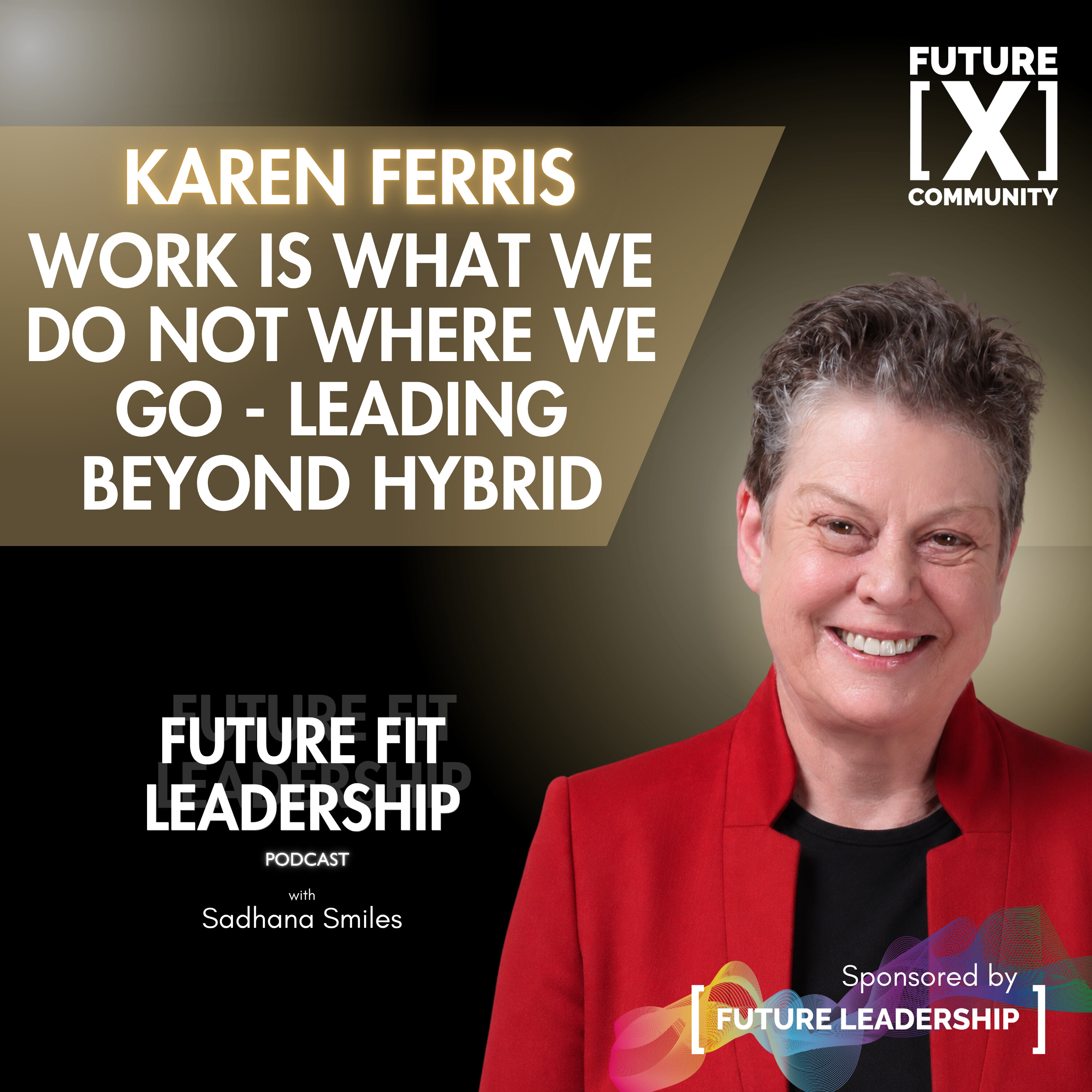 Work Is What We Do Not Where We Go - Leading Beyond Hybrid with Karren FerrisFuture Fit Leadership · on Command-and-control leadership67 / 100
 What Fractional CFOs Really Do For Growing Businesses with Alison Bolt58 / 100
 How Fractional CFOs Actually Add Value with Jonathan Rosenzweig57 / 100
 Greatest Hits: Cash, Clients, and the Secrets Behind Growing Businesses82 / 100
 How Laura Taylor Built a £1M+ Firm That Won The Advisory Game72 / 100
 Leading Finance in High-Pressure Environments54 / 100