
BookThinkers: Life-Changing Books · 2026-06-02 · 37 min
Key moments - from our scoring
Substance score
49 / 100
Five dimensions, 20 points each
Andy Weins, author of Stop Avoiding Your Numbers: The Guide to Financial Confidence for Small Business Owners, addresses a fundamental disconnect in how entrepreneurs relate to financial management. Growing up watching his parents battle weekly over cash flow - writing checks that might bounce before clearing - Weins transformed that negative experience into a mission to help business owners embrace their numbers rather than avoid them. The core insight is linguistic and psychological: reframing from "budgets" (which feel constricting) to "forecasting" and "planning," and understanding that financial discipline creates freedom, not the opposite. Weins draws parallels to the Four Freedoms framework from Dan Sullivan's 10x thinking (time, purpose, relationship, money), positioning numbers as tools for enabling the life and business you actually want rather than constraints. The conversation covers practical bleeding-stop tactics (bulk purchasing, vendor payment timing, fuel sourcing choices), the danger of discounting when cash-strapped, and why EOS implementation with scorecard metrics matters - especially leading indicators like daily phone calls that predict future revenue. The book contains over 150 questions designed to help owners diagnose where cash leaks and build intentionality around financial decisions.
Business owners associate numbers with negative experiences like bills, budgets, taxes, and accounting rather than seeing them as planning and forecasting tools. Numbers feel scary because they expose problems, so avoidance becomes a coping mechanism.
Stop mixing personal and business money, implement a scorecard with leading indicators (like daily phone calls), understand where you're bleeding cash in the margins (vendor payment terms, fuel sourcing, bulk purchasing decisions), and avoid discounting as a band-aid when already losing money.
Discounting trains customers not to respect your price; instead, offer free add-ons (dessert on first visit), bundle additional services, or explain your value more clearly - free isn't the same as discount.
EOS requires a weekly scorecard showing metrics that matter, forcing owners to identify which leading indicators predict revenue (like phone call volume) and operationalize financial thinking instead of guessing.
Small daily choices (skipping expensive restaurants, avoiding new movies, cooking at home) compound to enable major financial goals like owning a paid-off home, reducing pressure on business cash flow and allowing strategic rather than desperate decisions.
Our reviewer’s read on each dimension, with quotes from the episode.
There are a handful of genuinely useful operational points (leading vs. lagging indicator framing for phone calls, paying vendors in 30 vs. 10 days, free-not-discount distinction) but they are padded heavily with personal life anecdotes, mid-roll ads, and generic small-business bromides that dilute the useful-insight-per-minute ratio significantly.
65 phone calls, that's our goal this time of year. 65 phone calls a day. It's a leading indicator on whether or not we're gonna have work next week, how many times the phone ring this week is a leading indicator for next week. And now that same number is also a lagging indicator as to our marketing efforts last week.
it's also buying things retail. When you can buy them in bulk, it's by paying your vendors in 10 days when you actually can pay them in 30 days and it doesn't cost you anymore
Most of the conceptual scaffolding is borrowed and credited - Dan Sullivan's four freedoms, Jocko's discipline-equals-freedom, EOS/Traction - with a few decent framings ('free is not the same as discount,' 'ignorance is expensive') that are useful but not strikingly novel.
free is not the same as discount. Including other things into the deal is not a discount. And that's something I had to learn in junk removal.
your numbers reflect your company's decisions and behaviors
Andy is a genuine operator - multi-business owner, practitioner fractional CFO with real client experience, bought a competitor and installed an integrator - giving him credible practitioner standing, though his scale and reach are regional/niche rather than demonstrably large.
two years ago I bought out, uh, another business locally and I hired the owner of the business to run my business. He's now our integrator
in the last five years of consulting as a fractional CFO and the last eight or nine years consulting in general, business owners have the answers within them. What they don't typically have is the people asking them the questions to bring out those answers
The episode includes a handful of concrete figures and named examples (65-calls-per-day metric, Taffer's $20 food cost vs. $50-60 value, Mattel VP bonus structure, 99% of businesses under $2M, 80% female client split) that lift it above pure hand-waving, but many claims go unverified and the anecdotes often substitute for systematic evidence.
between the cheesecake, the ribs, and the chicken, it costs him about $20 in total in food costs that get washed away. No big deal. So he's giving away $20 in product with about 50 to $60 in value, and yet he never discounted anything else
99% of businesses never make it to $2 million. 98% of businesses never even make it to
The host asks a few genuinely sharp follow-ups (frugality vs. scale, what to say to someone bad at math) but repeatedly makes the conversation about his own Book Thinkers journey, never meaningfully pushes back on any claim, and the interview functions largely as a promotional vehicle for the book rather than a rigorous dialogue.
What do you say to somebody in the audience who goes, didn't he say he does millions of dollars a year in business? Why is he worrying about 20 bucks and waiting a year to see a movie that he wants to watch?
What do you say, Andy, to people that say I'm bad at math? I just don't like it.
Computed from the transcript - who did the talking, and the words that came up most.
In today’s episode, we have the pleasure to interview Andy Weins , author of Stop Avoiding Your Numbers: The Guide to Financial Confidence for Small Business Owners . Andy is a veteran, fourth-generation business owner, entrepreneur, speaker, and author. He has spent more than two decades serving in the military, including deployments during Operation Iraqi Freedom and Operation Enduring Freedom, and currently serves as a U.S. Army Reserve Career Counselor with the rank of Master Sergeant. As a business owner and fractional CFO, Andy has helped countless entrepreneurs understand the financial side of their businesses so they can grow with confidence instead of guesswork. In this episode, you’ll learn why so many business owners avoid looking at their numbers in the first place, how financial confidence can give you more freedom instead of less, and the simple mindset shifts that can help you stop making decisions based on assumptions and start making decisions based on facts. You’ll also hear why running out of money is the biggest threat to most businesses and how understanding your numbers can completely change the trajectory of your company.
Transcribed and scored by The B2B Podcast Index.
Speaker A: Hello Book Thinkers Family and welcome to our personal development podcast, Book Thinkers Life Changing Books. During each episode we interview one of the world's top authors and as a listener, you can expect to discover new books, new mentors, and new resources that you can use to achieve more and live better.
Speaker B: Hello Book Thinkers Family.
Speaker C: In today's episode, I have the pleasure to interview Andy Wines, author of Stop Avoiding youg Numbers, the Guide to Financial Confidence for small Business owners. Andy is a veteran fourth generation business owner, speaker and entrepreneur known for bringing a bottom line up front mindset to growth minded business leaders. He has over two decades of military experience including deployments during Operation Iraqi Freedom and Operation Enduring Freedom and currently serves as a U.S. army Reserve career counselor holding the rank of Master Sergeant. Alongside his military career, Andy has built multiple businesses, authored two books and was recently inducted into the Titan 100 hall of Fame, recognizing the top CEOs in Wisconsin. In this episode you'll learn why so many small business owners avoid looking at their numbers in the first place, how financial confidence can completely change the way you lead your company, and some of the most common mistakes that quietly hold businesses back from growing profitably. We also talk about the emotional side of entrepreneurship, overcoming self doubt and practical ways to become more intentional with the financial side of your business. Now get ready to learn and enjoy this incredible conversation with Andy Wines.
Speaker B: Andy, welcome to the Book Thinkers Life Changing Books podcast. We are here to talk about your brand new book, Stop Avoiding your Numbers and you kick off the book reflecting on some of your early money experiences. Tell us about those Tuesday night yelling matches that you would observe.
Speaker D: Yeah, my, my parents have owned a business now for 35 years and growing up it was the same fight every single week between my parents, which was my dad spent too much, there wasn't enough money coming in. Uh, you know, they're writing checks on a Tuesday or Wednesday that might get to the people that uh, you know, they're writing the check to by Friday or Saturday, which means they might have to clear by Monday or Tuesday. And how much money do we need to basically generate in the next five days? So those checks that we're writing today that are probably past due to uh, actually clear. And so watching my parents stumble through personal and professional finances was the, the catalyst behind me and the first, my first business, my first real business with my brother 10 years ago was, okay, we're never going to have those kinds of fights. And that was the catalyst behind it.
Speaker B: What you're highlighting is we all have a story that we tell ourselves about Money. And I, uh, think that most people would admit that their earliest money memories are negative or they're telling a negative story, a negative version of that reality. So you use that negative experience to say, hey, I'd like something different. But most people don't do that. Most people just say, I want to avoid my numbers. I don't want to think about them because money is bad. I know I need money to grow my business, but, like, I don't want to spend my time thinking about it.
Speaker D: Yeah, money is scary. You know, when I. When I ask business owners, how are you? How are you doing? Oh, we're good. We're busier than we were last year. I'm like, well, what do the numbers tell you? And people don't know that story. And to your point is because numbers are scary and people avoid them, and because you hit the nail on the head. Right, Too. Most people have negative experiences with their numbers. Right. They think of bills, they think of budgets, they think of accounting, they think of taxes. And when she starts shifting the language into, well, what about forecasting? What about planning? What about planning out your trips and your retirement and your life? And then what does it take to get there? Versus budgets and sterile ideas and profit and loss statements and balance sheets and things of that nature. So when you embrace your numbers, you can just start to take control of the story that they're telling you by understanding the story and also then rewriting the story as you go, instead of waiting to the end of the quarter or to the end of the year to say, well, how'd we do?
Speaker B: That word budget still sends a shiver down my spine. I hate that word.
Speaker D: Does it come from corporate America days?
Speaker B: Some of it does. And I. I just.
Speaker C: Yeah.
Speaker B: You know what it felt? It feels constricting. Which is also the same way that I think about corporate America in general, is it feels constricting. It feels like it's limiting my freedom. Although you sort of have a little bit of a different take. It's like, you know, in the same way that Jocko says discipline creates freedom. Like, budgets also create freedom in a way, don't they?
Speaker D: Absolutely. You know, when we first start the book off, the first chapter is about, why are you in business? And what do you want from your business? And that's not a question people typically ask. When I work with my clients, I typically say, you know, what's your number one priority? They say, oh, I want to go on vacation this year. I'm like, cool. How many vacations to where? Right. So how much Time and money. Do we need to go on these vacations? And then we backwards plan from there and all of a sudden it's like, oh, wait, I can use my numbers and my money as a path to get what I want versus working and just seeing what happens. Um, my wife and I live by four freedoms. And the freedoms are freedom of time, freedom of purpose, freedom relationship, and freedom of money. And so it's not freedom from money. Money is a vehicle. It's freedom of money in that we have to go make a bunch of it. And when you have that structure, we use the word structure versus discipline. When you have that structure in your purp personal life and your professional life, then you have all the freedom in the world to make the right decisions because you've already saved the money in the right spots. You've already made those decisions, you already made your priorities list, and now you're merely executing versus waking up every day and guessing.
Speaker B: Yeah, those are the same four freedoms that I think about and that I operate. You know, I'm constantly thinking about those four all the time. And I think I originally got them from dan Sullivan.
Speaker D: Yeah, 10x is either 2x 100%. That's where we got them from.
Speaker A: Yep.
Speaker B: Yeah. And, uh, you know what's interesting? And, and this. My, my whole subject around, my whole thinking around money has started to change because book thinkers, as it grows and matures, uh, we realized that we were trying to 10x on a 2x foundation, and that's not realistic. And it was breaking a lot of things. And there were, um. Yeah, a lot of things were slipping through the cracks. And so we decided to implement eos, the entrepreneurial operating system. And that forced us to step back and reevaluate what was happening in the business. And I realized I had an aversion, a real aversion to looking at and understanding our numbers. Not just the financial numbers, but like operational KPIs as well. And I, I was flying by the seat of my pants for a long time within the business. And I think that. Stop avoiding your numbers. Your new book is helping me realize that I just need to tell a different story. I really do. That's where it starts. It's that understanding these things and measuring them and looking for them doesn't limit my freedom as a business owner. Just like I'm trying to get away from that whole corporate America feel. But what it actually does is it helps me to enable, uh, a path forward that's healthier and that's better and more enabling for me. Not more constricting for me.
Speaker D: Well, and so I love us. Huge. I. I got huge. I read traction 10 years ago. We implemented EOS three years ago in our business. And one of the things with one of the first, ah aspects of your L10 every week is your scorecard. And people like, okay, I have a scorecard. What do I measure? It's like, well, uh, at first, everything, and then figure out what's actually moving the needle. What do you talk about anecdotally? So, like, I was downstairs earlier with my guys. How are the phones today? Right? And it's an analytical question. It's like, oh, they're busy, or they're ringing her. Nope, they're slow. It's like, well, what does that mean? So I know in our business, 65 phone calls, that's our goal this time of year. 65 phone calls a day. Okay. It's a metric. It's a number. It's not a number that's gonna show up on my profit and loss statement. It's a number. It's a leading indicator on whether or not we're gonna have work next week, how many. How many times the phone ring this week is a leading indicator for next week. And now that same number is also a lagging indicator as to our marketing efforts last week. So, so when, so you, you rule out a system like EOS and says, create a scorecard and you're like, cool. Like, again, where do you start? And because people in general in business don't get into business to be number crunchers, they're not excited about it. They feel forced. And when people feel forced and they're, they're under educated, they start guessing and then they start making decisions on these assumptions, these guesses. And it's actually probably worse than if they, when they just go back to their, their gut feelings or the, the oblivion you know, that they were in before. You know, naivete is a beautiful thing. Um, until you want to scale, right? You in business, it will not keep you out of business. I had a younger entrepreneur asked me this couple weeks ago. We're at an event and he said, hey, what, what one piece of advice do you have for a young entrepreneur? I said, don't run out of money. And he laughed. And he goes, that's what happened my first business. I literally ran out of money. And I go, what was the number one reason? He goes, I mix my personal money and my business money. I go, there you go. So that's why. So not because you didn't have sales, not because of profit margin, not because of customers. No, you ran out of money. And so how do you not run out of money? Like that's a great question and it's not a rhetorical one. And yet as business owners, how do I not run out of money? Is like something that goes through my mind every day, even 10 years in the business, multi millions of dollars every, you know, uh, every year, top line revenue. And I still am like, man, how do I not run out of money this year? Or how do I make this investment, not run out of money? How do I buy this house I want and not run out of money? Right, because that's, that's, that's when the game is over. When you run out of money.
Speaker B: That could be an episode title. How to not run, uh, out of money for this show. Uh, that's a good one. Yeah, it's a good question.
Speaker A: Hello, Book Thinkers family. We are on a mission to change people's lives for the better. And we believe that the right book at the right time can change your life. And the way we can impact more lives is with your help. If a book has changed your life for the better, I wanted to ask you a quick favor. Could you please take a few seconds and leave a review of our show? Because if you're like us, you want to change not only your life, but others lives as well. And by you leaving a review of our show, it spreads the word about all of these life changing books and does just that. We greatly appreciate your help. By reaching more people, you help us change more lives. Thank you so much for your time. And now back to the show.
Speaker B: I've probably never told you this story, Andy, but way in the early days of Book Thinkers, when it was still very much a side hustle, uh, I had that ignorance, that naivete, that I could do anything and rule the world and grow and scale this business really fast. And I had a mentor tell me, hey, Nick, I think you should slow down a little bit. And at the time I had just read the E. Myth Revisited by Michael Gerber and we were talking about it and he said, you know, the reason that so many small businesses fail is not because the founder burns out, but it's because they burn out of money. Most small businesses fail because they run out of money. And what happens when you start to run out of money is you start to compromise on your values. You start to discount services, you start to make bad decisions and like you highlighted, and you start to operate on assumptions as if they were fact. And so that puts you in a horrible place. And so my mentor at the time said, hey, Nick, slow and steady wins the race here. Like, continue to build until you have a little bit more certainty. Then make the jump. Don't jump too soon. Don't try to build the airplane on the way down, because again, you're going to operate from a place of scarcity. So back to your question, which is just how do you not run out of money? Is. Is the central question that all of us need to ask. And if you don't understand the basics of financial business literacy, then you're never going to be able to answer the question in the first place. So a great place to start is by reading a book like this because you break it down super simple terms, and when you walk out of this experience, you just, uh, you at least understand the basics, and that's what it is.
Speaker D: I tell people there are no answers within the book because there's, there's not this silver bullet of how to not run out of money. The book is there to inform you, uh, of things that you might not already know. And it's there to ask questions. There's over 150 questions in the book to ask your business. Everything from what is my best product line or service from a profitability standpoint to where am I losing money? Right. Where's the bleeding occurring? How do we stop the bleeding? We have a whole chapter on how to stop the bleeding because we go into it knowing that every business is bleeding some money somewhere. And so how do we stop that? And there's like the obvious, like, oh, it's subscriptions or it's penalties and it's fines. Well, it's also buying things retail. When you can buy them in bulk, it's by paying your vendors in 10 days when you actually can pay them in 30 days and it doesn't cost you anymore. Right? Like, it's out in the margins. That can make macro huge differences because there's some things that, yeah, you have little to no control over. For example, you have no control over the price of oil right now. You do have control over where you're buying your fuel from. For businesses that, uh, you know, have fuel or gasoline or diesel, you have choice over what benefits the credit card does or not does not offer. You do have choices over what perks there is from a financing standpoint. Right? So there are perks where it's like, yeah, the, the cost of fuel goes up and how do you sustain your business during those, those times of change? And so that's what the Business does, it asks it, it puts you in a position to inform you of opportunities and then ask you questions to dig deeper. Because the reality is in the last five years of consulting as a fractional CFO and the last eight or nine years consulting in general, business owners have the answers within them. What they don't typically have is the people asking them the questions to bring out those answers.
Speaker B: Mhm. And that's what the book does, is it asks questions. Yeah. By the way, on that piece, specifically, one that I've been thinking a lot about recently is discounting. It's like if you offer a service that has a 15% profit margin, you offer a 10% discount on the service and then you wonder why you have your thin margins on the back end. It's like, yeah, you got, you got additional top line revenue which feeds your vanity, but you got rid of all of the profit which like really removes the sanity in the deal. And a lot of people don't think about discounting. And, and uh, yeah, when you need,
Speaker D: when you need quick cash, when you need physical quick cash, discounting and getting paid right away can save your business. Like you said, that is building the plane like right before you're about to nose dive, right. I mean you're already on the way down. Um, and so I hate discounting. Absolutely hate discounting. Gary Vee talks about discounting because what you do is you're basically telling people not to respect your price because when you're not willing to have price integrity, why would your customers. Um, actually he Man Masters of the Universe. The new movie's coming out this summer and I watched a documentary on it. And one of the reasons why they failed Mattel failed was they were bonusing their VPs on amount of product shipped, not sold. So they shipped all this product to all these stores that put it in all these warehouses. And then people were going and buying the product and then employees were telling them, hey, just wait two weeks and this will all be marked down 50% because we have more inventory on the shelves. Right. And so now they're discounting it. Uh, so they shipped all this product and I'm losing all this money because they shipped it and they sold it and yet they sold it at a discount. And so for example, there's a great example in the book, right? Instead of discounting your services, right, how do you add more value? You can either explain the value of it, you can give away a non monetary piece, or you can give away something else that's monetary in nature. Um, the guy that does a restaurant. Not, um, a restaurant. The guy that flips, the taffer, the big guy, he talks about his restaurant, right? The first time you come in, they say, okay, you get free dessert the first time. And then the second time you come in, oh, uh, hey, when you come back next time, ribs are on me. Third time when you come in, chicken's on me. In total, between the cheesecake, the ribs, and the chicken, it costs him about $20 in total in food costs that get washed away. No big deal. So he's giving away $20 in product with about 50 to $60 in value, and yet he never discounted anything else that he sold. So free is not the same as discount. Including other things into the deal is not a discount. And that's something I had to learn in junk removal. At first I'm like, oh, I'll give you a discount. And what it was was me not having the confidence to stand by my pricing. So when you're willing to give everybody a 10% discount, well, then reduce your prices by 10% and use that as your advertised price. And so simple lessons like that. And also to your point, when I. When I've seen companies bleeding cash, they'll do one of two things. They'll say, oh, we gotta increase our prices. Well, when you increase your prices and you're not selling through your inventory, then increasing your prices actually will decrease demand, or they discount it. And it's like, well, hold on. You're already losing cash, and now you're bringing less cash in. So making a price change when you're bleeding cash isn't the answer. And so we ask a few questions to get down to what is the right answer? Because your first band aid is not going to. Right. Uh, the ship.
Speaker B: Yeah. And there's a line. There was a small line in the book that I highlighted. And you'll see when I post the book on Instagram. Now that we're having this conversation, I thought it was great. You said, ignorance is expensive. And, uh, there's a really big opportunity cost to not answering these questions in the book, like you said, thinking about discounting, just as an example. It's like the difference between me randomly throwing discounts out there all year long versus me not doing that is, I don't know, tens and tens of thousands of dollars in profit that the business could hold on to that. It's not. I mean, it's expensive not to think about these things. It really is.
Speaker D: Well, so here's a prime example of everything in life, right? I never go to movie theaters. Not a fan of movie theaters, Right? And so now you can buy movies that are in the theaters on Amazon, right? 20 bucks. Or I can wait 90 days and I can watch it for free on Amazon or like, you know, 249 or something. Or I can wait like a year and I'll be on Netflix for free, no questions asked. So I, uh, love movies. Big fan. And yet I'm not gonna pay $20 to watch a brand new movie because I know it's gonna be way for free someday. Fifty years ago, when there was no cable tv, there was no hbo, there was no streaming, like, um, I'm right, it was. You saw it in the theater or you waited till it went to the big three networks. Abc, NBC, cbs. And then you watched it there and it was like a spectacle. A spectacle. So people went to the theaters. Well, now people know. I, uh, can wait. I can get the same thing in six months for free. So that is a prime example of when you discount or when you give people discounts. Here, here. I'm in Wisconsin. We have Kohl's cash, right? So you have your Kohl's cash you get every time you buy. And then some weekends are, you know, one weekend a month is double your cold Kohl's cash. Well, what does everybody do? Everyone waits for that one weekend to double down their Kohl's cash. So it's like, why not just discount a day one and just call it the price? And again, there's, there's psychology behind it. And, and really smart people know how to do this. The average business owner has no clue how to discount their products or services that will actually stimulate purchasing.
Speaker B: Andy, what do you say to somebody in the audience who goes, didn't he say he does millions of dollars a year in business? Why is he worrying about 20 bucks and waiting a year to see a movie that he wants to watch? How do you, how do you think about frugality as it relates to the success that you've had in life?
Speaker D: I, I invest heavily in the things that matter. And I, uh, in my own personal life, I've gotten rid of all the things that do not serve me right. So, you know, 15 years ago, I still smoke cigarettes. 20 years ago, whatever, it was, right? And then I drank alcohol. I don't drink alcohol. Why? Because it's not a good use of my money and my time and my energy. Why. Why not spend $20 on a movie? Because I'd rather have a million dollar house than a $20 movie. And like is it a lot of $20 movies? Yeah, it's a lot of $20 movies and a lot of $100 dinners and a lot of $300 concerts that I choose not to go to because I choose to have a million dollar house. Or again, going back to the Four Freedoms. Uh, movies don't fall on the Four Freedoms. Not having a mortgage falls in the Four Freedoms. And so again, structure, like even the things that I enjoy doing, right, like I like going out to eat for the most part. My wife and I almost never go out to eat because we'll cook at home. Because our priorities are to retire sooner and not have to work. Now. We will still work, but not having to work, not, you know, not having a mortgage is a priority to me right now. So it's every choice has an effect. You know, some people say all this work, you know, I'll just make more money. It's like, okay, go make more money. I would rather make less money. Uh, I can tell you, writing a book costs a lot of money. So I would much rather spend tens of thousands of dollars to write a book than spend $20 on a new movie or $50 on a, uh, you know, a forgettable dinner. 50 bucks. $50 dinner is like nothing. That's like a Tuesday, right? And so I, me personally, my goals are to change the world one word at a time. I've written two books. I want to influence the entire world. And so I've created the structure where I do that. And $20 movies don't fall into that. And for other people, maybe 20 hour movies are like the greatest thing ever. They love going Friday nights to every brand new movies that comes out. Awesome. Create your life that revolves around going to those $20 movies.
Speaker B: I'm the same way that you are, I think, you know, as far as like, uh, doubling down, uh, like spending more money on the things that bring you a lot of energy and then eliminating all of your spending on the things that don't. My wife and I, we don't go out to eat in our home state of Massachusetts almost ever. Uh, but when we travel to a new city or a new country, we'll go out every night. Because going to the same restaurants here week after week after week after week doesn't bring us any energy. But a new restaurant experience in a new city or a new country that we've never been to brings us a lot of energy. And so that's where we draw the line. And so it's not that we don't like to eat Out. It's just that we don't like to eat out at home because it's a waste of money. So, yeah, everybody, I think it's good for everybody in the audience to think about that and then think about that through the lens of your business. A lot of people spend money on fancy bells and whistles to look cool in their businesses, but they don't really think about if it's generating a return on investment when they spend money on so many miscellaneous things.
Speaker D: Well, you know, especially when entrepreneurs are first starting off, making that first hire is a huge critical moment. And then you get the, well, why would I hire somebody but when I can do it myself? Fair. Well, I can tell you, two years ago I bought out, uh, another business locally and I hired the owner of the business to run my business. He's now our integrator. Um, buying a business is not inexpensive. And yet the amount of freedom I bought with that purchase. So I worked really hard to buy somebody to buy out a business so that he can run my business to get me the freedom of time that I really desire. And so you have other people that want to work and they want to maximize their profits today, so they're willing to work 70, 80 hours. I come into work typically around 11. I leave at 3. I come in on Mondays, Wednesdays and Thursdays, Tuesdays and Fridays. I work from home. That gives me freedom of time, purpose and relationship way more than more money. Right. And again, it's freedom of money, not more money. Money is a vehicle. And so whatever the desire is, the challenge with business owners is they don't sit down and define what their top priority is. They don't define what success is. When you do that, you get to start to pave a path one brick at a time, getting closer to what that idea of success is. And yes, the success will change over time. At first you're like, I'll do whatever it takes to start a business. I'll work 90 hours a week. Done. It, uh, I did that for the first four years and then eventually it's like, I, uh, want to sleep in one Saturday. Like that would be great. And then it changes and it changes and it changes. So at least every year, say, what's the top priority this year? A, uh, 22 year old, unmarried, has unlimited energy, right? And time and probably not a lot of money. A, ah, 35 year old with a spouse and kids and infrastructure has different priorities. So the book calls out and asks those questions, what do you want? And then what are the questions necessary to get you there.
Speaker B: There's, uh, another quote that you have, andy, on page 51 that says, uh, your numbers reflect your company's decisions and behaviors. And I, I love that. Objective truth, like looking at the reality of your situation. Again, all progress starts by telling the truth. And the truth is you are where you are. And that's the result of the decisions that you've been making for years. And so if you're a business owner listening to this, and I'm one of them, by the way, that's unhappy or dissatisfied with their profitability, you know, you're bringing all this money in, and it's all going out. You don't know what's happening. Well, chances are there's a story within your numbers, and you could dive in with curiosity. Not fear, curiosity. And you can go figure it out, and you could solve that problem. It's just math. What do you say, Andy, to people that say I'm bad at math? I just don't like it.
Speaker D: I love it. Um, this book, you're 185 pages in before you see a financial statement. The questions I'm asking are not related to math. This is not a math exercise. The beautiful thing is almost all accounting is going to be addition, subtraction, multiplication, division, and that's it. And we have this fancy thing called Chat GPT or Manus or Co Pilot or whatever AI you use. You can literally type in, like, what is my profit margin on this? In this, you can just say those words and put the numbers in. It'll do the math for you. There's no need to worry about numerators and denominators. Let nerds like me get excited about that kind of stuff. Right? And so it's not about the math. It's about the story. Everyone loves a good story. And your data, whether it's financial statements or hash marks on a sheet of paper, that data tells a story. And like you said in the book, it's a. The data is a direct reflection of the decisions and behaviors within your business. That's it. Right? When you go to a basketball game, you're not like, well, how did the team play? Oh, they played good. Well, you asked who won, which team scored more points than the other team. Like, that's. That's a leading in, or that's a lagging indicator as to how practice went this week. It's a leading indicator as to how their season is going. How many points do they score? So with you, well, how much profit did you have? You. You brought up a Great point. Um, there's a, A, uh, speaker that talks about this I've seen a few times recently, talks about profitless prosperity. It's people that are in business, they're bringing in money, and yet it looks prosperous. Oh, yeah, we're making investments, we're building out, we're growing the company, we're hiring people. It's like, awesome. Where's your profit at? Oh, yeah, we don't talk about that. So, you know, so you can, you can have profitless prosperity. Absolutely. Especially when, when the, uh, economy is good. Profit, loss, profit list. Prosperity is what growth looks like. Well, as soon as growth stops happening, all of a sudden you have profitless and no prosperity.
Speaker B: Yeah, I, that, that is my story. I mean, Book Thinkers has doubled year over year for the last three or four years, uh, in terms of top line revenue, but profitability has gone down year over year. And the story is, well, I'm reinvesting and we're growing. And I think your point is, well, what happens when that stops?
Speaker D: Yeah.
Speaker B: And so implementing eos was my attempt at solving this and then getting an integrator who loves the numbers, because I just. It hasn't been me, although I'm starting to. I think as you get more familiar with financial statements and you understand their importance a little bit better in the story they're telling, then you can start to find some more joy in it, which is, um, slowly happening for me.
Speaker D: Do you have a cfo, uh, at your business?
Speaker C: I do.
Speaker B: Okay.
Speaker D: Most businesses don't, which means that they're the cfo. And that's a scary thought. And as is, you know, when you look at companies, big companies, the CEOs the top boss, number one, and the second in line is the CFO. Not operations, not sales, not HR. Ah. Not technology. Almost always it's the CFO because they understand the story of the business. So in your case, you, your CFO's job is to understand the story of your business through the lens of the numbers. So where you thought were great decisions at the time, it's the job of the CFO to bring you back to reality. It's not, you know, as, as a fractional cfo, I never really talk about good or bad. It's. Does this serve or not serve our, our greater purpose and our vision for the organization?
Speaker B: Yeah, I think, um, I mean, my, my fractional CFO has been with Book Thinkers for probably five years and has a really good understanding of the business. And I probably don't seek his advice as much as I should. Uh, you know, it's more looking at, like, after action reports on numbers and not as much proactive thinking, but that's because of me, not him. I should probably change that relationship.
Speaker D: Well, uh, you know, so for my first book, should is a shit word. Does not serve.
Speaker B: Yes, I will.
Speaker D: There you go.
Speaker B: Because I certainly can. That's for sure. Power falls on me.
Speaker D: Yeah. And again, the CFO is limited by the CEO because the CEO's job, the visionary's job from an EOS standpoint, is to cast the vision. And when your vision is, hey, just tell me what happened. Well, that's what they'll give you versus, hey, I want to perform for the next two to three years so I can start looking at the implications of the decisions I'm making. Oh, those are two completely different conversations. And so the key there, as we start to wrap up here, accounting is about what happened in the past. Right. It's done after financials. Forecasting is all about the future. Our job as the CFO is to look at what's happened up until this point and what can we anticipate moving forward? And when we pull one lever. Hiring an employee, buying a vehicle, renting a space. Right. How does it impact the numbers? Increasing prices. How does it impact the numbers? So that's our job. And really, I would challenge your CFO then to say, okay, I want to be more future focused. So how do we grow the business? How do we grow top? How do we double our top line revenue and maintain our EBITDA margin? Because then you'll double your EBITDA dollars. And that's a real question to solve. And for the average person that doesn't have a cfo, the answers in the path are all within the book
Speaker B: as we wrap up here one more time. Andy, who is the target customer for this book? When you decided to write it with Lynn, who did you have in mind?
Speaker D: Business owners under $2 million in revenue. 99% of businesses never make it to $2 million. 98% of businesses never even make it to. And yet, most financial books out there start with the assumption that you have an accountant and a bookkeeper and a cfo. You know your numbers, you have some financial literacy. This book knows, as I knew as a young business owner, that there is a huge gap in knowledge. The tagline to the book is the guide to financial confidence for Small Business Owners. It's written for small business owners. The other thing interesting, uh, my co author, Lynn and I both recognize when we look back, we first started writing this book Two years ago, we looked at our target market. Both of us have been doing this for five plus years. 80% of our clients were women. So that was also interesting. So we wrote it. Our avatar, our character throughout the book, is actually a woman. Yeah. Because we've seen that more women are more open. It's not that women are better or worse than men. They have been generally more open to. To hiring fractional CFOs. So that was also interesting. So we wrote it, and we wrote it with two female ghostwriters. So we also wrote it with, um, the who are not nerds like us. So they were able to, um, make m. It, uh, more digestible than what. What sometimes Lynn and I nerd out to.
Speaker B: Yeah. That's so funny, because you, Andy, are, ah. I mean, I met you in person before you. You are a manly man. You're a masculine man. Yep. You, uh, know you're tall, you're tattooed. You know, you wear the camo pants, and you've got a deep voice. You carry a lot of authority with you. So it's interesting that you attract more female clients than you do male clients.
Speaker D: And also the fact we use two female business owners who both are ghostwriters that own their businesses. They're the ones that shaped it. Because there's certain things that are like, hey, this doesn't resonate. Like, explain it differently. Because we wanted to keep our audience in mind. That. I mean, that's. That's the key, is it does us no good writing a book to show people how smart we are. Or not. It's about writing a book that is gonna change lives. You know, you're wearing your hat. Books change lives. It's a book that, with the right investment of time, will change your business outlook, will change your life and your business. It will be that critical aha moment you have where you'll start to fall in love with the story that your numbers are telling you.
Speaker B: Well, I am a testament to that. It's happening to me in real time. So, uh, thank you for your time on the podcast today. Where can people go to get a
Speaker D: copy of the book if they'd, like1stopandavoidyournumbers.com or it's available on Amazon. Stop avoiding your numbers.
Speaker B: All right, final question for you, Andy. If this book was deleted, but you could leave the world with just one simple message from the book, what would that be?
Speaker D: There's no hooks in your ass or trees in your way. So that's what I grew up on, the farm that was always the answer. Right? And like, like you said a little bit, right, you avoided your numbers, you let somebody else handle them. You've let your CFO kind of give you what you've seen so far. Right. The reality is there's no hooks in your ass or trees in your way. We all have limiting self beliefs that have put an artificial ceiling on our, on ourselves. And the reality is, as soon as you remove that artificial ceiling, you, me, the listener, what a wonderful world it can be.
Speaker B: Yes, very true. And I love that. I love that. What a great way to wrap up. Thank you.
Speaker D: Thanks, Dick.
Speaker B: That, uh, is a wrap. Thank you so much for listening to today's episode of Book Thinkers. Life changing books.
Speaker C: It would mean the world to us
Speaker B: if you could write a review and share this episode with a few of your friends. I mean, these books truly have the power to change people's lives.
Speaker C: And by reviewing or sharing our podcast,
Speaker B: you're helping us make an impact. If you have any recommendations for future guests or any constructive feedback for us on how we can improve our show, please feel free to submit a form on our website, www.bookthinkers.com or send us a direct message on Instagram at Book Thinkers. With that, I am signing off and I hope you have a wonderful day. Don't forget, go read.
Speaker D: Sam.
Other episodes covering the same guests and topics, from across The B2B Podcast Index.
 Second-Time CEO Buys a $30m Title CompanyAcquiring Minds · on EOS (Entrepreneurial Operating System)90 / 100
 Growth: Turn Discounts into a Profit Engine with Smarter Promotion Strategy with Dan Bond, RevLifterKeep Optimising · on Discounting strategy82 / 100
 Ep. 23 | The Pizza Express Finance Playbook: Scaling to 500 Restaurants Without Chaos | Dan Jarvis | Supy Talks PodcastSupy Talks · on Cash Flow Forecasting77 / 100
 The Strategic Pause: Navigating Chaos and High-Stakes Leadership | Ep. 88 ft. Norman LeachLeadership in Quarters: 15-Minute Culture Insights · on Leading indicators vs lagging indicators76 / 100
 How We Run Two Multiple Seven-Figure Businesses Together Without Burning OutSeven Figure Agency Podcast with Josh Nelson · on EOS (Entrepreneurial Operating System)70 / 100
 From Finance to Frontier Tech: Inside the CFO Role at a VC-Backed Engineering Business with Adam Uttley, CFO at Wayland AdditiveThe Finance Seat · on Cash Flow Forecasting68 / 100
 292. Neen James | Exceptional Experiences: Five Luxury Levers to Elevate Every Aspect of Your Business
 291. John Lee | Money Unlocked: How to Make it, Keep It, and Multiply It
 290. Aleric Heck | Video Authority: The Art and Science of Converting Viewers into Clients.
 289. Dr. JC Doornick | Makes Sense: Rewire Your Mind and Transform Your Life.
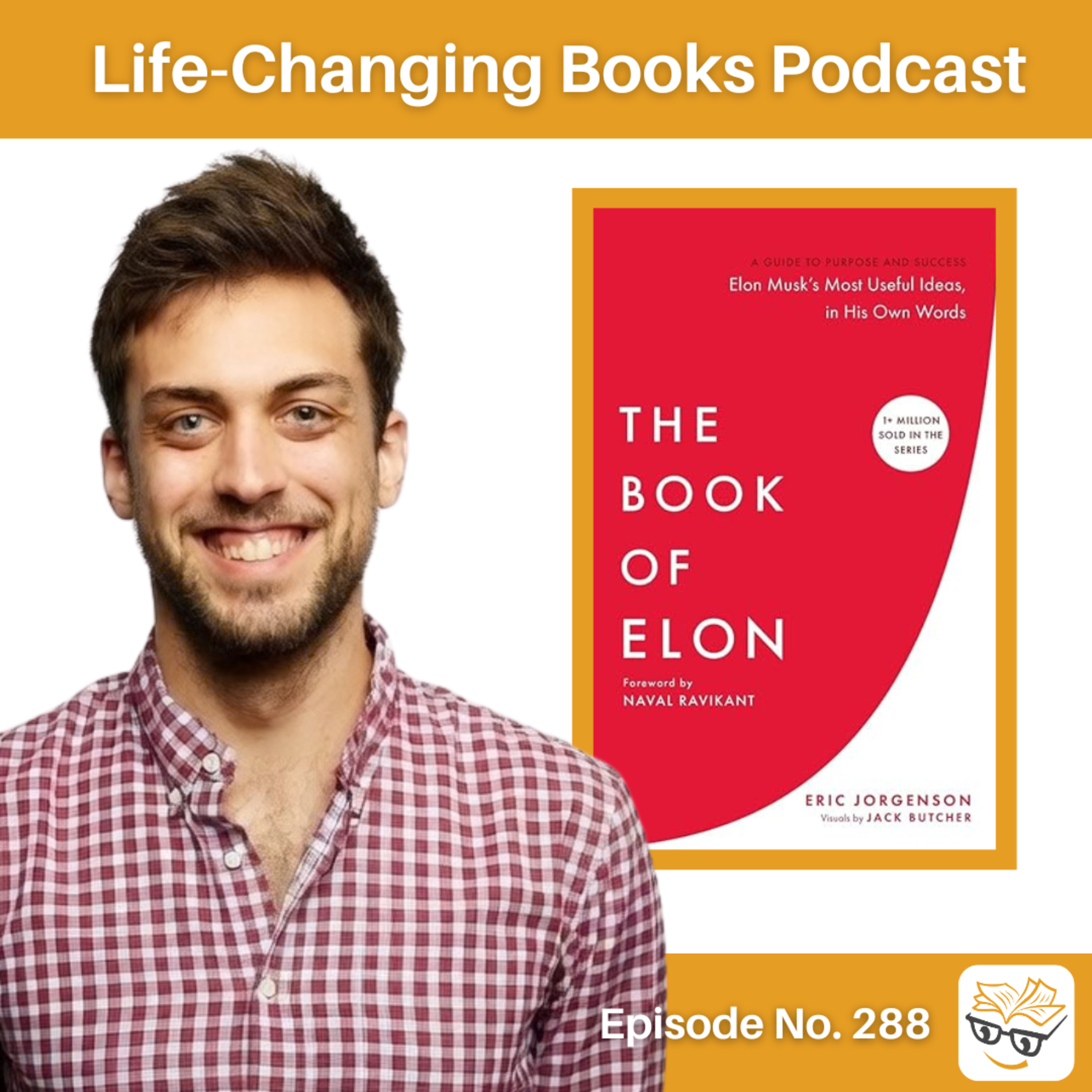 288. Eric Jorgenson | The Book of Elon