
The HR Impact Show · 2025-10-16 · 38 min
Key moments - from our scoring
Substance score
61 / 100
Five dimensions, 20 points each
Airbus, a 160,000-person aerospace company, faces a paradox: employees recognize its world-changing purpose (pioneering sustainable aerospace for a safe and united world) but cite complexity and slow decision-making as pain points. Paul Coignec's approach centers on decentralization - shifting accountability from headquarters to regional and team levels. Rather than assuming a large enterprise must accept bureaucratic friction, Airbus is experimenting with distributed leadership development. The company decentralized its Leadership University, establishing a training hub in Singapore that serves 150 people annually across Asia Pacific, covering both formal managers and emerging leaders. This mirrors Airbus's broader commitment: a 10-year AI charter pledging not to use automation to reduce headcount, but to enhance capability; and resilience training for high-mobility roles like sales. Coignec also discusses succession planning as a collaborative team-level exercise, internal mobility prioritization, and skill bridging for next-generation aircraft development. For HR leaders managing large, geographically dispersed teams, this episode offers concrete models for capability-building at scale without centralizing control.
By decentralizing leadership and empowering local management teams to address issues at the working level, rather than escalating to headquarters, and by establishing regional Leadership Universities to equip managers with capability to solve problems in line with company culture.
A decentralized training program open to all employees (not just people managers) that offers leadership and emotional intelligence courses. It also has an 'accelerated developers' track for high-potential talent, with 150 trained annually in the Asia Pacific region.
The company signed an AI charter committing to use AI first for operational efficiency and capability enhancement (e.g., identifying engineer talent for new aircraft design), not for workforce reduction, maintaining long-term employment security.
Through collaborative annual 'team reviews' where regional leadership collectively assesses high-potential candidates for accelerated developer programs, and by balancing expat talent (from founding European countries) with regional talent to build global capability.
The company provides resilience and mental preparation training from special forces experts, framed as preventative athlete-style preparation for all exposed employees rather than remedial intervention for those in crisis.
Our reviewer’s read on each dimension, with quotes from the episode.
The episode contains a moderate amount of substantive discussion about decentralization, leadership development, and employee engagement strategies at a large enterprise. However, significant portions consist of biographical background, company purpose statements, and relatively generic HR advice (resilience, authenticity, self-awareness) that practitioners have heard before. The concrete initiatives - decentralized leadership university, special forces mental health training, team review processes - are interesting but not deeply explored with operational specifics.
we now are able to train around 150 people per year and to make sure that we equip them to be able to solve this kind of engagement issue
we did invite, and this was like for free, a neurosurgeon also to participate to our event. And he was sharing the importance of sleep
The core concepts - decentralizing HR functions, investing in leadership development, building psychological safety - are well-established best practices in large organizations. While the specific execution details (Singapore-based Leadership University, special forces doctor training) add some novelty, the underlying frameworks and principles are not particularly contrarian or first-principles thinking. The guest largely affirms conventional wisdom about resilience, authenticity, and employee engagement rather than challenging orthodoxy.
we pioneer a sustainable aerospace for a safe and united world
we are not a trend follower. Not that we don't like to be a pioneer or to take some risk here and there
Paul Coignec is a legitimate practitioner with real operational responsibility - VP of HR for APAC at a 160,000-person multinational with measurable business impact (top employer awards, engagement initiatives across regions). However, he is not a P&L owner or founder-level executive. His domain expertise is HR-specific rather than cross-functional business leadership. He has demonstrated career progression and tenure at a complex organization, which carries credibility, but the role is functional staff rather than business-critical line leadership.
I am the head of HR and Health and Safety for Asia Pacific
over 10 years of experience at Airbus
The episode contains some concrete numbers (160,000 employees, 150 trained per year, 10 years tenure, 2.5 years in Singapore, six different jobs) and named programs (Leadership University, accelerated developers, special forces doctor training, EAP). However, critical metrics lack specificity: no actual engagement scores, attrition rates, cost data, or measurable ROI on programs. The discussion of challenges (complexity, slow decision-making) is acknowledged but not quantified. Action plans remain somewhat abstract without concrete timelines, budgets, or success thresholds.
we now are able to train around 150 people per year
with 160,000 employees globally
The host (Dorothy Yu) asks competent follow-up questions and shows genuine curiosity - she probes the Leadership University eligibility, asks about succession planning across regions, and circles back to measurement. However, several opportunities for deeper pushback are missed: she doesn't challenge vague claims about addressing complexity and slow decisions, doesn't ask for concrete failure examples, and doesn't press on cost-benefit tradeoffs or organizational resistance. The conversation is friendly and collaborative but lacks the edge of productive disagreement or skeptical follow-ups that would elevate it.
So I'm curious to know, how does Airbus look at secession planning?
how can they approach leadership development in a more organic way?
Computed from the transcript - who did the talking, and the words that came up most.
Paul Coignec is the Head of Human Resources for Asia-Pacific at Airbus, a role he has held since February 2023. Based in Singapore, he leads the people strategy and HR operations across all business divisions, supporting over 3,500 employees in 11 countries. Having spent his entire career with Airbus, Paul has held diverse HR leadership roles across France, Germany, and Singapore, giving him a deep understanding of the company’s culture, operations, and people. A strong advocate for building inclusive and high-performing workplaces, Paul continues to champion initiatives that align business goals with employee experience - ensuring that Airbus remains an employer of choice across the region. In this episode of The HR Impact Show, Paul reflects on his career journey and the company’s evolving people strategy. He shares how Airbus is navigating complexity by decentralizing decision-making, empowering local leaders, and driving leadership development through its regional Leadership University. Paul also discusses the use of employee engagement insights to shape continuous improvement and innovation across a 160,000-strong global workforce.
Transcribed and scored by The B2B Podcast Index.
Speaker A: We are no startup, but it doesn't mean that we take for granted that we cannot improve. We try more and more to decentralize and to empower the local management to make sure that we have the opportunity to have this kind of employee engagement measurements at team level. And what we want to make sure is that local burdens regarding complexity, regarding processes can be addressed at working level. And this is what I'm doing with my own um, team in Singapore. And one strong commitment that our ah, company took few years ago, not only for Asia Pacific in Singapore, but also in other regions of the world, is we choose to decentralize our leadership university. So we now are able to train around 150 people per year and to make sure that we equip them to be able to solve this kind of engagement issue and to solve them also in line with our uh, company culture. So that's, I would say, one way we are putting in place to not only shift the accountability to the team level, but also equip the management to be able to tackle such topics.
Speaker B: Welcome to the HR Impact show where we have honest conversations with global people leaders about building great workplaces. I'm um, your host, Dorothy Yu, CEO and co founder of Engage Rocket. Engage Rocket is a HR technology and advisory company that leverages on data to help organizations improve employee experience from hire to retire. Our guest for today is Paul koernak. He's the VP of HR for Asia Pacific at Airbus. With over 10 years of experience at Airbus, we look forward to hearing his experience that's spanned across France, Germany and now Singapore. Welcome to the show, Paul. Very excited to have you with us today. And for the audience who may not be familiar with you, tell us more about yourself and your journey and how you found yourself to be here in Singapore.
Speaker A: Thanks for having me first. So my name is Paul Quagnac, I'm 37 and I arrived in Singapore two and a half years ago. Before that I've been spending my whole career at Airbus. I started there as an intern and uh, currently I am the head of HR and Health and Safety for Asia Pacific. I started with what I think is uh, the core uh, of the HR function, at least for a company like Airbus, which is to work in employee relation. So I was representing the company Airbus in front of employee representative in France at European level, giving to the social dialogue the importance that we think it deserves. So that was, I would say, the way I entered the HR function and how I discovered also the breadth of it. And after that I had the chance to Have a generalist role in Paris, where I was in charge of a, uh, manufacturing site from an HR perspective, doing the blades for the helicopters. So very, I would say industrial side. And after that I had the opportunity to move to the headquarter based in Toulouse. And this time it was a much more, I would say, corporate environment and a very interesting job because I was the HR for the hr. So a bit like a uh, doctor for doctors. So a very interesting position where you learn a lot from your peers. And this was for me the moment also where I identified the need to go beyond Europe, France, Germany, where I spent time already. And it brought me in fact to Singapore beginning of 20, uh, 23.
Speaker B: Pardon my ignorance, but HR for HR, what does that mean? How is it the same as being group hr?
Speaker A: Not at all. It means in fact being the HRBP for the group hr. Sometimes we tend to say that we in HR are maybe not as served as good as we like to serve the business. So it was my role to try to do it a bit better and to make sure that uh, our HR community had also their own, I would say, uh, sparring partner to develop their career. But also because unfortunately it was at the time of COVID I was also in charge for example of the retrenchment plan for the HR function during this Covid crisis. So it's just to make sure that we have the same level of attention on people.
Speaker B: I must ask because your journey is so interesting, you started out at Airbus as an intern, right? And it's been a decade, 10 years or more. Still with Airbus, would you consider yourself as a lifer? And what keeps you going at a, ah, single company given today, what we are also observing is that especially you and I are considered millennials, but our Gen Z's and Gen Alphas, the tenure that they're staying is shorter and shorter. So tell us what makes your tenure in Airbus so prolonged?
Speaker A: Yeah, uh, I think I didn't join Airbus by chance. Since I would say my young age, I was very interested into uh, discovering more about Europe and in particular about Germany. So I spent a lot of time there and I realized that I had in fact two options. One was to go on the, I would say more political trajectory and the other was to go to a company. And in fact when I found the opportunity to work at that time for EADs was the previous name of Airbus, this was the best mix I could in fact be in a company and be a direct contributor to the European project. Bringing together different countries of Europe with a Common objective. So that's what brought me into Airbus and what's keeping me passionated because now in fact I'm able to go beyond Europe and to continue to connect people on a daily basis from all over the world. So that's I would say the motivation to be at Airbus, to join Airbus. And the reason why in fact I think I'm not getting bored is also because it's a company offering a large range of opportunities. Uh, we have uh, activities in commercial uh, aircraft of course, but we also have uh, a passionated division on uh, the helicopter and uh, what is currently also a core I would say challenge for Europe is all what we have in uh, the perimeter of defense and space. So I think over the past 12 years I had six different jobs, five different locations so I didn't have the chance to be bored.
Speaker B: I must ask also earlier this year um, Airbus was just recognized as the top employer in APEC region and also Singapore's best employer by the streets times. By the way, congratulations from your perspective and feel free to be biased, what do you think sets Airbus apart?
Speaker A: Well thank you first and I think in fact it's a pride not only to be uh, awarded in Singapore and in Asia Pacific, but we have been awarded also globally, worldwide. So we are happy to contribute to that. From our perspective what is setting clearly Airbus apart is that we are not I would say a uh, startup and these are good and bad aspect to it. With the challenging part is that our employees regularly and I think that's also your core business. When we do an employment engagement survey, let's say people will tell us that we are not simple, it's true. People will tell us that we are slow to make decision. That's true as well. We are trying to improve on a daily basis this dimension. But we are also super proud that our employees recognize that we have products that contribute to change the world. We have a purpose that not many company can have which is that we pioneer sustainable aerospace for a safe and united world. And when you have the chance to contribute in the current environment to the piece, to make sure that cultures continue to know uh, each other, that people are able to travel, to physically meet and discuss. This is in fact I think what keep us super motivated. And it's true we are not a startup but we are a company which is able to uh, influence the trajectory of our societies. So I think that's what makes us unique.
Speaker B: So coming to work and really feeling that you're contributing to a much bigger uh, purpose beyond yourself, could you Tell us what's the purpose statement?
Speaker A: Again it is we pioneer a sustainable aerospace for a safe and united world. So the part for us, which I think is very important, especially in Asia Pacific, is that we see natural disasters unfortunately more and more frequently. So we see also the need for satellites to be able to follow and to track the evolution of such disasters. We see the need to have helicopters to intervene. We see the need to have a cargo to bring the materials that will be needed to face such situations. So we do see in fact that our products are uh, more than ever of the essence and we want to make sure that yeah, we contribute to serve our purpose here. And when it comes to a safe and united world, I think it's especially for the commercial aircraft, we are very proud that our uh, products in fact are uh, uh, recognized in the Asia Pacific region. And we do think that making sure that people from Australia, from Japan, M Korea, from all the different side of the world are uh, easily, let's say able to travel to places like Singapore where everyone will meet like at the Shangri La dialogue a few months ago. This is how people in fact can solve issues by being together. And that's where we are strong believer at Airbus that we do think that being physically together is what will help the world moving in the right direction.
Speaker B: Paul, so I caught something that you have said just now which really interests me because of course Engaged Rocket is all about employee engagement, collecting data around employee sentiment. And you mentioned that two dimensions that presenter opportunities would be complexity and also time it takes to make decision within Airbus. But given the organization that has 160,000 employees, you would almost assume that's normal. So how is Airbus looking at this low scoring dimensions and what are some of the action plans around this?
Speaker A: Well I think you're right. I think we know, as I said at the beginning, we are no startup but it doesn't mean that we take for granted that we cannot improve M so the idea is to put ourselves into questions to see what we can do differently. And I guess also one thing, and I'm well placed to speak about it we do is also we try more and more to decentralize and to empower the local management to make sure that we have the opportunity to have this kind of talks or this kind of employee engagement measurements at team level. This is the directions we are heading to and what we want to make sure is that local burdens regarding complexity, regarding processes can be addressed at working level. So this is what we are doing and this is what I'm doing with my own UM team in Singapore on these two dimensions, for example.
Speaker B: So if you're talking about greater effort to decentralize to local management and even maybe perhaps down to the team level, I would assume one of the biggest thing that I often see is the concern around whether or not the manager themselves or the team managers themselves are ready to know what to do and how to engage the employees on the ground. So how does Airbus go about thinking about managerial capability building or leadership development?
Speaker A: It's something we take really at I think Airbus, if I speak particularly about Singapore, is that as much as we can, of course we want to be competitive with the market when it comes to compensation. But the reality is that where we really stand out is regarding leadership development. And one strong commitment that our company took few years ago, not only by the way, for Asia Pacific in Singapore, but also in other regions of the world, is we choose in fact to decentralize our Leadership University. So we have very successful leadership university based at our uh, headquarter in France. And we took the conscious decisions to say that up to a certain level we would like this university to be closer to our people. And this is what we have done in Singapore. So we now are able to train around 150 people per year and to make sure that we equip them to be able to solve this kind of engagement issue and to solve them also in line with our company culture. The idea is also of course, to convey our leadership model and to make sure that people are living per our values wherever they are, uh, located in the world. So that's, I would say, one way we are putting in place to not only shift the accountability to the team level, but also equip the management to be able to tackle such topics.
Speaker B: I would love to dive more into this Leadership University that you've talked about. Who qualifies to enter, uh, this Leadership University. Do I have to be a people manager to get in or how does it work?
Speaker A: I would say we have two types of population. The Leadership University by design is open to all. So you don't have to be a people manager to access to a training provided by the Leadership University. We have lots of training about leadership, about uh, emotional intelligence will help you basically to develop in your career and maybe to be ready for a management position. And by the way, we do consider as well that you can have leadership responsibilities even if you are not a people manager as such. So this is open to all our uh, people in Asia Pacific. And we will have another uh, channel for the leadership University, which is targeting what we call our accelerated developers. And for this very limited population by design, because we want to be able to accelerate them, we will have dedicated training to make sure that they are benefiting from very good career advice, career development, but also being put in a room together with different specialties, competencies, cultural diversities so that they develop what is uh, also important in a group like Airbus, which is to build a network of people who will follow you during your career. So this is what we make happen also in Singapore.
Speaker B: So I'm curious to know, how does Airbus look at secession planning? Succession planning is often thought about at perhaps the uh, more senior level. But then even promoting someone into say a people management role, what are some of the criteria you look at to, to really think about at the bottom level promoting someone into a people manager role and then at the higher level really thinking about succession planning, especially given the mobility that Airbus also has, people might move to different business unit or might be doing another position, or may even change departments.
Speaker A: Well, first thing I won't say is that we are a benchmark for what we are doing. Uh, we are, as I said first committed to make sure that we give people a chance to develop their career. I think that's one of our arguments when we onboard people is that we don't onboard them for two to three years. We want to be there for longer term. Like by the way the cycle of our products, we want the people to stay for a certain number of years. The way we do it I think is again it's not a one shot investment. So we have every year what we call the team review, which is a very collaborative exercise, collective exercise, what's for me very important because then your career doesn't depend of one manager. Everyone is around people, acknowledge, discuss your profiles. And I would say the leadership team we have, for example at regional level we stamp basically the best candidates for accelerated developer program. So we all take a commitment. Basically if one of us is not there anymore, at least there will be the others. We get also this history. And when it comes to succession planning, one thing that we like to do is to try also to find the right mix between having people like me coming from the uh, founding countries in Europe to a region to grow, to develop, to get this global understanding that we need for a company like ours, as well as having the right mix of people coming from the regions so that they can get the chance to be exposed and to reach also the highest level of the company. So we are trying always to find this right balance to make sure that the company as a whole, let's say, is becoming more M and more global.
Speaker B: You know, we are moving towards a skill based economy and with your leadership university as well as the accelerator program, how do you keep up with what's the uh, latest skill gaps that exist? And I think more importantly the question is also around decentralized it at the local level because I would imagine different regions also has its own nuances and needs and the skill required might be quite different.
Speaker A: True, to be very honest, if I take a step back and I look again at the global challenges for Airbus, our biggest gap, let's say when it comes to skills for the future for us, is about the skills we will need to develop a new generation of aircraft. That today the main challenge of our uh, company and it will be a challenge between now and probably, probably the 10 years to come. So to build this new generation of aircraft, ah, we need to have skilled engineer people having the experience of designing from scratch a new aircraft. And this is a big challenge from an HR perspective because such people can be everywhere in the organization. So we need to be able to find them, to identify them. We need to be able to anticipate also the demographic because some of them may be close to retirement. So to anticipate also the transfer of knowledge. And I think this is if I will take one challenge about skills, I will take this one. And I think it's probably one where we do see also a strong use case for artificial intelligence because we do recognize that this kind of technology could help us to gather the data. As you said, we are more than 100 uh, 60,000 employees. So to be able to get the right profiles for such, I would say a revolutionary challenge for Airbus is probably the next fascinating challenge for the HR function.
Speaker B: I definitely want to circle back to some of the AI trends that's hitting the aerospace industry. But before I move on to that, I do want to ask with 160,000 employees globally, there must be a lot of talent internally existing. When do you make the call as HR to recruit externally because of the mobility and opportunities that is given to internal staff? Then of course the first point is to let's look at internal pool of talents. But at what point does it tip over to okay, let's get a recruiter and start looking externally?
Speaker A: It's a good question. I would say the uh, first reflection of Airbus and in the current environment, which is quite challenging, especially for example in the space business currently we first and foremost give priority to our employees. Meaning that if we see a business going down, we will give the opportunities to our people to find a redeployment and we will help them to bridge the gap. From a competency perspective, I would say that will be the first priority that we will give. But that being said, when we are under normal circumstances, we always try to give first priority to internal mobility. And if we don't find the right profile internally at the moment, where we will look at the external market. And I think more and more we are also being conscious that we might not have the right type of profiles already developed internally, but we still want to have some expertise coming from some of the countries we have in Asia Pacific. If I take one example, we are currently hiring, for example, Japanese, uh, for an executive position in Japan. And this is something if we don't have yet, I, uh, would say the right person developed at the right level we will decide to do because we will see the advantage of having a local over bringing someone from the internal pool who might not have the skills we need to be successful in the country or the competencies we require.
Speaker B: So let's go back to AI because it is definitely a force that is disrupting all industries. What are some of the trends that you're seeing in the aerospace industry itself? And I think you talk about those future generations of aircraft that needs to be built, and how is Airbus thinking about bridging those skill gaps in the
Speaker A: industry where we are one thing that we try to do, and it's valid for many different, what I can call trends. Overall, Airbus is not a trend follower. Not that we don't like to be a pioneer or to take some risk here and there, but as we said before, we are a big company and what we owe to our people, I think, is to be consistent over time and again. We are not there, uh, to hire them for two to three years. We want it to be on the long run. So the first message I think that we pass to our crew is that we know that artificial intelligence is already making a difference and we are using it first and foremost to be better in our operations, to be more efficient, to digitalize the relationship among our supply chain, all this kind of aspect. But one commitment that we also took is to sign an artificial intelligence charter, uh, where we took also the commitment to say that we will not look at AI as, uh, a way to cut our workforce. It's not the approach that we took. We want AI, as I said before, to be there, for example, to equip us in hr, to find the right profiles for the future. Will AI replace so many people in the company, so many jobs? Maybe. But what we are committed to do is to make sure that we will be there to train our uh, people and to make sure that we use AI first as a tool to be better positioned to do our job before going too fast to a mode where we will say okay, from one day to the other, we will completely, let's say, delegate part of the activities to the artificial intelligence.
Speaker B: Oh, I love that because you're literally almost setting guiding principle on how the company is going to approach AI by transparently communicating to all employees that it is not to fire people or to replace anyone, but to increase productivity. I think that sets the tone of creating that psychological safety and that openness to also experiment, embrace what experiments that the companies bring forward. This year has been very interesting because we spoke to a few chros through our podcast and one thing that is common is just, you know, the pace of change is increasing and then we started 2025 with what everyone coined as the Trump effect. And then of course change is still coming. How is Airbus building that again? I guess back to psychological safety or even well being. How are you taking care of employees?
Speaker A: It's one of the aspects I think we talk more and more at Airbus is about resilience. This is a word that is used more and more in the company and I think it's because of what you say that the global climate is a climate where we expect people to be able to face some adversities and this is a point of resilience to come back to a uh, level of shape which we would consider as being a normal one. So for me it's important that we equip our people and one thing that we decided to do especially with, we consider our salesforce being particularly exposed to uh, customer but also lots of travel, lots of back and forth as you mentioned with the uh, current geopolitical environment. So we decided at the ah, beginning of last year to train them with an ex special forces doctor from Australia and to treat them basically as a commando or as athletes, uh, and to make sure that they see the uh, exclusive also care that we were putting for them not as a weakness but really more as it's not only talking about well being and resilience, it's about investing in your mental preparation so that you can face whatever will come basically during the year. So I think for me what's make a big difference is two things. One thing is we don't want to uh, come Too late, basically. So we are not telling to the people you go there because you have an issue so that they will badly perceive it, perceiving it as a weakness. So we'd say it's for everyone being exposed, whatever. In fact your mental health is. Basically it's to prepare you. And the second element, which I think is also important is to make sure that this is not a one shot. What we have been putting in place is a uh, training but there is also a follow up with a coach during the year so that people also, when they do face this kind of difficult moments, they have someone they can relate to. I'm not saying it's perfect, I'm not saying we have found the recipe, but this is one of the uh, genuine actions that we have put in place to try to make sure our uh, people can face better high stress environment.
Speaker B: I want to make sure that I'm hearing this carefully as in special forces Dr. Literally training some of your employees, like Navy SEALs.
Speaker A: I would say it's not on the physical part, it's purely on the mental preparation. One of the challenges is very similar to a lot of organization. If I'm telling my top people that we have, which is the case, an employee assistance program in place that they can hold every day, at every hour of the day of the night, they might do it, but probably first they will do it at a very late stage. And they, there is a bit also of a superhero syndrome that the people who are exposed at that level, they do things that they are Superman and superwoman. So my point is, okay, if you are this kind of Superman and superwoman, like the athletes we had in Paris for the Olympic Games, they do come with a mental preparator. They are not a world champion or having a gold medal by chance. Uh, they focus on their physical and mental training. We think you deserve the same. And what I found personally interesting as uh, an HR is that for the first time I had people coming to me and complaining that they could not attend the training. And it's not, I would say the usual reaction when you put in place a uh, training around mental health or well being. So it means that people found it to some extent attractive so that they were requesting it for themselves. So if we manage to do that, I think we can change a bit. Maybe the usual approach.
Speaker B: One of the things about preparing our workforce for transformation or for change is this behavioral change that ah, needs to be sustained. So after training, maybe after a while I still remember the training and I'm um, affecting some of the learnings. But how do you keep those learnings and trainings sustained? Any thoughts around that?
Speaker A: Well, as I was saying before, especially when it comes to this kind of mental health preparation training, it's good to have people you can go to after the training. So that's why we put in place this kind of coaches, let's say, for a period of time. And I think one element which is also very important, and that's why I like also to have this kind of training being done in person, physically in the room, like the one we do for the leadership University as well, is that you don't do them alone. You have colleagues, you have peers around you. And I think the idea is also to have this kind of solidarity among the peers, among the colleagues who have done the same kind of training. And maybe you can remind you to one of the commitments uh, you took, or one of the uh, lessons learned, let's say that you had all together. So that's why I think we need to continue to have ah, this kind of approach done not individually, but collectively, so that we are looking out for each other basically.
Speaker B: Paul, very interesting tactical ways that you have shared with us. But I'm wondering how does Airbus measure success to some of these programs that you roll out and then not just during the training itself, but after that to measure the impact of these trainings?
Speaker A: We have KPIs in place where first we ask the people to give their opinion hot just after the training, and then we have what we call the cold, uh, feedback which is given by the employee and by the management. I think it's one year after. So we try to track by this kind of KPI whether the training after sometimes was still consider as impactful than just right after we performed. Beyond that, I think this is very figures driven. What I personally look at is also globally at our level of attrition, our level of absenteeism, even our level of work accidents. All these kind of different KPIs. Engagements as we discussed before, are uh, helping us basically to understand how the motivation and resilience, let's say, of our organization is progressing on it. To be very honest, it's no perfect world neither. So we know that one specific event can completely change the picture. And I will give you one example. For example, when we had the earthquake in Thailand, then we took also the decision to bring to our people, uh, people who were like specialized in accompanying trauma after a natural disaster so that they could have live conversation with our employees and make sure that they were feeling okay, individual and Collective. So we went beyond the uh, digital approach and hotline. So this is how we have to constantly adapt to our environment to make sure that we try to provide the appropriate solution.
Speaker B: Wow, that's amazing. That's very supportive support. Essentially you talked about also the special forces doctor it talks about EAP programs, you talk about uh, coaches, you talk about leadership, university and accelerator programs. But what about companies who may not have a budget like Airbus does? How can they approach leadership development in a more organic way?
Speaker A: Airbus is a company which by the way, I think we do not have a huge budget to be very clear. I think it's a question of where we put our priorities to be clear as well. And beyond that I think I have also the chance to have leaders across the organization who are willing to pay off their person as well. So we had organized a, uh, few years ago or so sessions with all our salesforce and we had on stage the key bosses of the organization sharing the moment where they faced in fact a vulnerability moment. And it was for me very important because again these people are considered as superheroes sometimes in the organization and we want to make sure that in fact they are considered as human being for two reasons. First, because I think it's a reality and it's my role also on their team. And second, because I do think from a leadership perspective it's also much more powerful when people look at you as a human being, someone who is authentic and someone they will follow when there is a challenge. Not someone with, I would say with no asperities and no real giving, in fact no real grip to his people to ah, relate let's say to the way he's working is living. So that's what we try to do and I think that's something which can be done in every organization to have the leaders leading by example when it comes to resilience.
Speaker B: So what I'm hearing is creating internal sharing forums but also having those well respected leaders to set an example and almost role model.
Speaker A: And especially in Singapore, I think we have an ecosystem around us with lots of people who are keen also to share about what they consider is a national challenge around mental health. So we did invite, and this was like for free, a neurosurgeon also to participate to our event. And he was sharing the importance of sleep. Singaporean have lost tremendous hours of sleep among the last 20 years. So it was very interesting and I think there is again a societal challenge and I think many people are happily contributing to it without asking for lots of money in return. So I think it's how we as Airbus and with all the ecosystem in Singapore, can contribute to a better understanding of uh, mental health in the country.
Speaker B: So we asked all of our podcast guests this question. If you would imagine the ideal workplace of the future, what would it look like to you?
Speaker A: Well, it's something interesting for me is when I joined in Singapore, I was head of HR and health and safety. And few months after I also became in charge of facility management for Singapore. I was very lucky in fact, because I had a very competent team, uh, in place. But one thing in fact I realized is how much our topics are connected and how much it's important as an HR person to make sure that the environment you have, your resources, human resources, evolving in, is in line with the uh, messages that you are passing. So for me, the ideal workplace of the future is a workplace basically where we have people having human interaction, physical interaction. So for me that's something we should entertain. So it means having a place to eat together, it means having a, uh, shuttle, it means having opportunity to embrace, um, let's say the ecosystem where we are. Because I do believe, unfortunately that companies are probably in our current society, one of the last place where people are able to have a common purpose, a common goal and to uh, strive towards this goal, whatever their origins, whatever their cultures. So I think it's very important to preserve this human community and to have the people physically together. So that's what I think will be an aspirational goal for me to continue to grow and to develop. And again I think I will give the advice to the HR function to really look more and more at health and safety, workplace facility management and to try to connect everything together.
Speaker B: I probably mentioned this in earlier episodes, what Renee Brown have often said, that humans are hardwired for connection and connection cannot be built through a screen. Right? You actually have to meet the person in person to actually build those genuine connection to form a community is what you're talking about. And going beyond that, it's also about workplace design. How can you facilitate those opportunities for connection?
Speaker A: For me, because I'm French, there is a metaphor which is that it's drinking fine wine from a, uh, water glass, basically is that if you work on the HR resources and you want to create the best succession plans, the best resilience training and whatever, but people are evolving in a, uh, work environment which is not at uh, this world class level, then for me it's a missed opportunity.
Speaker B: Okay, so now I'll move on to a very fun part of the Podcast, I'm going to ask you a couple of rapid fire questions. First one being if you could have coffee with anyone, past or present, who would it be? On?
Speaker A: Um, this one I'm not going to be very original, but I don't know if that's be fan. I just came back from my holidays in France and being far away, I think it's something I came to realize that in fact all the precious moments you can spend with your close ones are uh, invaluable. So for me, I will not be like starving to meet a superstar of today or yesterday. I would just like to have a more regular coffee with family and friends.
Speaker B: Very fair. Actually, there were a couple of podcast guests who also mentioned family members.
Speaker A: Feel better?
Speaker B: What's one thing you wish employees or leaders understood better, uh, about hr?
Speaker A: Maybe one wish I can make. We are a function of saying lots of time people saying we are there to say no. And that sometimes is not easy because obviously you are creating frustration. So I would say that for me, the HR function is a function which is there to make sure that on the long run, on the long term, the company in fact is continuously doing well and bring the people together. And that I think is very important. So the HR function is able to make exceptions. And I think by the way, that's why we should continue to have human being doing hr, because we need to have people able to make exception. But this exception needs to remain limited so that we as HR in fact are able also to provide fair and consistent environment to the collective organization.
Speaker B: Since we spoke a lot about leadership development, what do you think is one skill that every leader needs?
Speaker A: Can I give two for sure?
Speaker B: I can give three. Two.
Speaker A: Okay. Well, um, the first one and I think this one, the more it goes, the more I see it as really, uh, important is a self awareness. I think someone great on many aspects but is not self aware, uh, is in great danger in fact, for him and for his team. I think it's very important to have people who are conscious about their shortfalls so that they can work on it and they are able basically to find also the right positioning. This goes together by the way, by welcoming feedback. And this is something we try also to encourage. So self awareness is very important for a leader to grow. Um, and the second thing is I think we touch base also during our exchange is around authenticity because we are in a world where it's quite difficult sometimes to speak up your mind. The external constraints more and more growing pressure around compliance, around what is expected from a societal level from team level, et cetera. So it's quite difficult to be completely yourself at work. And of course within the company values, company expectation on the leadership model, there is still a big room of maneuvering and this is where I would like in fact to see our people being more and more authentic because again, that's why it will differentiate them from a robot and that's what will make people feel like they want to follow them for who they are. And that's because they are a direct report or whatever. So that's for me the being self aware and being authentic. If you have both, I think it's great way to continue to develop.
Speaker B: I cannot agree more. You gave me a lot of inspiration to ask many more questions about Mindful Time. So I'm just going to wrap up with one final one and it's of a personal interest interest of mine. What is your favorite French restaurant in Singapore?
Speaker A: There is a place we like to go to which is called Claudine at Dempsey, so I recommend you to try their Vol au Vent.
Speaker B: All right listeners, hope you caught that. Thank you very much Paul for taking the time today. I truly enjoyed our conversation. There's just so much richness in our conversation that I really think our listeners will benefit. So thank you very much.
Speaker A: Thank you for your invitation to our listeners.
Speaker B: Thank you for tuning in to our HR Impact Show. If you have enjoyed the conversations, please like and subscribe on YouTube, Apple, Spotify, or any of your favorite podcasts. You can also subscribe to our community@engagerocket.co HRMPact. I'll see you in the next episode.
Other episodes covering the same guests and topics, from across The B2B Podcast Index.
 #57: From Pressure to Performance: How Great Leaders Find Their Mojo and Flow, with Ben CroweWorld's Greatest Business Thinkers · on Psychological safety90 / 100
 Workplace Culture & Psychological Safety | The HR Leadership Blind Spot with Seema BhansaliThe HR L&D Podcast · on Psychological safety86 / 100
 The Mental Health Crisis Starts in Primary School | Laura Earnshaw, myHappymindHealthTech Hour · on resilience training85 / 100
 Episode 71: Rebecca Gooch on Succession Planning and the Family Enterprise BoomFamily Business Audiocast · on succession planning84 / 100
 Your Best Employees are Quitting Quietly - Warning Signs You Can't IgnoreHigh Octane Leadership · on Psychological safety84 / 100
 Why So Many Successful Advisors Feel Stuck - Best of ReplayThe Diamond Podcast for Financial Advisors · on succession planning80 / 100
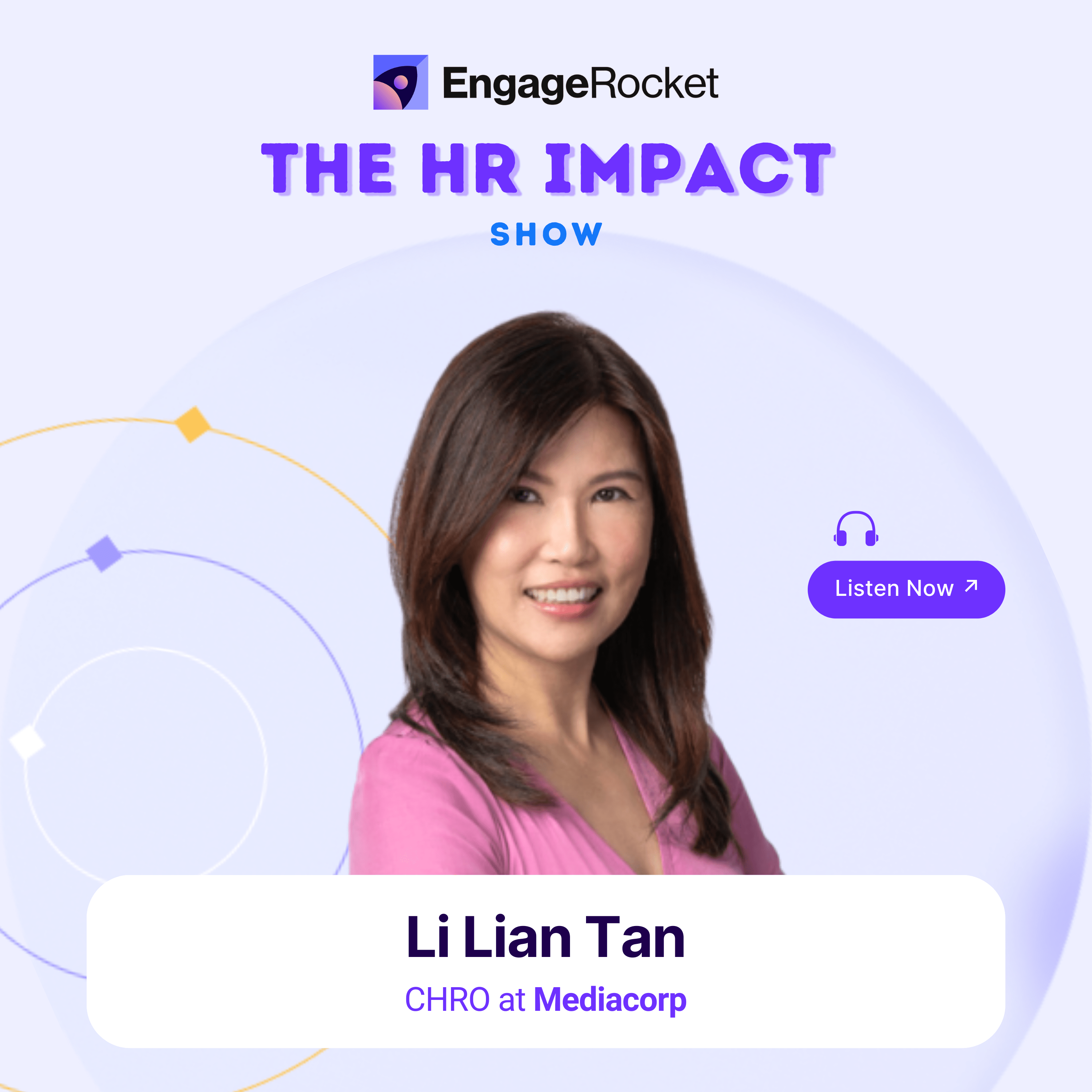 Reimagining HR as Business Driver with Purpose and People: Li Lian Tan (CHRO at Mediacorp)66 / 100
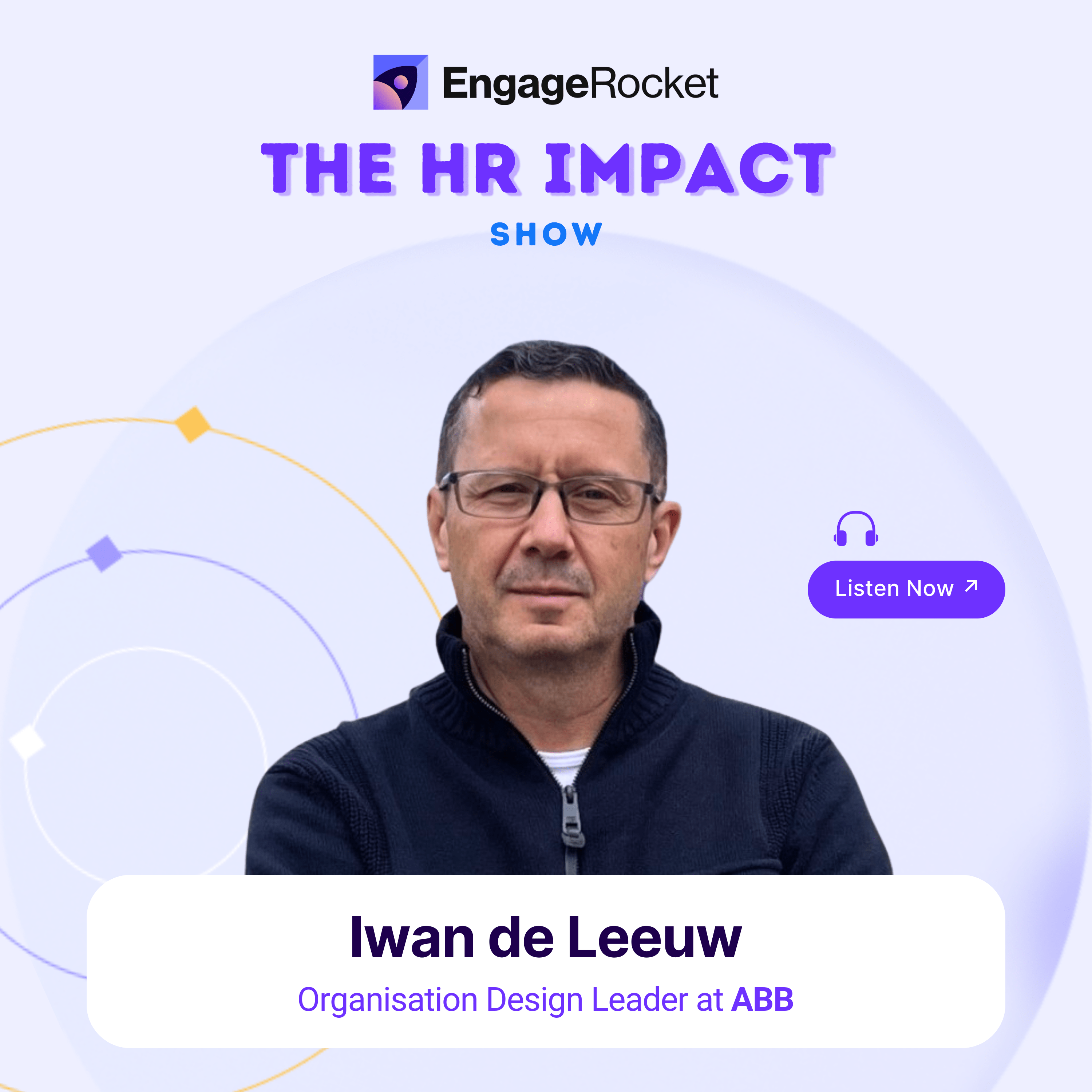 Inside Org Design: What Leaders Get Wrong and How to Fix It: Iwan de Leeuw, Global Organisation Design Leader, ABB81 / 100
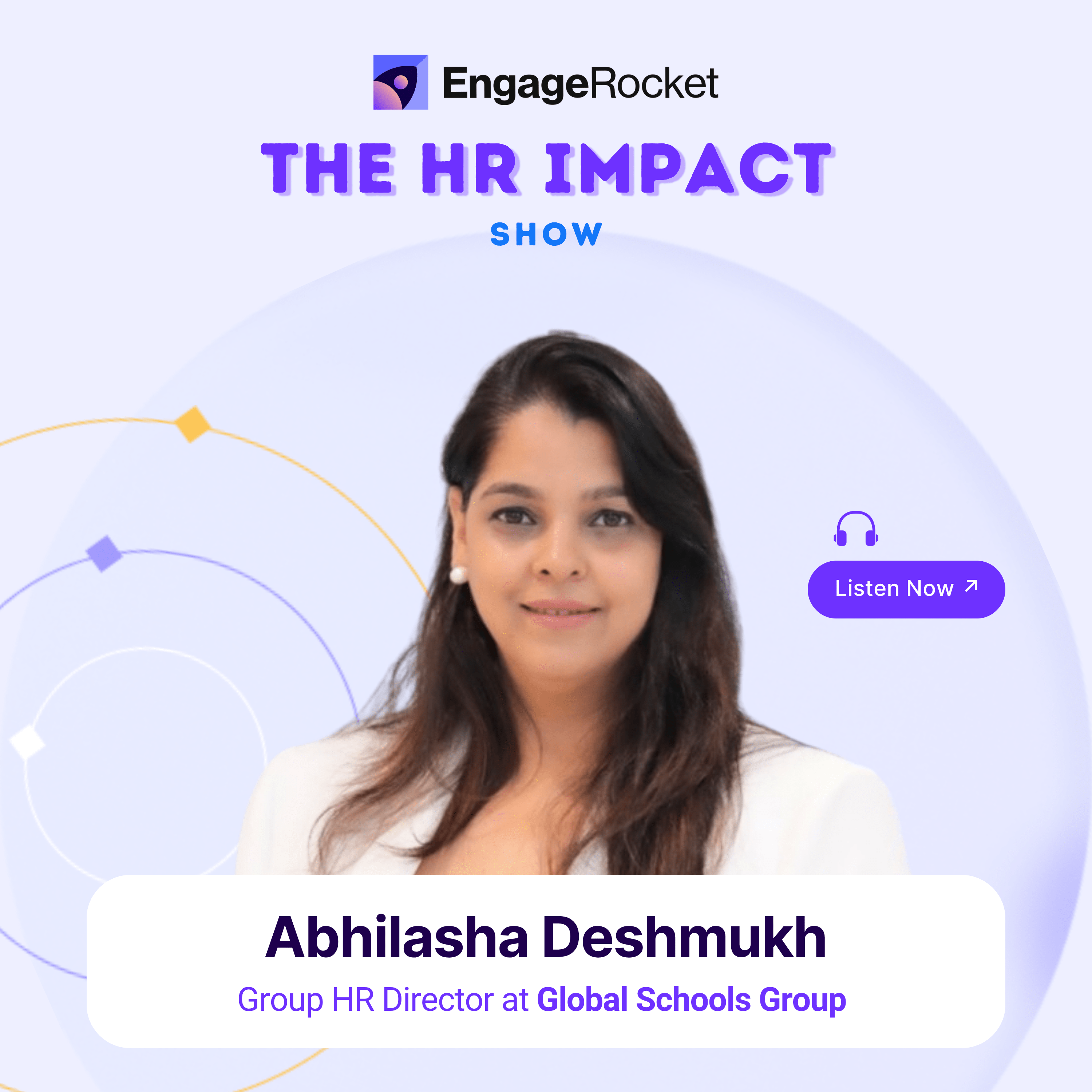 Transforming Schools, Shaping Cultures: Abhilasha Deshmukh (Group HR Director at Global Schools Group)76 / 100
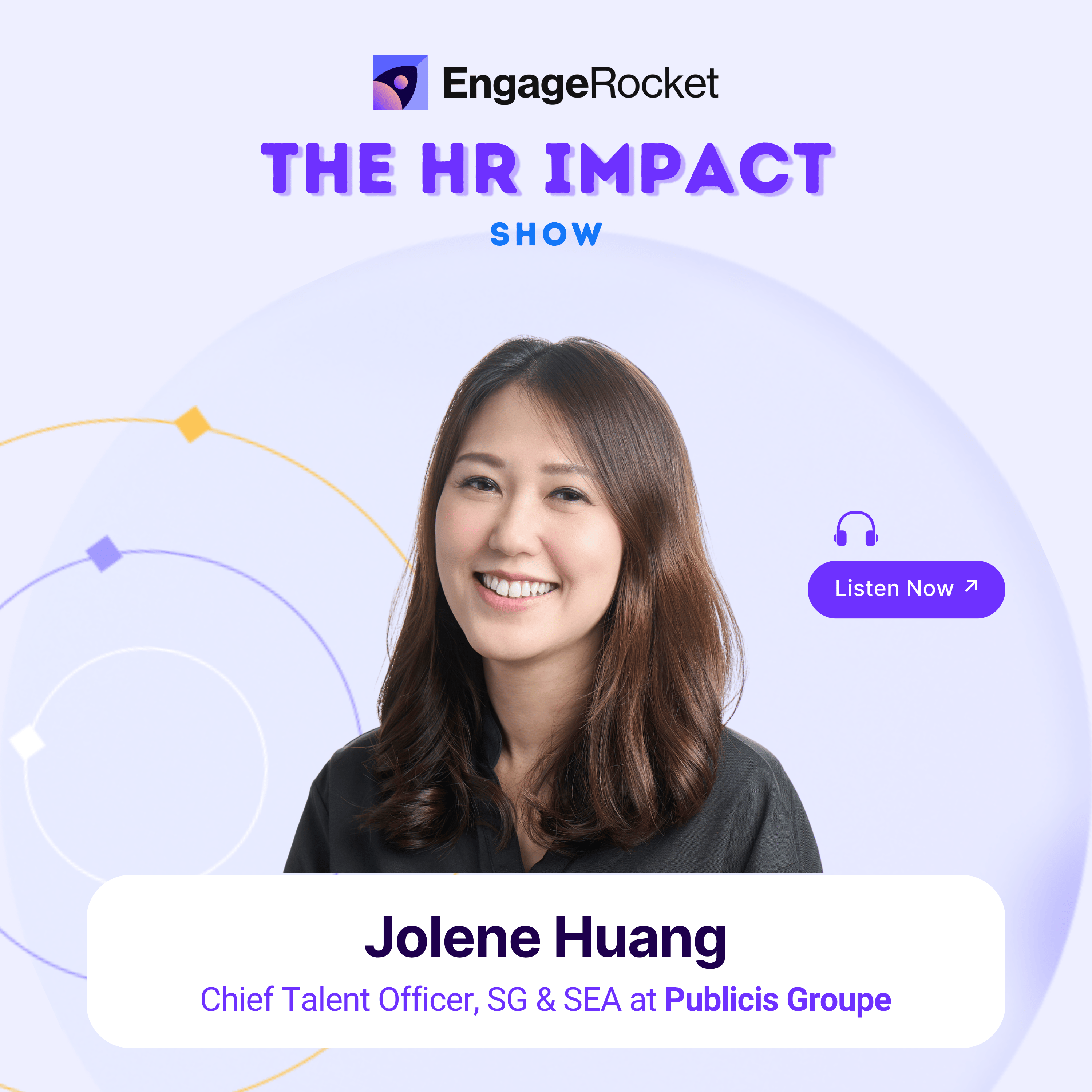 How Top HR Leaders Operationalize Wellness by Humanizing Leadership: Jolene Huang (Chief Talent Officer, SG & SEA at Publicis Groupe)72 / 100
 Unpacking the 3 Pillars of Strategic Change Management: Pauline Tay (VP of HR, APAC at Griffith Foods)80 / 100