
The Big Bid Theory · 2026-04-13 · 41 min
Key moments - from our scoring
Substance score
34 / 100
Five dimensions, 20 points each
Kim Cullen, director of marketing at BeaconBid, returns to eProcurement after a year exploring other roles, including time as an authorized reseller where she gained fresh perspective on commodity supplier challenges and cooperative contracting. She discusses why she rejoined the sector, focusing on BeaconBid's customer-centric innovation and nimble platform development. The conversation centers on debriefs - a critical but often misunderstood process where suppliers and practitioners should embrace learning rather than confrontation. Kim emphasizes that winning or learning outcomes require suppliers to honestly assess three areas: product fit, response quality, and storytelling effectiveness. Practitioners benefit too, gaining industry insights that inform future solicitations. She outlines her upcoming NIGP webinar with Victor Lermer (April 15) on best practices for debriefs from both sides, shares her continued involvement with NIGP (speaking at Forum, working with local chapters), and reveals her current work at BeaconBid: deepening product knowledge through customer conversations, identifying process gaps, and launching outreach campaigns to help agencies and suppliers connect more effectively with open solicitations.
Debriefs should focus on learning and partnership-building, not negotiating the outcome. Suppliers should assess three areas: whether their product truly fit the need, if they explained it effectively, and if they told the story well. Practitioners can learn from suppliers about industry standards and risks they may not have considered in their solicitations.
After a year away working for an authorized reseller, Kim realized she missed her passion for public procurement education and engagement with both suppliers and practitioners. BeaconBid drew her back because it was built with - not just for - public procurement professionals and demonstrates remarkable speed of innovation responding to customer needs.
She gained perspective on margin-sensitive, commodity-focused suppliers who handle high-volume quotes with uncertain outcomes, and learned extensively about cooperative contracts and their various uses. This real-world supplier experience now helps her understand practitioner-supplier relationships and support customers facing similar challenges.
On April 15, Kim and Victor will discuss best practices for debriefs from both supplier and practitioner perspectives, covering how to communicate debrief availability in solicitation documents and providing practical frameworks to reduce friction and showcase debriefs as partnership-building opportunities.
She's learning the product deeply to identify gaps, working with customers to understand their processes and pain points, launching outreach campaigns to help agencies connect suppliers with open solicitations, and coordinating webinars and chapter engagements with NIGP while maintaining an agnostic stance on supplier-practitioner relationships.
Our reviewer’s read on each dimension, with quotes from the episode.
There are a handful of useful points - chiefly that many suppliers are unaware the debrief process exists, and a brief taxonomy of what to learn from one - but the episode is heavily padded with personal travel stories, event schedules, sponsor reads, a coffee-shop 'Crazy Bid' segment, and off-topic chat about toe injuries and ghost tours. Insight-per-minute is low.
I've talked to many suppliers over the years who didn't know what I was talking about, uh, when I asked if they had requested a debrief
a supplier should either win or learn
The 'win or learn' framing is the episode's freshest idea, but Kim attributes it to an unnamed LinkedIn post. The rest - debriefs are good, suppliers should listen not fight, relationships matter - is standard procurement-community received wisdom with no contrarian or first-principles angle.
a supplier should either win or learn. And I love that, uh, because that is really what a debrief is about
I took some archeology classes, which maybe if you have me back on, we'll talk about archeology and public procurement
Kim Cullen has 25-plus years of genuine, niche-deep involvement in public-sector procurement as a marketing and education professional, with real NIGP Business Council experience and time on the supplier side. She is not, however, a senior operator or practitioner who has run procurement at scale, which caps the depth of operational insight on offer.
she has 25 plus years of experience in marketing and working closely with practitioners, with suppliers
I had never worked for an authorized reseller before, um, A very margin sensitive industry
The episode supplies event dates and location names (NIGP VCon April 28-30, SAMPO at Lake George, etc.) but almost every substantive claim - about debriefs, cooperative contracts, VAR dynamics - rests on vague personal anecdote with no metrics, named case studies, timelines, or dollar figures to support it.
a customer will say, gosh, you know, it'd be great. My process does this. It'd be great if I could do that on Beacon. And two days later, like, I'm blown away. They can
April 15th, tax day, you know, come listen to that webinar on debriefs
Questions are broad and soft throughout ('What should everyone know about debriefs?', 'What did you learn?'), and the host explicitly admits mid-conversation that he didn't know suppliers were unaware of debriefs - signalling thin preparation. The only genuine push comes from the guest herself correcting the host's premise; there is no host-driven challenge or follow-up probing anywhere in the episode.
Well, I'm going to disagree with you, Bill, that not everybody does know about debriefs
Got it. And speaking of speaking of learning and education, I just learned something
Computed from the transcript - who did the talking, and the words that came up most.
Season 12 is here! In this kickoff episode of The Big Bid Theory, Kim Cullen joins Bill Culhane for a conversation to break down key trends shaping today’s public sector community and practitioners. The topics include e-procurement systems, the strategic value of bid debriefs, and how supplier insights can improve long-term competition.Kim shares a compelling preview of her upcoming NIGP: The Institute for Public Procurement webinar with Victor Leamer , “Debriefs Demystified: From Missed Opportunity to Meaningful Practice” this Wednesday at 2PM EDT. Register now . Suppliers tuned into this episode will gain practical guidance on how to better position their organizations in competitive bid environments, understand agency expectations, and refine their approach using real-world feedback and data. Kim is busy! Later this week, be sure to stop by and see her at the Arkansas NIGP Conference and Vendor Expo. Plus, Rick Jennings returns with a delicious first installment of “Crazy Bids You Can Win” for Season 12 where Rick highlights interesting and sometimes overlooked opportunities that could give your team a competitive edge.
Transcribed and scored by The B2B Podcast Index.
Bill Callhane: In the latest episode of the Big Bid Theory, the very first episode of season 12 of the show, we kick things off with a fresh perspective on eprocurement, joined by a familiar name making a big return. Kim Cullen is going to stop by and Kim and I were going to discuss a variety of topics, including why Kim came back to eprocurement, what everyone needs to know about the all important debriefs, what she's already seen through her work with Beacon Bid, where you can find Kim. All of that and more coming up a little bit later in this episode. And yes, we're going to bring back a fan favorite. Crazy bids you can win is alive and well. So everybody can breathe on that one. Do want to welcome you, our listeners and viewers, uh, to season 12 of the show. That's an amazing number. Uh, some would have argued we wouldn't make it to 12 episodes, but here we are and want to thank, uh, again for those of you who have been with the show for a long time, uh, so many thanks. Sharing ideas, sharing suggestions on special guests, all that and more. And if you're new to the show, uh, pull up a chair. We're glad to have you. And so going to introduce Kim Cullen, real briefly, director of marketing at Beaconbid, 25 plus years of experience. And I know, uh, I'm speaking to many of you who already of course are quite familiar with Kim, her work and all that she does for so many people. Going to talk about her deep involvement in public procurement and igp, working with both practitioners and suppliers. Kim is equally adept there. And we'll give Kim more, uh, complete introduction in just a minute. But as I look across the studio here as Smiling Face. I've missed that Smiling face. Rick, uh, let's bring back the man behind the magic, our producer and presenter extraordinaire of Crazy Bids. They're, uh, always popular. Crazy Bids you can win. Rick, what have you been up to during our little sabbatical and what do you have brewed up for the first installment of Crazy bids for season 12?
Rick Jennings: Brewed indeed, Bill. We are roasting up a great one for Crazy Bids, uh, to start off season. Um, yeah, we wrapped up season 11 in, I believe it was December of 2025. Last year I had a great Christmas with some siblings. And this year I've been, uh, hitting it off, trying to get, um, better at my hobbies, uh, and skills, getting involved with uh, new communities, meeting new people and uh, just kind of hammering along at my career. And it's been absolutely wonderful. But hey, we are back here in the hot seat and yeah, I think we are, uh, we're roasting up, we're brewing up a very, uh, and relaxing, uh, beginning to season 12 with a, uh, nice chill intro to Crazy Bids. So more on that a little bit later.
Bill Callhane: All right, Rick, thank you very much and glad, uh, to have you back. And as our longtime listeners and viewers know, the crazy bid in episode one of each season, no pressure, but it kind of sets the bar for the remainder of the season. And you're going to find this crazy bid to, you're going to find it to be quite tasty. I'm just going to leave it at that. And so before we bring our special guest on, uh, Kim Cullen, if you would, let's go ahead and fire off those Bid prime and beaconbid promos. Stick with us right after this, I promise we discuss everything and more with Kim Cullen.
Rick Jennings: The big Bid Theory is brought to you by Bidprime and BeaconBid. Are you missing out on game changing contract opportunities? Bidprime has over 15 years of industry leading technology in delivering real time bid alerts, deep data insights and unmatched customer support. And now with emerging ops and future ops, you get ahead of your competition by spotting contracts before they go public. Don't wait, see for yourself. Get your free no obligation trial today@bidprime.com Government procurement is now smarter and easier. BeaconBID has improved the way agencies publish solicitations, engage with more suppliers and collect response faster and more efficiently than ever. With cutting edge AI based solicitation tools and the industry's most comprehensive RFP archive, you'll write better RFPs in less time. Plus, with EBID, bidders submit seamlessly and agencies collect and evaluate with ease, including vendor market research and cooperative and shareable contracts databases. It is time to take procurement to the next level. Request your free Demo today@beaconbid.
Bill Callhane: Bid.com welcome back to the Big Bid Theory here on YouTube. I'm of course Bill Callhane, your, your humble host and Rick and I, the production team, we were talking about it the other day. Can't believe that it's season 12 of our little show. Since we launched once upon a time when we visited last, many of our longtime listeners will remember. Of course we had Mayor Demings on. We also had Brooke Smith, the first ever winner of the David and Beverly Nash Leadership Award. Brooke was on as we presented Carrie Mathis, our friend from over in Orange County, Florida. Carrie was on. She's of course the second all time winner of the David and Beverly Nash Leadership Award. So that's how we wrapped up season 11. Um, for your friends or for people who you want to be your friends, please let them know about the show. As we go through season 12, we're going to have many exciting guests. Of course Rick will be along. Rick Jennings is back and he'll of course have your crazy bids as well. Um, as all part of the show. But speaking of great season, speaking of great, we have a tremendous guest on the show to kind of help us get season 12 kick started. And it's Kim Cullen. Before we bring Kim on, just a little bit about her. She is the director of marketing at beaconbid. Yes, the Big Bit Theory is powered by Beacon Bid and Bid Prime. And just to run through just a snippet of Kim's Background, she has 25 plus years of experience in marketing and working closely with practitioners, with suppliers, all of the above. Um, she really has few peers when it comes to that. Many of you, of course, know Kim. She's dedicated her career to focusing on just some bullets here. Public procurement insight, customer engagement, education across the public sector. And it's literally from A to Z. If you haven't been an attendee at one of Kim's, um, webinars presentations, um, you're probably in a small, small group of people. Her involvement with NIGP is also impressive. Let's see. Business council member, NBC Marketing Task force leader. She has a supplier mastery designation. Kim's a seasoned pro, passionate about leading seminars and presentations nationwide from sea to shining sea. And with all that being said, Kim, welcome to season 12 of the Big Bit Theory.
Kim Cullen: Thank you so much, Bill. Now, I know I've made it because I'm actually on the Big Bid theory. I got to add that now to my resume. Uh, in my description, next time someone announces me speaking.
Bill Callhane: So was once on will that go at the top?
Kim Cullen: 100% has to. That is a new bullet added. New bullet added. But honestly, I'm super excited to be here, so thank you for having me.
Bill Callhane: Absolutely. So we have a lot of ground to cover, so let's get started. And first and probably the most appropriate leading question is, you're back in eprocurement, so kind of take us behind the curtain. What pulled you back in and why Beacon Bid?
Kim Cullen: Yeah, so I think, uh, for those of you who don't know, a little over a year ago, I left the e procurement world and went to Avar. Um, great, great company. Uh, that was an authorized reseller of technology, equipment and software. Fantastic experience. Loved it. Uh, learned a whole lot. But I really never left public procurement and never left working with those. Uh, that's what I did over there as well. And as I went through kind of my year of discovering what I really wanted in Kim, um, I took some archeology classes, which maybe if you have me back on, we'll talk about archeology and public procurement and how it all works and the history there. Super interesting. Um, I took an AI class and course, and I did a lot of self discovery and my knowledge and yearning for continued learning and education and involvement and then also delivering that education to others and helping both suppliers and buyers really reminded me of what I missed in working in this space. Um, and then, you know, when I had some talks with you and others and found out a little bit more about beaconbid and what it was doing, that it was really built with those public procurement professionals, not just for them, but with them, and, uh, how nimble you all are. Um, I mean, I've been amazed just under a month, I think, since I've been here. And, you know, a customer will say, gosh, you know, it'd be great. My process does this. It'd be great if I could do that on Beacon. And two days later, like, I'm blown away. They can. Um, and so that type of innovation and customer centric, um, forefront really is what drew me into Beacon and back to where I think I belong.
Bill Callhane: Got it. And just a little bit of a spoiler alert. Um, with Kim's experience with her passion for the people with whom she works, you can expect a lot more coming in terms of being nimble and crafting a platform that works for everybody. So let's roll up our sleeves, Kim. Debrief is a term, of course, that everybody knows about. Everybody knows debriefs are important, but not everyone gets it right. So what should everyone. And I'm talking suppliers and practitioners alike, what should they know?
Kim Cullen: Well, I'm going to disagree with you, Bill, that not everybody does know about debriefs. I've talked to many suppliers over the years who didn't know what I was talking about, uh, when I asked if they had requested a debrief. Um, and so I think especially suppliers that are new to the market that may have dabbled with their local school district and done a couple of sales, and now is like, you know what? That's great. Now I want to do more. I want to do more and do it with the county and do it with these other school districts in the area and respond to RFPs. A lot of Those don't know that the debrief process really exists and what the right steps are. So, um, it is something that I love, I love as a supplier, uh, to be involved in debriefs. And I love it from a practitioner standpoint, too, and what it can really do on both sides to help, um, bridge that gap between the response and the supplier and what that agency was really ultimately looking for. And I saw something, I don't know, it was sometime this week, and I wish I could remember who did it, but it was a little workflow that I saw on LinkedIn. And someone said at the end of the process, a supplier should either win or learn. And I love that, um, because that is really what a debrief is about. It's about learning. But I do think a lot of suppliers go in and want to put up a fight, want to negotiate of why they were the best, and that's not the right outcome. Uh, the outcome has already been decided. And now, as a supplier, your role in a debrief is to learn, to listen, to ask questions about how didn't this fit? What didn't you understand? Um, and to really also help teach in a way that practitioner on the other side about maybe some things in the industry that they didn't realize. Uh, I have been on debriefs in my life that I have learned as a supplier what we can do better with our product, what we can do better with our process of actually responding to bids, and what we can do better with our, um, storytelling of that product in that process. And I think those are really the three key pieces. Uh, some debriefs, you may find out that your product just isn't up to par of what that specific need was, whether that's a product or a service. Other times you may find out, well, geez, we had exactly what they were looking for. We just did a really poor job, or not an exceptional job of explaining it. Um, or we have the wrong person answering these RFPs. And so those are some of the things. I don't know. I think I got off on a tangent there on my debriefs. But, um, I really enjoy debriefs. And, and I think that, um, I did mention that practitioners can also learn. Uh, just a quick story that I was on a call, actually a debrief, and explaining, um, just questioning, you know, why something was not said and mentioned in that. And they said, well, because we get all of our specs specifically from our end user, and that wasn't requested. And so I Explained to them what not including that in meant to the industry as a whole. Right. So what the risk was in not having that. And so that buyer was then able to go back, research that, educate their end users, figure out if that really was the case based on that. So when I say kind of learning on both sides, it's things like that too that I think a practitioner can learn from you, um, not only about the industry but also maybe some things that you would have liked to seen different, um, with, you know, you had a lack of time, maybe because it was right around Christmas that it was launched, um, or etc. So I think all of those are really keys. Debrief is just key, key, key to learning on both sides.
Bill Callhane: Got it. And speaking of speaking of learning and education, I just learned something. I, I thought suppliers debrief would be a part of what they know and understand as part of the process. So thank you for that. So speaking of learning, Kim, education, um, our friend Victor Lermer and yourself, you have a webinar coming up with nigp. Give us a real quick sneak peek. A spoiler alert.
Kim Cullen: Yeah, yeah, yeah. Well, Victor would probably kill me if I gave spoiler alert. But, um, yes, April 15th, it's free NIGP members. It's open to any NIGP member. I hope it's virtual. Come join Victor and I. We're going to really talk about what it looks like from both sides, what a good debrief looks like from before the debrief actually happens. So, meaning that you're putting that, hey, we are open and if you want to debrief after the fact, how do you get one, um, in the documents when the solicitation goes out to um, from the supplier's perspective, really what to do and not to do. So we take you through some practical frameworks on both sides so that we can not be as scared and friction, um, based on debriefs, but really showcase the done in the right way. It can be a true partnership building opportunity for both the government agency and the supplier.
Bill Callhane: Very good. Thank you. So no spoiler alert folks. I'm sorry, I tried as you and I just uh, established it a few moments ago. Kim, you recently of course spent some time on the supplier side. So if the idea is to always be learning. So what did you learn as part of that experience that you think will help yourself, will help your customers, or will help those with whom you cross paths with?
Kim Cullen: I think, um, it gave me a totally new perspective. I had never worked for an authorized reseller before, um, A very margin sensitive industry, uh, great people, great knowledge on tons of different products. But there's a very large time investment with very uncertain outcomes. Um, so it causes tension a lot, um, within that. And so I think it gave me a better perspective on more of the commodity side of suppliers and some of the things they're going through. Handling more quotes than large RFPs, um, the volume on that side of what you have to respond to, um, and the cooperative contract side of things. I, uh, learned a whole lot on cooperative contracts and the different types of cooperative contracts that were out there and the uses of what uh, a supplier can do. So a var, for example, can have their own cooperative contract or their own contract to respond to a solicitation, um, an rfp or they can be an authorized reseller if their manufacturer responded to that, either cooperative or that contract. Um, and kind of everywhere in between too. So it's very interesting, intricate. Um, so I think it gave me just a new perspective on an industry that I was never in, that I think I can now have some more real life stories and conversations with suppliers who may be struggling and trying to set up how do I win more business with local governments if I'm in that space specifically?
Bill Callhane: Very good. Thanks for covering, um, that. And so when I brought you on to the segment here, Kim, you and I established that you've been involved with nigp. Anybody who's been to forum, anybody who's involved with their local NIGP chapter, what have you, ah, they know, you know, the effort, the passion, the time that you've dedicated to working with nigp. But now in your new role as you and I sit here today, what does your participation with NIGP look like for the future?
Kim Cullen: Sure. Well, first, I think you give me a lot more credit than I deserve on that. Uh, there are some true NIGP rock stars and I don't think I am up that caliber. But I appreciate, um, appreciate that you're in the band, I'm in the background. Dancers maybe. Um, so I, I have, I've been going to NIGP forum and different NIGP chapters for years and years and I had the honor of serving on the NIGP Business Council for many years. Um, unfortunately I am now an NIGP business counselor, alumni, um, because of the way that the Business Council works. And when I left my previous company and came to begin, I had to kind of pass that baton and that torch along. But I still call myself an alumni and I've had conversations uh, with Debbie and Fred about my alumni club that I'm Starting, um, but I will continue to be involved. BeaconBid has been very involved in Forum for the past, I think, four years, I believe. Um, and we are, um, continuing to do so. And also just on my own accord and with my own contacts that I have, I am looking forward to continuing to do things like this webinar with Victor. Um, and I'm actually speaking at Forum this year as well. So we'll continue to do that and work with the local chapters whenever I can, whenever they need someone to kind of, that can bridge that practitioner supplier relationship in an agnostic way. Because even though I now wear the Beacon Bid hat, I can speak very agnostically across, you know, suppliers and practitioner relationships, across platforms, across what you kind of need. So I think that's where I continue to see myself evolve and work with nigp.
Bill Callhane: So in the business, we call this a segue. Thank you very much for setting it up. So, uh, you talk about evolving. So you've just started at beaconbid, basically, and I'm going to. But I don't often do this, but longtime listeners know from time to time I'll mention I was in the military and all that. Well, Kim, those of you who know her probably are going to nod your heads and say of course. But Kim has hit the ground running, leaning forward in the foxhole, as we used to say once upon a time. So you're just getting started at Beacon Bid. What kind of surprised you as you joined the company? And what are you working on as you take hold of your new role?
Kim Cullen: Yeah, well, thanks again and probably I commend all of our service members. Um, I could never do it and I am the least athletic person. Those of you who know me may know that if I walk too fast, I'm going to fall and hurt myself. Last night, in fact, I dropped my phone on my toe and my toe is literally now black and blue. So I am very. A little too much information, but I'm uncoordinated. So, although I hail and thank you for your service and everyone listening for their service, um, that's the first time and probably the last time I will ever be, um, compared to something militarily. But I thank you. I think my biggest surprise so far, and I mentioned it a little earlier, is just our speed of innovation. I, um, think a lot of that comes from the management, from the founders themselves of beaconbid. Open to fresh ideas from our customers, open to fresh and innovative ideas from myself and from other team members. So I think part of that, uh, has been the biggest, um, happy Surprise is just how welcome the team is for innovative ideas, whether that's in current processes and changes to processes internally or to the product itself and things that we can develop. So I think that's been awesome. Um, I think it's been really refreshing um, as a whole to work with such an amazing team, a very close knit team that although everybody has a role, um, there's not a, you need to stay in this lane and not crossover. Right. Someone who for example has been working um, with some of our um, data cleanup and I don't really even know his exact role but he gives ideas um, that are fantastic and kind of out of the box ideas from a marketing perspective or from a, ah, hey, this is what our booth should look like at NIGP forum. And so there's really those open pathways for people internally to innovate, um, in whichever way their passion drives them, um, and then kind of for the leadership to rein all that in and not saying that we do all of them but um, to really uh, continue that passion and innovation from everyone. So I think that's what I've been most surprised in a positive way about. What um, I'm working on is really just still learning about the product itself. Um, I know it well enough probably uh, to walk you through it if you ever needed it, but I don't know it inside and out in every single piece and function of what it can do. So I'm still learning that um, so that I can better understand where some uh, some issues may come up or where things need to go next. So I'm working a lot with our existing customers and people who aren't customers yet, uh, to figure out what their process is so we can fill in some of those gaps with some of our product pieces, um, and always asking people for that pie in the sky dream of. Okay, your process is this now, but if you could have anything you wanted taken away from that process or added to that process or a new level of compliance or a new level of being able to talk to your end users, what would that look like to you? And it's those types of things that I think with uh, practitioners and our customers level of experience and Beacon and including myself here, kind of our innovative thinking and ideas path that we're going to take Beacon to the next place. Um, beyond that product wise, I've also been working closely with our customer success team. Uh, we're launching some great new outreach campaigns of our newest uh, agencies that are getting on board to let their suppliers know more frequently and um, in more places where to find their open bids, um, and their solicitations. So that's exciting. Also working on doing more internal webinars and outreach with different NIGP chapters and our customers as well. So lots of stuff going on.
Bill Callhane: And I can confirm all that Kim just mentioned, by the way. Thank you for the kind words, Kim. Um, but yeah, I can confirm that Kim, hm, again, has certainly rolled up her sleeves. And I was fortunate to be at PASBO over in Pittsburgh recently and Kim was a part of the team there. And Kim is already engaging with customers, kind of sharing the story. And it's really amazing, Kim, how quickly, you know, you're getting up to speed. I'm going to ask our audience real briefly, Kim, bear with me. But, uh, right now you want to grab your calendars, grab a pencil, crayon or pen, because we're going to go through Kim's upcoming schedule. But before we do that, Kim kind of off script here. So you've already been to Pittsburgh. I just said you were down in Puna Gorda. You have again, number of things coming up, so get those calendars ready. But as you've traveled around in your career, are there some places, some states, some events that really resonated with you or you enjoyed the most or, you know, anything that you want to share with our audience that, you know, you think back, oh, once upon a time I went to Blank, and it was awesome. And here's why. It was awesome. Awesome.
Kim Cullen: Well, I will tell you one of the reasons I love going to local NIGP shows. And this was my first ASPO that I was able to attend up in Pittsburgh, which was amazing and great people as well. But one of the main things I like is being able to see friends, people who really, over the years, whether they're suppliers or practitioners, have become friends. So I think first and foremost that's, uh, the best part of traveling to any of these, uh, conferences and shows that I go to throughout the country. I would say the most beautiful place and it's coming back up is Sampo in Lake George. They have this sunset cruise that is really cool. You're basically stuck on a boat for like three hours with people. So if you don't, if you're not like me and don't like people, um, you may want to skip that one. But it's a beautiful, uh, you have dinner and a couple of drinks going on this cruise and then you can go outside and watch the sunset. Um, and it's just really nice and pretty and kind of a much Slower pace, um, than your normal conference in a big city. So I think that's it. Um, the most interesting recent event that I've ever been to was in Mississippi actually. Um, that one was super interesting because I don't think I'd ever been to that part of Mississippi. So to me it was just kind of amazing that. Wow, I forgot there is casinos in Mississippi. And so the conference was actually held in one of those casinos. So I always like learning a little bit about stuff when I go to places. There is, um, I won't say her name. There is a fantastic person that's a friend of mine who's a CPO at a county in Florida and she at every forum tries to go on a ghost hunt or ghost walk, one of those like walking tours, like ghost tours. And that was one of the most fun things that I ever did. I was able to join her one year in a group and we did this ghost tour. Um, how am I going to forget where it was? But it was in a neat city and you know, we didn't see any ghosts unfortunately. But it was still really interesting to learn about the history and super fun.
Bill Callhane: You don't think you saw any ghosts?
Kim Cullen: True, true. We might have some orbs and pictures that we'd have to pull out, but.
Bill Callhane: Yeah, exactly. So I gave everybody a minute to get their calendars out and, and I've seen Kim's dance card if you will, her schedule of what's to come. But let's just look at the next, what, four or five, six months. Kim, what events? Webinars. We already talked about the debrief webinar with Victor presentations. What's up ahead for you?
Kim Cullen: Yeah, well, I'm not sure if I'm going to get everything because we're still kind of planning some out, but. Yes. So April 15, tax day, you know, come listen to that webinar on debriefs. I think you're going to really learn a lot. Um, NIGP, uh, VCon. So that's the virtual conference, April 28th through 30th. Um, again this looks like an amazing, packed with information um, on everything, procurement, technology, AI. Um, I am both going to be a panel moderator on that, uh, with a panel session with ah, three amazing practitioners and um, also myself and uh, one other person from BeaconBid are going to be doing an AI specific um, presentation. Just a 30 minute kind of innovation, theater style, um, with a demonstration of Procure AI which is one of Beacon Bid's, um, awesome, awesome tools that we have, have an RMGPA Lunch and Learn coming up at the end of May. That's virtual. And then uh, Texas PPA Virtual workshop which is in July. We have another AI education educational session there that's going to be really cool. So I think that's all the virtual outside stuff for the next few months. That's, that's on the books. As I said. There's some other things kind of in the works right now. Um, I will be in person up in Arkansas, uh, visiting that great chapter of NIGP and Arkansas for their conference and trade show uh, in April and then in May at fapo, which is in Florida, my home state. So right down the road in Orlando. Excited to see all the Fatbo members there. And then I was just talking about SAMPO up in Lake George. That's in New York. I will also be attending that in May. Um, yeah, June rmgpa, there's a summer conference. Um, I actually just found out I'm going to be on a second um, going m to be doing something with Tammy Rhymes there, uh, with ncpp. Um, is doing a session there that I'm going to take part in and then Aaron Raz and I also have a session that is at that conference and then forum, NIGP forum for those of you who don't know. Um, definitely attend that one. Um, again Victor and I are going to be doing kind of an expansion on this NIGP webinar. Uh, we're doing a longer workshop on debriefs that's going to have a lot of hands on activities, um, information and really a deep dive into debriefs for practitioners that are there in attendance. And it's open to suppliers too so suppliers who are exhibiting and attending NIGP forum. We'd love to have you come and participate in that as well. Whew, that's a lot.
Bill Callhane: I feel like wiping my brow. And so anybody who didn't get all that down on your calendar. Calendars, I get it. Kim went through a lot. So if anybody wants to keep track, Kim, of what you have coming up. Um, I heard a rumor that you're somewhat active on LinkedIn and. But I giggle. How can people connect with you? Follow you?
Kim Cullen: Yeah, for sure. Follow me on LinkedIn. I don't know how to put up one of those little. Here's my uh, here's my sign um, on this if anyone happens to be watching. But if you just search for Kim Cullen Prather, if we are not connected on LinkedIn, connect with me. Love to hear from you. Um, I'm also Super open to conversations in the industry, whether it's from a supplier, um, someone on the practitioner side, someone from on the admin side that just wants to talk shop. Ah, talk about best practices, talk about different things related to supplier, buyer relationships or responding to a bid or e procurement. Um, again, I can put on an agnostic hat for those types of conversations. So totally open to that. Um, and then if you did happen to write all those down or you're going to be at one, just come say hi. I'm a hugger, so watch out. Out on first. First chat, I won't hug. Second chat, I might hug.
Bill Callhane: So everybody's been warned. Well, yes, um, just to let everybody know, and some of you probably already saw it, but, but Rick, Rick and or Lauren, they'll be sure to put a link to Kim's LinkedIn in the description of this episode. And also as Rick and or Lauren post the episode out on LinkedIn, there will be, of course, ways to follow Kim there as well. So there you have it. Uh, Kim, thank you so much for getting season 12 off and running for us. Obviously, um, you're special to me. Special to us. So to have you get tbbt going in this, uh, 12th season. Um, so much. Appreciate it.
Kim Cullen: Oh, well, I thank you. And let me tell you, I'm, um, my. I have a 15 year old and, and he is super excited that I am on a podcast called the Big Bid Theory. So, you know, you may have a new listener at age 15, you may have a whole group of, like, high schoolers who are now tuning in. Probably not because he's also at that stage. He wants nothing to do with his mom.
Bill Callhane: But, yeah, so, yeah, so, yeah, if Kieran wants to take us over 1 million, I think it's 1 million or so listeners, followers, we're glad to have him and so forth, folks, to wrap it up. So I think you get it. You understand if for some reason, some miracle you don't already know Kim, if you don't engage with her, don't take advantage of her experience, of her passion, her willingness to share. Um, you need to reassess your position on that. So, uh, again, Kim, many thanks and I bet I'll see you soon.
Kim Cullen: I bet. So, so thank you so much. Thanks everyone for having me on and the team, the production team, thank you very much. And Bill, as always, it's been a pleasure.
Bill Callhane: All right, as we jump back over here to the audio only side, again, many, many thanks to Kim. So, so looking forward to working, uh, with her in the coming Days, months and years. And, and Rick, you and I have been working here on the big bid theory for quite a while. Let's do it. Uh, what do you have for crazy bids you can win episode one season?
Rick Jennings: Well, we're gonna start this one off with something pretty remarkable, but also very nice and relaxed. And you helped me with this one, Bill, so thanks for helping find this one. It comes from, uh, the Northeast Texas Community College Network and the title of the RFP is Coffee Shop 202601 Operation of Coffee Shop on the NTCC campus. Go Eagles. I suppose they are going to get a lucky company to help provide just a very simple coffee and beverage, uh, vending service for the NTCC campus. And I mean, I like to keep it pretty simple. I don't think it really gets nicer to a, uh, start, uh, just like that. I mean, while I was studying over, uh, at the wonderful Texas State, as you and I both know, Go Bobcat. I would have loved a nice cup, uh, of coffee from whenever I was studying in the library, um, hours at night. And so, hey, NTCC is going to go ahead and get this one here very soon. And hey, if you want to provide a wonderful coffee service to the wonderful folks at that community college, then I hope you take this as this episode's crazy bid that you can win.
Bill Callhane: Thank you very much and full disclosure, I am not a huge coffee drinker, but, um, certainly that is, it shows again proves again that public sector will buy pretty much anything and everything. So good luck to everybody pursuing that crazy bid that's going to do it for, uh, episode one. Stay tuned. Next episode we'll have another interesting, informative special guest to come by. Please share the podcast and you know where to find us. We're on YouTube, a variety of podcast platforms. You can find us on LinkedIn, Facebook, X Twitter and tell friends, tell friends about the show. Do appreciate that. And also stay tuned for news on the David and Beverly Nash Leadership award number three that we will be awarding at the end of season 12 as well. And also real quick, plug send ideas that you have, whether it be topics, special guests, all that and more. Um, you can send it to me. My attention bcallhaneaconbid.com if you've seen a bid that made you stop and say wow, by the way, would qualify as a crazy bid, go ahead and send that our way as well. Many thanks again to our special guest, Kim Cullen, the director of marketing at BK&BID Rick, great to have you back. Our producer and crazy bid presenter, numero Uno. Uh, Rick Jennings, thanks to Loren, our production team, and all of you. It's because of you we do what we do and we're so glad to be back. Until next time, go Gunners, Barracudas, Tigers, Bobcats and Cubs. And we wish you the very best
Rick Jennings: by Bidprime and beaconbid. We thank you for tuning in to the Big Bid Theory from Austin, Texas. The show is hosted by Bill Culhane, produced by Bill Culhane and Jim Ward, and co hosted and engineered by Rick Jennings, Distribution, research and production assistance by Lauren Jones. You can find other episodes of the show on YouTube, iHeart, Spotify, Apple, Podcasts, Spreaker, Google Play, Play, and among other platforms. Thank you for downloading and sharing the podcast.
Other episodes covering the same guests and topics, from across The B2B Podcast Index.
 Blake Modersitzki: Pelion VC, Venture Returns, AI, War Stories, Top Deals & ScaleStartup Ignition Podcast · on BusinessGrowth88 / 100
 Data Only Helps When The Data Is TrueTaking The Supply Chain Pulse · on RFP process78 / 100
 Scott Armstrong - From A**hole to Ally: Why Ambitious Professionals Lose Trust and How to Get It BackBecoming Preferred · on RFP process69 / 100
 Season 8 Episode 2 - Procurement & Purchasing with Bruce Tiam-FookSupply Chain Central · on Public procurement67 / 100
 5 Key Things In the First 2 Years of Business - Josh Norris - Episode 98One More Round Podcast · on BusinessGrowth
 Inside the growth story of Blo Blow Dry Bar with Vanessa YakobsonGrowth Diaries by Zenoti · on BusinessGrowth
 Columbus Calling Kim Cullen on the Road to NIGP Forum66 / 100
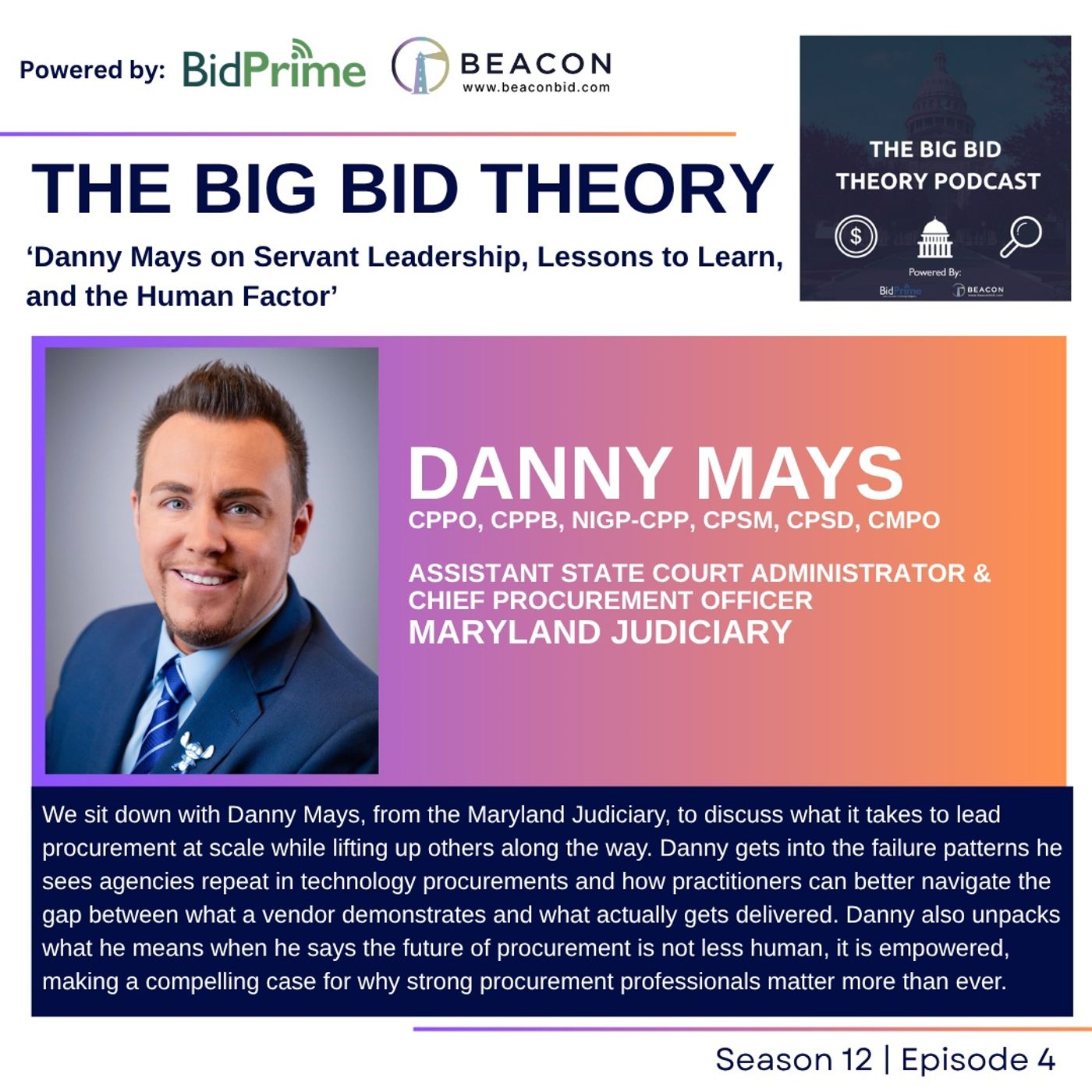 Danny Mays on Servant Leadership, Lessons to Learn, and the Human Factor s12 e483 / 100
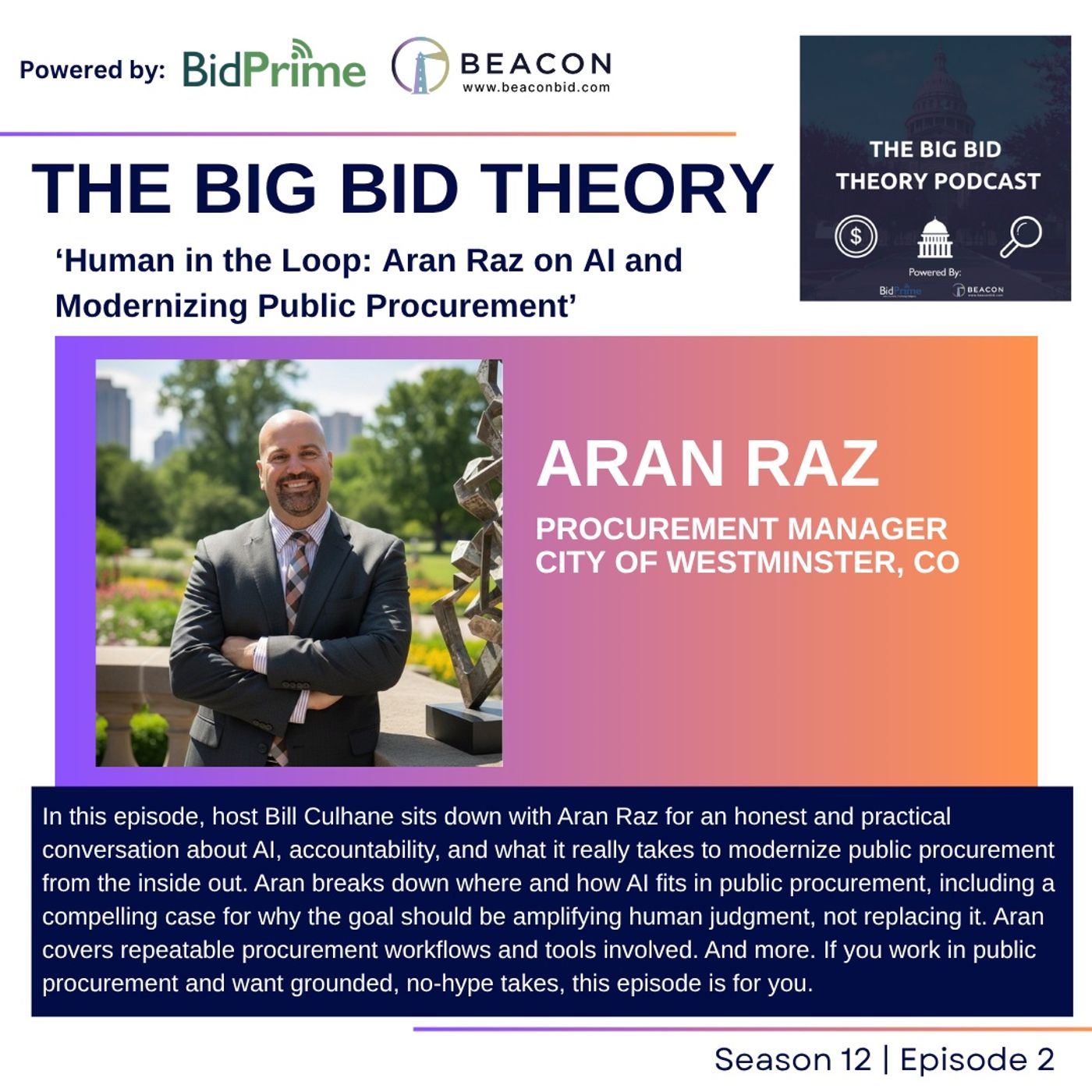 Human in the Loop Aran Raz on AI and Modernizing Public Procurement s12 e261 / 100
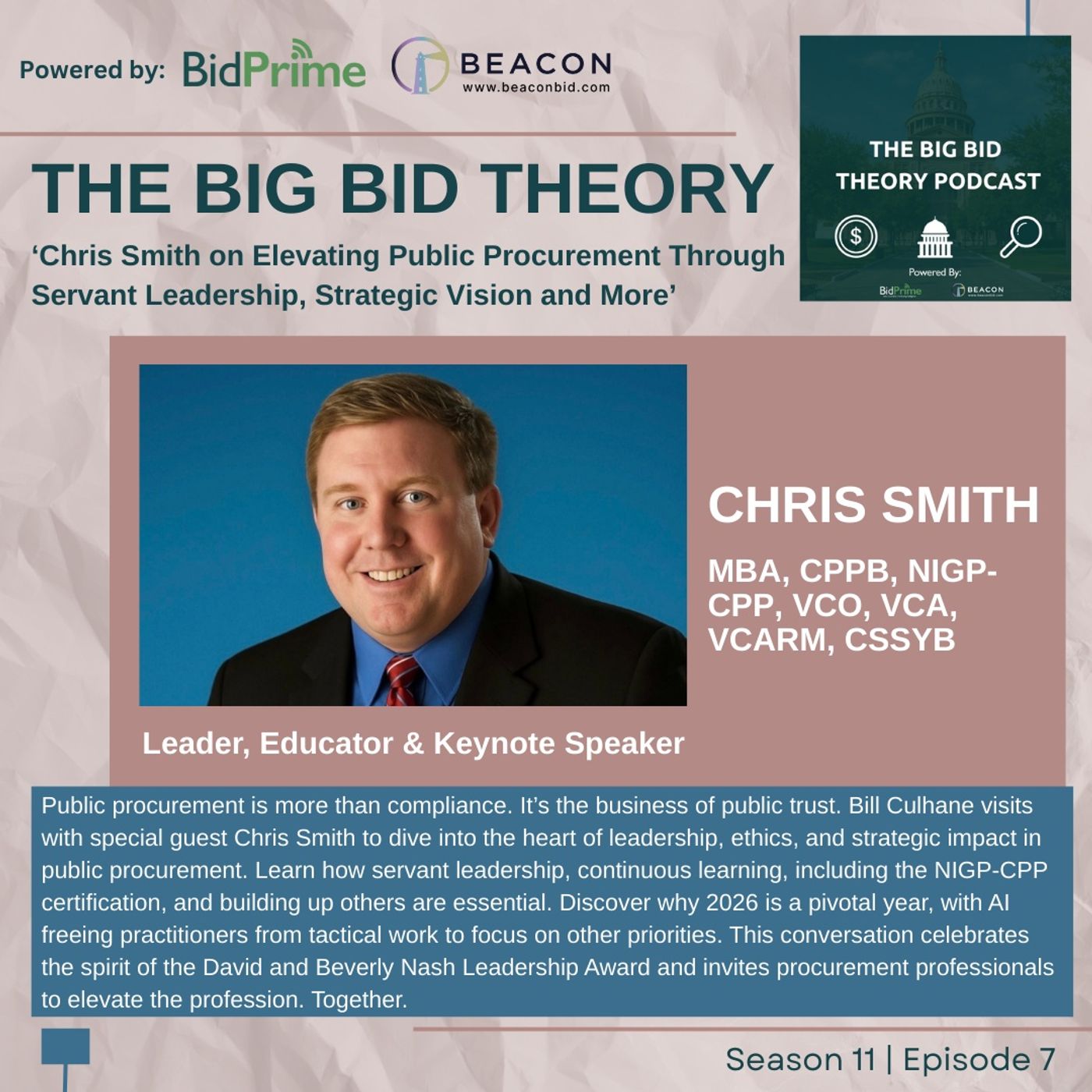 Chris Smith on Elevating Public Procurement Through Servant Leadership, Strategic Vision and More46 / 100
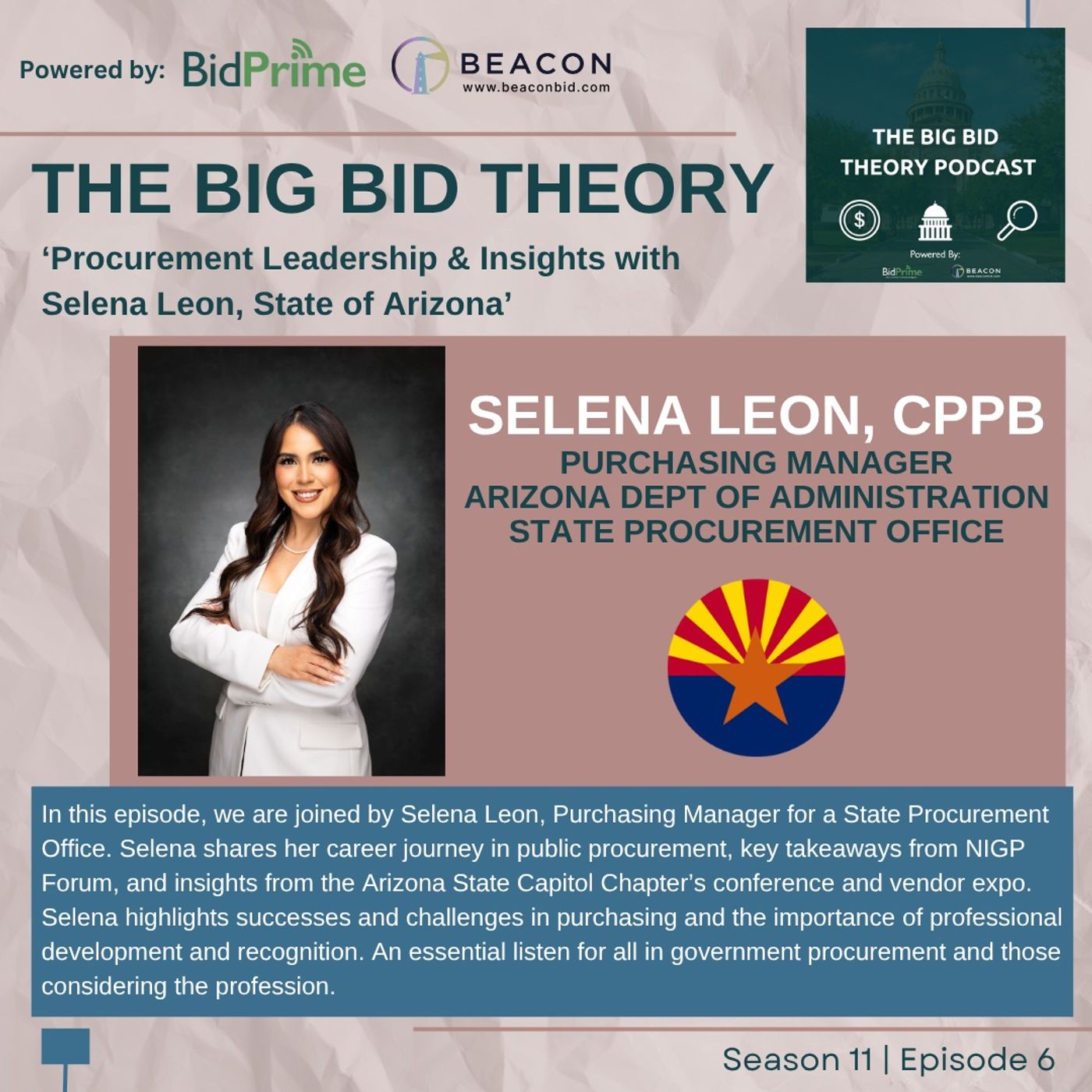 Procurement Leadership & Insights with Selena Leon, State of Arizona58 / 100