
The Big Bid Theory · 2026-06-23 · 41 min
Key moments - from our scoring
Substance score
41 / 100
Five dimensions, 20 points each
Aran Raz, Procurement Manager for the City of Westminster, Colorado, discusses how to implement AI responsibly in public procurement without replacing staff - instead amplifying subject matter experts. Rather than viewing AI as a tool for workforce reduction, Raz advocates for a "human in the loop" approach where procurement professionals drive AI adoption, train models, and maintain accountability. He shares practical examples of using AI to accelerate repeatable workflows: drafting RFPs with scope of work, fee schedules, and evaluation workbooks in hours instead of weeks; triaging emails with recommended responses; and collaborating with project managers in structured one-hour review sessions. Raz founded GovAI Pro to bridge the gap between vendors selling AI products and government practitioners who need guidance on implementation. His core argument: the biggest misconception about AI is underestimating what it can do, but the biggest danger is deploying it without subject matter expert involvement and proper checking. For procurement leaders, CFOs, and agencies evaluating ERP systems or modernization initiatives, Raz's framework emphasizes that leadership shouldn't select technology they don't use daily - subject matter experts must champion the project, or it will fail.
According to Raz, AI can draft a complete RFP - including scope of work, fee schedule with formulas, and custom Excel evaluation workbooks for scoring - in approximately two hours when the procurement manager reviews it line-by-line with the project manager in a one-hour meeting, versus weeks of back-and-forth emails and manual compilation without AI.
Raz argues that implementing AI without subject matter expert involvement is a "dangerous recipe" - if leadership selects tools they don't use daily and the SMEs don't champion the project, implementation fails. The SME must train, implement, and grow the AI tool, making them the key to responsible adoption.
The biggest misconception is underestimating what AI can actually do; people say "AI can't do this," but Raz has been using AI for years to accomplish tasks people claim are impossible, such as drafting complex RFPs and evaluation frameworks.
Repeatable workflows are standardized procurement processes - like RFP creation, email triage, or evaluation setup - that occur regularly; using AI to automate these frees subject matter experts to spend extra time on quality checks and refinement rather than losing hours to manual work.
Raz learned early that coming in with top-down rules alienates departments; instead, he now partners with stakeholders, uses Kaizen events to identify pain points, and emphasizes that procurement must add value to departments, not just enforce compliance, which informs his philosophy that subject matter experts, not leadership, should drive AI tool selection.
Our reviewer’s read on each dimension, with quotes from the episode.
There are a handful of genuinely useful workflow ideas buried in the episode - specifically the AI-to-RFP pipeline with auto-generated Excel fee schedules and evaluation workbooks, and the reframe on time savings - but roughly half the runtime is sponsor reads, conference promotion, career biography, and the unrelated 'crazy bids' fireworks segment. The useful content is real but too thin for 41 minutes.
I plugged in my computer and I said same prompt draft the rfp. It did it in my word template for the city, on our city's template with all the requirements, uh, the waiting for the bid, all of these things. Then it created a fee schedule in Excel with formulas, everything for the line items and then says, who's your evaluation team? I put in the names and it will create a custom evaluation, um, workbook in Excel
if you can do not, uh, 10 hours worth of work in 30 minutes, don't consider the win nine and a half hours back of your life. Consider it, you just got seven to eight hours back of your life. Take that extra time and make your model better.
The episode leans heavily on the already-ubiquitous 'AI won't replace you, the person using it will' framing, which Aaron himself acknowledges is a common saying. The one mildly contrarian angle - that AI can actually replace both the person AND the non-AI user - is hinted at but never developed into a real argument. Most thinking is conventional AI-adoption discourse.
we hear a lot, uh, that AI won't replace you, but the person who knows how to use it will. The reality, and not to scare people is it can replace both.
if you don't include them, you will never be successful because they will not champion your project
Aaron Raz is a genuine practitioner who has actually centralized procurement at a mid-sized municipality and built real AI workflows himself - not a recycled thought leader. The limitation is seniority and scale: he is a department-level manager at a single mid-size city, and the LLC and speaking circuit are nascent, so the practitioner depth is real but not enterprise-level.
I expanded as a procurement manager out at the airport for the city and county of Denver. And then a, uh, colleague of mine there saw this open four and a half years ago for centralizing procurement for the first time, uh, at the City of Westminster.
It is going to Be in person...they have invited me. The ippa, which is the Idaho group, uh, has invited me to do a full day workshop on actually creating this structure and the DNA of how to build your AI agent
There are a few concrete operational specifics - the two-year Kaizen event, the RFP-to-evaluation-workbook pipeline reducing weeks to two hours, and the 7am daily email triage - but no hard metrics, no dollar figures, no measured productivity outcomes, and Aaron repeatedly declines to detail exactly how his system works ('without getting into the details of how I do it').
It took us two years. We did a process improvement Kaizen event where we invited key, uh, stakeholders from every department to see what was broken in our process
I think back in the day, without AI, this would have been a project that would have taken weeks...and now it can take two hours
The host asks uniformly broad, open-ended questions ('walk us through your journey,' 'what's the biggest misconception') and responds to every answer with affirmative filler rather than follow-up probes. Vague claims - like AI doing 'exactly what you're saying it can't do' or the model knowing the guest's 'thought process' - go completely unchallenged, and a significant block of air time is spent on conference promotion rather than substance.
Yeah, yeah, great, great points. And you certainly don't need my support in what you just shared with everyone.
No doubt, no doubt about it. There are a lot of, A lot of advantages that people are taking advantage of.
Computed from the transcript - who did the talking, and the words that came up most.
Host Bill Culhane sits down with Aran Raz, Procurement Manager for the City of Westminster, Colorado , to talk AI, accountability, and what modernizing public procurement actually looks like from the inside. Aran covers repeatable procurement workflows , addresses the "AI will replace staff" conversation head-on, and explains where the line is between AI being a tool and becoming a liability . Honest, practical, and worth sharing with your team. Rick Jennings also joins for a Crazy Bids segment that explodes with excellence. Powered by BidPrime and Beacon Bid . Nominations for the 3rd David and Beverly Nash Leadership Award are open. Visit thebigbidtheory.com . Aran Raz and references: Aran Raz serves as the Procurement Manager for the City of Westminster, Colorado, where he leads the City’s centralized procurement function and works to modernize procurement through clearer processes, stronger accountability, and practical tools that support public trust. His work focuses on building procurement systems that are transparent, ethical, defensible, and easier for departments and vendors to navigate.
Transcribed and scored by The B2B Podcast Index.
Bill Culhane: M. Welcome back to the Big Bit Theory. After a brief respite, season 12 is off and running again. TBBT. We consider ourselves the podcast where we share important stories from the world of public procurement. I'm your host, Bill Culhane, and today's episode is one you're going to want to share with your whole entire team and maybe your closest friends as well. Powered by Bid prime and BeaconBid. We've got a guest today who's doing the real work. He's modernizing public procurement from the inside, talking honestly about AI and leading and showing up in conversations to move the whole profession forward. That conversation is coming up in just a bit. Thanks for your patience. Want to point out reminder nominations for the third ever David and Beverly Nash Leadership Award. They're coming in already, folks. You know a person or team worthy of a nomination, so go to thebigbit theory.com all the details right there. It's a relatively seamless process. Uh, thank you in advance. Plus, we've got your crazy bid segment. Rick Jennings is waiting over there in the wings. Hello, Rick. Nod of the head. It's audio. I know you can't see me. Trust me, I nodded my head without doing a total reveal. Rick, this is called a tease after all. Word in the halls is that you have found a crazy bids that will make everyone want to celebrate.
Rick Jennings: Yeah, that's right, Bill. Um, we're going to go pretty easygoing for, uh, this episode's crazy bids. I think it's going to be something everyone can relate to and can look forward to. So, yeah, stay tuned. We'll get to that a little bit later.
Bill Culhane: Okay, Mr. Jennings. Thank you, Rick. Rick. Rick will break it down later. It's going to have everyone oohing and eyeing. You can, uh, rest assured there's. Before we bring on our very special guests, here are a few words from BidPrime and BeaconBid.
Rick Jennings: The big bid theory is brought to you by Bidprime and Beaconbid. Are you missing out on game changing contract opportunities? BidPrime has over 15 years of industry leading technology in delivering real time bid alerts, deep data insights and unmatched customer support. And now with emerging ops and future ops, you get ahead of your competition by spotting contracts before they go public. Don't wait. See for yourself. Get your free no obligation trial today@bidprime.com Government procurement is now smarter and easier. BeaconBID has improved the way agencies publish solicitations, engage with more suppliers and collect responses faster and more efficiently than ever. With cutting edge AI based solicitation tools and the industry's most comprehensive RFP archive. You'll write better RFPs in less time with EBID bidders submit seamlessly and agencies collect and evaluate with ease, including vendor market research and cooperative and shareable contracts databases. It is time to take procurement to the next level. Request your free demo today@beaconbid.com
Bill Culhane: welcome to the video side of the Big Bit Theory. Bill Culhane, your host. Appreciate everybody sticking around from the audio only version of our little show. Just a couple of things before we bring on our guest. Submit your nominations for the David and Beverly Nash Leadership Award. As a matter of fact, we already have some nominations coming in. Thank you so much. Uh, for more information about the award you can go to thebigbit theory.com or you can email me. We'll be sure to answer any and all of your questions. And also I feel like I'm compelled to plug if you want to share the show with a friend, with a neighbor, with your local barista, whoever. Um, we sure do appreciate growing our audience. So with no further ado, it's time to bring on our very special guest. I've got my run of show here. Aaron Raz serves as the Procurement manager for the city of Westminster Colorado where he leads the city's centralized procurement function. His work is focused on making procurement more transparent, more defensible and frankly easier for both department and this is important vendors to navigate. But Aaron isn't just doing the work internally. He's out there on stages at conferences guesting on the Big Bit Theory. Um, Aaron is one of those people who's leading conversations about responsible AI adoption in the public sector. Procurement modernization are big to Aaron and also how public agencies can actually use these new tools without losing accountability. So with no further ado, Aaron, welcome to the Big Bit Theory. It is so great to have you here.
Aran Raz: Thank you very much, Bill. I appreciate being here and it uh, was a wonderful introduction. Um, I'm um, humbled.
Bill Culhane: Very good. And as most of our loyal longtime listeners know, you can go to the description of the episode. Not only will we have Aaron's bio, some of the stuff I just mentioned, but also some links, um, important links, um, associated with Aaron. More on that in a moment. So Aaron, let's start off this way. Kind of break the ice. Walk us through your professional journey when it comes to serving in public procurement. Kind of from where you started to where you are now as the city procurement Manager.
Aran Raz: I, you know, I, as I've gone through the years and I've attended All of these conferences and been part of these wonderful organizations like nigp. I think my story is not very different from everyone else's. I have no idea how I ended up here or how I started here. I, uh, uh, was at the Department of Revenue, uh, when I first started getting into government, and, uh, wasn't the best fit, we'll say that. And there's an opportunity for a credit card administrator at the Department of Natural Resources, uh, here in Colorado. And I started my career out of the Navy, joining Citigroup as a, uh, customer service rep. So I grew up in credit cards. And there was just an easy fit. Of course they rejected me and said I didn't have the experience. And I wrote back hr, uh, and said, look, again, I disagree. Which now, knowing that leads to a perfect procurement person, right? Uh, and we did. We went back, got, uh, an interview, started there, worked with some great folk who I'm still in contact with. From there, uh, we worked under a great, great director who no one wanted to leave, so I needed upward mobility and I went on to the Attorney General's office. Uh, from there I learned a lot about contracts. So those in procurement who don't think we should be, uh, secondary, uh, attorneys. I, uh, disagree with that. I think that's been a huge asset to my success is understanding contracts. And then Denver, uh, International Airport. So I expanded as a procurement manager out at the airport for the city and county of Denver. And then a, uh, colleague of mine there saw this open four and a half years ago for centralizing procurement for the first time, uh, at the City of Westminster. And he thought, wow, that's a complete mess. And you probably have to think way outside of the box to make that work. Hey, Aaron, you should probably apply. And, uh, here I am.
Bill Culhane: Very good. And from time. Thanks for sharing that, that background there, Aaron. And from time to time I like to ask people this question. And, uh, I'm not going to pretend that I came up with it. It originated here with the big bit theory. But what do you wish you had known? What do you know now that you wish you had known on day one or somebody had told you as you were walking through the door the first day there in Westminster?
Aran Raz: That's a great, great question. Uh, honestly, I think it's very important. I think it's very important for anyone who wants to have a successful procurement program, and especially for any of the few folk out there trying to centralize procurement. And that would be don't make enemies. And what I mean by that is when I Started here. I came in with this mindset from the state in Denver of, hey, I'm going to get people in shape right away. Here are all your rules. This is how you do it. Um, this is an unauthorized purchase. What do you mean? You're starting to get work done and you don't have a contract or a po. So the big thing is coming in and telling people, hey, you're doing this wrong. They weren't doing it wrong. They were doing it the way they knew to do it. They were doing it with the information they have. And what's important is not just to make them angry. We're questioning their integrity. We're saying, because you don't know what we know and you're not doing it the way we who study this every day and learn this and enforce this or work in this realm, uh, that means you don't care, you're not protecting the public. And these people work very hard at what they do. And we need to partner. In fact, I was asked or I responded to a comment one time at one of our conferences. I was at a breakout session at a table and someone said, I feel like we're just. They treat us like we're glorified admins. And I asked a question, well, well, aren't we? Because unless we can add value to them and want them to partner, is not exactly what we're doing. Just stamping things through, making sure they, they just do the right things. Where is the value from our end that we're giving them to partner? So I would say don't rush to just change things. Know your customer, get their buy in, partner with them. It took us two years. We did a process improvement Kaizen event where we invited key, uh, stakeholders from every department to see what was broken in our process, where the pain points were, and to turn that around. Uh, so I would say take the time, get to know your customers, don't make enemies. Because that trust is really hard to rebuild. Not, not so difficult to break, really hard to rebu.
Bill Culhane: Yeah, uh, it's interesting you say that, um, as I hear you share that, Aaron, I think back to my experiences and you have more experience in your pinky finger than I have. But in my travels, it seems like to me, the most effective practitioners, I think of them and I think of relationship builders, um, that's not to say life of the party, but people who engage with other people and form real relationships seem to me on the outside looking in to be the most effective. Now we're going to be talking a Lot about AI News flash, hot off the presses. But as we roll into that topic, Aaron, what is govai Pro? Share a little bit of the background, the mission.
Aran Raz: Okay, so govai Pro is an LLC that I created at the request of or the recommendation of my boss. I report to the chief Financial Officer here at the city. And it came about because I needed an LLC to speak. I was, I was being asked to do conferences and trainings and so on, um, and being asked to help with what it is I do. And I'm sure we're going to get into that in just a moment. Uh, so I created that. So yeah, Gov AI Pro I was trying to find, I was like, what's a name that communicates? We have all these names and, and trying to explain, but I assume Gov AI Pro, which could also be procurement because I was originally thinking procurement and I was stopped by people going oh, this is so much more than procurement. Uh, but really my focus was to help our world and procurement, uh, be able to replicate and install basically in their processes and their workflow, in their lives what it is I have found and discovered doing in my own life that seems to be of great value to people. Uh, more so than I expected.
Bill Culhane: Very good. And there will be a link. Lauren or Rick will be sure to put a link to Gov AI Pro in the description of the podcast. And uh, a little bit later, uh, Aaron's going to share his, his contact information as well, where to find him on LinkedIn, that kind of stuff. Um, so when it comes to AI, I'm going to share just a little bit of my experience, Aaron, and then I will turn it over to you. So a few years ago, um, at Forum in Louisville, I was a part of a panel with Brook Smith, Stephanie Ackerley, Tabitha Freeman, a couple of other folks. And it was technology in procurement. And we all know Brooke and Brooks involvement with spreading the message about AI educating people. Well, as part of that exercise, we asked people in terms of where they were in AI, what was that three years ago? And not many hands went up. That's changed now. As you know Aaron, I think back to, as a matter of fact, you mentioned Denver. I was at a conference in Denver there at the booth, people were coming by and I remember showing some tools, some technology to these two individuals. I'm not going to name the uh, entity, the city, you're not going to get it out of me. But I was probably 45 seconds a minute in and she stopped me and she said, is there AI involved in this? And full Disclosure, right. I'm an open book. I said well yes, there's some AI baked into these tools. And she stopped me, she put her hand up and she said our city will never use AI so things have changed. So anyway, uh, let's get into it and we're not going to tiptoe. Aaron, there are some voices out there and they're saying AI is here. We don't need as many people, don't need people to do things. What would you say to somebody who's saying that AI will replace staff?
Aran Raz: So my answer, oddly enough, it's funny that we mentioned govai pro.com because it's going to answer that. Uh, I believe, and this is the journey I've gone down is it absolutely can replace people. In fact we hear a lot, uh, that AI won't replace you, but the person who knows how to use it will. The reality, and not to scare people is it can replace both. However it shouldn't. The challenge is, and, and I say this from, from vendors, uh, and, and I respect you. I, I love Kim. Uh, I was actually in your session uh, with, with Brooke and them and I speak to Brooke regularly. She's absolutely fantastic and I love all the things she does. What I say by this is I really feel the world, much of the world is missing the opportunity and what I have found of what I teach and why I started, uh, an avenue for me to go out and teach and help speak this about this is to fill that niche. And what that is is we have vendors selling AI products and they're many times fantastic products and sometimes the salespeople, maybe even the developers, we uh, have a big campus of a very large, well known name here in Colorado. And I will not say it because I was at their event for government and their, their facilitators did not think of this gap. So we have people who are selling to government who kind of get government right. Uh, you partner with government but you don't know what it's like sitting in my seat. Maybe you do. Some people do moved on to, to the private sector. The other side of it is we have people and those of us in procurement know we have leadership who want to buy. For example, uh, make the decision on the new ERP that we're going to get here. Uh, and for any vendors who follow this, yes, Westminster is going to be putting out a bid sometime probably next year for a new erp. That said, it's not something leadership should be selecting because they don't press the buttons, they don't know how it works, therefore, how is it going to be effective? So my pushback on my leadership, and luckily I have great leadership here at the city and they saw the value. And what I was saying is we need our subject matter experts to do this. One, because they know what they're doing, and two, if you don't include them, you will never be successful because they will not champion your project. And the key to this is if we're implementing a product that people don't quite know what we do to replace that subject matter expert, and it's being authorized by leadership who also don't know how to do the job of people they're replacing. I believe that is a dangerous recipe for any organization. So what I do is I believe in amplifying the subject matter expert. And quite frankly you don't need any software. I'm sorry to say that, because actually I love your product and I use it. Uh, and you all know that now I'll even talk about how I use it, but there's a lot of things being thrown at us from every direction. And I can get apps, whether for free or paid on my phone, and that can do so many things. So before you even bring in AI, I think we should know how to use it. I think we should know how it thinks, how it works, and how it can work with us. And it's the subject matter expert who needs to implement it, who needs to train it, who needs to grow it. Uh, and that's really where my niche is, is filling that gap between the subject matter expert getting over the fear and, and helping them understand they are literally the most important person in this equation, not going to get replaced. And for the success of any organization, they are going to be that key of bringing in AI responsibly.
Bill Culhane: Ah, this is probably, uh, a, uh, really natural segue to, uh, my next question. And you touched on a lot of things there, Aaron. But what would you say is the most significant misconception that practitioners have about what AI actually is and what it can realistically do for them in their day to day?
Aran Raz: I want to try to be as honest as I can because that's the kind of thing that me, anybody who has met me knows my mouth just goes every direction and a million miles an hour. So I would say we don't know. And that is the key to success with this, is curiosity. I was on a panel and I was asked that question and, uh, very often people have been referring to me as this expert in AI, which I'm flattered I think success is going to come with understanding AI of being curious because I keep pressing limits and I keep discovering new things and I encourage others to do that. And they keep coming back to me just beside themselves of what this new thing they've done. So, uh, I really think it's capable of a lot more. The biggest challenge I see, I hear this daily. Oh, but AI can't do this. It can draft a nice email, but it can't do something or it'll never replace this. That, I think is giving us comfort saying that because I've been using it for a couple of years now doing exactly what you're saying it can't do. So it can be curious.
Bill Culhane: Yeah, that's the thing, right. When you talk about the history of mankind, AI is still the literal A new kid on the block. I already mentioned when I was at Forum, whenever Louisville was, um, I've slept
Aran Raz: since three years ago, I think.
Bill Culhane: Yeah, and you mentioned AI and, and you got this from a lot of people. Um, you've talked about repeatable procurement workflows. If you can kind of summarize exactly what that is, why does it even matter? And where does AI fit into repeatable procurement workflows?
Aran Raz: Absolutely. So a good example of this and without getting into the details of how I do it, I'm more than happy to answer that. I did, uh, a demonstration, uh, the, the chapter out in Oregon, OPPA invited me out to speak to them, uh, and I'm grateful. Wonderful, wonderful group there. And I did a, ah, demonstration as my first speaking engagement. And I asked for AI to uh, or someone who never used it to pull up a screen. And we plugged them in and yeah, I made a stranger just walk up to the stage. And of course they never liked that, but it was fun. Uh, and I had to put in a prompt and we got uh, an upcoming bid from somebody else in the audience. So I did it on the spot, not knowing what it was going to do, and I said, okay, draft this rfp. And it wrote a great scope, certainly not at the level Beacon Bid does. Which is why I love Beacon. There's a whole new realm of how I, I got into it. Honestly, this is part of what created it. And as I spoke to your leaders, um, some of your leadership and developers, we've had this because I'd come back and talk to them and say, wow, we didn't know it could do that, Aaron. So I'm m kind of working with you guys as this has been developing over the last couple of Years, Uh, and then I pulled it up and I pointed out, I was like, isn't that a cool scope? And again, the anti AI people or people who really have learned to prompt it really well didn't want to admit that. I said, well, that is good. That's better than 90% of my project managers give me. And in fact it's probably a better scope than some of my staff gives me. So let's be honest. And the challenge with that, and I do stand by that, it's also the challenge that that's the reason we're not checking our work before it goes out. So we're using it for emails, we're using it for stuff, irresponsibly not checking it. And then we're wondering why there's this distrust and great, uh, question. You get this all the time. Are you using AI? My profile picture, when I hide, I go on my team's calls. Is this crazy AI picture Because I don't want to hide that I'm using AI. I lean forward with the fact that I'm using AI using AI. That said, I plugged in my computer and I said same prompt draft the rfp. It did it in my word template for the city, on our city's template with all the requirements, uh, the waiting for the bid, all of these things. Then it created a fee schedule in Excel with formulas, everything for the line items and then says, who's your evaluation team? I put in the names and it will create a custom evaluation, um, workbook in Excel with instructions, with scoring, with everything for each one of those members and then it'll total up and communicate that. So I think back in the day, without AI, this would have been a project that would have taken weeks. Not just I didn't have the skill to do that level of an Excel sheet and dealing with the formatting. It's also the back and forth emails with, uh, the project manager to get things done. It's searching multiple sources to find the scope, uh, of work and do you have enough and what did you even miss? Uh, there's just so many things that took weeks and now it can take two hours. The reason I say that is with the checking. So during the time I get a cup of coffee, now I have my scope of work and my fee schedule and then my evaluation workbook waiting. I send this off to a pm and we know that many times a project manager is going to sit on it for a week and forget about it, come back and say, yeah, yeah, it's good. They never looked at it. So what I do is we. You'll send it to. The goal is send it to the project manager in an invite for a one hour meeting. Look this over. We're going to go over it line by line. You go in there, you review it line by line with them for an hour, make any tweaks that you need to post it. So now you have a fully developed RFP in collaboration with your project manager in under two hours. That's a repetitive thing. Or uh, to add another one. I come in every morning, seven o'.
Bill Culhane: Clock.
Aran Raz: All my emails are triaged. Hey Aaron, here's your emails that you have to still respond to and here's my recommended draft. Look it over, adjust it, send it. Here's a chain of 50 emails that you just need to know this about it. Oh, uh, and here's all your junk stuff. Do you want me to permanently remove that? Those are two things that have probably saved me weeks and months of my life at this point.
Bill Culhane: Yeah, yeah, great, great points. And you certainly don't need my support in what you just shared with everyone. I know in my somewhat limited experience interacting with people, when it comes to AI, you do have those people like yourself who understand that there's an expectation of some due diligence involved in this. But then there are others where it's copy and paste and that's, that's a scary thing. Anybody who solely relies on AI to do it all without the checks,
Aran Raz: I completely agree. And when I tell people this, I always say if you can do not, uh, 10 hours worth of work in 30 minutes, don't consider the win nine and a half hours back of your life. Consider it, you just got seven to eight hours back of your life. Take that extra time and make your model better. The other challenge is when we don't give it the structure that it needs. And I'm not just talking prompt every time I've actually created and you'll see on my website, Maisie, uh, we ended up giving her a whole image and everything. Just become her own celebrity. It's amazing. Uh, so I tell people, consider it, you got seven to eight hours back. The reason is, is not only do you want to correct it because you don't want to lose the credibility if your customer, internal, external, your, your employees or your leadership lose trust in your credibility with using this tool. You're feeding that monster. Right?
Rick Jennings: Whatever.
Aran Raz: Ah, you feed grows. So we have to be diligent on putting out a good product. And you know what, I'll still take seven or Eight hours back as a great win.
Bill Culhane: No doubt, no doubt about it. There are a lot of, A lot of advantages that people are taking advantage of. So, Aaron, I think you would agree with me, we want Debbie, Fred, Carrie, everybody at NIGP to remain our friends. So we would be. You and I would be in a lot of trouble if we didn't mention nigp. Forum coming up over in Columbus, Ohio, towards the end of August. So talk a little bit about what your involvement will be in Columbus. And I also. Aaron, I'm going to have you multitask here. Anybody who's watching or listening, who maybe has never been to forum, make the case for them to carve out the time to make their way over to Columbus.
Aran Raz: Absolutely. Well, the first thing is I'm going to be there and I am speaking on AI, which seems to be a big topic this year, even by the polls. So the number one sales pitch would be, you get to hang out with me, go to happy hour. Uh, no, it's really wonderful. It's really wonderful for so many reasons I have made. And you'll hear it from others. You meet great friends, great resources. It's nice to know that as we grow, as you grow in your career, as you feel lost at times, you get to meet some experts in things that you would have never imagined. Uh, we have great experts here in Colorado, and I've made great friends with them and I use them as references a lot. But I've reached out to people from across the country because I've been in a session or I had a dinner or met them, however I did at these events. And I've reached out and they have been critical in the success of some of my projects. Being able to have those resources, the knowledge that you gain from that, the opportunity, people move, uh, how great is it that you can go interview because your family really wants to move to North Carolina and you can walk into an office and feel like, hey, I'm already home. I know some of you, we've interacted. Uh, so I do love that. I think there's a great opportunity, great opportunity to learn about new products. I mean, this is when we talk about my journey in AI. Beaconbit was a huge part of that. And I met because of these events and going to these events. Uh, so the partnerships, uh, creating those vendor partnerships, especially for any of us who are around during COVID And there is nothing more critical than having supplier contracts that you made friends with that are able to get you things that were very critical at that time. So the list Goes on honestly. And it's uh, just a great experience. It just makes you feel like what we're doing is of great value and we're certainly surrounded by maybe some, some agencies, maybe none that make you feel like that on a daily basis. But you're not alone and we have a whole group of us. So I think it's very important.
Bill Culhane: Yeah, it certainly is a celebration, as you mentioned Aaron, a celebration of the profession. But also invariably when I speak with people, they talk about the sharing, they talk about the networking. As a matter of fact, a couple of um, upcoming episodes. Diana Landeros is going to be back rejoining the show. Danny Mays, I'm sure you know Danny Aaron, he's going to be a guest on the show. And, and I, Diana and Danny at forum. And so, so I guess in my world I get to meet future guests of the Big Bit Theory. So Aaron, to, to wrap things up here already um, mentioned that Rick and, and or Lauren, they're going to put Govai Pro link in the description of the podcast you mentioned you're going to be presenting at NIGP Forum. Is there anything else in the, the recent upcoming future, um, where people can keep a, any contact information, not your phone number, any, not your cell number, but any contact information you want to share with the ah, listening audience?
Aran Raz: Yeah, uh, thank you for that. I would say as far as there's several engagements, uh, for those in Colorado, most of them know me. I'm going to be at our uh, local conference here for ARM gpa, the Rocky Mountain, uh, chapter. And I'm speaking at that session both on debriefs and on AI. I'm going to be speaking at the Colorado Municipal Leagues before our leadership. So I'm really going to promote procurement a lot as well in front of the governor and mayors and so on. Uh, the one thing I was really uh, excited about, August 13th, so it's a Thursday, a couple of weeks before forum, uh, due to some friends I made while in leadership Summit in Tucson. Saw me doing a few things and were fascinated by it, uh, what, what Maisie and I did basically and they have invited me. The ippa, which is the Idaho group, uh, has invited me to do a full day workshop on actually creating this structure and the DNA of how to build your AI agent in whatever platform you use so that you have a model that you don't have to just prompt every time. It knows my municipal code, it knows my thought process, it knows my templates. So we can redo that. Uh, it is going to Be in person. I don't quite know, uh, how many people are going to be in person, but they, we're also offering a virtual so you can register with them and actually attend from anywhere in the country. Uh, so that's a really nice thing that that chapter is doing for all of the, uh, members out there and procurement professionals. And I think they're just opening to anybody. So Bill, feel free to join as well. And I'm gonna, I'll, I'll be promoting that on my LinkedIn, um, which honestly I don't have. I think it's Aaron D Raz. Uh, but that'll be in there, the link, uh, and a R, a N, R, a Z. And when you look for me, if you're in the world of NIGP, you'll probably see 70 to 90 of the same connections. So that's probably, probably the one with my name spelled this way. Uh, easy to find, but, uh, and then look forward to meeting people. Obviously I'm a talker. If you meet me at forum, hang out. I love nothing more.
Bill Culhane: Aaron. I do appreciate that. And yes, Rick and Lauren, they'll put a link to Aaron's LinkedIn page in the description of the podcast. We'll have a bunch of links down there in the description. Well, Aaron, on behalf of our audience, all the folks here at the show, uh, again appreciate so much you spending some time with us and, and thanks for all you're doing to again, help lift up others in the profession.
Aran Raz: Thank you so much, Bill. I appreciate it. It's a, it's a pleasure to be on the show.
Bill Culhane: Okay, very good. That's exactly the kind of conversation that helps the pro, helps the profession. Right. Uh, honest, practical, forward thinking. Uh, again, many thanks to Aaron. How many times did I mention it? We'll make sure all of the links are in the description of the episode. I see Rick nodding his head again. Okay, Rick, before you step away from the mic there, well, we promised everybody crazy bids and, and we are delivering. Rick, I have a feeling the crazy bids is going to be a blast.
Rick Jennings: It is going to be a blast. So you, you know exactly where we're going with this one. Um, we wanted to keep it pretty simple here for this, uh, episode's crazy bid. And so for this one, we're going to go with the city of Gainesville putting out their bid for New Year's Eve fireworks over at Depot Park. Um, for our listeners over in Gainesville. They're probably very aware of, um, Depot Park. It's a very fun spot to go out to and, you know, fun enough. Um, they've got several things out there especially for kids, uh, who are coming out. Like, they've got the blue, uh, Grotto splash pad. There's a neat little depot station, which is a historic train depot. And, um, out there also, they have the Cade Museum, which is actually named after Dr. James Robert Cade. Why is he important? He invented Gatorade. So for all of that packaged together, um, if you're looking for something fun to do, um, for the fourth of July, you can't do much worse over than, uh, Depot park in Gainesville, Florida. And hey, if you and your company provide neat, uh, lighting displays, fireworks, then, hey, we are giving you a great lead in this episode's crazy bid that you can win.
Bill Culhane: Yeah, listening, listening to that crazy bed. Speaking of crazy, crazy to think the year is almost half over and July 4th is right up ahead. Thank you very much, Rick. So that'll do it for this episode. Much appreciation again to Aaron Raz from over in the city of Westminster. Thanks to him for carving some time out of his very busy schedule. Follow Aaron. Check out Govai Pro. Be informed. And thank you there, Rick. Um, also our team, everyone listening. We're grateful to you for being a part of the Big Bit Theory community. If today's episode gave you something to think about, share it with a colleague. It genuinely helps and it's very, very much appreciated. So if you've seen something out there that belongs in an episode and you know who you are, send it our way. You, uh, can email me at bculhane, um, or you can message me on LinkedIn as well. So until next time, go Gunners, Barracudas, Tigers, Bobcats and Cubs. And we wish you the very best.
Rick Jennings: Powered by Bid prime and Beacon Bid, we thank you for tuning in to the Big Bid Theory from Austin, Texas. The show is hosted by Bill Culhane, produced by Bill Culhane and Jim Jim Ward, and co hosted and engineered by Rick Jennings, Distribution, research and production assistance by Lauren Jones. You can find other episodes of the show on YouTube, iHeart, Spotify, Apple Podcasts, Spreaker, Google Play, and among other platforms. Thank you for downloading and sharing the podcast.
Other episodes covering the same guests and topics, from across The B2B Podcast Index.
 Agentic AI in the Commercial Workflow with Johnson Controls CDIO Vijay SankaranEnterprise AI Innovators · on RFP automation88 / 100
 Modernizing your threat huntTalos Takes · on human-in-the-loop AI86 / 100
 #67: Building Human-Centric AI in HR Tech: From Fear to AdoptionThe Changing State of Talent Acquisition · on human-in-the-loop AI80 / 100
 PodChats for FutureCFO: AI in finance as a compliance imperativeCXOInsights by CXOCIETY · on human-in-the-loop AI76 / 100
 From 82 Videos a Day to AI Empire with John GargiuloThe Catching Fire Podcast · on human-in-the-loop AI74 / 100
 How AI is Rewriting the Employee JourneyColorado Tech People · on human-in-the-loop AI73 / 100
 Columbus Calling Kim Cullen on the Road to NIGP Forum66 / 100
 Danny Mays on Servant Leadership, Lessons to Learn, and the Human Factor s12 e483 / 100
 Kim Cullen Prather on eProcurement, Debriefs, and Supplier Insights. Season 12 has launched! s12 e154 / 100
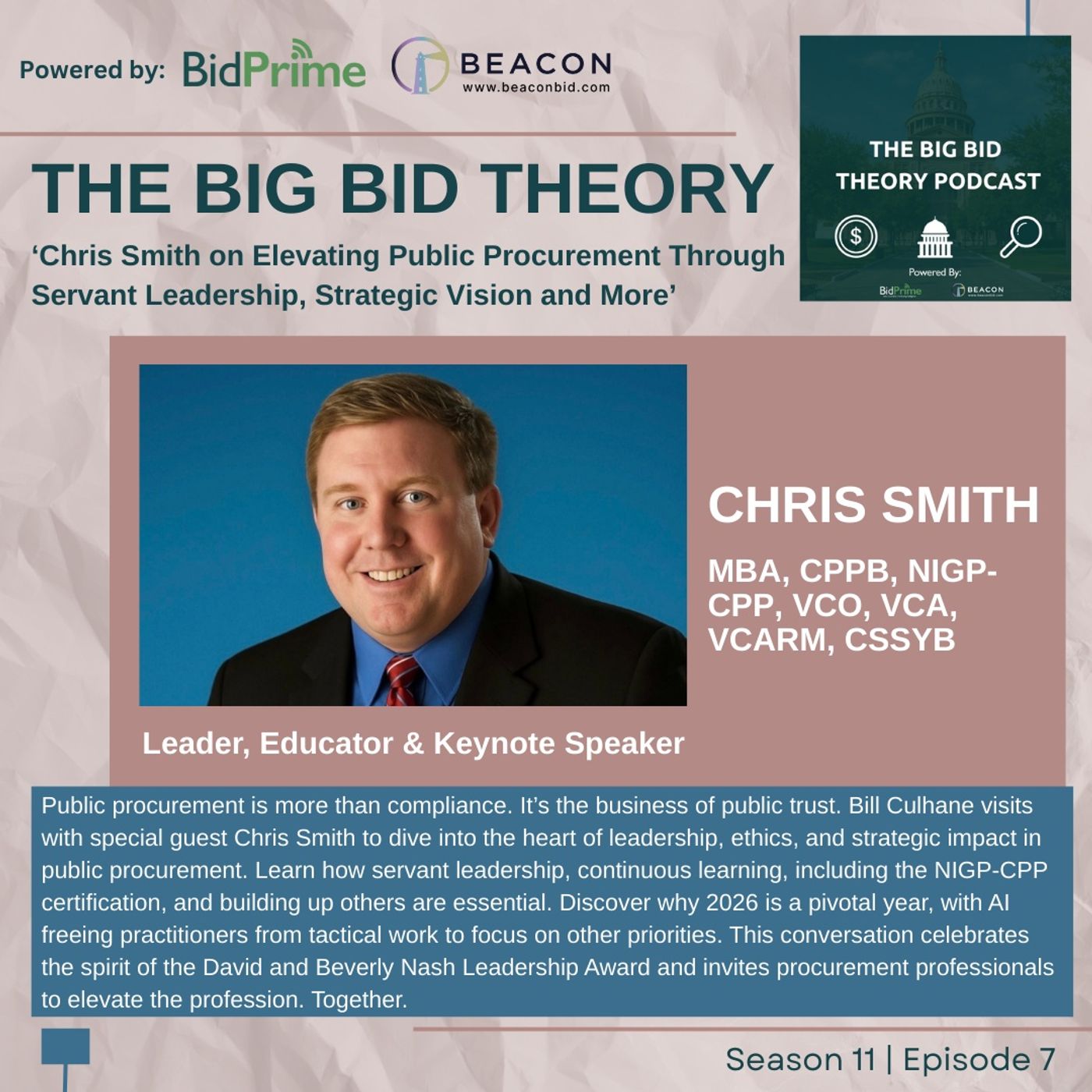 Chris Smith on Elevating Public Procurement Through Servant Leadership, Strategic Vision and More46 / 100
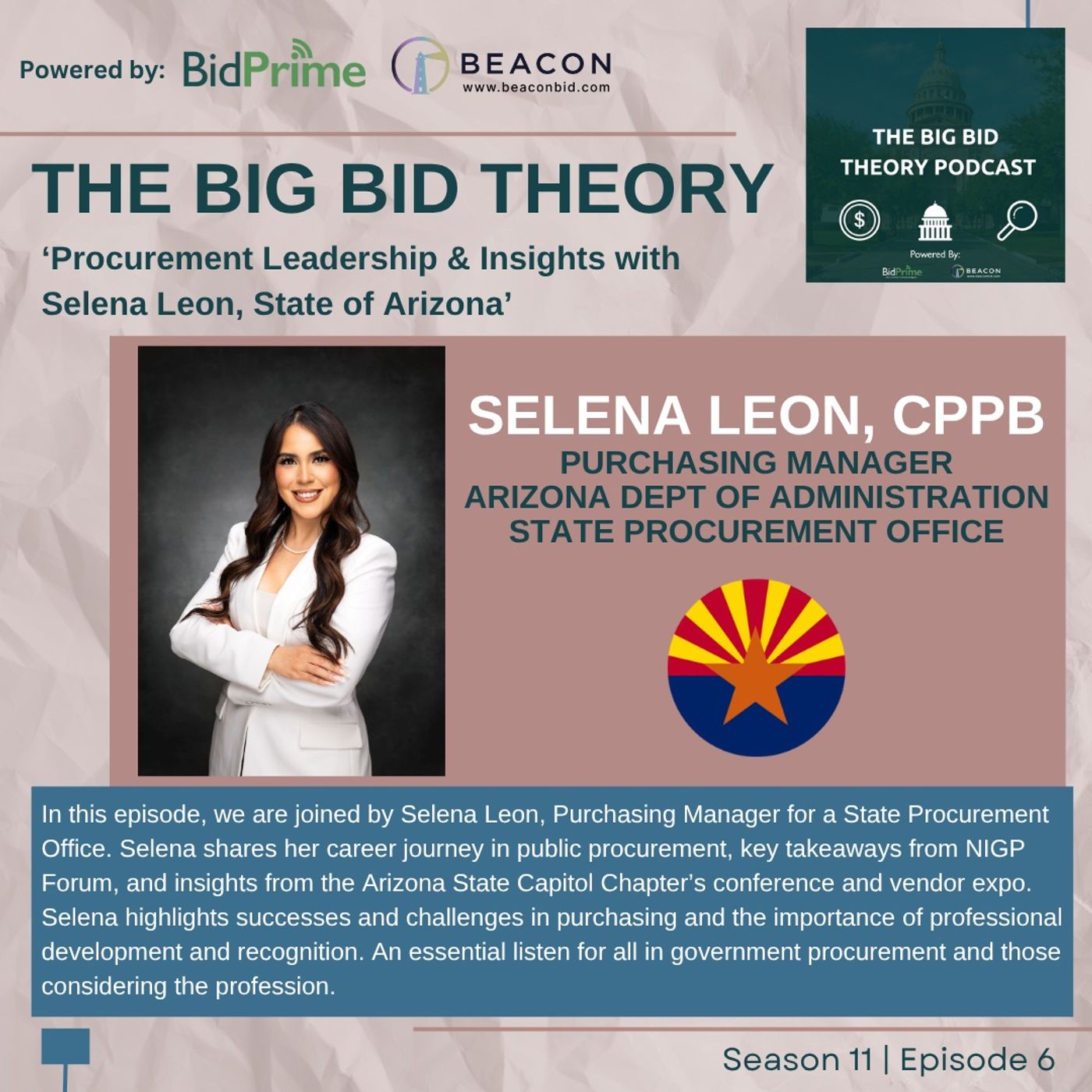 Procurement Leadership & Insights with Selena Leon, State of Arizona58 / 100