
Monetize: The Art Of Pricing · 2025-01-08 · 32 min
Key moments - from our scoring
Substance score
45 / 100
Five dimensions, 20 points each
Eva Feenstra, Director of Pricing & Commercialisation at Xero, discusses how pricing expertise develops and why cross-functional collaboration is essential for successful pricing strategy. She explains that pricing isn't merely a financial exercise - it's a strategic lever that influences product development, revenue, and customer value. Drawing on her experience at Simon-Kucher, a premier pricing consulting firm, and now at Xero (an accounting software company), Eva highlights how early-stage companies often underinvest in pricing capabilities, relying instead on external consultants, while mature organizations must build internal pricing teams that bridge product, sales, strategy, and finance. A key insight emerges through her payment platform case study: transitioning from one-sided to two-sided marketplace pricing required extensive customer research, internal change management, and careful stakeholder alignment. Eva emphasizes that pricing decisions are rarely reversible and demand collaboration across departments - sales focused on short-term wins, strategy on long-term positioning, product on roadmap impact, and finance on investor commitments. She also reveals the psychology behind pricing: humans take cognitive shortcuts when evaluating options, which is why presenting three product tiers (rather than two) shifts customer preference toward the middle option. Usage-based pricing models, particularly relevant in AI-driven businesses, represent an inflection point where SaaS-saturation has prompted companies to align pricing more closely with actual customer value delivery.
It depends heavily on industry, but Eva observes that fast-growing companies typically hit a revenue limit when they've relied on a single pricing model or price point from launch. The inflection point varies - some globally-focused businesses reach it much later than more specialized, regional offerings - but the signal is always the same: customers refuse additional price increases without value justification.
External consultants like Simon-Kucher are best suited for early-stage or growing companies lacking pricing expertise and bandwidth, while internal pricing teams become essential as revenue drivers mature. The timing depends on business maturity: startups are too focused on product and acquisition to justify a full-time pricing hire, but once pricing becomes a main revenue lever, building internal capability allows continuous testing and strategic alignment with product roadmaps.
Humans rely on cognitive shortcuts rather than rational analysis, which is why presentation matters as much as data. For example, when offered two products, customers tend to choose the cheaper option; when offered three or four, they gravitate toward the middle option. Adding a high-end third product shifts the entire mix without changing the core offering - a tactic Eva calls "mix shift."
Before setting a price tag, companies must identify what problem they solve and when customers extract value - whether with each use or simply through monthly access. Eva uses a fast-food framework: burgers are must-haves (high adoption, high willingness to pay); fries and drinks are nice-to-haves (high adoption, lower willingness to pay); add-ons like ice cream or coffee are optional (low adoption, high willingness to pay among those who want them). This matrix informs both packaging and pricing model design.
SaaS subscription pricing became saturated as companies tried to bundle and increase prices indefinitely, hitting a ceiling. Usage-based models remove the onboarding hurdle, allowing customers to test with zero commitment and pay only for value received. This drives faster adoption, particularly valuable in AI and variable-cost scenarios where pricing must reflect actual consumption.
Our reviewer’s read on each dimension, with quotes from the episode.
There are a handful of usable concepts (compromise effect in pricing presentation, hybrid overage model for Xero UK payments, moving features down-tier post-acquisition) but they are surrounded by long stretches of generic advice and meandering small talk. The ratio of novel ideas to airtime is low.
if you would only have two products, people tend to go for the cheaper options. If you have three or four products, people tend to go for it more towards the middle. It's a good advice to add a third product on the high end because you're changing the mix shift there
we included a few packages payments in the subscription and then the rest is charged based on overages. So that kind of means everybody has the opportunity to test it and experience the value. But if you are really like a heavy user and you experience more value, then you also pay more for that
The episode recycles well-worn pricing frameworks - good/better/best lineups, cost-plus vs. value-based pricing, the Kano model repackaged as a burger analogy - without adding a contrarian or first-principles layer. The usage-based pricing discussion adds nothing new to the standard narrative.
the reason why you would go to McDonald's or to burger King is to buy that burger. That's kind of what you're longing for. So that's the must have. And then you have more. The fries and the Cokes, it's a nice to have
I think very traditionally, or if you don't have like a pricing team yet, very often what happens is that we look at competition or we look at our cost
Eva Feenstra has genuine practitioner credentials - Simon-Kucher background plus a Director-level pricing role at a real, scaled SaaS company (Xero) - but she is only six months into the Xero role at recording time, which visibly limits her depth on company-specific decisions and forces her to speak largely in generalities.
I'm only been here for like six or a little over six months
I personally started as an analyst, but many of my colleagues have come from, like, very different areas, from engineering to geography
A few concrete named anchors exist (Sift acquisition, Cresco payments partnership, Making Tax Digital UK mandate, QuickBooks) but the flagship case study - the two-sided payment marketplace - is entirely anonymised with no revenue figures, timelines, or outcome metrics. Most claims are illustrated by analogy rather than data.
we have just recently required Sift, which is a great analytics company
we, we have a partnership with Cresco on kind of payments
The host makes a genuine effort to push for specifics (asking for benchmark revenue thresholds, requesting double-clicks on case studies) but frequently answers his own questions, uses very long multi-part prompts, and never challenges a single claim Eva makes. The interview reads as collaborative rather than rigorous.
Is there a benchmark number? Do you see that happening typically at like I'm just thumb rule like 10 billion, 25 million, 100 million. When do you typically see that happening?
What do you think is the inflection point that suddenly B2B and software started saying, talking and thinking about user based pricing in a more deeper way
Computed from the transcript - who did the talking, and the words that came up most.
In this episode of Monetize: The Art of Pricing , host Abhishek Rajagopal chats with pricing expert Eva Feenstra to explore the nuances of pricing strategy in the SaaS industry. Eva is the Directo r of Pricing & Commercialisation at Xero , and she shares her unconventional journey to becoming a pricing leader and explains why pricing is a critical revenue driver for businesses. They discuss psychological pricing and usage-based models, citing real-world examples, including Xero's bundling strategies. Eva highlights the collaborative nature of pricing decisions, customer behavior insights, and the importance of adapting pricing strategies to market dynamics. Here are some key discussion topics: The Importance of Pricing in Companies Case Study: Transitioning Legacy Pricing Models Customer Feedback in Pricing Decisions Developing Pricing Strategies The Art and Science of Psychological Pricing Strategies A Pivot to Usage-Based Pricing Models Xero's Pricing Strategy The Evolving Role of Pricing Teams Eva Feenstra is the Director of Pricing & Commercialisation at Xero, a global small business platform with 3.5 million subscribers.
Transcribed and scored by The B2B Podcast Index.
Geomands tend to go for, like, middle options. If you have a portfolio and you're presenting if you would only have two products, people tend to go for the cheaper options. If you have three or four products, people tend to go for it more towards the middle. It's a good advice to add a third product on the high end because you're changing the mix shift there.
You're now listening to Monetize, the art of pricing. So welcome to another episode today of Monetize. So today we have with us Eva, all the way from Australia. How are you doing, Eva?
Very well, thank you. We're getting into summer, so it's always a good time of the year. Just the opposite here in the Bay Area. So I envy you a little bit at this time of the year, but good to have you here.
Right, so Eva is an elusive pricing expert. Not a role that you find too often in companies with her experience working with Simon Kutcher and now with few companies specifically zero right now, she's done a lot of work around pricing specifically, and that's kind of what we're going to delve into today. So we are welcome on the show. And maybe just starting you off with the first question.
How do you become a pricing expert? Is that even a role? And of course, how do you get there? And that is typically a starting point to do that.
Yeah. Thank you very much for having me. I'm very excited to be here and I think it's great that you're starting a podcast on this specific topic because I think it's something that has become more and more important over the years and it really starts to get a voice within companies. How do you become a pricing expert?
That's a very good question. Well, you definitely don't go to university and just get a pricing degree, and that's kind of where you start. I personally started as an analyst, but many of my colleagues have come from, like, very different areas, from engineering to geography, like a lot of different type of backgrounds. I think you kind of start and you're thinking about, hey, what are kind of the revenue drivers?
How can you. More on the strategy side is where I personally started. And you're starting to think about, hey, where can. How can we actually drive revenue?
How can we influence that? And pricing is, of course, one of the levers. For me personally, it was when I moved down to Australia, I was looking for a new job and I found that at Simon Kutcher, which is of course the core of a lot of pricing discussions. And I got to learn a lot on different projects within different industries.
So I think that was kind of my background and how I rolled into this role. Any differences? Primarily now that you work as with Simon Kacher, which is an external consultant that obviously which specializes in pricing and then working with companies internally, would you see a differences like between these two? Right, like so if I were a founder or if I was somebody working in a company responsible for pricing, would I be better off exploring, looking outside, or would it be something that I need to grow internally?
Because that's going to keep me in good stead over a point of time. I think it is probably more a question of timing. Like what is the right time to really start growing your internal pricing capabilities? I think when you start your own company, you're so focused on just making everything work, you know it yourself.
A big part of the business when you start a business is really making sure that the tech side works. You're just answering, you're doing acquisition, etc. Etc. So in that perspective, I think you don't have necessarily the time and it's probably not even a full time job at that point in time.
So I think to solve for that all the way in the beginning might be more like an external perspective. And I think once you start growing, it definitely becomes like it's a main revenue driver. And I very often say like pricing is not just a price tag that you put on the product, it's really about what are the products that you're going to bring to market, how much value do they add? If you understand that part, you can actually influence the roadmap.
So what are the products that you want to bring to market first that deliver the most value and then you can start thinking about the pricing model and everything that comes with it. So I don't think it's like very specific, but I do think it's a capability that you need to build over time internally as well. Got it. So you've worked obviously maybe it start from your time before zero.
You work across a bunch of companies that has, I'm sure different or interesting pricing problem. So could we maybe start off and kind of let dig deep into an interesting problem statement that you kind of like looked at and then you were able to successfully, or maybe an example not successfully implement something that'd be interesting for us to hear? Well, I've done a lot of different projects and just to pick one is always a hard one. But I think when it comes to pricing there are interesting things happening.
Like one of the projects I was working on was a payment platform. So it's a two sided marketplace where you would have subcontractors and contractors and there would kind of be everything would be included in there. And I think when we got on board, it was really a one sided marketplace and we turned it into a two sided marketplace. And I think that was a transition that we worked on that was very impactful for that company and really made sure that they were set up for a lot of growth in the years after that.
But it was a big transition because of course when you start charging not only one part of the marketplace, but also the other side, you really need to think about how do we do that? It's a change that you have never done before. So also a lot of change management that comes with this. So that seems like a good example.
Right. So maybe we can just double click on the audio equipment. So you said this was a payment company, right? I mean you don't need to name names, of course, but what size would this be?
You know, and when they came to you, like what was the problem statement that they came to you with? Right. And how did that. Maybe you could take us through the journey of what they came to you with and then what all did you do with them?
And then eventually that led to them becoming a double sided microplay, sort of a successful outcome for them. Right. How would you maybe go deeper into that process? I think the moment that a lot of, and I'm talking about growing companies so not like the more mature companies, because they could come at any point in time, but especially the ones that are growing and growing fast.
There is a moment where they just find out that they are hitting a certain revenue limit when it comes to pricing. So from the moment they've started, they have just chosen one pricing model most of the time, one price point. They probably have never done a price change before. They're very much focused, ooh, if we do this, we might lose customers.
And all that is kind of the situation that a company would be in normally. Is there a benchmark number? Do you see that happening typically at like I'm just thumb rule like 10 billion, 25 million, 100 million. When do you typically see that happening?
It really depends upon the industry because some of them, like if you would go globally, you won't reach that limit until much later. But if it's much more specific, it will be at a different revenue goal or different revenue limit. And what we then do is because of course at Simon Kucher we have like a lot of experience so first of all we can give a little bit more comfort because as we spoke about before, there is not a pricing expert in their team yet. So everything they think, oh, everyone's going to run away if we increase prices or if we change anything when it comes to pricing.
So a lot of the things that we start with is of course giving comfort to the management team but then also talk to customers and, and I think what we very often find at that point in time is that a lot of the customers are super happy. Like they have been with the company for a couple of years. They decided to stay there because the company is most of the time solving like a great problem for them and very often they actually say they should charge more because they know that a lot of companies increase their prices.
They have never done it before is a big challenge that they're solving for them. So they're like I actually don't mind and I would be open to a lot of different things. So you kind of start to have the discussion if there are competitors in the market, they might do other things as well. So it might be that there is an incumbent or more corporate company in the market and then you're actually entering that market and most of the time you undercut on price at that point in time.
So there is most of the time a lot of opportunity there to turn that revenue lever. Right. And what does the process look like? Right.
So you onboard them your day. One typically is this like a 3 month, 6 month, 12 month or longer product. Like so this specific example right with the fintech company was this like a longish one and what are the steps that are involved? Right?
I guess. So once you go beyond that, how does the day to day life of a person involved in pricing look like? Right. What are the tools that you go to?
What is it that you go in the morning and look at and how do you kind of just do that? Yeah, there is a lot of research and like talking to customers I think that it happens at the start halfway and at the end I think that's kind of a continuous process. I think that's super important. And then there is a lot of a technical side to it.
So really modeling like what could it be, what would it look like? It's an outward perspective, not only the customer but also the competition. And I think as a pricing person you're trying to bring all of those views together. So you're thinking hey, what are competition doing?
Where is the room that we can actually move towards? What are our customers expecting or Accepting in some cases. And then you try to bring that internally as well. And very often, especially at this point in time for those companies it is a change.
So it does require a change internally as well. So it's a lot of stakeholder management. I think on the internal side, like you have sales who are very traditionally more focused on kind of the short term, you have strategy who is more longer term focused. Do you have products that is of course managing the roadmap and when new products and features are being delivered.
Finance always looking at like the investor side and making sure that we come through on our promises from a financial perspective. And I think it's really the job of a pricing person to almost bring everyone together to think about, hey, there are different scenarios and different directions that we could go into. What are the upsides and what are the downsides in each scenario. So you really want to make sure that you understand the full impact of every choice that you make because it's also not something that you can most of the time easily dial back on.
And I would say pricing is really a team effort. Like you're kind of in the middle of a lot of different teams and you're weighing off the different pros and cons. And it's not that we necessarily always make the decision, but I think we have an expert opinion and we facilitate that and we need to weigh off the different impacts short and long term. You said it's inverse.
Many times it's seen as irreversible. Right. Or does that kind of make it feel like it's bigger and more one off than it should be? Like, oh wait, if you do something to pricing, this is going to be massive that they can't do this.
Again, as against the thinking that hey, pricing is something that you keep checking in every 3 months, 6 months, 12 months and regularly to keep learning and updating. Right. So how should a company look at pricing? Right.
Is it like always something big and bold? I mean you don't have those things coming up. When some salesforce comes and says they've got to change pricing? Those I understand.
Right. Those are like one off bid things. But there's a lot more within pricing. How do you change packaging?
How do you kind of change the numbers a little bit that I'm assuming is a lot, happens a lot more often and it's not as irreversible. Yeah, exactly. So that's definitely not a one off. At Xero, for example, we are continuously testing different things, different pricing, different packaging.
We're thinking about should it be bundled or should it be an add on, like all those different kind of decisions. And I think the great part about pricing and the size of the company that we are is that you are able to test certain things quite easily. So some things you might just want to test in one market before you roll it out to some of your bigger markets. So I think that is a way on how we do that.
And it's not only the product and the packaging itself. It's also really about how do you actually communicate that. I think as humans, we like to believe that we're very rational and, and that we thoughtfully kind of weigh off every decision that we make. We're like, oh, this product is going to give us this value, this.
I think it's worth it. But like, in the end, if we would do that for every single decision, like, we would spend days and days and days and we just don't have the time. So I think very often we take shortcuts, like our brain takes shortcuts. And there is a lot going on in how we present things like on our website and how you design it.
And I think that is just as much or as just just as big a part of the success as the pricing and the packaging itself. That's super interesting, right? I mean, we always look at pricing as a data problem, which it is like 80% of the time, but there is probably 20%, like you said, a psychological aspect to it. So I find that very interesting.
So maybe could you just give us a couple of example of what you mean by that? Right? Like when you say, like, hey, it's just the presentation, like what are examples where you did something like that, which is not just the data and it really worked or it didn't work. That would be great behavior.
Yeah. So like us as humans, if we're trying to shortcut, we tend to go for like middle options. So very often if you have a portfolio and you're presenting, if you would only have two products, people tend to go for the cheaper option. So if you have like three or four products, people tend to go for it more towards the middle.
So I think even if you would have two products, like, it's a good advice to kind of add a third product on the high end because you're kind of changing the mix shift there. So I think that's just one example on how you can play with that and how you can influence that. So all of these product features that kind of like talking to pricing, right? So how do what comes first?
Like, do you think A lot of pricing people I see come from product and vice versa. Do you think pricing people need to have a lot more understanding of this aspect of things as well? Maybe the product aspect, the psychological aspect of how people think? And do you see that often or is it more just numbers and competitive comparisons that lead to pricing?
It's a very interesting question, and I think it depends probably on the maturity of the company and especially when it comes to pricing. I think very traditionally, or if you don't have like a pricing team yet, very often what happens is that we look at competition or we look at our cost. And I know in traditional SaaS, costs are not such a big problem. But when we're talking about AI and some of the developments happening there, there will of course be more variable cost included as well.
But like, constant competition is, I think, something that you want to keep an eye on. But like, you want to make sure that you make. We're not a charity, right? So you want to make sure that you actually make money and that you're competitive, but it shouldn't be the main decision driver.
It's for how you set your price. And this is, I think, where it comes to. You really want to understand the customer value proposition. Like, what is the problem that you're solving for this customer and when does the customer get the value out of it?
So is that for every time they use it or is it more something that happens over just having access to it on a monthly basis? And I think that is something that you really need to understand well before you're thinking about a price tag at the end when you go to market. And I think ideally you want to do this all the time. So at the first stage where you have an idea on how you the product that you want to design, like if you do it at that stage, it's actually super helpful and it might actually influence your roadmap as well.
So we often do a research where we're really trying to figure out what are kind of the nice to haves and the must haves. You can think about this as a fast food example. I think it's just very easy and tangible to understand. But the reason why you would go to McDonald's or to burger King is to buy that burger.
That's kind of what you're longing for. So that's the must have. And then you have more. The fries and the Cokes, it's a nice to have.
And if it's bundled in, you're actually like, hey, this is okay. I want to Buy the bundle. And then there are some things that are more like the ice creams and the coffees. Like some people do want to have it, but not that many people, but the ones that want to have it actually want to pay for it.
So that's really like more like an add on. And you can simply test that. If you think about a two by two matrix where you have like the importance on the vertical axis and on the horizontal axis you have the value and the willingness to pay. You can see in kind of the top right corner is where your burgers are.
That is kind of the high adoption, high willingness to pay. Top left is high adoption, lower willingness to pay. That is kind of your fries and your Coke. And then you have the ice cream and the coffee is more on the bottom.
Right. So that's I think very important, like when you're designing it, that you're trying to figure out, hey, what are really our must haves. And sometimes you maybe might find that there are no must haves, but that's kind of how we test it. And if you do that all the way from the start of your product development as well, and you really embed that product process in your development, then you can steer and make sure that what you're bringing to market is actually going to be very valuable and solving a problem for your customer.
So this aspect of B2C. Right. Sometimes it's obviously very interesting to understand and how people, because many of these is very clearly relational. Right.
People just have emotions, sentiments guiding there in B2P, I would say it's a little more rational. So could we talk of like maybe instances where there are big change in value metrics itself? For example, in the B2C use case, somebody wanted to buy a burger, but burning the site, hey, I'm going to charge you every time you come to my restaurant, but eat infinite burgers and a buffet, for example. Right.
So that's a whole change in pricing model itself, though the value metric remains the same. So maybe your experience, have there been cases where a customer comes to you, they're charging for A, and then we go understand that what the customer actually likes is B. So you change the way that you price at all or you change the pricing model so drastically. Other examples of that.
How do you find those ticks? Yes, they definitely are there. They're not as many. And I think that's more because people find it a bit scary to kind of change the pricing model altogether, but they definitely are there.
Do you think there should be more? I don't know, it's a funny balance I think that you're trying to strike, right? Because yes, there are certain kind of ways that you want to do it ideally, but there's also kind of conditioning of the market. So if you have already reached a certain point or maybe one of your competitors have, they might have set kind of the standard for the market.
So then I think it kind of changes. That was to answer, to answer that question if I think there could definitely be more. But it is a change process that you need to take into account as well. Zoom.
Tomorrow just comes and says they're going to charge based on how many minutes or how many participants, I think there's going to be a little bit of an uproar. Right? So yeah, absolutely. Well, I think you can see it a lot with like AI happening at the moment, right.
And I know it's a topic that like everyone is talking about it, so you always feel a little bit. But what is happening there is that of course a lot more people are going to go to more usage based model because first of all you kind of realize that the value is more in the interaction. So for every interaction or every request, and I'm calling it a successful request because it's not like every ping that you do, of course, but it needs to be successful and really solve the problem for the customer.
And there's a cost aspect to it as well. And like we don't know what the cost aspect is going to do over time that might influence certain decisions. But I think that's one of the most recent examples where we can see that there is a change in pricing models, user space pricing. I mean it's been something that's obviously talked about a lot, right.
Even when AI has obviously got accentuated that. But even before AI, it's not new, right. I mean it's been there in different aspects of life for the longest time. But what do you think is the inflection point that suddenly B2B and software started saying, talking and thinking about user based pricing in a more deeper way.
Right. Like when I say usage, I don't really mean usage actually users become a moniker, but just more complex, sophisticated. It could be hybrid pricing, just different to subscription pricing. What do you see as a large inflection points in the recent past that has led us to this spark?
That's a good question. I think that one of the inflection points came like for a couple of years ago, like SaaS was a really big thing, right. And everybody tried to make a subscription out of everything. And I think at one point you kind of realized that that's saturated and you can't just increase your revenue by just making that bundle or whatever you're selling, making that more and more and more expensive because there will be a limit to it.
And I think that's probably the moment where we're at or maybe that we maybe arrived at like a couple of months or years ago. That's why more and more companies start to look for different ways. And I think what I personally really like about usage based pricing is that it will allow you to drive adoption even more or even faster because there is no kind of hurdle to get on board, right? You only pay for what you use, so.
So you can kind of just test it and if it's working then it's great. And you might actually get a great revenue from a customer that sees all that value. But even for the ones that are just using it every now and then, like there is not a big subscription or a big hurdle that they need to kind of get on board before they can start using it. So I think that is one of the big advantages of a more usage based pricing model.
Right. So Xero has been a proponent of that. I don't think you guys had subscription earlier or, or I'm not sure if you did but. So what has been the thinking behind that just for the audience at 0 is does bunch of accounting related products.
That's the space that they're in. So how do you price at zero and what was the logic or thinking behind arriving at the way you price at zero? Very good question. And just remind you, I'm only been here for like six or a little over six months.
So I haven't been there from the start. I think especially when you talk about small businesses, I think it's very nice that we think about the different parts of our product offer and we're trying to optimize for, for every single part individually. So you might think, hey, for invoices it's this. For payments it's this.
For doing your taxes, it's this. And if you create all different type of revenue models or pricing models, it will also be quite complex for the customer and especially a lot of small businesses. Like we would love small businesses to just focus all their energy on growing their business and running it. I mean it's a big job if you are a business owner.
So we would actually like to make it easier. So in the past that has been of course a decision about why, hey, we just want to Bundle it. We want to make it predictable. You just get like the core parts of what you need.
If you are a business owner, we bundle that in for you and it's predictable, you know, at the end of the month what we're going to be charging you. So at Xero, I think we're known for the fact that we don't do a user based pricing model. So it doesn't matter if you invite your accountant in or if your company is growing. It's the same type of or the same price that you're paying, which is different than some of our competitors.
They definitely have chosen for a user based pricing model. This is interesting, right? So unlike the burger example, right, where the value proposition is very clearly burgers first in this kind of a product in zero, right? So you could have an SMB that says I want to solve for tax, but somebody else who's looking at software accounting and both of these are primary drivers of value, not secondary.
Right. So how do you bundle differently for these customers? So a customer, a host, like I want tax, but okay, I want some accounting customer being like, I want accounting mainly, but tax is good as well, or they don't even want it. So how do you derive, what is your primary value metric and how do you go over pricing for these different kind of bundles?
That's an interesting question and I think it is also a psychological answer a little bit because I think if you look at your offering and you single out every single feature and you put it in front of customers, customers might say, I would love to cherry pick, like I only want these five out of the 15 or 20 things and another customer might choose another five. First of all, like that's an organizational nightmare, I think, if you need to handle that in your systems. Second of all, I think a lot of customers, when they join us again, they're small business owners, they're not accounting experts.
So they don't know the value of all those 15 or 20 features that we might offer. So I think the reason why we bundle it is because we want to make it easier for them. We want to say, hey, if you are a small business, this is the right package for you. And then we create it's like a good, better, best lineup, right?
I think very traditional. What you can see, it's good, better, best. The more advanced you are, the more advanced analytics, you probably want to do a little bit more analysis to really understand where your revenue comes from, why your costs are gone up, et cetera, et cetera. So that's kind of our core product portfolio and how we have designed that.
The second part is like for example, if you look at our product portfolio in the uk, we, we have a partnership with Cresco on kind of payments. And that is one thing that we found out. It makes it easier for a lot of customers to pay their bills. But first of all, there's a variable cost of course involved because you have a partnership.
But second of all, this is something that we found out, hey, this is more the coffee or the ice cream. So we know that it's interesting for quite a few, but not everybody is going to use it all the time. So an option that we chose for there is more hybrid model where we included a few packages payments in the subscription and then the rest is charged based on overages. So that kind of means everybody has the opportunity to test it and experience the value.
But if you are really like a heavy user and you experience more value, then you also pay more for that. One is selling the product and second is getting somebody use it. So in the case of an SMB user, let's say they're coming to buy us a core proposition and then you sell them a feature and somebody sells them a package and they don't end up using it or you educate them using that, does that then continuously go back into changing the way that you see product? So at zero, for example, let's say you sold five features across the package and you realized that hey, taxation was being used.
Xdbi let's go back into changing and then do you focus on building and then you come back again and change pricing around it. How often does this happen or is there a process around this? Yes, absolutely. It's a tricky one.
And most of the time our belief is that we don't want to take value away from customers. So if you think about the product portfolio and the lineup that we have, it would be more about moving features down the ladder. And then of course a lot of new products will come in more at a more premium side. But this definitely happens.
For example, there was Advanced analytics and we have just recently required Sift, which is a great analytics company. Advanced analytics was only available in the really high end of the product portfolio. So say we have like a four product lineup, it would be included in the third and the fourth product. And now that we have Sift, we're like, hey, there's actually a lot more insights that we actually want to give to like smaller small businesses.
So we want to move that down the ladder. So that is a decision that we have taken when it comes to the buildup of analytics and how we change our product portfolio to the process, which is the second part of your question, how does that then happen? It's again, it's like really a conversation between products where we of course know who is using what and how important is it, how much value does it bring to us customers, finance, sales, etc. Etc.
So it's really like that same group of teams that we are working with to think about, hey, does it make sense to move this down? And then of course it's understanding. So if you move it down, it means that the lower or the smaller small businesses actually have more value that you're going to be giving them. But you also want to make sure that not a lot of people are going to be downgrading.
So that's, I think, where the business side of the decision comes into play as well. What do you think of downgrades this bring me? Right. I'm a big proponent essentially of the fact that if customers are not using you, you're better off downgrading them and then send off so that you retain faith and come back when they built it both.
Do you think a lot of companies, I don't see many companies do that and that's very difficult to kind of downgrade. Do you think there's value in that? Like a good example, like a think upsell. Netflix actually sends me messages saying, hey, if you have used it for a couple of months, we can just like catch it.
You and you can come back worse by another. Generates a lot of goodwill. I don't know. Same applies in B2B.
I always see things talking about pricing upwards, but have you seen this? Of pricing downwards or getting customers to use you less so that it's more focused on what they want and keeping them happy? Yeah, it's an interesting discussion. Like, we definitely have had cases where we have moved people down the ladder, but I think what it really comes down to is customers make a choice when they buy your products.
So at one point in time they must have thought that the features included in that package were what they wanted to have. And you kind of also don't want to kind of make sure that you tell the small business, hey, I know it better than you. Like, I assume that they made a conscious decision at some point and that they really wanted to have that value. So I think it's not always just a monetary discussion that you say, hey, you could be paying less, but there might be that they're saying, hey, I actually Am very interested in some of the analytics features, for example that are included more in the premium plans.
So I think that's the balance that you kind of want to strike. There little bit of hypothetical question to you. So this obviously behavior of the way you price is driven by the fact that you sell zero to SMB customers, Minjali and maybe to certain Java fees. Let's say you've sold the same product to a different kind of audience, slightly bigger companies, growth companies, enterprises.
Just as a thought exercise, what are the key things that you can say I would price very differently in that case, like with the aspect of zero. Just to kind of throw a light on how ICP and psychology actually affects pricing. Because it's SMB, we do this way, but if it was this, would it do another way? Because it's.
We sell in the us, uk, we sell it this way. But if we sold to companies with lower GDP and like low would be kind of like priced differently. So we definitely do that. I think for us there are kind of two parts to that.
Definitely geographies because of course like we're a company founded in one of the regions with the highest GDP in the world. So of course when you go into and you're going to expand into Asia, think about Indonesia, Philippines, there of course is the willingness to pay is very different. Like you can't compare it to Australia or the us. The US So that's definitely an aspect.
And if you want to be sure and you really want to put pressure on like growing in those regions and you want to make sure you're serious, you need to adjust some of your pricing there. So I think that's one example. I think the second example, especially in our industry is that there are a lot of like regulatory changes. So there are a lot of mandates by for example, the local tax authorities.
Like they want to make things more and more digital and that happens more on the lower end of our customer base or the lower segments. For example, there's making tech digital in the UK where they're introducing and mandating that sole traders and property owners will have to do everything digital as well. That means they have to have a digital solution, but they don't need to necessarily have a full accounting solution. So we're really talking to these customers, looking at the mandate and trying to figure out how we can almost create that perfect package for them for that specific segment at a price point that works for them.
And of course it's really on the smaller side. So this would be a situation where you would actually Find a lower price point. Sure. And do you see any large scale movements in the way prices are going to change for just B2B SaaS with AI coming in, stuff like that.
Any bold predictions or do you think it's going to be much more of the same going ahead in the next five, seven year time period? Well, of course more in the small business space and I think there might be a difference where there is like small business and there's like really like enterprise side of things. And in our industry that would be kind of the Netsuites and stuff. And they of course have already a much more usage based pricing model at the moment.
So we are not going in that direction in the next year or so. But you can see QBO for example, they launched a product much more focused on that segment of the market. So that's QBL. Yeah, sorry.
QuickBooks. QuickBooks. Okay. Of course, yes, that's include QuickBooks.
Yeah, yeah. Just so everybody gets it. Yeah. So I think definitely on the enterprise side.
Yes. Because also enterprise companies are of very different size. I think when you talk about small businesses you can see they're between like 2 and 10 or 20 employees. But if you're talking about more enterprises, it can of course go from like 500 to like 10,000 employees, which is a very different dynamic and value that they get from your product as well.
Awesome. So one last question before we leave. So how do you see career and pricing? I mean you obviously it's not the broadened part so you're doing something unique.
How do you see this panning out for you? Right. Like where do you see this going to like maybe five, ten years as a percent of your career in pricing? And secondly, do you also see how companies looking at it, do you think there are going to be like larger roles within companies for.
And what would that typically kind of entertain going forward? Definitely. Even if you look at the last five to seven years, I can see that pricing has become a bigger, bigger role in companies. I think people start to realize that it is a skill that you have and the way that you think about it, even if I think about when I was working in Simon Kutcher, the amount of requests that we would get from companies that were like, oh, we need to do something with pricing.
Everyone's suddenly talking about pricing. Can you please tell us and help us? I think that trajectory you can definitely already see over a larger period of time. I think you can also see within companies like Xero that the pricing teams are getting bigger and they're getting a more senior role within the company.
So I think a lot of our commercial decisions, like, we would be involved in where maybe more traditionally it would be kind of product and maybe sales. And now it's really kind of that triangle on, hey, we know that I think a traditional trap almost from product is like, you're building the product, right? And you're like, I want to have as many people that can use this product so they experience the value of the great product that we've built. And I think one of the questions that we always ask is like, is it for everyone or is it just for a specific, you know, that type of conversation, I think, is a change in kind of the product mindset that is happening more and more and especially within tech companies.
So I can only see kind of that going upwards. Awesome. Wishing you all the best and thanks again for the time. This was lovely and thank you for taking us through the thoughts of how pricing works.
And I hope you enjoyed this conversation as well. Yes, I definitely did. Thank you very much for having me and talk soon.
Other episodes covering the same guests and topics, from across The B2B Podcast Index.
 Pricing in the Age of SaaSpocalypse | Emanuel MartoncaProductized Podcast · on Usage-Based Pricing89 / 100
 Discounting is slowly killing your brand: the hidden cost of promo dependence and how to break the habit with Nabeel SiddiqiMore 2 Marketing Podcast · on pricing psychology86 / 100
 Xero’s CFO: Why Finance Is Taking On More of the BusinessRun the Numbers · on Xero82 / 100
 Rob Collings speaks to Guy Hutchinson, discussing AI initiatives for finance leaders and accounting firmsCFO Insights · on Xero80 / 100
 How a Solo Dev Hit 10K MRR With an API-First ProductThe Indie Hacker Podcast with Fexingo · on Usage-Based Pricing78 / 100
 Episode 73: Michael Ludden, Head of Marketing at ZeroClick10KMedia Podcast · on Xero68 / 100
 Pricing Mistakes You’re Making & How to Fix Them with Ulrik Lehrskov-Schmidt79 / 100
 The Future of Pricing: Context- Driven Pricing Model with Mark Stiving at Impact Pricing LLC72 / 100
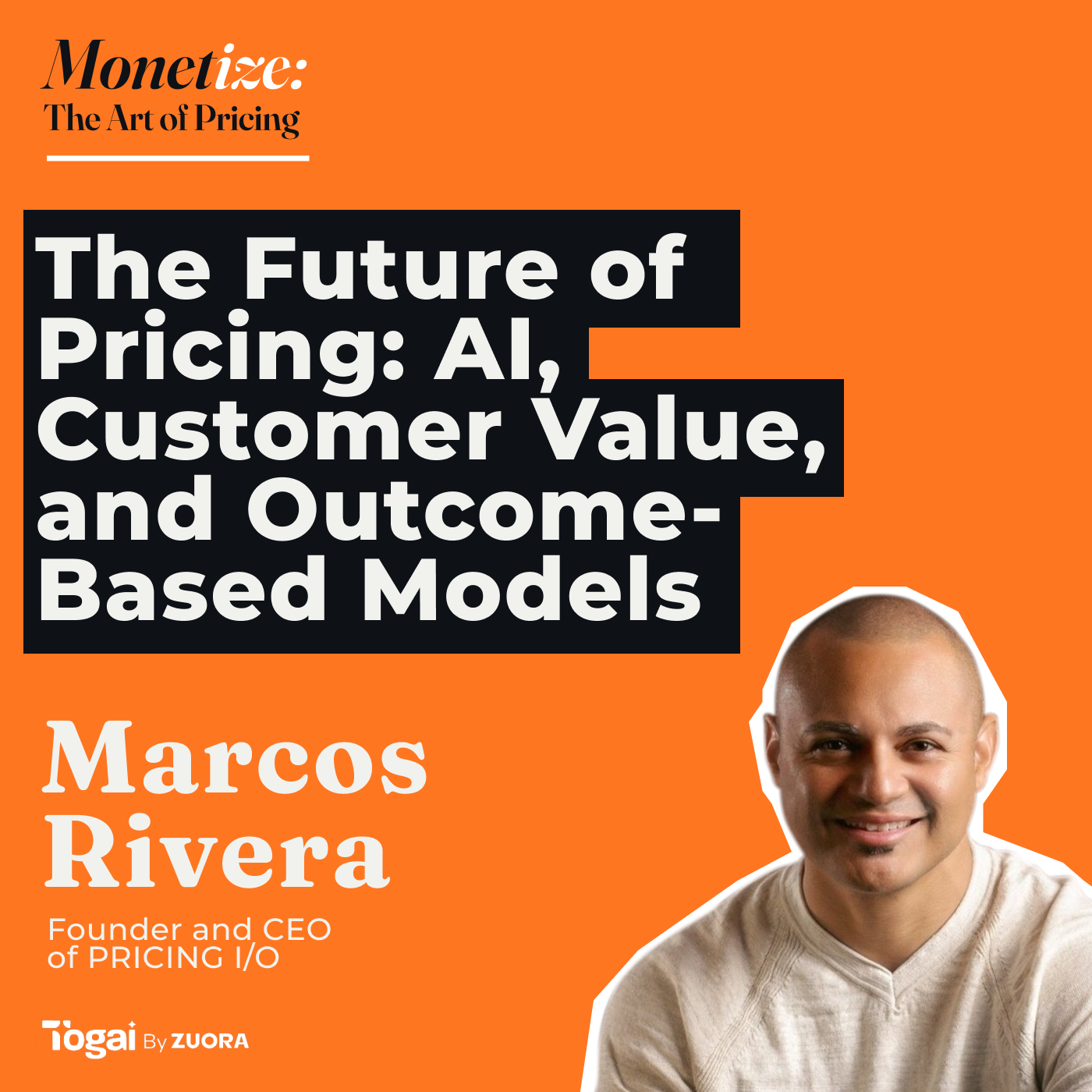 The Future of Pricing: AI, Customer Value, and Outcome-Based Models with Marcos Rivera, Founder and CEO of Pricing I/O85 / 100
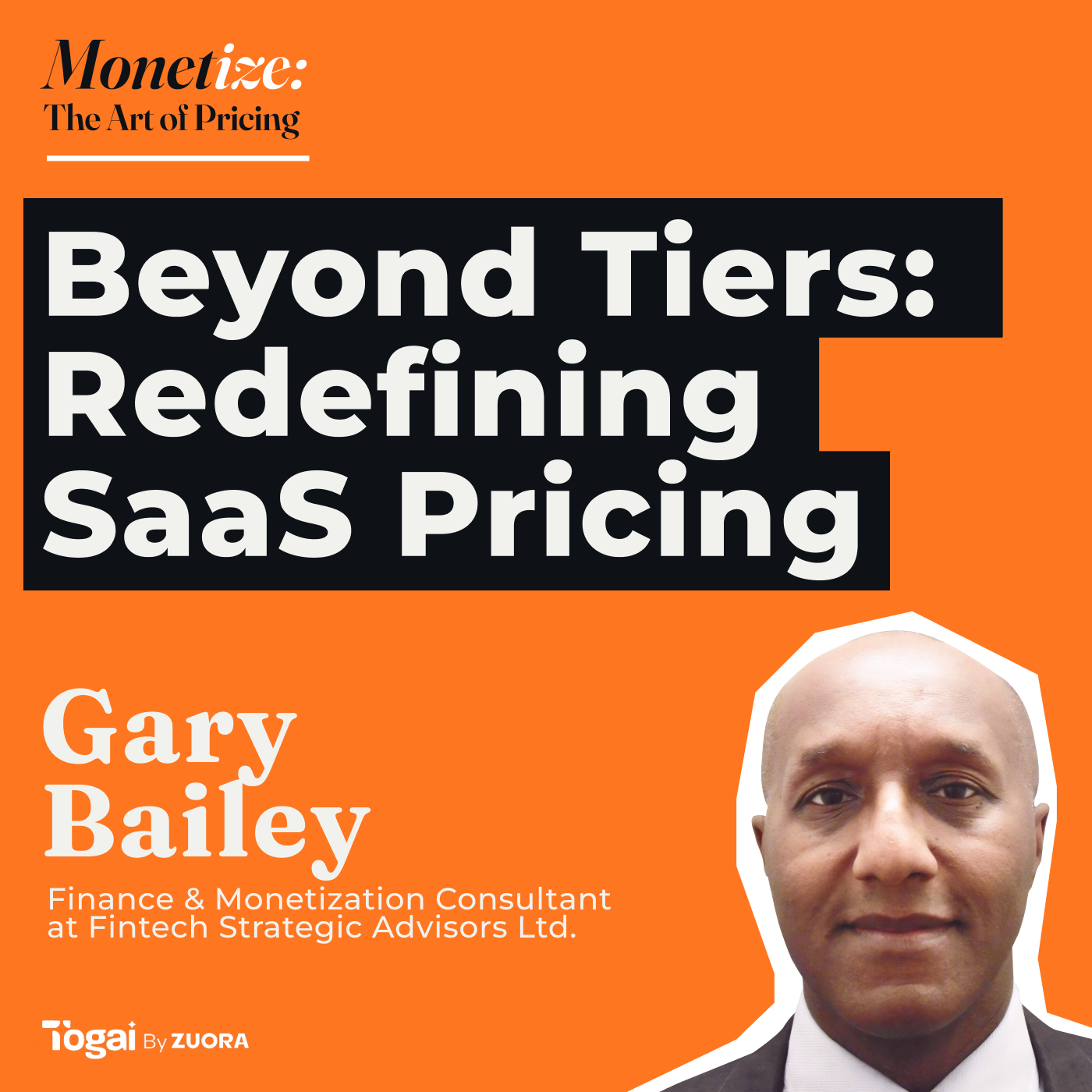 Beyond Tiers: Redefining SaaS Pricing with Gary Bailey of FinTech Strategic Advisors80 / 100
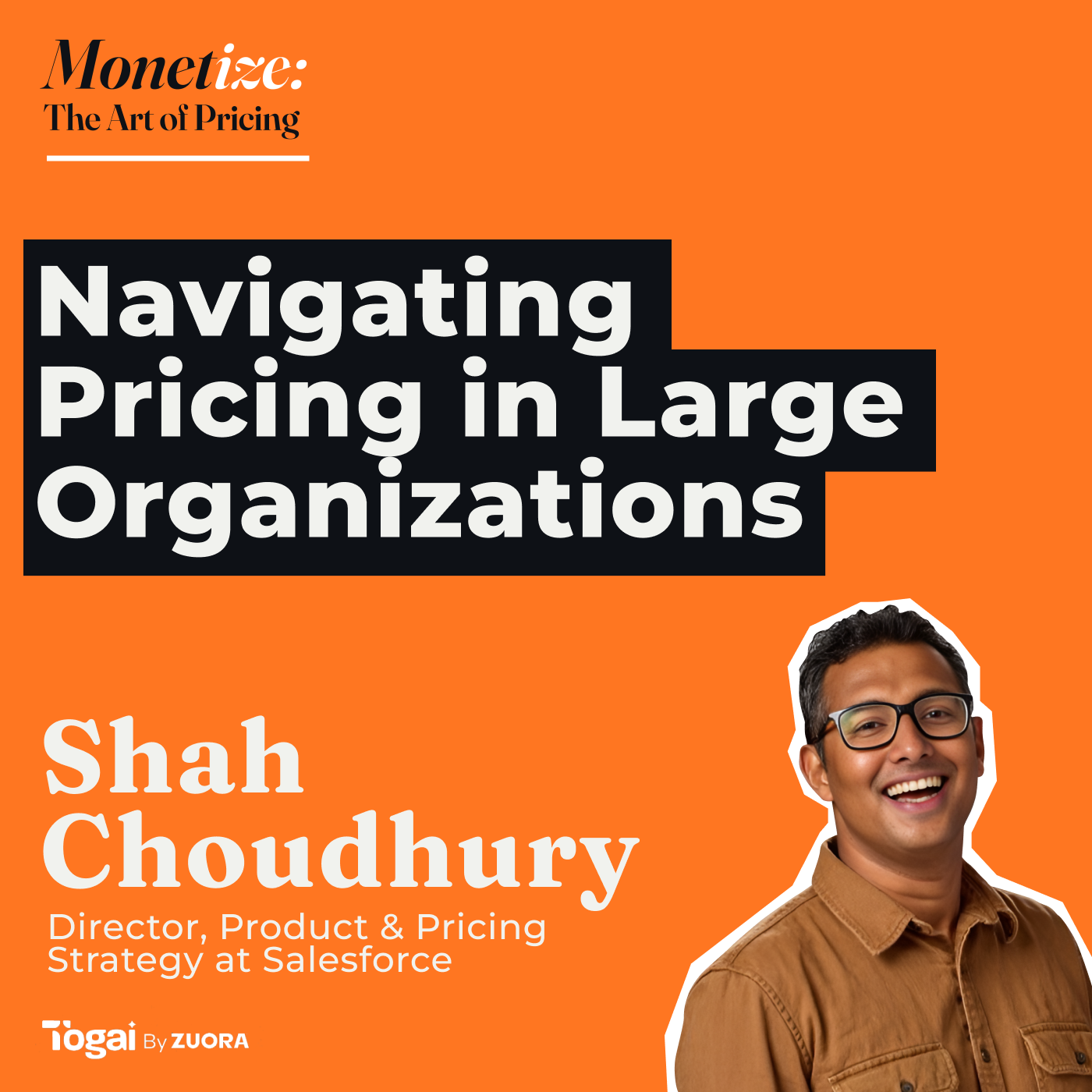 Navigating Pricing in Large Organizations with Shah Choudhary, Salesforce’s Monetization Leader87 / 100