
Monetize: The Art Of Pricing · 2025-01-22 · 37 min
Key moments - from our scoring
Substance score
59 / 100
Five dimensions, 20 points each
Ulrik Lehrskov-Schmidt shares how B2B SaaS companies systematically misprice their products and the methodical approach to fixing it. Rather than obsessing over cost-plus margins or tweaking a single metric, the real opportunity lies in rethinking packaging and pricing models entirely - then extracting fair value across wildly different customer segments. He walks through his transformation from real estate conference pricing to becoming a pricing consultant for Fortune 500s and startups alike, illustrating with a claims management software case study where unbundling storage and API calls from the per-claim metric allowed a 60% price increase with zero churn. The key insight: pricing anchors matter. Customers expect API calls to cost pennies, storage to cost fractions of a cent, and claims to cost dollars - so savvy pricing design exploits these psychological reference points by loading costs onto the budget owner's familiar mental model. For B2B operators managing complex customer portfolios, this moves pricing from guesswork to a data-driven exercise: segment customers into revenue quartiles, measure volume versus revenue ratio, compare against competitors and costs, then systematically reposition deals. Early-stage founders get different advice - hustle and experiment until $3M ARR, gradually tighten structure to $15M, then lock in discipline at scale.
Price your customers, not your product. Use revenue quartiles to segment your customer base, then examine whether high-volume customers in the top quartile are generating proportional revenue. Most B2B companies discover that their largest customers are underpriced relative to their usage, allowing strategic repricing without changing the core model.
Unbundle and repackage costs as separate value metrics aligned with different budget owners. In the claims management example, storage and API costs were separated from the per-claim fee and priced according to IT budget anchors (standard storage pricing) rather than claims budget anchors, enabling a 60% price increase with zero churn.
B2B companies have high customer value, low transaction volume, and complex contract variance - making statistical A/B testing impractical when you only close 10 sales per year. B2B requires judgment-based approaches using customer conversations and segmentation analysis rather than funnel testing.
Pre-$3M ARR is the hustle phase where you experiment with different models; $3M - $15M is when you formalize pricing for ~80% of deals while keeping flexibility for strategic deals; above $15M you must enforce standardized pricing for 100% of new business or operational debt becomes unmanageable.
Customers have inherent expectations - API calls are expected to cost fractions of cents, storage costs cents per unit per year, claims cost dollars. By recognizing these anchors, you can deliberately load costs onto metrics the buyer's budget already expects to pay for, making higher overall prices feel natural rather than shocking.
Our reviewer’s read on each dimension, with quotes from the episode.
The episode contains several genuinely useful, non-obvious frameworks - revenue quartile segmentation, the expansion cube, and the insight that pricing metrics carry psychological reference anchors - but these are interspersed with filler, platitudes, and high-level advice that dilutes density. A smart B2B operator would extract real ideas but would also wade through considerable padding.
I usually say don't try and price your product, try and price your customers
if you have a thousand customers, that's often the case with my clients, maybe 800 of them are actually priced pretty well, we're not raising prices on those, but the remaining 200 we can triple
There are genuinely fresh ideas - unbundling costs into different budget owners to bypass price anchors, sequencing customer validation by showing pricing model before price point, and framing cheap pricing as an 'advanced move' - but the overall territory (per-seat vs. flat fee, founder ownership of pricing, SaaS growth phases) is well-trodden in SaaS pricing literature.
a lot of different sort of units of pricing have like a baked in reference point
you have placed your pricing at the beginning of your customer's value chain. You said it's more expensive for you to even get started
Ulrik is a genuine practitioner with verifiable client work at meaningful scale (named companies, specific ARR figures, real outcome data), distinguishing him from pure thought-leaders; however, he is a consultant and author rather than an operator who built a scaled B2B business himself, which caps the ceiling here.
I have a client right now, it's North America US they do maybe I say 100 million US in ARR on, let's say a little over 300 accounts and then the largest ones are maybe 3 million and the smallest one are maybe 50k
the company that you mentioned is contractbook.com they would do contract management software
The episode is notably strong on specificity relative to most B2B podcasts: named client (Contractbook.com), concrete ARR thresholds per growth phase, specific margin targets (60% to 85%), exact outcome metrics (ACV 10x, 70% follow-on price increase, zero churn), and a worked numerical example of revenue quartile analysis - though some figures are hedged with 'I think' or 'I made this number up'.
I have a client right now, it's North America US they do maybe I say 100 million US in ARR on, let's say a little over 300 accounts and then the largest ones are maybe 3 million and the smallest one are maybe 50k
we actually ended up raising the prices another 70% on top of the price increase from the beginning, I think four or five months after
The host asks functional, open-ended questions that successfully surface case studies and frameworks, but there is no meaningful pushback, no probing of failure modes despite explicitly requesting a 'negative example' (which was never delivered), and several moments of simply restating what the guest said. The conversation is facilitative rather than intellectually challenging.
So this was great, right? This is in terms of understanding a larger company
which is my takeaway and a fantastic point there at way of thinking
Computed from the transcript - who did the talking, and the words that came up most.
In this episode of Monetize: The Art of Pricing , host Abhishek Rajagopal welcomes pricing expert and author Ulrik Lehrskov-Schmidt . Together, they discuss the complexities of pricing strategies. Join them as they discuss: The Journey to Pricing Mastery B2B vs. B2C Pricing Nuances Pricing for Customer Value Innovative Pricing Strategies in Action The Expansion Cube Concept When to Seek External Pricing Help Ulrik Lehrskov-Schmidt is the Founder and Managing Partner at WillingnessToPay and a globally recognized authority on B2B SaaS pricing strategy. With over 20 years of experience, he has advised top SaaS companies, including Microsoft, SamsungNEXT, and Intel IGNITE, on complex pricing transformations. Ulrik holds an MA in Finance from Harvard and is the author of The Pricing Roadmap. His expertise has driven successful pricing models, resulting in substantial revenue growth for over 150 clients worldwide. Episode Highlights 00:00 Intro 01:07 The Journey to Pricing Mastery 04:44 B2B vs.
Transcribed and scored by The B2B Podcast Index.
A lot of different sort of units of pricing have like a baked in reference point. So for example, if you go buy a book, you're going to expect to pay like whatever, 10, 20 bucks for it. Even if it's like a fantastic book, if it's priced at like $10,000, you're probably going to be like a little weirded out. It's like, let's just knock the price of the book.
And a lot of different sort of metrics that we price by have the same sort of issue is that the person that is paying for it have sort of a reference point in mind. Ah, you're now listening to Monetize, the art of pricing. Welcome everybody again today to another episode of Monetize. So we have today with us Ulreich, who's essentially worn multiple hats or more than multiple hats, but eventually found his home in pricing.
An author, an expert in pricing, who works with some of the largest companies and with very young startups. Very excited to have you here with us. Alright. And hope to get very deep into how pricing helps business and how should somebody think about pricing?
Thank you, Avi, I'm happy to be here. So, all right, just jumping, right. Like I mentioned, you've been a part of multiple different journeys across doing different things before you even got to pricing. Now maybe this was not something that you thought of while you were doing it, but you look back at it now, is there some learnings or a coherent path from your existing or your journey before that led you to what pricing does?
Maybe we can start with that and get some thoughts on how you got here. So I think the first business I had, it was a real estate media business and the way we monetized by selling conference tickets, so we did very sort of small niche conferences, maybe so like 50 people or so, and we would charge and let's say the price was maybe something like 400 bucks for like a four hour event. And then we did that for a couple of years and then somebody got the idea that hey, what if we charged like 500 bucks and then everything sort of froze because nobody knew if we could do that.
Like, it just seemed like a hack. Okay, so if we charge 500, we just like make 25% more money. But maybe everybody's kind of haters and we lose all our customers and then we had no way of finding out. So we just mapped out all the risk and then we didn't have a process to like resolve it.
And we did the math like, okay, so we can have 20% less sales and we'll break even from a revenue perspective. And then eventually we just tried it and we just made 25% more money. It's like, great. And then I'm like the smart CEO here.
So I was like, hey, let's do it again, let's do 600, right? So four or five months later we went like 600 and then actually we got a hit on the volume. So we did a little bit of sort of price experimentation. So basically I was like, okay, like good exercise.
We figured out how it worked and we sort of found the right price. In between this, we also did a lot of like pay for two come three different promotions. And I think at that point in time I didn't think about these things as pricing. I just thought about them as sort of whatever tactics that we were doing, but it wasn't structured in any way.
And then right before I sold the business because we had like high volume events, I got this idea that maybe we could create this like all you can eat kind of thing where it's like, hey, maybe we can say for whatever, 5,000 bucks you just extend all the events we have. We were in like four countries in Europe and we had just sort of launched this. And then the person that bought the business just basically tripled the business on that model. So the learning for me was that I was sort of sitting on that model all the time and I was sort of looking at the problem wrong.
Like I was going 400 to 500 to 600, back to 500, thinking I was really smart, when really sort of the right move was to sort of redefine sort of how we were even pricing this instead of like a one off thing. We were sort of trying to price it almost like an all you can eat buffet. And I think at that time I didn't sort of know what to do with it, but it sort of stuck with me. Like, ah, okay, interesting.
Like I wish I knew because I would be much richer today if I had. But I think that was sort of the first time where I experienced myself sort of the power of a different pricing model. And then I think also maybe it sparked an interest where I then started to read on it and eventually sort of wrote a book. And then like the consultant came.
There seems like a fat jump from a B2C kind of pricing to eventually the B2B software pricing that you today help multiple companies with. So what are the nuances that are different? Like, and why specifically B2B? I mean it's obviously done this with B2C or anything.
But what led you to just being a B2C specific thing? So the reason I do B2B only is that it's usually higher ticket, so customers are individually more valuable. It's lower volume, lower velocity, and also there tends to be just more complexity in it. So I have a client right now, it's North America US they do maybe I say 100 million US in ARR on, let's say a little over 300 accounts and then the largest ones are maybe 3 million and the smallest one are maybe 50k.
But when your customer portfolio is structured like that, almost all of your customers are, let's say, special snowflakes. Like they will have been sold special deals, they will have been like different product configurations, different sort of discount, different contracts, all these things as a whole. I call that commercial debt. Like variance in sort of in customer agreements and structure sort of builds up.
Especially in a B2B company, if you're Netflix, you have none of that. You just sell everybody for like 10 bucks a month. And that's how it works like, and you don't have any variety. So that also means that in order to make the change in a B2B company, you need to work across a lot of different stakeholders.
You need to get into sales, you need to get into product, you need to get into finance and all these things in order to sort of figure out how you can sort of reposition the pricing and move forward. And you really don't have a way of testing. You can't just like, oh, let's try this for like the next hundred sales, because that might take you 10 years if you only make 10 sales a year. So you need to have a different approach where there is more, let's say judgment and more estimation and more customer conversations.
Where in B2C it becomes more like a statistical flow exercise where you like set up the funnel and you test things and you run data analysis and then you can sort of approximate your way to something better. So I think that already exists to a large degree. And B2C has a larger existing toolbox for how to do this. Whereas what I found was that B2B has, is trying to apply the B2C toolbox, but it doesn't really work.
So I just let's say took on the challenge, say, hey, I think these are interesting problems and they're very high value. So let's just dig in and try to solve that. So, you know, with willingness to pay, that's Ultrax company you worked with like Fortune 500 companies like hundred million revenue and plus and then you worked with like pretty small companies. So maybe I wanted to go to the differences of like how it is to work with either.
But maybe even before going the differences, if you were a part of one of these companies, just take any example, either a big or a small one. How do you go about thinking about this? Like, what is the first step and then the next step and the next step towards getting to a better pricing than what you have today? Axie.
So I think you have to sort of look, I usually say don't try and price your product, try and price your customers. So an example I use all the time is that if you think about train, like especially in the old days, the train would take everybody from A to B, right from the US west coast to the US east coast, but you still have like a first, second and third class where the first class tickets are way more expensive than the third class tickets. Even though ultimately like they solve the same problem.
Everybody gets to whatever cloud wanted. So I think this is the way you should also look at your customers and like, okay, you have some sort of distribution of people that sort of want more from you or want different things and that essentially you solve with packaging. You sort of figure out, okay, we're going to have these modules, tiers, whatever services that we can add on. And that really sort of distinguishes the customers.
And then the second toolbox you have is the pricing model you then apply. You say, okay, so we're going to price per user or active user, API call or whatever flow through of units. And then in combination you can get to sort of a very sort of specific way. But the idea isn't to try and price the product as in, oh, whenever we use like a unit of cost, we should make two units of revenue.
It's more, hey, whenever we create whatever unit of value we should charge, let's say half a unit in price, something like that, and you get to that. So the first thing that I would do is I would try and look at the customers we serve and say, is the way we package the product delivering enough value to them, given what we can do, whatever we have available us to, could it be like do a better job of delivering value? And then with the pricing model we have, could we extract a more fair amount across the different customers we have?
So for example, what I often see with whenever I analyze customer portfolios is that if you have a thousand customers, that's often the case with my clients, maybe 800 of them are actually priced pretty well, we're not raising prices on those, but the remaining 200 we can triple or we can do something more extraordinary on those because for whatever reason, they're priced wrong or like not according to value. So how do you even get to understanding this difference? So what's the step before the step, right, like, okay, this is price right.
This is not priced right. How do you even define that before you go into implementing it? So what I do, for example, very sort of simply is let's just say you have 100 million AR business. And let's say that you have a thousand customers, okay?
So on average they're going to be 100k piece. Like, that's just how it is. But then you get them all in a spreadsheet and you just sort of order them from high to low, like largest customers or smallest, and then you chop them into sort of 4 equal chunks of 25 million. I call them revenue quartile.
So you have the top 25 million largest customers, and then the next and the next and the bottom, you have the lowest 25 million. Very often you'll see in most B2B SaaS businesses is that there is a hundred times more customers in the lowest quartile. So you're going to have something like eight customers making up the top 25 million and maybe 800 making up the bottom quartile, right? And then you look at what kind of volumes are these customers producing.
Let's say you price API calls, or let's say you price whatever leads that you're generating, whatever the volumes are inside of the solution you have. And then they say, okay, they're giving us each 25% of the total revenue. Are they also responsible for 25% of the volume? And often you'll sometimes see that the largest enterprise customers maybe are responsible for like 80% of the volume, even though they're only giving you 25% of the revenue.
And then you can say, okay, is that how it should be? And it just starts there. And then you can calculate cost to say, okay, are we even profitable enough on these? And you can also mystery shop competitors and say, how would these customers be priced if they left for someone else?
Like, what are their alternatives? And then when you look at all these, you can also try to do some sort of value estimation as well. But essentially for these kinds of segmentations in these quartiles, you can then sort of get an idea of are we positioned correctly for these customers, these sizes of customers against all these benchmarks that we now have, like costs Volume, competitors, all these things. And if we think that they are not, then we can change it.
And with discounting and different sort of other mechanisms, we can change it specifically for some customers without changing it for all. So when you have like significant data, like in a big company example that you gave here, like that makes a lot of sense. Like you start and you try and then get to within a cohort. How can I kind of optimize for a price?
Maybe if I had to put it that way. Right, but what happens if you're a slightly smaller company that you work with younger startups, you don't have that much data. Right. And you don't have the flexibility to price maybe on a very granular level.
Right. Like how do you go about doing that and how is that different? So it depends on how small you are. Right.
But let's say you are just like pre seed, like starting out for sale that kind of early. So usually say up to about say 3 million architecture, like the very first part of the journey. I call that the hustle phase, which basically is just like I give you permission to do whatever you want, just sell something. And that's the idea, is that even at 3 million ARR, you don't really have a business.
You just have like a concept that's sort of getting off the ground. So what you're trying to do here is actually just to learn. And then what I advise people to do is like just try consider pricing models, like features of the product. Customer's gonna like some features, not a lot of the others, and so forth.
So really what you want to do is you want to try different things, maybe with different types of ICPs, until you really find something that customers just like, they get it, they understand how it works, they think it's a really fair way of doing it. They want to essentially buy more of that unit, whatever it is. And then you can just like whenever you start to sort of say, oh, I'm actually like liking this pricing model more and more, then from let's say 3 million to maybe 10, 15, you start to then sort of lock in pricing and packaging.
And that doesn't mean that you sell to every customer in a very, very disciplined way, but it means that at least for like 80% of customers, you sell in a very disciplined way. So you give yourself a little bit of wiggle room to do strategic deals or like test things out until you hit about 10, 15 million. If you keep hustling and you don't create the structure, I can almost guarantee that you'll stop growing at 10, 15 million. Because at that point the operational load of all the different stuff you have out is just going to be too heavy.
So you actually need to get it under control. This is also usually where you start to really implement billing systems and checks and audit trails and all these things. And then you grow to sort of 15 million. And at that point you really lock it in.
And then you say now a hundred percent of new deals, they work in this. And then you can scale to a hundred. So that's how usually the phases that you have, but phase one, hostel phase is all about rent. Got it.
That gives a good idea of how the scale happens. So could you maybe go into a couple of actual examples that you worked with? So maybe one, let's take like a relatively a smaller company, whether that's the hazard face or maybe like it's $20.5 million and then maybe one that's slightly large and actually go into how you went about doing this.
And maybe a positive one example and maybe a negative one where we did something, it failed and what we learned from that. Right, That'll be interesting to get both perspectives. Yeah, so I'll do one sort of, that's. I think it's also where I had a case study on my website.
It was sort of an insured tech. They had sort of two products. So we were working on the smaller one. Maybe they did sort of 30 million on that one.
And it was a claims management system. So they sell to insurance companies and the insurance companies sort of used to sort of run the claim store. And there's a lot of automation stuff like if you have like a car glass injury, you write the insurance company and they send you to like a workshop and they fix the glass and the payment is dealt with. Right.
So it's sort of the whole sort of workflow system to handle all that. And they were running maybe, I can't remember, but around sort of 60% margins of this. And they were sort of thinking that that was too low, maybe like they need 85% margins. The problem was that I'm going to make this number up, but let's just say that the price per claim that was the model they had was like let's say 10 bucks.
And they were dealing specifically with the head of claims, like personally in the insurance company that were dealing with claims management. And they could sort of feel that if they moved the price up to let's say 11 or 12, whatever it was, their customers unit economics would start to break down. Like A lot of claims just weren't worth going to 12, 14, 15. And then they feared that the insurance companies would start to route some claims outside of the system.
Like if they raised the price, they would only get sort of the more difficult claims and not sort of the full volume. So they were sort of facing this issue like how do we raise prices without raising prices? So what we did was we said, okay, so we're actually dealing with the type of customer, an insurance company that's a very large organization and they're kind of siloed. And the way that they work is that the claims management budget is actually different from some of the other budgets, such as the IT budget.
So we essentially went in and we invented a whole new sort of category of SKUs, like products that were storage API calls, third party data sources, like all the IT infrastructure and say, okay, this is currently already happening and we're just like baking it into the solution. Essentially not for free, but it's sort of part of the price. And we're now going to unbundle it essentially and say, hey, you have to pay for the storage, you have to pay for the data. For the API calls, a lot of them were sort of usage based metrics.
And then we're going to suggest that you do not load it on the claims management budget, but you load it on your IT budget. Because if we are not storing it, then you are and then it is on the IT budget. And for this instance, so because it's claims management, they have to store like insurance claims documents such as MRI scans and like some of the files can be huge terabytes and terabytes and they have to store them for decades. So the storage was actually sort of a big part of this.
So we essentially just raised prices around 60% by just adding all this infrastructure on. And the insurance companies essentially looked at it and said, sure, we get it, we have all these costs, of course, this is what storage costs, so we'll just take it on. So we actually sort of raised all the prices across the customer portfolio, got the 85% plus margins and had zero churn on it. And it took with these kinds of things, with these kinds of clients, it takes a few years to run through sort of the contract cycle and negotiation and so forth.
But that was sort of the end result. So it's just a, again an example of where B2B is just materially different from like a B2C context. Right? This thing aspect that you touched upon there was you don't just need to raise Price on one metric, right?
Like you could just introduce another value metric itself in this case. Hey, you know what, we store stuff, so maybe on top of the price per claim, why can't we do some pricing for storage? Because then it breaks down things into more understandable nuggets of information that can then be priced itself. Which is my takeaway and a fantastic point there at way of thinking.
Yeah, so if you think about it, a lot of different sort of units of pricing have like a baked in reference point. So for example, if you go buy a book, you're going to expect to pay like whatever, 10, 20 bucks for it. Even if it's like a fantastic book, if it's priced at like $10,000, you're probably going to be like a little weirded out. Like it's like, let's just knock the price.
And a lot of different sort of metrics that we price by have the same sort of, let's say, issue is that the person that is paying for it have sort of a reference point in mind. So the chief of claims has like his unit economics of what a claim is. So 10 bucks is sort of, it's a good size for a price compared to what he's dealing with. And if you price an API call, you can't price it like five bucks an API call, even if it's worth that, because API calls have sort of a price range of 0.
0001 cents or something that. And that's the price of an API call and storage cost, maybe like for hog stores, like a bug a year for a gigabyte of storage. So all of these have inherent sort of price anchors baked into them by the reference points that the person buying them is used to. And you can use this actively by essentially, let's say going to the IT department, just pricing everything according to prices that he thinks are really fair.
And he knows already that means that he's just going to assume that they're very close to the costs that you have. And then you just get to unload all of your cost onto the client. So you can do this where just realizing that the model you choose and the pricing metric you choose comes with some psychological baggage because the customer is going to look at it in a certain way. And if you use that actively, then you can really sort of extract more value through it.
It brings me to a line that typically we use in the SaaS business. So it comes back to who has the budget. And then you price it according to if you're selling to finance or if you're selling to product and how they think and then you kind of price your product according to that thought process that are prevalent with it, that icp, if I may put it that way. But you make an interesting point.
So I want to kind of like actually explore the corollary of that. So you want to have a new pricing model, right? You think you have a product the existing market works in a certain functioning. Let's say everybody's pricing based on API calls and you come in and say that hey, you know what?
I think pricing by data storage or like how much storage is actually a much better way in the long run of doing that. But a competitor not doing this, how would you go in and do that to a market where the existing psychological baggage is something else, would you even recommend it? And if you had to do it because that's the best thing for the long term future, how would you go about it? So I think different models just win a market.
Like for example, whenever it's sort of SaaS started out, people were just used to seed based price. Oh price per user. And you can price pretty, pretty much any software per user because people just so accepting of it, like okay, like this how it works. So, so if you think you have a better model for some reason you can sort of think through it and there are different sort of ways that you can do that.
But essentially if you really have something that customers will prefer, you can just go and ask them. So I do this in validation all the time where we essentially like we showcase like this is the packaging. Do you like that? Do you understand it?
Do you want it? Yes. Okay. And then we show not the pricing but the pricing model.
So we would say, hey, how about the pricing was we have an onboarding fee that's going to be fixed and then we have like a flat fee per year and then we price per storage unit. But you don't say the number, you don't say $1 per gigabyte per year. You just say per storage unit and then you explain what it is because in that way you get to have a conversation with your customer whether that is good. And if they say oh, that depends on how much it costs, you can just say, just assume the price is fair.
So like we'll get to that, but for now just assume the price is fair. Would this way of pricing be preferred to the per API call that you have now? And if they say no, that's weird and I don't know how to budget it and it's really unpredictable and whatever. Like they don't like it, don't price that way.
But if they say oh, that makes perfect sense. It like it fits much better into my budgets, I can predict way more. It like it's much more aligned to the way we use the software and even sort of see the value, whatever it is. Okay, go ahead.
And then you can then say, oh, and by the way, it's a buck a gigabyte a year. What do you think about that? And then you essentially uncover that reference point because when you show them the number, they're now going to give you their reference point. They're going to see, oh, that's super expensive.
Because. And then they're going to tell you why, because they're comparing it to something else, right? Or they're going to say oh, 10 bucks a claim, that's fine. Like I usually make 50, so that's within the margin that I want to have.
So the reference point gives you the price point. But if you bake it in and just say oh, do you want to buy the enterprise tier with like a price per storage for like a buck thing? If they don't like the paging or they don't like the model, the customer can't sort of unpack all that. They're just going to say nah, sounds expensive.
And then you're no smarter. But by sequencing your questions and essentially like asking them one at a time, you really sort of get intelligent feedback from these customer interviews. Great advice. So typically I've seen that happen when you kind of like give two models with a number, people just do the math and then choose what's the cheaper one.
Right. Like theoretically speaking. But to get them to understand the long term impact of why this model is many times more important than the number at that point. So they're making a decision for like 2, 3, 5, 7 years and understand this better than just hey, this works up to $100, this works up to $98.
So let me just go with the 98. So great advice. I completely, you know, agree with you on that aspect. So this was great, right?
This is in terms of understanding a larger company. Now I know you have this also the other side of the spectrum. So you speak about like working with the pre seed company for example. Right.
You speak about working with the pre seed company and you help them raise prices at that stage and increase their average revenue by like thousand percent. Right. And then took them to a series B. We talk about this.
So could you talk a little bit about maybe that example because that kind of stood out for me and how we went about doing that on a different scale to the ones that we spoke about before this. Yeah, so the company that you mentioned is contractbook.com they would do contract management software and they had really good product, like digital contracts, full scale sort of management solution. And when I met them first, they had sort of different seat based pricing.
So they had like admin users and they had non admin users and they had viewers and they had different sort of versions of that. And this was all at a very early stage. This is a very early stage. Like before, I think maybe they had hit 1 million AR, but maybe not even right.
So they were just starting out, they had raised money and they were growing, but they just had this problem that their customers were just worth way less than they should be and customers didn't really want to get more users. And the thing is that every kind of solution has some sort of value creation process for the customer you're selling it to. So if you're selling a contract management software, it's like if I'm like a law firm and I do contracts, it's like, okay, how do I do this?
Well, I get some lawyers and then they do a bunch of contracts and then I invoice that to my clients and then I make money. Like that's roughly how a law firm works. And then if you then come in with a contract management solution and say, oh, we support all that, we'll help you with this thing, so you should buy the software, then the law firm essentially is going to say, okay, so how does it work? And if you then say, oh, we're going to price the user, then essentially what you've done is you have placed your pricing at the beginning of your customer's value chain.
You said it's more expensive for you to even get started. And if you don't have a lot of trust here, then the customer is going to say, okay, that means that I'm going to try and just buy as little as I absolutely need to in order to like try it out. So I'm going to reduce the amount of admin users I have or fewer users. So what was happening was customers were getting into analysis paralysis, trying to figure out how many users do I actually need?
Can I do with three? Do I need five? Maybe I need one admin, maybe I need two. Like they were doing their things.
And also again, users have a certain reference point. So you can say, oh, this user is a thousand dollars per month. Because that is usually not what we pay per user like for some pieces of software, but maybe not this. So what we just did was we just say users are free and then we just stuck a flat fee.
I think at the beginning of it just like oh, and the Solution is like 5K or I think no, it's something like 1500amonth, something like that. And then people like sure, it's worth that. And they just loaded on all the users. Adoption just skyrocketed.
And then also ACV like 10x and they didn't even need to do this on their existing customers. They just say okay, we're just going to grandfather all of these and then we're just going to try new sales. It worked perfectly. And then they rolled it back to their old existing customers.
And then actually after we had run this, we actually ended up raising the prices another 70% on top of the price increase from the beginning, I think four or five months after. Because the step one was just like let's try another model. We actually don't know what the real price point is, but we just know that the model is wrong. And as soon as we could see that people really love the new model then we could start to just work with the price point.
And then a couple of two companies like and not really of large scale but 5 million ish ARR right. Like at no point of time during that journey did we actually like as you defined as the hustle mode. Right. Like we actually thinking about pricing more deeply.
So if you were an early company, how would I know or like why would this company come to you when they're sub billion dollars? I mean I'm sure they would have founders. They may have for one. But how do you think of pricing this early?
Right, because you're generally more like you said, he just get the customer in whatever happens. And what are these inflection points that typically you'd advise a company and what are the scale small mid to say like okay, let's take a step back, we should think about pricing now. Right. Are there easily quantifiable or even something that we can keep track of so we know we're not losing money on the team at nxt.
So I have a concept which I call the expansion cube. So cube is like a three dimensional box, has three sizes like length, width and height. And these are also the three dimensions that you can grow a customer value. So you can say okay, so we can sell them more of the thing, like more users.
Like if we have a user based pricing or we can sell Them more product, two modules instead of one or three modules or we can raise prices. That's it. Like those are the three dimensions of the box. And so if you look at your customers now and everybody can do this and listen to the podcast and say, is your box big enough for the types of customer you have?
If you price per user and let's say you have like a seat based sales software and your customers have 500 sales reps but you're only selling them 20 seats, you're like, oh, I could 25x my customer value if they just went for all the seats. So that means that for whatever reason the, the seed based model for you might be constricting the adoption on the volume base, which actually means that you're not providing the value that you could. So you might want to change that. The other is, are they buying all the functionality that you have?
Are they only buying like whatever the basic stuff, but the advanced stuff would be really valuable to them and so forth. So you're saying, okay, maybe they're only buying half the functionality, right? And then even at that you can say, well for the stuff that they are getting and the value they are getting from what they have, are they paying enough? Or do I really feel that I'm over delivering and undercharging and even if I charge twice as much, it would still be a good deal for my customers, right?
And then the realization is that all of these three compound. If I double the amount of users and I sell them twice as much product and I double my price, I have 8x the customer value because they multiply on each other. So you really just have to look at and saying okay. Usually the only thing that keeps you from doing this is either really poor product, like for whatever, people just like have a hard time using it, so adoption is just really slow.
Or if you're not letting people know that they can buy more. So it's like poor sales or it's poor pricing or combination of course. But pricing can actually sort of pull on all these dimensions if the pricing is works well, let's say the simple trick for the customer not buying enough users is just to say, well, users are free and we're now going to price in a different way. So I did this with a business processing software just before Christmas where they were pricing per user and per web developer.
And we'd say users are free and we're not going to price per employee in the company. Vastly different pricing, way higher and customers kind of like it because now they can actually Roll it out way more so they can get more value out of the solution, so everybody wins. So if you sort of look at your box, like the amount of product, the amount of volume and the price, and you for whatever reason feel that it's just not performing well enough, as in serving the customer well enough, then you just need to sort of work on it until it does so as a company.
Right. Like when you think about this from some of the pointers that you mentioned. Right. But just as a high level, I want to understand what are the common mistakes that you've noticed businesses do when it comes to pricing.
One essentially in terms of actual the mathematically or like essentially analytical mistakes of how to think about pricing. The second, probably also in terms of logistical ones. Like, for example, I find that a lot of companies don't have somebody responsible for pricing. They just make it overdoed by consensus and then nobody really is on the line for what they do.
Right. So that's just one of those things that I've noticed. So anything as somebody who goes in externally into a company and looks at what are the few things you notice very often and that maybe we can use it as one of companies not to do yet, I think on the mistakes part, you can do like a. Whatever top 10.
Like there could be a lot of mistakes, but I think one of them actually is that people think that cheaper is better. And I actually think going cheap is really an advanced move. Like you really need to know your market really well and your customers really well to be able to use cheap effectively. So it's actually not something that I usually recommend people to start out with.
I actually try and go premium because the price is really what's going to fund everything else. If you charge a hundred, then you have a hundred to serve the customer, like to make the sale and build the product and do all these things. Right. But if you charge 200, you can do twice as much of all those things.
So it's a sort of better flywheel to get started where a lot of people think that, oh, if we only charge 50, they're going to like us more and they're going to buy it more, which almost never is the case, especially sort of as you start out. And a lot of people even cling to this, like way into the tens of million of aor. So that's sort of one thing. The other thing I would say from the mistake part is that people think of price as a number and they miss that, really.
The money is in the structure. Some of the Examples that we talked about is not how expensive it is, it's whether you're charging per admin user or you're charging the flat fee or whatever the model is. And that's really what you should be looking, looking at. So when you then sort of try and operationalize this and like who should think about this?
I think the founders I know, I work with an executive as well that they're sort of do pricing the best are the ones that just refuse to accept that there isn't a better model like that we can't improve here. So it's just like, okay, of course we can do something that's better than this. And I think early stage founders own pricing. Like there's just no way about up until, let's say at least 15 million plus.
Like founders just have to be involved in these things. And part of that also means that they have to keep the sales in check. They have to sort of make sure that nobody's sort of giving away the farm and all these things. Especially as you go into multi product, you can start to delegate a little bit more into the organization.
I would say that around multi product like 20 million and usually sort of where it starts maybe a little earlier, but sort of in that sort of 10 to 30 range is usually where you start to sort of do pricing a little bit more. You don't maybe not get a full resource for it, but somebody has that job. And usually I say that it should be owned in and I hate committees normally, but here I actually I recommend a committee because what you want to make sure is that the product, whoever is in charge of product is aligned with whoever is in charge for sales and they need to be aligned on the packaging, sort of why we're selling this and what it is, and then also on the pricing and if they're aligned then that's really strong.
So what you essentially do with whoever owns pricing is that you own someone that just sets a cadence where we have that conversation on an ongoing basis. And usually you can follow sort of the cadence of the sales cycle or your product cycle, depending a little bit on how fast you sold out. So if you have a six month sales cycle, like reviewing it every six months is sort of probably a good idea. And then sometimes you do big changes, sometimes you do small changes.
And then what you do in between is you test stuff out, you have hypotheses, you work it out and then you can sort of roll out pricing changes sort of, let's say every six months. Got it. Before we go so I'm going to leave you with like one last question. Like the, you know, price.
So let's say a company's thinking about how should they think about solving for pricing internally versus externally? Like what are the things that we do internally? What are the things when we need like somebody who can come in and help us? How does the company think?
So I would say that if you're not doing big structural changes and you're just, let's say you already know what the right model is and you have like really good packaging and you just maybe have a lot of contracts that were sold wrong in the past and you just cleaning it up, you could definitely do it during. So and you can also just raise prices on your own if it's just the number and all these things. So a lot of that to say is more execution focused and doesn't need to be a project that could be like an ongoing, let's say, excellence function, that you start to just do better, be more disciplined.
Right. But if you want to really sort of make a more fundamental redesign of something and some people are just really good naturally at this and can run it themselves. Like some founders, for example, are just like really good at finding value propositions and like structuring how these things work. But if that's not you, or for whatever reason, maybe sometimes the conversations inside an organization just get stuck.
You just had this conversation too many times and you know what everybody thinks and you don't have that middle ground anymore. Getting someone with a fresh perspective from the outside can really help. So they say the benefits of going external is speed and lower risk. And then of course also that they sometimes can give you that excellent external idea that just makes the day.
But I would say that in, let's say more than half of the projects I run, the organizations I work with actually already have the idea. They just don't know how to execute it. Like, how do we really, let's say, shift to units of storage based pricing and how do we run the math and how do we figure out customers like it and how do we do all these things? So I had a testimonial from a client recently.
I don't know how he got the number, but he said, I think that we had to make maybe 400 decisions in the pricing project and each one of them sort of made sense once we had made it. But going into it it was just like, I have no idea how to make this decision. So if you're fine with that sort of thing and you can just like power through them. Go.
Do it. But if you say, hey, like, we actually need, like, a Sherpa to lead us up the mountain, you go externally. Thank you, Reg. It was a pleasure speaking with you, and I feel like we could definitely do another episode to just go deeper into some of the use cases that we are.
But this was lovely. Appreciate your time and hope to speak with you again very soon. Glad to be here, Abby. Thank you.
Other episodes covering the same guests and topics, from across The B2B Podcast Index.
 Increase prices by 240% by naming someone the Pricing Dictator, Ulrik Lehrskov-Schmidt CEO Willingness To PayFail n' Grow · features Ulrik Lehrskov-Schmidt74 / 100
 David Whitcombe: Exit Prep Is Now AI Readiness - Why PE Needs to Start EarlierAI Pathfinder for Private Equity Podcast · on Pricing strategies83 / 100
 EXCLUSIVE: ISM Chair's Susan Spence & Steve Miller on the Supply Chain Planning ForecastManufacturing Talk Radio · on Pricing strategies74 / 100
 6.Part 1 - Before you buy Pricing AI with Suzanne ValentineThe SweetSpot by PricingWorks · on B2B pricing72 / 100
 Driving Value with Scientific Pricing StrategiesPrivate Equity 360 · on Customer willingness to pay68 / 100
 Ep 86 | Pricing Transformation is an Evolution, Not a RevolutionB2B Reimagined · on B2B pricing57 / 100
 The Future of Pricing: Context- Driven Pricing Model with Mark Stiving at Impact Pricing LLC72 / 100
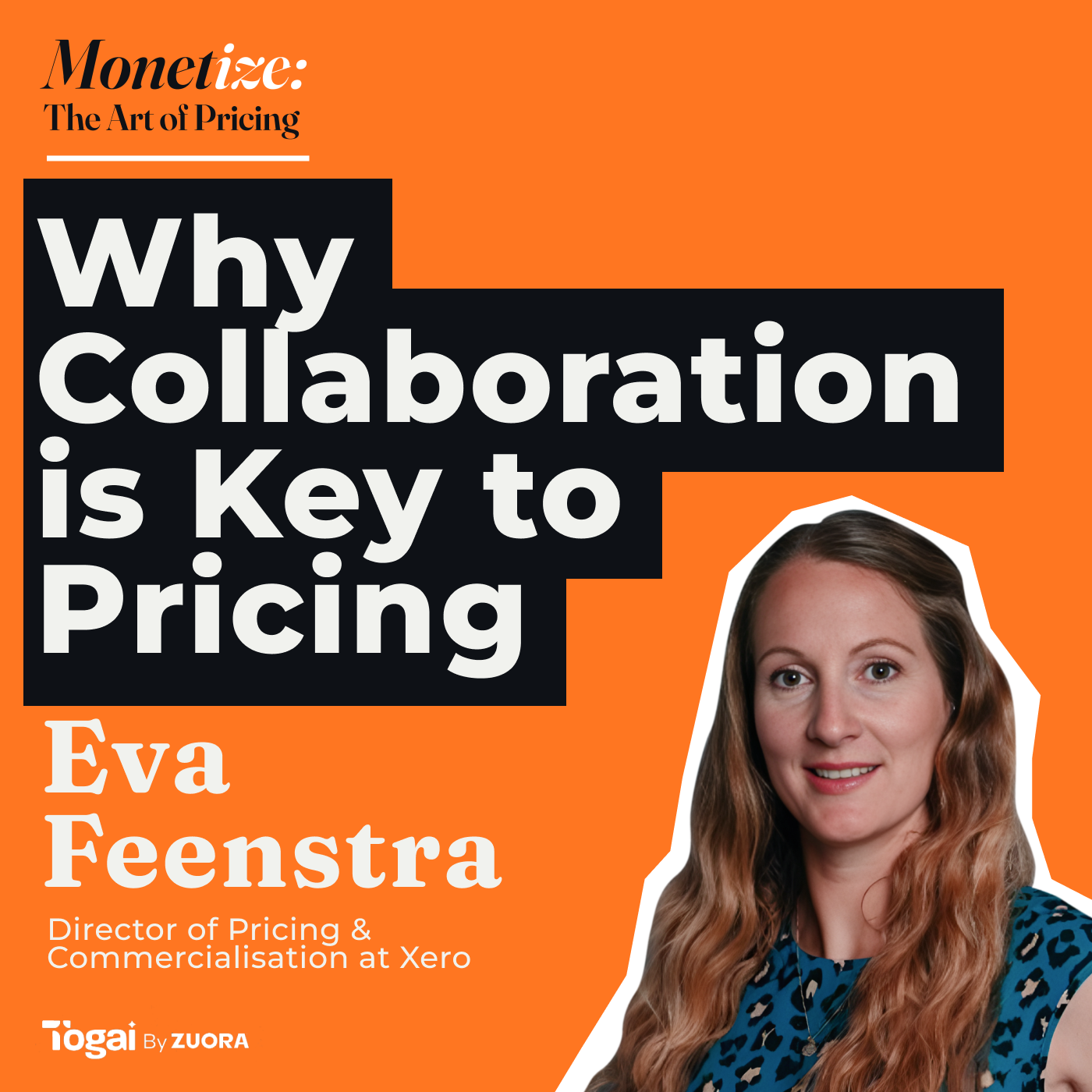 Why Collaboration is Key to Pricing with Eva Feenstra, Director of Pricing & Commercialisation at Xero65 / 100
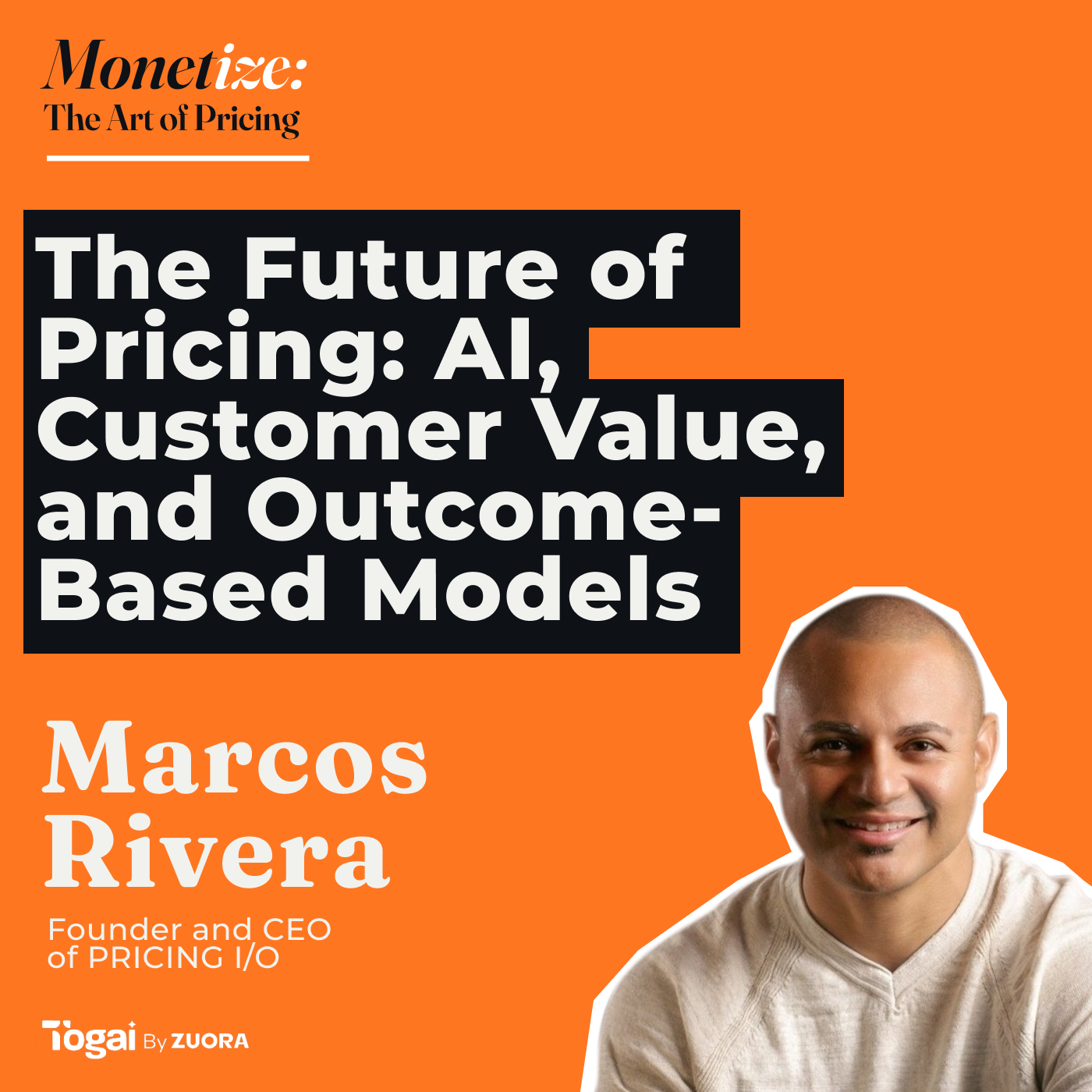 The Future of Pricing: AI, Customer Value, and Outcome-Based Models with Marcos Rivera, Founder and CEO of Pricing I/O85 / 100
 Beyond Tiers: Redefining SaaS Pricing with Gary Bailey of FinTech Strategic Advisors80 / 100
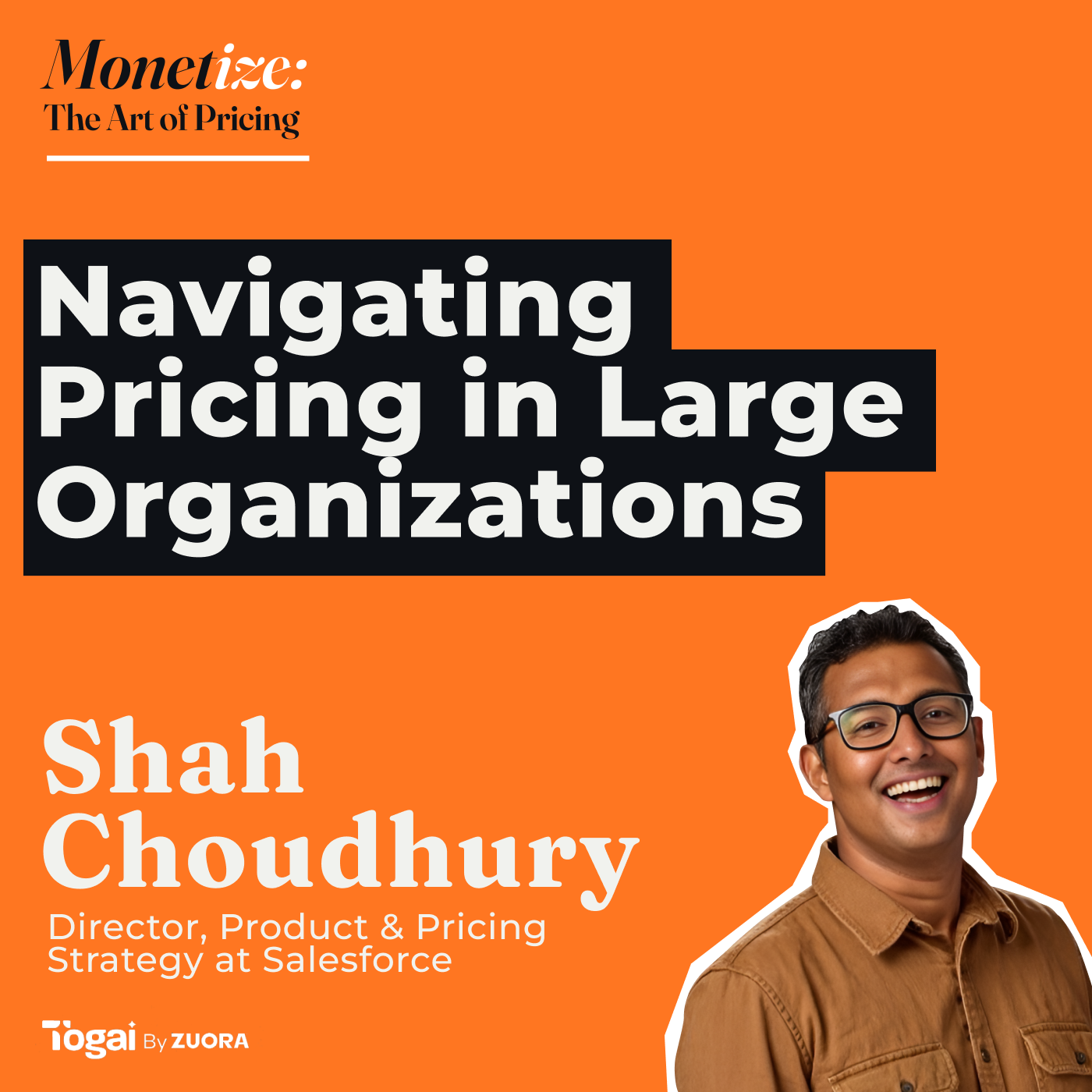 Navigating Pricing in Large Organizations with Shah Choudhary, Salesforce’s Monetization Leader87 / 100