
Fail n' Grow · 2026-06-19 · 36 min
Key moments - from our scoring
Substance score
54 / 100
Five dimensions, 20 points each
Willingness to Pay helps B2B SaaS companies solve complex pricing problems by enabling good products to become good businesses through systematic implementation - not just design. Ulrik's research shows that clients who restructure their pricing (not just adjust prices) achieved a 240% average price increase and 102% median increase across 25 completed projects in 2022-2023. The key insight: the money is in the structure, not the price point. Rather than optimizing within an existing model (like ticket sales for events), companies unlock massive value by reimagining how they deliver value to customers - similar to how Figma added AI credits to usage-based pricing and tripled ACV for those accounts. However, implementation is where most initiatives fail. Ulrik emphasizes that pricing requires a single owner (the "pricing dictator") and cross-functional alignment between the Chief Product Officer (value architect), Chief Revenue Officer (builder/executor), and CFO (structural soundness). Without this alignment, sales teams will dismantle poor designs in the field through discounting and bespoke deals. The process of incremental validation - testing new models with smaller accounts before approaching strategic customers - is what actually creates organizational confidence and prevents churn during migrations.
Most implementations fail because pricing isn't owned by a single person (it's diffused across committees), there's misalignment between product, sales, and finance teams, or the upstream design is poor and sales has to dismantle it in the field through discounting and bespoke deals. Implementation requires 2+ years of hands-on work and coordination, not just a PowerPoint recommendation.
Willingness to Pay's clients averaged a 240% price increase and 102% median increase across 25 projects in 2022-2023 by restructuring their models - not just adjusting price points. Results vary based on customer segments; some accounts see 10x increases while others stay stable, creating a much better overall outcome than across-the-board price hikes.
The CPO acts as the value architect, designing how the product delivers and packages value; the CRO is the builder who must execute and sell it; and the CFO is the structural engineer who ensures profitability and catches edge cases that break the model. Alignment between all three (especially CPO and CRO) is critical before moving forward.
Figma restructured from pure usage-based pricing to a hybrid model with AI credits, which increased ACV by 3x for accounts using AI features and created stronger enterprise integration. This shows how changing the model itself, not just the price, unlocks new value segments.
Implement incrementally: validate the new model with smaller customers first, then migrate mid-market accounts, and only approach your largest strategic customers last. By the time you reach strategic accounts, you've already proven the model works in the market, making negotiations based on demonstrated value rather than theory.
Our reviewer’s read on each dimension, with quotes from the episode.
There are genuinely actionable ideas - the pricing dictator concept, the CPO/CRO/CFO value-flow framework, and the incremental 'solving for risk' sequencing - but roughly 30-40% of runtime is burned on gym culture, protein shakes, funny stories, and walk-out songs, severely diluting the insight-per-minute rate.
the average price increase we did was 240%. And the median was 102%
the money is in the structure, not the price point
The 'money is in the structure, not the price point' reframe and the 'pricing dictator' label are memorable and somewhat contrarian, and the CPO-as-architect / CRO-as-builder / CFO-as-engineer triptych is a clean original mental model; but the underlying advice - get executive alignment, assign ownership, segment customers by value - is fairly conventional consulting wisdom dressed in fresh labels.
the money is in the structure, not the price point because we've done all the, oh, should it be like £300, £350, 400. We sort of optimized for that price point, but it was like inside that sort of box
you should like, you can spin a bottle, somebody can raise their hand, doesn't really matter. But someone should be a, uh, pricing dictator saying, okay, that person now has full authority to decide pricing
Ulrik is a genuine domain practitioner - 25+ completed pricing transformation engagements with measured outcomes, a published book, and prior operating experience running a 260-event-per-year conference business - making him credibly specific rather than a generic thought-leader, though he is not a widely-recognised industry name.
for all the projects that we completed in 2022 and 2023, which is like 25 projects or so, um, the average price increase we did was 240%
our normal engagement length is about two years. So we get our hands very dirty with our clients and then go through initial designs, validation, testing and sales
The episode delivers several concrete data points - 240% average / 102% median lift across 25 projects, Figma's triple-ACV outcome from AI credits, and illustrative contract figures of $800K→$3M and $1.2M→$4M - but named client companies are absent and the provenance of the headline 240% figure is unverified self-reported data.
Figma just essentially uh, redid their existing user based pricing and added on AI credits. And that actually means that the ones that use AI credits, the accounts they have, they have triple the ACV
when you walk into that final end boss office and say, hey, this 1.2 million that you're paying me, is this going to go to 4 million? You're not doing it because you're cocky...you just took a 800k contract and updated to 3 million
The host lands one genuinely sharp follow-up - confirming the 240% was actually implemented and not just a slide deck - but substantial airtime is surrendered to non-substantive ritual questions about gym routines, celebratory drinks, and walk-out songs, and there is no real pushback or challenge to any of the guest's claims.
So that was implemented. It wasn't just like, uh, an, uh, apologize now. It wasn't a PowerPoint. They actually implemented the pricing model successfully into new business and existing business.
first I want to ask you if you're celebrating, I don't know, a new client, uh, some great success metrics that your clients achieved and you want to celebrate with, uh, something that you pour in your glass. It could be water, it could be tea, it could be champagne. What do you prefer?
Computed from the transcript - who did the talking, and the words that came up most.
In this episode we talk with Ulrik Lehrskov-Schmidt , founder of Willingness to Pay and one of the leading voices in SaaS pricing strategy. Ulrik has spent years helping B2B SaaS companies redesign how they monetize their products. Not by tweaking price points, but by fundamentally changing the pricing structures, packaging models and commercial mechanics that drive growth. We dive into one of the most overlooked growth levers in SaaS: pricing. Why do so many companies treat pricing as everyone's responsibility - and therefore nobody's responsibility? Why do great pricing ideas fail during implementation? And why can a pricing redesign create more growth than years of optimization across sales and marketing? Ulrik shares lessons from hundreds of pricing projects, real-world examples of companies doubling and tripling contract values, and why the biggest pricing mistake is often organizational rather than mathematical.
Transcribed and scored by The B2B Podcast Index.
Speaker A: Foreign.
Speaker B: So wonderful to have you here. This is failngrow and you can expect topics from passionate experts within operational excellence leading to revenue acceleration. Hosted by me, M Wilma, co founder and CEO at Deluxe qcpq, where your pricing strategy is put in action. It's a perfect fit when your CRM's quoting module isn't enough for any reason. So, uh, for a couple of weeks ago or months, I visit Sassyest. A lot of SaaS companies in the Northern Europe is there. And the best session that I entered was this one with you, Ulrik. And I love the perspective, uh, which so many people in the audience were like, laughing, like how different Personas or roles, whatever you want to call us, uh, fuck up if we will, the pricing. So that's why you're here today and you run a company called Willingness to Pay, uh, Experts to help B2B SaaS companies to really, uh, have pricing as a strategy. Thank you so much for taking the time on it. Warm welcome.
Speaker A: Thank you, Wilma. Thank you.
Speaker B: So with your own words, what do you do and who do you help?
Speaker A: So we help, uh, B2B SaaS companies with complex pricing problems. So the sort of the mission statement, if you will, of willingness to pay is to enable all good SaaS products to also become good SaaS businesses. Right. So it's this idea that sometimes you have, you have a great product, there's actually a lot of value in it. But for whatever reason, the commercialization, the monetization aspects are not as good. So we can't take a bad product and turn it into a good business. Uh, I wish. But we can take a good product and turn it into a good business. So that's the idea. We're sort of a group of former operators. Um, so we help our clients over, let's say a longer transformation. So our, our normal engagement length is about two years. So we get our hands very dirty with our clients and then go through initial designs, validation, testing and sales, getting it to work and then renewing and migrating, uh, existing customers. So we spend a lot of time with also, let's say all the human aspects of being afraid of raising prices and the relationships we have with our customers and all these things are part of the mix for us.
Speaker B: Very interesting. And I had a great lunch yesterday with uh, some people in the SaaS community, Sudharan and Anna, uh, Moderna sources. Uh, and Anna told me at sass, she was like, yeah, we really want to work with pricing, but a little bit of uh, this is a Swinglish expression. So Like a sad child. It means like no one really owns it, no one take care of it. And then we went deeper into the dialogue and they said the hard part is not to have a new strategy, it's to implement it. Uh, would you agree on that?
Speaker A: Yes, for sure. So I had one of my clients at one point, he was a CRO of actually of a Swedish company. He said, I think we've made about 300 decisions in this project. I don't know where he got the number from, but it was probably about right. And going into it, he had thought that he had to make maybe 20 or 50. Right. So it's just like there's so many like small operational decisions like how do we actually do this now here in this situation? And that's often where it breaks. So either it breaks because it gets postponed or gets pushed, or you make sort of weird trade offs and the quality just drops of like you had an original, really great idea, but then, oh, how do we build this? Or how do we compensate our salespeople? How do we sell it to customers or whatever it might be, right? And then, and then that sort of word falls off the cliff. So, yeah, implementation is, um, a big part of it. And so in my original work when I started to do pricing, I would create designs for people and then I would give it to them. And then very often nothing would happen or something would happen and it wouldn't be as good as we had originally thought it would be. Um, so I just charted, I just decided to give a shit and sort of just actually like follow and then starting to insist to say like, the goal is the goal. The goal is not to come up with a new pricing model. The goal is to have a new pricing model implemented in the market. So I just refused to engage on anything other than that, say, hey, we have to commit to this sort of longer, um, collaboration or work together because the goal isn't to have a great new design. The goal is to actually charge customers something differently. And then like in the space between those two, that's actually where all the value is.
Speaker B: Very interesting. I will, um, for sure ask a couple of questions about that a little bit later in the podcast. But first I want to ask you if you're celebrating, I don't know, a new client, uh, some great success metrics that your clients achieved and you want to celebrate with, uh, something that you pour in your glass. It could be water, it could be tea, it could be champagne. What do you prefer?
Speaker A: I do a protein shake and then I go we have the whole floor below. This is, is uh, a gym that we set up. So the whole office have uh, so we actually meet. I run like office workouts twice a week. Um, and then so we, I share, we share the office space with my wife. She also uh, she has her own business. Uh, and she's a competitive powerlifter. So she, she, she runs workouts three mornings. So, so whenever we, so whenever we have something to share, like we go down and we deadlift and we talk shop and we do all these things.
Speaker B: So that one is new.
Speaker A: Yeah. So we have it, we take it. Take a little bit of time before we get like new people in the office like involved in it. Like they're like, oh, do I have to do this? Like no, it's fine. You get to do whatever you want. Uh, but uh, there's a lot of like you know, camaraderie and team and like you know, getting your heart rate going and celebrating. So actually it's one of these where you can celebrate a client thing and you can celebrate a new personal fitness thing. Whatever. You lift something you couldn't lift before. So that's pretty good. And then um, we do have a beer on occasion. But that's rare.
Speaker B: That's rare. But as an old personal uh, trainer, this is just music to my heart. I love this. Yeah. You don't have to come. You can choose what protein flavor you like but you're more than welcome to join of in the gym. So that's great. Okay. Wonderful. And uh, my next question is your funniest work related that you want to share and that you dare to share with us today?
Speaker A: Ulrich, we mess up all the time. Right. So, so, so um, I, I'll share sort of the uh. It was sort of a, it was a business related like it wasn't sort of a fuck up but it was what it was. What sort of made me realize like early on, like not really at the time but in a it. But later on I sort of thought back to it and like oh, that was actually like when I got sort of convinced that sort of pricing works. So I had um. My first business was a conference business. So it was with. We did sort of commercial real estate analysis and we would have like 260 or so events a year. So it's just a massive sort of like small industry events. Like 30, 50 people in a room. Uh, UK, Sweden, Denmark, we covered a few countries and then I would sell tickets to the events. That was how we monetized and there would be like whatever. 300, €400. €400. And then because we had so many, we actually had like quite a few people that would just attend many of the events. Like they would go to 10 a year or whatever. And at one point I essentially started to sell like memberships, subscriptions to like, hey, you're going to pay me like this and then you can just attend as many as you want. And we had just like kind of launched this concept, uh, when I sold the business. So I sold the business and then especially our UK partner, like we sold the UK part of the business to sort of leaned into this sort of membership concept that we had developed. Uh, and they just tripled the business on it. So it was one of these things where I thought back and I was like, oh, I'd done all the work, like we had the whole media set up, we did all the events, like we had all the speakers, we had all the venues, we had uh, all the whole operational flow of doing all the things was there. But the way we monetized like selling these individual tickets just was like an inferior model compared to the other model which was like selling essentially the memberships into the concept. So I sometimes say like the money is in the structure, not the price point because we've done all the, oh, should it be like £300, £350, 400. We sort of optimized for that price point, but it was like inside that sort of box, which was the original concept and model of selling individual tickets. And so it was only when we sort of threw away the box and just came up with a new way of doing it that we actually unlocked like a 2 exit pre exit business. And I just, I was sitting on it and didn't really realize it before, before I sold it. So I think from a, like how rich would I be today? That was sort of the biggest fuck up. But you can say in a sense like it taught me like a life lesson that's probably been good for me. Right?
Speaker B: Yeah. Okay, that is very interesting. I'm talking about like when you meet clients and founders, like, yeah, this is my story. So do you want to change the structure for real? I'm like, yeah, I have to change it to something that is better. Okay, thank you so much for sharing. And uh, I feel with you, even though maybe this next business gets even more successful, I really keep my fingers crossed for that for you. Of course. So now we're going to jump into the serious part. Even though I feel that we have been quite serious already. But. So your Take on revenue acceleration. And what I would love to bounce your idea about is the thing that you were talking about that sas, yes, like pricing fails per Persona. And to me, I mean we have a CPQ business, obviously pricing structure comes right into our system if you have a need for a cpq. But what I often feel is that no one owns it and if they own it, they share ownership. And that to me is like one of the biggest fuck ups. So first of all what is your take on that? And then please just elaborate. Ah, as you go by Persona, any
Speaker A: business, whether you sell cookies or enterprise software, whatever is going to be some form of like it has like a little bit of math formula which is like how many leads do you get multiplied by your conversion rate, multiplied by your price, multiplied by your retention. Maybe if you have a subscription product. So like that's your revenue, right? So a lot of businesses and then so the thing about pricing and packaging is that it kind of affects all things, right? So if you, let's say you build, maybe you have like if you decide to do a freemium thing suddenly you'll get more leads, you repackage the model, you come up with a more straightforward model. Conversion rate goes up, you price better, maybe you chuck out. Figma just essentially uh, redid their existing user based pricing and added on AI credits. And that actually means that the ones that use AI credits, the accounts they have, they have triple the ACV of the seed based only uh accounts they have. So it's like even a company like the size of figma has this like 2.3x in changing the model amount. So it's like and then depending on. And they actually also see that they are that with the AI product they have it's much more like integrated into like enterprise workflows and so forth. So I'm pretty sure that these customers that they have sold their new AI product to are also more sticky. So partly because of the way that they price actually. So I think it's one of these things where the offering, the model you have affects the entire like chain of business from leads to sales to monetization, like ACV annual contract value and how long you get to keep customers. So it's one of these things where if you keep that fixed, like okay, the pricing and packaging is whatever the pricing and packaging is, then the only way you can really grow the business is to just work harder on getting leads and selling them. Right. So you can say okay, we'll just market better and we'll like have better sales that's it. Right. And then you can do sort of incremental changes to the product that, you know, makes it a better experience and more value for money and so forth. But very often you have this massive unlock in how you approach the value creation and the, and the agreement structure with your customer. Right. So we actually haven't, for various reasons, we haven't done that math. But for all the projects that we completed in 2022 and 2023, which is like 25 projects or so, um, the average price increase we did was 240%.
Speaker B: Wow.
Speaker A: And the median was 102%. And so you only get to do these kinds of things when you restructure the format of how you price. Right.
Speaker B: So that was implemented. It wasn't just like, uh, an, uh, apologize now. It wasn't a PowerPoint. They actually implemented the pricing model successfully into new business and existing business. Yeah.
Speaker A: So if you just have your existing structure and it's like, okay, we're going to raise prices, then sort of fundamentally you're like, okay, so we're going to use the same model with the same value proposition, the same product narrative, and we're going to do it for all the customers. So now you get into this sort of lowest denominator where your model might be not good enough. And also, out of, let's say, 100 customers, you're going to have 20 that like, are at their max price. So once you start to raise prices, they're going to churn. So you're going to get a strong signal that pricing is too high. But if you remodel the way you do it, then you get to maybe 10x the pricing for some customers, keep it stable for others, and then the average is going to be way better than if you just try to do it for everyone. So it's actually in the restructuring that you suddenly figure out where you have like, extreme pockets of value in the current customer base, in the delivery that you do. And then the structure is the, let's say, reliable, sort of systematic way in which you get at that value. Right. Sometimes we come across businesses where just look at it and say, yeah, they're probably priced right. Like, and then because the model is just so straightforward, like, and they've been good at it, maybe they have a relatively sort of simple product, so it's fine. But, uh, very often, especially in the journey of building a business, because often the journey looks something like this, we start with an initial like MVP or like, smaller product, then the product gets better. And maybe when it gets Better we go up market, we start to sell to larger accounts. But very often we see like the current, like largest accounts you have, you sold those guys like three years ago when one, the product wasn't that good yet, and two, those customers were like the biggest fish you'd ever tried to catch. Right? So not only didn't you negotiate very strongly with them, you also didn't have a very good product to sell to them. And now, three years later, the product is way better and your negotiations should be way better. You have more of these customers so they're less risky to lose on an individual basis. And that's often where we can see, oh, you actually could double or triple your largest account, right? And then. But you need the right structure to do it. And of course, an approach where. And that's a lot of what we do is that we sometimes call our process solving for risk, in that you need to have a very incremental approach where you build a new design, make sure that it works, the customers like it, you get to sell it in the market. It actually works. You try to renew or migrate a few customers on it. Once that's sort of established, that's also going to work. You do maybe some larger accounts, and then you end up with your largest or more strategic accounts at the end once. At which point you already know it's going to work like you just did it. Like you sold it in the market, you've migrated other accounts. So the point is, when you walk into that final end boss office and say, hey, this 1.2 million that you're paying me, is this going to go to 4 million? You're not doing it because you're cocky or because you're delusional. You're doing it because you just sold another 4 million contract to another customer and you just took a 800k contract and updated to 3 million, right? So it's like, okay, it's a foregone conclusion that this is both fair and right. And it's not that you're not going to have any churn, but it's with that kind of structure that you're able to actually execute these negotiations. Right. Um, and if we just did like a PowerPoint recommendation and a spreadsheet saying, hey, this is it, executives would never follow through. So it's the process itself that creates the value.
Speaker B: Okay, very interesting. So walk me through now. Ah. And if you like, you can start with your favorite Persona. How they fuck up the pricing the most, or like what's obviously most hard for each Persona. We know that people don't mess up things because they want it. It's because it's tricky. So walk me through it and start with whoever you like.
Speaker A: I'm going to say two things. So one thing is that you mentioned that pricing isn't owned by anyone. And I think that's sort of one of the biggest and first mistakes that can and should be corrected, which is you should like, you can spin a bottle, somebody can raise their hand, doesn't really matter. But someone should be a, uh, pricing dictator saying, okay, that person now has full authority to decide pricing. Anything below like 30 million ARR. It's probably the CEO. And if that person just, let's say is a very technical person and you have someone else that is more like commercially oriented, then it's that person, that's fine. But it should be someone, not two people, not a committee. There can definitely be a committee that then does something. But, uh, there should be like one person that sort of owns it. That said, there is a, it is a team effort, right? And so I have it in like a value flow process. And it looks something like this product. CPO is what I would call like a value architect. So they're the one or ones that sort of say, okay, so the product is delivering value to the customer in this way. And we think that it can be parsed out like in this, like, this is the packaging that, like, this is how we should sell it. This is how the narrative around the value should be structured. This is the best way we measure the value. So that's why we're going to price it, like using this metric or this model and so on. They don't necessarily need to come up with this in isolation. They can talk to other people like sales before they make a decision, but ultimately they're like the architect. Then once that, uh, pricing and packaging is done, it sort of gets like handed over to sales that then have to go and sell it. So in a sense, if we stay in the, in the, like the, in the construction metaphors, like the architect hands it to the builder and then the builder has to like take the blueprint and say, okay, like we're going to have to now actually do something like create some revenue. So you can imagine if you have a shitty blueprint and you're going to say, hey, we're going to make like a building that's a mile high and a foot wide. It's going to be like that. We can't build that. Like, that's impossible. So what happens is that, uh, the builder has to build something. So, like, sales have to sell, revenue has to happen. So if the blueprint is shitty, they're just going to build something else. They're just going to say, okay, so you have three packages, but I'm just going to sell a fourth one. I'm just going to take some features out of this one and say to the customer that they can get whatever they want and this pricing model doesn't work, so I'm just going to give them another number. So sales is just going to take whatever you have, break it up and sell something else if the blueprint doesn't work. So sometimes when we go in and we take a look at how do this company execute their pricing and we see, oh, a lot of discounting is going on, a lot of like bespoke contracting is going on, we take a look at it and say, okay, is it actually sales that is just being undisciplined or is because whatever they're asked to execute just is unbuildable, like unsellable. Right. And then you say, okay, because then it's like it's a downstream problem of this little upstream problem of like a poor design. So the best thing that you can do and what we focus on doing as sort of a very, very key part, and almost like it's a point in the design process where we're not going to move on until we have very strong alignment between product and sales. Like that high five between CPO and CRO is sort of a very critical moment in deciding on new pricing. We say, okay, from a product perspective, we have a value narrative. I know I can build this. I can build product, like supporting these outcomes for customers. And sales can say, I get it. I can go and tell this story to customers and I can actually execute this. In sales. Once you have that alignment, you have something that has a high likelihood of working and also not suddenly changing like six months later. Right. Because that alignment actually fixates and creates something robust in the organization. Then further down you have the CFO office that has two functions, which is one is that they need to run the numbers and make sure a little bit like an engineer would run a number on a building and say, yeah, like structurally this is sound like it can carry this much weight or like if they're building a bridge. So it's not really an architect job. It's also not a builder job. It's more like a specialist job of saying, okay, if we do it like this, we're still going to make money. Fine, like, go ahead, check. But they're actually like exactly how it's executed or how it looks. They care a little bit less about is more, is it going to work or not? Right. So they run the numbers on the margins, make sure, especially as you have a lot of variability. So product will usually tend to sort of think in terms of like average or normal users, right? So they will say, okay, we're going to have like 100,000 users and they're going to be using it this way and that's going to be great. The CFO job is to think about abnormal users. Okay, how can this break? Who's gonna misuse this? What does outliers mean in terms of profitability and so on? Right? So a little bit like an engineer can say it's fine that the house is good, but can it also survive a storm? Can it survive like a hundred people on this floor? Right? So you have to sort of take these extremes in consideration when you're doing that. And that's sort of the CFO job. And they also get to do the billing, right? They also get to sort of set up the quote to cash. What's the revenue recognition? How do we report on these things, all these sort of downstream effects. So what you'll get is you'll get cpo, like value vision, architecting zeros, like execution and building. And the CFO is like the engineer and the structural soundness and some execution work around building. What happens in this sort of value stream is that they try to sort of coordinate. And what you want to do is you want to have them. Sometimes you get these processes where you get like lowest denominator, right? So let me give you an example. So maybe you have a really great idea for like a new AI product. And the cpo, uh, like the product people are saying, hey, we should have like a credit system. This is going to be great. And then sales says, yeah, uh, but like our comp model right now says that, that we only get, we get compensated for like recognized, uh, revenue. So we want to have like high commits on the credits. And then the CFO says, yeah, and you know, if we have rollover credits, that's not good because then we can't revenue recognize stuff. So suddenly you have a credit model with no rollovers. And then the psychology of that actually breaks down because the original idea with the credit model was to allow flexibility and allow the customer to have like, psychological safety. And like, I can buy a lot of credits. If I don't use them, they roll over. So Suddenly you have these, like, micro concerns that make these sort of macro, uh, decisions in a bad way, right? So then this is where the dictator or the CEO needs to sort of. Or the orchestrator, let's say, has to step in and then say, okay, so what is the overall flow of value in the organization? How does the cpo, CRO, CFO sort of work together? And I need to sort of push people to make the best decisions for the business, not for the individual concerns. Right? We don't want to solve for, like, better accounting and revenue recognition issues. We want to solve for, like, making money. Right? And so whenever, like, uh, a local concern, like, uh, an accounting concern, or like a sales concern or like a product concern step in, the CEO's job is to sort of pull people up and say, yeah, but, uh, you can probably live with this if it's worth, like, more for the entire business, like the collective concern that you just figure out a way to solve this locally and then we get to have the decision that actually makes the pricing work for the customer and for us, right? So this is why you need this dictator, as I say, on the sidelines to say, okay, I hear all of you. Um, we're going to do it anyways, right? Like, we're still, like, you just going to have to find a way to make them roll over and, like, carry it on the balance sheet. And we'll have to, like, deal with the investors or the capital markets because this is the right thing for the customers and this is how this model actually executes the best. Whatever. Right?
Speaker B: And what would you say, uh, what would you say, like, is the hardest part for? Because to me it looks like a team. Like, you need someone to run the team. You have a team, and you have to have the overall goal that you actually are building for a structure for. Ah. And, uh, many companies that I meet seems to have, I don't know, is it challenge to have this dictator or orchestra to actually take decisions? Or is it the hardest part to get a team to collaborate? Or if you go in a little bit deeper on, like, what is the hardest part for companies? Uh, as you see it, I can't
Speaker A: remember if it was, I think it was Tolstoy for Dostoevsky that says, uh, like, all happy families look alike, all unhappy families. Like, there are a million of these, right? So it's one of these where it can fail in so many ways. The way it actually works is that there's this concept of first team. So the bad way is that executives consider them separate Teams like I am sales, I have my sales team and then product is over there and they are their own team. Right. So that is bad because that means that we're now going to fight and make probably like lowest denominator kind trade offs. So instead you should have what I call what is called the first team, which is like the executive team works together, deploying their individuals or resources and divisions to create the best outcome for the organization. And the CEO's job is to just insist on this like very, very heavily and say, I am the dictator. Anyone that doesn't work for like the better of the team, as in like the executive team that goes across the organization can't be on the team. It has to be that simple. Right? So this is where a lot of leaders fail because each of these individual concerns from, let's say the bottom of the organization are real. Like, we have the, we are, you know, we need to capitalize this. These people are not happy. We're like, we have turnover employees over there, customers are mad at us, whatever. Like, they're like fires everywhere. But you just have to pull everyone in and say we need to do like, have the common concern of the business, uh, in mind. Right. And that is hard and it's hard to keep that standard, I would say. Um, but it's also, I think the only way to do it. The projects we have had that have been the most successful also in terms of like increasing pricing for existing customers have been the ones where the CEO took an active role and actually like stepped up and personally took some of those very hard negotiations. So that kind of leadership can be the difference between doing a great like 60% price increase and doing like a 300% price increase. So some of the most extreme results have been CEOs that we've had that have just been willing to just like, yeah, step up and step in front of the bullet and see that it actually is possible to survive that and just like, and then everybody sort of gets in line.
Speaker B: Interesting. Okay, we're running a little bit out of time. I have so many questions left. But I will give you the last part of this focus. Uh, today. Is there something that we should address? There's something that I forgot I asked about that you feel is super important when it comes to failing in pricing for each person. Is there something you want to add to wrap it up?
Speaker A: So the one thing that I would say is that as you said, nobody really owns it. I think in many organizations it's actually just, it's there to be owned I think whether you're in product or you're in the CEO office or CFO office, whatever, most organizations will accept it if you sort of raise your hand and say, can I please own this? Right. And then be like, sure. And then you need to go and secure the mandate. So you need to go to the CEO of okay, so does that mean like I get to dictator this or what? And then, and often you'd actually, you'll get a larger mandate than you think you'd get. Right. And you're able to drive these things. So I think that's the um, Yeah, I think that's the primary recommendation is just to, if nobody's owning it, you could be it.
Speaker B: I love that. That's great. Okay. And uh, when you want to learn even more about this, we can really tell that you know a lot. But where do you go? Do you have any podcast books? Um, author. I don't know, someone that you follow to get inspired?
Speaker A: I get inspired by my clients, I think. So. So, so, so I think that's really our, you know, superpower is just to do this so much with so many smart people that we get to sort of like see more stuff. But if you want to follow us, uh, we have a YouTube channel handle like SaaS pricing. So just search that. Um, I wrote a book called the Pricing Roadmap. I'm writing a book on AI monetization so I'm going to reveal that. So that's probably coming out later this year. Um, but the pricing roadmap is a good place to start. And then Ah, our YouTube channel, uh, where we share a lot of the technical nitty gritty details as well.
Speaker B: I will for sure look it up even further. Okay, so uh, your own business now, Ulrich. Is there anything, any challenges that you feel that you can share that are most on your mind at the moment, like excited to solve or something.
Speaker A: In that sense we have great customer value and we have a really good way of contracting and so forth. So for us it's just getting the word out. So, so we are working a lot on creating a data repository with AI and making that available to the world in a way that doesn't compromise client confidentiality and data and so forth. So we're working a lot on trying to um, split that because we do collectively across the senior advisors we have. We probably do like 30 to 40 hours of in depth video meetings every week where we like in a Q and A format, solve pricing problems. So we're trying to work on a way to just make that like a public resource? Um, yeah, without compromising client confidentiality, of course. So I think that's going to be awesome. And then I actually want to point you guys also to. We have a pricing community, uh, through our partners as pricing SaaS on skool with a K S K-O-O-L dot com. Uh, if you search for like SaaS pricing over there, I think we have, we crossed a thousand members like a while back on like pricing operators, um, talking about like all the nitty gritty details of pricing. So, um, whenever we have something like, like really beta that we want to launch or discuss, it usually happens in the community. So.
Speaker B: Nice. Is it a Slack channel or, uh, Slack channel or a newsletter or uh, what's the forum for it?
Speaker A: No. So school is like a community platform where you get to run these communities. So, uh, this is also where we host like our fireside chats, our sort of office hours, ask me anything and so forth. Right.
Speaker B: Wow, that's great. That's great. Thank you so much. And uh, the second last question. Who would you like me to invite to this podcast? Maybe someone you're going to listen to yourself.
Speaker A: If it's about pricing, you can, you could, uh. I can always recommend talking to Rob litterst of pricing SaaS. It's a shameless plug because we work closely together with those guys. But, um, but they do and for years have done like a screenshot of pricing pages of a couple thousand companies and they have like a full data repository and run analytics on it. So you actually get with their MCP and Claude skill to just like, ask pricing questions of like, how many people are using credits, how is it developing, how's it doing? So if it's pricing related, he's, uh, your guy from a research perspective for sure.
Speaker B: Interesting. Interesting. Okay, so, uh, one of your clients calls you and says, ulrich, this is so great. We have implemented everything. You're heading to the gym with that protein shake in your hand. Ah. You start doing, I don't know, Deadlift maybe. And the songs come up and you feel, wow, what a week. What after work song are we listening to?
Speaker A: Then we listen to all kinds of things. We listen to sort of pretty hard rap and metal and all, everything. But, uh, we have, uh, whenever we're done with our workouts, we listen to It's a Wonderful World with Louis Armstrong and that's sort of our send moment, uh, every morning.
Speaker B: That is just too great. Thank you so much for sharing everything. I really enjoy this podcast. I will listen to it twice or three times, maybe, to learn everything. So keep in contact. Cheers. And have a great weekend. And thank you so much.
Speaker A: Thanks, William. Thanks. I see trees of green Red roses too I see them blue for me and you and I think to myself what a wonderful.
Speaker B: Mhm.
Speaker A: World. I think to myself what a wonderful way Ra.
Other episodes covering the same guests and topics, from across The B2B Podcast Index.
 Pricing Mistakes You’re Making & How to Fix Them with Ulrik Lehrskov-SchmidtMonetize: The Art Of Pricing · features Ulrik Lehrskov-Schmidt79 / 100
 Three Money Stories You Need To Tell | Rich MironovProductized Podcast · on Pricing strategy83 / 100
 Ep. 29- How Integrations Impact Your Pre-Sales and GTM Team with Cristina Flaschen, CEO of PandiumPre-Sales Unplugged: Leadership Playbook · on B2B SaaS80 / 100
 Episode 72: How Alan Collins Used the 1-Page Marketing Plan to Build Two BusinessesLean Marketing · on Pricing strategy80 / 100
 #189 - Why Most Marketing Should Fail with Amanda Cole, CMO at BloomreachFinite By Clarity · on B2B SaaS73 / 100
 What to Do When You Want to QuitDesign Your Business · on Pricing strategy42 / 100
 Sales reps shouldn't be in the CRM" 👀, Kristopher Stenkula Co-founder Garba
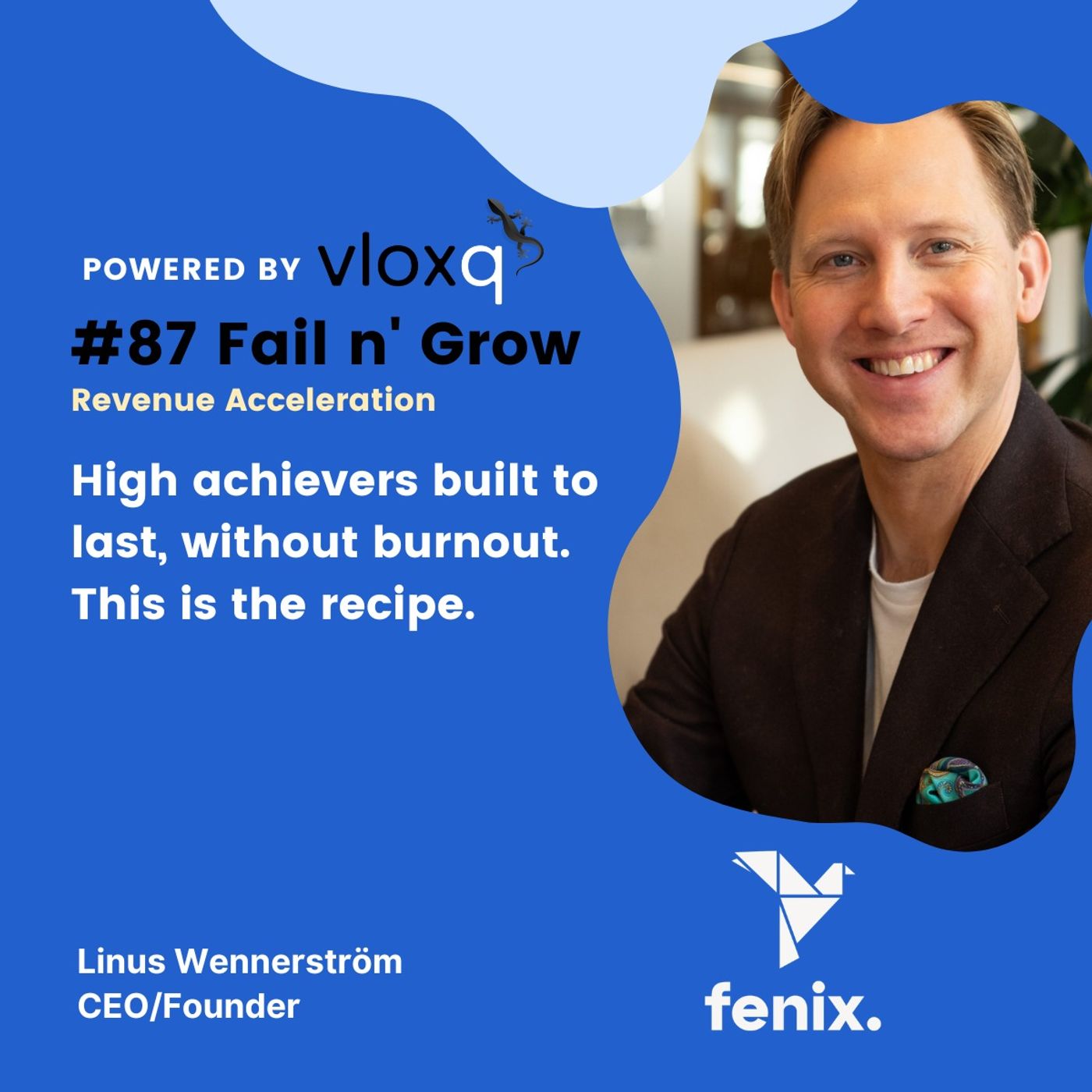 High achievers - built to last, without burnout. This is the recipe." Linus Wennerström, CEO/Founder Fenix Media Group
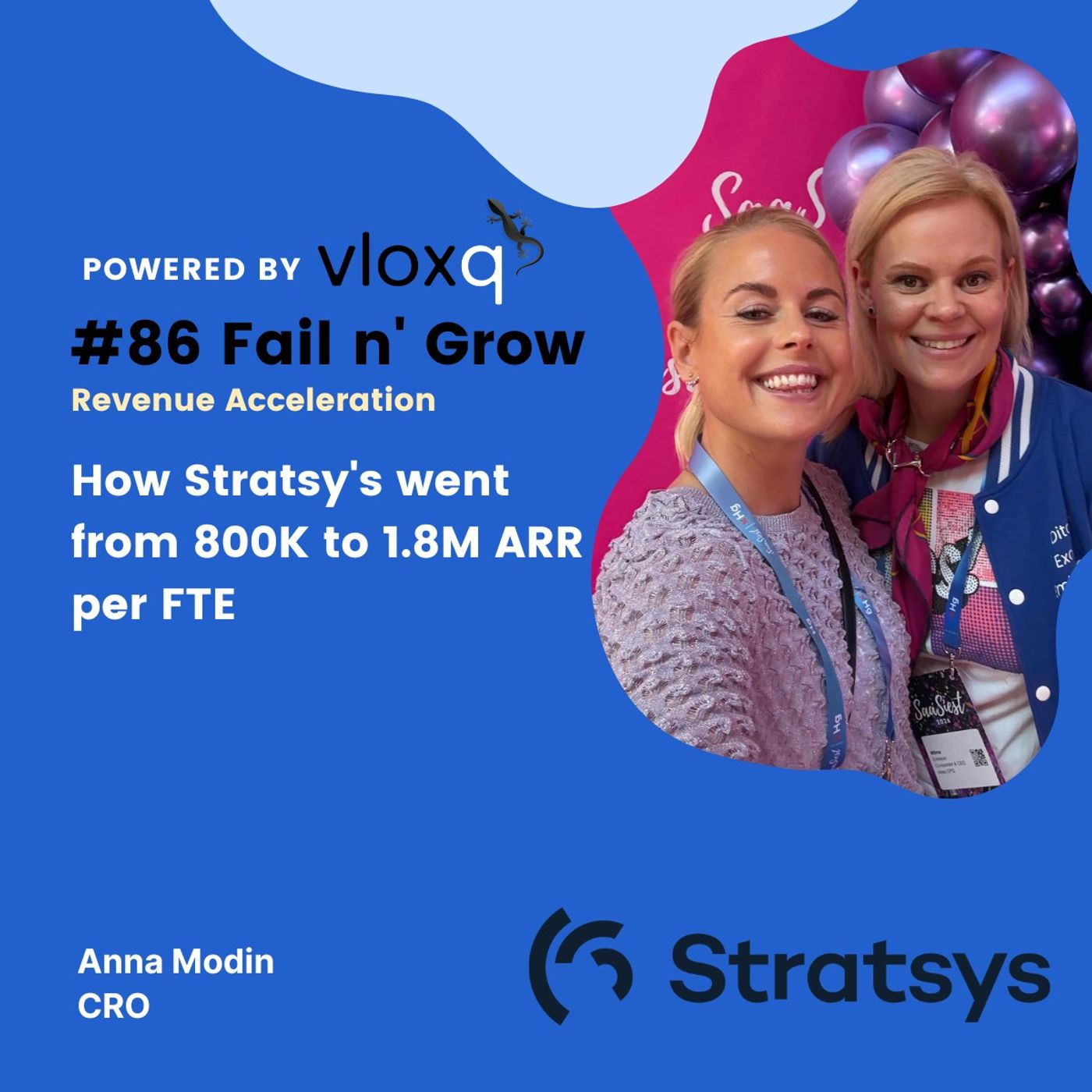 How Stratsy's went from 800K to 1.8M SEK ARR per FTE, Anna Modin CRO
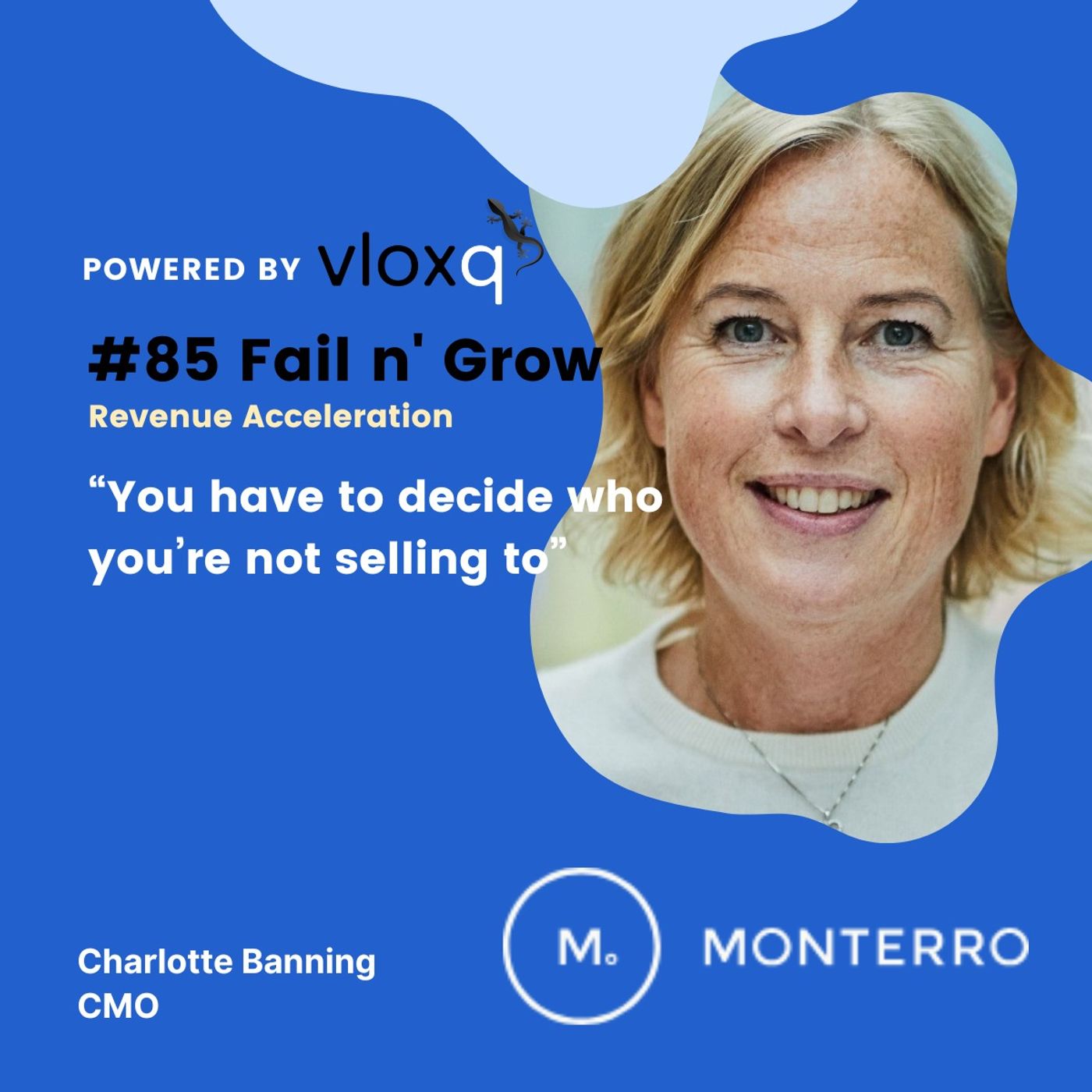 “You have to decide who you’re not selling to” Charlotte Banning, CMO Monterro
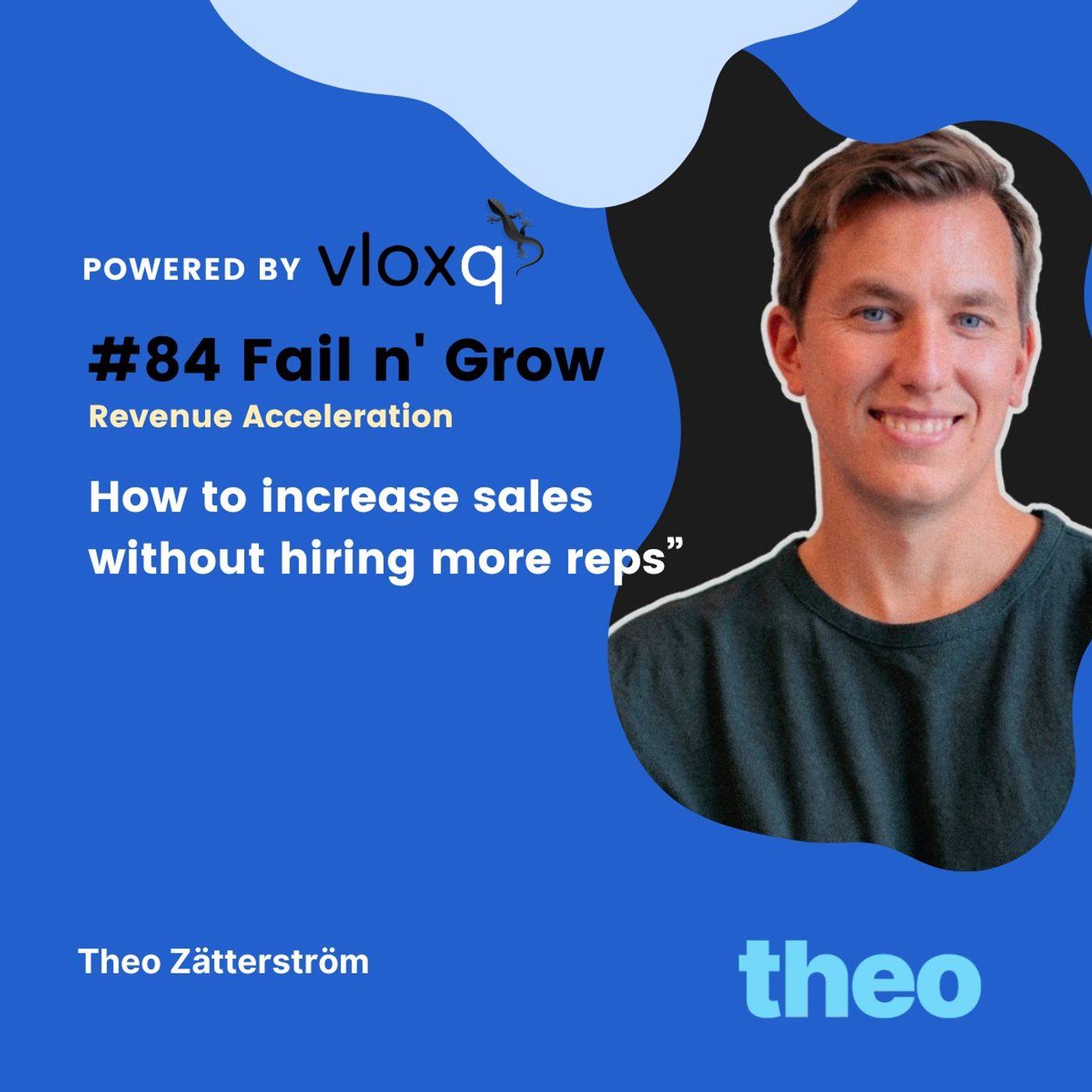 How to increase sales without hiring more reps, Theo Zätterström