
Retail Media Moguls · 2025-02-20 · 31 min
Key moments - from our scoring
Substance score
38 / 100
Five dimensions, 20 points each
Road Runner Sports Chief Retail Officer Stuart Slumberg discusses how specialty running retail builds community through consultative, customer-first service - a model that drives 70% of sales through brick-and-mortar stores despite the omnichannel landscape. With over 40 years in retail (Kmart, GNC, Max Wellness), Slumberg has grown Road Runner from 20 stores in 2012 to 52 locations by early 2025, operating as the largest omnichannel powersports retailer. The episode explores Road Runner's differentiation: using Fit Finder technology for gait analysis, training staff to ask diagnostic questions (activity type, mileage, pronation patterns) rather than push products, and partnering with brands like Asics, Brooks, Hoka, Nike, and On for in-store events and product seeding. Slumberg reveals their emerging retail media strategy - built over 18 months with a new studio team - spanning YouTube, Instagram, Facebook, email, and catalogs, plus on-ground community partnerships with high schools and local running clubs. For retail operators in specialty or community-driven segments, this episode demonstrates how servant leadership, brand partnerships, and high-touch customer experience compete against transactional big-box models (Dick's, Dick's House of Sports) while creating opportunities for supplier co-marketing and content production.
Specialty running retail is approximately 70% brick-and-mortar and 30% e-commerce, because online is transactional while stores offer the experience of trying on multiple brands (Brooks, ASICS, Hoka, Nike, New Balance, Saucony) and receiving expert fit consultation.
Road Runner uses a Fit Finder device that measures foot size and arch type without Brannock devices, combined with video gait analysis on iPad and treadmill to show customers their pronation or supination patterns on a large screen.
Road Runner has built a retail media team over 18 months that shoots high-quality product and team content through an in-house studio, distributed via YouTube, Instagram, Facebook, email, and catalogs, plus hosts in-store brand-sponsored events like Skechers' mobile pickleball court activation.
Brand partners visit stores with tech reps and product information, seed teams with new shoes to try, provide tech sheets for launches, and Road Runner uses internal videos from leadership; however, bandwidth is a challenge given the demands of regular customer service.
Road Runner partners with high schools and track coaches, hosts packet pickups and run nights (often sponsored by brands like Asics or Brooks), attends expos, and brings in brand activations; however, they balance events carefully to avoid overwhelming store teams of 8-10 people managing regular customer flow.
Our reviewer’s read on each dimension, with quotes from the episode.
The episode contains a few operationally useful observations - the 70/30 brick-and-mortar/e-commerce split, the fit-finder technology replacing Brannock devices, and how brand tech reps seeding teams with product functions as organic marketing - but these are buried under extensive career biography, personal running anecdotes, and generic servant-leadership platitudes. The density of genuinely novel, actionable ideas per minute is low.
we don't use Brannock devices in the stores. We actually put them on what we call a fit finder. And you just stand on it and measures your feet and measures your arches
in general, specialty running, it's probably more along the lines of 70% brick and mortar and 30% e commerce
The framing of store associates as 'consultants, not salespeople' and the doctor analogy for consultative selling are standard specialty retail talking points that circulate widely. There is no genuinely contrarian or first-principles argument; the retail media vision described (YouTube, social, studio Q&As, brand events) is aspirational but unremarkably conventional.
we are consultants, not salespeople. It's a very consultative approach at Roadrunner Sports
I look at it like when I go to the doctor, the doctor asks me all kinds of questions
Stuart Slumberg is a genuine long-tenured retail operator - 40 years across Kmart, Tom McCann, GNC, and now Road Runner Sports as Chief Retail Officer - with real store-level P&L accountability and scale. However, the domain is niche specialty running retail and the strategic depth of insight he shares in this conversation does not reflect the full weight of his experience.
I joined Roadrunner back in 2012 and we had about 20 some odd stores back then
I worked our San Diego store Thursday through Sunday this past week, and I'm just watching and listening and observing
A handful of concrete numbers appear - 52 stores, roughly 800 team members, 850 specialty running stores nationally, 70/30 channel split - but there are zero retail media metrics, no partner program ROI, no revenue figures, and no hard evidence that any of the described initiatives are working. Named brand examples (Hoka Bondi, Brooks Glycerin Max, Skechers pickleball) add some texture but do not constitute evidence.
store number 51 opens up in about over four or five weeks. Store number 52 is opening up by sometime in March
you got about 850ish specialty running stores scattered throughout the United States
The host asks broadly logical follow-up questions but never challenges a single claim, accepts vague aspirations without probing for data, and closes the episode with a family dinner exercise rather than substantive retail media questions. The intro also misidentifies Road Runner Sports as a 'powersports' retailer with '160 plus locations,' neither of which is corrected until the guest does it himself.
A leader in the powersports and retail space
Tell me about the updates and the feedback that you've had from the customers on this launch and where are you going next, do you think?
Computed from the transcript - who did the talking, and the words that came up most.
Welcome to the Retail Media Moguls podcast, hosted by Stuart Adamson and brought to you by Platform 195 . In this episode of Retail Media Moguls, Stuart Adamson welcomes Stuart Slomberg , Chief Retail Officer at Road Runner Sports , who reveals how speciality running retail creates lasting customer relationships through expert consultation, community engagement, and a customer-first approach to growth. Throughout the episode, Stuart and Stuart explore: How Road Runner Sports evolved from a catalogue company to an omnichannel retailer The importance of consultative selling in speciality retail Ways technology enhances the in-store fitting experience Strategies for building community through retail locations The balance between physical retail and e-commerce Methods for maintaining team knowledge and engagement The future of specialty retail experiences Stuart Slomberg brings over 40 years of retail experience to his role at Road Runner Sports, where he has helped expand the company from 20 to 52 stores nationwide, focusing on creating meaningful customer experiences and building healthy communities.
Transcribed and scored by The B2B Podcast Index.
Tell me about the updates and the feedback that you've had from the customers on this launch and where are you going next, do you think? And just overall that to me having the conversation is such a great learning for the consumer. Welcome to the Retail Media Moguls Podcast brought to you by Platform195. We share trends and strategies across retail media to help you accelerate your brand growth.
I'm your host, Stuart Adamson. Welcome to the Retail Media Moguls Podcast. I'm your host, Stuart Adamson, founder and CEO of Platform 195. Today we have the pleasure of welcoming Stuart Slumberg, Chief Retail Officer at Road Runner Sports.
A leader in the powersports and retail space. With over 40 years of experience in retail, Stuart has honed his skills in team development, customer attention and strategic planning. Under his leadership, Roadrunner Sports has expanded significantly, growing into the country's largest omnichannel retailer for Powersports with a strong presence across 160 plus locations. Today we'll explore Stuart's views on the evolution of physical retail, the integration of retail media and the future of customer experience in an omnichannel world.
Welcome to the show, Stuart. Thanks Stuart. Thanks for having me. It's really great.
You can join us. Listen, you've obviously got, I think you said, over 40 years of experience. Take us back to the beginning of that journey or what initially drew you to the retail sector and how's that journey over the last 40 years been? Thanks.
Well, I needed a job. That's what got me started in retail. I was an assistant manager of a shoe department within a Kmart in Cleveland, Ohio. And I just needed a job back in 1981 and really full time benefits were a big deal as well, not knowing that I'd make a career out of it.
But they just kept promoting me and from being an assistant manager to a manager to a senior manager, a district manager, then on to senior district manager. I spent 18 years. It was under the Melville umbrella. So Tom McCann was part of Melville and I believe at the time Tom McCann was the biggest shoe retailer in the world.
And then after that, GNC General Nutrition Centers came a calling. So I started there in 1999 and was a regional sales director over about 35, 40 stores and then became a divisional sales director with about 280 stores. And after 12 years I decided to jump into something completely different. A startup company called Max Wellness.
Michael Foyer was the one heading that up in Cleveland, Ohio. He had actually started Office Max many years ago and that lasted about a little less than a year and the investors pulled out and well, I gave it a shot. I tried something different and then Roadrunner Sports found me on LinkedIn and I joined Roadrunner back in 2012 and we had about 20 some odd stores back then. We'll have 52 actually, then 160, but we'll have 52 stores scattered throughout the United States here after we get out of Q1 here in 2025.
Okay, so there's not 160. No, I just wanted to correct on that one and the one I like exaggerate here. But what's been amazing with Roadrunner Sports is I came in as director of stores, then became senior director of stores and vice president of retail stores, now Chief Retail Officer. It's been just an amazing journey and I love the segment of retail that we're in and specialty running because it just makes such incredible impact on the customer base and really helping them get moving, stay active and live healthy.
Yeah. So tell us a bit about the Roadrunner Sports brand. Obviously there's that number of stores, but tell us a bit about its offering and your partner base. Tell us a bit about that.
The brand. Actually, Roadrunner Sports started in 1983 out of a garage in Del Mar, California, which is just north of San Diego. And Mike Goffertson, we refer to him as chief runner, started the company basically as a catalog company back then and then grew it to E commerce and then roughly 21 years ago opened up the first brick and mortar retail store in actually Seattle, Washington, and then has grown it from there and private company and we really partner with the top brands in specialty running.
And when I joined in 2012, specialty running, really it was Nike. Nike was number one. Asics and then New Balance, Saucony, Mizuno, sometimes Newtons were a big deal back then. And wow, has it changed over the last 12, 13 years with on coming into play as well as Hoka and Nike has had some issues and they're starting to get back into especially running.
They kind of took their eye off the ball a little bit. So it's a great arena to be in in retail because everybody, you know, you think about where you want to make your investment in life. You should have a really good mattress because you spent a lot of time there and you should have an amazing pair and perfect fit walking or running shoes because we're on our feet so much and that's where we spend our time as human beings. If you think about it, obviously it has that huge health benefit.
Has that translated into a sort of purposeful vision for Roadrunner. It has and it's always been there to a certain degree. This whole movement around. Let's really partner with a customer for their lifelong journey of get moving, stay active and live healthy.
And when Covid hit, then it absolutely skyrocketed because what else were you going to do During COVID everything was closed. So basically, unless you had a home gym, you're out there walking or running or just trying to stay active. And so many people really got moving during COVID and that habit is stuck, including somebody like me. I've done a 5k every morning.
Like I mentioned to you, Stuart, earlier in that In February of 2019, I just started, you know what? I'm going to start walking and running every single day. I'm going to start my day with a 5K. And I got hooked and today was like 2159.
So I keep the streak alive, the exercise streak. But it's been amazing. And you think about for brick and mortar stores, the team that you have in the stores, they absolutely are passionate about helping the customer and getting them the right fit. They take such great pride in it.
And so many customers come in and they've got plantar fasciitis, they've got pain in their ankles or their backs and be able to really set them up with the right shoes. We call it the perfect fit. With the right insoles, the right socks. It's life changing for so many.
It really. It's a beautiful thing. Yeah. And how do you bring your partners into that scenario?
Do you train your staff up then? Do you get your partners in to talk to your staff about? We do. We want them in as often as they can come in with their tech reps.
And what a difference that makes when they come in. They talk about right now, anytime there's a new launch, like right now with hoka, with the Bondi, somebody coming in from hoka, spending time with the teams, letting them know about the updated version of the Bondi. And then many times they'll see the team so they'll give the team a pair of the latest shoes and the teams love it. And hey, you can't get better marketing than when you walk into a store.
The whole team's wearing your bondies. Absolutely amazing. So what's the weighting between in store sales and online sale then? Is it largely in store with companies specialty running?
It's interesting. It really is more in store as specialty running as a whole. You got about 850ish specialty running stores scattered throughout the United States. And if you know exactly what you want, you can order it online.
That's a very transactional experience. But when you go into the stores, it's a whole different experience because you're able to try on different shoes, whether you're trying on a brooks or an A6, Hoka on Nike, new balance, Saucony, Mizuno, Altra. There's just a lot of different brands out there. So that experience is very different in the stores.
So I would say that in general, specialty running, it's probably more along the lines of 70% brick and mortar and 30% e commerce. And I guess, you know, if you bought a pair of trainers that you really like, you can then go online and repurchase the same. So how are you keeping those customers engaged in store then? You've obviously got them in there.
You've got great staff who are trained. How else are you sort of keeping them engaged in there? How are you making that experience different, asking questions and getting to know your customer? Asking questions such as, what are your activities?
What are your goals? So many customers come in and they don't consider themselves runners. And so many of them are just getting out there. Some are weekend warriors.
Some participate in a 5k, 10k half marathon, full marathon. But it really is understanding what the customer's needs are. And you let the customer drive. And I tell this story in regards to just the customer experience.
I remember I was in Ohio. I needed a belt. I forgot my belt. And this is back in the day when I was at gnc, and you had to wear, like, a suit and tie, and thank God for road Runner.
This is my dress code here. At any rate, I go into a men's very great store, and I go in there, and I'm like, I need a belt. And they have a sale going on at sport coats, so naturally shows me the sport coat, tells me about their sale, which I get. I understand that's the kind of what, you know, they want to promote, but I just want my belt.
And it was so painful to just get my belt that he would not let me drive. I'm the customer. And the way we teach our teams and our approach is so critical. You know, Stuart, if you come in, I want to know what you're doing and what your goals are and what your activities are, and really what are you looking for?
Because we are consultants, not salespeople. It's a very consultative approach at Roadrunner Sports, as it is in many of these specialty retail stores throughout the country, and really understanding what your needs are, what your mileage is, what your activity is. Are you playing pickleball? Are you looking for cross training?
Not about just selling a Asics shoe or a Nike or Brooks, because that's my favorite. I love all these brands, I try them all. But really allowing the customer to drive and it is the experience that makes all the difference in the world. And that our success at Road Runner Sports really is the team and team first mentality.
And the leadership from the executive level to the director level to the district is servant leadership in the approach and how we treat our team and how we take care of our team, which then blossoms into taking care of the customer and understanding that approach and having a team that's engaged, that'll engage the customer and keep them coming back and tell others. Yeah, I'm a huge advocate of servant leadership. I think it's absolutely the way businesses should be run. You know, you've got to help them help the customer.
Totally. So talk me through. Obviously we are the retail media moguls Podcast. Talk me through the retail media piece.
Have you got sort of retail media opportunities within the stores and online that you're offering to your partners like Asics? Yeah. Thanks, Stuart. And this is one where we have been since 2012.
We've ramped it up significantly, but for years it's really just been more grassroots. Bringing in packet pickups, different events, having events out of our store locations. Typical back in 2012, 13, 14, 15, email. We still send out to this day, just not at the number catalogs where we'll partner with some of the brands and do some catalogs.
And believe it or not, they still work. You just have to have the right strategy and make sure you're sending them to the right audience. We also now have a studio here at our support center where we're able to do some really high quality recordings and get it out. YouTube is one that we use quite a bit.
When you look at social media and Instagram and Facebook and there's a lot of different ways to get the message out. And this is one where we've really built over the last, I would say 18 months, a really dynamite team. And we're just now starting to really get this rolling at the level that the vision that we had. And tell me a bit more about that vision.
What is the ultimate end game in that scenario? But there's no end game. What about Utopia? It's brand recognition.
We've been in San Diego. We started in the San Diego area in 1983 and it is Amazing to me, the San Diegans who grew up here who still do not know who Roadrunner Sports is. And what a shame because what we're able to do, the positive impact we can make on each customer, the positive impact that we can make within the communities. So this is one where Again, store number 51 opens up in about over four or five weeks.
Store number 52 is opening up by sometime in March. And we're growing, but we're growing smart in that when you start growing too fast and you take on a lot of debt, then that changes things. So you got to be strategic and smart about how you do it with your growth and make sure you know the right locations. So how do you build the community and really get your name out?
There is the brick and mortar retail store and then the web that kind of work together and you'll increase your web business when you increase your store count so that really they play off one another. I think that the community is our number one focus and really partnering with the high schools and the track coaches, partnering with as many different businesses that we can. And this is one that we've been ramping up as well. So that's kind of that, that grassroots side, attending different expos, getting the packet pickups, having events coming out of our stores.
Now you started to embed yourself within the community. Then there's the social media is a big one on how you do that. And there's like a science to making that work, which is not my wheelhouse. My wheelhouse is the brick and mortar retail stores.
But I can tell you in our stores, and I would say this is the case for most of the specialty run brick and mortar stores throughout the country is my friend told me to come in and get fit because when you go to other retailers, their business model is different. When you are outside of specialty running, it's. You're not going to get that high touch customer experience. They're not built that way.
So if you go into a Dick's, for example, I love Dick's. I love their House of Sports. What a great company. And I mean they're huge and they do so well, but it's more transactional and less experienced.
So when a new shoe comes out, you go back and they've done a really good job as far as having enough team members in their stores to go grab you the shoe. But beyond that, you're not going to get that high level of experience that you get at Roadrunner Sports or Fleet Feet or Big Peach down in Atlanta or Naperville Running or Salt Lake City in Utah. These are really good specialty run stores where you get that high touch and your team members in all of these stores have great knowledge in regards to what would be right for the customer.
Yeah, I love this idea of the specialty retailers like you being able to service that community. I think when you look, we talk about transactional, you look at groceries and it's difficult to build community. There's, you know, you could probably do it around certain brands and things, but it's hard. Whereas when you're offering that ability for people to get better and get well and get fit and you're partnering with local schools and things like that, you really do.
And you're helping customers find the right shoe for them based on whether they go to the gym or they go running or whatever that may be, is ultimately you're creating something bigger and a community that people are attracted to. I think that's a great area and a great area where you can bring partners on board. Are you looking at that in terms of bringing your supplier partners into those community events and things? We are.
We do a little bit of it. Not nearly enough. And that's again, one of our goals going forward is to bring the partners in even more. So, for example, we sell Skechers pickleball shoes.
So last year we had Skechers come into our San Diego. We have the support center and then we have our warehouse, and then we have a store and an outlet store as well, attached to the warehouse, if you will. And sketchers came in, we did an event. They brought in a portable pickleball court, but pickleball pros.
And it was really very unique. And I had never heard of a pickleball mobile unit that goes out. And it was great. But that's just one example.
There's so many things that we can do to partner with the brands and have a run night, you know, sponsored by Asics or sponsored by Brooks. And they're great partners. They love to do these things. One of the challenges we have is just the bandwidth to be able to do as many events as we would like.
Because when you start adding it up and you have your team nights with the high schools, you have your packet pickups, different events that are coming in, you really got to be able to space it out because you don't want to overwhelm your team. And you think about, you know, some of these stores and specialty running, they may have 8 or 10 total team members in their store. So you don't want to overwhelm the team because you have your regular customers that are coming in that need to be taken care of as well.
So you got to have a good balance. You've obviously got a huge number of those teammates across that real estate. How do you keep them all up to date with what's going on with the latest product lines and what the brands are doing? How do you manage that volume of people and keep them informed?
That's a challenge. And this is where it helps with the partners with the brands being able to come in, visit the stores, having tech sheets anytime there's a new product launch. When the Brooks Glycerin Max Glycerin came out, or the Brooks Max Ghost, they call it Max because he just added even that much more cushion. They're amazing.
So comfortable. It's like walking on pillows. But being able to give the team that information, sometimes they'll seed the team with the information, but you're constantly learning. And what's really cool about our team is the team on the stores and we're talking 800 team members plus.
And they love it. They really love running shoes and they love what they are selling, but they're really into it. So they like to learn. They love to have the knowledge.
And they take so much pride during that customer experience when they're engaged with the customer. It makes me so proud. I worked our San Diego store Thursday through Sunday this past week, and I'm just watching and listening and observing. And it's like being a proud papa because your team's out there and they're providing such great detail to the customer around the shoe.
And it really makes me proud. It's really cool. Yeah. So there's obviously a huge people element in the business.
What about technology? Have you got screens in the stores that are sort of showing promotions? How do you see that evolving? Well, I see that one as not being promotional, but being factual.
And how is it going to benefit the customer? The more you can learn about what the customer's needs are, the better you can consult. And I look at it like when I go to the doctor, the doctor asks me all kinds of questions. And the doctor is digging and learning to be able to provide the right direction for me to go.
And it's very similar in that you're learning. Hey, is this, you know, with the screens and being able to put a customer on a treadmill and take it on an iPad and recording, they're struck in stride to find out if they're supinating, pronating. And when the customer sees it on a big screen. Most have never seen what they look like from behind in regards to their strike and stride.
It's pretty cool. And then having the technology that we have, we don't use Brannock devices in the stores. We actually put them on what we call a fit finder. And you just stand on it and measures your feet and measures your arches and being able to show the customer that as well, we get their true size of their foot and then we're able to go from there.
Because typically you go up either a half full size to get the right shoe for them. So the technology is a big piece of it. But we also ask the customer a good amount of questions. And we ask questions like you like your shoes to fit snug or you like a little extra room, you like a Marumi.
And by asking those questions, it's again letting the customer drive and getting to know the customer and understanding what they're going to be using the shoes for. Are you cross training? Are you playing pickleball? Is it more of a court shoe you're looking for?
Are you walking? Are you running? What's your mileage look like? For me, I'm doing 20,000 steps a day.
That's my average. And that's all in, by the way. So I go through a lot of shoes. So it's important for me to really have.
You don't want to use the same shoes every day, so you want to be able to switch them out. They'll last longer that way and give them time to get back to how they should be used. Every day you wear them down. So it's the experience and asking the questions, getting to know your customer.
It's super engaging. Yeah. So tell me about the studios that you've got in the office. I'm really fascinated by that because I'm a big proponent of content and making that engaging.
And we as platform 105 shooting tons of product videos. In fact, one big up, we're shooting 400 at the moment. Tell me about what are you shooting in that studio. We brought on a professional that's full time with us to do our photography and shoot the videos.
Whether it be in the stores. We do a lot out of the studio. I'll start with the internal. Is it product video?
It's everything. I'll start for the team and really important for the executive team. Our president is great at this and this is Mike Jr. And he gets in front of the team.
Not just here in the support center, but we have two fulfillment centers, one in Columbus one here and then all the stores in the teams. So we do a lot of videos internally. And not only does he do videos, he does huddle ups meets with teams. It's super intimate.
Just that store team. Imagine that getting the opportunity to talk to the president every year. It's pretty cool. But getting back to the studio in that, you know, shooting videos and really celebrating the success of the teams and the awards that we give out, you can't give enough recognition.
And then also the messaging around where the company is today and where we're going and keeping them up to speed as to everything that's going on. And it's so powerful and keeps the teams connected and engage. Then, you know, as far as the product and the different media outlets that we use, like I said for YouTube, we do some on Facebook and Instagram, but we could shoot videos in the studio. I know that the team has shot videos outside of the studio, but you need to be high quality.
Where years ago we were literally doing some of these videos off our iPhones. So we've stepped it up a little bit since then. I still see clients doing that. So tell me about the partners though.
Do you bring those guys into that studio? Do you shoot product on behalf of partners? Are you doing that yet? I mean, because if not, there's a big opportunity today, right?
It is. There is an opportunity to actually bring them in as well. We've done a little bit of that, but we would like to do more. And it's beyond just us, you know, showing a video and talking about a particular shoe or a new product launch.
But getting. Actually, I would love to get it to where there's somewhat of a Q and A similar to what we're doing right now. So I'll give you an example if you know, Stuart, you're with Hoka and we're launching the new Bondi and I'm the moderator. I'm asking you question about the Bondi.
Tell me everything about it. You know, when did that first shoe come out? This is the Bondi 9. Tell me about the updates and the feedback that you've had from the customers on this launch and where are you going next, do you think?
And just overall that to me, having the conversation is such a great learning for the consumer. Yeah. But actually has a double value because it has a huge amount of learning for your staff. So actually.
And those are the people we call it influencing the influencers. Right. These are the guys that are selling into the customers. Is.
Yeah. I mean, what an opportunity to just to Engage them as well and get them behind the brands. Really interesting. And then just a final touch because we've got nearly running out of time, but it's just around online.
How are you bringing partners alive? I know brick and mortar is your baby, but how are you bringing partners, apart from some things like YouTube and the social side on site? Are you sort of linking that up with the promotions you're doing in store? How are you using the web?
The web is one where the product launches are really big for the web, Obviously. Yesterday was Martin Luther King Day. That's a huge day in retail and so many companies in the government, everything shuts down. Out of respect for this holiday, which is great, and being able to do a product launch around the same time, we're on a holiday.
We have President's Day coming up in February. So being able to partner with the brands and get that on your landing page, I think it's really important. And I think that this is year 44 of being on the front lines in brick and mortar retail stores and the web. It's just transactional.
When you talk about the experience and how do we challenge ourselves and believe me, we are. What's that fit process overall look like on the web and how can we get to know the customer even more? You're never going to get to where the experience is in brick and mortar retail, but what can we do on the web to make that experience not as transactional and that you actually can partner with the customer, get the information in regards to what their activities are and how they like their shoes to fit, and they literally go through a fit process on the web that has not been mastered yet.
I would see with any company and imagine technology will take it to where it needs to go. So it's more of an experience in years to come rather than transactional. Because when you think of the web, it's driven by price and the brands, they dictate the price. But when the new style comes out of the glycerin, the ghost or the Hulk of Bondi that we talked about, the old ones, they get marked down.
And if that shoe really works for you, I'm searching the web to get the very best price that I'm going to buy. Two, three pairs of them. Brilliant. Right, we've got about two minutes left.
It's amazing how quickly that's gone. But I'm inspired by your passion. It's just on that note, obviously, it's fantastic that you're now living the brand and running your 5k every day. Obviously you're a cheap retail officer and extremely busy.
How do you find the time to do that? Are you up exceptionally early or are you working from home and fitting in at lunchtime is. How are you actually doing that? I get up very early in the morning.
I'll give you an example. Last week I was in Dallas and looking potential different sites and I needed to get up at 4am here in San Diego because I had an 8am flight. So I have a cup of coffee and I just go out and do it. I get to Dallas the next morning.
Actually, I had a podcast on talking about habits to a Tiger hall, which is based in Singapore. At any rate, I got up at 3:30, got my 5K because I just, I don't know how to start my day any other way. And it's brilliant. I don't even think about it other than what time do I need to get up to get it in before my day starts.
And I don't know any other way to start. It's the greatest habit that I've ever started in my life to the point now where we don't get up in the morning and brush our teeth and think about what hand we're going to use or whether or not we're going to brush our teeth. We just do it. It's a habit and that's what it's become.
So I'm not obsessed. I just want to keep myself in as best shape as I can because there's a lot of things out there I want to do and I'm 63 years old, so I want the next 25, whatever I have in front of me, I want to be as healthy as I can to travel the world and really just enjoy my kids, my grandkids and get out there every morning. It really, it's brilliant as far as your mindset too, and makes you such a difference. Yeah, inspiration.
I always do one thing at the end of the podcast, which is I do this thing called Rose, Thorn, Bud, which is something I do with my kids to get them to speak to me when they come home from school rather than give me one word answers. So a rose is something good for them. It's Rose is something good that's happened that day. Thorn is something not so good.
And then Bud is something they're looking forward to. So what I like to do in this podcast is sort of translate it into your world in retail and say, you know, with Rose, what are you doing? Well, what are you proud of? What do you think's going really well, Thorne is, what would you really like to overcome?
What's difficult? And then bud is obviously, what are you looking forward to? What's next? What's the evolution?
Should we start with the rose? Yeah, let's start with the rose. And that would be my team. I'm so proud of my team and what they do day in and day out.
It is not an easy job being in brick and mortar retail. And from the leader of the building, the manager, to the fit experts, they work their tails off. And I witnessed it over the weekend. I couldn't keep up with them.
And they just take such great pride in what they do. Our team is unbelievable and we need to continue to challenge ourselves every day to make sure that we're recognizing them and really taking great care of them. That'd be my rose. Good.
And the Thorn, what's difficult? Brand recognition. Roadrunner sports. And what we do, we do it so well and we're different.
And you talk about 195 countries. We gotta get to the point where in every state and scale this thing across the country, not just where we're at today. And that's really what excites me, but that's the Thorn. And figuring that out and having that strategy and then executing the strategy and executed it flawlessly.
Brilliant. And then the. But what are you looking forward to? What's next?
I really think to continue to grow in scale and it kind of goes along with the Thorn, but then turn it into like, we need to open more locations and that's exactly what we're doing and we're going to do it the right way. I can't tell you how many times we get letters from customers saying, hey, I'm in North Carolina. You all need to open up a store here. You know, and we had so many customers that are visiting San Diego because it's such a beautiful place.
I'm like the luckiest guy in the world to be able to live in here and doing what I do for a living, which is. I just love it all. And that they come here and they visit and they make it a point to come to the Mothership, the world's largest running specialty running store in the world. And it really is really cool.
Brilliant. Very, very good. Well, thank you so much for coming on, Stu. I really, really appreciate it.
That is an extremely inspirational podcast. Inspirational around how you're really putting customer at the heart of what you do. Genuinely, I can see that you can feel that coming off you in terms of how you probe them, listen to them and give them what they need and then off. That is the community thing is just, you know, how that's translating into, you know, all those great things like you did with Skechers and the Pickleball and then working with the schools and things.
I think it's such an opportunity to really scale the audiences that you have. So that brand recognition thing as well, but really scale the audiences that you can put your partners in front of. And it's a win, win, win in that scenario. And then lastly, is obviously you getting a hit in the road every morning at 3:30 in the morning to go and run 5K?
I mean, maybe next time we speak, hopefully I'll have picked up the habit too, and I'll certainly have a deep think. But listen, thank you so much for coming on and please do come on again in some months. Time us how you've evolved. Well, thanks for having me.
It's been my pleasure and it's great being here. So thank you. Stuart. Thanks, Chief.
The Retail Media Moguls Podcast is brought to you by Platform195. To learn more about Platform195 and how to connect retail media with intelligent marketing to accelerate growth, visit platform195.com and then make sure to search for retail media moguls in Apple Podcasts, Sports, Spotify and Google Podcasts or anywhere else podcasts are found. Make sure to click subscribe so you don't miss any future episodes.
And on behalf of the team here at platform 19 5, thanks for listening.
Other episodes covering the same guests and topics, from across The B2B Podcast Index.
 The $1 Trillion Question: Why Brands Are Still Underinvesting in Women’s SportsAdspeak · on Nike83 / 100
 Bedfellows: How Boll & Branch Keeps Humans and AI in the Same SheetsFuture Commerce · on Customer experience72 / 100
 Cannes Lions’ battle of the brands: Starbucks’ stumble, World Cup ads, and moreRapid Response · on Nike72 / 100
 Where employee experience takes flight with Maruchy CantuLove Your People Podcast · on Customer experience68 / 100
 Eliminating Bad Execution: Making Strategy Work with Daniel MälsjöStrategy Candy · on Customer experience64 / 100
 330. Ashley Kechter, Global President at Vuori in Partnership with Shoptalk: Brand Fans, Community around the Store, Athleisure Category, Product DiscoveryThe FMCG Guys · on Community building58 / 100
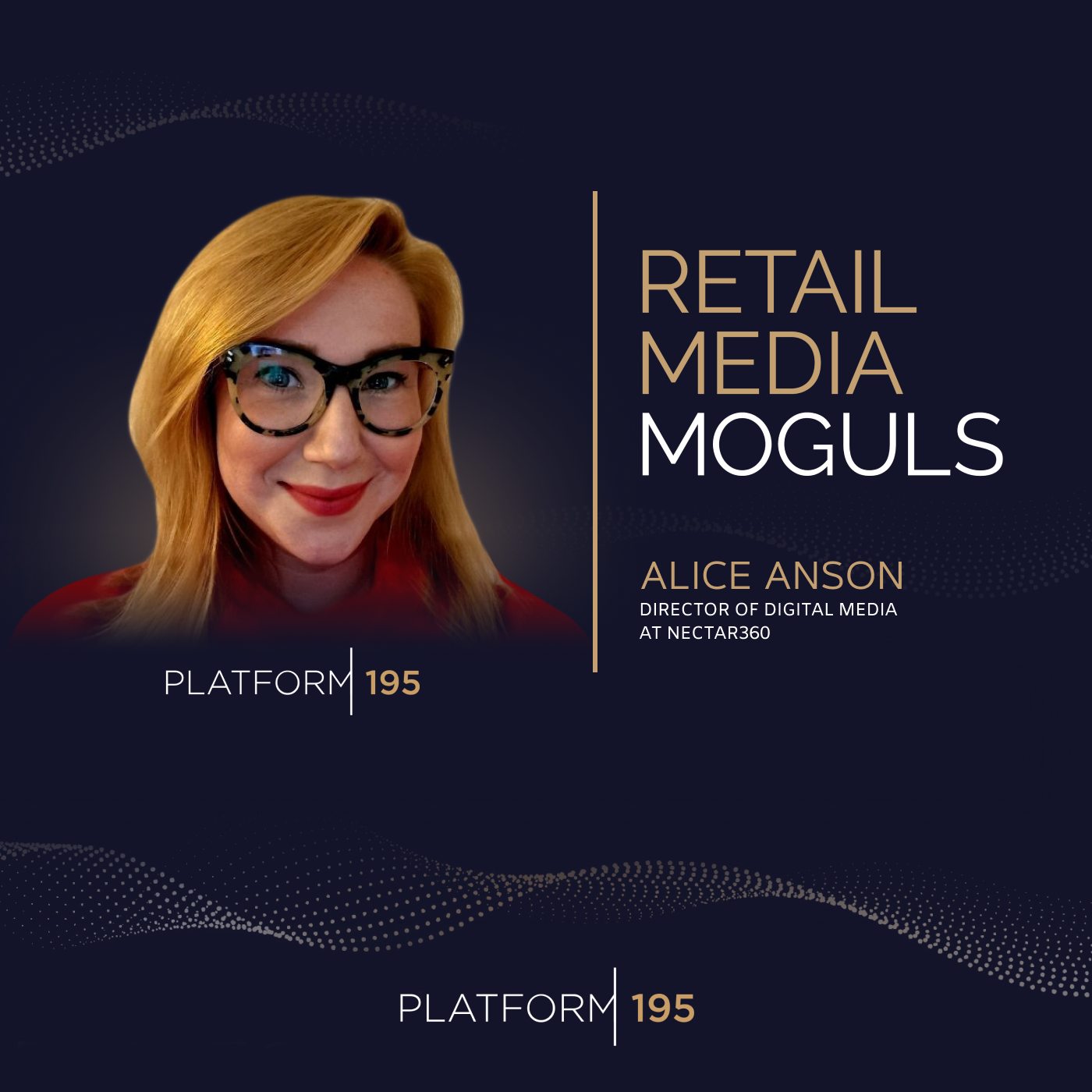 From Spreadsheets to Smart Screens: How Sainsbury's and Argos are Redefining Retail Media73 / 100
 Community First: Cycle Gear's Guide to Specialty Retail Success65 / 100
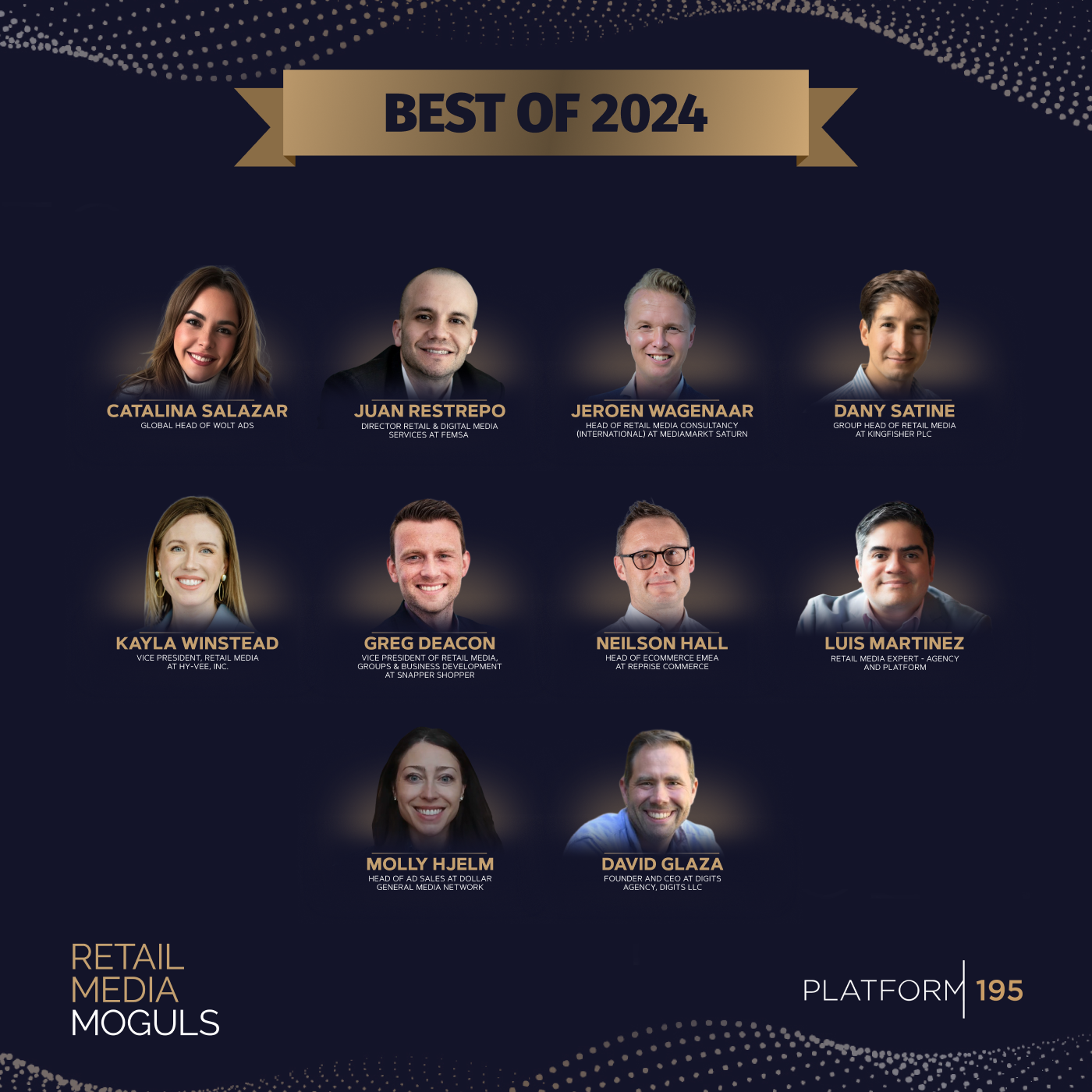 The Future of Retail Media: Lessons from 202476 / 100
 From Store to Digital: Kingfisher's Omnichannel Retail Media Journey80 / 100
 FEMSA's Retail Media Revolution: Latin America’s Bold New Network83 / 100