
Retail Media Moguls · 2024-11-28 · 29 min
Key moments - from our scoring
Substance score
63 / 100
Five dimensions, 20 points each
FEMSA's Retina Media represents one of Latin America's most comprehensive retail media networks, leveraging OXO's 14 million daily store visitors and Spin Premia loyalty program (23 million active users visiting stores 6x monthly) to deliver hyper-targeted in-store and digital advertising. The platform connects 3,000 stores with digital screens by year-end 2024 and targets 20,000 by 2028, featuring advanced capabilities including climate-based targeting, demographic-based camera vision, and sales-behavior-driven algorithms. Restrepo, formerly at Google and Falabella, has assembled a 20-person team across commercial, measurement/analytics, ad operations, and product/technology divisions, partnering with InTouch (CMS/platform), Cusyc (audio), Google, and Salesforce. The network differentiates through weekly audience updates (last 7-day buyers), store-traffic optimization rather than e-commerce-only focus, and transparent measurement methodology. Early traction shows hundreds of active partners scaling to projected thousands within two years, with emphasis on "quality score" relevance principles borrowed from Google's search advertising model to avoid creepy consumer experiences.
FEMSA uses control-group methodology across their 23,000-store network, building statistically similar store pairs to measure incremental sales lift. They reported an average 8% lift across 250+ campaigns and transparently share their attribution methodology with partners.
The platform leverages Spin Premia, OXO's loyalty program with 23 million active users who visit stores an average of 6 times per month, enabling weekly audience updates including last 7-day buyers, purchase history, and demographic data captured via in-store cameras.
Beyond 3,000 connected stores with digital screens, Retina Media activates audiences through SMS, WhatsApp, email, the Spin Premia app (2.3 million monthly active users), and partnerships with Meta and Google using first-party audience data.
While testing beacon and Wi-Fi technology to identify in-store customers, Juan emphasizes intentional use cases based on Google's quality-score model - ensuring message relevance to avoid "creepy" retargeting patterns that follow consumers across platforms.
In the competitive convenience-store retail media space (including US competition via Delek acquisition), Retina Media differentiates through weekly-updated first-party audiences, transparent measurement, and optimization for physical store traffic rather than e-commerce-only focus.
Our reviewer’s read on each dimension, with quotes from the episode.
The episode contains solid operational details about FEMSA's retail media network - 3,000 stores with screens, 23M loyalty members, 8% average sales lift, and omnichannel capabilities - but lacks novel frameworks or counterintuitive thinking. Much of the content is straightforward execution narrative (how they built the network, metrics on partner acquisition) rather than surprising insights about retail media strategy. The guest does surface some thoughtful principles (quality score philosophy, avoiding creepy retargeting), but these are brief and not deeply explored.
we are now reaching 2000 stores like this month and we will be Ending the year with 3,000 stores connected through digital screens
we ran a uh, meta study this year in more than 250 campaigns and we saw that the average lift or incremental sales lift was 8% for those campaigns
The episode rehashes familiar retail media playbook elements: loyalty data enablement, omnichannel measurement, control group testing, and audience-based targeting. While Juan references Google's quality score philosophy and the 'right message to the right person' principle, these are industry orthodoxy, not fresh thinking. The differentiation argument (leveraging store footprint over e-commerce, weekly audience updates) is tactical rather than conceptually novel. No contrarian takes or first-principles challenges to retail media assumptions are presented.
audiences, I would say it's one of our core differentiators
the right message to the right people at the right moment. That's actually that we as digital marketers or as marketers have been talking about too much
Juan is a credible operational leader with 18 years of experience, including senior roles at Google (7 years) and Falabella, now directing a major retail media initiative at FEMSA with 23,000+ stores and 14M daily shoppers. He has executed real programs at scale and brings hands-on expertise in building networks, measurement, and loyalty integration. This is not a consultant or pure theorist - he's actively shipping product and managing P&L, though the episode doesn't fully probe his specific decision-making or failures.
over 18 years of experience in driving growth across various industries including retail, E commerce and marketing
I worked for Google for seven years leading the relationships mostly with retailers
The episode supplies concrete numbers: 23,000 stores, 3,000 digitally connected, 14M daily traffic, 23M loyalty users, 2.3M app active monthly users, 6 store visits/month per user, 8% average sales lift across 250+ campaigns, 100 pilots expanding to 2-3 partners/month baseline. However, specificity gaps exist: no revenue figures, partner names (avoided), cost structures, or detailed breakdown of the 8% lift by category or geography. The measurement methodology is explained conceptually but lacks granular case studies or per-campaign performance data.
we have more than 23,000 stores in the Mexican territory
we are now reaching 2000 stores like this month and we will be Ending the year with 3,000 stores connected through digital screens
The host asks broad, open-ended questions that invite narrative rather than pressing for depth or pushing back on claims. Questions like 'tell us about that' and 'how are you servicing that growth' allow Juan to give lengthy prepared answers without challenge. The host does surface measurement practices and reporting structure, but doesn't probe contradictions (e.g., how to scale SMB seller education on a proprietary platform) or ask tough questions on competitive positioning beyond 'how do you differentiate.' The Rose/Thorn/Bud closing is friendly but not incisive. No genuine disagreement or Socratic pushback.
Tell us about those then. I mean tell us more about that.
And are you using one screen partner for that to do the screens and the audio install?
Computed from the transcript - who did the talking, and the words that came up most.
Welcome to the Retail Media Moguls podcast , hosted by Stuart Adamson and brought to you by Platform 195 . In this episode, Stuart speaks with Juan Restrepo , Director of Digital and Retail Media Services at FEMSA , who reveals how they're building Latin America's most ambitious retail media network through their Retina Media platform. Key topics include: Building a 3,000-store digital screen network Leveraging data from 23 million loyalty members Using AI-powered demographic targeting Implementing sales-based campaign measurement Expanding across Mexico and international markets Developing omnichannel customer experiences Juan brings 18 years of digital marketing expertise from roles at Google and Falabella to FEMSA's retail media transformation. Retail Media Moguls is handcrafted by our friends over at: fame.so This podcast is brought to you by Platform 195 . To learn more about Platform 195 and how to supercharge your retail media organisation, visit . If you are interested in joining Retail Media Moguls as a guest, please complete this form: fame.so/upa-guest
Transcribed and scored by The B2B Podcast Index.
Speaker A: Welcome to the Retail Media Moguls Podcast brought to you by Platform 195. We share trends and strategies across retail media to help you accelerate your brand growth. I'm your host, Stuart Adamson.
Speaker B: Welcome to the Retail Media Moguls Podcast. I'm your host, Stuart Adamson, founder and CEO, uh, of Platform195. Today we have the pleasure of welcoming Juan Restrepo, the director of digital and retail media services at bemsa, where he leads innovative initiatives for oxo, one of the largest and most recognized small format retail chains in Latin America. With over 18 years of experience in driving growth across various industries including retail, E commerce and marketing, Juan has a proven track record of delivering measurable results through strategic thinking and technology driven solutions. His leadership roles at esteemed organizations like Google and Falabella have equipped him with unique insights into the evolving landscape of retail media. Join us as we explore the launch of oxo's retail media network, Retina Media, and delve into Juan's perspectives on the future of retail marketing. Welcome to the show, Juan.
Speaker C: Thank you, thank you for having me, Stuart. Nice to be here.
Speaker B: Great, good. It's lovely to have you. Juan, why don't you tell us a little bit about you and your journey first and then we have a global listener base so maybe tell them a bit about FEMSA and then uh, the OXO and how that all fits together.
Speaker C: Yeah, sure. So, well, I started working at marketing at uh, a digital marketing boutique like I would say 18 years ago when Facebook was about likes and followers. And it's been a pretty great journey that I started working as a vehicle strategy at least Travisics agency actually. And I handle the like, the biggest accounts of the agency. And then it turned out that I was one of the first joiners@valavella.com we were launching the Favela E Commerce in Colombia E Commerce platform. I was the fifth employee and for almost five years I developed the marketing strategy for Favela.com and then the digital marketing strategy for Favela as a retailer. And there were where I have the first experience around retail media. In that moment we didn't call it retail media. We were trying to make some digital trade marketing and bringing some trade marketing dollars to the E Commerce. So we started partnering with some consumer electronics companies because those were the items that were more sold at Palabala and we started talking with them about audiences, new customers, how to bring more store visits to falabala.com but with an omnichannel approach. We knew that everything we do online had an impact in store sales but then I had the opportunity to move to Google and I worked for Google for seven years leading the relationships mostly with retailers but I had the opportunity to work for telecom industry for the finance vertical, uh, for CP years. So I got a uh, comprehensive approach to digital marketing. I had an opportunity to learn a lot about performance marketing but also branding marketing in the digital space. And almost a year and a half ago I joined the FEMSA team to lead this retail media initiative that we have in place. We actually launched it a few months ago in September. We're calling it Retina Media. We're really proud to be launching this Retina Media value proposition to the market and thinking about thumbs up. And just to give you a brief overview, we are like the largest convenience store chain here in Mexico. We have more than 23,000 stores in the Mexican territory and we are also expanding other countries like Colombia where I'm from, Brazil, Chile and Peru. We actually acquired a convenience store chain in Texas. So we are expanding also to the US and ah, we have some other operations in Europe but the Valora Group. So well, it's been quite a journey. Pretty excited to be leading this amazing project. I called it the most ambitious retail media omnichannel project that can be in the region. And we think we can add tons of value to advertisers but to advertising ecosystem too. So it's been quite a journey and I'm pretty happy to be here with you.
Speaker B: So as the most ambitious retail media network in the region, what's the ambition?
Speaker C: We're actually building what we call the largest in store retail media network in Mexico and we believe we can be one of the biggest in the world. Having in mind that we have 23,000 stores in Mexico, we're now building a network to connect those stores digitally. So we are ending this year actually with 3,000 stores connected with digital screens with a centralized platform that allows us to deliver personalized messaging in store. We have built some targeting capabilities around the store like the typical ones related to the operation of the stores, day of the week, hour of the day, the geographic or the site location and the store location actually, but also climate for example, so that you can advertise if the weather goes up, while you will advertise more beverages for example, and if the weather goes down, maybe more items related to coffee. We're also building some capabilities around demographics targeting. So we've built a network with cameras that have vision APIs and we can understand demographics of the people that is entering to store. So we can also targeting around demographics. But the most interesting thing I would say is that we are building an algorithm related to the store sales. We are understanding which sales occur at what time in each store and we're able now to deliver content related to or aligned to that behavior of sales in our network. Moving forward, we're also developing audio in stores like adding the same capabilities. And we decided to build our network that will connect at least 20,000 stores by 2028. So it's huge, it's pretty relevant. And it's worth mentioning also that 14 million people come to our stores each single day. So I would say it's the biggest traffic that retailer receives in Mexico. And well that allows us to build a uh, retail media network that have massive reach. So the story is really important for us. But I think we're going to be talking about this later on. But we're also building some digital channel capabilities to connect with those customers that we serve every single day.
Speaker B: Let's talk about those then. I mean tell us more about that.
Speaker C: Yeah, sure. So having mind that we have this foot traffic, three years ago we developed our loyalty program that it's called Spin Premia, um, in Spin Premier. Nowadays we are serving the needs of 23 million last 90 days active users. So with this 23 million we can actually understand pretty well their behavior because being a community source allows us to serve those customers needs on a daily basis. Those customers come to our stores on average six times per month. So there's uh, a high frequency that not every single retailer can have with their user base. And having in mind that and having those user recognition in store that allows us to understand what they buy, where they buy, which kind of items are uh, they needing in which times of the day or days of the week. So that's a pretty relevant information for CPG companies. But um, not only for CPG companies, I'd say it's actually relevant for every single advertiser in Mexico. Having in mind that we cover a huge part of the population. So this understanding has allowed us to build some targeting and audience capabilities and to connect with those users through different channels. I was talking about the store previously but we also have developed some advanced capabilities around email marketing, around SMS or mobile phone messages. WhatsApp also that's what we call direct to consumer messaging and we are commercializing that capability to advertisers. We are also building uh, some um, owned digital assets. We have the Spin premium app. We have now 2.3 million active monthly active users in that app. And that's where users can connect with their loyalty program. The promotions that they are going to be able to find at OXO stores, the coupons and all like they can handle actually well the points that they accumulate in the loyalty program and in that space we are also serving some monetization spaces and opportunities to brands to connect with those consumers. And of course we are also expanding our audiences through partnerships with some platforms like Meta and Google. So we can use that first party information that we have around the consumer and actually connect brands to consumers when they are navigating their preferred sites or social media networks or the content that they are watching on YouTube or well, whatever. So it's been quite a journey. We're building those capabilities. But we truly believe that the information that we have around the consumer can help brands connect them um, on a relevant way and more personalized manner in order to avoid to be in the messy advertising uh, space. As you may be aware, we're receiving like 4,000 to 12,000 advertising messaging every single day. So it's important to be relevant and, and having that understanding allows brands to connect with customers on a relevant way.
Speaker B: Well, uh, incredible suite of products really. And to have that full omnichannel and to have both the digital and in store activity going at the same time is quite advanced actually. Tell us about the in store bit because that's obviously the 23,000 stores, the three that you said you were networking, 3,000 of those stores with digital screens. Are they new screens? Are they screens that are legacy in the stores that you're now connecting?
Speaker C: No, we actually built this network from scratch. So we started like a year and a half ago. It was like, I would say what we call a pilot here. We were trying to figure out if digital screens were able to add uh, incremental sales for store operations. So we started with a hundred stores and we started measuring what happened when we started communicating some promotions. We were actually not selling that space at the beginning. It was more used for the organic promotions that we have every single day in our stores. And uh, we were able to prove that the detail sprints add incremental sales per store. We used some methodologies that maybe the audience is aware of, but we have some control group stores that behaves pretty similar to the actual stores where we were serving those communications. And we understood that there were sales lift in the promotions that we were communicating. So having proved that, we started to scale that capability and we are now reaching 2000 stores like this month and we will be Ending the year with 3,000 stores connected through digital screens.
Speaker B: And are you using one screen partner for that to do the screens and the audio install?
Speaker C: Yeah, well it's actually separated between the hardware and the software. So the hardware is a leasing that we have with a financial institution and we're building this with a pretty well known consumer electronics brand. I won't mention. And then on the software part or on the technology that allows us and plays the role as an observer and a CMS and also like a front end platform that allows us to operate the campaigns in the screens. The company, it's actually A uh, Europe 1, it's called InTouch from a former Googler and we're building that capability with them.
Speaker B: And what was really interesting was you were saying that you're understanding which sales occur when and then promoting your partners in that time. That's really interesting because a lot of people are doing it. They look at what sales are happening in order to uh, as a measurement metric for when those partners have done their ads rather than letting the tail wag the dog. Tell us about that measurement piece. How are you sort of reporting back to partners now across the board?
Speaker C: Yeah. So with this partnership that we have in place with some measurement capabilities around like how many impressions are the network serving, how those impressions are delivered through the week and what's the actual impact that those, those impressions are having in sales. Having in mind that we have 23,000 stores, we built an algorithm that allows us to build these control groups in a pretty, I would say at least a statistic way but it's pretty well done. So we have some capabilities around building those control groups, understanding which stores are pretty similar to which stores and that allows us, as I was telling you, to measure incremental sales per store. We are reporting those sales or those lifts back to the advertisers when they are on the SKUs or products that are sold in our stores. And we ran a uh, meta study this year in more than 250 campaigns and we saw that the average lift or incremental sales lift was 8% for those campaigns that we've run. So we've been able to prove that value that these ads are having in sales. And I think we're also pretty aware that we need to be completely transparent on the methodology that we are using. So we are actually sharing with our partners how we are measuring what's the kind of attribution that we are using. And well it's like building trust. Also it's important because as you may be Aware in this space. Well there are several different partners that are offering like ROI and this kind of roi. But you ask like how are you measuring this roi? It's not that transparent and that clear. So this is one of the core principles that we are building in Retina Media. I'm partnering with every single advertiser actually in order to help us and help them understand better how the consumer behaves but also how these campaigns are working.
Speaker B: So how many partners are you working with at the moment across your product suite?
Speaker C: I think we're in the hundreds now, but we're scaling fast. I think we're going to be achieving thousands in the following two years. We're going a, uh, really pretty fast pace. Since we launched there were a lot of desire for example from media agencies trying to collaborate with us. So we are receiving every single day more and more partners and more briefs and more campaigns. We are really happy about that. And well it started with a few partners. If I look back 18 months ago, we have two to three partners a month that were testing our capabilities and we are now about having hundreds, I would say like near to 100 partner per month. So it's been an acceleration journey and a really interesting one also.
Speaker B: So how are you servicing that growth with you have salespeople, have you got a self serve platform? How are you servicing that volume?
Speaker C: Nowadays we actually operate with a sales team and every single build that we make right now it's with a great sales team. We're on um, parallel building those like self service capabilities for allowing your brands to connect to the network, reserve their audience, upload their creatives and serve the campaign with an ad approval process. It's about like scaling on the technology side but also on the people side. 18 months ago we have a team of three people. Nowadays we are about to be 20 and growing and we divided the team on I would say four core areas. The commercial part where we are handling agencies but also direct clients. We have what we call the Insights measurement and analytics team. They are all about reporting and measurement and attribution and all the methodologies that we're using in order to measure the impact that campaigns have in the store. We have an ad operations team. They are in charge of operating the campaigns like trafficking all the assets and the um, campaigns and the communications and be completely on target in terms of the delivery of the campaigns. And we have a product and technology team that is partnering with our retail IT team team. So we have some source of support from our IT folks and we are partnering with several different partners like Google Salesforce Intouch Cusyc is the partner that we are using for audio. So it's also around building partnerships. Um, for the commercial part actually we work pretty close with the commercial team of the retail so that's how we can expand and serve that amount of clients with not a huge amount of people. But we continue to grow and we will be growing if we continue to accelerate revenues as we've seen this year.
Speaker B: I uh, think it's a fantastic story. So tell us, I mean obviously it's quite competitive in the convenience space in the retail media networks especially as you're now going into America with this Texas acquisition. What's the name of the brand that you've acquired?
Speaker C: Delec Delek.
Speaker B: How do you differentiate in that scenario? How is Retina Media comparing to the existing advanced retail media networks in this convenience space?
Speaker C: I think it's quite hard to differentiate. So I think we're relying too much I would say on our first party data that we have from the customer behavior and trying to leverage that knowledge and that frequency for example that we have in order for example be more recent and more relevant for customers that have gone to the store a few days ago. So we are updating our audiences, I won't say on a real time basis but I would say at least on a weekly basis so that we can have for example last seven days buyers of your brand that you can activate that kind of audience. So audiences, I would say it's one of our core differentiators and that we are building capabilities in order to have the most relevant audience for each single brief that we received on a secondary axis. I would say it's around building the capabilities around measurement and having a real impact around what happens in the off site part of the business and how we can connect that execution to the story. That's quite difficult. We are not there yet but we are thinking in ways to understand what happens when we activate a uh, campaign on Meta or around Google. And we're also using some differentiators around like for example optimizing for store traffic. If you see like the current retail media propositions are more around like serving ads to drive traffic to the E commerce and then while they track the traffic and they understand what's the conversion rate and what's the actual sales that they are delivering. But since we still have an emerging E commerce value proposition in the Mexican marketing market, we are only in operating Tijuana and Monterrey. We understood that the value that we can add in the offside part was Actually driving traffic to the store and serving those daily needs that our uh, customers have. Because in Mexico we said that you have an also at the corner of your life or it's a la vuelta de tuvida in Spanish so you can find an OXO pretty near. So why not taking advantage of that store footprint that we have and actually drive traffic to the stores and not only to the E commerce or to our digital platforms.
Speaker B: So one of the things you talked about earlier when you were talking about the digital media products was the push notifications to the direct stuff. We've obviously got email but but interestingly you talked About SMS and WhatsApp in there are uh, you overlaying proximity. So actually you're SMSing and Whatsapping people while they're in a store or in or around a store.
Speaker C: Not today but there's something that we're trying to build that's not a capability that we have right now in place but we are trying to actually build some capabilities around well understanding which user joined the store. So there's some technology around there and we done some tests around for example using beacons or using the WI fi in the store to actually understand who is the customer that is in store. But we've also tried to be completely intentional around those use cases and not became this creepy partner that is like remarketing you with each single product that you buy. The typical use case that was built on the online advertising business but that I don't know, you sew a uh, pair of shoes in an E commerce site and then those shoes will follow you wherever you are. That's not the kind of experience that we want to build for our consumers. So we are trying to be really intentional about those use cases and building a relevant network. I would say that this was one of the biggest learnings that I've got from Google and around for example the quality score, uh, and how they built a network that freebiddly kids I would say I don't know if that's actually worth but awards advertisers that were selling relevant ads and they were able to pay less for advertising. Those ones that were trying to reach every single customer with a uh, message that was not actually relevant. So the quality score is really important for me and we're trying to build something similar in terms of quality and understand which is the right message to the right customer. And that's like the promise of the digital marketing. But I think we've been far away to serve for that value proposition. So uh, the right message to the right people at the right moment. That's actually that we as digital marketers or as marketers have been talking about too much. But I don't know if we as an industry are delivering on that promise. And at Retina Media we're thinking pretty heavy around this and we are having some strategic approach in order to deliver on that promise.
Speaker B: And where does Resonant Media report to within the organization? Does it report into marketing or does it go into commercial? What's the reporting line?
Speaker C: Nowadays we are reporting to advanced analytics and customer experience direction. So we are more on the data side of the business and on the direction that handles all the loyalty program for oxo and that's the team. And our structure is. Well, as we are so big, it's not that similar to other retailers where you have like the CMO and the VP of sales and operations. We have some other directions. But this in particular is in charge of understanding better the consumer like scaling our loyalty program, moving up the customer lifetime value at OXO and also delivering all the use phases around data and analytics for the business in terms of for example human resources of pricing or well, some other areas where we see data can help us build a better retail business.
Speaker B: It's amazing how all the time we go to different retailers and it's amazing where it sits. So whether that's sometimes it's in E commerce, sometimes it's in marketing, sometimes it's in commercial, sometimes it's split between them. It's amazing. And I remember when I was at Thomas Cook I ended up having 14 bosses in 10 years or something. And our media and partnerships group kept being moved into different places because no one ever really knew where it should sit because it's such a huge cash generator. It feels commercial, it impinges on marketing, but it's so reliant on digital.
Speaker C: Yeah, I used to say here that we're actually reporting to every single direction in M the company because you have a lot to do with the commercial folks, you have a lot to collaborate with the marketing folks, with the digital channel owners also. So we're actually collaborating with so many teams, the IT team, the logistics teams. For example, we're now trying to add uh, inventory. It's not real time but we closed our inventory in stores every single day. So we're trying to add for example that information to the in store network to actually guarantee that the products that we are serving the digital screens are on the shelves in the store.
Speaker B: Amazing. Look, we're almost out of time. I uh, know it's gone so fast. I sometimes wish these things were an hour long, but it's good to keep it to half an hour or so. But I've been doing this thing on the last couple of podcasts, which is I do this thing with my kids where they come home from school and they only give me one word answers when I ask them how their day was. So what I do is I play this game with them, which is called Rose Thorn Bud. So imagine a rose. You have the thorn and then you have the bud. And so rose is something good that's happened that day. Thorn is something that's not so good, and bud is something that they're looking forward to. So if we translate that into you and your world within Retina media, give me something where a rose is something that you feel like you're doing really well. The thorn that you feel is a real challenge that you feel you could be doing better. And then what you're looking forward to with the bud. Let's start with the rose.
Speaker C: Well, the rose, I would say it's around install media. I, uh, think we've developed some advanced capabilities. From what we've heard from some other and more advanced markets. They are actually coming to us and trying to understand how we build this huge network and how we are measuring. So we're nowadays collaborating, for example, with the IAB in order to at least give us our perspective around measurement and our perspective. I think we're doing really great. Um, a huge challenge for us is still that we are a pretty heavy physical business. So trying to move in the community space, trying to move the customers to a digital channel and have them engage in our app, uh, it's actually a challenge. We're building capabilities there. But as I was telling you, for example, our E commerce is now emerging. We have presence only in two main cities in Mexico. And Mexico is huge.
Speaker B: Is that doing delivery then into, uh, yeah, delivery, yeah.
Speaker C: So we have to build those capabilities in order to be ties the experience of more customers that we are serving every single day. And I would say that moving ahead, the thing that actually comes to my mind is trying to understand better the customer on an omnichannel approach. Nowadays, to be completely honest, we are measuring the impact like we are measuring on a siloed way of each single channel. This is something that many companies have invested in, like trying to understand really on an omnichannel approach and trying to measure on an omnichannel approach. It's quite hard. Companies like Google invested tons of money and they weren't able to solve it. I'm not saying that we're going to be the ones cracking that problem, but at least we're not aiming for. I used to say this, we're not aiming for perfection, we're aiming for understanding. We will continue to partner with brands in order to understand better us as consumers and as buyers and trying to, well, connect those brands with consumers on a relevant way.
Speaker B: And there is the ambition. Brilliant. Juan, thank you so much for taking the time today. We are out of time, but I love that Rose Thornbud. That was a great one. So thank you.
Speaker C: It was awesome to be with you guys here. Thank you for having me and well happy to join again soon and tell you our advances in some months ahead.
Speaker B: Well, we would love to have you back to hear that because I love what you're doing. I love the ambition in store. Often it's quite hard in store because it's expensive and it's hard a lot of capex. So it's great to hear what you're doing there. And then also similar ambition with the digital product suite as well. So really I'd love to have you back. It's really great to come and speak to you again in some months time and find out how you've moved along that journey. So thank you so much for taking the time. We really appreciate it.
Speaker C: Awesome. Thank you.
Speaker A: The Retail Media Moguls Podcast is brought to you by Platform 195. To learn more about Platform 195 and how to connect retail media with intelligent marketing to accelerate growth, visit platform195.com and then make sure to search for retail media moguls in Apple Podcasts, Spotify and Google Podcasts or anywhere else podcasts are found. Make sure to click subscribe so you don't miss any future episodes. And on behalf of the Team team here at platform 195, thanks for listening.
Other episodes covering the same guests and topics, from across The B2B Podcast Index.
 €4M ARR to Surfpreneur in Costa Rica | Ilias Contreas, S3E9ProfitLed Podcast · on Digital transformation77 / 100
 Ep. 61 | Rethinking ROI: Balancing Innovation and Stability in Business The Resolution Room · on Digital transformation75 / 100
 The Hard Truth About CX and What Comes Next with Zack HamiltonBusiness Transformation Pitch with The CX Goalkeeper · on Digital transformation73 / 100
 Microsoft's $2.5 Billion AI Investment: Street TalkMachine Learning Podcast · on Digital transformation69 / 100
 Kroger's E-Commerce Finally Turns a Profit | Fast Five ShortsRetail Fast Five · on Retail media67 / 100
 Digitize Before You Automate: Yoav Kutner, Founder & CEO of OroCommerce, on the B2B Commerce Gap (Recorded at the B2B eCommerce Association)MarTalks- The #1 Ecommerce and MarTech application podcast · on Digital transformation65 / 100
 Customer-first: The Road Runner Sports Approach to Specialty Retail58 / 100
 From Spreadsheets to Smart Screens: How Sainsbury's and Argos are Redefining Retail Media73 / 100
 Community First: Cycle Gear's Guide to Specialty Retail Success65 / 100
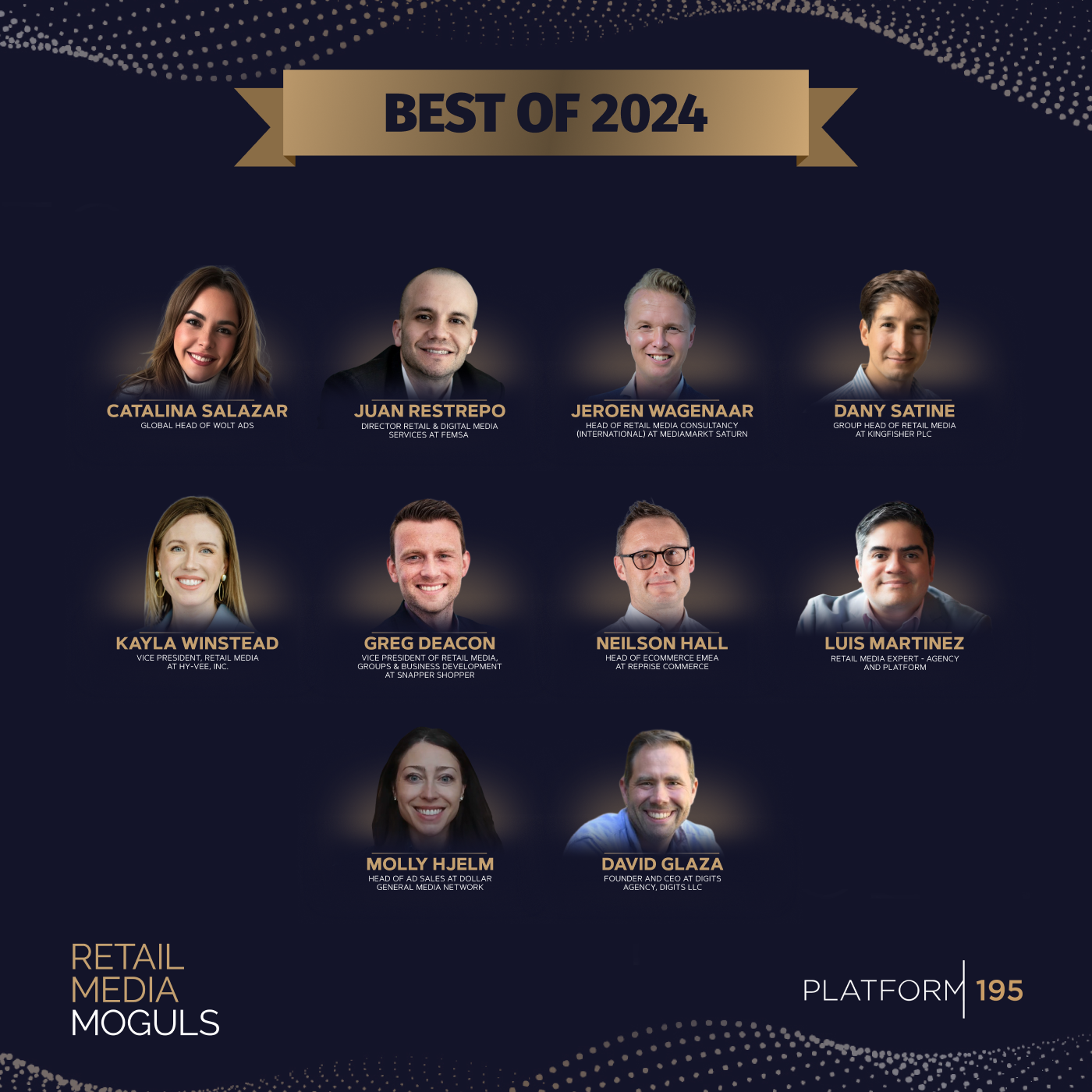 The Future of Retail Media: Lessons from 202476 / 100
 From Store to Digital: Kingfisher's Omnichannel Retail Media Journey80 / 100