
Retail Media Moguls · 2025-01-30 · 29 min
Key moments - from our scoring
Substance score
45 / 100
Five dimensions, 20 points each
Steven Popovich, President and Chief Retail Officer of Cycle Gear - part of the Komoto family of brands alongside RevZilla, Rever, and JMP Cycles - explains how specialty retailers in the power sports aftermarket are leveraging community engagement and omnichannel strategy to compete effectively. With 174 stores across 36 states driving 65-70% of revenue while e-commerce grows meaningfully, Cycle Gear uses bike nights (attracting 500,000 annual visitors), in-store events, and long-form content to build customer loyalty that traditional digital advertising can't replicate. Popovich discusses how registration data and a unified technology platform across all four brands enable targeted store expansion in markets like Phoenix, partnerships with brands like Alpinestars (promoting airbag technology) and insurance partners like Progressive and Geico, and a deliberate focus on margin-driven merchandising over discount-heavy co-op programs. The conversation reveals a small but growing supplier base (tens, not hundreds) and an untapped retail media opportunity - most partners still view the four Komoto brands as separate opportunities rather than a unified 174-location, multi-brand platform with sophisticated customer journey data.
Cycle Gear generates approximately 65-70% of revenue from offline (in-store) sales and 25-30% from online, though the online portion has grown substantially over the past five years.
Cycle Gear hosts bike nights at almost every location once a month during the season, driving approximately 500,000 consumers annually with no direct sales expectation - the events serve as community gatherings where riders meet, learn, and connect, creating customer loyalty.
Cycle Gear uses a homegrown custom platform originally developed for RevZilla that now drives all platforms across the Komoto family of brands (Cycle Gear, RevZilla, Rever, and JMP Cycles), feeding data into analytics tools that unify the consumer journey across all four businesses.
Cycle Gear primarily bases store location decisions on motorcycle registration data, then uses online marketing and data from their digital properties to drive customers to stores within a 50-mile radius while focusing online efforts for customers outside that range.
Cycle Gear partnered with Alpinestars, an Italy-based company, to promote their airbag technology through dedicated in-store fixtures, inventory investment, and coordinated online marketing across both channels, resulting in significant growth in this emerging safety category.
Our reviewer’s read on each dimension, with quotes from the episode.
There are occasional operational specifics worth noting - registration-data-driven store placement, a 50-mile radius heuristic for online vs. in-store targeting, and bike nights generating 500k attendees - but the majority of the episode is padded with retail platitudes about community, touch-and-feel, and passion verticals that any mid-level retail person would already know.
where we decide to build stores is primarily based on registration data...inside 50 miles we can take all the data from our online properties and market and drive them to our store location
I would rather spend 5 million on new stores where we can create that experience, that community for the consumer so we don't have to get cute
The episode recycles well-worn retail narratives - community builds loyalty, specialty retail has experiential advantages over Amazon, commodity retail is dying - without adding any genuine first-principles analysis or contrarian framing. The 'defensibility through obscurity' point is mildly interesting but underdeveloped.
at the end of the day people want to be part of a community, they want to be part of a tribe
the commodity side of retail is tricky and it's going to continue to be tricky all across the globe
Steven Popovich is a genuine practitioner - President and CRO of a 174-store specialty chain with a multi-brand ecom portfolio - who has actually executed acquisitions, location strategy, and supplier partnerships. He is not a thought-leader circuit guest, though his depth on retail media mechanics specifically is limited.
In 2011. Why I'm here today is I joined RevZilla.com...They were acquired in 2016 by the group that owns Cycle Gear, bringing the two businesses together
I was there for the first nine years before moving to cycle Gear
The episode offers a useful layer of real numbers - 65-70% offline split, 174 stores across 36 states, 6M+ annual store visitors, 500k bike night attendees - but there are zero revenue figures, no campaign ROI data, no supplier economics, and the Alpinestars case study is described qualitatively rather than with measurable outcomes.
we do, I would say 65, 70% offline, 25 to 30% online is about our split
we drive half a million consumers to our bike nights
The host structures the conversation adequately and the Rose-Thorn-Bud framework generates some candid disclosure about tech stack limitations, but there is no meaningful pushback, no challenging of vague claims, and most questions are open-ended softballs that allow the guest to stay safely on-brand. Follow-ups exist but rarely dig deeper.
So how have you done that with alpinestar? Have you done an in store experiential? Are they also see the bike in store?
So tell me about the technology that you're using. Are you using much tech in there, advertising technology in there to target placements?
Computed from the transcript - who did the talking, and the words that came up most.
Welcome to the Retail Media Moguls podcast, hosted by Stuart Adamson and brought to you by Platform 195 . In this episode of Retail Media Moguls, Stuart Adamson welcomes Stevan Popovich , President and Chief Retail Officer of Cycle Gea r, who reveals how transforming retail locations into community hubs drives customer loyalty, partnerships and business growth in the motorcycle industry. Throughout the episode, Stevan and Stuart explore: How monthly bike nights create lasting customer relationships The role of physical stores in building motorcycle communities Why community engagement matters more than discounts How specialty retail creates emotional connections The future of community-driven retail experiences Stevan has over 25 years of experience in specialty retail. He has led Cycle Gear’s transformation into a community hub for motorcycle enthusiasts, expanding it to 174 locations across 36 states. Retail Media Moguls is handcrafted by our friends over at: fame.so This podcast is brought to you by Platform 195 . To learn more about Platform 195 and how to supercharge your retail media organisation, visit .
Transcribed and scored by The B2B Podcast Index.
US Consumer, the pendulum swung very far to digital. All of a sudden it's like, first it's E commerce, then it's mobile E commerce, and now nobody leaves their phone. I mean, the phone is how people live and die. But I think at the end of the day, any impassioned segment of commerce has the benefit of continuing to expand physical locations far greater and leveraging that community.
Because at the end of the day, people want to be part of a community. Welcome to the Retail Media Moguls Podcast brought to you by Platform 195. We share trends and strategies across retail media to help you accelerate your brand growth. I'm your host, Stuart Adamson.
Welcome to the Retail Media Moguls Podcast. I'm your host, Stuart Adamson, founder and CEO of Platform195. Today we have the pleasure of welcoming Steven Popovich, President and Chief Retail Officer of Cycle Gear, a key brand in the Komoto family of brands and the leading omnichannel retailer in the power sports aftermarket industry. With over 25 years of experience in specialty retail, Steven has played a pivotal role in shaping Cycle Gear strategy, driving growth and fostering strong relationships with customers.
Today, we'll be diving into Steven's insights on specialty retail, the growing importance of community engagement on the channel strategies, and how loyalty programs play a crucial role in retaining customers. Welcome to the show, Steven. Thank you so much for having me. It'd be really good.
Sometimes it's just quite a good thing for you to give us a bit of two things. One, a bit of background on you and then also tell us a bit about Comoto and then Cycle Gear and all of that piece. Yeah, I'd be happy to. I'm a kid that started in retail on the weekends in college and never left, is what I tell people.
I graduated college, had a good job on the weekends. The owner was phenomenal, and I went to college in Vermont and he kept me on. And they had three stores, they acquired six more, and then I just never left. In 2011.
Why I'm here today is I joined RevZilla.com, which was a pure play ecom retailer based out of Philadelphia. They were acquired in 2016 by the group that owns Cycle Gear, bringing the two businesses together, one that had a retail footprint and one that was purely digital, in an effort to leverage the digital capabilities of Revzilla, to replicate that on Cycle Gear or for the Cycle gear brand. In 2020, we acquired Rever, which is a navigation app similar to Waze, but just for motorcycles.
So highlighting on road and off road navigation and tracking. And then we also acquired JMP Cycles.com, which is Ecom Pureplay, which is a V twin Harley Davidson based business. So now under the Komodo family of brands, we have four businesses that all kind of work together, share backend platform, share a lot of shared service, marketing, analytics.
And then my side is the only pure retail side of the business with 170 locations across 36 states. So obviously you've got a huge amount of stores there and you've got the E commerce platform for Cycle Gear. What's the ratio in terms of in store sales versus E Comm? Is it largely in store still?
It's largely in store. So we do, I would say 65, 70% offline, 25 to 30% online is about our split. So it's a much bigger offline footprint. However, the online as we've kind of navigated and changed things to support the business, has grown substantially to be an incredibly meaningful part of the business for Cycle Gear over the past five years.
So how does that omnichannel strategy play out for retail media? How are you working with your suppliers to help them get in front of those customers? Well, it's interesting. I think for us we're very unique in the world of retail being this very, I guess we're a subset specialty retailer in the motorcycle space focused on aftermarket parts and accessories.
So for us we're not selling motorcycles, we're filling these gaps in the industry where similar car dealerships, they're interested in selling cars. So in the motorcycle space, the dealerships are very heavily influenced by selling motorcycles. So Cycle Gear has filled this gap of accessories and apparel for the rider to kind of give them not just what they need on a daily ride because we're in every major location, but from an online side and from a media side, the digital side.
The omnichannel side of the business allows us to drive traffic to the stores, work with partners, highlight opportunities, highlight community in a way that most retailers in our space don't have the opportunity to do so. So how are partners activating in store then? How do you help a partner put themselves in front of a customer? So a lot of cooperative agreements with folks we obviously work with things like Progressive is a big partner of ours, Geico was a big partner of ours with our physical presence.
We also have other partnerships that we can market to in store. Physically we can market to and obviously the small things like put something in a bag as customers leave the business, print on the bag. That customers can leave the business. But I think it's still an untapped market for us.
The business is still perceived as small. When you look at a commodity driven market or an outdoor space like REI or skis, there's a lot more attractive opportunities for media and companies to kind of get in front of customers. But for us, what we've seen is that those that understand and get into the. I think we have 170 some locations, 174 come spring, a lot of traffic, 6 million.
More than 6 million folks visit our stores every year. But I think our challenges is the motorcycle space is still seen as a little risky. And I think they don't understand or appreciate the volume of opportunity that's afforded to them in our space. And how are you bringing customer data into the cycle gear world in terms of its marketing and its media planning?
Well, we're very fortunate. So similar to a house of brands like Gap, your Gap, Banana Republic and Athleta, we have consumer data that goes across all of our four properties and we're able to market to them, understand the customer journey. We can move customers in between the businesses. So if we see someone that was a V twin rider or a sport bike rider, we can move them and expose them to different properties within our business.
Now the nice thing for us is where we decide to build stores is primarily based on registration data. So when you look at a market like Phoenix, which is a very, can be a very hyper seasonal market, but a huge market in the United States, we started to fill the gaps, one where the dealerships work supporting the market. But then what we can do is outside of 50 miles, we can really focus on the online side of the business and where folks aren't going to travel to store, but inside 50 miles we can take all the data from our online properties and market and drive them to our store location.
So we're very fortunate that all the brands are very while some are segment specific, cycle gear is very segment agnostic. You know, we support off road sports, Street Cruiser, a little bit of ATV and off road utv. So we can drive customers and understand their journey and extrapolate value in a way that not a lot other pure play ecom retailers can. Yeah, so let's move on to that online piece then.
I mean, obviously you've got this raft of suppliers in there. How are you using online to help them promote? Are you using things like sponsored listings, Is it discount codes, is it coupons? So I'm not a big discount guy, admittedly.
I think for us we don't have much competition in our space. We're very fortunate in that regard. So for us we can do agreements to promote listings, how people are advertising. We have the Revzilla side of our business as a strong content arm which allows us to work with suppliers typically as an operator.
I love margin. I come from a background of merchandising, so anything I can do to drive margin is far more exciting for me than a cooperative marketing program. But it also allows us to hey, exposure gets you into stores. With 174 stores in the spring, everybody wants to be in the stores now with a limited footprint, you have to make this decision lightly.
So what we are doing is really working and promoting the brands that partner with us in a collaborative way that we believe in. It's a highly technical product that we sell. And this is not just a down jacket or a textile jacket. Everything is certified for safety.
So for us we really have to make sure that we do partner with folks that are pushing the envelope technologically, keeping riders safe. We partnered with a brand called alpinestars which is an Italy based, Italian based company, because they developed airbag technology that's really increased the safety of the rider tenfold, if not more and allowed us to one bring them to the surface to promote their technology that we believe we can stand behind and also drive that consumer to the store.
Because there's a lot of things that people still want to touch and feel in the consumer market when the online experience doesn't give you that we're there with our stores to be able to support it further. So how have you done that with alpinestar? Have you done an in store experiential? Are they also see the bike in store?
So we've done a heavy investment in inventory and exposure specific fixtures to promote the brand and the product specifically around the airbags. And we've rolled it out to all of our locations additionally online. It's something that we talk about constantly. So we're marketing to customers, talking about alert content, supporting them collaboratively across their channels and ours to be able to get that exposure.
We've seen tremendous growth. I mean this technology is something that people weren't they're curious about. Like anything in technology, people are always skeptical. So for us we made a massive effort from media exposure investment on our side and their side to really drive this demand in a category and segment that is inherently risky.
I'm sure. I mean obviously you're in the uk, motorcycling is huge there, but always looked at as risky. So for Us it's made a huge impact to our business and the safety of motorcyclists. Great.
So tell me about the technology that you're using. Are you using much tech in there, advertising technology in there to target placements? So on our standard service side, the business obviously affiliate is big for us. Being a specialty retailer, Meta and Google are our biggest plays.
YouTube has been huge for us to get that exposure. Outside of that, what we found in our space, which is really interesting, is that once you get people into the community, you don't have to fish as much as commodity driven markets. So it's a very unique opportunity for us where I would rather spend personally and you talk to our head of digital marketing, but I'd rather spend 5 million on new stores where we can create that experience, that community for the consumer so we don't have to get cute, so we don't have to go too broad.
We obviously do a lot of sms, a lot of email digital marketing for the store side of the business with the focus of getting people to the store. But when we find with retail, what I think is really interesting, when a consumer has a positive experience, their loyalty just continues to scale because they know they can go back and feel supported. And you don't have to fish to the degree that you do in other markets. Yeah.
And obviously that's a sort of passionate, sort of niche group. How do you foster that sense of belonging, community? How are you engaging that community and audience on an ongoing basis? So a few ways.
One, content is a big play for us. So on Revzilla side there's aspirational, educational, informational and conversational. So obviously everybody loves podcasts. I do.
It's, you know, when you get someone that's impassioned about a segment or a lifestyle, they love the long formats. For us, we also do with our locations, we do bike nights across almost every location once a month during the season, we drive half a million consumers to our bike nights. There's no expectation. It's not a sales driven motivation for us.
It's really community event. So you'll go to a store, you might have 15, 20 folks in a little bit of a more urban, remote area. You go to a big city, you might have hundreds, sometimes thousands of folks show up because they just want to be part of it. For us, we do see a list in sales.
Obviously our business is to be able to stay in business as everyone's is. But for us it's really an event to let people talk to one another, learn, meet. And that was the hypothesis around the navigation app of building this community of riders, because I think with motorcycling, more than I would say, it's parallel to a lot of specialty activities, outdoor activities. It's part of people's core identity.
So I'm a motorcyclist. I don't know if you have any in your life, friends or family, but it's something that they are very impassioned about. Cycling is a very similar way. So for us, being able to have these physical locations that we're specifically moving to, locations that can support and host these events, make a massive impact on the consumer and folks that attend, these are customers for life.
Yeah. And they keep coming back and they keep every month, and it gives us the opportunity to be able to bring in partners to those events. Do you want to sponsor those events for a media and from an exposure standpoint, it's a huge opportunity for the progressives or geicos or partners that we have to get in front of the consumers physically every month, if they so choose, during the season. Yeah.
That's really exciting. That was going to be our next question, actually, is how are you bringing those partners in and is it a sponsorable opportunity? It's a huge spot. It is.
And I think back to my point earlier, I do think that a lot of folks still, you know, it's a little risky. I think motorcycle. I'm married to a medical professional, so she's not, you know, not super thrilled. But I think when you see the numbers, our business is a top US Retailer in this space and in retail in general.
Obviously, we don't have thousands of stores like Walgreens or big consumer retailers, but at the end of the day, there are very few specialty retailers that have a national footprint to the degree that we have. And I think what we would love to see is the opportunity of partners and sponsorships coming in and really seeing the opportunity of a core customer that stays with us through their entire life. Cycle as a motorcycle rider. Yeah.
Because I imagine once one of those customers is quite tied into a brand, one of your partner brands, they probably are very loyal to them as well. Right. Well, on the Revzilla side, where I started, I was there for the first nine years before moving to cycle Gear. And it was an impassioned.
We used to call it the ZLA, the RevZilla army. Folks were excited to be part of this movement and this culture in this community. And what we've seen is we've really made strides on the cycle gear business to bring the product a Little bit more market. We've moved locations from what I would call C level retail locations to A level retail locations.
We've expanded our footprint. We're able to drive that passion Revzilla consumer to the cycle Gear business and actually shop physically and get the same level of service, community and quality that they were brought up on the Revzilla side. So it's a very unique opportunity which saves us on a cost per acquisition. Now the Revzilla team isn't too excited that we're taking all their customers at times, but keeping them in the Komodo family of brands is a very unique opportunity that not many retailers or household brands really have.
Yeah. And have you got sort of one technology stack in the background that's effectively allowing you to harness that data across all of those brands? We do. So what's interesting about the Revzilla system, originally it was homegrown so it was all custom platform.
When we brought on, when we merged with Cycle Gear we enabled that platform which now drives all platforms across the business. That all feeds into our analytics tools that can kind of pull everything up into one and give us a better understanding of that consumer journey. I think we're at the point where we've probably outgrown the custom developed software need to moving and investigating more enterprise solutions that would be able to kind of have a little bit more unified commerce approach which really only comes with one big solution.
But it is all homegrown to this day. So it's a unique space of combined with drop shipping, housing inventory, product development and private label. So for us it's an opportunity that I think can take us to the next level being competing with the national retailers that the general consumer is aware. Yeah.
And then you combine that with some enterprise level retail media tech. There's a huge opportunity there for you to really be working closer with partners and scaling not only the activity you're doing with them but also the associated revenue or co marketing money that comes with. Yeah, without a doubt. And I think there are things that we don't play in that we wish we could.
Obviously YouTube shopping has gotten big, a lot of social shopping has gotten a lot larger and a lot of the enterprise solutions have bolt on applications for that that are a bit more of a hurdle for us and I think is an opportunity that we we're exploring currently. Yeah. So it's really fascinating listening to talking about the evolution of or how you're using the stores to build community and doing those nights and then how integrating partners, I mean how do you See the evolution of retail stores, do you see them becoming more experiential and how does that play with the digital landscape?
If we sort of looking into the future a bit. It's funny, I've been thinking about this a lot lately when I've had poor. You know, as running a retail company, I'm very into shopping and going into stores to see what the experience is like. I watch my daughter in stores, I watch my wife shop in stores, I watch them shop online because I like to see how people go through their journey of navigating what they're looking for.
I think for me, the opportunity in retail, while companies like Bonobos and Warby Parker either more experiential or you go in Bonobos doesn't have inventory you're trying on, they're fulfilling online. I do think in specialty retail it's a different animal. And I think the opportunity to continue to grow physical locations is a huge untapped space. I think I'm a big cyclist as well.
I'm also a big guitar player. You know, being able to touch and feel something and walk away from it changes the entire experience for the consumer in their journey of whatever activity that they're participating in. It's just not a. I mean, clearly tactiles, it's of touching and feeling is a big thing for the consumer.
But there's an emotional connection. When you put on a motorcycle jacket and you feel it and you're in the store and there's excitement around the team because you just got your license or you're a new guitar player and you go into a store and you strum your first chord and everyone's excited for you. I think specialty retail has a lot of opportunity in physical locations. I think general retail is getting trickier.
I was listening to a podcast this morning of folks talking about, oh well, you could order this on TEU for cheaper, you can order this on. I think the commodity side of retail is tricky and it's going to continue to be tricky all across the globe because there will be a subset of consumers that's always looking for the cheapest option, but they're missing any connection to that. And I think for us, we probably have another 25 or 40 stores that we believe could continue to grow our business.
And I think in markets like skiing, cycling, outdoor anything, outdoor hunting, hiking, fishing, the physical opportunity is huge. However, the operationalizing of that gets tricky at scale because you run into small parts, huge inventory. And all the stuff that I typically have meetings about every day is how do you support a consumer across a very broad breadth of depth of a activity that is very hyper specific to their experience. So I mean, it touches on sort of personalization.
I mean, are you doing much with that personalization space? How are you using all of your data and product knowledge to effectively personalize? Yeah. So obviously retargeting is huge for us online.
I think we're still at the early stages of optimizing personalization. It's something that we talk about all the time. We've done a good job. The partners we have to be able to drive related products, related brands, categories that keeps the consumer engaged has been positive.
But I think if I were to say give us a grade, I'd say we're probably a B on the level of personalization that we can have. But it's also difficult for us too, because the motorcycling consumer, it's not like sneakers or apparel where you're constantly kind of changing. The personalization really comes down to the segment and the type of motorcycle that they have. So when people buy motorcycles, helmets, jackets, boots and gloves, it's not something you're going to replace every year.
So then you have to move the personalization to what are the options for their motorcycle, how are they riding, how far are they riding? And then target products and categories that would make their experience more comfortable on a long journey or faster on a racetrack. So I think there's a lot of opportunity there. And then in stores as we drive too, I think getting people a level of assortment, options within the store is tricky because again, you have finite space, can't be everything to everybody.
So you have to kind of pick and choose your targets. Yes. So the scale of the opportunity, in a way from a retail media perspective is obviously you've got a supplier base in there who are very keen to get in front of this brilliant community that you've got. Is it a case of there's a handful of suppliers in there and you've just got to service those guys well, or is it actually there are hundreds of suppliers you've just got to find and you know you're having to cater to all of them, or is it a case that there's a hundred or so that are just too small for you to be able to deliver for?
What is that supplier base? What does the makeup of that look like? So for us it's still small. I think there's opportunity to grow on the folks that we work with now.
I think there's continued opportunity to develop. But where I think there's opportunity is to develop the more holistic view of the four brands and what that opportunity is. Typically companies come to us and it's I want to be with Cycle Gear or I want to be with Revzilla or I want to be with JMP or what are the opportunities within those specific businesses as opposed to looking at the holistic opportunity of Comodo and how you decide to expose opportunities, brands, products, categories, partnerships across those platforms.
But typically folks see us as independent opportunities where I think that will change over the next couple of years. And if you took a combined supplier base, how many suppliers have you got across all of those brands? Do you think? Are we talking hundreds or are we talking tens?
Probably tens, yeah. I mean, it's a small market industry. So for us we're not in the space of even cycling, which is a $10 billion or whatever size industry. So for us it's still a small market.
And I think my goal is to increase that exposure for consumers and for partners. But I think it's overshadowed by the larger market retailers. I think, yeah, it is a retail media challenge, isn't it? How do you get that volume of suppliers, but really helping them maximize the value of that community in a deeper way rather than sort of a lot of the challenge of larger scale retailers where they've got to try and get thousands of suppliers presence in front of their consumers, you know, 100% it is.
And I think for us, there's still a level of defensibility that we have in our space that a lot of folks have not seeing the opportunity because they deem it small. So there's also an opportunity for us to kind of, I would say, play things close to the vest because you don't necessarily want everyone to know your little secret here. I mean, get other folks in the space. I mean, obviously the biggest behemoth in the room being Amazon is playing in our space, but for us, we don't have physical competition.
Dealerships we don't see as physical competition from a digital side and E commerce side. We're still, I would say a little defensible, which is unique in our space. Well, look, we're nearly out of time, Stevin, but I've been to a thing at the end of the podcast called Rose Thorn Bud and it's something I do with my children at the end of the school day to get them to open up and talk to me rather than give me one word answers. But effectively what it is, is I'd ask you tell me something that's really good now this is your rose, right?
Tell me something that you feel like you're doing really, really well when it comes to that sort of partner and retail relationship. Thorn is something where you're challenged and you feel you could do better. And then bud is something that you're looking forward to as an opportunity later. If we started with rose, what are you doing well that you're proud of and think is working without a doubt, understanding our consumer journey and being able to support them at every step of their experience.
I think our analytics team has done a phenomenal job of building a suite of products that allows us to understand what's exciting, what's needed from a consumer at any point, point in their journey, how they're moving across our brands. I think as a business, if you don't know that you're behind the curve, I believe that even at our size, compared to some of the larger retailers in the United States, we're very advanced in our understanding and mapping the consumer journey. How we're putting stores in certain locations, how we're driving people back to online, I think is a rose that we're incredibly proud of.
I'm incredibly proud of. It makes our lives a hell of a lot easier knowing what your consumer needs. That would be my rose. My thorn would be that I do believe there's a lot of missed opportunities in retail media expansion in partnership expansion that are slightly hindered by our current tech stack.
I think we're missing in a lot of opportunities that we're looking forward to moving to to be able to kind of increase our footprint awareness, partnership opportunities that are limited to based on our homegrown tech stack. So it's a dull thorn because our business is incredibly healthy and I'm very proud of what we've built. But I think it's a little bit of a pain point because you hear a lot of national retailers doing really cool things with partnerships and opportunities that just a little bit more tricky for us.
Bud, what's budding? I believe there's still a lot of white space in the physical retail world that we can take advantage of that is going to continue to support the specialty consumer. A lot of us retailers aren't hyper special, hyper focus, don't have the opportunity to. Because we've seen the continued success of reloading to better locations and really continue to be champions of physical retail.
I think is still a huge opportunity for us that we're all excited about across all the businesses. Yeah. And building that community piece because you talk about Amazon being a threat, you know, the Reality is they're not busy building communities with that level of depth or loyalty or anything like that. No.
And I mean I. We all have prime boxes show up every day, but for me it's hydration mix and commodities. It's. I could easily go buy a bicycle online or a guitar online, but going to a physical space and experience, I think there's still something to that.
And I think the US consumer, the pendulum swung very far to digital. All of a sudden it's like first it's E commerce, then it's mobile E commerce and now nobody leaves their phone. I mean the phone is the how people live and die. But I think at the end of the day, any impassioned segment of commerce has the benefit of continuing to expand physical locations far greater and leveraging that community.
Because at the end of the day people want to be part of a community, they want to be part of a tribe. And we identify with the things that we're passionate about. So whether it's photography or motorcycles or fly fishing or running whatever it may be, finding others that are excited and passionate about that too is key. And having a place that they can go and have that community be realized is incredibly important to our business.
And I think the specialty retail in general. Brilliant. Well, we're out of time. We've hit the half hour.
It goes fast, doesn't it? That's cool. I've done a million of you, so yeah, a lot of satellite media tours and things. So I appreciate it.
It's tons of fun. I appreciate you having us on and talking about cycle gear. Well, thank you. I think it's been fascinating to hearing your journey, especially that sort of niche specialism as a retailer and how retail media can play into that.
And then obviously that sort of development opportunity you talked about that you've got ahead of you, really interested to see how that sort of Omnichannel piece blends with the digital and the, and the in store experiential. And I hope you keep fending off Amazon and broadly laid that different. Well now everybody says unified commerce, you know, that's the buzzword of 2025. It's omnichannel's passe.
Right. It's always something new. So yeah, it's just the same name for something. It's just the Same name, yeah.
100% algorithm and AI, isn't it? But look, Steven, really, really huge. Thanks. Please do come right back again and tell us how that journey's developed.
I hope you will come and join us again. But it's been hugely fascinating. Thank you. Yeah, I appreciate the podcast.
I listen to it all the time and it's great getting exposure to this side of business. Thanks. The Retail Media Moguls Podcast is brought to you by Platform195. To learn more about Platform195 and how to connect retail media with intelligent marketing to accelerate growth, visit platform195.
com and then make sure to search for retail media moguls in Apple Podcasts, Spotify and Google Podcasts, or anywhere else podcasts are found. Make sure to click subscribe so you don't miss any future episodes. And on behalf of the team here at platform 195, thanks for listening.
Other episodes covering the same guests and topics, from across The B2B Podcast Index.
 36. Jason Yee on technical and developer advocacyDecoding Leadership · on Community building72 / 100
 311 - How Mejuri Runs: Operating Model, Biz Reviews & Decision Velocity (Kate Railton, Chief People Officer at Mejuri) The Modern People Leader: Forward-Thinking HR · on Omnichannel retail strategy71 / 100
 AI Is Not a Strategy: How to Lead Real Transformation with Julie AverillMake It Happen Mondays · on Omnichannel retail strategy68 / 100
 Ink and identity: How Mad Rabbit builds community through authentic branding and membershipThe Ecommerce Toolbox: AI in Retail · on Community building65 / 100
 330. Ashley Kechter, Global President at Vuori in Partnership with Shoptalk: Brand Fans, Community around the Store, Athleisure Category, Product DiscoveryThe FMCG Guys · on Community building58 / 100
 31. Cut From the Same Cloth: What Luxury Boards Keep Getting Wrong About Cross-Border Strategy - with Anne Line HansenLeaders in Motion · on Omnichannel retail strategy57 / 100
 Customer-first: The Road Runner Sports Approach to Specialty Retail58 / 100
 From Spreadsheets to Smart Screens: How Sainsbury's and Argos are Redefining Retail Media73 / 100
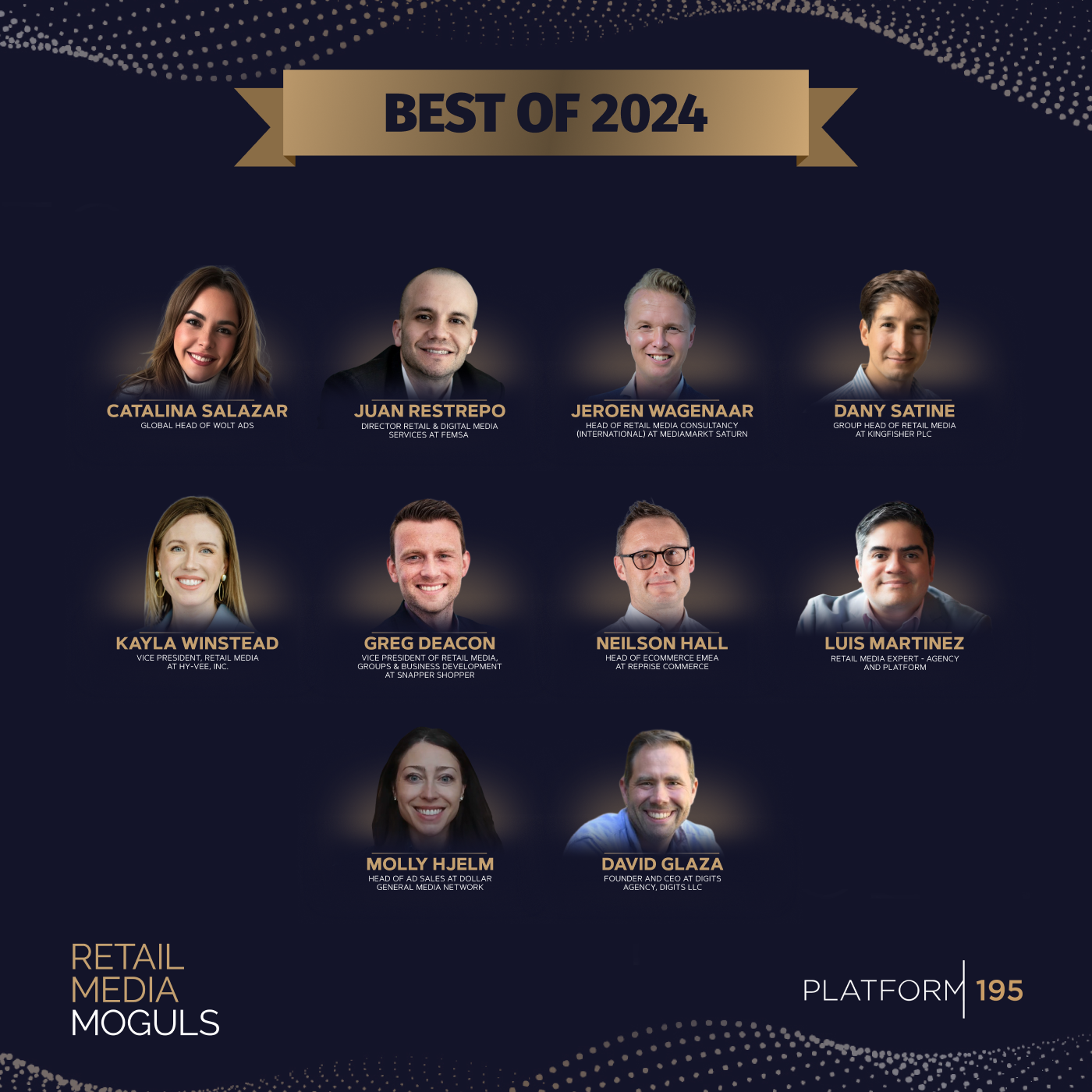 The Future of Retail Media: Lessons from 202476 / 100
 From Store to Digital: Kingfisher's Omnichannel Retail Media Journey80 / 100
 FEMSA's Retail Media Revolution: Latin America’s Bold New Network83 / 100