
Product Startup · 2024-07-25 · 18 min
Key moments - from our scoring
Substance score
35 / 100
Five dimensions, 20 points each
Will Ford, president and co-founder of LaunchBoom, explains why crowdfunding should be positioned as the beginning of a scaling journey rather than an end goal for hardware startups. The core insight is that a validated crowdfunding campaign - where thousands of units pre-sell in 30 days - provides founders with proof of demand that dramatically increases their leverage when raising venture capital or equity crowdfunding. Ford details LaunchBoom's pre-launch system, which includes audience targeting from their database of over 10 million backer emails, messaging optimization, and Facebook/Instagram testing to maximize conversion before going live on Kickstarter or Indiegogo. After a successful campaign, founders can then convert those backers into equity investors via platforms like WeFunder and StartEngine through simple email marketing, often seeing 30%+ conversion rates. Ford shares that many LaunchBoom clients who raised six figures on Kickstarter have gone on to do tens of millions in annual revenue through Amazon, retail partnerships, and e-commerce - with some exiting for hundreds of millions, citing Dr. Squatch as a prime example. The episode emphasizes the funding sequencing strategy: bootstrap through product development, validate via crowdfunding without raising VC, then raise capital post-campaign with significantly more leverage and higher valuations.
A successful crowdfunding campaign demonstrates proven market demand and revenue validation, which gives founders leverage to negotiate higher valuations and raise capital from venture investors or equity crowdfunding platforms with less equity dilution.
LaunchBoom runs Facebook and Instagram testing before a Kickstarter or Indiegogo campaign launches, targeting audiences from their database of 10+ million backer emails to build an engaged community, validate messaging, and maximize average order value so the live campaign hits specific revenue targets.
Yes - LaunchBoom sends backers an email post-campaign offering them stock through equity crowdfunding platforms like WeFunder and StartEngine, converting 30%+ of backers into equity investors without additional advertising spend.
Founders use the capital raised to manufacture and fulfill backer orders, then expand into Amazon, retail partnerships, and e-commerce channels where successful clients often scale to tens of millions in annual revenue.
Early-stage capital raises force founders to assign low valuations and give away too much equity; waiting until after a successful crowdfunding validation lets founders raise more capital at higher valuations while retaining majority ownership.
Our reviewer’s read on each dimension, with quotes from the episode.
The episode contains one genuinely useful tactical idea - using Kickstarter backer lists to drive equity crowdfunding conversion - but the rest is largely standard startup advice (bootstrap, don't give equity away early) padded with backstory and mutual promotion between host and guest.
we can retarget those backers from Kickstarter and now convert the consumer into investors on the equity crowdfunding platforms over the years. It's not abnormal to see 30% or more of those backers from Kickstarter put more money in the deal
I always tell everyone, again, I'll repeat it, don't raise any type of capital unless you really actually need it. Bootstrap.
The backer-to-equity-investor pipeline via email is a mildly fresh tactical angle, but the overwhelming majority of the content - bootstrap before raising, validate demand before valuing your company, pre-sell instead of giving away equity - is well-worn startup orthodoxy repackaged for a hardware audience.
when it comes to raising capital for any business, you really want to bootstrap and as long as possible to really get as far as you can before you place the value on your company
Convertible debt is also a great instrument, uh, that really serves the entrepreneur because you can leverage the capital today to grow your business before you value your company
Will Ford is a genuine practitioner who has run 1,000+ crowdfunding campaigns and built a real agency at scale, giving him legitimate operator credibility; however, the episode functions as mutual promotion between LaunchBoom and the host's own firm (Mako Design), which constrains the authenticity and depth of his answers.
we've launched over a thousand successful launches on Kickstarter. On Indiegogo, we've been scaling really fast the last couple years, uh, where, you know, we're now launching hundreds of products a year
we've had some clients exit for hundreds of millions of dollars. A great example of that is um, I'm sure you've heard of Dr. Squatch.
There are a handful of real numbers - $30K ad spend turned into $750K in pre-sales, 10 million backer emails in the database, 30% backer-to-investor conversion rate - but the Dr. Squatch anecdote is name-dropped without specifics, and most outcome claims stay vague ('tens of millions,' 'hundreds of millions').
we ended up turning that $30,000 into $750,000 in pre sales
we have over 10 million backer emails in our database that have bought one or more of our products over the last 10 years
The host asks almost no probing questions; instead he delivers long monologues summarizing and validating the guest's points, and the entire conversation is structured as mutual endorsement between two businesses with an obvious commercial relationship rather than as a substantive interview.
And that is so powerful for a hardware startup that is really in the infancy of what is the scaling phase of their business at this point. You're past the development, you're past the first manufacturing, let's call it. And now you're into the growth phase of your business.
Well, much appreciated yet again for all your words of wisdom around crowdfunding, the benefits of it, what they can do after crowdfunding today.
Computed from the transcript - who did the talking, and the words that came up most.
Will Ford is one of the world's top crowdfunding experts. As President and Co-Founder of LaunchBoom, the leading crowdfunding agency for hardware startups, he has helped thousands of inventors and entrepreneurs leverage platforms like Kickstarter or Indiegogo to establish and scale their product empires. Today, he explains in great detail why a successful crowdfunding campaign can lead to significantly higher post-campaign investments and increased sales across multiple channels to enlighten inventors, startups, and small manufacturers. Will also details best practices for raising funds and optimizing crowdfunding efforts, emphasizing the importance of strategic planning, storytelling, and social proof. Click this link for This Episode's Full Info Page: Key Takeaways in This Episode: Don’t give away too much equity too early in your entrepreneurial journey! Although it's great to have more money at the start, if you give away equity early, you will erode much of your future potential earnings. Convertible debt is a great pathway for raising money for your future valuation. You can take a prototype and pre-sell it to thousands of people worldwide through a crowdfunding platform.
Transcribed and scored by The B2B Podcast Index.
Speaker A: Hello, product innovators. Today we learn how to leverage a successful crowdfunding campaign to grow exponentially bigger from one of the world's leading experts on crowdfunding itself.
Speaker B: This is the Product Startup Podcast, a show to learn from top leaders in hardware product development, prototyping, manufacturing, product selling and everything in between. Hosted by Kevin Mako, the leading expert on product development for hardware startups.
Speaker A: Welcome back, everyone. I'm very excited to welcome back Will Ford to the show. Will is the president and co founder of LaunchBoom, the leading crowdfunding agency helping hardware startups launch on Kickstarter and Indiegogo. Today, Will shares valuable knowledge from inventor startups and small manufacturers on how a successful crowdfunding campaign can lead to exponentially higher investment money raised after the campaign, increased sales to many different channels, and general best practices on both raising hardware startup funding and crowdfunding best practices for your invention product. Now onto the episode.
Speaker B: This show is produced by MACO Design, the original firm providing end to end consumer product development services tailored specifically to hardware startups, small manufacturers and inventors. Take your product from idea to store shelves@macodesign.com now onto the episode.
Speaker A: Hey, Will, welcome back to the show.
Speaker C: Hey, Kevin, it's great to be back. How's everything going? How are you?
Speaker A: All's good. Appreciate you asking. And, um, I'm excited today to talk about kind of the next step in crowdfunding. So anybody listening in that, uh, hasn't heard the prior episodes? We've had a couple with both Will and his partner Mark, great episodes about leading into crowdfunding and then crowdfunding itself. Today we're going to talk about the advantages to hardware startups post crowdfunding campaigns after you succeeded in your crowdfunding campaign. What happens next? Will, before we get into all that fun stuff, just give us a bit of a backstory of how you became the success story that you are today.
Speaker C: Yeah, sure. So I'm, um, like many people listening, Kevin, I'm a serial entrepreneur. I've launched multiple companies from the ground up and I've had some huge exits. I've also had some even bigger epic fails along the way. I'd say I've raised millions of dollars in capital to support a lot of these various businesses that I've launched over the years. I've raised money from angel investors. I've raised money through debt like convertible notes. I've raised money from venture capital. And I made some mistakes early on with my first couple businesses. I remember my first business. I raised a ton of Money super early, before I had even really validated the concept. And in that specific deal, it turned out to be super successful. But I gave away way too much equity for such a little amount of capital. Once I scaled that business and ended up exiting, I ended up making my investors a ton of money. And I did okay. And I remember being a little resentful about that experience because I did all the work, I put all the sweat hours in, and, um, I made everyone else rich. And I came out with, you know, maybe a solid double when I was hoping for a grand slam like all my other investors ended up on that deal. You know, I learned from that experience. I'd say the biggest takeaway, Kevin, was learning that when it comes to raising capital for any business, you really want to bootstrap and as long as possible to really get as far as you can before you place the value on your company. Which is why in my second business, I ended up leveraging convertible debt. Convertible debt is also a great instrument, uh, that really serves the entrepreneur because you can leverage the capital today to grow your business before you value your company. And then once you're ready to make that valuation, that convertible debt will convert at a discount normally, um, of whatever that valuation is. So it's much, much better for the entrepreneur to leverage convertible Deb and then eventually Kevin. That's what led me to crowdfunding. You know, I couldn't believe when I learned about Kickstarter and Indiegogo that I could take a prototype, I could take a product idea, and I could literally pre sell it to thousands of people worldwide on these Kickstarter and Indiegogo platforms. I could pre sell thousands of units, then take all the money off the platform, and then have all the time in the world to work through manufacturing, fulfillment, and eventually delivering a positive experience, uh, to those backers that came in and pre ordered my product on Kickstarter and Indiegogo. And for me, that was like when the light bulb turned on for me. And that's when I realized, wow, like there's a much bigger opportunity here. I first started crowdfunding back in 2014 when I was advising a young college student at UCSD and he was launching a consumer product on Kickstarter. He approached me and said, will I need help raising $30,000? And I'm like, what's the $30,000 for? And he goes, basically, I want to put the 30 grand into pre launch advertising on Facebook and Instagram so I can build a hyper focused community of people interested in my product before I Go to Kickstarter. And I'm like, and what's your hypothesis? What do you want to do with that 30 grand? He was like, I want to turn that 30 grand into $300,000 in pre sales. So that's like a 10x return on ad spend. Kevin Once he said that, I was super interested and I helped him raise 30,000. And that's when I went through my very first Kickstarter experience with him. And we ended up turning that $30,000 into $750,000 in pre sales. Wow. Uh, so it was a massive roi, and I'd never seen returns like that on advertising spend before. So I started doing more research in Kickstarter into Indiegogo, and I realized that they were growing super fast. And I made a bet that they would be here 10 years later. And here I am, Kevin, 10 years after deciding to start Launch Boom. And it's been probably one of the most entrepreneurial experiences of my life, because I literally get to work with entrepreneurs every single day. I get to work with super smart, talented product creators all over the world. And we've launched over a thousand successful launches on Kickstarter. On Indiegogo, we've been scaling really fast the last couple years, uh, where, you know, we're now launching hundreds of products a year. It's really, really exciting time to be in crowdfunding, to be here at Launch Boom. But the reason I started Launchpoon was being an entrepreneur to be able to validate and test a new product idea and then do the hard part, which is actually pre sell it and prove that the market has demand for your product. And then being able to take that capital from the platforms, manufacture and deliver a good experience, it gives the entrepreneur so much more leverage. Because once they go through that Kickstarter or Indiegogo crowdfunding campaign process and they have a successful outcome now, they have way more leverage. So if they want to go raise capital at that point, that's the time to do it. Because now they can look any investor in the eyeballs and say, hey, the last few months we just raised hundreds of thousands of dollars, if not millions of dollars in pre sales. And clearly there's massive demand for the products we're launching and that we plan to launch in the future. Now the entrepreneur has much more leverage to justify a much higher valuation. And now the idea is they can raise way more capital faster and give away much less equity and still keep full control of their companies. So that, honestly, is like, why I started LaunchBoom and what's been even more interesting, Kevin and we haven't ever really talked about this on our personal calls, but we've seen massive success in over the years, uh, when our clients go through our system here at LaunchBoom and we deliver these massive Kickstarter campaign outcomes, once they deliver that positive experience or that profit product to those backers on Kickstarter and Indiegogo who are just pre ordering the products. And for everyone listening, the only reason Kickstarter and Indiegogo continue to thrive is because backers go to these platforms, they want access to the coolest products, they want to get a discount on retail, and they're happy to give you their money and wait for you to figure out manufacturing and delivery before they receive it. So you're actually not giving away any equity, you're just pre selling product. And what's really interesting is when we take our clients that have been through Kickstarter and Indiegogo and then we take their companies over to the equity crowdfunding platforms like We Funder and StartEngine, what we can do is through just email marketing without spending any money in advertising, we can send an email to the backers from Kickstarter and Indiegogo thanking them for supporting the campaign. Because of them, now that product is real and it's in the market and it's thriving. And what we do is we position the email and let the, uh, backers know that now, for the first time ever, they can actually own stock and shares in their company. And so what we do is through literally just simple email marketing. Kevin we can retarget those backers from Kickstarter and now convert the consumer into investors on the equity crowdfunding platforms over the years. It's not abnormal to see 30% or more of those backers from Kickstarter put more money in the deal and become investors through just simple email marketing. So there's so much opportunity for the product creators and entrepreneurs that are leveraging Kickstarter and Indiegogo to not only do the hard part, which is the validation and proving that there's demand for the product, but now they have more leverage to take that deal to venture capital, to equity crowdfunding. We've seen so many of our clients over the years, Kevin, go through the launch boom crowdfunding process and have a massive campaign outcome. And then we get them plugged into our e commerce partners, we get them plugged into our retail partners and our Amazon partners. And we've had so many clients that may raise a few hundred thousand dollars in pre Sales on Kickstarter go on to do tens of millions of dollars a year through these other channels like Amazon and retail and E commerce. What keeps me excited and fired up every day here at um launch from 10 years later is the fact that I've seen so many of my clients come to me who have never launched a product before. We take them through crowdfunding, we get them plugged into our partners to help them scale. And watching some of these clients of ours exit for tens of millions of dollars, we've even had some clients exit for hundreds of millions of dollars. A great example of that is um, I'm sure you've heard of Dr. Squatch.
Speaker A: Yeah, of course.
Speaker C: And the founder, Jack, he was a um, guy who lived down the street from us here in San Diego. And uh, he came into our office one day and he had these cool bars of soap and he goes, hey, I'm thinking about launching this on Kickstarter. And so we took him through our system. We raised six figures in pre sales on Kickstarter. Eventually he called me up a few years ago and he goes, hey Will, you're not going to believe it, but I've got a Super bowl commercial. I'm like, that's so cool man. And then a year later he exited for a massive amount. He ended up crushing it. And so being able to work with people all around the world who have really cool product ideas to take them through this crowdfunding process, which is the fastest, easiest, most affordable, most efficient way to validate and test any new consumer product and then help them pre sell hundreds of thousands of dollars, if not uh, millions of dollars worth of product within a 30 day period of time really sets them up for massive success beyond crowdfunding.
Speaker A: And that's so powerful because when most people think of crowdfunding at the very beginning, of course I get to talk to these clients when they're just in the ideation, sketching, industrial design, mechanical, electronic engineering phases. So we're in the very early development phase. So many of our clients are looking at crowdfunding as kind of like almost an end state. I know they want to grow beyond that, but really they're looking at it to say like, what can I raise on crowdfunding? How can I do it? And of course launch boom is amazing because you do the pre crowdfunding as we talked about on prior episodes, and then the crowdfunding campaign itself. So you know how to successfully achieve what you need to do to make it a uh, six figure deal or more on the actual Crowdfunding platforms. But the beauty of that is that is just the start of a much bigger business. That's why I really was excited to have you back on the show today to talk about kind of what happens after the crowdfunding campaign. Because I think one of the main messages, and you and I were kind of talking about this before we got on the show, a really important message that you've kind of threaded through all this, which I appreciate is the whole funding option. And I know hardware startups are always thinking about funding and typically are trying to raise money too early. They end up giving away so much equity, which in the beginning they think, well, it's no big deal because, you know, the business isn't worth anything anyway. So, uh, I'll give half of it away for 50 grand or a hundred grand. And it sounds like a good idea in the beginning, but then when you look at it downstream and see how many hundreds of thousands or m millions of dollars you could have raised for a fraction of that equity, that will both heavily stunt you going forward to be able to scale. But also, as you alluded in both your story and as we've seen in so many hardware startups, even if it's a very successful venture, you end up with peanuts compared to everybody else at the end of the day. So this is your invention, your product, your idea. You've got the tools here with launch boom and with crowdfunding to be able to execute, prove the model. You've got the tools obviously here at uh, back design or through your own design teams or engineering to actually get the product to manufacturing. You have a great product, you have the way to launch it. Use that to springboard and get that money in advance to then, like you said, take the heavy lift of actually manufacturing and delivering those products. Then if you really need the money at that point, raise it, then don't raise it early and you'll raise exponentially more money for less equity. And that is so powerful for a hardware startup that is really in the infancy of what is the scaling phase of their business at this point. You're past the development, you're past the first manufacturing, let's call it. And now you're into the growth phase of your business.
Speaker C: Yeah, exactly. And Kevin, I mean, that's honestly why I think you and I have become so close over the years, is because you know, your team at Matco does a great job like helping these product creators take their ideas and turn them into real products that can actually be manufactured where you can control the cost have, ah, all that nailed down before you even start with us here at launchpoom. And then when you start with us here at launchboom. The beauty for any hardware consumer, product creator is the fact that now they can leverage LaunchBoom to basically help them validate and test. We can help them maximize their average order value so we can help them really nail down pricing. We can help them build a huge engaged audience of potential, uh, consumers that are going to convert really, really well once we get ready to launch on Kickstarter. And that's really what we've pioneered here at launchboom is what we call pre launch. And we have a prelaunch system and process where we can help our clients understand how to set up the messaging, the positioning, how to maximize their average order value. We can pull from our tens of, we have over 10 million backer emails in our database that have bought one or more of our products over the last 10 years. So we can share those audiences with our clients to help them target certain audiences that we think are going to be like the ideal avatar and consumer for their product. And then we can help them actually start doing that testing on Facebook and Instagram so we can understand how to build a massive audience during pre launch that's going to convert really, really well on Kickstarter and Indiegogo once we're ready to go live. But most importantly, we only launch these Kickstarter and Indiegogo campaigns when we can control the outcome, when we can actually raise the amount of money that we need to pre sell on Kickstarter and Indiegogo to then give your client more than enough capital to support that manufacturing and delivery so that now they don't need to raise a lot of capital, they can do it themselves, they can continue to bootstrap. I always tell everyone, again, I'll repeat it, don't raise any type of capital unless you really actually need it. Bootstrap. As long and as hard as it may be, keep bootstrapping at least until you get through the Kickstarter and Indiegogo campaign. Once that's successful, you're going to get all the capital you need. Now Kevin's team can basically take you through full manufacturing and now get your product delivered to real customers. And then from there it's so much easier for our clients once they have landed product to now go into E commerce, go into Amazon, start working those retail connections so that they can get into big box retail if that's part of their strategy, and then start scaling much faster beyond crowdfunding powerful will.
Speaker A: Much appreciated. And before I let you go, what's the website where folks can go to learn more? And of course I'll put all the links below in the show notes too.
Speaker C: Anyone interested in learning more about how to launch their consumer products on Kickstarter or indiegogo, go to launchboom.com we have the most free education about crowdfunding in the industry. It's all there on our website. We also if you have more questions or want to speak to an actual human being on our team, there's a place on the website where you can very easily give us a little bit more information about your product idea. So we can get you on a call with someone on my team to answer any other questions you may have. But yeah, launchboom.com is the best place to go.
Speaker A: And you guys have literally written the book, well, twice now on the very subject of crowdfunding.
Speaker C: That's right, that's right. So if you go to Amazon and type in crowdfunded, that's the name of the book and you guys will be able to learn exactly step by step how we do this for our clients.
Speaker A: Well, much appreciated yet again for all your words of wisdom around crowdfunding, the benefits of it, what they can do after crowdfunding today. Thanks again for being on the show. Look forward to talking to you again soon.
Speaker C: Thank you Kevin.
Speaker A: Thanks Will take care. Bye.
Speaker B: Thanks for tuning in to this episode of the Product Startup Podcast. If you found some value in the show, please do us a huge favor and hit the like button and subscribe. If you have any questions, guest suggestions or anything else, feel free to reach out to us anytime atour email podcast.com this show is hosted by Kevin Mako, North America's leading expert on product development for hardware startups, and the podcast is produced by Mako Design, the original firm providing end to end consumer product development services tailored specifically to hardware startups, small M manufacturers and inventors. Take your product from idea to store shelves@makodesign.com that's M A K O design.com thanks for joining and see you again soon.
Other episodes covering the same guests and topics, from across The B2B Podcast Index.
 365 - From Clicks to Bricks: How Digitally Native Brands Go Massive in RetailDTC POD · on Dr. Squatch77 / 100
 Jake Miller (Fellow) - Designing Products Around Customer ExperienceEntrepreneurial Thought Leaders · on Kickstarter72 / 100
 Staying Calm Under Pressure ft. Povilas Sabaliauskas of Pulsetto | EYBElevate Your Brand · on Indiegogo67 / 100
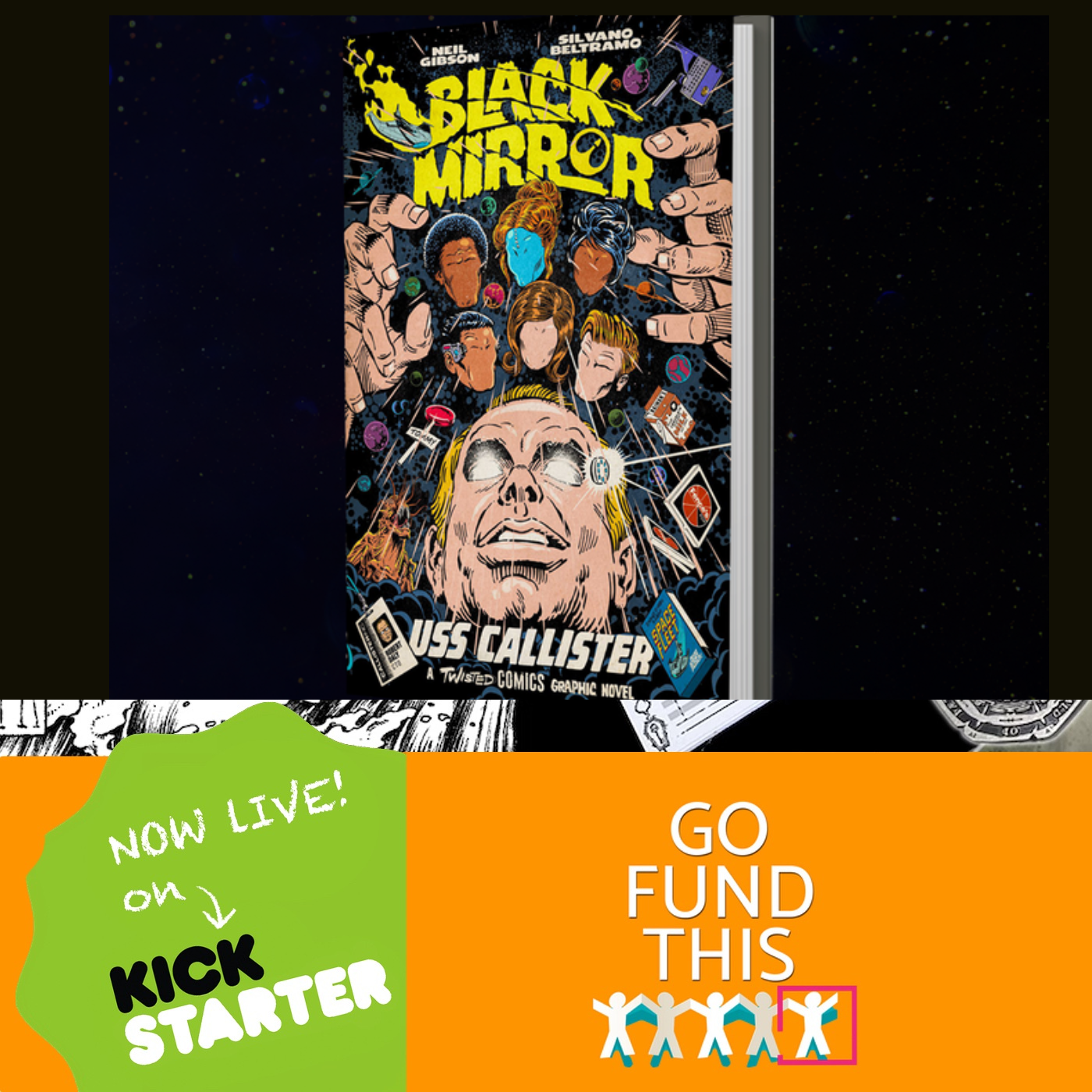 Black Mirror: USS Callister Graphic Novel Kickstarter | Interview with Neil Gibson - Go Fund ThisGo Fund This! · on Kickstarter63 / 100
 Unhinged Marketing CampaignsBrand Shorthand · on Dr. Squatch58 / 100
 How Grüns Sold for $1.2B in 32 Months (Case Study)Capitalism.com with Ryan Daniel Moran · on Dr. Squatch57 / 100232: Video Product Renderings for Your Invention231: Selling Your Invention on Your Own Website Starting from Zero230: Product Packaging Advice for Your New Hardware Invention229: Overview of Patenting for Hardware Startups228: How to Build a Digital Community Before Launching Your Invention