
Leaders in Motion · 2026-07-03 · 42 min
Key moments - from our scoring
Substance score
61 / 100
Five dimensions, 20 points each
Cedric Delzenne brings two decades of international business experience and 15 years as a Hong Kong resident to explore why APAC requires localized regional leadership rather than centralized management. He frames the region not as a single market but as a kaleidoscope of distinct cultures, languages, regulatory frameworks, and digital maturity levels - a complexity often misunderstood by European and US headquarters focused only on aggregate sales figures. His tenure at 55, where he built the product and company across APAC markets including Shanghai, Shenzhen, and Taipei, illustrates the imperative of local hiring and ground-level market knowledge. The episode unpacks China's distinctive approach to generative AI and LLMs through an open-source, top-down strategy focused on eventual global dominance (mirroring EV and solar playbooks), contrasting sharply with American market-share aggression. Delzenne addresses misconceptions about data security with Chinese models, cost-competitiveness as AI infrastructure spending rises, and the cultural differences driving adoption: Chinese risk-taking and youth education in AI versus European and American resistance. For global operators, the core insight is that competitive advantage no longer comes from productivity gains alone - AI requires fundamental business model reengineering, ecosystem partnerships across industries (like WeChat's interconnected services), and strategic patience for multi-year value creation.
APAC is a kaleidoscope of different cultures, languages, currencies, and ways of doing business with varying levels of digital maturity across markets - viewing it as one region from distant HQs that focus only on aggregate sales misses critical country-level dynamics and market-specific strategies.
China uses an open-source approach with top-down government support for multiple competing companies initially, with the eventual goal of producing a few dominant players that expand globally - similar to their successful strategies with EVs, solar, and wind energy.
A common concern is data security when using Chinese models, but this can be mitigated by deploying them on-premises; additionally, most business use cases don't require frontier-performance models, making cost-effective Chinese alternatives increasingly competitive as AI infrastructure costs rise.
China treats AI as an opportunity trained into youth education from younger ages with top-down support, while Europe and the US face cultural risk aversion, resistance from teachers and workers, and public opposition to data centers - creating slower adoption despite having nuclear energy advantages for powering infrastructure.
Hong Kong, Taipei, Shanghai, and Shenzhen offer better market access and cost structures than Singapore, which has become prohibitively expensive for salaries and operations while being insufficient as a sole hub for serving diverse Southeast Asian markets.
Our reviewer’s read on each dimension, with quotes from the episode.
The episode contains useful practitioner observations about APAC regional leadership and China market dynamics, but is padded with personal narrative, meandering stories, and repeated points. For instance, the guest circles back multiple times to the importance of local hiring and trusting regional leaders without adding new substance. While there are valuable nuggets (e.g., Singapore's cost challenges, PIPL/cybersecurity law impacts, Chinese LLM open-source strategy), they are interspersed with filler and lack systematic depth.
APAC is certainly one of the most complex region to launch and scale a business but we need to explain at the market level what's happening because there's also very various level of maturity when it comes to tech and digital transformation
there's no way you can micromanage anyone in China and certainly not from 10,000 kilometres away
The episode rehashes well-worn frameworks and observations: APAC complexity, the need for local hires, trust in regional leaders, and the China-vs-West AI narrative. While Cedric offers some useful specifics (e.g., the PIPL/cybersecurity law forcing tech stack migrations, pricing pressure in China, Singapore cost inflation), these are largely confirmatory of existing conventional wisdom rather than contrarian or first-principles thinking. The observation about Chinese ecosystem interconnectedness (WeChat Pay + social credit linking power banks) is interesting but underdeveloped.
APAC is what I call a, uh, kaleidoscope of cultures and languages and certain currencies
the technology is imperfect but it's improving week after week
Cedric is a legitimate practitioner with 15+ years in Asia and 5+ years as MD of APAC for a B2B software firm (55). He has built regional teams from scratch and navigated real regulatory challenges. However, he is not C-suite at a major global company and his experience is specific to consulting/marketing tech, not a broader executive mandate. His credibility is solid for regional expansion but somewhat narrowed by sector and seniority level.
I've been in Hong Kong for 15 years, very much calling it home
I was basically in charge of building the product and the company in apac
The episode includes concrete examples but unevenly. Cedric names cities (Shanghai, Shenzhen, Taipei, Singapore, Hong Kong, Seoul, Tokyo), specific companies (Alibaba, ASUS, BenQ, MSI, Katie Bank, Uni President, Founder Institute), and some regulatory details (PIPL, cybersecurity law, GDPR). However, he provides few numbers: no revenue figures, customer counts, deal sizes, timelines, or quantified outcomes. Claims like 'pricing pressure of 20-25%' and 'Taiwan was underserved 7 years ago' lack supporting data. Many assertions remain vague or anecdotal.
switching from Google Analytics to a uh, local Chinese, uh, Chinese tool
Either you're, you slash your price by 20, 25% or we start working with, with your competitors
Kevin asks solid opener questions but rarely pushes back, challenge, or dig deeper. He allows Cedric to deliver long monologues without sharp follow-ups. When Kevin does ask ('why is it hard today?'), Cedric veers into tangential commentary rather than being pressed for specifics. Kevin's China/AI questions are reasonable but don't probe contradictions or stress-test claims. The host nods along acceptingly ('I have a take') rather than sharpening or testing the guest's assertions. Conversational rhythm is more interview than debate.
I have a take. I'd be interested to know what you think about it
And I mean you've been working on that uh, topic at 50, uh, 5. What do you see?
Computed from the transcript - who did the talking, and the words that came up most.
"There is no way you can micromanage anyone in China - and certainly not from ten thousand kilometers away." Most Western companies expanding into APAC build one regional strategy and apply it across the board. One pipeline. One dashboard. One assumption about what it means to operate in Asia. The region keeps proving that assumption wrong - expensively. In this episode, Kevin Hong speaks with Cedric Delzenne, a French executive with over 20 years of international experience across Europe, the US, Brazil, and Asia, and more than 15 years based in Hong Kong. As the founding Managing Director APAC of Fifty-Five, a digital analytics and AI consultancy, Cedric built a regional presence from scratch - from Hong Kong to Shanghai, Shenzhen, and Taipei - navigating China's data sovereignty laws, the HQ - local trust gap, and the structural realities of a region most headquarters misread as a single market.
Transcribed and scored by The B2B Podcast Index.
Speaker A: Hello, I'm Kevin Hong. I'm a partner at uh, LYC Partners, an executive search and leadership advisory firm. I'm also the co founder of the Council, a private network of senior executives. And this is Leaders In Motion.
Speaker B: Today I'm with Cedric Delzain, an executive who has spent 20 years in international business across multiple countries. France, Denmark, Brazil and the US and more than 15 years in Hong Kong where he's now a permanent resident. He's been an entrepreneur and more recently the most recent managing director APAC of 55. Cedric, welcome to leaders in Motion.
Speaker C: Thank you Kevin for having me.
Speaker B: We usually let our uh, guests introduce themselves and also their journey. What I'd like you to uh, tell me more in particular out of my own curiosity is you're French and uh, you ended up in Hong Kong. So how did that happen?
Speaker C: I've been in Hong Kong for 15 years, very much calling it home. So that's, that's you know, where my family is. That's where my, my son was born. And uh, yeah, it has been a really, really interesting journey. Uh, before that I uh, was actually working in, in Paris in a management uh, consulting firm called Hero Group. And honestly I had a, you know, pretty good uh, start of a career and I could have been there still, but uh, I decided otherwise. I think the, the main reason is uh, curiosity at the time. So that was, you know, back in 2010, I thought that something was, was happening in, in this part of the
Speaker D: world and I met someone who is now my, my. And we had a similar, you know, plan in terms of putting ourselves in a bit of a risky place, moving to Hong Kong without a job and uh, see if we could uh, make you know, uh, to today. I think it's been my best decision ever really.
Speaker B: Career and most importantly life is made by, by choices and decisions, whether something that you planned or something that step by step you built uh, over time.
Speaker C: Good question. It's very much about uh, who you meet along that journey. Uh, so I graduated from a French, uh, business school called Edec and uh, started my career actually in the US and uh, I had to move back to Paris. It was already at the time quite difficult to get a visa in the US I very much enjoy my time there and it was actually my first job in uh, a tech startup. I worked in San Francisco for what was at the time quite innovative, a uh, startup designing and manufacturing and selling Bluetooth accessories for the iPhone. And that's, that's really where I got the bug. I think in terms of you know, my interest for everything tech. So moving back to Paris, I joined a more traditional uh, management consulting firm. As I said, I spent about two years there. It was, it was very good, I mean very good training I would say as a fresh grad I learned a lot in a very short time frame and but yeah, as I said, it wasn't really where I would see myself 10, 15, 20 years from then. And so that's why I decided to move to Hong Kong. Uh, I took a sabbatical from my consulting firm and never went back. When I moved to Hong Kong, I realized it was the right place and the right time to actually launch my own business and that's what I did. As you know, as probably a lot of your audience know, it's, it's pretty straightforward to, to launch a business in Hong Kong, pretty low cost and it's still very much the case today. And yeah, off we go. Um, I had this new concept in mind of selecting emerging fashion designers that were a little famous in their home country and through digital and E commerce I would help them grow onto new markets. So that's what I did. Raised a bit of, of seed money, was joined by a couple of uh, co founders as well. It was, it was uh, you know, an emotional roller coaster as many startups can be. Uh, but again it was, it was an amazing opportunity to, to learn probably about many mistakes that people do when, when they launch a business. So I did that for about three, three and a half years until I realized that, you know, honestly that the business as I envisioned it, it wasn't going anywhere. And I decided to pass the torch to uh, my co founders right after that because also I was starting to have a pretty good network in the tech scene in Hong Kong and greater China and also the region. I was contacted by um, uh, Adeo Resi, who is the creator or the director of Founder Institute. So in a few words, Founder Institute helps people with their first time entrepreneurial uh, journey. Typically people who are working in the corporate environment and same as me, are
Speaker D: willing to take uh, the leap of faith into tech entrepreneurship.
Speaker C: And uh, it's a program that still exists. Uh, it's, it's very well structured, quite
Speaker D: demanding and it helps you to confront your idea, your concept to the market, uh, with actual customers and go through all the little details, all of the little steps that you need to go through as a, as a, as a startup, legal marketing, uh, pitching for sure,
Speaker C: raising funds and the like. So that was, that was a really
Speaker D: good uh, program and I would highly encourage anyone who is keen to launch a business with an, a more corporate background to go through, through this program. It's called Founder Institute.
Speaker C: Okay.
Speaker D: So uh, during that time, uh, because I, I, I had built a name in uh, E commerce and especially fashion e commerce in, in China and, and
Speaker C: greater China, I was invited at a conference in, in Paris called China Connect to actually demystify uh, what was happening in China at the time. And that was 20, that was 2014, I think. So you know, Alibaba was all all the rage and senior directors and leaders in Europe were starting to hear about what was happening here. And at this event there were, there was one of the co founders of 55. I'll tell you a bit about what we do in a, in a minute, but um, we had a really good chat uh, after the event. They were willing to expand to apac. Uh, I think they uh, you know, they like my entrepreneurial background had been in Asia for, for quite a while. The network that I had and I guess the, the, the, the resilience that I had built already. And so yeah, a couple of months uh later they hired me to open their first office in the region in Hong Kong. And that's how the, this journey started.
Speaker B: You were among the first employees in the region and you had to build a team. So I guess it also included a touch of uh, entrepreneurship, uh, in a way. So maybe you can tell us more the beginning of that adventure.
Speaker C: You summarize it very well. I think uh, the reason I, uh, you know, I took on this challenge is, is because it, it merged everything that I liked From a professional standpoint. It was very entrepreneurial indeed. But at the same time I wasn't starting from scratch. Uh, the company already had I think three or four years of existence, uh, already, uh, some, you know, very good, uh, customers in, in me. So a proven expertise, I would say, uh, a strong nascent brand. And I was basically in charge of building the product and the company in apac. And uh, we'll certainly talk about that in a minute. But APAC is certainly one of the most complex region to launch and scale a business.
Speaker B: This is what we hear. And uh, most people do feel and believe this. It is. But some also would like to know more. Practically speaking, why is it that complex and what does it mean?
Speaker C: One of the common mistakes or misconceptions
Speaker D: from client leaders is that APAC is
Speaker C: just one big market. In reality it is what I call a, uh, kaleidoscope of cultures and languages and certain currencies. And ways of doing business. And certainly seen from 10,000 kilometers away, you know, CEOs would tend to only look at your sales 5 and your traction and your momentum that you built as a whole. But actually it's simply not enough. And I think it's. As a regional director you need to take the time to explain at the market level what's happening because there's also very various level of maturity when it comes to tech and digital transformation and certainly, um, and so this is sometimes, uh, quite a subtlety that uh, is hard to grasp from Europe or the US headquarters.
Speaker B: Why is it hard in your opinion, since it seems now that um, APAC is a leading region economically speaking, and also uh, in terms of technology. And why do you think it's still so hard today?
Speaker D: First of all, the region is evolving very, very fast.
Speaker C: There's certainly a lot of uh, discussion about China at the moment with generative, uh, AI especially and their massive investment
Speaker D: and their uh, very peculiar open source,
Speaker C: uh, approach and certainly the, you know, the technology competition that is happening with the US but other markets in the region are also influenced by that.
Speaker D: Right.
Speaker C: And they had a lot of potential for foreign companies as well, if, you know, if you know your game pretty much. Let me give you an example. Perhaps a few years ago we decided to open uh, an office in Singapore. And it seems to be the default hub for a lot of American and European firms when they open an office in the region. Well, if you don't, you know, if you haven't been through opening an office in Hong Kong, in Taipei, in Singapore for that matter, then you wouldn't necessarily know how expensive it can be to open an office in Singapore, how complicated it can be to simply open a bank account at the moment or to get a work visa. Uh, and also the fact that you can simply not serve Southeast Asia from Singapore alone because of how expensive uh, salaries have become. And that wasn't necessarily the case 10 years ago, but it's clearly a challenge now. Uh, and so yes, HQs in the US or Europe might still think, okay, we're going to go with the path of least resistance and Singapore seems to be that way. But uh, it's actually not necessarily the case when you have all of the knowledge and the experience at your uh, disposal.
Speaker B: You're obviously talking about AI and also the competition, the technological competition between China and the U.S. and well, I'd like to know also, um, your opinion about why Europe is not so much uh, in that uh, race. And what do you think boards or CEOs uh, in global leadership, uh, companies should know about what is coming or what is being done in China related to AI. What are the misconceptions, you see, that people still read what is happening in China when it comes to AI with the Western lens. But potentially, potentially, how can you help them decode what is happening?
Speaker C: The best way for them to really understand what's happening is actually to spend time, like physical time in the country embedded with clients and partners in Shanghai, in Shenzhen and probably other cities as well. That's actually something that I did a number of times when I was at 55. So bringing them to the region uh, for proper roadshows with you know, meetings, uh, all the time and also you spending a bit of quality time with the team as well so they could have this firsthand experience about what was happening on the front lines. I think that's really important to answer your question about this gap of knowledge. I think that still exists in HQ or uh, European or American HQs. I think honestly maybe I shouldn't say that, but the media are not helping. The approach of China to generative AI and LLMs as I mentioned is uh, very much open source and they have taken this very different approach from their American competitors who are just about aggressive market share acquisition in China. The strategy is very much top down as we know there might be a lot of companies working on similar topics for a while. It can be you know, supported, slash, subsidized. Uh, we've seen that in EVs for sure. But after a while then a few very strong companies would emerge and they would go global. I think that's the plan. It has been the plan with EVs, it has been the plan with solar, it has been the plan with uh, windmills and the like.
Speaker D: So that's the usual path for China. There's also this misconceptions I believe about data security uh, when using LLMs or Chinese LLMs. But uh, there's certainly ways to mitigate that by deploying Chinese LLM on prem. So I don't think that's a valid point. It's certainly a concern that the media have duplicated um, for aesthetic reasons. But I think with AI costs going through the roof at the moment, uh, we might see Chinese LLMs uh, gaining a lot of traction in the coming few months. And actually they might not be the most frontier, uh, the best ones in terms of pure performance. But to be honest most use cases don't require that type of frontier model.
Speaker B: Interesting. And I mean you've been working on that uh, topic at 50, uh, 5. What do you see? What do you see are the opportunities and the risk of uh, international companies, uh, when it comes to adopting AI overall, as in generally speaking, how do you compare them to the adoption of AI with their Chinese counterparts, Chinese competitors and, and what do you think that they should know in order to get up to speed and also adopt and embrace not only the, not only AI, but also potentially what's coming from the U.S. china overall?
Speaker C: It's important to make a distinction between AI and generative AI or alms or agentic AI. Actually at uh55 my, my team was uh, building AI products for the longest time before it became mainstream.
Speaker D: Right.
Speaker C: But when it comes to the you know, the more uh, recent uh, uh models I think it all comes down to your strategy. Certainly the technology is imperfect but it's
Speaker D: improving week after week. Like Entropic, uh, Cloud has just released a new model that is uh, apparently mind blowing. Haven't tested it just yet but, but again most of the time it's not so much about the technology that it is about the uh, the people and the change management and the user adoption. I've got a lot of example of companies who've put their you know, the cart before the horse, who've got a
Speaker C: really shiny tool, spending quite a, you know, a large amount of money on well either SaaS or hyperscalers without having a you know, proper library of use case that uh, for example a new hire can uh, can read through and apply from day one.
Speaker D: Right.
Speaker C: You, you can certainly deploy uh, some use cases at the surface of how your company operate. But I think the real value is when you really rewire your company through, through AI so you basically do a uh, full process reengineering m identifying the tasks that could be streamlined or automated or delegated to an agent. And this is really where you start to see the uh, value. But to be honest it's certainly easier to do in a smaller organization than in a large multi market, multi brand group. That would certainly take more time. There are more people involved. We all know the impact we can have on, on actual jobs as well. So you don't want to put your company upside down. Right. You still need to make sure that your company can operate uh, day to day. So it's, I think it will take more time than most analysts think. Uh, there will be disruption. There is disruption in some categories of uh, companies or jobs but when we look at the you know, the larger uh, scale of things, I think it would take quite a Bit of time
Speaker B: came to my understanding that in China especially given the, the central strategy uh, around AI and technology and technological sovereignty, that companies, even sizable ones are pushing very, very hard and fast in the AI adoptions in their business model. And like you mentioned, when companies are large it's uh, is lower, it's more difficult. But I would almost tend to say in Western companies. How do, how would you explain that difference in adoption?
Speaker C: There's a cultural aspect to it. I've been following a bit. What's uh, happening in the US and Europe as well. Uh, you know, people demonstrating against data centers for example, ah, teachers signing uh, petition letters against a wider AI adoption in teaching methods and also surprisingly also you know, fresh grads pushing back on adoption in their, in their firm um, in China. And I was, I was in Yunnan just, just last week. Again it's, it's a very different approach I think, very different take from consumers and uh, professionals. Uh when it comes to AI for sure there's certainly uh, a push from the top. An example is the fact that AI is being widely adopted in schools from the younger age. So it's not seen as a threat but as an opportunity if wisely deployed, wisely used and if certainly the youth are also trained on how to uh, use those new tools properly. But it also comes from I think the general mindset of risk taking in terms of China. Uh, you know it's, it was uh, not so long ago that a lot of Chinese companies were only looking at the domestic market and then the economy is not doing so great. So you know we need to change gear, we need to get into new markets. So there's this renewed energy I would say in, in, in China for uh, building, building businesses, going export and, and the likes and yeah, I think it's, it's both coming from the top and the bottom of the, of the society. And to be honest when I look in Europe, uh, between the US and China, we certainly have you know, very, very good strengths such as a lot of nuclear energy to power those data centers for example. But at the same time there's a certain inertia from the top and a certain risk aversion from the bottom. And I think that's not helping.
Speaker B: That's interesting that to see how, how things will unfold. It will also depend on, on the uh, whether whether AI and AgentIQ will give a competitive edge either to Chinese firms, either to smaller scale companies and uh, whether they can uh, disrupt their own market. But how do you see that? Do you see that it will ultimately be not only disrupting when it comes to jobs but also when it comes to uh, market positioning moat, uh that has been potentially existing for, for decades and, and that can be disrupted uh very quickly. How do you see that?
Speaker C: I don't think AI is just uh, you know a driver of productivity. It certainly is. As I say, if the bar, the productivity bar raises for everyone then you know, you still have the same competitions. So really the venue is about creating
Speaker D: that competitive edge through AI. It requires much more effort certainly uh, in terms of rethinking how to operate your business. But at the end of the day you know, beyond summarizing your email or drafting uh, ppt, you know, it's AI for you know, product development for example or shortening your uh, release cycles for example. Uh, it can also be about doing market research at lightspeed through digital Twins for example because you don't have to wait for two, three, four months to get your survey results for example. So when you are the only one in your industry doing so then you have a huge edge. Certainly your competitors will catch up at some point. But this is, this is a, this is a competition play, it's not a productivity play only. Certainly I don't think a lot of uh, senior leaders really grasp the scale of uh, that change and to be
Speaker C: honest I was a bit dismissive when
Speaker D: at conferences people would say all the time if you don't change then you'll be out. I don't think it was that true for point solution in at tech, uh, or marketing tech. But this time is different. I mean the scale and the depth of change that is coming will reshuffle the competitive landscape for sure.
Speaker B: I have a take. I'd be interested to know what you think about it. I do feel that Chinese companies and you, you touched on, on that uh already when it comes to the mindset and the culture. But it does seem that the surge of AI is playing in the favor of the Chinese companies, the Chinese players and the Chinese society overall. Not because of the way it's built or the price but more about how you think in terms of business model, how you think about ecosystem, how you think about a holistic organization and strategy, any long term ones and how it affects all across and that mindset in terms of business models that you do not aim to win in a segment but you aim to have a strategy where you win in a segment because you have a long term, 5, 10 years plan when you win on all segments and you need to climb the value chain and you need to play at scale. I do have the feeling this is how you should play with AI. How you need to think about AI on a more holistic view and a scale and then change and shift over uh, business model and also being much more agile and fast at uh, scale. And I think the Chinese have an edge in terms of this way of thinking.
Speaker C: Yeah, I agree, I agree with you. Again back to the risk aversion that uh, I would see at the moment in Europe. Generally speaking there's this uh, energy in China that pushes you to just try and launch and improve along the way.
Speaker D: Certainly there would be failures, but it's not about having meetings and laying down the perfect plan and making sure that every single dollar will have roi. Certainly ROI is a very sensitive topic in China at the moment. But there's still this flexibility in launching new products and um, improving uh, as it goes. To give you an example of how things compare with Europe, there's already a huge number of digital services that are uh, interconnected.
Speaker C: When you uh, want to I don't know, buy something on uh, Wei Shin and, or rent a uh, power bank for example, then it would pull your social score so you don't have to set a deposit. Instead, you know that type of uh, interconnectivity between different companies and different products. I think it's uh, something that uh, Chinese companies are really good at. Building partnership across sectors and across industries. I think there's another aspect uh, that we should mention about uh, China uh, and the speed of uh, AI adoption. I think they have something that Europe don't have which is funding. Well the US has a lot of funding, private funding mostly. I mean the, you know, the US government uh, uh, is spending a lot as well. But uh, we know how big their deficit is. So not sure how long that might last. Uh, but Europe has limited private funding and pretty much dried up public funding. So that's actually a big issue when we know how much that infrastructure investment require. And uh, it's not that much of an issue in China in terms of uh, mobilizing the funds for the companies, the private sectors and the public. The state owned companies as well certainly.
Speaker B: And I'd like you to get back to your experience at 55 and guide me through the challenge, the challenges you might have faced both from a technical standpoint. I think the ecosystem, the technical ecosystem and digital ecosystem in the region is quite different here. But also when it comes to understanding the speed of how things should operate and dislikes and how you overcome to.
Speaker C: Actually we had to uh, Learn by doing in some markets for sure. I think the key was to hire people uh, who knew their local market as well. So we opened in Shanghai and then Shenzhen, so we hired locally, same in Taipei. And then actually most of the teams were uh, you know, local talents. I think that's really important to really understand or really have this, you know, this proximity with uh, with your prospects, your leads, uh, your customers, your, your, your partners. When it comes to technology as, as you know, a few years ago, um, China for the first time established data as an asset for the country. That, that's how the PIPL and the cybersecurity law came into place. And certainly that caused a uh, lot of concerns for our clients, both Chinese companies and foreign ones, because they had to pretty much replatform their whole tech stack. So that's something that we help them with. Just to give you an example, switching from Google Analytics to a uh, local Chinese, uh, Chinese tool. But there are many, many other examples of that. And so again it's not only about the technology but then you have to retrain your team, migrate some of your use cases and also explaining to your HQ that well now we are using different tools so we might have similar KPIs, but the definitions are different. So that might explain why that number is going up or that, why it's not matching with your own records and the line. So it's additional time to educate and to train uh, end users as well. So that kept us quite busy in China and in the years following uh, those new laws, uh, but honestly I understand why those laws are in place and uh, Europe uh, has uh, something even more stringent with the gdpr, uh, and the associated uh, privacy regulations. And although it can be heavy, uh, at times and relatively expensive for companies who might not have budgeted that type of thing, it actually forces you to rethink how you built your relationship with your customers. Certainly there were some abuse about how data and how much data uh, is collected and utilized and for very interesting use cases to be honest, from uh, corporate standpoint. But then yeah, at some point you know, you've, you've got to draw uh, a line in the sand I think. Can't hear you.
Speaker B: How do you deal with the reaction, or let's say, yeah, reaction of the headquarter of your counterparts. Dealing with China, do you deal with frustration? Do you, do you deal with uh, understanding or excitement? And when, when we mention things that are different that are uh, that are unique to China, it often also leads to frustration and, and also impatience so is it something that you experienced and if yes, how did you deal with that and did it affect the um, the general business?
Speaker C: Yeah. The interesting thing is that as consultants with we, we both worked with their HQ of our customers and their teams in China, in Shanghai or Wales. And over the years there was something that kept, that we kept hearing about
Speaker D: is the fact that HQ again wants to know everything about what we're doing in China and uh, sometimes even going
Speaker C: as far as telling us what to do. But I think there's in some companies at least this distrust between HQ and their China team, certainly because of the fact that they use different tools and certainly the language is not helping. There's a bit of a uh, disconnect into how the information is uh, shared in both ways actually. And so again I think it's important to have this level of, of trust, you know, letting the people on the ground to, to do their job and also judging by, by the results, right, they're certainly closer to your customers. Uh, they're certainly more up, uh, to date with you know, the latest trends and developments and features on weighting for example, or Little Redbook or the latest um, live streaming, uh, trend for example, that would take probably one, two, three months at best to be featured in the media in Europe. So the speed is different and that's why I think you need to take the time to find a leader in China that you know, you really can trust. There's no way you can micromanage anyone in China and certainly not from 10,000 kilometers away. Uh, but again spend some time with your team in Shanghai, go to the shops, go to the boutiques and try to get that feel of, you know, what's really happening in this market because it's, it's uh, unlike anything else, you
Speaker B: know, are the opportunities you feel uh, for international companies, especially in a uh, consulting or uh, technology, technological space given you know, the cost and also the, the, the speed of uh, the Chinese players.
Speaker C: Yeah, I'll be honest, I think our biggest challenge in, in China was uh, priced because we had a fairly premium positioning that worked well in pretty much all markets except China where a lot of clients started to lowball us.
Speaker D: Sometimes processes being led by the procurement team even with customers who had been working with us for several years. Then suddenly you have, you know, you have a simple choice. Either you're, you slash your price by 20, 25% or we start working with, with your competitors. So it's, it's a difficult decision to make, uh, because certainly you don't Want to devalue your value proposition. And certainly within the next week all of your other customers in in market will know about it because people talk and recommend uh, agencies and consultants to one another. But at the same time are you ready to write off a million, 2 million, $3 million. Right. So yeah, it's a tough market to grow. I think there's still opportunity but I wouldn't go alone. I would build uh, a joint venture if I can bring something unique to the market. I would maybe target China export companies.
Speaker C: So Chinese companies headquartered in China but who are essentially targeting other markets like in Southeast Asia or Europe, uh, because you have that unique knowledge about foreign markets that they don't, plus expertise in products and technologies that they don't. So that, that might be your edge, um, but certainly that will not be your most profitable market.
Speaker B: What should be the strategy and what would be the reason then for international companies to be in the region then? What would be the main drivers if profitability is a little bit more difficult?
Speaker C: Yeah, so you have to think about where to start your regional HQ and where and when to hire in market. Uh, as I like to say, the uh, companies who are most successful are the ones who are slow to hire and fast forward to fire. It's tough to say but in the current context especially um, consulting firms and agencies are suffering and certainly our clients as well, ah, are very careful about
Speaker D: how they spend the money.
Speaker C: So that being said, markets in the region have a lot of potential for foreign firms. I'll give you the example of uh, Taiwan, a market that is often overlooked but is typically underserved in some parts of the technology spectrum. At least that was the case for 55 when we opened. Uh, that was maybe seven years ago. And a lot of global companies, major global companies are actually Taiwanese giant ASUS, BenQ, MSI and also domestic firms, banks. Katie bank for example, Uni president in retail. I mean huge potential clients that are investing in AI and tech and digital transformation as a whole. Uh, so just to give you an example, but APAC has a lot of potential if you can control your workforce base and if you can also build fruitful partnership with people who ah, are in market and if you can find people you can trust to lead uh,
Speaker B: your operations coming to apac, therefore maybe you can give us a little bit of um, a map of where to start. Why in in different scenario, maybe Shanghai, Shenzhen, Tokyo or Hong Kong or Singapore. KL how would you see the, the major differences there? As you mentioned, this is a uh, very diverse region and uh, under which condition? 1, 1, 1 City would make more sense.
Speaker C: Okay, so at some point you will
Speaker D: need to have people in market, pretty much in every market, even if it's just one person who speak the language and can be your, you uh, know, your person on the ground.
Speaker C: And for a lot of our customers that was actually a requirement to, to sign a contract.
Speaker D: Right.
Speaker C: Someone who they can talk to in the local language and then be that liaison with, with other offices, be it
Speaker D: in Singapore or in Hong Kong.
Speaker C: Um, where I would start, I would start in Hong Kong for the number of reasons that I've mentioned previously plus another really good reason which is geographical location. It's, it's uh, simply the best uh city to travel in the region. Whether you, you have a pitch in Seoul or partner meeting in Tokyo or a pitch in Singapore, pretty much everything is within reach. Whereas if you are in Singapore it's, it's great for Southeast Asia but it's very far from pretty much everything else. Same in you know, Tokyo or Seoul, uh, for the rest of apec, if China mainland is your ultimate goal, certainly you need to be in market. So that's either Shenzhen if you are in you know, tech and AI and products or hardware or Shanghai if you are aiming at uh, retail, uh, and brands like beauty, luxury and the likes after that. So uh, the question is do you see enough traction uh, outside of Hong Kong to justify a new hire? I've always built pragmatically, um, and certainly you can go a little faster by having local uh, partners uh in the interim. But really the question is where is the sweet spot or the break even at least to justify a uh, local hire. And so you could absolutely wait until you have your first contract. I've got many example of signing contracts in countries where we had no one on site, uh, including uh, Tokyo and Seoul. Certainly you have to be really good in terms of you know, getting and winning RFPs. But this is uh, only after that milestone that, that you would uh, decide
Speaker D: for a local hire.
Speaker C: This is, this is my approach maybe
Speaker B: for, to close for last note, what should we wish you for and what do you hope to achieve in the next step of your care? You achieve quite, quite significantly from entrepreneurial to corporate and to a mix of both and, and uh, how do you look at your future next step?
Speaker C: Yeah, so I, I, I really enjoyed um, you know, building and, and scaling
Speaker D: 55 from well pretty much not exactly zero but probably from one to a hundred. And you know I've got the playbook, I've got the network. I, I know, you know, probably some of the mistakes to, to avoid, and, uh, I can save a lot of time as well. So a similar, similar journey with a U.S. or European company who has ambition,
Speaker C: uh, for APAC, uh, I think that's, you know, that's what I enjoy most.
Speaker B: And, uh, no plan to relocate, um, uh, to Europe or to France?
Speaker C: No, I don't think so. Certainly I'll spend a bit of, uh, time off, uh, next month with the family. But I'm always very, uh, happy to go back to Hong Kong and Asia.
Speaker B: Cedric, thank you for being on the show. That was great to impact, uh, your experience and insights on the region and when it comes to AI and also consulting firms, uh, uh, in the region, in Asia. So thank you again for coming.
Speaker C: Thank you, Kevin, for having me.
Speaker A: Thank you for listening to Leaders in Motion. And if you want to go further, join the Leaders in Motion Academy, our executive program. The first step is simple. Subscribe to our newsletter in the show notes and you'll get access to our exclusive insights and all the details about the academy.
Speaker B: This podcast is produced by Melanie Hong,
Speaker A: who helps leaders and organizations create strategic podcasts. I'm Kevin Hong. And see you next time. Sam.
Other episodes covering the same guests and topics, from across The B2B Podcast Index.
 #49 | Key Elements of a High-Performance Culture: What HR Needs To KnowThe HR Dialogues · on human resources78 / 100
 651. Chad Oakley, Current State of the Consulting Market in 2026Unleashed · on Executive search78 / 100
 China’s AI and robot revolutionThe Business of Tech · on Open-source LLMs77 / 100
 Episode 54: Mike Stafiej - Unleashing the Power of Data with ERINTalent Acquisition In The Trenches · on human resources71 / 100
 Inside AT&T's culture playbook with Keith JacksonLove Your People Podcast · on human resources69 / 100
 Season 10 - Episode 148: Kurt Mosely & Neill MarshallFidelis Leadership Podcast · on Executive search65 / 100
 31. Cut From the Same Cloth: What Luxury Boards Keep Getting Wrong About Cross-Border Strategy - with Anne Line Hansen57 / 100
 29. The Integration Gap: Why Cross-Border Placements Fail on Culture, Not Skill with Jie Hong56 / 100
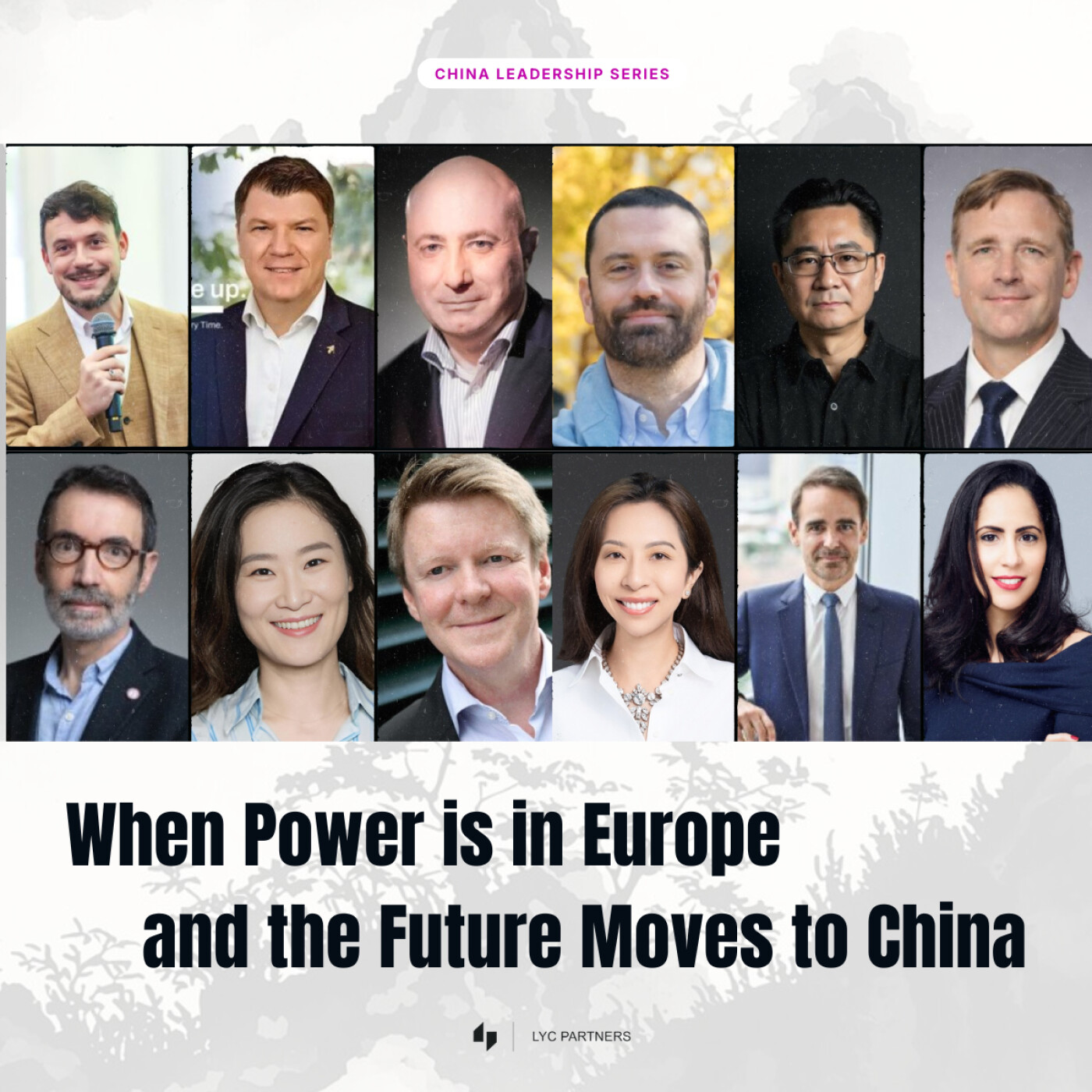 28. Gravitas Shift: When Power Is in Europe and the Future Moves to China70 / 100
 27. From GAP Munich to Steinway Zürich: Experiential Retail, Cross-Brand Leadership, and Bridging Global and Local with Piet Kolsch66 / 100
 26. From Queens to Paris: Storytelling, Branding, and Cultural Humility in a World of AI Translation with Lory Martinez65 / 100