
Leaders in Motion · 2026-05-30 · 39 min
Key moments - from our scoring
Substance score
46 / 100
Five dimensions, 20 points each
Piet Kolsch, a 25-year veteran of global retail leadership, discusses the evolution from transactional to experiential retail across dramatically different brands - Gap, Apple, Patagonia, and Steinway. His career trajectory spans opening flagship stores (Gap Munich in 2000 ranked as the best opening until Milan in 2010), scaling Benetton's 1,500-point European network across 14 markets, and introducing Spirio technology at Steinway Zürich, which enables remote piano performance where keys physically replicate a pianist's touch across locations. Kolsch articulates how effective leadership bridges cultural differences - contrasting Swedish consensus-driven decision-making with faster Canadian timelines - while maintaining global brand consistency. He emphasizes understanding brand mission deeply before leading teams, then creating clear roadmaps aligned across part-time Saturday staff to five-year managers. The conversation covers how retail has fundamentally shifted post-COVID: from maximizing floor product density to curated assortments tailored by local market preferences (orange pants sold in Germany but not France), integrating sustainability messaging into customer experience, and moving from transactions to events and demonstrations. This episode serves B2B retail leaders, brand directors, and operations executives managing multi-market transformations.
Gap Munich was the best-performing opening for 10 years after 2000 in terms of traffic and sales, until Milan opened in 2010.
Spirio connects two piano instruments so that when one pianist plays, the second piano's keys physically replicate their touch and performance in real time, allowing remote concert experiences where the audience hears not just sound but watches the keys move exactly as played by the original pianist.
They were opening stores too fast and losing brand identity; slowing down the pace of openings allowed them to maintain the brand's core identity and consistency.
Retail has shifted from packing stores with all product sizes and colors to carrying best sellers plus locally-tailored selections, with larger open spaces for events, demonstrations, and customer experience rather than maximum product display density.
Canadian teams preferred shorter, two-hour meetings and quick decisions, while Swedish teams took three-plus hours to reach consensus democratically; once consensus was achieved in Sweden, implementation moved faster because everyone was individually bought in.
Our reviewer’s read on each dimension, with quotes from the episode.
A handful of genuine operational insights are present - the 60/40 global-vs-local process split, the counterintuitive 'slow down to keep brand identity' lesson, and the cultural divergence in visual merchandising - but they are buried under lengthy meanders, repeated invocations of 'experience,' and generic retail platitudes that any practitioner already knows.
We understood quite fast that we needed to slow down to keep the identity of the brand.
From experience it's been about 60 of processes are. Those are just non negotiables...and then 40% max.
The thinking largely follows well-worn retail management grooves - experiential over transactional, brand immersion before launch, global playbook with local flex - with almost no contrarian or first-principles argumentation; the French-vs-German visual merchandising anecdote is the one genuinely fresh and specific illustration.
The German team was very much. They had built a plan and they, they just, they finished the plan...While the French team, when they realized the same...they stopped executing and started discussing.
I want to stay away from transactional retail. It's more experiential retail.
Piet Kolsch is a genuine multi-brand operational practitioner who has run large retail networks (Benetton 1,500 POS across 14 markets, Tally Weijl 450 stores) and led flagship openings for Apple and Gap - real at-scale execution, not a career thought-leader - though he sits at regional/operational director level rather than top-executive tier.
He scaled Talley Wajil across 450 stores, five countries and $367 million in revenues. He led Benetton's entire European network. 1500 point of sales, 14 markets, 3000 people.
I joined Apple I joined six months ahead of time before we opened the first store in Switzerland.
There are usable concrete anchors - Gap Munich's sales record holding until Milan 2010, the 60/40 process framework, orange pants selling in Germany but not France, Lang Lang's Spirio introduction in Hamburg 2022 - but most claims stop short of hard outcome data, and the dollar/unit figures come from the host's intro rather than the guest's own testimony.
For 10 years after 2000, it was the best opening in terms of traffic and sales until Milan opened in 2010.
We were selling orange pants. For some reason they were Selling...And then you could not sell orange pants in France or in Italy.
The host poses thematically relevant questions and does introduce useful framings like 'bridge leader' and the Patagonia contradiction, but consistently affirms rather than probes, never pushes back on vague claims, and lets answers drift without redirecting - resulting in a pleasant PR chat rather than a substantive interrogation.
That's. That's quite fascinating, all this, the diversity of your experience.
I love this, this example that resonates so much.
Computed from the transcript - who did the talking, and the words that came up most.
"We needed to slow down to keep the identity of the brand." Piet Kolsch is a Swiss-based retail operator and brand transformation leader with 25 years of experience building, opening, and scaling flagship environments across Europe and beyond - from GAP and Esprit to Apple, Tally Weijl, Benetton, Patagonia, and Steinway. Piet's journey begins in Munich with GAP's record-breaking flagship opening in 2000, through scaling Esprit's largest global store, opening Apple's Zurich flagship after six months embedded in the recruiting and opening team, directing Tally Weijl's rapid expansion across 450 stores and 5 countries (€360M revenues), leading Benetton's entire European network of 1,400 points of sale across 14 markets and 3,000 people, running Patagonia's Munich flagship operations as the brand donated itself to the planet, and most recently managing seven Musik Hug/Steinway locations in Switzerland - where a single product takes a year to build and the customer relationship spans generations.
Transcribed and scored by The B2B Podcast Index.
Hello, I'm Kevin Hong. I'm a partner at LYC Partners, an executive search and leadership advisory firm. I'm also the co founder of the Council, a private network for senior executives. And this is Leaders in Motion.
Today my guest is Piet Koch. He has spent 25 years answering the question one brand transformation at a time. Pete Koch started at Gap, building multi country operations across France and Germany. From assistant manager to regional director.
He opened Apple's Zurich flagship. He scaled Talley Wajil across 450 stores, five countries and $367 million in revenues. He led Benetton's entire European network. 1500 point of sales, 14 markets, 3000 people.
At Musinghag Steinwast Swiss retail home, he ran seven locations where a single product takes a year to build under customer relationship sp generations. What I want to explore today isn't really the resume, it's the carrying. Piet, welcome to Leaders in Motion. Thank you Kevin.
Happy to be here. Great. Like we always do in our show, let my guests to introduce themselves with their own words, describe a little bit the career journey and what led them to where they are today, the choices they make. So Piet, if you don't mind, can you quickly introduce yourself for your, for our audience?
Yes, yes. Hi everyone. Thanks for the intro, Kevin. There's, I'll add a little flavor to it.
I have been in retail, the people business for a long time. Different brands, different companies, different cultures and countries. The piece that inspires and motivates me the most is a brand journey and how people perceive it in different places. This can be in one market, in one region and one region can be one country or it can be a continent or it can be the global perspective.
What motivates me is telling the story at first understanding it myself and then being an ambassador to the brand across borders, across languages and then have working with people towards a common goal. And that common goal being that visitors, customers experiencing a brand, experiencing a store that could be brick emoter and bricks that can be online. Any kind of touch point that they walk away and they want to talk to their friends about it. It's the experience.
And if we can get to that goal, that's where we meet. That has been my, my main mission. And where are you right now today? What was your latest challenge?
Well, I'm, I'm talking to you from Taipei, Taiwan. Today. I am here exploring the market and you know, it's like I'm amazed to come back. A lot has happened.
The challenging pieces in retail you know, it's. It can be very detailed, it can be one transaction, and it can be one market. So to look at the. The piece that moved me most, or when I look back at my roadmap, it's.
I look back at store openings, market entries. I'm thinking back, you know, you mentioned Gap. That was my first stop on my journey, opening their flagship back in the year 2000. At that time, and for 10 years after 2000, it was the best opening in terms of traffic and sales until Milan opened in 2010.
So when I say that it was identifying the location in Munich, it was the first we actually identified as a team, as the German team, the location, taking it over, doing all the planning, working with the team, getting that done in a defined moment of time. A couple of years later, doing a similar project with Esprit in Munich. It was the largest Esprit store globally at the time, with a vertical catwalk. So when I say vertical catwalk, we had them walking up and down the building at the front, on the facade.
It was amazing. Another success story was bringing his breed back to the U.S. you know, bringing retail back.
It originated in San Francisco and reopened in New York more recently with Patagonia being part of a project when Ivan Schlinar donated the company to the planet. Being part of the team to work in stores, to work with customers. How do we communicate a transformation and transition a story like that to the store teams, to individuals? And then how do we, as a brand, as a company, communicate that out to customers coming in, asking that.
And the most recent project I was with is with musichug in English. I like how we say music hug. It's to hug the music, to embrace it. And with Steinway in Switzerland introducing Spirio technology, which is an amazing artifact.
Lang Lang presented it, actually introduced it for Steinway in Hamburg in 2022 in fall. Is connecting two instruments. And not as loudspeakers, but actually as instruments. So when I play here in Taipei on my grand piano, Kevin, and you would have one sitting at where you are right now, it wouldn't just be what I play, it would actually play.
And the keys would be the tone you would hear, is how I touch the keys here. It's an amazing technology. These were some of the, you know, points that I have collected on my. On my journey, you know, being inspired with the retail experience.
Well, that's. That's quite fascinating, all this, the diversity of your experience. And also, like, how this is so grounded into real practical outcomes. And what are the differences Working from such different brands like Patagonia or Benetton, Steinway or Cotton on how do you actually make sense of all these differences and what do they have in common that actually make, make retail store successful?
Good question. I'll start with what they have in common because that's, that's like what we start out with. It's, we're talking retail, we're talking experience. So it's making, presenting a store, presenting an environment towards someone who's interested in the story and the brand and in what we are offering as a company.
I mean you know, we can just, basically we can just bring it down to that and then what are, what helped me every time is the company investing in me. And when I say investing it's not financially, it's actually time wise for me to understand the story of the brand, the mission and values the company stands for. Because I need to personally, I need to understand it. I need, because I'm the one living it.
When I visit a store, I'm the one living it. Standing in front of teams at conferences, passing on the message and you know, credibility is one of the major words, one of the big, you know, it's like pieces that if I am communicating the story I need to understand it. And that is, that helped me tremendously. When I joined Apple I joined six months ahead of time before we opened the first store in Switzerland.
And when I say invested it meant I was part of the recruiting team to recruit for Swiss teams. I was part of store openings in other markets where Apple was opening that was, and not just going there for a few days but spending time with the team learning this and taking those learnings then back to the market that I was opening stores with. Similar to Tannenval, the Swiss retailer. We were opening a lot of stores very fast.
So I needed to understand coming in why were we losing momentum after 90 or 180 days. So it's like we literally we understood quite fast that we needed to slow down to keep the identity of the brand. So what I'm saying is that for me one answer to your question is starting up. I have to understand the brand and then what I understood, passing that on to the new people joining in or people who have been with the company and this is where we move to from here.
So making, creating, planning, putting together a roadmap and sharing the roadmap that it is very clear to everyone involved and that is to the part time salesperson who comes in on the Saturday and he just started to the full time manager who's been here five years in the company and that we are on the same sheet of paper and we have the same goals in mind. That's, that's very interesting. And how, how was the major stretch between two brands that you worked for? A brand that was radically different in terms of positioning, in terms of customer experience and how do you adjust, how do you actually make sense of such a range?
What has helped me every time so when I, when I look at two different brands and I'll give you the example of Patagonia and then moving from Patagonia to Steinway. So that's a stretch you have. Once, you know, you have the outdoor guy, he wants to go live out in the mountain and you know, it's like maybe he showers once a week, you know, being out there and then the, or, you know, and then his, his product gets ripped and he takes it back to the store and we promised to repair it.
And you know, how do you do that? And then, and you talk to this guy and then, then. So that's one side and the other side is, you know, it's this, this person who invests a six digit amount into an instrument with this technology and has saved up for that for I don't know how long and is, wants to share that with his friends. So creating events for that that is different.
What is the same and where the touch points come together. It's both of them are individuals and it is for me and the teams and the sales teams, how can we understand what it is they're looking for? Talking to them, communicating to them. And then the retail operational piece comes in.
So Patagonia we have, you know, retail processes that I learned and then we ensured that they were adhered to and done and then if they weren't working, how can we change them? And taking that. And that was similar with Steinway. So it's the same thing.
How do we set up an event? How do we talk to these customers? How do we identify them? How do we, you know, look for these customers?
You got to find them, you got to go out there and that takes time. So it's the bringing those two customer groups back into the store, back towards the product or going towards them. It's the experience again. And I will keep on bringing up the word experience.
I want to stay away from transactional retail. It's more experiential retail. At the end of the day, we all as consumers walk into stores every day. You know, be at the supermarket in the morning, grabbing a coffee, you know, buying Socks for the weekend or shorts for holiday or going to Ikea for the, for the item that you're looking for on the.
At the end of the day, I want to find the product. I want to be helped if I need help and I want to like, if I don't want help. I want that to be understood and taken in perspective as well. So I'm fine looking by myself.
That's, that's very interesting. And, and listening to you, I feel that you have been. Tell me if I'm wrong to qualify you as a bridge leader. It seems like you have connected a lot of differences when it comes to customer expectation with the brand, when it comes to the customer experience, when it comes to different countries as well.
I see you really as, as connecting always different expectations and requirements. How do you lead when, when you have to bridge constantly? I like the word bridge because that means there's like, there's two shores or you know, this. It's like literally and being the bridge, it's deep and retail and, and, and the brand at that time was the bridge.
So when we would have a brand and you know, let's, let's just take Ikea as, as an idea. I was based in Sweden and I was responsible for the training and development for the retail organization in Sweden. And we were bringing on the situational leadership tool into, into Sweden from Canada. So going into Canada, it's a, you know, different culture, you know, language.
We had the French, we had the English and then that's again, it's, however, at the end of the day, all of the employees that sat in these meetings, in these trainings in Canada, when I was learning it is, they just wanted to learn how to lead people and how to manage different situations they were in, at the, in their workplace. So separating that out into, okay, this may be a local Canadian piece that IKEA has done that they are respecting that may be a cultural thing. And then taking that back to Sweden and translating that into Swedish culture.
Now, language wise, corporate language was English also in Sweden. However, bringing the concept and the process of the training tools back to Sweden, that was global. That was the same everywhere. Where the difference came in was Swedish culture compared to the Canadian culture.
So the Canadians, they were very, you know, they're open, but they're also like, this is two hour, two hour meeting, let's just get it done. And we need to move on here, right? While in Sweden that could have been three hours and the timing and if it, you know, there's an additional half hour that's okay, because we need to do this, we need to get to a consensus. And it's very democratic in that way, to use the IKEA word for this.
So planning that it. The layout in Canada was shorter, it took longer. So in that way it was more productive just looking at it black and white. However, in Sweden, when we set it up, we did have longer meetings, but once it was implemented, once we had a consensus, everybody was bought into it individually.
It wasn't decision where, okay, guys, we need to do. There's one person taking the decision, it's actually the group. So culturally there was a difference and understanding that difference helped us implement it faster. And then the same thing again in the stores that really resonates.
We work now in Asia, in China, and people now value a lot the speeds that things operate. Sometime I feel that in Europe things are a little bit too slow. But yes, it takes time to align, yes, it takes time to agree. But when things are decided, when everyone is on board and things move pretty fast in that sense.
So I really like that, that, that example. I would like to also touch something that could be a little bit more. A bit more related to challenges that you have faced. And maybe you can guide me through some of the frictions related to how you see today the retail.
So when, I mean, there's retail, I mean, we all love retail because it's constantly changing, right? So that's the most exciting piece of it all. So, yeah, I'm not going to go back and go through history. We all know what happened on the.
I think at the end of the day it's everyone still wants to go somewhere and go shop now. When I started working in retail many years ago, the stores were packed with product. You were just trying to, you know, it's like, where do I put all the product? You know, if I'm talking fashion, if I'm talking furniture, it's just like it needed to be out on the floor, bring it all out.
Now that has evolved, you know, given E Commerce, given, given all the different touch points where products are being sold today to become more of a less product, have all the styles, but you don't need to have all the colors or the sizes available in the store now you need the best sellers, some additional touches to what is in trend in that city or market which may be different to another city or market. So when, to give you an example, when we look at Europe, I remember a time with this was with a spree in Germany.
We were selling orange pants. For some reason they were Selling, you know, I'm not going to comment or judge on this. And then you could not sell orange pants in France or in Italy. You know, it was, I mean, yes, you would have some shoppers, but just not massive.
So markets are different. So when we look at that today and then Covid Also coming to us, retail was kind of changing from 1520 or to 19 when Covid started, then suddenly couldn't go to stores anymore at all. So this is when online seriously picked up in different market at different speeds in different markets. But in general it did.
Then it opened again and consumers were going back into the stores to look at it, necessarily buy it. They were going to try it, they were going to see it. How does it feel? What is it like when I, when I touch it?
But it was a lot less or reducing the amount of selling the actual product. It was more the what, what do you want to do with it? How do you want to feel when you wear it? What, you know, who you.
What are you going to do with it as well? So when I take that to, you know, if it's instruments, if it's music, if it's, if it's the polo shirt that I'm wearing, if it's the, you know, the phone that I'm buying on the. I want to take photos, I want to share the music with my friends, it's like so the showing the product and showing with events, that has been a transformation and a development of retail. More so less product in the space.
Some spaces have even enlarged in size to allow for the product to be shown to also have spaces. When you look at the Apple stores today, and when you look at them when they launched back 20 years ago, a little more than 20 years ago, it's like the space they are giving today too. The environment, meaning here they have plants, they have trees, they have the big screens. Literally, it's about sharing it.
When I look at Steinway, the events that we have done with the Swiss stores with Muzi Koog is we have created spaces in stores where we can have concerts, where we invite pianists or we just have the instrument. We connect to the pianist wherever he was sitting in the world through the Steinway network. And we had local customers interested, you know, people who wanted to buy the product, they wanted to hear it and experience it. Or we would take the piano and bring it to someone's house.
Kevin, we would bring the grand piano to your place, you would invite your friends and then the broadcast would be at your house. And this is just where Retail has gone to. So again, it's away from the transaction. We keep that of course, when we need it.
But then again it's more to the experience that's fascinating to see that's unfolding. I'm. I'm more familiar with the China retail experience and the Asian ones in particular. And it does feel that when you go in shopping malls and retail, it looks more tailored for luxury retail and less and less to mass consumer retail.
But I'm not sure if this is a trend that is specific to China or Asia. And how do you see that? I would agree with that. In general, when we look at different markets, we look at the European markets, we look at the US market, North American market, we look at the Asian market.
And I'm actually touring Taipei here. I've been doing this for the last two days and looking at stores on the. And I'm always fascinated how the retail landscape is evolving and changing. So when we look at the big brands, yes, they have consolidated.
You see more malls, more areas of cities that are, you know, showcasing the product as luxury brands. However, as the consumer, the people that I talk to in the stores now, the people actually coming in or the entity teams, I would say that I'm not going to say it's going to be changing back to what it was. I think it's just going to adapt more. So what we see happening with the luxury brands today, they are doing a fantastic job at the, you know, the, on the, on the seats identifying like staying in touch with the customers and also the after sales service and when we look at other brands and you know, I can speak for Patagonia, my time and experience I've had with them, we spent so much time also on, you know, the after sale service, I would call it just to say generic, but it was actually the repairs that we were doing.
So when you look at an outdoor brand and arc' Teryx is taking that on as well, a number of other brands that are out there, I'm not, can't mention them all. There's a few. So that mindset is also changing more. It's like what are you doing with your product that you have bought?
How sustainable is that then to the environment, to the planet. And that is becoming more part of the story as well. Especially also with a number of companies picking that up as a value. Yes, we want to take care of the planet, the environment as well, locally where we are, but then also where the products are being.
That's quite interesting. And continuing on the aspect of protecting the Planet and consuming responsibly. How do you, how do you actually manage this? Well, what could seem as a contradiction, right?
I mean, Patagonia, it's. Has a very strong message on that. And people coming in to, to shop. Patagonia, I mean, you know, you have people coming in who bring their shoppers.
So you, you know, I'm not going to take an extra one. That's. But I see that in other brands or other, you know, communities as well. When I'm walking, I'm being here in Taipei.
I mean, people just bring their bags too. I've seen this happen in the stores and the talking about the environment. I was, I was just in a mall here and in, in a store and I'm going to say the name here now, but I would have not expected that they had any message or comments on, you know, environment. That's how you literally, they were asking you, do you want this or do you want to put it in your own bag?
And that's where it starts. It's the individual, so the company itself, if it backs it. And they did, because we did talk about this here in the store. I love the fact that, you know, luxury brands, or be it a fast fashion brand, everyone does it in their speed.
You know, you can't change it overnight. So when we look at a, at a fast fashion retailer or we look at luxury as well, like a year ago, maybe they were doing a lot more, you know, handing out bags or, you know, it's like, I'm not even talking plastic now. So if there's anything that you can change, start with small steps. Have your teams do that consistently across the board and, you know, start.
If you want to start with one market as a brand, start with one market. Try it. You know, we can sit here and talk about all we want, but then it's like you got to do it in some way. That's what people notice.
Consumers going in, they'll see that. Also, how much do your store teams then know about how products are being produced? If the question comes up, are they being trained or is that being communicated or is that maybe just visible available somewhere? Or if the question comes up, does your, do your teams know where it's available on the Internet?
Probably have it on your website. It's just commute, talking about it, making it a focus. It's a message that you pass out to anyone. And I, I don't think there's a difference between, you know, if we're talking fast fashion, fast retail, you know, on the, on the street or if we're talking a luxury brand, any, any big name, we could, we could speak right now.
It's the little things that make the difference and that's where it starts moving from small scale to big scale. I'm quite curious to understand how you manage to also solve again coming to the topic of bridge and contradiction to actually bring an experience from a global story, global brand, a global value towards what we to very local habits and of consumptions on retail. I mean shoppers in China are not shopping the same way in Germany and even Germany are not shopping the same way in France.
You have a global playbook for the entire brand but actually execute it locally to cater on the specificities of the country and their local consumers and shoppers. Great point. What has helped me the most and me being in a role with the companies when I say that it's. I was as responsible for the project.
But then what I did was I always tried to bring in people from different markets, different cultures, different consumer behaviors. Give us what your market is about, tell us what moves your customers, what do they like, what do they not like. Collecting that, you know, it's like having an idea. So meeting in one place, this could be then you know, second shutting the door, shutting the windows.
Okay, this is what we're going to do today or we're going to have two days and, and we're going to come up with a process that works in every market. So the one thing was, you know, being open and understanding to what the markets were doing. The difference. So if it's, this is two markets or if it's like global, it's a, it's the same thing.
And then looking at what do we as a company expect or think you are doing in the markets, what, what is a necessary thing to do? We can't change this, we just have to do it. And let's think about how we can do that. Translate it into your culture, language, country.
And then what is it that we can adapt? Because it needs to be adapted. So the best processes are processes that work for anyone, everywhere and that you can adapt up to a certain extent. So from experience it's been about 60 of processes are.
Those are just non negotiables. This is how we do retail. This is how we open a store, close a store. This is how we run a country.
But this is how we do the planning, the product merchandising, the, the and then 40% max. And then some countries was 20% or 30% so depending on the market. But the highest percentage was 40% of changing it without. And that was the biggest non negotiable.
We do not change the story of the brand. That has to stay the identity. So no matter if somebody's walking out of a store in Beijing or in Paris or in, you know, Stabil in Switzerland, it's like the product is. This has the same label in it or on it.
And the system itself, the process that we do to bring the product into the store can be different. But then presenting it towards the customer in his local needs and with the storytelling, we want it to be the same. That's. Yeah, that's.
That makes that actually a lot of sense. And on. Do you believe that there's a lot of misconception and assumptions of headquarters European headquarters very centralized on how local markets behave and should be. And when it comes to the topic of leadership, what does it imply and what the results that it generates in terms of friction, in terms of efficiency, operation and eventually success for story of a brand locally.
So when I look at. So I turned around now and I look at from the perspective of a brand's headquarters, like when you say from Europe out, like when, when. When we were setting up, you know, esprit store going back to the US so. So Europe was huge at the time.
This was. The esprit was still around. It was. It was hot, it was a great product.
Now how do you bring that back to a market in the US where it had. It had gone. It had disappeared from retail, from the retail scene and it had evolved, it had changed. So when, you know, US customers were thinking color, you know, said more.
The. The 60s and 70s, while Spree had actually moved into, you know, fashion more. It had grown up to put it. To put it that way.
And then the sort of translating data and taking that back and building a store, you know, it's a flagship that was satellites around it. And the marketing needed to be prepared for that. The US customer needed to be also prepared for that and not just when the store opens. Actually that was like months ahead.
We're talking like three, six months. That was an investment that the company was ready to take to put that on before opening the stores. When I look at another one with cotton on moving into the European market, they had opened a number of stores to test the European market, the product they were bringing in. This is northern hemisphere versus Southern hemisphere.
There's different cycles, the seasons, the weather conditions. Taking all that into consideration. I say that to bring it to the point that the best experience has been as a global Brand work, bring in people who have worked in different markets, who have moved around. It's understanding the differences between two different markets, languages and cultures has been a tremendous help in quicker understanding, you know, how to talk to people.
But then also this is a gray area we can influence, we can change this. And this is a black and white area. This is not something we can do here. And then it's down to communicating it and making sure that the structures are being kept and the processes and working with the local teams in a way in their language, then in their culture, of having them understand why it is we do it the way we do as a company and as a brand.
And on the other side of the spectrum, when it comes to the local leaders in Asia or the countries that you might have led, what are the things, the quality, the leadership quality, the character that works. So I can speak from the experience that I've had on the. I mean, we all love the different, the differences between cultures and countries. And then when you look at, you know, when you look at a, at a European brand going global or an Asian brand going, going global, we still want them to stay Asian and we still want them to stay European.
I mean, that's why we go shop for them. We, if they're all the same, it's, it's, it's not going to be as fun to go shop. So keeping that, I say that, keeping that in mind. And that also brings, of course, people from, you know, European to Asia and an Asian to Europe.
And yes, there's days and times when they struggle because I don't know what, how things are done. The most important thing that I've learned was always making people feel comfortable asking questions, making people feel comfortable saying, I don't know how to do this, help me. And creating environments where they know where to go and who to ask those questions to and actually get answers. And then those being asked, also making them feel comfortable saying, look, I don't know, let's find out together.
That has been the biggest bridge, to stay with the word bridge here between cultures, to ensure that first of all, we have a communication, we have an understanding and we both want to achieve this here, what we have agreed and signed up for. I'm not sure if you agree and maybe you can comment on that, that. But in Asian culture it is a little bit less well regarded to speak out, especially in front of the boss and in front of the managers. It's not well perceived and it's rather considered as offensive.
And do you feel coming from German Culture where being straightforward and speaking true is important. Do you feel that there has been some cases where it has been a little bit difficult to get this real talk conversation that you appreciate so much? And how do you come around this? When.
When I sit in a room and I have. And let's stick to your example. And I have an Asian who is more reserved. Right.
And you have a German and have a German in the room who thinks he knows it all and he needs to say it all. And I'm a German national. I'm allowed to say this on the. So what I've learned is to the German to approach him and talk to him in a.
In. In a way that he just needs to hear, to be quiet. Now sometimes, you know, it's like, let. Let the others talk.
We know what it is. And my point, and in this example is let's open the stage and let's have both of you say what it is that you are. That you need or you don't need. But not forcing it.
We cannot force somebody to do that. I'm not. I don't want to change a culture. I want to show that I understand it.
I personally. And then the environment that I'm in. My point is also for the. For the German to stick to the example here and the Asian, ultimately they want to work together.
Now what I can do is I can set the stage for both of them, for the German to maybe hold back a little bit more and for the Asian maybe to step forward a little more and to understand and to be able to read each other's signals. Because before actually saying something, the agent, if he's the reserved. Or let me. Maybe there's culturally, he doesn't want to speak up.
He'll show that before you actually realize it. You can see it. It's the body language too. And then the German, you can see his body language as well.
So it's also being attentive to the details. That's what I'm trying to say. Understanding that. And then my role can be opening that state to both of them, to the different cultures.
And how do. How. How can we do this together in a way that both of you walk out and feel good about what you did? You have to be very perceptive and open when it.
When. When you have to lead between differences, cultural differences. Do you have any examples as well? Do you have any stories that were cultural differences and how you led across them between different cultures within Europe?
I'll give you a European one. We were doing a project on Between a French and a German team on visual merchandising. So you have, you know, change of season product coming in and, you know, there were plans, everything was prepared, product came in. And then.
So this was one store in France and one store in German Germany. And we worked retail, operationally. We wanted to understand, like, what. How were they doing it?
What differences were there? What were they doing? Similar. So the German team was very much.
They had built a plan and they, they just, they finished the plan, right? And they. At some point they realized the colors aren't matching, something is not working. But they finished building the plan because the plan needed to be done.
And then when, once they finished the plan, they changed it. So that took additional time, so it was longer than expected. While the French team, when they realized the same, same process, they also realized the cutters weren't matching. So they stopped executing and started discussing.
They started to not argue, but they were actually like, how do we do this best at this time right now? And they changed it. The time was similar for both teams. It was just.
The approach was different. While the French realized that seeing it with a visual eye that those two colors were not matching in the wall. Stop change. That took time.
Take the wall down again, put it back. While the Germans, they just finished the plan. And culturally, when we were summarizing it afterwards, it was very much like. It was a great representation of how they.
These two different cultures who are so close to each other in Europe, but then how they look at things. You know, one was what, you know, not that the Germans are not creative. It's just the French were just creative. They stop arguing and talk about it and just change it.
While the Germans, it was more quiet, less talk. Nope, let's finish the plan. It was very systematic in that way and understanding that. I love this, this example that resonates so much.
I'm sure you've been in through that process many times. How would you. What are the things that you believe? Or especially now with AI and algorithm and things like this, reading cvs, et cetera, how do you actually.
What do you value in an interview when meeting someone in person about how do you judge character? How do you actually run this exercise? So once I get to the point that I do an interview and it's the person in front of me, it's. I have, I.
I do interviews often where the CVs available, but I want to, I want to hear from the person. I look at the CV afterwards on the. I think the main thing in, in. In retail with My experience, because this is what I've hired for.
Somebody said to me once in an interview, it's the spark in the eyes I want to see and I want to feel it. You know, you can, you can, you can have the best education you can have. You know, you can have all these ha. Held all these great titles if you.
And you can say all these right things, but if I don't see it in you, if I don't feel it when talking to you in person, live in front of me in the same room. And this could be a classic interview setting, but it could be having a coffee at the coffee shop on the corner, just anywhere. Show me what you can do in the role we're talking about. Just talk to me.
And it's more of a conversation than a classic interview. And when I look at, I think one of the main things you mentioned, AI today and all the systems that CVs can go through and the applications, I think where a brand can make a difference, a major difference is when they actually react to a lot of applications, the amount of applications coming in and when people. There are so many people out there also applying for jobs and then coming back to these people as a brand as well.
I think that's one thing that I focus on and I want to make sure that anyone who comes to the, you know, addresses an application to the company I'm at, I'm the ambassador of that. I sit in front of them and they look at me and it's, it's, it's the company, it's, it's the brand. So again, that's where it starts. It's the personal relationship that we also then want to see.
I would want to see the people I hire. You know, if it's a store position, then towards customers, if it's, if it's a manager or a headquarter position, towards your teams, towards people, towards anyone you interact with. That gives also a lot of hope when it comes to the future of human collaboration and that a lot of people are afraid of AI. And actually what you say is quite reassuring.
We do need to put people in front of each other to actually understand, to see each other's spark and connection and chemistry. So I definitely love that point. We could close on this. Very inspiring insight.
That's positive and hopefully, Pete, I want to really thank you for joining and sharing this conversation and your experience and again, thank you for being on the show. Thanks for having me, Kevin. And if you want to go further, join the Leaders in Motion Academy, our executive program. The first step is simple.
Subscribe to our newsletter in the show notes and you'll get access to our exclusive insights and all the details about the academy. This podcast is produced by Melanie Hong, who helps leaders and organizations create strategic podcasts. I'm Kevin Hong, and see you next time.
Other episodes covering the same guests and topics, from across The B2B Podcast Index.
 #49 | Key Elements of a High-Performance Culture: What HR Needs To KnowThe HR Dialogues · on human resources78 / 100
 651. Chad Oakley, Current State of the Consulting Market in 2026Unleashed · on Executive search78 / 100
 Episode 54: Mike Stafiej - Unleashing the Power of Data with ERINTalent Acquisition In The Trenches · on human resources71 / 100
 Inside AT&T's culture playbook with Keith JacksonLove Your People Podcast · on human resources69 / 100
 International Hiring Strategy: How to Find, Contract & Onboard Your First Employee AbroadStart Global Insights · on Executive search67 / 100
 Season 10 - Episode 148: Kurt Mosely & Neill MarshallFidelis Leadership Podcast · on Executive search65 / 100
 31. Cut From the Same Cloth: What Luxury Boards Keep Getting Wrong About Cross-Border Strategy - with Anne Line Hansen57 / 100
 30. Scaling APAC: Why China, AI, and regional leadership cannot be managed from 10,000 km away - with Cedric Delzenne81 / 100
 29. The Integration Gap: Why Cross-Border Placements Fail on Culture, Not Skill with Jie Hong56 / 100
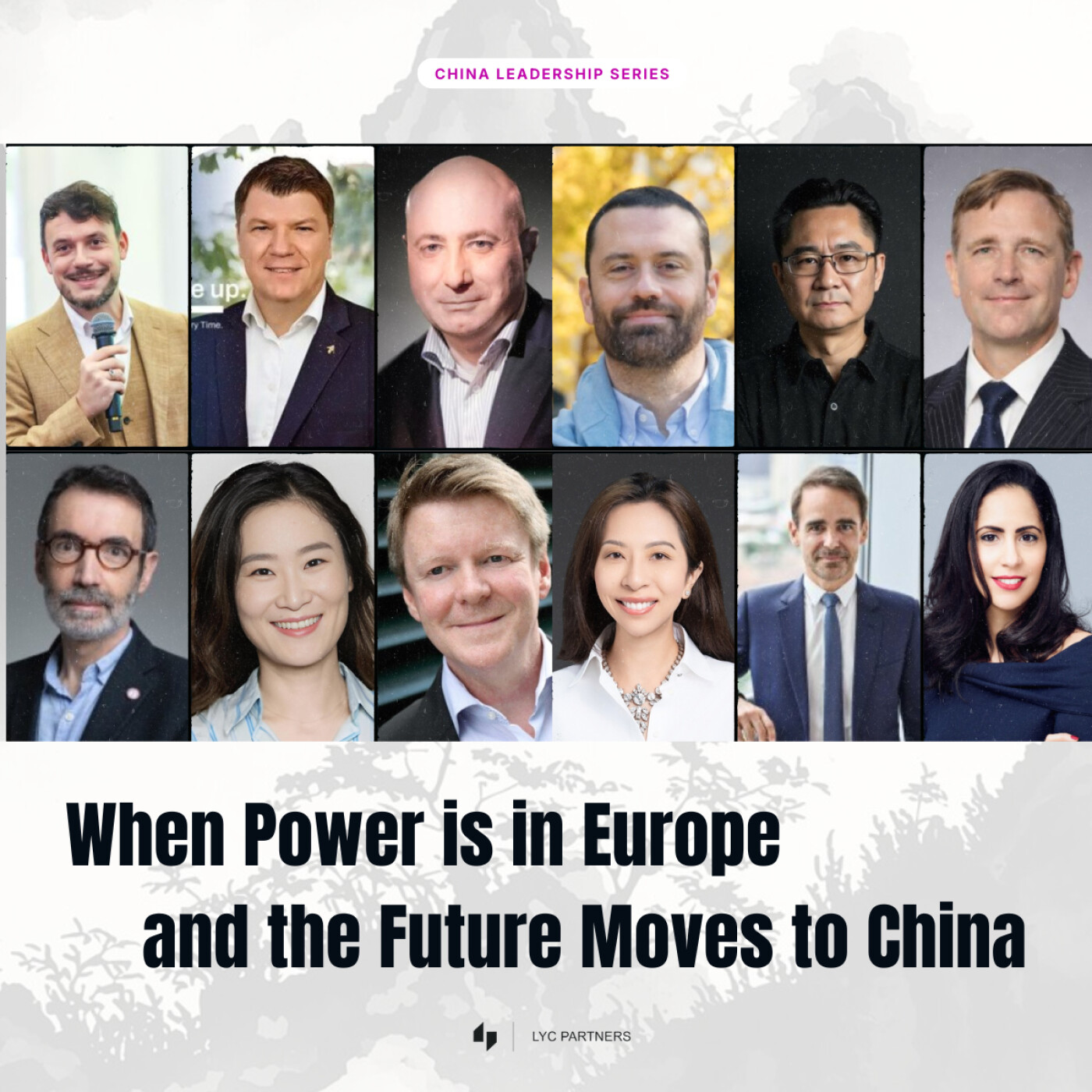 28. Gravitas Shift: When Power Is in Europe and the Future Moves to China70 / 100
 26. From Queens to Paris: Storytelling, Branding, and Cultural Humility in a World of AI Translation with Lory Martinez65 / 100