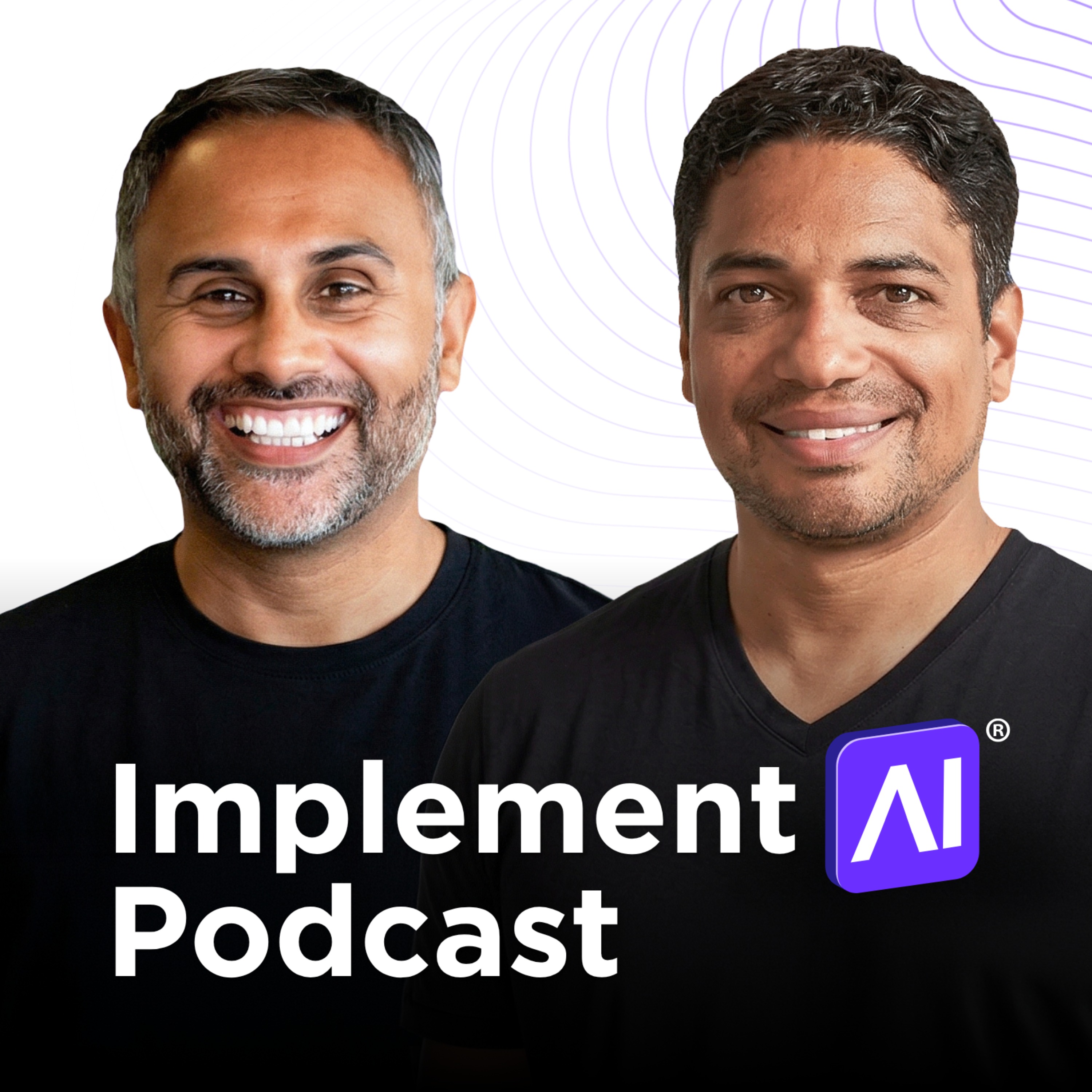
Implement AI Podcast · 2026-05-26 · 12 min
Key moments - from our scoring
Substance score
30 / 100
Five dimensions, 20 points each
Piers Linney and Dr. Aalok Shukla argue that AI adoption requires fundamental organizational restructuring, not just technology implementation. Most companies lack the structural readiness, cross-functional ownership, and aligned workflows needed to deploy agents effectively - they jump to building tools without the foundational groundwork. The pair present their ABCD framework and three agent categories: interactive agents (conversational), action agents (executing tasks via APIs or computer use), and analyst agents (extracting insights from existing data). Their most valuable use case is the call analyst agent, which identifies friction points, buying intent, and missed revenue opportunities by analyzing phone calls and team meetings at scale. They emphasize that successful AI implementation depends on skills, diffusion across organizations, and learning where humans should remain in control - not replacing workers but augmenting them. The conversation targets executives, board members, and business leaders deciding whether to actively deploy AI infrastructure this year, positioning AI as a strategic imperative tied to revenue per employee and competitive survival.
Interactive agents handle conversational interactions with people or employees; action agents execute tasks through APIs or computer use (operating SaaS software or browsers); and analyst agents extract new insights and intelligence from existing data.
It analyzes all phone calls and team meetings to identify friction points, buying intent, competitors mentioned, service discussion, and reasons why customers didn't book or buy - then uses this intelligence to improve both agent and human performance, recursively uncovering revenue already being missed.
Most companies lack structural readiness, clear ownership, cross-silo alignment, and defined inputs before launching agents; they jump to experimentation without the foundational blueprint, causing projects to stall because AI cuts across every business function.
He describes pairing your brain with AI tools like Claude to see perspectives and insights you couldn't see before - it's like upgrading from a fixed engine to one that adapts, allowing you to think at higher levels and unlock new opportunities.
Implementation and diffusion of AI across organizations and people's daily lives will drive prosperity more than having the best frontier models; skills and the ability to implement AI are the biggest drivers of national competitiveness and economic growth.
Our reviewer’s read on each dimension, with quotes from the episode.
The episode offers a handful of useful structural concepts - three agent categories, the call-analyst use case with specific dimensions - but is padded with AI-adoption boosterism and generic urgency statements. Being a 12-minute greatest-hits clip show, it lacks the depth to develop any idea fully.
So if we think about three categories of different digital AI agents, so one type would be what we call interactive agents...The second category...is going to be action agents...The third category is analyst agents.
We're talking about understanding specific friction points. Buying intent, you know, name entity, recognition, you know, competitors that are mentioned, how well your team handled the call based five dimensions.
Most framing is recycled mainstream AI-adoption evangelism; the Steve Jobs bicycle analogy is among the most overused in tech commentary, and the core argument (boards must act on AI or fall behind) is the default 2024 consulting talking point. No contrarian or first-principles claim is developed.
Steve Jobs used to say, like, the computer's like a bicycle for your mind right now. Think about AI. It's like a whole level of that upgraded way.
Most people use it to write a poem for their mom's birthday. That's about as far as it's gone.
The episode features the two co-founding hosts of their own AI consultancy riffing on clips, with one apparent external voice (seemingly a government/policy official) who is never named or introduced. There is no identifiable senior operator or practitioner guest with a verifiable track record at scale.
we're now launching sort of an accredited executive program at Henley Business School to help executives get their heads round this fundamental change
the main reason I wanted to talk to you was because when I think about how AI will actually make a difference for the country at large...it will fundamentally be through implementing, adopting, diffusing AI right across our lives
The episode has islands of concrete detail - hourly cost figures, a weekly-hours calculation, and named tools - but sourcing is absent for statistics, no client companies are named, and the ABCD framework is mentioned without explanation. The call-analyst example is the most evidenced section.
And I said, okay, how many hours a week are they doing that? And some people said, 20 hours a week...70 quid an hour, 200 quid now, five quid an hour.
20% of workers aren't confident using AI, and I think one in six businesses are not using it at all
This is a highlights reel of two co-hosts agreeing with each other; every substantive claim is met with 'Absolutely' rather than a follow-up or challenge. There is no identifiable interviewer-guest dynamic, no pushback, and no question that forces the speaker to go deeper.
Absolutely. Because essentially the key metrics are like revenue per employee
Absolutely. Steve Jobs used to say, like, the computer's like a bicycle for your mind
Computed from the transcript - who did the talking, and the words that came up most.
Implement AI deploys teams of digital workers that work together to boost growth, increase capacity, optimise costs, and improve customer and prospect engagement. Through our AI Operating System (AIOS), a fully managed AI Agent Platform built around Agent Teams, an Agentic CRM, and an Agentic Task Engine, businesses can start with a single digital worker and scale to 50 or more across departments such as sales, support, analysts, and computer use. All setup and configuration is fully handled, so no technical expertise is needed. With more than 600 integrations, organisations save time, increase productivity, and scale faster. Grow your workforce, not your payroll. Learn more at In this Greatest Hits episode of The Implement AI Podcast, hosts Piers Linney and Dr. Aalok Y. Shukla pull together the moments where AI shifted from being theoretical and started affecting how businesses actually operate. The conversations centre on using AI as a working layer inside the business, digital workers handling calls, tickets, research, and follow-ups, capacity measured in outputs rather than headcount, and teams redesigned around what humans do best.
Transcribed and scored by The B2B Podcast Index.
Welcome to the Implement AI podcast. The podcast where we explore the impact of AI on your business. I'm Piers Linney and alongside my co host and co founder of Implement AI Dr. Alex Shukla.
We cover the real world applications and impact how AI can be practically applied to drive growth and efficiency in your organization. We cut through the jargon to focus on actionable strategies and use cases to highlight the transformational power of AI. Let's dive into today's conversation. It needs a fundamental rethink of how we run our businesses and organizations and we're now launching sort of an accredited executive program at Henley Business School to help executives get their heads round this fundamental change.
It's not an IT project. You fundamentally have to think about how organizations are going to change because startups AI first are going to disrupt their sectors. You need to have a primary owner within the business responsible for coordinating all of these different elements. This is a cross silo project which suddenly unlocks different possibilities and nobody before had the authority to even think or discuss things in that dimension.
So having that primary owner can then help with that. Most companies say they're ready for AI, but structurally they're not. They jump to let's get an agent up and running without the alignment, the inputs or even the ownership needed to make it work. And because AI cuts across every function, projects are going to stall fast.
At Implement AI, we fix that with a clear blueprint. We understand the current state, define the future state and use our ABCD framework to get an agent live in weeks, not months. We pre value in one workflow and then we scale into a blended team of humans. It was amazing how many people use ChatGPT and don't even know there's a shopping research mode.
Next year you're going to see that this is the de facto way in which people search and browse the Internet and they start to do things like shopping. The innermost loop of technology is basically AI coding. Agents improving AI models which improve AI coding, agents which improve AI models. That has taken off a lot.
You look at like the kind of the powerful models like Gemini or other ones, Claude code because it's the fastest. Innermost loop of technology has been exploding, but it's not taking off where agents are hitting human resource and friction of organizations. Yet there won't be a board or shouldn't be that isn't having a conversation whether they actually start implementing actively. But it's going to come up in every board meeting or at least one board meeting throughout the year about what are we doing when it comes to AI.
And if that board's not having that conversation, not doing their job properly. Absolutely. Because essentially the key metrics are like revenue per employee, or if you're looking at, for example, what are competitors in a market space doing, how can we achieve our growth targets? All of those things have to involve leveraging AI.
So that is a strategic imperative. And you've even seen examples where there's been firms which aren't using AI, or they've had their market cap cannibalized by AI, for example, like some language instruction or some other areas, or even translation businesses and stuff like this. If they're on the reactive foot, it's a problem. But then other ones, if they've got an AI structure strategy, their stock price can go up, basically, isn't it?
So you've got people who say, I use AI, and I say, in events, put your hand over, how do you use it? Most people use it to write a poem for their mom's birthday. That's about as far as it's gone. Then you've got some power users like us, I suppose, especially yourself, power users that are really changing the way you do everything, everything using this technology.
So I think what the government understands now, and I think all governments going forwards are going to have to be really. This is going to be key to all government strategy going forward, and policy needs to focus on this, is trying to not create lots of, you know, tech and coding experts, just normalize AI use, make it something everyone understands they're not afraid of. Absolutely. Steve Jobs used to say, like, the computer's like a bicycle for your mind right now.
Think about AI. It's like a whole level of that upgraded way. The thing is, we're in a rapidly changing world, so the best thing you can do is upgrade your ideas, your levels to think. And who knows, you could unlock a new opportunity, a new business, a new job, new possibilities, basically.
There's never been a better time to improve your personal prospects, honestly. So I think we think is that increasingly, especially with the announcement today, the access to skills and training and also other places, well, online, what was interesting and what we'll talk about is that 20% of workers aren't confident using AI, and I think one in six businesses are not using it at all, which is insane. One of the things I find is that by calling it AI and talking about AI, we often focus on the technology rather than the use.
The fact that there are people right across this country using spellcheck, which is increasingly based on an AI Model people call it spellcheck rather than AI, but that's AI when people use Google Maps to get around the country and get around our communities. Underlying technology, AI. And so the thing I'm really keen on is instead of talking about the underlying models or the technology, we talk about the use case. I think the way to kind of reframe what's going on here is you're almost giving a cognitive amplifier.
It gives you a lens to think through things first and also to see perspectives that you yourselves could not see. So for example, this morning I received a contract and I just put it straight into Plaud and I was like, look, is there any unfair clause in here? Is there anything I need to be aware of? And this stuff I work pairing my brain with Claude, right?
And I'm like filtering it through and I think if somebody understands that, look, whatever thinking level you thought you had, that was like almost like engine was fixed but now it's like not fixed, right? You can actually see things you couldn't see before. We are big believers in the fact this is going to have an enormous effect on job skills, employment, the economy, business operations and the UK as a whole in terms of our competitiveness going forwards. The main reason I wanted to talk to you was because when I think about how AI will actually make a difference for the country at large and to people's day to day lives, it will not just be from getting the right, best, biggest models of the frontier, but fundamentally it will be through implementing, adopting, diffusing AI right across our lives and across our organizations.
And so this is really the central thing that the government is focused on. Today's announcements are effectively saying if implementation is the biggest thing that will drive prosperity and dignity for people from AI, then the biggest driver of that implementation is the quality of our skills and the ability of our people to be able to do that implementation. Every single industry, whether you're, let's say a healthcare group or whether you're a professional services accounting firm or you're an E commerce company or you know, a HR or recruitment company, every business has its kind of like accepted operating profit.
Now with AI here I'm talking about digital colleagues and digital departments. So if you've got digital workers, that's an entire new labor source that you don't plug into your business. There's also a gap sometimes between, you know, the technology is capability today it's evolving all the time. What we know it can do, what we know it's good at because it can do some things that it's, you know, exciting, but it's not always particularly reliable.
I was asking at the event, right, I said, like, who here has got like many junior people asking a senior person questions? And they were saying loads of people. And they said, and how much is that senior person's time worth? They were like saying, you know, 70 quid an hour, 200 quid now, five quid an hour.
And I said, okay, how many hours a week are they doing that? And some people said, 20 hours a week. That's insane, right? That's the cost of that person's time being done in this way.
But if you imagine in a reasonably large organization, how much time, effort, energy, resource goes into basic conversations, be it support, be it customer, be it wiz, where is my order? Or be it, you know, how do I do this? It's an enormous amount of time. It's just.
So if we think about three categories of different digital AI agents, so one type would be what we call interactive agents. That's where they're basically primarily conversational. So it could be with people or with team members or employees. The second category that we're going to talk about is going to be action agents.
So that's where we're actually like doing execution of things and that could be computer use agents where they actually operate a SaaS software or look on the Internet and do do different things like physically operating a browser, or they could be using APIs to actually action things, update CRMs, pull different things, all that kind of stuff like that. The third category is analyst agents. Probably one of my favorite ones, actually finding out new insights and intelligence and opportunities from the data that you've already got.
This is the Implement AI podcast. We're out in Dubai, but wherever we are, we've produced this book. So we've spent three years learning about how to build an AI platform, how to implement it into businesses and this handbook, basically we've distilled all those insights, everything we learn into this guide. So if you want a copy of this, go to our social media, our website, our resources center, or if you watch the pod, the link is in the description.
So think about like some of the real world examples. One of the highest value ones that we use all the time, and I think it's one of the most popular ones, is the call analyst agent, basically. So that's listening to all the phone calls that came in, but it could be teams meetings as well. This is the most powerful agent I think we do.
Yes, I think because it just, just generates money out of Nowhere. Correct. It's just magic, literally. Do you want revenue or not?
Would you like some money that you already have? It's like basically behind, it's like going behind the sofa, putting your hand in the sofa and you pull out like thousands of pounds basically or tens of thousands of pounds or hundreds of thousands of pounds basically. So the point there is like this is where the analyst agent will like go far beyond. Some people think, oh, I've got AI on my calls.
Analyze the sentiment. You're missing the point basically, right? We're talking about understanding specific friction points. Buying intent, you know, name entity, recognition, you know, competitors that are mentioned, how well your team handled the call based five dimensions.
Then also like did they discuss a high value service? If so, what's the value of that service? Did they buy or book an appointment? Why didn't they do that?
And you're learning recursively. So you either you have a learning to improve the agent's performance or you're learning to improve the humans performance. So the core message here really is, you know, production AI infrastructure is what this is all about. It's about having agents doing work, not experimentation and talk endlessly.
And I keep saying, you know, if you're a senior leader, an owner, you're on a board, you don't have these conversations about how you start really deploying agents into your business this year, right? I don't think you're doing a job and I don't mean replacing your workforce. It's really now about augmentation, it's about helping them do things in ways they couldn't do. But when you do have a human in the loop, you can revert back to human time.
Would you have to? But what you're going to learn is in your organization, your business, your workflow, especially your regulator as well. Where is that line? Where do you want humans in the lead?
Where do you want that core escalated to humans. And that's what you're only going to learn, that you can do that from pilots. But you only really learn this at scale where you have a sort of ongoing interaction with customers, prospects, stakeholders, employees at scale, in real time. First you need to see what you've never seen before, then you can do what you've never done before basically.
Right? So the point here is that like most businesses know they should be using AI, they've heard of like different, you know, things like voice agents, chat bots or tools, they play around with it. But the key thing that they don't understand is like they get the most opportunity and the most elements from actually going deep into it. Thank you for joining us for this episode of the Implement AI Podcast.
If you're interested in learning more about how we can assist you and your business in leveraging AI for growth and efficiency, visit our website at ImplementAI IO. Don't forget to subscribe to the Implement AI podcast on Apple Podcasts, on Spotify, or wherever you listen to. Stay updated on future episodes. Thank you for listening and we'll see you next time.
Other episodes covering the same guests and topics, from across The B2B Podcast Index.
 Episode 029 AI and the Rise of the Superpowered SoloAI Tools for Practicing Lawyers · on Claude88 / 100
 Wins Above Replacement: The New Way to Judge FoundersVenture Unlocked · on ChatGPT88 / 100
 Paul Graham On Startups, Ambition, and Great FoundersY Combinator Startup Podcast · on ChatGPT88 / 100
 The AI-Native Law Firm, with Ryan Walker of General LegalMeeting of the Minds · on Claude88 / 100
 Adamma Ihemeson on Building Autonomous AI Systems You Can TrustBack on T-R-A-C-K · on Claude84 / 100
 657. Waziri Garuba, CEO of Harlem Labs, Introducing G.R.I.O.TUnleashed · on Claude80 / 100
 Implement AI Podcast #90 - Why Agentic AI Is a Business Transformation, Not an IT Project92 / 100
 Implement AI Podcast #87 - Why Businesses Need AI Teams, Not AI Tools73 / 100
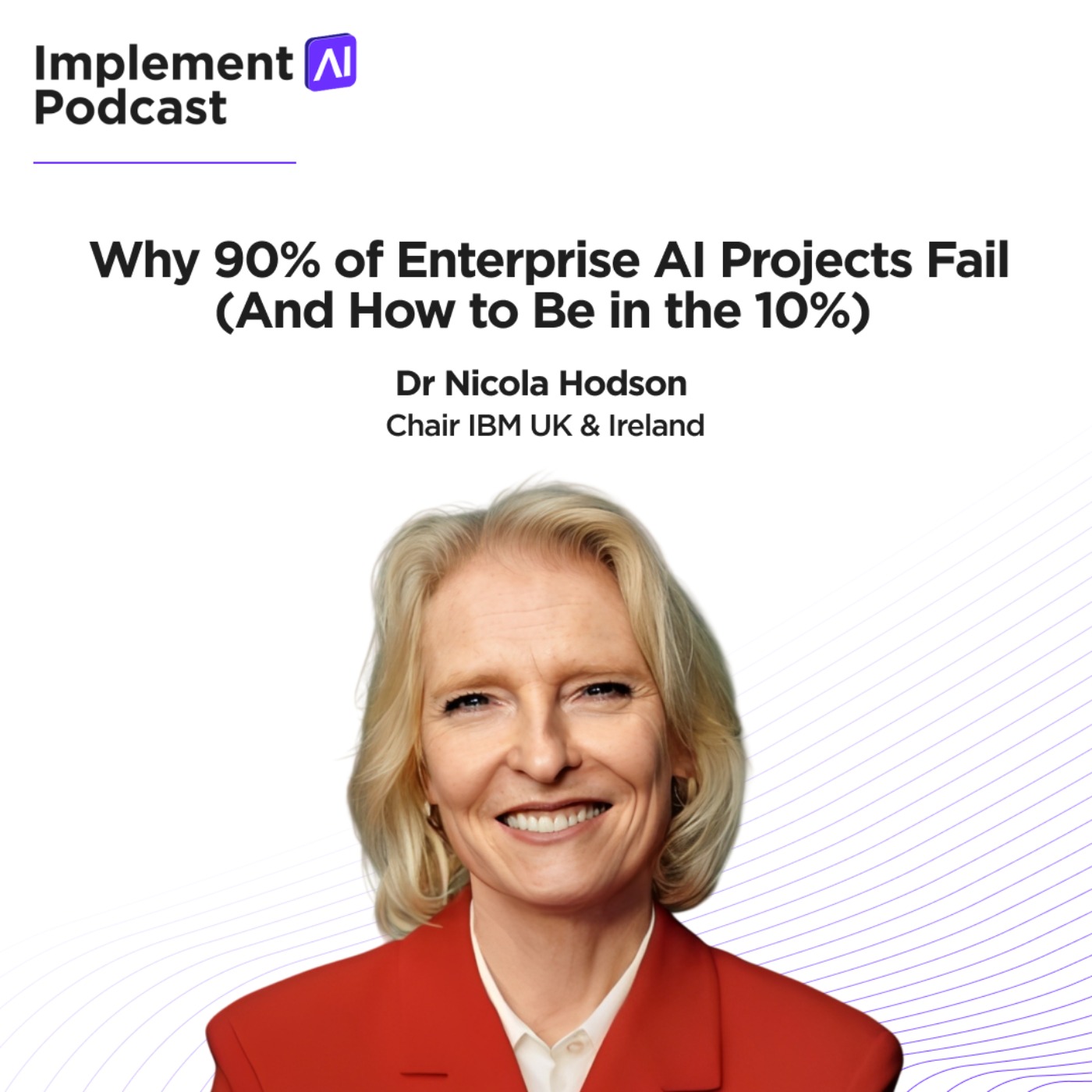 Implement AI Podcast #86 - Why 90% of Enterprise AI Projects Fail (And How to Be in the 10%)81 / 100
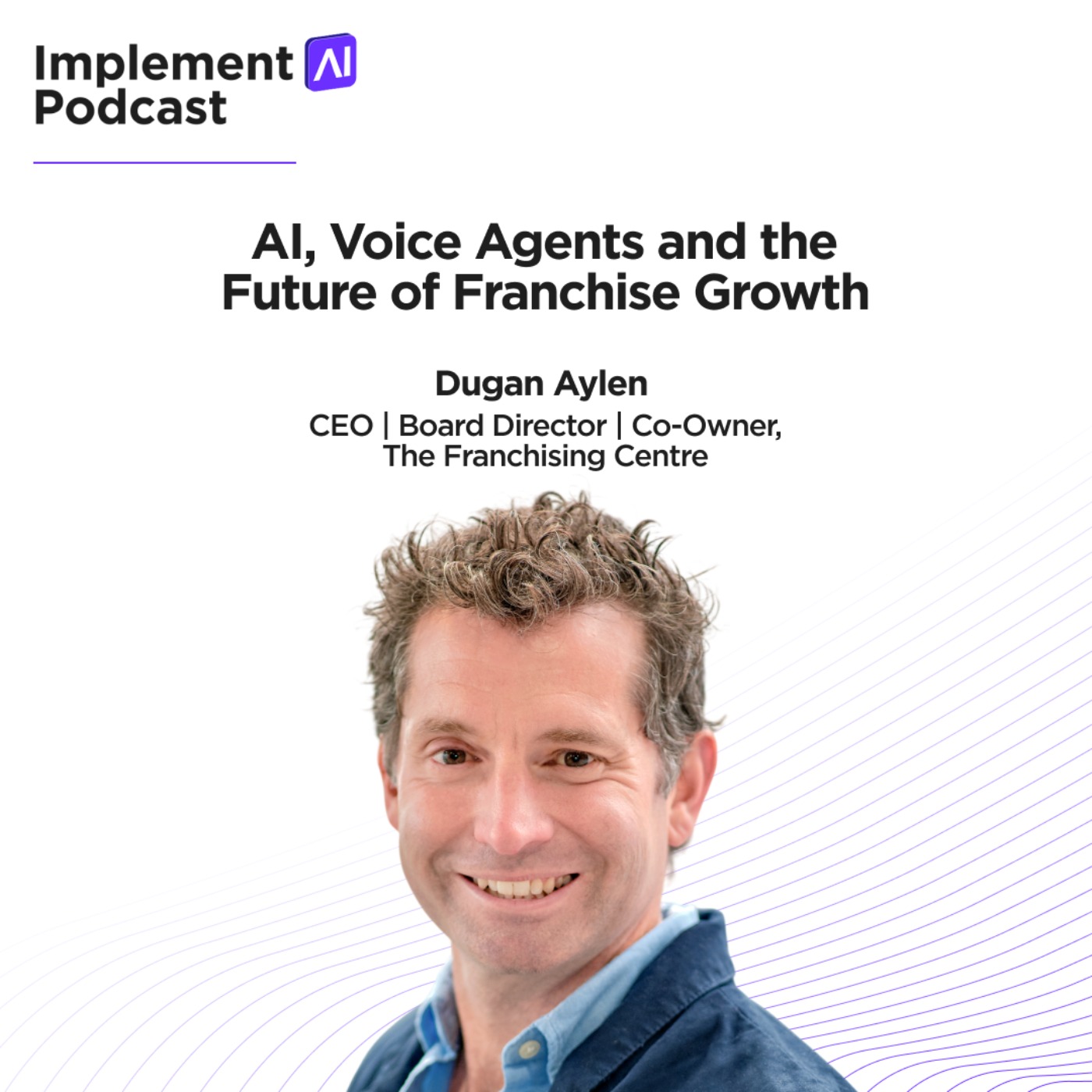 Implement AI Podcast #85 - AI, Voice Agents and the Future of Franchise Growth72 / 100
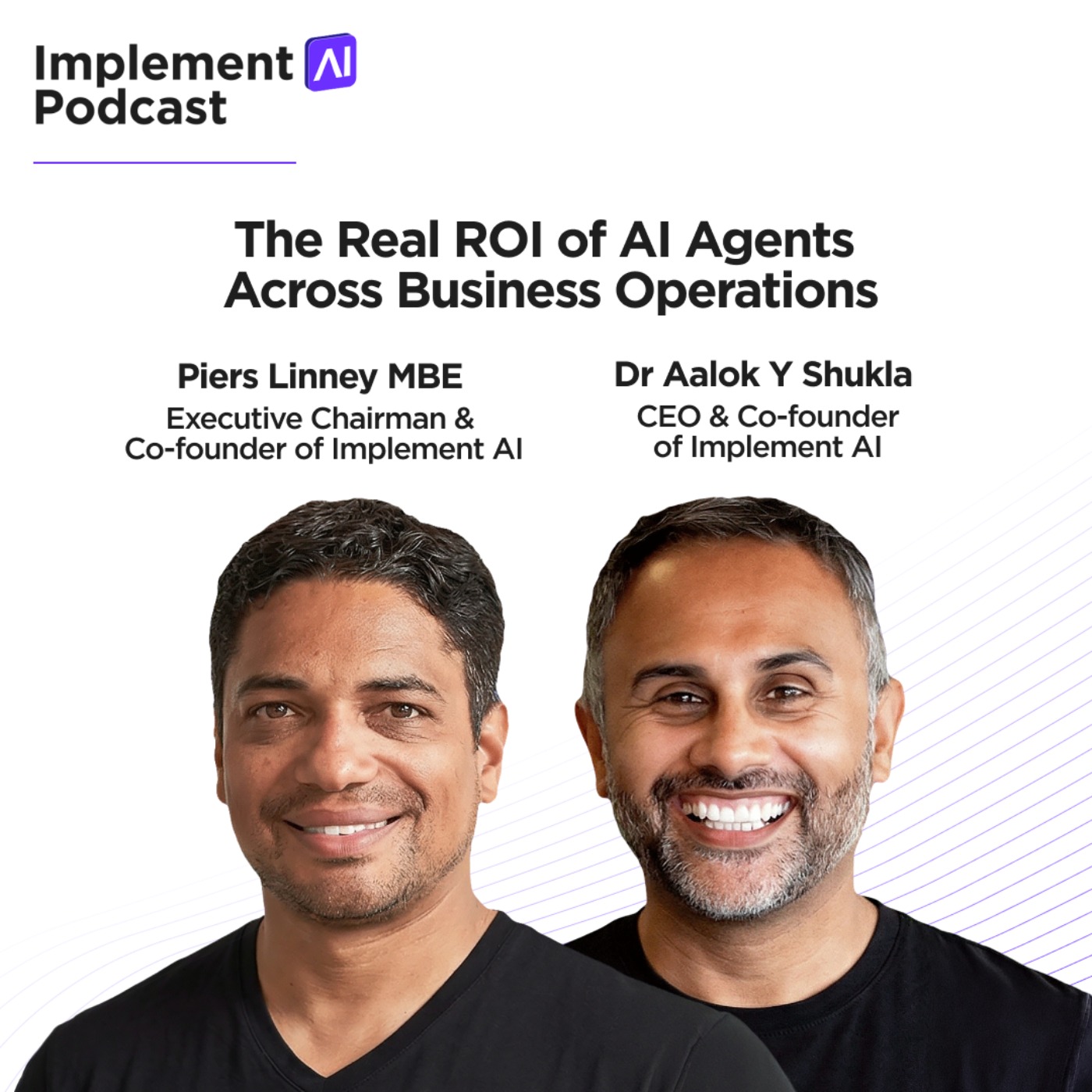 Implement AI Podcast #84 - The Real ROI of AI Agents Across Business Operations58 / 100