Implement AI Podcast · 2026-06-23 · 36 min
Key moments - from our scoring
Substance score
52 / 100
Five dimensions, 20 points each
Franchise networks face a unique challenge: they move slower than traditional businesses because franchisees - small business owners who've invested their own savings - resist change and need buy-in before adoption. Doug Logan, CEO of the Franchising Center (Europe's largest franchise consultancy) and franchisor of Access for Lofts, explains how AI adoption in franchising differs fundamentally from corporate rollouts. The episode explores why franchisors who help franchisees adopt AI responsibly will outperform those who ignore it, and showcases a practical case study: Access for Lofts deployed voice agents to re-engage 9,000 customers who received quotes but didn't convert. Rather than traditional sales pushes, the agent asks open-ended questions about why customers didn't proceed, uncovering genuine objections (electrical conflicts, scheduling issues, already completed projects elsewhere). This approach reveals insights franchisees lack bandwidth to gather manually. The conversation highlights the SME-specific challenge: franchisees are booked 12 weeks out but can't scale follow-up systems without hiring staff they can't afford. For B2B operators managing distributed networks - whether franchises, PE portfolios, or multi-unit operations - this episode reveals how voice agents and AI can solve bandwidth constraints while maintaining brand consistency across locations.
Franchisees are small business owners who've invested their own savings and resist change unless they're convinced of its value; franchisors must win hearts and minds before implementation, unlike corporate environments where changes can be mandated directly across all staff.
The agent calls people who received quotes but didn't convert to ask open-ended questions about why they didn't proceed, uncovering genuine reasons like electrical conflicts, scheduling conflicts, or competitors already completing the work - insights franchisees lack time to gather manually.
Access for Lofts operates 107 exclusive territories across the UK with approximately 1,500 installations per month across the network, generating approaching £20 million in network turnover.
The risk is not adopting AI too quickly but waiting too long, allowing franchisees to independently find their own AI tools, which creates inconsistency across the network - the opposite of what franchising is designed to deliver.
Access for Lofts achieves a conversion rate between 40-50% from quote to customer, though many franchisees don't actively follow up on unconverted leads due to high demand and lack of bandwidth.
Our reviewer’s read on each dimension, with quotes from the episode.
There are genuine practitioner insights around reactivation use cases, the seasonal demand-gap problem, and the idea of bundling AI agents into franchise packages - but these are diluted by lengthy basic explanations of what franchising is, rambling banter, and overt self-promotion for the hosts' own 'Command' product. The novel-ideas-per-minute ratio is low.
the franchisees that do embrace AI will outperform the franchisees that don't if they just left to it
in the very near future, franchisees will get a team of AI agents as part of their franchise package
The framing of AI agents as a bundled franchise package component - analogous to how CRMs are bundled today - is a modestly fresh angle for the sector, but the broader advice (don't wait, pilot carefully, maintain consistency) is standard change-management rhetoric applied to franchising with no genuinely contrarian or first-principles arguments.
As part of that package, every franchisee will get access to a CRM system of some sort. Salesforce, Zoho, whatever. I think that in the very near future, franchisees will get a team of AI agents as part of their franchise package
you move from a tool to a workforce, isn't it? Right, so you're rather providing just a CRM which is like a filing cabinet. You provide that workforce
The guest is a legitimate 22-year franchise sector veteran who is simultaneously running Europe's largest franchise consultancy and serving as a franchisor with 107 UK territories and ~£20M network turnover - he is a genuine practitioner, not a thought-leader. However, his AI adoption is very early-stage and he is not a technical expert, limiting the ceiling on substance.
I'm also major shareholder and director of a franchise company called Access for Lofts, which is a mature franchise brand in the UK, covering 107 exclusive territories in the UK
I've been involved in franchising for 22. I think it's my 23rd or 24th year
The episode provides a solid cluster of real numbers - 9,000 lapsed prospects, 40-50% quote-to-customer conversion, £20M network turnover, 1,500 monthly jobs, 30,000 prospects in the consultancy database - which gives useful operational grounding, though data on AI results specifically is near-zero since the campaign had just launched its first 100 calls.
there are 9,000 people that have had a quote from us...our conversion rate is pretty good. It's between 40 to 50% from quote to, to customer
Our network turnover is, is approaching 20 million. Across the territories that we have. We're carrying out monthly 1500 jobs
The hosts ask reasonable contextual questions and Alec's follow-up on the mechanics of how franchisees manage their sales pipeline produces useful elaboration, but there is no meaningful pushback on any claim, several questions are loose open-prompts, and the conversation is repeatedly interrupted by self-promotion for the hosts' own product.
how does that franchisee typically do manage their sales process? Basically right
And why would you say, again, I'm generalizing that franchise networks are not as, how should I put it, technically enabled as they could be
Computed from the transcript - who did the talking, and the words that came up most.
Implement AI deploys teams of digital workers that work together to boost growth, increase capacity, optimise costs, and improve customer and prospect engagement. Through our AI Operating System (AIOS), a fully managed AI Agent Platform built around Agent Teams, an Agentic CRM, and an Agentic Task Engine, businesses can start with a single digital worker and scale to 50 or more across departments such as sales, support, analysts, and computer use. All setup and configuration is fully handled, so no technical expertise is needed. With more than 600 integrations, organisations save time, increase productivity, and scale faster. Grow your workforce, not your payroll. Learn more at In this episode of Implement AI Podcast, hosts Piers Linney MBE and Dr Aalok Shukla sit down with Dugan Aylen, CEO and Board Director of The Franchising Centre and Co-owner of Access4Lofts, to explore how AI agents are transforming franchise operations. From reactivating dormant leads and automating customer engagement to supporting overwhelmed franchisees without adding headcount, the conversation reveals why AI is becoming a core part of modern franchise infrastructure.
Transcribed and scored by The B2B Podcast Index.
ACAST powers the world's best podcasts. Here's a show that we recommend hello hello, it's Brooke Devard from Naked Beauty. Join me each week for unfiltered discussion about beauty trends, self care, journeys, wellness tips and the products we absolutely love and cannot get enough of. If you are a skincare obsessive and you spend 20 plus minutes on your skincare routine, this podcast is for you.
Or if you're a newbie at the beginning of your skincare journey, you'll love the this podcast as well. Because we go so much deeper than beauty, I talk to incredible and inspiring people from across industries about their relationship with beauty. You'll also hear from skincare experts. We break down lots of myths in the beauty industry.
If this sounds like your thing, search for Naked Beauty on your podcast app and listen along. I hope you'll join us. Should I stay married? Have a kid?
Buy that house? What if you could know with certainty what you should do before you do it? Disruption is a new play about six friends, one dinner and a technology that knows them better than they know themselves. A provocative new play about love, ambition and the cost of certainty.
Off Broadway at the Pershing Square Signature Center, July 22 through September 13. Tickets@disruptionplay.com hey Yetis, this is Nick and Jack from the Best One yet podcast. Now, the last company we worked at, they used Paylocity and everything just worked.
It wasn't until launching our own media business this show that we realized how rare that is. Because Paylocity is one delicious burrito of operational needs. They roll up HR finance and it seamlessly into one delicious bite. When everything wraps together like that all at once, your workforce, your tech stack, your business.
You don't need more tools. You don't even need cilantro. You need one solution. And that is why Paylocity built a single platform to connect HR finance and with AI driven insights and automated workflows that simplify the complex and power what's next.
Or as we call it, a delicious operational burrito. Yes, we do experience a one place for all your HCM needs besties. So start now at paylocity.com 1paylocity.
com O N E. That do embrace AI will outperform the franchisees that don't if they just left to it. If the franchisor takes no control of this and it's just left to it. So that's a fact.
And then the franchisors that help their franchisees adopt AI responsibly will then outperform the franchisors who ignore it, who sit on their hands and are too scared to rock the boat. Welcome to the Implement AI podcast. The podcast where we explore the impact of AI on your business. I'm Piers Linny alongside my co host and co founder of Implement AI, Dr.
Alex Shukler. We cover the real world applications and impact how AI can be practically applied to drive growth and efficiency in your organization. We cut through the jargon to focus on actionable strategies and use cases to highlight the transformational power of AI. Let's dive into today's conversation.
I'm Piers. I'm Alan. So I'm in London in a hotel, trying to get the lighting right. Struggling a bit.
It's a big battle here. But you're in Lisbon, in the Lisbon office. Yeah. And I'll be in London soon for tech Week, so I'm looking forward to that.
Oh yeah, yeah. By the time this goes out, we're probably. Tech Week's probably finished. I think we might be.
I might record the next one in the be. I think I'm going to be hanging out in a few days. I need some sun. So this episode is quite an interesting one.
So I think it's. When was it? End of last year, I think it was. I was a keynote at the British Franchising Association Annual conference, which was a.
And it was quite an eye opener. So I did this sort of keynote AI and you can see everyone in the audience was kind of like looking around each other like, oh, okay. I haven't really. You haven't really heard this sort of art pitches about practical.
So you heard about AI but not actually how you use it. I even did demos we don't often do at keynotes. I've seen demos and literally afterwards it was like a queue of people. And since then we've done quite a lot of work in the franchise sector.
So care homes, lofts, which we'll talk about in a minute, what else we've done that we're talking to. I've got a storage customer, home installations, their businesses and different stuff like that. Yeah. So quite a few actually.
And then one of the relationships came out about cleaning services was the franchising center. So they approached us and we were working with them and they become a partner as well. So we have a partner program. So if you've got a network of businesses or you're a consultant or you know, you just know SMEs are interested in AI, you can become a partner.
So the franchises center became a partner and they've introduced us quite a bit of business, so we thought it'd be great to get Doug and Alen on, who's the CEO. And he's sort of, you know, cutting down the middle. He's got like, franchise, like a sticker rock all the way down his body, I guess all he's done for his whole career. We thought it'd be good to get him on and talk about the franchise system.
If you listen to. I think, oh, my franchise. It's not relevant to me. It actually is, because this is really relating to SME businesses.
Because that's what franchisee, isn't it? Yeah, exactly. How do you reduce costs, scale it, how do you grow your workforce? Like your payroll, all that stuff, but with the added complexity of this franchisor sitting above.
And it's not quite the same, but in some ways we work with other PE companies, well, have portfolios, so they tend to be different businesses. Whereas in franchising it's the same business, like blueprinted, literally. So, Alo, we've been doing quite a bit of work, haven't you, working with them? Yeah, no, definitely.
And it's been great, like listening to some of the use cases that they've done, like from different types of agents and then using Command. And there's nothing like actually hearing from someone who's using it themselves and actually how their thoughts are, because they've obviously used many different technologies and they've got experience, work with many different franchisees. And franchisees have a particular mindset and it's really, really cool to see basically everything from voice agents to Command to analyst agents and other stuff like that.
Basically. Very, very cool. And we'll get Duggin on. But if you're new to the pod, this is the Implement AI podcast we have.
Go to our website, implementai IO. We've got lots of resources there. But if you're enjoying the pod, I'm coming up to a million downloads now, which is nuts. And we're coming up to maybe 10 away from our sort of 100th episode.
I'm not sure what number this is. Leave review really matters. And if you're watching on YouTube, subscribe, click the bell. All that good stuff.
It really does help us. And we're now, probably by the time this goes out, we've launched Command. So go have a look at that. That's our.
It's super powerful. I couldn't work without it now. It's like a leadership inside tool. Connects to all your system and connects to our client, operations manager and executive Assistant, basically.
And our beta testers are like, I use the word carefully, but kind of addicted to it. It's kind of merely sort of powerfully changed the way they operate their businesses. So we'll bring D in and we'll have a chat about franchising business. Most important, Logan, it's great to have you on the show.
We've been talking to you, working with you, since I met you with the. The BFAs, which was quite an interesting event, actually. I learned a huge amount there about franchising, but rather than us trying to explain who you are and what you do, because I think you do quite a few things, actually. You obviously you're advisor, but also you own a franchise as well.
Tell us a bit about yourself. Thanks for having me on this. I'm CEO of the Franchising Center. The Franchising center is a business advisory specialising in franchising in particular.
We've been around for 30 years in the UK. We're Europe's largest franchise consultancy or advisory and I lead a team of over 20 people. And we don't only help businesses in the UK, but we also help businesses globally. So that's one aspect of what I do and one hat that I wear.
And then I'm also major shareholder and director of a franchise company called Access for Lofts, which is a mature franchise brand in the UK, covering 107 exclusive territories in the UK, and we're just launching that into Europe as we speak. So I kind of sit in a privileged position of understanding and being involved in franchising for 22. I think it's my 23rd or 24th year of lost count. But also coming at it from a point of view of being a franchisor, which I'd never had that opportunity before, but the last two years have really helped me bring it all together because it's a real practical aspect of franchising when you're an actual franchisor and being involved.
So that's me, basically. So how did you end up in the franchising business? Accidentally, to be honest, I went to. I'm Zimbabwean.
That's my kind of roots and my heritage and. But I came over here for university. I did a business degree because I always wanted my own business. So I was pretty focused.
As unfocused as I was as a teenager, the one thing I was focused on was not working for someone. I mean, I always had that in mind. So at uni, I took a business degree and it was kind of boring. Like, I did find it a Bit boring.
And anyway, I got through it and then I went traveling around the world for a couple of years. When I came back I realized I needed to get a real job and I just applied. I was living in Norwich at the time and I just applied for an advert, a marketing. In fact the headline was a marketing role in a unique sector.
That was exactly what the hidden line. I remember it really clearly and it was a tiny little ad in the local newspaper. And so this was back in 2002 and I answered that and it was with a franchise consultancy. It's not around anymore, but at the time was one of the largest franchise consultancies in the country.
I just got a job there and I had a marketing background at uni as well and it turned out to be a franchise consultant. I had no idea I'd done four year degree with a gap year involved and the word franchising had not even come up. I didn't understand it as a business model at all and it doesn't come up in a lot of business conversations. So I've done keynotes and people.
People don't really understand it. Also just explain then the franchising model because a lot of people don't quite fully understand. They think they do, but they don't always understand it. I think the simplest way to help people understand it is that a franchise business starts from just an independent business, you know, any independent business anywhere.
That's the starting point always. So you've got someone could be in Plymouth, let's say, who starts a business and it works and it works well and it's profitable and gets to a certain point and then that business owner has a choice. Do they expand that business beyond Plymouth? And if they want to, then there's a number of ways to do that.
You can invest your own money and you can employ managers and open locations in other cities, or you can go down the franchise route. And if you go down the franchise route, essentially what you're doing is you are creating a model that's transferable so someone in Birmingham can be trained to run the business, how it works in Plymouth without having to think about all the stuff that true entrepreneur has to think about, like branding and the name of the business and how to run marketing and selling, the sales process, the operations, the tools, the software, the tech, just everything that's involved in a business that's all been solved already.
And so if someone in Birmingham wants to invest in that business, then they become a small business owner and they essentially become a franchisee and it's like a shortcut. Hesitate to use that word. But it's a, it's a shortcut to having your own business where you don't have to think about a lot of this stuff. Now don't get me wrong, every franchisee is still a small business owner.
Every franchisee still needs to act like a small business owner. You know, they've got responsibilities to the business, they still need to make sure that things happen. If they're staff, they need to manage that. But they have a huge level of support from the franchisor and it allows what I would say non entrepreneurial people.
And true entrepreneurs are a tiny percentage. True, true entrepreneurs are such a small percentage of the population, but it allows people to have a job who want to run their own business to be able to do it in much less risky way, I guess. And why would you say, again, I'm generalizing that franchise networks are not as, how should I put it, technically enabled as they could be. Yeah, no, that's very true and I think it's a, there's a really good reason for that.
It's because franchisors have this responsibility not just to the business, but to all these small business owners that are their franchisees. And there's a kind of a natural tension that builds up there because the franchisees have invested their own money, their savings, they've taken big risks, they might have left a job, they've never run a business before. And they're putting all of their faith really in the support of that franchisor. And that franchisor has a certain infrastructure already set up and that gets adopted by that franchisee.
I mean, that's part of it. So when it comes to introducing something new now that could be new at an accountancy level or financial level, it could be a new CRM system or new marketing tool that the franchisees are going to have to learn to use. So it is being provided for them, but they're going to have to learn how to use it and change what they were doing before. It's true to say, you know, no one really likes change.
And if you're a company that has lots of staff, it's much easier to say, hey, look, we're moving from G suite to Office365 with our email. And that's just what it is, right? I mean, everyone just has to deal with it. Franchising.
You almost got to win hearts and minds first before you make that change. And if you have a network of like we do over 100 territories then it can be incredibly disruptive to just throw in a new technology and expect everyone to adopt it and use it. Because even if the training's there and everything else, these small business owners can get pretty upset. And so I think that's one of the biggest reasons why things move more slowly in a franchise business than a normal business.
And I guess that's in alok and I talk about the linear world and then you've got this exponential world. So I guess that was difficult in a linear world because people, as you say, it might involve investment. And I guess when you're a franchisee, investment just comes straight out of your pocket, basically because they see that as obviously sort of a zero sum game. So an exponentially changing world, which these things are changing very, very quickly.
I assume it's going to be even harder for the franchise networks to catch up. So talk about maybe chipping out like as well as we've been, we're talking about, you know, revenue capacity, experience, what we kind of focus on. And what's your experience been then in terms of, you know, talking to us about AI and then working with us? Because, you know, obviously you've got the franchising center, you're one of our partners, one of our leading partners, actually.
And then you've got access for loss as well, which you're now deploying yourself. So can you see the potential but also the challenges? Absolutely. I mean, this is the difficult thing when you're a franchisor is that if you move too slowly, as a business owner, was a leader of the business, then your franchisees fall behind the competition.
Right. So this is adopt any kind of change. If you move too quickly, then the franchisees feel overwhelmed or resistant. So that's what I was talking about before.
And if you do nothing, which by the way, happens a lot because it's just everyone doesn't want to rock the boat, then eventually franchisees start asking, hey, why isn't the franchisor helping, for example, them navigate AI, which is the big thing. And really what the theme is here. So the risk to franchisors, and this is everywhere worldwide, is that the risk is not adopting AI too quickly, it's waiting too long so that their franchisees then start finding their own AI tools and everyone's playing around.
Imagine a hundred franchisees all trying to figure out their own world around AI. It's going to end up creating inconsistency across the network, which means that customers, potential customers, are getting an inconsistent service. And that's not what franchising is about franchising is about consistency. You know, I think, well, that's what I know as a franchisor, that's what we have to navigate, that's what every franchisor has to navigate.
But the answer is not sitting on your hands, you know, the answer is doing something. And that's exactly what we're doing. You know, at Access for Lofts we are going slowly, I would say, and we are navigating this slowly and we are testing things. So for example, working with implement AI, we have now trained an agent, essentially we call it a research agent, but they are going out to 9,000 people, potential customers who have actually had a survey just to explain what Access for Lofts do.
Access for Lofts, we go into people's homes, we go into the space at the top of their house which is not habitable space. People that have had a loft conversion are not our customers. This is the bit at the top of the house which is normally dark and dry and dusty and, and you're not a very nice place to be. And we create storage up there so we board it out nicely.
We put lighting up there, we create a really nifty drop down ladder, we make a hatch accessible so it becomes a really great space to store stuff. And that's essentially what the business is. So it sounds really simple but it's massive. Our network turnover is, is approaching 20 million.
Across the territories that we have. We're carrying out monthly 1500 jobs. So we're going into 1500 homes and converting that attic space or loft space and turning it into storage. And so but what we found is that the conversion rate from we go and offer a free survey, so we'll go into people's houses and we'll survey it and, and off the back of that we'll provide a quote.
And what we've seen is that in the last six months of 2025, there are 9,000 people that have had a quote from us. So they had a survey, we spent time in their home and we actually delivered a quote that made sense. Who didn't go ahead. Now our conversion rate is pretty good.
It's between 40 to 50% from quote to, to customer. And so with AI, with this agent, we're training it to go back to these 9,000 people to ask the question and figure out why they didn't move ahead with Access for Loss. Did they move ahead at all? If they did, who was it with?
Why did they in the end or why didn't they move ahead? Alec knows a bit about this, because we were talking before we started this, he was listening to some of the call recordings because we're starting slow, right? So there's 9,000 there. We launched just this week, the first calls to the first hundred people.
And we're going to obviously grow from there. So that's what we're doing right now. And that's just the start. That's really cool because, like, I was listening to some of the calls yesterday and like, they're done very smartly.
Like, and things just like, you've got. See, people think a voice agent is. A voice agent is a voice unit, but it's not just like a person is not a person is not a person, right? Like, the thing is just like in a franchise, you got your unique way of doing things and you got your process and way and you train all the franchisees to train their team and everything in that way, in the same way.
I see, like, this agent is very, very nice. And I was listening to the calls and it was calling people and saying that it's not a sales call. I just want to find out, did you inquire about loft conversion? And so people like, yeah, I understand that.
And they say, like, can you answer a few questions on it? And most people are saying, yes. Quite surprised with that because I obviously listen to a lot of calls and reactivation. Right.
Like, we do this a lot of different companies. It was a very intelligent way of doing it and it was revealing things that they wouldn't have said otherwise. Like if you just said, like, for example, are you still looking to buy a loft? They'd probably be like, no, basically.
Right. But if you actually said this and some people were saying they need to move some electrical things, or some people were saying, actually there was a conflict with this thing, or some people saying, actually this date is okay, or other people saying, I got it done already. So those things are really. And I thought that was really nice, a really practical and tangible way.
Because how would the franchisee normally be following up with those? Right? Because you said there's 100 people doing 1500 installations a month. It's like installations a month, basically visiting places.
So I imagine they got their van, they're driving around, and then they've got phone calls and emails coming in and someone saying, where is my thing being stalled? Like, talk me through. Like, how does that franchisee typically do manage their sales process? Basically right.
Again, it's back to the small business owner thing, right? Every franchisee is a small business owner trying to build a profitable business to support them and their family. And that's, that's essentially, you know it, by the way, in their local area. So they are a local person serving their local community.
I think one thing that a lot of people think franchising is some, it's almost the equivalent of a big corporate business taking over a country or the world. It's almost the opposite of that. It allows local people to start their own local business serving their own local communities. That's really what franchising is if you break it down.
And so that's the definition that I like to attach to franchising can be used for good and bad, but that's the good use of it. And so, but to answer your question, Oleg, I think as small business owners, a lot of our franchisees simply don't have time. Their conversion rates are good, so they don't need to follow up where people haven't said yes or no or anything. They just haven't come back.
And of course they do the follow up initially, but they don't carry on that process. You know, they don't nurture that, doesn't proactively reach out again. They don't have the bandwidth to do it. And then also typically if they wanted to scale, they would hire another person to follow up, but then they got to then manage that person and that creates those challenges and they may not have enough revenue to support that in that kind of way.
So you get that chicken and egg where you get stuck in a particular area, isn't it? Right. And then you're sealed. Yes, more than that, because a lot of our franchisees are, have too much work.
A lot of our franchisees are booked out 12 weeks in advance. So if you're in an area and you want your, you know, you want your loft done, you might have to wait 12 weeks. I mean, that's a really nice problem to have, but it's also a problem because people might not go ahead if they have to wait three months and they might go and use a competitor. So you're trying to navigate all of this.
And, and the truth is most franchisees don't need to do this follow up because they simply don't need the work. However, we're entering a period now where things get more quiet. You know, we, we're coming into summer, people are planning their summer holidays, people are going away, school holidays, all of this kind of stuff. And people just think, I don't want to get this done over summer because I don't want people in my house.
I don't want to have to deal with this. I've got too much other stuff going on. And so we always see around this time of year, inquiries drop off, potential customer engagement drops off. And so the reason that we've thought to bring this agent in is to fill the gaps.
As people's 12 week becomes 6 week becomes 4 week, they start to get a bit twitchy. I would be too, as a business owner, because that's running out of work and that's revenue and that's profit. And so with this agent, we're thinking, well, actually we can plug some of those gaps because we send it out and we can follow up all of these people in that area and resurface people that have already had a quote. So it can be a real quick movement from that point to actually, can you get them to get back in touch with me?
Because I do actually want to go ahead and within a few weeks they could be booked in and it solved the problem. So that's just one use of it. I think one thing we find is that we say this quite a lot on the pod is that people often think, oh, AI is all complicated. And there's a lot of sort of concern about agents doing this or that.
And actually, also the first place to start is reactivation, out of hours, re engagement. It is literally generating revenue from the business and the work you've already got or already done. And literally like what you're doing there, reactivation, re engagement, whatever you want to call it, it generates cash just out of the box straight away. And those agents pay for themselves very, very quickly.
Exactly. And as an example, as a franchisor, this way we have to be careful. We can't just release the agent to 9,000 people because what could happen is that it might reactivate loads of people in one area. And.
But that particular area, that franchisee may have 12 weeks booked out. They don't want people coming forward, wanting to go ahead. And these are people that are aggressive. All they're going to do is just hit this barrier of you'd have to wait 12 weeks.
It's like, hang on, you just called me and why I'd have to wait 12 weeks now. I mean, I've got the quote, let's go. So we have to be really, really careful to take these hundred territories which we've segmented with the 9000 data, and we've got to be able to turn it on and off and turn an agent on for this thousand, because this franchisee needs some support. But that gives you the complete Flexibility because it's basically a workforce as a service.
Right. You can turn it on, turn it off and you can't do that with a person basically, isn't it? Right. And then talk a little bit about command Dugan, because you also got access to command and you like using it to like just very.
You had a first session where you were looking at some of your systems and you were talking to some of your project management system or maybe some of your email and different things. That again is like a very easy way to deal with technology. And I'd be interested to hear your thoughts on that. Basically, as a CEO of a small business, let's face it, the Franchising center is a small business in the world of business.
But it's busy and I can get overwhelmed with email and we've got got really good systems and really good tech. But that again, you know, that creates a lot of noise. And I've tried to use PAs and VAs and EAs executive assistants and so on. I've tried all of that.
It's probably me that's the most, I'm the most difficult person to work with because I don't give probably enough time for training those people and so on. And so it's never really worked how I wanted it to. When you guys released the S command to me, it's like, well actually if it's set up right, I go back to like, everything's gotta be set up right. Then this can actually do everything that I would need a person to do, but I'm not having to worry about them because it's not a person.
And this thing can just surface the emails that I need to pay attention to on a daily or weekly basis. They can recognize opportunities I've missed or where I've sent an email. It can do a follow up. And so that's just email, but it's.
I'm looking at it for everything. We use something called Basecamp, which is our project management system and it can link to that and so it can tell me, oh, these are all the areas in the business where people have mentioned me at, you know that people do an at my name and so that's where they need a response from me and it can surface that and then it can create a response as well because it knows who I am. So I'm at the early stage of using it. Right.
And I'm. I was on with you last week or whenever it was and we're. And I'm playing around with it, but it's incredibly Exciting. I just think that, I mean the future is that if I think about franchise business leaders, I mean everyone's going to have one of these.
Exactly. What we find is for many business owners where we've set up for them with command scheduled reports. So one thing that we do is like you can use it where you can ask it questions, but what most people want is they don't want to use it, they want it just to do the work basically. Right.
So we find every day all the clients, they get like a report on like what the agents did yesterday and also updates in the system what the team did. And then it's really quite cool. So like for example, from your reactivation campaign, that can be a report which is like all these people are looking to go ahead. These are the reasons why they do friction.
So just at the beginning of it. But it's very exciting time, isn't it? Because as you know, if you offer franchises to people, they're looking for assistance and systems. And a system is a way to do something, but you still need the person to do that thing.
Right. I think what this introduces is a system without the need of a person to power some part of the business so that they can almost be like an electric bike, you still pedaling, but you just go so much faster with the same effort basically to talk about the franchising center. So one of the problems that we solve is working with franchisors to help attract and find franchisees, right? That's the growth model.
And unless you find people that are going to take on the business model, you're not growing. And so, and that's been really, really difficult in the last five years for loads of reasons. Brexit and wars and Covid just one thing after another, then another war and then cost of living and everything just has a compounding effect. And if you're thinking about people deciding to leave a job and they've never had their own business before, and the majority of franchisees, I would say over 75%, maybe higher, are people that have never had their own business and they are leaving employment for the first time and they are actively choosing to leave employment.
They're not. Yeah, there are redundancies and all of that, but the majority of people are proactively making the decision to leave employment and start a business and that business is a franchise. People have been scared to make decisions. People have not been wanting to take that step, They've been putting it off.
They're staying in the job even if they don't like it waiting till the environment around them is improving and it hasn't been. And so that's the biggest problem that I'm seeing right now in franchising is identifying these small business owners or likely small business owners. And so again, to bring it back to how I'm looking at agents and using agents with that, we've got a database of over 30,000 people over the last few years that have inquired about franchising and about investing in a franchise and starting their own business.
As far as I know, they haven't done anything. And so, but, but what do we do with those 30,000? I mean, we do all the normal things, email, nurture and blah, blah, blah and all that. But we're not calling them because it's just too much.
And so we never, you know, we just don't call them. And that's where I see again, kind of a research agent going in to ask them the question. So let's talk a bit about franchisors. And we talked about franchisees.
And I can get small businesses, limited resources, you know, finite resources. They want to do more with what they've got. And agents and AI can really help them, can, you know, grow revenue, extract value from the database. They've got re engage out about all that great stuff.
But a franchisor is slightly different, isn't it? It's more complexity. You're managing a network. Got onboard franchisees as well.
Talk about it from that level in terms of how AI could help. If I was to simplify it, if I look at it right now, this is how I see it. In 20 years ago, every franchisee as part of their franchise package got a printed operations manual. It's like the bible of the business or the blueprint of the business.
And that ran through. Hey, if you follow this marketing, sales and everything else, then you can run and build this business successfully as long as you do the right things as a business owner. So that was 20 years ago. Obviously that's changed today.
As part of that package, every franchisee will get access to a CRM system of some sort. Salesforce, Zoho, whatever. I think that in the very near future, franchisees will get a team of AI agents as part of their franchise package. Seriously, I say very near future.
I'm talking soon and actually not even soon. It's what every franchisor should be thinking about now is how can we actually add agents to that package. So as again, thinking as a franchisor, this is the road we're going down. I mean, access for Lofts is a very mature brand in the uk.
So we're not looking for many more franchisees in the uk, but we're going into Europe. So why not offer a package in Europe which includes AI agents that will help solve common issues like lead conversion, inquiry, follow up, customer support, data analysis within the business, the admin sides of the business, which at the moment are franchisees that access, you know, they haven't to really do all of that themselves. Now when I say do all of that themselves, they might employ someone to make phone calls, they might employ someone to do the admin and in fact many do.
But there are areas where those people can be massively supported with AI agents. And so that's what we're attempting to do. And we're at that very starting point where I would say in the next 12 months I would like Access Veloffs to have kind of a team of AI agents as part of a franchise package. And so when people invest their money, they know and they see how it works and they totally bought in from the start.
Hey look, when you get an inquiry you don't have to follow it up yourself because you're busy working. That's a game changer, isn't it? That if you think about it like here, here's, here's a workforce and it can't do everything. What it's going to do any small business owner is the mundane, the repetitive, the stuff you can't afford to pay people to do out of hours, for example, you can't call thousands of people.
So I think that is a game changer. The way you actually just described it, you can get the insights and you can kind of like optimize and you can get data and optimization. They couldn't get themselves basically in that kind of way too. No, totally.
Because again, as a franchisor, if I stand back and I look at franchisees as small business owners, I'm saying, okay, the franchisees that do embrace AI will outperform the franchisees that don't if they just left to it, if the franchise or takes no control of this and it's just left to. So that's a fact. And then the franchisors that help their franchisees adopt AI responsibly will then outperform the franchisors who ignore it, who sit on their hands and are too scared to rock the boat because of the kind of the unique relationship that I talked about earlier between franchisor and franchisee.
So I think that the role of a franchisor has Always been to help franchisees succeed. That's the whole point. People don't join a franchise network for more tech. That's nothing to do with it.
You know, tech is fun. They joined because they believe they'd be well supported. Okay. And so the question for franchise always isn't whether to use AI, it's just how that can become another layer of support to those franchisees.
But it comes back down to the problem in normal businesses, that is not franchise businesses be much easier to adopt new tech and practices. But I also guess that in some ways it makes them more autonomous as well. So yes, you want the support from the franchisors, what you're paying for, that's what the kind of revenue shares, whatever the economics are. But now it's saying actually yeah, you get the support there.
Now you can have a team of agents that allow you to be master your own destiny to some extent as well. Yes, exactly. But it goes back to when you've got so many franchisees. If the franchisor doesn't lead that, then the franchisees, because they are small business owners, they will figure it out themselves.
But that doesn't mean they'll get it right. And there will be no consistency because they will all be using different tools. And so it does create this different experience. And that's not what franchising is about, it's about consistency.
And so franchise also had to be really, really careful to not wait too long to start adopting AI and looking at it and then rolling it out. So if you could give a piece of advice because you are a franchise consultancy to a franchisor and franchisees, what would it be in terms of AI? Obviously not general advice to franchisors. It's don't wait, don't wait.
Create a leadership team that will take on that responsibility of looking into AI, the use of AI, the use cases in the particular business at all levels. And when you look at it that way, you are looking at it from the franchisee level because the business, the business of franchising is essentially many, many, many, many small businesses doing the same thing around the uk and that creates a cumulative effect. So I think that's the all franchisors are talking about it. They probably need to act a bit more quickly.
I think they need to start taking steps, careful steps. Just like we are at Access for Lofts, we're taking really slow and careful and steady steps. We got our franchisee conference coming up in September and AI is going to be a big topic on there and, and we want to be able to showcase what we've been doing, what work we've been doing with you guys to the franchise network because they're all there, we've got a captive audience, they're there for a day and a night and we want them to be bought into the use of AI in their business.
And if we can show them we've been testing this and this is, these are the results, then that goes some way to getting them there. So if I'm a franchisee then I would say find out and ask the question to your franchisor about what are you doing about this because. Or are you leading me? Are you helping?
What would you advise? And I'm pretty sure that pretty much most franchisees would prefer it if someone was telling them what they need to do. Giving them a system that is proven and worked and tested and then train them in the use of that. That's what most franchisees sign up for.
So that's what they're expecting. Great. Well listen, great, great having you on, looking forward, working with you more and more, learning more about franchising. We're hopefully going to see, we're going to maybe do some.
You might come to our AI tent at the what's the Ideas Fest. So we're doing that. We have an AI tent there actually, so it might get you down there and do some panels. But you should come on the show.
Everyone's probably learned something there about the franchising business and we'll speak again soon. Yeah, absolutely. And thanks so much for your time and we'll see you very soon. It's great having Duggan on.
It's great. He's a customer, he's a partner, very experienced, they're bringing a lot of business to us. So everyone's doing quite well out of that. And it's great working with his business actually access for loss as well because we all a huge amount from that as well.
So I think that in franchising, I think what he said was really interesting about the fact that franchisors should be providing franchisees, literally a team of agents, which is kind of what we do. If you think about it like providing the CRM or the email system is like providing like one tool. Right? But you move from a tool to a workforce, isn't it?
Right, so you're rather providing just a CRM which is like a filing cabinet. You provide that workforce which will be helping you grow your business basically. So it makes complete sense and really great to work with forward thinking partners and customers. Like that.
Basically. Basically. I'm very excited to see how this goes, basically. But very, very cool.
Yeah. And I'll say it again, if you're you want to be a forward thinking partner, we often talk about the partnership. Maybe do a podcast now look actually about partner programs. We're launching a reseller one as well.
If you've got a network, you're a consultant, you know, you don't want to sort of implement or sell technology. You introduce it to us or refer it to us. We do all the work and, and you get paid a commission. So maybe we'll come back to that.
But for now, that was the franchising episode of the Implement AI Podcast and we'll see you soon. See you then. Thank you for joining us for this episode of the Implement AI Podcast. If you're interested in learning more about how we can assist you and your business in leveraging AI for growth and efficiency, visit our website at ImplementAI IO.
Don't forget to subscribe to the Implement AI podcast on Apple Podcasts, on Smart Spotify or wherever you listen to. Stay updated on future episodes. Thank you for listening and we'll see you next time. Should I stay married?
Have a kid? Buy that house? What if you could know with certainty what you should do before you do it? Disruption is a new play about six friends, one dinner, and a technology that knows them better than they know themselves.
A provocative new play about love, ambition and the cost of certainty. Off Broadway at the Pershing Square Signature Center, July 22 through September 13. Tickets@disruptionplay.com what makes a leader worth following?
What should you really care about in your job? As technology is changing so quickly, is it just gonna be about machines talking to other machines? I mean, should you quit your job and and start something on your own, what would that take? What does success and risk look like when we're all at the starting gate together?
These are the questions we answer each week on Lead Human with Jack Myers and Tim Spengler. Join us each week and subscribe at your favorite podcast platform and YouTube. We'll tell stories, we'll hear from some of the best, and we'll try to figure this out together. This year's girls trip to Telluride was the best.
We one upped ourselves with my Sapphire Preferred card and with 5 times points on Chase Travel plus 3 times points on vacation homes with top brands, we got this incredible cabin. It was a mansion and with three times the points on dining, we ordered a Wagyu steak dinner. And that pistachio gelato was too good. So where should we go next year?
I've got ideas. Chase? Sapphire preferred the card that's preferred for a reason. Cards issued by JP Morgan, Chase bank and a member FDIC, subject to credit approval terms apply.
Other episodes covering the same guests and topics, from across The B2B Podcast Index.
 Episode 40: The Economic Reality of AI: Friction, Talent, and the Future of the FirmHigh Signal · on conversion rate optimization97 / 100
 What Vendors Get Wrong - A Fractional CMO’s Honest Take on MarTech SalesThe MarTech Matrix · on conversion rate optimization86 / 100
 Late checkouts, AI agents and the future of guest communication with Cole Rubin of ConduitMatt Talks Hospitality: Real conversations for innovative hoteliers · on voice agents83 / 100
 415[Marketing] Webinar Secrets | Author Interview Jason Fladlien - One to Many2000 Books for Ambitious Entrepreneurs · on conversion rate optimization82 / 100
 #364 - Cracking the Code on Retention: Recharge CEO Reveals What Best-in-Class Subscription Brands Do DifferentlyDTC POD · on conversion rate optimization80 / 100
 Strategizing to Conquer Rising Meta Ad Costs with Jessie Healy, Phoenix Ha, and Sarah LevingereCommerce Impact Podcast · on conversion rate optimization80 / 100
 Implement AI Podcast #87 - Why Businesses Need AI Teams, Not AI Tools73 / 100
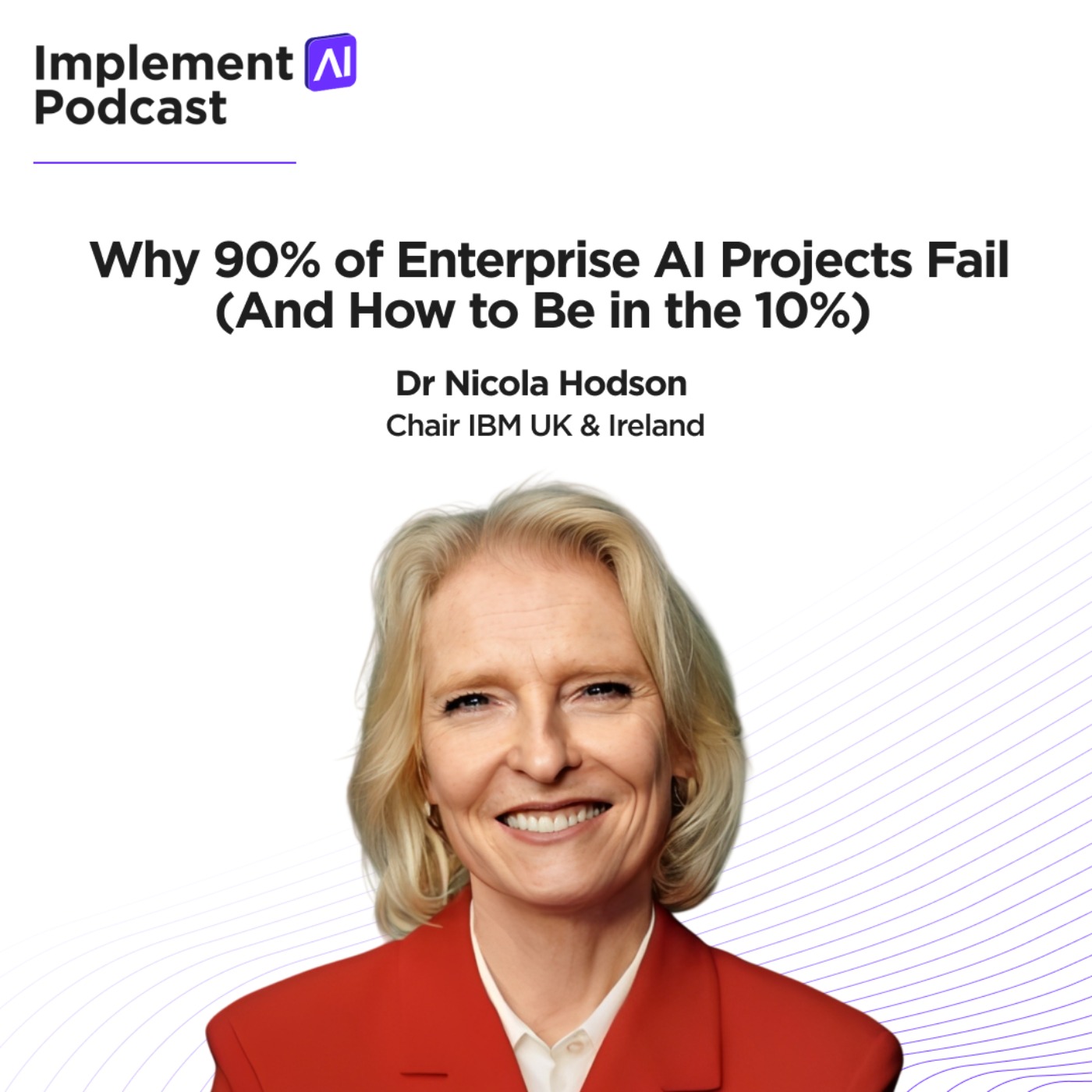 The Implement AI Podcast #86 - Why 90% of Enterprise AI Projects Fail (And How to Be in the 10%)81 / 100
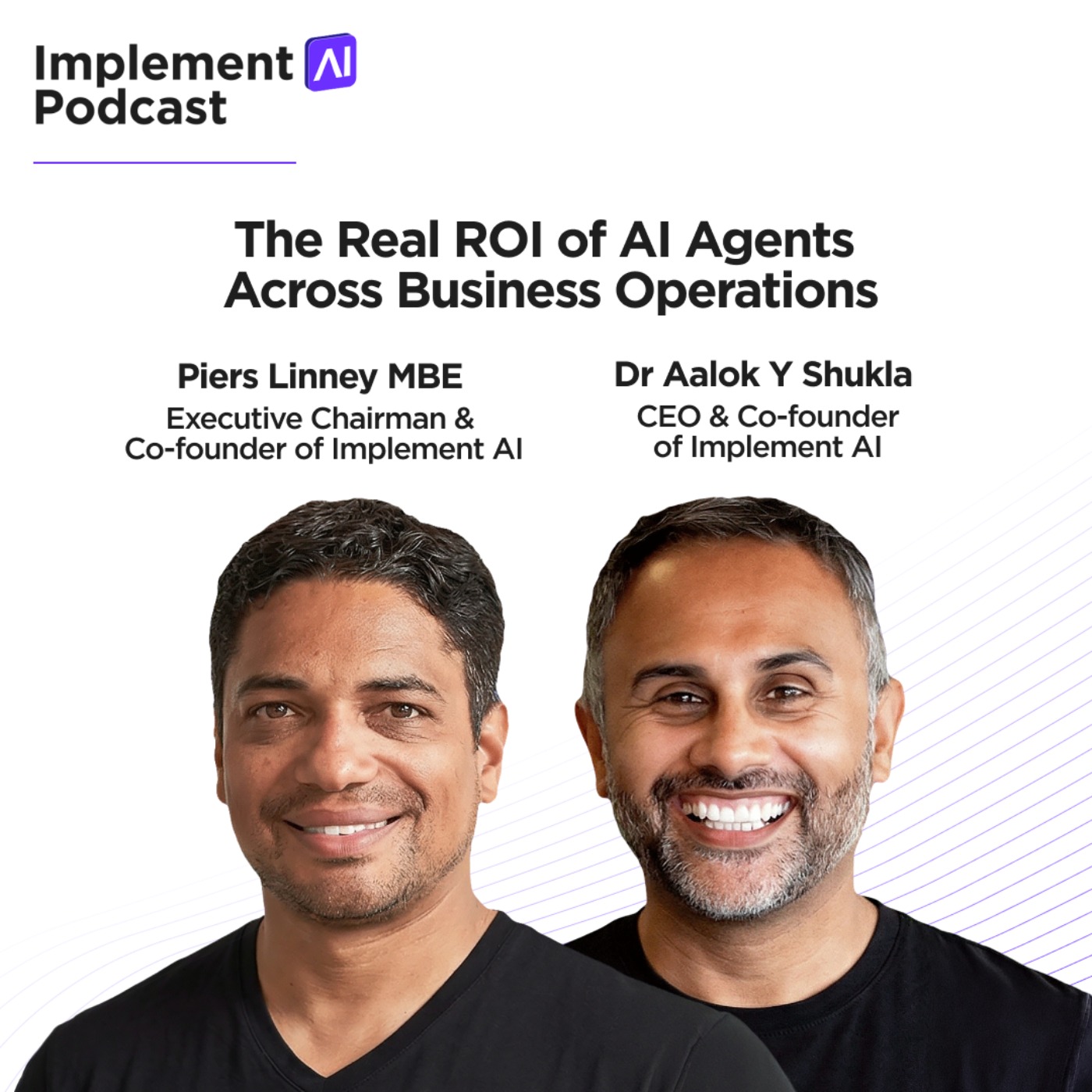 Implement AI Podcast #84 - The Real ROI of AI Agents Across Business Operations58 / 100
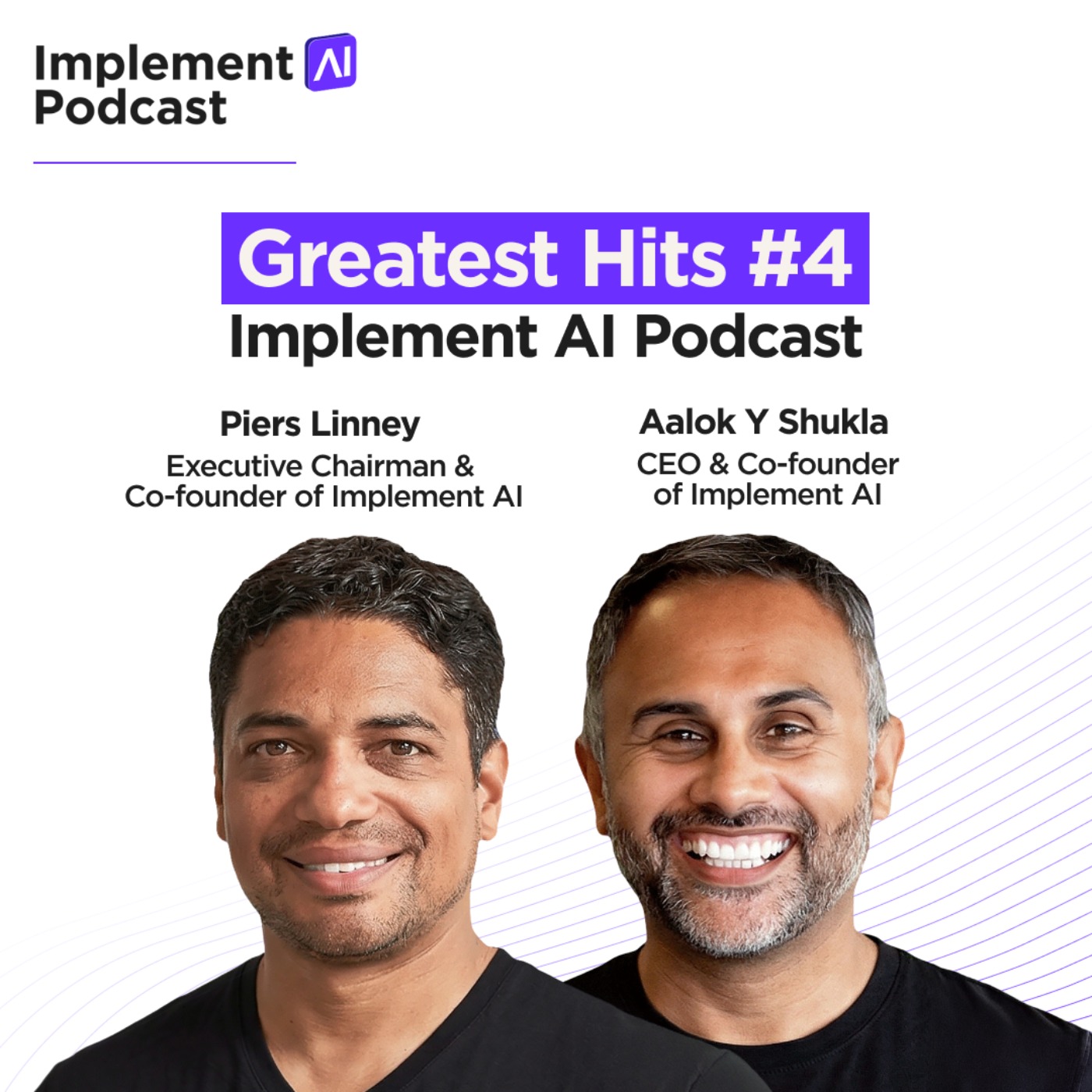 Greatest Hits #4 - The Implement AI Podcast with Piers Linney & Dr. Aalok Y. Shukla50 / 100
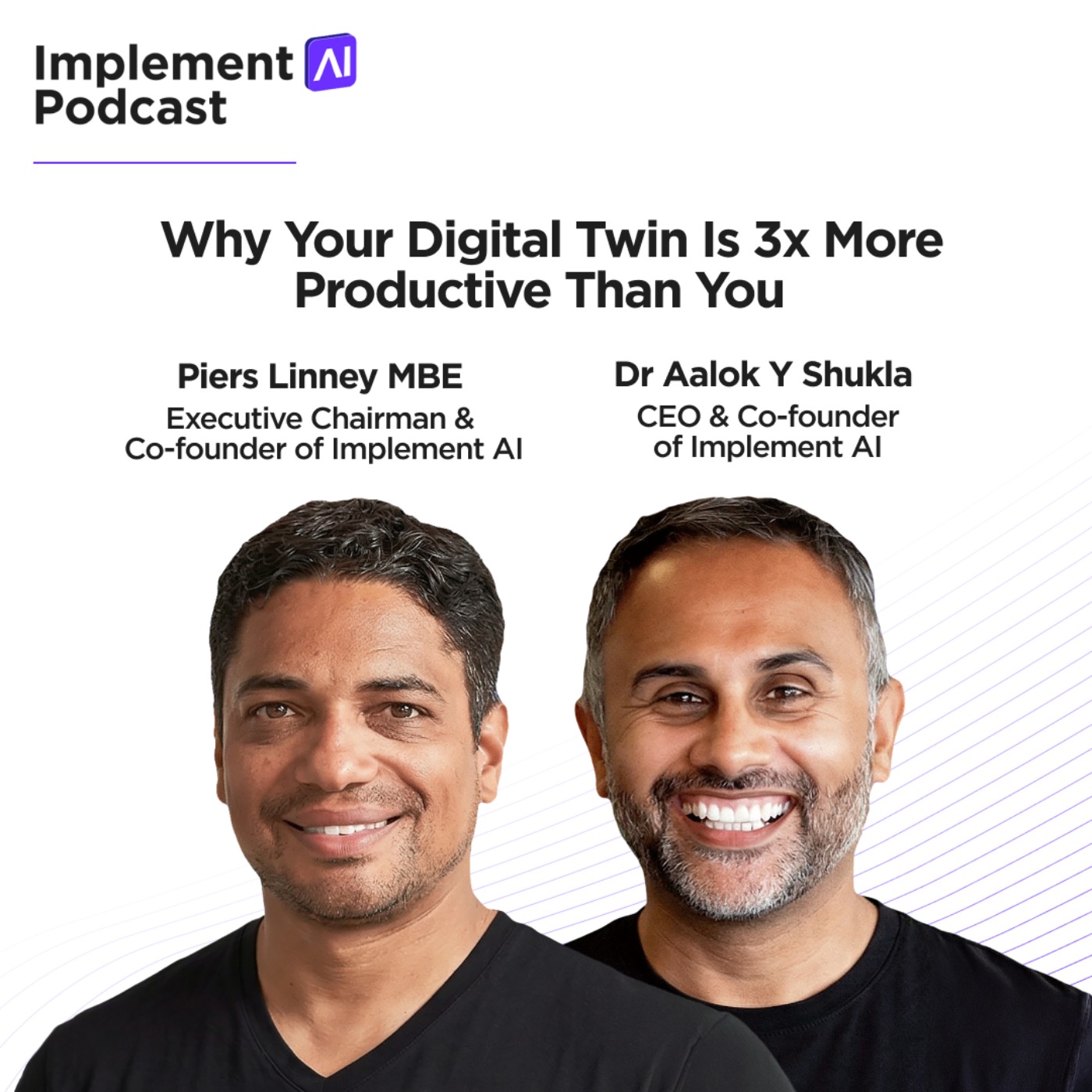 Implement AI Podcast #83 - Why Your Digital Twin Is 3x More Productive Than You