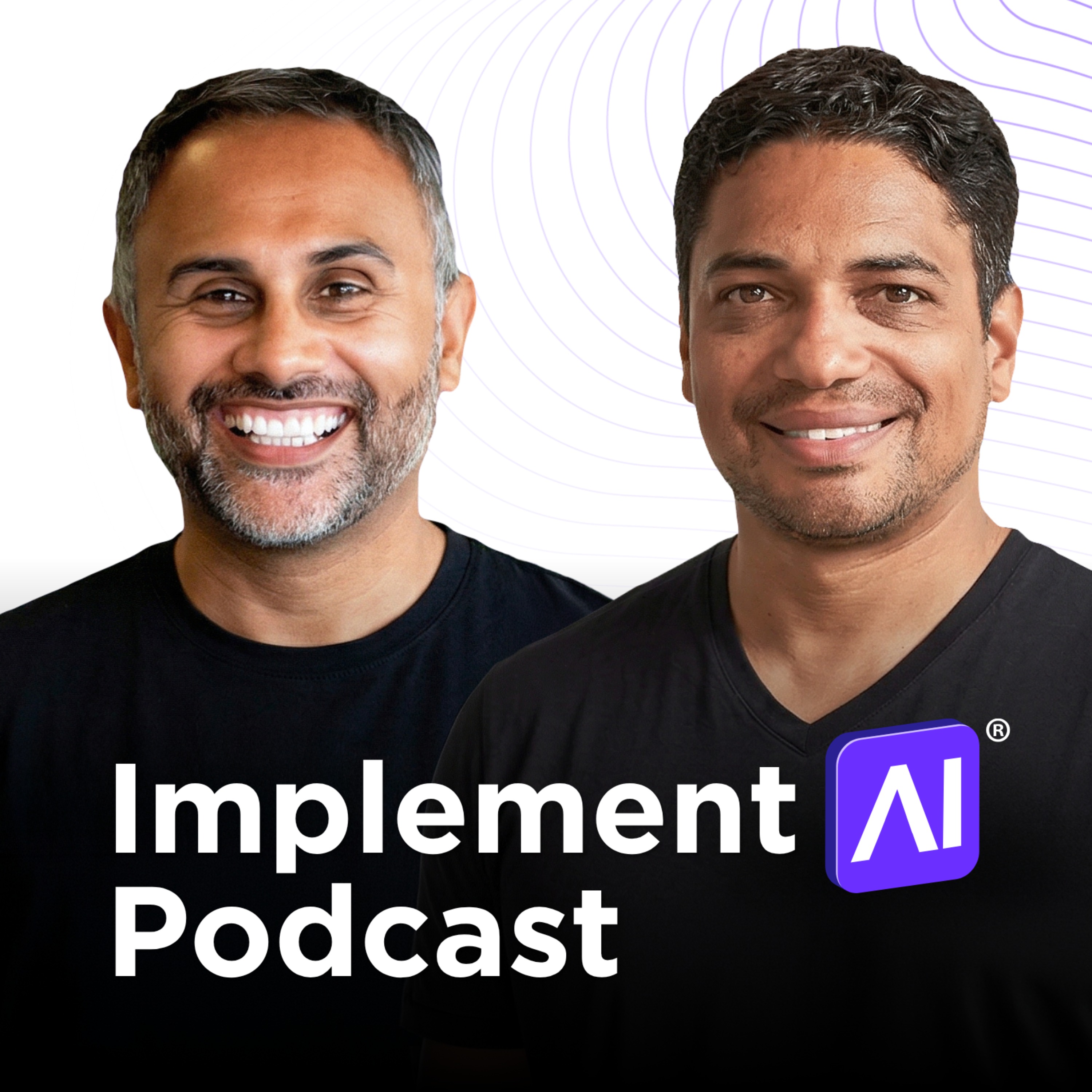
Implement AI Podcast · 2026-06-09 · 41 min
Key moments - from our scoring
Substance score
38 / 100
Five dimensions, 20 points each
This episode examines the real ROI of AI agents deployed across business operations, moving beyond theory to concrete case studies. Piers Linney and Dr. Alex Shukla structure AI workers into three categories - interactive agents (voice, chat, WhatsApp), action agents (computer use, data movement, API integration), and analyst agents (email, call, document analysis) - deployed across lettings, energy, pharmacy, events, healthcare, and logistics sectors. Key findings: interactive agents handle 1,800+ daily calls at 19 pence per call versus £1.67-£2.33 human equivalent, achieving 24% engagement and 16x volume growth; action agents automate form-filling and system updates across Salesforce, Shopify, custom CRMs, and platforms lacking APIs via computer vision. The conversation emphasizes starting with visibility (seeing problems) before doing, avoiding siloed department pilots, and understanding variable costs tied to token usage rather than flat SaaS pricing. For B2B operators evaluating build-versus-buy, this covers infrastructure decisions, integration approaches spanning no-API legacy systems to headless CRM architecture, and the business case for outsourcing differentiation to platforms rather than building infrastructure in-house.
Interactive agents handle voice calls, live chat, WhatsApp, and booking/triaging for customers or prospects. Action agents execute tasks like moving data, filling forms, updating systems, and computer use (logging into software, downloading files via browser automation). Analyst agents read and analyze calls, emails, documents, and dashboards to surface insights and opportunities.
Interactive agents cost 75-95% less than human equivalent labor. One case study showed a cost per call of 19 pence versus £1.67-£2.33 for human outreach, while maintaining 24% engagement rates and enabling 16x volume growth.
An investment company achieved 16x volume growth in customer contact, reduced average cost per call from £1.67-£2.33 to 19 pence, and maintained 24% engagement rate with 11% of people expressing genuine interest in the offering.
Many companies fail by having department heads guess which use cases to automate without understanding real business pain points. Starting with analyst agents to see insights and identify value leakage prevents building solutions for the wrong problems and ensures ROI before implementation.
Computer use agents can log into software via browser automation, opening applications, downloading data, filling forms, and extracting information - allowing integration with any platform regardless of whether it has an API, from custom-built CRMs to domain-specific platforms.
Our reviewer’s read on each dimension, with quotes from the episode.
There are genuine operational specifics buried here - the behavioral change at the care provider, the shadow notes concept, and the teams-of-agents framing are non-obvious - but roughly half the runtime is product pitching, subscribe CTAs, meandering setup, and generic 'AI is cheaper' statements that add nothing for a smart operator.
on average with the metrics we found it's 75 to 95% cheaper than the person doing the equivalent task
I'm Piers. I'm Alec. Right. Where are you? In Lisbon, aren't you?
The shadow notes concept - surfacing power shifts, relationship temperature, off-books payments from call and email analysis - is genuinely fresh and counterintuitive; the unintended behavioral change at the care home (employees proactively calling managers to avoid AI alerts) is a rare real-world insight. Most other framing (buy vs. build, AI works 24/7, variable cost model) is recycled.
Shadow Notes is basically a mode of analysis that the reports can create is basically where are their power shifts, where are there people who are blocking things, where are the relationship temperature shifts? Like we've seen certain things where we captured off books payments
what they found was that like the people that were working and going to the place, they started proactively phoning the managers to report lateness because to avoid getting an automated message from the AI agent
There are no external guests whatsoever - this is two co-founders presenting their own product to each other. While they are genuine practitioners with real deployments, the absence of any outside voice, challenge, or independent expertise caps the score sharply.
I'm Piers. I'm Alec.
So we are, we're coming. Probably the only company like ours I I come across that can deploy AI workers in your business.
The episode delivers a credible density of specific metrics - cost-per-call figures, branch booking rates, rush-order miss counts, and percentage improvements - which is above average for a podcast of this type; the deliberate anonymisation of all client names and the occasional loose context around numbers prevent a higher score.
the average cost per call was 19 pence basically versus what it would normally be with £1.67 to £2.33
there's also like more than £230,000 worth of missed treatment opportunities
This is a coordinated co-founder sales presentation delivered as a podcast; there is no interviewing dynamic, no pushback, no probing follow-up, and the 'conversation' consists largely of one host presenting while the other offers brief affirmations like 'exactly' and 'basically right'.
No, I think the only point I say there is that I think it's easy to gloss over.
Exactly. So whether it's research data or people and different things like that.
Computed from the transcript - who did the talking, and the words that came up most.
Implement AI deploys teams of digital workers that work together to boost growth, increase capacity, optimise costs, and improve customer and prospect engagement. Through our AI Operating System (AIOS), a fully managed AI Agent Platform built around Agent Teams, an Agentic CRM, and an Agentic Task Engine, businesses can start with a single digital worker and scale to 50 or more across departments such as sales, support, analysts, and computer use. All setup and configuration is fully handled, so no technical expertise is needed. With more than 600 integrations, organisations save time, increase productivity, and scale faster. Grow your workforce, not your payroll. Learn more at In this episode of Implement AI Podcast, hosts Piers Linney MBE and Dr Aalok Shukla break down real-world AI agent deployments already delivering measurable business results across industries including healthcare, insurance, lettings, and field services. The conversation explores how interactive agents, action agents, and analyst agents work together to increase revenue, free up human capacity, and improve customer experience.
Transcribed and scored by The B2B Podcast Index.
Should I stay married? Have a kid? Buy that house? What if you could know with certainty what you should do before you do it?
Disruption is a new play about six friends, one dinner, and a technology that knows them better than they know themselves. A provocative new play about love, ambition and the cost of certainty. Off Broadway at the Pershing Square Signature Center, July 22 through September 1320 tickets@disruptionplay.com Imagine the merging of trusted intelligence into a unified experience.
Imagine collaboration amongst teams and across continents. Imagine an empowered ecosystem designed to deliver actionable insights that inspire growth and sustainability. That's the power of the Connect Industrial Intelligence platform to help you see further, innovate faster accomplishments, accomplish more. That's the Connect effect.
Learn more@thatsteconnecteffect.com did you know that passive fixed income ETFs only capture about 50% of the US public bond market? But with JP Morgan Asset Management's active fixed income ETFs we can help you capture 100% of the US public bond market and explore twice as many opportunities. Visit jpmorgan.
com getactive to learn more. JP Morgan Asset Management is the brand name for the asset management business of J.P. morgan Chase Co.
And its affiliates. Worldwide communication is issued by J.P. morgan Distribution Services Incorporated, member of FINRA.
You built a gym, you bought the assets, you bought all the kit. You've got light rain heating, you've got a team. It's cost you a fortune, all these businesses. Somebody contacts you or somebody goes to try and do what they're supposed to do and they don't do their job properly.
And now you can change that by, you know, 10, 20, 30, 40%. That's massive customer experience improvement or quite often cash that just falls straight through to your bottom line because you've already got the fixed cost. Welcome to the Implement AI Podcast. The podcast where we explore the impact of AI on your business.
I'm Piers Linney alongside my co host and co founder of Implement AI, Dr. Alex Shukla. We cover the real world applications and impact how AI can be practically applied to drive growth and efficiency in your organization. We cut through the jargon to focus on actionable strategies and use cases to highlight the transformational power of AI.
Let's dive into today's conversation. I'm Piers. I'm Alec. Right.
Where are you? In Lisbon, aren't you? I am yeah. I'm just going up and down like from London, Manchester.
I was in Morocco before, back in Lisbon. Looking forward to being in London in a bit. Our events and stuff like that yeah, we got. So we've got a few events coming up which we'll, we'll come on to that.
So it's implement AI podcast. If you're new to the podcast, you can find us on YouTube, on Apple, Spotify, all the place you find your podcast, please do. If you're on YouTube especially, please do all the usual stuff like subscribe, ring the bell and if you're on Apple Health, if you're on Apple. Right, right, Review.
We love hearing from you, like, you know, what your business is or what different things are and what you learned and be great or even feedback on what to cover on other ones. We really appreciate it. We read everything. We get very good feedback on the podcast.
So, you know, it really does help us sort of understand what it is you want, the content. We've got some fantastic guests coming up, some real, sort of, some real movers and shakers in the world of AI, so look out for those. I think what we'll do today, we might start doing this every sort of like every four podcasts, maybe once four podcasts is start talking about the reality. So we try and be very practical in this podcast and we talk about, you know, putting AI to work and deploying AI agents and AI workers, digital workers.
We can't decide what to call them. We're actually about to start fundraising. Nod, nod, wink, wink. If listening to our podcast.
So we're, we're, we're working on. I can't say the word nomenclature, are we, or the. How we name stuff. This is the Jerry Maguire episode.
Show me the work, basically. And show me the money. Yeah, so this is going to be. Yeah, show me the work.
So as we, as we were sort of going through and doing our investment deck, we were putting together, you know, case studies and testimonials and looking at what we're actually doing. And it is absolutely fascinating. You know, some of these things are. I think it's just important for people to understand and see what works.
You hear so much about AI and should I build it, should I buy it? AI projects failing and, you know, and some cases there might be. If you're going to try and do something which the technology is not quite there yet, but we always say then, yeah, we play in the box where this technology works, right. It delivers value.
And I'm going to show you there's an roi. So we're going to go through, I think in this episode, some real studies. We're going to take out the name Protect the innocent. We will say to all of Our customers.
Right. Your config is IP as well. So we're not going to go too much down to the detail. Just give you a high level understanding.
Exactly. Because the whole thing you got to understand is that what we're talking about is a new team. And so the question people always ask is like, what can it actually do? Can you give me some real examples?
And let's go into a bit more detail so we can kind of see, see all of that kind of stuff, basically. So let's start with, let's start with. Let's just set it up though. So let's go back to the kind of agents like Interactive Action Analysts or set up the kind of agents we, the way we describe them.
And again, I did lots of keynotes and people said, well, you know where your slides are good. Where'd you get them from? Kind of. What do you mean?
All of our content, this podcast, all of our plate. Yeah, it's what we do. It's not like, oh, we all sitting around like having a smoking, a big one, thinking about what should we put in a document today. It's literally from sometimes, I have to admit, sometimes the complexity and the pain of delivering these solutions.
That's where it's coming from. It's the real deal. Absolutely. Even this week I had two conversations with two different clients and from that I noticed gaps and we put different things in place and we kind of optimize it.
Let's take a step back. Why do you come to implement AI if you want a digital workforce? AI workforce. What is an AI workforce?
Basically it's new colleagues that can add value in different departments. And if you think about things in a kind of like big picture, think about a whole new kind of a tower block. For example, you know, of like new workers that can join your company to augment the team you've already got. So the team you got.
Brilliant. Know everything about your business and you want to make sure that doing the most valuable thing possible. Let's talk about this new tower block. Basically there's two layers.
Two layers to this. You've got the executives now, they are basically trying to understand what's going on. The business they will be managing. They'll be going through different things.
And for that is what we call our command. That's like the AOS command. And what that will then do is help the executives see everything that's going on across all the systems. CRM finance, meetings, chats, emails, in a way that you couldn't see before, basically.
Right. And besides that and it lets you see all your AI workers are doing as well across the whole platform. So it's not like, it's not like Claude, open, I connect to the. Connect to things.
It's the whole package, everything. Exactly. So you can equally say, show me the last hundred emails that I sent that nobody replied to me. Or you could also say, show me what's going on in the trends from all the phone calls that are happening.
Because your AOS workforce analyst is connected to all your phone calls as well. You can do all that stuff and you can also do actions. So that's level one. Then inside the workforce bit, which we're kind of focusing on.
So this is where you've got digital workers that will actually fill capacity or add capacity, your business to drive revenue, capacity or experience. Basically. Right. And there's three groups of workers there.
There's the interactive workers, which basically are voice calls, live chat, WhatsApp, booking, qualifying, triaging, reactivating for employees or customers or partners, that kind of stuff. Then you've got your action agents. These are moving data, filling forms, writing records, the hands of the workforce that could be operating the computer or updating systems via API. And the third one is analyst agents.
These ones are basically reading, analyzing, servicing insights that calls, emails, documents, dashboard, turning unstructured information into action. So that could be phone calls, tickets, messages, emails, documents and surfacing opportunities within there. So. Or they can do analysis externally.
Can't you want to as well? Like creating data. Exactly. So whether it's research data or people and different things like that.
So there. So the point of like what we provide is an out of the box capability that for teams for your executive layer and also team for your operational layer, basically. Right, so now let's talk about examples of like what they can actually do in your business. Because basically the executives can then see insights, productivity do more stuff and then the voice agents and the, you know, the computer use agents and the analyst agents can then add more stuff with this we go into that detail.
So you mentioned the word C there. So the C is the, it's the insights. And what we find, we can said this before on the pod, is that quite often where a lot of our customers start is the analysis, the seeing. That doesn't mean you got to change anything.
It's all internal looking and that's where you're going to find where the cracks are. That's where you're going to find where the value leakage is. So often it's the seeing insights before the do, isn't it? So this is the writer down first of all, right?
People are saying, I know AI is important, I know I should do something, what should I do? And I'll tell you the trap that all companies fall into. They, the senior leaders say we're going to do something in AI, they'll call in some different department heads and then everybody's got a different opinion about what they think can help their department or something, which they think more likely could be innovative to experiment and try. But this is not linked to what the business needs at all, basically.
Right. So that's when the first problems that you can happen because you can then start down a path where you work on the wrong use case, basically. So the point here is that to focus in on understanding and servicing what the real these are on the business. Let's kind of, we can go through this in, in those blocks, I think so interactive action.
And the action is really interesting when we talk getting onto computer use agents because that's something that people, you kind of read about it and people don't really understand the power. I'll talk about your prompt, which is nuts, but we'll come back to that. But we'll do interactive action and analysts, like I said, people say to us, you know, I was, I was at the sales force. Yes.
Yesterday, day before yesterday, and they announced, well, it was the opening of the AI center in the city. Very nice building for clients and some of the Salesforce venture startups. And we were talking there really about, you know, the buy, the build. And you know, you had the CIO of National Trust, AI director and infrastructure architect from the large company as well, or the PET at home.
That was it. And we were, and we had this panel conversation about all this stuff and the, and the issue is here is that, you know, people think that, you know, you buy. He was saying that we buy commodity and we build differentiation. But I think that building differentiation doesn't necessarily mean you literally build it yourself.
You can build differentiation on a platform like ours through the conflict. Exactly. You build the differentiation in the capabilities and decisions of the agents, basically. Right.
That's the whole point. Building all the infrastructure. Think about it, right? Like if you wanted to fit out your perfect offices, you would be much better off if you already had like the building kind of like construction with all the concrete and the raw wiring there.
And then you can fit out the interior of all the places. You'd be much faster at getting to where you want to get to and fitting out the way it is versus actually having to then dig the ground, build the foundations, do everything like that. The time to value is much higher. And also if you made a mistake, because the thing is here, technology keeps moving.
If you made a mistake, you put the wrong infrastructure in, you're going to have to like redo it, basically. Right, so we're going to show you now. This is like, is a, this is the snapshot of what we're doing, right? This is our experience across multiple organizations and industries, multiple sizes, across multiple sectors, with multiple different, let's call it, priorities.
Now if you're trying to do this yourself, all you see is your organization trying to do it the way you want to do it. And quite often what we find is we had a pilot the other day where they kind of said, oh no, we're going to have a look at it, doing ourselves. What we tend to find is that three months later they come back because they realize that by the time you built it, it's out of date. Or the team member that said they could create a pilot can't actually support and do it.
And their salary costs more than what our program would have cost, basically. Right? Yeah. And it's not ISO certified anyway.
We could keep going on. Let's go into the details. I'm gonna. So what do we do?
If I want to go into the agents, I'm gonna talk about industries, right? So just to understand, for example property investment, education, energy and access within there, healthcare and pharmacy, wealth management, domiciliary care, franchise companies, recruitment, PE companies, cleaning facilities management, logistics, events and community. Just, just a snapshot of some of the use cases we're going to talk about today. These are the sectors that we've been working on.
And I'll also tell you a little bit about what kind of systems because people say, oh, but we have this system, we have that system. Basically. I'll just give an example, right? I'm going to talk about CRM database, telephony, email, domain specific platforms and enrichment signal stuff.
So for example, in CRM and database examples, when we're talking about work through Salesforce, you know, Shopify, you know, custom CRMs where people have even built it themselves, or even domain specific platforms, like in terms of the health specific ones for clocking in and clocking out, specific pharmacy platforms, specific facilities management platforms to manage jobs, specific prescription management platforms, Royal Mail, you know, secure platforms and then all these kind of things also like Slack teams, Air Core 3 CX8 binding.
And it goes from this, this spectrum of this reasonable software with no API and we use your computer usage Agents to go and log into it and do stuff and extract data all the way through to was talking about Salesforce. We do quite a bit of integration. Salesforce to what they're now building is a headless CRM system. So it's actually designed to be integrated and you've got that spectrum.
So we try and work across it. Exactly, exactly. And then also just to kind of give you the other context, these agents provide up to 247 coverage. So for some of the clients, the agents are working all weekend, basically.
And we've got some clients that have said no human can actually do this because it's covering 247 monitoring this platform to see if someone checked in or not. And I'll come back to that one. Basically all the way to evening activations, all the way to early morning activations, all the way to regular scheduled reports coming to the CEOs. So the point I want you to make here is it's working where all your systems are number one, one and then number two, it's working when your team aren't basically.
Right. Like that's the kind of key thing I get going. The suspense is killing me on. Yeah, go for it, go for it.
Okay, so. So in terms of the interactive agents, if we think about it, there's lettings agencies, franchise businesses, energy suppliers, you know, wellness companies, pharmacy chains, events companies, home improvement property, they're all using interactive agents. Let's give some examples of how it can be, for example, within lettings agencies, it can be actually like dealing with tenants, for example, like understanding what their issues are, helping go through everything, all the different details.
So the point here is it can actually like understand all the information from the client and be able to like triage them as to what the issues are and then with the appropriate knowledge, actually talk them through different solutions, basically. That's one spectrum that can be. Another spectrum can be where it's actually providing initial reach out. Let's just say, for example, for a training company, when they have lots of people opt in online, what it will actually do is engage the person.
There's some specific steps they do. I won't go through everything but like it actually increases the risk response rate basically. And what that will then do is it'll connect with them, say you're still interested in this thing, let's do this. Fantastic.
I'll trigger you to another place basically. And the companies that have been doing this, they've actually grown their usage six times basically. Right. Because they found it's like working way more cost effective.
And the same time, very, very fast. That's very, very exciting. What we've also found for like, say some franchise companies in terms of like reaching certain different people, it's able to like reach people in a much faster way by actually like going through a prospect list and actually going through the details there. Basically the important point there, I just want to ment.
Just go back slightly. So what a lot of people don't understand is, is that, take us for example, right? We, we have different plans and you have the agents and you have credits. That's what they, they're using different systems and platforms and there's a cost, there's a variable cost, some of that we build in.
But if you're sort of a power user in the case Alex mentioned, there you are, you know, using six times as much, you've got a variable cost. So you're going to, it's going to cost more money over time. AI is not like software as a service. You're not spending, you know, £50 on month or you can eat and that's the end of it.
Is a variable cost using tokens on you. There's always an roi, there's always a benefit to doing, otherwise you wouldn't do it. Yes. So on average with the metrics we found it's 75 to 95% cheaper than the person doing the equivalent task.
And it's adding at least two to three dimensions that the team could not do in the way of concrete insights about that call and complete CRM updates from the details within there basically. Right. You know, so that's the whole point. So I think the key thing there to understand is like for example, one company is doing 1,800 calls a day to reach to their people.
Right. You know, another one is like got a huge, you know, more than 7 million pipeline of like inactive customers and the AI is working its way through reacting them basically. Another one is looking at seven day out of hours coverage, you know, in the evenings and stuff like this. So I think the other one is like, for example, it's like a wellness company and what's happening is there's people that are supposed to get complete their onboarding which provides some medical information that don't do it and the AI is chasing them for it to help streamline and smooth the experience.
So you can see that like the interactive agents going from SMS to voice to WhatsApp to live chat, these are very, very powerful and they can actually, you know, just unlock value very, very quickly for people. Basically, whether it's ROI from redeploying people, ROI from preventing customer churn from engaging them or it's ROI from actually reaching customers. You couldn't react before. And the other important thing is that we're finding is more and more people are actually using this as part of a getting to know customer and upsell process where they will actually ask questions that they would never fill out on a web form.
Basically. Right. Even for ourselves, for example, like we're looking at for our net proposal score, if you ask someone to fill out some things on a form, they ain't touching it. But if you talk to an AI on the phone, they will actually give much more interest, information and context within that, basically.
Right. So I think the key thing to understand is that like when you're looking at. Let's just pick one example, right? There's one use case which I'm going to talk about for an investment investment or a interacted agent.
Basically there's been a 16x volume of growth that happened and then the average cost per call was 19 pence basically versus what it would normally be with £1.67 to £2.33. So that's a huge saving basically.
Right. You know, for that to happen and you're still getting a really good, you know, engagement rate of 24% and you've actually got like, you know, not 11% of people interested in what's going on basically. Right. So that's like some key high level, interesting elements that from within there that can be quite cool to kind of see in that kind of regard, basically.
Right, let's go to the next category which is action Agents. Anything you want to touch on from the first bit before I move to action agents. No, I think the only point I say there is that I think it's easy to gloss over. But voice is, I think it's the most powerful new form of data any business can aggregate.
So if you're not recording inbound, outbound phone calls, meetings, if I turn up to a meeting and someone's got an R meeting, note taker, whether you can see it, fireflies, whether you can't, like a granola, then you're bonkers. You should record anything you possibly can because you can analyze it now. You couldn't analyze phone calls before until like you know, two years ago, even a year ago properly because there was just too much volume and now you can. LLMs is a clue in the name.
Lars Language models are very good at understanding and analyzing and passing language. So there's a huge amount of value in conversations. Make sure you captain. Exactly.
So then the next category we're talking about is action agents, right? Which is executing tasks across systems, moving data, filling forms, updating systems, writing records, the hands of the workforce like we talked about. So one of the fastest growing use cases within our business is computer use. What that is is it's an agent within our business where basically it's got its own, you know, desktop.
It can actually open up a browser, open up different things or open up a software. You can work on that computer, log all the steps it's done and then it can actually then create files, download things that can be pushed to different places and different things like this. Right. For example, this week, for example, I did a proof of concept I was discussing with a company.
They have a hundred analysts doing things manually where they log into a system, download different things, put the information in. And I was doing a proof of concept for them on like how a computer use agent could do that. Just to give you context, people say, oh, I could do this myself. One of our engineers made the prompt for one of the job systems.
How many pages was it? Piers? I thought names. Knowing some of our previous prompts, it might be 10, but it was three times that more.
34 pages. 34 pages. And just to give you context, basically right, this is error handling. This is the different things.
Because just to give you the detail, like this isn't made up from thin air. Many softwares have quite poor ui. So it's got like little iframes that pop up or it's got horizontal scrolling or even some of these, these legacy softwares timeout. So our engineers had basically built in all the error handling for that.
And the AI is also intelligent to be able to manage those different bits. But what this means is that you can then get that task done with zero human time, basically. Right? And that can be done 24 7, 365.
So if we think about that with. And that's the thing I like about the, the buy. My favorite subject at the moment, Buy build is that you turn up trying to build that. You have no idea that is what it's going to take.
That's like that's taking us three years. You don't know what you don't know. You think, oh this LLM can do this. No, it actually can't.
It actually fails on these things. Or what do you do when the page hangs for this much time? How do you handle with that? You don't know how to do that basically, right.
Like, and so the question is, do you want to spend an expensive research project trying to figure it out or do you want to just get the work done? That's my question basically right. You know like so if you want to just get the work done, go for it basically. But if you want to basically almost take a high school student, which is basically what it is, teach them everything, wait for them to grow a bit and then wait that to come into your business, that's kind of what you're doing.
You're trying to build everything yourself basically right. The whole point here is get things done straight away. So let's talk about action agents, some examples. Right.
One example would be for like you know, scheduling different jobs and tasks on a system for many different field people work in a field services place. In this system there's 14 phases, three safety gates and no API. Basically right. Like so that, that was like to handle that one.
Another one can be for like home care services monitoring the visit. So the point is basically making sure that like if somebody didn't turn up on time it'll, it'll help follow up with them and kind of look at that place. I'll come back to that one. Another one then is like for a pharmacy group it's basically like reading the scheduler that they've got and actually understanding everything going from there.
And again healthcare companies are fantastic because they don't want to have an API. So they sometimes. Basically right. And you wonder why basically right.
I think, I think the days of companies holding their clients data hostage is going to be like running down and then other ways computer use has been done is like for example M and a research for some people we've actually got it going to companies house different places putting together information that there wasn't available before or even an executive search. Basically right. So that's, that's these kind of examples. So if we go into a bit more information on an example.
So one care provider, basically the agent is monitoring the dashboard where basically the employees would clock in and it would identify people who are late and missed to turn up to their thing appointment. Imagine this is a 24 7, 365 business basically. So you need people going there. So for every person that's in the field going to turn up to stuff, you've got to have a manager checking on what's going on.
But how much does a manager cost at 11pm at night on a Friday or at 4am on a Saturday morning or at you know like 9pm on a Sunday evening? Do you have that Basically no. You know, and then, and then if the person didn't turn up, can you message the carer directly via their platform? Like, no new system.
Can you also escalate to a coordinator in teams and log every action? No, there was no API for that. And a computer use system does that basically. And so what we found was like a 28% reduction in late visits, you know, like.
And what there was like there again, it's like glossing over these numbers, isn't it? Right. It's like we did some research, we'll talk about maybe another time. Mystery shopping where, you know, gyms and clinics, they're not answering the phone.
So it's like I did a keynote at the Fitness Tech Summer the other day and I was saying to him, you built a gym, you bought the assets, you bought all the kit, you've got light heating, you've got a team, you've got people, you've got maintenance, you've got support, you've got training gyms, classes, you built it all. It's cost you a fortune. All these businesses, somebody contacts you or somebody goes to try and do what they're supposed to do and they don't do their job properly.
And now you can change that by, you know, 10, 20, 30, 40%. That's massive customer experience improvement or quite often cash to just fall straight through your bottom line because you've already got the fixed cost. Exactly. And what the whole point is that like, there's also unexpected outcomes.
What they found was that like the people that were working and going to the place, they started proactively phoning the managers to report lateness because to avoid getting an automated message from the AI agent that would message them. So this is a behavioral change they did not expect to happen. And people. And they actually said when that we've been blown away by the results across our branches, basically.
Right. You know, like there's no way our humans could actually even do this. And to give you a factor each check that the AI is doing, because basically what it's doing, the computer use agent logs up, logs into the system, scans everything. Then it shuts itself down and opens up a new computer use agent that logs in, checks everything, shuts itself down, opens up a new one to 24.
It goes like that basically. Right. You know, like so, so, you know, tell me an employee that like that is able to do that in that kind of regard, basically. So that's super exciting.
Before you do the next one. So implement AI podcast. Want to remind who we are and what we do. So we are, we're coming.
Probably the only company like ours I I come across that can deploy AI workers in your business. So we've got lots of information on our website implementai IO we've got, got a resource center there. You can talk to ave on our website if you want to hear, you know, a voice aid and interact with it. We've got this podcast, lots of information.
So please Follow us on YouTube like subscribe tick the bell to make sure we've got lots of other content as well, not just this. Well look, we've launched command products as well, which is lots of content there about that. So please follow us. And again, please leave review on Apple back to you all.
Yeah, so I'm just going to just touch on two little things basically. So just finishing off with the an action agent just to show you, for example, each time the agent checked it, for example, it was like almost like, you know, nearly, you know, a fraction of like nearly seven times cheaper than a person doing it. And that's just with the basic hours of a normal working in, in the day to day to day time, not evenings and weekends which people cannot possibly do. So that's, that's crazy.
We often drank a pair, right, Agents to humans, right? And they don't always do exactly the same thing obviously, but you can't, because they might be doing the same hours, they can do war hours, you can and. But they'll do things more proactively like update CRM that humans don't do. It's very hard, isn't it?
No. So, so there's two ways, right? So like everyone's a business owner, right? So the question is like economically, if this does it versus this do it, do I save money basically right?
Or do can I redeploy that person? The answer is always yes, basically right? And the second thing is. But it can also do things your team couldn't do and create some of those unforeseen positive benefits, right?
Like where you've got all the systems updated. So for example, just, just to bring one thing back, command. We just talked about the beginning for the executive layer. One of the most popular use cases we've got is a scheduled auditor agent.
What that is is that every day or every week it will log into a system, let's say CRM, let's say email, let's say teams meetings and it will review for a specific missing thing. So it could be for example reviewing the CRM new updates this week. Are they subscribed? Because many times they're not added to the system and they're not subscribed.
Right. And then second thing, do they have all the fields completed? Does it have the company names, details, all that kind of stuff like this. So all.
For example, another person would be a cross sell agent which would be like, you know, all the new customers that bought this week, do we have all the information on them? What other services could they buy that was not that could be identified to them and update the system with potential pipeline checks for those people? Or it could be like, you know, all the calls that happened today or all the emails that happened, who is like at risk of churn or whatever like this. So those scheduled actions on a regular basis.
So that's an action agent via command, basically, right. To kind of give you that kind of context. So let's move to the kind of next bit. Right.
So we talked about interactive agents, two way conversations. We just now talked about action agents executing tasks across systems. Let's talk about analyst agents. One of my favorite ones, basically this is typically where you can see things which people cannot do.
So one facilities management company has got an email list running. What that is doing is it's analyzing multiple inboxes. Hands up, if you're a company owner which has multiple email inboxes, which many people are monitoring and are some of them shared inboxes. And the wonderful thing about shared inboxes, no one person is primarily responsible.
And what do we know what happens if no one person is primarily responsible? Balls get dropped basically, isn't it? Right? And it's not because anyone means to, because like someone's doing this shift to this shift, but then they forgot to action this or some of the things I've seen myself is some businesses have people where they file things as complete, but they were never actioned at all.
I did this, we did this, I think with a discovery with one company where we actually got the command agent to analyze all the commercial opportunities. Basically went through the whole inbox, all the sent emails and all the inbound emails and which ones didn't have a reply. So this is the question you asked me before. We've got this commercial sweep prompt as part of.
It's a command basically as part of AOS command. And what this will do is it'll go through your inbox over the last basically three years. All the email where it looked like a commercial opportunity where nobody replied, where who dropped the ball, what's the context of it and who didn't go from it. And so sometimes you see things where all the emails were marked as complete, but no one was answered.
And you see it's 742 days since the last reach out and stuff like this. But this company's got an email list to prevent this happening. And what this is doing is it connects to multiple inbox boxes so it can review all of them. And then let's just say for example like the average cost per analyzing, you know that each, you know email, it's 86 cheaper than people doing it basically.
Right. And what it's able to do is able to like categorize new signups, general inquiries, service restarts, cancellations, complaints and it's also like adding in now voice where we do call analysis on top of the email analysis. So you get the two levels of information within there basically. Right.
So that's super interesting and super exciting where you can kind of see where the opportunities are from within there. And that's something that I think we do a lot of actually. So it's not just the across your existing like software as a service system, it's your voice system. It's your voice and it's your phone system.
It's in your email recordings and your email and your, and your meeting notes. Those things. I mean recorded phone calls are like there's gold in the, in them there mountains. Yeah.
And it just pays for itself very quickly. Another example of call analyst, the multi site group. Basically. Right.
So what happened here is it's connected to all the phone calls coming, going through, which the team are doing, the humans are doing basically. And we can do two things. We can actually measure the branch performance. How successful are they at booking appointments?
And we can see branch a is doing 75% where 75% of the time the team is actually trying to put the appointment on the call versus Branch D. 14.1% times the team member is trying to offer an appointment. There's a big difference there.
Basically right on top of that there's also like more than £230,000 worth of missed treatment opportunities which are people that said oh I'd like to book this treatment or how much is this thing? But they didn't book that appointment. So you can actually get the whole list. So the point here is that you got the, you know, you got the ability to like surface all those different elements.
A different business, a manufacturing business. We're analyzing all the calls where there's rush orders. For example, if somebody inquired and says oh can I get this piece of work done by tomorrow or two days there's supposed to Be a rush order fee, basically. Right.
And I think it detected like more than 900 missed times that this happened where the rushed order fee was not applied. How much revenue is being lost there or at the very least goodwill, which should be measured. Because if we're going to do you a favor as a business, basically right. The customer should know that they had a favor done for them and the value of that favor basically right.
In that regard. So whether it's like lost goodwill or lost revenue, it's the same thing basically, right. So the point here is that like you've got the ability to like have these analyst agents kind of like going through so many different things. Whether it's analyzing the phone calls, analyzing the emails, analyzing you know, the phone calls, also like analyzing signals.
So we've got businesses where we're with a certain basically data list that they give us. We have to research to see any new news on those people, any new information. And if it meets certain criteria then it will kind of like go, go and do an action to read. It's also analyzing the things that you wouldn't normally think you need to analyze by your shadow Notes.
Exactly, exactly. So shadow notes is basically the analysis I just told you is like quite general and specific, linked to commercial objectives, like you know, who is a missed sales opportunity or who could have bought these other things. Shadow Notes is basically a mode of analysis that the reports can create is basically where are their power shifts, where are there people who are blocking things, where are the relationship temperature shifts? Like we've seen certain things where we captured off books payments, we've captured certain people holding customers hostage.
We've surfaced certain suppliers basically almost trying to sabotage relationships. We've surfaced certain managers in different businesses trying to actually like, you know, create their own little fiefdom. Like and the thing is as a CEO or executive you would never know these things because what gets reported to you in one meeting or to your team member below you meeting to a different one will never come up to you. But with this, if you've got the call analyst for example, or the email analyst and you've got a command, you can get command to actually like show you those things or you can have scheduled reports which already surfaces those things automatically basically.
Right. So I think the key thing is like the amount of insight you're able to have within your system is very powerful. And you know, we started work with some very interesting and exciting clients, you know, internationally where you know, they want to actually, you know, understand more about the customers, want to reactivate more people. And they also want to analyze each of their customers and see what the cross sell potential is.
Because we saw with one company that there's like a tiny fraction of their business is cross sell. Cross sell internally and cross sell across multiple locations basically, right? Because they've got different complementary services they could sell. And having the AI which is able to actually like do it within the location level where you can identify the cross sells and reactivate, but then also at the group level to see people from one location could be referred to the second location, basically because they said something in a meeting that could not be done by initial person, basically.
And that's why having, when we started this business we were strategically as well, because also because we did lots of pilots. This is what customers are asking us. They wanted teams of agents, right? So we talked about interactive action analysts.
So you might have an analyst agent that's looking for signals, it's finding information, it's finding opportunities. And then you might have an action agent that might go and log into a system and do something. And then an interactive agent might go, okay, well let's go and talk to that person or email them or WhatsApp them. So you need teams of agents when you've got a point AI system, a vertical AI.
We had an example recently which is the customer we won and we look forward to working with them, which was in storage and they had a supplier that did a voice agent. And I was kind of like, okay, well what's wrong with the voice agent? Well, we don't really know what's going on. I said what are you talking about?
Why can't you analyze the calls? Oh, they don't have an analyst agent, sorry. So we have the call agent, the analyst agent, the agent that can then, you know, use that information to write some one to one mark. You need the ability to deploy teams horizontally across businesses.
Because you don't know, do you where the second order issue is often going to arise. When you deploy an AI, your employees don't just have a mouth, right? They got ears too, they got eyes and they got hands, right? You know, I mean like so, so you have to be able to like do everything, isn't it?
Right. So we, we recognize this early on. That's why we built the system where you built almost like basically an AI knowledge worker, right? Which can do different things, they can work in teams.
And the final thing I want to also touch on basically is that like one thing that we saw is like our system is very powerful. So we're Going to be launching a certification program where people can become, you know, agent operators, agent configurators and agent architects. And that will be as part of our, you know, like a, you know, certification program so they can actually run it themselves within the companies, but then also as part of a race reseller program and introduce a program which we're launching later on in the year.
We have a partner program already, but the reseller will come later on. But the key thing to understand here is that it's very, very powerful. And one thing I started doing recently is like we actually started turning some of those prompts, like for example, that 34 page prompt for the computer use agent. It creates a wonderful process map.
And in that process map you can see all the things that have been done. And then what that allows the business owners to do is like saying, okay, that's fantastic. Can we also add in this functionality into the system? And then we can add, add that in to expand it.
Same thing. Was a very nice call I had with a client of ours and they were expressing some frustration around particular thing and the issue was that they didn't realize, they thought the agent was doing a very basic thing, but they didn't realize. We had to put all that in place first to understand the needs of the customer, but then to add in like more than seven layers of functionality which is like, let's say there's like a problem with item 1, item 2, item 3, where it can diagnose and go through it.
We can add those, We've already built that functionality. So that's where showing them that process, process map from the kind of agent configuration like wow, I've got all this and I can even have these things and based on this issue, it'll ask these questions. Based on this issue, ask these questions, go through this knowledge base and do it. So it's very powerful.
So what people don't understand is like number one, it can be deployed relatively quickly, but number two, the capabilities can be expanded very fast as well. Basically. So we're talking about real workers that deliver client value in three ways. Every agent has to be measured against revenue, capacity or experience.
Revenue is basically new revenue generated, conversion rate improvement, average deal size, lift, sales cycle reduction, or revenue per agent deployed. So the whole point here is like that's helping you make money or stop losing money from churn or something in a very clear way. Often just on that. Often I'll say it again, it's reactivating or finding missed opportunity.
It's revenue you should have generated. But the ball was dropped. It's an insurance company that we came across that like basically from 30, we analyzed their calls and like from 32% of calls there was a missed cross sell opportunity where one type insurance was mentioned and they should be offered two or three other things. But they weren't being offered that.
Right. This is fundamental, this kind of stuff. If that's done like the best deployments are even just a few agents which do those things day in, day out, every single time across everybody and it gives a lot of opportunity. Second one is capacity.
So people don't realize roi. In this way you can actually redeploy your team members because basically. So for example one business, they've got people answering phone and emails but then they need to actually get them to visit sites and see what issues are with the sites physically. But the problem is is that the team is so busy doing emails and calls they say we don't got time to go to these sites.
So the business owner is like can you help me redeploy those people? Basically right? So in this situation the ROI is that people capacity is free to go and work on more value added things. So it's either tasks, automated hours, save by week, response time, reduction, throughput per fte, cost per task.
Basically right. Example like you know, the AI is doing 41 checks a day per, you know, per day, which the humans could not do. Or you're doing you know like 800 calls a day, you know, which would be Normally, you know, eight to 12 callers would need to do that kind of stuff essentially. Right.
Third one is experience for customer and employee. This is like csat, NPS movement, first contact, resolution adjustment, churn reduction, employee satisfaction, time to service for scar you. So the point is, you know, you get like a 62% drop in like you know, on call, you know, like missed opportunities, you know, you get, you know, different, you know, employees are feeling much more looked after and proactively seen. And the whole point is that like you know, cold prospects that you were like trying to reach out to will re engage with you.
So all of those are like clear value for you. And coming back to like the operating time. These agents run all the way from midnight to midnight basically and depending on some people they wanted to run at 6am I've got some other clients that want to run it at 6pm in the day. Got other clients that want to do it during the whole day.
24 7. You've got your choices basically of when you want to do your, you're There when your customers want you to be, not when, when you, when you can be. All your reports come to you every time at this time without you having to do it. So some of our target customer and our client is basically a non technical business owner.
Like they just like, look, I don't care how complex this is, I just want this thing done basically right. I want it done predictably and I want it done at a cost that makes sense for me and I want to get the additional benefits from it. That's what I want basically right. And then that's what we work to help do it.
So whether that means that we need to like integrate into Royal Mail and DPD so we can spot, you know, missed delivery triggers, or it means that we need to actually, you know, log into a field service management thing and spot all the different issues on the system or we need to, you know, log into the point AI solution or CRM that's trying to do AI as they all are and it's not one or the other. We can integrate into those as well. They can do one piece. You need to understand where the support handoffs are clearly.
But we can integrate into other systems and that's what we're beginning to do. This sort of point systems interop is going to become more important in this game. Exactly. And for example, your team can be messaged in teams and updated by the AI agent or can we send an email or whatever that with their report, all the different things can be done.
Or for example, like in Salesforce, you know, like the, the record could be read and everything could be updated. So I think today, you know, like we've shown that, you know, Ars is the operating system for the digital workforce. Right. You start with your insights, go to your action and it goes across many, many sectors.
So I think like we've shown you that like, you know, there's real revenue that can be done, real savings, verified, real scale and also like real entry, interesting ways to like, you know, expand and grow across more places, basically we don't go into detail obviously because we want to, it's our customer's ip, but you can get the idea of the value that's being created. I think if you're listening to this, we do apologize. Your head probably does hurt because a lot of, a lot of information there if I speak, but 0.
8 times. But I think what we might do at some point is ask a customer or two to come on actually and then they can go into the detail because, you know, it's their solution. One thing we find is people sometimes know what they competitors know what they're doing and I respect understand that basically. Yeah because quite happy to share basically.
Yeah. I mean they are creating like a pet advantage so we'll probably do that. So we've got some great guests coming on over the next few shows so look out for those. Some real leaders actually from in the industry.
Not that we haven't had them before. We've had a few and the podcast is growing very very quickly. So again please like subscribe. Leave us a view on Apple.
I hope this has been useful practical AI. Some real examples. We'll have more and more of these because we're growing pretty quickly. Thank you for listening or thank you for watching and we'll see you again in about two weeks.
See you then. Thank you for joining us for this episode of the Implement AI Podcast. If you're interested in learning more about how we can assist you and your business in leveraging AI for growth and efficiency, visit our website at implementai IO. Don't forget to subscribe to the Implement AI podcast on Apple, podcasts on Spotify or wherever you listen to.
Stay updated on future episodes. Thank you for listening and we'll see you next time. Should I stay married? Have a kid?
Buy that house? What if you could know with certainty what you should do before you do it? Disruption is a new play about six friends, one dinner, and a technology that knows them better than they know themselves. A provocative new play about love, ambition and the cost of certainty.
Off Broadway at the Pershing Square Signature Center, July 22 through September 13. Tickets@disruptionplay.com hey Yetis, this is Nick and Jack from the Best One yet podcast. Now the last company we worked at, they used Paylocity and everything just worked.
It wasn't until launching our own media business this show that we realized how rare that is. Because Paylocity is one delicious burrito of operational needs. They roll up hr finance and it seamlessly into one delicious bite. When everything wraps together like that all at once, your workforce, your tech stack, your business.
You don't need more tools. You don't even need cilantro. You need one solution. And that is why Paylocity built a single platform to connect hr, finance and IT with AI driven insights and automated workflows that simplify the complex power.
What's next? Or as we call it, a delicious operational burrito. Yes, we do experience a one place for all your HCM needs besties. So start now at paylocity.
com1paylocity.com o n e Summer smells like salt in the air and warm sand. Restore your sense of place with Pura's new summer fragrance collection. Discover transportive clean scents@pura.
com.
Other episodes covering the same guests and topics, from across The B2B Podcast Index.
 Agentic AI in the Commercial Workflow with Johnson Controls CDIO Vijay SankaranEnterprise AI Innovators · on Salesforce integration88 / 100
 The Most Efficient Marketing Org In The World? (35 People, $350M) | Tim Rutten, CMO @ BackbaseThe Revenue Leadership Podcast with Kyle Norton · on Salesforce integration85 / 100
 How B2B Marketers Use Freemium to Unlock Enterprise DealsB2B Marketing with Fexingo · on Salesforce integration82 / 100
 Sam Valme - The secret power of channel evangelismPartnerships Unraveled · on Salesforce integration81 / 100
 The Scrappy ABM Moves Worth Stealing | Ep. 274 (Best Of)Scrappy ABM · on CRM integration80 / 100
 Why Attribution Models Ignore Missed CallsMarketing Analytics with Fexingo · on CRM integration79 / 100
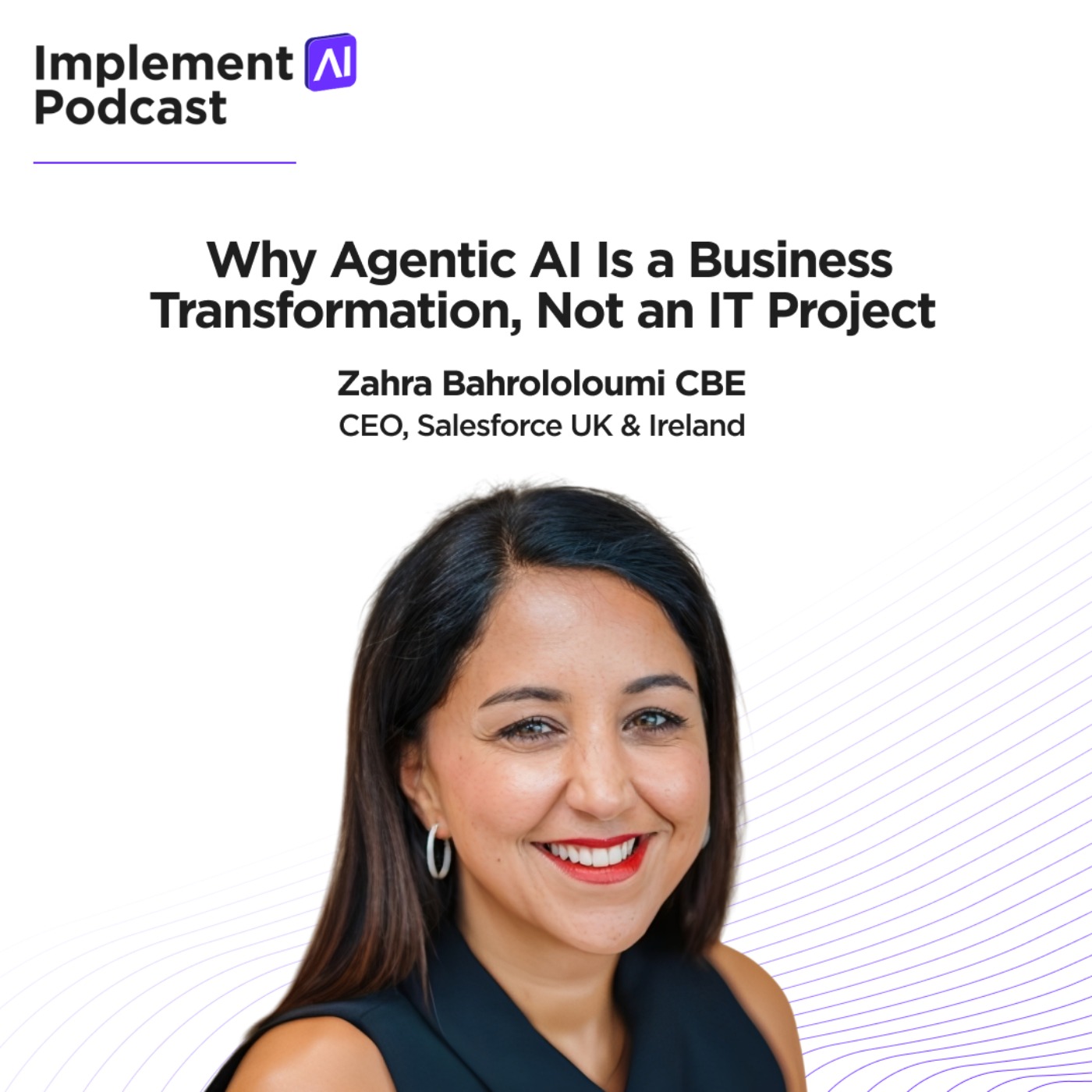 Implement AI Podcast #90 - Why Agentic AI Is a Business Transformation, Not an IT Project92 / 100
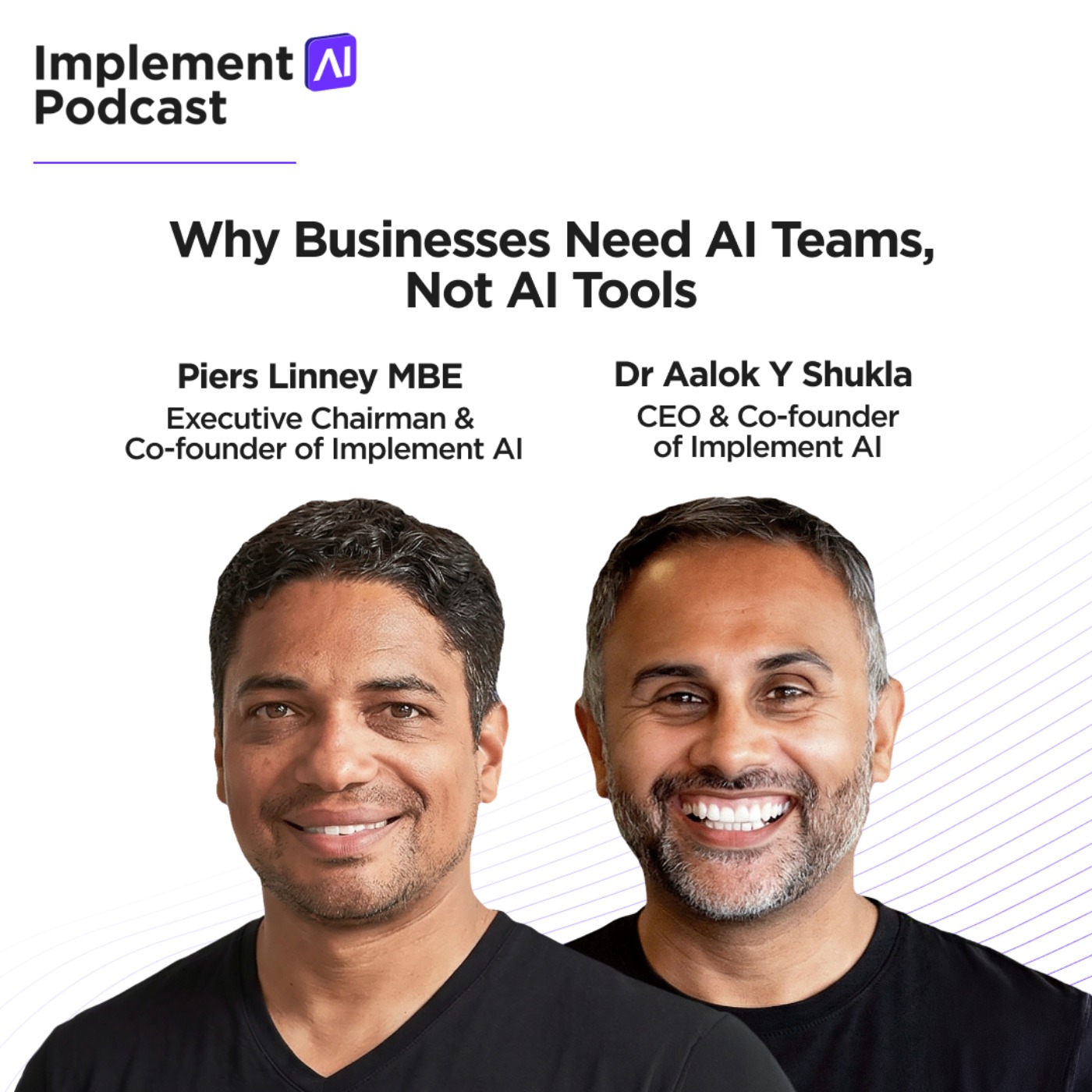 Implement AI Podcast #87 - Why Businesses Need AI Teams, Not AI Tools73 / 100
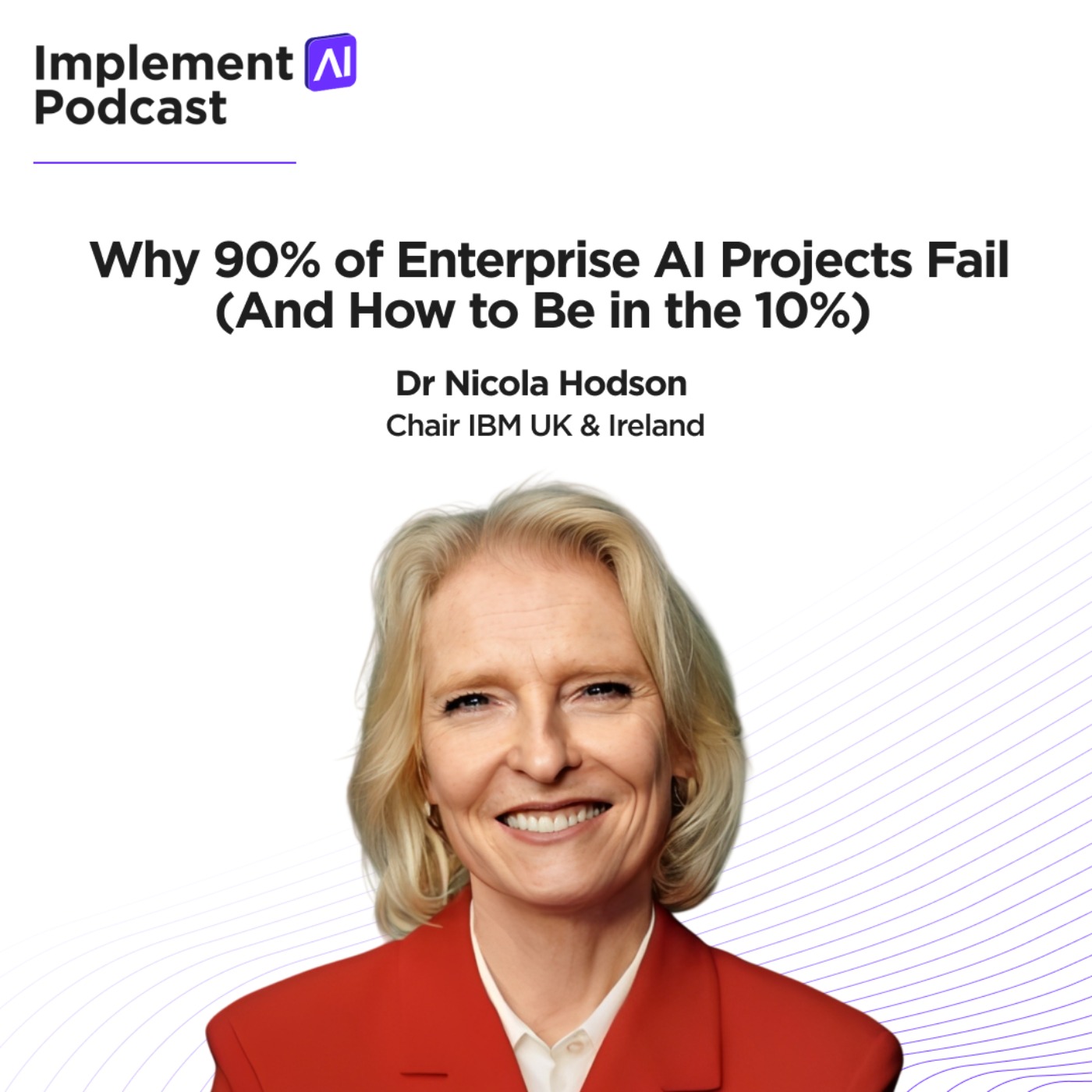 Implement AI Podcast #86 - Why 90% of Enterprise AI Projects Fail (And How to Be in the 10%)81 / 100
 Implement AI Podcast #85 - AI, Voice Agents and the Future of Franchise Growth72 / 100
 Greatest Hits #4 - The Implement AI Podcast with Piers Linney & Dr. Aalok Y. Shukla50 / 100