
Free Startup Fundraising Advice & Investor Pitch Practice with Scott Fox, CEO of StartupCouncil.org · 2026-02-01 · 1h 52m
Key moments - from our scoring
Substance score
38 / 100
Five dimensions, 20 points each
Scott Fox, CEO of StartupCouncil.org, runs a free global office hours session aimed at helping startup founders navigate fundraising without geographic gatekeeping. The episode features live pitches and strategic Q&A with multiple founders. Pratiksha Gandhi, a preventive cardiologist, pitches Co Cardio, her revenue-generating preventive heart care franchise with $300k in pre-launch revenue, 44% profit margins, and plans to raise $500k to scale to 3-4 franchisees. Her challenge: finding investors interested in cash-pay wellness models rather than medtech or pharma. Fox advises that venture capitalists typically don't fund franchises, suggesting she look beyond the VC community. Other founders present include those working on AI-powered coding acceleration, concussion protocol apps, and accelerator timing strategies. Fox emphasizes the importance of understanding unit economics, having strong revenue validation, and knowing which investor types match your business model - a core theme for B2B operators evaluating their own fundraising approach.
Unit economics refers to the cost to produce or deliver a product, the price it sells for, and the resulting profit margin - essentially the financial heartbeat of a business that shows whether the core business model is viable and scalable.
VC investors typically don't fund franchises because the franchise model doesn't fit their investment thesis; franchise investors are a separate category of funders with different return expectations and business model preferences.
Highlight actual customer revenue and proof of product-market fit through real customer acquisition, which is more credible than projections; also ensure you're targeting the right investor type for your business model, not just any investor willing to listen.
Use the time limit as a practice tool to learn to distill your message to essentials: what you do, your market validation (revenue, metrics), your ask, and what makes you different, delivered with confidence and specificity.
The transcript doesn't fully answer this, but Fox indicates there is 'a whole world' beyond VCs for wellness franchises, suggesting franchise-focused investors, family offices, and alternative capital sources are better matches.
Our reviewer’s read on each dimension, with quotes from the episode.
The episode contains scattered useful insights about fundraising, particularly regarding franchise vs. VC funding models, accelerator equity dilution, and customer validation. However, the format as an office hours Q&A means most substance is reactive rather than systematically developed. Long stretches consist of introductions, technical difficulties, and promotional content that add minimal actionable insight per minute.
venture capitalists don't fund franchises...it's just a different lane, you know, it's like you're speaking French and they want to speak Spanish
assuming you take a lot of due diligence on anyone that you're going to take money from, I really would recommend that...ask for references
The advice leans heavily on conventional startup wisdom: warm intros over cold outreach, finding the right investor type, unit economics matter, build TAM/SAM/SOM. While Fox occasionally adds useful specificity (franchise funding being separate from VC, the dilution problem with stacked safe notes), the overall framework is well-trodden. The AI discussion with Sean touches on derivative concerns about job displacement and the future of work. Little here would surprise an experienced operator.
the easiest way is to find people who are going to like and trust you faster and who have money
cold outreach to VCs is vanishingly small...it's more like you're writing a script and sending it into Paramount Studios
Fox himself is credible: 25+ years as an internet entrepreneur, serial founder, angel investor in 40-50 companies, advisor on boards and funds. The pitching founders (Mustafa in biotech diagnostics, Kyle in concussion safety, Pratiksha in preventive cardiology) are all serious operators with traction - revenue, regulatory approvals, or pilot customers. However, the episode format dilutes their expertise; they pitch in 2 minutes then answer fragmented questions rather than exploring their domain knowledge deeply. The online audience participants (chat questions) are anonymous and likely less vetted.
I've been doing that for 25 plus years now and I spend most of my time these days actually as an angel investor
we have a pre launch clinic here in Encinitas where we have already done more than 300k of revenue in last 18 months
The episode includes concrete numbers and named examples: $300k revenue in 18 months, 44% profit margins, $500k fundraising target, Y Combinator's 7% for $500k deal, $10k annual fee for schools, $500 per fight card. Mustafa mentions the $23B Abbott acquisition of Exact Sciences as a comp. However, many answers remain vague - when discussing distribution channels or family office access, Fox admits 'I don't have a good answer' and provides abstract guidance. Some advice (e.g., on the medical device from UCLA) lacks specific next steps due to Fox's admitted unfamiliarity with that domain.
300k of revenue in last 18 months...profit margins of 44%
they're raising $500 for 7%...So 7% divided by 500,000, that's roughly a $7 million valuation
Fox asks solid follow-up questions and pushes pitchers on specifics they glossed over - prompting Mustafa to clarify B2B vs. B2C, pressing Kyle on numbers and customer acquisition costs, redirecting vague answers. He challenges assumptions (e.g., 'cold outreach doesn't work; here's why') and admits his limits ('I'm not a franchise guy; I can't help much on medical devices'). However, the episode's length and open-forum format mean some exchanges are brief and interrupted by ads or chat moderation. He doesn't deeply probe contradictions or test claims with real pushback - mostly affirms and coaches.
so that's the piece that investors are going to know who's your customer...if it's Medicare, the next question immediately is do you have a reimbursement code yet?
where's the money coming from...you need to tell us. Like, who's buying, how often, how much
Computed from the transcript - who did the talking, and the words that came up most.
In this episode of our free Startup Fundraising Office Hours, StartupCouncil.org CEO Scott Fox took lots of questions from #startupfriends worldwide - both on camera and via chat. These mostly focused on helping #startup #founders accelerate their fundraising process to raise money from angel investors and venture capital firms, including: This show was live on camera, Scott Fox talked with StartupCouncil.org Members, including: Pratishka, San Diego / Orange County: She asked how to find strategic investors for Co-Cardio, a preventive cardiology franchise that focuses on cash-pay wellness, and Scott advised her to pivot away from venture capital toward the franchise world or individual doctors who understand cash-pay models. Mike, Laguna Woods, CA: He asked if taking small early funding could ruin his chances with major accelerators like Y Combinator, and Scott warned that high early valuations can "price you out" of standard accelerator terms while emphasizing the need for due diligence on all investors. Mustafa, Irvine, CA (UC Irvine): He returned to practice his much-improved investor pitch for his medical device AI software startup A1 Diagnosis.
Transcribed and scored by The B2B Podcast Index.
Speaker A: Hi, Ryan Reynolds here for Mint Mobile. Are you looking for a beach read this summer? May I suggest your big wireless bill? It's got suspense, mystery, a slightly flat emotional arc, and a shocking twist where you realize you've been overpaying the entire time. Fortunately though, Mint Story is better. Every plan, $15 a month, even unlimited.
Speaker B: That's it.
Speaker A: Happy ending, zero tears. Give it a try@mintmobile.com Switch upfront payment of $45 for three months, $90 for six months or $180 or 12 month plan required.
Speaker C: $15 per month.
Speaker A: Equivalent taxes and fees. Extra initial plan term only greater than 50 gigabytes. Me slow when network is busy.
Speaker C: See terms.
Speaker A: Hey and welcome to startup Fundraising office hours. I'm Scott Fox. It's time to chat about your startup. Welcome to a fun filled hour, hour and a half depending on how many questions you guys have. And we're going to talk about all the things that make your startup go wow. I'm here to help you. Uh, fresh from my office here in Southern California, broadcasting worldwide through the lovely, uh, Internet, uh, LinkedIn, live, YouTube, Facebook, um, all over the place. And if you're watching this, uh, and outside the country, welcome to you especially. We do this at night, lately night my time, because that can help us reach people in uh, um, South Asia and uh, Australia and East Asia a little better than when I do it at lunchtime here, which is more for the California and US audiences. So if that sounds like you, welcome aboard. We're going to spend uh, some time together tonight and the focus is helping you. That's why I do this. It's free and I'm just trying to help from founders, uh, make their way through the difficult world of fundraising. So together we're gonna pile uh, up and jam, uh, on your questions and your uh, investment pitches as well. So priority goes to those who are members of the startup council, uh, startupcouncil.org this is the organization that I run back here and this is a global community service group that I started specifically to help founders like you. So tonight we're gonna go through those and several of those folks have already, um, sent in their emails, uh, with their questions and their pitches. And hopefully those folks will show up backstage and I'm going to bring them on camera and together we're going to explore the worlds that they're building to try to change the world, make it a better place. So that's our uh, plan tonight and I'm going to turn on the chat room as well and then Everybody can come in and please let me know first of all, of course, if you can hear me and uh, hopefully you can see me too. And if you are available, um, on YouTube or LinkedIn, I think both of those will start appearing in the chat room here. As you can see right there. Uh, go ahead and say hello, Let me know if you can hear me. And of course, let me know where you are. Where you are in the world would be, um. It's always very interesting to me to see where we're reaching, because one of the reasons I do this is because I think that Silicon Valley has done a lot of gatekeeping and I think it's important to allow people in other geographies to participate in the wealth and the opportunities that are being created here in the United States and especially here in California. So if that sounds like you, you're in the right place. I hope that you'll have a good time with me tonight. And, um, hopefully those chats will start coming in. It usually takes a minute or two. So hopefully some of you are out there listening to me. There we go. Hey, Nicole Wolf, CEO. Hi, Nicole. Let us know where you're coming from tonight. That would be interesting. Seattle. Okay, great. Same time zone, right? So I guess evening works for you. Nice to meet you. And uh, we're gonna get going here with some other folks in, in a minute, so let me, um, let's see who's backstage. Right? That's part of the. Oh, actually, you know, one more second. Let me do the introduction, I have to do the, uh, the disclaimers and that kind of stuff. Right? So let's. Here we go. Okay, so, um, obviously I am, uh, Scott Fox, and we're doing the startup fundraising Office Hours. This is a free program helping startups around the world. And, and you can invite your friends if they'd like to join us as well. Uh, this easiest place to find us is on YouTube. That's our YouTube channel, uh, for the startup council. There's about 30,000 people there these days. So go ahead and join in if you'd like to subscribe and uh, like, and comment and share and all that stuff because it helps us keep uh, the system going and attracting more people that we can help. And that's really the goal here. Um, the primary thing we're talking about today is a, as a, uh, uh, an opportunity is startupcouncil.org that's the website that I run, like I said, and it's available online 247 and it's a membership based Program and it's associated an association with all kinds of cool stuff that is designed specifically to help you. Just like I needed help when I was a first time founder many years ago. So that's the idea is to help you, um, participate there and that can be a lot of fun. Let me point out that this is not qualified legal or financial advice. I'm just some guy you met on the Internet. I've done a lot of this. I'll uh, tell you about myself in a second if we haven't met. And also that this is being recorded, so don't say anything stupid. It'll be all over the Internet soon and we'd love to hear your questions in the chat room as well as confirmation that you can see me and hear me. So far we only have YouTube. Is this working on LinkedIn? Somebody's on LinkedIn. Please let me know. That's. We have trouble there sometimes. All right. And like I said, you can Visit us on YouTube. Okay, cool. So that's the uh, the warm up and we're going to get going here for reals and let's see.
Speaker D: Okay.
Speaker A: Yes, yes. Okay. So welcome to Startup Office Hours. I'm Scott Fox. I'm the CEO of the Startup Council. I'm a serial Internet entrepreneur and a long time, um, maker of things happening. I try really hard to help and engage startup founders all over the world. I travel and speak all over the world, uh, specifically to help empower local ecosyste and founders to bring them the knowledge and the expertise that we have here in California that I feel hasn't been adequately shared. I've written these books behind over here. Uh, the three in the middle are in English, uh, and the others are all foreign translations. You can see a Polish and Turkish and Russian and Japanese and Vietnamese and so forth. And these are all books about how I made the transition from being a, uh, corporate executive to realizing I was really an entrepreneur and how I could use that to build companies and businesses of my own and using the magic of the Internet. I've been doing that for 25 plus years now and I, uh, haven't had a corporate job in a long time and I spend most of my time these days actually as an angel investor. So I have a lot of experience on both sides of the table as both an investor and as a founder. And that's why I'm writing a fourth book. I'm actually working on that right now, which is about how to raise money. So that's going to be really helpful, I hope to a Lot of you. It's, uh, basically an answer to all the questions I get when we do this show. And hopefully it will be useful to you. It's coming in, uh, probably four, four to six months, I would guess. All right, so that's the concept, and that's who I am. That's why I have the microphone. But mostly I have the microphone because I chose to make this happen. All of you have the opportunity to build things and do things with less friction and startup capital needed than ever before. And that's partly why I do. This is just to show you guys, hey, you can do this too, right? If you have opinions or expertise, grab, uh, the microphone and see what you can make happen. Right? It's the world is your oyster these days. It's a lot easier than when I started. I raised my first venture round almost 30 years ago after I finished grad school at Stanford. And, um, it was hard. There was no support and no expertise. And yet these days, it's all available online. You can just ask 100 questions to chat GPT and you'll be an expert by tomorrow. So I encourage you all to do that. All right, so those of you who are just arriving, um, let's see, uh, Ty and Mustafa and John and, uh, Beacon.
Speaker C: Well, a T shirt and jeans, Mac and cheese. Some things in life are an obvious match, like Rias and Schwab Advisor Services, the number one choice for independent advisors. The difference is so obvious, it's schwabvious.
Speaker E: Learn why@schwabius.com you're listening to a podcast right now. Driving, working out, walking the dog. If you're into podcasts, chances are you have something to say, too. With RSS.com, starting your own podcast is free and easy. Upload an episode and we distribute it to Apple podcasts, Spotify, Amazon Music, and more. Track your listeners, see where they're from, and start earning from ads just like this. If you've been thinking about starting a podcast, this is your sign. Start your new podcast for free today@rss.com
Speaker A: looks like we got Orange County's in the house, right? Tustin and Irvine and Westminster. And it's Westminster in Orange County, I'm not sure. Newport, uh, beach certainly is. So hi to all of you. Get going with some of our questions and answers and see what kind of, um, what kind of, uh, discussions we want to have tonight. So I'm going to bring the folks backstage over to. Let's see, how do I do this? So we've got. I'm Going to bring everybody back here. So Kyle and, uh, PG and Sean and Mustafa and Mike. Okay, you're all going to come on for a second here and turn up. Make sure your cameras are on. Looks like they are. Yes, yes. There we go. There we go. Okay, some familiar faces here. Good, good. All right, Very nice. Hi, guys. I guess you can hear me. Is that right? Everybody can hear me? Yep, hear you.
Speaker F: Clear.
Speaker A: Okay, cool. Um, that's always a danger, right? You're never quite sure. Um, all right, cool. So nice to meet all of you. Let's see, um, let's just go around. Can we do a quick round? Actually, can we take a quick photo? Everybody kind of just look at me for a second, if you don't mind, and smile and look like, look like I said something smart. I don't know what that look is. Maybe, like, maybe a thumbs up would be great to see all of you. Awesome. Thank you. You know, it doesn't happen unless we take pictures and post them online. So, um, now this is official, so thank you. All right, so maybe we'll just go around kind of clockwise. Um, and I think most of you have written in, so I might have a clue. But let's just hear what. Some of you submitted your stuff a while ago, so maybe we can, um, just. And just give me like the, the ten second version, right? Not. Not the whole pitch because I'll come back to you. I'm just trying to figure out what order we're talk to people in.
Speaker B: Right?
Speaker A: So, okay, so this, uh, who. Let's see, who is this?
Speaker E: This is.
Speaker A: See your names. Pg. Hey, pg Nice to meet you. So what did you. You wrote in actually, right?
Speaker F: Yeah, I think I've written in. Yes.
Speaker A: Yeah, hold on. I need to turn that mic up so I can't hear you. Okay, hold on. All right. Say that again, please.
Speaker F: Pardon?
Speaker A: Yeah, there we go. Good, That's. I just want to make sure I hear you. All right, so, Patricia, okay, so you had a question about raising money for co Cardio, right? This is good. Okay, so I know what you're here for. Good. Um, and that sounds like a cool company. I'm looking forward to discussing that with you. Okay. Co Cardio fundraising. Okay, so that's good. And then who's beneath Mike? Uh, Mike. You're Mike. Okay. Hi, Mike. You, um, wrote it too? You guys are all doing. You're all following instructions. My God, this never happens every now and then. Nice to meet you, Mike. So you are looking at accelerators and. Okay. About timing of funding. Would that be kind of a way to say it.
Speaker D: Yeah.
Speaker B: Timing and. And whether taking on somebody else would hurt getting in an accelerator.
Speaker A: Right? Okay. Yeah, that's an interesting question. Great. And both of you guys are members over at Startup Council. Thank you for your support there. We've got a whole bunch of cool stuff coming, so stick around there. It's not fully finished yet, but it's. We're ramping up and you guys are going to get in early. Awesome. And then. Mustafa. Hey, nice to see you, Doc. How are you? You're. You're muted, though.
Speaker F: Mute. Yeah.
Speaker D: Can you hear me right now?
Speaker A: There we go. Yes.
Speaker D: Okay. Hi. Um, I'm good. How are you?
Speaker A: Good, good. Did you want to pitch tonight? Is that what I saw?
Speaker B: Yeah.
Speaker D: I would like to pitch tonight. Yeah. We have on our AI power platform for eight rates. McLaren Degeneration.
Speaker A: Yeah, that's right. I remember. Excellent. Well, glad to see you again. All right, and then we have. There's another familiar face there. Sean. Nice to see you, Sean. Um, I think you all wrote in. This is unprecedented. Everybody followed instructions. No, I don't have that one, Sean. I'm lying. Did you write it?
Speaker G: I did. I did write it. I got an email even confirming it.
Speaker A: Did you? All right, well, I don't have it. What. What's on your mind tonight? Nice to see you.
Speaker G: I wanted to talk about, um, AI accelerated coding and the, oh, yeah. Of, um, you know, idea to product and how that's. You know.
Speaker A: I did see that we're just coming
Speaker G: off an accelerator, so I'll give you guys a brief update about our product.
Speaker A: Oh, great. So you can chime in when Mike. We talk about Mike's question then. Excellent. Yes. And I did see your question. I'm sorry, I just must not have printed it out. Gets a little crazy in the hour before the show. Okay. And that leaves us, uh, last but not least is Kyle. Oh, hey, Kyle. We've met. Right?
Speaker H: Yeah, plenty of times. How are you, Scott?
Speaker A: All right. Yeah. Nice to see you. You're still working on the, uh, um, concussion protocol thing, right?
Speaker H: Yep, yep. Still working on the. The concussion app.
Speaker D: Smart.
Speaker H: Uh, Gnosis. I wanted to pitch tonight, get some feedback. Um, you know, we're in the process of, uh, raising some capital, so wanted to discuss that as well.
Speaker A: Okay.
Speaker H: Looking so I should say.
Speaker A: Perfect. Okay. So so far we've got two questions and. And three pitches. That's. That's an interesting. That'll be good. That'd be very interesting. Okay, well, thank you all. Let me, uh, just digest that For a second and then say hi to people in the chat room. And then. And then we'll figure out how we're going to get this started. So, m. Let's see. And I think everybody tonight is in America, which is a for change. So the time zone is not quite as difficult. Sometimes I feel bad. We have people come in the middle of the night from Germany and stuff. Well, there. Some of them are probably watching. Okay. So, um, all right, let me just check in on the, uh, the chat here and see if there's anything on fire. Let's see. Good. And. Sounds like you guys can hear me. Jags tech from the Valley, Sanjeev from India. Where in India? Sanjeev.
Speaker B: Sanjeev.
Speaker A: And Florida Rita.
Speaker B: Hi.
Speaker A: And then Jags trying to figure out what to do. I'm in home care for decades. Life saving, medical invention design tested. Oh, okay. Well, that's interesting. You're gonna have to tell us more, uh, Jags, um, or, um, we can come to that later. And Julia from Detroit Homecoming. Nice to see you. Excellent. All right, um, so let's get started then. Let's see. Um, let me just look at what our notes were. Why don't we. Well, let's do a pitch. We've got several of them, so, um. Ah, well, I. Maybe we'll just go in the order that you guys showed up in. I'm, um, most curious about, um. I'm curious about all of them, but pg, you were. Had a, uh, uh, I had a kind of a threshold question for you. So where are you based?
Speaker F: Hey, you know, actually I was in Orange County. I've been following you since more than three years.
Speaker D: Oh.
Speaker F: Last I met you at Soca University, and I was actually going to book a call with you, uh, one on one offline. But I thought that since I got your email after being a member, I thought let me at least, you know, today talk to you and get to know whether this is something. Would you be interested? We can talk offline where I can book a call. So I wanted to start a conversation.
Speaker C: You're listening to a podcast right now. Driving, working out, walking the dog. If you're into podcasts, chances are you have something to say too. With RSS.com, starting your own is free and easy. Upload an episode and we distribute it to Apple podcasts, Spotify, Amazon Music, and hundreds more. Track your listeners, see where they're from, and start earning from ads like this. Even with just 10 listeners a month, if you've been thinking about starting a podcast, this is your sign. Start free@, uh, RSS.com you're listening to
Speaker E: a podcast right now. Driving, working out, walking the dog. If you're into podcasts, chances are you have something to say too. With RSS.com, starting your own podcast is free and easy. Upload an episode and we distribute it to Apple Podcasts, Spotify, Amazon Music and more. Track your listeners, see where they're from, and start earning from ads just like this. If you've been thinking about starting a podcast, this is your sign. Start your new podcast for free today@rss.com
Speaker F: pleasured with you today.
Speaker B: Super.
Speaker A: No, no, that's great. Nice to see you. I apologize if I meet a lot of people I don't remember but uh, I was speaking there, right? That was the tech you're speaking.
Speaker F: I actually, I do hi fi all the time, but you see a lot of people so I totally get you.
Speaker A: That's fine, no worries. Excellent. Um, let me just remind folks, if you have friends who want to join us, this could be useful. We're doing free pitch feedback you and we're doing strategy questions and just trying to help. So if that's useful to you, tell your friends you got a couple minutes here. Um, and uh, you can also like and subscribe. Of course that's, you know, the way of the Internet. Um, but mostly we're going to talk about, uh, Pratisha's, uh, startup and the key here is she's going to give us a two minute pitch, right? So, um, she's going to mostly just practice her pitch and then we can talk some strategy too. But really the focus is I will try to add what I can, but I don't know everything. And she's a, I think she's a doctor, right? So she's got, got some cardio fancy thing going on here. So I'm, I'm only going to be able to address one angle on this and even that might not be right. So that means the rest of you who are watching, and I know there's other doctors and medical people, uh, in here, um, your feedback would be really helpful. Right? So don't make me do this by myself is what I'm saying. So, um, and so when people pitch, we're gonna give them feedback and help.
Speaker G: All right?
Speaker A: That's the idea of the Startup Council. We try to help everybody. So, okay, so, uh, Pratisha, let me put uh, two minutes on my phone and I know this is an artificial length of time, uh, but the idea is that it teaches you to go. You get it. I mean you're an educated person, right? It teaches you under pressure, how do you deliver? Because quickly.
Speaker F: So yeah, actually, yeah, fine, I'll just say because I actually I had a question but I'll just quickly uh, give a little bit introduction to what I do. So basically, uh, hi everyone. I'm um, Pratiksha Gandhi. I'm a preventive cardiologist with more than three decades of experience and I founded Co, uh Cardio, which is a revenue, uh generating franchise ready preventive heart care company. So what we are trying to do at Co Cardio is we are shifting the entire focus from reactive sick care treatment to proactive prevention where we are helping people to avoid uh, forced heart attack or repeat heart attacks. So uh, our model is like very simple. Like uh, you know we, we focus on uh, detect early, protect fully, connect deeply. And we have a pre launch clinic here in Encinitas where we have already done more than 300k of revenue in last 18 months because we wanted to demonstrate product market fit de risk everything. We have a physician, uh, buy in of 250k. And uh, we have profit margins, we have strong unit economics of profit margins of 44%. So and we invested into getting ready for the franchise. We have filed with California for the ftc. So we are right now at a very nice inflection point. We are going to start fundraising. We are fundraising 500k because we want to now uh, scale and grow into three or four more franchisees in this year. And then uh, we also want to like, uh, do hiring and you know like marketing and all those things. So this is where we are at and my question was uh, to use Scott. Like I just want to be very strategic because I have been moving around a lot and meeting people but very few people are interested into, in healthcare wellness retail space. Uh, because in cardiology technically what I see is that it is all the med tech or you know, those pharma driven things. But I am into a very different space which is cash pay wellness space. Um, so uh, I, I get a lot of objection that oh, who will pay? In, in spite of doing so much of revenues, people keep on saying that oh, uh, who will pay and all. So I, I just wanted that where to find the kind of investors who would be interested into wellness preventative models, you know.
Speaker A: Right, right. Okay. So I apologize. I thought you wanted to pitch and you're right, that's not what.
Speaker F: No, yeah it was.
Speaker A: Yeah, that's not what your thing said. I, I got like, I Said it gets a little busy here. So. But that was a pretty good pitch. Anyway, those of you in the chat room probably impressed. She's obviously been through this a couple times. So, um, let me just comment on your pitch a little bit. Even though it wasn't a formal pitch, it was good in terms of specifics. That's what I want to highlight because she said some key phrases like she actually has revenue and said how much. She talked about unit economics, which is a, uh, uh, phrase that most civilians don't know, but is dear, near and dear to investors hearts. Because unit economics is how much it costs to make something and then how much you sell it for and therefore how much profit you make. That's. That's the heart of a business. So the short phrase for that is unit economics. And she's. The fact that she's conversant with that and it sounds like unit economics, not only does she know them, but they're good. It's of course, very positive. So. Nice. Nicely said. Um, okay, so, yeah, you're having trouble matching to investors. That makes sense. Um, that was what I, When I read your, uh, submission. Um, this was my question because you mentioned a couple times here and then you mentioned it also as franchises. Venture capitalists don't fund franchises. I mean, I, That I've ever seen. Right. It's just not our business. Right. So if you want to raise venture capital, I, I'm not sure that's going to work. Um, that doesn't mean there aren't people that won't fund it. It's just probably not venture capitalists. Right. So, um, and I don't know who it would be because I'm not a franchise guy, but there's a whole world of franchises. Absolutely. I spoke at a conference once, um, actually. Did you say you're in Encinitas?
Speaker F: Yes, in San Diego. Yeah.
Speaker A: Yeah. Um, like, oh, I'm looking around. I don't think I still have it, but like 15 years ago I was in a magazine called Success Magazine. I don't know if you've ever.
Speaker D: I don'.
Speaker A: Even know if it's still around, but it's all about franchises and it's based. I swear to. I think the CEO lives in Encinitas. I went and had lunch with him. He was right near there. Anyway, um, uh, anyway, it doesn't matter where he lives. But, but my point is there's a whole world of franchise and that's a different thing. You already found that Medtech is not your thing. I'm not sure Venture capital is your thing either, if you.
Speaker F: Yeah, that's what I'm seeing. That people are not, like, excited with this model. Like, you know, because. Yeah, so that's the reason I wanted that strategy. That's why my question was on strategy. Because we have, like, we have a very good LTV CAC ratio. Everything is like, uh, uh, there. But, uh, not understanding where to focus, you know.
Speaker A: Yeah, yeah, yeah, no, I, I can understand that would be really painful and frustrating.
Speaker F: And I have got a very good franchising, uh, like, uh. So my franchising development is being done by Chris Connor, and he has done a lot of companies, you know, like ups, Yoshinoya, Costco, and also he's advising me. Like, our franchise, uh, like, entire model plan is very good. But the point is that right now you need a capital, you know, to do, to develop all these things. And that is where I think, um, angel investors and physicians, uh, that is the only route. But now I wanted to go a little bit. You know, when you want to scale and grow, you. It is not only getting the investors, but also bringing that expertise. Right. Because who, uh, can help you grow.
Speaker A: So, uh, yeah, I think you're on the right track. My, My recommendation would be talk to franchise people. And I, I don't. Like I said, I don't know where they are other than this magazine that I, I went to their conference many years ago. Um, but there are conferences and there's a whole industries around franchising. It's just. It's a different lane, you know, it's like. It's a. It's a freeway. It just goes to a different city. Right. So a different freeway, I think. And you probably just. It's hard. I see this a lot with people who have really good businesses, but if it doesn't fit the venture capital model, which is very specific, you can waste a lot of time and a lot of money going to conferences and applying to speak at things and incubators and accelerators, which we'll talk about in a minute with Mike. Um, and they just don't do it right. So you end up really frustrated and you think that there's something wrong with you or your business, and there isn't. It's just. It's like you're speaking French and they want to speak Spanish. It's just different. Right. So don't feel bad. I think you. I think you need to do some different research though. And to the one more practical, uh, suggestion I would have, you kind of said it already. So, you know, this. But I'm saying this for everybody else, too. Part of my new book is about how to find investors when you don't know investors. Right? And this. So this can apply to franchises as well. But the easiest way, of course, is to find people who are going to like and trust you faster and who have money. So in your case, obviously, like you already said, doctors, right? What? Other doctors, they'll get this. And they don't have to be venture capital doctors. They can just be doctor doctors who have some money and would understand a cash pay model. Like. So I would be looking at people who have had success with other cash pay franchises, especially in medicine. But like you said, maybe not even just in medicine. Maybe it's a Jiffy Lube, you know, oil change, or it's a, uh, you know, Arby's restaurant or whatever it is. It's. It's just a whole different way of thinking about money. And most of us aren't smart enough to think about money in different way. Too many different ways. So I don't know if that's helpful. I'm sorry I can't be more direct.
Speaker F: That's totally fine. It makes sense. But I think my biggest takeaway. And thank you. Thanks for this. Caught that. That's the reason I wanted to speak to you, because my biggest takeaway is that you helped me feel the relief because I've been applying everywhere and, you know, like, I'm facing this. So, uh, one thing is good to know that, okay, nothing is wrong with me. I said, what's. What's happening? You know, like, I got. Doing everything right. We have got amazing testimonials, and, yeah, everything is there. So what's happening? So I think I will narrow down my search and look more into the franchisees. Uh, and then, uh, that. That helps. Okay.
Speaker A: Yeah. Good, good. Well, I'm glad. I hope so, because I. I've seen this a lot, and people. You end up thinking it's that you're wrong, but you're not. You're just. You're just in the wrong room. Right?
Speaker F: That's true.
Speaker A: You got to be in a different room. Yeah.
Speaker F: Okay. Thank you.
Speaker A: All right. Nice to see you again.
Speaker F: Thank you.
Speaker A: All right. So that's, uh, PG from, uh, San Diego. Nice to meet her. I guess I have met her, but nice to see her again. And, uh, sounds like she has a real business there. But this is for all of you, right? Just because people aren't vibing doesn't mean that you're crazy. You may just be talking to the wrong people. Right. So the media makes it sound like venture capital solves all problems, and it really doesn't. It's. It's a. It's a very specific tool. Right. You may need a hammer, but they're a screwdriver or whatever metaphor you want to use. Right. So don't. Don't be shy. Um, branch out, do your research, and try different angles, different places. Right. Because venture capital is not one size fits all. Cool. All right, let me check back into the chat room, and then we'll move on to our next, um. Our next pitch, I think. Uh, or discussion. Let's see. In the chat says, uh, Here we go. Okay. A bunch of questions about ergonomic handle invention. Okay, Ty, well, maybe we can come back to that. And jags as well. Um, yeah. Your passion to heal and save lives is good. Just be sure it's compliant with medical safety laws. Have you done any clinical trials? You're a doctor, I think, right? So. Or I'm sure that's crossed your mind, so. But it's still good advice. Yeah. Be careful about that.
Speaker E: And.
Speaker A: Okay, excellent. So I haven't seen any comments from LinkedIn.
Speaker E: Still.
Speaker A: Is anybody here from LinkedIn? Is that working? I'm afraid it's not working. Um, so hold on one second, if you don't mind, guys, I'm gonna pop another window and see what. I get the feeling that the LinkedIn crowd is not here because there's not enough people here. So hang on a second here. I can pull this up on my other screen, hopefully, and I won't lose you all. Um, how do I do this? Okay, there. Yes, here. Events here. Okay, so I'm almost there. Sorry, one second. So what's happening? Your event is live. Okay. It says it's live. All right, so is anybody here from LinkedIn? Uh, this has never happened before. Um, okay, well, I'm gonna keep going, but anyway, if you're watching on LinkedIn, please.
Speaker D: Nope.
Speaker A: LinkedIn. What does that mean? Beacon Wealth. You moved over to YouTube. Jules did. Why? Can you just tell me? Just. I need to learn for next. I'll keep going, but, um, it looks like it's live on LinkedIn. I don't understand why. So if you guys could fill me in, that would be great. Okay, so let's move on to our next. Um. So, um, Mike wanted to talk about. Uh, Here he is. Mike. Well, he can tell us what he wants to talk about because he knows better than I do. And here's Mike. There he is. Hi, Mike.
Speaker B: Hello.
Speaker A: Nice to See you or meet you. Um, so you're local too, right? Is that right?
Speaker B: In the booming metropolis of, uh, Laguna Woods.
Speaker A: Laguna woods, okay.
Speaker G: Excellent.
Speaker A: Leisure world. All right. Yeah, I'll bet. Um, okay, so maybe you can review for everybody and for me, your, your questions about funding and timing and accelerators sort of ideas. Right?
Speaker B: Yeah. So signed up for an accelerator or two and then had thoughts on a company that seemed like a good fit for uh, funding or approaching, uh, for the lane that I'm in. And I was wondering is, does going for any money that you can find, you know, Runway short.
Speaker C: You're listening to a podcast right now. Driving, working, out, walking the dog. If you're into podcasts, chances are you have something to say too. With RSS.com, starting your own is free and easy. Upload an episode and we distribute it to Apple Podcasts, Spotify, Amazon Music and hundreds more. Track your listeners, see where they're from and start earning from ads like this. Even with just 10 listeners a month, if you've been thinking about starting a podcast, this is your sign. Start free@, uh, RSS.com you're listening to
Speaker E: a podcast right now. Driving, working out, walking the dog. If you're into podcasts, chances are you have something to say too. With RSS.com, starting your own podcast is free and easy. Upload an episode and we distribute it to Apple Podcasts, Spotify, Amazon Music and more. Track your listeners, see where they're from and start earning from ads just like this. If you've been thinking about starting a podcast, this is your sign. Start your new podcast for free today@rss.com.
Speaker B: get any money you can find to keep going. Uh, is there mistakes that can be made with that that would affect the application and do an accelerator or. It's just, it's just a new world as far as uh, acquiring funding.
Speaker A: So sure, okay, just give me the, the super quick. What, what does your company do and what stage are you at?
Speaker B: Uh, we're, we're pre revenue. It's BPS Pro score plus. We do hands free scoring for the game of pool in augmented reality training and come to find out there is no infrastructure for data in the pool industry. So.
Speaker A: Right.
Speaker B: I am near, near. Uh, I'm in examination for patent. I'm patent pending and I have a, a pro with 14 years of being sponsored by the league. 250, 000 people in the league I play in which is how I discovered scoring such a drag.
Speaker A: Okay, yeah, I remember this now. You uh, you joined. You're part of the Startup Council. I remember your application. I never seen. I never seen the, uh, a Q sports focused startup before. I was cool.
Speaker D: And it's been the same.
Speaker B: The industry's been the same for 100 years.
Speaker A: Yeah, right. That makes sense.
Speaker B: Yeah.
Speaker A: Um, okay, so. All right, so what? So, ah, and how much money are you talking about? Do you think. Do you want to raise 100,000? Okay, so. And do you have specific accelerators or incubators in mind, or is this more of a theoretical question?
Speaker B: Well, I haven't sent in for TCA yet, but the. The, uh, Y combinator and text. Ah, text stores.
Speaker A: Uh-huh.
Speaker D: Sure. Okay.
Speaker A: Um, okay, so. All right, so here we go. So tca, first of all, TCA is not an incubator and accelerator. It's an investment group. So they won't, um, that's. That's a competing path, at least for the terms of this conversation. You could do both. The one doesn't exclude the other, which is your question. But, um, I wouldn't call them an accelerator incubator. That's what I'm saying.
Speaker H: Um, we.
Speaker A: We invest in all kinds of stuff. Um, but we invest. We don't incubate or accelerate. Um, so the tech stars and Y combinator model, um, I think the big question is in terms of. So are there things you could do that would screw one or the other up for sure. Um, the problem of bad, um, investors is a thing, right? There are people out there that are scammers or bullshitters or liars, just like in any other business. So I have certainly seen, uh, And I hope this doesn't happen to you, but I have seen people get ripped off or fooled or. Or even just waste a lot of time with people who are fake investors. Um, and I've seen worse than waste time, of course, as well. Um, lawsuits and stuff. Um, so that's. That's obvious, I think. But just starting at the base case, right? Can. Can things go sideways? Yes, in lots of ways. Um, presuming you do a lot of due diligence on the. Anyone that you're going to take money from, I really would recommend that. And the easy one on that is just ask for references. I'm shocked how many founders will take money from people and they're so blinded by the money that they don't check a person's references. And I, um, could tell you a horror story or two involving federal prison people. They get intimidated because people have a checkbook and they don't do the simple Task of saying where's your money from? And can you tell me other people you funded? If they won't tell you that, then back away. Um, due diligence is highly recommended. Assuming you cross those bridges and you find adults who are going to behave and have real money and so forth, um, and that they're going to be helpful and not give you terms that take over your business somehow. Assuming, you know, best case. Um, I don't see a lot of conflict between uh, an accelerator incubator and investors except perhaps in the, in the ah, area of dilution and control. So it's typical for accelerators and incubators to take something like five to seven, maybe even 10% for a certain amount of money. Um, maybe 100 grand, 200 grand, something like that. Uh, and I don't know how much you or other people watching know about venture math, but basically as soon as you take money, uh, for a certain percentage that implies evaluation for your company. Right. So Maybe it's a $2 million is what that if you work the math out, it's a two million dollar company. So that may be fine. That's up to you to make a decision. You and your board and your founders or you and your spouse or co founder. Right, if you're cool with that, cool. But if there are already investors in the deal and you raise their money at $5 million and now the incubator will only take you because they tend to have standard deals, an accelerator or incubator, um, and you want to sign their standard deal but it's at half the valuation that you took the money from your mother in law. Yeah, problems. Right. Um, and perhaps vice versa, although not necessarily. Because if you had a valuation of 2 million from the accelerator and then your mother in law wanted to put in money, presumably you could raise the valuation or at least match. You'd have a floor, you know, that was established by a third party so that wouldn't be as difficult to negotiate. The harder one is the other one. And I see this all the time because I meet people who um, perhaps like you, who have real businesses and they're excited about it and they may have even funded it with friends, uh, and family money, uh, or even VC money. Um, and especially if they have raised several rounds of like stacking the, the safe notes or the convertible debt, their valuation, you know, to their friends and family. So they want to, you know, they, whatever they might have started at a reasonable number, 2 or 3 million and then you know, a year later they needed another 500 000. And they have good friends and rich friends. So then they raise evaluation to 5 million and then 6 million and 8 million and they still haven't gotten anywhere. Now their valuation is 8 million. They can't go to Techstars or to uh, uh, Y Combinator or anywhere because they're too expensive. They'd have to if they took the money from techstars even though it might be exactly what they need to do. The implied valuation of the incubator accelerator round cuts the valuation of all their friends and family who invested. And that means they have to go back to their friends, family, mother in law and say hey, you mind if I write down your investment by 75%? That's not. Not fun. Right?
Speaker G: Not fun.
Speaker A: So maybe you knew all that. But is that, is that helpful?
Speaker B: No, I'm not. I'm not strong on the money side of things. Uh, just product and contacts.
Speaker E: Uh.
Speaker A: Okay. Well good. Well maybe that's. Is that the kind of answers you wanted then? Okay. Yeah. So I would. I think the short version of all that is figure out what the offer of the accelerator incubator is and then kind m of set your expectations and, and outreach around that so that you don't get out of whack basically.
Speaker D: Right.
Speaker B: Well the white combinator I think is 500,000 on 7% is.
Speaker A: They're flat. They're doing it now. Okay, that sounds.
Speaker D: What's the.
Speaker B: What's the formula up hand if you know it quick.
Speaker A: Well, if it's 500 on 7%, then it's 7%. Uh 7%. So 93% of it is the other is the other. Right. So it's 5m hundred divided by 7% I think. Um, something like that. Or vice versa. Yeah, more or less. Um, so the.
Speaker B: Let's see.
Speaker A: I'm just looking at my notes from what you said.
Speaker B: Sure.
Speaker A: Yeah. That's the kind of. That's the main thing. Um, the other thing is just to be careful in general about accelerators and incubators. I mean the two you're talking about are amazing. Right. So that I wouldn't have real concerns there. Um, but there are a lot of kind of mid tier ones or ones that were great 10 years ago and aren't so much anymore. Like really, again, check references. M. Because you're giving up a chunk of your company. Um, do they really like. They, they may have a list of amazing contacts that they're gonna wave at you. M. But when's the last time they actually raised money from those contacts, you know? Or did they ever. Or are those people who just dropped by a happy hour one time. Right. And left their business card. Right. It's, it's a, it's a real business. You got to check credentials.
Speaker B: Can I ask another question?
Speaker A: Yeah, sure.
Speaker B: So I'm a solo founder and I bootstrapped up to where I'm at, which is uh, in examination with the utility patent with it and patent pending. I'm um, about 90 on the prototype being finished, which is what my pro is waiting for to go to the league. Uh, there is no scorekeeping system in pretty much in the world for.
Speaker A: Amazing.
Speaker B: It is amazing. The timing of everything has been, yeah. Crazy. So got here, me and good old Chat, GPT and Claude and you know, doing things solo and you know, all I read is uh, being a solo founder being a drag for, you know, so searching. It's, you know, I, I'm 100 in here, so. Yeah. And so far along it's um.
Speaker A: Well, that's another. I, I will have to move on. But a couple ideas for you. One is, well, like I said to uh, Pratishka pg, you're not crazy. It's tough, it's okay. I mean that's how uh, this is, this is the grind. Right. Um, but most accelerators incubators are certainly funding opportunities are going to want you to not be solo. Um, they're going to want to see that you have not just customers, but that you've convinced other people to join the team. Right. So I think you're. I don't know the current specifics of the Y Combinator, techstars, um, applications, but I know like at Tech Coast Angels, we're not interested. We don't talk to companies much anymore that don't have revenue already and probably at least a couple, at least a few people, they don't have to be co founders, but it's got to be more than a solo act with no money. Right? Um, it's so easy to spin stuff up now, especially with AI then you're going to need a little more traction than that. Um, and then I guess the other good news is I have a book coming for you. It's going to take me about six months, but this is exactly what it's about. It's like how to go through this journey, uh, uh, and survive. And then last, I'll just say, I think you're a member at the um, Startup Council. Yeah, you are. Right. @startupconcil.org site there. We have a function there down on the bottom of the Homepage you can post. If you, if it, if it's useful to you, you could post an ad for a co founder and just see if anybody shows up. Right. Because there's not really, as far as I know, many places where people can find co founders and you know, it's, It's a. It's hard. Um, so that would be maybe, uh, a pre vetted place that you could do that if that would be helpful to you. That's why I created.
Speaker B: So thanks.
Speaker A: All right, well, nice to meet you, Mike. Hope to see you again and hope to see in person since you're nearby. Maybe we'll cross paths one of these days. Um, all right, cool. Well, nice to meet, uh, him. And let's see what's going on in the chat room. I see some. It looks like people are helping each other out, which is awesome. Um, so LinkedIn Live is working, but the chat isn't. Is that what's happening? Okay, that's weird. Yeah, they're. They're kind of wonky over there. It's frustrating. Sorry about that. But, um, actually, you know what? Maybe did anybody who's there. I. I'll. I won't do it. Maybe one of you who's. Who was there, could you just post. Come over to LinkedIn, because if I stop, you'll all have to be watching me while I do that. But anyway, I'd appreciate that if somebody could just say that come to. It's a YouTube dot com, Scott Fox. That's our channel. Um, so if that's a, ah, possibility, that'd be much appreciated. All right, so, um, so what are Allah and Cat talking about here? Let's see. Pitchbook. Okay, I'm not sure which way to read this. Okay, here we go. Official orders. Okay, that's Jags again. We'll come back to you. Jags. What's Allah says? What's the best channel to onboard first customers for cash management? Forecasting AI and MVP target customers or startup CEOs after Series A funding with fast cash burn.
Speaker B: Huh.
Speaker A: That's cool. Um, yeah, so I don't know, Cat DSNY, but, um, nothing from LinkedIn. That was a good idea, though. Yeah, you got to be real specific. I agree with that, too. You need to do the lab work. Yeah. Okay, so I guess, uh, it sounds amazing. I don't know. I'd have to know a lot more about it. I agree with that advice that Kat gave you, but I would also suggest, um, that you are picking a highly impacted audience. Right. Everybody wants to talk to funded Series A founders, right? That's, that's the dream for every service provider, right? There are young companies, uh, that aren't sure what they're doing and don't have their full stack of services lined up yet. And they've got money. Like that's what everybody wants to do, right? So anybody who's a series funded, Series a founder on LinkedIn or anywhere else is getting lots of calls. So I don't know if you have a, um, if you have a, um, background in sales or business development, but you're going to need it. So, uh, I'm just, I'm trying to be helpful here. Realistic. That's what this show is about. But because if you're an AI genius, but you don't know sales, your product better be extra amazing because those people are hard to reach, full stop, right? You picked like one of the hardest angles. So I guess what I would do is I would drill down and find a specific angle in a specific industry. Um, ideally one that you have specific connections with, like, uh, just making this up, you know, like, uh, your spouse is a nurse.
Speaker B: Ah.
Speaker A: And uh, they know the chief financial officer at the local hospital. And this will work really great for certain kind of insurance billing for hospitals, right? Like drill down and you could probably get even more specific than that, right? Like maybe it's not hospitals, it's specific, uh, uh, rehabilitation centers or post surgery care centers or something, you know, really specific. Or apply that to, you know, lawn furniture or car manufacturing or whatever your niche is. But find a niche because cash management is a really lucrative area to be in and everybody wants to be there. So you're going to need to be.
Speaker C: You're listening to a podcast right now. Driving, working out, walking the dog. If you're into podcasts, chances are you have something to say too. With RSS.com, starting your own is free and easy. Upload an episode and we distribute it to Apple Podcasts, Spotify, Amazon Music, and hundreds more. Track your listeners, see where they're from, and start earning from ads like this. Even with just 10 listeners a month, if you've been thinking about starting a podcast, this is your sign. Start free@rss.com you're listening to a podcast right now.
Speaker E: Driving, working out, walking the dog. If you're into podcasts, chances are you have something to say too. With RSS.com, starting your own podcast is free and easy. Upload an episode and we distribute it to Apple Podcasts, Spotify, Amazon Music and more. Track your listeners, see where they're from. And start earning from ads just like this. If you've been thinking about starting a podcast, this is your sign. Start your new podcast for free today@rss.com
Speaker A: more competitive in some differentiating way. Uh, and maybe you already have apologies if you've already gone through that, but that, I think that's the only way forward, right, Is to really be specific so that when you contact somebody, you have something specific to offer them that's a proven solution, specific to their needs. Uh, they hear you and they're like, oh, this person gets me. Right? Not just some sort of generic high. I manage cash and I can make an extra 50 basis points or whatever. That might work. And if you're good at that, awesome. But it will get easier for you the more tightly you identify what we call an ICP or ideal, uh, customer profile, and then hit them very specifically. And personally, uh, that would be the way I would, um, pursue, uh, that. Okay, next up, we're going to, um. Who's next on our list? Our hit list here is Mustafa. Ah, Harry. Mustafa, nice to see you here. I think you're here.
Speaker D: There you are.
Speaker A: Okay, here comes Mustafa. Hey, man.
Speaker D: How are you? I'm good. How are you?
Speaker A: I'm good. Nice to see you.
Speaker D: Nice to see you. You too.
Speaker A: Mustafa's a better. You're almost going to be a regular here now. So you're working hard and that's, that's great. I mean, that's why I do this. I'm happy to help repeat, you know, repeat offenders and come back and, uh, and polish things. So, um, did you want to pitch tonight? Is that what we're doing?
Speaker D: Yeah, yeah, I would like to pitch. I. Based on the last hour conversation, I little bit change.
Speaker G: Okay.
Speaker D: A little bit more polish right now. Excellent.
Speaker A: Okay, well, so let me just remind the audience, um, Mustafa is going to have two minutes and he's going to talk and tell us about his business. And then I will give what feedback I can offer. And then all of you too, please chime in. And you don't need to be, um, an expert in his field. I mean, he's a doctor, so this is extra complicated. But that's not the point what we're looking for, because we don't have time to debate, like, the whole strategy. We're going to presume that the business is, is a good idea and that he's on his way. What we can help with, and all of you can help with too, is, uh, his style, his things. He didn't say things he should say differently. Did he speak too fast? You know that kind of like structure and, and style critique. That's easy for anybody to say. You know, I think you should have said more about the revenues or less about the whatever it is, that kind of thing. Right? That's kind of the vibe. If all of you can help, that would be awesome. And by the way, everybody keep going in the chat room, that's great. If you all are connecting with each other, that's awesome. Uh, you should all post your LinkedIn, um, your LinkedIn, uh, URLs and connect that way too. We're building a community here and of course come and join the Startup Council, then you can all meet each other there too. Okay, so here comes Mustafa. I'm going to put two minutes on this and like I said, this is an artificial amount of time. But the idea is just kind of to simulate the pressure of a real pitch and then we'll uh, we'll talk through with some feedback afterwards. Okay. Ready Mustafa?
Speaker D: Whenever you are. Okay, I'm ready. Hi everyone, my name is Mustafa M. I'm a medical doctor and AI developer and CEO of a one diagnosis startup. We are building an AI powered laboratory service for risk assessment of HH macular degeneration. The problem. 20 million Americans have ATH macular degeneration which cause central vision loss. It is irreversible. It is detected after damage happens. Our AI powered platform detects AMD risk years before vision loss. This is the first blood based risk assessment platform for HH macular degeneration. I would like to explain our technology in a simple language. When we get older, some cells in our eyes start dying. Where do they go? They go into the blood. Previously we couldn't detect them. Um, now we can. How it works, the patients go to family doctor office, blood is drawn and send it to our laboratory. We analyze it with our AI platform. We provide the risk assessment results to patients and family before vision loss happens. Who we are? I performed research at University of California Irwine for six years and wrote our AI algorithms and co founder Dr. Murat M. Badai is a Stanford scientist who raised our over 10 million for his medical device startups. What we have done, um, proof of concept studies completed. We are raising over million for clear lab Certification Revenue Start First Quarter 2027 A1 Diagnosis Startup Precede stage. See the future clearly. Thank you very much.
Speaker A: Wow, that is way better. Good job.
Speaker D: Thank you very much.
Speaker A: Yeah, that was a pretty clear story. Well, so okay, so everybody, before I get excited, everybody in the Chat room, uh, offer what you can. I mean, it wasn't perfect, right? So what suggestions everybody out there has could be helpful to him. And there goes the timer. It was under two minutes too. Nicely done.
Speaker D: Thank you.
Speaker A: Um, okay, well, cool. So all right, so how could it be better? Well, um, you're enthusiastic, you're qualified. Um, it was a good story. You made a complicated subject much more easy to understand. Um, yeah, I thought that was very good. I guess if I was going to pick on anything, I would. I didn't hear much about the revenues or the model. Right. You said revenue is coming in 2027, so that's fine. But it would be interesting for investors to know. Actually, we might have talked about this before. Is it software? Is it hardware?
Speaker D: Level two service. AI powered laboratory service.
Speaker A: Laboratory service. Okay, so I don't know what that means. Like that may obviously means something to you, but you'd have to unpack that more for me. Does it. Is that. Well, that's. Yeah. What is it?
Speaker D: Basically there's a. In the, in the field, there's the exact science grail. Like uh, the people send it to all doctors or patients, uh, or Quest diagnostic. Everybody knows they go and then give the blood, they analyze it and provide the result. Actually we are doing the same way. We are doing very early detection for the disease.
Speaker A: Okay. So it's very roughly like a Quest diagnostics for this one specific macular, uh,
Speaker D: AI powered quest diagnostic for early detection.
Speaker A: Okay. Okay, great. Okay, so that might be a metaphor to add. So what I'm driving at is it wasn't clear who the customer is. Right. Because what the investor wants to know is where the money comes from. So is it, do I pay as an individual insurance? Is it through a hospital? Is it a charity? You know, like.
Speaker D: Yeah, uh, this is actually B2B and B2C. Uh, the patients can like a quest diagnostic. The patient can go and order online and then they, we can come and uh, uh, give the result or they can go to the primary uh, doctor office. No need the ophthalmology because the specialist we try to do like a democratize the people. Just go to the primary doctor office or just order online. Come us, we analyze and tell the person before vision loss happens. Hey, you have a risk.
Speaker A: Very cool. Okay, so that you need to say that because that, that's a big deal. Right? If it's B2B is different than B2C and if you're doing both, that's probably good. But I'll warn you, that might also suggest that Your focus is split. So that may or may not be good, but that, that's helpful. Right. So I guess the thing I would want to know then because. And they both of those have different marketing approaches.
Speaker D: Yeah. Uh, first approaches is B2C. This is our first approach.
Speaker A: So direct to consumer.
Speaker D: Yeah. Uh, uh, no, uh, B B. I'm sorry. Yeah, I'm sorry. B2B. Sorry.
Speaker A: B2B.
Speaker D: Okay, sorry. Directly to the uh, to the doctor office when the people go and uh, to, to doctor will give, uh, give the order. And this is a reimbursement also open. I talk with the people in Medicare, one of the AI director who provide the reimbursement and uh, he, he, he told us if you get the certification they, they are open to reimbursement.
Speaker A: There you go. Okay, so that's what I was after. So that needs to be part of your pitch. M. It was only two minutes so you can't say. But that's the piece that investors are going to know who's the customer. And then if it's what you said is B2B and it's Medicare, the next question immediately is do you have a reimbursement code yet? So that may be farther down the road.
Speaker D: There's a possibility.
Speaker A: Yeah, yeah, yeah. Okay. But that can be a, that can be a deal killer right there. So you need to be ready to deal with those sort of questions because that's a big deal. Right. The payment consumer opportunity is exciting as well. And that's what I would call it. I was B2B and direct to consumer. If you can go direct to consumer, that's also very interesting. But it takes a whole different kind of marketing stack and personnel and outreach and budget. So I would talk about those either. Either don't talk about it or talk about it as phase two someday if we get there, just so that people can see there's opportunity but it's not going to be distracting to you while you build the first core business. Right.
Speaker D: Yeah.
Speaker A: Um, let's see what the chat has to say. It looks like people were appreciative of your, um, your pitch. Let's see.
Speaker E: Um.
Speaker A: Okay, sorry, I'm just trying to scroll down here. Um, great presentation. What's your revenue model? That's pretty much exactly what I asked. Are you using a homegrown. So we don't have time for you to answer all these questions, but these are the kind of questions you should think about. So are using a homegrown AI model, right? What chat? GPT, API, open source, pre trained like that kind of stuff.
Speaker D: People are going, we wrote our AI algorithm not using the generative AI. We have own algorithm.
Speaker A: Oh, wow. Okay. And is it for hardware or software?
Speaker D: This is uh, uh, this is software basically.
Speaker A: Yeah, yeah, I think you need to say that a couple more times because um, if this is a software company that that's, it's a different path. Right. So yeah, say software more.
Speaker D: Yeah. Um, uh, yeah. Basically we are actually our model. They did exact sciences the company exactly what we are doing for the cancer actually. And this company was 10 million dollar last year.
Speaker A: Okay.
Speaker D: And this year is about purchase them. Um, like a requiring 22, 23 billion dollar right now.
Speaker A: 23 billion.
Speaker D: Billion, yeah.
Speaker A: Wow. Okay. I think I would mention that that's a great comp. They call that a comp, right? A comparable. Yeah, that's worth mentioning. Abbott Labs bought the, the closest uh, analogy to our company for 23 billion. Yeah.
Speaker B: Okay.
Speaker A: That'll get people's attention. Nice. Well, cool. Well, it sounds like you're making progress. Congratulations. Nice.
Speaker D: Yeah, thank you. Thank you very much. Yeah, we, we are. I was following this company and then you know, all of a sudden last year the abbot decided to buy it in a one day to stock like a double it.
Speaker A: Yeah, I'll bet. That's amazing. All right, well, cool. Well, there's so much opportunity in uh, in biotech and med tech and all this stuff. It's exciting. I'm glad, I'm glad you're like somebody said in the chat room, great, great. Uh, cause I'm glad you're working on it. Awesome. Well, good to see you. All right, so that's our friend Mustafa. What an interesting company that is. So, um, so you get the vibe there for how to pitch. I. Hopefully the, the revenues are what we really need to hear about. I know everybody wants to talk about the product. That's why you got into it. Or even the solution because that's why you got into it. But investors want to hear about the, the money. That's, that's the key thing. Okay, so we got a couple more folks uh, backstage here. Um, let's see. Well, let me just check the chat room again. Oh, it's almost, we've done almost an hour already. Let's see. Okay. Um. Come on you.
Speaker F: There we go.
Speaker A: Okay, so. All right. Hey, if you're, if this is being helpful to you, likes and comments would be really appreciated, guys. Ah, trying to be helpful here. Um, okay, so there's a co, founder, equity, early um, stage investors. Okay. Yeah, we can come to Those, um, and this is one, I think, for you, Mustafa. How are you managing systems to manage clients, patients, insurances, medicine? Yeah, that's, that's a good question for anything medical related. Right. So, um, that's worth thinking about. I presume you have answers for that as well. But it's a good point. All right, so let's go on to our next person, uh, here and uh, like I said, uh, these. We're, uh, giving priority to folks who are members of the Startup Council here. This is our organization. It's a worldwide organization, community service based. Um, and we're trying to help connect you all and accelerate you. So if that sounds useful, our primary function is, uh, publicity really, to try to help you get attention from investors. So if you join the Startup Council, there's, you can get a profile and um, you can write, uh, we'll give you your own blog that you'll get your articles published in our newsletters. You can publish ads, uh, for co founders, like I mentioned earlier. You can submit new articles, you can, um, uh, we have all kinds of discounts for software and services and we can make introductions to lawyers and accountants and that kind of stuff. And um, it's a whole bunch of stuff. But, um, the folks that are coming on camera are members of this organization already and um, that's why they get priority. Okay, so next up was. Who was next was Kyle, I think. Kyle. Okay, Kyle, here we go. Hey, Kyle.
Speaker H: How are you?
Speaker G: Scott.
Speaker A: All right, nice to see you.
Speaker H: Same here.
Speaker A: I gotta, I gotta tell you, I'm glad to hear that you're still at it. That's awesome. I don't think I've heard from you in maybe a year, whenever, I don't know, time flies. But anyway, it's great that, uh, I think people are going to enjoy hearing about your, your company. That's great. I'm looking forward to the update.
Speaker H: Yeah, thank you. It's, you know, taking a lot of different turns and just, uh, building traction and stuff like that. It's, you know, a lot of bureaucracy that happens in the fighting world as well as just combat sports and contact sports. Anyway, so just working on that.
Speaker A: Sure, sure. Okay, well, great.
Speaker C: You're listening to a podcast right now. Driving, working out, walking the dog. If you're into podcasts, chances are you have something to say too. With RSS.com, starting your own is free and easy. Upload an episode and we distribute it to Apple Podcasts, Spotify, Amazon Music and hundreds more. Track your listeners, see where they're from and Start earning from ads like this. Even with just 10 listeners a month, if you've been thinking about starting a podcast, this is your sign. Start free@, uh, RSS.com you're listening to
Speaker E: a podcast right now. Driving, working out, walking the dog. If you're into podcasts, chances are you have something to say too. With RSS.com, starting your own podcast is free and easy. Upload an episode and we distribute it to Apple Podcasts, Spotify, Amazon Music and more. Track your listeners, see where they're from, and start earning from ads just like this. If you've been thinking about starting a podcast, this is your sign. Start your new podcast for free today@rss.com
Speaker A: well, I, uh, think you've heard the drill, the two minute thing. I don't think we've done this here before, have we? I don't remember, but okay, so. But yeah, if you can want to do a two minute version, I'll give you what help I can and hopefully folks in the chat room will too. And we can start whenever you're ready.
Speaker H: Perfect. I'll get started. So, uh, According to the World health organization, over 56 million concussions occur worldwide with the majority being sports related. Parents, athletes, uh, and staff. Unfortunately all don't have the ability to recognize, report and monitor symptoms remotely. Until now. My name is Kyle, the founder of smartnosis, a uh, concussion diagnosis app for contact sports. Our solution revolves around a proprietary questionnaire and scoring system that monitors athletes over the critical first seven days after a head injury. Treatment and recovery suggestions are generated depending on the athlete's answers. We proved our concept in the most dangerous sports in the world. Combat sports. Approved by the World Boxing Council, the Association of Boxing Commissions, the California State Athletic Commission and the Confederation of Brazilian mma. We've piloted with seven fight promoters and have secured a Canadian commission as our first paying sanctioning body, making Smart Gnosis mandatory. We also secured our first private high school in New Jersey and that begins in Q1. This year, uh, we're raising capital to scale worldwide, targeting youth sports organizations, private high schools, colleges, sanctioning bodies, and local and federal law enforcement. Our team and advisors consist of sports neurologists and influential decision makers in sports. Safety starts with awareness and awareness starts here.
Speaker A: The end. Very nice.
Speaker D: Cool.
Speaker A: Just gonna stop the timer. Awesome. Well, that's. You paint a really good picture there. Congratulations. That sounds like some progress since we last talked. You've got some real credentials with, uh, uh, third parties, right? Like it's not just your mom, right? It's like, real, real stuff. Um, awesome. Well, that's very cool. Um, okay, so everybody, uh, in the chat room that's listening or on the air, right. Um, please go ahead. If you have suggestions about what he could do to improve the pitch, please, uh, chime in and offer your help or connections. If you have resources that would help him as well, potential customers, that's always welcome, I'm sure. So, um, and I'll go first, and then we'll talk about whatever comments other folks have. So, um, that was very good. You painted a good picture. Um, I like. I mean, the idea that concussions need better service just makes sense. Uh, you know, anybody that watches football or worries about kids or, you know, combat sport, I mean, it's just. It's a universal thing, I guess. I'm glad. This is kind of a negative thing. That's actually super positive. Most pitches I hear like this, people would take half the time just to try to convince us that concussions are bad, right? All these statistics, blah, blah, blah. And you just. You kind of. I mean, you need to do some of that, right? But you. You've got past it quickly to all the sanctioning bodies, and. And that stuff is very, very impressive. Um, I guess what. What it didn't have was numbers, and investors really like numbers. So I guess I would want to add. Again, it's only two minutes. Right. But I would want to add, if you have any. Any numbers. Um, and I think those fall at least roughly into two buckets. One bucket would be results like, how many, uh, how. How often does this help? Or how many people has it helped? Or, um, what percentage increase? Or, you know, like, I don't know how to quantify it exactly, but, you know, how many people has it helped? And what difference is it making? You know, if you could say something like, we helped whatever, 73,000 people and they improved their concussions by 17% or, you know, something like that. That is, investors eat numbers the whole time we're listening. We're trying to put together an equation in our head to model your business. Like, we're spreadsheet crazy, right? So if you tell us a good story, that's great, but you didn't tell us enough to know whether I want to learn more or not, because we hear lots of stories, right? Um, so that's one. Numbers about performance or adoption, and that leads to the other one, which, of course is numbers about customers and revenue. So it sounds like you're still pre revenue. Is that right?
Speaker H: Well, we've. We've got um, we're starting a pilot, uh, in March with St. Peter's Prep in New Jersey. And they're going to be transitioning into a paid customer. We're giving them the first semester for like their kids, um, like as a pilot, right. And then they'll be, uh, transitioning into a paying customer. And we just secured a, uh, Canadian, um. Left, Left bridge. Left bridge. Uh, Combat Sports Commission in Canada. Uh, they're going to be our first paying sanctioning body actually. Um, yeah, we're doing a nominal fee for them. We're doing a few fights for them next, uh, month, in the following three months. So basically one fight every month. Um, but it's kind of like, you know, it's kind of like set the precedent, right? Like, so that was a big part of what I've been doing is figuring out this business model with the sanctioning bodies. You know, how is that the fee? Who's paying for it?
Speaker G: Right?
Speaker H: How do you get that to promoters? Do you go directly to promoters?
Speaker A: Right.
Speaker H: Or through the sanctioning body who makes it mandatory? So we were lucky to do that. And um, with the stuff, that's all
Speaker A: the stuff you need to unpack for an investor because that's your unique domain knowledge. Like I, I don't know you that well. I presume you don't have a PhD in this stuff. I don't think anybody does. Right. But like, but you have this, which is like intimate knowledge of sanctioning bodies in multiple countries and what it takes that this business model that you're developing, you should unpack that for us, like show us that that's a differentiator. You've done this homework and particularly you did it again here. You talked about all that. Not a single number, right? You got to give, you got to get in the habit of saying numbers. And I know you, that's because you don't want to commit. But you should at least say something like, we project that the average contract for a sanctioning body like Left Bridge might look, might look like uh, a thousand dollars a month or a million dollars a year or whatever. Like give us something because otherwise I have no idea how big this business is. Right? And this whole thing could be only a 10 million dollar business. It's not big enough for venture capitalists to be interested in. Right? I think you know that because I've, I've seen you at bigger events where this kind of stuff is discussed, right? So like, but if this has the potential to be a billion dollar business, you need to Give us some numbers to understand why that is. And particularly this goes back to what I was saying with, um, Mustafa, who's the customer? And that's what you were kind of talking about there. Like, is it sanctioning bodies? Is it individual fighters? Is it schools? Like, it could be all of those. I don't know.
Speaker D: But.
Speaker A: But m. That's what you need to tell us. Like, who's buying, how often, how much.
Speaker G: Like that. Gotcha.
Speaker H: Yeah. Right now it's the sanctioning bodies and the, uh, school schools, like private high schools and colleges. The schools and colleges, that's 10 grand, uh, for the year. That's what they're doing. Um, and then the sanctioning bodies is about 500 per card. And a card is like, you know, Jake Paul's fight had maybe seven or eight people on the card, right? So it was like four fights. You know, amateurs have maybe 30 people on a card.
Speaker A: Right.
Speaker H: But we're just giving it, you know, 500 per card, and you multiply that by every card across, you know, sanctioning bodies.
Speaker A: So you can do the math with that real quick, and the numbers get big fast.
Speaker F: Yeah.
Speaker A: Okay, so that's. Work that into your pitch, because without that, it's just a story.
Speaker B: Right.
Speaker A: Um, and you can see in the chat room, people are talking with Mustafa about his tam Sam Som. I don't know if you're familiar with that kind of terminology, but for those who aren't, it's total addressable market. Serviceable. Addressable market and serviceable obtainable market. So it's like, it's kind of three circles as you home in on exactly who you're talking to and putting numbers to that helps us understand. And, uh, that's what you want, because investors will want to size this up, um, so that they know whether they're interested, because otherwise, like I said twice already, it's just a story. Right. So, yeah.
Speaker G: Cool.
Speaker A: Oh, sorry. We should check the chat room, too. Let's see what other folks had to say about this. I thought it was cool, but I hope that feedback's helpful. Okay, uh, a bunch of questions for, uh, Mustafa there. Uh, uh, addressable market. Yep. Oh, they're talking to each other. Okay. Uh, uh, okay, thinking about this, maybe I'm off base, but I see potential SaaS through channel partners, vis a vis middle school and high school through parents. Yeah, that's kind of what I. I'm m with you. Ignite Media. AI Night Media. A Ignite Media. I'm not sure how to say that. Anyway, um, yeah. And you've probably thought about that, right? Because as a parent, like, you could certainly see paying whatever, you know, five bucks a month or whatever.
Speaker H: So for, like, youth athletics, right? So let's say, like, the American Youth Soccer Organization, right? Like, they would be the actual customer. Youth sports, but they'd be passing that fee on through membership to the parents, right? So the parents would be downloading the app. Same thing with, you know, high schools. Like, what St. Peter's is doing is they're just, you know, buying it and then giving it out to the parents. And the parents are basically going to be monitoring their kids or having their kids download it, uh, and monitor Right. As they go throughout the season and things like that. And when it comes to fighting, it's the sanctioning body. And it's just a web app, which is a little bit different from the schools and the colleges on what they're doing. It's a web app. Each fight, each card, they just, you know, scan, register, and then they get their automated messages.
Speaker A: Yeah, that sounds promising. Uh, Jules chimes in and says, travel teams. Yeah, yeah, I can see. Yeah, that makes a lot of sense. So just pull that into your pitch, right? Tell us how it works and who's paying. That's critical stuff. Awesome. Well, good to see you. Congrats on the progress. I'm glad. Like I said, I'm glad you're still at it. I think it's a cool business.
Speaker H: Thank you, Scott.
Speaker A: Yeah, you're welcome. Nice to see you. All right. And, uh, come join us over at the Startup Council, Kyle. I think hopefully we could help you more. Um, unless you have already, I don't think you have. But everybody here, please come join us. Um, we can all help each other. Okay, so we got one more, I think, which. And then we'll do a bunch of the ones in the chat room for cleanup. Who didn't I talk to? Sean. Yeah, Sean's still here. Sean is back. Hey, Sean. How are you? I think, um, you're east coast somewhere, aren't you?
Speaker G: I'm in Delaware.
Speaker A: That's right. I saw that on your form. That's right. So you're up late. Well, thanks for sticking with us.
Speaker G: I'm a night guy anyway.
Speaker A: Okay.
Speaker G: Okay.
Speaker A: Super. Okay, so, um, I saw your form, but now I can't remember what you wanted to talk about. Can you remind us?
Speaker G: Yeah, so just give you a quick update, but we've spoken, I guess, uh, about three months ago, and I'm just. Just starting an, uh, accelerator program.
Speaker A: It's called yeah, yeah. Okay.
Speaker G: Yeah. Conscious, Conscious Venture Labs. Um, really, we just finished it. Ah, did our, you know, the big finale pitch, um, last, uh, wonderful group of people. Um, and they're all about conscious, um, capitalism, which is, you know, more it's not like, you know, having a business is not about making money but about making the world a better place.
Speaker D: Cool.
Speaker G: Yeah, very, very, um, just a great group of people. Can't stand up. Yeah. So, yeah, looks like we're gonna, we're gonna probably get some funding and we've got a couple of clients. We had some traction going. So, you know.
Speaker A: And you had a background, right? Don't you, You've done this before or. I've, I, yeah. Right.
Speaker G: This is my third, this is my third startup.
Speaker C: Third.
Speaker A: Right, right. Had a couple of exits.
Speaker G: So.
Speaker A: Okay.
Speaker G: Uh, so, you know, so my, my advice regarding that is, you know, just keep with it. Um, you just keep going and it's, you know, it's not easy and you have to connect with the right people and all of a sudden it works.
Speaker A: Awesome.
Speaker G: Yeah. So my question, um, you know, I'm a software developer by trade, uh, C level executive in programming for the last 30 some years and in the last six weeks or so, uh, just, you know, the types of tools that have come out and in particular I'm going to mention Codex, uh, as a tool that's used for development, um, have really revolutionized, you know, what you can put together, um, in a very short amount of time. And you know, I'm wondering, first of all, I think that, you know, it creates a ton of sort of equity, right. People who don't have $50,000 in nine months to build a product, all of a sudden they can almost do it themselves or much, much cheaper.
Speaker A: But I'm wondering, what do you think
Speaker G: is now, um, the differentiator? Right, because it used to be, oh, I need, I need VC funding to build my product, you know, fund, fund my 10 developers for the next nine months. To build this thing, I need 200 grand. That's like, you know, that's coming to an end. You know, what do you, what do
Speaker A: you think, what do you think the
Speaker G: landscape starts to look like over the next six months as this really gets mainstream?
Speaker A: Yeah, I wish I had a great answer. Uh, I, I've thought about it, but I, I, my main answer would be, I think we don't know, it's still too much early. Um, I'll try harder than that though. But I think that's really the answer, right? Who, who the hell knows it's moving so fast, especially if it starts, uh, if the AIs start teaching themselves and it becomes recursive, God only knows what's gonna happen, right? I mean, even, um, anthropic, uh, what's his name? Dario. Mario was just saying yesterday that he thinks AI is gonna, you know, could. Could kill us all. So there's lots of options at that point.
Speaker G: That's interesting, though.
Speaker E: Yeah.
Speaker A: Yeah. Lots of opportunities here. But, um. So, yeah, I've been seeing that even in my own work. I'm not a coder by any means, but I've been increasingly working. I started with Gemini and then ChatGPT, and now more and more Cloud and the things it can do just for, like, with my new book.
Speaker F: Right.
Speaker A: It's helping me revise and edit at scale, not just like a paragraph at a time.
Speaker B: It's.
Speaker A: It's crazy. Um, and it takes a lot of organized thinking, um, to get it to do what you want. But I think, I guess that's. That's where I see value.
Speaker E: You're listening to a podcast right now. Driving, working out, walking the dog. If you're into podcasts, chances are you have something to say, too. With RSS.com, starting your own podcast is free and easy. Upload an episode and we distribute it to Apple Podcasts, Spotify, Amazon Music and more. Track your listeners, see where they're from, and start earning from ads just like this. If you've been thinking about starting a podcast, this is your sign. Start your new podcast for free today@rss.com
Speaker A: I actually posted on LinkedIn yesterday or Sunday. Anyway, I'll, uh, post, um. It's a post you might actually find interesting because, um, there's a guy named David Matin, M A T T I N. And he has a newsletter called New, uh, World, Same Humans, and it's on my LinkedIn page for, uh, from the other day. But anyway, he wrote his guidance because he's an AI commentator, specifically.
Speaker G: Right.
Speaker A: But about what we should be teaching our children. Right. Like, because what do you do?
Speaker D: Right.
Speaker A: It's one thing if you already have a career or you're as old as you are, or I am. But if you're 12 or 20, you know, what are you going to do? So, anyway, so I think the differentiators hopefully are going to be, first of all, the organization. Like, I find that the. The prompts that I need to do to get really good results require such a level of focus that most people are not going to be able to do it. Um, the same way that you as a software developer people might get the concepts, but the actually writing all that code, you know, command line stuff that you can do, you know, that you're fluent in as a language. It's a high bar just intellectually. So, um, I think that I'm hoping that there are still skills required in terms of organization and not just the organization, but the, the being judicious about what matters and prioritizing, you know, that kind of stuff like higher order thinking, executive function. Um, and then the other big one which this post is about on Sunday is I, I would really like to see. I think there's going to be a lot of disruption, a lot of people are going to lose their jobs. But maybe this isn't answering your question but um, especially in you're into this conscious capitalism stuff. I guess I am too. One of the things I'm hoping it happens is that it frees up a lot of people from the rope work, the processing of papers and the transaction verification and reconciliations and maybe basic coding and maybe human empathy starts to be valued finally more like it should be. And people can, we can come up with incentive systems that allow people to do something that I don't think AI will be real good at, which is interpersonal control, communication and support for people. Especially as our society ages, uh, here in the States anyway and worldwide. Honestly the uh, birth rate isn't replacing the old people. We're turning into a gerontocracy. Right. Um, and if maybe AI can, can free up a lot of people, even truck drivers from that work and allow people to be more kind to each other. That's pretty utopian. But that's kind of what I'm hoping for. That answered your question at all. But no, I, I, I agree too.
Speaker G: I think, I think that's um, part of what my vision is, is, is around that is, you know, that, that there does become some more equity and some more um, people. People actually talking to each other more.
Speaker A: Yeah. Right. I'd hope so. Yeah. Um, in the, in the chat room ignite uh, media saying uh, iteration, speed is. Yeah. You can create a company that can be unkillable. Incentive mismatch. Because we have needs. It doesn't. And it doesn't. Yeah, that's right. We have more needs than it does. That's very insightful. I agree. Yeah. And post World War II hierarchy is collapsing. Yeah, that's right. And oh, they said I am right in all caps. Cool. Yeah, yeah, it's gonna be right. Um, yeah, well, I mean I hope I'm right. Right. I mean, if we could have a focus, a shift of focus from some of the craziness that's been going on towards some, some kindness and, and supporting old people, that would be, man, that would be, that would be real progress in my book. Um, but to your, the heart of your question, um, for the coding jobs and the entry level jobs, I'm not,
Speaker G: I'm not sure I worry about that. You know, I don't know what, where are the next level of, where's the next tranche of entry level jobs going to? Right. Those people, they're not going to have any purpose.
Speaker A: That's right. And yeah, I, for years have thought about a, um. Back during the Depression, they had this, the uh, Civilian Conservation Corps, kind of a national service thing, you know, And I'm thinking we should be. I've been thinking that for years we should do that. But now, especially with AI coming, we should take all these people and train them how to be nurses and counselors and help old people do their laundry. You know, that's valuable work, you know, and for centuries, for millennia, that was valued and now it really isn't because we're all on a. Competing to buy a Bentley, I guess. Anyway, I don't know, pretty philosophical stuff, but thank you for the question. I don't know if that was helpful. That's great, thanks. Yeah, yeah, nice to see you. Congrats on graduating from the, the Incubator. That's cool. Um, hopeful. Hope we'll see more of your, Your creations. It's always good to find guys, uh, that are thoughtful and pleasant when they're building companies. Nice to see you, Sean. All right, well, hopefully, uh, yeah, come join us at the Startup Council. Be nice to see more of you as well. And thanks for staying up late. Um, okay, so, uh, getting near nearest the end, let's go back to the chat room here. That kind of covers everybody that was backstage, I think. Um, thanks to all of you who, uh, like I said, I think this is the first time ever where everybody followed the instructions and actually sent in their, their paperwork, which is amazing. There is progress in the world. Um, so let's go through the chat room and talk about the rest of them, the rest of the, uh, questions. Um, and let, um, me point out that next time, if any of you want to be on camera, please come join the Startup Council and then you get the link to come join us, right? And then we can talk directly. That's kind of the what we're trying to set up here. Okay, so let me run back to the chat room and see there were a couple questions. Somebody was talking. Let's see. So Ty has a question about an ergonomic handle. We'll do that second. But Jags was talking about, um. Okay, uh, Jags had a concept here. There we go. I'm trying to figure out what to do. You know, I'm caregiver for decades on how much bandwidth. But you came up with an invention, Design tested. Eventually my wife. Here we go. Used it, and UCLA and Cedars even approved it for use for her during her hospital stay. Well, that's interesting. So they allowed it into the hospital. Okay, that's impressive. Only so much I can share. Okay. Yeah, that's fair. Um, well, that's awfully, uh. Uh, what's the word? Ambitious or accomplished of you. Good for you. Um, okay, there's a little more here. Since it's likely, I need to make sure it's protected. Yes, rights. Protected. Justify. Yeah, that's right. Okay. And then he or she says, I'll back off now. Stop taking over the room. So. Last thing I'll say is eating me up because I can say something. I would be using consistent 100 safety. Okay, thank you. Talk to you later.
Speaker D: Okay.
Speaker A: Uh, okay, well, Jax, I. I don't know enough to, you know, be real specific here, but I understand your concern about, you know, not wanting to say too much. So, um. Yeah, I guess. Uh, okay, well, I'll give you my kind of standard list of responses. Uh, but let me. Well, medical stuff is a whole complicated world, right? So you just got to be careful. It's great that they allowed you to do it. Uh, that doesn't mean it's approved. Right. So if you're going to go and actually turn it into a business, you'd need all kinds of clearances and so forth.
Speaker G: Forth.
Speaker A: And there are probably people in this, uh, chat tonight who could help you with some news about that. Um, but you probably have investigated the clearance path to become a paid for medical device, and it's long and arduous, so, yes, you would need money. Having an idea alone, unfortunately, is not enough to, um, do very much. Right. I mean, these days everybody has ideas, and, and the world is so connected now that there's a thousand ideas. You should see my inbox. I mean, it's insane. So that's why I do these shows, because I can scale and help more people at once than trying. I can't answer individual emails, um, like I used to. Um, although I actually, I guess I should say I do do some calls. Let me here, there's a page here. If this is useful to you and you'd like to talk more, or any of you, um, this is expensive though, right? Because you have to call me directly. But I do do some of that. I save time for that. For some people, uh, who've got money to spend, you know, to actually really work on stuff. So we could do that. I'm not pitching you, but that's just the fact. So what I would be doing if I were you, and you don't have much bandwidth, that's, that's the other thing. You're just not going to be able to do this if you don't have any bandwidth. But assuming you did have some time, I would call, uh, the Small Business Development Corporation. Sbdc. Sbdc. Small Business Development Corporation. That's a US Government funded entity. Your tax dollars at work. They do free consulting for early stage entrepreneurial type businesses. And they have mentors and advisors that would talk to you. Right. You, you just need people to talk to, it sounds like. So that's free. It would still take time. Um, there's also the service corps of retired executives.
Speaker G: Score.
Speaker A: And that's a similar thing. It's not a government thing. I don't think. Maybe it is. But, um, it's retired executives who want to volunteer and give back. And again, they might be able to help you with some ideas or point you in the right directions. And then of course you can get into the world more like where I work, which, like you could call me and we could, you know, book a time if you wanted to pay for it and stuff. Unfortunately, I can't give away all my time. Um, but, uh, you're gonna need time. Uh, so I, I'm not sure. I, I, I, I'm trying to be realistic here.
Speaker F: Right.
Speaker A: If you don't have bandwidth, it may be a great idea, but without somebody to champion, it's probably not going to happen. I guess if I, I was forced, I would. Maybe there's people at Cedars that were impressed with this thing and they would be interested. You know, maybe there's a young doctor or a young nurse or orderly or somebody who, who sees this and is like, wow, that's cool. And then, um, also if this is involving, because again, I don't know very much if it's about a specific condition or syndrome or affliction of some sort, maybe there's an association that would be, um, helpful, you know, like it's multiple sclerosis related or it's cardiac care related or cancer. You know, like all of those have non profit, many non profits. And maybe there's someone somewhere in one of those organizations where if you got more specific, you could find friends and partners and people that would help you commercialize it. That's the sort of thing I would be looking for. So I hope that's helpful. I, I can't give you much more than that without more details. And uh, even then it's tough. It's going to be a tough road if you don't have um, the time to pursue it. Um, and oh, by the way, anybody that's in the uh, chat room who have suggestions, this sounds like an exciting idea and it would be great to help, uh, help him or her out with this. Okay, now I was going to go back to. Was it the ergonomics thing? Uh, so where was that? No, not there. Hang on, I'm getting there. Um, man. Okay, well I saw it, I can't find it now. So whoever had the question about the ergonomics thing, you could put it in again and I'll try to handle that before we, ah, run out of time here. Um, okay, here's. Okay, here's a fairly straightforward one. What's the industry standard for co founder equity? This is from quiz time 899. Is it mandatory to grant an ownership stake to everyone designated as a co founder? No, it's not mandatory. Nothing is mandatory. It's your company. You can do exactly what you want to do until you have investors. Um, so that's the trick. That's one of the thresholds for whether you are going to um, raise money or not is whether you want to give up some control and have a boss. Right. Because once you have investors, even if they're minority shareholders, you have an obligation, at least a moral obligation, if not a legal financial one, to fill them in and keep them updated and listen to their advice. Right. So, um, so, and they may have advice about this. So what's the industry standard for co founder equity? Okay, a couple things. So this is also in my new book. So I hope that you'll stick around for a few months and the book will come out. It's going to be great. Um, but uh, first of all, uh, you don't need a co founder. Everybody thinks they need a co founder. A co founder is a crutch. A co founder is because you're lonely and you're scared and that's a totally legit way to feel. Totally. But it doesn't mean you need to give up half your company to somebody else or even 20% of your company. Company, Right. Probably what you need is somebody who knows how to code because you don't. Or somebody knows how to market because you're a coder or whatever it is, right? Product design or blah, blah, blah, AI something, right? So those people can be hired. And your challenge is not to give up half your company for a co founder. And again, half is not mandatory. It's what you can negotiate. This is an old school haggle, right? Um, but you want to find somebody that you can employ long enough to get to know them and then allow them to earn their way into a percentage of the company. That's how this is done. Um, because they may not want to work only for equity, you might have to give them more equity or ideally some cash as well. But you can pick whatever numbers you'd like and then negotiate. The key is that you do it over time and that they earn it because things change. They may be thrilled and excited about it for this month and next month and even for six more months, but eight months from now, they get a new job or uh, a parent gets ill or they have a new baby or they whatever. Something happens, right? And they leave. Right? So what happens to their equity? Right? You have to think through all the worst cases and all of this can be arranged. Um, a good book for this, actually. Let me see if I can find it. I've got it right here. Yeah, here it is. Try this. This. I'll have an even better version of my book. So don't spend all your money on this one. But. But this is a really good book. Slicing the Pie. Okay. This is a few years old. Um, I think they even have an app or a website. But you can get the Slicing the Pie handbook. And it's just as the picture shows, right? You're slicing the pie between the different founders and how to share appropriately and how that will get diluted as you bring in outside investors. Okay. But bottom line, it's up to you. Okay, so Taylor, uh, um, you had the ergonomics thing. Yeah, but I can't find the question. Can you? Oh, there it is. Sorry, you did put it back in. Um, trying to start an infant. Hold on. Where'd it go? Uh, hopefully. Yeah, there's some good comments in the chat room as well. Um, answering this question. Quiz time. Um, here it is. Okay. Taylor says trying to start an infant car seat company based on my ergonomic handling, but don't know how or who to find M. Uh, you got to give me a little more. Um, don't know how to start a company based on this invention or who to find. Um, okay, I'm gonna try. Well, I guess I go back to this, this SBDC or the Score, Um, ideas I would. Um, I mean, this is a physical product, so this isn't my expertise. I have to be honest. I'm more of a software guy. But basically you'd be looking at some product design issues and, uh, patenting, um, and then trying to build a business around it. So the trick, I guess to me would be the distribution. If you had. Assume the idea is brilliant, assume you can patent it. Who's the customer and how are you going to get it to the customers? Uh, that's the hard part. So, okay, there's a little clarification. Who would be the correct people to start such a company? Um, well, I guess you'd need, uh, somebody who knows the car seat market because that would address the distribution that I was just talking about. Who, who makes car seats and where are they sold and how much do they cost to manufacture. So you need somebody knows how to market this stuff. You need somebody that knows how to manufacture this stuff. And then that's going to both include some kind of regulatory and licensing oversight because car seats are. Are, um, it's not quite a medical device, but it's certainly something that is regulated. Right? Because, uh, if they don't work, people die. Right. So, um, so you've already spoken with score. Okay, cool. That's interesting. Uh, that's good to hear. Um, so I guess I think the kind of person you want is probably a product designer or an industrial designer. There are a few of those around, um, here in Orange County. Are you local? I know you've been here before. Right. Um, I forget where you live, but, um, if you look on the Orange County Startup Council, uh,.org website, there's a couple in the directory, I think, um, that do product design consulting. This one? Um, yeah. Startup Council, OC startupcouncil.org here. It's like that there. OC startupcouncil.org um, we have, uh, I think there's some listings like that, but there are. This is a long way you're making me think, because I don't know this field so well. Um, there are product design consultancies that specialize in helping people conceptualize and then make prototypes of physical products. I don't know much about them, but they do exist. And they sometimes even partner with inventors and try to make stuff happen. So I would try looking for that. Like, talk to, um. Talk to your favorite AI and ask for names of companies that do product development, prototyping, and engineering and design. And I'll bet you you could find some. Yeah, I thought you're an oc. I thought so. Okay, there's a big one down by the spectrum whose name I can't remember. Um, but I'm pretty sure there's a couple in our directory as well. So I would start there. And also anybody in the chat room, do you know how would you start? Uh, help Kyle start a infant, ah, car seat company. He'd love your advice. Okay, so I hope that's helpful, Kyle. Not, uh, not my most brilliant answer ever. But, um, let's move on to the next one. Uh, okay. Um, Ignite Media. Thanks for your help with the, uh, many comments here. Looks like you're giving some good advice. Um, and Vlad, did. Vlad, are you here? Awesome. Hey, man. How are you? It's been a long time. I hope you're doing well. Are you in America these days? Are you back? Uh, Eastern Europe again? I hope, uh. Hope things are doing well with you. Um, let's see this one. Yeah. So this valuation question, there's Taylor again. Yeah. 500. 500 for 5%. So then you take 20 times 5, right? 10 million. Yep, that's right. Um, what it doesn't do is address pre and post money, because if the money comes in, uh, after or before, you might now. The company might now be worth 10 million, 500,000 sort of idea. But that's close enough for. For argument's sake, right?
Speaker G: It's.
Speaker A: That's the kind of percentage I was talking about earlier with, uh. Was it Mike, I think, um, like, 7% for 500 grand. That kind of thing. Um, that. That's how you do the math.
Speaker D: Yep.
Speaker A: Okay. Um, all right. And then. Okay, Ignite Media says lack of bandwidth equals provisional patent. That if it's not a passion, raise a little capital. You get 4 to 5 before the patent is granted or not, which allows you to run the jewels or you need the granted to royalty. Okay, that's a. That's a very practical advice. This is for, um, our friend who's got the medical device that was being used at UCLA and Cedar Sinai, which. And what, uh, Ignite Media is saying is, uh, you can file a provisional patent. That might be that. That itself can be a kind of a complicated thing. So don't underestimate that. But if you can, you can file that without prosecuting the full patent and getting. Spending all the money and kind of stake out the turf for this unique thing. And actually, um, Taylor, this would work for you too. You can have, um, you can maybe file a provisional patent around whatever the innovation is in the ergonomics of your, uh, child seat and kind of stake out the territory for a while. Um, you would need to probably have the full patent granted and everything in order to really make a business out of it. But that might allow you enough to get going and um, demonstrate it to customers and maybe get some, some orders or something and fund yourself that way. All right. Um, okay, come on on down here. Uh, yeah, well, this is the question. MacArthur. Yeah. Or sorry, Mr. Acabra. How are we going to graduate to expert label without doing entry level jobs? Exactly. That is the, that is the question. That's what Sean and I were talking about. And we, and I think we share your concern. I wish I had a better answer. Um, I don't know. You know, maybe it'll be more like people just get used to them and like, you know, you don't have to learn cursive writing anymore because kids type and text. You know, they're better with their thumbs than, you know, than I am with a pen. Right. So maybe we just evolve. I hope so. Okay, well, Taylor, you did have a provisional patent. All right, so you've already, you're a step ahead on that one. Yeah, good idea.
Speaker D: Okay.
Speaker A: And talk to score. All right, well, you're making some progress. Nicely done. Um, yeah, so Ignite Media here with another good, uh, point. First principles. This is what investors want to hear from all your pitches. Who's affected, like who cares? Right? And who cares enough to pay for it? Not vitamins, aspirin. Right. They have a headache, you're going to solve it. So how big is the market? And then ideally, uh, I don't know what this was in reference to specifically, but software is way easier to scale than hardware. So I don't think you can make a software based, um, car seat. But, um, uh, for example, Mike's uh, Q Sports, uh, scoring thing like that's taking a physical sport meaning billiards and pool and so forth and using software to get add a lot of value out of to it. I think that's pretty cool. Software investors love software. Ekaterina says I'd love some founder investor perspective on this. At pre prototype is expected to have CAD files to pitch investors. Or can strong renders product vision and validation singles be enough? Um, you kind of. It depends. Right? Um, I It depends on the investor and what they want to see. Um, I think you kind of know that. Um, but I guess what I'm helping you clarify, hopefully is there are no standards. Every deal is different. Every. That's one of the reasons that angels and VCs that, that's why we invest in companies. We want to meet the ideas, we want to meet you. We want to hear the thought process. The more you have, the better. Of course. Right. But if you don't have the money for CAD files, then you roll with what you've got. Right? I mean that's the reality. If you've got renders and, and uh, and validation signals are the ones that are most interesting to me there. Product vision is cheap. Right? That's what, that's the problem with our friend with the medical device at UCLA and, and Taylor's um, car seat. Like the vision isn't enough. Right. But if you have renders, that's a step in the right direction. Presumably those are somewhat scientifically generated renders with some engineering expertise. Um, but the validation signals, that's what drives everything. So yeah, I would proceed. Proceed that, um. Okay, why did I say that cash management forecasting area is hard to get into. That's not quite what I said. I said that selling to people who have money selling cash management services and forecasting two startups that have recently raised series A money can be challenging because everybody is trying to sell them similar services. That's what I was trying to say. So if I didn't, I apologize. But that was my, that was my message. Um, and, and, and frankly, if I'm wrong, awesome. Because that means you have expertise that I don't. You can go kick some ass. So go do it. That's awesome. Yeah. Um, yeah. I believe you personally live the pains. That's, that's absolutely. That wasn't my point. My point was getting the attention of your potential customers can be challenging. And if you think I'm wrong, then more power to you. I hope I am wrong and I hope it's easy for you. Go, go get them. That's exactly the right spirit. Never, um, believe experts. Right. Or so called expert. Okay, um, Mustafa almost office back. Do you recommend cold outreach to VCS or angel investors? You always suggest warm intros. Um, the, uh, yes. This is what my new book is about. The whole thing is about the process of how do you make friends and turn them into investors essentially. Right. So, um, cold outreach to VCS is, is. It's vanishingly small. It's kind of, I would really think about, um, it's more like you're writing a script and sending it into Paramount Studios or Warner Brothers and hoping that somebody's going to turn that into a blockbuster starring, uh, Tom Cruise and Angelina Jolie. Right. I mean, it's, it's too, it's too distant an opportunity. Um, and if you don't know the people, they're not likely to take it seriously anyway. Just like studios don't accept unreferred scripts because if they do, everybody will say, hey, that's my movie. You copied my idea. Right? So cold outreach is a really weak tool. It's obvious that you have to do it at some level if you don't know a bunch of investors and don't have a bunch of money already. So I'm not, uh, poo pooing it, but it's just not that effective. Um, something like. I've been researching this actually from a book. At least 60%, and I think the number is significantly higher. Of deals are, um, venture deals are funded from outbound research, not inbound. Or maybe I got that backwards. Anyway, my point is, VCs go out and find deals way more than they accept random emails and then decide to invest. I mean, it can happen and I, I wish it happened more, but this is a lot of the gatekeeping that I try really hard to fight against. Especially if you're a minority or a woman or a person of color or you're from some other place in the world or you don't live in San Francisco or all those things. Your chances of getting the warm introductions to people like me is really hard. Right. That's why I do this. That's why I write these books. Right. To try to open the doors a little bit. Um, so a warm intro is far better. Far, far better. The in between is to meet people repeatedly, go to events, go join associations, come, um, to things like this, make friends in the chat room, go on LinkedIn, comment on posts and click and connect and stuff like make. Do what you can to create relationships before you have a real one and, and eventually will be a real one. Right. Um, and that's how you get investor attention. The trick is to really drill down and find. Don't just talk to everybody like we were talking about earlier with our first question. Um, tonight. Um, PK or pg? Um, she. I think she's in the wrong room. Right. She has a cool business. She's very qualified. She's talking to the wrong people. Right? So make sure you're talking to the right People. And then it will actually be easier to make sure friends. Because they're your people. Right? Like you're from the same industry. Like, oh, you used to work there, I used to work there. Or you know, like. Oh, yeah, I studied that in school. Oh, you did too. You know, it's like that kind of stuff. That kind of networking is what is far, far more, uh, helpful than. Than cold outreach and. And dirty secret. Most cold outreach to VC firms. Who do you think reads those emails? I'll give you a hint. It's not the managing partners. It's the summer interns. Right. The lowest possible person. So don't expect you're going to, you know, hit the lottery by doing cold outreach. Unfortunately. All right, a couple more here. I'm gonna have to run out of time. Mr. Achabra is back. I'm building an insurance brokerage and commercial insurers transaction automation. From intake to distribution of insurance policy. We have shortened insurance issuance time from five days to four. Four hours. That sounds cool. Um, is that a question? Are you just looking for help or something? Put your. Like to set up a session. Oh, I see. You want to.
Speaker E: Okay.
Speaker A: Uh, let me put the URL back up there. That sounds really cool. Um, that's. That's a good process improvement for sure. Um, where is that? Sorry, it's. It's scottfox.com workwithscott but there it is. Okay. There's a URL for you if that's helpful. Uh, I'll warn you, I don't invest myself, if that's why you want to call. I don't invest myself directly much anymore. Most, I do a lot of investments. I'm in 40 or 50 companies. But I'm also on a bunch of funds. And these days I mostly just invest in funds because I don't have the time to do the due diligence individually. But if you want to talk about strategy and how to raise money and how to present yourself and, um, where to start with that kind of stuff, or how to come to the United States and raise money in the US Capital markets, those are all things that I do a lot of. And I do a lot of speaking on all those things. Actually. If any of you are involved in events and I can be helpful. I speak on this stuff literally all over the world, uh, even like for the US State Department flies me around sometimes and I, I speak like in Malaysia, you know, or Australia or India, you know, or Dubai, you know, stuff like that. So I'm happy to speak as well if that's helpful. But yeah, if you want to, um, you want to work together a little more. That, uh, that page was the one, uh, scottfox.com worth with Scott. Yeah, there it is. Okay. All right. Um. All right. How can I get to family? Oh, sorry, Isaiah. Now you guys, all these questions, you come in like an hour and a half later. Okay, we'll do a couple more here. Any thoughts on preferred corporate structures, LLCs or C Corp? There's no question, if you want to raise VC money, it absolutely has to be a C corp and it should be based in Delaware. Short answer, that's. That's. There used to be a lot more dispute about that. That is the only answer these days. The industry has converged on a Delaware C Corp. Isaiah says, what do you think about live shopping? Have you heard app yet whatnot? Super cool. Yes, Isaiah, that's uh, they're based in Los Angeles near me. I don't know where you are, but, um, yeah, I think it's super cool. I'm really excited to see that work.
Speaker F: Work.
Speaker A: Um, the, uh, Chinese have an amazing ecosystem of live shopping and have for a long time. I've been expecting this to arrive in the United States for at least 10 years and it looks like maybe it's finally coming. So I think it's cool. I don't know where the money is to be made in that. I guess you basically, you have to be an influencer essentially. Right. So it's now the time to jump in and be an influencer. Have, uh, your own channel. I guess you would need to specialize in, you know, you specialize in office equipment or high fashion purses or lawn furniture or, you know, whatever your thing is. I guess maybe now would be a good time to build that. I don't know much about it other than that, but that would be the way I would look at it. Um, if you do that, let me know.
Speaker D: I.
Speaker A: Let us know. Come back next month. How can I get back? How can I get to family offices without having to pay $5,000 to get into events? Yeah, that's a good one. Um, I don't have a good answer for you there. The, the family, uh, offices are hard to get a hold of. Um, there are some. Yeah, I mean, you've probably seen what I have, Taylor, online. You know, people post lists and stuff. I don't know what kind of quality those have. Um, I don't have a good answer for you there. Uh, I mean, I meet those people because I'm a fellow investor. Right. Um, But I don't, I, that's not something I can package for you. Um, yeah, events are a good way.
Speaker B: Yeah.
Speaker A: Ah, that's right. You're right. That's about the only time you find those people connected. Um, I guess another angle would be networking like I was speaking about a couple minutes ago on LinkedIn. You could find people there and kind of make friends, comment on their posts and stuff. Um, that, that, that's the modern way of networking, at least as far as I know. I think I would check that out. Um, we also have this other resource, um, let me put it on the screen. Startup investors directory.com, which we built, which does not have a lot of family offices, I'll be honest. But it's a, um, it's a resource that we built for. Where is this thing there it is. We built for you guys. Right. So this has about 3,000 early stage investors and it's at this, um, this is what the logo looks like. You can go to that, um, that website and sign up and it has an investor search engine and you can search for all kinds of things. What it mostly is good for, like I said, I don't think it has a lot of family offices yet, but you can search very specifically by industry, stage, location, keywords. You can even search by personal, um, characteristics, like if you're a veteran or you're black or you're an immigrant or you know, any of those kinds of things. Um, if this is helpful, you can go check that out. Um, I built this specifically to help you guys with things like this, um, to find those investors. Right. Because they're tough to find. Okay. Um, okay, so I think, Let me see what else we got here. I think we might be finished, at least for this time. All right. Okay. Oh, here's my friend Vlad. Hey, Vlad, nice to see you. Um, do I recommend using online platform to incorporate and get exposure towards VCs? Yeah, I do. Not because it's going to be any kind of guarantee, but because, um, because any exposure is good exposure. The number one problem in my experience that most startup founders have at the early stage is nobody knows they exist. So, um, that's, Honestly, that's what startupcouncil.org is designed for. That's the platform I would go on because I'm gonna, I'm there running it, trying to help all you guys get exposure. So, um, we do featured members and you can publish your own articles and do things. You can post your financials to the extent you want to or you, your whole deck like we have very customized platform for that. My sense is that, um, Gust and Signal are both very cool platforms. I have not seen either of them actually be used that much by investors. Uh, that may just be me. I'm not saying anything. I mean, David Rose, who started Gus, is a very impressive guy. I haven't seen that much action from it personally. And, and I've been on Signal MFX for years. Um, and again, it hasn't really resulted in very much. So that may be because of just, you know, my thesis and focus. Maybe it's totally active, like in late stage biotech, which I don't do, or in hardware or aerospace or something, you know, in areas that I don't invest. Maybe they're really active. Um, but I think that every founder needs more publicity. So my answer would be, yeah, why not? Uh, low cost with a potentially high reward and the more you're out there, the better. You never know who's, who's watching or listening. So exposure, um, I think is the number one demand that the need that you most need to serve and that goes along with pitches. You know, any place, anytime you get a chance to pitch your company, get up and do it. Even if you do a bad job, you never know who's in the audience. Right. And being shy is just not the way to. I don't think you're shy, Vlad. But, but, uh, you know, being shy is not the way to win as a founder for everybody here who might be shy. So thanks by the way, and congratulations everybody who pitched tonight, because that's brave, right? It's not easy to do. All right, last question. We're going to go here because Eggnight has, um, offered a lot of helpful advice, uh, uh, to others. So thank you for doing that. Thanks for participating. Um, Scott, Most distribution is surface. Do you have an opinion on Rails and why startups should drill down on first principles on that subject? Um, well, I'm not sure what exactly you mean, but I, I guess, um, you're talking about building infrastructure as opposed to building, um, say, uh, customer demand or customer go to market strategy, right? I think that's what you're meaning. Um, yeah, I mean, Rails are super important obviously, right? I mean everything runs Rails. I think what they mean is rails is kind of slang for the behind the scenes tools that run everything.
Speaker B: Right?
Speaker A: The rails of a railroad. Um, yeah, rails are super important. And, and actually I think that at least personally, that's where I, I see most of the money being made, uh, at least in the SAS era, uh, and perhaps even more now with AI is those that can step in and compress as the uh, our insurance, uh, Mr. Achabra was doing, compressing things, um, compressing things down to, you know, four hours instead of four weeks. That kind of stuff. Building that kind of stuff I think is super important and it's where the opportunity is really right now because there's so much, um, there's so many things that could be done better but that were so expensive and so niche oriented that it was too hard to customize for those unique use cases. But now with AI, it seems like you can code stuff that's specifically targeted at specific work processes or uh, infrastructure holes or efficiency opportunities in almost any industry that I think it would be. Yeah, I think that's, that's super interesting. I, I think that um, direct consumer is the most common. I uh, guess most people who are not entrepreneurs or VCs, they think of direct to consumer as the entrepreneur. Like I have a new snack food or a beverage, beverage brand or even fashion, clothing, you know, like physical goods that they distribute, um, to consumers. And that's obviously major big companies and big sector of the economy.
Speaker B: Right.
Speaker A: But the behind the scenes stuff that actually makes stuff run I think is, is even more opportunity honestly because the customers are companies and they have budgets, uh, and they need to turn a profit. And if you can help them do that, they'll pay you in big ways. Which is much less fickle perhaps than the trends that go around clothing or the um, the taste of a food or a drink, you know, what's in, you know, what's in fashion, uh, this month in terms of energy drinks or whatever. So, so anyway. Okay, well, I think we're out of time here. Um, that's been a solid almost two hours. So I hope you got your money's worth. I know you paid a lot for this. I hope it was useful to you. If you had a good time or learned anything, please like and comment. Would you leave some comments? Actually that really drives the algorithms. So especially I think some reason, uh, LinkedIn didn't really kick in tonight for whatever reason. But you can still comment on our posts and like them. We would always appreciate your support for this kind of work that we do. And um, we do this. Uh, there's a good point. Please do more of this. I do about as much as I can. I do it once a month. Um, I'm probably going to expand that, but I need to finish this book first. And we uh, have a lot of other things going on including Perhaps not perhaps. For sure. Um, building this out so there are more discounts and deals for you. So you really should go look@startupcouncil.org all of you. Um, we are just launching a whole new set of discounts and stuff that will more, way more than pay. I think it's 49 or something a year, not a month. Um, there's all kinds of stuff there. Seriously, it's more like. It's like we're having to pay extra for bandwidth because there's so much stuff on the home page that it costs a lot to load because I put everything in there I could think of that would be helpful to founders on one page. So it's a little wonky, but we'll get there. And, uh, I do a lot of speaking, like I said, so I'm traveling a lot and speaking to groups about these kind of things. But thank you for your interest in doing it more and I, I do enjoy it and I hope it's helpful to you guys. So please tell your friends, like, comment, blah, blah, blah. Really appreciate your support. So have a nice, uh, evening or morning, wherever, uh, you are in the world. And I hope to see you again next time. I'll be back next month on, uh, the fourth Tuesday is what we usually do. And keep your eyes open on our newsletters. If you're not on our newsletters. Actually, let me put that up just real quick before we go. You really, even if you don't want to, uh, actually join the Startup Council, you gotta, you gotta come and join the newsletters because we have like nine newsletters now. I think this says seven. I think there's nine. Um, all different kinds of stuff that can be helpful to you, and they're all free. Um, and the opportunity, of course, is to join us and then you can get your stuff in our newsletters too. Right? So we're trying to create up a publishing megaphone to help you guys get more publicity about what you're building. So. All right, nice to see you all. Have a lovely evening or morning and I'll see you next time. Thanks for watching and don't forget, like, and comment, share and, um, subscribe. Thanks and good night.
Other episodes covering the same guests and topics, from across The B2B Podcast Index.
 The Race to Build the Next Trillion-Dollar AI Chip CompanyTechSurge: Deep Tech Podcast · on Venture capital90 / 100
 He sold his $10M business to bet on a side app - then grew it to $20M ARR. | Andrew Antos, Co-Founder & CEO of WithinA Product Market Fit Show · on Product-market fit82 / 100
 The Best of Series Six: The Professional Investment PodcastThe Professional Investment Podcast · on Venture capital81 / 100
 III. Building a Sales Org - Jacco van der KooijSaaShimi · on Product-market fit78 / 100
 How CMOs Turn Customer Feedback Into Product RoadmapsThe CMO Podcast with Fexingo · on Product-market fit76 / 100
 He Made It To The NFL. Now He Wants To Prove Himself All Over Again.Catalyst by Camber Creek · on Venture capital74 / 100
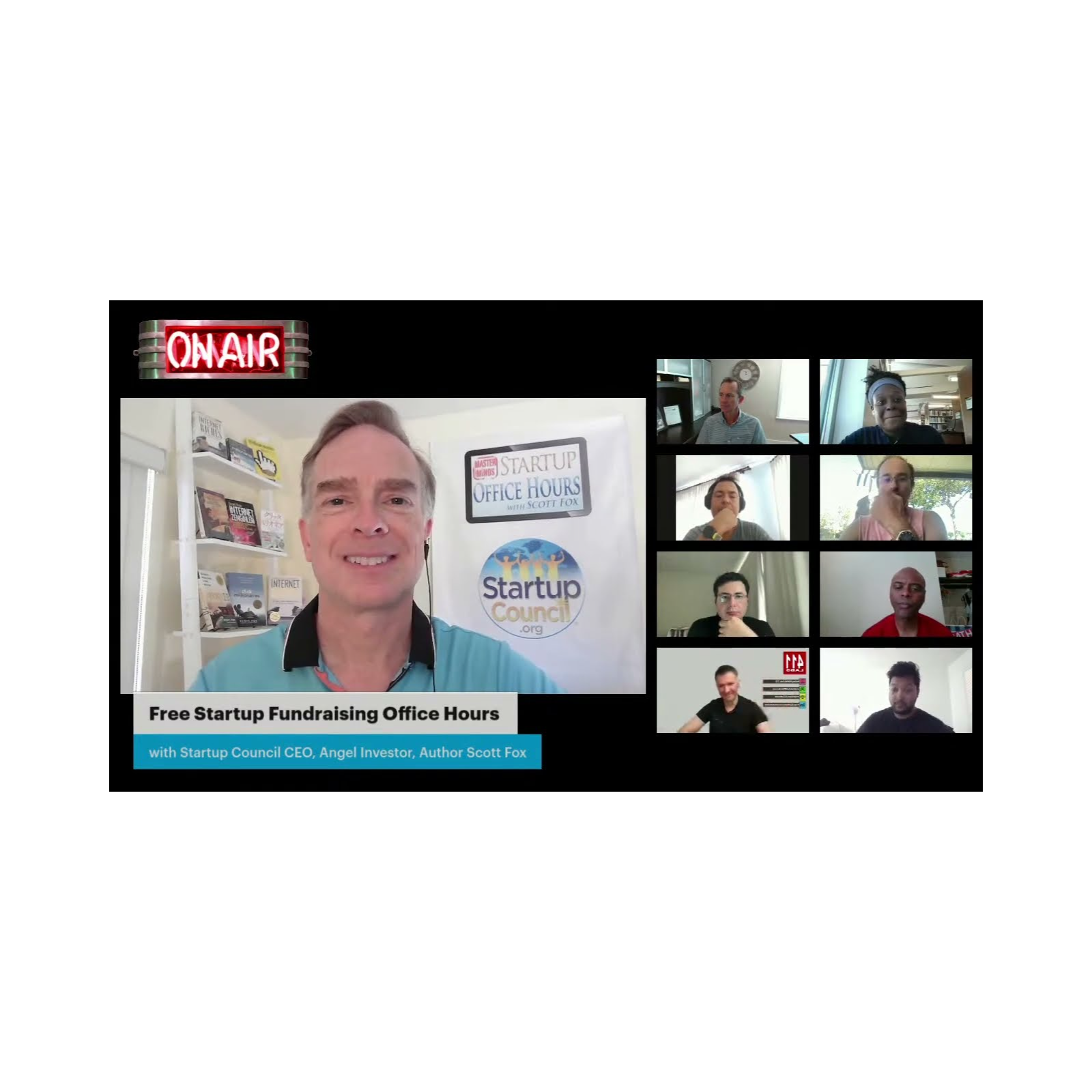 Your Free #Startup Angel Investor VC Fundraising Q&A Advice Show with StartupCouncil.org's Scott Fox56 / 100
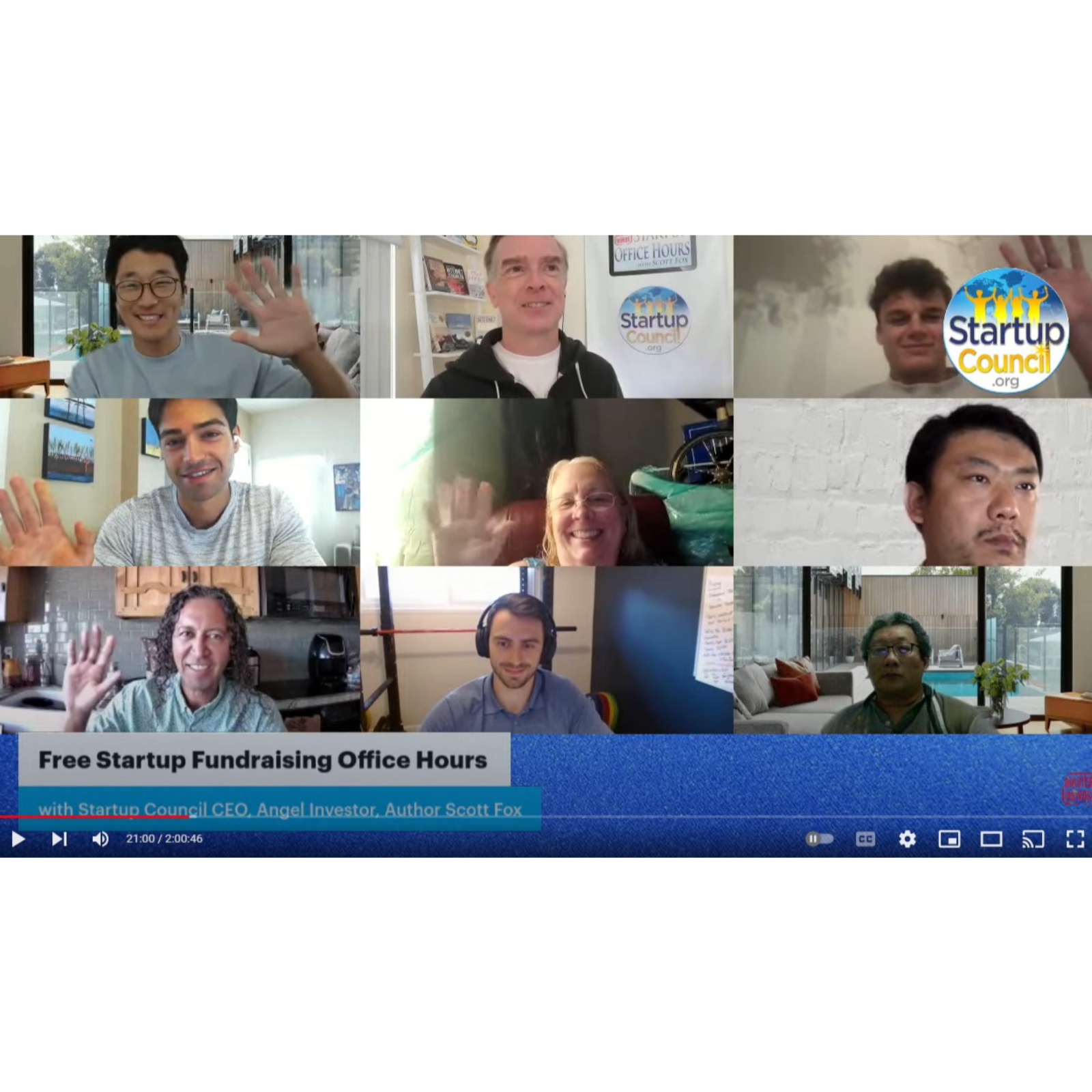 New Free #Startup Pitch Practice + Angel Investor Q&A with StartupCouncil.org CEO53 / 100
 Live #Startup Pitch Coaching + Free Angel Investor Strategy Members Q&A @ StartupCouncil.org55 / 100
 Live Startup Pitching & Angel Investor VC Insights: Scott Fox StartupCouncil.org CEO73 / 100
 Live Startup Pitching & Angel Investor VC Insights: Scott Fox StartupCouncil.org CEO