
Free Startup Fundraising Advice & Investor Pitch Practice with Scott Fox, CEO of StartupCouncil.org · 2026-02-28 · 1h 16m
Key moments - from our scoring
Substance score
35 / 100
Five dimensions, 20 points each
Scott Fox, CEO of StartupCouncil.org, hosts an interactive live session focused on venture capital fundraising, investor pitches, and Q&A with early-stage founders. The episode covers practical topics including how to find family office investors (with Fox recommending StartupInvestorsDirectory.com, which features 3,000+ investors filterable by sector, geography, and founder characteristics like first-time status or veteran background), and how VCs model returns and structure exits. Fox emphasizes that venture returns depend heavily on both exit multiple and time-to-exit - explaining that 7x returns mean little over 20 years compared to one month. He stresses the importance of TAM/SAM/SOM analysis (total, serviceable, and serviceable obtainable market sizing) for determining whether your venture can achieve venture-scale returns in reasonable timeframes. Fox also introduces StartupCouncil.org itself, a low-cost ($49/year) community platform connecting founders, investors, and service providers globally with exclusive software discounts and an upcoming book on fundraising. The session features live pitch coaching, mentor Q&A, and participants from 21+ countries. Ideal for founders seeking practical investor strategy, pitch feedback, and access to investor networks without Silicon Valley gatekeeping.
Scott Fox recommends StartupInvestorsDirectory.com, which contains 3,000+ early-stage focused investors including family offices, with advanced filtering by industry, stage, geography, and founder demographics (veteran, immigrant, first-time, minority-owned, rural). He notes that while other family office directories exist, this platform offers unique filters tailored to founder characteristics.
While founders often cite 7x returns, Fox explains that VCs model both exit multiple AND time-to-exit, because a 7x return in one month is far more attractive than 7x over 20 years. Early-stage investors expect higher multiples due to higher risk, while later-stage investors may target lower returns. Market size (TAM/SAM/SOM) must be large enough to make venture-scale returns theoretically possible in a reasonable timeframe.
VCs purchase preferred stock at a specific valuation and stage, then hope the company gets acquired by a larger competitor or goes public. Upon exit, preferred stock converts to common stock tradeable on public markets, and investors can sell their shares after any lockup period expires, generating their returns.
StartupCouncil.org is a low-cost community platform ($49/year) connecting founders, investors, and service providers globally across 21+ countries with 80,000-90,000 members. It offers investor access, software discounts on startup tools, Q&A support, and early access to Scott Fox's forthcoming fundraising book.
Our reviewer’s read on each dimension, with quotes from the episode.
The episode contains a reasonable spread of basic fundraising mechanics (SAFE notes, VC exit paths, unit economics) but the majority of runtime is consumed by housekeeping, self-promotion, and Mint Mobile/ZipRecruiter ad breaks. The handful of genuinely useful points - like the time-value caveat on returns - are buried in filler.
a 7x return in a month is awesome. Everybody's interested that. A 7x return in 20 years, not so exciting
the safe has evolved. They started out being what they call pre money safes and now they're post money safes. You definitely want, at least as an investor. I won't sign a pre money safe and most people won't anymore
Almost all advice is conventional angel-investor wisdom - big TAM, unit economics matter, SAFEs are popular - with no contrarian or first-principles arguments. The observation that seeking a co-founder is often a psychological crutch rather than a business necessity is the one mildly fresh take.
finding co founders is a crutch. People want, they're scared and they want to find a co founder so that they are not alone
investors eat numbers. So any of you that are doing a pitch and the, the more numbers you put in, the more likely their response is going to have numbers
Scott Fox is a self-described angel investor and self-help author rather than a high-profile operator or institutional fund manager. He repeatedly discloses the edges of his expertise ('I'm not a biotech investor,' 'that's not my world'), and the one practitioner who appears - Mustafa - is an early-stage founder practicing his pitch, not a domain authority.
I'm not a biotech investor so I don't have a great answer here
I'm an angel investor. Right. So I invest my own money so I can, I can pick, uh, and choose
The episode has more concrete numbers than most community Q&A shows - Mustafa's unit economics ($250 price, $50 variable cost, 70% margin), a cited 90% SAFE adoption statistic attributed to Peter Walker, and a worked numerical example of SAFE conversion at a $10M priced round. However, many figures come from audience members pitching rather than from the host's own analysis.
price is $250 60 uh dollars variable cost $50 fixed cost. Target net margin is 70 at 70% at scale
I think I remember seeing that 90% of early stage deals are done by safes these days, at least in the United States
The format is largely a monologue Q&A from a text chat rather than a live dialogue, which limits depth of follow-up. Feedback during the pitch session is encouraging and occasionally direct (flagging missing go-to-market, accent clarity, emotional hook) but the host rarely pushes hard or challenges dubious claims, and defers on multiple questions rather than probing further.
you talked about the, uh, the specifics which I think we worked on before. It's actually a blood draw that goes to the laboratory. That's helpful because before it was kind of abstract to me
it's more like you're different, but not different enough
Computed from the transcript - who did the talking, and the words that came up most.
Free Startup Fundraising Advice & Investor Pitch Practice with Scott Fox, CEO of StartupCouncil.org StartupCouncil.org delivers free, no-strings #startup #VC #mentoring for #entrepreneurs tackling #fundraising, #venturecapital, and #businessstrategy challenges - plus supportive group critiques of real #founder #investorpitches. In this month’s free Startup Fundraising Office Hours, Scott Fox hosted a packed global Q&A with #startupfriends joining from Philadelphia, Tustin, Irvine, New York City, London, Atlanta, Oakland, Vancouver, Bangalore, and more. The goal: help #startup #founders move faster toward raising capital from angels, #familyoffices, and #venturecapital firms. Mary from Philadelphia asked how to find #familyoffice investors. Scott advised combining targeted Google searches with curated tools like the StartupInvestorsDirectory. Founders should verify stage focus, check size, and sector alignment before outreach. Warm introductions through attorneys, CPAs, and portfolio founders significantly improve response rates. As always, the #1 question resurfaced: where do I find early-stage investors who fit? Answer: disciplined research using Google + structured directories.
Transcribed and scored by The B2B Podcast Index.
Ryan Reynolds: Ryan Reynolds here from Mint Mobile with a message for everyone paying big wireless way too much. Please, for the love of everything good in this world, stop with Mint. You can get premium wireless for just $15 a month. Of course, if you enjoy overpaying. No judgments. But that's weird. Okay, one judgment anyway. Give it a try@mintmobile.com Switch upfront.
Narrator: Uh, payment of $45 for three month plan equivalent to $15 per month required. Intro rate first three months only, then full price plan options available, taxes and fees extra. See full terms@mintmobile.com
Host: welcome back. It's time for startup fundraising office hours. It's great to have you here. Thanks for joining us. Tonight we're going to talk about startups once again. My favorite topic, maybe yours too. We're going to have a hour at least of uh, good conversations about the challenges and opportunities in startup land today. Especially focusing on startup financing, how you can raise venture capital style money for venture capital style, Silicon Valley style, high growth businesses. If that sounds like you, then you're in the right place. I'm Scott Fox, I run the Startup Council. We're a worldwide community service group dedicated to accelerating early stage founders. We're trying to connect people who may not live in Silicon Valley and give them the benefits of the expertise that I've gotten from decades of working in Silicon Valley, around Silicon Valley, raising money, building companies, losing money, uh, losing companies, all those things that uh, go into the journey of a real entrepreneur. And these days I'm more of an investor than an entrepreneur. So I've been on both sides of the table And I started startupcounsel.org to help people like you who may not have the benefits of my background to accelerate your access. Really it's really about reducing gatekeeping so that people who don't live in Silicon Valley can benefit from the expertise and the potential road to riches that have been created there over the past couple decades. So if that sounds interesting to you, thanks for joining us. We're going to be here for a while doing questions as well as um, investor pitches. If you want to practice your pitches, we can do that as well. We've got some people backstage who are svp and if you are going to join us backstage, uh, you should have an on camera link already. And if we don't have enough people show up for that, we'll, we'll all open it up to other people. But we give priority to folks who are members of startupcouncil.org this is a lowcost community platform that we built. It's only, I think it's $49 a year right. Less than a good lunch these days at least here in the States. And um, will give you access to all kinds of really cool um, services and a, ah, huge amount of discounts and things like that. So those folks get priority. But I am really here to help everybody trying to, who is interested in bettering themselves and bettering the world through entrepreneurship. You, if you don't know me personally, the reason I have the microphone, well the main reason I have the microphone is because I started this. So I've stepped up and do it and I've been doing these office hours for years now and uh, on multi channel. So hopefully some of you are out there watching on YouTube as well as LinkedIn and Facebook and over at our website@startupcouncil.org but I've been doing this for a lot longer than that. In fact these books behind me, I wrote these. Uh, the three in the middle are in English and the others are foreign translations. You can see uh, what there's Japanese and uh, Turkish and that's Russian and up there's uh, Polish and uh, there's Vietnamese down there. Anyway, those books are all about helping people who may not have a business background figure out how to turn themselves into entrepreneurs. It's been the same challenge and journey that I've had myself. I was a corporate guy for a long time and realized that I just wasn't really happy and that I wanted to be my own boss. And I managed to pull that off 20 plus years ago, uh, multiple times actually. And um, I started writing books to help other people. And these days we have the beauty of live, uh, streaming. So I'm here personally to help you if you have questions or investor pitch you'd like to practice. So um, let me just give a few disclaimers and you know what, I'm going to turn on the chat room. Um, let's see here, where's the chat room? Uh, yeah. Oh, and I need to invite you, ask you to invite your friends. Right. We do this for free, but we're trying to help a lot of people and I'm sure you know somebody that could use this uh, advice and expertise that we're going to share here. And by the way, it's not just me. We have a lot of people that are going to show up in the chat room from all over the world. And I really do this to build the community among all our founders and service providers and friends and of course investors so that we can help each other. I'm a rising tide, lifts all the boats sort of guy, so if you haven't liked and subscribed yet, please do, because we're here all the time trying to help each other. So here comes the chat room here, and I, uh, need to turn this on. There we go. So, yeah, there we go. So we got some folks showing up here in the chat room and we will get to those questions as well. And, um, you all can chime in there. Um, looks like the John, uh, Habgood and Mayweather are both on YouTube. If any of you are, uh, watching on LinkedIn successfully, I would love to hear from you. Make sure the LinkedIn link is working because we were having trouble with that one last time. And then also, um, the, um, Facebook link. And what else? Uh, well, anywhere else you can find. I forget all the places this goes out, but if that's working for you, please chime in. And I guess hopefully you can confirm also, uh, that you can hear me. Been talking for five minutes already. I'm not sure anybody can hear me, but go ahead and chime in and we will address the questions that get posted in the chat room as well. But if you want to join me backstage and you have a question, we can, uh. Oh, thank you, Mustafa. Excellent. Mustafa, uh, says we're. You're hearing me. Excellent. Very helpful. Um, we can. Here, I'll put up the link for the, the, uh, backstage as well. And, um, let's see, Mustafa's backstage and he even figured out how to use the front of the house chat. You're a smart guy, Doctor. Dr. Osgol. And, um, let me just a couple disclaimers and then. Oh, good, somebody's on LinkedIn. Thank you, LinkedIn user. My best, my favorite friend there on LinkedIn. That's helpful, thank you. Uh, okay, so let's, um. I need to put up just a couple disclaimers here because this is not professional advice. Right? Um, you need to consult your own advisors. This is just some guy you met on the Internet mouthing off, trying to help. Okay? So you need to talk to your own advisors, your lawyers, your accountants, uh, your spouse, anybody that controls your checkbook and your hours, and especially folks who know things about laws and regulations in your country. So, um, I will help you as best I can, but please don't rely on this advice. It's up to you to make the most of it and do consult your own professional advisors. Also. This is being recorded and it will be shared worldwide. So please don't say anything crazy or stupid or don't give away too much confidential information, but we're definitely happy to help. And if this is helpful to you, we have, um, I think I've got over 300 videos on our YouTube channel these days. I've been doing this as long as anybody, essentially. So, uh, you can see me much younger and without a beard if you want, uh, as well as hearing lots and lots of, uh, Q A about startup issues. So if any of that sounds useful to you, go ahead and head over to YouTube.com and you can subscribe there. And then you'll, of course, you know how that works, right? You'll be alerted and if you're there, please, of course, like, and comment and all that. It really drives the algorithm and helps us support more people. All right, so, um, okay, so Mustafa says we're hearing me. Well, good, that's great. Let me put up. Did I. I don't think I did yet. One more thing to do. I will put up. This is the. So the link that's on the screen right now. Startupcouncil.org is this website like I was talking about. This is a platform that connects founders and investors and service providers all over the world. And we're blowing this up into a really big community as super low cost, mostly supported by sponsors. I'm not making any money doing this. This is to help you guys because I've, I've retired a couple times, right? And I figured out this is how I can help the world. So this, and my books and this show are all efforts to help connect you. And I hope that you will go and get involved and check it out. All right, so head over there and by the way, you can save. We haven't even announced all the discounts that are there. We just added those this week. If you are buying anything related to startup, um, services, uh, especially software, I promise you, you will, you will like 10x your membership cost if you go and, and buy some of the stuff there. And we don't make any money from that. We're just trying to get everybody in one place because as a wholesale purchase we can bring great discounts to you. Right? So kind of a chamber of commerce kind of model or a trade association, but specifically focused on you. So let's get going here with um. Okay, we got a couple questions here and then Mustafa's gonna pitch. Um, I was gonna put this up. So this is the URL, if you want to come and join us back. Um, you have something that you want to Ask on camera. Um, sometimes it's a little easier, right, than just on the, um, on the. When I'm responding to text or if you have a pitch that you want to practice and they're just two minute quick pitches. And Mustafa will go first on that because he, he, uh, wrote in and gave me a chance to prepare. And plus he's been here a couple times, so I'm excited to hear how his pitch is doing because I know he's been working hard. All right, let me just. And uh, oh, by the way, the folks who are in the chat room, where are you from? I always forgot. I always get a kick out of that. Let me know where you're tuning in from because it's interesting for us to see where our marketing goes. You may not know this, but Startup Council, uh, we have um, for example, meetup groups in 21 countries now, um, 80, maybe 90,000 people worldwide. So we are coming and growing everywhere that we can to help you. And if you, um, if you're not part of it yet, please do. But also just let me know in the chat room. It's always fun to hear. So who we got here? Uh, well, Roderick, I think you're in la. Nice to see you again. You sent in a question. I think that's super. Doesn't, um, look like you're backstage though, Roderick. Um, you might use this link on the screen if you want to come backstage on camera. Uh, Lori, nice to meet you, Martina. Linked is working. Excellent. Thank you, Martina. And, um, Mustafa's in Irvine, right? He's local. This is near where I am. And then we have two questions here. Let's see what is the most effective way to get a family office directory?
Ryan Reynolds: Ryan Reynolds here from IT Mobile. I don't know if you knew this, but anyone can get the same Premium Wireless for $15 a month plan that I've been enjoying. It's not just for celebrities. So do like I did and have one of your assistant's assistants switch you to Mint Mobile today. I'm told it's super easy to do@mintmobile.com
Narrator: Switch upfront payment of $45 for 3 month plan equivalent to $15 per month Required intro rate first 3 months only, then full price plan options available, taxes and fees extra. See full terms@mintmobile.com Ryan Reynolds here from
Ryan Reynolds: Mint Mobile with a message for everyone paying big wireless way too much. Please, for the love of everything good in this world, stop with Mint. You can get premium wireless for just $15 a month. Of course, if you enjoy Overpaying, no judgments. But that's weird. Okay, one judgment anyway. Give it a try. @mintmobile.com Switch upfront payment of $45 for
Narrator: 3 month plan equivalent to $15 per month. Required intro rate, first 3 months only, then full price plan options available, taxes and fees extra. See full terms@mintmobile.com and how do VCS
Host: typically exit a deal? Okay, those are interesting questions. Um, let's see. I can. I'll nail those two down real quick and Mustafa, then we'll come to you. So where that, um, let's talk about this family office directory. Bulgaria. Awesome. Bulgaria and Germany and nyc. Okay, cool, Martina, you get around. Excellent. Then we've got some of my neighbors here in Orange county and Irvine and Tustin. Nice to see all of you, of course. And Lori's up in la. Okay, so we've got uh, from one side of the globe to the other. And where's uh, all my Indian friends? Usually there's a bunch of Indian folks here. I do this at night actually, because at night California time so that we can reach, uh, India, the Middle east and Africa to help those developing markets more. Uh, so if any of you are here, let me know. Okay, so here's our first question. What is the most effective way to get a family office directory? Well, I think you mean a directory of investors, probably. So you're looking for investors? That's a totally legit question. I, I don't have a good answer. I'll be honest. We, um, built a site called Startup Investors. Let me put that up for you. Um, the URL is, um. It's just what it sounds like. Startup Investors Director. Here it is.startup investors directory.com. this has a whole bunch of investors, family offices and other people. Also, it's not focused specifically on family offices. This is what it looks like, actually. There's a code there. There's a promo code that you guys can get, um, half off or something. So this costs a little money because it took us a lot of money to build this. Right. Um, but you can go there. And what's unique about it is there's about 3, 000 plus investors there of all different kinds. Early stage focus though, uh, venture capital style investors. Right. But what we have is the best search engine I know of. So there's certainly a filter that could search for family offices, for example. Um, but you can also search for all kinds of other things, of course, industry and stage and geography, obvious things like that. But we also added a whole nother set of filters that are unique as far as I know in the world because I, this is what I think founders need, right. And I used to be a founder myself. Um, and this includes filters for things like if you're a veteran or you're an immigrant or you're a first time founder or uh, you're black or Latino or you're um, a rural founder. Like you live out in the country somewhere. Right. So different angles and lenses because, or you're a woman because those types of personal um, characteristics. These days there are funds and investors for almost any specific angle that you want to address. So you might have an advantage, right. You might be struggling, but if you can go and find an investor because you, I don't know, you're a black veteran who lives out in the country. Well, you can filter for that on our, on, on startup investor directory and I don't know that you could do that anywhere else. So I hope that might be helpful to you. Other than that, I know um, there are plenty of family office directories. I see them promoted on LinkedIn. I'm looking for investors from family offices. I'm more a family office myself so I haven't tried any of those. Um, I would give them a shot or you know, check the references or see, you know, do, do your research. Right. Because there's a, plenty of scammers out there too. And if you have uh, a good experience, please let us know and we'll, we can partner with those people and maybe get a discount for you right. In the future. So, um, hope that's a good first question anywhere. Anyway, uh, from Houston, Texas. Okay, great. Mayweather, nice to meet you. Let's uh. Okay, I was gonna do one more and then we're gonna bring Mustafa on camera here and uh, let's see. Or at Gooden from Swishtech, um, participating out of Atlanta. Oh, and it's working on LinkedIn. Great, thank you for confirming that. I guess you can have the uh, you can see the video then. It sounds like that's good news. All right. And then the other question was. Here it is. What is the most. I already did that one. Okay, here we go. How do VCS typically exit a deal? They generally looking for 7x type money. It's a good question, John.
Speaker D: The.
Host: There's no simple answer of course. Right. Um, but I'll try to keep it simple because um, 7x is probably not enough. Um, it depends a lot on the stage of the investor and the industry that you're in. You know, because like some industries have higher typical Multiples for exit and, and um, than others. Um, but the other. And an early stage fund that takes a lot of risk. For example, right when you're pre seed or seed, they're going to look for a higher return because so many of those deals crap out. But if they're a later stage fund, like say you're uh, like a series D or E, like things are going great and you've already raised, uh, you know, 50, 100, $300 million and somebody puts money in at that point, well, they know that you're already kind of a real company and you're probably going to exit sooner than later. So they might be looking for less than 7x. They're just kind of more like a stock market investment. Right. They're hoping for uh, good returns, but maybe not crazy moonshots, you know. So the in between and the thing that you've hit on here, which is really important that founders underestimate, is the speed. So I'm writing a new book about how to raise money and uh, for you guys and one of the things that people miss is like, you did and I'm picking on you. But for example, a 7x return in a month is awesome. Everybody's interested that. A 7x return in 20 years, not so exciting. Right. So the time element is really important here. So, and that's why it is, um, the returns that are expected. VCs are angels too. We model out the expected scenarios, kind of a high, middle, low, um, both in terms of what exit value you might achieve, but also how long it's going to take. Because like I said, if, if your uh, your $1 turns into a thousand dollars, but it takes a thousand years, I would have been better off putting my money some place more traditional and less risky. Like just in the stock market. Right. Uh, so that's a factor to think about. And the base case that you're talking about, um, is bigger the better. So one of the first, uh, questions that founders will be asked is how big is your market? And the typical analysis for that is a tam Sam som. Total addressable market, serviceable, addressable market and then, um, serviceable, obtainable market.
Speaker E: Right.
Host: So it's a, it's like a, um, an onion or layers, concentric circles. Right. So everybody in the world that could buy it, everyone that's kind of likely to buy it, and then the ones we actually think really might buy it and that all of those need to be big enough because you're going to drill down, drill down and then you know it's going to be, take longer and cost more than you think and so forth. And you need to have a big enough number there in terms of your market size so that a 7x or a 10x or 100x is, is theoretically possible because otherwise in a reasonable time. Right. That's the other factor. So, um, anyway, I hope that kind of you can chime in, we can do followup on that because there's a lot to this question and then to, to answer literally with just how do they typically exit a deal? The they buy preferred stock and then that um, they have that at whatever stage in valuation they bought in, you know, depending on how long your company's been around and what price it was valued at when they bought in. And then hopefully sooner than later you get bought or you get to go public and then the stock gets converted into common stock, uh, on the public markets and hopefully at a much higher price and then they can sell their stock. There's usually a lockup and there's a lot of terms and details to this, but that's kind of the idea. They're hoping that a bigger fish swallows you or you go out to the public markets and float maybe uh, 15 or 25% of your stock out to the public and that opens up the market for all the stock that everybody holds, all the investors and employees and partners, maybe, uh, that they can then sell that into the public markets after a lockup period and they get their money back that way. So I don't know if that's more detail than you wanted or less, but that's kind of uh, the answer. And this is a perfect example actually by the way, of all those of you who are in the um, in the chat room. Please help each other. You might have, have more uh, expertise about this than I do. I don't know all the answers by any means. So I'm just trying to share what I do know and I hope that that's useful to you, John. All right, so let's um, we're gonna say goodbye to that question. Although like I said, uh, John or anybody else, if you have follow ups, we can discuss that. And let me just change our, um. All right, there we go. Okay, that's our general Chiron. And I'm going to bring Mustafa on here. But just let me just check I didn't miss anything. Nothing's on fire in the chat room with all of you. Um, okay, so.
Speaker F: Yep.
Host: Okay. There we go. Yep. Okay. Houston, Switzerland. Um,
Speaker E: okay.
Host: Yeah. Well, Nathan, we can talk about Safes for sure. And John says great response. Okay, cool. So we nailed it. Awesome. Um, you watch for this new book of mine, right? It's going to be another six months probably.
Ryan Reynolds: But Ryan Reynolds here from Mint Mobile with a message for everyone paying big wireless way too much. Please, for the love of everything good in this world, stop with Mint. You can get premium wireless for just $15 a month. Of course, if you enjoy overpaying. No judgments. But that's weird. Okay, one judgment anyway, give it a try. @mintmobile.com Switch upfront payment of $45 for
Narrator: three month plan equivalent to $15 per month required. Intro rate first three months only, then full price plan options available, taxes and fees extra. See full terms@mintmobile.com Ryan Reynolds here for Mint Mobile.
Ryan Reynolds: I don't know if you knew this, but anyone can get the same Premium Wireless for $15 a month plan that I've been enjoying. It's not just for celebrities. So do like I did and have one of your assistant's assistants switch you to Mint Mobile today. I'm told it's super easy to do@mintmobile.com Switch upfront.
Narrator: Um, payment of $45 for three month plan equivalent to $15 per month required. Intro rate first three months only, then full price plan options available, taxes and fees, extra fee, full terms@mintmobile.com let me
Host: put that up on the screen actually. And that's one of another one of the reasons to join the uh, startup council is cause I'm going to give excerpts to the community. There's so you guys can give me feedback right beforehand. You get early access to this book and it's um, right now it's a monster. It's going to be like this thick because uh, there's so many things to discuss. Right. But if that sounds useful to you, uh, it's another reason to come join us. Uh, happy to share that with you as we get closer. Okay, so let's bring Mustafa. He's been waiting patiently here. And here he comes. Here's Mustafa. Hey,
Speaker E: how are you?
Host: Good.
Speaker F: How are you?
Speaker E: I'm good, I'm good, thank you.
Host: Nice to see you again. So you're back for more pitch practice?
Speaker E: Yeah, uh, I always improving little by little and then getting better and better.
Host: Smart.
Speaker E: Well, let me get it. Opportunity.
Host: Yeah, well, let me, let me. I was just going to give you a shout out for that because anybody that's watching this either now or in the replays and if any of you have to go, this all ends up archived on, on YouTube if that's helpful. But you actually speaking of that, you could go back and watch Mustafa's previous pitches because this is, this is the third time maybe, or maybe even the fourth time. Okay. Um, and he's getting better and better so I'm excited to see what he comes up with today. Um, but we're gonna basically the format here, everybody is we give two minutes and that's a made up amount of time. It just kind of forces a constraint on it otherwise some people will talk forever and it forces people to kind of get to the point and then I'll give what I think are room, uh, areas for improvement and would love your uh, invitations to uh, connect with him or offer advice or the feedback you have to improve his pitch as well. That would be really helpful and, and generous of all of you. So if that sounds good to you, we're going to put two minutes on the clock and, and let our friend Mustafa uh, kick it off.
Speaker E: Hi everyone, my name is Mustafa. I'm a medical doctor and AI developer and CEO of A1 Diagnosis. We are building a AI powered laboratory service for risk assessment of HHVH Macular Degeneration. 20 million Americans have atriates macular degeneration which cause central vision loss. It is irreversible. It is detected after damage happens. Our AI powered platform detects atria macular degeneration risk years before vision loss happens. This is the first blood based risk assessment platform for HH macular degeneration. I would like to explain our uh technology in a simple language. When we get older some cells in our eyes start dying. Where do they go? They go to the blood. Previously we couldn't detect them. Right now we can how it works. The patient go to the eye doctor office, blood is drawn, send it to our laboratory. We analyze with our AI platform. We provide risk assessment result to patients and doctor before vision loss happens. Unit of economics price is $250 60 uh dollars variable cost $50 fixed cost. Target net margin is 70 at 70% at scale. WHO we are I perform research at University of California Iran for six years and wrote AI algorithm. Co founder Murat Pada is a Stanford scientist who raised over $10 million for his medical startups. Uh proof of concept studies uh completed. We are raising 1.25 million for clear B2B model insurance reimbursement. Possible revenue start first quarter 2027 A1 diagnosis. See the picture clearly. Thank you.
Host: Wow, my friend, that was. You've come a long way so that is impressive. So everybody else Watching. That's how it's done. Seriously, amount of information he crammed in there. I've, I've met so many founders that we say it's two minutes or sometimes we say five minutes. I can't do it in five minutes. And then they take like a 30 page deck and just try to talk really fast and they get to like page four. Right. And that's not how it's done. You have to boil it down like Mustafa did. You're very well done. I, seriously, I don't have any particular suggestions. I, uh, I, I, I want to recognize the um, I like the intro. I'm a medical doctor and an AI guy, like that's an unusual combination that would get your attention right away. Right. Um, you talked about the, uh, the specifics which I think we worked on before. It's actually a blood draw that goes to the laboratory. That's helpful because before it was kind of abstract to me. Now I get it. That is the connecting the dots in terms of the service delivery. Very nice. You talked about the costs, which is great, um, and the margins, which is even better. Um, wholesale, retail, like the thing I always say, and Mustafa's heard this before, but investors eat numbers. So any of you that are doing a pitch and the, the more numbers you put in, the more likely their response is going to have numbers. Meaning like a check. Right. So if you have no numbers, it's all just kind of fantasy and investors are numbers people. So he's doing a good job there. What we call this is unit, uh, economics. Like how much does it take to make. How many of them? Do we get a discount at scale, which I heard you say something about scale. And then we'll sell it for this much with this much profit margin and it will get better over time. That's, we need to see not even necessarily the numbers are true, but that you understand that equation because that's what a business is. Right? It's creating stuff cheaply and selling it for more than it cost. And if you can't understand that concept and explain it, then you don't really have a business. And we see lots of founders like that, um, who are more interested in kind of the idea but aren't ready to break it down into the numbers like, like you did. So, so very nice. That was good. Um, and even in the last sentence or two, you stuck in a whole bunch of, you did a good ask. You said it's B2B. Um, it was a lot of stuff. So I don't have anything to complain about anybody.
Speaker E: Thank you so much. Yeah, I learned lots of things from you and other people. And then I combine it and then it's getting better and better than.
Host: Yeah, that's great. So anybody in the, in the chat room who has suggestions. Um, please, please come uh, comment. Um, uh, okay, those are good. John is saying, um, not clear on how the service is sold and marketed. Okay, that's a good point. Go to market. Yeah, so that's a big one. These days you're in a medical device ish situation. So that's a little more known than it would be for like if you had a new dating uh, app or some, you know, or something like that. But it's still worth addressing especially uh, if you have some sort of competitive advantage. Like if you have a relationship with distributors of some sort or some corporate partners that is really good kind of traction. Like how are you going to get the word out? Because as you know, like the typical way is to raise a bunch of money and then think you're just gonna buy your way into the market with like a whole bunch of conference appearances and pay per click ads. And that's not very exciting to investors. Um, in, in your space there's probably other ways as well. Um, and then how long before you get paid? You mentioned insurance reimbursement. That of course is always going to be top of mind for anybody that knows this space. So more about that would be good. But, but even then I wouldn't, I wouldn't criticize the lack of some of those details because you said enough of the right things that I think anybody that was in this space would be, would believe you. Like your co founder had good credentials as well. You threw that in there. Somebody, somebody would believe you. Um, and then um, want to know
Speaker E: more to get a, a bigger meeting. Basically 10 minutes.
Host: Yeah, that's right. Because that's, that's the point of a pitch.
Speaker E: 2 min m p and I can add everything but 10 min p. I have also go to market stud there and then all of them details.
Host: Yeah, yeah, yeah.
Speaker E: Even uh, the scales, you know, 500 test when we sell. How much the margin? 1,500 test per month when we sell. What is the margin? I I made like an animation and then when you move around and then you can see the over the time changes, each of them.
Speaker F: Oh cool.
Host: Oh, you're really getting there. Well n has some uh. You should have started with a really solid hook to get me engaged. That's true. There is a storytelling element, um, that you haven't done yet. If you want to do more, you know something about the. The problem this solves or why personally you're interested. You know your grandmother had this and it was terrible. You know, like kind of a little more emotional appeal. That's a. That's a very valid point. Um and that varies a lot depending on who you're talking to. Right. If you're talking to an experienced investor like me, I don't need that stuff. I'm just kind of looking for the numbers and, and your credibility and kind of doing the math in my head. If you're on stage like at a pitch competition and the audience is kind of general civilians, um, or academics or something like that, Nitin's right on target I think is to. You probably want something to draw people in in terms of emotionally a little bit more. I think that's a good point. Um. Go ahead.
Speaker E: Yeah there's a uh. I was invited the Stanford Conference AI Healthcare Conference in March 26 and 27.
Host: Excellent.
Speaker E: I will present over there. And then one of the potential investor told me to make it emotional.
Ryan Reynolds: Ryan Reynolds here from Mint Mobile. I don't know if you knew this but anyone can get the same Premium Wireless for $15 a month plan that I've been enjoying. It's not just for celebrities. So do like I did and have one of your assistant's assistants switch you to Mint Mobile today. I'm told it's super easy to do.
Narrator: @mintmobile.com Switch upfront payment of $45 for 3 month plan equivalent to $15 per month Required intro rate first 3 months only, then full price plan options available, taxes and fees, extra terms. @mintmobile.com Ryan Reynolds here from Mint Mobile
Ryan Reynolds: with a message for everyone paying big wireless way too much. Please, for the love of everything good in this world, stop with Mint. You can get premium wireless for just $15 a month. Of course if you enjoy overpaying. No judgments. But that's weird. Okay, one judgment anyway. Give it a try. @mintmobile.com Switch upfront payment of $45 per
Narrator: 3 month plan equivalent to $15 per month Required intro rate first 3 months only, then full price plan options available. Taxes and fees, extra C4 terms@mintmobile.com connection actually thank you.
Speaker E: At the same way you say uh, I will do it.
Host: Yeah, yeah, yeah. Okay, good. Thank you. N. That was a good one. And he brings up another point that I think is valid. You're. I'd call us friends at this point so don't take this the wrong way. You have a bit of an accent to an American ears, and you might work on your diction so that we can understand you better. Like, you can literally do exercises so that the words are clearer to an American ear. It doesn't. This is my fault, not yours. Right?
Speaker G: I.
Host: But I. An American ear. You have, uh, you're. I think you're Turkish, probably, right? Is that I'm Turkish.
Speaker E: Yeah.
Host: Yeah. Right. Yeah, yeah, yeah. So totally valid thing to be. Right. But in America, we, you know, we hear differently. Right. And he's suggesting that you. It was a little difficult to understand at times. You skip over words a lot, so that. That is something you could work on,
Speaker E: because I will work on it. Thank you.
Host: Especially when it's a microphone. Like, in person, you can. People can hear better, but when it's through the. You know, the microphones and the Internet, it can. Gets a little compressed, so that probably makes it even harder. Uh, the easiest thing is to slow down a little bit. Of course, with two minutes, you don't feel like you can slow down, but being deliberate about it, um, will make it clearer as well, so.
Speaker E: Okay, thank you. I really appreciate that. I will work on it. Yeah.
Host: Yeah. Okay. Awesome. Well, good to see you again. I'm very impressed. I hope that goes well for you. Um, that conference you got invited to. Congratulations. That sounds really, really cool.
Speaker E: Thank you. Thank you very much.
Host: All right, well, good to see you again. And, um, I hope you don't graduate and disappear on us, because now you're. Because now you're an expert. But, Well, I hope to see you, uh, again soon, because he's. He's come a long way, and that's why I do this, actually, is. You find smart people. He's a medical doctor, and he knows AI, like, obviously. And. And English is his second and maybe third or fourth language too. Right. Plenty of smarts. But you don't necessarily know the venture capital world. Right. And how we speak and. And talk and what we expect. So that's why I'm doing this, to try to help people like him and. And maybe like you, whoever you are, too. So. Okay, cool. So let's, uh, let's move on to, um, what else we got here. So Matthias is backstage as well. Um, if you want to join us on camera. Matthias, you can turn on your camera in a minute, but I will, um. Let me take a couple questions out of the chat room here. What else is going on? Um, I got. How far did I go? Okay. Chelsea says, yeah, well, this isn't a question, so Much. But it's, it's a valid point. Chelsea Shea says, um, she's based around here, I guess, and her minimum viable product is ready. But finding a technical co founder is really tough. And that is absolutely true. And most technical people these days are fully employed and if they're not, they're busy with AI building their own stuff. So it is very, it's always challenging. And people, I'm not quite sure how to say this, but people overestimate the importance and the availability of co founders. The fact might be, Chelsea, or any of you, uh, you could and should keep trying, but you, it may not work. So your choices are, are you going to learn some of this stuff yourself or are you going to raise money and hire people to do it? Because to find a co founder is a really hard thing to do. It's kind of like getting married. You have to find somebody who's exactly at the same stage of life with the precise expertise that you're lacking, that you get along with and complements your skills and wants to work. Kind of for nothing, right? Unless you have a, uh, you know, a trust fund or something. So that's a really tall ask. Especially when those people are so valuable and especially with vibe coding, they could go and build their own stuff. Why do they need you? Right? So I do encourage you to try to find a co founder, a technical co founder, but I would also encourage you to think about what happens if you can't. Right? Because you could spend years thinking you're gonna find one and you don't, and then you lost years. Right? Um, I don't know if that kills your business or not, but maybe there are other ways to do this, is what I'm saying. Maybe you can raise some money or get some friends and family money, or use your credit cards and hire a co founder. Not a co founder, but a technical lead. And they don't need to be a co founder. A lot of times being finding co founders is a crutch. People want, they're scared and they want to find a co founder so that they are not alone. And that's totally reasonable. Those are human, emotional, you know, valid feelings, but they aren't necessarily good business decisions. A co founder may not be what you need at all. You might just need to find 20 grand and hire, uh, a tech guy or girl or team and build your thing and get the hell going. Right? It's kind of a crutch and a delay a lot of times. So that's some straight talk that I hope is Helpful. I would love feedback on that from anybody that's watching that agrees or disagrees with that. But Chelsea, I hope that might be helpful to you. That being said, I should point out that over@startupcouncil.org this is a common question we get, and it really is a problem for everybody. Um, but we actually built something. This is another thing. That's why I keep talking about startupcouncil.org Here it is. Um, if you go to this website, we actually have advertising, like classified ads for co founders, because so many people are looking. And you can, if you're a member, you can join and post an ad, right? So when you join, uh, I think right now it's $49, but you get $25 in member credits and the ads are, I think, $10 a piece. So you could. All this we just do to cover costs and to keep people from, um, from ripping off the services by spamming us and stuff. Right. So they're just a little friction so that you can get involved. But anyway, long story short, you could post an ad about this. And if, uh, you know, that's the thing about putting yourself out there a little bit. You don't know who might show up or who might be listening. In fact, right now you should even put in the chat room, put in your LinkedIn or your, um, your Instagram or however it is you like to be contacted with a little more specific about what you're looking for, Chelsea, and maybe somebody would reach out to you. Um, well, there you go.
Speaker F: Look.
Host: Ian Reed says, uh, he or she, he I guess, is in OC and technical. It'll be interesting to see what you're working on. So maybe, maybe we, maybe we solved it. Amazing. So I hope that's helpful. Um, let's see. Okay, well, let's just put this up because Nathan's, uh, um, in the wrong place. Hang on. Nitin is commenting on that. That's a useful comment. Yeah, there it is. So technical co founder is one of the hardest things to solve. You may not even need one. That's kind of what I said. Advances in AI are unreal. That's a great point. I didn't hit that. Nathan, uh, you may not think you're technical, Chelsea, or anybody who's watching this now or later, but you may not need to be technical for very long. In fact, you can do things online with AI. You would probably be. Your time would be well invested to stop worrying about a co founder and go spend whatever your time budget allows. A week, three Weeks, you know, or three hours every day after work or whatever your lifestyle really punching the clock with Claude or um, one of the co pilots or Gemini or you know, whatever your tool set is or interest. Um, because that stuff is moving super fast and you may not need a technical co founder at all. Yeah, great point, Nathan. Thank you. Okay, so let's go, um, let's see. Matthias, you got to turn your camera on. I don't know if you're here or not. I thought you came on and then, and then I need you to be on so that when I come back to the topic, I'm happy to talk to you if you, um, let me know you're here. Okay. So, um, what about this one? So this from Nitin also says, uh, our ventures still actively looking at B2C plays. Oh, sure. The um, I mean, I guess you'd need to be a little more specific, but you know, B2C, it means lots of things. So are there new, um, uh, beverages being launched? Absolutely. I got a pitch yesterday. Are there new restaurants? Sure. Clothing lines? Yes. You know, lots of B2C sort of plays. If you're talking specifically software. Um, and I guess you could even there's a lot of medical and healthcare stuff. That's B2C as well. Um, Mustafa's thing is probably going to go I, I think through uh, doctor's offices and hospitals and the traditional reimbursement route. Right. But there's like all kinds of supplements and wellness and uh, apps and stuff for B2C like fitness tracking and stuff like that. Absolutely. Are still happening. And um, the traditional thing that I'm thinking you might be most acting about, asking about or assuming is kind of the B2B SaaS, um, type products. And yes, the. Here's the thing about investors. We're curious people and I mean that in both senses. We're a little odd, maybe.
Speaker H: But finding great candidates to hire can be like, well, trying to find a needle in a haystack. Sure, you can post your job to some job board, but then all you can do is hope the right person comes along. Which is why you should try ZipRecruiter for free at ZipRecruiter.com Zip ZipRecruiter doesn't depend on candidates finding you. It finds them for you. Its powerful technology identifies people with the right experience and actively invites them to apply to your job. You get qualified candidates fast. So while up other companies might deliver a lot of hay, ZipRecruiter finds you what you're looking for. The needle in the Haystack, see why
Host: 4 out of 5 employers who post a job on ZipRecruiter get a quality
Speaker H: candidate within the first day. ZipRecruiter, the smartest way to hire. And right now you can try ZipRecruiter for free. That's right, free at ZipRecruiter.com Zip. That's ZipRecruiter.com Zip ZipRecruiter.com Zip the following ZipRecruiter radio spot you are about to hear is going to be filled with
Speaker D: F words when you're hiring. We at, uh, ZipRecruiter know you can feel frustrated, forlorn even, like your efforts are futile. And you can spend a fortune trying to find fabulous people, only to get flooded with candidates who are just fine. F. Fortunately, ZipRecruiter figured out how to fix all that. And right now you can try ziprecruiter for free at, uh, ziprecruiter.com zip with ziprecruiter you can forget your frustrations because we find the right people for your roles fast, which is our absolute favorite F word. In fact, four out of five employers who post on ZipRecruiter get a quality candidate within the first day.
Speaker F: Fantastic.
Speaker D: Um, so whether you need to hire four, 40 or 400 people, get ready to meet first rate talent. Just go to zip code ziprecruiter.com zip to try ZipRecruiter for free. Don't forget that ziprecruiter.com zip finally, that ziprecruiter.com Zip.
Host: But also that we're liking to learn more stuff and find new opportunities. That's why we do this, right? You could just put, you know, I could just put my money in real estate or gold or Bitcoin or whatever. But I'm curious about the frontiers of innovation and what people are building and the. There's been definitely a pullback in terms of B2B SaaS software as a service kind of investing because of all the uncertainty that AI has brought into the marketplace, as you yourself pointed out. But that doesn't mean it's stopped or ended. I think it would be, um, I think valuations have changed, probably, uh, come down in some ways because you don't need a huge team anymore to build a lot of SaaS kind of stuff. So it seems like you get to market faster with a smaller team and therefore you need less capital. But if things work, man, they can take off, right? And we all know how much money the hyperscalers are raising, right? Hundreds um, of millions, billions of dollars and things just go to the moon really fast and in fact literally to the moon these days. Right. So, um, yes, I, I would, um, I would think, yes, venture investors, uh, are still actively looking at B2C plays. And the other angle on this that I always like to talk, I talk about this in my books actually. I don't care what they're doing, right? If I'm an entrepreneur and I have a vision and I have a problem I want to solve, I don't care, I'm gonna go do this. I mean, you don't want to be stupid, right? Like, but um, you know, trying to, I don't know, build a new E commerce marketplace and compete with uh, 100 with, with Amazon, uh, or building a new rocket company by yourself, you know, Vibe. Coding a rocket company to compete with uh, Space SpaceX probably not a good idea. But if you have a passion and something that you're going to build, I think that statistics and reports and market trends are not as important as your personal commitment and curiosity and ambition and grit. And if you can get going on building things that excite you, you have a chance. That's why I do this Internet stuff, that's why I write these books. Um, and I think that you need to explore that so that you can maybe build something world changing. It's up to you, right? And the reason I say that is lots of reasons. But the key one is that even if you set out to build A, it's going to evolve, right? The trick is you need to get going and um, get past your analysis paralysis and move towards making a difference in the world by building something special. And it's going to evolve. It's got, it's not going to be A, it's not going to be B, it might not be C or even D. Right? You're going to meet customers, you're going to get feedback, you're going to engage with the real world and you're going to have to uh, adapt. And that is both a challenge and also the opportunity. So that's a long way of saying in some ways it doesn't matter what the trends are because you are a sample size of 1. So if there's a thousand people voting yes and you vote no for your life and your creation, you're still right. So there you go. Sorry, got on a soapbox there. That's, that's an issue that's uh, I think is important. People um, underestimate the power of an individual to change things. Right? You you could be important and what you're thinking and dreaming about could be important and that's, that's cool. So, um, okay, let's see what else we got here.
Ryan Reynolds: So.
Host: Okay, um, time we got foreign. Okay, so let's do a couple more here and see what else people have got.
Ryan Reynolds: Okay. M m.
Host: Hey, Vlad, how are you? Nice to see you. And Chelsea, good. Explaining what you want a little more. Yes. Oh, and you're already building with Claude code and notion. Good for you. Go ahead. Yeah, well that changes the equation, right? You probably, I don't know how technical you are, but um, you know, a year ago you probably couldn't have imagined that you're building what you're building now. Right? Super cool. Good for you. Um, okay, so any more questions or people want to join backstage? Matthias, if you. Are you the Matthias I think you wrote in, didn't you, Mustafa? Yeah, Matthias from Berlin. If you wanted to practice your pitch, I can see you backstage. But we could talk about Geo Sentinel if that's why you're here, and if you're a different Matthias, you can let me know. Um, okay, so let's see here. Let me know any more questions you have. Um, I saw another comment here though. Oh yeah, okay. This is Nitin again. So Nitin, um, how relevant is ventures? Capital is becoming a commodity and with advances in AI, costs of startups require less money to get moving. Yeah, that is true. I think venture is going to continue to matter, but the ah, size and structure of funds and the size and structure of rounds definitely could be changing. The um. Oh, somebody asked a question about safes, didn't they? Maybe that was you, but I can, I can back up and do that too. The um, capital is a commodity, but it's really only a commodity at the later stages. If you're an early stage founder, you want capital that's smart and that can help you like angel style capital. Right? Mentors with checkbooks, that's a different thing than the commodity style capital which is certainly exists. Right. The size of the funds and the rounds that are being thrown around these days is staggering. Um, and as we mentioned, startups are getting cheaper, at least software startups, but it's probably AI is probably taking um, ah, a lot of steps out of every kind of startup as it is out of every kind of business. Right. So yeah, I think things are changing for sure, but I think there's going to continue to be a need for people who don't have money but have good ideas and are willing to work hard to find people that are interested in new ideas and do have the money.
Narrator: Right.
Host: It's a, uh, I, it's easy for me to say though. I don't know, maybe you're a VC yourself. I'm not. I'm an angel investor. Right. So I invest my own money so I can, I can pick, uh, and choose. If this was my business as a venture capitalist and I had limited, uh, partners who I had relationships and uh, fund commitments from, and I had overhead, uh, and staff to manage and you know, carry to watch and all the details of actually running a fund, I think I would be concerned and I would have a better answer for you. Luckily, that's not the path I chose, so I don't think about it and worry about it too much. I'm more interested, like I said, about individuals who want to change things and what, um, they might be able to do with these new tools. And I think that uh, there's room in the pool for everybody and hopefully, uh, venture will continue, uh, to, to prosper in that way. All right, let me go find somebody that asked about safes early on. Oh, that was you again. Nintendo Boy.
Ryan Reynolds: You're.
Host: I don't do. I know you've got a lot of good questions. You know, speaking of that, let me, let me just mention for a second, if we're not connected on LinkedIn, anybody who's here watching, you are welcome to, uh, come and say hello. Um, let's see here what I want to say. Oh, you can watch the replays. Yeah.
Speaker E: Here.
Host: Where's my LinkedIn? It's around here somewhere. There it is. Okay, so you can come and I'm easy to find, right? Scott Fox, author. You can find me. But also if you come to the Startup Council page, you can get a lot of our updates and stuff, um, you know, right into your inbox, essentially. It's very easy and fun and uh, you can help us. You'll get notifications about these events and all the other things that we're doing to help you. So if you haven't yet, let's connect and uh, please like and comment, all that kind of stuff. It's the only way we get paid from this. So we would love your to share, um, a little social media love appreciation. Okay, so what about safes? That was your question a second ago. I clicked away from it. But SAFE notes are a big deal and um, safes are safe. Uh, is for those of you don't know what I'm using lingo as a simple agreement for future equity. It's a deal structure, uh, promulgated by Y Combinator Starting about 10 years ago I guess. And the idea is that it's a very simple couple page agreement that you and an investor can sign and you don't need to pay a whole bunch of money to attorneys to create preferred stock that is issued in what they call a priced round. So it's a lovely convenience for both founders and early stage investors because you don't have to value the company, you don't have to uh, you don't have to pick a price essentially when your company is so new that you don't really know what the price should be. So it defers the decision about valuation till later. And it's cheap and quick to execute as well. So that's the background. So what do I think of them? Absolutely. Safes are amazing. A, uh, couple points. The safe has evolved. They started out being what they call pre money safes and now they're post money safes. You definitely want, at least as an investor. I won't sign a pre money safe and most people won't anymore. So you want to make sure that you're using the format that is a post money safe. If you want investors interested, I believe you could check uh, on Peter, uh, Walker is a great guy to follow on LinkedIn and he posts all kinds of data about startup investing. And I think I remember seeing that 90% of early stage deals are done by safes these days, at least in the United States. So there's your answer. 90% is pretty, pretty hella market adoption.
Ryan Reynolds: Right.
Host: So you definitely want to be thinking about safes if you're early stage, it's just easier for you as a founder and cheaper from uh, the law firm point of view. Um, and a quick side note on that is about safes these days. The typical safe is so easy and simple that it doesn't provide as many protections as we investors would like. So you need to go and um, often sign a side letter and many investors will have even a standard side letter that kind of gives them uh, information rights and um, talks about some other protections for them that are kind of pushing the safe to be a little more like a preferred stock issuance, but still much cheaper. The trick is that if you don't sign the basic safe, the side letter quickly gets into a bunch of negotiation and therefore legal expense and so forth. So it's a long way of saying a side letter is probably going to come along with your safe, but you don't want to let it turn into Some big rigmarole and a whole nother negotiation and cost to you. So just be careful. Post Money Safe is my recommendation, a basic side letter, uh, that you should really talk through and understand before you sign it and hopefully limit it there. You don't really even need an attorney to do a safe post uh Money Safe again but it is advised and if any of you need um, recommendations for uh, attorneys or accountants or people like that, please let me know because we know lots of attorneys. A lot of our sponsors are attorneys for example and they're always happy to meet enterprising, um, young, uh, young entrepreneur. They don't have to be young but I mean like new companies. So um, okay, so that's a little bit about safes. Hopefully that answered your question. Um, okay. Mustafa said something in or it just posted in something long here, let me see what, what we've got here. Um, let me go back. Or it l. Okay, that's a long question or, and I'll come back to that. Let me just. I thought um, Mustafa had uh, a question or something as well. There it is. Yep. Curious how you'd approach valuing a pre seed biotech with no revenue but strong clinical data, clear regulatory path and a serviceable obtainable market. That's psalm like I was talking about earlier of $500 million in the U.S. uh, any frameworks you'd recommend? Yeah, so good question. I, I wonder if you know anyone like that Mustafa.
Speaker G: Um,
Host: I guess I would, I, I uh, wouldn't want to steer you wrong. Uh, I know a lot about pitching. I'm not a biotech investor so I don't have a great answer here. I think that there are probably frameworks you could find online but I'll be honest with you, that's not my expertise. So I, and you're, you're serious about this? Enough. And I can see by the way you've improved your pitch and you take coaching that you, you're going to want to find a real answer. So I, I think I will bow out on that specifically.
Speaker E: Um,
Host: no revenue. I'm just trying to think what I can offer though with no revenue but strong clinical. They had a clear weather. Yeah, I mean you have a lot of the pieces already. Um, yeah, I, I would, I think I would just Google or, or ah, Gemini or Chat GPT and what you really want to do is find comps. Maybe that's helpful. You want to find comparables of similar ish companies that have raised money and try to figure out at what level they raised. Right. It's see what the market suggests. I would suggest that a psalm of only 500 million is not that large. I think that that's probably not going to help you. Most healthcare stuff, to my experience, has a larger obtainable market. So if you're being conservative there, you might look at the numbers a little bit again, because anything under a billion dollars is, is not that exciting to traditional vcs, at least in my world, the software world. I would, and I would think it would be even higher in MedTech. So I, I would look at that a little bit more and figure out your, if your market is large enough to excite a venture firm. Um, and then, uh, yeah, I would think that there's probably some pretty good data because if you did the searching, although you probably already have, but if, if you look out there, a lot of the exits, as you well know, are for biotech companies are acquisitions. Right? And those acquisitions are often done by publicly traded companies. So those publicly traded companies should disclose quite a bit about the background of the startups when they buy them. And maybe some of that would include early stage, uh, stuff that you're interested in in, uh, terms of evaluation, comparables and so forth. Right. So I think that's what I would do. Um, you're also here, you know, um, you should, if you haven't yet, we talked about specifics. Um, you should talk to, um, Launchpad at Octane, Launch Pad at Octane. If you've not yet connected with those folks, I can introduce you if you send me an email. But they do a lot of med tech, um, market, uh, development, helping startups.
Speaker E: Right.
Host: And it's free. It's um, sbdc, Small Business Development Corporation. So that would be some, um, good people for you to meet. And in fact I can think of a couple medtech investors myself. Um, so you, uh, if you contact me, you can email me or something. Um, I could probably help you out. Um, ask me that question again in writing and uh, I can forward you on. Okay, so there you go. All right. So. Oh, Mustafa updated that he has a TAM of $42 billion. Okay. Yeah, well, that, that's much more exciting. Right, so maybe you're being a little aggressive on how you're, uh, consolidating the market and your estimates. Um, I don't, I'm not suggesting you lie or exaggerate, you know, but if there's a, another way to look at this, where the um, the psalm was larger, I. You're good. You'll just get more attention, that's all. I'm saying right bigger. If there's more money, you'll get more money. That's how it works. So okay, so uh, we're getting near the end here I think so everybody, um, like I said, visit the Startup Council uh please and join us and then uh. Or it has a really long question here which won't show on the screen because it's so long but let me kind of paraphrase here. Uh, I guess this is a pitch centralized electrical grid is not failing because it's broken. It's failing because the world is designed for no longer exists. Okay, that makes sense. The electrical grid is not designed uh, it was designed you know what, 100 years ago. Really? Right. So swish Tech I guess that's your company sets its sights on carbon free decentralized replacement by introducing electromotive drive systems to replace contemporary fuel burning at the system scale.
Speaker E: Cool.
Host: Our intro residential indoor Safe appliance targets a 400,000 demand serviceable obtainable market in our local US Southeast storm prone region at AH $2,500 per unit by direct sale online. So 400k demand is that $400,000 or 400,000 people or 4,400,000 what we've described as capital intensive so we've targeted the DOE as Department of Energy arpa, uh Advanced Research Project Agency e program to fund our product development. Smart attraction involves interest from the US DOD Gammick which is an automotive industry leader, varied NGOs, non governmental organizations with RFPs. This is Alphabet soup. Request for proposal to meet energy needs in south and Southeast Asia and Sub Saharan Africa. Wow. Okay. Pretty advanced stuff here. Um, what would be your guidance to our development? Wow, well first of all congrats, that's a, that's a very high concept and certainly a uh, valid avenue uh to pursue that could be world changing. Right. Um, I, I don't know if you've uh, electromotive, carbon free, decentralized. Yeah. I don't know if you've ever heard this but I was fascinated. Maybe 10 years ago I read an article that said the number one way to change the world would be to invent low cost power supplies that could be deployed like in the regions you're talking about. And the reason that that was a complete game changer is because it would allow uh, artificial light into the evenings after it gets dark in places that don't even have an electrical grid. Right.
Speaker G: And ah, or I'm Jake Stauch, co founder and CEO of Serval. We built Serval to automate the it work that slows companies down. Onboarding, password resets, access to applications. My laptop stopped working. While employees wait for help, their real work is put on hold. It desperately wants to automate this work, and that's why they need Serval. You just tell Serval what you want to automate in plain English and it's built. No drag and drop workflows, no expensive consultants. Employees get unblocked and IT teams go from drowning in tickets to building what actually matters. With Cerbal, it becomes the AI engine powering the entire company. This is a new way to run it. We guarantee you'll automate 50% of all tickets and we'll prove it to you in a free four week pilot. Go to cervel.com tickets that's S-E-R-V-A-L.com tickets.
Speaker F: You're listening to a podcast right now. Driving, working, out, walking the dog. If you're into podcasts, chances are you have something to say too. With RSS.com, starting your own podcast is free and easy. Upload an episode and we distribute it to Apple podcasts, Spotify, Amazon Music, and more. Track your listeners, see where they're from, and start earning from ads just like this. If you've been thinking about starting a podcast, this is your sign. Start your new podcast for free today@rss.com
Host: where they burn smoky stuff like in their uh, in their little houses and stuff and get sick from the smoke. Right? But if you could, ah, offer clean, clean and um, readily accessible light, it would liberate so many people to work after dark and learn to read. And especially it would liberate women who could then have like handicraft businesses and stuff in the evening, like sewing or repairs and stuff like that. And that sounds, that sounded amazing to me, so I just thought that was cool. So maybe that's, maybe that could be a use for your tech. Right? So that was more just a story I thought was cool. But if you haven't heard that narrative, it might be helpful to you in your pitch to talk about that. Like you would be unlocking such a large segment of the population that because they don't have light, they basically end their day, you know, when it gets dark. And yet they could do so much more. Okay, so to your question, what would be your guidance for our development? Well, let me review this. Okay, so 400k demand, some, um, and local, well, I guess for venture capital. 400, 000 demand. Like I said, I don't know if it's dollars or people. But either way that's, that's not very big. Right. The VCs aren't interested in a market that small. So I guess what you're probably talking about is a pilot program. So I would talk about it that way. Um, because venture capital, we, we want to see big markets that can go global. Right. So it might, it might work in the Southeast for storms, which is great. But that pilot, uh, is not enough to attract people. Right. So I would. Which is, which doesn't mean you shouldn't do it. You still need to do it. But I would just position it. And you didn't have a lot of space here, so I get it. But you know, position this as like a test or a, you know, beta or a phase one sort of idea because what you're really raising money for isn't the phase one, it's the phase three or five. Right. When it's huge and it's global. Right. Um, so. Okay. And you already know about DOE and Dodge. Yeah, SBIR sort of stuff. Um, yeah, it's not my world so much. These are great questions, but um, the. I think, um, yeah, it's a longer conversation basically, but I think the unit economics are interesting. But you need to position that as a beta or a pilot, like I said, and then really show what the, what the larger realization could be. Because obviously there's a worldwide demand for low cost clean energy. And um, I guess that to me suggests awesome opportunity for you, but also a crapload of competition. So I think you would want to get real sharp about how this stacks up against all the other versions of, you know, solar and uh, portable nukes and uh, long uh, term battery solutions. And you know, there's, you know more than I do about this, I'm sure. But there's so much going on in energy and especially if AI unlocks new types of physics, this stuff is just going to go crazy. Um, so I think a competition section would be really important. Again, I'm sure you've thought of this, but you asked. Um, that would be for me, like as an investor, I don't do this kind of thing, but I would be looking for a larger market, uh, some defensible moats in the sense that you have protections. Uh, and then that competition wasn't doing lots of cool things that were going to be better and cheaper and faster to market market. Right. And then of course you need to get to the. How do you get it out there? And that probably is your um, NGO sort of thing.
Speaker G: Right?
Host: You have distribution partners so if you have any, uh, background with NGOs or some competitive advantages in terms of who you could partner with to get this thing out there, then that would be, I think an advantage as well. Um, there are a lot of people that know a lot more about DOE and ARPA funding. Um, there are some organizations. Oh, what's that called? Um, I can't remember, but there are. Where are you? Did you say you were in Atlanta or something? Um, there's a bunch of stuff around D.C. of course. Right. With, um, that do, um, there's some associations like that you might want to join. Gosh, I can't remember their names. Yeah, I don't know. Well, Google and, and research I guess to find some more. Oh, but okay, you had some, some comments in return. Um, fully patented. Good. 2 trillion Tam, right? Exactly. Now this to our other listeners. Um, a two trillion dollar tam, that's gets people's attention, right? Because even, you know, you never want to say this in a pitch, but even if you only get a small percentage of that, it's still a massive number. Right. So very nice. And then you said we do exactly that. Oh, is this the uh, um, light for late at night for like women after dark sort of thing? That's amazing.
Ryan Reynolds: Cool.
Host: Very cool. So maybe you've heard that story. I think that's could be empowering to so many people. Very exciting. Okay, well, I, I don't know if that was helpful, but I hope it was and happy to dig into that more in the future. Or if you want to come on camera next time. Um, you can do that and uh, come and join us@startupcouncil.org and then you could get on camera with me and we could, you know, kick it around a little bit and help you practice your pitch. Okay, a couple more here. Um, what I saw, um, yeah, a two trillion dollar tam, that's. That gets people's attention for sure. There we go. Okay. Yeah, a couple more here. Uh, Darla says. Darla. Yeah. So Darla, you wrote in, right? So you had asked a question, um, but you didn't come backstage. So I'm, I'm happy to answer it here. But next time if you want to use the other link and turn your camera on, we could talk about it. But for now she says, I'm having problem raising pre seed. I have no revenue, but the hospital I used to work at and the head nurse are very interested. Cool. I'm building AI billing supply chain and preventive appeal from insurance. Okay, cool. Um, yeah, well, precede is tough. Right. Um, especially in software. So I'm sure that what you're doing is a value that doesn't surprise me at all, that you've got, as a. If you've got insights into the AI, healthcare billing, supply chain and insurance company stuff, man, that. That's a mess, as you obviously know. So, um, I guess I would be concerned about competition because there's a lot of people trying to do this, and even those that aren't, there's a lot of AI coming that, um, is going to eat a lot of that, hopefully, like in a good way. Right. To clarify it. But there's a lot of people working on that already. So I would bet that's why you're having problems. I don't know your background, obviously, but if you hopefully, uh, you have some background in that, that is demonstrable.
Speaker D: Right.
Host: Have you built AI systems before or some kind of billing thing? Um, I don't know what your expertise is, but I think you would need to present with really kind of unique industry insight and expertise, as well as the grit to go out and kick some ass, you know, and do it. That's. That would be a requirement and differentiation from the competition because that space is very crowded. A lot of people see that as an issue. And there's a thing called, um. What's that called? There's a certain kind of bias, that kind, um, of a confirmation bias. But it happens a lot to founders and it happens to us investors too. But we get an idea and then we're convinced that we're different than everybody else. Um, but it's. It's more like you're different, but not different enough, you know, because the problem with what you're suggesting and this. I'm just trying to help here, and you're not going to like it, but the way it's going now actually works and everybody knows how to do it. And it's really hard to sell business to business solutions that are that complex because they have to rip out everything they're doing and retrain everybody, which is expensive. And there are probably lots of people, big, you know, like, uh, Accenture and Deloitte and IBM, you know, all trying to build this kind of stuff as well. So it's a. It's a. It's a, uh, it's. I'm not trying to discourage you. Uh, I'm trying to encourage you and give you the ammunition you need to move forward with that, because it's a. That space definitely needs your help. But if you're having trouble Those might be reasons why. So I don't know if that was helpful. Again, this is one where people in the chat room please go ahead and chime in if you have, uh, suggestions for her, especially if you, um, want, uh, you know, know anything about, uh, billing and that kind of stuff. That it's a, It's a big deal. And these days, uh, frankly, there is not a lot of investment in precede with no revenue. It's just too easy to make some revenue, at least in software. So I, um, would be. This will be in my new book too, like how to demonstrate traction. But I would be looking for. If this nurse is very interested, I would try to get her to sign something. A letter of intent or a memorandum of understanding or something. And, uh, especially if it could have dollar amounts on it. I know that's a big ask, but without that, it's hard to believe that your revenue is going to show up. And you also need to make sure that she has or he. The head nurse has the kind of perspective I was talking about a minute ago. Like that they know of all the competition out there. Like they're probably getting pitched on this kind of stuff anyway. Right. So you need to figure out with them why you are different and better, uh, to the point where somebody should take so much risk and invest in you before you even have a signed contract or even a product. Right. So I hope that's helpful. Just trying to give you the honest context, uh, for this. Um, yeah, okay. Well, yeah, so our friend, uh, my friend Vlad. Hold on. Has a comment that might be helpful to you. Oh, okay. You had a couple comments here you. Nobody's, uh, done what you've done. Good. Just make sure that's true. That's all I'm saying. It's easy to say that. Right. But are you really super sure? Right. And then you patented it. Awesome. Um, although business method patents aren't as strong as they used to be, so careful with that. Um, I used to work in billing at the hospital. Great. So you have some specific expertise. That is great. Mine is the only real time and HIPAA approved. Also good. Yeah. Okay, good stuff. Um, 25 billion lost in the year. I, I totally believe that. And that is a good, Nice big Sam, uh, TAM number. Right. Um, and then she says she can't because legal. Yeah, I've pitched the board, but the products need to be finished. Yeah, I know. There you go. Chicken and the egg. I, I don't have a good answer for you there. That's. That's the entrepreneur's challenge, right? How do you do that? I. I don't have a good answer for you. You, um, just got to do it or not do it, right? This is your life, right? So don't. The one thing I will say, don't spend like three or five years and mortgage your house on this, um, unless it's really going to work, right? It's okay to walk away and have another dream later, right? I'm not trying to discourage you. I'm just trying to be your friend, like being realistic. It sounds like you've got expertise, you have insights, you have a relationship. These all sound like good things, right? But if you're not getting the money, you're not getting the money. So, uh, at some point you might want to move on. I guess another thing to do would be to talk to some other hospital. Um, there are other hospitals, like if you could have, um, maybe she won't sign something, but maybe if you had had, you know, 10 hospitals that all said they were interested, that's a very different story. Right. Even if it doesn't have dollar amounts. Right. So that kind of traction, uh, is what investors are looking for when you don't have revenue and the product isn't even finished. Right. Um, okay, let's, uh. I saw, yeah, Vlad had. Yeah, this is good. Vlad had a comment to try to be more helpful than I was. Just use bubble or lovable to build a first version they can use. So those are AI. You probably know, those are kind of vibe coding platforms. Get feedback, narrow down the requirements packet as a product and sell online as a SaaS. Yeah, that's, that's, yeah, Vlad, you're right. Um, so what he means there, if that lingo that you're not familiar with or others aren't, is, is instead of thinking of it as a product that you go and the, um, hospital buys it for whatever, you know, 100, I don't know what the right number is. $10,000. And they're a unique, um, customer that you put up a system online that they can pay, what, you know, 300amonth or something and every month. And it's all online cloud based. You're probably doing that already. But, but that, that shift from being a installed product to a service online might, uh, free up your. Might reduce your capital costs. Um, and the platforms that, um, he's suggesting might let you build some prototypes that would be impressive enough that people would then invest in you. So. Okay, I'm running out of voice and time here, but let's. I thought There was a couple, um. Okay, I saw another one seed round. Somebody had asked something more about safes. There it was. Okay, and I think we'll probably make this our last question for the evening, folks. What is a typical triggering event to convert from the safe to preferred stock for early investors? Okay, that's a good question. Basic mechanics. Um, you, uh, know that's a good enough question that uh, I'm going to write it down and make sure that I put that in my book, John. So I'm writing basic triggering mechanism for safes. Yeah, I need to clearly say that because it's not often, um, uh, explained. So, um, so to back up for everybody else for a second, a safe is a, um, a. And you accept an investment with simple paperwork, but you don't pick evaluation. Right? So it's all basically based on a triggering event, as John's suggesting that you basically say, we'll take the money, um, and we will figure out the valuation later once some stuff happens, like we have some customers or we have some revenue or um, we've really developed this thing and rolled it out. Right. Like it's, it's ah, it's ah. We thanks for the money now and we'll figure out the price later. Okay, so John's asking what is. When do you convert, right? When, when does that um, stock convert, uh, to become stock at a price. Because stock isn't really exist until it has a price. It's not just like you kind of own part of the company. Right. You need to know a value for that company. So, um, so the triggering event is um, when the stock converts at a, A, um, priced round. I mean it can convert, it can convert in theory on anything.
Ryan Reynolds: Right?
Host: It's just a contract, which I know sounds scary if you're not legally trained. But a contract is just an agreement to do something and it can be about anything. So the conversion could be the next time the Steelers win the super bowl or, you know, um, I don't know, you know, Taylor Swift releases a new album. It could be literally anything. But of course it's not. It's written typically to be when a priced round is issued, meaning that your company has grown enough that you raised money on a safe, probably from friends and family or seed investors, and it was so early you didn't know what the valuation should be. But six months or a year later, two years later, whatever, you've gotten to the point where, okay, everybody can see the trajectory, this is going well, and a new investor usually, or maybe it might have been one of your previous ones. But somebody steps up to be the lead investor and they say, okay, good job. We think the company now is worth X, like let's say $10 million, right? Because before you didn't know that, it might have been worth three, it might have been worth 30. Like you don't know. But now things have gone along far enough, it's $10 million. So they're going to put their money in at that 10 million dollar valuation. Uh, pre post, there's lots of details to that. Right. But they put their money in and that's when it converts. So basically the priced round will sweep up all the safes and convert them at that point, that price together. So if that 10 million dollar round, say the lead investor puts in a million and you had $687,000 worth of safes, those will also convert at the same price. That's the answer. Uh, typically, again, it could be anything, but that's how it generally works. It's basically you're waiting for the company to have matured enough that the friends and family, uh, and early angels waited long enough till somebody, a third party came in and kind of validated that the company and said, okay, we get it, you've made some good progress. We're gonna, we're willing to buy in the stock at 6 and a half million or 10 million or a bazillion whatever it is. Like this is somebody outside who's objective. It's not your mom and your cousins, right? It's somebody, um, a group probably who's, who are professional at this and have, you know, really done the due diligence and say okay, we're going to leave the investment and we think this is the price that's valid. And then everybody converts.
Speaker E: There you go.
Host: Okay, so I hope that was helpful. Um, and uh, yes, uh, Damien, it is live, but it's just about to end, so thanks for dropping by. Uh, it has been, it has been live and we've been here for an hour plus and uh, happy to see everybody. Thank you for joining me. I'm Scott Fox from the Startup Council. If you haven't yet, I suggest you come over here. Um, just like actually like here or here. And um, we're building all kinds of stuff for you and it's um, supported mostly by sponsors and community service that I've launched myself to try to connect more founders like you to more resources like the investors and the grants and the service providers and all the things that we've been talking about today. All of that is hard to find, especially if you're not a white guy from Stanford, from Silicon Valley. And I think that it's important that everyone has access to these things things so that we can unlock what you have between your ears and share with the world. I'm excited to see what you're building, so please come and follow up online with us. Join there, um, like and comment on this stream. If you're watching the replay later or you want to watch the replay, you can, you can watch it at double speed or half speed if you missed something and there are hundreds of other videos like this on, uh, on our YouTube channel. If you want to go and get your own, uh, MBA in venture capital capital, I'll do it for you free. So thanks for being here. I appreciate your time and your interest and I hope that this is helpful to you. We'll see you again next month, if not sooner. Get on our newsletters, uh, and you'll hear about all the events that are going on and the great discounts. Like I mentioned, there's some amazing discounts just for startupcouncil.org members. Thanks for watching.
Narrator: You're listening to a podcast right now. Driving, working out, walking the dog. If you're into podcasts, chances are you have something to say too. With RSS.com, starting your own is free and easy. Upload an episode and we distribute it to Apple Podcasts, Spotify, Amazon Music, and hundreds more. Track your listeners, see where they're from and start earning from ads like this. Even with just 10 listeners a month, if you've been thinking about starting a podcast, this is your sign. Start free@, uh, RSS.com you're listening to
Speaker F: a podcast right now. Driving, working out, walking the dog. If you're into podcasts, chances are you have something to say too. With RSS.com, starting your own podcast is free and easy. Upload an episode and we distribute it to Apple Podcasts, Spotify, Amazon Music, and more. Track your listeners, see where they're from and start earning from ads just like this. If you've been thinking about starting a podcast, this is your sign. Start your new podcast for free today@rss.com.
Other episodes covering the same guests and topics, from across The B2B Podcast Index.
 Episode 71: Rebecca Gooch on Succession Planning and the Family Enterprise BoomFamily Business Audiocast · on Family offices84 / 100
 Why Most Companies Fumble Growth Plans with Rohini Kasturi, CEO of HG InsightsSaaS Scaling Secrets · on TAM/SAM/SOM framework82 / 100
 Crypto Wealth Management, Institutional Adoption & Digital Assets (Ep. 143)The Truth About Wealth · on Family offices75 / 100
 Space, AI, and Private Equity TrendsTrends with Benefits · on venture capital exits66 / 100
 From Idea to Impact: Redefining Performance for Women with Lindsay Housman#WisdomOfWomen Show · on family office investing63 / 100
 Episode 261-Paul Spradling on Selling or Getting Funding for Your Business with Lois Sonstegard,PHDBuilding My Legacy · on Family offices63 / 100
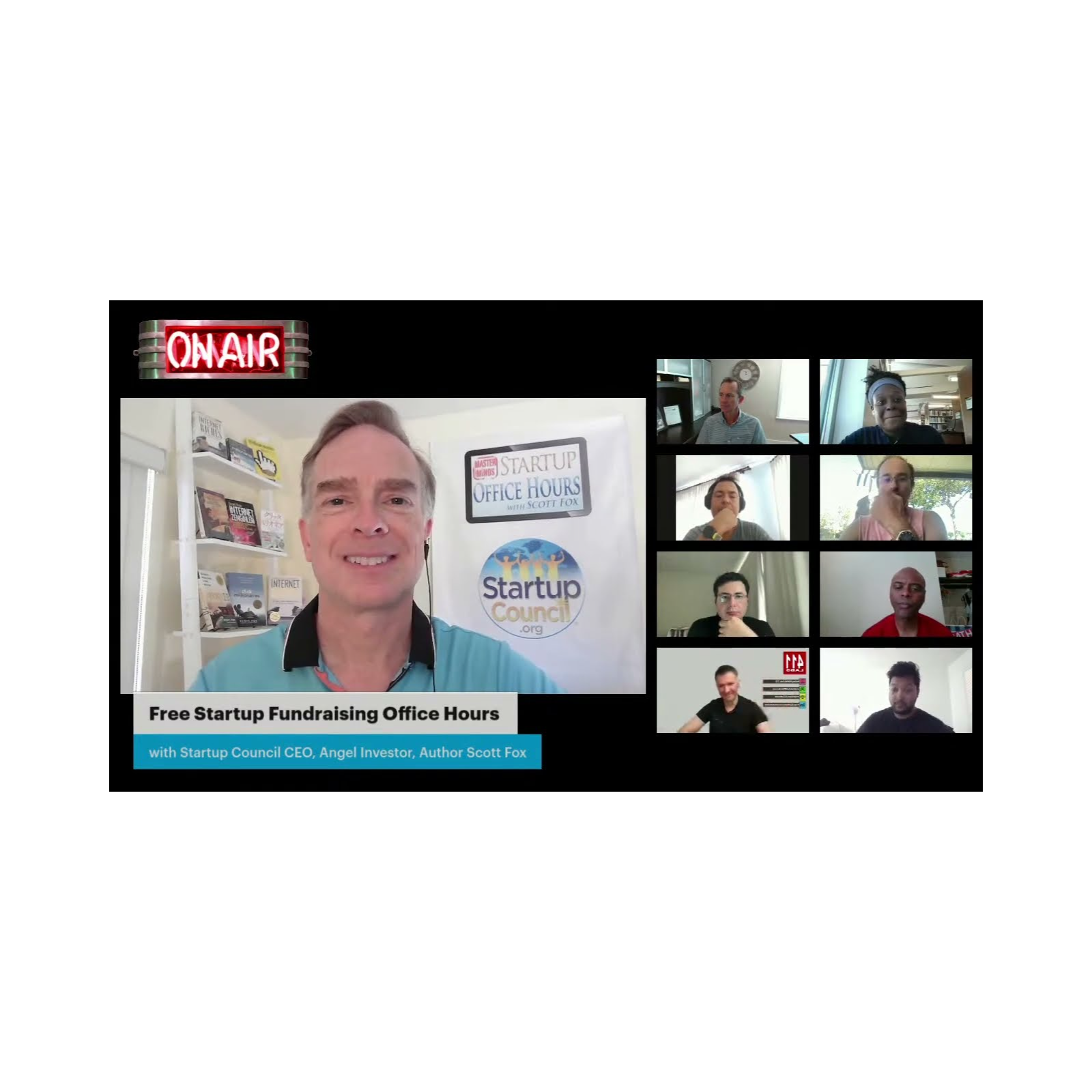 Your Free #Startup Angel Investor VC Fundraising Q&A Advice Show with StartupCouncil.org's Scott Fox56 / 100
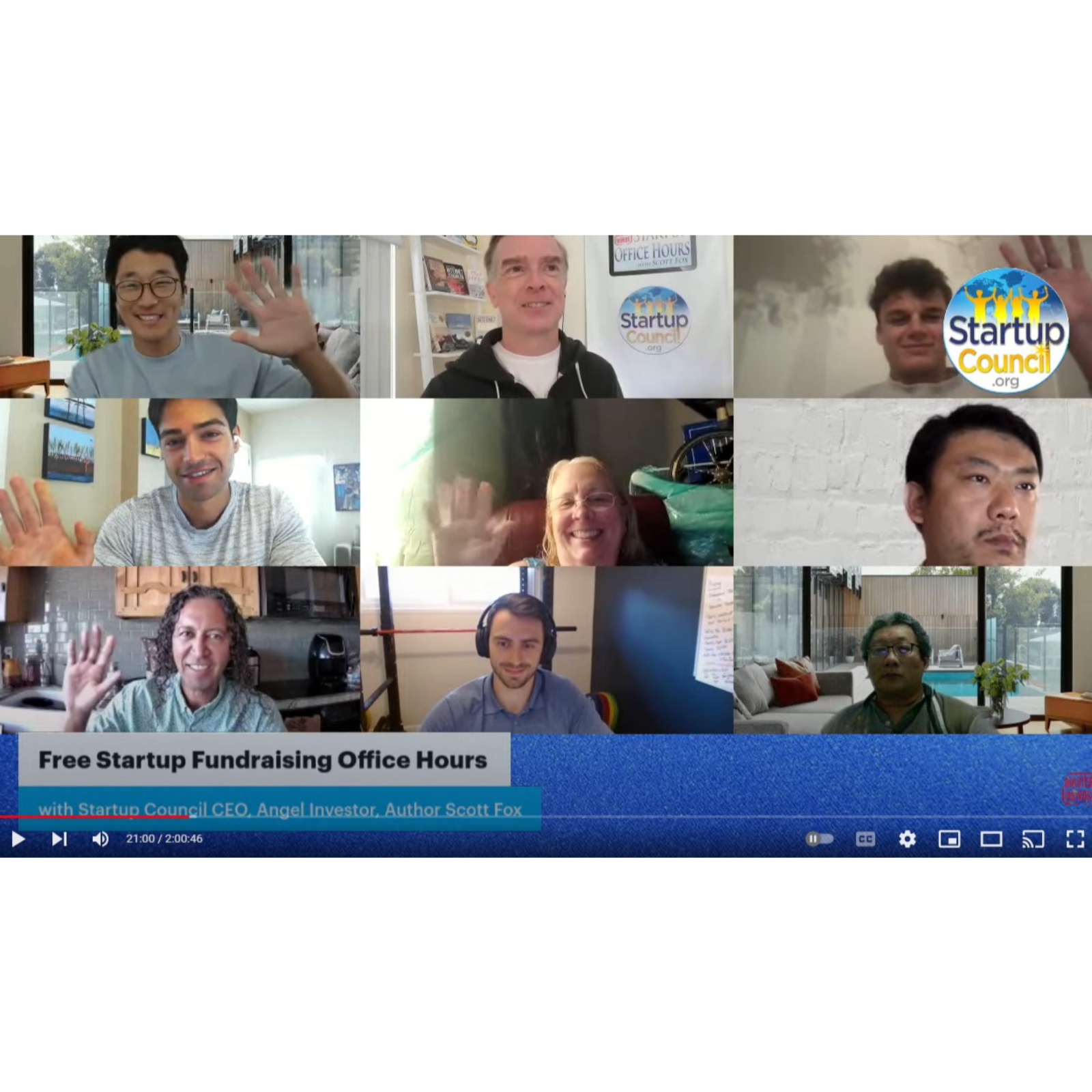 New Free #Startup Pitch Practice + Angel Investor Q&A with StartupCouncil.org CEO53 / 100
 Free Startup Pitch Practice + Angel Investor Q&A w/ StartupCouncil.org and #StartupFriends Worldwide58 / 100
 Live Startup Pitching & Angel Investor VC Insights: Scott Fox StartupCouncil.org CEO73 / 100
 Live Startup Pitching & Angel Investor VC Insights: Scott Fox StartupCouncil.org CEO