
The Professional Investment Podcast · 2026-08-13 · 20 min
Key moments - from our scoring
Substance score
61 / 100
Five dimensions, 20 points each
The Professional Investment Podcast's Series Six highlights cover critical shifts in how pension schemes and asset owners are thinking about capital deployment. Multiple speakers explore how redefining investment objectives - particularly for DB schemes gaining new distribution powers under the upcoming Pension Scheme Act - could unlock £30 billion+ toward productive assets like infrastructure, venture capital, and renewable energy. The conversation touches on the PPF's potential transformation into a universal CDC provider, the challenges mega-fund consolidation poses for investing in smaller opportunities, and how multi-manager architectures with satellite allocations to specialist managers can preserve innovation despite scale. Key figures discuss the mandation powers in the bill - specifically the 10% private markets and 5% UK targets by 2030, the 2028 hurdle with FCA and TPR competition assessments, and safety valves allowing Master Trusts to appeal. The discussion also covers tactical fixed income shifts (emerging market debt and high yield allocation increases for growth funds versus AAA-heavy pre-retirement portfolios), innovative financing structures (asset-backed securitisation, insurance wraps around frontier markets), and why coherent government policy on climate and clean energy transition is essential to reduce capital costs and unlock private investment at scale.
The Pension Scheme Act bills the main scale default fund to hold 10% in private markets and 5% in UK assets by 2030, limited to six categories: private equity, venture capital, private credit, interests in land, infrastructure, and unlisted equity securities.
Converting PPF from paying guaranteed pensions to a CDC model investing long-term in growth assets like infrastructure and equities could increase member pensions by 50% annually while deploying £30 billion in productive investment without spending reserves.
Using multi-manager architectures with core allocations to large managers and satellite allocations to specialist boutiques, or partnering with funds of funds managers that have relationships with thousands of GPs globally, enables access to smaller ticket sizes and innovative investments.
Clear, coherent, and credible government policy frameworks on climate and renewable energy reduce uncertainty, lower the cost of capital, and unlock significant private investment at scale, whereas policy volatility and weak regulation slow transition and raise costs for everyone.
Before invoking mandate power after 2028, the FCA and TPR must report on competition-driven underinvestment, the Secretary of State must judge whether other barriers exist and whether government has done enough, and Master Trusts can appeal claiming mandates aren't in members' interests.
Our reviewer’s read on each dimension, with quotes from the episode.
The episode contains a mix of substantive policy discussion (pension scheme restructuring, government mandation powers, fixed income allocation strategy) and repetitive frameworks. While the PPF-to-CDC proposal and the detailed breakdown of mandation hurdles are novel within pension/investment circles, much of the conversation retreads familiar themes about scale, collaboration, and private markets allocation without delivering surprising mechanisms or data-driven insights.
So uh, I'll try breaking that down. Um, so there is that potential issue that consolidation continues and we get to mega funds of significant scale managing hundreds of billions of pounds
what if you had a universal CDC provider in DB Land or CDC DB Land. And that could be the pension protection fund
The episode offers some genuinely contrarian thinking - notably the PPF restructuring concept and the critique of 'bigger is always better' in asset management - but these feel like internal industry debates rather than first-principles arguments. Most recommendations (multi-manager tiering, fixed income diversification, government policy support) are standard institutional playbooks. The frontier markets insurance wrap example is mentioned but not examined in depth.
what if you had a universal CDC provider in DB Land or CDC DB Land. And that could be the pension protection fund. So now imagine the pension protection fund was given a different mission
we have just decided that bigger is always better and we have forgotten that we talk always about economies of scale, but we forget about the fact that diseconomies of scale also exist
The speakers appear to be experienced practitioners (pension trustees, asset managers, policy experts, investment strategists) with operational responsibility over substantial assets and regulatory frameworks. However, the transcript lacks clear attribution of speaker credentials and specific titles, making it difficult to verify seniority. The breadth of roles suggests institutional depth, but names and specific track records are absent.
we last year we separated those and that actually has enabled us to again use that toolkit far more effectively
we've used the funds of funds or we'll be using a fund of funds manager for that. So they, they've got the teams, they've got the relationships with thousands of different GPs across the globe
The episode contains some concrete policy details (10% and 5% mandation targets, 2028 hurdle date, £30 billion PPF asset estimate, £1 billion portfolio threshold examples) and named projects (Nest, PPF, aqueduct in north of England). However, most claims lack supporting metrics, financial outcomes, or comparative data. Strategy shifts are described in broad terms ('increase allocations to emerging market debt') without dollar amounts, performance data, or timelines for results.
So if I give you the six things that the government can tell people to invest in, it's private equity, venture capital, private credit, interests in land, infrastructure and other unlisted equity securities
By 2030, the main scale default fund has to be 10% in private markets, 5% in the UK
The host demonstrates intelligent follow-ups and probing questions (e.g., on scale diseconomies, government mandation specifics, fixed income choices), but rarely pushes back hard on claims or exposes logical gaps. The conversation reads as collaborative rather than adversarial; speakers are allowed to meander through long monologues without sharp redirection. Some technical questions are good ('what have you actually chosen to do') but fewer moments of productive disagreement or skeptical challenge.
Give us a bit more meat on the bones on you've got all these options. What have you actually chosen to do with it and how have you chosen to change it?
How do we manage that? How do we keep things fresh and innovative and not stale and moribund and too big?
Computed from the transcript - who did the talking, and the words that came up most.
Watch or listen to the best of series six of The Professional Investment Podcast. This series we cover how the insurance industry will invest the forecast £550bn it will receive from closed DB schemes. We have a guide to the Pension Schemes Bill as well as how to reshape the regulator. Portfolio construction is unpacked including how to improve longevity and the advantages of dynamic debt allocation. We explore whether schemes can suffer from diseconomies of scale. Finally, we talk about how to tackle climate change risk effectively. ABOUT THE HOST: Charlotte Moore is an award-winning journalist and founder of Moore Squared Communications. She has spent almost two decades writing about how the UK’s largest investment organisations allocate their capital for a number of different specialist magazines including Professional Pensions, IPE and MandateWire. She started this podcast to increase understanding of how and why the UK’s £3 trillion pensions industry invests its members’ capital to provide the best possible retirement. #InvestmentConsulting #LGPSFunds #HymansRobertson #ResponsibleInvestment #InvestmentStrategy
Transcribed and scored by The B2B Podcast Index.
Speaker A: Foreign.
Speaker B: I think there's going to be increasing pressure on asset managers, asset owners between asset managers between themselves, asset own asset managers and asset owners working together and even asset owners working together to form these strategic partnerships to help get capital in through like the whole length lifetime of a project. You know, somebody who can take on more risk investing at the beginning, somebody who can take on less risk investing at the end and getting like people to work together more effectively in that way. I get the feeling that that is a kind of background ambition and we're seeing certain projects already doing that like um, I can't remember exactly what it's called but the rebuilding of the aqueduct in the north of England that's got money from Nest and money from PPF for example. So is that partnership part of your ambitious solution?
Speaker C: It wasn't. But I do like this idea. Um, I do see more of that. If you're thinking about investment in infrastructure and you're touching on natural infrastructure um, as well as physical infrastructure and even better both green energy infrastructure, um, and I do expect to see more collaboration between government and industry, uh, reassuring risk underwriting um, to enable us uh, to feel, to enable private money to feel more confident and to deploy more to impact future economic growth. So I can see that. And for example some of the PPF assets, if that could be considered quasi like government type money are willing to take a slightly different risk appetite because it exists for the collective. You could, you could see that kind of collaboration working between these major asset owners. I think that's a positive thing. Um, my idea was kind of restriking what it is that you're trying to deliver which then changes your asset strategy and how you invest. So um, I mean two examples, one in DB land by giving trustees powers to uh, which is coming in the Pension Scheme act and the regulator has their mind on for their strategy, giving trustees more powers to distribute value and run on changes your investment objective. So suddenly you're now investing to create and share value as well as protect against downside. Um, when you have a value creation objective you start to think well how might I invest in what government would describe as more productive assets or assets that stimulate economic growth. So changing the investment objective, doing with, with DB schemes that run on as, as one example PPF has to deliver like a, you have to deliver these pensions. So it's kind of like an insurance product. But one ambitious idea that might lead to materially more money being deployed to productive investment whether it's natural infrastructure, physical infrastructure, could even be startup venture capital. Areas where there's a shortfall which could release productivity. And this is, this is not, definitely not a recommendation but as a bold suggestion what you could. And also imagine you had an objective to um, stimulate more collective savings cdc. Because adequacies is a challenge. So productive investment, higher pensions. Um, you might think that in CDC we need something a bit like ah, we have in dc. DC had NEST to get it started.
Speaker A: Mhm.
Speaker C: And what if you had a universal CDC provider in DB Land or CDC DB Land. And that could be the pension protection fund. So now imagine the pension protection fund was given a different mission rather than giving guaranteed pensions of just now they're paying a billion pounds a year. Instead you could say okay now let's transfer, let's, let's convert that to a, a sort of shared ambition objective, collective defined contribution. Um, you'd actually be able to uplift those pensions by 50%. So people would have half a billion pounds more in their pocket every year. Pensions would go up 50%. Higher pensions, um, it doesn't spend any of the reserves. But now as an investment objective you've got an ambition to pay fully. Inflation linked pensions are now a good deal higher 50. And because you're investing for the very long term in a non contractual way, you can start to invest in growth assets like infrastructure and more equities and private type assets that stimulate inflation linked uh, growth and economic growth. Um, so then you suddenly have £30 billion of assets. That's not behaving like an insurer, it's behaving like an agent of the economy to stimulate growth. There is a massive journey between here and there. Um, but that's just one kind of ambition that could transform the way that the pension protection fund operates.
Speaker B: And when we're talking about private assets we're really talking about taking advantage, you know, of the small company ah effect and being able to invest in smaller companies on growth trajectories. Is there a danger we get too big? That that just doesn't become a possibility at all for um, pension schemes because they're so large that investing they only ever want to invest 2% of their portfolio. And 2% is still so big that you can't do venture capital or anything else. How do we manage that? How do we keep things fresh and innovative and not stale and moribund and too big?
Speaker D: Yeah. So uh, I'll try breaking that down. Um, so there is that potential issue that consolidation continues and we get to mega funds of significant scale managing hundreds of billions of pounds and that when they get to that size they'll obviously need to deploy capital at scale, um, and investing in a few million pounds, say um, for an interesting mid market private equity manager or niche infrastructure fund, will barely move the needle when it comes to the overall portfolio. And so the sheer scale of these mega funds, um, given some time, will mean investing mainly in those sort of large private markets managers that can absorb the check sizes uh, required. So that's a, a very valid concern that you're outlining there. But when we get to that stage a few things can help. So for example that multi manager model that I mentioned, um, uh, is one way that we can look to help with that. So as scale increases you can use a multi manager approach to create a sort of a natural architecture for tiering. So you can have your core allocation to large, well capitalized managers with the capacity to absorb significant commitments while on the same point at the same time you can have a satellite allocation to a number of smaller, uh, more specialist managers where the return opportunity is more compelling, but the fund sizes may be smaller. So as things evolve that's one option. But even before you get to that sort of point, when scale is so big that you can create that tiering, working with the right pool of asset managers right now will help ensure that those sort of innovative and groundbreaking investments that you're talking about do make it into portfolios as if they're doing their job proper, be investing in those types of opportunities. And this is where the governance structure around the investment managers and the due diligence that's carried out by the default solution provider is going to be so key. So you're picking the right managers that have the partnerships, um, the connections, the ways into the more innovative and interesting investments that could be the next big thing and really help customer outcomes as well as generating growth for the economy. And I know one of the things that we've sort of talked about in the past is what can small boutiques, asset managers in private markets do about this now? And a uh, plan could be to make sure you're properly aligned or partnered with these big asset managers as specialized, if you like, sub investors in specialist areas. So things like local uh, regional growth or niche uh, technology sectors or renewable energy projects that these larger firms may miss.
Speaker B: We mentioned that you've got all this dynamic elements in your portfolio and that you can shift everything around duration and regions and sovereign and et cetera, et cetera, you know every, every which way that you could cut fixed income. You seem to be able to move along uh, uh, a line about where you want to be. So I think you've just gone through your annual fixed income review. Give us a bit more meat on the bones on you've got all these options. What have you actually chosen to do with it and how have you chosen to change it?
Speaker E: Well so the first thing is back to that member outcome is that we have two, we, we have one very large default fund which is for our growth outcome and then we have our pre retirement. So we last year we separated those and that actually has enabled us to again use that toolkit far more effectively to answer the correct questions for the correct um, for the correct groups there. Because as we said that long time horizon for the um, for the growth fund, what we were doing there is because previously they were a bit co mingled we were able to sort of look at that and think actually we do want this to be more growthy. We can actually um, increase the risk slightly here. We can actually. So we increased our allocations to um, emerging market debt and to high yield there we still retained our key anchor core portfolio is in the IG because that is that sort of solid secure bit there. But we actually were able to move the dial up there. Whereas actually in our pre retirement portfolio that has that short time horizon where we can't have those dips even in times of volatility we don't want that to ever be hitting the returns massively. So what we were doing there is actually using those AAA's again. So we've diversified the risk there. So previously with the fixed income obviously anything with duration has a rates risk by adding in some more floating rate. We were basically diversifying our sources of risk there. But um, our uh. Whereas what we haven't done is we have a small allocation to high yield but otherwise it's that IG and the aaa. So it's incredibly highly rated for that um, retirement portfolio to ensure that we aren't getting those dips, we aren't going to get those drawdowns that we're just sort of really looking at. Sort of income preservation I suppose would be the correct word there.
Speaker B: Do you want to talk through uh, with us Steve, just what mandation powers there are um, and what there aren't because I think there's a lot of confusion in the industry about what the government will and will not be able to do once this act actually becomes a piece of legislation.
Speaker A: Yeah. So the key thing is that when the bill started the power to sort of tell pension schemes how to invest was pretty vague. And so one of the things the House of Lords has done is required. The legislation actually in the jargon on the face of the bill, you know, it actually says in the law what this can deal with. So if I give you the six things that the government can tell people to invest in, it's private equity, venture capital, private credit, interests in land, infrastructure and other unlisted equity securities. So those are the only things I'm saying, only in quotes there, the only things the government can specify. That's the first thing. The second thing is that the 10% and 5% targets in the Mansion House Accord, uh, rather are in the bill. So this is by 2030, the main scale default fund has to be 10% in private markets, 5% in the UK. So that's in the bill. And then the third big change is that there is now a sort of a hurdle. So there's a date, 2028. None of this can happen before 2028, but then a set of processes that has to be gone through before the power can be invoked, and a couple of them are quite novel. So one is the pensions regulator brackets appointed by the government, close brackets. The pensions regulator and the FCA will have to produce a report judging whether competition is causing, e.g. master trust to uh, underinvest in private markets. So the government's narrative has been employers choose Master Trust on the basis of price, private markets are more expensive, nobody wants to go it alone. So they're all terrified to invest in private markets, even if this would be good for their members, because they're frightened of competition. So the FCA and TPR will report on that. The Secretary of State then forms a judgment on taking account of this report, though not bound by it, taking account of it, as to whether there are any other barriers as to why schemes aren't investing in this way, particularly in the uk, and whether the Secretary states, him or herself has done enough to address those barriers. Because you remember the Mansion House Accord isn't unconditional, the signatory said, provided the government does its bit. So the government will have to think it's done its bit. And then even after all of that, if this goes through, the Master Trust will be able to appeal and say, look, we don't think doing what you're making us do is in the members interest and then the pensions regulator has got to decide whether that's justifiable or not. So it's pretty tortuous. There's lots of sort of safety valves, but I still think a determined government could steamroll this through.
Speaker B: Okay, and could you give us, uh, an idea of what our innovative structures would look like? I mean, one that sticks with me is something that, um, one of your Egon did, I think, which was around investing in frontier markets and putting an insurance wrap around it to make it palatable to insurers. I mean, is that the kind of thing that you're looking for in terms of innovation, or is it simpler than that?
Speaker F: So that's like. That is obviously sort of innovation around gaining access to new risks and sort of working with insurers to sort of, um, make that risk easily sit on a regulated balance sheet. I guess to go to the really vanilla, the really vanilla end, it would be, uh, working on security packages such that, let's say a very good borrower who's currently cash strapped can effectively pledge assets that they haven't had an opportunity to pledge before and fund against that. There are often companies, for, uh, one reason or another, very good ones, who have very strong cash flow but just no upfront capital. And if they want to sort of, um, achieve that upfront capital, sometimes, uh, the most innovative thing to do is just effectively allow them to find financing in a way that they hadn't, uh, sort of envisaged before. And I think that is actually something we're probably going to see a lot more of. So, for example, whereas corporates tend to issue regular bonds, um, um, in unsecured structures if, for example, they can find access to secured structures where they're pledging particular assets that might attract a different type of, um, investor.
Speaker B: I mean, if one was to be cynical, you can completely understand why, as you say, a midscape player, you would find this new story of the week fascinating. But I do empathize with you because I do think that we have just decided that bigger is always better and we have forgotten that we talk always about economies of scale, but we forget about the fact that diseconomies of scale also exist. And it very much exists in investment and asset management. I mean, there are very clear reasons why certain asset managers, when they're running certain funds, decide to only raise a certain amount of money and to stop after that point. And I know that's an asset management perspective, but the same theory applies also when you are an asset owner. So, you know, it's, it's really interesting debate, as you say, because it all seems to be ra, ra, ra, bigger is better. Uh, but if we think about what the government also wants to do when it wants to invest in small companies and UK productive finance, if you get to the stage where 2% of your portfolio is still £1 billion and you can't be bothered to invest anything less than 2% of your portfolio because it's not really worth your while in terms of resources. And then something's less than a billion, you can't even do that. Or, or you become the sole investor in that one fund. It's, it's an interesting debate that I think has kind of got slightly left on the side. How do you think about managing size and making sure you don't fall into that diseconomy of scale trap at Smart?
Speaker G: Yeah, it's a really interesting point. Um, and actually I think sometimes when we talk about scale, we forget why we're talking about scale and what we're trying to achieve from scale. It's not focused enough on the outcomes of scale, which should be better returns, better member outcomes, lower fees, et cetera. And actually there's lots of ways of achieving those things without pure scale by itself. And actually, as you say, you start to get into negative economies of scale. Ah, at certain points, um, I'm sure we'll come on to the Charlotte. But also the direct investing piece that you have to end up probably getting to as you reach scale is a really interesting segment within this market because you've got some players, um, people like Nest who are kind of not, not yet gone down that route, despite the fact they're at 50 billion plus at the moment, and counterparts across the world have probably started doing a lot more of that. So part of the way we look at scale, um, is just giving us the future flexibility. So with our private equity in particular, where you mentioned small opportunities, small ticket sizes, small companies, that is incredibly difficult, difficult to invest in when you're a large scale player. We've used the funds of funds or we'll be using a fund of funds manager for that. So they, they've got the teams, they've got the relationships with thousands of different GPs across the globe and they can find those opportunities for us, um, at the right size and scale as well.
Speaker B: This is a topic that obviously has been at the heart of sort of the investment industry for a long time. I think sometimes what we, we put quite a lot of burden on investors and asset owners. Uh, even if you do have the odd 80 billion to invest, you can't do everything. We do need policymakers to get involved. Can you talk to us why that is so important to have policymakers thinking about climate change and the risks it's actually going to pose to the economy?
Speaker H: Yeah, I mean, I think that's exactly sort of what we believe. We believe that governments, regulators, um, need to play a really decisive role in accelerating the transition, um, to sort of clean and renewable energy. Um, and these, if we see or when we see clear, coherent, credible policy frameworks, it really reduces uncertainty which in turn, uh, lowers the cost of capital and can unlock significant private investment at scale, sort of in contrast to that, when you see policy volatility, when you see weak regulation, when you see in cases consistent signals coming from governments and regulators, the transition just slows down. This raises costs for everyone, it raises risks for everyone. I think also what we see or what we believe from our recent research is that what we need in the early stages of the transition in terms of policy landscape aren't the same as at the later stages, um, and it actually won't be the same across different sectors or countries. So what we need is really tailored policies, but we also need kind of clear commitments and longer term frameworks from government to support progress at every stage of the transition. I think if we have this, it's pretty encouraging for investors. I think the transition to clean energy presents probably one of the biggest investment opportunities of our time. Um, and a fast transition will save global economies trillions in energy costs. So you know, there's real positives I think in this sort of potentially quite negative um, news article, if decisive action can be taken.
Other episodes covering the same guests and topics, from across The B2B Podcast Index.
 Bayt’s Rabea Ataya on 26 Years of Building and Why the Old MENA Startup Playbook No Longer WorksFWDstart · on Venture capital86 / 100
 He Made It To The NFL. Now He Wants To Prove Himself All Over Again.Catalyst by Camber Creek · on Venture capital74 / 100
 Edward Robson - Capital Allocation in TechnologyCloud Returns · on Venture capital68 / 100
 Tesla’s Roadster, Car Week Takes, Unwell Beverages Shuts Down | Diet TBPNTBPN · on Venture capital52 / 100
 How Private Equity Bought Your Power GridPrivate Equity Conversations with Fexingo · on Infrastructure investment
 How VCs Are Valuing Startup Community in 2026The Venture Capital Podcast with Fexingo · on Venture capitalCombating climate change risk - with Naomi Clark, head of investment product management for USSIM66 / 100Can pensions schemes suffer diseconomies of scale? - with James Lawrence, CIO of Smart PensionDynamic debt investing - with Charlotte Vincent, co-head of fixed income at People’s Pensions
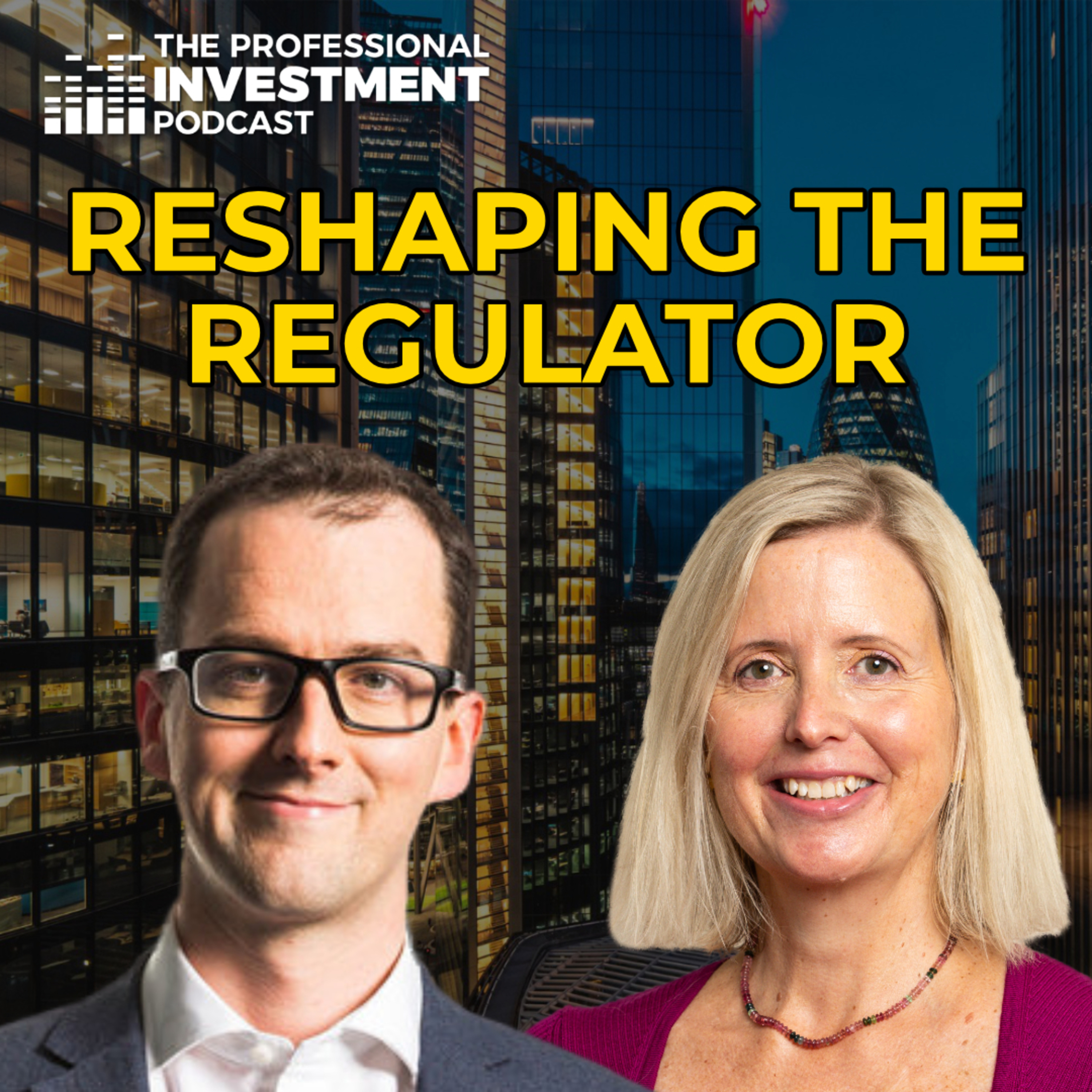 Reshaping the regulator with Calum Cooper, head of pensions policy innovation at Hymans Robertson
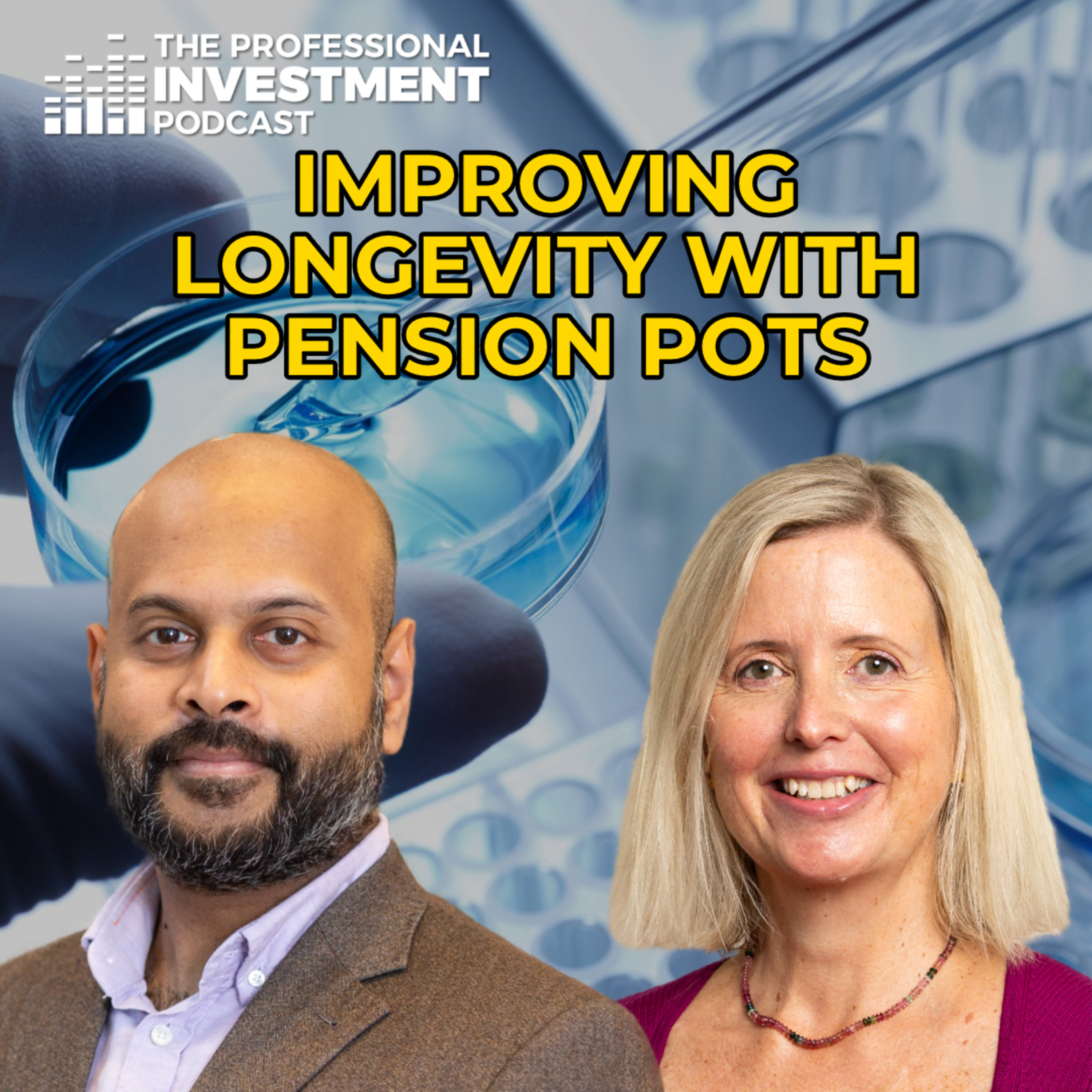 Improving longevity with pension pots - with Maiyuresh Rajah, director of investments at Aviva