
Couch Confidentials by Martech Therapy · 2025-11-06 · 54 min
Key moments - from our scoring
Substance score
65 / 100
Five dimensions, 20 points each
Bob Regular brings three decades of ad tech experience to explore why the current AI revolution, while real, will unfold far more slowly than most predict. Drawing parallels to the dot-com collapse, he argues that transformational technologies require time for adoption - people don't change as fast as forecasters dream. He points to the rise of email verification services, finance as a model for media buying evolution (manual trading → self-service platforms → algorithmic high-frequency trading), and the critical importance of signal in decision-making. The core problem isn't computational power but rather the degradation of signal quality due to cookie decline and attribution breakdown across multi-platform environments. Regular positions Infolinx's in-context advertising and sentiment analysis as examples of how AI can extract meaning from weak signals, but warns that widespread AI adoption could paradoxically commodify buying strategies, eliminating competitive differentiation unless operators maintain control over why AI makes its decisions. The conversation highlights the gap between ad tech's speed-obsessed infrastructure and the demand side's need for strategic reasoning.
Signal degradation and attribution breakdown are the limiting factors, not computing power. With cookie decline and multiple intermediaries, it's become a nightmare to understand which ads actually drive outcomes, making it impossible for AI to learn and optimize the way high-frequency traders do in finance.
Infolinx analyzes page content, keywords, and sentiment in real time to understand context - for example, distinguishing between a positive page about electric vehicles and a negative page about Tesla - enabling more intelligent ad placement than traditional keyword targeting alone.
You get commodification of strategy; if everyone's AI follows the same logic, competitive differentiation disappears. Buyers need transparency into why AI makes decisions so they can maintain strategic control and avoid algorithmic herd behavior.
No. AI will automate repetitive tasks like bid optimization and targeting refinement, but the strategic thinking about creative placement, channel mix, and outcome planning requires human judgment and will remain the demand-side responsibility for years.
The same pattern repeats: people overestimate the speed of transformation, believing change happens instantly when in reality adoption takes years. A collapse or severe disappointment is likely before the real, slower transformation actually delivers value.
Our reviewer’s read on each dimension, with quotes from the episode.
The episode contains substantive, non-obvious insights about AI adoption cycles, signal decay in ad tech, and the distinction between hype and implementation reality. However, much of the discussion revisits well-trodden ground (dot-com bubble parallels, regulation friction, attribution challenges) and includes significant stretches of explanation that repeat earlier points or use extended metaphors (Pottery Barn, cereal aisle) that pad rather than densify insight.
It's going to happen dramatically slower than what is being projected at the moment. And the hype cycle, I think is going to have its own collapse.
Bob Regular offers some fresh framing - particularly the finance-to-media-buying analogy (high-frequency trading as model) and the observation about commodification of buyer decisions through AI - but the core arguments (regulation as barrier, attribution as unsolved, signal decline) are conventional talking points in ad tech circles. The contextual AI application at Infolinks is specific to his company but not conceptually novel.
If you have the AI making the decisions, you may not fully understand why it's made the decisions... you have almost a commodification of buying.
The decline of signal is outrunning the rise in the computation of how you would take poor signal and make decisions.
Bob Regular is a legitimate 25+ year practitioner with founder/CEO experience across both supply and demand-side platforms, real exit history, and current operational responsibility. He speaks with genuine depth of field experience rather than theoretical expertise. However, he is not a tier-1 venture-backed hypergrowth founder or public company executive, limiting maximum score.
I've been in the digital media ad tech, you know, adjacent Martech space since the mid-90s.
I have a long varied background in the demand side... building demand side platform orientations and a lot of time building supply side oriented platforms.
The episode lacks concrete metrics, named client examples, or quantified outcomes. Bob references historical CPM rates ($1.50-$2 during dot-com era, NASDAQ dropping from 5,000 to 2,000) and discusses ad server cost-to-media-cost ratios (3.5x), but recent examples are sparse. Most claims remain at the strategic/conceptual level without supporting data or case studies from current Infolinks work.
The main ad server at the time was doubleclick and the CPM price of delivering an ad was about $1.50 to $2 CPM.
The cost of delivering it against their doubleclick contract far exceeded by magnitudes the actual cost of media... 3.5x your media costs.
Matthew asks competent, open-ended questions and attempts follow-ups (e.g., asking Bob to define 'signal,' circling back on regulation), but rarely pushes back or challenge claims. He allows extended monologues and metaphors without pressing for specifics or testing assumptions. The host is polite and curious but lacks the sharpness needed to extract maximum value or create productive friction.
How would you define the signal? Sorry to interrupt here.
What are the biggest traps you see advertisers fall into when they forget about this?
Computed from the transcript - who did the talking, and the words that came up most.
If you’ve ever tried to explain adtech to a Martech person, you’ll enjoy this one. I sat down with Bob Regular, CEO of Infolinks Media, who’s been building in this space since before ad servers even existed. We talked about what it was like when every impression had to be served manually, how hype cycles repeat themselves, and why the real progress in AI will take far longer than people think. Bob’s take on the “war on signal,” the unintended damage of privacy regulation, and the slow convergence of adtech and martech was both refreshingly human and brutally clear. For someone who calls himself “Regular,” he’s anything but.
Transcribed and scored by The B2B Podcast Index.
Speaker A: Today's guest is someone who has lived through just about every twist and turn in the ad tech industry. Bob Regler is the CEO of Infolinx Media and he's been around long enough to see hype cycles come and go from the earliest days of dial up through Programmatic and now AI. Now I'll be honest here, I don't come from the ad tech world. My own focus is Martech CDP's customer engagement. So when I bring someone like Bob on, it's partly because I want to learn. It actually reminds me of a little bit of a conversation with Paul Meinshausen on this podcast where he helped me think differently about agentic AI. Sometimes it's valuable to sit back, listen and ask simple questions that get to the heart of where two industries overlap. Bob has a clear view on what's wrong with the current debates in ad tech. Why the obsession with cutting paths misses the point. Why curation, smarter routes and outcome based thinking may matter more than ever. So let's dive in. Hey everyone and welcome back to Couch Confidentials. My name is Matthew Niederberger and today I have a, uh, very special guest, as I mentioned in my intro, Bob Regular from Infolinx Media. Bob, welcome to the show. Do you have a. For the people who don't know you, since my, most of my crowd is kind of in the Martech business and ad tech is something we are overlapping with, but it'd be good to get kind of get an introduction from who you are.
Speaker B: Sure. Uh, welcome. Well, my name is Bob Regular, uh, genuinely my last name. It's a bit of a unique one despite its, uh, its regularity. Uh, I'm the CEO, uh, of Infolinx. Uh, I've been in the digital media ad tech, you know, adjacent Martech space since the mid-90s. That sounds, uh, it sounds like a long time when I say it that way. I have been through ad tech yoga as you've described. Every twist and turn and bend as you can imagine in the digital media's rise. You know, when I got into it, there were no, really no ad servers and Those, you know, CMPs, all of our acronyms are acronym SALAD. Today there were, there was no acronym SALAD.
Speaker A: Not even one, just the small one
Speaker B: that I can remember. You know, I really look back and think about those days and you, you know, you really just were. It's all very manual, right? It was all going back to like the slide ruler of, of digital media. So the blessing of that of course, is that you learn everything at the root Manually understand how things are formed and why they're formed. And it just, just informs your ability to understand the intuition.
Speaker A: Yeah.
Speaker B: Of why all this stuff today that is full of word salad, why it exists, why it works or why it doesn't work. So I have, so I have a long varied background in the demand side. Right. Building demand side platform orientations and a lot of time building supply side oriented platforms. Influence is a supply side platform. We work directly with publishers, uh, to create proprietary ad units commonly called premium proprietary placements and those units we put on publishers and it allows us to create a unique unit or a unique ad experience that we auction off or sell directly to advertisers or to programmatically to intermediaries like SSPs. And so we're sort of an end to end solution, creating the supply, working with publishers to create the supply and working with advertisers or agencies or uh, platforms to sell that supply. And as a result of that you get the benefit of the side to side. So that's a long winded way of saying I've been demanding supply side, lots of stuff in the middle. Created a number of different companies sold to various companies along the way. And this, this last iteration probably where I will finally uh, bow out, get therapy, try to recover from this entire crazy journey of ad tech.
Speaker A: It it there's never a moment of rest even in Martech. So I can't even imagine where you've been able to find moments just to sit down and catch your breath in the last 30 years. I, as we were just discussing before we started recording, I was actually in the military with uh, uh, in 1995. I think I just even started. I wasn't even in this business. And I think it goes for a lot of us. We have been learning along the way to get where we are here. And the crazy thing is I think it's getting more and more difficult to keep up with the technological advances. So I mean we've seen a lot of things happen and if I look back to my career, I just want to kind of get your take on it. I've seen two great hype cycles really emerge. One is big data. It came m from the analytics background. Everyone was complaining, hey, we need good data to be able to solve for big data. We're 10 years on and we're kind of still uh, complaining about the same stuff with AI do you think, I mean what lessons have you learned with all the hype cycles that you've experienced? I mean you've even experienced real bubbles, real Collapses of industries.
Speaker B: Absolutely.
Speaker A: What do you, what do you see from what you've learned? What do you see is going to happen or think is going to happen, uh, around AI at the moment?
Speaker B: It's a big question.
Speaker A: Yeah.
Speaker B: Uh, it's not a criticism. I try to look back and think about, you know, our life experiences in the industry and sometimes it's difficult because over, call it 25 plus years, you know, you sort of summarize big events, right? It's easy. It helps your, your mind understand what did, what just happened. The largest event in the rise, what I remember in the rise of the 90s where web became a movement, you know, the, the Internet became a movement, um, was this incredible rise of the concept of dot com, the concept of E commerce. These concepts that we were going to behaviorally move from an offline world to an online world where people were going to transact, they were going to learn, they were going to listen, they're going to read primarily online. I think the first learnings in that cycle was that for me anyway, was that people don't change as fast as the prognosticators or the forecasters like to dream that people do. People can take change at a certain pace before they go crazy and so they need to take it at a certain pace. And so the adoption at that time of broadband, putting your credit card into a field online, having trust in something where you're not talking to a customer sales rep, but you're looking at a website to decide to give money. The concept of online banking was revolutionary that people would be willing to log into banking. You know, these, these concepts are transformational. They take a long time for people to build trust. And so when the dot com collapse happened, which was pretty dramatic, I believe it wasn't that the forecasting that we were all dreaming of wasn't going to come true. It did come true and it's transformed the world. Right. It's. There's no argument that the Internet has transformed the world and big data has transformed the world and digital media and advertising has driven so much sales of product influence conversation that it is transformational like the printing press, if not beyond. But I would say that these collapses are a result of the belief that these transformations are going to happen so rapidly and we're all going to change immediately. It's just not practical as people, right. We need time to make these changes. So I would say in all the cycles, what we always get wrong and get delusional about is the belief that these radical changes are going to Happen almost instant gratification instantly. I think this is what I'm witnessing in the AI cycle is explosion of belief. Right. This prognostication of that it's going to transform every industry, every job, every information. That is all true in the sense that, you know, you do see it changing, right. I see my parents, you know, using AI to ask questions. I see changes in the, how we use it in the, in the workplace and change processes. And there's no doubt, but I think this belief that it's going to absolutely revolutionize and collapse. Right. Let's just stay focused on our industry, digital media, uh, how we buy media, how we sell media, how we process the data, how many people can work. This will all happen, but it's going to happen dramatically slower than what is being projected at the moment. And the hype cycle, I think is going to have its own collapse. I don't know if it's going to be a collapse, but it's going to be a big disappointment. And then the picks and shots, the
Speaker A: trough of disillusionment I think they call
Speaker B: it, which is a great meme cycle. Right. All this hype will happen and then the hard work will begin. Right. It is hard work to make this stuff happen. And so the next generation, it's probably not going to be as much my generation, but the folks in their 20s and 30s like I was at the time, you know, you just get out and you do a lot of really hard lifting to make this stuff work.
Speaker A: Yeah.
Speaker B: Because this dream that you're going to put in a prompt and say buy media and buy the best media and buy the most contextual media or whatever. Right. It's, you know, it's just not. There's real stuff that needs to happen behind the scenes that's very complicated in big data, targeting, selling, you know, all this stuff, it's just not going to happen at the speed and I think we will have a minor collapse before we have a resurgence again. When does it happen? I don't know. When the dot com collapse happened and the stock market crashed and the nasdaq went from 5,000 I think it was to 2,000 and.
Speaker A: Oh, uh, yeah, like I said, I wasn't.
Speaker B: It was a bad.
Speaker A: Busy doing other things.
Speaker B: Well, just to give it a little perspective back then you. The main ad server at the time was doubleclick and the CPM price of delivering an ad was about $1.50 to $2 CPM using DoubleClick. And hundreds of companies had locked into their ad server enterprise contracts. So when you went to sell advertising back then, the advertisers wouldn't buy anymore because the cost of delivering it against their doubleclick contract far exceeded by magnitudes the actual cost of media. It had collapsed that badly. The cost of media, the CPM price of media was dramatically cheaper than your ad server. And so there was a whole reconstruction that needed to happen in ad server costs for publishers and advertisers and agencies just because all the contracts during the dot com rise were now incoherent against the real value of media. And so just silly things like that. Right. You what is a true collapse when your ad server costs are now 3.5x your media costs because the market is as wildly adjusted. So I think, you know, we're in this really cool time. I think the AI capabilities are remarkable and I play with it a lot and we work on it technologically a lot. But man, I see a lot of work, do a lot of work. It is not just type in a prompt and let's go.
Speaker A: No, I think they call it, they refer it the one shot prompts. Those, they're all fallacy. And I was at the MARTECH World Forum last week and I saw this fantastic presentation about how monks approach the generator, the creative side around advertising. And I have to say that I mean it's one aspect of AI, the gen AI part. And I have full respect and I think tying back into the story you just told me, that's definitely going to help, you know, although the prices have changed since the dot com bubble, but also to reduce the cost of the media. But from you, I mean you just mentioned you're actually you know, kind of experimenting and working, developing with tech around uh, advertising and AI.
Speaker B: What are.
Speaker A: Can you kind of walk us through some of the use cases that would be interesting for AI, especially in like the, the, the selling and the distribution of uh, of advertising. I've got examples from Martech, but I'd love to kind of see is the same approach being taken uh, in ad tech.
Speaker B: Sure. So I think the first dominoes to fall as a result of AI is a lot of the repetitive mundane work that's a part of buying media and selling media. There's no doubt that there's planning tools, there is actual usage of platforms pushing the buttons to do things like defining your targeting, refining your targeting, optimizing your, your bids and these various things done that are just very manual. They've gotten better over the years but they're very manual and it's a lot of time typically with young People sitting there pushing buttons and making adjustments and routine cycles. Right. And I think a lot of this will be automated using AI through smart recommendations, automatic recommendations that are implemented. Uh, I think, you know, AI, the bot. The bot will eventually become a very good media operator. Media buyer. The operator.
Speaker A: Always on.
Speaker B: Yeah, always on. Right. I look at buying media in many respects as, as three stages of finance. I think finance is a great source of, of learnings for ad tech and martech. You know, in finance you used to call people to make a trade on something that you believed in as the right thing to buy or to sell. And you would look for advice and recommend person based on their wisdom and you would make the decision and you'd look at the market and, and how the market was reacting. And then we move to the next phase. Right. Which is, let's call it a form of programmatic where you'd use E Trade or Schwab and you could go in and do your own buying and modifications and what have you. And then we have this movement of high frequency trading where sophisticated algorithms would try to design very sophisticated unique disruptive algo patterns to give it an edge to buying and selling based on what it's learned. Yeah, Digital media has tried to do that, but it's, it's unfortunately not quite gotten there. And I think it hasn't quite gotten there historically because the signal is hard to find, number one. Right. It's hard, it's been hard to find.
Speaker A: How would you define the signal? Sorry to interrupt here.
Speaker B: So in the, in the, in the early days, in the late 90s is you had almost full cookie penetration and you had great signal to understand whether a user is generating outcomes. Performance is the old term. So conversions, performances become outcomes. And so you really were able to attribute back in a sort of monolithic environment of a browser that had full cookie penetration. Whether or not this was successful and you could react accordingly. We all reacted manually, but you could react accordingly. With the rise of multiple platforms and multiple intermediaries and multiple. Everything attribution is, is a disaster. Right. It's very, very hard, I think, to use your word. It was a nightmare. I think that's about right.
Speaker A: It's. Those are the uh, projects I usually stay away from.
Speaker B: Uh, yeah, it's, it's, it's very difficult to find and understand attribution. So now with, you know, cookies decline dramatically and you have other signals and those other signals. There's a war on signal. And I personally believe that war on signal is completely wrong and, and, and mischaracterized it's, it's characterized in a privacy first way. But I think that, that uh, a lot of that signal is valuable for the marketing end and has been very valuable for the marketing end and isn't really in search of identity at a level that's invasive. It's just really trying to understand patterns, it's trying to understand behavior. So because the signal has gotten worse and attribution has gotten worse, your ability to do high frequency buying by reacting to smart signal and how you would adapt is really complicated. Yeah, it's not easy. Right.
Speaker A: It becomes a risk at a certain point if you don't, if you're not able to tie it back.
Speaker B: Whereas finance has great signal. Right. Finance knows that every trade it makes, what is the reaction in the market on a seconds m notice. Right. And it can react in real time to truth. In digital media, it's very hard to find truth and signal. And so reacting to it you have to make all these theoretical assumptions. Right. So I think that one of the, one of the challenges that Martech has had and ad tech has had is the decline of signal is outrunning the rise in the computation of how you would take poor signal and make decisions. So the hope is that AI, right, we'll do a better job at the mechanics. We'll also do a better job of taking the weak signal and interpreting it and understanding how it matters in ways that you can't just understand today using just strict, let's say machine learning or other variations. And so that's, you know, to me that's where AI is going to make a big mark. It's going to take time, but it's going to make a big mark. Um, understanding, for example context like Infolinx was born in the era and was one of the actually early, uh, creators of in context, uh, signal. We analyze the page, we read the page, we look at the keywords on the page and we decide based on those keywords what is the density and what is the meaning of this page?
Speaker A: Oh, interesting, right.
Speaker B: That was the original. Then we highlight one of the keywords and that was called in text, that was the name of the product. And you would, you would uh, roll over it with your mouse and a bubble would come up and give you an ad related to the keyword and the context of the page. Now you know that's a circa 2007-2010 version, right. And the modern version is read the page, understand the other pages around it, maybe understand the user a little bit, the audience, and then Come up with sentiment. You know, maybe this page isn't entirely about, uh, a positivity around cars. Maybe this page is about hating Teslas. And maybe that's a very different interpretation of the sentiment of the page. Right. As opposed to a positive page about EVs, it's a negative page about EVs. So, you know, by understanding that sentiment, it can give you much better signal to know what it is that you're being associated against.
Speaker A: Yeah.
Speaker B: So that's an area that AI has been tremendous. Right.
Speaker A: Oh, I can imagine. Yeah. Uh, and the speed with which to determine, uh, the sentiment, but also be able to, um, tie those into, uh, most likely back into your product to identify more appropriate, uh, categories or types of ads to, um, be able to push in there. That has to have been phenomenal. So it's definitely also a productivity gain for you guys.
Speaker B: It's a productivity gain for sure. It's an excellent productivity gain by minimizing the amount of rote work. So from that perspective, table stakes, it's been great. And it. And it will continue to be even better when, when you have better API accesses to tools.
Speaker A: Yeah. And AI literacy grows among people.
Speaker B: And yeah, AI literacy will grow. I think it'll just become natural. But I think where the AI really, it's going to take a lot of time. And of course, the big bulge bracket walled garden players will be the most advanced in this. The ability for it to do the thinking. Right. That's so complex for the trader, the buyer, to do in a omnichannel environment is where it's going to really shine. But the thing that's not talked about yet, it'll happen eventually. It's natural in the commodification of all this is as we all use AI models to do these things, we will find ourselves in a commonality where we're all using it to decide. We won't fully understand why it's made the decisions it's making. Right. Whereas today you understand as a buyer, why are you making the decisions you're making? They may be terrible decisions, but at least you know why you're making the decisions. If you have the AI making the decisions, you may not fully understand why it's made the decisions. It has to buy what it's decided to buy. And if that's the, if that's the case around many, many, many buyers, you have almost a commodification of buying, then.
Speaker A: Yeah.
Speaker B: So what is delineating you from being special? What gives you an edge? If, if the bot is doing the work. Right. Where's your edge in this commonality? Finding the edge will become. What's interesting is, is, is, you know, you have two traders, I call them traders. It's a really bad word for it. But you have two buyers today sit in front of a terminal and they're buying, let's say open web programmatic to drive airline flight tickets. Those two buyers, how they choose to buy in their decisioning for outcomes, can completely define who's successful and who's failing. You know, it could be united against Delta and those two buyers, or multiple buyers on each side in the agencies choosing to target very certain types of data, certain types of today with certain frequencies and so on and so on and so on. Right. Could define their success. So, you know, Person A versus Person B can have completely different effects. For United versus Delta, you put two AIs that are built on the same logic system to do the same, and they're running, you know, they're running their game. Right. Maybe you have a lot of commonality, right. Maybe you have a lot of commodification in methodology. So I don't know, maybe. Then the question becomes in each one, how do I get an edge? How do I build an edge?
Speaker A: Well, uh, that's interesting because AI has been known to be probabilistic. Put in the same question twice, you're going to get two different answers. So I think there's still some benefit for the ad buyers now using AI to not kind of, uh, get stuck using the same type of strategy. I don't know if we want to coin the term, you know, dead whatever it was not dead Internet theory, but dead Attic theory, that if, if, if all these approaches are defined and, and built using the same AI, kind of. And letting AI take care of all the knowledge.
Speaker B: Yeah, that's uh, my expectation is you can, you can use the AI engine that you choose to do the buying to also educate you about why it made the decisions it did.
Speaker A: Yeah, that's actually what we do with Martech these days, is that when I wrote about contextual AI within CDPs, the main thing was, is being able to expose the reasoning behind certain decisions that were made for personalizing to the user so that the user would be able to have control over the, uh, what the company had as their image. Uh, the same way when we use open ChatGPT, there's a memory layer in there where we can cleanly define who we are. Ah, we can make it store extra information so that the next time we interact with it, it knows who we are. Maybe that's, uh. Yeah. Do you feel that something like that would be welcomed and useful within the ad tech world?
Speaker B: I think the ad tech world is so transactional.
Speaker A: Yeah.
Speaker B: That, uh, it would be hard to absorb it. I think as a buyer, as a, as a buyer on behalf of an advertiser, as a marketer, you have a lot of time dedicated to the thought of why, whether that's why these creatives or why this buying strategy, this planning strategy. There's a lot of time dedicated to the strategy portion. And I think investing in the AI to keep telling you why is a distinct part of the demand side of the equation. In the ad tech side of the equation of delivering the requests, delivering the signal as much as possible, there's a lot less time dedicated to the why.
Speaker A: Yeah.
Speaker B: A, uh, lot more dedicated to the speed and quantity and quality of those things so that smart folks like you and the advertisers can process it well to get the outcomes you need. I mean, the promise of all this, even, even when I rewind the clock back to the 90s, the promise of all this has been extraordinary in terms of what is delivered. Right. In the beginning, TV and radio and print was everything. And advertisers, you know, were completely unaware of what drove outcomes.
Speaker A: Yeah.
Speaker B: And they were, they were just thoughtful about think this is what's driving our outcomes, but we don't ask. So when the, when we started pitching the web as a place that you could actually measure with certainty. Right. It was illuminating. Right. Everybody was so excited. It was, it was actually not even very hard to sell. And so in selling to advertisers, which I was doing even in the mid late 90s, advertisers were so excited to get reports that said impressions, clicks, conversions.
Speaker A: Right.
Speaker B: Like mind bending, you know, so funny to reflect on that right now.
Speaker A: Yeah, no, it is. I mean, it's, uh.
Speaker B: Look what happened, right? We've, we're moving trillions of dollars of, of, of transactions on behalf of advertisers, on behalf of business. Trillions of dollars that are, that are coming from trillions of ad requests, trillions of impressions on, um, many different screens. Right. Whether it's a TV screen, a phone screen, a desktop screen, a digital billboard screen, whatever it is, screenshot, and it's been optimized down to the second level. And every advertiser on the planet, even your local, you know, restaurant is advertising on it. Like, what's happened in 25 years is extraordinary. And all of this is optimizing to outcomes. Yeah, right. All of it. And so I think sometimes we uh, we, we forget like where we came from and what, how amazing it is where we are.
Speaker A: Oh, absolutely.
Speaker B: The AI will take it to a whole nother place, but it just will take a lot more time.
Speaker A: Definitely, definitely. And I, I think uh, something that def. That kind of puts a stone on the road or at least a, an obstacle on the road. That's the word I was looking for. I think uh, was it Ryan Holiday wrote the book the obstacle is the way is regulation like GDPR or California CCPA or there's pdpl. There's so many of them. I mean if you want to talk about new acronyms, we've gone from three letter to four four letter acronyms now that proceed within the ad tech world. Is that really seen as an obstacle now that you can't tie those signals from A to Z together anymore?
Speaker B: Yeah, you know, it's an, it's, it, it's a, it's an interesting topic. Because you want to avoid inflaming good intentions.
Speaker A: Absolutely. Yeah.
Speaker B: Yeah. There's, there's a lot of good intentions in regulation. There's a lot of good intentions. From the privacy first advocates everyone has. I don't believe anyone necessarily has bad intentions. I think they, they really, really want to protect consumers. They really want to defend against edge cases. There are edge cases for sure, you know, but, but man, can they get it done wrong. It's just brutal.
Speaker A: That's true. Yeah.
Speaker B: The choices and executions on a lot of these regulations have been. And they don't achieve the outcomes. 1. Just simple detail there. Right? Let's just use a few examples. Why must I go to every website and be confronted with a consent screen every time I go there on every individual website? As I surf the Internet, I surf the web. You know. Web publishers today are under siege. I feel so much empathy for web publishers because being a web publisher, being a publisher is one of the hardest professions to make successful. News publishers, information publishers. It's so hard to be a publisher and make a successful business out of it. Hardest part of that job is monetization. The second hard part of that job is generating traffic. So here regulation comes along and says the very first interaction the consumer should have with your property, your publication is a full screen or half screen consent decree that requires almost like a credit card statement level disclosure that makes no sense to anybody. And all they want to do is just hit a button for it to go away. For them to see the substance of why they arrived in the first place. Right so just imagine you're going to walk into your nearest, I don't know, let me make a Pottery Barn.
Speaker A: Yeah.
Speaker B: And a person jumps out in front of you and says, stop, you can't go in before you answer this questionnaire. Right. From an implementation standpoint, the purpose is to create low friction opportunities so that you can increase commerce. But no, the regulators, the first is we are going to protect the consumer because the consumer is, you know, such risk. So they pop out in front of you and they stop you and they don't let you enter. And you know, as a result of that, that friction, a substantial double digit percentage of people just leave because they're not sure what this means, they're fearful. And then the remaining mass majority of them, what do they do? They just hit whatever button makes it go away. It wasn't a thoughtful, informed decision. It was a reaction to being irritated. And so just on the starting point of regulation, we start there. So now you've got that version of regulation and then what are you doing with the data in the background that you probably did or probably didn't Gather the complexity of trying to adhere to the data rules by state in America. Every state picks their own rules.
Speaker A: I've heard that there's the West Virginia act, uh, came after ccpa. There's so many of them.
Speaker B: Yeah. Now imagine, let's use our Pottery Barn, uh, analogy again. So you're, you're walking up to the Pottery Barn to go in and look at the latest couch and someone pops in front of you and goes, first I want to ask you what state are you from? And based on the state you're from, we're going to grill you. Right. Interrogate you with a questionnaire that's unique to you. And after you go in, we're only going to let you explore the store in the way that's acceptable to that state.
Speaker A: And first you have to check their purse if they're not, if they don't have an ad blocker with them. That's right.
Speaker B: Do you have an ad blocker? That's right. Do you have any blocker? Are you a communist? Exactly. So just like just using real life experiences, you would think that's absurd.
Speaker A: I agree with you. I had this discussion, I think in one of the first ever podcast episodes I had with a guy called Brian Clifton. And it's a relationship. And I use, often use the analogy or the, the metaphor of dating. It's like going on a date and the first thing you say, can I have your phone number? Oh, hold on, you know, one step at a time. And I think at a certain point you build up the trust with this brand or it's a brand that you already know. But let's leave that out of context because that's done the accept all click. But I think what I would like to see and I, I offered this, I might be going off on a tangent here, so bear with me. Uh, the idea that I had is either ask them for permission towards the end of your visit, not immediately. So you give them kind of a window of opportunity to introduce themselves to the visitor and say, hey, this is who we are. These are our products. Do you mind if we start tracking you? And up to then you don't track them, but you don't annoy them. And at that point in that relationship, you can finally commit or you can decline. Now, uh, the other thing I want to run by you, and this might be a little bit controversial though, is if we look, a lot of people say, hey, it's your data, it's your identity, it belongs to you. I agree. But then let's make sure we have a potential centralized solution where I can go in and say, hey, I've had a bad experience with that brand. I want to remove all my data from them. And then through an interface, I mean, with, like you said, with AI, I can just say, this brand gave me, uh, gave me a bad experience. I want to remove all my personal data from them and not use them for, not let them use it for advertising and things like, is that, is that going too far to say the users should start. We should go to a situation where users are in control of their online personal data that vendor or companies can plug into to use.
Speaker B: I don't think it's going too far. I don't think it is at all. We have this notion that it is our data, but we also need to pair that notion with. We have a transaction happening between the data and the content or the publisher. There's a quid pro quo going on. The publisher is providing a service in return, the consumer is providing data as payment for the service or the content. And so what you're really raising up here is at what time is it reasonable? Say, hey, when are we doing this transaction? Right? When is this happening? You walk into the Pottery Barn, you roam around, you look at everything, you sit on a couple of couches, you feel some fabric. You know, you get, you get the lay of the land, right? Uh, and then a sales rep comes up to you and says, can I help you? And Then they start to ask you, what are you looking for? You know, what is it that you're, you're trying to buy furniture for? They start to ask questions. You were given the privilege of going and spending time into their location, wander around right before you were interrogated. So what you're presenting here is the option of I can come in, build a relationship, wander around, and then after, okay, let's, let's ask you some questions. Right, for that transaction.
Speaker A: Yeah, exactly.
Speaker B: I, I, I think that's like the way life works, Right. It's the way our normal offline life works. And I think that's a very reasonable way to go. I think the way that the regulation, there's, and there's many regulations, this is just one I brought up because it irritates the entire population is I think, regulations that, that are steeped in fear, only the fear that are not steeped in the practicality and the purpose of the business itself as well. Don't consider that part of it is what drives me crazy is, you know, I've met numerous regulators and I certainly, you know, I'm not looking to be targeted, but I find often the regulators that I have met are very consumed in the fear portion.
Speaker A: Yeah, fear cells, I mean, they don't,
Speaker B: they don't have a lot of time around. Okay, what is the terrible impact this could have on the traffic to a publisher? Yeah, the terrible impact that it could have on monetization through attribution. And there's such a reaction that, you know, that's not our, that's not our problem. We're here to protect the consumer only.
Speaker A: Yeah.
Speaker B: And I think it's like anything in life, it's a holistic thing you need to solve holistically.
Speaker A: But as a distributor, um, you know, if we look at, at you, is it, do you feel that you could play or you probably do a role in vetting kind of the advertising that goes through. Like you said, there are a few in every industry, every place on Earth, there are bad actors. Is this something that you, from your company try to prevent, uh, within the niche that you're working in?
Speaker B: Yeah. So on the advertiser side, without a doubt, to your point, there's, there's bad actors. There have been bad actors on the ad side, on the publisher side, on
Speaker A: the intermediary side, car dealerships, and everywhere,
Speaker B: there's no doubt that there's, there's lots of potentially bad actors. I mean, where did all this germinate from? It really germinated from Cambridge Analytica, Fallout
Speaker A: Uh, I didn't want to mention it, but indeed.
Speaker B: But uh, this is where it really germinated from. Right. And what really happened there, you know, not, not to go down a rabbit hole, but is the disclosure and usage of data without transparency in a way that made people uncomfortable. Yeah, right. A lack of, a lack of oversight is really, really what happened there. And so I think that it makes sense that how data is used, how it's passed, how it's used has oversight. Right. That has integrity. I think the concept that we have to put screens in front of consumers at every stage of the way. And so these are failings of trying to achieve the lack of oversight that was in place. And so you could be a bad actor on the ad side, you could be a bad actor on the supply side. There was no oversight. So as a result there were solutions created that didn't fix the oversight as much as it irritated the user and the experience and so, and just created a lot of regulatory hurdle compliance in the back end. I love your dog by the way, um, living the life back there.
Speaker A: Oh absolutely. He's, he's my, he's my permanent guest.
Speaker B: So you know, I would like personally to see good oversight but less friction. Yeah, to that. And I don't think it's ever going to happen. I. Because I think the people that are responsible for one are not responsible for the other. The two of them don't really communicate. Uh, and so as a result this is where we end up. And, and now I'll put a pin in it. I think the whole regulatory uh, GDPR this movement up because it went through it with our business. I think it ruined publishing for the mid and the long tail in Europe. Mid and long tail publishers basically dried up. They couldn't deal with it. It reduced their traffic. They couldn't monetize as well. It was, it was a form of suppression on publishers. And that's, you know, not to be, try, uh, to be uh, exotic about it but you know, that's also a form of suppression on content, free speech, expression. You know what it did is it consolidated only a few select major publishers owned by massive corporations only that could deal with it. And so as a result that's basically what you have in your.
Speaker A: The huge consolidation. But I mean like you said, let's put a pin on it because if we keep on talking like that, I would have to break out some whiskey because it's like you said, it's not the most cheerful thing. But one thing I did want to get kind of Loop back to you around is that this, uh, past weekend? And it also comes back to something that you've said before, is that, uh, so this past weekend there was a huge kind of upheaval within the Martech industry that we're driving more towards a pay as you go type of system for a lot of the solutions that we have in the Martech world. If you're not using it, you don't pay as much. But when you start sending out the emails, it can communication, that's when you're paying for outcomes. And that's something that you've also been talking about. You share us about the importance of optimizing for outcomes and not going for the shortcuts. I mean, what are the biggest traps you see advertisers fall into when they forget about this? It's got to be a huge pitfall.
Speaker B: So outcomes is this new term that's sort of been floated the last couple of years as if it's some sort of new, uh, new gospel. Right.
Speaker A: Relabeling. Right.
Speaker B: It's relabeling movement. So I started asking folks when they started bringing it up to me on the advertiser side, what, uh, what, what do you mean by outcomes? And really it comes back to tracking or being aware, transparently aware of what your performance is based on what KPIs matter to you. Right. Which is the whole promise of this whole thing that's been going on for quite some time. And so I, I would say that, you know, most of the ad servers that folks are buying using, let's say db, you're sitting inside a meta, or whether it's Facebook or whatever, buying wherever you're buying media and you're planning and buying media. Those systems have been well attuned towards driving outcomes.
Speaker A: Yep.
Speaker B: The complexity is the advertiser. What is it that they want to measure and what are those measurement outcomes? What are they worth to them? Um, and so one of the things, one of the flaws, to answer your question that I've seen with advertisers over the years, it's gotten tremendously better with maturity, is if your outcome is too complicated and too hard to achieve, then you will need to spend tremendously more money to find the right audiences that will achieve those very complicated outcomes. For example, many years ago a lot of mortgage oriented sellers, folks that were selling mortgages, would try to get online mortgages done and put them through very complex funnels. And so those funnels needed things like Social Security numbers and very complex data in order for you to be Put into a mortgage funnel.
Speaker A: Yeah.
Speaker B: And so as you can imagine, the razor sharp targeting and nuances of data and targeting optimizations to find folks that are comfortable with that is not easy in a very large world. And so you would have to spend large amounts of media budgets to, to find them. Whereas if you, if you have softer funnels that are, that are easier to get through, that are indicative and maybe they send really good emails, text messages, whatever it is as furthering you along in your, your LTV lifetime value path, your journey, then you will find your ability to build bigger funnels and narrow them down. And narrow them down, narrow them down to get better ultimate outcomes. Spending less money upfront necessarily. One of the things that I, I've noticed, just to summarize that is, is it's better to have easier KPIs as outcomes that may not be exactly what you're trying to achieve, uh, which is, let's say the ultimate is to get a mortgage done, or the ultimate is to sell insurance, or the ultimate is to sell an airline seat or whatever. These are complicated transactions to get completed. So putting softer outcomes in front to drive more complicated outcomes later I think is a good philosophy from a planning and strategy and buying point of view. Very high level. And not a lot of folks start that way. A lot of folks start at the hardest possible way possible.
Speaker A: But if you talk about the funnel and I get the picture, I mean you're talking about advertising and starting at the top, but I mean when systems have become so mature, I think I worked for a company one time that was doing the full car leasing business online. You filled out your entire contract, all the insurance information, you picked your car, everything. And at the end of the, at the end of the flow, which was of course not done in a single day, but um, because there were humans in the loop to double check the uh, the input. But at the end of the, at the end of the process you were given the keys and I think it's quite interesting to see though that the moments where AdTech and MarTech do overlap perfectly. It might be on those longer funnels because once you do get the id, let's say an email address or phone number, right. You can actually heavel them over and continue the process. Is that something? Because, I mean it's a question I see and the topic I see quite often pop up now on LinkedIn about the kind of the convergence of adtech and martech. There are a lot of different acronyms for it. Digital Clean Rooms is definitely one of them. Where we try to match first party with third party data with, with a, with a middle layer. How do you see the future around that going forward? Because I, I think the, the business that you're in is, is a niche. Like I said, I've heard of Martech, but I wouldn't be able to tell you with definitely, uh, not with 30 years of advice experience. Like you have the, the intricate details around it and, but I do think that there is such profits to be gained also for the customer because once they do identify themselves, it's because of intent, it's because they've given you their email information and you're nurturing that client through a longer process. How do you see this convergence speeding up or are you kind of seeing a different picture?
Speaker B: So I think that, you know, going back to this example of uh, the funnel.
Speaker A: Yeah.
Speaker B: And going back to what you said probably 10 to 15 minutes ago, you're building a relationship with the consumer. And I think that relationship you're building is multifaceted in ways you communicate with the consumer. Right? You, you communicate, you can communicate to the consumer through text message. You can of course through email, you can over the phone, actual old fashioned, give them a call, still happens. And of course you can just through the screen, right. With uh, just through web pages where there's none of that. What I'm suggesting, and I think a lot of, a lot of very sophisticated advertisers doing a great job of, is understanding at what phases of the, of those communication types do you drive the best outcomes for the most outcomes. And so I think every advertiser is different because I think some are very complex and some are very easy transactions and you need multi touch points for complex ones and probably over long periods of time, multi touch points. And for easy ones you can probably have a transactional moment right. Where you can convert them just on the screen. Funnel only. Where ad tech is interesting in converging with Martech is ad tech is the plumbing that gets the original audience, whether they're on a site or they're on a platform or whatever, it's the plumbing that enables that ad that you bought to get to them, for them to see it, for the scene of it and the identity of the user to be captured and measured and brought back to you to use. So you're bidding and you're buying against the plumbing, the infrastructure of ad tech to be able to gain access to those hundreds of millions of eyeballs fast. And after that's happened, the business of Martech, in my opinion, right comes into it where how you've chosen to advertise to them. Meaning what's the messaging? How you've chosen to take some of the identity signals, like you've said, and append them to things like, well, okay, I have a signal, but I know that's a particular email address or that's a particular phone number and so on. And then how do you communicate with them? At what cadence? And then how do you, when you do all of those signals, when you do all of those actions and communicating, how do you put that into your database, your cmp? Right. How do you put that into your platform to say whether or not that person is moving along the journey to get to a final conclusion? Yep. And I think there's so. It's so multifaceted and it's so unique per advertiser because each advertiser is literally like a strand of DNA. Right? They're unique and they need their own strategy. And I think ad tech is, is. Is a critical force in that. But Martech is sort of the, you know, it's the hands of the surgeon. Martech is the hands of the surgeon. Right. You're doing the delicacy of trying to be very intentional about how you market and how you accumulate information and how you communicate in order to get the outcome in the end. And I think that that's like, that's the journey of Martech. And I think sometimes Martech, at least sometimes I hear, puts a lot of. Puts a lot of force on ad tech to solve things that it can't solve for Martech. Like, I want better signal.
Speaker A: Yeah.
Speaker B: I want better attention. I want better viewability. I want better. And so there's a lot of pressure coming down from the advertiser and Martech side to the ad tech side to make the infrastructure and the delivery better in such a way that it gets better signal. And we feel that in the ad tech side, we feel that all the time. Because there's huge pressure on the Amar Tech side for outcomes. Right? Like, huge pressure, which is. That's the right thing. I think this dance that's happening between the two and has been happening between the two for the better part of 25 years is getting better. And I do think AI will help a lot of that because a lot of it is a function of just so many dimensions, incomprehensible dimensions of information that no human can sit there and understand. Right. What the hell just happened here, you know, in. Inside the funnel. And so I, I will make a
Speaker A: friend of mine referred it to it as the billion decision problem that humans just cannot keep up with. And it's coming back to the whole Martech pressure. I mean, uh, I didn't know I was putting pressure on you guys, but I think you're right. I think, I think one of the, one of the darker moments, like I said, I respect user privacy and et cetera. I understand part of the, the politics around it, but I think one of the darker moments I experienced as an analyst was being able to see where users were coming from. So let's say uh, from advertising. Let's say you had a banner on a website. It wasn't that banner click that brought the visitor to the website that I could see in the analytics, but it was also being able to kind of look back and say, hey, which website did they come from? Which page were they on? And like you pointed out in the beginning, being able to understand the context of that page and potentially what drove them to your website at that time tells a lot about that user and then, you know, giving that extra signal. But it sounds like a challenging time. But also that you're putting AI to good use to kind of close off here. What do you think? I mean, what are the signals that will separate the winners from the losers in this, you know, AI driven ad tech world at the moment?
Speaker B: M winners from the losers? That's a great question.
Speaker A: A little harsh maybe, but yeah, we're
Speaker B: all going to be winners. Matthew. Yeah.
Speaker A: Here's a medal for you and here's a medal for you. Participation medal. Yeah.
Speaker B: So success independent of AI, but because of AI in Martech ad tech combination will be those that are able to delineate the special signals that are unique to them that uh, give them an edge and not getting lost in the magnitude of signal that is already floating around. It is very deceiving to get incredibly excited about the big data portion of AI that's going to come out of AI. So you're going to get flooded, drowned with opportunity and options and it's going to overwhelm, it's going to overwhelm the buy side and it is already starting to be overwhelming thinking about it from the supply side. So if up till now you felt overwhelmed by the amount of options and buying options and methodologies of uh, buying, I think because of AI's revelations, the insights it's going to reveal, it's going to further help you curate, that's a good thing. Yeah, but it's going to present so many possibilities because it's able to think so much better. Than we're able to think right. In terms of presenting that. I think that the success will come from your ability to delineate what matters from all of those options. So just tying it to something that's a little bit more practical and not so ethereal. You walk in the grocery store and you go to the cereal aisle and it feels overwhelming. Right? What, so, so what, which cereal should I buy? First of all, cereal is bad for you. You shouldn't buy any cereal. But aside from that, Right. So what do we do? We pick something based on packaging. We pick something based on the signal of the colors, the words, uh, something that compels us, that's attractive to us, that stands out. Yeah. And so then you may build a brand affinity to that. And every day you come back, you will only buy Honeycombs or you will only buy Rice Krispies because you don't want to deal with all the other choices.
Speaker A: I'm guilty of that, right?
Speaker B: Like, leave me alone. I'm going to pick my Rice Krispies. I'm good. I'm a loyal Rice Krispies eater. So I think now you take that and you extrapolate that levels of magnitude in media buying. It's already levels of magnitude and you just extrapolate it higher and it becomes very difficult to be skilled at picking well what you're, what you're going to pick. Because there's one core thing, doesn't matter how, uh, how well is there's limited budget. There is a limited budget to experiment and to try to find success with a limited budget. And in that limited budget you have to make really wise choices. And so I think the AI is going to be very overwhelming to providing options and it's going to be like going to the cereal aisle.
Speaker A: So you're going to make me think of you now next time I'm going to buy some cereal. Bob, listen, if I could change your last name from Bob Regular, I would change to Bob. Uh, awesome. It's been fantastic talking to you and just your clear headed, patient manner that you can explain ad tech to me and that we can discuss about even tough topics like regulation, which I know is something we cannot avoid. But yeah, it's, it's, it's an. As I keep telling all my peers, it's an amazing time to be in this industry because I probably, I can't guess where we'll be in a month's time. But like you said, I think the difference between winners and losers, making sure you don't get distracted by all the fancy schmancy promises and focusing on the real value. So thank you so much for your time today, Matthew.
Speaker B: It was a pleasure. I really enjoyed it. Thank you very much.
Other episodes covering the same guests and topics, from across The B2B Podcast Index.
 Bob Regular: The AI Ad Fads That Won't Survive10 Minute Martech · features Bob Regular64 / 100
 Why Marketing Attribution Breaks on Subscription ModelsMarketing Analytics with Fexingo · on Attribution modeling92 / 100
 Episode 222: Why Britain is measuring the wrong economy, with B2B Marketing’s James FarmerB2B Marketing Podcast · on Attribution modeling84 / 100
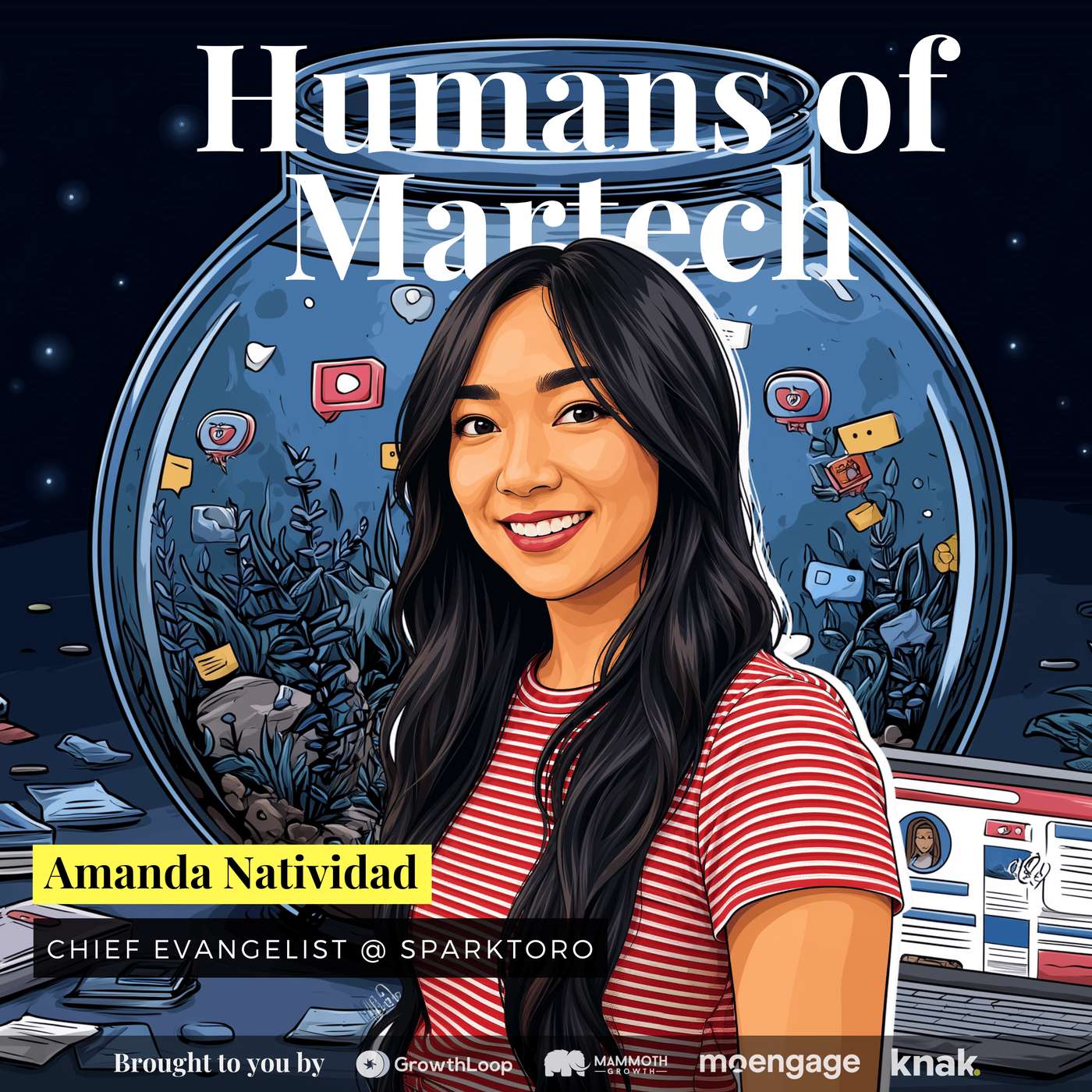 230: Zero-click marketing broke the measurement layer, so what should ops teams do now, with Amanda NatividadHumans of Martech · on Attribution modeling83 / 100
 Athos Commerce CMO Gary Lombardo on why only 14% of shoppers see one consistent brandThe Agile Brand with Greg Kihlström® · on Attribution modeling80 / 100
 Why DTC Brands Lose Customers They Think Are Already Theirs | Agnes Seville, Little SleepiesThe MarTech Matrix · on Attribution modeling79 / 100
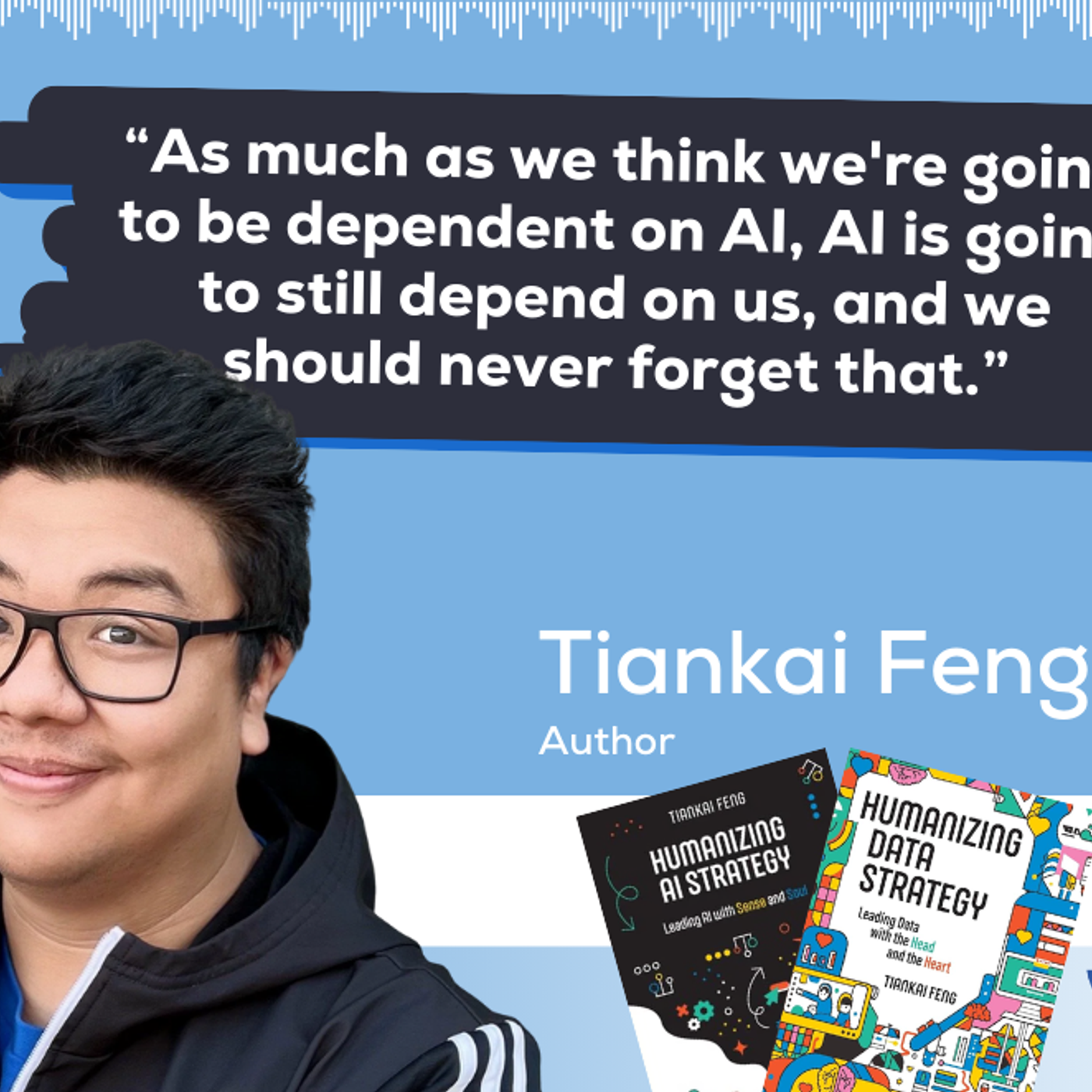 Tiankai Feng on why your AI strategy is failing (and what to do about it)62 / 100
 Aampe & DOJO AI co-founders on agentic AI and the future of marketing work67 / 100
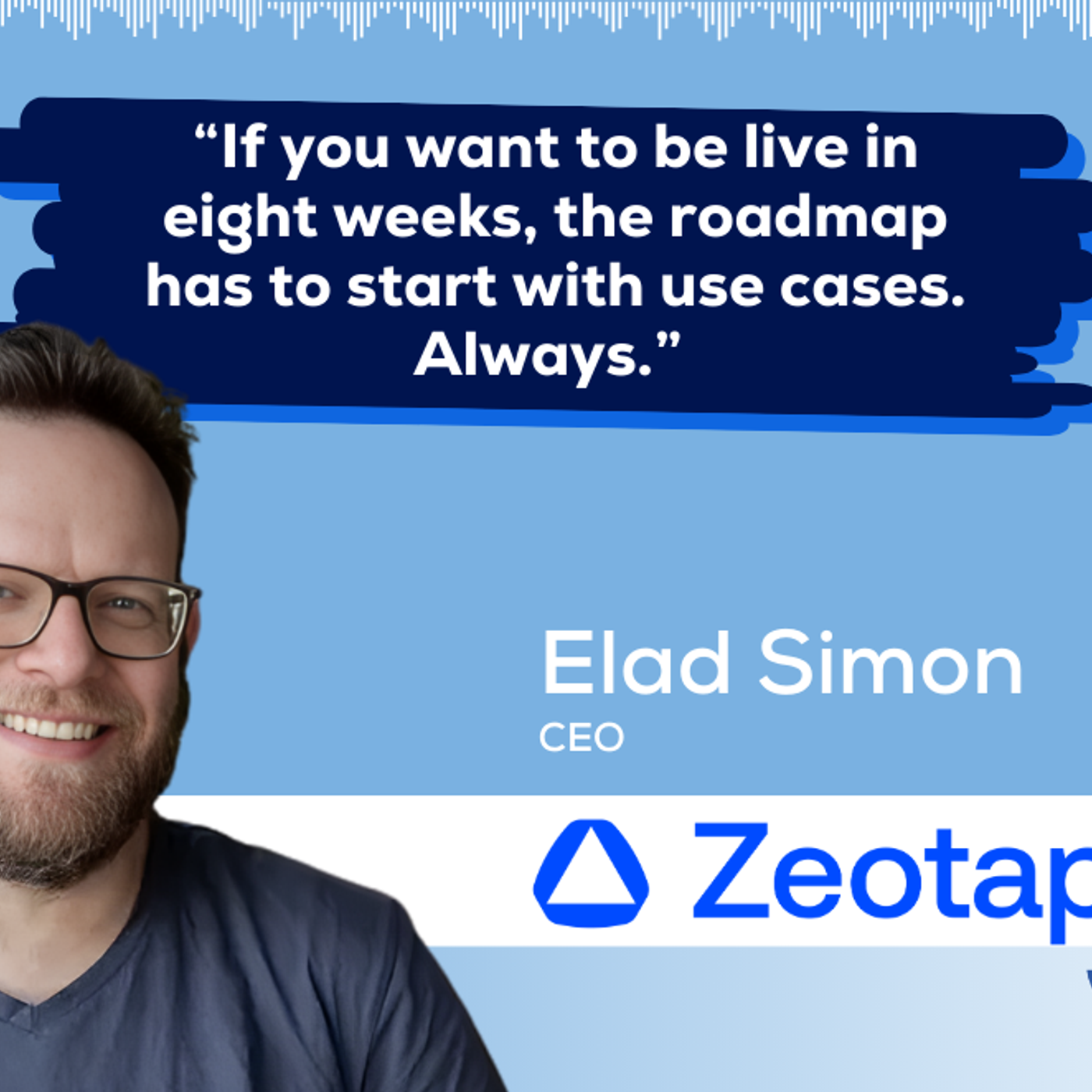 Why Europe wants its own CDPs - ZEOTAP CEO Elad Simon explains66 / 100
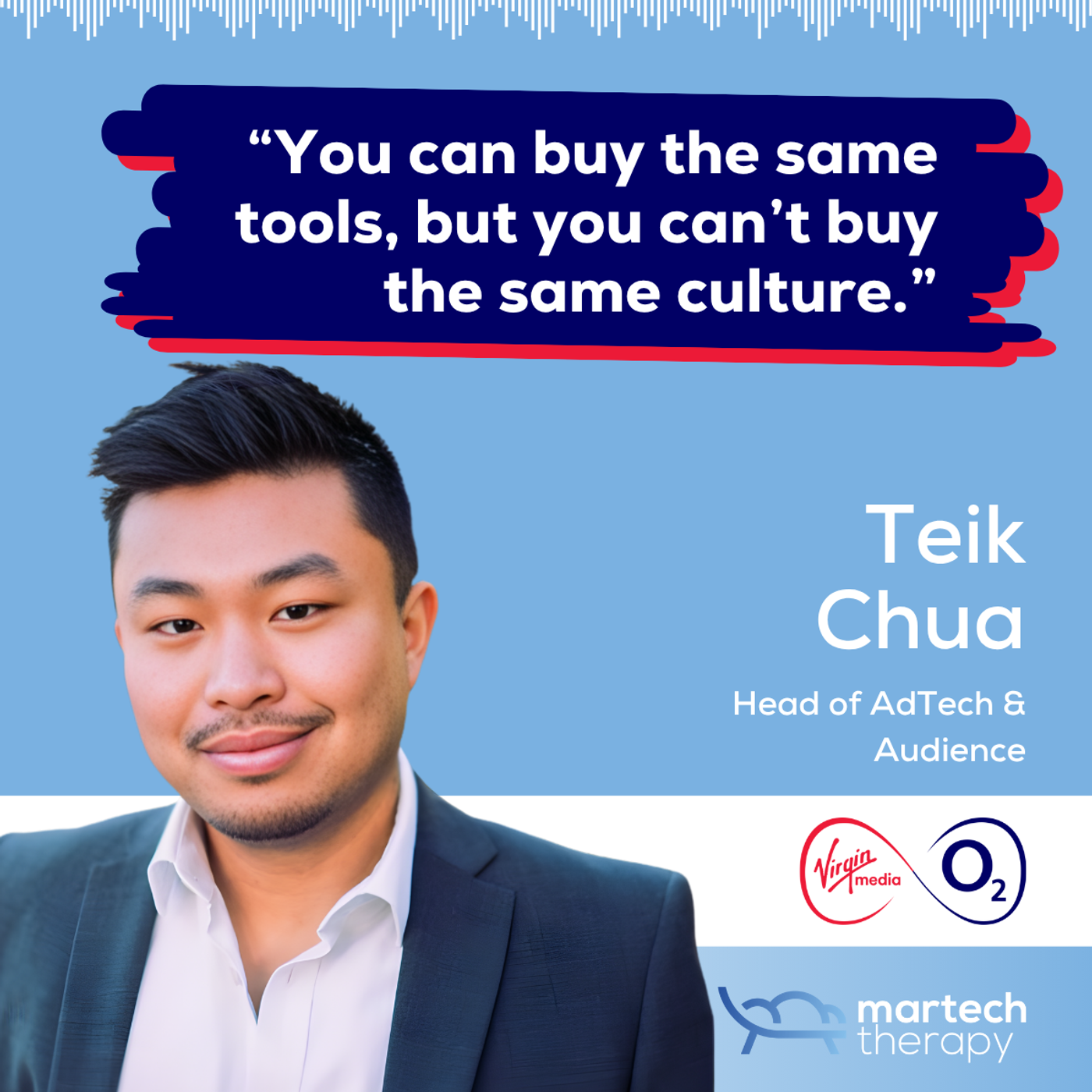 Lessons from two Martech worlds: Asia and Europe through Teik Chua’s eyes77 / 100
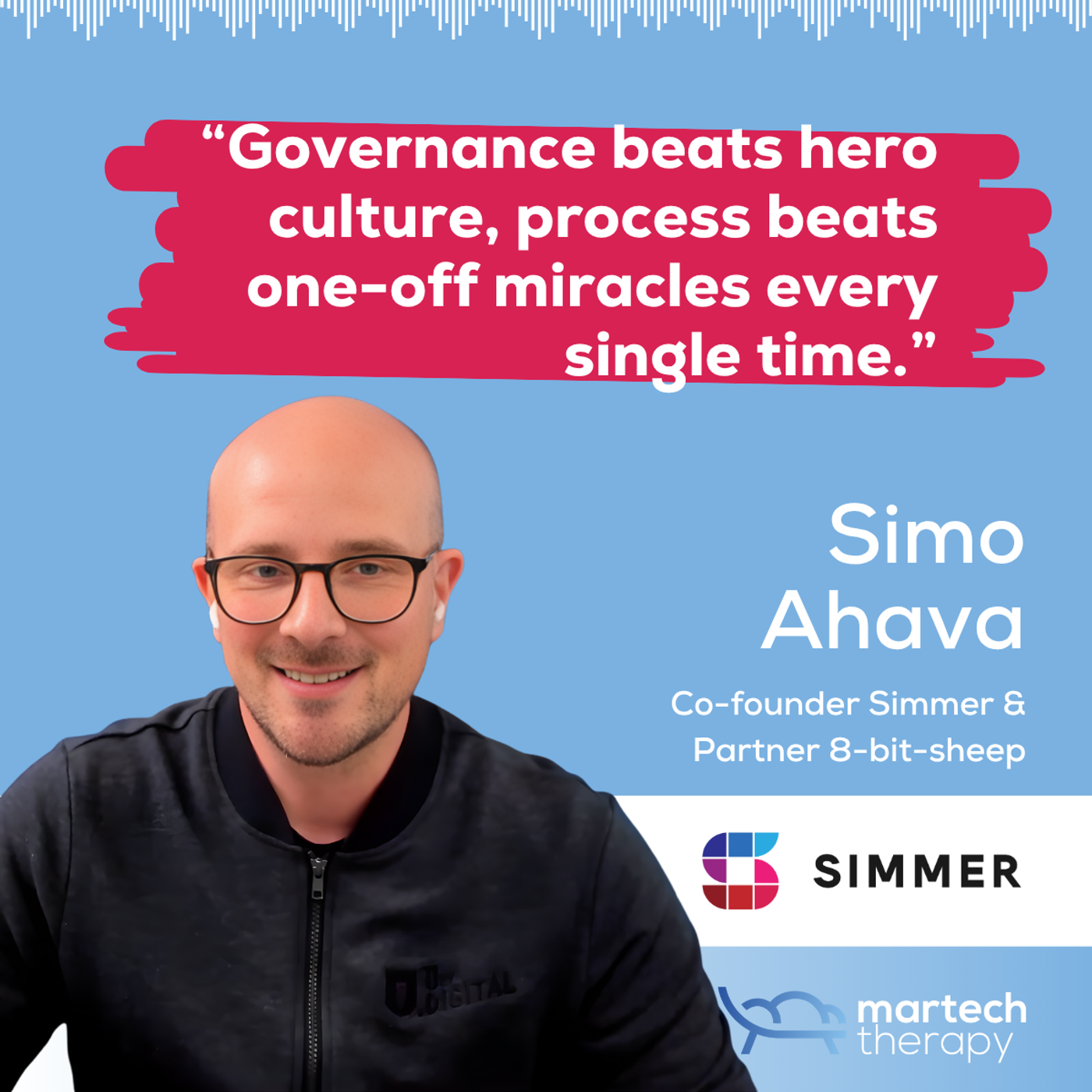 Governance is everything: Simo Ahava on making GTM a bridge, not a back door86 / 100