
Couch Confidentials by Martech Therapy · 2025-12-02 · 39 min
Key moments - from our scoring
Substance score
47 / 100
Five dimensions, 20 points each
Paul from Aampe and Duarte from Dojo AI discuss how agentic AI systems demand a fundamental shift in how marketing teams think about work - not just new tools, but new mental models. Rather than controlling outcomes directly, marketers must learn to set constraints and trust adaptive systems that respond dynamically to customer context. Duarte describes Dojo AI as a plug-and-play, conversational operating system for challenger brands that bridges the gap between data and action, translating raw insights into strategy, campaigns, and content in seconds. Paul, drawing from his background in cognitive science and data generating processes, reframes the control question entirely: marketers never had direct control over outcomes anyway - they pulled triggers on campaigns that scattered like shotguns. Agentic systems replace that spray with precision by understanding the full customer journey (motivation, decision, post-purchase reflection) and adjusting messaging in real time based on context. Both founders emphasize customer success and trust-building over time, whether through Dojo's 60+ dedicated Slack channels for close feedback loops or Aampe's focus on configuration and transparency. The episode explores why teams resist handing work to AI and how successful adoption requires reorienting strategy around the end user's actual problem, not the marketer's ego or the software's operational convenience.
Dojo AI is an integrated AI marketing operating system designed for challenger brands and startups with smaller teams and fewer resources. It provides conversational, role-based workflows that adapt to individual user responsibilities (content creators, paid ads specialists, etc.) and rapidly converts data into actionable insights, strategy, campaigns, and content without requiring marketers to sift through complex dashboards.
Paul argues that marketers never actually had direct control over campaign outcomes - they only controlled the trigger pull while results scattered unpredictably. Aampe replaces this with precision by treating marketing as an adaptive system that understands the full customer journey and adjusts messaging contextually, giving marketers more real control through configuration and understanding, not less.
Teams must stop thinking of AI as a tool that removes human control and instead recognize that the real job is helping end users solve their problems amid complexity and distraction. They need to shift from rigid lifecycle campaigns to adaptive systems that respond to context, and accept that meaningful change requires their own transformation alongside the technology.
Dojo uses dedicated Slack channels with each of its 60+ clients for close feedback loops, customer success management, and iterative product improvements based on real-world usage. Aampe emphasizes transparency, configuration options, and framing the change as giving marketers more precision and control by helping them understand and serve the end customer better, not less.
Paul uses real estate as an example: macro changes (remote work) and micro changes (personal space preferences) combine with marketplace effects (the Zillow effect of reduced friction on demand) to create a complex environment where marketers must keep customers motivated, help them make faster decisions, and adapt messaging in real time based on inventory and behavior - not just fire static campaigns.
Our reviewer’s read on each dimension, with quotes from the episode.
A few genuinely useful ideas surface - Copy Systems Lead as an emerging role, context engineering as a new discipline, and the inversion that marketing technology created siloed roles rather than just reflecting them - but they're surrounded by lengthy, meandering analogies (the Zillow/real estate tangent runs several minutes) and standard AI-will-change-jobs discourse that any informed operator has already heard.
Most companies have had copywriters. They just promoted one of theirs to be the Copy. Systems Lead.
thinking in terms of being a context engineer or context designer
The 'you never had control in the first place' reframe is genuinely contrarian and well-articulated, and the point that Martech itself manufactured specialist silos is an interesting inversion; but the bulk of the conversation - AI raises the bar for creativity, delegation is good, new jobs will emerge - is well-worn territory recycled from the standard 2023-2024 AI discourse cycle.
you never had it in the first place. You don't have it today. To think that you control.
your weapon is basically a shotgun. You have no control on where the bullet goes. It goes everywhere. That is not control. When you replace that shotgun with a sniper rifle, you're not losing control. You're gaining control.
Both guests are legitimate practitioner-founders - Duarte brings real enterprise marketing experience (Sky, Coca-Cola) and Duarte's co-founder has a genuine data science and cognitive science background - but neither has operated at truly large scale and both are early-stage startup founders with sub-100 customer bases, limiting the weight of their real-world evidence.
I worked for big brands for most of my career. Sky, Coca Cola, then transitioned into working with smaller brands
spent most of my career as a data scientist and mostly at the intersection of thinking about cognitive science and computational methods, statistical methods for thinking of how people make decisions
The Tax Fix / Copy Systems Lead example is the one genuinely concrete data point, and Dojo's '60 companies, dedicated Slack channel' gives some texture; but there are virtually no metrics, no ROI numbers, no campaign results, and a Venture Beat article about Writer AI is cited without any of its actual findings being shared.
One of our partners and customers is Tax Fix there in Europe. They're kind of like for the us, for people in the US it's sort of like the turbo tax of Europe. Right. Most companies have had copywriters. They just promoted one of theirs to be the Copy. Systems Lead.
we have like uh, a dedicated Slack channel with everyone. So each company that has that uses Dojo, and It's now over 60 companies
The host makes genuine attempts to redirect and push back - interrupting the sprawling real estate analogy to ask 'how does it affect the end user?' and pressing 'I'm not talking about outcome' - but largely fails to contain tangents, asks leading and soft questions, and surfaces no real productive disagreement between the two guests who largely agree on everything.
I mean, yes, the world is changing... how does it affect the end user? That part's not really clear for me.
I'm not talking about outcome. I'm not talking about outcome.
Computed from the transcript - who did the talking, and the words that came up most.
Paul Meinshausen is CEO and co-founder at Aampe , where he applies cognitive science and statistical methods to consumer technology. Duarte Garrido is co-founder at DOJO AI , an integrated marketing operating system for challenger brands. Both are building products that replace marketing processes with adaptive AI systems, and both are watching teams struggle with the mental shift required to use them effectively. We talked about why rule-based thinking breaks down when you introduce agentic systems, what "data generating processes" means in practice, and why knowing Google Ads inside and out won't matter if AI already knows it better than you do. Paul suggested some new roles worth considering: copy systems designers, agent handlers, context engineers. Duarte made the case that AI creates opportunities to bridge historically siloed functions like marketing and sales, opening up new roles at the intersections. Full writeup and analysis here: #Martech #AgenticAI #MarketingAutomation #CDP #DataStrategy #MarketingOps #AIinMarketing
Transcribed and scored by The B2B Podcast Index.
Matthew Niederberger: Hey everyone, and welcome back to Couch Confidentials. Today we're not talking about features, funnels or optimization tricks. This one's about people. It's about you human beings. Specifically what actually happens inside a team when intelligent systems start taking on decisions that humans used to own. In the past few weeks I've had demos with amp. I've had demos with Dojo AI and both experiences made the same thing clear. AI native marketing isn't a tooling problem, it's a human one. It's unlearning delegation, trust habits and in some cases egos. So today is not a product comparison. It's a conversation about how we work and how we might need to work differently. Everyone. Uh, well thanks for joining. We have Duarte from Dojo AI and we have Paul from AMP M. And thank you guys for taking the time uh, to talk about this relatively abstract topic. But it feels uh, like it's definitely something that needs to be talked about. Can you guys quickly introduce yourself and tell us what you do and just maybe one or two sentences about what your business does. As I said in the intro, we're not here to talk about products, but we'll just give you that little moment uh, to shine. Uh, Duarte, you want to start?
Duarte: Sure. Uh, yeah. Name is Duart. I'm the co founder of Dojo AI. My background is in marketing. I worked for big brands for most of my career. Sky, Coca Cola, then transitioned into working with smaller brands. Startup scale ups noticed that there was uh, a big kind of empty space in the market for tools that actually help challenger brands do marketing in an integrated way with smaller teams, less resources, less agency support. So that led me to build Dojo AI as an integrated AI marketing operating system for Challenger brands.
Matthew Niederberger: Cool. And Paul, you're ah, both alumni actually of the podcast, so welcome back.
Paul: Actually it's always fun to chat. So I'm one of uh, AMP's co founders and CEO, but spent most of my career as a data scientist and mostly at the intersection of thinking about cognitive science and computational methods, statistical methods for thinking of how people make decisions, uh, decisions under, under uncertainty. Um, and also ah, heavily in the context of consumer technologies. So think any kind of application that we would use in a day to day basis. Um, and how does that application be successful as an application? How does it make itself understood to us? How do we deploy it in various contexts? So yeah, that's the intersection of the brain and the technology we use.
Matthew Niederberger: Making decisions under duress or under uh, strain. I mean that's something I Definitely want to, uh, come back to. Sorry. Um, making decisions in times of uncertainty. That's an interesting topic because I think that really resonates with the topic that we're discussing today. There's a lot of uncertainty about where AI is headed and in terms of careers. But before we go anywhere, just a quick, uh, to start off with, uh, what was the moment that you both realized that when working with AI in combination with technology was going to be more than just a product, more than just the technology itself? Paul, do you want to start on that one?
Paul: That. Well, that one's like. I almost think that I entered the world of technology thinking about it that way. And it's more that like the world has started to catch up to, to. There's a concept in data science called the data generating process. What that means is what is the thing that generates the data we use? We think of data as a. Data is really just like a static representation of like a very high dimensional 3D world that we live in. Uh, and so the thing creates the data that we use is some data generating process. A survey is a data generating process. Where you run that survey is a data generating process. So if I'm asking people questions about their banking and I ask them at the entrance to the bank, that's the data generating process. I went to the entrance of the bank and I asked people, and that's different than if I asked them as they come out of the cash register at the grocery store. That's a different data generating process. And you could expect that people will say different things about how they feel about their bank or what they want to achieve with their bank as they're going into the bank versus as they're coming out of the grocery stores and they just check themselves out. Technology is inherently social because we use it as social creatures. So I'm really excited for all the implications of that in terms of us realizing how fluid it all is and letting us make the technology more synchronized and more contextual to all of the social and physical and personal contexts in which we're using it. So yeah, we'll talk more about examples, but for me that was like the arc of my. That's where. That's what got me excited, you know, into university, was thinking about all those contexts in which.
Matthew Niederberger: Yeah, I like the detail of the answer where you say, you know, asking the same question at two different locations are two different processes. That's, yeah, definitely. There's a lot of data sources around us where we uh, can start collecting data from maybe sometimes Too much. What about you, Duart?
Duarte: For me, I mean my come from, from being a marketer, uh, in big brands to being a marketer in small brands. So I felt the pain that was. It was clear to me that it was a function that needed a type of tool that didn't exist yet. And it also seemed sort of serendipitous that it was just as Gen AI was breaking through. And also serendipitous was the fact that I was best friends with someone who was the uh, head of AI and data for a couple of tech unicorns for nearly two decades. It was also at the same stage of his life where he was kind of, you know, bored and looking to do something of his own, building something of his own. But actually the way I Dojo started conceptually it was more kind of like a framework for my own consultancy. So I was consulting with different startups in the uk, in the US and my job was sort of to come in and fix whatever was wrong, whether there was pipeline or team structure or Martech. And I started, while speaking to various CEOs, to various CMOs. I started to understand what exactly were the needs, what were the team setups, where were the gaps? And I started building this sort of framework for me to help these companies. That framework ended up becoming the kind of foundation on which we started building Dojo as a product. I wish I could take the full credit for turning my idea and the pain into a product and into a company, but actually I'd have to have my co founder here because he was the one that conceptually picked up on my framework, on my knowledge, on my network, on my experience and said, this is something that we can actually productize successfully. And that was the beginning event.
Matthew Niederberger: That's pretty cool, uh, both pretty cool stories. I mean, yeah, it's definitely, you know, you're not just coming out of the school benches. You're really bringing a lot of uh, industry expertise to where you are now. Coming back to amp here, Paul. So I had the demo with Aman, uh, a few weeks ago and it was, it was quite unexpected. He suggested it one when we met each other in London and I literally, my brain was like this needle in a record that just kind of, there was this little notch in it that just kept me pushing back to the same thought time and time again. I was trying to understand the solution, but with a kind uh, of a static mindset of how we uh, are working today, how most companies are still working today. And then it kind of hit me like that freight Train where some things need to change. But um, I discussed it with Aman and he said yeah, but this is exactly what we do. And looking back to my demo with Dojo, it was also something that Luke, one of your uh, colleagues also discussed is how you both kind of jump into these teams, your clients teams to help them get to grips with this new way of working. The kind of, the question is, I mean what are the mental model teams struggle with when moving from rule based to an adaptive or agentic systems again? Well, let's start with you Duarte, because you guys have kind of a uh, quick time to market and then we'll dive into the more longer processes that uh, AMP does.
Duarte: I mean so we don't do services on top of product. We're kind of, you know, we're an out of the box solution. We're plug and play integration takes five minutes. So we kind of make an effort in the type of company that we're building, the type of product that we're building, that we don't do services on top. We don't do kind of forward deployed marketers or anything like that. However, we are seeing, we do put a lot of emphasis on customer success. So we walk with our customers through our customer success managers on how they're using the tool feedback loop. Actually for us it was when we started building Dojo, the mvp, we immediately put it in market in the hands of design partners, paying design partners because for us it was important one to have the product um, in the real world to being tested, to m understand, have the validation that people would pay for it. So immediately have that kind of problem market fit. Um, and since then we never really took our eyes off the ball in the sense that we do follow our customers very uh, closely to see how they use the product and what they want the product to become. So we do kind of unscalable things at the stage that we are. We have like uh, a dedicated Slack channel with everyone. So each company that has that uses Dojo, and It's now over 60 companies, has a dedicated Slack channel with us. And that allows us to really understand,
Matthew Niederberger: yeah, uh, and going to the Slack channels, I mean what kind of messages are you getting in terms that kind of identify resistance or uncertainty and how to work with such a solution? Because like I said we'll get to AMP in a moment here. But your solution is pretty broad in the sense that you can do a lot of things with it to do your marketing to, to optimize that. But that must raise so many Questions, where do you get started? How do I roll this out? Where do I focus on? I mean if I look at my own use of AI, I can lose focus real quickly because it just takes me down thousand different roads and it just creates more questions that I can answer. How do you tackle that with your clients?
Duarte: So the first thing that we realized was that this was not a tool for the CMO or the VP of marketing. This was a tool for the whole team. And because we knew that tool was going to be used by people who just do content, people who just do Google Ads, people who just do Facebook, we knew that we had to have frameworks in place, workflows in place, and an agency kind of system that would adapt to each of the users own kind of responsibilities, roles and uh, workflows. And the tool behaves that way so it understands who you are, not just as a company, but as a user. It will constantly, because it's fully conversational at this point, it will not just give you support giving you the data, but then it will follow through by giving you the insights from the data, by giving you the strategy based on those insights, by giving you the campaigns based on that strategy, and then by giving you the content. It actually we built it to not be that kind of almost overwhelming, top level strategic tool where it's like, here's a full report on everything that's wrong and right with your marketing and you go like to be honest, that's the reality of most Martech as I, as I've known it. It's the, you stare at dashboards, you stare at tables for a long time trying to decipher through them, trying to understand how to act on the data that you've been given. We created a tool that kind of bridges that in seconds. So it goes from data into action within the space of are you seeing
Matthew Niederberger: the trust in the users with the outcome that they are willing to hedge their bets on some of these outcomes that Doge AI for instance is generating.
Duarte: So again that was something that we were very adamant from day one that had to happen. So if you visit our website, for example, we have already a whole page of customer stories, uh, written by our customers. So we have uh, about 12 different uh, customer stories written by them on use cases, on success stories, on actual data, increase in roi, increase in conversions, whatever it was that they've used dojo for, they will talk about the results. And this is because from the second we had a couple of design partners, we wanted them to actually test the campaigns, test the content Test, uh, the output that Dojo would give them and that would give us, I guess, a sense of whether or not this was just a really strong data and reporting tool or actually a tool for effectiveness as well.
Matthew Niederberger: Yeah, and talking about trusting campaigns, Paul, I think that's what AMP definitely opens up a can for. I don't know if that's the right expression, but combining campaigns, kind of putting all the um, uh, how should I say it, uh, fully configuring AMP to start running campaigns. What kind of are you running into resistance with the teams to fully put their trust in, into these. I uh, don't want to say closed systems because I've seen the demo, it's pretty open. There's a lot to configure that you can still control over. But I know we've had discussions about control before. Is this what you're seeing with people using AMP as well or are they slowly adapting to it?
Paul: So the best way to have a conversation about adaptation in my mind is to have it in relation to a person in the ultimately the business's customer. What is the situation in the world that that business is trying to help that customer solve for and they adding value to that end user. I think a big problem with a lot of software and with even organizational process aligned uh, with that software in service of the software, software in service of the process is that it really becomes almost like very self referential where it's like you do the marketer's job to be done and you forget that the marketer's job to be done is finding value and helping the end users solve their problem. And uh, one of the big things that happens with big technology shifts is a lot of the old jobs to be done go away because they just don't make sense given the change in the end customers world. And like that's the reality we're in, is that all of us as humans are just going through a massive amount of change.
Matthew Niederberger: Yeah, that's true AI change.
Paul: Sociotechnical change is a lot of change. So the disruption isn't for the marketer, it's the disruption that the end user is experiencing. And in that sense we should all expect that. Yeah, we have to change too because like with all that change happening, if we're going to survive as a business and we're going to thrive as a business, we have to change. But the starting point for the change shouldn't be change for this product, change for this tool, it should be change for your end user. And how can the, how can a product help you make it.
Matthew Niederberger: How does it affect, Sorry, sorry to interrupt, but how does it affect the end user? That part's not really clear for me. I mean will the end user notice the adaptation within the marketer? Will that flow downstream to the end user?
Paul: Yeah, definitely, absolutely. And if it doesn't, then like I would think you would, you should suspect the quality of the solution. Um, so because if you're doing something that doesn't change anything for your end customer, then like how would you even know that that's a meaningful thing? You're really just sort of. It's the self licking ice cream cone, right? You're just doing things to make your life better. Like ultimately it should result in somehow making your customers life better. That's what your product team should be doing, that's marketing team should be doing. So everything should be in reference to that. Um, and then again otherwise. So let's take just the example because it's nice to be really concrete. Take the context of, of real estate where we live. We all know, we noticed that we all are in an attic at the moment, right? So it's an illustration of a problem which is we're all probably, you know, we're finding space within the world around us. Now think about, there's macro level changes and micro level changes. Macro level changes are the fact that for example, Covid hit remote work. We can work from home. We can choose fluidly where we work, who we work for kind of a thing as, as end customers, as end people in the world, right? Then there's like micro level changes in terms of how we set up that space, what we want from it, our own recognition of like its impact on our psychology. Are we in a space with light? Are we in a, are we decorating our space nicely? Can do we have the control to decorate the space? There's another effect which is because of things like digital real estate. There's actually been a coined a uh, term called the Zillow effect where you have a marketplace for a good, like a house with relatively fixed supply. When you have that situation, as in it's not that easy to build a house for all kinds of reasons, for physical hardware reasons, for construction reasons, for regulatory reasons. In a city, it's hard to build a house. So when you have a relatively fixed supply of something and you remove friction on the demand, you have apparent uh, complaints in that world of demand. What I mean by that is I can now effectively buy a house in San Francisco from Singapore because there's so many great tools that help me look for properties, evaluate properties, see them go in through three dimensions. Look at those, right? So now all of a sudden, it used to be to buy that house, you kind of have to be on site in the neighborhood, really feel it out, et cetera. So think about the, the, the, the population of eligible buyers is much smaller. So now as a person trying to buy a house in San Francisco, I'm dealing with fixed demand, but much increased supply. The technology itself is helping every other customer find that property faster, which means time to market. Time on market time for me to make that decision is slower, which means I need to evaluate more things about that house faster. You see what I mean? There's a lot of things going on. So now let's sit back and say, well, what is the marketer's job? The marketer's job is to help you stay motivated towards your need so that you can actually make the improvement. The first obstacle is just a friction, right? It's easier to stay in the house. We are. But if we know that we're stuck in an attic that we don't like, right. Then it's going to be much better for us in our lives if we can get into a better space. Or maybe we want to find a place that has this gorgeous attic that we can make our own. Right? In either case, the first job to be done is given the fact that we've got so many other problems.
Matthew Niederberger: Mhm.
Paul: How can you help a person stay mo. Like actually motivate them towards making that decision to rent a new place, to move, to buy a new place. Once you have that motivation, you have to make the decision and selection process. So the marketer's job is to do all of those things. If a person expresses interest in housing, you want to be like, hey, yes, excited for this. You should be excited for this. Right? And as they go through that search process, you should be sending messages to them, you should be communicating it to them because, because of the reduced time frame, it means it's a lot harder. You have to make the decision faster, timely. You can't put it off till Saturday to evaluate because it's going to be off the market. So that means the messaging that tells you that, hey, this inventory is changing somebody new, put something on the market or something old that you haven't really thought about. It's been there. Think about it again. All of those, that has to be what the marketer is doing is writing those messages, figuring out what kind of communication can help you through that life cycle. So the Core point we see here is that the core problem is more complex. There's a lot more attention, distractions. Instead of moving, I'm just going to sit in my little attic that I don't like and watch more Netflix. That, uh, that's a legitimate form of competition that the marketer has to be thinking about. It's a real, actual competition. It's not just another real estate platform. It's sitting and watching that extra show on Netflix. And then as you go through that process, it's making all the decisions, it's understanding it, it's. And then it's in the post decision process where you kind of like reflect on.
Duarte: So all of that.
Paul: The point is, the point is just a traditional marketing technology that lets you have a very rigid customer lifecycle. You say somebody who's not ready, who just onboarded, and then here's somebody who's in their search process, right. And let me set up this campaign that says, hey, let's send them, um, a message with the top house in their area. Fails all over the place. It's not helping the end user. And they're.
Matthew Niederberger: No, no, no. I, uh, agree fully with what you said, but it's kind of a long way around to ask how are the marketers who are using amp realizing this? I mean, yes, the world is changing.
Paul: I think in every single case. I rarely meet a marketer who doesn't realize that, oh man, the world is different and their job is really difficult these days. That to me is not a, uh, it's not a hard problem. Like we see everybody just really aware that to do well in today is it took to do well 10 years ago and that they're just, there needs to be done more and there needs. And it needs to be better quality. So I don't see any problem in realization that there's a real need for change. Like that doesn't. That's not a shortage in the market.
Matthew Niederberger: Yeah. And you don't need to be Captain Obvious to understand that you need to change as a person as well, working with these technologies, that you need to start embracing this kind of stuff. I mean. But, uh, back to you, Dorothea, a question. I mean, again, I knew we weren't going to talk about tools, but I have to use the tools as a little bit of context. Basically, within Dojo, you're saying, hey, we can do all these magical things for you, uh, for your marketing, but should humans ever let something fully go. I know Paul's answer on this one. He's like, yeah, uh, we can Let it all go and it can run itself. And there's a few configuration things to do. No, no.
Duarte: Okay.
Matthew Niederberger: Sorry.
Paul: Wrong. You never had it in the first place. You don't have it today. To think that you control. You don't have control because you like to think that you have control because you did. Like, think about it this way. It's like artillery if you're black.
Matthew Niederberger: I'm not talking about outcome. I'm not talking about outcome.
Paul: Uh, even in control, like, your. Your weapon is basically a shotgun.
Matthew Niederberger: You.
Paul: You have no control on where the bullet goes. It goes everywhere. That is not control. When you replace that shotgun with a sniper rifle, you're not losing control. You're gaining control. You don't have control today. There's no, like, no, no. Once, uh, you realize that, like, no marketer says they have control, they don't. They control the pull of the trigger. They don't control on where the bullet goes. So they don't. They want more control. And I would say we give them more control. We don't take it away.
Matthew Niederberger: How about you, Dwarja? How do you feel about that one? I mean, are humans going to be gaining more control as they go forward? Sorry, you're on mute. This is the first one during a podcast, but sorry.
Duarte: The answer to that is. The short answer is yes. I don't think we never had control. I think we never had precision. But operational control, Operational control, for sure we did. And for sure we are going to lose it to some extent. But that's going to be a good thing. Because the way I see the type of marketing team that we work with evolving to, is a stage where you will have a sort of command center, an agentic command center, which. Which you can actually manage as if you'd been managing a team or if you'd be managing an agency to do all the operational marketing work for you while you concentrate on the stuff that I don't see AI or technology replacing in an effective way, at least anytime soon, which is true human creativity that comes from true human ingenuity and experience. No matter how much AI tools can help you with a creative process, they'll certainly not generate true creativity to begin with. And I think it's going to raise the bar, right? And I think it's going to raise the bar not just in marketing, but in other functions as well. But in marketing particularly, we've become operational as a function, right? We click buttons, we operate tools, we abide by the rules of the channels that we advertise on, and we get sucked into their workflows and their dashboards and their rules based systems. But the reality is that we have stopped exercising the muscle of creativity, which is the muscle that makes marketers valuable to begin with. Otherwise we're just button pushes. Right? And I think that probably the what, what made marketing sexy and interesting and um, and what still makes people study marketing to begin with is that nostalgic idea of the madman of the 70s of you sitting back in your office if and thinking of something truly creative,
Matthew Niederberger: uh, that like Paul said, getting people excited and keeping people to get people excited.
Duarte: And that actually plays to you as a marketer, uh, being a scholar of humanity and of human behavior because that's what marketers think of themselves as. But then suddenly they arrive at a job where they're basically managing technology and that's become horrible for everyone. So I think that with tools like ours, what is going to happen is you are going to be able to delegate, lose control to some extent, lose control of the operational side of the business, but you regain control of the strategic, of the creative side of marketing, which is what is going to make you move the needle. And particularly in a world where, like Paul said, attention is slim and it's spread too thin across too many devices, too many places. You will need to create content and campaigns that differentiate themselves, that truly makes someone stop and think and feel. And in a world where content is going to be commoditized, that will require true human creativity. So that's what I think marketers will be doing in the future.
Matthew Niederberger: Interesting. Paul, how do you think about that with uh, with a product like that?
Paul: Worthwhile to say? Yes, actually control is a term that is abstract. It has to be connected to something very concrete. Soon as you do that, you realize that there is literally nothing lost here. Your control was manifested at like maybe three levers or levers. You now have 20. You have hundred levers of control in the creative process. In any other aspect of the process, the sooner we lose this concept that we're losing control, the faster. It's like saying you lose control of the plow in favor of a tractor, you lose control in the needle in favor of a sewing machine. You're not losing it, you're just not doing the manual like mindless task that you shouldn't be doing. I mean it takes you three. Everyone will say I love driving a car, but I promise you, you jump in a Tesla and you do FSD three times and you'll be like, there is no way. Every single time you're on the road in a car. Do you want to have control over stopping at a stop sign and turning right? Wow, I get to turn right. Wow. I get to turn.
Matthew Niederberger: Wow.
Paul: I get to turn right. You're turning right over and over and over again. Who wants to have control of that? Like, no, you delegate. That's the whole point of leadership. A general doesn't tell a private what to do anymore. Do you want to tell a private what to do? Not really. Like, that's not any meaningful level of control that anyone, I think, would want to have in favor of a much higher order, much more impactful, much more enjoyable. To his point, a creative process where you can kind of exert control at that level. Like, uh, creatively thinking about how to manifest your brand so much more gloriously and expansively and inclusively and diversely.
Matthew Niederberger: Yeah, but that's a good point, the delegation part. And I think that's definitely something that both Dojo and, uh, AMP have in common. Maybe AI in general, delegating some of your tasks to a system. What is it? I mean, looking at the time we still have left, I want to kind of look or actually talk a little bit more about what your predictions are in terms of careers with the clients that you have. What kind of changes are you seeing within your organization with roles of people actually using AMP and, uh, Duarte, the same question for you. But let's start with Paul.
Paul: Yeah, there's so many cool things that people can start to do and ways they can think about having impact, driving impact. You know, one simple example, it's very real. One of. One of our partners and customers is Tax Fix there in Europe. They're kind of like for the us, for people in the US it's sort of like the turbo tax of Europe. Right. Most companies have had copywriters. They just promoted one of theirs to be the Copy. Systems Lead.
Matthew Niederberger: Copy. Uh, Systems lead.
Paul: Oh, right, yeah, copies.
Duarte: Ah, I like the. That's a good one. It's.
Paul: It's such a powerful concept and it's a needed, needed function because you're going to be generating content through systems. There's no reason for that to be. That's. That's going to be higher quality, more precise, more excited, more creativity in it. Right. But you're thinking about it at a systems level, right? Not the narrow kind of like drawing the cartoon. You're thinking about how you could produce the whole movie and how you can help produce whole chains of movies.
Matthew Niederberger: Right.
Paul: Like Disney headquarters. So that's a simple example. And there you could see that more on the technical side as well. You could see it on the inter organizational alignment and coordination side. There's really cool things happening where people are taking on that role instead of just again mindlessly manually optimizing within their tiny silo.
Matthew Niederberger: What about you, Duarte? What kind of changes are you seeing? I mean you don't need a SEO expert anymore. It sounds a little bit silly to talk about job titles, but I really like the one Paul. Just uh, uh, do you have a fun one as well or something that you've seen evolve? Um,
Duarte: what we're seeing is more like. And this is going to be, it's going to be slowly and then all at once. Right. But uh, right now it's still. What you see is the end of sort of channel specific rules.
Matthew Niederberger: Okay.
Duarte: Yeah, right. Basically the way, and this is I think uh, a, uh, collateral of technology because I think technology, to some extent marketing technology has shaped the function and has created roles. Right. Technology has created Google Ads experts and SEOs. And it's siloed these people and by siloing the people, has siloed the function and has siloed the process and has siloed the data and basically Martech becomes this sort of.
Matthew Niederberger: Oh, absolutely. It gets even worse with CDPs. If you think that there are over a hundred customer data platforms, what do you specialize in? It's so hard. But sorry, I interrupted you.
Duarte: Uh, correct. No, no, no, that's, that's absolutely right. And what, and what we're already seeing is branching out. And I gave a talk a while ago to quite a while ago and we were just starting at Dojo and I remember it was a group of social media managers and they were all asking at the end of the talk, what's uh, going to happen? Are we still going to have a job? Are we still going to be social media managers? And I said very honestly, it's, you're going to have to branch out. You're going to have to think broader and more strategically about what it is that, that are uh, your core skills. And what else can you touch within marketing? Because if your job is to post content on a specific platform every day, yes, your job is in danger. It's just the reality is that specific function will no longer be needed very, very soon. I would argue it's no longer needed now, but it will become less and less. Right. So it's going to be tricky for a while. And I think this is from the pundits that understand the way AI is evolving in A way that I do not. Right. In a much more broader way I think we're going to go through uh, a uh, stage where it's going to be tough for the existing job market and then it's going to create a bunch of new jobs. I do believe that that's going to be the case. But right now if your job is very channel specific in marketing, if your job is very narrow, you need to branch out and think about your job not as a mix of core hard skills, but what are you good at? What is your, what value do you bring to the marketing department? Are you a really creative person? Are you a really sort of inclined person? Are you really good with tech? Are you really good with systems architecture? And that's what's going to make you progress at the pace of AI within your function? Not I know Google Ads really really well because AI already knows Google Ads much better than you do.
Matthew Niederberger: Just a quickly before we shut uh, down here Paul, any, any kind of tips or recommendations for people who want to learn a little bit more about agentic AI or the role that agentic AI will have on shaping their career?
Paul: Yeah, so, so just like I would say doing is always best. But um, I'll ah, kind of end, I think to add a little bit of the stick there. I'll speak, speak a little bit about the carrot. Uh, it's not just sort of fear of a job going away. I just think you can be so excited about how much cool things are happening. Um, I'll just, I mentioned copy systems, right. So if you're a copywriter you can think in terms of systems. Another really cool one is thinking in terms of agent management and agent managers. Right. So you have lots of agents doing lots of functions, there's a new job to be done and just keeping track of them, trying to managing them in terms of updating instruction set. They're no more infallible than any the smartest human, you know, even Einstein, if he was on your marketing operation teams, who would. And manager.
Matthew Niederberger: Uh, yeah. I mean we could even use a spy term. Used to be a handler.
Duarte: That's right, handler for sure.
Paul: Ah, another quick one is just like thinking in terms of being a context engineer or context designer.
Matthew Niederberger: Context, yeah.
Paul: So context is critical because context represents all the factors that represents that person's situation in the world where they are. Right. So just think in the context of taxes if I can let you know, encourage you not just to blandly do your taxes this weekend, but if I'm aware that in Berlin it's raining. I should be able to say it's raining. Use the opportunity to.
Matthew Niederberger: I've rearranged your, uh, agenda, your calendar,
Paul: all kinds of context where you can think about context at multiple levels and manage it. Because it's not possible for the technology for the agent to actually determine that last mile. Kind of like detail of yeah. Delivery and implementation. But you got to have a human who can think about that context, constructing it, constructing systems for it, doing the engineering side of it, and then also doing the creative side of it. Like where does this make sense amongst all the possible things one could do? So yeah, I just don't think there's any room for fear. There's just too much excitement to be afraid. But the other thing I would just say is, yeah, if you're interested, the fastest thing you can do is get involved, get, have, have those conversations. Um, you know, there's a bit of a principal agent problem here because obviously I'm inside excited to talk to people, but the faster they talk, like, you just cannot sit back. But if you are more of like a prosumer, individual professional, probably, I think doing a lot of reading is good. Do it, do some writing and use tools and play with them and try and simulate solutions. Yeah, kind of like get up as you go. That'll help you find companies that are really excited for that and they want to see actual work done. They want to see you do the work. So do the work in advance. And yeah, if you're doing on behalf
Matthew Niederberger: of a company, I'll vouch for that based on firsthand experience. Uh, how about you, Duarte?
Duarte: I have one more to add to that, but I agree with everything. I think there's a very unique opportunity here to bridge different functions in different departments. And we're already seeing it with go to market in growth. Right. What was traditionally marketing in sales, marketing in commercial teams are now becoming ever more. And by the way, this was always, uh, a pain for marketing in sales teams. They are silos. They don't communicate with each other. MQLs, ah, are then meaningless when they arrive at the sales team. And there's a real opportunity here for you to shape your role in the intersection of different departments. Because I believe that with AI organizations, companies will become much more of an organic organism interlaced between departments, much less siloed and much more fluid. And there will be a lot more almost like merging of different departments or symbiosis. And I think you can create new roles at the intersections of those functions.
Paul: Just a very quick shout out Because I think that's totally right and it's very much aligned with. I read this article just, uh, back in October, late October, in Venture Beat, um, talking about sort of some of the research that the founder of Writer AI has done.
Duarte: Ah.
Paul: With.
Duarte: With.
Paul: With Writer AI and some of their customers. But it's super fascinating, but resonates a lot with what we're seeing. Um, and, and leaders. If you're in a leadership position, a big element of this is really catalyzing and motivating your teams to look back those past, those historical lines of division of labor because there's need for new specialization. Not, unfortunately, not everybody embraces that future and embraces that positivity because it's just sometimes personally easier to stay in the old set. Um, and so a big part of leadership is just making sure it's clear that, yeah, no, this shift is happening. It can be empowering. It should be confirming, you know, there's no need to fear. There's so much room for human value greater than ever before. But anyway, check out this article because it really does a good job.
Matthew Niederberger: Make sure to add the link, uh, uh, to the post when I put it online. Gentlemen, I know we're three, uh, minutes over time, but I want to thank you so much for, uh, your input today. And I wish you all the best with your endeavors and I'll definitely keep a close eye on everything you guys do.
Duarte: Thank you very much. Thanks.
Matthew Niederberger: Bye.
Other episodes covering the same guests and topics, from across The B2B Podcast Index.
 Radiology Can't Keep Up. Here's Where AI Actually Helps | Dr. Nina KottlerRethink Imaging · on Agentic AI96 / 100
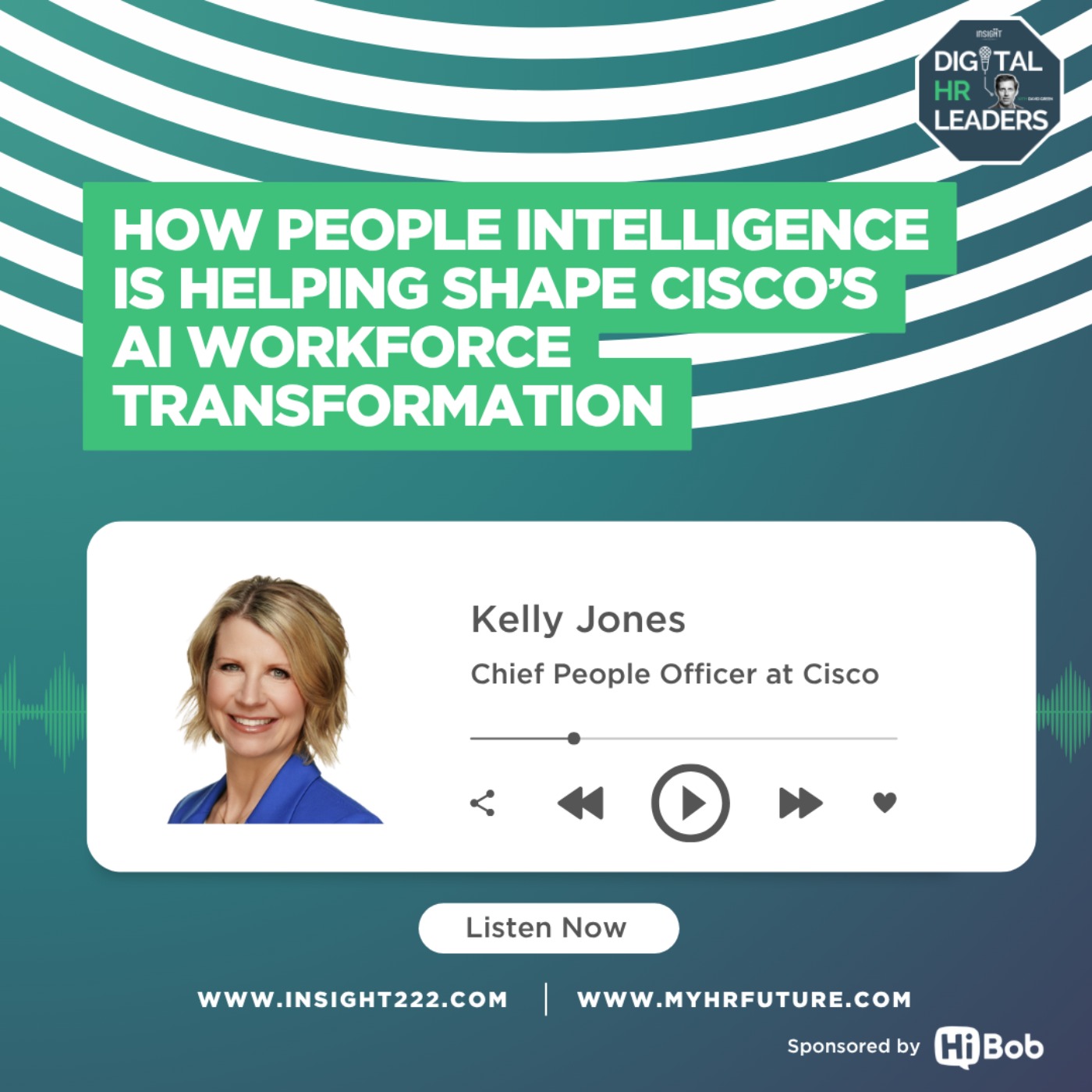 How People Intelligence Is Helping Shape Cisco’s AI Workforce TransformationDigital HR Leaders with David Green · on Agentic AI92 / 100
 Adamma Ihemeson on Building Autonomous AI Systems You Can TrustBack on T-R-A-C-K · on Agentic AI systems84 / 100
 Turning AI Agents Into Revenue Workflows With OutreachTech Talks Daily · on Agentic AI83 / 100
 Unscripted with Victor: Agentic AI, Fintech's Future, and the Death of the App EconomyVentures from The Valley · on Agentic AI83 / 100
 Demystifying AI Regulation, Innovation & the Future of Financial Services with Colin PayneDave and Dharm DeMystify · on Agentic AI82 / 100
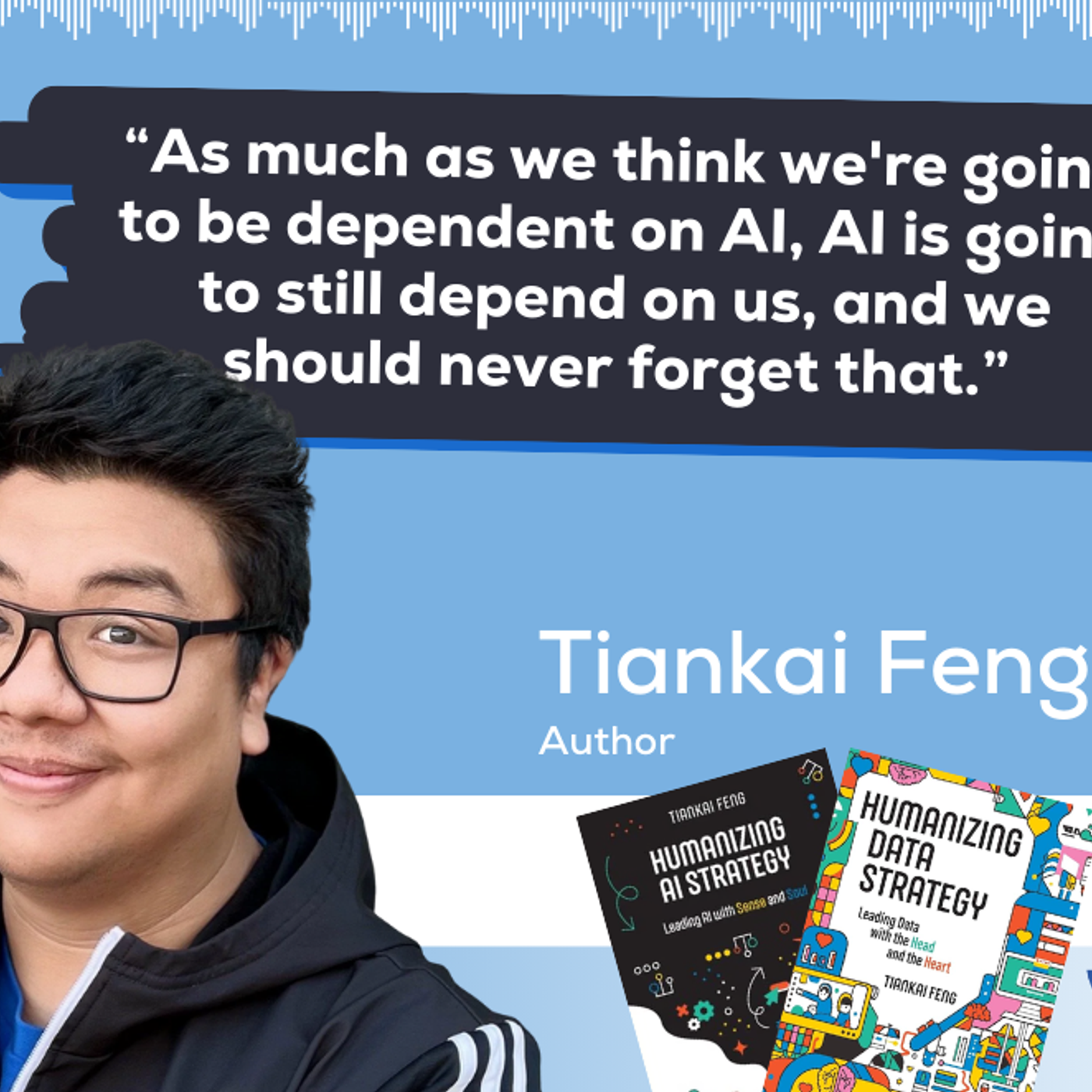 Tiankai Feng on why your AI strategy is failing (and what to do about it)62 / 100
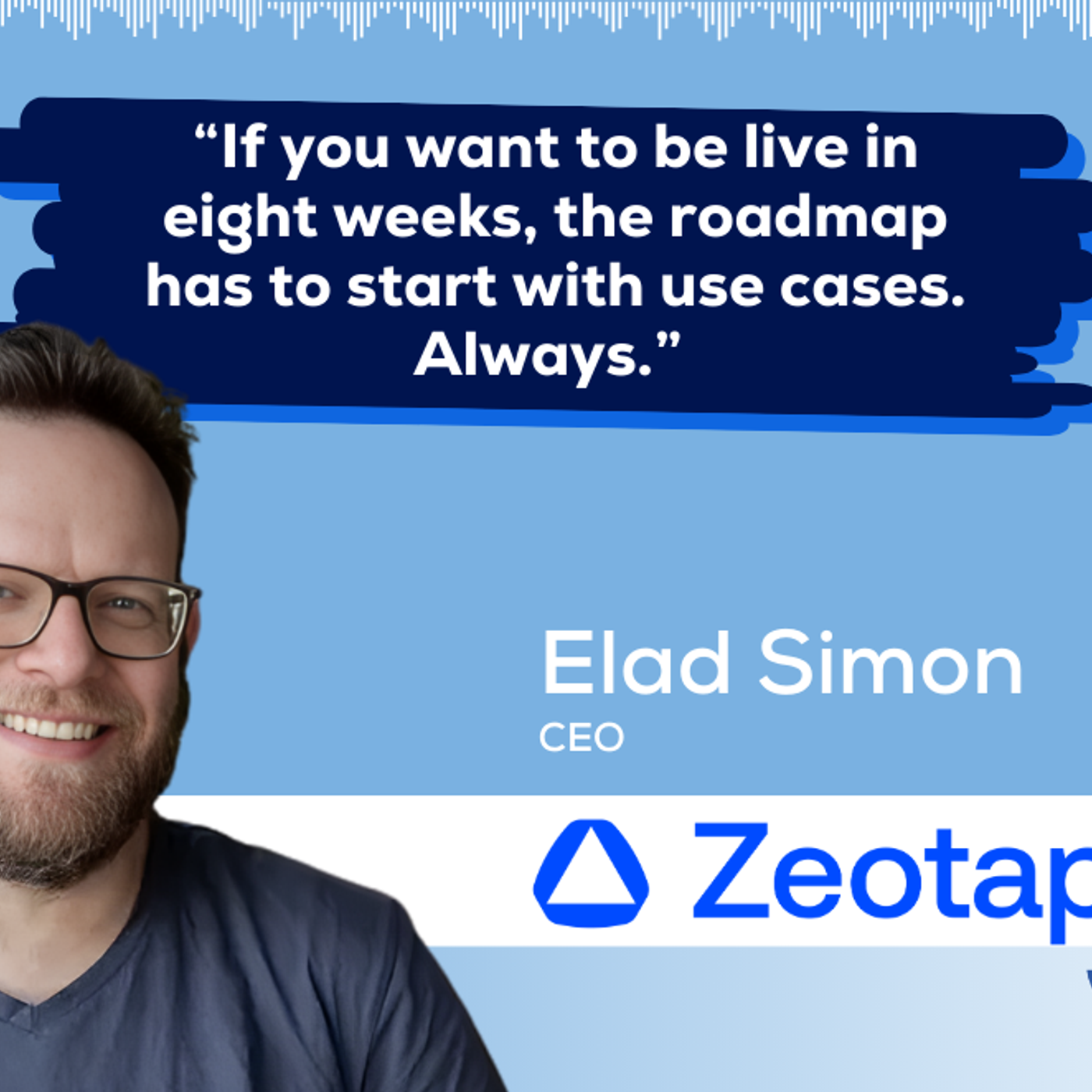 Why Europe wants its own CDPs - ZEOTAP CEO Elad Simon explains66 / 100
 Lessons from two Martech worlds: Asia and Europe through Teik Chua’s eyes77 / 100
 Governance is everything: Simo Ahava on making GTM a bridge, not a back door86 / 100
 Adtech, AI, and the illusion of speed with Infolinks CEO Bob Regular85 / 100