Consulting Matters · 2026-07-09 · 59 min
Key moments - from our scoring
Substance score
46 / 100
Five dimensions, 20 points each
Deborah Masak's career spans nearly three decades in corporate learning and development, progressing from sales enablement roles through instructional design, diversity and inclusion, and ultimately to leading a large international L&D team. When organizational growth paths stalled, she faced the classic mid-career crossroads: start her own business, but in what direction? Working with Bessie Jordan - whom she met at a ROI Institute workshop where she keynoted on her transformational leadership program - Deborah moved through what she calls "the messy middle," testing multiple business models. She considered leadership program creation and retail, revisited her earlier sales enablement expertise, and explored serving the Middle East market. But throughout, Jordan helped her recognize a pattern: Deborah kept reverting to earlier career versions she'd outgrown, rather than building on her most recent success - the measurement-embedded leadership development approach that had generated remarkable results and transformed her organizational positioning. The breakthrough came through introspection work like Jordan's "listen to your life" exercise, forcing Deborah to examine her own priorities rather than defaulting to what she'd historically done well. The episode speaks directly to professionals caught between corporate roles and entrepreneurship, exploring how evolved expertise often feels less marketable than past competencies - and why that instinct misleads you.
Focus on your most evolved and recent expertise rather than reverting to earlier skills you've outgrown. Deborah discovered her competitive advantage was in leadership development with embedded measurement methodology - her most recent work - not in sales enablement or generic program creation from earlier in her career.
Test different features by asking whether each option aligns with your passion and values, not just your capability. Work through exercises like "listen to your life" that help you examine what truly energizes you, separate from what you've historically done well.
Understanding how to prove training value through measurement-based methodology gives you business language to speak with C-suite executives and positions you strategically rather than as a transactional program vendor.
The ROI Institute provided both Deborah and Bessie with certification and a shared language around measurement and ROI, which fundamentally changed how they positioned themselves and their value propositions to clients.
Our reviewer’s read on each dimension, with quotes from the episode.
The episode offers moderate insight density with some useful frameworks around career transitions and business positioning (brand clarity, narrowing niche, three-tier offering model). However, much of the content consists of narrative storytelling about Deborah's personal journey and frequent meta-commentary about the coaching relationship itself. Novel, actionable claims are sparse; most advice (trust the process, listen to your life, focus on your ideal client) is familiar coaching orthodoxy. The repeated emphasis on 'process' and 'trust the process' becomes somewhat circular.
giving yourself a promotion. And it's all about that. It's all around, um, you know, still living my truth and my, My love of what I do. Um, but giving myself a promotion where there wasn't one, there was no path.
what would represent a promotion for you? Right now
The core insight - that mid-career professionals should position an independent business as a promotion rather than a downgrade - has merit, but the framing is not particularly novel. The 'messiness' of career transitions and the value of narrowing focus are well-trodden topics in coaching and business literature. The episode leans heavily on personal anecdotes and coaching methodology ('Mad Libs,' 'listen to your life') rather than fresh frameworks or counterintuitive arguments. The discussion of AI copy-writing limitations is somewhat contrarian but underdeveloped and tangential.
So you left sales enablement, you know, like, you, you left it and you went to leadership development. You know, you were in leadership development and you continued on. You added the measurement methodology. You really worked on leading. So you left your job as a vp, you know, of this L and D department, you know, so you're at this level, all of that kind of led you.
it's not just about delivering this. It's aligning things to the business. And if you can start thinking about yourself like, uh, I'm, um, this investment that delivers a return and what would that return look like?
Deborah Masak is a legitimate practitioner with 30 years in L&D and measurement expertise from the ROI Institute, bringing real operational experience. However, the guest caliber is somewhat undermined by the episode's framing: this is fundamentally a case study of the host's own client mid-transition, making it less of an independent expert interview and more of a testimonial. The guest has relevant credentials but is not a recognized leader in her field, and the episode does not position her as speaking from a position of proven success with multiple clients or ventures - rather, she's sharing a personal journey of organizational L&D that is still being translated into a new business model.
I've spent nearly 30 years in corporate America, um, and I've, I've really focused in on learning and development
I came across the ROI Institute and, um, decided to go down the path of certification there. And it really taught me the business language of how to communicate better with the C suite.
The episode lacks concrete metrics, financial data, and specific client outcomes. While Deborah mentions 'a fantastic promotion rate' for a leadership program and revenue growth ('from 400 million in a company to now a billion'), these are vague references without context or attribution. The business model discussion identifies three service offerings but provides no pricing, no case studies, no named client examples, and no measurable results from either service line. The partnership experiment between host and guest is described conceptually but lacks specifics on target outcomes or results.
we had a fantastic promotion rate and all of that, but it had to be supported by a process and a system.
we went from 400 million in a company to now a billion
The host asks reasonable framing questions ('what direction you want to take your business,' 'did you have any idea') but rarely pushes back or challenges claims. Most follow-ups are affirmations or invitations for Deborah to elaborate further on her experience. The conversation flows naturally but remains largely within a mutual admiration framework; there are few sharp probes, no productive disagreement, and limited skepticism. The host's long tangents about her own AI frustrations and consulting journey, while conversational, divert energy from deepening inquiry into Deborah's business model or assumptions. Questions are generally soft and supportive rather than investigative.
tell the audience of people who do not, do not know you, like what your background was and how did we get to this like in between point
But that's the past. Yeah, but that's the past.
Computed from the transcript - who did the talking, and the words that came up most.
Struggling to figure out which consulting or coaching business to start? If you're a mid-career professional with years of experience, strengths, and possibilities, it's not always obvious which direction is right. In this episode of Consulting Matters , my client Deborah Masak shares what she's learned about transforming decades of corporate leadership experience into a consulting and coaching business built around the highest level of expertise she earned throughout her career. Together, we explore why so many experienced professionals unintentionally build businesses around an earlier version of themselves instead of giving themselves the promotion they've earned. This conversation will show you how setting the intention to give yourself a promotion can fast-track your clarity and confidence, keep you from selling yourself short, and lead you to a business that reflects who you've become, not just what you've done. What you’ll discover in this episode: Why building your consulting or coaching business should feel like a promotion, not a return to work you've already outgrown.
Transcribed and scored by The B2B Podcast Index.
Speaker A: So are you a consultant or coach or an aspiring consultant or coach with a ton of experience? So many strengths and you cannot figure out what direction you want to take your business in? Well, find out how to get clarity in all of this mess on, uh, today's Consulting Matters episode. And welcome to the Consulting Matters podcast. I am your host, Bessie Jordan. And today I have a very special guest on the show, my client of the last, I don't know, four or five months, Deborah Massic. And she is in the exact place that you might be in. You know, so picture this like you're a mid career professional. You know, you're at that in between place where you want to do something different with your career and you want to start your own business, but you're not quite sure what it is. Like that's exactly where Deborah was. And so we're going to get into the whole conversation around how she was able to sift through all of the ways that her business could take and all the directions that she can go in to find clarity on the right business for her. So without further ado, welcome to the show, Deborah.
Speaker B: Thank you, Betsy. So glad to be here.
Speaker A: So we um, met what back in December I think it was. Um, so we have a great like meet cute story, I think. So we went to uh, uh, training for the ROI Institute. So the Return on Investment Institute. It's led by Jack and Patty Phillips. And so I was in the audience working on my certification on roi and there was Deborah as the keynote speaker or one of the speakers sharing her story. And we went out for dinner that night, totally hit it off. Um, when we were meeting, you know, like, did you have any idea like that all of this was going to unfold from that conversation?
Speaker B: Not a clue. I had no idea that that was going to happen.
Speaker A: So you were there because of your expertise in measurement. So before we get into like your whole business build journey, I think I just sort of planted to see it on our meet cute because I love our story. But um, tell the audience of people who do not, do not know you, like what your background was and how did we get to this like in between point, like how did you and come to this place where you're like, huh, huh, maybe I might want to start my own business.
Speaker B: Yeah, um, it's a great question because I think there's ah, likely a lot of people in, in my same shoes and I've spent nearly 30 years in corporate America, um, and I've, I've really focused in on learning and development, um, you know, my background is in public relations, mass communications. Um, I thought I would be on Madison Avenue creating wonderful ads for, like, Coca Cola and things of that nature. But I realized that just wasn't who I was. So I got into learning and development very early in my career. And, um, I started off in sales and revenue enablement. I got into sales. Um, I got immersed into the. The actual profession of selling. So I sold for a number of years as well. Um, and then I. Then I, uh, you know, was always in some type of an enablement role. And that roles, those roles really, um, really lit me up. I mean, it's what I love to do. I loved to see people grow. I love to help them. Um, but I was really stuck with how am I going to prove the value of what I do? And I did that early in my career. Like, what is it? So I have, I have read a ton of books. I have gone to a lot of workshops. I have, uh, done a lot of self, uh, education on the topic of proving the value. Um, then I came across the ROI Institute and, um, decided to go down the path of certification there. And it really taught me the business language of how to communicate better with the C suite. Um, and that was really my goal, was to get to the table so that I could have a better conversation around what we were doing, because I knew it was valuable. I mean, if you're an L and D professional. L and D is, is short for learning and development. If you're an L and D professional, you work really hard to develop, produce, deliver the best, uh, training, talent development, uh, programs out there. Um, and we're really good at it. We can write great course objectives, we can write wonderful learning objectives, and we get it all. So, um, I spent my career doing that as well as starting to now, you know, later, a little bit later in my career, into diving into how do I prove the value of what we are doing? Because it's great. It's great content. We get great results on our survey, you know, our surveys that we put out. But how do we, you know, how do we prove it and how do we have the language? So, um, when I realized that my growth in an organization was either to become an HR leader or do something different, I wanted to do something different because an HR leader was not my path. My path is learning and development. It's my passion, but I outgrew it. Uh, the organization I was in didn't have a, uh, path for me in that direction. And then I met Betsy. I met you. So it was perfect timing. It was. It was a serendipitous moment for me. And, um, you know, I didn't even. I mean, I knew that when we spoke and when I heard about what you did, I. That's when the alarm bell started going off in my own mind. Um, so that's. That's a little bit of my journey.
Speaker A: So before we get into the specifics of, like, what happened after that conversation, I do want to take a moment to acknowledge, um, Jack and Patty Phillips and the roles that they played in both of our careers. So Jack Phillips was actually on the show, um, I think it was last year. And I met jack back in 1999 when I was a brand new OD consultant. So that's organization development consulting consultant. And I had a similar type of experience. Like, I didn't go down, like, the measurement side. Like, it was more about. For me. Like, I had the. It was the idea, like, if. If I, If I did have to measure the results of what I did, I wanted to be positioned in order to deliver an roi. Like, Jack really changed my approach on how I land clients and even how I think about brand positioning, is positioning people and positioning myself in the most strategic way. So I do want to just, like, take a moment to acknowledge the significance of the ROI Institute in both of our careers and acknowledge the fact that this is the organization that brought us both together. So we had that shared language around that. And I think what's interesting of where we went from there. So when you gave a presentation, you talked about how you were able to create this amazing leadership program that was transformational and show all the value. But then when we started talking about your business, it was like, that was clear to me, like, oh, yeah, that's a great business model. But for some reason it was like you got into confusion. So let's pick back up on that, on the story at that stamp from that standpoint is when we first started working together, did you know you wanted to start your own business or was it like, I kind of know. I want. I know I don't want to go into hr. I want to do something else. I want a promotion. I don't know where it is. Like, where were you at at that particular moment?
Speaker B: Yeah, uh, such a great question because, um, I was always. And you helped me with this, with this terminology, but I was more of an intrapreneur, um, in corporate America, um, and building things from the ground up. Always. I've always. And I would bet that many L and D leaders who are Listening to this are in my same situation where we build things from scratch all the time with very limited resources. Um, so you have to be your own business owner. Right? I, um, used to always teach my teams how to be a CEO of your own company so that they run their department or their group to the best of their ability as a CEO. So I always taught that early in my career as well. But what, um, so I spent that amount of time. My father spoke to me when I was. It was probably before he passed, um, a couple decades before. Every so often he'd say, why don't you run your own company? Or why don't you be a CEO? Um, you know, so it was just. I always had that family support and I come from a long line of entrepreneurs. Um, my brother is a potter and very successful, um, and an artist. And my grandmother had a lumber yard back in the 50s, um, on her own. So she ran um, a lumberyard and did great with that. All of this was, has been in my lineage, I guess you could say. But my path was in corporate America. And so I built inside, um, you know, businesses, helping them with their KPIs and making sure that that business got started. So I was always, I was always touching various different areas of the business. So I, I started in sales as I, as I mentioned revenue enablement. And that's a very different language to speak then, um, then getting more into human, uh, resources, which is, is another language to speak, and then technical development. So helping the operations side of the business, uh, do well. And that's another different language to speak. And so Mike, when I, when I met you, it wasn't like, oh, I've never thought of that before, uh, in a sense, um, because I have always had it in the back of my mind. But my path was always, I was going to run, um, entire departments in the largest organizations in the world, um, and at clo, Chief Learning Officer level techniques, which is what I was doing. I'm connected with mentors and peers in that area as well. That was going to be my path. And then when my path seemed to not have a path, um, in an organization of growing and um, going into that direction, it wasn't a fit for even the company. They just didn't want that type of role. I started to think about what I could do differently. And then I met you. And when we started talking, you saw in me probably more of what I am truly than probably what I saw because I had all of these filters in my head. I'm a salesperson I'm in revenue. I do operational training. Um, I do diversity, equity and inclusion. I do, um, instructional design, center of excellence. Um, and I remember talking to you, I'm like, you know, well, I do this, I do this, I do this, I do this. Uh, I think there are a lot of people that have multiple hats and trying to hone in on, which I think is the sweet spot of what you do is your niche. Like, what is it that you bring to the table that will make you different? Because if you're everything to everybody, you can't be that. You can't do that for everybody. So that was my kind of, um, ah, aha moment and my struggle at the same time. I mean, it's. It's only been. If you look at it, it's only been four or five months, but for me, it feels like, you know, a lot more time went into figuring out what it is I wanted to do. Um, so, yeah, you.
Speaker A: You went through a very deep process of trying to figure out directionally which is, um. Which is great because I think when you come out on the other end, it was through the struggle, you got clarity. But in the middle of it, it was difficult. And I think what we did that I think wound up working for you is we tried on different features, so we kind of went down the path of like, okay, so I have this opportunity where I could develop, um, leaders in the Middle East. And it's like, okay, so let's play that thing out. You know, do you want. Is this what you want to be known for? Like, is this what you want to do? Or it's like, oh, I can create leadership programs. It's like, okay, so now let's look at your competitive set. And now you're going to go into organizations that are like, I'm going to create a program, then sell it. It's like, okay, so do you want to be in the retail business? And I'm like, let's try on that feature. Then we tried on the sales enablement one, because that was another way, like, okay, so do you want to spend all day long, like, serving salespeople? And then we kept going back. Like, we started at the L and D people and. And then we went to all of those, and then we kept coming back to it. But what was the benefit for you to at least, like, accept them, Accept the messy middle and to. To just almost like, try on, like, being in a. In a, um, like, I'm picturing Pretty Woman, but it wasn't quite as fun. You know, where you were in the dressing room and I was bringing up like, well, what about this outfit? And what about this outfit? It wasn't quite as fun where you were like, going, oh, look at this is so cute. You know, but it, you know, it was kind of like that, you know, like. Yeah, I feel like. I feel like you.
Speaker B: At least I'm not.
Speaker A: No, I feel like it was the other way around. I feel like it was like we were shopping and I was your friend, and you're like, what do you think of this outfit? It's like, okay, well, if you like it, you know, I think it's more like that.
Speaker B: Right, well. And I look good on you. Exactly. Well, that. That's the, that's the great part about you as well, is your. You care so much about, uh, coaches and consultants to get into their passion of what they truly are. So you did push me to think differently. You weren't, you weren't just. You're a kind person, but you weren't just a person that would say, sure, let's go down that path. I'll do whatever you want to do. You have a very different way of looking at, uh, you know, the path that we should be following. Um, and I had the luck, I guess you could say, or wherever that. Whatever you want to call that moment where you saw me speak. You saw the vision at the beginning already of how I delivered, because I think I had such a passion around it. I was speaking about the leadership program that we developed, um, in the organization. We had a fantastic promotion rate and all of that, but it had to be supported by a process and a system. And because we are builders, and I'm talking about L and D professionals, I had the, uh, the great opportunities in my career to be creative and to build how I wanted to build my team. So I created a learning impact team. At first time, I don't, I don't. I don't know if I've ever seen it in an organization, but I knew I wanted to build it and, And I built it. I built a team around how we're going to capture, um, training, um, content, uh, training, uh, data to deliver back to the organization. And we had a whole program around that, and I don't think I've ever seen anything like it. So I had the ability to, in, uh, all of my career to build like that and to grow in that way. But, yeah, the messy middle was very, very real. Um, but I kept telling myself what I used to always tell my teams. Trust the process. You have to trust the process. And when you go through something like this, your whole family's involved. Um, you're not just talking to me now. You're talking to my husband. You're talking to my family and my mom and my brother and my really close friends who check in on me all the time. Um, and even they said, trust the process. You just, you're gonna get there. Just trust it and go through it. So, um, I had great support, including from you.
Speaker A: I definitely sensed you trusting the process. Even when it got difficult, you didn't eject out. And one thing I do really appreciate about the way that you showed up in the work is that you weren't afraid of the vulnerability, because there is a lot of vulnerability in the uncertainty. And you just, you just stayed on the wrestling mat, you know, and. And you just stayed with it. And I do think that you're bringing up a really important part of the process that you had that other clients don't have. I do feel like I'm gifted with this unusual ability. Like, where I like. People kind of call me the brand whisperer at times. And it's like, because I do, I feel into it, like I know what the purpose is. But what I had with you that was different from other people is I did see you in action, so I got to see your strengths, like, manifesting. I also got a chance to hear your story in that speech. But then on top of that, it was a multi day workshop. So you were only there for like one day. I had a couple days afterwards with the rest of the participants, and I heard what they said about you and what. And how you impacted them. Like, there was a girl that came up and she's like, she was very explicit. She's like, I want to be like that girl with the purple hair. Because your hair was more purple at the time. I don't know if it's so purple. She's like, I want what she has. Like, I want to be that type of L D leader with that type of presence. So I got a chance to not only hear your story, watch your strengths in action, but I got to hear firsthand the reaction. So when we started working together, I'm like, well, this is obvious. Like, let's just go down this path. And also on top of that is I actually. You and I started with an energy exchange. I actually sought your help because I'm not an analyst. And so, like, trying to figure out, like, how I'm going to get my ROI certification. Like, this was not a natural thing. The principles work for me, the measurement itself, like, when it gets into the details, like, okay, then my brain is like not 100 there, but your brain was a hundred percent there. So, um, I also had that other side. And that I think is an unusual experience. So I feel like I had all these data points and I remember just in the things of, like, I don't understand, like, this is so obvious. Like, you're so good at this. It's such the logical next step in your career. Uh, but then you kept on trying on features of a previous version of your career that you, like you had progressed to this, this, this, this, this. Now you're at this point where you're giving a talk about your success. Feels like that's something there. But then you kept trying on things of what you did in the earlier stage. So what was it about leveraging what you most recently did and building your business around that. Like, what was the appeal to the earlier phases of you versus, like what was right here?
Speaker B: Yeah, the appeal to the earlier phases was I, um, was good at it, um, and I'm good at what I do today too. But, uh, my identity was really around. Um, a large part of my career was in revenue enablement and the sales side of it. And then the most recent aspect was on leadership and running a large team internationally. You know, multiple different countries. I think I had like nine different countries on my team. Um, and, and, and building that out. So I kept looking back to, well, if I'm going to focus in on one thing, what's the one thing that I'm really good at? And I, uh, I kept pulling out things that one I liked and then some things I didn't like. But I thought, well, I'm good at it, so I might as well just stick to that. You know, my whole mission in life, um, has always been I want to help, I want to help people. It's been in my, my DNA since I was 6 years old, you know, and, uh, you know, getting these little awards in grade school about, you know, how I'm always the best helper or things of that nature. But I really do love to see people thrive and grow and, and that's what I love to do. So where do I hang my hat if I have to choose one thing, which, by the way, I totally agreed with, um, what would that be? Well, Debbie, why don't you do, you know, I see you this well, but you didn't know me, Betsy, when I was Here, you know, 10 years ago, I was really good. I mean, we had a Great. You know, we went from 400 million in a company to now a billion. And we, um, you know, we created these awesome training programs. And by we, I mean maybe a couple of us, right? And that, that then grew into a larger team. But I was really great back then. You didn't know me back then. Betsy. You should, you should, uh, you should come back here with me and take a look, you know, but those are the types.
Speaker A: But that's the past. Yeah, but that's the past. I could tell you the same thing. So you know me as this brand messaging person, and if I said, you know what, I want to build my business on an organizational consulting, you know, I was really good at, at, at, you know, corralling a group of executives, you would be like, you know, you don't know me back then. And it's like, well, of course, because I've evolved past then. I'm not that girl anymore that was in my past. So it's like, well, why would we go backwards? Like, I think that that's an interesting phenomenon that a lot of people do is. So you left sales enablement, you know, like, you, you left it and you went to leadership development. You know, you were in leadership development and you continued on. You added the measurement methodology. You really worked on leading. So you left your job as a vp, you know, of this L and D department, you know, so you're at this level, all of that kind of led you. So, you know, kind of looking at the breadcrumbs, it's like, well, this led to this, led to this. Now you're here. And I think it's an interesting phenomenon that we have that sometimes with our business is we don't trust, like this new expertise that we built over here. We go back to this earlier, way earlier version that we outgrew and we think, well, maybe that one's more marketable rather than this latest one that really is creating all of these exponential results. Like, you shared in that, in that workshop, you shared all the amazing results and what the power of having the measurement embedded in L and D and how it transformed your positioning and how it affected the team. So you're sharing all of this, but somehow the sales enablement seems more profitable rather than this other thing that you just delivered all of these messages about. Yeah, and I think that's an interesting phenomenon that we do all the time is like, oh, well, what I did a thousand years ago, that's more marketable than what I want to do now. Like, and the person that I've Evolved into.
Speaker B: Yeah. And that sitting here talking about him like, well, no kidding, that makes more sense. Right? But it's the, um. It's the, The. It's. It's the process that you. That you take us through, but it's also the re. The. The real speak, uh, also that gets you, like what. What you just said. I'm having flashbacks of those conversations we had right back in, you know, months ago, probably in the early stages. Right. Um. Because you do. You did let us, you know, you let us think about, you know what. Because you do your, um, you know, listen to your life. Exercise. And I've never been through anything like that. Listen to your life. I listen to everybody else's life. I don't listen to my life. That's. That was the other aha. Thing for me is, um, I'm here to help other people. I'm here to help organizations get where they want to go. And, um, I don't really, you know, where I am in that. Yeah, sure, I'm thinking about how well do I perform, you know, maybe what the next role would look like. But it was always about impacting and benefiting the organization and the people in it. But when I had to look internally to myself, that was the struggle, which I was a little surprised about. That was the struggle. Like, oh, you're asking me what I think. Oh, you're asking me about my life. Oh, well, let me. Let me do this. Let me go in that direction. But, um, that was much slower for me.
Speaker A: Uh, that and I. And I'm coming to late realization of what I'm really asking someone to do. Like, I did not realize until I had a guest on the show who told me the research around sometimes the inner work and the reflection can feel like electric shocks to people. Like, it's so uncomfortable, so different. Like, I feel like now I'm going to be a lot more m. A lot more aware of the vulnerability of. What I'm really asking people to do is like, you do need to mine in inward. And the reason why we do it is I, like, I ask people to inventory all the different expertise that you've built so that you can decide consciously which one you want to build your business on. And some of it is like, we just need to unearth it and label it. And I do feel like that that's exactly what we did, is we got it all on the table. And then I think what really helped you move forward was when I asked you the question of, like, but what would represent a promotion for you? Right now. And then you're like, oh, uh, well, I don't want to do. I already did that. I don't want to. I don't want to do sales enablement anymore. I don't want to be a revenue girl. I don't want to do this. I don't want to do instructional design anymore. Like, I want to do something else. And that I feel like then everything clicked into place.
Speaker B: I agree. That is so, uh, it was so poignant, um, when that came out, you know, in, in our discussion is that, um, giving yourself a promotion. In fact, that's how I'm going to be introducing my, my website, um, that you helped me build to the, to the world is through a blog about how I gave myself a promotion. And it's all about that. It's all around, um, you know, still living my truth and my, My love of what I do. Um, but giving myself a promotion where there wasn't one, there was no path. And the path of a CLO is, um, is very limiting. There's not. There aren't a lot of positions out there. Some, some companies don't value it, you know, and that, you know, those. I've been in many organizations with that situation. They either don't value that type of A level because the L and D team is still sitting at a lower level. They've not gotten to the C suite to talk about the impact that they have, um, in the organization. So I think that's an important thing for me.
Speaker A: And I feel like it's like, uh, being more empowered to say, like, either for you in your career or the clients that you want to serve is that you can't wait for the invitation to come. You know, like the invitation to the role that you want and to the seat at the table that you're looking for isn't going to come automatically. It's up to you to take that promotion. You know, it's up to you to position yourself. I feel like that what I got out of the ROI training that I had very, very, very early on in my consulting career is what transformed me. Because Jack tiles about like, you know, it's not just about delivering this. It's aligning things to the business. And if you can start thinking about yourself like, uh, I'm, um, this investment that delivers a return and what would that return look like? Then it's like, okay, well, then you really need to have me at the table because it's worth it for you. It's not about me and my ego. It's Worth it for you. You need to be there if you are going to have the true impact that you're here to have. And I think that that's, I think that that was the clarity. It's like once you had that. And I think this is what breaks my heart all the time. Especially like I see l d VPs that might have gotten laid off or that they start their own business and then they start subcontracting for other consultants and now they're doing instructional design work that they haven't done in decades. Like that is like so heartbreaking. Is like, well, why would you settle for that? Like, why would you settle when you actually should be advising the people within the organization to achieve what you've achieved? But now you're going down here. I think that's why I do all the brand positioning I do now. Like, because it drives me batty. It drives me batty when people like, leave, leave. And I, and it drove me batting myself. Like I remember my early phases as a consultant. Like I, you know, I worked for Disney, you know, it's like the largest single site employer in the world with the most complex situations, the best executives. And I'm like working with these 200, 100 person organization and the whole idea of, you know, leaders should know, know their employees name and say hello to them every day was like, I'm like, are you serious? Like, like this is not a challenge, you know, and it's like I'm designing things. I'm like, why am I here? Like, you know, like, I need to get a promotion. I need to do what's next. And now I think that's a big reason why I pivoted my business from consulting to what I do now is I was like groundhog Day. And I think I want to save people from the Groundhog Day. And I, I feel like that resonated with you.
Speaker B: Yeah, absolutely did. And going back to what you mentioned about subcontracting, uh, with other, I think it's a pretty natural thing for people if they're not consciously thinking about it. Of scarcity. We as human beings enter into this space of scarcity, of, oh, I'm not going to be enough or I'm not going to, I'm not going to have enough clients or, you know, and instead of, like I said, trust the process, go down the right path the first time so you don't have to go back and rework a bunch of things. So that's what, um, you know, going back and looking at our process and the process I went through with you. Um, it's very structured and I love that because structure, because I'm all about structure and process so that teams can thrive. Because we all have to be on the same page. If we're not, um, you know, if we want to do any kind of greatness for the organization, um, we all have to be on the same page, which means we have to have a process to stick to. And, um, this helped me considerably, having that it's something to like, it was my life. Ah. Um, buoy, if you will, um, to think about the process and that there is a structure to it. So again, trust the process so that you don't have to go back and rework a bunch of stuff.
Speaker A: You know, I mean, you put stuff out there, like, you don't know how the market is going to respond, but at least you have something to work with. You know that there's something there. So the, uh, so let's move away from the. So once we got your brand positioning kind of situated and say, all right, here's the direction, then we went to work on your offers. And so I want to talk about, like, how we came up with the three main offers. So there's like, one offer you have is like one on one kind of trusted advisor for the L and D executive themselves and how they can elevate their team. You know, the second one is about what you're gonna. You could do to develop L and D, or you could probably help like, OD teams and HR teams and all the other teams to develop that strategic influence. And then the measurement studies. Like, those are the three. How did you come up with, like, those are the three? And why do you feel like framing up your offers was such a big part of your process? Like, and how that helped you, you know, just with the clarity and the confidence.
Speaker B: Well, um, certainly people need to. People need to understand, well, what. What am I getting for this? And so to me, um, and I love the. The number three. I've used it all in my. Throughout my career, you know, having three things so people can, you know, be able to choose from three things instead of 50 things. Um, it also focuses you when you start messaging out to the, to the world, which is what I'm going to be doing very soon. And I want to message around what my offers are so that, um, you know, it's clear and that I can actually give something to somebody. You know, I'm actually helping people. Even with the, uh, blogs, which you're also. You also have a process for how do you write great blogs? Um, and the blog is all about your ideal client. And I love that. It's not all about you, it's about how you are going to be helping them. And so, uh, having a pathway of three choices made sense. Now every one of them kind of support each other. So I feel like they're all intertwined. The ROI measurement component of it teaches you business acumen. And that business acumen helps you lead a team. It helps you, uh, it helps you get clarity on where you want to go with your own career, um, in a business focused way. So I think they're all sort of intertwined. But um, there are different paths you can go down. You know, um, I can do full ROI studies for a program, you know, for expensive programs that are out there that need to be, that need to prove, like, even for cities or the governments or uh, etc. They, you know, programs that you invest in, people are going to want to know, are they worth it? Are we spending our money in the right place? That's one component. Another component is, um, you know, working with teams to get a seat at the table, to elevate themselves so that they aren't brought in at the end saying, hey, we need AI training. Well, what's the governance around that? How did we come to the agreement that we were going to use AI? What is that all about? Do we have a governance model? Those are the types of questions we naturally ask, but it's always after the fact. We brought in after the fact. So, um, this whole component or that component of it is going to help get you to the table so that those conversations are being held with you and getting your opinions involved versus being the order taker, um, or um, a training vendor. And you don't want to be that, um, unless you do want to be that. And in that case, you know, more power to you. But, um, for, for in where I'm focused is to elevate the, the, the learning and development, um, profession to where it needs to be. You know, I mean we're a professional organization. We do professional things. We design, deliver. I mean the association of Talent Development is there like over 10,000. It's probably a lot more than that. Members solely on making great content and um, you know, proving the value of what you do. But um, those are the three areas that I think will be really helpful.
Speaker A: So I'm kind of like visualizing what you're saying here is sort of like when you write a paper, you have like your thesis and then, you know, here's the key supporting points. So what you have is like, your value proposition is I'm going to help you elevate your positioning in the organization to make learning and development a measurable driver of the business. So, measurable driver of the business. And we're going to make L and D and you as that practitioner. That's the promise. To get to that promise. One level is I'll work with you individually, you know, with you as an executive of L and D and help you position yourself and you personally get that seat at the table so you can bring your team along. The other part is I'll work with the teams and help you develop the skill sets perhaps around the measurement and other strategic influence skills. And then when needed, you know, I could come in and provide that external validation that your programs actually do deliver a measurable roi, you know, and all three of these together will create a department that will make learning and development, you know, a measurable driver of the business.
Speaker B: Absolutely, yes. Well said.
Speaker A: That's perfect. So, um, I can I just take a little, um, pause, since we're talking about your offers, and kind of just do a quick little plug on an offer that you and I are working on together from our shared, shared interest and passion in the ROI Institute. So we just want to put the bug out there. So one of the things that I'm passionate about is that strategic positioning and showing maybe that not that necessarily you have to measure everything, but that you could, but also having that premium brand image to show that, yes, this, you as a consultant and coach, deliver value. And I want to create a partnership with Deborah to actually go in and do the measurement because, you know, I know enough about the analytics to be dangerous, but not enough to, you know, really create that, you know, that confidence in the numbers. And so we're looking at a partnership. So we're looking for a couple guinea pigs out there where we want to take a look at your website to figure out, like, how to make sure that you are positioned as that ROI type of person, backed up with the numbers. And so Deborah will get you the numbers and I will look at your website to make sure everything's positioning so that you can say, you know, on your website that you are a measurable driver, like that you deliver results. Like that you, as a consultant and coach, actually deliver results. So we're just looking for a couple guinea pigs to try this whole idea out. We're experimenting. So if you are interested in something like this where you can get, you know, my branding and Deborah's Measurement mindset on how you are showing the value of what you do as a consultant or coach. Please reach out to me at. Ah, Betsy. Betsyjordan.com so enough of the little commercial that I threw in there. Let's get back to your story. Deborah, anything you want to add about our little experiment that we're throwing out there?
Speaker B: No, I don't think anything exists out there today like that. And I love that you, again, it's a testament to how you care about the uh, audiences that you serve. Um, and just being able to showcase the return that consultants and coaches give back to um, their own people as well, um, is wonderful. And to be able to put it on your website to say that from an roi, certified individuals, um, that you can prove you deliver great roi. If you're coaching individuals, maybe you have a government contract and the programs that you deliver are, um, are delivered for, for those programs. I mean all of those types of things. If you could put that on your website, how would that look to future clients of yours? And I love that. I mean it. That was brand. That was a really great um, you know, business lane I think is a really, uh, that'll really help a lot of people.
Speaker A: So again, if you are interested in being our guinea pig, because we have not done it yet and we are looking for a couple people who are interested in trying this out, see how this works, definitely reach out to me. Um, so let's get into your website part. So you've went through the process in terms of listening to your life and you identified through a lot of wrestling match work what direction you wanted to take your business. Then you worked on your brand positioning and messaging. So you got clarity on who your ideal client was. The problem you solve, you know, making L and D the measurable driver. You framed up your offers. Now it was time to work on your website. So talk to me about your experience and how that went. So we worked on a single page website with a blog for you. How's that going? How are you feeling about it?
Speaker B: Well, we all look at websites every day. Um, I look at them now in a very, very different light. Um, a single page website which I didn't really know existed. And um, I'm sure that it's not too earth shattering to many people, but for me it's the different look of it. Um, a single page website and being able to write it and design it in a way that draws in your client is extremely important. And it's a different way of writing. It's not a blog writing it's not a book writing, it's not a, you know, it's writing for, um, a website, um, which I know existed, but I. Going through the experience myself, um, and getting clarity, just sending it to people. So I, I had the ability to send the, the draft website to a few people that are in my network and they're like, oh, I get what you're doing now. So I think when you look at websites, because now I look at all different kinds of websites of, of coaches, consultants, even businesses. If it's not clear right at the beginning what you do and who you, who you serve and what you're there for, um, you should probably reconsider, uh, how you're, how you're coming across to everybody, um, and why maybe you even have a website. So if your website is convoluted, um, if it's not crystal clear, if it's too text heavy, um, there's, you know, it doesn't flow well, it doesn't look visually great, you're probably not doing a great job. And I know that because, um, the whole process of going through it, which you helped me. I mean, I was allowed to also write it, but it's a very different way of writing. And, um, you helped me with your. I like how you call it Mad Libs. So your process has a lot of Mad Libs. So you fill in the blanks. You know, uh, you have a, you have a way, a template that you use to fill in. And it's all very. There's a method to it, right? There's a, There's a process. Again, trust the process. And so, um, that. That was great. So now I have a single page, meaning you don't have to click off and go to another page and pull up another. Another page. That kind of distracts people. It's all just right there about what, what it is that I do. And, um, I loved that. And then you also helped me with. And I didn't even expect it. You said, okay, let's think about your photos. And, um. So, uh, so you and I were looking at how do we find a photographer for my photos? And you know, I'm having a little bit of anxiety because I'm like, oh, no, I gotta take photos. I haven't done photos. I mean, we all do selfies and put them on LinkedIn and we do the AI stuff, you know, to. But to actually have a photo shoot, that's not something that most people do all the time, but you have a whole process on, on the best way to Get a best way to do a photo shoot, but not only that, find the person to do the photo shoot. So, um, so you and I were on the phone or doing our. Doing our one on one like we're doing now. And you brought up photography and you said, well, you could come to Florida because I have a great photographer. Um, or we could look for somebody in Atlanta, which is where I am. Um, and you said, here, let me just look. And you searched. Took you probably 10 seconds. I don't know how long. Maybe it was longer, but it was fast. And you came across m. Uh, the photographer I chose. And you told me this is the right one. And it's how she. And I told her this. Your webpage brought me to you, actually. And she is one of the best photographers I have ever been with. And so it was really fantastic. And so, um, she did all my photos and you know, able to do a different poses and things like that. So anyway, it was great. Got my photos done and now I had not only a beautiful webpage with my coloring, so the, the color, uh, the colors that we chose too. You asked, like, what colors do you want? What the. What font do you like? Let's create a logo. There's. It's a whole thing. Like, you know, that's a whole thing in and of itself. Uh, but it was a great experience. And it really. That is probably when I started seeing myself differently. Like, okay, now I see what Betsy saw or now I see what others see in me. Um, when I was able to pull it all together in a website,
Speaker A: the photos was an important part for your process. Like, that was. That was like a moment of truth for you because. And also because the photos were so good. You know, in contrast, like, I have an. I have another client who was in the middle of this whole process and her photographer was not good. And it dramatically slowed her down, kept her confidence, like at a lower level. And I experienced that with myself. Like, I had two photo shoots for my last website launch. One I did not like the photos. The second one, I loved them. But once you have like the good photos, like, then it's like, this is what I want to project out to the world like this. And I saw that in you. Like, the confidence. And your photos were amazing. They rival my amazing. I didn't think anybody could rival my Orlando photographer, but they rival my Orlando photographer. You know, like, they're so good. And I saw your confidence change. And I think that there was something with the photos too. Even before the website is like this thing's real. This thing's getting real. I can, I can see this now coming in, you know, and all the
Speaker B: hard work you put in to get to that point. You know, uh, it, like I said before, you weren't just, oh, what do you want to focus on? Oh, you know what? I want to be in revenue enablement. Okay, great. We'll just start building your website now around that. We went through a process to get to where I was and it was a lot of work and it was a lot of self reflection and it's a big change from corporate America running somebody else's business to now running my own. It's a very different mindset. Um, but getting then down to the webpage and maybe I haven't realized it until now, that's when it clicked like, I'm on my way. Right. My husband always says that. He says you're on your way. That's his phrase to me all the time. But I'm on my way. And, uh, having that website, the clarity that it brings out, the photos. Um, Brenda Allison is the photographer here in Atlanta. If anyone has ever, uh, if anyone ever wants a photo shoot done, she's phenomenal. Um, they are. It just helped bring everything together. It was like the, the full circle tie, if you will.
Speaker A: Yeah. Like when you're, when the whole website is, is done, it was like whatever is like the invisible, like whatever it's in your head, like now it's manifested and it's like. And it's a quality manifestation. And now I can go forward with my business now I could launch it. And I think you mentioned like other people in your network, even people that you were talking to beforehand who were looking at earlier drafts of your copy. They now were like, oh, I get what you do.
Speaker B: Yep. I've had, I've had the. I, um, guess the, the ability to have a number of people in my network that you're highly skilled in certain areas of what they do, um, and just reaching out to them and testing some trying on things, as you say to them, um, when we finally got down to where I am today, they were like, yes, ah, that's exactly it. And by the way, who helped you do this? So a lot of people say, who helps you do that? That website. Wow, I'm, I'm envious of that website. Or I'm, you know, wow, that depth, it just brings it all together. But there's work to do before that, and I love that too.
Speaker A: Uh, you've said the word process, like trust the process, and you're probably right about that. From a mirroring standpoint. Back to me is I do have a process for everything, you know, and I think that, you know, I didn't come out of a marketing background or a branding background. Like, I came out of a consulting background. And so there's a lot of stuff. Like I. I kind of have an intuitive sense around brand positioning and messaging, but it's like I kind of had to learn the tools. And that's kind of how I learned things, is I deconstructed it, you know, so it's like, okay, so if this is a website and you have like these content blocks and you have this much real estate, you know, how many words do you do and then how do you use the words? So it's like I have to kind of keep things focused in order to do that. And there's certain rules of the road, you know, that it's like, okay, then we need to follow it. And I think that's what makes me crazy, like with AI is like, AI doesn't know those roles, you know. And you kind of gave one of the drafts of AI and I think I was like, gonna lose my mind. I'm like, what in the world? Like, like there. Because like, AI can't. AI doesn't know how to really empathetically. It can mimic human empathy, but can't really do human empathy. And great copy is. Is an empathetic connection. And I think that that's what, you know, like, it's a human. It's like it's making you manifest the humanity of you not just getting some words like it. I don't know if that makes sense.
Speaker B: It does. Because, um, well, that's another area, by the way. So AI is new for all of us in this world. Um, and I went down. I got certified in an AI course and learning about it. And one of the things that they, that they did was a, um, your personal clone. Like, all you have to do is fill out this document and that is your personal clone. That's your voice. That's. That's everything. So, you know, we all think. I know in that. In that session, and I know people are still doing that. It's really helpful, you know, to help. To help. Help AI get you a little bit closer to where you are. But you're right. Until I met you, it's like there's still not that emotional background of who you really are, because we haven't taught it that and they haven't. AI hasn't lived our experiences that way. So what really helped me, for those of you who use AI out there, speak into um, your phone or an iPad or your computer and just, you know, organically talk about what you want to talk about. And then that, that part, then that can help you with AI a little bit to soften the edges and fill in some of the blanks. But um, but actually putting your voice down first is the important part.
Speaker A: Actually it's a real important part for copy that converts is not your voice, it's your client's voice. You want to mirror what they're saying. And that's the problem is even if you have AI and it's like it's in my voice, the best copy is not in your voice, it's in your client's voice. It's, you know, the way the template is structured is you're uh, this person who wants this person. This person. It's what you want. It's the spotlight is on your client. And I think that's what AI has a hard time with. Like, I can't tell you how many generic brand positionings I see people say is, well, my brand is, I know how to see around the corners. Like, what the heck does that mean? You know, like awesome. You know, like that's not even a full strength. Like, I don't care that you, like a client doesn't care about that kind of stuff. Like they care about. Like, I will help you anticipate the issues that will stand in the way of your success, success so you could overcome them. Like that's what a client cares about. And, and I think that's where like there's a huge amount of limitations. Like there's some things like maybe in your website you could use AI for is maybe like give AI a template on value proposition. But you have to fill in the blank. Like, here's a template, here's the scaffolding, here's the content. Now brainstorm 100 different ways that I could see it and then you could pick out of them. Sometimes I might use that for copywriting is I might get a whole bunch of them. But I will always write over AI. Like I will never, ever, ever deliver a final product to a client. And I see now like websites that are AI and I see even the design of uh, of AI. Like oh my God, like anytime I see it, it's like you've diminished your credibility because who wants to invest hundreds of, you know, like, why would somebody want to invest top tier money in somebody who hasn't even written to their own Website. It would be like, yeah, I want to marry you, but somebody else wrote your proposal. You know, like, why would someone you know, like, you know, can you, like, you know, it's like picturing like, you know, you're at the altar and you're gonna marry somebody and they have AI vows. Like, that's like, to me, it's like the same kind of thing. Like, you need to write from your heart, you know, I would rather see messy copy that's written from the heart than any fake polished. You know, it's not this, but that, you know, like, like AI has all those crazy towels. Like, you know, like, I would rather see that. Yeah, yeah, yeah. Oh my God. And em um dashes. Like, like, seriously, what is your obsession, AI with those em um dashes? Like, there's so many other things, pieces of punctuation, you know, so then when you actually use an em um dash, because it makes sense now, it's like, ah, it looks like AI, I have to avoid it. Anywho, let's get back to the topic. I could, you know, everybody knows I have triggers on AI. I'm sure I'm getting like, I'm gonna get support baskets of fruit, like, oh, poor Betsy. You know, you're obviously traumatized by your relationship with AI, but let's get back to your business. So, um, we talked about a lot of different things as it relates to you finding clarity of all the different directions that your business could take and what it takes for you as a mid career professional to finally go all in and start your own business. And we talked about the specifics of your business. Is there anything else you want to tell me about finding clarity in this direction or what it means to you to be a consulting or coaching business owner now? And I'm just not asking you the right question, man.
Speaker B: We've covered so much from the beginning of, of my, uh, you know, being, uh, open minded, I think is if I could impart anything more than that, like trust the process, but also if you could just, you know, keep your heart open to what comes down the road. Um, and you know, it's all, I always say this, it's all small potatoes. I mean, it's not something that can't be undone or there's nothing out there that um, you know, can't be improved and it's not the end of the world, you know, so everything is small potatoes. Keep an open heart and an open mind to life in general, I think is also important. So, um, and that goes with the process. What if you go down the path and you realize, you know what? I just love corporate. Fine. That's your open heart and maybe you're best suited there. And that's great, right? Go down that path and that's what you want. But, uh, there's lots of space and opportunity for people to give back to others and we need that in this world, don't we? So give back to people. Be kind and, um, yeah, just keep an open heart. That's the only thing I would actually say because we've covered so much ground in the time we've been together.
Speaker A: So. Drumroll. What is your website address for the new launch of Deborah Massick Consulting and Coaching? What's your. Debra, what's your website?
Speaker B: Deborah Massick dot com. So it's D E B O R A H M M A s a
Speaker A: k.com and you can be found also on LinkedIn, I would imagine too.
Speaker B: I am on LinkedIn as well. And, um, I think I will, will continue to be on Instagram as well. But yep, LinkedIn and my website are the, the two areas you can find me most active.
Speaker A: Awesome. Well, I am so grateful to not just have you on the show, but really just for our relationship and the part that we've developed. Like, I, I feel like I was meant to go to that ROI training in part just to meet you and have this connection. And I know that you and I are going to be connected, you know, over the long term. Like, this is your launch, but this, you know, we, we're, you know, we're in this to win this together. Yeah, we're going to make a difference and, uh, you know, whether we're going to help people, you know, show the value of what they do in their businesses and make sure it's clear in their marketing or in something else. Like, we're, we are, we're in this for the life, you know. So thank you so much for just trusting me and trusting the process. Thank you so much for being on the show. For those who are listening, um, if you're in that messy middle and you want to find clarity in your direction, if you have a ton of strengths and experiences, tons of directions your business can take, and you want to figure out what the right one is, I'd love to work with you. If you are resonating with this conversation and you just really want to have the business that's right for you, like, I would love to be your guide. So definitely check out my website@www.betsyjordan.com and. And of course, you know, hit subscribe if you like the show, you know, so you don't miss future episodes. You know, let other people know about it, rate and review. It would be great. That would be awesome. And until next time, thank you all so much for listening.
Other episodes covering the same guests and topics, from across The B2B Podcast Index.
 Elevate 50: What's next for L&D? Donald TaylorLearning Uncut · on Instructional design81 / 100
 When Sam's Club "Connects" With Walmart, What Actually Connects?Retail Media Breakfast Club · on Measurement methodology80 / 100
 How B2B Marketers Use Sales Playbooks to Accelerate Enterprise DealsB2B Marketing with Fexingo · on Sales enablement79 / 100
 CELab - Ep 185 - The Four Faces of AI Resistance: Eve Kedar on Why Customer Education Should Own the AI RolloutCELab: The Customer Education Lab · on Sales enablement77 / 100
 Episode 77: Temitope Adelanwa - Making Sales Enablement Work as a Solo PMMThis is Product Marketing · on Sales enablement77 / 100
 Starting over in fintech with Safak Erkol, YapilyProduct Marketing Maestros: Tales from the Front Lines · on Sales enablement75 / 100
 How to Launch a Consulting or Coaching Business in 30 Days with Dorothy Mosby (Ep173)58 / 100
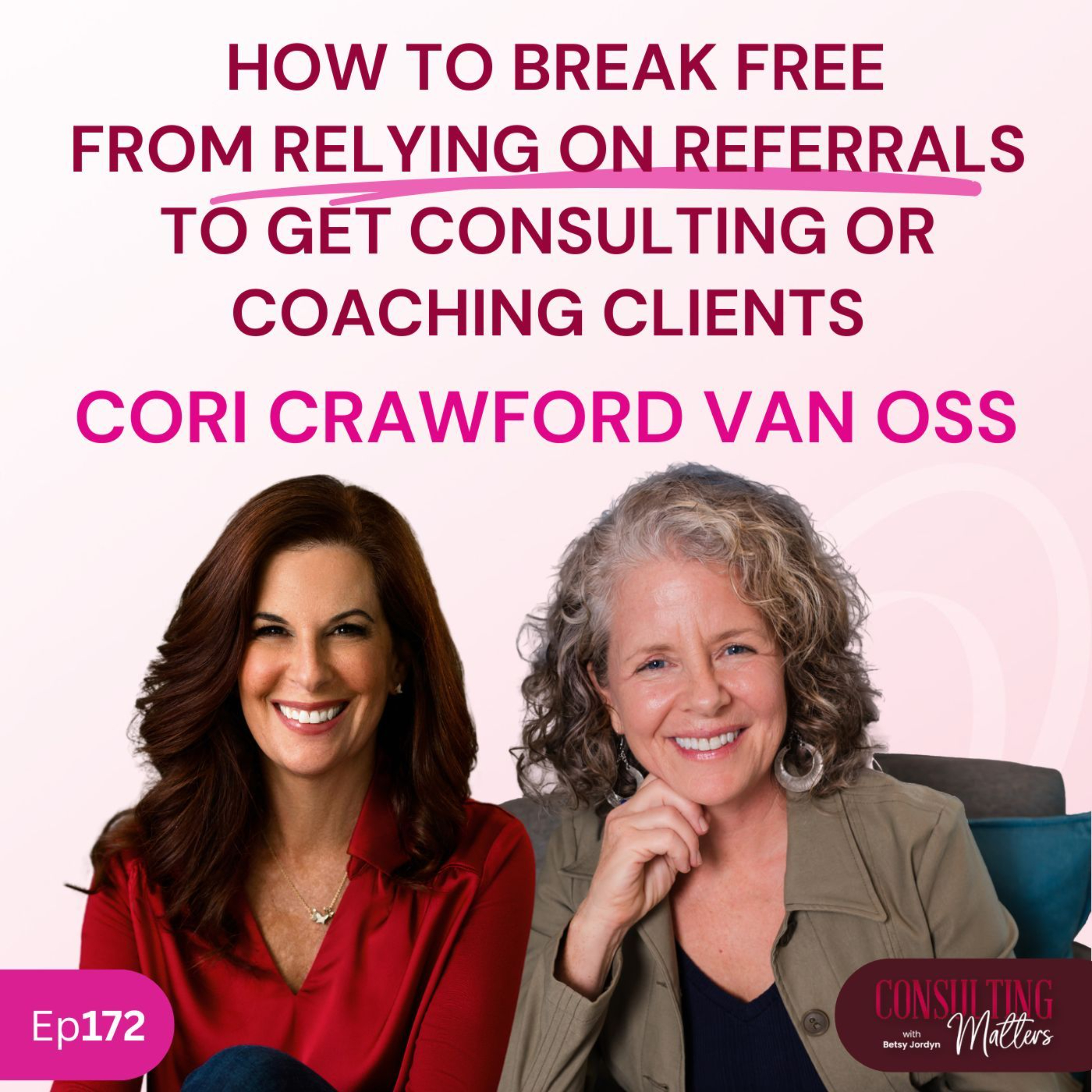 How to Break Free from Relying on Referrals to Get Consulting or Coaching Clients with Cori Crawford Van Oss (Ep172)75 / 100
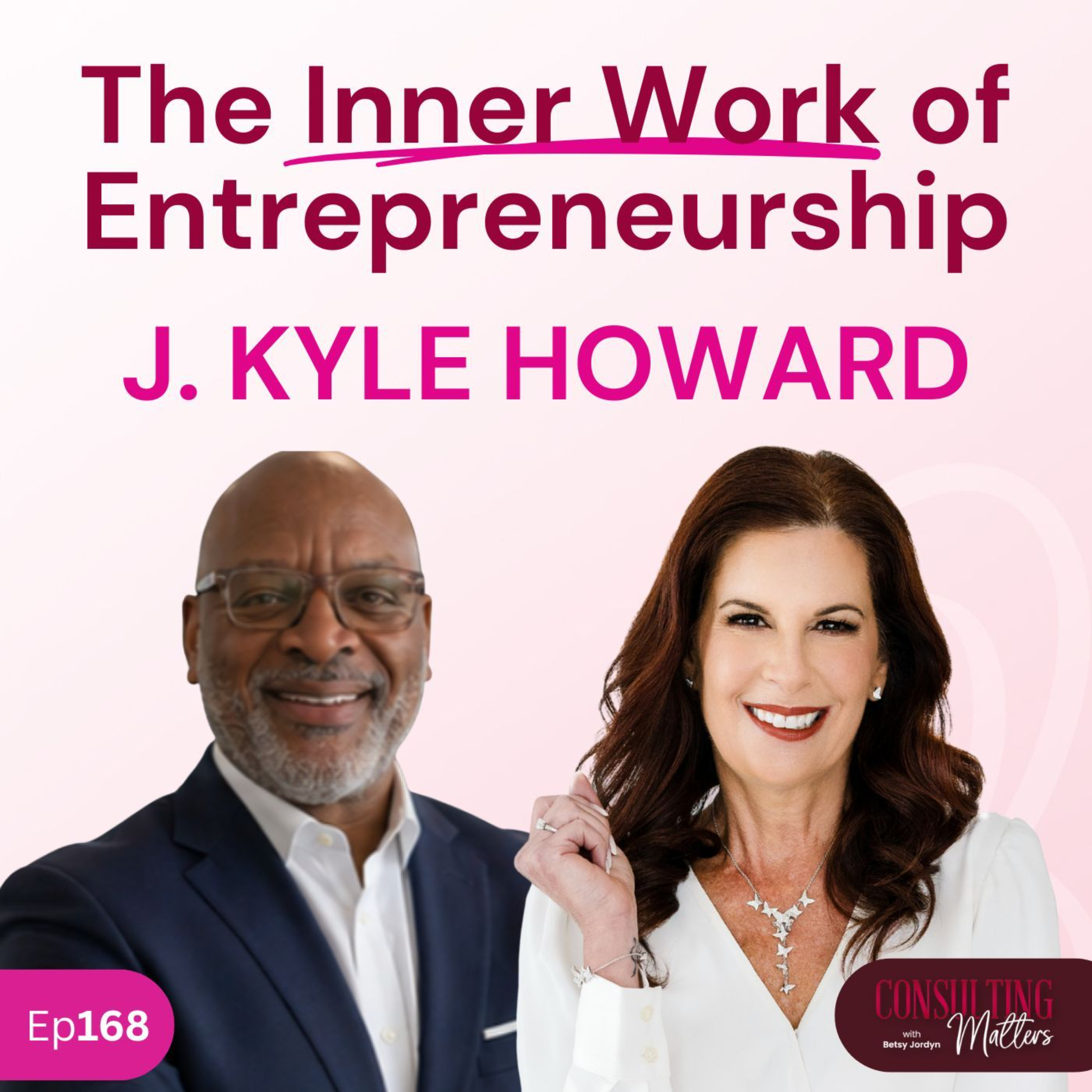 The Inner Work of Entrepreneurship with J. Kyle Howard (Ep168)55 / 100
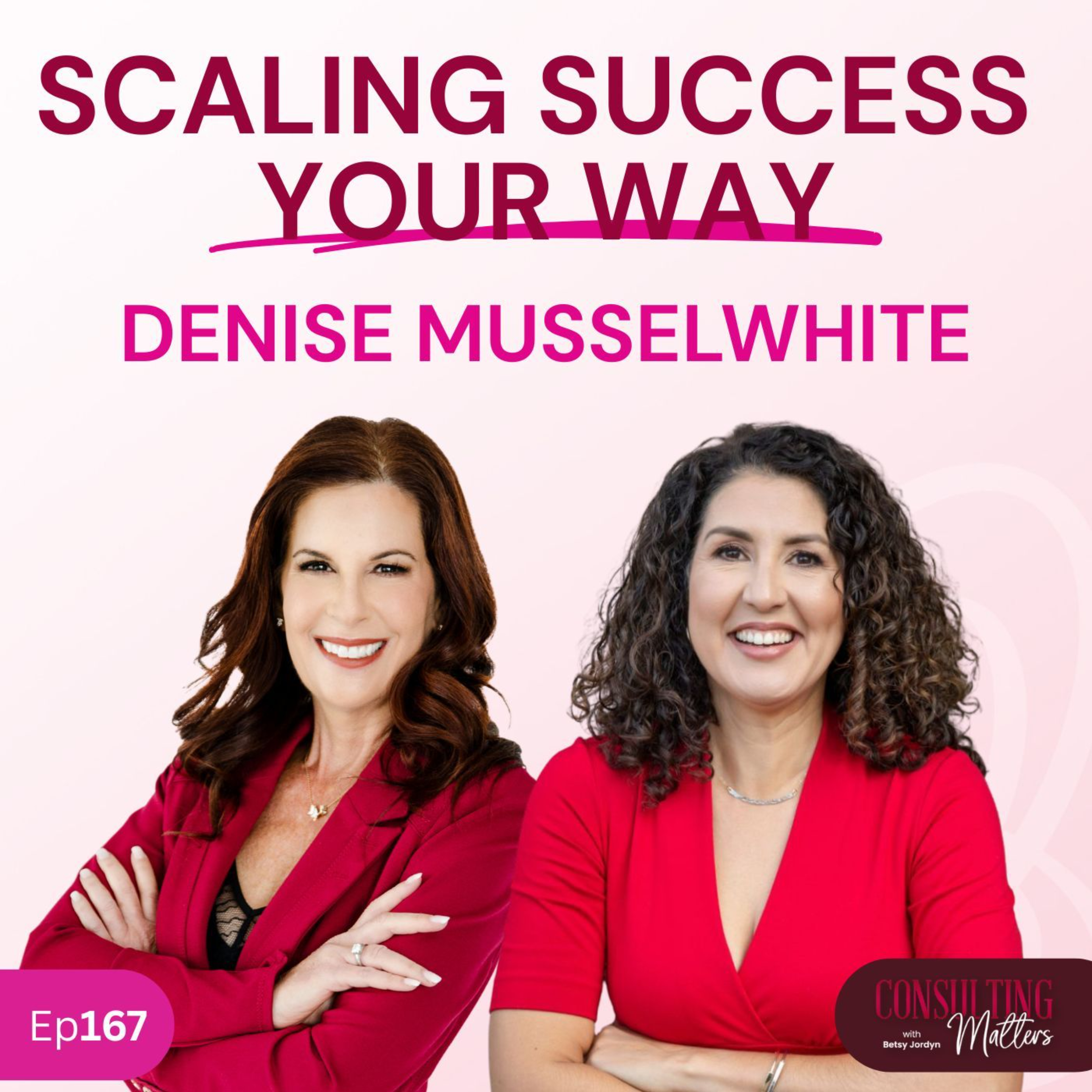 Scaling Success Your Way with Denise Musselwhite (Ep167)45 / 100
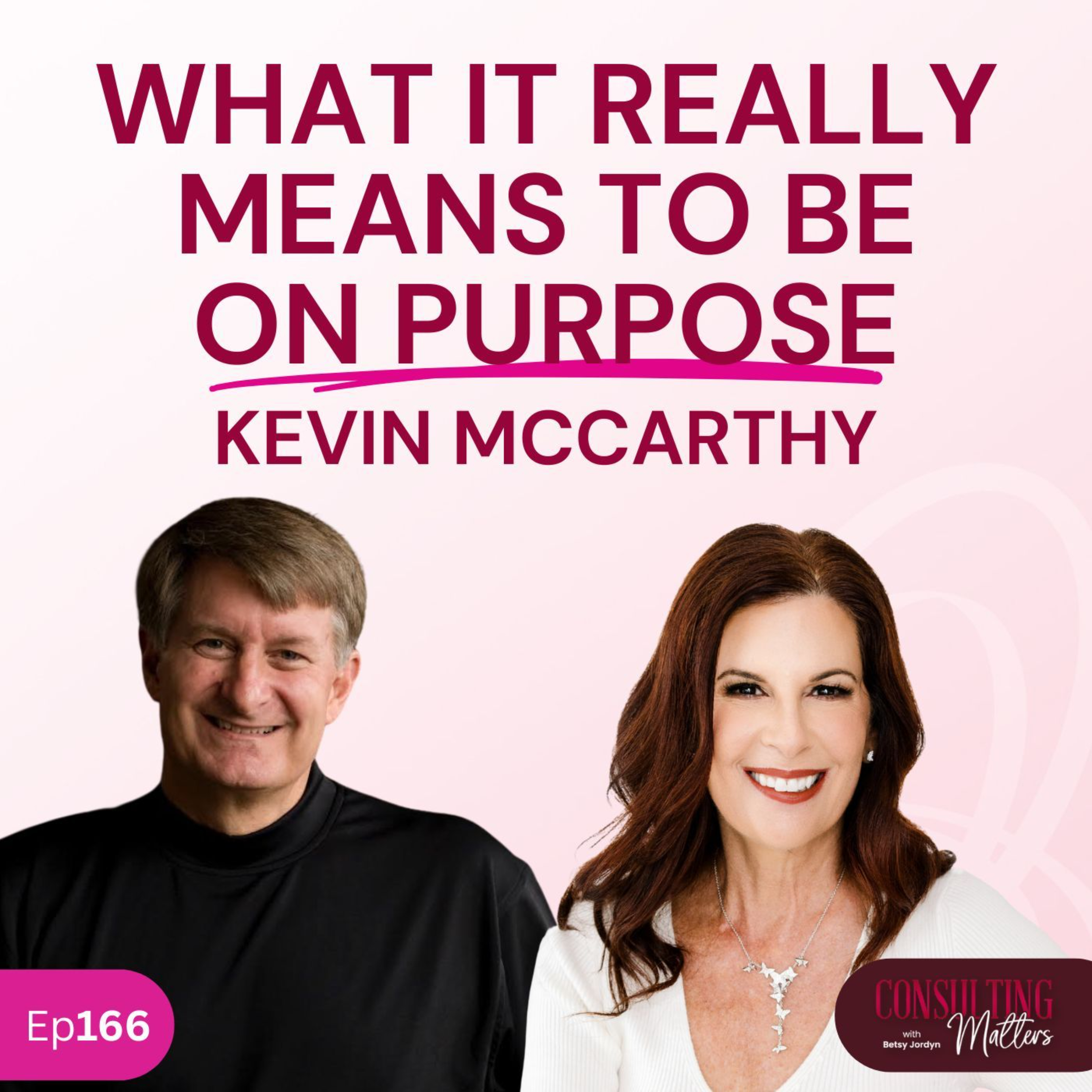 What it Really Means To Be On-Purpose with Kevin McCarthy (Ep166)58 / 100