
Bits about Books · 2026-06-18 · 1h 18m
Key moments - from our scoring
Substance score
42 / 100
Five dimensions, 20 points each
David Homan, founder of Orchestrated Connecting, and Noah Askin, a sociology professor at UC Irvine studying organizational networks, were introduced during COVID by a mutual acquaintance who recognized their aligned philosophies on relationship building. Homan had been practising community development through curated events with high-integrity connectors, while Askin was teaching MBA students about network structure and the mechanics of authentic connection. When Askin began interviewing members of Homan's community for academic research, they discovered striking patterns: 75-80% identified as introverts, nearly 100% had experienced early childhood challenges that shaped their empathy, and all practiced vulnerability and generosity as core relationship principles. Rather than publishing an academic paper, they pivoted to write Orchestrating Connections as a practical playbook for intentional community building. The book documents how 2,800 members across 35 countries and 189 cities operate within Homan's framework of action-oriented, natural givers who connect deeply and authentically. Their approach - grounded in sociology, organizational psychology, and real community practice - challenges conventional networking wisdom and became a USA Today bestseller within weeks of launch.
They were introduced during COVID by Jamil, a former MBA student of Askin's who recognized their aligned philosophies on relationships and networks. Initially, Askin wanted to interview members of Homan's community for academic research, but after discovering unexpected patterns about introverts, childhood trauma, and vulnerability in high-performing connectors, they pivoted from writing an academic paper to creating the book Orchestrating Connections.
Founded by David Homan, Orchestrated Connecting is a global community of 2,800 intentional connectors across 35 countries and 189 cities, built on the principle that members must be action-oriented, natural givers willing to help others. The community operates through curated events where vulnerability and generosity are practiced as core relational behaviors.
Approximately 75-80% of the highly effective connectors interviewed identified as introverts, contradicting the common assumption that networking and connection are driven by extroversion.
Nearly 95-100% of the connectors Askin interviewed reported experiencing some form of early childhood challenge or trauma (ranging from capital-T to lowercase-t), which prominently contributed to their development of empathy and generosity as adults.
David and Noah attribute the rapid bestseller status to the merits of the book itself and the strength of their established network of 2,800 intentional connectors who organically promoted it, rather than through traditional marketing spend.
Our reviewer’s read on each dimension, with quotes from the episode.
There are a handful of genuinely interesting empirical findings buried in the episode - the counterintuitive prevalence of introverts among elite connectors, the childhood-trauma correlation, and Dunbar's question-asking statistic - but the majority of runtime is consumed by origin-story recounting, writing-process discussion, and platitudinous restatements of generosity/vulnerability that add little new.
almost 75, 80% of the people I interviewed identify self identified as introverted
almost, uh, I think 95 or maybe even 100% of them identified some sort of early childhood challenge or trauma
The five-principle framework (curiosity, vulnerability, diversity, generosity, gratitude) is openly acknowledged to have 'a thousand different books and theses on each,' and the community-vs-network distinction is well-worn territory in B2B and leadership circles; the most original contribution - enforcing community membership through removal - gets brief treatment rather than systematic exploration.
The five principles being curiosity, vulnerability, diversity, generosity and gratitude. There's a thousand different books and theseses on each of these and we say all or nothing
networks at the end of the day are fundamentally interested in your success and trading on that. Right? That's what a network is about, a community. Yes, it's interested in your success, but it's also interested in support
Noah Askin is a credible organizational-network sociologist with peer-reviewed research and real MBA teaching experience, and David Homan is a genuine practitioner who built a 2,800-person community from scratch rather than theorizing about it; however, neither is a senior B2B operator (CMO, VP Sales, CFO) with large-scale commercial accountability, and the episode is primarily a book-promotional vehicle.
I'm trained as a sociologist and I study networks
those 40 people are now 2,800 people. The number keeps going up, Noah. Um, in 35 countries and 189 cities
The episode offers useful concrete data points - named researchers, community size statistics, self-reported interview percentages - but much of the book's actual prescriptive content is described in abstract terms, and claims about business outcomes (lifetime customer value, ROI of community) are asserted rather than evidenced.
almost, uh, I think 95 or maybe even 100% of them identified some sort of early childhood challenge or trauma
professor, uh, uh, at University of Chicago named Nicholas Epley, Nick Epley, who just put out a book called A Little More Social
The host asks one genuinely sharp structural question (why only 2,800 qualify when LinkedIn has a billion users) and keeps the conversation moving, but defaults repeatedly to biographical and process questions ('Would you like to talk about your editors?') with no meaningful pushback on the framework's assumptions or scalability claims.
why is it that when a billion people are ah, on a platform like LinkedIn, although you are in 189 countries and you have so many chapters, There are only 2,800 people who qualified
Would you like to talk a bit? Because you mentioned them and very little is spoken about. Editors of books. Would you like to talk a bit about what or how they contributed?
Computed from the transcript - who did the talking, and the words that came up most.
David Homan David Homan is the founder and CEO of Orchestrated Connecting, a global community of connectors; Orchestrated Opportunities, an impact-focused advisory firm; and SOAR CONNECT, a start-up focused on the strength of authentic relationships. He hosts a podcast called Orchestrated, focused on developing relationship value, is an active classical composer, and is a proud father of two. From middle-class beginnings as the son of a college professor father and nonprofit-focused mother, he has built a network reaching into the most private and incredible circles globally while maintaining a code of purposeful community building called Orchestrated Connecting. Noah Askin Noah Askin is an Associate Professor of Organisation and Management at UC-Irvine’s Paul Merage School of Business, where he also serves as Faculty Director of their Leadership Development Institute. An award-winning teacher and researcher, Noah is an expert in organisational dynamics, leadership, and culture, focusing on the informal networks of communication and connection that drive organisational life.
Transcribed and scored by The B2B Podcast Index.
Speaker A: Welcome to Bits About Books, the home for conversations with authors of breakthrough books on sales, marketing and business. I am your host, Shubhanjan Sarkar, founder of PitchLink, the next generation buyer seller engagement platform, where our mission is to make buying easy. Our guests today are, uh, David Homan and Noah Askin, co authors of the book Orchestrating Connections, how to build Purposeful community in a tribal world. This unique book stemmed from the work that both David and Noah were doing even before they met. But that's what we're going to speak about. Stay tuned.
Speaker B: What strikes you as the, uh, most amazing thing is when somebody is described to be like you or in parallel, that you could have met, but you never had. And so what I kept noticing repeatedly was this pattern, which was a systems failure in the way we looked at relationships and the way people met each other. Like a LinkedIn first degree, a Facebook friend. We know if you and I went to a party, that's not the way I would introduce you. Um, either of you. I would be like, I wouldn't be like, I wouldn't be like, yeah, I follow his podcast. I would be like, oh, well, that means he doesn't actually respect you. You just like his podcast.
Speaker A: David Homan is the founder and CEO of Orchestrated Connecting, a global community of connectors, Orchestrated Opportunities, an impact focused advisory firm, and Soar Connect, a, uh, startup focused on the strength of authentic relationships. He hosts a podcast called Orchestrated Focused on developing relationship value, is an active classical composer and a proud father of two. From middle class beginnings, as a son of a college professor father and non profit focused mother, he has built a network reaching into the most private and incredible circles globally while maintaining a code of purposeful community building called Orchestrated Connecting.
Speaker C: I'm trained as a sociologist and I study networks. And so the sociological study of networks is very interested in the structure of networks. Like what does the patterns of connections look like? And so I was teaching this around organizations and organizational management and leadership in an MBA program. And my students, who are these global, very successful, ambitious MBA students, approached me and they're like, this is all really interesting. It's really helpful to understand how the pattern of relationships and the structure of our networks matters. But we're in an MBA program and at the end of the day, those lines connecting the dots in that network are really interesting. How do those form? How do we get better at that?
Speaker A: Co author Noah Askin is an associate professor of Organization and management at UC Irvine's, uh, Paul Mirage School of Business, where he also serves as faculty director of The Leadership Development Institute. An award winning teacher and researcher, Noah is an expert in organizational dynamics, leadership and culture, focusing on the informal networks of communication and connection that drive organizational life. Noah's work has generated him recognition on the Thinkers50 Raider list and has been covered by various publications including the BBC, the Economist, Rolling Stone, npr, Vox, and Forbes. He lives with his family in Southern California. Now onto this thoughtful episode with Noah Askin and David Holman. David Noah, welcome to Bits About Books. I'm delighted to have you both, uh, on the show. And uh, and I think it's a very important book. I mean, you know that a lot of the conversations I have are around business books. So uh, this is not, I don't think this is a business book. I think it's far more important than that. Um, it's not fixing something tomorrow morning and stuff like that. Um, so, um, welcome. Ah, and I'm really looking forward to this conversation.
Speaker C: Yeah, thank you for having us.
Speaker B: Uh, we're looking forward.
Speaker A: Before we get started, how did you guys meet? I'm sure you had to do that before you decided you'll write a book together. So how was that? How did that come about?
Speaker C: David, you want to take your side first?
Speaker B: How about I say your side and you say mine? And we see how well we do. Like when two couples are like, a couple is being challenged to like, do they think of their.
Speaker A: Yeah.
Speaker B: So this is our like, so our bromance, right? Yeah.
Speaker C: Um, yeah. All right, go ahead.
Speaker B: I was uh, I, Noah was um, living in France with my family, teaching at Insead Paris. And I had this novel idea, quite smart if I must say. And um, on Fridays I was going to open up office hours and just let anyone, my students, anyone that could reach out, connect with me during COVID in these like 1520 minute sessions. And what I thought was a little nice idea, kept filling out and filling up because people kept wanting to um, connect and talk about my work and network theory and relationship science and this was everything I taught. But I was just meeting people from all walks of life. And then one of my former students, Jamil, said, you know, there's a guy who thinks like you. He's sort of a putz. His name is David. And uh, he um, you know, I think you should meet him. He has an amazing community I've been part of. And then, um, Jamil made an introduction.
Speaker C: So on my side, David, that is, uh, I learned somewhat the hard way that not enough people put value in relationships. And I moved to New York, uh, and was interested in Working in philanthropy. But I was also a classical composer and just found out pretty quickly that not everybody puts the time, effort and energy into relationship building and adding value to relationships that I felt was necessary. And because of this and because of some really critical introductions that helped me, uh, I decided that I needed to take it, um, upon myself to build a community where relationship value was actually valued. And so it started small with events in and around New York. And gradually, because of the way that I went about creating, uh, value, creating space, having boundaries around the community that I was building, more and more people became. Became interested because they could come in, they knew what was expected of them, they understood the rules of the game, and it allowed people to really engage meaningfully and help each other. And so I brought together this incredible collection of, uh, the best connected people that anybody could find. Everybody thought they were the best connector that they knew. And then they showed up in this room full of all of these other people who thought they were the best connectors that they knew. Uh, and this community just continued to grow and grow. And I had set out these. These values and these ways of engaging with each other that were just important to me. And that felt like it created a space where everybody could engage fully and freely. Uh, and it turns out there was a lot of social science behind that that I wasn't necessarily familiar with. And, uh, uh, one of the members of my community, a guy named Jamil, did his MBA at Insead and happened to take Noah's class and recognized that there was a kindred spirit and, uh, some interesting synergies, for lack of a better word, that could be had between the two of us. And he made an introduction and during COVID uh, and then, uh, we met via, uh, via Zoom, I believe. It was probably the first time. And, you know, the rest, as they say, is history.
Speaker A: Very interesting. Um, so you. You were doing. Practicing something, and one of the people, uh, David, who. Who was in that room or one of those rooms, uh, said that there is somebody teaching the, uh, the model or the. Or the, uh, theoretical part of this somewhere else, which. Whose class I have attended. And I think you guys should talk because you are practicing what he's teaching. Is that how it went?
Speaker B: That is exactly it. And you know, neither of us intended at that point to write a book together. This was simply an introduction.
Speaker A: Right?
Speaker B: And then I said to Noah, um, the thing I ask everyone when I first meet them, which is, what can I do to help? What do you need? And as he learned more about my network, he said Honestly, what would be really helpful, Could I interview some of your, your community, just to get a sense of what they're like. And that's of course, every academic's dream. So I think I know, correct me if I'm wrong. Like I wrote, 50 people, 50 people took the call. You talked to an insane amount of them. And you started to see these commonalities that were a little bit different than other groups because there seemed to be an elevation of certain characteristics which I unabashedly, to be clear, my rule, day one for my network was you have to be an action oriented, natural giver that I would leave my children with. And you had to be a connector. But besides that, you could be in any country, any net worth, any age, um, any type of focus. You just had to have that mindset. And Jamil knew, and thank God he was right, that Noah has that mindset too.
Speaker A: Very interesting. So, uh, before we move, I think it's a good point to talk about this mindset a bit because Noah, you are teaching about this, that this is the kind of mindset people should have if they value relationships. And I'm paraphrasing myself, it's not necessarily what you say, uh, what you would put it across as. David was practicing this because he was driven by whatever he had done in the past and whatever he was seeing around him was necessary. His work in philanthropy. I know your mother was in the social sector, so that must have influenced you as you grew up and so on.
Speaker B: Um,
Speaker A: what is this mindset? Actually?
Speaker C: So I can tell you from my perspective, and David probably has, probably will be able to put a finer point on it, I think. So I started teaching. I'm trained as a sociologist and I study networks. And so the sociological study of networks is very interested in the structure of networks. Like what does the patterns of connections look like. And so I was teaching this around organizations and organizational management and leadership in an mba, uh, program. And my students, who are these global, very successful, ambitious MBA students, approached me and they're like, this is all really interesting. It's really helpful to understand how the pattern of relationships and the structure of our networks matters. But like, we're in an MBA program and at the end of the day that those lines connecting the dots in that, in that network are really interesting. Like how do those form, how do we get better at that? And so I dug into some of the research on networking and there's some, there's not a ton. A lot of the what's written about networking is, is kind of Anecdote. Um, and, you know, that's fine, and it works for some people, but there's all kinds of books and articles and whatever about networking, and yet people don't seem to be getting a whole lot better at it. And so David identified this in his world, and that was part of what he was putting together. And for me, it was, okay, well, we understand how to pattern a network or what looks good and what's effective, but what actually drives those connections to happen. And so I developed basically an extra session that I taught and offered to the MBA students. And all of them, even if they weren't my students, showed up. It became something that I started to develop, and a lot of it was around vulnerability and generosity.
Speaker B: Right?
Speaker C: How is it that you can connect m more quickly, more deeply, and more authentically with people that you're encountering? And so I had some basic ideas around that. I knew some. There was some really, um, classic research studies around that and then around generosity. And this has been, you know, if you look through history, there's all sorts of historical evidence of the value of this, let alone social science. And so I started teaching. You know, there was other stuff as well, but a lot of it was around these kind of two ideas. But I didn't have the specifics of implementation in the way that David did once I fully met him. So the mindset, there's other principles as well, which we can get into, but I think those, from my perspective, were kind of the two critical drivers that I started teaching and that when I met David, started talking to people in his network, that mindset of, like, how can I help others? How can I connect deeply and quickly? Um, and not quickly in an instrumental way, but quickly in, like, adding depth at a rate that's often difficult to do. Those were the things that I was drawn to. And that speaks to part, but probably not all of the mindset from David's perspective.
Speaker A: So, David, uh, what was actually going on in your mind when you started this group? I mean, how did this group start where we are talking of generosity or. I, uh, mean, what is it that's triggering at this point when you don't know Noah, and you're doing this on your own and you're getting into these rooms and you're saying, hey, I would like to have a relationship with someone with whom I can leave my kids. What's really going on?
Speaker B: So anyone who spent part of their life making introductions, being the one introduced, what strikes you as the most amazing thing is when somebody is described to be like you, or in parallel, that you could have met, but you never had. And so what I kept noticing, repeatedly, was this pattern, which was a systems failure in the way we looked at relationships and the way people met each other. Like a LinkedIn first degree, a Facebook friend. We know if you and I went to a party, that's not the way I would introduce you. Um, either of you. I would be like. I wouldn't be like. I wouldn't be like, yeah, I follow his podcast. I would be like, oh, well, that means he doesn't actually respect you. You just like his podcast. What mattered was that I happened to be in this situation where I saw different people in different ecosystems. And I'd be like, you know, Noah, uh, you need to meet this guy Andrew. He'd be like, who's Andrew? Be like, he's you at Kellogg. And I would keep connecting people that just screamed parallel value system instinct. I honed that. And what I realized in my network was I was connecting to people who connected to all other people, but didn't connect themselves as much, meaning connector to connector, ecosystem to ecosystem. So I started with an event. That event was astounding because everyone walked into that room, the 40 people who came November 1, many years ago, and they all thought they were the most connected person in their space. And what they did, what I proved, was one high integrity event where everyone's useful and curious and wants to help you, which is extraordinarily rare at any event you go to. But more people met each other, just like themselves, not knowing them, and they'd be like, well, how'd you meet this person? I was like, my friend walks his dog a lot, and he met this woman who walks her dog. And that woman's sister I met at an event, and now she's meeting you here. It wasn't networking, per se. Like, I went to Harvard. You went to Harvard. Now let's do things. We went to Harvard. No offense, Noah. And my dad went to Harvard. So, great respect. Uh, I realized there was a different way was looking at the. The whole of life, looking at the patterns. And then I. As a connector or what people called me a meta connector, which I found pretentious, and I got rid of it right away. They called me a connector of connectors, which I also just. If you have to define what connecting is to people, then defining connector of connectors was horrible. But as a musician and as a composer, when I said I orchestrate connections, everyone went, oh, well, that sounds really beautiful. I do that. How did we do that? Together. And I said, I have a community. It's called Orchestrated Connecting. Come to the first event. Those 40 people are now 2,800 people. The number keeps going up, Noah. Um, in 35 countries and 189 cities.
Speaker A: Very interesting. So let's dial back. I mean, I know I went a bit off course because I thought this grounding was necessary.
Speaker B: Uh, no one knows the course we're heading on, so we'll just all consider this interviewing and listening is the right course. Assuming everyone's still with us.
Speaker A: By the way, your point that you would not introduce someone as I listened to his podcast and that being not very nice. Um, uh, Joe Rogan is not going to like that line at all.
Speaker C: I can tell you this.
Speaker B: Okay, uh, you know what? If Joe Rogan decides to pick a fight with us, we will be grateful because then everyone will buy our book of curiosity as to why he doesn't like us.
Speaker C: Exactly.
Speaker B: And then I will go to all of my friends whose companies he has supported and made amazing in a lot of the way he's looked at sleep and biohacking, all these other things that we thought he was antithetical to focus on and be grateful. You made that comment.
Speaker A: Yeah, well. Well, let's hope something good happens out of that comment. Okay, um, coming back. So Jameel introduces you both in some form, and you meet up and this is Covid era. Um, what happens next?
Speaker C: So, uh, as David mentioned, I initially was interested from an purely academic perspective and wanting to interview both to collect information that I could teach to these MBA students, but also thinking about, all right, getting inside the minds of people who are. Who think about connecting as like a regular activity, as part, you know, sort of maybe the main thing that they do, even though that's not their primary job, it's sort of a critical piece of who they are. And started conducting these interviews with the goal of. With another colleague of mine, actually, back at insead, um, who had done some research on networking with the goal of potentially generating an academic paper. And after interviewing probably the first 10, 12 people, you know, I check in with David, just here's who we've talked to. Thank you for this introduction. So, you know, this is. And at some point, I don't remember exactly at which point started noticing some of these patterns that David alluded to, um, as far as it being a little unusual. So, like, I'll pull this a salient example is that actually two. First, you know, we're talking to all these. These incredibly well connected people who really think about This a lot. And my. My bias, I guess, was that everybody would be extroverted. And almost like 75, 80% of the people I interviewed identify self identified as introverted. And I was like, m. That's not usually the way you think about it. Like, explain this to me. And they would kind of walk me through their thought process and how they engaged and why this was the long game. And connecting deeply with one or two people is so much more meaningful. And so there was that aspect to it. And then the other one that came out and both of these are mentioned in the book is that almost, uh, I think 95 or maybe even 100% of them identified some sort of early childhood challenge or trauma. I mean some of them were capital T trauma, but most of them lowercase T trauma that, uh, really I think it was probably prominently involved in the development of their empathy, uh, and generosity as. And they very. And many of them unprompted. It wasn't like I was like, did you have any sort of childhood thing that led you to this? No, these were like raised. And so as, ah, David and I were talking about this, like, this is really interesting what's going on that's driving introverts to be incredibly well connected and to be so active socially when that's not necessarily the working model that we think of. And then what's happening as far as why this collection of people is being generated by something that's gone on early childhood. They wouldn't ever normally expect to connect to, uh, a way of engaging in your social world as an adult. And so as the more he. And that was. Those were two of a couple of examples. But I think as we started talking about that, you know, and David had expressed an interest in wanting to cut what was going on in his community and what he was building. And I think we morphed out, remember the specific pivot. But at some point it was, all right, let's forget about an academic paper for now and let's focus on what. What would a book look like? Um, and then, yeah, so that was probably like late 2020, early 2021 when that transition happened.
Speaker B: But two things happened within for Noah in this to sort of prove this. One was, you can't be a bystander in my community. You're in it or you're not. So people he connected with, he continued to connect with. He came to some of virtual events. He started to see the. The balance of my community, which is entirely based on action. And that's the only basis of any rewarding of honor and generosity and gratitude comes from somebody saying, what do you need? Than somebody actually doing it, Usually in the form, in a relationship, community of an intro. The other thing that we did. And no, I. And again, I don't remember the exact sequence, but Noah actually started to either, uh, test some of the questions that I was doing in my events in a group of what would you would define as not the most ideal audience to see if vulnerability and then empathy comes out quickly. And it was like a light switch turned on. And the profile of the people for which you would not think would, uh, gravitate to this were aching for it. I saw this. I did a keynote about a month and a half ago at a big Ex NFL players event. So I had all these guys that made me feel even shorter and smaller than I am. And I had them sitting around a table talking with the type of questions I asked around legacy, around impact, around adversity in their childhood. And the room was silent with people talking in hushed tones. Biggest men on the planet, about how when they lost their father when they were young, they wanted to do something in his image, even though he couldn't see them, how they were bullied as a child, and that made them want to defend everyone else. And suddenly everyone's like, you should be a linebacker. And they thought, I protect. Okay. Then they won a Super Bowl. And so what we tested was why starting with vulnerability and creating curiosity makes it work. And it started to work for Noah, for himself and his teaching. And so when Noah said, like, something, I think that was, like, the most amazing quote that means nothing when I quote it, but I'm gonna say it anyway, which is. I think there's. There's a there there in what you're doing. And I went really well, I've always wanted to write a book on this. He goes, I've not wanted to write a book. And I said, come on. And then the way he dragged his feet into finishing his parts of the chapters proved maybe he didn't. But the end result and the right timing ended up, I think, partly because of our network and what we wrote, and partly because of luck, it becoming a USA Today bestseller within a few weeks of launching, which is not easy to do and not something that we invested in to. To do anything but earn through the merits of the book and the network we've built. But we all crave something that is a deeper sense of belonging and purpose. And our book is a playbook of how somebody could do that intentionally for themselves and those around them. Told through the stories of everyone who has lived that. And then we helped codify it into something that can be seen as a different way.
Speaker A: So when you decided that, okay, let's abandon the academic paper and, uh, let's think of a book instead, um, what happened after that? How did you actually. How did you actually go about figuring out, okay, It'll be a three part book and it'll have 12 or 14 chapters. And so you get the drift of what I'm trying to understand.
Speaker B: I was a wild horse preacher, so to speak, even though I'm Jewish, throwing out all this crap, thinking it would stick. And Noah was like, well, this works. And there are four principles. I was like, actually, I think there's five. Like, one is curiosity. And he's like, well, I'm not sure that curiosity. And then we're like, okay, we have five principles. We. We started to take what was my. And I. And I'm a really easy public speaker and especially live. But when you put it into book form, like, dear God, no, I had to write me this note that said, I'd like to sort of adapt your tone from being a preachy asshole to being somebody who actually makes sense that people want to follow. Do you mind if I redo everything in our combined language? And I was like, okay, do it. And so the outline was derived by both of us with me throwing spaghetti on a wall and Noah going, these things line up. And then the back and forth was how to make it a cohesive argument where if you started with the first part of the book, you would focus on the reason why I did this, the story of orchestrated the self work. Um, or if you started on the second part of the book, you dug into the principles that either as a leader or as a person, you need to do. Or the third part, which was the practical how to. Here's how to do this, here's how to look out for. You could technically argue you could read these in any order because they were supposed to stand on their own, but inform each other. And when we realized we had a, uh, three part, not equal in length, but equal in intention. The practical, the principles and the passionate narrative. Why, that's how we derived our story. With the one exception being. And when Noah and I record our audiobook, this is where AI has told us I'm the one that gets to say this. We start off with this vision and a dream of somebody in a concert hall, but they don't know anyone in the audience. And then we end with the dream, which Noah, you Argued we should cut over and over again. And I said no, and you acquiesced to me. People actually liked it in the end. And Noah agreed in the end. We needed to rephrase it. But it starts with this vision and a dream that you walk into a concert hall. You're not understanding why you're there. You don't know how to play piano because you've never done the work. To know the work that's needed, to have the audience that's waiting for you cheer with you. And if you read the entire book, in whatever sequence, you end up with that same vision. You walk out on the stage, it doesn't matter how you're dressed, it doesn't matter what you play, because you brought everyone there alongside you. Um, and we wanted to keep that tone throughout the entire book. So people felt like this was something worth going on a journey with us for. Because you could read it. You could read it again and again. To do the work is incredibly hard. I'm not perfect at it, neither is Noah. And we wrote a book on this. It is a journey to be a generous person. At times when your life is challenging, it is hard to be endlessly curious about somebody who's not curious about you. It's really hard when you're vulnerable and people aren't vulnerable back and feel like maybe you overshared or it wasn't appropriate. And it's really easy to stay in a mindset. You should talk to people who look like you and talk like you. It makes us all feel better. Um, but none of those things have the same result. And that's why when we came to our structure, which was your original question, we wanted a structure that just got you in, and it was okay if you shifted back. It didn't have to be sequential, but the sections stood on their own.
Speaker A: Very interesting. I have a quick sort of question here that. Did you. Through your. Through the process of writing the book and the research that you did or looked at, did you find any correlation of anybody being more like the person that you are talking about here? Was there any relation of religion to this, or is it something purely one's own making? Uh, I mean, I'm not trying to make it controversial. Just did you see any data which supports that. That a person is more religious? He'll be more, uh, uh, you know, more generous for us, for instance.
Speaker C: Um, so I. I mean, I believe that there is some social science around that, but that's not. Not specifically. And I think in particular, you know, we talk about diversity as being the sort of fundamental principle. And so, you know, and as David described earlier, like, it doesn't matter where you went to school, what your station in life is, your socioeconomic status, any other of the either more visible or more hidden, um, metrics of difference. I mean, religiosity is one of them, I think. There was nothing in particular. These are. There's a. People whose values are aligned. Where those values come from, Whether it's a childhood experience, whether it's a religious upbringing, whether it's, uh, a parent doesn't really matter. So that wasn't something that. That factored in, uh, to the book.
Speaker A: I mean, I would like to believe that because I think it is more about humanity and not about any of the specifics. And, uh, this I say not because I have studied this, but it's because that's what, to me seems logical. Yeah, you'll be good because you're human.
Speaker B: Yeah. There's a spirituality of people that I believe sits above all different religions. Because I have met friends, Hindus, Buddhists, Jains, Catholics, Episcopalians, Jews, Muslims, who I would count as my closest friends because of how they act, whether it's in accordance with their faith or not. And I have met people, I even saw some at a conference last week. Sexist, chauvinist pigs who are devout Muslims, Hindus, Jews, Catholics, atheists, it doesn't matter. A religion is an identity. It doesn't necessarily conform to a way of acting.
Speaker A: Yeah.
Speaker B: And a way of acting. Uh. Uh, My belief in community and my spirituality as people is that there is a way to be generous and kind and curious with all people. Doesn't mean you have to be their friend. I'm certainly not friends with everyone I meet, whether they're a sexist pig or not. Um, but there's a way of being. To ask people to elevate themselves. And when you do that. Right. That's what we argue transcends quote, unquote, tribalism, which can be religion. And focus is instead of the power of an intentional and purposeful community.
Speaker A: Right. Um, yeah. There's so much to talk about on that one. So, um, we were like, you discussed, and you had this broad structure and you got this writing. What was your writing process like? How long did it take you to put this whole thing together? I mean, I'm assuming, like David said, he worked on the first part, and I'm assuming that Noah worked on the second part. This is what I picked up just now. If I'm wrong. I mean, please.
Speaker C: It was a bit in. Yeah, it Was a bit fits and starts for a while at the get go. Uh, I had a six week old when Covid started. Um, and so that was challenging. Uh, and in the middle of writing the book also moved from France to California, um, which wasn't helpful for writing process. Um, and so it fits and starts is back and forth. We would outline, then we'd add some meat to the bones and it would go back and forth and David would write a bunch of stuff and then send it over to me and I would edit it and then I would add where social science fit in. And then we'd leave kind of space holders for stories to go in. Um, and David would speak to people and write those stories in. Um, and then I'd say probably at the end. There was probably an 18 month ish kind uh, of head down push at the end that ran into. So the book came out in August of 25. I think we were done in like February ish of 25. So I think probably like summer, summer of 23 really through early 2025 was kind of the, the big push, if you will. And it was a lot of back and forth. I mean we would really just take turns going back and forth. David would have sort of a stance on things or things he had previously written that he would take and he would fill out and I'd send. And he'd send them to me and again add social science. I would try to clean it up so it wasn't m. Didn't seem like you were being yelled at by the page. Um, uh, and then David would take it and be like, you've softened this a little too much and let's add some of it. And so that was, you know, it was. David had a lot of patience for my timing and I think I had some patience for David's tone. And together that worked. Um, it was actually one of the least, um, dramatic uh, writing partnerships. And I write with co authors all the time and it always works well. But like, you know, I feel. And maybe David had a different experience. I don't know he can share or not. Um, but it was actually a very mellow, pretty easy back and forth. It was hard work getting the book done. Um, but it was not a contentious um, co authorship by any stretch.
Speaker B: I feel the same. So, uh, the one thing I'd add like Noah added a lot more in the back and forth than adding academic, rigorous science and changing tone. Like Noah both pulled out an attitude. What he'd experienced for what I had not yet experienced to give Me a different way to look at what I was living, running in my community, which he was an active part of, but wasn't actually focusing on. And the curiosity chapter, which has become one of our biggest talking points, was one that we came to not certain it would be its own full chapter. It ended up being the opening chapter of our principles, which is a bold statement when it wasn't a founding principle. But when Noah started to discuss with me the social science, the rigor and all this, and then we realized so much of how our curiosity was innate with each other, we came up with a better chapter together that would not have formed from either one of us separately. And that chapter replaced the chapter that I wanted in the book, which was the prior chapter five, which was me as a music geek and a composer talking about the timbre and the tone and the art of conversation. And like everyone who was a classical musician and a public speaker would have consumed this, which meant four people would have read it. And we ditched it, which, um, was the right choice. So part of that process was actually agreeing with our first editor. We had two incredible editors as part of this process, but agreeing that something that I really loved had to go. And once we let it go, everything sort of settled in a lot better.
Speaker A: Right. And the stories that you mentioned, ah, are they all from the group that you, uh, the, the community that you run, David, or is it, is it also from other studies and, and, and research?
Speaker B: About 85% or so. Like you know, we tell a story about Stevie Wonder, which is a great opening to a chapter. Neither of us have met Stevie Wonder or know. We just know how it happened and we gave it as an analogy. But you know, like interviewing friends of mine in this community, myself or Noah, uh, like we told their stories, these were not name brand people we could have gone after. We wanted the most powerful story behind a community builder. Because part of the push for my community and the reason we wrote the book, relationship value. Community builders are often overlooked, even though in our opinion they are some of the most powerful people on the planet.
Speaker A: It's time for a short break. Stay with us after the break.
Speaker B: Community is a buzzword, right? Just to talk to the business mindsets. The same way Noah doesn't go into his work as a corporate advisor and say we're all going to find synergy. People have been using those words. They've not looked at the actions that mean that those words actually mean something. I believe most people run events wrong. I believe most people have the most asked backwards view of what community means. I believe that most people who say it don't actually do it. They do it for themselves.
Speaker D: You are listening to a business podcast network. Original podcasting is the fastest growing content marketing opportunity which is untapped. We can help you craft your audio strategy and help leverage the wide reach and easy streaming capability that, uh, the smartphone penetration provides. It is easy. It is powerful and personal. Talk to us to find out how podcasting can help you build your brand and reach out to your targets like never before. Write to us@bpnizcast.in that is BPN. Dot IN business podcast network podcasts end to end.
Speaker A: Welcome back. I'm Subhanjan Sarkar, your host for Bits About Books and founder of PitchLink, the buyer seller engagement platform. Let's dive right back into the episode where we left it. Would you like to talk a bit? Because you mentioned them and very little is spoken about. Editors of books. Would you like to talk a bit about what or how they contributed?
Speaker B: Yeah. Um, Noah, do you want to talk about our first editor or talk about our second? Or you want to just talk universally?
Speaker C: Um, either way, uh, I think it was interesting because we kind of went out the way that this was published. It was a lot of heavy lifting on our part. Um, and so part of that entailed working with editors, finding editors. And so David had some experience, um, working with, either through network
Speaker B: recommendations, uh,
Speaker C: or actually I think through your dad and dad's publishing. Um, and so, you know, I think that, uh, I guess I'll just speak in more general tones. I think it was really helpful because David and I, even though we're coming from very different backgrounds, have kind of a shared perspective. Right. And so it was, yes, we sent this out for friendly reviewers to have a look at it too, but they came later on in the process. And so it was really helpful as we were going through chapters to send it out to our editors who were able to take it and understand what we're trying to get at and, and provide the kind of, um, sort of hold, uh, up a mirror to what was going on and make sure that it, like, it made sense and it communicated effectively. And, and so there was a. We leaned pretty heavily on, on both of them. Um, yeah, I don't know, David, you want to add more context to that?
Speaker B: I don't know. You know, um, my late father has published 29 books. And so I grew up with a guy who kept as a beast just publishing them. And he wouldn't have ever been published if not for his first Book being edited by my mother because he couldn't get published. It was his source of pride that he was an academic and he was published, Princeton, Harvard trained. And my dad said only when my mom cut the crap out of that book did it make sense. So I'd always grown up in a family where the editor was the person who made sure that what you said mattered to other people than you. And so we gave them, both Zoya and Kim, we gave them directives, and we basically said, do not assume we know what we're talking about. Do you not assume that the flow of this is the flow? Do not assume that the stories we're telling make sense to somebody else. They might make sense to us. And please challenge us on every assumption we're making, because some might be counter the way people look at relationship building.
Speaker A: Right.
Speaker B: And what we got back from the first edit was this really profoundly restructured narrative of what made sense. And we got back from the second was this incredibly tight perspective of how it can build and build and build and have contained moments. And that we. When the story would come, you were waiting for a story when you needed more of the data and the science that was there. But it wasn't overwhelming because some of this just gets people to think differently about what is a power we don't view as a power.
Speaker A: Right.
Speaker B: And both editors were really, really incredible at being merciless to tell us what really should have stayed in.
Speaker C: Merciless but kind. And I think what's interesting is we never intended, at least from the get go, to have two editors. Um, and so Zora, our first editor, actually had a child when the book we were sort of nearing and we thought, okay, you know, this feels like a lot for her. And I think she was willing to do it. And we said, you know what? It's okay. And David had, again, through somebody who had edited his father's book, Kim, uh, Kim Yarwood. Uh, we reached out to her and she. What's great about. I mean, Zora was wonderful and really was the first and primary big editor for a lot of it. But Kim actually works with a lot of, um, business writing, uh, and business academic writing and so kind of knows the world a little bit and so could understood the social science. And so she was. She kind of helped carry it across the finish line with us. But it. And it worked out really well that we had these two very different editors, uh, at different phases of the process, um, who each added quite a lot to added in value, subtracted in text. Um, uh, but yeah, that was incidental but really actually helpful in the long run.
Speaker A: Wonderful. Let's move to the book and the first question I have to both of you, I mean community has been a buzzword in the business world uh, for a while now. Right. You uh, know many marketing gurus have said that community is the last mote that brands have. Um, I do some work around owned media that's also about, in a way talks about how to build your community and so on. Um, I think your thought is quite different from that. It's not at all about making this another business tool, so to say, which is essentially finally becomes a transactional exercise. Right. And I think this is something which is for higher purpose, if I may put it, uh, that way. Um, so my question to you is, and this I've been thinking of since we connected, why is it that when a billion people are ah, on a platform like LinkedIn, although you are in 189 countries and you have so many chapters, There are only 2,800 people who qualified or sort of self identified and chose to be part of your circle and work.
Speaker B: Uh, I'll take that because you referenced my community. Yeah, I didn't think there'd be 2800. I assume there'd be about 100. The movement I maybe have launched hits the best of the best technology. Aren't we all still lonely despite being connected? Um, massive connectivity to show who we are, who got you your next job, who got you your book, who got your kid to the hospital to see the doctor. Everything is relationship driven. Technology has not maintained trust, which is what my startup that I'm building focuses on. And our book focuses on the fact community is a buzzword. Right. Just to talk to the business mindsets the same way, you know, Noah doesn't go into his work as a corporate advisor and say we're all going to find synergy together. People have been using those words, they've not looked at the actions that mean that those words actually mean something. Yeah, I believe most people run events wrong. I believe most people have the most asked backwards view of what community means. I believe that most people who say it don't actually do it, they do it for themselves. Uh, in my community, everyone walks into an event that they've never been into and they go, this feels completely different than anything else I've ever been to. And I go, please take it. It's called chapter 11 in our book. Do it. It cannot just be me and a handful of people that make everyone feel accepted when they walk in A room and everyone's curious and cares and everyone follow until they realize my standard for this group is you better be curious, you better not be self interested, you better do what you say you're going to do or you're no longer in this network. And I enforce it. Which community builders think often risk is not relevant to it. And if transaction happens in my network, you have to honor it. If you don't honor it right, which is by gratitude at the very least, you're out. And few people just decide that they should take a line and draw it in the sand and stay on it. And I start with that and I say these are the principles. This is how it is. Do you want to elevate and be this way or not? And everything we argue in this book, the principles being curiosity, vulnerability, diversity, generosity and gratitude. There's a thousand different books and theseses on each of these and we say all or nothing. Uh, and when we talk about my community and the reason I'm sure there's way more, I just don't have the capacity to meet more than I have every single year with the scale of what I'm doing. And I believe that most of us are capable of being in communities like this are able to create a higher way of being to able. But we sit in a world of apathy where no one's drawn a line in the sand that you either stand for something or if you don't stand for it, you're actually standing against it. And what I have been spouting out for years and now do thanks to our book a lot more keynote's about is that this is the only way that when you need somebody your first goal is to build trust and to help them, period.
Speaker A: Yeah.
Speaker B: And people think I'm courageous to go up on a stage and talk about the fact my father passed away five months ago M and everyone who thinks I'm courageous isn't the one who talks to me after the ones who talk to me go, I lost my mom three years ago. Things still don't feel the same. And then I learn who they are strategically. Which every business book would tell you is where you need to get to. I don't care. I'd rather build the whole person and figure out the resonance, so to speak and then act rather than act and hope I made the right choice with somebody.
Speaker A: I agree. I mean I think our whole societal move towards instant gratification which is what a uh, lot of what we see, whether you're talking of social media, you're Talking of our behavior, I mean all of it is about instant gratification. And that's exactly the opposite of what you just said. I mean it is not about what I can get right now, but what I can build towards. Right. And most people have, we uh, are not, we are not teaching our children that anymore. When a very small child is being curious, you are giving her a phone and say, okay, why don't you play on this one while I can do what I wanted to do do. But I'm not going into that. I mean that's a different discussion. We can do it another day.
Speaker C: I just want to add, so you Talked about like LinkedIn or other social media has, you know, billions of people and it's like those are about you, the individual joining, right? Those are very self interested, self focused. Yes, it's voyeurism ultimately, but it's self interested and self focused and you know, community and the way that we define it and the way we describe it and when we talk about building it, it starts with you from a clear understanding of what drives you, where you want, who you want to be in conversation with. Uh, but that's not the end of it. It's then how can that be an opportunity for acting in service of or in conjunction with others, building those relationships. And so organically, I mean if that it's going to grow or if it's going to grow, it's going to grow organically. And that obviously takes a lot more time. If you hold up something that says broadcast yourself, it's all about you and whatever, lots of people want to jump to do that.
Speaker A: Great.
Speaker C: Now I've created a platform and this one's about work and that one's about your day to day life and this one's about social and this one's video. Fine, we can get, build those and people will jump in. But then it doesn't go, doesn't very often go beyond that. Now there are pockets of those where people have taken the time to cultivate more of a community and they use that platform as a means of doing so. But the platform in and of itself and the sheer number of people joining has little to do with being action oriented, being generous, um, starting with a sense of your own purpose and using that as uh, the signal that draws people into conversation, that then everybody collectively can help each other. That's where community is. One of the things we mentioned in the book, uh, is what I like about a definition that my mentor who's mentioned in the book a couple of times says Talks about, you know, networks, you know, building your network. Sounds great. Networks at the end of the day are fundamentally interested in your success and trading on that. Right? That's what a network is about, a community. Yes, it's interested in your success, but it's also interested in support. It's interested in your development, it's interested in your learning. Right. And that's, that's different. Yes, that may lead to success that people then in your community may be able to trade on, but that's ancillary.
Speaker B: Right?
Speaker C: It's not about, that's not the fundamental driver. Whereas networks networking, the way that we understand it, the way that people tend to operationalize it and dig into it, tends to be success transaction oriented, whereas community is a bit of a different thing.
Speaker A: I agree, I agree. So why don't we talk now, getting into the book, why don't we talk about your second chapter, which is about blueprint of a community. What should a community look like?
Speaker B: So in brief, a community should have a reason why everyone joining feels accepted for who they are and give them an opportunity to amplify each other because of, should have a set of rules and an understanding as to how you belong, what actions you take to continue that sense of belonging, and what actions are counter to that that will remove you from that group. Uh, it has a set of practices and a definition of the types of ways people can be involved, because some people take the microphone and some people set up the event and some people just go volunteer. But it has a sense that you are not defining this to define a sense of otherness from others. You are coming together to define a sense of belonging that elevates yourself and the other people in it. And the most important thing to capture is how you can create a continued spirit and a cycle of generosity within that sense of belonging.
Speaker A: Where is the generosity actually? Uh, why is it such a difficult commodity to come across? Or do you think it is not so? Actually, actually people are generous, but they are just not in communities where they can be generous. Where is the gap?
Speaker C: So, uh, I, I mean, David will talk about his sort of practical lived experience of this. Uh, the social science research tells us people are much more willing to help than we think. And a lot of time what's, what's stopping generosity from happen? Happening is people aren't asking with clarity. And, and so that's part of it, right? You can't help somebody, you can't be generous until you know actually what would be helpful. And so we stop ourselves from asking for help because We're, I don't want to be a burden, or this person's not going to be able to help me, or they don't want to help me or whatever it might be. And so there's a whole host of research in social science world that has told us, um, in a number of different ways that people want to help, people want to connect. There's a, um, professor, uh, uh, at University of Chicago named Nicholas Epley, Nick Epley, who just put out a book called A Little More Social. And it's his research over the last 10, 15 years, 20 years, all about all of the ways in which we stop ourselves from connecting with others more deeply, from being more generous. Right. And we mentioned some of his work in the book, uh, and a lot of it is around this idea that being helpful is a lot easier and a lot more welcome, and people are much more open to it than we expect. And so David has codified that into his community, not because he knew the social science research, but because. Because he intuitively saw and understood that. I don't know, Dave, if you want to add more around generosity.
Speaker B: Yeah, I mean, I think we've proven so far for everyone listening, I knew nothing, but I did it anyway. Um, to be in my network, you have to ask for help. M. That's a rule. Um, if you don't do what you say you're going to do, and I find out, and you give me an excuse why that's not a real reason, then you're out. It's just, it's. I make it that simple. People thought for five years doing this that I was being an idiot, I was excluding people, I was being an a hole. And what came about, uh, after Covid about six years in, people realized I was protecting them because the person that will show up late for me will show up late for you. The person that says they'll introduce you to Atul and then doesn't do it, but they don't do what they say they're going to do. The person who has to be chased when they offer to do something is wasting your time. There's a thousand variations of it. So, uh, you make it unacceptable for anything but generosity to be recognized, and then you honor that in such an incredible way when it happens that if you know you're going to be generous, you're going to be speaking on m my stage, you're going to be thanked by me publicly, you're going to get, in a half hour of my time, I'm going to use your story of generosity as a currency to get you to somebody you couldn't otherwise get to. And when people started to see that after that patient way of being generous without expectation had a higher return, they got the point of why you need a purposeful community. And in my case, not just me, but many of the community leaders in my network, you need the people who are willing to say this is right and this is not.
Speaker A: Yeah, it, it makes sense because uh, although, I mean your having this supreme control, um, whether that's replicable is a, uh, is a question I have, but not in context of the book. That can be a separate chat if you have the time. At some point we can talk about that.
Speaker B: But happy to. Although I can cite because there are hundreds of communities within my network because I run a network of network networks. I'm not a connector of connectors, but I do run a network of networks. They've adopted all this. I've learned from them. They learned from me. Many site honoring the chain. They create a membership rule. Uh, you can join us. I would leave my friend in another community's kids with you. People have adopted this because they've seen it make sense and they've seen a stronger outcome from it, which is the reason people actually do it, because they get something from it they need while also being selfless in that act of giving.
Speaker C: And I think just two things. I think one, right. The quickest way to destroy a value, uh, in a network is to have people who recognize generosity and take advantage of that. And so David talked about protecting. It's not just protecting the individuals, it's protecting the community collectively. Because all it takes is a few people. Trust is, is fragile.
Speaker B: Right.
Speaker C: When it gets broken and, and when it operates, the. The way that these com. The way we talk about community and the way David's was designed and these others, it's. It's generalized reciprocity.
Speaker A: Right.
Speaker C: It says, you know, David and I, I might do a favor for David when he asks, but I don't expect anything specifically from him in return because I know the community is there to take care of it. So there doesn't have to be a transactional nature because this has been protected. And so I think that is an overlooked aspect of this is the safety that protection provides. And I think yes, it feels like there's somebody sort of controlling it, but all of us want to have that kind of control over our social lives. We're just very reluctant to do it. I have a friend, a colleague who read the book and was having an issue uh, with a friend of his as part of his sort of professional community. And he came up to me and he's like, are you suggesting that I just approach him, tell him this is not okay and this is what I expect of him? And I said, yeah. And he goes, all right. And he gave it a try and he came back to me afterwards and he's like, oh, that was really easy. He like totally took the feedback. He understood why I did it. It was a miscommunication. We've since worked through it and moved forward. And so I think that also is a little bit of permission giving to situation be like, have boundaries. Right. Boundaries are sort of become a very overused, um, pop psych term these days. But I do think that setting those people respect them. And I think again in the same way that we're reluctant to ask for help, people are reluctant to put up boundaries fearing it's going to sort of step on somebody's toes or anger them or whatever. And I think being clear about what's expected, uh, is a very underutilized and extremely valuable, uh, thing to be able to do that doesn't necessarily require somebody sort of operating very, in a very hands on way, kind of around an entire community can just generate a mutual understanding amongst, you know, friends or colleagues.
Speaker A: Yeah, I agree. I mean, I think there uh, are, there is a certain simplicity in what you are saying, what you both are saying. Yet we have sort of, we are in a society which sort of rewards complexity, you know, because that possibly helps people to manage gates through which people can go or not go and navigate and not navigate. Um, I don't know whether I'm making sense or whether it's.
Speaker B: But so the whole process is both simple and complex. When I speak now because I've been able to work with or meet some people of note, I'm able to say like in a business context. And here's how I got to, to work with Ray Dalio, one of the most successful finance minds on the planet. And here's how I had Steven Spielberg approach me to say thank you for the work I do with the charity that I run. But in other cases, you know, people will see me in association with certain people. And so for the most like, the most valuable thing that's ever come out of my relationship with the Hinduja family, which are among the wealthiest of all in India, is that one of my friends told me where to get the best foot rub in London when my ankle was hurt. That's it. I had a friend over for dinner with my partner the other week. Who's my partner, Rebecca's celiac, and my friend and her husband are part of a family that just had a $2.25 billion exit. And the takeaway from that dinner, besides the fact they love the rare tuna that I made, was that we finally have a great recipe for gluten free angel food food cake. Because that's actually what mattered. Like, if we approach everything as an opportunity, we stiff that out for when people see it as us, but we don't think other people see it when we're working through them or around them. There's something that we need. The way when Noah started talking at the beginning, because I know we're running up on time here, saying that vulnerability and generosity were the two most important traits. You can't fake vulnerability. When I tell people my late father passed and they go, that must be hard. They're not. They don't. That doesn't mean anything. There's a way to say it that gives a sense of understanding. And generosity is only based on an action. If somebody goes, you know, good luck with that food drive. You don't think of them as generous for wishing you luck. You think of them as generous for donating food. It's simple. There is an action, and we think we can fake these things, but the point is that we cannot. And that is how we become more authentic to our own purpose. How we then manifest that into everyone closest to us, how that transforms into the communities that we're in. And honestly, the businesses we run, those that we work with. So our book could be seen as a book to transform the way business leaders should see the nature of their communities. Because if you sell to somebody who buys something once, you lose the lifetime customer value. If you built a mission with your company that has that long term customer value, you have to market less and less every single time. And you have people then becoming your superfans, your acolytes, your salesmen and women because they're product users. And yet we somehow don't think there should be a conversation. We think there should just be a transaction.
Speaker A: Yeah, yeah. Shall we move to the core values, your principles and core values that you talk about, uh, in the book? Uh, you can choose. I mean, you don't have to talk about all of them, but we have touched upon a few already. Uh, but let's start with curiosity. I mean, why do you think curiosity is such an important piece, uh, of this?
Speaker C: I can jump in. And I think in some ways, it's the driver of all of this, if you lack curiosity, you're unable to meaningfully build relationships, you're unable to provide help to people, you are, um, you're unable to sort of engage with the world in a way that kind of moves things forward, whether for you, for collective, for society more generally. Right. Curiosity is in some ways the fundamental driver here. And what was interesting is in digging into the research a little bit, as we were working on this chapter, there was a piece of research by Robin Dunbar, who's a very famous, actually I think he's at Cambridge. Um, famous, ah, social anthropologist. And these, famous for Dunbar's number, this idea that we can really understand and know about 150 people, um, that, you know, that's sort of the maximum social capacity that we have as humans. And he did some research that was observational and that in social interactions, something. And I'm going to get the specific number wrong. I think David's committed to memory because he loved this piece of research. Um, you know, something like, you know, 30%, only, uh, 30% of people will ask a question about you that's meaningful, that goes beyond just sort of surface level, um, you know, surface level basics of social engagement and discourse. And so, you know, it's really interesting to think that, wait a second, like 7 out of 10 people or 7 out of 10 interactions don't do anything beyond just like, how's the weather, what's up with the sports, how your kids kind of thing. And from a, you know, from a, just a very surface level perspective. And so I think, think it was interesting to see that and to think about. All right, well, if we can flip that number on its head and put, and bring people together who are naturally curious and then provide them context to be even more curious about themselves, about each other. Like, think of the power that that can provide. And so, you know, that chapter is really about what are the ways in which you can tap into your fundamental curiosity? Um, because everybody has it. Some people lose it over time. You know, kids are inherently very curious and some people lose it over time. And so how can we find the people who have hung onto that or have cultivated it? Um, and think of all the good that can come from that when curiosity is sort of directed in the right place, in the right places, um, to help each other. And so I think that was, you know, like David said, it was not something that was originally part of the initial draft of the values. And then through our conversations and my attending the meetings and David's events. Sorry, um, really came to Recognize that that actually may be, you know, the thing that underlies all of it.
Speaker A: Right.
Speaker B: So what I'll add, because we have five principles and we've touched on all of them is the hack to approaching somebody with curiosity, who's not curious back to you is vulnerability. Fishing with vulnerability, so to speak, within reason and taste, uh, creates a paradigm where that person shows their car. Either they are somebody you would engage with or based on their responses not. And then the more you can approach that with a diverse mindset, meaning you walk into a conference or room to network so to speak, and you don't talk to people who look like you and seem like you, the more strategic and valuable your network becomes. In the end by being curious and vulnerable, that curiosity and vulnerability, when you actually say how it can help you, you, you've earned the ability to ask that question. For generosity, the fourth value, uh, is because the person has felt, heard, they felt, seen what we rarely experience, meeting somebody new. And then if that person tells you what they need and then simply put, you do what you say you're going to do, the one caveat is you ask them to honor, to respect, to have gratitude for what your generosity is. And that creates the cycle that is self perpetuating in a gratitude system, a value system. Most people, especially connectors or those seeking to do good, fair to demonstrate that what they're doing is a value. Money we get time, we get relationships, we don't. And we argue and I've argued for years, relationships are the ultimate currency. And that is what we've talked about so far in essence majority of our book. There's that practical part we talked about later in terms of how to build a community and the reasons why what's most viral and what people love is our appendix where we talk about the type of takers that we hate and the type of connectors we want everyone to be. And for that anyone interested, we've built on our website orchestratingconnection.com at the moment still a complementary test to see what type of connector they that you are and with that the type of takers that you may fall prey to.
Speaker E: Mhm.
Speaker A: Yeah, yeah yeah because it's, I can see you can, you can easily withdraw into a ah, non engaging, not generous mode if you feel people are going to take advantage of you. I mean I can, I can, I can see that why, why we are and the same reason why we do not go and can talk to people who don't look like us and so on and so forth. Right. So the whole uh, whole um, anxiety of uh, the unfamiliar.
Speaker B: Tennessee Williams, you know, says a stranger is just a friend you haven't met. Uh, you walk into a room. I walk into a room where I've been up since 2am because my daughter gets nosebleeds and she panics about it even though they've always been fine. And I say that to a room of 10 people. 6 out of 10, unless it's a group of 20 something founders talk about what happens with their kids and how they haven't slept and this isn't a family office conference, a venture event, uh, a business event. And everyone's like, well you should talk about what you do and working with Ray Dalio. And I was like, I've been sleepless because of nosebleeds and we can't seem to solve it. And then I meet somebody and they're like why? I don't have a solution. But I found this really great tea you should drink. I start talking to them about which is one of my favorite things on this planet. Then later on they go and they do the keynote at the event and they come back to talk to me, to go, want to have tea. And I say I didn't, I thought you'd never ask. And then we go and we talk about business. But we started with nosebleeds. Yeah, like people don't think this is the way we need to do it. But there's a human way and there's an opportunistic way. Opportunistic never wins in the end.
Speaker E: Bits About Books is brought to you by Pitch Link, the buyer seller engagement platform. Pitchlink makes buying easy by enabling high quality engagement between buyers and sellers through its presentation and discussion modules. Sellers create customized sales narratives using sales collaterals and personal videos and reach out to prospects through a non intrusive buyer qualified engagement. Pitchlink requires no installation or download and holds the entire repository of sales collaterals and buyer seller conversations. Talk to us to know more about how you can engage with customers without intuition. Call us on 990-216-31 free 2 I
Speaker A: know there are couple of more chapters there. Uh, but I would ask uh, each one of you if you think there are stuff that we have not spoken. Obviously we are not trying to talk about the whole book. It's again to give a sense of what the book is and why people should be reading it. Anything you would like to add? Uh, I know Noah, we have run out of time as far as you are concerned. Um, I'm sorry about that but uh, anything you would like to add? Anything, David, you would like to add?
Speaker C: No, I mean, from my perspective, every conversation sort of takes its own, its own path. And I think, you know, we, we hit sort of the high points. And I think the one thing that we, we talked about briefly is sort of the fact that it does start with your own understanding of what drives you, what your purpose, what gets you out of bed in the morning, what keeps you up at night, and that being the foundation if you are going to build your own community, whether really sort of in a formal way or just your community of the way you engage with your social world. It starts from there and having a sense of what are the things you value, what are the things that motivate you. And because those. That's, you know, I refer to it, we refer to it in the book. Um, I don't think David thought of it this way, and I'm not sure he likes it, but I like it. Uh, the idea of, like, it being a bat signal, right, it sends to the world like, these are the things that, this is the thing that I care about. And it draws those people into conversation who also see themselves in that. And you know, David, very rightly in the way that he brings people into his community, starts there like, what is the thing that matters most to you? And can you formulate that into some sort of ask that's going to motivate people to be drawn, the right people to be drawn to you or to make a connection for you? And so I think that's really where it begins. And we have some exercises and some things to do in the book that help guide that, because a lot of people are, ah, are kind of swimming about trying to figure out, all right, what is my purpose and I need to have this thing for the rest of my. No, it's not for the rest of your life. It's what motivates you now. And for some, you know, medium to longish term, um, time horizon. But I think a lot of it starts there and people neglect that and think, oh, networking is about taking my problems to the market to try to solve my purpose for me. And that's definitely backwards.
Speaker B: Final thing I'd say. And that was really well put, Noah. So thank you. Um, we had to do a lot of work in defining who this book was for, who this book was not for. So we defined it very simply. This book is not for selfish assholes wherever you live on this planet. It's just not like you're the reason we wrote this book. Thank you for that. We wrote a book because of all of you who tick, tick, tick, uh, what we define this as. So we want to be really recognized this right. We are two white middle class men, we are both actually Jewish. And we are acknowledging that we are writing a book arguing for something that is much more universal than our lived experience. And the reason we were aware of that, self aware of every time, how we came across was because everyone is sitting on a powerful community right now. You've already earned it by the people who have believed in you, the people who have stood for you, the people who have helped you. You just have to turn that light on and start with a different intent and then everyone will collectively get better. And this is not about getting to a billionaire or celebrity or getting one reason. This is about people finding uh, solace and coming back from being in the armed services globally and having recognition for protecting. This is about teachers coming together to meet with the people near where they live. This is not about one thing which is network up the ladder. This is very clearly for anyone that thinks the way things work right now aren't that great for them, that they don't have the type of intention and community around them that they wish. And I have been so fortunate. I built that by bootstraps and gut, uh, instinct and grit it. And I did it not for me, but for everyone else who wasn't willing to ask for it. But I was.
Speaker A: Mhm.
Speaker B: That's what Noah saw in me when we started, you know, through Covid, just on zoom to build a relationship. He saw something that wasn't about me. And everyone who wants to do this, it's not about you, it's about elevating everyone around you. So collectively the more is more than what you had to start with.
Speaker A: Wonderful. That's a great uh, note to end this talk on. Um, I had a fantastic time. I have lot more questions but as we know we can't go on asking questions and go on getting answers articulated every time in different variations. Uh, um, uh, I am really waiting to go back to the book, uh, which I will as soon as we finish and uh, uh, I think our listeners will enjoy this and thank you both for making time being in two parts, uh, two time zones with uh, me third one. And we managed with good intention and uh, choice that we made to be here today. I really appreciate and I hope that you enjoyed it as much as I did.
Speaker B: Great. Well you have our gratitude. Thank you so much.
Speaker C: Yeah, yeah, thank you Shubanjan. We appreciate it.
Speaker A: We have a fantastic lineup over the next couple of episodes with great conversations on breakthrough Books. Subscribe in your favorite podcast app so you do not miss a single episode. Thanks for listening.
Speaker D: Thank you for being with us today on Bits About Books, where we talk to authors about breakthrough books on sales, marketing and business. We hope this conversation helped inform and motivate as we all navigate, uh, a rapidly changing business environment for us. These are enlightening conversations enriched with knowledge and expertise. We encourage you to go out and buy the book to learn first hand and implement some of the great ideas we discussed today. We hope to have you with us again in the next exciting episode of Bits About Books. If you liked what you heard, subscribe to the show in your favorite podcast platforms like itunes, Google Play, Spotify or wherever else you get your podcast from. And give us a rating while you are at it.
Speaker E: This bizcast original podcast is produced for pitchlink, the next generation buyer seller, uh, engagement platform where the mission is to make buying easy. Hosted by Subhanjan Sarkar and produced by Raja Aditya. See you next time and have a wonderful day.
Other episodes covering the same guests and topics, from across The B2B Podcast Index.
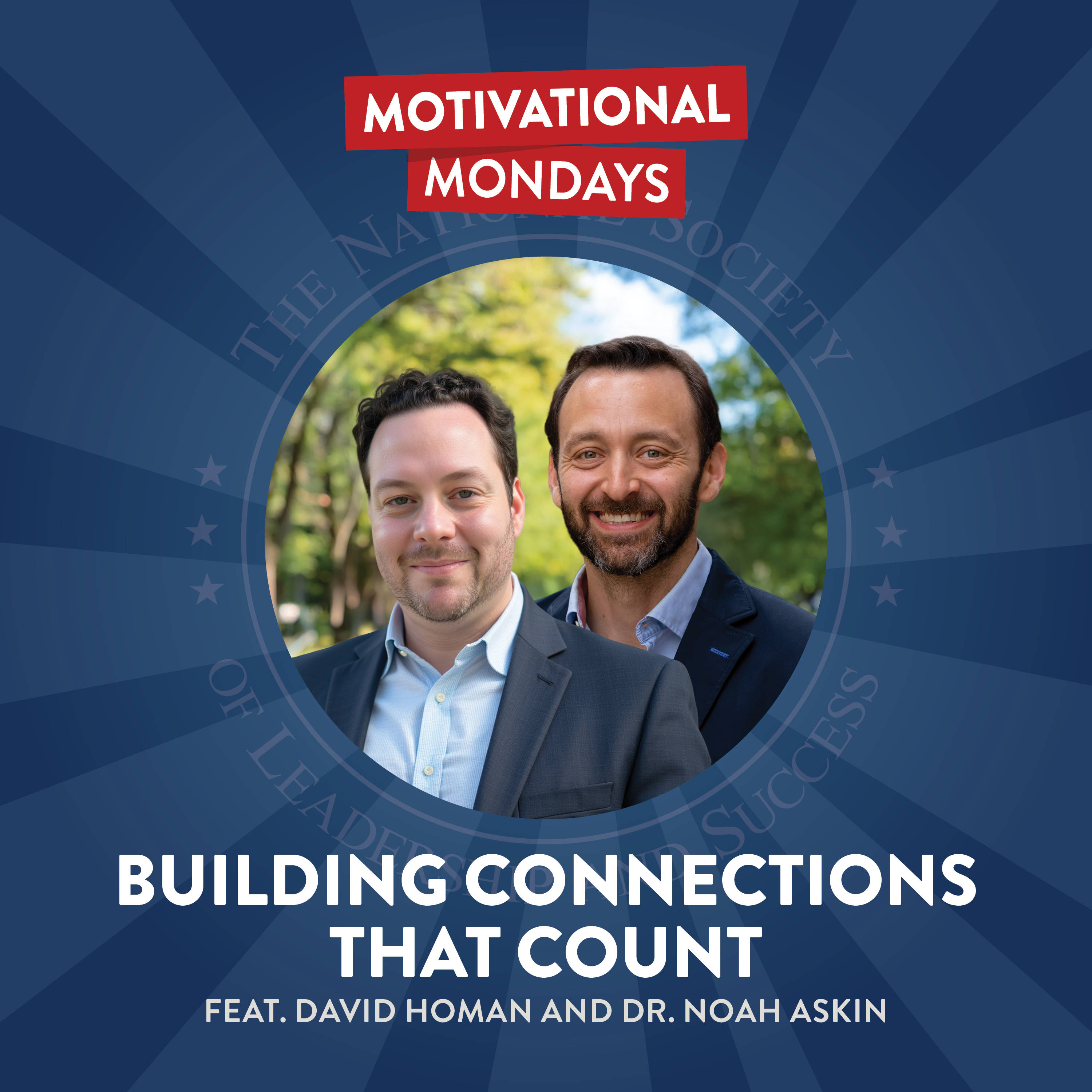 Building Connections That Count (Feat. David Homan and Dr. Noah Askin)Motivational Mondays: Conversations with Leaders · features David Homan54 / 100
 Evo Finance #61 - People, Culture & Risk - Building The Future Of HR In BankingEvolution Exchange Finance Podcast · on Leadership development75 / 100
 Rerelease: Why Not Shoot for the Moon? | Phil Manchester | Frontline UNSCRIPTED Ep. 1UNSCRIPTED · on Leadership development75 / 100
 Lead Your Leader: How to Master Leading Up and Build Influence That Gets You PromotedLeadership Sovereignty Podcast: Career Growth and Promotion · on Leadership development60 / 100
 How Career Pivots Really Happen | Mary Olson-Menzel | 735Leveraging Thought Leadership · on Leadership development56 / 100
 AI Won't Replace Leaders. It Will Expose Them.The Climb · on Leadership development52 / 100
 Bizcast: R. Scott Gillum on his book, “The Hidden Buyer Journey”, in conversation with Subhanjan Sarkar86 / 100
 Bizcast: Irene F. Lefton on her book, “Who Speaks for the Customer?”, in conversation with Subhanjan Sarkar
 Bizcast: Anders Boulanger on his book, “Engage First”, in conversation with Subhanjan Sarkar
 Bizcast: Todd Caponi on his book, “Four Levers Negotiating”, in conversation with Subhanjan Sarkar
 Bizcast: Fred Copestake on his book, “Ethical Selling”, in conversation with Subhanjan Sarkar