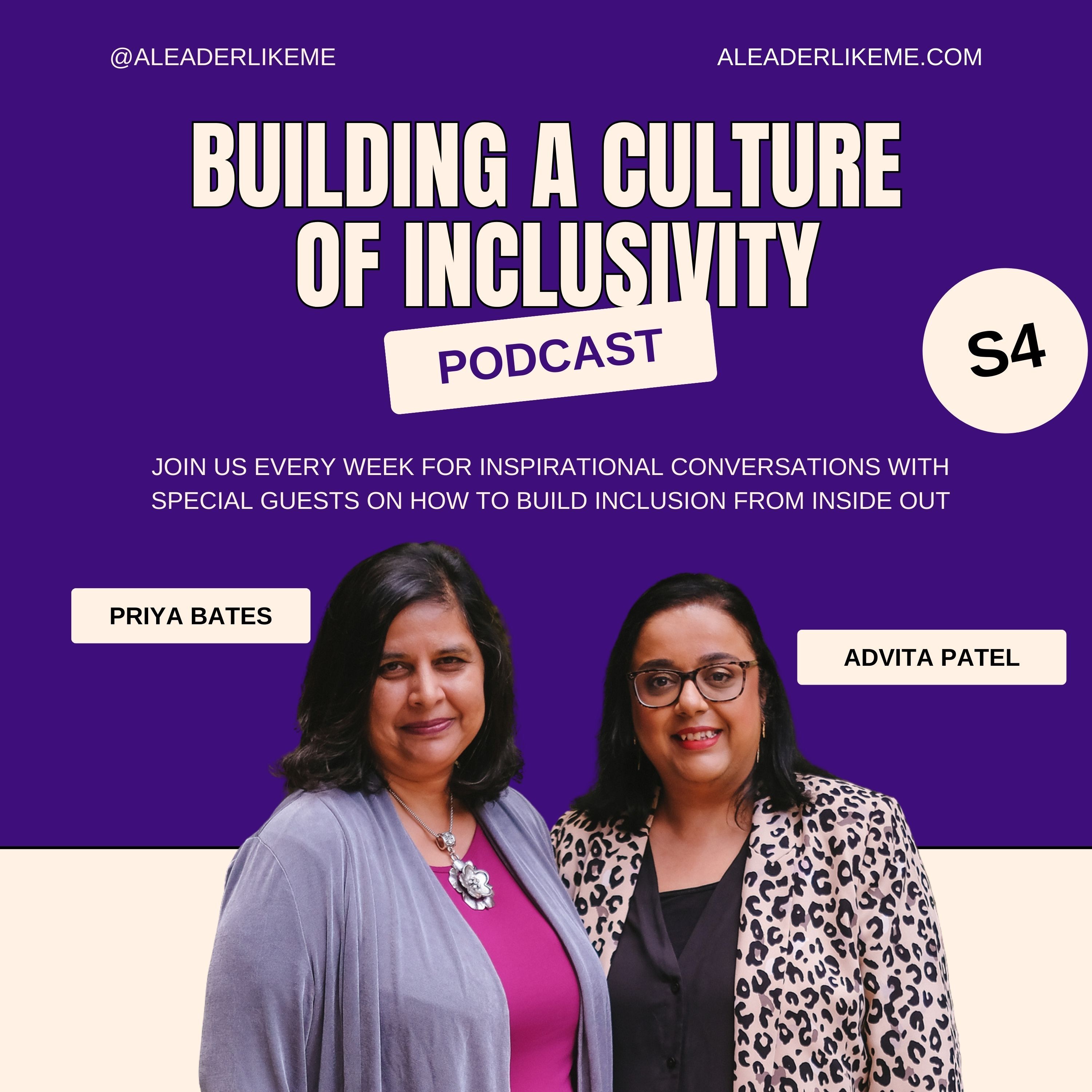
A Leader Like Me: Building a Culture of Inclusivity · 2025-04-17 · 24 min
Key moments - from our scoring
Substance score
33 / 100
Five dimensions, 20 points each
This episode features Gary Clarke-Strange, founder of Think Inclusion, discussing his evolution from leading diversity and inclusion initiatives across sectors including airports, broadcasting, medical services, and entertainment, to founding his own consultancy after a significant life pivot. Gary shares how he left corporate roles to pursue personal fulfillment while maintaining his passion for inclusion work, moving to Spain with his husband and launching a consultancy model. The conversation explores what inclusion truly means - not just policy compliance but creating cultures where employees can authentically be themselves without masking. Gary emphasizes that respectful curiosity is the antidote to the fear that often surrounds inclusion work in organizations, and challenges the narrative that inclusion is merely a nice-to-have rather than a business imperative. For B2B operators, this episode reframes inclusion as a talent retention and performance driver, grounded in practical approaches to culture change that can work across global organizations and diverse teams.
Inclusion means creating a culture where people feel they belong and can be their authentic selves without wearing a mask, achieved through sustained culture change rather than one-time initiatives. It's a feeling, not just a policy, and requires continuous evolution as generations and workplaces change.
Leaders should practice respectful curiosity - being open to learning about different perspectives, ways of working, and diverse talent, while also exploring what could be different in their organizations. This breaks down barriers better than compliance-focused approaches.
Gary made the decision to relocate to Spain and start his own consultancy to achieve personal fulfillment and the life he wanted while still doing inclusion work, moving from a traditional salaried corporate path to a more flexible consulting model that allowed him to maintain passion for the work while prioritizing happiness.
Gary argues that inclusion is good for business because employees who feel they belong and are included perform better and drive organizational success - it should not be viewed as just a nice-to-have or societal obligation, but as a strategic lever for business results.
Gary has extensive experience in HR, talent acquisition, and business advisory across sectors including airports, broadcasting, travel, medical services, brewing, and entertainment, and was nominated for the Burberry British Disability Awards 2023 while serving on the board of an LGBT health and wellbeing charity.
Our reviewer’s read on each dimension, with quotes from the episode.
The episode is dominated by personal narrative and motivational platitudes rather than substantive insights for B2B operators. Core claims - curiosity, belonging, culture change - are repeated without concrete mechanisms, data, examples from deployments, or measurable outcomes. A working operator seeking tactical knowledge on building inclusive cultures would hear little that's actionable.
inclusion to me is actually, it's a feeling and it's a culture
be that curious person that either learns about things that are different from what you know
The core framework - curiosity, psychological safety, people-first leadership, culture as feeling - is mainstream and widely circulated in diversity and organizational development work. The 'wear a mask' framing and the connection between inclusion and business performance are familiar. No contrarian claims, first-principles reasoning, or frameworks that challenge conventional thinking appear.
respectful curiosity
you can just ultimately be whatever version of you without having to wear a mask
Gary Clarke-Strange is a legitimate practitioner with relevant background: HR/TA specialist, DNI consultant across sectors, board position with LGBT charity, and founder of consultancy. However, the episode reads more as a soft personal profile than a rigorous interview of someone willing to be probed on methodology or results. Hosts offer zero pushback, making it difficult to assess depth of expertise or real impact achieved.
He'd always worked in this space in the wider HR fields
he had an extensive career in human resources, talent acquisition and business advisory, focusing on diversity and inclusion
Nearly zero specificity. No named client outcomes, metrics, timelines, or dollar figures. The only concrete detail is personal: his move to Spain and consultancy launch 18 months ago. Claims about inclusion driving business value and culture change are entirely abstract. A B2B buyer would have no evidence of actual results or methodology.
there's been enough positivity that I've been able to take to get to a point where I am now
In a week we had sold our house in the uk. Driven down to Spain
Hosts ask open-ended questions but never challenge, probe depth, or request specifics. Follow-ups are affirming and conversational rather than investigative. No tough questions about how 'curiosity' scales, how to measure culture change, tensions in inclusion work, or real obstacles. The interview functions as a celebratory profile, not a substantive interrogation.
I love that. That's so good.
I love that you to do what you've done
Computed from the transcript - who did the talking, and the words that came up most.
In this episode of A Leader Like Me, we sit down with Garry Clarke-Strange - founder of Think Inclusion and passionate inclusion consultant, who shares his inspiring journey from a traditional corporate career to running his own consultancy while living in Spain. Garry opens up about what inclusion really means, how respectful curiosity can be a catalyst for change, and why joy and humanity must be at the heart of workplace culture. Together with co-hosts Advita Patel and Priya Bates, this honest conversation explores the emotional realities of leadership, the importance of community, and how internal communications can shape truly inclusive environments. If you're a communications or HR leader looking to drive meaningful change, this episode is not to be missed. Priya and Advita. ______________ Did you know? you can now order Priya and Advita's new book Building a Culture of Inclusivity Order from Discount Code ALLME20 The book is available in most online stores including Amazon, Barnes & Noble, Waterstones, Indigo etc… and in some physical ones as well. Don't miss out. Get your copy of the book now and be part of the DEI conversation.
Transcribed and scored by The B2B Podcast Index.
Priya Bates: Welcome to a Leader like Me, the podcast where we celebrate the leaders making workplaces more inclusive. I'm Priya Bates. Advita Patel: And I'm Avita Patel. We're the co-founders of a leader like me and the co-authors of building a culture of inclusivity and effective internal communication for diversity, equity, and inclusion.
We believe that true leadership isn't just about titles. It's about creating spaces where everyone feels valued, heard, and empowered. Priya Bates: This season, we're taking you behind the scenes. Advita Patel: That's right.
A leader like me has grown into a global movement and we couldn't do it alone. So in this season five, we're introducing you to our incredible team, passionate, diverse, and driven leaders. Who are helping us shape inclusive cultures worldwide? Priya Bates: Each episode will highlight a new team member, their stories, their insights, and the impact they're making.
You'll also hear more about us and why this work matters so much. Advita Patel: So whether you're a leader looking to drive change or are passionate about creating inclusive cultures, all employees can thrive. We're excited to have you with us. Let's dive into season five of a leader like me.
Priya Bates: In today's episode, we're interviewing Gary Clark, strange founder of Think Inclusion. Before Gary set up his consultancy, he had an extensive career in human resources, talent acquisition and business advisory, focusing on diversity and inclusion. Gary has helped to drive progress by leading DNI across a broad range of sectors, including DNI, consultancy and roles with a major airport group in broadcasting and travel with a leading medical services provider, a UK brewery, an entertainment industry giant and more.
His work has been recognized by a nomination at the Burberry British Disability Awards 2023, and he holds a board position with the national LGBT Health and Wellbeing charity that provides information, services and support to tackle isolation, persecution, discrimination, health, and inequalities and more. I hope you'll enjoy this episode Well, hello Gary. Um, I want to start with a question that we ask all of our guests. I.
If you were to introduce yourself without mentioning your job or your title, what do you want our audience to know about you? Garry Clarke-Strange: Such an interesting question because our, our way of thinking just goes straight to go into what the norm is of how we introduce ourselves. So, hello. Thank you for, for having me.
And I think what I would like to start people thinking if I was to introduce myself is I'm a, I'm a human. And why I say that is because, uh. We're, we're, we're only, we're versions of ourselves. And the version of myself that I am is what I'm trying to be the best of all I can.
And that is a person who is ultimately tries to be kind all the time and ultimately is passionate about. The work that I do and also the life that I lead. And I think if you bring that back to a really humanistic state, that's what we're looking for, for, from our existence, right? Is, is, is happiness and I genuinely am a happy person who has taken some risks, um, with my own life of how I kind of wanted to get to where I'm at.
And I've now got to a place in my life where really happy in the work that I do, really happy in the life that I lead. I'm really happy that I get to make an impact on people, and I think that's kind of without, if, if I'm not to use the words of what I do and what I do as a person, but also that I bring my, my experience and my personality to life in me every single day. Um, so I am. Uh, my approach to life is to try and have as much fun as possible.
My friends might argue against that and say that I, I'm at times boring. That's sometimes because I'm just a little bit mentally exhausted. But in general, I try to bring fun to what I do, um, life and, and work. Um, and also just be a good person, you know, that's, that's our DNAI think so, yeah, that's me.
I Advita Patel: love that. That's so good. I love the fact that you are in a place where you feel fulfilled, happy, and content. Yeah.
Uh, and so many people live their life trying to find that, uh, yeah. And trying to explore what that looks like for them. And the fact that you have feel that what, from what you shared, it feels like you found it when you feel fulfilled and happy and content, and that's what life is about, right, Gary? It's like what can, and the work that we all do.
Is about trying to help organizations support colleagues so they can be, you know, the best that they can be in the workplace and, and, and live in a fulfilling, and hopefully in a happy way so they can deliver what they need to deliver and, and not feel isolated or excluded from, from the work. So I, I, I absolutely love the answer. Garry Clarke-Strange: And it, it's exactly that, that that's led me to do to this like that. I have been able to have experiences that are positive and there's been negative experiences as well, right?
Don't get me wrong, life isn't always roses, but there's been enough positivity that I've been able to take to get to a point where I am now. I don't look at life and say like, I'm 45 now as we're recording this. I'm not saying that, you know, I've, I've reached the, the, the end of what I want to be, and that life is now perfect and will never change. Just life is good right now, but I always.
In a privileged position to be able to make decisions that make me happy. Um, and I think that's been a, a journey to get there. And it, it is a really, really privileged place to be in right now that I, that I can do that, but it, it keeps me a grounded and also b, determined to keep being good as a person and also at what I do so that I can keep, you know, being happy. 'cause you know.
Ultimately, no one wants to be unhappy in life and work and home life. You know, that's where Yeah. And unfortunately that's not the reality for everyone. Um, and things will change over time, but that's, that's kind of where I've got to, to now.
But it has been as a result of, you know, some great experiences in work, um, but also some learning experiences as well professionally and, and probably personally as well. Yeah. Advita Patel: And on that though, so what, what does inclusion mean to you? The, Garry Clarke-Strange: the, the ultimate question.
So when I think about that word, I take the, the start of my answer to the first question of human, and I take that into a feeling. So inclusion to me is actually, it's, it's a feeling and it's a culture. Um, so does, you know, we all know there's so much research out there and there's so many thoughts about what makes somebody feel included, but actually it is that feeling and that culture that leads you to feel. You good to feel like you belong and to feel really, really empowered to be you.
And that, that to me is that feeling of inclusion. But it's so, it's, and it, to get to this world of where inclusion exists, it is, it is about change and it's about a, a, a culture way of working, especially in an organization. So for me, the vision I have as inclusion is, is that you can just ultimately be whatever version of you. You, you are without having to wear a mask at, at any time.
Um, now there are times you might choose to wear a mask of, of different source because that's your own personal choice, but when you don't have to put that on, um, and that that can only be derived me through, you know, a journey of culture change, um, and also a journey that I don't think is a it. Ever really has an end point because we're evolving through generations, through life. Um, so I think it is a consistent journey. Um, but I just think that's that feeling of when you just know that you can just be you and you don't have to hide anything if you can get to that point.
That's true. Inclusion, um, inclusion can mean different things to different people Right. And different levels. But that's, that's the, that's the epitome for me, right.
Where you wanna get to. Priya Bates: Uh, what I love about these conversations we're having with our new team members who we've been very intentional of bringing together is that, uh, that the passion I get from people that, that we are all in this era of joy, that we are comfortable with who we are. We know the difference we can make and we can be in that passion area, that that area, that place of privilege and decide to sit in that privilege. Yeah.
Or we can take that privilege and try to spread it. Be Garry Clarke-Strange: part of the change. Priya Bates: Right. And, and that's what's exciting to me about the people that we're bringing together.
That we're all people, we're, we're passionate about people and we wanna make a difference. We wanna bring that to our workplaces. Yeah, our personal lives and our professional lives because we want to create that joy. Garry Clarke-Strange: And it's joy despite a lot of negative things going on.
Yeah. You know, externally, internally in the world of work, but also in, in society, society's not a perfect place and either is the world, the corporate world of work. Um, but you can, you can use the kind of joy and the passion you have to make a change. Absolutely.
And it may, it may not put some of the stuff that's happening externally. Away. It won't put it to bed, but it can still help people feel better and be part of it, an overall kind of overarching change. So yeah, the word joy is really right, because I love it.
You know, this, this topic should be actually quite enjoyable to talk about. And there's so much fear around inclusion that I just, I really encourage people when I work with them to just fight through that fear, you know? And just. Don't, don't let that fear hold you back.
You know, even in the space that we work in, I'm sure it's the same for you both. We learn something new every single day and that's only through conversation. That's only through being, you know, curious and it, that is actually quite enjoyable when you can learn something new about somebody and not not be held back. So that joy you bring to this topic is actually something that I wish.
I wish we were in a world where when we all said inclusion in a corporate world, everyone smiled like we do. Yes. Because we know what comes with inclusion. But I think the reality right now in a lot of organizations is, is you don't see that smile when you say that word and you hear, you hear rhetoric that's maybe not so positive and you, you feel fear, Priya Bates: which, which is amazing, isn't it, to hear a word like inclusion.
And think it's anything but positive, right? That, that, that amazes me. So, so tell me a little bit about your proudest achievement to date. Garry Clarke-Strange: In this has evolved over time.
Right? And it kind of goes back to my point earlier on of, you know, while I talk about true happiness right now, life is, is evolving. If I think back to where I was probably 18 months ago, I would've said to you my proudest moment was landing my last corporate role because it was. The most incredible experience for me, and it was the first time I'd truly been able to work in a space where I could solely focus on equity, diversity, and inclusion.
I'd always worked in this space in the wider HR fields and had other elements to it. So 18 months ago, that probably would've been my proudest moment 'cause I was finally able to finally that place where I could make a difference solely in this space. But then probably 18 months ago, I made a life decision, which was. I wanted to follow a dream that I'd had since my twenties when I'd first, um, had the wonderful experience of working in Spain when I was in my twenties working in the travel industry.
And I, and I had this earning to always come back and live in Spain and, uh, skip a few, uh. Years later, maybe more conversations with my husband and we, we, we moved here and I left the corporate world and my proudest moment was, was taking that step because I'd always worked in corporate, I'd always had a salary coming in every month. I'd always known the, the comfort blanket that was, that I still wanted to do what I did and have the passion to do inclusion, but I wanted to also live a life that I was.
Truly, truly happy in. So I made the decision to move to Spain and set up my own consultancy and work as associates with, with people like yourselves. So I could still do what I do, still get all the feels that I need to get from this space, but do it in a different way, in a way that I had the, the, the life I, I wanted to have. And I think, you know, if I think back to the person I was when I was a teenager growing up in Ireland.
In the closet, gay from a, you know, a challenging socioeconomic background, um, you would not, I would not have imagined that's the person I would get to where I am today. And to make that brave decision to, to, to do that, um, and Brutus together, um, is, um, something I'm really proud of. And, and, you know, yeah. It's been a journey.
Advita Patel: I love that. I love that you. To do the, to do what you've done, not only to leave corporate life after a number of years and, and, you know, go into the risky world of consultancy because it. Uh, but then relocate your entire life to a different country.
I mean, that's a lot, right, Gary? In, in 18 months and something, I'm an Garry Clarke-Strange: overachiever. A I just never liked a challenge. There was a moment last year where we realized that in a week we had sold our house in the uk.
Driven down to Spain, 'cause we have two dogs as well. So we had to drive down and board. We, we already had, we were very lucky to have a holiday home here already, but we were buying a renovation project and we signed for the renovation house within seven days. And at the same time I was starting to plan the consultancy and I'm thinking.
Why, why have I done all this to myself? But actually it's that yearning to to to to a, improve yourself and, but also to be, to be truly, truly happy. But I wouldn't have got to that point without having great leaders behind me, um, who had enabled me to think, to get me to a point of a, where I was. Truly in a place of, of good at what I did.
And that's only through support and mentoring and coaching of great leaders, and also giving me the confidence to say, you can do this. You know? Mm-hmm. This is probably your time to, to, to, to step into that, that scary world of consulting.
Mm-hmm. So you, it sounds very kind of self-driven, but actually it's driven by people behind me going. You know, a supported me for a number of years, and then b kind of going, yeah, you got this. You, you can, you can do this.
But yeah. Advita Patel: Yeah. And it's, you know what, and under the kind of bucket of inclusion, this, that's what it's about, isn't it? It's about leaders who genuinely care.
Yeah, about the people that they work with and the people that they look after. And being quite mindful about how can we support them, how can we guide them, how can we lead them? How can we influence them in the right way? Uh, and helping them get to where they are.
So on that note, Gary, thinking about the listeners who are, who are, uh, you know, joining our conversation today, what piece of advice or one piece of advice would you share with them? Um, if they want to learn more about inclusive cultures? Garry Clarke-Strange: Okay, so the word that's in my head as you asked me that question is curiosity. And that can be in a number of different ways, but I, I use the term, 'cause you only gave me one word, but I use the term in my work, which is respectful curiosity.
And I think that is the way to really break down some of the barriers here and that can lead to in so many different angles. So if I'm giving, one piece of advice is, is to be that curious person that either learns about things that are different from what you know, and that could be about people, that could be about ways of working, but then also as a leader is to be curious about what. What could be different. So I kind of, I'm gonna go down two little angles on this as a really quick answer to your question.
But I think back to my personal experience of what I just talked about moving here, my leader could have been really kind of not open-minded to the fact of this is gonna happen and, you know, okay. It's, it's a, it's a firm exit, but actually we a really positive. It quite elongated, um, exit from me at the organization where I was able to support them for the next step and also mutually support me. And that's because my leader was open-minded enough and cur curious enough to say, okay, how could this work for a while?
How can we make this happen? So there's a curiosity there, which is, it may not, you know. And this comes into inclusion, right? Because the world is changing, people's ways of working are changing.
Younger generations are coming up into the workforce who want different things from work. If you don't have that curiosity to explore that, you're putting a barrier in place for yourself and for your talent. So there's, there's that side. And then there's the curiosity for us, just as human beings, which is we only know what we know.
We only know our own experiences. We only know what we've been. Kind of aligned to, or what people that we have kind of worked alongside, and the curiosity comes in, which is well just maybe just expand that, you know, and be open to other ways of thinking. And I, I really challenge myself with, I've obviously got quite strong views on things, but even like, you know, in my social media feeds, I will, I will follow things that I, maybe I'm not fully either.
A align to, or, or, or understand because I'm curious as to why. And that opens up either clarity for my own thinking about why I think I do or challenge for my way of thinking that makes me think differently. So I think if you're going to as, as a, a leader or just a human being coming into this world of inclusion, it is that actually be curious and curiosity can then lead to. Enjoyment with, with, with learning more enjoyment, with interacting with new people, enjoyment, with seeing diverse talent thrive.
Uh, that's, that's amazing to see when you enable people to, to, to be themselves and also to grow. And it is, if, if you don't have an open mind to that. You're, you're, you're never, you're just gonna tick a box and tick a box perform does not drive change, especially back to culture. Priya Bates: Absolutely.
And, and I, you know, I'm listening to you and, and writing down things you're saying, uh, Gary, and, and I'm so excited about working with you, you know, to help clients out there around the world. Yeah. Uh, but what are you most excited about, uh, working with a leader like me? Garry Clarke-Strange: I, there's an opportunity here to change narratives globally.
Um, and that's a big ask, right? We can, we can, you know, you can sit and think, oh, we're only a, I'm only an individual. What change can I make? But actually, the great thing about what I'm seeing for the, for the, the concept of leader like me is it's collective.
It's a collective of people who have various different experiences and various different ways of thinking, but bringing that together can. Make impact. And that's probably my, my overall. Uh, I talk about people are my why a lot, but actually it's the impact that you have on people.
So I think about the opportunity here is to think, okay, how can we go big with this? How can we work with, you know, global organizations and global teams and really think about, you know. Back to the last question, not just ticking a box. It's long-term sustainable change.
And what makes me still excited about working in this space is knowing when you have done that, regardless of how you do it. And, but I think the opportunity here is really quite. Unique in that I think we can make impact that can be seen spreading far and wide, um, with the collection that's come together. And I'm in awe of some of the people that are in this group already and I'm thinking, wow, like I might get to work alongside them as well.
Like, what can I learn from them? That's the curiosity in me that's thinking. They've got different experiences. They live in a different continent.
To me, they've got. All this knowledge they can bring. Imagine if we put that together, what, what the impact we can make. So, yeah, not to put a, too fine a word in it, but I actually think this, this is, this is something that will definitely make a big impact.
Priya Bates: So exciting. I've got chills as I'm, I'm listening to, you know, the possibilities. I love this idea of possibilities. You know, Aveta and I talk a lot and, uh, and Aida's uh, always said that her purpose is to change the world of work.
For me, it's always to build strength from the inside out. 'cause, uh, your employees are the most. Important when it comes to delivering those employee and customer experiences and this global perspective and this focus on inclusion. You know, again, I can't imagine anyone thinking it's anything but fabulous and magic.
Garry Clarke-Strange: And if we get to the CrossFit as well, it's good for business. Absolutely. And I'm, I'm excited to share this message that, you know, let's stop looking at this as just a nice to have, or the thing that society is telling us to do. Businesses exist for a reason and that is to.
To perform and to, to whatever the, the kind of feel they operate in there'll be, and a measure of success and inclusion can, your people can drive that, but they can only drive it if they feel like they belong and they're included. So it, it is good for business. And that's a message that I think somewhat gets lost in narrative here. That we have the opportunity to remind people of that, um.
Part of what's exciting with this is the different experiences that come in will enable us to, to share that message in different ways. Um, but yeah, um, you know, some days we might well only feel that we're me, you know, changing one person's experience. Some days it could be bigger and wider. Both days are equally as, uh, you know, successful for me because that's changed regardless.
Advita Patel: 100%. Goodness, Gary, we could talk to you all day, all day, all day. Um, but it's been an absolute privilege to have this conversation with you. As Priya said, we're so excited.
I. About working with you and, and the group of folks that we have put together. Um, and we'll be sharing, uh, some of the stuff that you've, you know, your links as well to, you know, to your organization in the show notes and stuff. But if anyone who is listening and is interested in sup in getting support from a global team, as Gary said, with a range of experiences, and please do get in touch with us.
Uh, but for now, thank you so much for your time and your energy, Gary, and hopefully we will, uh. Change the world, as you said, one step at a time, Garry Clarke-Strange: collectively. Let's do it. Advita Patel: That's a wrap on this episode of a leader like me.
Thank you so much for spending time with us and for being part of this journey towards more inclusive organizations. Priya Bates: If you found today's conversation valuable, don't forget to subscribe. Leave us a review and share this episode with someone who needs to hear it. Advita Patel: And if you're looking for more ways to build an inclusive culture in your workplace, check out our book, building a Culture of Inclusivity.
It's packed with insights and practical strategies to help you take action. Priya Bates: You can also learn more about our programs, services, and how we can support your inclusion journey at www a leader like me.com. Advita Patel: We'd also love to hear from you to connect with us on social media and let us know what resonated with you today.
Priya Bates: Until next time, keep leading with purpose, inclusion and authenticity. Advita Patel: Take care and we'll see you soon.
Other episodes covering the same guests and topics, from across The B2B Podcast Index.
 From Cigarettes to Smoke-Free: What Real Transformation Actually Takes w/ Philip Morris International's Dr. Kaleen LoveYour Work Friends · on culture change85 / 100
 You Can’t Choose Between Empathy and Economics: The Business Case for People-First Leadership | Susie Silver, CDE, Workplace OptionsHigh Octane Leadership · on Diversity Equity and Inclusion (DEI)78 / 100
 The Exit Nobody Prepares You For with Chris DonnellyFounders' Forum · on culture change77 / 100
 Equity Is a Career Strategy with Celeste WarrenThe Career Refresh with Jill Griffin: Leadership Strategy for Senior Professionals · on Diversity Equity and Inclusion (DEI)72 / 100
 Ep.31 Aaron Gracey | The Leadership Conversation Every Business NeedsBe You Start Now · on Talent retention72 / 100
 099_Moving Beyond DEI: What Healthcare Executives Must Do to Drive Lasting Inclusion w/ Dr. Jennifer SarrettExcellence In Healthcare Podcast · on Diversity Equity and Inclusion (DEI)65 / 100S5 EP7 How to lead inclusive change from any role with Rachelle Henderson46 / 100S5 EP6 - Why accessibility is good for business67 / 100S5 EP5 - The Real Risk of Exclusion: Janelle Benjamin on Building Safer, Stronger Workplaces59 / 100
 S5 Ep2 - A Journey of Resilience with Alexandra McAvoy40 / 100S4E8: Building a Culture of Inclusivity with Christelle Beneteau77 / 100