A Leader Like Me: Building a Culture of Inclusivity · 2025-05-01 · 27 min
Key moments - from our scoring
Substance score
39 / 100
Five dimensions, 20 points each
Janelle Benjamin brings a uniquely analytical perspective to diversity, equity, and inclusion work by leveraging her background as a trained lawyer and certified DEI consultant. With nearly 20 years of experience across government and corporate sectors, she founded All Things Equitable Inc., a Toronto-based consulting firm addressing inequities for historically marginalized groups. Her legal training enables her to spot issues other practitioners miss - particularly around workplace safety, harassment, and violence prevention. Rather than taking binary positions on complaints, she assesses both sides of situations objectively while developing structural policies and interventions to prevent future incidents. Benjamin emphasizes that true inclusion means not just having people physically present, but creating dynamic states where voices are sought out, talents are fully leveraged, and experiences are valued. Her approach combines legal issue-spotting with emotional intelligence, risk management with cultural transformation. She's been recognized as a LinkedIn Top Voice and one of Canada's top 100 Black women to watch, featured in Forbes and the Globe and Mail. For organizational leaders, Benjamin offers a pragmatic framework for viewing DEI work as risk mitigation - understanding both the dangers of inaction and the strategic benefits of genuine cultural change.
Inclusion means people are not just physically inside a structure, but their voices are actively sought out, their talents are fully leveraged, and they're able to participate dynamically - whereas someone can be present but still marginalized and underutilized if their contributions aren't valued.
Legal training develops issue-spotting skills that enable practitioners to see problems from multiple perspectives objectively, identify structural and policy gaps, and develop risk-mitigation interventions that prevent future workplace incidents rather than just responding to complaints emotionally.
Organizations face dual risks: harm to individuals through continued mistreatment, harassment, and violence, and institutional risk through legal, reputational, and operational consequences; DEI initiatives are fundamentally about risk mitigation for both.
Individuals maintain personal accountability to educate themselves through podcasts, books, certifications, and community connections regardless of organizational decisions, since controlling what you can control is more effective than trying to convince decision-makers outside your influence.
Belonging means having the ability to share your value and worth, not just your space - creating environments where people can contribute their full talents and experiences alongside others in a genuinely valued way.
Our reviewer’s read on each dimension, with quotes from the episode.
The episode contains broad, familiar concepts about inclusion (making the table bigger, listening to voices, creating belonging) with minimal novel operational insights. While Janelle's legal background and risk-assessment lens offer some differentiation, the conversation rarely translates this into concrete, actionable takeaways a B2B operator would extract. Most claims are illustrative rather than evidential, and the episode spends considerable time on personal biography rather than substantive workplace dynamics.
inclusion means, um, the ability to participate fully. It means, you know, leveraging. All of the skills, abilities, talents of your people at all levels.
it's about making sure that everyone, every single person in your team has the opportunity to be heard, to be seen and to be valued
The thinking is competent but orthodox. The framing of inclusion as a table-making exercise, the emphasis on listening and belonging, and the personal accountability messaging are well-trodden in DEI discourse. While the legal risk-management lens is slightly differentiated, it remains theoretically abstract - no original frameworks, counterintuitive claims, or first-principles reasoning that would challenge conventional wisdom.
inclusion is never about making the table smaller or taking things away from people, but it's making that table bigger.
people can be inside, physically, inside of a structure, but still not, their voices are not, um, valid
Janelle Benjamin is a legitimate practitioner with 20 years of experience, a law degree, founder of her own firm, and recognized credentials (LinkedIn Top Voice, Forbes features, Canada's top 100 Black women). However, she is primarily a consultant and thought-leader rather than an operator of her own large-scale business or someone who has built/scaled commercial teams at meaningful size. Her credibility is in advising on inclusion, not in running major P&Ls or proving ROI at scale.
award-winning diversity, equity, and inclusion consultant and founder of All Things Equitable, Inc. A Toronto-based management consulting firm
nearly 20 years of experience. In government and corporate sectors
The episode is almost entirely devoid of concrete evidence. No named client examples, no metrics, no dollar figures, no timelines, no before/after data. Janelle mentions a made-up sexual violence scenario as illustration, discusses attending Harvard programs, and references reading various sources, but never grounds claims in real organizational examples, measurable outcomes, or specific case studies that would allow replication or validation.
you know, let's say there's, I'm gonna make this up. There's a situation, you know, let's say there's sexual violence has happened in the workplace.
I literally just last evening was looking at a program, um, out of Harvard University for leadership
The hosts ask reasonable opening questions and offer some light pushback on personal accountability, but the interview is largely a soft affirmation loop. The hosts rarely challenge claims, dig into methodology, or press for specifics. Questions tend toward broad invitations ("What does inclusion mean to you?") rather than sharp, probing follow-ups. The tone is celebratory and networking-focused rather than forensic.
I love that. Now, Janelle, one of the reasons, uh, that uh, we had met and you had piqued my interest was because you've got, uh, other education
I mean, risk management, I think even, especially in the diversity, equity, inclusion space right now, is the conversation leaders should be having. Right?
Computed from the transcript - who did the talking, and the words that came up most.
In this powerful episode of A Leader Like Me, we speak with Janelle Benjamin - award-winning DEI consultant, founder of All Things Equitable, and LinkedIn Top Voice - about her journey from workplace mistreatment to building an influential consultancy rooted in justice and inclusion. Janelle opens up about life beyond the title: a dedicated single mum, a quiet changemaker, and a passionate learner committed to creating safer, more inclusive workplaces. She shares how her legal background sharpens her strategic lens and why humility, curiosity, and continuous learning are essential for truly inclusive leadership. We explore: What real inclusion looks like beyond policy and posters The emotional cost of exclusion - and the power of turning pain into purpose How her legal training helps her spot risks others miss Practical steps for those who want to lead inclusively, even when DEI is being scaled back The power of connection, community, and shared accountability in driving cultural change Whether you're just starting your inclusion journey or you're deep in the work, Janelle’s story will leave you inspired, challenged, and ready to act.
Transcribed and scored by The B2B Podcast Index.
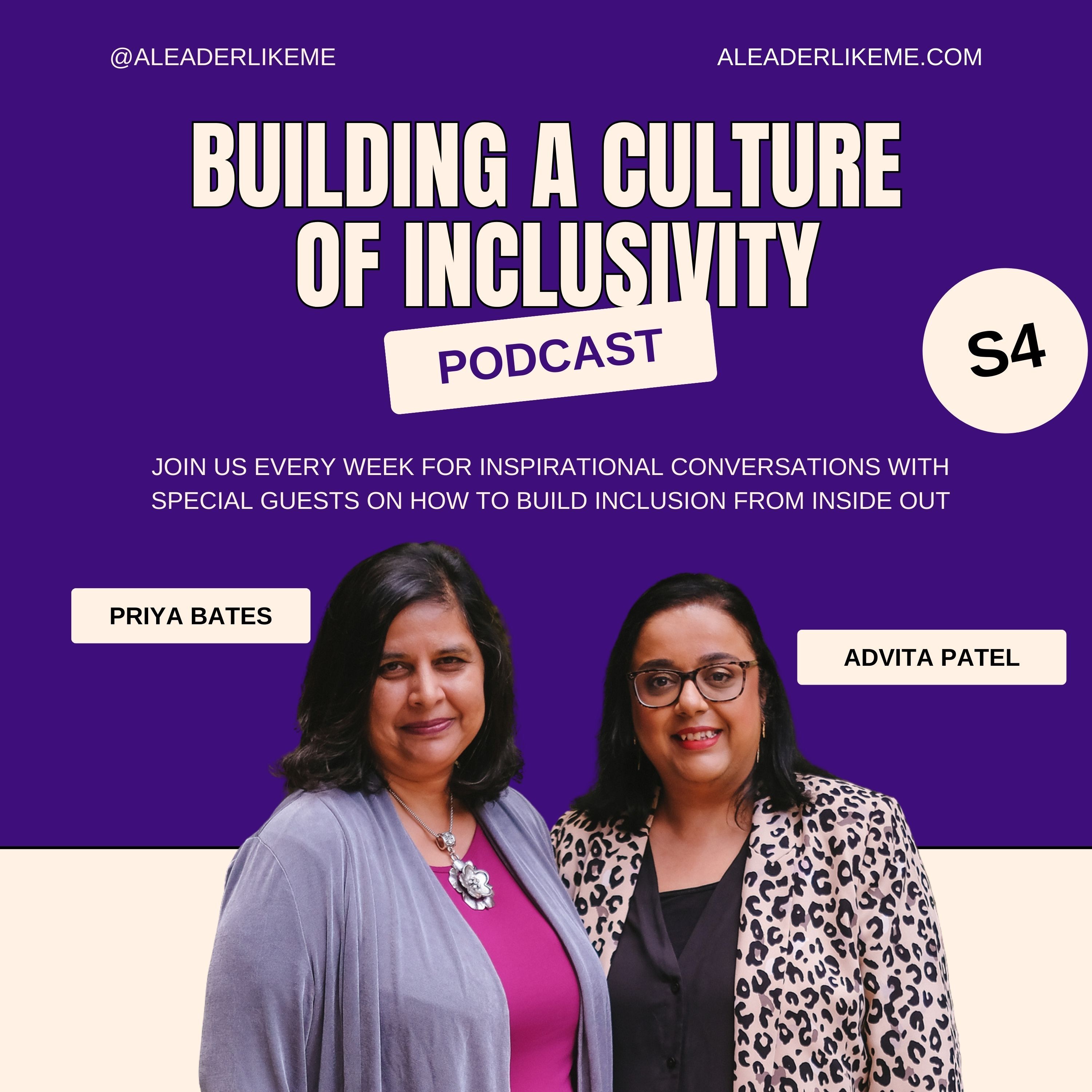
Welcome to a Leader like Me, the podcast where we celebrate the leaders making workplaces more inclusive. I'm Priya Bates. And I'm Avita Patel. We're the co-founders of a leader like me and the co-authors of building a culture of inclusivity and effective internal communication for diversity, equity, and inclusion.
We believe that true leadership isn't just about titles. It's about creating spaces where everyone feels valued, heard, and empowered. This season, we're taking you behind the scenes. That's right.
A leader like me has grown into a global movement and we couldn't do it alone. So in this season five, we're introducing you to our incredible team, passionate, diverse, and driven leaders. Who are helping us shape inclusive cultures worldwide? Each episode will highlight a new team member, their stories, their insights, and the impact they're making.
You'll also hear more about us and why this work matters so much. So whether you're a leader looking to drive change or are passionate about creating inclusive cultures, all employees can thrive. We're excited to have you with us. Let's dive into season five of a leader like me.
In this episode, we talk to Janelle Benjamin. Janelle Benjamin is an award-winning diversity, equity, and inclusion consultant and founder of All Things Equitable, Inc. A Toronto-based management consulting firm, addressing inequities for all historically marginalized groups with nearly 20 years of experience. In government and corporate sectors, Janelle has been a driving force in breaking barriers to workplace inclusion, A trained lawyer and recognized thought leader.
Her expertise has led to systemic change across industries, earning her features in Forbes, the Globe and Mail and more. Janelle was recently named a LinkedIn Top Voice and is one of Canada's top 100 black women to watch. I hope you enjoy this episode. Hello, Janelle, we're so excited to have you here with us today.
I'm gonna start with a question we ask all of our guests. If you were to introduce yourself without mentioning your job or your title, what do you want our audiences to know about you? Wow, that's a, a really. Good and challenging question.
I, I kind of love this challenge. So I would start by saying, um, I would want people to know that I help organizations make their workplaces more diverse, inclusive, and safe. And so what that means in practical terms is, um, I can help with a diversity strategy, increasing representation in an organization I can help, uh, increase and improve, uh, workplace culture. Experience, cultivating experiences of belonging and, uh, I can help with workplace safety.
So incidents of violence and harassment, bullying and all of those sorts of things, uh, can be substantially reduced in an organization. I. That, you know, that's, um, brilliant. In terms of what you do to help organizations, what do you do, Janelle?
So I'm throwing this in 'cause you haven't seen this question, but what do you do in terms of your downtime? In my downtime when I'm not, uh, working as a diversity, equity and inclusion practitioner, I am, uh, I'm a mother of two. Sort of small kids. My kids are, are now, uh, my son just turned 12 and my daughter is six.
She's turning seven. And so I'm, uh, you know, chauffeuring them around. I'm cooking the meals. I'm taking them to birthday parties.
I'm planning birthday parties. I'm helping them clean their rooms. I'm doing laundry. I'm, you know, I'm, I'm all the things.
I am a single mom. I just recently divorced and so it requires me to just be, you know, all hands on deck. I'm doing homework and taking them to piano lessons and basketball practice and all of the things. And so I'm extremely busy, um, a busy mom and I would say that's how I spend the most of my time.
Um, reading stories at night and, you know, making sure that they, you know, they've taken care of themselves, brushing their teeth, and all of those sorts of things. So that's me. I love that. And, and you know why I love knowing that about people, uh, uh, in terms of who you are outside of work, because this is all about connection, right?
And building those stories. And what we found in our work, and, and, and probably exactly the same for you, is the misinterpretation of about who people are when there's no connection. Yes. And people don't get time to know each other, so they make assumptions and have biases about that individual or that community of people.
Whereas the work that we all do is about that. You know, you said you'd read to your children the stories at night, but it is about the stories and it is about those connections and it's a bit about that big why, uh, and understanding people outside of the job description that they may being given in the workplace and getting to know them a little bit on the personal side. That's what we found from communications perspective. That breaks down the barriers that some people often face or, or have their biases.
Right. So that's, you know, great to know and, and, and you, you know, two full-time jobs, Janelle, by the sounds of it, in what you're doing. Pretty, pretty much, yeah. I'm always on, you know, it's either school, drop off, school pickup, making the lunch, packing the backpacks, you know, all of the things I'm, I'm always, yeah, I'm always, yeah.
I mean, that is, you know, I, I'm privileged that I don't have any dependents in that, you know, in that, so I never, I always empathize with my friends, with children, especially children who are, uh, independent to, to a certain extent, but still need guidance and support of, you know, your children six, nearly seven and 12, that, you know, they've got their own minds. But definitely need your, uh, your expertise and support around them. Um, what does inclusion mean to you?
Inclusion to me means, uh, just, you know, at the fundamental level being included, it means, um, in an organization it means, um, the ability to participate fully. It means, you know, leveraging. All of the skills, abilities, talents of your people at all levels. Um, and it's that sort of dynamic state of operating in which, you know, you're, you're really hearing the voices, um, of everyone on your team.
Um, you know, there is nobody who sort of on the margins, no one who feels left out. And, uh, yeah, just the opportunity to be heard and, and, uh. And, and shared, shared talents, shared experiences. The ability to share right to, to connect I think is really I part of inclusion as well.
It is, yeah. I always say it's about, um, inclusion is never about making the table smaller or taking things away from people, but it's making that table bigger. I. And to your point, what you just shared there, it's about making sure that everyone, every single person in your team has the opportunity to be heard, to be seen and to be valued, uh, regardless of their background and who they're and what they do.
Yeah. I mean, in some places you can have inclusion, right? Um, people can be inside, physically, inside of a structure, but still not, their voices are not, um, valid, right? They're not, um, what's the word?
They're not sought out, right? Their voices are not sought out. Their experiences are, they're underutilized, right? So they're, they're inside.
There's no segregation, but are they included? Not really. Right? It's that sort of, it has to be that dynamic state in which they're, they're inside, but they're actually, um, their talents are being used to the, to the utmost, and their voices are, are being heard.
And I, and I love that, you know, you talked about the fact that, you know, people are, uh, their voices are valid, that they're heard and that they're valued for what they bring to the table as well. And I love the word that you used, which was share. Right. And I've never heard that word used, uh, in alongside inclusion before.
Yeah. That we're here not only to share our spaces, but share our value and share our worth. And, and, uh, really that is a, a, a central tenet of belonging that we're, we're able to give. Absolutely.
Right. And, and I think that's terrific. I love that. Um, what has been your proudest achievement to date Janelle?
Um, my proudest achievement is really challenging for me. I'm an introvert, so, um, you know, introverts tend to accomplish things, but, you know, we don't like the spotlight. So even highlighting this question for me feels cringey. 'cause it's like, oh, what am I, what am I really proud of?
I'm proud that I, I, I founded my own company. I'm proud that, you know, um, I was able to pivot after workplace, um, mistreatment. You know, start up my own thing. I'm really proud of myself and, and all of the, the hard work that I've put into, to, you know, building a company from almost nothing.
Um, yeah, I'll say that's what I'm most proud of. And you talk about, you know, that pivoting, that taking something that was probably negative and making it into a positive, that's probably, uh, that's hard to do. Yeah. Yeah.
I think it speaks to. Resilience. It speaks to, you know, resourcefulness. It just, yeah, creativity, just all of the things that make me who I am.
Um, I'm really proud that you know that I did that. Because it, honestly, it was, it's not an easy thing to do, and it could have gone horribly bad the other way, right? Where, you know, you, you, you suffer some mistreatment or abuse and, you know, you, you do something that's quite harmful or damaging to yourself, or destructive to, you know, yourself or people around you, right? Um, and so, yeah, just the ability, I'm really proud that I've taken something, a negative situation and turned it into something positive.
Love that. And you know, and it's so interesting because, uh, I'm a confidence coach as, as well as, uh, running my own consultancies. And I often work with individuals who, uh, uh, what you just quite said, shared there, Janelle, you know what, I'm a, I'm an introvert, uh, and I feel quite cringey talking about my achievements. And I always say to the folks who are more introverted in their approach, it is, it's about the inspiration and the aspiration that you give towards who may not see themselves anywhere else.
And your story, you know, is really powerful. The fact that you came from somewhere that was mistreating you, um, which would've crossed your self-esteem and confidence. And some, for some folks that's really challenging in terms of understanding what do they do next and how do they take control them. But you demonstrated actually.
The self belief you have in your work, and it would've been hard for you to get there after dealing with an organization that, you know, mistreated you, but you made it work and you did it through resilience. Uh, you know, you did it through the, the, the support around you, most probably, and the, the purpose that you've got. And I always speak to anyone who fears, you know, maybe being seen as a bit too cocky maybe, or a bit, you know, not humble enough or showing off too much about.
Demonstrating and decentering themselves potentially, and, and showing up for others who may not feel or may have gone through a similar experience to you. So I know for a fact that some of our listeners who are, uh, listening to what we're talking about will relate to that story and, and may also potentially be in this similar situation to what you may have been in. Uh, and on that note. What one piece of advice would you give, uh, or share with our listeners who want to learn more about inclusive cultures?
Uh, or, or, or cultures, workplace cultures Overall, I would say I. If they want to learn more, certainly, you know, start by listening to this wonderful podcast. Um, following and connecting with the, a leader like me program and learning more about it. 'cause they can learn a lot about inclusive cultures through that.
But I would say, um, there's lots of podcasts also out there, um, that will talk about this. Um, I would say, um, reading, you know, there's tons of books on, you know, organizational development and um, you know how to cultivate. Organizations full of inclusion and belonging. Um, so start with, you know, just the basics, podcast books, um, and, uh, you know, of course connecting with, with organizations like yourself and the leader like Me program.
Yeah. No, that's brilliant. The other thing that we often, uh, and to your point is that personal accountability. So as, as we, you know, as this podcast, we're recording it, there's lots of conversations right now externally about organizations pulling back from diversity, equity, and inclusion programs or scaling back.
Uh, my advice to lots of the leaders that I work with is. Even though a, a decision maker somewhere has made that decision that's outside of your control, you know, you still have personal accountability to learn, uh, and to educate yourself. There's plenty of resources, to your point, Chanel, that people can access. Uh, and that's what I would say.
Just to add to your, your thoughts is what are you, what is that one thing that you are doing in terms of personal accountability to learn more about inclusion, equity and diversity? Uh, because we know that. We can only control what we can control, and it is challenging sometimes to, uh, convince others who have already made a decision that's outside of your pay grade, ultimately, sometimes. Yeah, I would say to answer that I'm a lifelong learner, so I am constantly, um, in a pro, some program or another, and I literally just last evening was looking at a program, um, out of Harvard University for leadership, um, to, to precisely this, uh, you know, support inclusivity.
And inclusive workplaces particularly, um, those who, who need a racial equity focus. So I think I'm going to be signing up for this program, um, at Harvard University in June of this year. That would help give me, um, additional leadership competencies. Um.
You know, you never know what you just don't know and, you know, teach me things that I could use and apply with my clients. Um, and so yeah, I'll, I'll be looking forward to having, you know, having some additional education and certification under my belt. Um, so I'm constantly in a, some program or another I. Um, you know, certified up the yin yang on, you know, culture facilitation and, um, inclusivity for indigenous communities.
And, you know, I've taken certi certificates on mental health and inclusion and belonging with KS Queens University. So there's a lot of, um, you know, programs and things that I'm constantly looking for. You know, I, I attend, um, conferences. Where I can learn and connect with other, um, leaders and practitioners in my space.
Like me, I come to community groups and, um, you know, there's a, a whole host of, uh, equity practitioners that I, I meet with regularly, multiple groups, um, of equity practitioners that I do connect with regularly. Uh, in order to just to connect, to share, to learn what they're doing, um, what is it that, I don't know, I don't presume to know everything, so I'm always seeking to, to figure out, you know, what are the gaps in my own knowledge and, uh, understanding and awareness.
How can I fill those gaps and, you know, do I need someone to support me or is this. A gap that I can, I can fill somehow with some education or or training of my own. So I'm constantly, yeah, I'm always reading too. So I'm reading the newspaper, I'm reading magazine clippings, I'm reading social media posts, blog posts, things that people are writing on, you know, Forbes on Medium.
You know, there's so many sources of information right now. It's always in our hand. Every, you know, ping on the cell phone gives us something new that we can look at. Um, and so I'm constantly keeping abreast of, um, you know, what's happening in different communities, communities that are different than my own as well.
So, um, you know, connecting with, um, leaders in other spheres of endeavor, connecting with, um, lots of creatives from different communities. So whether that's, you know, Muslim communities or Sikh communities or South Asian communities, you name it, I'm constantly learning and, and learning from them and reading and connecting with indigenous people and. Just trying to learn, you know, uh, some healing prac practices, traditional healing practices, what does reconciliation look like for them and what does that mean for me?
You know, um, as an equity practitioner, what's my responsibility? And, and I take that seriously. So yeah, just staying humble I think is really important. So that's probably the advice I should have given my listeners before.
Stay humble. Assume you don't know everything, um, and, uh. Educate yourself as much as you possibly can at all times. And even when you think, you know, listen again, listen more.
Listen to what people are telling you. Assume you don't know something and be curious. Try to figure things out, um, as much as possible. And if you can't bring someone inside that can help you do that.
I love that. Now, Janelle, one of the reasons, uh, that uh, we had met and you had piqued my interest was because you've got, uh, other education that you haven't talked about on this podcast. Uh, you're a Juris doctor, so you've got your law degree. I do.
And, uh, and I'm curious about how that contributes to the work that you do and your approach on the work that you do. Oh, I would say. Definitely, you know, going to law school, it's transformative, right? It changes the way that you think.
Um, and so I, I think about my work largely in terms of, um, like a violent safety standpoint, but also in terms of risk. So I'm, I'm constantly assessing. What is the risk to an organization if they proceed this way or that way, or if they don't address equity and inclusion, right? What, what would happen to, um, to the individual within the workplace, but also to the entity as a whole, right?
And how do we mitigate that risk through some strategic initiatives? Um, and so my law degree, I would say it has totally changed. Um. How I read and receive information, how I process information, and then even how I give recommendations and advice.
Um, I see things, I spot issues that I think a lot of other practitioners would miss and, and have missed. I've seen the work of some other practitioners, you know, when a client hires me after the fact they've worked with somebody else, and then they come to me and then it's like, oh, they didn't give, they didn't see this, this, this, and this. So, you know, legal training, it teaches you to issue spot. Um, it's just a, a skill that you develop from, you know, year one.
And so I'm able to, to look at a scenario and see issues. I'm trained to do it, to see issues within any particular scenario that I think a lot of people would, would miss. Um. It happens when I give my staff, you know, things to, to give back to me and I'm like, oh, they missed this, they missed this, they missed that.
You know, there's just things that, um, other people are just trained, not trained to see. Um, and when I say issues, I mean things like, um, uh. You know, if you've got a, a scenario, you know, let's say there's, I'm gonna make this up. There's a situation, there's sexual violence has happened in the workplace.
Um, you know, one person has assaulted somebody in, you know, closed spaces and there's an issue on both sides. The issue would be, you know, did this happen or did this not happen? Right? There's always two sides.
Um, a lot of people would have a hard time. Seeing both perspectives, right? They're either gonna take the complainant's position as, as gospel and, and proceed in that way, or they're gonna take the respondent's position as gospel and proceed that, you know, that they, they weren't involved and, and nothing happened. But a trade lawyer is able to see both sides and think, okay, what do we need to do, uh, operationally to prevent this sort of thing from happening in the future?
Um. Are there things structurally that we can do to put policies in place to ensure safety? Like the, the lens in which I'm going to review that situation will be a lot different than somebody else's. Um, somebody else is gonna, of course, you know, they're gonna be human and they're gonna have compassion and empathy, and they're gonna be sad that this happened and, and all of those sorts of things.
And I, I, of course I have all those feelings too. As an empath, I, you know, I feel deeply, um, for people. But I'm, I'm also able to step back and be very objective, um, arms length and neutral in a situation and, and think, okay, let's remove the emotions from the equation. What do, what do we need to do to ensure, you know, the, there's safety through the process, but there's safety.
The outcome and that the outcomes will, will also not happen again. So, yeah, there's two sides to that. It's the process and the outcomes that I'm able to, to put parameters around, I think in a way that others aren't. So that's my superpower.
Deeply analytical. Um, and so when I'm reviewing anything, it's like, it's like an accountant almost with with money, right? They're gonna like bean count or you know, a bookkeeper is gonna go line by line and they're gonna be so. Precise and detail oriented.
They're not gonna miss anything. And that's a lawyer, right? We just do it with words. We do it with problems, we do it with situations, right?
Social situations, we're able to see social situations and and, um, identify the root of those. Those issues and then develop interventions. That's literally the whole skill. I, I love that.
I mean, risk management, I think even, especially in the diversity, equity, inclusion space right now, is the conversation leaders should be having. Right? Right. In terms of what is the risk of doing something and what's the risk of not doing it?
And, and having a really strategic conversation around that, that is business outcome focused. And, and I think that's, that, that's where I think more organizations should be having that conversation and in order to understand how to navigate, um, what's happening in the, in the competitive and economic and political environment right now. Um, I have a last question. What are you most excited about with working with a leader like me?
I think I, what most excites me is my ability to support even more clients globally, um, than I already do, particularly with inclusive communications. Um, I'm really excited about, you know, working with you and all of the other practitioners that you've assembled, um, to provide insight in a new way. Uh, it's more, I think, holistic. And so I'm looking forward to just being a contributor to that holistic review, um, of inclusivity of culture, workplace culture, and, uh, providing my lens on that.
Love that Janelle, I mean, I think it was Gabrielle who, who, who, um, named us all the Avengers, right? I love, I love the fact that he's called us that 'cause he's right in a, in a sense, you know, listening to your experience, especially around the, the lawyer background that you bring and the, and the pragmatic approach you bring to, uh, situations. And if we look at all our other, uh, consultants and practitioners, they've all got strengths. That make us the Avengers as, as Gabrielle said, and I think that's so important for people to recognize that actually, you know, this work isn't one dimensional.
It takes a, a collective of people to support and help you. And to Priya's point earlier about, I. You know, we do need to take that step back to what you said and review what's happening in our organization and have that pragmatic, um, eye on what's happening, and then decide on where the support is that you need to help you. Because none of this work should be done in isolation.
I. And nobody should have to do this on their own. And that's exactly what our dream is as clear and, and and I in terms of what is a leader like me here to do. And as well as having that global approach, it's also to make sure that the folks out there who need the help, have the help and have the right help around them.
So really appreciate your, uh, your well the conversation today, uh, we've learned a lot. Ourselves. And it's been an absolute joy to have you part of the Avengers, uh, and the consultancy as well, Janelle. And if anybody wants to find out more about the work that Janelle does, we'll make sure that it's in the show notes as well, so you can connect with her on, on her various platforms.
But thank you so much for your time today. Thank you so much for having me. It was my pleasure. That's a wrap on this episode of a leader like me.
Thank you so much for spending time with us and for being part of this journey towards more inclusive organizations. If you found today's conversation valuable, don't forget to subscribe. Leave us a review and share this episode with someone who needs to hear it. And if you're looking for more ways to build an inclusive culture in your workplace, check out our book, building a Culture of Inclusivity.
It's packed with insights and practical strategies to help you take action. You can also learn more about our programs, services, and how we can support your inclusion journey at www a leader like me.com. We'd also love to hear from you to connect with us on social media and let us know what resonated with you today.
Until next time, keep leading with purpose, inclusion and authenticity. Take care and we'll see you soon.
S5 EP7 How to lead inclusive change from any role with Rachelle Henderson46 / 100S5 EP6 - Why accessibility is good for business67 / 100S5 EP4 - “From Fear to Fulfillment: Building Inclusive Cultures with Curiosity and Courage53 / 100 S5 Ep2 - A Journey of Resilience with Alexandra McAvoy40 / 100S4E8: Building a Culture of Inclusivity with Christelle Beneteau77 / 100