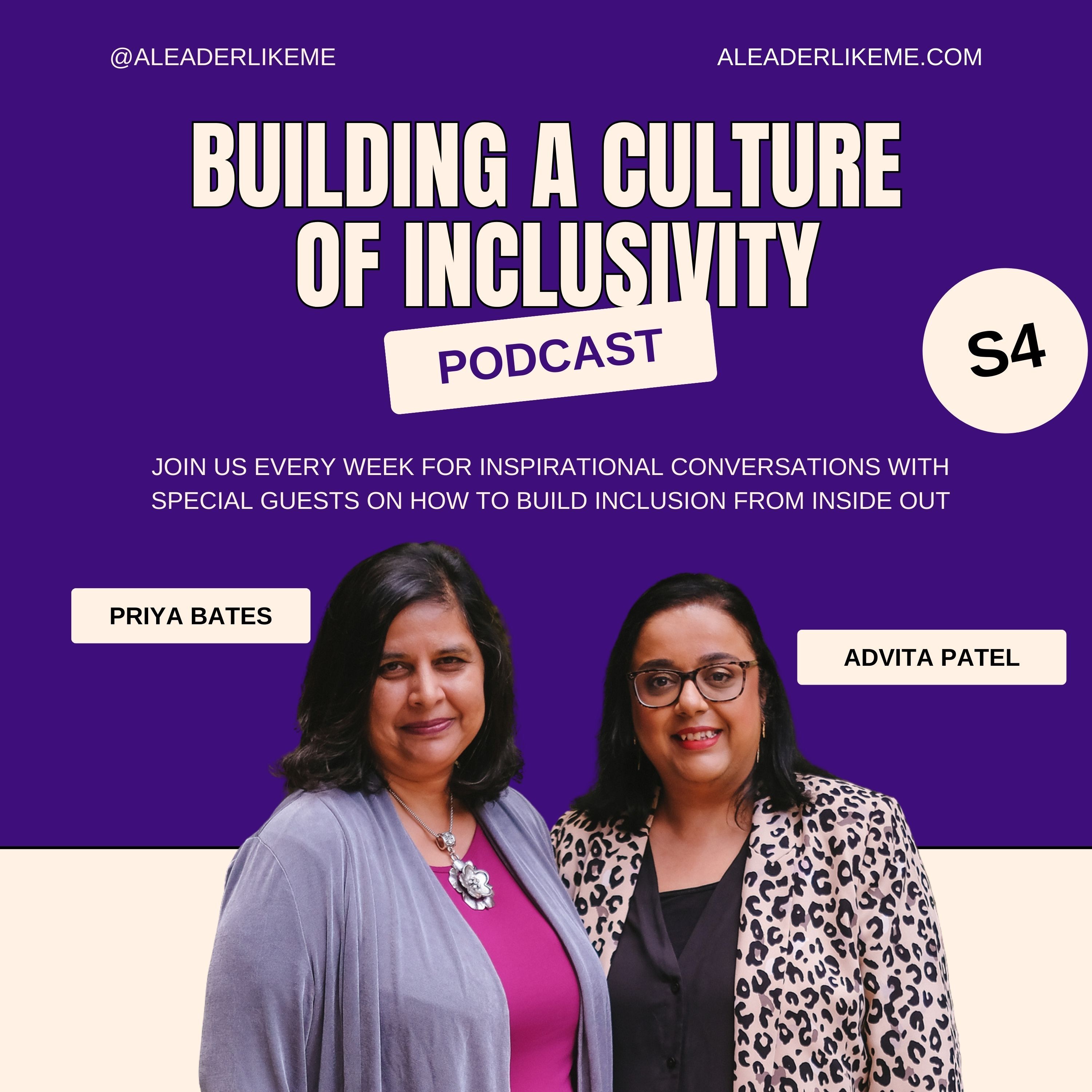
A Leader Like Me: Building a Culture of Inclusivity · 2025-02-21 · 22 min
Key moments - from our scoring
Substance score
20 / 100
Five dimensions, 20 points each
This episode features Alexandra McAvoy, a marketing professional with 11 years of experience who founded her own business (AZM) while earning a master's degree during the pandemic and managing single parenthood. Hosts Priya Bates and Advita Patel explore how Alexandra's lived experience - raising a dual heritage daughter and working within diverse teams like her rugby club - has shaped her understanding of inclusion as creating equal opportunities where everyone feels valued and heard. The conversation touches on the parallels between building inclusive workplaces and raising confident children from underrepresented backgrounds, the importance of instilling pride in diverse heritages, and the role of communication professionals as "corporate conscience" and truth-finders in an era of misinformation. Alexandra emphasizes the critical importance of scrutinizing sources when learning about inclusive cultures and internal communications, especially given the proliferation of buzzwords and misinformation. The episode resonates with operators focused on DEI strategy, internal communications, and organizational culture, highlighting how personal experiences inform professional commitment to inclusivity.
Alexandra defines inclusion as creating environments where everyone has equal opportunity regardless of who they are, what they look like, or their beliefs, while celebrating uniqueness and ensuring people feel safe, equal, and heard.
She grew AZM purely through word-of-mouth referrals, validated by her master's research during the pandemic that found word-of-mouth and electronic word-of-mouth to be the most powerful marketing strategies.
Alexandra recommends evaluating the source of information carefully - examining their background, lived experience, and expertise - rather than accepting buzzwords about inclusivity at face value, especially given the proliferation of misinformation.
She ensures quieter or less confident team members have genuine opportunities to speak and contribute ideas, rather than allowing naturally dominant voices to monopolize decisions and strategy.
Instilling confidence and pride in all aspects of their heritage from a young age helps them feel comfortable being themselves and prepares them to face potential challenges in workplaces where they may not represent the dominant culture.
Our reviewer’s read on each dimension, with quotes from the episode.
The episode is predominantly personal storytelling and emotional connection-building with minimal actionable insights or novel frameworks for B2B operators. While Alexandra shares her journey, the concrete takeaways about building inclusive cultures are generic platitudes ("creating safe environments," "treating people fairly") without specific mechanisms, data, or operational guidance that would help a leader implement change.
I think it's making sure that everyone's got any opportunity, no matter who they are, what they look like, what the beliefs are, and it's like creating an environment that supports them
look at the source of information that you're getting the information from, because there's so many buzzwords that are out there
The discussion relies entirely on well-worn DEI talking points without original perspective or contrarian thought. Themes around confidence-building in minority employees, the importance of diverse representation, and 'looking at information sources' are standard industry rhetoric with no fresh frameworks, counterarguments, or first-principles thinking that would surprise an informed operator.
what we're really talking about is fairness and respect and dignity and justice and inclusion
building strength from the inside out
Alexandra is a marketing and business operations professional with 11 years of experience and her own bootstrapped business, which provides some credibility. However, she is not a recognized practitioner or executive at scale in organizational culture or inclusion work, and her primary role appears to be as a junior team member for the hosts' consultancy rather than a subject matter expert bringing independent, hard-won experience to the conversation.
Alexandra is a marketing and events professional with over 11 years of experience
Within all me, Alexandra is the creative digital assistant, helping the team with client liaisons and meeting management
The episode contains almost no specific examples, metrics, timelines, or named case studies to ground claims about inclusive culture or business impact. Alexandra mentions her business grew via word-of-mouth and cites her master's thesis research on electronic word-of-mouth, but provides no numbers, client examples, or concrete evidence of inclusive culture principles working in practice. References to 'the Edelman Trust Barometer' are mentioned but not explored with data.
everything that I was coming back to was that the most powerful form of marketing is word of mouth, and it was electronic word of mouth
The Edelman Trust Barometer talks about the lack of trust in media and government and NGOs
The hosts conduct a softball interview focused on personal narrative and emotional resonance rather than challenging inquiry. Questions are open-ended and supportive ("What does inclusion mean to you?"), with no follow-ups that probe contradictions, test claims, or dig into operational specifics. The hosts frequently affirm rather than interrogate, creating a warm but intellectually undemanding exchange.
I love this question
I love that
Computed from the transcript - who did the talking, and the words that came up most.
In this episode of A Leader Like Me, hosts Advita Patel and Priya Bates sit down with Alexandra McAvoy, a marketing and events professional, business owner, and digital assistant for A Leader Like Me. Alex shares her inspiring journey of resilience - navigating job loss, single parenthood, and entrepreneurship - while championing equity, diversity, and inclusion. What’s Inside This Episode?
Transcribed and scored by The B2B Podcast Index.
Priya Bates : Welcome to a Leader like Me, the podcast where we celebrate the leaders making workplaces more inclusive. I'm Priya Bates. Advita Patel : I'm Advita Patel. We're the co-founders of a leader like me and the co-authors of building a culture of inclusivity, effective internal communication for diversity, equity, and inclusion.
We believe that true leadership isn't just about titles, it's about creating spaces where everyone feels valued, heard, and empowered. Priya Bates : This season we're taking you behind the scenes. Advita Patel : That's right. A leader like me has grown into a global movement and we couldn't do it alone.
So in this season five, we're introducing you to our incredible team, passionate, diverse, and driven leaders who are helping us shape inclusive cultures worldwide. Priya Bates : Each episode will highlight a new team member, their stories, their insights, and the impact they're making. You'll also hear more about us and why this work matters so much. Advita Patel : So whether you're a leader looking to drive change or are passionate about creating inclusive cultures where all employees can thrive, we're excited to have you with us.
Let's dive into season five of a leader like me. Priya Bates : In this episode, we are interviewing Alexandra McAvoy. Alexandra is a marketing and events professional with over 11 years of experience. In 2022, she founded a ZM after earning her master's degree in digital marketing and communications during a global pandemic, a period in which she faced redundancy and temporary jobs all while raising a newborn on her own.
Through a ZM. Alexandra is dedicated to helping businesses thrive by helping them manage their daily operations, allowing them to focus on growth, innovation, and creativity Within all me, Alexandra is the creative digital assistant, helping the team with client liaisons and meeting management. I hope you enjoy this episode. Hello, Alex.
We're so excited to have you here today. Let's start with a question we ask all of our guests. If you were to introduce yourself without mentioning your job or title, what do you want our audience to know about you? Alex McAvoy : Oh, I love this question.
So first of all, I am a mother to a dual heritage daughter. She's three years old and she's currently at preschool, so this is my time to shine. I also have a crazy working caucus spaniel, who believe it or not, is much harder than the child and much more demanding. I play rugby with a fantastic group of women.
I do that most weekends throughout the summer months and in the winter it's a lot of cold winter training, including last night. It's Tuesday, eight till nine. So yeah, it is definitely discipline and motivation to get there in the cold British weather. I am a social butterfly.
I've got quite a few friends who we always like to go out for brunch and lunch and all that fabulous stuff, and I've got quite a tight knit family. I absolutely adore my parents and they would do so much for me, and I'm in such a lucky position to have them both with me and yeah, I've got a fantastic sister and a niece as well who's seven weeks younger than my daughter. So they've grown up sisters and they are very much like chalk and cheese and fight like cat and dog. And yeah, one minute they're fighting and the next minute they're kissing and holding hands.
So it's fantastic. It's always a ride. Advita Patel : I love that. I mean, I've known you for a very long time now and we work together for a full disclosure incon level, but getting to know you, I know how important family is for you and also your daughter.
Like you said, your daughters do heritage. I know you're really passionate about making sure she understands both parts of her heritage and is comfortable and happy and understands what that looks like and what that means for her. So when you kind of take all of that in consideration and the lived experiences that you're going through with your daughter, what does inclusion mean to you? Alex McAvoy : I think it's making sure that everyone's got any opportunity, no matter who they are, what they look like, what the beliefs are, and it's like creating an environment that supports them and supports who they are and celebrates the fact that people are so unique and different and that's fantastic.
It's so great that everyone has got different wants and needs and yeah, I think it's just about creating a safe environment where everyone just feels equal and I really want that for her. Advita Patel : Like Alex McAvoy : You say, I'm so supportive of wanting to instill that knowledge in her at a young age that she might not look the same as me or her grandparents, but that's okay. And how wonderful is it that she's got this nice gorgeous curly hair where mine is straight and she's got lovely olive skin where mine is white, and yeah, it is just all about making sure she's comfortable and not embarrassed or afraid to be who she wants to be.
Advita Patel : The confidence that you can instill in a young person is so important when it comes to them being able to feel bold and brave and put themselves out there when they don't look like the dominant culture. And when you're a minority in a dominant culture, that can be a challenge, but if you can instill that belief and that confidence in somebody from a very young, : It's critical. And that's why Priya and I are so passionate about the impact we leave and the legacy that we leave.
So people who are coming into the world and the careers and growing up, they don't face the same challenges that we may have faced when we were in the workplace. And that's one of the reasons that we connected Actually, PRI and I reached out to Priya Tasker for support when I was setting up comms rebel and bearing in mind there's a generation gap between the two of us. Our experiences were fairly similar, which demonstrated that not a lot had progressed in that kind of inclusion space, and we still had similar kind of biases that we went across in the adversities that we face, but if we can help get rid of that when your daughter's ready in the workplace in 18, 20 years time, we would hope that that doesn't exist.
And it's just the norm. It's not a conversation that needs to be had. Alex McAvoy : Yeah, definitely. And I think as a white woman living in the uk, we are the dominant culture, and I have been very fortunate in my position and not witnessed the same things that you and Priya have witnessed.
And when I hear and read about the things that you've been exposed to, it really makes me sad. It physically hurts me because I just think it's mental how people can be treated so differently for different qualities and aspects of themselves, and it is eyeopening for me. So yeah, so I think working with you guys and having this kind of knowledge now, like you say, is because it's going to be so beneficial in my personal life as well and just helping her and how much I love the work that you guys do.
And it is really just empowered me as well and just making sure that everyone is equal and heard equally as well. : And this is the thing as well with the rugby team, we are a team and we are predominantly white women, but there's people in there who aren't as confident, and I make sure that they have their opportunity to speak up because there are naturally people in that team who are so much more dominant in their confidence and their knowledge, and they're the ones who think that they should do it this way, but there are other people in that team who have the chance to speak and don't get given that chance.
So I make sure that I am the person that like, no, no, no, we need to be open to everyone here. I let's listen to everyone. Priya Bates : And it really is one of the things we talked about years ago was the fact that what we're really talking about is fairness and respect and dignity and justice and inclusion. How do we all feel like we're part of something, especially when we're talking about our organizations, but I can relate so of what you talked about, Alexandra, especially when it comes to raising children.
So I have mixed race children as well, : And now they're 19 and 22 and really starting their work careers. And it's been really, the big part for me, and you could probably relate to this, is ensuring what they're bringing with them is pride in everything, in all of their heritages. They're as excited about the afternoon teas they can have from their British roots, and they're proud of their home, which is Canada, and they're also proud of their Indian roots and are exposed to that.
And it's really, it's about all of these things being an ad, a powerful position, those experiences are wonderful and seeing that way as a real source of pride, and I think that's really exciting to see when you avita talks about confidence. I talk about building strength from the inside out and it's really, that's what we're trying to do for individuals and or organizations where we actually move in this direction, where we do it based on love and joy and hope and optimism, which is kind of counter to what we're hearing in the world sometimes.
So I think that being able to have that conversation inside our organizations and within with our colleagues and our friends and our family is such an opportunity that exists today. So I'm going to ask you a question. What has been your proudest achievement to date? Alex McAvoy : So I can have two.
My daughter is my proudest achievement. I'd say I am a single mother and the father is not around. So it is purely just me and the way that she is and she loves and she's confident and she's caring, and the beautiful woman that she's going to become, a lot of that is down to me and the way that I have shown her to be and react. I had say my second proudest moment is proudest achievement is the fact of I've grown my business purely through word of mouth, which might sound odd.
I do marketing, that is what I specialize in. And I also help with more the administrative type tasks that I do for a vita. But my specializing in background is marketing. And I remember doing my master's work in Covid when I was pregnant and I'd just been made redundant from a company and I was like, what am I going to do?
: And anyway, in the master's, everything that I was coming back to was that the most powerful form of marketing is word of mouth, and it was electronic word of mouth that was coming up. And I was like, oh, that's interesting. And to now be in the position where I am three years down the line of having my own business almost, and I've not really done much marketing is just, it blows my mind in a way that the research that I was doing was right. How crazy is that?
So yeah, I'd say that was my proudest achievement. And I think one of the things for being a priority for 2025 is exposure. I want to get myself out there. My daughter is going into school soon, I'm going to have more time in my hands.
And I view this as a very much of a privileged situation, the fact that I've been able to have such a healthy work-life balance and being able to support my daughter, but also be there for her and be able to really flexibly work around her. : But now I'm just got that kind of passion in my belly to be like, right, she's going to be going into school and I'm excited to take this business further and just get out there, which is really scary because being on video and doing that kind of thing, taking pictures of myself, I'm like, ah, but I know I need to do it and I want to do it, and I know that's the way to grow.
So yeah, 2025 is my time, and this is my way of being like, you're going to be accountable for this, Alex. So chat back in December 25 and be like, how many videos have you done? Advita Patel : I think it's so important though, to your point, to push ourselves out, the comfort zone that we can have done, find ourselves in. And it applies to all walks of life and the challenges that we come across and some of the adversity that we face.
Like you said, you're a single parent, you need that flexibility. You want to make sure that your daughter has that confidence herself, and she sees the success that you are bringing. So she recognizes that she can do it if she really wanted to. And we are facing as women, pya and I again have spoken about this quite openly previously about being women, whether you are underrepresented or not, we are facing a huge amount of challenge in the world as the world, I suppose, recognizing that we are fighting back just as they did in the twenties when we're going for the vote.
: And we're seeing that kind of come out in some of the decisions that some of these powerful billionaires are making, which is only ever going to impact women and underrepresented people ultimately. So the fact that you are showing up, you are demonstrating this is what you can do, this is how you can do it, and I'm going to keep on going, will give hope. I would think to those who relate with you and recognize some of your story so they feel empowered to do it as well. And that's what we need to do in this times of uncertainty and challenge is how can we help each other out?
How can we support each other? How can we leverage each other to the next stage? Because right now, society feels a little bit divided and tough. So wherever we can hear and support each other is critical.
So I love those achievements. Alex, when you are thinking about inclusive cultures, and we touched upon this in the conversation that we've had so far, and the listeners who are listening into this conversation, what one piece of advice would you give them if they want to learn more about inclusive cultures? You've gone through a journey yourself to try and recognize and understand a little bit more so you can support your community and the family. But one piece of advice would you give to others who are in similar or would like to know more.
Alex McAvoy : I had probably say, look at the source of information that you're getting the information from, because there's so many buzzwords that are out there, people wanting to use things like inclusive inclusiveness to their advantage, and they might not know about it the same. So kind of look at the source of information, their background, what they've been through, and just have that kind of mentality when learning about the topic, no matter what topic it is, but especially internal communication, inclusive communications, look at the source.
Advita Patel : Yeah, I love that. And again, misinformation. Misinformation is rife. And when the recent announcement that meta is no longer going to do fact checking and stuff, we even have to be more vigilant with the information that we're reading and seeing.
So a great, great advice and point. Priya Bates : And I agree. I think that's the biggest opportunity for communication professionals, whether they're external or internal, that we've all most become, we've talked about being the corporate conscious for a long time, where the truth finders, : The fact finders, if you will. And we need to, the big opportunity is building trust inside our organizations because outside the organizations, people don't know who to trust people.
The Edelman Trust Barometer talks about the lack of trust in media and government and NGOs, and it'll be interesting to see what the next one says, but as we have this reduction of trust, that we have an opportunity to build it inside our organizations with the people that we work with. And I think that's such a big opportunity. And we do that through providing the real facts and information and helping people understand. And I think that's awesome.
So why are you excited about working with a leader like me? Alex McAvoy : I think it's learning more about the expertise that the team have, including yourselves. I've already learned so much from you, and I know that there's so much for more for me to learn. And it's also kind of learning a little bit more about the different walks of life that the team have built on.
Everyone's so different, and I find it so interesting on how people got from one place to the other and what happened in between and what to shape them the way that they are. And obviously not every story is positive, but how everyone in the team is just so positive in terms of what's happened to them and how, yeah, it's just learning from them and how you can overcome adverse things within your life, not just your career. So yeah, I'd say just learning. I love to learn.
Advita Patel : Love that. Yeah, and you're right, we are so privileged and lucky to have attracted the talent that we have to the associate and collective model. And you're right in terms of saying that learning from people's positive experiences that they've then translated into positivity to help them be the person that they are today. You can go one way or the other, right?
And I've spoken very openly about some of the discrimination that I faced when I was growing up, and I could have made a choice in how I managed that. And each to the road, you have to go do what you have to do, and that's important. But listening to some of those stories that you mentioned of some of our associates and the folks who are working with us has been, even for Priya and I, really inspirational and we've said almost in every podcast that the decisions that we've made about who to work with hasn't been taken lightly.
: We've spent a lot of time and energy finding the right additions to the culture that we're trying to create a leader like me, so we can give people access to some incredible minds and also opportunities. And that's what we hope we offer the clients and the organizations that we hope to support in the future. Alex, I mean, we haven't said it in this podcast, but this is your first podcast interview and you have been a remarkable guest, and I know that our audience is really going to enjoy this conversation.
So well done. I mean, that is, Alex McAvoy : Oh, thank you. Thank you. A better place to best podcast.
Advita Patel : We feel really lucky that the best podcast has been with both of us, and we really appreciate you and your time and the support that you've been giving both of us over the last few months and well last couple years actually. So thank you. And we're looking forward to working with you and the rest of the consultants in the future. Thank Alex McAvoy : You so much.
Advita Patel : Thank you so much. See you soon. Bye. That's a wrap on this episode of a leader like me.
Thank you so much for spending time with us and for being part of this journey towards more inclusive organizations. Priya Bates : If you found today's conversation valuable, don't forget to subscribe. Leave us a review and share this episode with someone who needs to hear it. Advita Patel : And if you're looking for more ways to build an inclusive culture in your workplace, check out our book.
Building a Culture of Inclusivity is packed with insights and practical strategies to help you take action. Priya Bates : You can also learn more about our programs, services, and how we can support your inclusion journey at www a leader like me.com. Advita Patel : We'd also love to hear from you to connect with us on social media and let us know what resonated with you today.
Priya Bates : Until next time, keep leading with purpose, inclusion, and authenticity. Advita Patel : Take care, and we'll see you soon.
Other episodes covering the same guests and topics, from across The B2B Podcast Index.
 Reinventing Legacy Companies in an AI-First WorldC-Suite Sales & Marketing Perspectives · on Edelman Trust Barometer78 / 100
 How Dagne Dover Turned Word of Mouth Into Its Biggest Marketing ChannelShopify Masters · on word-of-mouth marketing77 / 100
 Why Founder Led Brands are Breaking Ecommerce w/ Devon LevesqueSweat Equity · on word-of-mouth marketing76 / 100
 The Effective CMO: Land O'Lakes' Heather MalenshekThe WARC Podcast · on Edelman Trust Barometer72 / 100
 Earn It! with Steve PrattFunnel Reboot · on word-of-mouth marketing70 / 100
 You Will Break Before Your Leadership Strategy Does with Allan Cooper"You're In Charge" with Glenn Pasch · on word-of-mouth marketing69 / 100S5 EP7 How to lead inclusive change from any role with Rachelle Henderson46 / 100S5 EP6 - Why accessibility is good for business67 / 100S5 EP5 - The Real Risk of Exclusion: Janelle Benjamin on Building Safer, Stronger Workplaces59 / 100S5 EP4 - “From Fear to Fulfillment: Building Inclusive Cultures with Curiosity and Courage53 / 100S4E8: Building a Culture of Inclusivity with Christelle Beneteau77 / 100