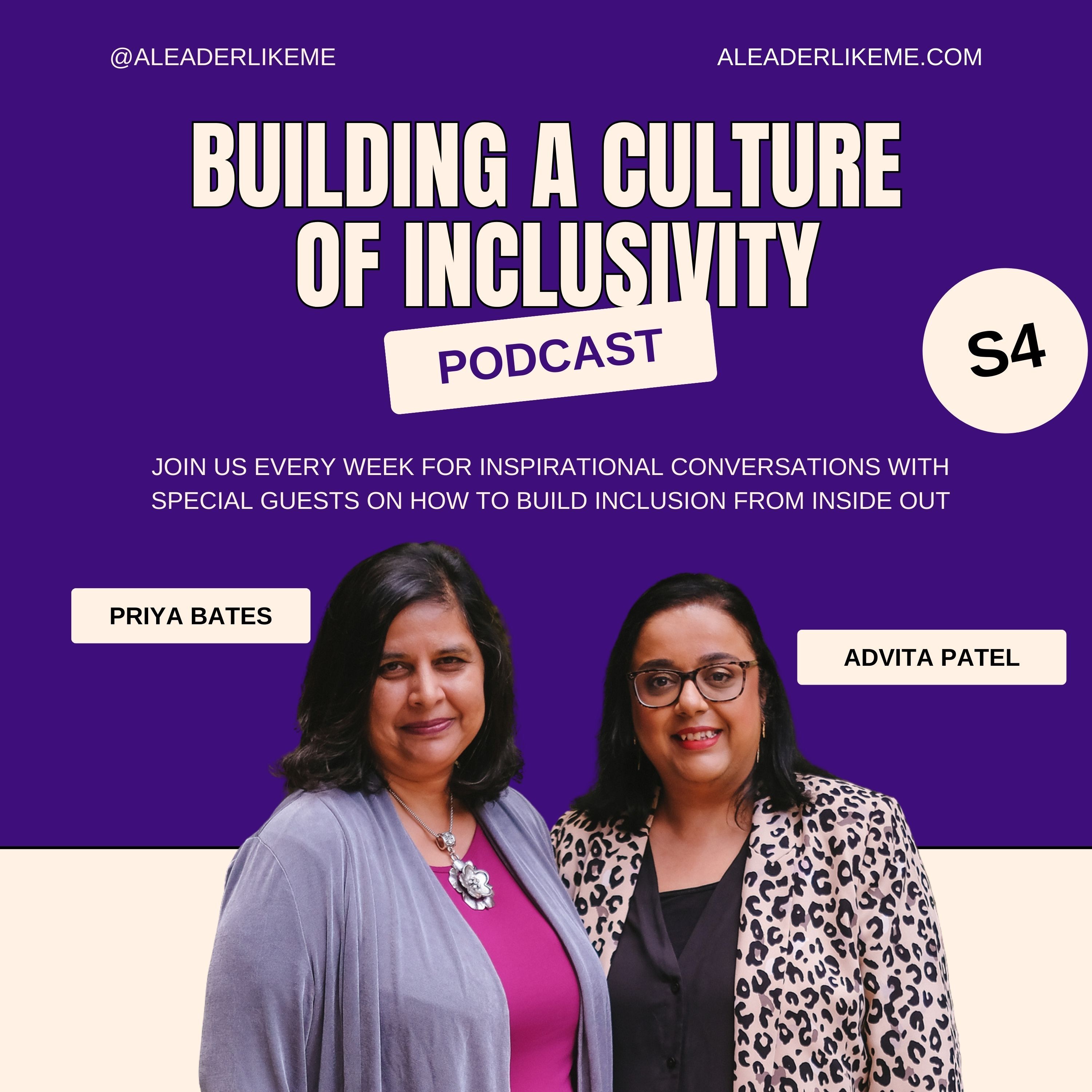
A Leader Like Me: Building a Culture of Inclusivity · 2024-09-26 · 39 min
Key moments - from our scoring
Substance score
57 / 100
Five dimensions, 20 points each
Christelle Beneteau brings deep expertise in global HR strategy and inclusive leadership to this conversation about organizational culture. As Chief People Officer at Ferring Pharmaceuticals, she manages human capital strategy across more than 55 countries while championing diversity, equity, and inclusion initiatives. The discussion centers on Ferring's DEI roadmap and Beyond Barriers framework - a locally-driven approach that balances global company values with cultural and legal nuances of each market. Ferring's Building Families at Ferring (BFF) policy emerges as a standout example of lived inclusion values, offering comprehensive fertility treatment support, 26 weeks of parental leave (non-differentiated by gender), and emotional support training for managers. Beyond internal policy, Beneteau highlights external impact: the SaveBirth initiative has delivered 1.5 million doses of heat-stable oxytocin to prevent maternal mortality in low-income countries, and partnerships with organizations like Green Lamp support maternal health infrastructure in Ethiopia. For B2B operators, this episode demonstrates how to operationalize inclusivity across geographies, connect values to tangible benefits, and align organizational mission with employee and societal needs.
BFF is a groundbreaking three-pillar policy that provides comprehensive fertility support (IVF, egg freezing, adoption, surrogacy), 26 weeks of parental leave for both birthing and non-birthing parents without gender differentiation, and manager and colleague training on emotional support for family-building journeys.
Ferring balances a global 'Ferring way' with locally-driven action plans through the Beyond Barriers framework, allowing each country to set KPIs and priorities relevant to their specific diversity gaps while adhering to company core values of respect, self-awareness, inclusion, and belonging.
SaveBirth is Ferring's 20-year project to develop heat-stable oxytocin (caboose ferry) for preventing postpartum hemorrhage in low-income countries; 1.5 million doses have been delivered across 15 countries, with the WHO recognizing it as essential medicine and Ferring named to Fortune's 2023 Change the World list.
Organizations can partner with nonprofits like Green Lamp, which trains midwives and health workers in Ethiopia through a five-year program providing infrastructure, solar power solutions, and community outreach - a model replicable across industries.
Start small rather than seeking a silver bullet; Ferring rolled out the Gallup StrengthsFinder methodology globally to reframe inclusion around individual strengths rather than deficits, helping resistant leaders see change through a positive lens.
Our reviewer’s read on each dimension, with quotes from the episode.
The episode contains several substantive ideas - strength-based culture, embedding DEI across functions, the three-pillar BFF policy structure - but relies heavily on enthusiasm and repetition rather than novel insight. Key concepts like strengths methodology and embedded DEI are well-established in HR circles. Much of the runtime is devoted to passion and storytelling rather than operational depth or surprising data.
The best advice to leaders, it start small... look at what strengths people are bringing, so looking at what makes people unique, what the quality they bring to the team
we don't have dedicated DEI people in our organization. We have embedded DEI in many jobs
The core frameworks are standard industry practice: strengths-based development (Gallup StrengthsFinder is mainstream), embedded DEI roles, and compassionate parental leave. The Save Birth initiative is genuinely distinctive for Ferring, but the overall conversation recycles familiar inclusivity narratives without contrarian or first-principles thinking. No challenge to prevailing DEI orthodoxy.
we really promote the inclusivity because then you bring your uniqueness and you don't have to conform to the norm
there's definitely a shift happening already, and it's more towards embedding the concept of inclusivity in everything we do every day
Christelle is a credible operator: Chief People Officer at a global pharma company, 55+ countries, executive committee member, prior senior roles at eBay, Novartis, Implify. She has implemented real programs at scale and speaks from genuine experience. However, she is primarily an HR/people leader rather than a CEO or business operator, limiting her ability to speak to broader business strategy or revenue impact.
Christelle is the chief people officer at Ferring and is responsible for delivering all aspects of Ferring's human capital strategy
Before joining Faring Christelle held us number of senior HR positions with several major global companies such as eBay, Novartis, and imply
The episode includes concrete numbers: 26 weeks parental leave, 1.5 million doses of oxytocin delivered, 70,000 maternal deaths annually, one in six couples struggling with fertility, 15 countries reached. However, vague claims also appear ("we've got some external example", "I've got two or three others") and metrics about program adoption or ROI are absent. No data on internal diversity metrics, program participation rates, or business impact.
70,000 women die every year... while we talk today. So every 67 women will die during our conversation
1.5 million doses have already been delivered to women in 15 countries
Hosts ask open, warm questions and affirm the guest repeatedly, but rarely push back, challenge assumptions, or dig deeper. There are few genuine follow-ups that probe implementation barriers, measurement, or resistance. The exchange is collegial and supportive but lacks the tension and rigor needed to extract harder insights. Hosts often finish each other's sentences rather than creating space for unexpected answers.
I think I have to say to you, Christelle, you never should apologize for getting excited about a policy
Both of us are with you. Priya and I have spoken about this a lot
Computed from the transcript - who did the talking, and the words that came up most.
In this episode, Priya and Advita are joined by Christelle Beneteau, Senior Vice President and Chief People Officer for Ferring Pharmaceuticals. Christelle leads all aspects of Ferrings Human Capital Strategy, Corporate Communications and sponsors the ED&I Strategy, she also serves on Ferring's Executive Committee. Before that she held similar positions with a number of major global companies such as Ebay, Novartis and Implenia, and is trained as a biochemist at the Ecole Supérieure de Chimie in Lille, France, and also holds a Master’s degree in Biochemistry from Heriot-Watt University in Scotland. Christelle speaks passionately about inclusion and why this plays such an important part of life at Ferring Pharmaceuticals. ______________ Did you know? you can now order Priya and Advita's new book Building a Culture of Inclusivity Order from Discount Code ALLME20 The book is available in most online stores including Amazon, Barnes & Noble, Waterstones, Indigo etc… and in some physical ones as well. Don't miss out. Get your copy of the book now and be part of the DEI conversation.
Transcribed and scored by The B2B Podcast Index.
Priya : Hi, I am Priya Bates from Toronto, Canada Advita : And I'm Advita Patel based in Manchester UK Priya : And we're co-founders of a leader like me. Advita : This season of a leader like me is all about building a culture of inclusivity and we have got some incredible guests for you. Priya : I hope you enjoy this episode. Advita : In this episode of a leader like me building a culture of inclusivity, we are thrilled to have Christelle Beneteau join us.
Christelle is the chief people officer at Ferring and is responsible for delivering all aspects of Ferring's human capital strategy, including corporate communication and sponsoring all EDI initiatives. She also serves on Ferrings executive committee. Before joining Faring Christelle held us number of senior HR positions with several major global companies such as eBay, Novartis, and imply. In our conversation, Christelle speaks passionately about inclusion and why it's such an important part of the global work they do at Faring.
We really hope you enjoy this conversation as much as we did. Welcome Christelle to our podcast, building a Culture of Inclusivity. Now our listeners have heard your professional title. What we'd love to start our questions with is Wolf, if you were to introduce yourself without mentioning your job or your job title, what do you want our audience to know about you?
Christelle : Oh, I love the questions and it's actually quite good for setting the scene for today's conversation. So behind the title, I'd like to say I'm a mother first and foremost. I've got three children, a boy of 15 and twins, boy and girl of 12. I'm also a wife, my husband is an executive, so pretty busy at home.
I'd say we are, I am and we're very international. We're very international family. I'm French by birth, but I've lived and worked in several countries, married with an Irish British husband. It makes the World Cup football and rugby or soccer for very interesting times.
In our house. We speak English and French at home, so I'm trying to bribe the kids so they support France that don't always win, who I'm also a friend. I don't have hundreds of friends, but I've got a good bunch of close friend and I love good wine, good food with age. I go for quality rather than quantity.
I like running. I mean not necessarily the running beast, but the fact that it helped me keep the weight off a little bit. Yeah, so I guess that's why also having worked in different country, I'm very aware of the culture differences, very different style of people of personalities. So yes, this is who I am without mentioning what I do as a professional person.
This is me first and foremost. Priya : Well, what's very clear is you've got this incredibly full life and I love that, right? I love that, that you've got this full life of, and there's different parts and I think we think about that. We bring all of those things and we leave some behind from our workplaces, but it's great to have that balance and have that full life.
You talked about working in different countries. You're the senior vice president and chief people officer and you manage different cultures in more than 55 countries. So I'm curious about what tactics have you employed to make sure there's fairness and equity across those cultures while taking into consideration legal requirements of those countries? It must be very complex.
Christelle : Thanks for your question, Priya. I think it's not easy for sure because as a global organization we need to have a Ferring way of treating people, but as you said, there is cultural legal differences in each country. So what we do, we work with all our HR organization through the company to ensure both local compliance understand the local gap and priorities that they have operating under a more global banner. Because at the end of the day we have the Ferring way of doing things.
So for sure we operate under that banner, but we need to adapt to the local needs. So we have developed a DEI strategy and a roadmap as you would expect from a company our size. We have different culture with different perspective and challenge, and we have one initiative in particular and that's called Beyond Barrier. And the Beyond Barrier seeks to support locally driven action plans.
: So looking at how we address the gaps in diversity equity most relevant to the community where they're operating in, clearly there is no one size fits all, but based on the company-wide, the Ferring way, commitment to respect self-awareness, inclusion belongings with our part of our core values for the company, we also at the same time seek to reach as many people as possible and to bring to life the value of inclusion and equity that we have working at faring. So it's that balance between the overall way of faring and ensuring the values are lived.
We're respecting, as you said very well the culture of each and the legal requirement of each countries, Advita : And that is so important. You mentioned there Christelle about allowing and giving people permission to create their own plan based on the culture and the nuances, right? In each of these different countries, and we work with global organizations and stuff and sometimes there's this desire to lead from a global perspective to make sure that everyone's aligning with their values and the behaviors and all of that stuff.
But where the power is and where the permission comes is where we give people the guidance, but then you allow the local teams to develop something that's more meaningful for them. Either it's around the inclusion and equity and equality and all those bits and pieces, but also just the ways of working, the ways of working in each of those 50 plus countries that you look after. Everyone will have their own way of doing things and people may or may not agree with that and that's okay, but as long as it works for them and they're delivering against the objectives from faring and also what is required for the company to keep on thriving in the right way.
Christelle : I mean, you're right a vita, the priorities will be different and you really need to respect cultural differences and you might have an aligned strategy and aligned priorities, but KPIs, what you're tracking will be very, very different in one area. It could be racial diversity, it could be age diversity, it could be gender diversity. It really depends on the country. So that's the challenge that many organizations have and we obviously have that too.
Advita : And Priya and I are both qualified cultural intelligent assessors. So both of us were realized within our roles as communication professionals that the world is actually getting smaller and there's now this, we are working multiculturally across different departments. Even in your home town you may be working with people from different countries and different personalities. So the cultural intelligence, what you just shared there, crystal, allows us to understand those areas where giving people grace in terms of how they do it and allowing them to be confident in the plans that they're putting together and you trust them to deliver in the way that they need to deliver.
So yeah, we're fully passionate about cultural intelligence and it is a key role that we're seeing growing over time. So you talked about Beyond Barriers, which I've done some work referring and something that I love that concept. The other policy that I am a big fan of is also you are building families at faring policy and all the organizations that both of us have supported and individually supported. That policy is one of the best I have seen in terms of inclusivity.
Would you be able to give our listeners a brief overview about this policy and why it's so important to faring? Christelle : Yeah, so spoiler alert, you are going to see a passionate christelle. You see something that I think not just me, the team, the whole company, well they're very proud of. I mean you did mention that you work with us so a little bit and seriously, what we're really proud of is our building family at faring policy.
So we call it BFF, so it's not best friend forever. So when we speak about BFF at Faring is the building family at faring. So I'll give you a very high level of that groundbreaking policy, but maybe the why first faring we just established about the global pharma company, so a pharmaceutical company and one of our main therapeutic area is around the reproductive medicine. So we help people around the world building families and the really core purpose and what we firmly believe in our company is that anyone has a right to build a family no matter where they live, who they are, and you're talking about religion, sexual orientation, age, gender, et cetera.
: And well, it starts at home. So we need to start helping our own employee in their family building journey. So that's a kind of why it's so important to us. So what is and teaser, I'm going to say what is so about two years ago in July, two years ago, so it's a bit more than that now.
We launched BFF, which is absolutely, you said it's unique, it's a really groundbreaking policy and has twofold. All our employees linked to equity, everyone who wants to embark in their family building journey, and that policy has three main pillars. So I'll try to keep the passion out and I keep it high level. The first pillar, which is really key is to support with a conception.
And we know more and more couple, one out of six couples that the WHO reported have some kind of struggle building their family and one out of six couple, this is huge. So if you have no experience yourself, you definitely know someone in your network that are, they're probably suffering in silence, but they are struggling. And so what we're doing at Ferring for all our employees, we support the conception. It can be fertility treatments or IVF, it could be egg freezing, but we also support through with adoption or surrogacy.
So it's really a full palette of fertility conception support. That's the first pillar and is very much aligned with what we do as a business. : The second pillar, which I'm trying to get the excitement and passion away, but I can't. The second pillar is around the parental leave.
We have 26 weeks of parental leave and nice for birthing and non birthing parents of two mothers and fathers because we don't differentiate, we do not assume or take any assumption on who in the family take responsibility of raising the child. So it's really 26 weeks. And even in that parental leave, because I was looking more and more reading, more and more report where women going through miscarriage, we also have some compassionate leave when you're going through your fertility treatment, you have some leave.
So it's really a true support. And I would say it's the financial support because in many cases in my own family you think, do I try IVF or do I build a house? Some people have had to make some pretty big compromises. : So I think we don't want our employees to have that.
And I mentioned the three pillars. I mean the third one is equally important based more gentle. It is the emotional support. So we've focused a lot of our training, raising awareness with managers, colleagues, team members to how can we support any future or willing parent or new parents before they enter parenthood or when they come back to work.
So it's more around the training and the education. So those are the very high level three pillars. And I'll stop here at Vita because I could talk for the rest of the afternoon and we don't want to, but this is really groundbreaking. However, we see more and more company following through in particular around the offering the fertility treatment.
I think you see more and more company in the new sense doing that. And that is something we're really passionate about for our employees, but we want to make some noise because it is a very key benefit and I think it will really help the company attract and retain talent as well. So I'll pause here so we don't spend the next hour on it, but it is pretty unique. Yes, Priya : I think I have to say to you, Christelle, you never should apologize for getting excited about a policy because we never see, you don't see that that often.
Exactly. So when you can get excited about what the organization offers because it's so connected with your employee needs and it's unique, we should be shouting about it, we should be excited about it. And I love how thoughtful the organization has obviously been from the B BFF abbreviation, thinking about that kind of dual meeting, but also about how thorough the policy is. It's not that one of the terms I use all the time is launch and leave.
We do one and done. We don't spend a lot. We've checked a box, we've sent something out there, but we haven't thought of how it lands. And the fact that you've looked at the life cycle and all of the needs of your employees at different points in that cycle is really considerate.
So when you talk about things like respect, these are values like respect brought to life, and those are the connections that we should make, what connects our people at the end of the day. And I love that. So I think never apologize for it. You should be shouting about it because more people need to know about these kinds of programs.
Now we in Canada are a little spoiled. We have up to, I had one year maternity leave : In Canada, we have now people can take up to two years here. And we have companies and organizations and a system that is very supportive of our medical, our healthcare. And so I've always felt very privileged to have that opportunity.
And you're absolutely right, there's so many conversations. People are talking about it more openly nowadays in terms of struggling with reproductive health. And I think that it's great that we're having the conversations because knowledge is power and it allows for the support. Christelle : If it remains a taboo, should I say topic, people will suffer in silence.
And right now we have the medicine, we have the support, we have in some cases it's still very difficult, but the vast majority of the cases help is there and you get it, then you will be successful. And it's really hardening. Maybe it's the mom talking here, but we have loads of different testimonials of fathers and mothers who really thanked us for, because without that they could not have afforded it. And that is the biggest gift.
So it's core to what we do, but Ferring aim to be leader in reproductive medicine. And I keep saying leadership is not just around market share. Leadership is a leader, is a leader if someone follow them. And I think what we aim to be as leaders in that field, IE hey guys, big companies or small companies, try to put that in your benefit program because this is the right thing to do for the society because the birth rate is decreasing.
So it is a societal societal issue. So yeah. Priya : So let's talk a little bit about, you said that faring is incredibly passionate about reproductive medicine and you're doing some great work to address areas of inequity in that. Share with our listeners some of the things that you're doing from an organizational point of view.
Christelle : Yeah, I mean I've spoken a lot about V FFF right now. So we've got some external example, but sorry, that's internal. So maybe what I could share, which also could be relevant is external example of what we do from an organizational standpoint. And I've got plenty examples, so I'll keep it short, maybe two or three that are from different area.
The one I'm again really proud, you're going to think I'm a proud person, but I am with what we do because it's called project self birth. So we believe, I mean everyone believed no woman should die giving birth. I mean giving birth is the most natural thing to do. However, it's a huge threat in low and lower middle income countries.
So the postpartum ate. So when a woman give birth is sometimes this woman bleed very heavily and in a lot of cases it causes maternal death. : And to give you a number, 70,000 women die every year if you do the math while we talk today. So every 67 women will die during our conversation.
Five or six women would've died in the world just giving birth. And 90% of the birth of the deaths, sorry, will have a cured in low or lower middle income countries. So talk about inequity about the topic of today. And those deaths happen despite that condition being treatable or even preventable with a medicine that already exists today.
Right? So the medicine, I won't go technical on you, but the medicine is called oxy toin and that medicine need to be kept refrigerated. And you can imagine the real problem in those lower country where lower income country where you don't have reliable power or refrigerator, et cetera. And that's where we come in.
So 20 years ago we set ourself of developing a heat stable version. : It's taken 20 years. Fast forward two years ago we launched it. And I'm really delighted to say that the WHO has actually added that drug caboose ferry to the list of essential medicine.
So it's now available. And seriously, Priya, I will never forget when the first dose was given to a mother in India about two years ago now, and 1.5 million doses have already been delivered to women in 15 countries at cost. And thanks to that faring was known named last year in the Fortune 2023, changed the world least in recognition for what we do and we aim to save by 20, 30, 20 million women just through that.
So that's what I'm super proud and I think we're a company that believes in equity and that every woman should have access to quality care, necessary treatment during the pregnancy, but also during childbirth. So this is one key example of what we do in the giving product away. And I've got two or three others, but I don't want to, you might want to jump in and ask, but this is one example that we have of what we do. We've got two others, but I don't know how much time you want me to spend Advita : On it.
No, no, please do share. I mean read about this say birth initiative and it's absolutely incredible the lives that you're transforming and changing across the globe, women who would not have lived or the babies and the fact that you are helping and supporting and allowing lives to thrive in countries that would never have had that opportunity. It is incredible the work that's taking place in this area. And the passion, again, just reiterating what Priya said earlier about the B FFF policy, same as this, the passion and the care and respect that you show for this is quite clear christelle, and we'd love to hear about the other two that you mentioned as well.
I think it's important for our listeners to know this, to know that we live in a one thing that is quite, and Priya, and I say this all the time, that sometimes people think that we're not progressing quick enough and there isn't enough change happening and there's still lots of unfairness and there is a hundred percent there is. There's no denying that. However, I think it's really important to talk about the successes and the improvements that are taking place to give people hope over fear, : To demonstrate that we are investing in women's health not as quickly as we'd like, but we get in there and there are organizations like yourself who are doing this.
So I think the more that people know about this and educate themselves that can help spread the word and hopefully get more investment in place like this. So please do share. The other couple of initiatives would love to know Christelle : And for me social and maybe because the first one is obviously a big one, but people might listen to us and say, yeah, but it's pharma. I don't work for pharma industry.
Maybe that's why I wanted to get the kind of trying to think about which example. The second example I'd say everyone can do it. So we've been partnering with an organization, I don't know whether you heard of them, but they're called grid. Lamp and basically green lamp.
What they do, they empower women and girls to make childbirth safer in Ethiopia. Why Utopia is because it's a country that has the highest rate of maternal in infant mortality in the world. So what they do, and we obviously work with them, we provide some grant and funding. There's a huge demand for nurses, midwives, health workers.
So it's working through Greenland to really provide, it's a five-year program by the way, and that basic maternal health infrastructure and community outreach. : So for example, there's training, mentoring of midwife, improving the healthcare facilities and grid lamp recently provided like many solar suitcase. So you're in this country, they might not have access to electricity, but with this solar suitcase, it provide the solar power to supply lightning and power to either mobile communication, medical equipment use in emergency care.
And I think okay, even if you're not a pharmaceutical company, you can still partner with Greenland. Even if your business is known predictive medicine, you can still support Greenland or other organization. I'm just using one example. So first example, save birth.
Yes, it's maybe more relevant to a pharma industry, but even if you don't work any industry you work, you can do that. So that was the other second example because it's relevant to reproductive medicine and maternal health, but you can do it even if you're not a pharma in a pharma industry. Advita : And I think that's really, you made a very valid point there about partnerships and organizations who feel a little bit stuck are not quite sure how they can contribute to the greater goal of equalities in the world.
And partnering with organizations like that and supporting charities and not-for-profits and people who are trying to do good work is an incredible contribution that organizations can make. So anyone that's listening who feels actually what can we do from that perspective could make a big, big difference. I mean it is clear. Christelle just from the last 20 to 25 minutes we've chatted with you your passion in this area and your care for equity and equality.
In our experience, pri and I, and when we've worked with various different organizations and we've had conversations with leaders, we do come across leaders who are quite resistant sometimes to change. And you've had a varied career and a very impressive, varied career at organizations outside of pharma. And I'm pretty certain you come across various different leadership, especially in the seniority that you really in HR and chief people officer. Do you have any advice for anyone who may be facing resistance or struggling to articulate what they need to do when it comes to promoting inclusivity?
Like any short little advice, tips, anything like that that you can share with our listeners will be fantastic? Christelle : Well, I will try. I don't think there's a silver bullet for sure. So there's no miracle cure.
So it is every little help the same way. Every little help if you give, you don't need to donate a lot is the same thing. The best advice to leaders, it start small. One thing that maybe I want to share, and again, sorry to bring it back to Ferring, but it's something that I'm right in the middle.
On five years ago we launched in the company the Gallup Strength Methodology. So basically what it is, it is all around, we've rolled it out globally now, every single employees in our organization, it took a while, but they all have had their strengths assessments and someone who joined today, they have their assessments as well. Why love that methodology? What it brings and what is it to do with inclusivity is because all of my career, I've been focusing on my gap.
: What's your gap? You fill it, what's your gap? You fill it and your career path was by let's define your career path and your training needs on your gap. What that strength methodology does it actually take the complete opposite kind of direction?
You look at what strengths people are bringing, so looking at what makes people unique, what the quality they bring to the team, to the company, et cetera, et cetera. So once you understand what people are unique, why is different, then you understand there's sometimes some negative energy amongst yourselves. And I understand because that person is motivated by that. That's how they think and therefore you understand what they bring, the value they bring, how you translate that into concrete behaviors.
And I mentioned that strengths methodology, there is some investment. I'd say even if you have no money, you can still have the same approach. I say, look at Vita, let's sit down what's your key strengths and what makes you unique? And when you have that conversation very openly as a team, we had some teal building around the strength, then you understand each other, then you can include those differences.
And it doesn't happen overnight, but this is where you really promote the inclusivity because then you bring your uniqueness and you don't have to conform to the norm. Priya : I love that. Christelle : I mean I'll pose here, but this is for me is really a positive. I even do that at home with the kids and I change my mother ability instead of why don't you do this?
Why don't do that now it's like, okay darling, why you good? Your strength and you can apply it everywhere with your friends, with your husband. That's one of those things. Please do try it at home.
It's not the ad. Don't try. Please do. Try it at home.
Priya : That's great. Christelle, I do the same thing. So years ago before I had kids, I saw an author named Marcus Buckingham who's based, I believe I am not exactly sure where he is from, but saw him present and it was all about now find your strengths. And I used that philosophy to raise my kids, let's take the work stuff that I'm learning and let's see if it applies at home.
And it's really interesting. It was a very about building confidence versus creating a lack of, right, just focusing on the strengths versus focusing on the gaps. Which actually when you're pointing out the faults all the time with your kids or your friends or your family, then you're bringing them down. Christelle : Whereas Priya : This is about lifting people up.
And I love that because I feel like it's worked. I feel like they're now young adults and they're really confident and that I gave them that because of that philosophy. And you think about that from a workplace perspective, it's what I love about what you just said is this is about a mindset shift, right? I know Avita and I have been using disc assessments with some of the leaders that we've been working with in our consulting to say, here is what is different about people, but let's not look at those differences faults, let's look at those differences from a knowledge perspective to understand people, to empathize with where they're coming from.
But let's also shift to valuing different experiences, valuing different talent, valuing different skills. And that when we value those things versus point faults at them, we actually build confidence and we build connection and we build cohesion. And what can that give to your Christelle : Organization? Priya : It's magic.
Christelle : And you know what? There is even times where people you think they are very different. And when you do the strengths assessment, they've got their top five strengths are nearly the same. And you think you both have competitiveness, you both have self-assured and then they realize that despite the fact they thought they were completely different, actually it remove inequity because they realize, oh my god, we actually inclusivity.
Oh, well I should include him because we are very, very similar. So that's the other flip side of the whole approach. But yeah, Priya : I love that. So I think that leads really well to the follow-on question.
How do you see the future of the workplace inclusivity evolving? What's next? Christelle : Well, I don't have a crystal ball, so I'll give you my view. I think it definitely is evolving, right?
And it will continue to evolve in the future. And I firmly believe that. And we can see that companies are moving away from those big DI program, big one-off initiatives because we see them, they were mushrooming everywhere in the last decade. So there's definitely a shift happening already, and it's more towards embedding the concept of inclusivity in everything we do every day.
So I mean, I shared earlier the example of our BFF and right there it was built, and I think you said it very well, it was thoughtful because it was built around the principle of inclusive access to all our employees. Every family is including in the program or regardless of the family type. We treat female mothers and fathers alike. We don't judge anything.
: So for me, if you ask the trend and that here I evolves, I really surround a far more integrated approach to inclusivity rather than that these huge big splash campaign. And actually we don't have dedicated DEI people in our organization. We have embedded DEI in many jobs because our global head of talent acquisition, part of her role, she need to bend DEI in what we do at talent acquisition. Same with talent management, same in procurement.
It goes well beyond HR as well because I'm the head of HR and communication, but it goes beyond that. So with my little crystal ball, that's why I predict. So let's talk in 10 years and see whether I was right or not. But that's the evolution I see.
Advita : Both of us are with you. Priya and I have spoken about this a lot. And one of the big tasks that we always undertake is micro actions. Christelle : Micro Advita : Actions in everyday moments.
These big campaigns don't work as effectively as conversations. We say this all the time, even in Sapr, and I wrote a book last year all about how to build this culture of inclusion. And one of our big pieces of advice throughout the book is micro steps. It was Mayo Angel who said, when you know better do better.
And it's not about these grand gestures like you just said, Christelle. And some of them may feel like grand gestures for some organizations depending on the maturity or where the organization is at. But it's about how are you bringing everyday moments alive when it comes to inclusivity and that's more meaningful and more real to the individuals that you're working with, rather than, as Priya said earlier, launch and leave and what you've shared about it being a responsibility of everybody in the organization.
Everyone takes responsibility for it and everyone's held accountable for it. Christelle : That's Advita : Where the shift will happen. And that is, so we're aligning on that because that's a pattern that both of us have seen in the work. The organizations that are succeeding and are doing well and are not fearful of change : Are thriving and moving forward.
And of course there's problems, right? There's peaks and troughs and there's always challenges that come in the way, but the steadiness of that foundation is critical. Christelle, we could talk to you for hours, honestly, we know. No, sorry, needed.
We love these conversations with our guests and we learn so much from every conversation we have and we've learned so much from you and the work that you're doing at faring and your own personal approach to all of this work. And we are so grateful for you sharing this, and I'm hopeful that some of our listeners will take away some great ideas and put them out there. Before we close off this conversation, I would love you to share one tip to anyone that's starting out in their career who wants to advocate inclusivity in their organization.
What would you say to that one person is in early career? Christelle : So briefly, I think part of it, you said it, it's everyone's responsibility and is babysitted every day, right? So we all need to play an active part. So that's probably the first one.
Do your part and you don't have to run a marathon every day. Baby step every day is much better. And maybe the second is we will drive inclusivity through educating people. We run last year a global unconscious bias training.
We all know that, but the feedback that we got was truly fascinating because people didn't realize the potential prejudices and stereotype that they may hold, and through the education, we help move the needle. So I would say my recommendation to someone that start right now, or they have started in a while, but they want to start in the journey of inclusivity, is try to educate themselves on the topic, others and baby step every day. This is the way rather than the big splash and they can do it.
Everyone has to play their part. So that's my modest advice to people who want to take it. Advita : Love it. And a perfect note to end on.
Thank you so much for your time, Christelle. We truly appreciate it and we look forward to speaking with you again soon. We hope. Christelle : Thank you to both of you.
You're doing a great job. So keep going. We need you. Priya : Thank you for listening to this episode.
Advita : If you want to work with a leader like me, then you can follow us on Instagram or LinkedIn. Just search for the handle a leader like me. Or you can drop us an email at info@leaderlikeme.com or you can visit our website and leader like me.
com, where we share our services and the workshops that we offer.
Other episodes covering the same guests and topics, from across The B2B Podcast Index.
 800 Lives a Day: How AI Is Rewriting Maternal HealthFinancial Forward · on Maternal mortality prevention75 / 100
 Communicating Across CULTURES with CQ expert Victoria Rennoldson (ep.215)Talk About Talk · on Cultural Intelligence58 / 100
 Victoria Rennoldson | Don't Let AI Be Your Voice: Keeping Human Connection at the Heart of LeadershipHelping Organisations Thrive with Julian Roberts · on Cultural Intelligence56 / 100
 Cultural Intelligence Series - The new rules of global successGlobally Speaking · on Cultural Intelligence48 / 100
 How Servant Leadership Can Transform Your Family Business With Ed HartFearless Family Business · on Cultural Intelligence
 IM24: How to Leverage Lived Experience for Corporate Success with Shiva RoofehEmbracing Only · on Cultural IntelligenceS5 EP7 How to lead inclusive change from any role with Rachelle Henderson46 / 100S5 EP6 - Why accessibility is good for business67 / 100S5 EP5 - The Real Risk of Exclusion: Janelle Benjamin on Building Safer, Stronger Workplaces59 / 100S5 EP4 - “From Fear to Fulfillment: Building Inclusive Cultures with Curiosity and Courage53 / 100
 S5 Ep2 - A Journey of Resilience with Alexandra McAvoy40 / 100