Zest for Business · 2025-07-15 · 31 min
Lexie Barker built her social media management agency Socials for Creatives from a background in fashion design, eventually discovering that AI could help her solve the time and resource constraints she faced as a solopreneur and mother of four. Rather than positioning herself as an agency that 'does it all,' she focuses on teaching clients how to use AI strategically - viewing it as learning a new language (large language models, or LLMs) rather than a simple tool. Her Aligned Intuition framework uses a three-step strategy loop: anchoring your offer, values, and audience; activating content creation; and reassessing results. This approach differs fundamentally from how most businesses fumble with AI, which is usually random prompting without understanding their own strategy first. She works exclusively with heart-led creative and wellness businesses - those motivated by purpose, community, and impact alongside profit - because she believes they're more sustainable long-term. The conversation with host Gareth Everson covers how she teaches clients 'without telling them,' embedding micro-tips throughout her done-for-you work so they become more self-sufficient and see the value in ongoing collaboration.
It's a three-step strategy loop: first, anchor your offer, values, and ideal customer avatar; second, activate by creating reusable prompts that include your tone and audience values; third, reassess and realign based on results. This ensures AI outputs match your actual business strategy rather than generic content.
Start by clearly defining your offer, values, and audience first - include this context in every prompt. Then add specifics about your tone and what your audience cares about. Most people fail because they ask AI questions without giving it any strategic context about their business.
Heart-led businesses often appear smaller initially, but Lexie observes they maintain their values and longevity as they scale - unlike money-driven businesses that collapse when revenue drops. The key is combining purpose with sustainable profit, not sacrificing one for the other.
Lexie embeds micro-tips throughout her done-for-you service - when delivering content, she explains her methods so clients understand the reasoning. This makes them more self-sufficient between engagements and reinforces the value of working together again.
They treat AI as a tool to grab quick answers rather than learning how to prompt strategically. Without understanding their own strategy first (offer, audience, values), they end up with 10,000 AI suggestions and 10,000 half-finished prompts instead of coherent outputs.
Computed from the transcript - who did the talking, and the words that came up most.
Lexie Barker from Socials for Creatives shares her practical three-step AI Strategy Loop Framework that transforms artificial intelligence from another overwhelming tool into your strategic business partner. Learn how to align AI outputs with your business values whilst actually saving time.Key Topics:- Why most business owners approach AI wrong and waste time- Lexie's three-step AI Strategy Loop Framework for effective implementation- How to align AI outputs with your business values and audience- Practical examples of streamlining content creation systematically- The real difference between using AI as a tool versus strategic partnerGuest Information:Lexie Barker runs Socials for Creatives, a social media management agency specialising in creative and wellbeing businesses. She's developed the Aligned Intuition Programme, teaching business owners to use AI strategically rather than randomly. As a mum of four, Lexie understands the need for efficient systems that work with your lifestyle, not against it.
Transcribed and scored by The B2B Podcast Index.
Speaker A: The Zest for Business podcast. Hello and welcome to this show. This is Zest for Business, a show full of citrusy insights that helps small businesses with limited resources to solve sales, marketing and systems challenges that would normally require much bigger teams to solve. I'm Gareth Everson and on today's episode of. I'm joined by Lexi Barker, one of the UK's most thoughtful and innovative social media marketing specialists. Lexi, welcome to the show. Why don't you tell the listener a little bit about yourself and your business so they can get to know you.
Speaker B: Hi, it's great to see you today as well. So basically I run Socials for Creatives, which is a social media management agency designed for creative and well being businesses. It's very much from the perspective of, uh, what working with your story and who you are and what you bring into the world.
Speaker A: We've known one another now for a couple of years, but what I don't know is what inspired you to get into this and the work that you are doing with those clients.
Speaker B: So I guess what I'm going to do is go back a few years to make a little bit more sense. I started in fashion design and moved from fashion design into marketing where there's a massive crossover in skills that I hadn't realized until I'd moved over. And I suppose for many years when I trained in fashion design, I was very much like, uh, oh, maybe want to do social media management, but I felt I was old hat and I couldn't do that now. But I did it, I moved um, on, did it, got there and as I was going through the process, um, of starting my business, AI had just been released and so I was using it constantly each day, but hadn't realized that what I had was a skill that was worth sharing. So as I've gone through the process of learning myself and now talking to other people who are starting to learn to use AI, I've realized that there's this great knowledge bank that I've got and it's a bit boring if I keep it all to myself. So why not help others to really excel in business with the use of AI?
Speaker A: So are you using this teaching as a way to generate more clients or a way to help people to be able to help themselves a little bit more? Where do you see it fitting into your business, Lexi?
Speaker B: For me with AI, it's about helping people to help themselves. I don't want to give you the answer instantly without what I want you to do is learn how to use AI in a way that works effectively with your way of working. And I think this is very close to my heart as a subject area, as a, uh, mum of four children. So life is very busy and we need to make our businesses work for us, because what's the point of, uh, starting these businesses if they're not working for us?
Speaker A: So you, you explored AI as a, as a result of, I guess, being time pressured in your own business, right? And, and having limited resources to be able to support you to do the work that you were doing. At, uh, what point did you realize that what you'd learned was beyond what other people were picking up in that space? Where did, where did that, where did that realization come?
Speaker B: Lexi, My brother's gonna hate me saying this. Say I was on a call. I was on a call with him. I'm going to say his older brother as well as he's really going to hear me saying this. I was on a call with him and as we were going through this conversation, he was saying, I'm trying to find this out for my business, and I'm trying to do that for my business. And I was like, why don't you just ask in ChatGPT? And he said, well, what do you mean? Watch ChatGPT? And I was like, are you for real? And then a week later, he messages me and he says, why haven't I used this before? And then I'm like, okay, do you want to know how to get better answers? And he's like, yeah. And I'm, here's a prompt and this is what you want to add into that.
Speaker A: The upper hand on your big brother.
Speaker B: Yeah, yeah, yeah. And as we go through the process, it's been a few weeks now, and now he's finally coming back to me as a master and saying, have you tried this? And I'm like, yes, you're finally at, uh, the teaching me stage. This is good. That's where you want to be as quick as you can. And the problem is, it's taken me two years to get to that point. It's going to probably take you a good year to get to that point if you haven't got the help to get you there.
Speaker A: Do you know, the funny thing is, as you told that story, I'm immediately thinking, I'm the big brother in my family. And I'm. And I'm imagining my sister coming to me with tips on how to use AI in my business. And I'm just thinking, that's not going to go down well. So what was his reaction today?
Speaker B: Well, I think he was so over looking for an answer to his problem that he was just like, I'll take it, I'll take it. Say what if you love my little S.
Speaker A: Just to get deeper into that problem that you solve for your clients beyond sort of the AI or before the AI, if you like. There are a lot of people that work in social media marketing and provide it as a service to their clients. And there are even more businesses that are using it for themselves, some more effectively than others. And I definitely put my own business into that bracket of others. What's the problem that you're able to solve for your clients that they can't do for themselves? Lexi?
Speaker B: The problem that I solve is around, I suppose it's a combination. It's about understanding why you're using the AI and how to use it more effectively in a way that works for you rather than just going on AI and using it as a tool because you're told you should do. Um, and I think that's very much the case right now. A lot of people being told you're going to be left behind in the workplace if you haven't learned to use AI, your business isn't going to move ahead or the rest of it. But actually, you know, you need to work out why you're using that and the effects you want to get from it. And if you're not taking those first steps, then you're going to eventually get to a point where you're in this black hole of about 10,000 bits of information the AI is giving you and about 10,000 prompts that got you halfway to the answer.
Speaker A: Okay, so it's a, you're helping them with an overwhelm challenge.
Speaker B: It's a combination of an overwhelm challenge and a efficiency challenge.
Speaker A: Okay, okay, let's walk it through. So your AI offering is called Aligned Intuition, right? Give us an example of a simple AI process that you help your clients with just to sort of bring it to life a little bit more.
Speaker B: So the process that I tend to use is a three step process, which is a strategy loop is what I like to call it. And so you're going round again and again. And the idea is that you start off by anchoring in what your offer is and your values and who your ideal audience is. And as part of defining the ideal audience, I do have a bot that will help you to define that audience. So if you haven't already got that, it does help you get there. So in the first part of that, um, framework, the strategy loop framework is you're going to write down your offer, um, you're going to write down your values and you're going to get clear on your audience. They're the three most important things you should be doing as a business owner in the first place. But if you haven't already done it, which I think a lot of people don't because it's the boring bit, let's be honest, this is a way to get, get you there, will make it a bit more exciting. Then, um, you're going to create a reusable prompt that you can then edit to really get to the next steps to be able to create the outcome that you need from the AI. And that will be an example of say, like I help, I don't know, whatever type of person with said problem and I help them with this specific offer. My tone is, so you say, warm, honest, fun, joyful, whatever that is, and my audience cares about and you put these values in. A lot of those values will already be in your customer avatar that you would've created previously. But it's just to redefine those. And once you go through that, uh, you'll then move on to the next steps, which is your second step is activate, which is about putting you creating your content. And the third one is to reassess essentially, which is to align.
Speaker A: So one of the things that I really like about uh, approach that you've got, you're really setting the foundations with AI and preparing it and priming it to really have an understanding of, of the business that it's working with. Right? Is that one of the, is that one of the biggest areas that people get wrong when they're using AI or are there other ones that they need to look at?
Speaker B: I, uh, do think it's really important that it does understand your business and more importantly what you're doing this for, because you know, you can have 10,000 social media marketers, for example, it's an easy, easier example. Um, and they will all come at the problem from a different angle. So some will be storytellers, some will be very much about just selling and that's it. Some will be about building community, some will be about just pushing your numbers, some will, you know, they'll all have their directions. But at the core of it, why is that person working with you as a business? So why would they work with me as a social media marketer? Is it because I, you know, I'm set a hard salesperson, or is it because I take a more gentle approach which builds your Community. And it's. That is once you know that about yourself and you start giving it those sort of information, that's when it starts giving you the outputs that you want, which is a full strategy that is true to you as a business owner, uh, rather than just a process.
Speaker A: Is there one of those mindsets, one of those demographics that you work best with as a business owner?
Speaker B: I tend to work with people who've got a real story behind what they do or real, I suppose, a heart for what they're doing. It's not just about making money for today or tomorrow or whatever else. I mean, we all need to make money. Don't give me. But that's. Yeah, it's part of the process is you're going to want something more from this. Maybe you want more of a community. You want to bring something to the world that actually means something. That you can actually walk away and say, you know what, I'm glad I did this. I'm looking forward to people being, to be able to enjoy this and appreciate this.
Speaker A: Yeah. My mentor calls money the silent applause for a job well done.
Speaker B: That's such a good way.
Speaker A: It is. Right. And every business needs it. There. There are two things that fuel a business and I've talked about it in the, in the book. Being able to make profit so that you stay in business going forward, but also being able to have people talk positively about your business. How, how are they endorsing the work that you do? And it's those two things that, that make business happen. And you know, if you, if you're not making the profit side of things, if you're not making the money, then you're basically a charity and a charity that's about to go bust because, uh, you're unable to sustain what you do. So I think it's really important that you, that you brought that up. Um, but I think it's really enjoyable to work with purpose led business owners. Right?
Speaker B: Yeah, yeah, yeah, I agree. And I love the way, I love the way that you put that into context as well. I've only just started with reading the Lemnary Plan. Shh. Don't tell the author. But so far it is good. And also from a dyslexic point of view, it's really easy to read. So that's a win.
Speaker A: Thank you.
Speaker B: The fact I've got in one chapter is good.
Speaker A: If you're dyslexic, then, uh, it's structured in a way that you can read. I look forward to that one. That's awesome.
Speaker B: I've lost point, my point now because, because I've laughed at myself.
Speaker A: We're talking about the money and we're talking about profit and we were talking about heart led business owners and, and, and why they make a difference. Why did you get into working with them rather than businesses that might under other circumstances be more lucrative?
Speaker B: Because. Oh, uh, this is going to sound really lame, but when I first went into working in social media, I actually thought of it as a bit like being in fashion design where I was making pretty clothes that people could wear and they'd feel really good in there. That is not actually truly the entire fashion design industry, but in my head that's how it started. And it was the same in social media. So it's been really nice to work on people's account, really help their businesses grow, do really nice things. And then I discovered I was a marketer and then I was like, oh God, no one likes a marketer. Uh, I don't need to buy said products, this thing, extra drunk in the universe, all the rest of it. And so I had to have a really good word with myself about if I was going to do marketing, what did that need to look like for me and how could I do that and feel quite positive about it? And I wasn't just pushing back into the fashion world that I've been into and following those sort of belief systems and values that I was working in. And so that's what got me to the space where I now work with more heart led businesses and businesses that do want to do more. Um, and I do understand that it's probably not from a profit point of view. I guess it's not the biggest space to be in. But I do believe that those that were heart led as a smaller business do stay with those values if they've kept them as they become a bigger business. So there is still opportunity there.
Speaker A: Yeah, very definitely. There's, there's, there's nothing wrong with being a heart led business with a purpose and a meaning, but also making money for doing that. There are so many different brands that have become mega brands that um, that follow that pathway. I can think of one immediately, uh, Patagonia and the way that they are, first and foremost they care about the environment that we live in because if there isn't an environment that we live in, nobody wears their outdoor clothing to go and enjoy it, do they? So I think the two, I think the two do go hand in hand. And I think, um, I think there's another angle to this as Well, I don't know whether you see this with your client base. Those businesses that are heart led rather than pure money led, uh, have greater longevity to the way that they run their business. As long as they're making money and as long as there is something in it for them to carry on running that business, they're more likely to stay for the long term rather than those money led businesses. Because in a money led business as ah, when the money dries up, there's nothing else that takes you forward, is there? Uh, have you seen that with your clients?
Speaker B: Yeah, I agree entirely there. I actually agree with that sentiment entirely. And that you do get the odd person, I suppose you will have the few that do break that barrier or that, that expectation. But I think you really need to know why you're in business and what you're doing it for and to really grow it in a way that feels right for you. Because you're right. Some months as you know a, ah, business owner you'll be money rich and other ones you're not. And it's about working out how to balance that and how you keep going when it's not that way and how that keeps, keeps you on the right path. And I know for me specifically I am very much, I'm um, not necessarily money led because I'm probably more not things but experiences led. So for me as long as I can take my children to wherever or do whatever nice thing or have the lifestyle level that we need, then I'm happy. So not necessarily about the money. Even though the money gets me to those things is about the thing that I'm earning that the money is used for. And I think you get a lot of businesses that are like that where they don't realize that it's not about having, I don't know, 10 pound, 10,000 pound. It's about saying I can go on holiday next week and I can take uh, my kids or I can go with friends or I can do whatever and I don't have to worry.
Speaker A: Yeah, you and I have discussed that before. That being um, able to take a weekend off and go off to a beach somewhere, uh, with our kids means way more than that extra six or seven hours that you might put in on that day, um, to, to, to go and do some sort of client objective or some sort of other objective in your business, it's, it's way more meaningful. Right?
Speaker B: Yeah, yeah, exactly.
Speaker A: So your, your audience that you work with, who do you help best? Lexi? Is it those businesses like me that struggle to show up and to think through how they're going to present themselves on social media. Or is it those business that, uh, businesses that have started to make some traction with it but have just hit a wall in terms of their capabilities or their time or their creativity. Talk me through those two scenarios. The kind of the strugglers and the uh, the strugglers because they don't know what to say or the strugglers because they're hitting a, a time or creativity wall. Which. How do you, how do you deal with those two scenarios?
Speaker B: Yeah, I work with a combination of those and I'd say from a. So if I put just my sole social media marketing hat on, not the AI hat on, um, what I tend to find is I have different types of clients. Those that don't really want to know enough about how to use social media, but they just need a few skills along the way. Um, and then those that do know how to use it, they just don't have the time and they don't, they don't have the energy for it and so they need it done for them. And I think what's really interesting about those, both this, both of those customer bases or client bases is that they both have a problem. It's essentially the same problem overall and they just need it. It's like more streamlined and much quicker. What I tend to do is so whether when I'm working with clients on a done for you basis, so their content is made for them. What I tend to do, which they probably don't realize, is teach them along the way micro tips so that when I'm not on their account, they could just keep going and understand what that means and how to move forward with that process.
Speaker A: So you've literally taught them how to fish.
Speaker B: Yes, yeah, yeah. Without telling them that's what I'm doing. So as they go along I'll be like, oh yeah, have you seen I've done this thing? And they're like, how did you do it? And I'm like, well, this is how it's done. Because at the end of the day, my job, yes. Is reliant on working with them to make money. But also the more efficient they'll be when I'm not there. They're not, they're not going to be able to work at my level quite simply because they don't work on it all day, every day. But the more efficient they can be when I'm not there. They can see the value so that when I'm back they're like, okay, I know this is what I need. And I need. I've got this campaign, I need it out, and I need to work. They know they're going to work with me again. And I found this process has worked over and over again because I do have repeat customers. And it's lovely because I know their process, they know mine, and it's just, you know, like, so nice, so lovely.
Speaker A: Absolutely, absolutely. Uh, when you've empowered a client to be confident enough to go and do their thing even, and also get over that mindset thing of, uh, 80% perfect is good enough. More than good enough. Right. Uh, we have, especially when we come from a background that isn't sales or marketing, we have this perfection paralysis, don't we? That our, uh, marketing has to be as good as that other skill set that we get paid for and overcoming that mindset and perhaps using now AI to do that and to help us along that way to be more creative, to be more productive is. Is one of the great things that, um, that we can help our clients with and that now we can use AI to help even more people to solve that challenge. Um, I, I love that. I, I love that part of our, uh, business. I work in systems because they are repeatable. But the whole angle of AI coming into that and allowing me to work with even more people and get better results for not just the people that I'm working with now, but a wider range of folks who don't need me at the steering wheel all the time is. It just presents so many different opportunities. Are you seeing that with your AI offering as well, Lexi?
Speaker B: Yeah, yeah, I agree. I agree with that. And I think, yeah. Empowering people to really move forward, I think has been the best, I suppose, outcome from what I do because that's. That's what I love to see and love to see people really, I don't know, I suppose, starting to run rather than constantly taking these baby steps, feeling upset or frustrated that they're not getting as far as they want as quickly.
Speaker A: So in terms of. In terms of thinking about AI, we're ahead of where most of our clients are and where most other businesses are, aren't. Um, we. In. In terms of our own AI processes, there's this. There's this moment in time, isn't there? And I know that you're launching a training program around this. We're in this moment of time now where actually there's a learning process that's required for people to get up to speed with what's possible. At some stage in the future, AI will Just take on these things itself, won't it? But right now, where we're at, there's this kind of learning curve. You described it with your brother. Talk me through what your intentions are around the Aligned Intuition program that you're launching. Where did that come from?
Speaker B: Lexi, I know what you mean about this learning curve. It's very. It's very true. And I think when it comes to AI, I think people take for granted that you're actually learning a new language. And they are called large language models for a reason. Um, and I think once you realize that and is actually something you are going to have to learn and you put yourself into that mindset, it makes it a lot easier and a lot more streamlined for you as a business owner. And, you know, people are already using it for funny little things, I don't know, like coming up with a dinner list or, or whatever else that picture looks like for you. But it's. When it comes into business, you've got to be a little bit more streamlined with it and a lot more strategic with it. And I think when you can accept that and accept that you just need to learn this and it is a learning. It is a process. You've got to learn, then you'll just make the whole entire process easier for yourself. And you'll realize that, you know, like I say, there's prompting. And for me, that was just a normal word to use because I've been using for so long, and then it wasn't. So I said it to somebody and my brother, and he was like, what? You're talking too fast. Stop saying these words. Slow it down.
Speaker A: And I'd have to figure out, what does that mean? Or what does this part mean? Yeah, yeah, yeah, exactly, exactly.
Speaker B: And it was important to be able to have those conversations because it, for me, it pointed out where I knew more than he did. And the fact that these were terms that were actually quite complex. And actually, what does that mean? And how do I break that down? And, um. And I think it's these things that I really help you with in the program. So even if you've started using, I know ChatGPT, Claude saw, but whatever it is you've been using, it's about all these little tweaks and nudges that are going to help you move forward a lot quicker. So you don't have to be a complete newbie. You can be somebody who's already using, but you're also wanting to, I, uh, don't know, get clear on your strategy. And that's what aligned intuition is about. It's about, you know, you see a lot of these courses which are about talking in your voice only. And that's lovely. If you get AI to talking your voice. Lovely. But what's the point if it's not saying anything that's true to you as a business owner and what you need in your business and true to your business values and true to your actual service and talking specifically to your client base. That's the bit that people normally hire me for is the strategy. And instead of having to hire me for that, you can just learn it yourself and help your AI, because you would have your own custom AI that helps you to do your strategy and then that will help you move forward much clearer in your marketing.
Speaker A: Yeah, I think it's a wonderful plan and a wonderful perspective to have on some of the gaps that people have right now with AI. The acceleration of AI is just phenomenal. And what I really liked about what you just said there, uh, that you don't see from other AI type training companies is that you're combining, I think, three things and tell me if I've got this wrong. One, you're teaching them how to use the language of AI people that have probably only just got used to how to search properly on Google and have taken that same approach that they would do from a Google search into AI. And it's utterly different. It's a whole language that you're doing and that you're learning to talk to an AI and get good results from it. The second part of it, and from my perspective in terms of where I am at, uh, as a business and what I help with, it's the way you systemize all of that and you have a structure in place of how that's going to work. I love that side of things. That's where I lean towards for my business and for my clients. But the third part of it, and this is where I think you've got this real difference that others don't bring to the table. It's having that personality and it's having that heart and it's having that messaging that makes it so unique to the business owner. And it's so rare that you get all of those three things in combination. Have I got that right or have I missed anything anywhere? Lexi, in terms of say, that was spot on.
Speaker B: I was like, yeah. I was thrilled. Like, yeah, that is it, I think,
Speaker A: to work in threes. It's about as far as my brain can go sometimes. But that's the three things that I think you bring to the table that others don't.
Speaker B: Yeah, and I think I agree with you there. And for me, it's very much about understanding that. It is about building that heart into what you're doing and building that, that thing that works for you. Because that's what I should do. It should work for you, not just be there and you're just using it as a tool and whatever you want more from it, you want it to really be your partner in crime, essentially.
Speaker A: So we'll come, we'll come on to how people can find out about the Aligned Intuition program. But I want to ask you one other question first. Where do you see your business being in 6 to 12 months time, powered by AI? What do you see your business looking like in that time frame? Lexi?
Speaker B: You know what? I'm looking forward to see how that goes for me in the next six months. I've, um, obviously launched Aligned Intuition. I want to see lots of people gaining lots of help from that, whether that's through being on the program directly or through listening to, uh, watching what goes on in my social media channels or listening to any podcasts I've been on to really start, I suppose, implementing and having a go themselves. For me, the win in my business is seeing you also winning yours. And from an AI perspective, from a very logical, systematic point of view, I'm using AI every day, so I do expect that I will be a lot more automated over the next sort of year or so. And I've already started working with automation specialists to ensure that I can get that into, into place. Because like I say, I'm a mum of four children. I want to have time to spend with them. They're young. I want to enjoy that time. And the way that I do that is by working much closer with AI and creating that automation and also working with specific staff members that are going to help me along that path. So I would love to see such a difference in my business by then, but it's all around making sure that everybody else has helped along that way.
Speaker A: Yeah, it sounds like you've sort of, as well as thinking about the sort of technology around the AI and the teaching of it and those components that go into it, you've almost got this really clear vision of what you want somebody to say positively who's come through that program, starting with the end in mind in terms of what you want, that endorsement, that review to say off the back of it, haven't you? Is there anything that you'd add to what you've just said there, uh, about what you'd love that positive review to say at the end of somebody coming through your program. What's the difference that you want to make to them? Lexi.
Speaker B: I would love anyone who's been on Aligned Intuition to say that they're just shocked at how quickly they got through a process. And actually they were really scared of AI or they just found it daunting. They were doing a lot with it to start off with, but they're suddenly feeling super confident and super empowered and they know that they can move forwards without me and just run and not feel like they don't really know what they're doing. Because to me, the best thing that they can say is, Lexi, I, um, am so happy I did this program. I am now so much further ahead, and I don't feel like I'm in this AI gap anymore. I'm now able to tell you what to do, and I'll be like, yes, thank you. I'm glad you can tell me what to do. Brilliant.
Speaker A: Wouldn't that be awesome? So where can people find the program? Where can they find you online? How should they get in contact with you?
Speaker B: So to find me, uh, to find the program, you want to go to socialsforcreatives.com and you will go to the drop down tab called Aligned Intuition. You can find out lots more about the program. If you are unsure whether it's still for you, then please quite happily book into a call and we can chat about it. The call's free and it's easy and there's no obligations. I'm, um, not some massive push, push, push seller. I'm very much. Let's see what works for you and let's work together. Um, if you want to find me on social media, then on Instagram, it's Socials4Creatives. If it's Facebook and LinkedIn, then it's I am Lexi Barker.
Speaker A: That's awesome, Lexi. Uh, so if you want to get in contact with Lexi, do so through any of those links. I'll include them in the show notes as well. Thanks for listening to this episode of the Zest for Business podcast. Remember that what we learned today is only valuable if we make a plan to make it happen tomorrow. So I hope you got some inspiration from today's session. Do contact Lexi if you'd like to learn more about using AI in your business, especially around showing up as you in the social media, uh, world. That's exactly where I think she can make a difference to all of our businesses. Thanks, Lexi. And thanks for listening. I'll see you on the next episode.
Speaker B: The Zest for Business podcast. Wall.
Other episodes covering the same guests and topics, from across The B2B Podcast Index.
 Episode 029 AI and the Rise of the Superpowered SoloAI Tools for Practicing Lawyers · on Claude88 / 100
 Wins Above Replacement: The New Way to Judge FoundersVenture Unlocked · on ChatGPT88 / 100
 Paul Graham On Startups, Ambition, and Great FoundersY Combinator Startup Podcast · on ChatGPT88 / 100
 The AI-Native Law Firm, with Ryan Walker of General LegalMeeting of the Minds · on Claude88 / 100
 Less about Models; More about ArchitecturePractical AI · on Large Language Models (LLMs)85 / 100
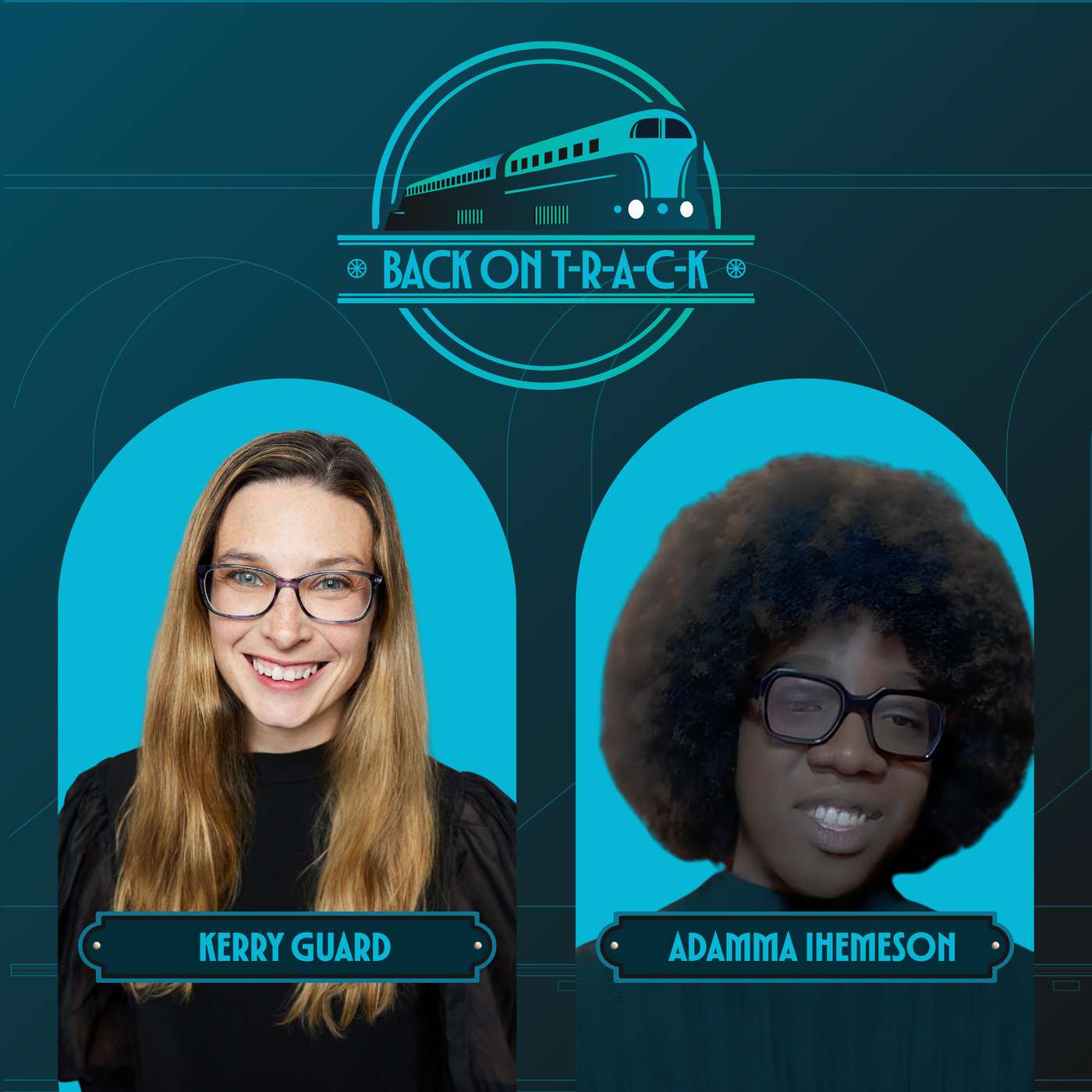 Adamma Ihemeson on Building Autonomous AI Systems You Can TrustBack on T-R-A-C-K · on Claude84 / 100
 Framework Thinking: How Expert Consultants Build Authority in Crowded Markets | Susanna Reay47 / 100
 Questions on Publishing Your Business Book with Carrie BirminghamSeason 1 Finale: Systems-Building for Small Businesses Best Bits (Ep53)Why Do Some Businesses Fail To Hit Their Growth Goals? (Ep52)How To Stop Missing Out On Reviews From Happy Clients (Ep51)