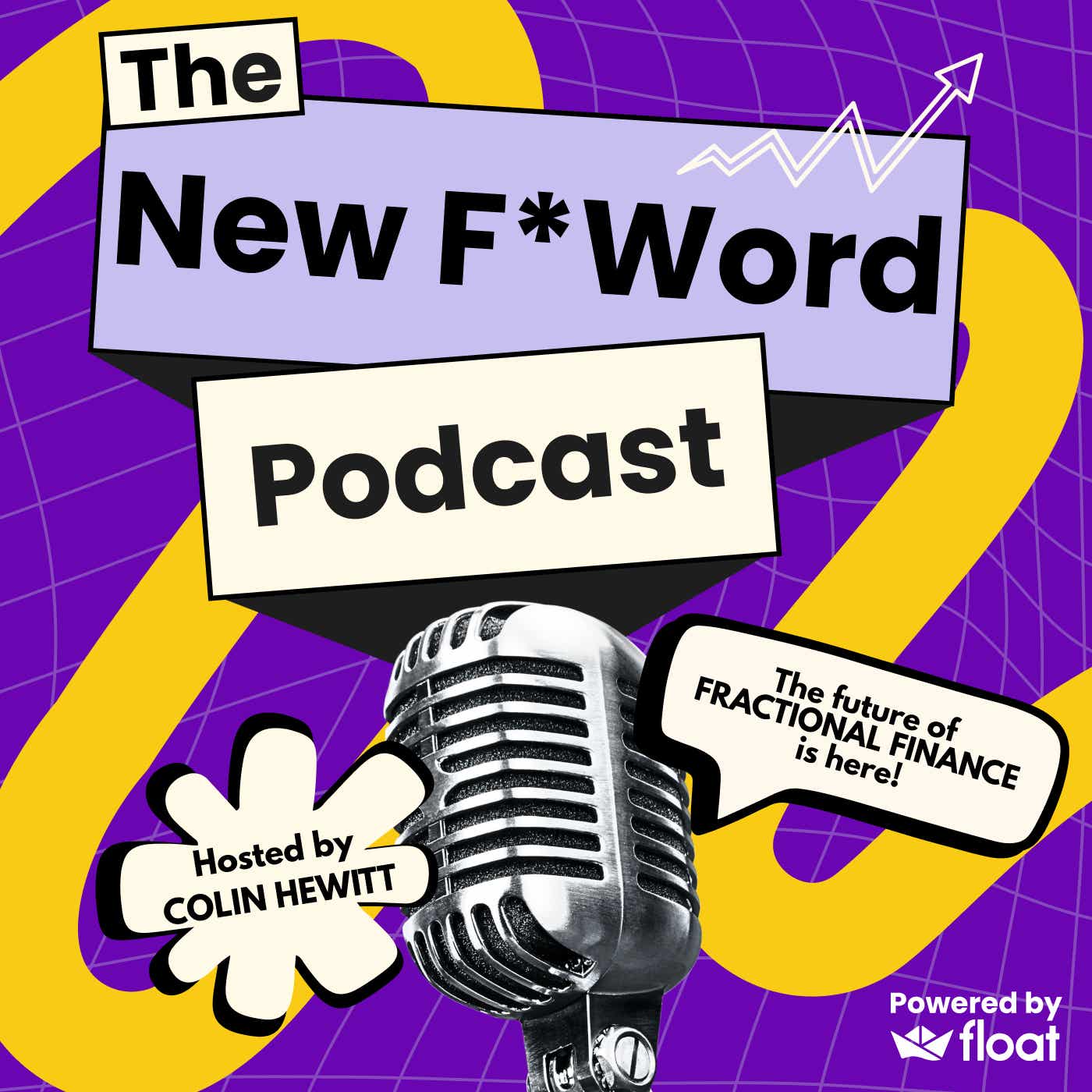
The New F*Word · 2024-08-14 · 28 min
Key moments - from our scoring
Substance score
47 / 100
Five dimensions, 20 points each
Karen Stephen, known as The Soul CFO, discusses her five-year journey building a fractional CFO practice after leaving corporate finance roles. She identifies a critical market gap: growing founders and entrepreneurs lacking strategic financial guidance on a part-time basis. Stephen works alongside traditional accountants rather than replacing them, focusing on KPI reporting, cash flow forecasting using the direct method, and strategic financial partnership - areas traditional accountancy firms don't emphasize despite having the capacity. She explains how fractional CFOs differ from traditional accountants by bringing commercial finance experience and strategic thinking rather than transactional bookkeeping. The conversation covers her tool stack (primarily Excel and Google Sheets, with mentions of Xero and QuickBooks limitations), the risks of unqualified practitioners entering the fractional CFO space, and why early-stage businesses often over-allocate budget to full-time CFO roles when fractional arrangements could be more cost-effective. LinkedIn has become her primary client acquisition channel after years of referral-based growth. For founders and CFO-seeking businesses in the US and UK, this clarifies how fractional CFOs complement rather than compete with traditional accounting services, and what skills genuinely constitute a qualified financial partner.
Traditional accountants handle transactional functions like profit and loss statements, balance sheets, accounts payable and receivable - work best delegated to lower-cost providers. Fractional CFOs focus on KPI reporting, cash flow forecasting, strategic consulting, and commercial partnership with the business. Most fractional CFOs work alongside accountants rather than replacing them.
Karen believes this signals over-spending or poor finance team structuring. A CFO should recommend restructuring the finance function - reducing their own retainer and bringing in specialized roles - so the business pays less overall while getting more value. The freed budget should go to customer-facing functions like sales and product.
Karen uses the direct cash flow method, which focuses on what's actually in the bank and when bills need to be paid, rather than the accrual-based cash flow statement required in formal accounts. It's closer to cash-based accounting and provides better visibility into real liquidity.
Both tools excel at traditional accounting dashboards but lack native KPI reporting and metrics capabilities. Karen must use additional software like Float for cash flow and separate tools for KPI dashboards - suggesting Xero and QuickBooks should consolidate these features rather than rely on a fragmented add-on ecosystem.
No formal credential exists, which creates risk. Anyone can claim the title, even without prior CFO experience. Karen warns that fractional CFOs lacking commercial finance background and FP&A experience cannot truly partner strategically with a business or call themselves CFOs in any capacity.
Our reviewer’s read on each dimension, with quotes from the episode.
There are a handful of genuinely useful operator points - restructuring a finance team rather than paying a full CFO, the commercial-vs-reporting CFO distinction, and the direct cash-flow method - but they're diluted by extended small talk about accents and unstructured tool tangents.
the profit and loss in the balance sheet is really only like a quarter of the puzzle
if you've got a full time CFO and you've only got 15 people in the business, you're probably overspending
The argument that a small-company full-time CFO signals someone who can't structure a finance team, and that not all listed-company CFOs can handle an SME, is mildly contrarian, but most claims (KPIs beyond P&L, cash is king) are standard finance-industry talking points.
not all full time CFOs at a public listed company could deal with a startup of scale up or an SME
if that CFO is doing decks and accounting and all these other things, then he should be going to the CEO saying we need to restructure the finance team
Karen is a genuine practitioner - ex-corporate finance in London and now a working fractional/virtual CFO since 2018 - which is relevant, but the transcript offers little evidence of scale or notable named engagements.
I stepped out of working for corporations maybe about five years ago
most of the finance directors and CFOs that I worked with in the large organizations in London, they were all Scottish
Almost no concrete data, named clients, dollar figures, or timelines; discussion stays abstract with only generic tool mentions (Xero, QuickBooks, NetSuite, Float) and no metrics behind claims like accounts taking 'a couple of hours.'
you've probably only taken a couple of hours to put those accounts together
a lot of people saying, oh, I made £10,000, I made $10,000 this month
The host lands a couple of sharper prompts - the lack of a fractional-CFO credential and questioning the full-time CFO at a 15-person firm - but much of the chat is friendly filler, accent talk, and self-promotion of the host's own product (Float) with unchallenged claims.
there's no qualification for a fractional cfo
I love what you guys are doing at flo and it really makes my life a lot easier
Computed from the transcript - who did the talking, and the words that came up most.
Have you ever wondered how a seasoned financial executive can transform your startup's growth trajectory? Meet Karen Stephens, who joins me to share her transition from the corporate world to becoming a sought-after fractional CFO. In this episode, Karen reveals the critical gap she identified in financial guidance for new entrepreneurs and solo founders and how she stepped in to fill it. Her unique background, shaped by Scottish roots and international experiences, has given her a distinctive edge in advising clients across the US and UK. Karen also shares her early journey on leveraging LinkedIn to build her network including her recent controversial posts challenging traditional accountant stereotypes which might have ruffled a few feathers Together, we explore the evolving role of fractional CFOs in today’s business landscape, the pros and cons of popular accounting tools like Xero and QuickBooks, and the importance of having a CFO with FP&A and strategic partnership experience. The New F*Word is produced and managed by Urban Podcasts . This is a public episode. If you would like to discuss this with other subscribers or get access to bonus episodes, visit newfword.substack.com
Transcribed and scored by The B2B Podcast Index.
Speaker A: So, Karen, welcome to the new F uh Word podcast. It's great to have you with us. I've seen you, find you on LinkedIn, find your content really engaging. So, yeah, that's, I guess that's how we find you. So, you know, you're obviously doing something right and putting yourself out there. It'd be great to hear a bit about your journey. You know, what were you doing before you entered this world of fractional cfoing?
Speaker B: Yeah, thanks so much for having me here, Colin. It's been a delight to come across you and your team on LinkedIn and I think it's a great connection. So I'm really excited, excited to be here and be part of the new effort podcast. Yeah, I stepped out of working for corporations maybe about five years ago and sort of moved into this fractional or at the time I called it virtual CFO space because I saw an evolution of new entrepreneurs, new solo founders who had no financial guidance, had nobody to kind of lean on. And these were just people in my network. So I would end up having coffees and lunches and talking about finance with them and realizing that there was this huge gap for financial advice at a more part time, fractional basis and.
Speaker A: Yeah, where, where's your accent from? And trying to figure, figure it out. Have you, have you got a story there?
Speaker B: I wish I had a better story than I do. I'm 100% Scottish, from the UK obviously, but I've traveled quite a lot, quite extensively, and I speak three languages, so my accent has become somewhat Americanized. So most people think I'm from North America. And I think a lot of that just comes a desire to be fully understood. It's not conscious desire, it's a subconscious, uh, evolution of my voice that has become way more subtle and easy to understand. But it's really bad when I'm home in Scotland, where I am currently, because I will use, I will even use American language instead of like British UK language to articulate things and I have to catch myself every time I do it.
Speaker A: Brilliant. Well, you know, you can go, Phil, Scottish on me. You know, we're in Edinburgh as well. That's where we are. So where are you?
Speaker B: I'm in Aberdeen, currently.
Speaker A: Aberdeen. Right. Brilliant. Well, that's. And um, that's funny because we were speaking to Kevin, who is, last week, he was up in Aberdeen as well. So it's, it's like, like all just the Scots definitely have something going on with the world of finance, I think.
Speaker B: You know, it's funny you say that because most of the finance directors and CFOs that I worked with in the large organizations in London, they were all Scottish. So yeah, it's, there's definitely a lot of Scottish people in charge of money, but. Well, um, there's a stereotype there that we won't speak about.
Speaker A: Yeah, yeah, we will say no more. So. Yeah, so you were saying, you know, you're in that world, you're seeing the opportunity and, and you sort of jumped at it and. Yeah. How's that been? Like, what, what was the sort of first. Did you have one client and then it just grew to two, two and three and it took off from there or was it slower than that?
Speaker B: It's probably been a bit of an evolution. There was one client I came across and then I was doing a lot of project based work because a lot of the people I to needed just projections in place, needed some strategic consulting about what to think about with their new business and the finance that they needed associated with that. It's grown over the years, it's gone up and down and evolved depending on the economy, the climate, also whether I'm working with US clients or UK clients. But it's definitely, I can see, and we've talked about this already, the evolution of the desire for a fractional CFO and the demand for that fractional CFO has really climbed during that period that I've been doing it. So it's a fascinating space to be working in now because there's so many more businesses out there that are considering it as an option.
Speaker A: Yeah, yeah. So you've got clients in the US as well?
Speaker B: Yes, yes, I tend to work with US or UK clients or even UK clients that have a branch in the us. Again, it's just evolved that way because when I started this, it was 2018 and a lot of the entrepreneurs and founders that I was working with were in the us, Canada and businesses there are set up, uh, more on a remote basis or open to remote working. And so for me to be a fractional CFO in that space actually came way more naturally than within the uk, who I feel like that market has really evolved in the last couple of years. But definitely, definitely as a customer of Post Pandemic and everything associated with the recent economic changes.
Speaker A: Yeah, absolutely. And, and how do you, how have you found, I mean, is it been. Has LinkedIn been a big part of it? That's certainly how I came across you. Is, have you been doing any other kind of marketing or is it word of mouth or how is that how's that evolved for you?
Speaker B: LinkedIn is new for me, so I'm really, uh, enjoying the journey of the LinkedIn machine. And that was because I actually had one of my latest clients sales method. They found me through LinkedIn, but that was before I was really even sharing any content on there and speaking on there. Everything before that has been fully through my own network, through referrals, which I tend to consider to be the first stage of organic marketing, just working through my own network. And I see LinkedIn as an extension of that because it's a networking platform and it's really about forming those connections. So the reason that I'm leaning into that space is because I can grow clients, but I also can grow my network and my voice in that space and really help people, hopefully.
Speaker A: You've definitely taken a little bit of a controversial stance at some point. Sort of having a little bit of a knock at the old, at the old accountant stereotype. Like, have you come under much flack for that? Has that been something that. Has anybody has given you any jip about or have you managed to avoid that?
Speaker B: I think, I think a lot of people that know me know that I'm quite confident in my opinions, but also know that if, if there ever was a person that wasn't deemed to be an accountant, it was me. So I've never fallen into any kind of stereotype in that space and it's what's made me so successful in the commercial strategic partnership side of what I do. But, yeah, I, I mean, you're going to ruffle a few feathers when you start to speak out against an industry that's so traditional and so based in respect and authority. But I really think that we need to break down the barriers when it comes to finance and start feel gating a lot of the information. But also, yeah, challenge, challenge. Whether or not the people that are making the big bucks in this industry are actually doing it in a, in a way that's serving you in the best way. Because I think the whole, I think the whole structure needs to be changed. And I'm loving the people that I'm seeing doing that in the finance space.
Speaker A: And do you think even the accountants even are making the big bucks? Like, you know, I certainly. I think part of the problem is that it's, it's kind of come down to, you know, lowest common denominator, like end of year, here's how cheaply we can get it done. So. But maybe, maybe you've seen something else.
Speaker B: Maybe.
Speaker A: Are you talking about the big Four. Or are you talking about, uh, you know, certain firms or.
Speaker B: Yeah, I mean, I'd say there's still. There's still a lot of accountants out there that are undercutting or reducing their prices in order to get the business, because they know that although it needs to be a box that's ticked for Companies House, it's not necessarily serving the business in any way. But, yeah, I'm talking about the big four. I'm talking about the people that still charge a premium, because if you have the right systems and automations in place, it doesn't need to be that complicated. It doesn't actually need to take that many hours. So I feel like even though the technology is progressing, I don't see those accountancy costs going down. So it just. To me, that strikes a question in terms of how can you still be charging that many hours and that kind of price when you've probably only taken a couple of hours to put those accounts together and get them signed.
Speaker A: Yeah, yeah, yeah, yeah, absolutely.
Speaker B: That's where my question comes in. It's. Are we still paying for. Are we still paying for expertise and charging a premium based on the qualifications that we have, which I do understand, because the investment that goes into the training, or are we just paying a price? Because that's traditionally what you would pay an accountant.
Speaker A: And, um, what, out of curiosity, what do you, when you go into a client, do you replace their accountant or do you kind of work alongside their accountant?
Speaker B: I tend to work alongside their accountant. Depends which accountant they have in place. As I said, the bookkeeper. The accountant that's in place is usually doing the traditional accountancy function. So they're doing your profit and loss or income statement, your balance sheet and your accounts payable, your accounts receivable. That's not stuff it makes sense for fractional CFO to do. It's too transactional and you don't want to pay a high ticket for that level of service. It just doesn't make financial sense. So usually I come in and work alongside. And even if I can sort of train up the accountant to supplement, uh, the reports that they're already providing, because I think I've said this on LinkedIn already, the profit and loss in the balance sheet is really only like a quarter of the puzzle. We really need to be looking at KPI reporting cash flow and everything else, uh, associated with actually how to make a business run. And with traditional accountants, they have the capacity and the ability to do it, they just don't necessarily offer it as a service. And this is what I mean. They could include it in the price that they're already charging or maybe even as a supplement, but they're not necessarily doing that and that's why I have a job effectively.
Speaker A: Do you use any tools for the KPI dashboard? Do you have anything or is it just spreadsheets or what do you find
Speaker B: that is dependent on the company and what systems they use? For the most part present it is going to be in Excel, Google Sheets or something like that because uh, however with the E commerce companies that I've worked for, we've been able to get a lot of that through the metrics reporting that they already have and we just have to wire in the financials. So it's. You can build a lot of systems within the Google Sheets book pulling straight from the system. There are people I know working on solutions for KPI dashboards in this space. However, I haven't seen anyone nail it completely yet. But I think that that's, I love that the technology is evolving in the accounting space because when, when you take out all the, the basic churning of data, reconciliation of data, that's where finance can really shine and add the value to the business.
Speaker A: Yeah. And uh, do you feel like often when you're coming in they've nailed the tech on the finance ops side of things or are you bringing in technology to do things like receipt capture, expense reporting, that uh, kind of stuff? How much of your, how much do you get involved in that kind of thing?
Speaker B: Usually they haven't nailed it. So usually everything. The businesses that I'm going into, they're still building a lot of those basic functions. They haven't necessarily considered what automation looks like, what the systems could look like. They may not even be automating their invoices from Xero or from QuickBooks. It might just be using things from a very basic point of view entirely. I tend to now get involved in businesses that have at least some basics in place but they're just not necessarily aware of how evolved systems can be in order for them to get the most out of the numbers and the data that's coming through.
Speaker A: Yeah, makes sense. And Xero versus QuickBooks, do you have a preference there?
Speaker B: No, no, I have, have zero like affiliation or partnership with either at the moment. If they would like to sponsor me or you know, make uh, a partnership then maybe I can show preference. I think honestly this is going to sound really bad. Both have problems. Those like, I think they're great for traditional accounting, I really do and I think they show amazing Dashboards for the traditional information that you need. But if they were doing their job right, I wouldn't need to go and find another software for cash flow like yours and I wouldn't need to go and find another software for KPI reporting. Xero and QuickBooks should be able to show a KPI report or at least metrics associated with the profit and loss. And the way that they're set up, it just doesn't allow for it in the right way.
Speaker A: Well, yeah, um, I agree. I feel like in some ways, you know, when we started 10 years ago people said oh, Xero are going to come and do this or QuickBooks are going to come do this. And we thought, well actually I can see they've got other big fish to fry in terms of they've got to build their base and they're focused on those kind of base level. And it's interesting, a lot of accountancy solutions when they start out they're really trying to do the stuff that there's so many micro businesses so they're focusing on those tools first and then they start uh, to come into the more enterprise solutions that even, you know, five years ago I don't think a lot of businesses over a certain size would have considered zero QuickBooks. But now that we're finding there's companies that are scaling way beyond that, uh, they're able to use those products because add ons like Float exist and others. So you know, uh, I think it's a, it's an interesting strategy. You know, like nobody, I don't um, you never hear anybody saying I'm looking forward to moving to NetSuite.
Speaker B: So it's like nobody really wants to do that.
Speaker A: No, no, exactly. So if you can pull that. But yeah, you know, obviously it's so it's kind of like a, I can see why, Yeah, I can see the benefits of having a stackable API based ecosystem like, like the one that's out there. But yeah, with thousand add ons it's probably got to the stage where there needs to be some consolidation and um, you know, figure out which ones are going to stick around.
Speaker B: Yeah, but if we already have such an amazing solution that you've been able to create with Float and we don't necessarily need them to step into that space. And I do, I do love the fact that companies can scale with Xero for example these days and they don't necessarily need to change because honestly one of the most complicated things that I ever saw and had to deal with in the large organizations I worked with is moving from one system to another. Mhm.
Speaker A: Yeah, yeah, yeah.
Speaker B: It can just overcome like people make it such a drastic situation and it can overcomplicate a lot of things. So if people can scale with the same system that they started with, it can, especially with the leadership being team being so familiar with it, then that's even better. And I'm not sure the larger or like larger systems designed for larger organizations, they're good and they're great and they have all these additional extras, but it really needs to be people that know how to use them and um, getting the right data sources and making sure everything structurally is working within them, which honestly there's a real lack of that skill in the finance sector at the moment that is hopefully evolving in the right direction, but is definitely needed.
Speaker A: Do you think there's a risk that I saw somebody posting recently that there's no qualification for a fractional cfo. And I don't know if this is a bit of a backlash to I've got a qualification and I'm seeing all these fractional CFOs coming in and charging quite an expensive day rate. Is there an argument to say that, oh, fractional CFOs just weren't able to get jobs as uh, full time CFOs so they're just kind of, it's a new term and it's like, oh, I'm a fractional CFO now. Is there a risk that that happens in the marketplace that anybody can call themselves a fractional cfo even though they've never been, you know, in that kind of position in the first place?
Speaker B: 100%. It's already happening, it's already existing. It's the, there's no credential for it in terms of anyone in this. In the same way that people can step out and call themselves a fractional CMO when they've maybe just done copywriting before you can step out and call yourself a fractional cfo. And it doesn't necessarily mean that you've done that job in a capacity before. I think the biggest risk in that space and the issue with it is that the fractional CFOs or the people that are CFOs calling themselves that are the ones that if they don't have any commercial knowledge or commercial experience in finance, they're the ones that I worry about because there's, they're not necessarily adding that value if they don't have FP and a commercial experience, they're not really sitting in a space where they can help partner with the business and really help them with strategic direction. And that's to me what the role is about. Yes, there's no credentials for it, but if you've only worked in traditional accounting and you've only done management accounts, I don't think you can really call yourself a fractional CFO or a cfo. At any rate, there's a reason why the CFO is in the top organizations tend to have come up more from the commercial side of the organization rather than the, the sort of reporting side of the organization. And that's because you really need to be able to partner with the CEO. You need to be able to challenge the CEO. And if you haven't done that all the way through your career, I'm not really sure how you can sit at the table and call yourself CFO or a fractional cfo. I see, I see. The term could be used as, yeah, you couldn't get a full time CFO role, you just do a fractional CFO role. But I think that both the CFO and fractional CFO need similar skill sets. It's just about the scale of the business that you're working for. I wouldn't say that not all fractional CFOs can go and be a CFO ah, at a public listed company for sure, because that involves a huge team and other dynamics that you wouldn't necessarily have to deal with at smaller bases. But not all full time CFOs at a public listed company could deal with a startup of scale up or an SME because believe me, I've seen people try and step into that space and if they've come from very established corporations where there's a lot set up and a team beneath them, they have no idea where to start. So I just think it's two different ecosystems.
Speaker A: Yeah, no, it makes sense. I mean, it's funny, I was chatting to a, uh, founder recently and he was telling me that he has a full time cfo. And I was thinking, you know, you must be under 15 people. And I thought, you know, I imagine that CFO is doing like, what are they doing full time, five days a week? You know, like it does. Surely it can't take that. So they must be doing a lot of the administration, the, the bookkeeping, the everything else that's kind of coming in. Maybe they're building decks and other stuff and you know, but it was just a kind of, it felt like it's really hard to see for me, you know, it's. Why would you have a full time role. And I thought in the early stages, is there ever, I mean, am I missing something? Is there ever a reason or is it, is it. That person needs to kind of let go and bring in and release other people into those kind of roles to let them be focused on the strategy.
Speaker B: This is probably again going to be controversial, but I think if you, if you, if you got a full time CFO and a small business of 15 people, that CFO doesn't know how to structure a finance team. And um, you're paying too much for what you're getting because any level of organization you step into as a cfo, fractional cfo, you want to be giving them the most value for the lowest form of money when it comes to their finance team. So if that CFO is doing decks and accounting and all these other things, then he should be going to the CEO saying we need to restructure the finance team, lower my retainer by X and we pull in this guy and this guy and then you actually end up spending less. And he, he in a turn will give more value to the business. So I think it's a key responsibility of the cfo. And again that's my concern with a lot of people moving into the space. They're moving into the space, trying to potentially just get a retainer or get a new way of working. But my primary reason and why I wanted to step into this and why I believe it's a good thing to do is because you can offer so much value at a, uh, smaller budget level for the businesses that are still growing. Because that extra money needs to go into sales and marketing and product. That's where it needs to go. It shouldn't be going to support functions as valuable as we are and as much money as we can help you make. You really want to be prioritizing spend on the customer orientated part of your business. So if you've got a full time CFO and you've only got 15 people in the business, you're probably overspending or spending too much per hour on someone that you could be delegating some of that to.
Speaker A: Yeah, yeah. I mean that certainly resonates. That's my suspicion. Just to go back and sort of almost finish up with the cash flow conversation. I think you said it was the first thing you brought in. Yeah, I've seen a lot of people, certainly from our side, the cash flow is, it's a three way forecast. You do your P and L on your balance sheet and then you spit out this cash flow for the year. And that's kind of if it looks okay. That's kind of feels like there's a more of a. And what you're saying is it's, it's more like. Do you call it the direct method? That's kind of our, that's kind of the way we describe it is direct method, rolling short term. Like how, how do you describe it? Like it sounds like it, uh, you know, we're sort of saying the same thing. But I just a lot it seems like it's, it's kind of not something that every business or every CFO puts in place.
Speaker B: Yeah, it's. Because it's not necessarily traditional. It depends again what you've been trained at. And because I've come from more of the commercial finance side rather than the traditional accounting, I don't care too much about the cash flow statement that's needed in the accounts, although I know it's linked to the P and L on the balance sheet and everything. I care more about what's in the bank. And so it is that, uh, it is, I think we are talking about the same thing. It is the direct cash flow method where you're just effectively looking at, okay, what do we have in the business and when are we going to pay these things? And almost it's even going back to cash based accounting, if you will, which smaller businesses and new businesses always used to use before everyone got very specialized about it being accounting. Accounting with the accruals and the prepayment side of things. And I think people always assume that the more mature the business is, the more sophisticated the businesses. It needs to be adopting the accounting standards and doing the accruals and the prepayments and making their profit look a certain way because it can make the profit look good and that's what investors want, etc. Etc. However, what's really pushing your business is those first ever set of accounts like a company would do, which is where's your cash going in, when's it coming out? And is that, uh, enough to sustain your business? Because I see a lot of, a lot of people saying, oh, I made £10,000, I made $10,000 this month. But they're talking about a cash, they're talking about a cash inflow to their business, not necessarily the revenue. And it's really. We need to be defining what we're talking about in situations. But yeah, we're, we're both talking about the same thing in terms of its direct cash method where basically you're looking at what cash do we have, where is it going and what can we do with it to make sure that we, that we keep surviving? Because if you're not looking at it, you can look at profit and revenue all you want, basically. And if you don't have a view of how much money you have in the bank, because a lot of CEOs will do that, they won't have a view of what's in the bank, then you can run the business into the ground very quickly. Even though you've got a really healthy revenue line.
Speaker A: Yeah, totally. 100%. Karen, it's great chatting. I'm just wondering if there's anything. What are you excited about seeing? Where do you see yourself in 5, 10 years? Are you just exactly happy where you are right now? What's the future look like for you?
Speaker B: So I'm going to be doing two things in the next. Over the next five years, I'm going to be continuing on this fractional CFO thread, but I'm also leaning heavily into the coaching and educational space, specifically with female founders and specifically with small business female founders to make sure that they in themselves feel confident and, you know, educated in the finance side of their business by giving them tips and tricks and effectively giving them the support that they need when they feel like they don't have it from the finance industry. So, uh, ideally I also bridge a gap to make sure that female founders feel heard, feel seen and feel that they can talk to a, uh, finance professional without being intimidated, judged or anything along those lines. Not to say that men don't feel the same. Just in my experience and my observations, it's definitely something I've come across with female founders, so that's what I'm looking to do.
Speaker A: Brilliant. Well, I'm sure there's people that I can send in your direction for that. We, I think it's really needed. I think any sort of support like, uh, that. And it's great to see kind of rise in the female finder role and. Yeah, that's great. Well, like, thanks so much for coming on. It's brilliant to chat to you. Really, really excited to see how you get on and look forward to staying in touch.
Speaker B: Yeah. Thank you so much for having me on, Colin. I love seeing the new F Word podcast. I love what you guys are doing at flo and it really makes my life a lot easier. So I just want to thank you for the opportunity of talking with you today.
Speaker A: Yeah, thanks so much. See you soon.
Other episodes covering the same guests and topics, from across The B2B Podcast Index.
 86: Brooke Elliott (Illinois) on Expanding AccessDeans Counsel · on Big Four accounting firms84 / 100
 Is your FP&A team just reporting the past? A conversation with Persia SetnaTwo Cents: Finance Talk · on FP&A (Financial Planning & Analysis)80 / 100
 #299 What It Takes to Become CFO by 33 Audrey Lagresle CFO, Automobile En DirectGrowCFO Show · on FP&A (Financial Planning & Analysis)78 / 100
 UK Hiring Crisis: Build Your Own GCC NowGoing Global · on Big Four accounting firms78 / 100
 Scaling Financial Operations and AI Innovation with Rohini JainSecrets of Rockstar CFOs · on FP&A (Financial Planning & Analysis)73 / 100
 CFO of a national sport. What's it really like? | Nimesh Kataria, CFO at the ECBChat CFO · on FP&A (Financial Planning & Analysis)73 / 100
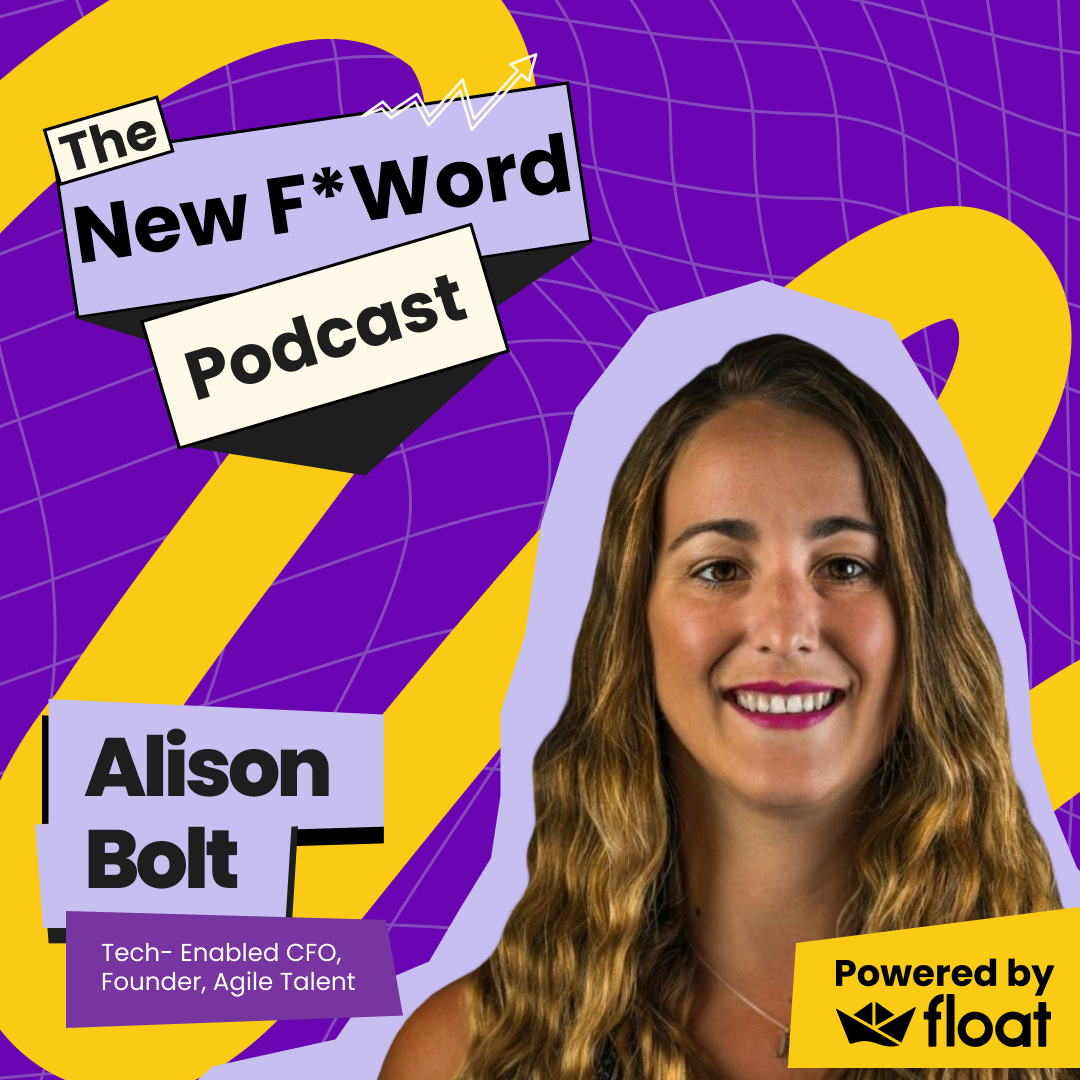 What Fractional CFOs Really Do For Growing Businesses with Alison Bolt58 / 100
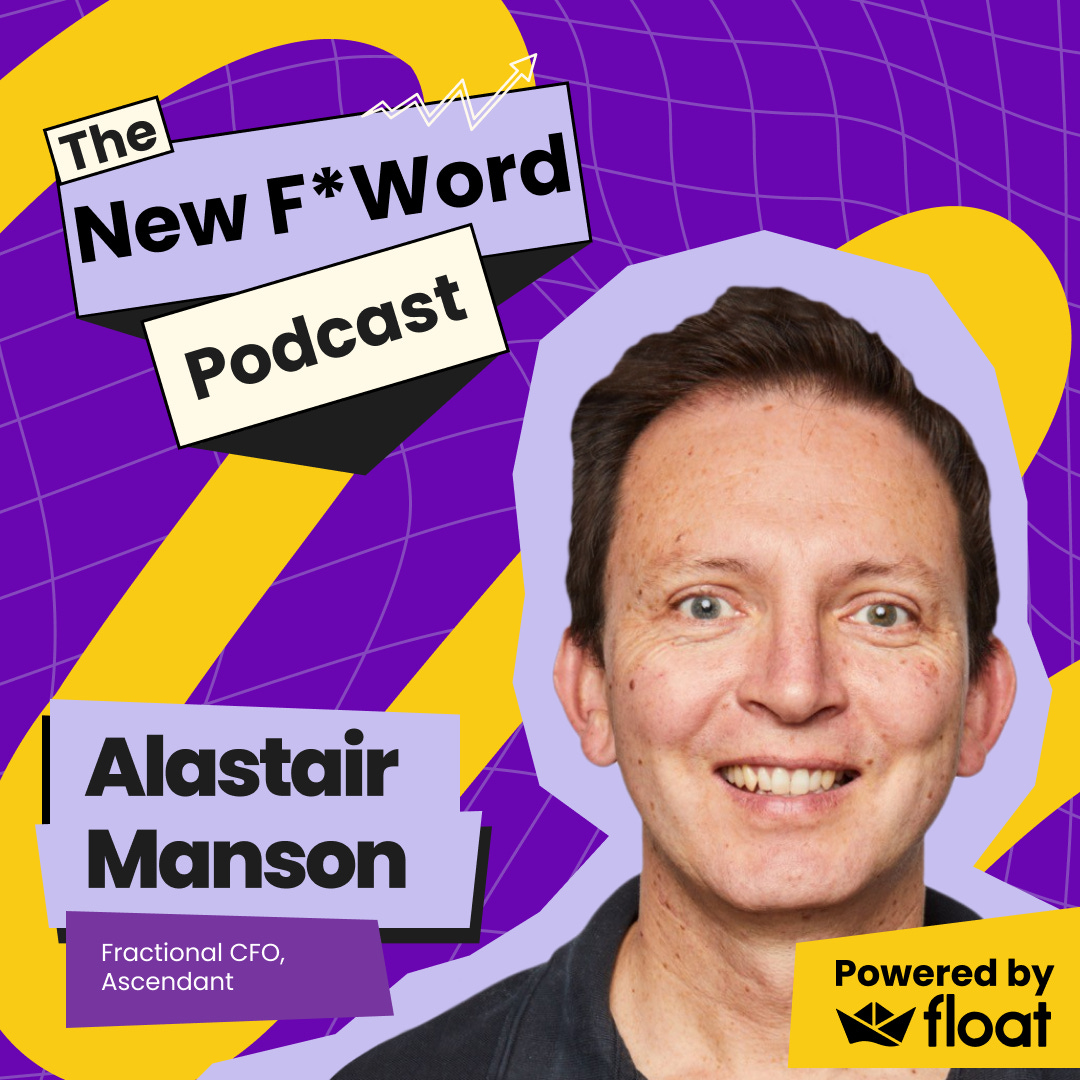 The CFO Skill Nobody Teaches: Coaching and Human Leadership with Alastair Manson55 / 100
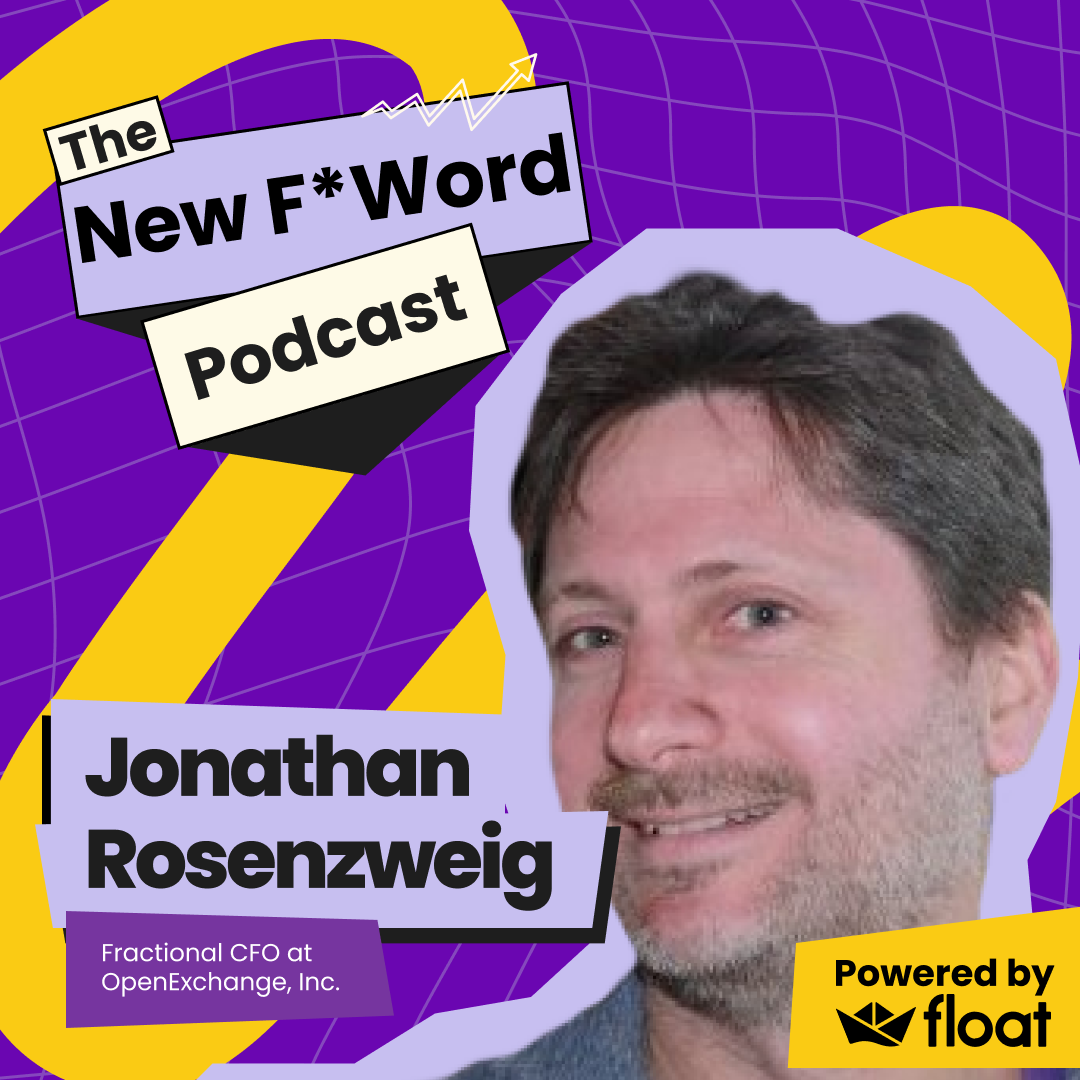 How Fractional CFOs Actually Add Value with Jonathan Rosenzweig57 / 100
 Greatest Hits: Cash, Clients, and the Secrets Behind Growing Businesses82 / 100
 How Laura Taylor Built a £1M+ Firm That Won The Advisory Game72 / 100