The New F*Word · 2024-04-23 · 28 min
Key moments - from our scoring
Substance score
44 / 100
Five dimensions, 20 points each
Susan Boles, a human-centered CFO and founder of Beyond Margins, discusses how the fractional CFO role has evolved and how to structure engagements for maximum impact. Rather than rigid monthly retainers, she advocates for flexible, project-based intensives aligned to growth inflection points - when businesses hit capacity ceilings or need strategic guidance. Boles emphasizes that CFOs create most value when deeply integrated into business operations, understanding marketing goals, product strategy, and day-to-day decisions rather than working in financial silos. She positions the ideal financial team as a three-legged stool: a strong bookkeeper providing quality data, a tax advisor, and a fractional CFO serving as strategic interpreter. For cash flow specifically, Boles uses Float as her primary forecasting tool, arguing that business owners rarely need complex three-year models - markets change too fast. She critiques how accounting technology is often designed by accountants for accountants rather than for business owners, and stresses that fractional CFOs must meet entrepreneurs where they are, translating data into actionable insights rather than overwhelming them with complicated reports.
The three-legged stool consists of a strong bookkeeper ensuring quality data entry, a tax advisor handling tax strategy, and a fractional CFO providing strategic interpretation and business guidance. This combination covers most financial bases comprehensively.
Boles recommends two approaches: project-based intensives focused on specific growth challenges or capacity ceilings that clients can implement at their own pace, or flexible hour buckets aligned to support levels so clients use the CFO on-demand when actually needed rather than paying for unused monthly meetings.
For businesses under $10 million, market conditions change too rapidly for long-term forecasts to remain relevant; 12-month cash flow visibility is typically sufficient. Float provides simplicity and accuracy that business owners understand, while more complex models often overwhelm rather than inform decision-making.
Business owners think operationally and strategically about their business decisions, while accountants traditionally focus on reporting and compliance. CFOs serving as strategic partners must bridge this gap by meeting business owners where they are with actionable insights rather than complex financial reports.
The fractional CFO should typically lead cash flow forecasting, using it both as an entry point for educating business owners on their finances and as a tool to model the impact of strategic decisions, rather than relying on tax advisors or bookkeepers who lack the entrepreneurial context.
Our reviewer’s read on each dimension, with quotes from the episode.
A few useful operator ideas (project-based intensives vs monthly retainers, cash flow forecast as a decision/training tool, business-as-ecosystem framing) but much of the content is fairly obvious observations about fractional roles delivered at a leisurely pace.
there were so many months that we just didn't have anything to do
one of my favorite parts about the float software particularly is like the day when you run out of money
Mostly recycled fractional/CFO commentary about meeting owners where they are and integrating finance with operations; the pacing insight about intensives is the freshest angle but nothing here is genuinely contrarian.
I like to say your business is an ecosystem
most of the accounting technology on the market was designed by accountants
Guest is a genuine practitioner running her own fractional CFO firm with a data/COO background, but her experience is with sub-$10M service businesses rather than doing the role at scale, and much of her advice stays general.
I call myself a human centered CFO and a business strategist
I've been on both the operations side of the house and the finance side of the house
Very few concrete numbers, named companies, or case studies; the episode leans on abstraction and doubles as a soft plug for Float, with only sparse figures like the 12-month horizon and a host-cited stat.
40% of C suite roles fail within 18 months
anything outside of about 12 months doesn't really matter
The host is warm and asks reasonable open questions but never pushes back or challenges a claim, and several exchanges function as friendly product endorsement of Float rather than probing inquiry.
That's great to hear. Um, that was really good to hear
the best forecasting solution is the one that's the most accurate
Computed from the transcript - who did the talking, and the words that came up most.
Susan Boles is a human-centred CFO at Beyond Margins. In this episode, she shares her 'accidental CFO' journey and how she helps founders build calmer businesses with comfortable margins. Join us as we uncover actionable insights and strategies that can inspire your approach to financial management and catapult your business towards its full potential. Want to learn more about how other fCFOs are leveraging Float Cash Flow Forecasting to boost their offerings?
Transcribed and scored by The B2B Podcast Index.
Speaker A: Hey Susan. How's it going?
Speaker B: Good. How are you?
Speaker A: I'm very well, thank you. Welcome to the new F word. Um, it's really great to have you.
Speaker B: Yeah, great to be here.
Speaker A: Um, well, look, we are really fascinated by what we're perceiving as the rise of um, fractional rules. And maybe it's something being in the UK that is newer to us and has been around in where you are for longer. So I'd love to hear how, how you got into it. What's your background? Um, what do you do? Why don't you start there?
Speaker B: Yeah, yeah. So, uh, I'm Susan Bowles. I call myself a human centered CFO and a business strategist. And I work primarily with client based businesses at my firm, Beyond Margins. So my real focus is helping founders build calmer businesses with comfortable margins. And I sort of accidentally ended up as a cfo. Uh, it was never what I said set out to do early. Like my early career. I started out as a data analyst and not with financial data, just data. I was in higher ed, um, doing you know, institutional research, which is basically like counting students. I counted students in a lot of different ways and that sort of led me down the path, uh, that became the CFO role. Um, I joined a firm quickly after my M. MBA uh, to be their like data and technology person. Which is kind of an unusual role at a fractional CFO firm. Um, but if you think about it, financial data is just data. The whole, the whole point of a CFO role is just to interpret data and be able to tell the story of what's happening in a business based off of the finances. Um, and so that's, I sort of backed my way into an unexpected role by way of data analysis, um, and really software consulting, um, because I did a lot of like software implementations at accounting firms. And so that sort of, uh, led me, led me down the path of my own firm. Um, and initially as a fractional coo. I'm a little unusual in that I've been on both the operations side of the house and the finance side of the house. Um, so I started out as a fractional coo, um, and was professionally still being a CFO like in my day job. Um, and all of my work kept overlapping. I really don't think you can separate finances and operations. I think it's really difficult, um, at least for me. And um, realized that the stuff that I was really passionate about was the financial side of the house and less so the operations side of the house. Um, and I Guess about five years ago, I shifted from positioning myself as a COO to a cfo. Um, so, yeah, weird, windy, unusual path to get where I am now for sure.
Speaker A: Fascinating. I love that. And because we, you know, we worked with our background in flow, was we had a COO who did the CFO role. And I'm curious as to how you see those. You know, is it possible to split that 50, 50, or do you tend to lean? Do you see people leaning one way or the other, like you're more numbers or you're more operational?
Speaker B: Um, I don't know that it's possible to split it 50, 50. I think from a workload. If you're in a COO, CFO kind of combined role, almost inherently, you end up spending the majority of your times on the operations side of the house, because that's just where a lot of the. That's where the people and the processes and all of those things sit. So I think if you're in a combined role, the finances often tends to take a little bit of a backseat. Um, um, just because it's sort of a trailing indicator. Right. The finances show you the result of what is happening on the operations side. So I think it is really powerful to have the roles combined, to have your operations person have that financial, um, brain. The financial story, understand what's happening, um, kind of as the end result of their decisions. I think having those, um, kind of those brains combined is really powerful, um, from like a strategic perspective. But I think if you are combined, you almost inherently have to spend more time on the operations side of the house because there's just. Honestly, there's more to do on that side.
Speaker A: Yeah. There's more fires to put out.
Speaker B: Yeah.
Speaker A: So what. What would be. What would your take be on what happens when you actually get somebody who's more focused on the numbers? Then what. What do you feel that. That. That maybe offers a business?
Speaker B: I think the numbers are most powerful when informed by what is going on the business. Right. So the more your CFO understands what. What your goals are on the marketing side or what you're trying to do from a product or a services standpoint, like what you're thinking about offering, the better informed they are about all of the other areas of the business, the more powerful strategy they can bring in. They can really be a very powerful strategic advisor to the other areas of the business. But I think one of the things that happens frequently, and I think it's a, uh, it's too bad that it does, is we treat all of the different parts of the business as like silos. I like to say your business is an ecosystem. Any decision that you make in one area inherently affects all of the other areas. And so often, um, and I think this happens frequently in a, especially in a fractional CFO role, is that the rest of the business, you know, you're not there day to day, you're not there every single day and every single meeting. All of the different other areas of the business kind of treat the finances like often a corner and forget to tell them what's happening. And I think where it is most powerful is when that CFO person is really well informed as to what's going on. And I think that's where you can get the most powerful insights, you get the most value out of your work with them. Um, and so I, I think the more you can integrate them into the day to day kind of operations or planning, the more, the more powerful they can be as a, as a strategic partner.
Speaker A: Yeah, makes so much sense. So, um, Susan, what, what would you say, uh, how, how do you see the role like evolving? How are you seeing a rise in like from your side and more, more people taking on from fractional CFOs? Have you seen more demand from it, from, from your side? Or is it just always been the case or is it.
Speaker B: Yeah, I think, I think there's definitely a change. I think part of it is that, um, so when I started doing, you know, positioning myself, originally I called myself a virtual cfo. I didn't really talk about fractional because that wasn't the language. Um, I was a fractional cfo, but I just didn't say that, uh, it was. There was a big piece of my role that was educating people about the fact that CFOs can and should be in smaller businesses. It's not a role just for, you know, big enterprise style businesses that having a CFO can be really powerful even in a very small business. And so at least, you know, five years ago or so, most of the time I had to tell people, I had to explain to people, you know, what's the role of the bookkeeper? What's the role of the accountant? Why would you need a cfo? What would you use them for? Um, and I think over the last five years or so, both the business owners are more educated about that role existing. I think partially because fractional has become more commonplace, not just in finances, but in all of the roles you see fractional, CMOs, CROs, um, COOs, like those are all part of the Small business ecosystem now in a way that honestly it really wasn't true, um, just a few years ago. So I think what we're seeing is partially more education on the part of business owners. So they're going to look for fractional roles versus us having to be like, hey, you know, that's a, this is a thing that you can have. Um, but I also think that I, I just think they're the way businesses are structured now, especially small businesses, they don't need a full time, they don't need a full time anything for the most part, you know, unless they're a really big business, Uh, a lot of the roles, it is very beneficial to have that C suite level brain in your business. You know, somebody who can, who can fill that role from a strategic and experience perspective. But you don't need them there all day every day. Sometimes you don't even need them, um, there every month or every quarter. But it's still a beneficial role. And I think business owners are really starting to realize how powerful having somebody with a lot of expertise in their business but not there every day can really be.
Speaker A: Yeah.
Speaker B: So I think it's kind of a combination of things.
Speaker A: Yeah, no, absolutely. I think somebody was telling me the other day, you know, huh, that is a statistic. Like 40% of C suite roles fail within 18 months. So if you think about the upheaval of trying to recruit for that role and then as a full time role and then doesn't work, it's gone after 18 months. Uh, you know, I can, you can really see the kind of advantage for a business of getting a fractional role in that takes less time to recruit, uh, and you know, less impact as well if it doesn't work out because, you know, you're not, you're maybe sort of dipping your toe in and finding out how is this going to work? What, you know, is this the right person for me? You know, we certainly, that's, that's been our experience.
Speaker B: Um, yeah, yeah, I would have to agree with that. Yeah.
Speaker A: M. Um, you mentioned a couple of different finance rules and something we're really interested in at FLOAT is, you know, what, what's the kind of dream team for you? What's your best experience of coming in? How many days would you be working a month? Who would you be working with? Like when have you seen it really? Maybe, maybe you can talk to different sizes and scales of business. But what, you know, for, for a small business, for a medium growing business, you know, what, what's been your experience?
Speaker B: So I have offered my services to a lot of different size businesses and in a lot of different ways. And um, I think the, the way that you most commonly see it is like a monthly retainer. Like you are a fractional person. And we're meeting every month and I'm sending you reports and you know, we're doing the normal things every month. And what I found was that the type of businesses, at least that I work with, so I work with, you know, primarily service based businesses, but not exclusively. Um, but they all move at different paces. Every, every business has kind of its own pace. So some companies move super, super fast and they are really lean and mean and can do implementation really quickly. And some, you know, their business is pretty slow and they don't have a lot of financial transactions or they don't have all that many clients. And what I found was that when I was offering my services as let's do this every single month, there were so many months that we just didn't have anything to do. You know, we were waiting for something that we had like planned to be implemented or we were waiting for results of an experiment or you know, there, there were just a lot of months where I'm like, cool, everything's good. Yep. They'd be like, yeah, everything's good. Oh, okay. And we just kind of look at each other during our monthly meetings. And so, um, one of the ways that I kind of decided to deal with that is to, I have kind of two ways that I, I work, I do an intensive, which is essentially like a project based, um, engagement where we're doing, we're addressing one particular concern because most companies, um, you know, especially on the smaller side, they need a CFO brain at some sort of growth inflection point. Like that is the most common point at which they are looking for a cfo. Either they have hit some sort of capacity ceiling or some kind of growth ceiling or, and they're not really quite sure what to do to get over it. Right. So the intensive works in a way that we figure out what we're going to do about that particular challenge. And because it's project based, they can go away. They can implement at whatever pace that makes sense for them and then come back for another intensive when they're ready. Um, and the other way that I decided to kind of handle this, the pacing issue is that um, most of my engagement work pretty flexibly. So there's a bucket of hours that they, that is kind of aligned to the level of support that we think is going to make sense. And they can use them whenever they want in whatever increments. They want to really be able to be responsive to that, that trigger. You know, they need a CFO when they need a cfo and then most of the time they don't. Um, and so I think that is, I think that's a unique challenge with something like a CFO where you know, the traditional role is we're doing reporting and we're meeting every month. Um, and I think sometimes it's a struggle to continue to provide value when the story that we're telling is. Yep, that's the same as last month.
Speaker A: Yeah, yeah. Well, that, that really resonates because you don't, you know, you, you don't want to be feeling like you're just hanging around, not doing anything, but at the same time then there then if you don't have that on hand, you know, when you really need it, you know, that's the point that can trip you up and that's the point. Maybe too late. Yeah, I think that's really cool.
Speaker B: I really like it, uh, being like on demand because that's how most smaller businesses actually need to interact with honestly most of their fractional roles. I don't know that they're other than like the fractional COO role which rarely ends up being all that fractional, to be honest. Um, I think most, most fractional roles, you don't need them there all the time. You know them there as and when you actually do need them and have a challenge to address.
Speaker A: Yeah. And what about roles that you might um, have more, more consistently and like a bookkeeper or a financial operator? Um, something like that? Do you, would you, would you recommend businesses have someone like that?
Speaker B: Uh, oh, for sure. So to me, the way that I see most of the team working is normally, uh, they either, when, when folks come to me, they either have a bookkeeper or they're looking for a new bookkeeper. Um, and they usually have a tax advisor. And I think those are kind of the three kind of legs of the stool is you need a really good bookkeeper so that you have good data because without a good bookkeeper you don't have good data. And then you can't understand what's happening. You can't tell the story cuz there's no, there's no information to base the story on. And you need a good tax advisor. Uh, partially because I don't want to touch it. Like it's a really important role and please don't make me do it.
Speaker A: Yeah, totally.
Speaker B: But I think, I think those three, having those three roles in really any business will cover most of your bases and also provide you with kind of each of the successive levels, um, of kind of a comprehensive financial picture.
Speaker A: Yeah, I love it. Um, so let's talk about cash flow then. Who out of those people, who is responsible for doing the cash flow? One of the things we find is often the business owner. They're not sure how to do it. They've never done it before, or their CPA or their accountant isn't close enough to the business, and their bookkeeper sometimes isn't sure either. Is that my role? Is that my responsibility? You know, where do you see that? How does that work in the ideal way from your point of view?
Speaker B: I mean, for me and for my clients, it's usually my role. I find that using, um, the cash flow forecast is a really useful discussion tool because you can use it as a way to figure out the impact of specific decisions you might be considering. Like, you could use it to see like a real tangible number. Like, one of. One of my favorite parts about the float software particularly is like the day when you run out of money, you can actually create scenarios and see how that date changes. And that's really, um, tangible for business owners. Like, that's a really, that's something that they can absorb in a way that I think a lot of the more complicated financial reports kind of just go over their head. They're like, I don't, I don't understand why I need this. But they do understand, here's when you're going to run out of money. That's. They get that. Um, and so for me, cash flow is. Using a cash flow forecast is normally my best entry point into both training business owners into how their, how the financial side of their business is actually working. But it's also such a great tool for them to bring up decisions that they're thinking about, bring up stuff that's going on in their business. Um, and so for me, cash flow forecasting is a super critical tool of me engaging with my clients. And I think you're right. I think, you know, tax folks are really, really good at taxes, but they don't necessarily have the touch points or the, um, entrepreneurial experience to be able to serve as that, like, really good strategic advisor when it comes to businesses, when it comes to taxes and being proactive around tax planning. Sure. Um, but when it comes to, should I hire this person, should I not hire this person? What happens if I launch this product and it completely tanks like they're just not well equipped for those specific kinds of discussions because they don't have the frame of reference. And honestly for most tax people that's not where they're, they're not that interested in it. Um, um, and I think for bookkeepers, you know their role is kind of, at least in my opinion, the, the keeper of the data. Their job is to make sure that the information gets into the, into the accounting system so that we know what's happening. But yeah, they're not necessarily equipped or um, have the experience to be able to do interpretation uh, of that data. And so I think where it's best positioned and most powerfully positioned is with a CFO and that our role as CFOs is to train the business owner and make sure that they are educated to be able to understand what's happening there.
Speaker A: Yeah, um, makes so much sense. So what, um, I'd love to know more about your tech stack then. So you're, are you uh, QuickBooks, are you zero or something else or what do you use for that?
Speaker B: I have always been hardcore zero. I reluctantly use QuickBooks but I was um, very, very early from the US perspective to the Xero ecosystem. I think I started using Zero 10 years ago. It was with like one of my first businesses personally because um, honestly I think it was the only thing that integrated with the booking tool I was trying to use. And so I went down the zero rabbit hole. Um, and actually when I started my company it was as an integrator which um, is the person that basically you know, connects software tools together. But it was uh, eight years ago and nobody knew what that was. So I have always been a huge zero fan and reluctantly use QuickBooks.
Speaker A: Um, and what about, what else do you use Float for your short term cash flow and do you have some other program used for longer term like three way forecasting or is that Excel or.
Speaker B: Nope, I use Float because um, honestly I think it is the most applicable and understandable for most of the business owners. It's super easy for me to actually use with my clients because it just pulls their data in and I don't really have to do much um, in terms of like data entry and for the purposes of almost every business owner I've ever worked with, it's enough they don't really need super complex forecasts honestly uh, or long term forecasts. Cuz in most of the businesses I work with, you know, which are like under $10 million, the business is changing so rapidly. Like stuff changes so fast that anything outside of about 12 months doesn't really matter because stuff is going to change 10 times before we even get to get to that point. So for me, I, um, keep my tech stack really, really simple. Um, and float is the primary tool that I use when I'm working with clients.
Speaker A: That's great to hear. Um, that was really good to hear. Yeah, I suppose initially for us, you know, we, we sort of thought when we went out to this um, CFO market that we might get a little bit of uh. Oh, you know, it's not, it's not a three way forecasting solution. We need something more complicated. Uh, so we kind of, you know, it took us a long time to get there, but, but I think you're right. We're finding people saying, well, sometimes I'll need to pull together, uh, a more complex model for some scenario, like a funding round or something like that. But on the whole, um, actually it's like the best camera you have is the one in your pocket and the best forecasting solution is the one that's the most accurate. Right. So that seems to be, um, what we're hearing back, which is surprising from our side. We thought it would be, maybe know it have to, it would be a, a sort of a solution, but not the only solution. So that's really interesting to hear what you're saying.
Speaker B: Yeah, I mean, I think it's interesting because most of the accounting technology on the market was designed by accountants, um, which at least on the surface seems like that would make sense. But the problem is that business owners and accountants think about their finances really, really differently. And that if you are working directly with business owners and your goal is to serve them as a strategic partner, you have to meet them where they are, not hand them the world's most complex forecast that they're like, I. Okay, great. This is super overwhelming and I don't know what to do with this. Um, and I think one of the, one of the issues that is, I think is cool to see it kind of change over the last few years is that we as CFOs, as accountants, we are trying to meet business owners where they are instead of just sending them the world's most complicated reports every month and thinking that that is delivering value. We're realizing that the value is in our, our expertise, our interpretation of those, um, pieces of information. But that more complicated is not more valuable.
Speaker A: Brilliant. Um, yeah, I love that. And that's been our approach as, uh, well, you know, we're not, we weren't approaching this from an Accounting point of view. I'm a business owner. I wanted to build something that made sense to me. Uh, and that, yeah, ultimately, you know, we realized that a lot of accounting is, the idea is it's produced for tax purposes and um, that's not really thinking about what does the business owner need to see to understand their finances. And when you look at it from that point of view, you come to sometimes very different conclusions as to what a business owner really needs.
Speaker B: Oh yeah, totally.
Speaker A: Well, look, it's been amazing talking to you. I would love. Why don't we leave it with, uh, is there any final thoughts you want to say? Maybe uh, to other people that are watching this, that are thinking about becoming like moving from a full time CFO into a fractional role, uh, or from a business owner that's thinking about hiring fractional for the first time.
Speaker B: So I think if you are thinking about moving from a, like a full time role into a fractional role, the thing that you can, um, that like, will serve you the best is figuring out how to get the kind of entrepreneurial perspective. You know, a lot of CFOs coming out of big corporations or that kind of role. You don't have the um, down and dirty experience of like what is a business owner thinking? What do they care about? You know, you're used to your value is reporting your value is actually showing the numbers. But when you're in a fractional role, you're inherently working with smaller businesses. And for them the value is being able to understand where are they and how can you help interpret the information so that they can make better decisions for their business. Like your job is as a strategic partner. And I think the place where um, most kind of traditional accountants, CFO kind of people are weakest is on that business owner side because they don't have a lot of experience. Um, you know, they don't, they haven't necessarily owned a business, um, and the businesses that they're working with are really different. And so I think from a, um, you know, transitional role, that's where you could be the most powerful, um, is getting that kind of experience. Um, and for you know, folks who are thinking about hiring a fractional cfo, um, I think again that's the most powerful part. The place where you're going to get the most value is using your CFO as a strategic partner, as a thought partner and keep them in the loop, make sure that they know what they, what's um, going on in your business. I always like to tell my clients like you are the expert in your business, and you have to be the one to tell me what's going on, because I don't know unless I'm in the loop. And I can't. I can't help support you or help you grow or help you, you know, navigate difficult decisions if I don't. If I don't have the full picture. So I think really making sure that they are in the loop, not just about your finances, but about what is going on in the rest of your business.
Speaker A: Brilliant. That's such good advice. Thank you so much, Susan. And where can people find you if they're looking to. Um, and you've got a great website, by the way, uh, where people go.
Speaker B: Um, so my website is beyond margins dot com. Uh, I am most frequently on LinkedIn. So my. Uh, it's at the Susan Bowles, because there's a Susan Bowles, who's an author who stole all of my handles. Um, so I'm on LinkedIn pretty much every day. Hit me up. Um, and they can also listen to my podcast, which is about to relaunch here in May, um, called Beyond Margins.
Speaker A: Awesome.
Speaker B: Find that wherever they listen to podcasts.
Speaker A: Great. Well, thanks so much for coming on this, um, has been, uh, me, Colin Hewitt, and Susan Bowles. Uh, thanks for joining us on the new F Word.
Speaker B: Thanks.
Other episodes covering the same guests and topics, from across The B2B Podcast Index.
 Lessons from a finance revolution at Mars, with Colin MossFP&A Today · on Fractional CFO81 / 100
 Revisiting: Wall Street to SaaS CFO with Carla Cooper (CFO @ Contentful)The Growth-Minded CFO · on QuickBooks78 / 100
 Ep. 23 | The Pizza Express Finance Playbook: Scaling to 500 Restaurants Without Chaos | Dan Jarvis | Supy Talks PodcastSupy Talks · on Cash Flow Forecasting77 / 100
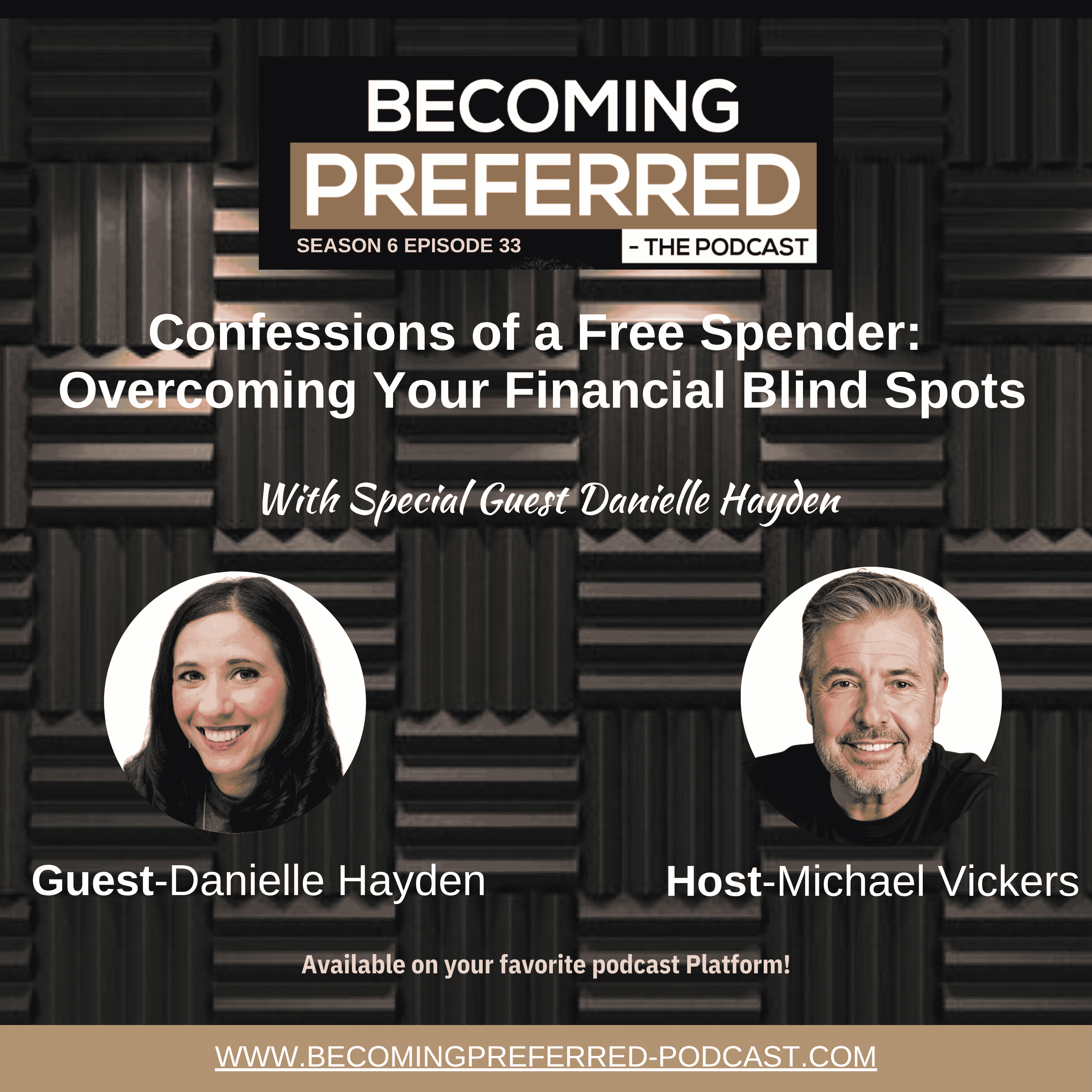 Danielle Hayden - Confessions of a Free Spender: Overcoming Your Financial Blind SpotsBecoming Preferred · on QuickBooks75 / 100
 From Finance to Frontier Tech: Inside the CFO Role at a VC-Backed Engineering Business with Adam Uttley, CFO at Wayland AdditiveThe Finance Seat · on Cash Flow Forecasting68 / 100
 What a CFO Does to Maximize Business Exit Value with Robert Checchia (#81)Exit Algorithms · on QuickBooks65 / 100
 What Fractional CFOs Really Do For Growing Businesses with Alison Bolt58 / 100
 The CFO Skill Nobody Teaches: Coaching and Human Leadership with Alastair Manson55 / 100
 How Fractional CFOs Actually Add Value with Jonathan Rosenzweig57 / 100
 Greatest Hits: Cash, Clients, and the Secrets Behind Growing Businesses82 / 100
 How Laura Taylor Built a £1M+ Firm That Won The Advisory Game72 / 100