The New F*Word · 2025-03-06 · 40 min
Key moments - from our scoring
Substance score
46 / 100
Five dimensions, 20 points each
Daniela Wainwright built a nine-person fractional CFO collective after leaving a demanding role at Morrisons, starting her journey in June 2020 during lockdown with a business model born out of necessity: replacing her corporate income in three to four days per week. Her early clients came through LinkedIn conversations and personal networks - her first client was actually a school run dad - and through an agency placement that led to building a three-way forecasting model for an IPO-bound business. What distinguishes her approach is the integration of wellness and mindset work alongside traditional finance advice, driven by her own health crisis involving severe nerve pain that forced her to reckon with work-life balance. Her content strategy on LinkedIn has become a significant differentiator, using authentic storytelling about entrepreneurship, leadership, and fractional finance to build influence. Beyond client work, Wainwright has launched a program supporting senior finance professionals making the leap into fractional CFO roles, turning her own unconventional path - skipping university for a trainee accountant contract at 16 - into a mentorship opportunity. B2B finance operators, aspiring fractional CFOs, and corporate finance leaders seeking portfolio work will find actionable insights on building a practice through community, managing founder wellbeing, and scaling through hiring trusted team members.
Her first client came through a personal connection - a school run dad she was chatting with about her business goals. She emphasizes the importance of being open in conversations and not knowing where work will come from, as this initial relationship has continued since the start of her business in June 2020.
A combination of health issues and work-life balance concerns prompted the shift. After experiencing severe nerve pain following appendicitis, she realized she could earn her corporate salary in three to four days per week, making fractional work appealing. She was also inspired by a colleague at Morrisons who had already transitioned to portfolio FD work.
Starting in June 2020 during lockdown, she built her network entirely through LinkedIn conversations and Zoom meetings, with people introducing her to others. She credits the LinkedIn community for being 'fantastic' in connecting her with opportunities and continues to use authentic content to build influence in the fractional finance space.
She brought on her first additional team members after her own portfolio became full. Initially working through recruiters for agency placements, she eventually built a nine-person collective as demand grew and she needed support not just with client work but with business operations, marketing, and networking.
After severe nerve pain made strong painkillers necessary, she experimented with ice baths, stopped drinking alcohol (now has only occasional drinks), and incorporated yoga and meditation. She later came off painkillers entirely during a stress-free holiday in a camper van, managing remaining anxiety through continued wellness practices.
Our reviewer’s read on each dimension, with quotes from the episode.
A few genuinely useful operator points about dedicated client days, the cost of business-switching, and why fractional CFOs still need to do hands-on work, but these are buried in extensive career-narrative and wellbeing filler.
it's impossible to be on demand and do finance director work. You have to have dedicated time
if you just scattergun a client with all of those great ideas and then leave and you're not doing any of the hands on stuff
The push-back on 'on demand' finance and the people-fit-over-sector-fit stance are mildly contrarian, but most content is a conventional career story with familiar LinkedIn/personal-branding advice.
we never go anywhere near the term on demand because I, I call BS on that one
we're more about the people fit than the sector fit
Genuine practitioner: qualified ACA, group financial controller and commercial FD, senior finance at Morrisons, now running a nine-person fractional FD collective - a real operator rather than a career podcast guest.
became their group financial controller
I took that role really to um, well to experience huge PLC Life
Names real firms (Armstrong Watson, Grant Thornton, Communicis, Morrisons) and gives some figures like client turnover of 1-10 million and the June 2020 start, but lacks hard metrics on revenue, margins, day rates or growth numbers.
our clients tend to be sort of turnover of 1 to 10 million typically
it was um, June 2020 when I got med redundant
Host asks reasonable open questions and some follow-ups on the career pivot and business model, but it is a warm, unchallenged chat with no probing on numbers or pushback on claims.
What was the point at which you realized you needed to take on more people?
was that a shock to the system? Was that, Was that like baptism by fire
Computed from the transcript - who did the talking, and the words that came up most.
In this episode, I am joined by Daniella Wainwright ( Wainwright Consulting ), an inspiring fractional CFO who left the corporate grind to build a successful consulting business based on authenticity, mindset work, and a balance between business and well-being. Daniella’s journey is incredible - starting as a trainee accountant at 16, managing multi-million-pound businesses, and eventually shifting to fractional finance work. We talk about her growth, the power of networking, and key lessons she’s learned about marketing and personal branding, especially on LinkedIn. What really stood out to me was her focus on health and balance in a demanding industry. Daniella also shares how she built a collective of fractional CFOs, offering candid insights into the challenges and rewards of growing a service-based business. This conversation left me feeling inspired, and I think it’ll do the same for you. This is a public episode. If you would like to discuss this with other subscribers or get access to bonus episodes, visit newfword.substack.com
Transcribed and scored by The B2B Podcast Index.
Speaker A: Today's guest is Daniela Wainwright, who's taken an unconventional path to building something pretty special in the finance world. She started as a 16 year old trainee accountant and worked her way up to senior finance manager at uh, Morrisons and then made a pivot that surprised even her. She started building a collective of fractional CFOs. It's now nine people strong. Uh, what makes Danny's story fascinating isn't just the career trajectory. It's how she had to learn about marketing or and what she's learned about building influence through authentic content on LinkedIn. She's also combined her corporate finance experience with a deep interest in mindset work, creating an approach that's about much more than just the numbers. In this episode, we dive into how she's built a thriving practice while at the same time placing a huge priority on her own health and wellbeing. To make sure she's in this game for the long run, we also get into how she's created a program to help other senior finance professionals make the leap into into fractional finance work. I was really struck by her humility and passion for the work she's doing and it's the balance she gets to prioritize health, which is really fantastic. It's a great conversation. I really enjoyed it. I hope you do as much as I did. Welcome to the new F Word podcast where we cut the fluff on business finances and lift the lid on the new F Word, the fractional finance revolution. It's a game changer for small businesses. I'm your host, Colin Hewitt, co founder of Float Cash Flow Management for Xero on QuickBooks. We believe that really understanding your business finances makes all the difference in the world. And having a strategic partner like a fractional CFO is the key to unlocking that. So join us as we dive into personal stories and actionable insights from forward thinking finance leaders and seasoned entrepreneurs to discover why fractional finance leaders have become an irreplaceable part of small business leadership. Hey, Danny, it's great to have you with us on the new F Word podcast. How are you doing?
Speaker B: Um, I'm great, Colin. Thank you for having me.
Speaker A: Yeah, I know, um, been really looking forward to this one.
Speaker B: Me too.
Speaker A: Uh, you have been somebody who I have noticed a lot. You know, you're doing a lot on LinkedIn. Your posts are great. You're kind of an inspiration in that way to someone who just keeps, um, showing up and showing up with new stuff to stay and so really interesting. So congrats, uh, on that um, I'd love to dive in straight away and get into your story. So look, looking at your, uh, at your sort of journey, you were, you started off, um, as a trainee accountant, then, um, moved into Grant Thornton and then, uh, into agency, into like industry and agency world, then Morrison sort of stepping up into like a big corporate, and then started your own, uh, firm. So, like, why don't you tell us a little bit about what were the big moments for you in that? Were there any kind of moments where you were like, I've got to get out of this, this doesn't feel right. Or, um, I've always wanted to start my own thing, or was there surprises along the way? How did that work for you?
Speaker B: So I, interestingly started my accountancy journey straight from A level, so I didn't actually go to university, which is a little bit different to some people. So I had a training contract that would take me through the AAT qualification and then into, um, aca, and that was with a really small firm. Uh, they're not actually that small anymore, actually. Um, Armstrong, Watson they're called, based in Leeds and up in the sort of northwest. Uh, and, um, there was brilliant, brilliant grounding because you would literally get like a carrier bag of receipts dumped on your desk. I remember one particular bag was from the fish, um, stall at Leeds market and it wasn't the most pleasant job, but you would literally use those receipts to kind of build the whole extended trial balance and do the tax return.
Speaker A: I used to do that. I was one of the people who dropped the receipts in.
Speaker B: Yeah.
Speaker A: Thought that was the way it was done.
Speaker B: Yeah. So it was great, great grounding. Um, and then I moved to Grant Thornton just to get a little bit of bigger, um, firm experience and get out on some really big audits, um, and finish my ACA qualification there and then I was just dying to get into industry really and just make some things happen and sort of make the changes that you used to report on when you went out and did audits and you'd go back the next year and nothing had changed and you just wanted to get hold of it and make some stuff happen. So I moved to a company called Communicys, which I then stayed with for a decade, and they were marketing services providers, so they actually delivered other people's marketing campaigns. And I started off there as a project accountant, became their group financial controller and started doing some special kind of, um, roles for them through, um, having my babies, basically. I did some sort of part time but specialist roles for them around Strategic priorities. And one of those became acquisitions because they wanted to bolt on a lot of extra capability around coming up with marketing concepts and delivering them as opposed to just the delivery side. So they're getting to higher margin areas. And basically I did all the due diligence in conjunction with the strategy director for about seven, um, acquisitions that we made that were all agency, um. So you sort of. I mean it was, it felt like it's quite emergent at the time, but it was your video content agencies, sort of pure content marketing for financial services, sort of whole full service digital agencies. And then I went to become the um, sort of commercial FD for them for that part of the group, which was kind of the first really commercial role I'd had as opposed to the sort of group control type roles. So that was brilliant and I absolutely loved it. It was always supposed to be temporary because I live in Leeds and these agencies were in London and some in Edinburgh. So there was a lot of traveling. I had a six month old at the time, but I ended up doing that a little bit longer than planned because um, they actually brought in an FD that then didn't work out. So I held the fort a bit longer. But at the time I was getting a bit of a tap on the shoulder from Morrisons as well. So um, I took that role really to um, well to experience huge PLC Life. Communicis was a smaller PLC and it was closer to home with a proper, true head office there. So one thing that I'd seen at Communicys was the head office was kind of moving more and more to London. And uh, you know, you were just out of the loop of some of the conversations. And Morrisons is an amazing head office because like everything happens in that building. Um, so it was brilliant experience there. Really big teams and loved everything about it really, except for the crazy hours. And I just started to get to a point where I didn't really see my children much anymore, which was never really the plan, and was kind of grumpy with them at the weekends because I was so tired. So started looking for a change. Wow.
Speaker A: So 10 years go back to agency. Uh, 10 years. Did that feel like were you ready to move or were you. Was it kind of scary after being somewhere for that long that you, you know, you felt like you're a part of it?
Speaker B: I didn't really feel like there'd been a lot of change and it felt like um, there wasn't that much that I was sort of really wedded to. If you like left in that business. Um, it actually did go into administration probably about 18 months ago. Um, so it's not. Not around anymore. But yeah, there was a lot of change going on. I think for me it was just I'd got this taste now of doing really commercial and strategic work and I really wanted to carry that on. Um, and the opportunities to do that at Morrisons just looked really enticing. So it's time to change. But I've always really enjoyed like I've got clients now that are in the marketing and the tech and digital space. I've always really enjoyed those industries. So yeah, it's nice to be back with those type of people again. But yeah, I think it was the pull of the proper decision making head office that really got me over to Morrison's.
Speaker A: Yeah. And was that a shock to the system? Was that, Was that like baptism by fire or was it kind of what you expected?
Speaker B: I think it was what I'd expected. Um, living here, there's um, Morrisons and um, as the head offices are all quite close and there is a sort of reputation that they have has been very um, demanding kind of work environment. So I definitely knew that it would be like that and it was demanding but with a lot of experience to work on really exciting projects as well. I think what was most overwhelming about it was just the sheer size of it. So you had to land really well, um, and just try and build relationships really quickly because there was sort of 1500 people in the building. Um, but yeah, it was um, a really strong finance team with some really brilliant colleagues to sort of learn from
Speaker A: and um, just, just to sort of. Before we jump into what you're doing now, you said you went straight from school into doing like accountancy degrees. Was that because you just didn't want to go to uni or you weren't. You didn't think you could, or you did the maths on it and figured it wasn't uh, didn't make financial sense. What were the thinking there?
Speaker B: It's interesting, I'd love to say it was, you know, a really shrewd planned move but um, I think there was a few things kind of time mislead at the time. I did have sort of a steady boyfriend then and um, he didn't become Mr. Mr. Wainwright or I became Mrs. Wainwright, but at the time, you know, we were quite steady and that was a pull to stay. Um, and I just could see that there were these, uh. It probably is the sort of the tight Yorkshire woman in me. I could See that there were all these other ways that, you know, you've got the same training, you probably got there with better training in the end because you had all this practical experience along the way, but instead of like taking on student debt, you were earning all the way along. So it really worked out for me. I ended up buying a house at 19 which was, you know, that really was, with hindsight, a really good mood because it was just before some really big uplifts in property prices. So that was more luck than judgment. But yeah, really worked out nicely for me. But I remember the graduates coming in and you know, they caught up quickly. But, uh, coming in, even if they had finance degrees, they were really quite far behind us and they were obviously really bright so they caught up. But, um, that experience has stood me in good, steady for a long time.
Speaker A: And what about your kids, do you think, will you say the same to them? Like just, just go straight into industry or what do you, what's your.
Speaker B: That's interesting. It depends, doesn't it, on what they want to do? I think, um, the thing I'm trying to get across to them is just um, how important it is to kind of do something you really, really love and are passionate about. Because you can almost make a career out of anything, can't you, if you've got the passion for it and you know, it doesn't feel so much like work if you really love it. But yeah, apparently they're both going to be, um, they're both going to be professional footballers. My two girls. All right, yeah. So we'll see.
Speaker A: So you're sorted.
Speaker B: Yeah, yeah. But entrepreneurship's something I'm really passionate about and I sit on the board for something called the Young Enterprise and the West Yorkshire Board I sit on. And that is all about teaching school kids about, um, entrepreneurial skills and they get a go at running a business and things like that. So I'm always kind of trying to get them to think about doing something for themselves because I've just enjoyed it so much since I've started. Last weekend it was going to be a freeze dried sweets business, but I think she's, she's moved on. We nearly bought the freeze drying machine but she's moved on.
Speaker A: Freeze dried.
Speaker B: Be something else this weekend.
Speaker A: We can talk about that one. Um, but yeah, that's, that's brilliant. And I think, uh, it's obviously there's something entrepreneurial in you and you were working in finances and sometimes people would say, oh, that's like the least entrepreneurial side of um, things, because you're just crunching numbers, but obviously, what point, what point for you did it start to. Did it feel like you wanted to maybe step out and do your own thing? When did you start thinking about that?
Speaker B: In honesty, I probably had that itch for a while to scratch. I did something, uh, called Million Makers when I was at Communicys, which was leading a team to create something commercial and sell that for charities. It's very similar to what the young enterprise do with school kids. But this was small teams within, um, commerce. And we created a celebrity cookbook and we got it into Harvey Nicholls and we got into, um, lots of sort of places like, uh, Waitrose and things like that, and we sold a lot of them. We made a lot of money for charity and I think that was a nice taster for it. Um, but I was always doing something. I know when I had my first baby, I decided I was going to learn to do baby photography and I had a little studio set up in my house. Fairly quickly came to the realization that there's no way on earth unless I was, you know, world famous number one baby photographer that was ever going to pay like finance did. So, uh, I just did that. I do a bit of portrait photography as a hobby sometimes. It's something that I really like to be able to capture sort of, you know, the nuances of someone's personality through the portrait. Yeah, wasn't going to pay, but I think I've always had a bit of a nit to scratch and portfolio FD was something that really appealed once I knew about it, but it wasn't something that was on my radar at all until actually somebody else in the finance team at Morrisons had done it. So when I thought it was about time that I started to see my family a bit more, um, I got in touch with her and had a quick chat with her and I wasn't sure what she was going to say. In honesty, Colin, I thought maybe she'd say, because she'd been very quiet. I'd looked her up on LinkedIn and she'd not really m posted anything. And I thought, or maybe she had two small boys, maybe she's just taking some extra time out with them. And she said, oh, no, it's absolutely brilliant. Um, I don't put anything on LinkedIn because I'm. I'm as busy as I can be. You know, I'm doing the days I want with great clients and, um, yeah, it's great. You should do it. And that was it.
Speaker A: Wow. What's the, what was the next part for you? This, what was the next step in that, uh, journey. So you had an idea, you spoke to one, one person and you thought, this is for me, portfolio finance, I'll have more freedom. But you didn't go down the traditional route of just being a portfolio or did you find one client and it kind of went from there or did you always want to do the kind of agency model where you brought on more people and supported them?
Speaker B: That was not in the plan at all. Um, initially it was definitely just about replacing my corporate income. Um, I actually got made redundant which gave me the real kind of, you know, shove in the back to get on with it. Um, and you know, brilliant to have a bit of a cash Runway to go out and find the work whilst having that little bit of backing. Um, because that's, it's a big scary leap and especially when you work in finance and perhaps a little bit more risk averse than the average. So it really is quite a scary leap. And you've got dependents, uh, usually and you've got responsibilities cash wise and, and it's hard to do. So I do always kind of recommend people have a bit of a, um, a bit of a cash buffer if they can just to help them sort of keep the confidence really while you're looking for your first client. Yeah, it was all about just replacing my work and I'd had a few health issues. Um, it was actually a couple of years before, um, I left Morrisons but I had had some quite severe nerve pain issues. Um, I got taken away with appendicitis and then when they took my appendix out I just had this nerve pain all down my right hand side for a long time, which was difficult to manage. Um, the first 10 weeks I had to take these painkillers that were so strong I just couldn't work. And so I found I got really, really into lots of different well being things like you know, ice baths and I uh, stopped drinking. Um, I have a very, very occasional drink now but I can probably count them over the year on, you know, on two hands. But that alcohol can really aggravate nerves. That helped a lot. And I got myself off these tablets or down to a very, very low dose so I could kind of carry on with my life. But wellbeing and balance became really, really crucial to me. So I thought, you know, I can, I can probably earn what I'm in the corporate world over, uh, three, three and a half, four days. So then that became the aim really, um, so started off very much just trying to find work for me.
Speaker A: Yeah, that makes sense. And so we'll just to go into the. Before you got sick, wellness wasn't really something you were thinking about. That, uh, uh, that seems to become quite a big thing for a lot of people. Leading companies now is thinking about health, but. But for you it was brought on more by the absence of health?
Speaker B: I'd say so. I think I've always been quite a healthy, quite a sporty person. But through, you know, having children and a very, very busy job, it's just always a thing that gives, isn't it? It's just always a thing that goes on the back burner. Um, so, yeah, over time, like the amount of, um, looking after myself I was doing was, was low really. I've got this picture that I sometimes pull out that's got me kind of two years into my portfolio journey and a few months before I started it. And you can't really believe it's the same person. I look so unwell in the first one. So, yeah, it became back on the radar where it should be really. I never really want to let it slip away again. What that episode in my life taught me was that, you know, without your health you don't really have anything. Like as soon as you're poorly, all your effort goes into making yourself well again, doesn't it? Until you've got that, you can't push on with any business or any career. So, um, I think it just kind of taught me that that's something that I needed to guard, you know, fiercely, which I do now.
Speaker A: Yeah, yeah, absolutely.
Speaker B: It's.
Speaker A: That thing is like, you know, that the healthy person or the sick person only has, or the healthy person has a hundred desires and the, the non healthy person has one. You know, it's like just all. It's all about it. And um. So it sounds like you've gone through that and now you've been able to maintain. Has that come back again? Or are you being generally. Are you sort of on that health kick?
Speaker B: No, I'm really well now. I don't take those painkillers at all anymore. I came off those and I'd been on them like six years, but at quite a low dose. Um, after that initial time, um, I came off them when we went to Wales in the summer in our new camper van and there was no stress, no possibility of doing work because there was absolutely no reception. And yeah, just, just weaned myself slowly off those, as you have to, with nerve pain tablets. And that's uh, it now it did give me a bit of anxiety at first if I'm honest because those type of painkillers, they um, can be used to manage anxiety. So I think where my business had got to and everything was probably a bit more stressful than I knew until I came off those. But yeah, I manage that now with, with some extra bits of yoga and meditation and things and um, yeah, health's really good but it's something I have to always watch because I am quite driven so I will tend to take on too much. So um, yeah, I now have a couple of people in my team who are taking some of the load from a sort of marketing and ops perspective. So it's all, it's all settling down nicely now.
Speaker A: So yeah, that drive, I mean that's obviously, you've obviously done really well. I mean I'd love to get into the journey of what it's been like. So you started uh, you started with one client and then what, like give us the sort of growth trajectory. How did things happen from there?
Speaker B: And so I should probably have said it was um, June 2020 when I got med redundant right in the middle of COVID so there was no going out to meet anybody. I basically started my business through talking to people on LinkedIn and having Zoom chat after zoom chat and been passed from, you know, really helpful, lovely people. I've always had this um, sort of affection for LinkedIn community because they were fantastic in that time and continue to be fantastic as far as I'm concerned. But you know, one person would introduce you to another and um, having been so busy in the corporate world, my network was probably slipped a little bit so it was great to build it back up. Although you know, I then had some of these weird in person meetings later where people go oh my God, you're so small. People expecting me to be tall and I'm five foot nothing. But uh, yeah, all built on kind of lots um, and lots of zoom meetings. So my first client actually came from um, you know, one of the school run dads basically. So you know, just being open and chatting about what it was I wanted to do and you know, hopefully coming across with some energy for, for that. I ended up chatting with a gent who I actually still work with about his business and yeah, it's agency world and I'm um, the FD and have been since the very beginning of my business. So that was how I landed the first client. So I think just being really open to kind of having conversations and the fact that you never know where that work's going to come from, um, is important.
Speaker A: What was the point at which you realized you needed to take on more people?
Speaker B: Oh, that was probably a little bit further down the line. So um, obviously mission M1 must kind of fill up my portfolio and I did a little bit of that myself and I did, I did talk to a few recruiters in our area who do have some do kind of place, some portfolio fda. So I did a little bit of work through potentially through an agency at first. And I think if I remember rightly, my first bit of work with them was actually um, more like interim. So it was like a maybe like a month project. It was building um, a three way forecasting model for a business that wanted to do an ipo. They never actually did it in the end, so it's important. I don't say who it was, but yeah, I built this model for them. And then I think that really gave the agency the confidence that I was sort of the real deal and had that sort of level of experience. And then they put me forward for lots of bits of portfolio work. So I had a couple of clients through them at first. And then um, you know that, that was me full very quickly. And um, you know, I was doing a bit of getting out and networking as well with the bit of extra time I had and of course the well being stuff. And then you know, when you run a fractional FD business there is quite a lot of other things you have to do for your own business as well. So you know, just doing your own books and your own invoicing and your networking and getting to grips with, you know, like if you're moving like I did from a massive corporate, like get into groups with things like zero, uh, which are fairly easy but you need to put some time into it. So I was doing all those things and just really basking in how much I really enjoyed it. It's given me my, well being back, my time with my kids. I was working with really nice people again and really getting behind their mission. There was sort of no corporate red tape and all the things that kind of can annoy you in the corporate world. So I was just loving what I'd been able to kind of build. And I'd gone back to things like um, when I was probably up Till being about 13, I used to do karate and I went back to that as well. So I was having the best time. And I thought, you know what? Not enough people know that this is actually a thing like that there isn't even a compromise on earnings. So I started building a course, um, as you do, to kind of help other people make that transition. So I've still, I still have it and now it's moved on from being a core, um, a cohort, um, format into a self paced learning experience because I only ran the cohorts three times a week and I'd get, sorry, three times a year and I'd get people saying oh no, I can't start that day or oh, I can't do Tuesday nights because that's when I do football training or uh, or whatever it was. So we made it a self study route instead. But basically this course was not, it's not in any way technical, you know, you have to be a bonafide FD to do it. But it's about selling, networking using LinkedIn and um, you know, how to market yourself and come up with your sort of personal branding so that you can win that work. Because I was told by the recruiters and things around me that that's the bit that I'd probably done a little bit better than some, you know, I'd got there faster in terms of generating my own work because I've put a lot of time into that. So yeah, this course is just to help other people because I think a lot of those areas can be quite alien if you're a finance person. Like it depends what role you've had. But I'd never done any selling before or anything like that.
Speaker A: Yeah, I think, absolutely. I think for a lot of people, you know, I mean my first business was a design, uh, agency, marketing agency. And um. Yeah, and um, but it wasn't until I started float that I realized, you know, and actually much further down the line that I had to be more out there and more prominent in, in terms of profile. Um, and, and obviously there's a little bit of that that comes just through being this sort of like CEO. Um, but a lot of CEOs that I know are just, they're very much behind the scenes. They don't want to raise your head. And I, I imagine in finance even that's an even stronger thing because it's like I didn't get into this to start posting pictures of myself. Like that's terrifying. But you've obviously kind of broken through that um, awkward stage where it's like, you know, a lot of people like have to, you have to get past that and then it comes natural.
Speaker B: I think that's it. You just have to get past it. Don't you? I remember literally sitting at my desk and typing something out and putting a picture on them. Just go in, hit the button and leave and go make a cup of tea. Because you've just got to like, even now with video, I'm a bit like that. I think once you realize and talk about this on the course like that, nobody's laughing at you, nobody's going to be cruel, you know. You do hear some stories, don't you, of, of people been not that nice on LinkedIn. But honestly I've never, never really seen it on the whole. People are supportive, people get behind you, people just say nice things. Um, so it's not as scary as it, as it can appear. And I think with sales, um, I was really surprised to find that I actually really enjoyed that side of things once I kind of realized how to sell well, um, which in my mind is all about just really being able to demonstrate to your potential client, you know, with some energy and enthusiasm and excitement how you can fix their problems. You know, the fact that if you really back yourself and know that you can really add value, then it just becomes a conversation about how, how you can help. And I think that takes a lot of the sort of ickiness out of, out of it. I think a lot of people think it's kind of sleazy doing sales, but it doesn't need to feel like that at all. So it's just getting into the right mindset with selling, I think, and giving it a chance.
Speaker A: Have, uh, you found that you've got a certain niche? Like that's something a lot of people have talked about. Like they're going, you stick. Are you in agencies? Is that. Or do you kind of go any direction, any size, any shape? What's your feelings on that?
Speaker B: So it's probably something that we haven't um, necessarily articulated that well, but we don't have a niche at the moment across the entire, um, business. Wainwright Consulting. So There are basically nine of us now and some of our associate FDs have, you know, most or all of their work with us and some only have maybe had one or two clients depending on kind of if they'd already one work themselves. We really, and this is the bit that perhaps we need to articulate better on our website and things. But we're really driven by working with good people doing no harm, um, and just people that are treating their teams well and have got good business ideas and um, kind of value the skillset we can bring and the energy that we bring to their Business. So we're more about the people fit than the sector fit in honesty and because you know, like there's myself and another couple of our main FTs who have worked in so many different industries. Um, if you take Morrisons for example, you've got like uh, retail, online, manufacturing, logistics, so much under one wreath that you've been exposed to a lot of different business models. So we, we do really back ourselves that what we know is really transferable. Of course, you know, we'll need to know specifics about a business when we start to work with them. But um, I really do believe that the skill set of a cfo, you know, can translate across lots of industries and actually having somebody come in with new and fresh ideas from a different industry can actually be massively beneficial sometimes. My personal preference is I Love tech and SaaS and marketing though. Um, and that is what my portfolio personally is made up of.
Speaker A: Right, okay, makes sense. And in terms of, I mean there's a lot of chat about uh, not having your CFO come in and do the basics, you know, not having them to do the bookkeeping or you know, to do too much like pulling data to try and build a report. Like how do you some, there's some agencies out there that are bringing in like they're bringing in their own bookkeepers, their own financial controllers. Uh, do you do any of that or do you just completely let that, leave that up to the business? How do you approach that?
Speaker B: So we normally don't do that any of bringing those people in, but we do have a lot of contacts that we know that are really good at that work that we can call um, upon or suggest to clients that they might want to work with if they don't have those solutions already I think for our clients. So our clients tend to be sort of turnover of 1 to 10 million typically that's quite a wide range still. But they're on the larger side. We don't work with a lot of startups. Um, they typically still need some hands on work from us and I don't think, you know, unless you had absolutely everyone under one roof and they were definitely all going to have availability and everything. I don't think you can ever get that absolutely perfect. Like we do need to do some of the hands on work because there isn't necessarily a fully formed team within the business that can um, that can come up with how to establish something and then run it. Often we will be able to, you know, design, let's say we were doing something like profitability by client or by product type or something like that. Like we'd probably need to set up how you get the information for that, how you run it, etc. But then we'd be expecting to hand that off quite quickly to somebody. So um, we'd then move on to the next strategic priority, whatever that was. But yeah, I think what we find is it's very hard to be kind of like non execchy and just go in and give all the ideas and the strategic input. That's great to do. But actually if you just scattergun a client with all of those great ideas and then leave and you're not doing any of the hands on stuff in our experience, you just find that, you know, there's nobody actually to move that on and you're just creating a little bit more frustration really within the, within the business. I don't think there's necessarily the perfect answer, uh, on a large scale, you know, there's a perfect answer uh, of what you need for each client. But everything's a very much of a spoke offer really.
Speaker A: I suppose we're all still, the industry's still pretty new like you say, you know, like it wasn't. I hadn't heard of the term fractional CFO like a couple of years ago. Like it's still very new and it's very new for business as well. Sometimes I'll, you know, I was at an event with a bunch of other CEOs, uh, um, like earlier in the year and none of them had really heard of the term fractional cfo. And by the end of it they were all like I think I need one of those in my team, you know, because most people don't want to bring on a CFO full time until they're over 10 million. So you know, they're just making do maybe with their accountant or they're um, like somebody in the business who's pulling financial reports together. But it's not really as good as it could be.
Speaker B: Exactly. I do think there is a real sweet spot in, in that sort of size range where we can add such a lot of value, um, and it be, you know, reasonably affordable because of the fractional nature. I think it's worth touching on just what a sort of range of services can fall under. Fractional CFO or portfolio FD or virtual FD or. There's so many phrases aren't there for it, on demand and everything. And we never go anywhere near the term on demand because I, I call BS on that one a little bit Because I just think it's impossible to be on demand and do finance director work. You have to have dedicated time to get really into the, you know, the business model of the client that you're trying to add value to. That's a thing that I'm quite passionate about, actually, and we talk about a lot on our course is it's really important to have really dedicated days with, with your clients, if you can. I know a lot of, um, FDs that are kind of trying to move to being a bit more reactional to clients, but, um, I see them getting a bit of a mess with it sometimes because they're having to chop and change so much and they've got so many competing demands on different days that it's actually really hard to really, you know, it's that thing, isn't it, about how inefficient you are when you're task switching a lot. If you're kind of whole business switching a lot, it's even worse. So we try and have very set days with our clients and of course, if there's something really urgent, we will, we will respond and make time for something, but we kind of try and sell it to our clients in terms of, you know, if, you know, it's Tuesday that we working with you, then you can very much feel free to kind of, you know, book that time out for you to work on your business rather than in it and, you know, book anytime you need us to be in meetings, knowing that we are 100% yours that day. So it's quite interesting. I had someone do my course once who, um, as he was, he did really well in terms of winning his own client work. And he set off with one client and it was quite innovative what they were doing. It was in London. It was exciting. And he just kind of danced to her tune and just did the work whenever, which was great. And she loved him until he got more client work and then he had to fit it in around and all of a sudden he had to start pushing back to this lady and saying, no, I can't do a 6:30am meeting on a Tuesday because we do Mondays. And, um, you know, she didn't like that then and it kind of damaged their relationship. So, uh, I think it's a bit of a. Watch out that one.
Speaker A: Well, yeah, no, my, my wife's a bookkeeper and I, um, know she's been in that situation where she's, uh, had to like it. Yeah. If you're context switching, business switching, like you say, it's it's stressful whenever, you know, you've got to go between one or the other and you. You don't really get the full time. And. Yeah, it sounds, um. I mean, I'm sure you have to do it occasionally, like, but you could swap days rather than sort of trying to do everything and in the one.
Speaker B: Yeah. Also pick the phone up, let me know. Otherwise I won't be looking in your inbox until our day.
Speaker A: And what's your. What's the model for people who come and if, you know, if somebody was thinking about joining you? Do you have vacancies? Do you. Are you looking for more people? Are you kind of full? Do people come and work for you as an employee or do they subcontract? How does that work?
Speaker B: So it's subcontract work. Um, sort of associate finance directors. That's usually what most of the sort of collectives, if you like, do. Because, um, you know, obviously if you bring a CFO onto your books and then you haven't maybe got them at full capacity, um, that's going to massively damage your profitability. And for me, that would just be like, I'd be spending my own salary on that. So, um, you know, it's not really a model that I can make work. So we bring in associates. And personally, I don't put too much control around that. Um, I'm kind of trying to run a business in a way that kind of feels right for me. And I don't want to put too many restrictions on our FDs. I want them to come and work with us and stay because they want to. So I know there are other collectives where, um, you know, any work you ever do, even if it's with Bob, you've known for a lot of years next door or whatever, you'd pay your bit of day rate to the agency. We don't do that. If I found you the work, then you do, otherwise you wouldn't. Um, but that said, we prefer it when, uh, rfds have most of their work with us because then it feels like they're kind of part of us. Um, and we've got quite reasonable markups, I think, in terms of what we keep. Obviously, as soon as you start doing the business development for other people, you've got the overheads of that. So I do have an operations person and a marketing person, and we do spend quite a bit on marketing and, uh, being out networking and finding the work. So hopefully that makes sense. It seems too, to people and they're like being a Part of a, uh, collective with other FDs that they can just bounce things off and get quick answers. Sometimes it can give really powerful results for our clients if our FDS are able to reach out to other FDs and just kind of bounce things off them and quickly find out, you know, has anyone else got experience of this situation and what software is best or whatever it is. Um, so that works nicely. I wouldn't say we, like, sat here with vacancies. It's always like a big balancing act. So obviously I have to have the client demand coming in to match with the. Filling up the portfolio of the fd. So, uh, we grow in slowly and cautiously with my sort of criteria, if you like, that I talked about earlier in terms of how people work. But, yeah, we're enjoying kind of slowly building that out, but being careful not to kind of, you know, try and run too fast and just doing it in a sustainable way.
Speaker A: Well, look, Danny, we could probably, um, talk for another hour, but we should wrap it up there and, uh, if people want to get in touch with you, look into your course. Like, where should they find that?
Speaker B: Yeah, well, all the details are on our website, which is just, uh. Wainwrightconsulting.co.uk or. It'd be brilliant to connect with people on LinkedIn. If you want to look me up, it's Daniella Wainwright. Um, and yeah, be brilliant to explore that with anyone who's, uh, looking for a bit of help, just to kind of get started and get that client work coming in.
Speaker A: Thanks for tuning in to another episode of the New F Word. I hope you enjoyed it. Remember, expert financial advice shouldn't be limited to those with just big budgets. You can access the same level of advice for a fraction of the costs, thanks to this fraction revolution. I believe that every growing business needs to know how much a game changer this can be. So if you loved the episode, please consider subscribing to the show. It'll help us keep doing what we're passionate about. And feel free to share this episode with others who might find it useful. Finally, we'd love to hear your thoughts. Feel free to connect with us on LinkedIn. See you in the next one.
Other episodes covering the same guests and topics, from across The B2B Podcast Index.
 Ignite Startups: How Adam Nash Built Daffy Into a $1B Donor-Advised Fund Platform | Ep281Ignite · on LinkedIn87 / 100
 Lessons from a finance revolution at Mars, with Colin MossFP&A Today · on Fractional CFO81 / 100
 He Was the Only Marketer at a Startup Fighting Service Titan - Here's What WonStacking Growth · on LinkedIn78 / 100
 Bonus Episode, with Clint FioreBusiness Broker Growth Show · on LinkedIn76 / 100
 The Progressive Firm Pod Podcast S2E5: Rolling out tech without rattling clientsAccountingWEB · on Grant Thornton76 / 100
 How Senior Leaders Use Personal Branding to Control Their Career NarrativeExecutive Careers with Fexingo · on LinkedIn75 / 100
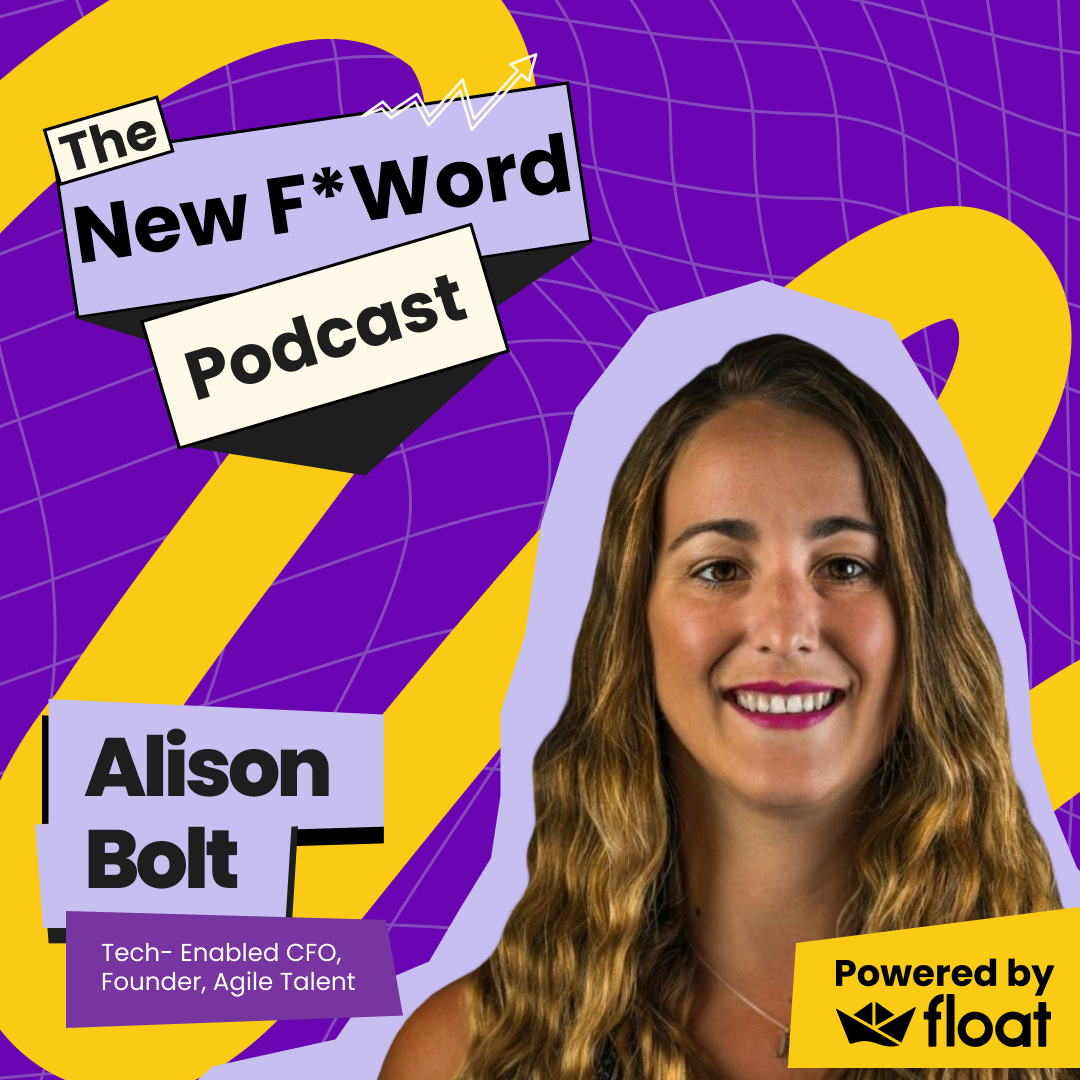 What Fractional CFOs Really Do For Growing Businesses with Alison Bolt58 / 100
 The CFO Skill Nobody Teaches: Coaching and Human Leadership with Alastair Manson55 / 100
 How Fractional CFOs Actually Add Value with Jonathan Rosenzweig57 / 100
 Greatest Hits: Cash, Clients, and the Secrets Behind Growing Businesses82 / 100
 How Laura Taylor Built a £1M+ Firm That Won The Advisory Game72 / 100