
Business Broker Growth Show · 2026-07-09 · 32 min
Key moments - from our scoring
Substance score
56 / 100
Five dimensions, 20 points each
Clint Fiore breaks down a multi-channel growth playbook for business brokers that balances old-school relationship building with modern digital tactics. He emphasizes that traditional referral sources from CPAs, wealth managers, and attorneys remain evergreen and valuable when cultivated purposefully. On the digital front, Fiore advocates for authentic personal branding on LinkedIn, YouTube, and other platforms rather than outsourced, generic content - because algorithms reward genuine, entertaining, and unique voices. He discusses cold email outreach scaled via AI-tailored messaging to business owners, combined with rapid conversion to phone calls. Events, speaking engagements, and sponsorships round out the strategy as credibility builders. The episode pivots to a cautionary deal postmortem: a high-value Texas winery listing where Clint lost a six-figure commission after being cut out by a wealthy, ego-driven seller who collided with a nearby buyer. Key failures: not requiring an NDA, not recognizing red flags (sellers claiming money doesn't matter, excessive lawyer redlines, resistance to exclusive agreements), and underestimating how far bad-faith sellers will go. Fiore advises brokers to protect themselves with ironclad documentation, walk away from my-way-or-the-highway sellers, and never accept overpriced listings that waste everyone's time.
The top strategies are: (1) purposeful relationship-building with referral sources like CPAs, wealth managers, and attorneys; (2) authentic personal branding on social media platforms like LinkedIn and YouTube to generate qualified inbound via direct messages; (3) scaled cold email outreach with AI-tailored messaging converted rapidly to phone calls; (4) events, speaking engagements, and sponsorships for credibility-building.
Clint lost the deal because he didn't have an NDA signed with the buyer (John) and couldn't prove procuring cause when the seller ghosted and colluded with the buyer to cut him out. Brokers should always get signed NDAs with every prospective buyer, maintain a paper trail of all interactions, and be extremely selective about working with high-ego, wealthy sellers.
Red flags include: sellers saying money doesn't matter (actually means they're greedy), excessive pushback on engagement agreements, resistance to exclusive representation, demanding inflated valuations just to test the market, and my-way-or-the-highway attitudes - all indicate they won't cooperate with buyers and will waste your time.
Post authentically and consistently in your own voice on platforms where eyeballs are (LinkedIn, YouTube, TikTok, Twitter) with genuinely interesting, valuable, and entertaining content - not generic AI-generated posts. Never outsource to a vendor; the algorithm rewards unique, authentic personal brands that attract trust-based inbound leads.
Overpriced listings waste your time, damage your credibility when offers come in at the true market value, and sellers end up blaming you even though you told them the real number upfront - they anchored on the inflated price and now distrust you, killing the deal relationship.
Our reviewer’s read on each dimension, with quotes from the episode.
The episode contains actionable advice on lead generation strategies (referrals, social media, cold email, events) and a detailed cautionary tale about seller red flags and documentation. However, much of the content is relatively standard B2B/sales advice repackaged for brokers, with significant stretches of throat-clearing and repetitive points about authenticity and standing your ground. The winery deal story is the most substantive section, but even that devolves into general warnings rather than novel insight.
the old school referral basis is still super solid, but I think you just have to be purposeful about it
if they're getting red flags and if they're getting the big ego up front, and if you send them your engagement agreement and they send it to one or more lawyers and they want to redline every single point on your engagement agreement, guess how easy it's going to be for the buyer's purchase agreement
The core frameworks - building referral relationships, leveraging social media authentically, cold outreach at scale, and event presence - are well-worn in B2B sales. The contrarian hook (respecting old-school referral networks while adopting digital) is sensible but not fresh. The seller red-flag analysis (ego buyers, pricing expectations, engagement pushback) is practical but belongs to common broker experience lore rather than novel thinking.
show up and add value
the money doesn't even matter to me. I don't need the money. Like when I hear that now, I know that means money is going to Become everything
Clint Fiore is a relevant practitioner - he has 10 years as a broker at Bison, founded Delonomy, and has material operational scale and real skin in the game. However, he is primarily a founder/entrepreneur speaking about his own platforms and strategies rather than a deeply specialized operator (e.g., a broker who scaled to 100+ deals/year). His direct brokerage experience is real but the conversation leans toward his own company narrative.
I got at the time, which I think it was the largest listing of my life. It was a winery in the Texas hill country
we have vendors and internal teammates that are very good at tailoring list building of business owners
The winery deal case study provides concrete narrative detail (location, asset composition, buyer name 'John,' timeline of events, outcome). However, most other advice lacks specificity: no metrics on referral conversion rates, no data on LinkedIn/YouTube follower growth timelines, no numbers on cold email response rates or email volume. The claim about 100k LinkedIn followers in 12 months is mentioned but not substantiated with evidence or context.
this was probably pretty early in to buy some business. Um, I got at the time, which I think it was the largest listing of my life. It was a winery in the Texas hill country
I know people that are going from, in LinkedIn and YouTube that hadn't joined the platform until the last 12 months and they're already over 100,000 followers
The host asks broad, open-ended questions and lets Fiore run long. While not hostile, the interviewer rarely probes claims deeply, challenges inconsistencies, or pushes back. When Fiore says vendors will only produce 'Milquetoast' social content, there's no follow-up on whether that's always true or if exceptions exist. The host mostly affirms rather than interrogates, and the conversation reads more as a curated narrative than a rigorous examination.
You talked about the lead gen is, is the big part for that scaling
Got it. I love all that
Computed from the transcript - who did the talking, and the words that came up most.
What if the biggest opportunity to grow your brokerage isn't finding more listings - but building stronger relationships, creating authentic authority, and knowing when to walk away from the wrong clients? In this episode, Jason Cutter sits down with Clint Fiore, Founder & CEO of Dealonomy, to explore the marketing strategies that have helped him build a powerful brand while challenging traditional business brokerage models. From referral partnerships and social media to speaking engagements and cold outreach, Clint shares the practical growth strategies that continue to generate opportunities in today's market. The conversation also dives into one of Clint's most memorable deals that fell apart - and the valuable lessons it taught him about seller red flags, protecting yourself with proper documentation, and why not every listing is worth pursuing. If you're looking to grow your brokerage while building a stronger reputation, this episode is packed with actionable advice. If this episode challenged the way you think about marketing, referrals, buyer relationships, and raising the standard of business brokerage, be sure to
Transcribed and scored by The B2B Podcast Index.
Speaker A: Foreign
Speaker B: you have found the Business Broker Growth show with your host Jason Cutter. This is the podcast for brokers who are ready to stop hoping for deals and start growing their pipeline. Our goal is to bring you strategies, stories and insights that will be a catalyst to move you quickly from transactional deal makers to trusted advisors. Time for business broker growth.
Speaker A: Yeah, I think that that makes sense. Well, it's a good segue for us to move into the next portion of the show which is the business business broker growth portion where we talk about marketing growth strategies. You talked about the lead gen is, is the big part for that scaling. Obviously you have to have the inputs into the machine so you can you know, pump something out the, the other end of the factory. So when you look at the, the 10 years of the, the the bison brokers and what you did there and obviously we have to exclude the Twitter rockstar viral status because that's not necessarily what everyone can do. And then the timing is also interesting too. But like when you look at just brokerage in general, what you're doing, what other brokers can do, that top 20% is what strategies come to mind for really growing as a business broker. You know, in the, in the, on the marketing lead gen sales side.
Speaker C: Yeah, I, I think for growth, um, I would say three or four things are critical in today's world. Um, the old school referral basis is still super solid, but I think you just have to be purposeful about it. So like if you talk to 10 brokers that have gray hair that have been around this industry a long time and you say how do you get your deals? They'll say referrals, like 10 out of 10. We'll say like referrals are my number one. And I think the younger brokers coming into this space need to respect the gray hair a little bit. You know, like, and I know there's this cool thing and I'm probably the ringleader of it of like, of you know, bashing the old school mindset of brokers. But like there's still wisdom there. And, and I know some young brokers, there's a friend of mine, Morgan Tate, he's in Canada and he just has all the work he can handle by basically all he's done is snuggle up to a couple of big law firms and wealth management firms that just use him as their go to anytime one of their clients has an M M and a need. And he uh, he does zero marketing because of that relationship with those firms. And so I think there's still real value in, um, making sure that CPAs, wealth managers, attorneys that touch business owners every day know, um, you exist, like you, trust you for that referral relationship. And so I would purposely try to go to there, do um, events with those folks when they're doing outreach to, for their CPA firm, you know, or their legal firm or whatever they're doing, try to add value, show up, uh, be there, present, asking nothing in return to make their firm look like the rock star and that you're just supporting them in every way possible. And then that will reciprocate, you know, so if you bless them, they will bless you with those evergreen referral sources. And so I would purposefully develop those relationships with those high caliber, uh, firms that serve your ideal client. And uh, like that's, uh, that hasn't gone away, that's not going away. And all the digital transformation that's happening in the world, like relationships still win. And so I would say that number one is don't disrespect that part of the old school because it is still super valid. So I would say definitely work on building that referral base with the firm. Um, the second one is I'm a big fan of social media. Obviously you didn't want me to talk about it. Well, I'll talk about it a little
Speaker A: bit, but you can still talk about it. But you can't lean on becoming a viral Twitter star. How about that?
Speaker C: Yeah, I mean, but in general the concept still works. It just, I think I time things right with Twitter, but every year like, like LinkedIn's On Fire right now. I know people that are going from, in LinkedIn and YouTube that hadn't joined the platform until the last 12 months and they're already over 100,000 followers, um, that they just showed up and it was the same playbook that I used on Twitter and I'm using another place and that's just show up and add value. And I think the key for social media is to be interesting and valuable and entertaining and not just lame promoting. Like there's all these vendors and stuff that will say, I'll manage your social media for you and I'll do this. And I see a lot of old school brokers that see the success I have on social media and they're like, I don't have time to be, to do what you're doing. So I'm just gonna, I'm just gonna throw money at it. You know, I'm gonna hire somebody. And what they end up with is like this Milquetoast presence because no one can speak in your authentic voice but you. And if you try to pay some vendor to post on your behalf, they're just gonna use AI and post generic stuff. And it's, it's going to move the needle 1 1,000th as much as doing it in your own voice in an interesting and entertaining and unique, authentic way. And so I think if you can put yourself out there to the universe in whatever form is comfortable, whether it's podcasting, YouTube, short form videos on these platforms, or Twitter or anything else, I think it's the algorithms reward quality, interesting, entertaining, unique stuff and you gotta show up that way. So if you're not willing to like really put yourself out there authentically, then I'd say this is probably gonna be a waste of your time to just do it as a checkbox thing and, or to outsource it to someone that's gonna do it as a checkbox thing. Cause you're gonna say I, uh, spent this money and I'm posting every day, but no one ever sees my stuff. And it's not moving the needle. Well, that's because you didn't really show up, you know, in the way that you need to. And so if you do that, it, it just attracts people at scale. And so I still think one of our top lead gens for our for Delonomy is direct messages on social media because people are enjoying the relationship, which is kind of a one sided relationship, right? Because they're consuming my stuff, but they feel like they know me, they feel like they trust me. And on top of mind, when them or someone in their life, a loved one, wants to sell a business, they're like, oh, I know a guy. Uh, but it's just because they follow. And um, and so that's still huge. That's going to be huge. And I think that's going to continue. And if you look around the world at any human being right now, what are they doing? They're staring at their phone and they're scrolling social media like, and so that's where the eyeballs are, that's where the attention is. And so put yourself where that attention is in an authentic way and it can really move the need needle. Um, and then beyond that, like a big part of our lead gen right now is still cold email outreach, but it's being increasingly competitive and crowded and the numbers are getting staggering of what it takes to get a response. Uh, and so we're on the cutting edge. We have vendors and internal teammates that are very good at tailoring list building of business owners. Tailoring using AI and our promptings and scripts to create tailored, hopefully doesn't sound like AI and hopefully type of tailored messages to the business owner to see if they'll entertain an offer for their company. And I think that the daily pitch that we can authentically say like yeah our, don't worry, you won't have to pay us anything. I'm not trying to like get your money here but I do have a qualified buyer. Uh, we've got a network of buyers that will pay us if we bring them good opportunities. This is something you'd entertain and tailor those to them in an authentic sounding way. But then scale it to millions of messages being sent on a monthly basis. Um, like that gets enough people to raise their hand that our business development team can then go make those phone calls because then it has to turn into a phone call as quickly as possible and you have to get it out of that email and into a relationship because it's a relational game. And so we're still doing massive cold outreach with tailored um, email campaigns, uh, and doing that internally and externally. Um, and then we also do events and so events is a big one too. We'll host events and meetups, we'll join other people's, we'll go to conferences, uh, I'll speak at uh, industry events and just the speaking getting on stages. Anytime you can be a sponsor of an event or a speaker at an event, it gives you credibility in the eyes of all the attendees that then you'll be top of mind when they need that. Who do I trust for this sensitive sale of the business? Well it's got to be that person that was on stage. It's got to be that person that was. This logo was all over that event that I went to. Um, you know, and so we, we do have a robust event strategy as well.
Speaker A: Got it. I love all that. I think that's great. The referrals and not dismissing that uh, in you know, in a, in a tech forward digital way of like ah, referrals don't matter, I'll just do more tech. Right. But also the social media, the cold emails with the calls, events, speaking sponsors, I love all that. I think that's, I think that's great. I think it's a good combo and a mix.
Speaker C: Right.
Speaker A: It's not all in one. You're not leveraging one. You're not, you're not trying one thing. It's doing all of them in various levels and moving them all forward and Then they feed each other. So I think that's, I think that's great. So let's move to the maybe not so great portion of the show that I enjoy. I think it's valuable. You know, you and I spoke about this in the past and it's the deal that got away. So it's the lessons of the lost deal. And, and you now have an interesting perspective because you have the deals from uh, you know, the, the standard broker, let's say, and you have the dealonomy side. And so I know, you know, there's, there's always something or one or some kind of scenario that happened where the deal should have gone all the way through, but it didn't and probably because somebody did or didn't do something they should or shouldn't have done. So when, when you think about this, what comes to mind for, you know, a scenario to share?
Speaker C: Yeah, I've got, you know, a couple of good ones. But the uh, one that, that comes to my mind is earlier in my career, um, this was probably pretty early in to buy some business. Um, I got at the time, which I think it was the largest listing of my life. It was a winery in the Texas hill country. And this was, I'm um, real estate licensed and this was a huge real estate deal. So it was a big property that had, you know, kind of a vineyard on it and a wine production facility, manufacturing facility, as well as a tasting room. And, and, and uh, it's a historical building. And it was just a cool, cool deal, cool listing. And um, and so I'm, I'm all excited about it. But the lessons, I want to start teaching the lessons right as I tell the story is when you get these larger than life sellers of big egos, um, it becomes a huge red flag for me that to this day, um, I'll walk away before I even engage if I start seeing some of these signs. Um, so you have a very wealthy owner and this was their play business. They made their money in another industry. And this is typical in the winery industry. They'll buy a winery as their fun business and then after they run it for so many years, they realize it's not as fun as they thought it was going to be. And it feels like a real business and uh, it's not an easy business. And so, um, so they want to sell. But when you hear words like, um, the money doesn't even matter to me. I don't need the money. Like when I hear that now, I know that means money is going to Become everything. And this is a greedy SOB like, like it's 100, like people that, rich people that say the money doesn't even matter, I don't need it. I don't even need, you know, like, uh, like that's a huge red flag. And so that's, you know, the kind of stuff he's selling, saying out of the bat, off the bat. Him and his wife, it's almost like they're bragging about how, how rich they are and, and how they don't need this, but they just want to, you know, be able to move somewhere else and go, go on their next adventure. And so, uh, and then the other thing that was a big red flag was the pushback at engagement. Should have tipped me off where this was going to go because, um, this was when we were sell side, um, with Bison. But when, you know, we want an exclusive right to sell the business. And this most every broker does because it's, you know, you're not going to compete with your, with your seller or another broker. Like you want, you want the chance to package this thing up, market this thing and be the one that gets this deal done. Um, and they said, well, we've already talked to a few buyers and if these buyers, um, buy the business, we don't want to have to pay you. And I say, well, why don't you just. I mean, did they buy it or not? I mean, are they on the hook? Well, no, but we started talking and they backed off and, and you know, they're not, they, they ended up passing, uh, or whatever. And so they wanted carve outs for named buyers that they already had relationships with. But one that wasn't even on the list was, uh, the one buyer immediately came to my mind. And it was a winery that was nearby that I knew the owner of. The, that I, that was a younger owner that was a more serious professional in the industry, not just as a play business, but I thought would be like a really good fit, um, an award winning winemaker. And I was like, what about this guy? Let's call him John. And I was like, what about John? Like, have you been to John yet? And they said, oh yeah, we talked to John. He wasn't interested. Yeah, we thought, we thought he'd be a good buyer too, but, um, but yeah, he just had no interest, no interest in doing this. And so they didn't even ask me to carve out John. Right. Um, but the fact that they were pushing hard with other people is a red flag number two. Right. And so we Proceeded. And I packaged the deal up with an exclusive right to sell, um, and proceeded to have a parade of buyers come in. And no, it's like nobody could ever make an offer good enough for these people that said the money doesn't matter, you know, sweet. Ah. People that, like, were willing to buy this company for what I thought was reasonable offers because it's mainly asset value driven at this point because there's so much real estate and assets that really dwarf the. The value of the income stream. Um, and so we, we had lots of tours, drank lots of wine in the tasting room, you know, lots of effort and energy, and just like, could not make them happy. Um, something's, you know, it's just never good enough. There's something always wrong, like with the. They don't want to do the seller carry. They don't want to, you know, this or that, um, in the offer. And these are reasonable buyers because this wasn't a, you know, just a massively profitable business. It was mediocre profits with lots of assets. It's always make. This makes the structure challenging. Um, and so. But yeah, nothing's ever good enough to these people. That said, it doesn't really matter to us originally. And then, um, and then abruptly we get ghosted. They stop returning our calls, and we get a nasty gram from their attorney that just says, you're no longer representing us. Uh, we're canceling the agreement. And we say, what's up? Are you not selling the business? Are you, uh, you have a deal going? And I'm. And they're like, no, we don't have a deal. We don't have a deal pending. But we just, you know, we're. We're going another direction. They're just being cagey. And I say, well, all right, well, we'll cancel. But you're subject to the tail, which is the. Anybody that we've talked to about the business while we're representing it, like, if you sell to one of them, you still are. Uh, we're still owed a commission. And so we sent them. We send them a list of all the people that we've presented to, and John's on this list. And, um, we get back, like, that's fine. But, um, John doesn't go on that list because I've told you up front, we already talked to him. And I'm like, well, but we wasn't excluded. And we did. I went out to John with the presentation and we talked and he seemed kind of interested, you know, like when we talked. And anyways, like they ended up proceeding to just uh, uh, the big mistake I made. And this is again, um, I am a relational person. I trust people too much. And for those brokers out there that are new to this career, like, that's great, but dot your I's and cross your T's because when you have a rich seller like this that has all the attorneys in the world and all the time and money in the world is actually greedy and like, uh, yeah, basically they colluded with the buyer and the attorneys to try to cut us out of the deal because they had an established relationship with John down the street. Even though they viewed our materials. I went out there and visited with them. We presented. I think I got them back on board with their interest in it and figuring out something that could make it work. And we ended up uh, getting cut out of the deal. And I just didn't have a good enough paper trail at the time and had to change my documentation a bit. And um, the big mistake I made was I didn't have that guy sign an NDA because they told me they had already talked to him and he already knew it was for sale. And so I was thinking of confidentiality more in terms of practical like, oh, like I don't need an NDA to protect confidentiality because they already know. They already told me they've talked. And so this isn't a confidential conversation, but if I had had that signed, I could have proven, you know, that we were the procuring cause. Uh, but like my lawyers were like, yeah, that would have made a, an open and shut case. But like they know you don't have it and John knows he didn't sign anything with you and so like ended up just getting hosed out of what would have been like a life changing at the time fee after a year's work for this very high ego, uh, you know, seller. And, and it's just astounding to me like you know, the, you know, I'm here with the young kids and hustling to, to work, you know, just to be a great uh, broker, uh, and feed my family. And you've got someone that's got probably a nine figure net worth that's just like to, to screw me out of six figures of fee will like, uh, be dishonest and, and you know, do all that kind of stuff. And so for any of you that are uh, you know, listening, that are new to this space, like every buyer, every time get a paper trail, um, that you're talking to them, make sure that your engagement agreements are on point. Watch out for those red flags, the people that say money doesn't matter. Absolutely the opposite. Um, and then just have that no a hole policy. Just be real selective with who you work with. And if you're getting red flags and if you're getting the big ego up front, and if, if you send them your engagement agreement and they send it to one or more lawyers and they want to redline every single point on your engagement agreement, guess how easy it's going to be for the buyer's purchase agreement, you know, and like, like they're going to wreck your deal. Um, and so don't let the stars, the starry eyes are saying, wow, look at this beautiful business. Look at this beautiful listing. Like, override those red flags and just protect yourself, Protect yourself from the wrong people and with the right documentation is one of the things I'll say.
Speaker A: And it, and it's really tough. And in retrospect, it's always easier, right, to be like, oh, the red flags were there and I should have stopped and to tell other people, like, watch out for those red flags and stop. Ah. And it's like, well, that's not going to happen to me. You know, I could just see that as humans just think it's not. But, you know, I think it's, I think it's important. I think especially that secondary business, it's the play business, it's not their life. If, if they don't sell, it doesn't matter. Uh, the egos that are involved. And then, you know, when there's a lot of money involved to a commission. And it's the kind of person who, you know, you get rich by being really good at business and also maybe really good at not paying for things or working around things. And so, like, if you detect that, you know, where do you, where do you pull the plug? Which is, of course tough when you're, you know, calculating your commission, potential commission, and being like, well, you know, if this works out, this is going to be amazing. Like you said, life changing at the time, right, Financially. Um, but then, you know, now you're just, you're just gambling and hoping it works out. And, uh, yeah, that's, that's, that's gotta be a tough one. Like, you know, other than the NDA stuff like moving forward, you know, is it, is it about detecting those red flags early on, you and the team, and realizing, like, when someone's serious and when someone's not serious or when someone's like, kind of dangerous to work with and unpredictable. If you're listening to this and thinking, I want this level of authority, I just don't have the time to build it, that's exactly what business broker growth does for you. Most brokers know that they need consistent content, better positioning and real digital visibility. They just don't have the bandwidth to create it or the systems to keep it going. And that's what we build for you. The content engine, the visibility strategy and authority signals everything you need that we've talked about here. So if you want this impact without adding another full time job to your play, go to businessbrokergrowth.com to learn more about what it would look like for your business. Now back to the episode.
Speaker C: Yeah, I think, I think how they engage with you is a big, um, a big indicator. The ones that trust you, um, and don't push back real hard on your engagement agreement after, you know, asking questions is fine. Um, you know, all that's fine. But just demanding, no, this is how we want to do it. My way or the highway. Uh, it just indicates that they're not a deal making type of person. Ah, they're demanding my way or the highway type of person. And every successful deal always has give and take. And so if they're not willing to even like listen to you and you can't stand your ground to them, then like no buyer is going to have a chance of doing it. And so that's the other big risk. Just don't waste, don't get your time wasted. Ah, because all you have to sell as a broker is your time. Right? And so it's like, don't let those big ego folks waste your time. And, and so yeah, be, um, be selective that way. The valuation conversation is a huge thing. If, if they are like demanding that you list their business for 6 million and just, let's see, let's test the market. I know you said it's worth three and a half, but I want it, I want it for six. Um, there's brokers that'll do it and that's what gives us all a bad name. But I'm telling you it's a waste of your time. Um, because you do your analysis, you know what the market's going to do within reason and if like they demand you overprice it, it's only going to make you look bad, it's going to waste your time and then the seller won't ever like you agreed to take it to market at a price in their head, you agreed even if you told them it's three and a half. They still think you suck at your job if you bring them an offer exactly what you said. At three and a half, they still had their heart on six. That's why they demanded they, you know, and so nothing's gonna be good enough. Um, you're gonna waste your time and don't do the, the. Well, let's just put it out there, let the market beat them up and then maybe they'll drop their price and we'll close the steel. Like, I think that's one of the biggest things that gives our industry a bad name is people that are willing to let the seller's ego override their better sense and, um, and just do it just so they have the listing. Um, because, yeah, it just reflects badly on your firm and it's going to turn, it's going to erode your credibility as a deal maker in the space. And yeah, you may get a deal now and then by overpricing one and then, then accepting. They'll accept a low offer later. But long term, it's toxic, it's poisonous, it's cancerous to your reputation and it's just going to make you less successful long term.
Speaker A: And, and the other challenge too is this, then goes back to your journey, uh, into this whole thing is that for the buyers, if they're constantly coming across overpriced businesses, then they grow up to also hate business brokers because they blame the business broker for doing that. Right. Not the business owner. They blame the broker for putting overpriced stuff out on the market. Right. And so then it's just bad for everybody. And which is just the wildest thing about business brokerage, where there's just no unity and no regulation, you know, across the board.
Speaker C: Yeah. So you're supposed to be the expert. So be the expert, you know, like. And, um, um, don't let, don't let them push you around and stand your ground. Set proper expectations and like that. Setting expectations is so much of this game. And it's with buyers and sellers and there's, I mean, I could go on for days about the buyers. Buyers are unreasonable in their expectations too. And there's all these gurus teaching really bad ideas, um, out there, you know, whether it's, you know, 100% seller finance, you know, deals are out there. Like, no, they're not. Not on good deals. Um, and in coming in with unreasonable expectations. And so you have to, Your job is to educate, educate, educate and, and explain to sellers how the real world works. Explain to buyers how the real world works and have that credibility. And that credibility only exists if you're credible, you know, and, and can stand your ground.
Speaker A: Yeah, I love it. Well, I appreciate you being on here. I think your journey is fascinating. I'm excited to see what you do in year two of uh, Dhonomy. I think what you've built is a fascinating departure of the standard business broker model, but also fits the need in the market like you said. I think one of the biggest highlights, uh, for me is that there's not enough brokers in the 20% in the professional high quality broker category to handle all the deals out there. And so where your platform and them makes sense. The other brokers, the tailbo brokers, they should be worried, but that's fine. We want to take deals away from them because they're not doing a service to the sellers or the buyers. Like, you know, based on the stats. It's not even just you and I opinion. This is like based on the stats and the horror stories and all those other things. And so like I'm excited to see what you do. Uh, for people who want to get a hold of you, obviously dealonomy.com uh, they can find you everywhere. Clint Fiore. So it's F I O R E, pronounced Fiore. Uh, Obviously Twitter, uh, LinkedIn like you said. YouTube, all the links will be in the show notes. Facebook, the links will be in the show notes. People want to get a hold of you, they want to find out more about your platform if they haven't already, uh, stopped to search for it, uh, as they're listening or watching this. Um, and uh, you know, I just appreciate what you're doing. You know, again, it's not just a pure disruption. How do I just change anything, but how do I just make a better improvement or impact on the industry as a whole of this disjointed, unregulated industry. Uh, which is why like when we first spoke, I was like, this is amazing because it's a step towards what really needs to happen at a larger scale that just doesn't happen. So I appreciate you for doing that and for being here, Clinton.
Speaker C: I really appreciate what you're doing. I haven't been going on a lot of podcasts recently. I've just been head down kind of trying to build and scale this company. But when we, I kind of took a flyer. Connected and just your heart for seeing this industry raise the bar and seeing the same problems I'm seeing and highlighting the ones that are doing it right is a necessary thing, I think it is a blessing, uh, to our space. And so I just want to affirm what you're doing is awesome. And I'm really glad we found each other because, yeah, I just feel like we really were on the same page with this stuff and really connected. And, um, I'm excited to support what you're doing as well. I just think it's. It's really important to get these, these messages out there.
Speaker A: I, I appreciate that. I appreciate you saying that and recognizing it. And, you know, it's one of the things I leave the audience with, uh, uh, many times is to support this, promote this, share these episodes. Not so much for me or Business Broker Growth, but more of like a voice to the sellers, to the buyers, to just a different way to see it because, you know, the biggest problem is an awareness issue and then it's an education issue as far as what good looks like. And, um, you know, my goal always, even when I was running sales teams and when I wrote my first book that was on, you know, sales related, my podcast was really about helping the good professionals do better and to get rid of all of the bad actors and to warn people so they don't end up dealing with it. And so this show is my extension of that. So I, uh, appreciate that. Clint.
Speaker C: Yeah, it comes through. So I appreciate you having me.
Speaker A: Thanks. And for everyone tuning in, you know what to do now. Get in touch with Clint, check out his information, check out the lonomy, follow the show, share the show. Um, you know, do what you can to spread this kind of stuff out there. Uh, make sure to check out the show notes for everything that Clint was talking about. And as I say all the time, until next time, stop hoping for deals and start growing your pipeline.
Speaker B: Thanks for tuning in to the Business Broker Growth show hosted by Jason Cutter. If today's episode helped you think differently about how to build your pipeline and grow your business, share it with another broker who's ready to make the shift from hoping for listings to engineering them. Join us again for the next episode of the Business Broker Growth show, where brokers become trusted advisors.
Other episodes covering the same guests and topics, from across The B2B Podcast Index.
 Ignite Startups: How Adam Nash Built Daffy Into a $1B Donor-Advised Fund Platform | Ep281Ignite · on LinkedIn87 / 100
 How a Startup Used a Single Customer Review to Land 10k SignupsMarketing for Startups with Fexingo · on Cold email outreach87 / 100
 Business Valuation: Why Buyers Ignore Your EBITDA Multiple - Mark Mills, OBEKing Dems Podcast · on M&A advisory85 / 100
 MicroConf Tactics: Not Sure How to Market Your SaaS? Start HereMicroConf On Air · on YouTube83 / 100
 Kareem Rahma on building a talk show empire and the business behind his viral showsMixed Signals from Semafor Media · on YouTube79 / 100
 He Was the Only Marketer at a Startup Fighting Service Titan - Here's What WonStacking Growth · on LinkedIn78 / 100
 Bonus Episode, with Patrick Lange58 / 100
 Strategies for HVAC Brokers, with Patrick Lange75 / 100
 Bonus Episode, with Jeannie Keen60 / 100
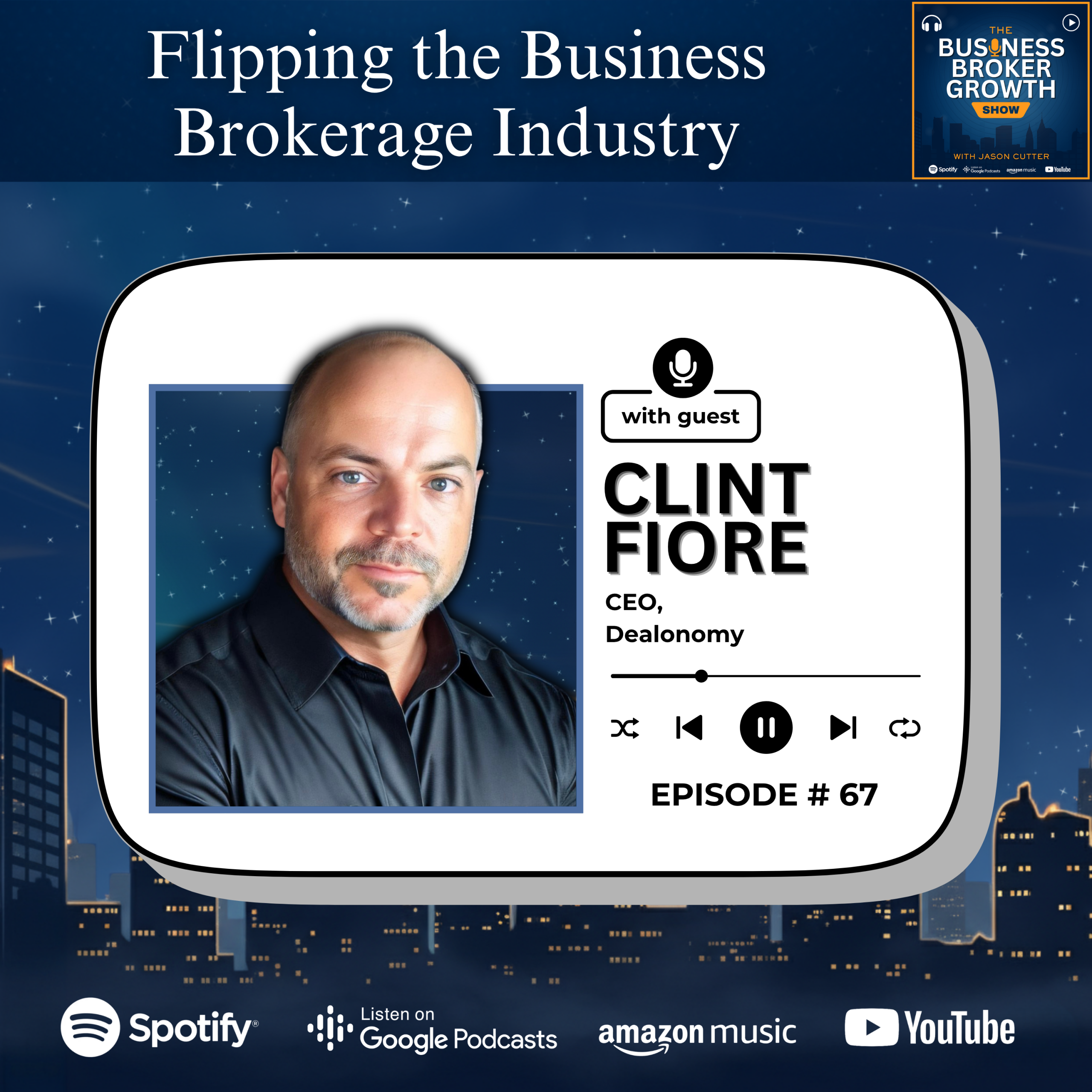 Flipping the Business Brokerage Industry, with Clint Fiore
 Bonus Episode, with Joshua Carnes