
The Mindful Leadership Podcast with Shahana Banerjee · 2025-10-31 · 54 min
Key moments - from our scoring
Substance score
45 / 100
Five dimensions, 20 points each
Jonathan Kirschner's journey from struggling with processing speed dyslexia to building a thriving executive coaching firm reveals the profound impact of early mentorship and reframing challenges as strengths. Growing up in St. Louis, his mother's intervention to enroll him at Churchill School - named after Winston Churchill, himself dyslexic - taught him compensatory learning strategies that developed his listening abilities into a superpower. This strength became the foundation for his clinical psychology training at Widener University and eventual pivot to executive coaching, where he founded AIR Consulting 16 years ago. The episode explores Kirschner's core philosophy: leadership excellence is the highest leverage point for creating world change. Rather than teaching surface-level skills like delegation, his coaching approach, informed by clinical psychology, addresses the cognitive schemas and belief systems driving leader behavior. He illustrates this through a detailed case study of an overworked executive whose childhood trauma (supporting struggling parents) created a deep belief that his value comes from doing everything for everyone - a pattern that achieved early success but became unsustainable at scale. Kirschner and host Shahana Banerjee discuss how real transformation requires psychological depth, not just skill acquisition, and why leaders must understand the "why" beneath their behaviors to achieve lasting change.
Kirschner had processing speed challenges (similar to dyslexia) that made him struggle in mainstream school. His mother enrolled him at Churchill School where he learned compensatory strategies; these difficulties ultimately developed his listening ability into a superpower that became foundational to his career in executive coaching and psychology.
Kirschner was motivated by the idea of creating scalable impact - he wanted work to continue happening even while he slept, which required building an organization and ecosystem rather than relying solely on his own client hours. This allowed him to serve thousands of leaders rather than being limited by one person's capacity.
Surface-level coaching teaches skills like delegation through articles and exercises but fails to create lasting change. Deep coaching, grounded in clinical psychology, identifies the cognitive schema - the deep belief system formed by life experiences - that drives the undesired behavior, and addresses that root cause first.
Kirschner describes a leader who grew up supporting struggling parents and siblings on multiple jobs, developing the belief that his value comes from doing everything for everyone. This pattern brought success early but became unsustainable when he brought it to leadership roles - working 14-hour days, refusing to delegate, eventually creating burnout and organizational concern about sustainability.
Leadership excellence is the highest-leverage point because improving one leader's effectiveness cascades exponentially to their team and organization, creating far greater impact than working with individuals in isolation.
Our reviewer’s read on each dimension, with quotes from the episode.
The episode contains some substantive ideas about coaching and leadership (cognitive schemas, the iceberg model, leading self/others/organization), but much of the content is autobiographical throat-clearing and platitudes (learning differences, mother's influence, art teacher's balance of support/challenge). The coaching case studies add value but are sparse relative to the runtime, and concepts like 'magic wand questions' and delegation issues are well-trodden in leadership literature.
That cognitive schema, uh, or that set of beliefs. But the way that I demonstrate value and feel gratification and fulfillment is by doing everything for everyone else.
Leadership comprises like three broad domains. Uh, you know, leading self, leading others, leading the organization. And there's like dimensions that fall under those domains and 45, at least, at least 45 skills.
The framing of learning disabilities as strengths and the cognitive-schema-informed coaching approach show some originality, but most frameworks are derivative (Marshall Goldsmith's 'what got you here won't get you there,' the iceberg metaphor, the 'magic wand' question). The broader argument that deep psychology beats surface skills training is sensible but not novel in coaching circles.
What got you here won't get you here won't get you there.
How do you, that hand's important, but, like, it should not be there because you can't see everything else.
Jonathan Kirschner is a legitimate practitioner - founder/CEO of Air Consulting with 16 years of operating experience and claimed thousands of leaders coached. However, he is not a household name in B2B operator circles, and the transcript provides no evidence of working with Fortune 500 CEOs, scale-ups at unicorn status, or other high-profile clients. He is a credible mid-market executive coach, not a marquee name.
Started AIR in graduate school
Supported thousands of leaders
The episode includes specific examples (Churchill School, Mrs. Cram, the production site turnaround from 18th to 3rd place within a year, the nonprofit executive team case), but lacks concrete metrics, financial data, company names, and timelines beyond vague timeframes. The case studies are illustrative but thin on hard evidence - no revenue figures, retention data, or measurable outcomes tied to interventions.
They went, they became, um, the third most successful within one year of all the production sites, um, within this organization. Um, from last place, number 18
We work with over, over 50 non profits right now and wow, given over two and a half million dollars
Shahana asks solid follow-up questions and probes deeper (e.g., 'What was it specifically that hooked you?'), but often pivots to affirmation rather than pushback. She validates frequently ('That's amazing,' 'Oh I love that') and rarely challenges Kirschner's claims or dig into potential gaps in logic. The rapid-fire section feels like a celebrity interview, not a substantive interrogation. Some genuine moments of mutual reflection, but overall lacks the rigor of truly sharp interviewing.
What was it specifically that hooked you, Jonathan?
Jonathan, you're blowing my mind. You're blowing my mind because this is actually a client I had recently as well.
Computed from the transcript - who did the talking, and the words that came up most.
This episode is a mega dose of inspiration with Jonathan Kirschner, Founder & CEO of AIIR Consulting and AIIR analytics, a kindred spirit, fellow podcaster, coach, hockey champ and psychology buff. He is on a mission to make the world a bit better through leadership excellence. In this episode, we dig into the power of value based leadership, why leaders lose their way and so much more: How he overcame a ‘learning disability’ and went from “the kid least likely to be CEO” to building a company that helps thousands of leaders grow How his personal challenge became a goal, … and the goal became his Purpose How his art teacher’s unique blend of support and challenge shaped his leadership His WHY for founding AIIR in grad school Case : This leaders’ career is stalling. He just doesn’t know it yet. He tries harder and harder, but nothing is working… Is it his skills, his values or his cognitive schema? A truly insightful story. Case : This leader brings an overwhelming sense of urgency and depth of expertise to engineer a transformation. But he fails. Why? What did he need to do differently? Another insightful story.
Transcribed and scored by The B2B Podcast Index.
Speaker A: What makes a great leader? Think of the best leader you've ever had. What makes them so memorable to you? What did they do for you? Did they believe in you before you even believed in yourself? Did they take a chance on you when you weren't ready yet? Did they trust you even when you hadn't earned their trust? Did they have your back, even at personal risk to themselves? Want to know why they did it?
Speaker B: Then you're at the right place.
Speaker A: In this podcast, we dig into the why through deeply personal stories of great leaders who are powered by their purpose, anchored in their authenticity, and connect who they are to how they lead in good times and bad, at, ah, crossroads and crises, who challenge status quo and existing paradigms and do different things differently. It will make you wonder what would you do if you faced a similar challenge? Join us in reimagining the leadership of the future with me, your host, Shahana Banerjee, CEO of Just Human Leadership Advisors. In this episode, we dig into a
Speaker B: mega dose of inspiration with Jonathan Kirshner,
Speaker A: founder and CEO of Air Consulting and Air Analytics.
Speaker B: A kindred spirit, fellow podcaster, coach and psychology buff. His story of overcoming learning difficulties and going from the kid least likely to
Speaker A: be CEO to building a company that helps thousands of leaders grow is truly remarkable. He's on a mission to make the world a bit better through leadership excellence.
Speaker B: Welcome, Jonathan Beyond. Thrilled to have you on our podcast today.
Speaker C: Fantastic to be here. Thank you, Shahana.
Speaker B: I've been really looking forward to this. So let's jump right in. Tell us your story, Jonathan. The people, the influences and experiences who have shaped you into who you are today.
Speaker C: Awesome. All right, how much time do we have? No, I'm just kidding. Um, grew up actually in St. Louis, Missouri, which is in the middle of America. One of the things that really shaped me in my sort of early schooling, I was getting headaches in, um, I think it was like, you know, first grade and then they amplified in second grade and I had trouble following the teacher and I was a bit slow. And what became clear is that I actually had, at the time they called a learning disability. Basically, like, I was really challenged with learning. It was becoming an issue with my performance and my self esteem in class. My mom, who's like, uh, my, uh, my, my big hero in, in life, she actually pulled me out and found a place called the Churchill School, which is named after Winston Churchill, who, believe it or not, actually was dyslexic. And so it's an amazing, um, school in St. Louis. That school was an incredible Environment for helping, you know, children with, uh, learning differences learn compensatory skills to help them learn despite their challenges. Um, and so for me, my challenge was like processing speed. Like I really hard time, like operating at this, at the pace. And so we did all these cool things I think of as like ninja training. Right. Um, like did um, scanning, you know, for, for words. Um, there was a whole class called auditory Visual. And so just really learning like what amounts to like hacks, um, for closing gaps and learning ways to augment. I did get back into, um, sort of the mainstream school had the advantage of being able to have, um, extra time on tests and certain accommodations throughout, you know, my high school and undergrad. Um, but ultimately that slow processing speed actually became like a bit of my strength, if you will.
Speaker A: Wow.
Speaker B: Okay.
Speaker C: One of the things that I realized is actually favorable to being a bit of a slow processor is listening M. Because I was really good at listening and not responding quickly. And so I was able to develop this part of my brain that could sort of like, um, analyze and conceptualize various sort of formulations and scenarios of a problem and be able to hold that while listening. And that's essentially what you're doing as, you know, a psychotherapist or an executive coach or just a really good, you know, communicator. Right, yeah.
Speaker B: Or friend.
Speaker C: Or friend. Right. Yeah. So, um. So that was a really like, big part of. Of my life growing up. You know, there. There was some pain and, and challenge associated with it. But, um. But ultimately it's come to be like one of my, one of my strengths. And um. So, so to give you the fast track version, I, uh, ultimately went to. To university at NYU in, in New York, was uh, in Israel for two years. Um, in between undergrad and. And graduate. Got very interested in Judaic studies. And it became very clear to me that my purpose is to use this strength of listening and problem solving, um, and the ability to do that in parallel and, and, and to use that to um, to help others. Right. That, that, that was very clear to me. That's what lights me up. Um, it always lit me up with friends, family, and I was just like, wow, there's a career for that and you can get paid to do that. Like, that's pretty cool. So that brought me onto the track of psychology and, and um. And. And then I just got really, you know, fascinated. Um, psychology is pretty. A broad field. The area that really interested me is applied psychology and um, and personality psychology. So all the various like, theories for
Speaker B: why people why do we do what we do?
Speaker C: Got into, um, graduate school to become a clinical psychologist. Incredible experience. Where at the school I went to Widener. You got to be a practitioner and take all the classes.
Speaker B: Ah, uh, that's cool.
Speaker C: Concurrently, you know, rather than take like four years of classes and then do one big internship, you're doing the work itself, the experience while learning, which was like a very powerful, uh, experience for me. And I, I loved, loved, loved. I worked with kids, families, adults, pretty much every, you know, sort of flavor of, of challenge that you could, you know, imagine. You know, every session it just became that much clearer that this is, this is the, the right path for me. I took a class in executive coaching. It was a, it was an elective. So I took this class, you know, with some skepticism, but, you know, was just so eye openening to me.
Speaker B: A.
Speaker C: Of course you can use these clinical skills in the environment of business and make more money. Right, that's, that's obvious. But that wasn't necessarily the driver for me. What was really the driver for me was understanding leadership specifically. And when you're applying these skills and when you're having, um, an impact with a leader specifically, um, just how powerful that can be. Because a leader, not only would you be helping that individual, but you're helping all the people around that leader, the people around those people. And the cascade effect of that type of impact is just profound. It's like an exponential impact. And so that was actually the hook for me where I said, okay, psychology is still kind of like, that's, that's where I'm going, but I'm going to go on this specific road.
Speaker B: Yeah.
Speaker C: Because of the impact, you know, and as I practice over the last 16 years, since I started AIR, I started AIR in graduate school.
Speaker B: Wow.
Speaker C: You know, so now, you know, this theoretical concept of working with leaders is no longer theoretical. Like, we've.
Speaker B: Right.
Speaker C: Worked with hundreds of leaders myself, my firm has, you know, we've supported thousands of leaders. Um, you know, it's just very clear to me that leadership is probably, um, you know, the most important thing we've got. Right. When it comes to thinking about how to advance, you know, the world, how to shape a better future, I put my bet on leadership. And so, um, I really like where it all ended. And it hasn't ended. In fact, it feels like it just began. Um, but I like the road I'm on, and it feels very, very purposeful.
Speaker B: Yeah. There's so many things that really resonate with me about your story, Jonathan. I wonder Always why we call it learning difficulty when it is more of, uh, a learning difference. Right. And it is really our ability to get through and help the person transition versus labeling someone as having a learning difficulty. So your story really brings that to life. And whether it's dyslexia, whether it's any other form of learning difference, it's purely a matter of figuring out how someone can learn. And that's true about whether you have a difficulty or not, but about finding a way to get through. The second thing is how you reframed, you know, your, uh, what could have been potentially a weakness as a strength. Right. In terms of listening and how it's really changed your life in so many ways to be able to tap into that superpower of listening. And the third thing that is remarkable, of course, is your mother's belief and how that really, you know, to have the courage to take a kid out of a regular school, you know, put him in a, uh, different school where hopefully he's getting the kind of support he needs, takes so much courage. Right. And so that's truly phenomenal. What's really interesting and striking about the story is that your mother was truly a catalyst in your journey. Right. And isn't it such a full circle moment for you to be that kind of catalyst for so many and in their growth journeys? Pretty cool.
Speaker C: It's pretty cool. You know, a characteristic of my mom, which is just sort of never to be content with settling or, um, or sort of being a recipient, a passive recipient of circumstances or life. She's very much, um, a driver of change. And the person who says that's not enough, or we could do it differently or we can do it better. And um, it's not always the, you know, it's easier to sort of adapt and conform and be a passenger. Um, but she is not that a
Speaker B: problem m solver by the sounds of it. Right.
Speaker C: But like, you have a problem solver. Yeah, for sure, for sure. So, yeah, I mean, I think, you know, when I think about leadership, um, you know, my mom was never sort of, you know, formally, you know, a leader. Uh, she actually had, um, her own business and did a tremendous amount of fundraising and led fundraising for, for my school. But her orientation to life is fundamentally one of leadership, sort of shaping, you know, the future rather than being shaped by it. Right, right.
Speaker B: Oh, that's amazing. And very well said as well.
Speaker C: So I'm lucky. I learned a whole lot about leadership from my mom. You know, when I went to high school, my school required every, um, you Know, term to take, uh, two art classes. So I took a. I still consider myself an artist, but I took ceramics and painting and photography and all this. Mrs. Cram, though, um, who sort of led the art department and taught me painting, um, was this just incredible teacher who balanced support and challenge in. In such a artful way. And it really is like, you know, when I think about my best super. My best teachers, my best supervisors, leaders in my life, uh, they've been able to bring those two worlds together in such a unique balance, you know, where. Where there's. There's the support and appreciation and compassion, but then there's this pushing challenge. Well, which is this constructive challenge. And so. So Mrs. Cran would be like, that is amazing what you've. What you've. What you've painted. Um, there. I, um, am so impressed. And so, you know, and. And then do you feel like you've stretched the limit on your creativity or, um, do you feel like it fully represents what you're striving to convey? And then she'd walk away, and I was just like, uh, wow, you know? No, it doesn't. I could take this further, right? Yeah, I could take this further. But how deflating would it be if that's all she said? Right?
Speaker B: Yeah.
Speaker C: By acknowledging how wonderful of a starting point I had and then artfully challenging how I could refine or deepen further.
Speaker B: Yeah.
Speaker C: Uh, it became this energizing, uh, opportunity for me. Not this, like, oh, man. So I found myself. This is a class that I. Yeah, it was. It was an hour and a half, um, a week. Um, and it was optional. Like, you could come in after school and paint, and I would come in. I would spend, like, hours after school, and I. And I was playing sports, and I was doing all sorts of other things. Um, but I was just truly intrinsically motivated by this activity. And. And it really came from, you know, this. This incredible skill that Mrs. Cram had of, like, balancing support and challenge.
Speaker B: Yeah. Now, that's someone who really applies psychology.
Speaker C: Yeah. Well, you know, it's like, you know, the older you get, the hopefully wiser you. You get, and you start to realize that, like. Right. You could say, like, oh, that was art, and there's psychology and there's sports, and. But. But there's these common denominators, like, uh, 100% coaching me.
Speaker B: Yeah. Yeah. You know, Jonathan, you've talked about how you may have been, like, the least likely to be nominated as CEO when you were a kid. Right. But that's who you became. And now you're the CEO of an organization that's making a meaningful difference in the world. So talk a little bit about that journey.
Speaker C: You know, it's interesting because I um, I say I was like, like least likely to be the one as CEO because I mean if you knew me in grad school, um, like I'm not a businessman. I, I really enjoy learning social, creative. But um, but not this sort of enterprising business person. What ultimately like motivated me to, to start the business was um, it was sort of raw, unbridled passion. Um, and that is a through threat. Right? When I get passionate about something, I, I, I think big, I think expansively. It, it activates creativity, um, and a, and a drive to push boundaries. Right.
Speaker B: What was it specifically that hooked you, Jonathan?
Speaker C: So, so it's really kind of two things. One, one is, is, is leadership. So, so this notion of, of leadership, um, and being able to apply psychology to leadership M. That was like, you know, the fact that I could make a difference, but, but in theory I could have just become an executive coach, right? Um, and not have to deal with like you know, the my of, of uh, challenges and hassles of, of starting a company and managing people and um, all the things that that come with that. What I was really invigorated by was this, this notion that you could create something that goes beyond what I myself can do as a single person.
Speaker B: Mhm.
Speaker C: And I started to think about like wow, like I could like go to sleep and this work is, is happening while I'm sleeping. And that would, that would happen if I'm, if I started an ecosystem, a business, um, as opposed to being just a solo practitioner. And so I got really interested in that idea of how to build a scalable organization that could amplify the impact that I was wanting to, to bring to the world. And so that, that was really the leadership, you know, that, that's like kind of where I see, you know, the, the purpose, you know, it's my, my career purpose, um, you know, if not life purpose is, is to really help this world become a little bit better, um, through leadership. And then the how, you know, was very much inspired and motivated by this idea that like you could just go, you can go really big if you think about it as something that's not just tied down to the limitations of
Speaker B: one person, your journey. The theme that really comes through is certainly this thing about uh, helping organizations and people thrive through leadership, but also to help people flourish. Why is that so important for you?
Speaker C: The idea of helping others and Giving to others and empowering and enabling others to thrive. It's something that I personally, you know, if you gave me a values assessment, you know, I'm pretty much like, right there in the 90th percentile on. On altruism. Right? That's. It's very. It just fuels me. Right. And probably it has to do with my upbringing and seeing my mom and my mom's mom and, you know, my family that is very sort of, um, into giving. Right. And giving back to the community. So, um, that's. It's sort of in my DNA.
Speaker B: There are almost like these series of moments or perhaps a moment that you, you know, transforms personal hope. Right. Of wanting to be in school, wanting to be, you know, keeping pace with other kids into, you know, that personal challenge transforms into a personal goal. Right. And that personal goal then transforms into a purpose. And that's led you to, you know, start this organization that's now helping so many on that same growth journey. And so this. Helping people find their purpose and finding how to live their purpose is one of the most important things we do as coaches. Do you see that resonated in other leaders you work with in their journeys? And have you helped a leader maybe figure out what their purpose is and how to live it?
Speaker C: It's interesting. So much of the work we do as, um, leadership advisors and executive coaches is helping people kind of get out of their own way, if you will. Right. And there's a statement. It's, It's. It's so cliche, but it's, um. It's, you know, it's so true. And it's. It comes from Marshall Goldsmith, who said, you know, what got you here won't get you there. Right. And so a lot of the leaders I work with, I mean, you don't just become a leader. Right. You gotta work your tail off to get to a point at which you're a leader within a. An organization. But then you can. You can start to stall, find yourself using, like, the tactics and strategies that got you there. And they're just on. They're starting to not, like, have a return. Right. Uh, or an energy expenditure, and in some cases, it's like, backfiring.
Speaker B: Right, right.
Speaker C: And. And so there's all sorts of different coaching scenarios, you know, to come into. But. But a common one is, is working with the leader who is feeling stuck.
Speaker B: Right.
Speaker C: Um, despite all the efforts and energy expenditure. And it's just the needle is not. Is not moving. And not only is the needle not moving, but, you know, it might Even be moving, you know, backwards a little bit.
Speaker B: Yeah.
Speaker C: So, you know, I think about, um, you know, some of my, my coaches and, and leaders that I've, that I've worked with. And um, and oftentimes, you know, they're, they're using a set of behaviors informed by some sort of cognitive schema, uh, or belief informed by some experience or set of experiences.
Speaker B: Right.
Speaker C: Occurred in their life. Right. So to unpack that, for instance, you could have a leader who grew up with a, say a parent that struggled from alcoholism and another parent that, uh, know had a physical ailment. There's a lot of dysfunction. One one of the parents is, is laid off. It just accentuates and compounds the issues with financial challenge. And all of a sudden this individual is taking care of three of his siblings, his parents, trying to stabilize this. And the years go on and on. And he gets a job to help support the family and then gets another job because he's now in college and has to pay for that, plus the family and then another job. And you have an individual that, that ultimately is working four jobs in college playing sports. Takes that same mental model of it's my job to take care of everybody and brings that to his sports team. Mhm. Brings that to his first job, brings that to the next company he goes to.
Speaker B: Right.
Speaker C: Continues to uh, ascend the ranks.
Speaker B: Right.
Speaker C: Because he can do everything right. Right until he can't.
Speaker B: Right.
Speaker C: Until it's now like a little shaky. It's like because you can't work more than 14 hours a day for too much, too long and for too many years before.
Speaker B: Yeah.
Speaker C: It starts to get shaky. And then the organization looks at this leader and says, is this the template of leadership that we want people to model off of?
Speaker B: Yeah.
Speaker C: Is this person gonna crack? Is this person's leadership sustainable?
Speaker B: Right.
Speaker C: I'm, um, brought in as a coach to try to figure this out. I said, well, obviously there's a delegation issue. And the first thing is I've read every book you could possibly imagine on delegation. Trust me, of course, I give a college, I could give a PhD level course on delegation. You don't, I don't need anybody to tell me about delegation. Right. So obviously delegation is the skill that this individual needed to acquire, but he's not going to demonstrate that skill.
Speaker B: Yeah.
Speaker C: Um, if we don't resolve something that's deeper. Right.
Speaker B: Yes.
Speaker C: And that deeper thing is that, that cognitive schema, uh, or that set of beliefs. But the way that I demonstrate value and feel gratification and fulfillment is by Doing everything for everyone else.
Speaker B: Yeah, right.
Speaker C: That needed to be unwound and let go of in order for him to begin to continue growing. Not just in his career, by the way, in his life. Right. Um, and so that's, that's the beauty of, of what we do is, is executive coaches or, um, I should say real coaching. Because there's a lot of coaches that would just try to tackle the skill and then.
Speaker B: Yes. Why didn't it work? Exactly.
Speaker C: I gave him the Harvard Business Review article. We talked about it.
Speaker A: Yeah.
Speaker C: He experimented. I created an Excel file. I tried to hold him accountable, all of that. Stopped doing it. He had a couple weeks where he did it, but he stuck well. So that's, that's fortunately how a lot of coaching is. But real executive coaching, um, knows that ultimately we do need to, um, see measurable behavior change.
Speaker B: Right.
Speaker C: But the entry point.
Speaker B: Yeah.
Speaker C: That, that cognitive schema, which is informed by these, by these experiences and by the way, you know, for this individual, he needed to be that way to grow up and to get through life. But nobody said, hey, you don't need that anymore and it's now working against you, not for you.
Speaker B: Yeah.
Speaker C: Right. And that's where, um, an executive coach, a psychologist, a therapist, um, anybody who really knows how true healing works, that's the great value that they can provide is, is helping somebody see what they can't see or they don't want to see.
Speaker B: Jonathan, you're blowing my mind. You're blowing my mind because this is actually a client I had recently as well. What was interesting about this client was that he didn't believe he needed coaching.
Speaker C: Mhm.
Speaker B: And so he came into, you know, coaching really not wanting to be coached. But interestingly, the journey he went through because it was not just about tackling skills, but it was about tackling the why. Right. I think that got him to a place where he was a completely transformed person. Person and a better leader for his organization and for his people. And so you're so right that, you know, sometimes we tend to see only. It's almost like the iceberg. Right. You're only seeing the tip of the iceberg if you're looking at behaviors. But if you are not drawing the connection of that behavior to your values, to the purpose, to all of the things that are important to the person. Right. You can't help them truly shift their behavior. Right.
Speaker C: Provided they want to, of course, completely agree wholeheartedly. Yeah. Which is, which is why, you know, it's, it's, um, you know, there's sort of like this double edged sword in our industry. There's a push towards like briefer, more surface level.
Speaker B: Yeah.
Speaker C: Because it's more scalable that way.
Speaker B: Yeah, yeah.
Speaker C: But uh, the impact is, is uh, 100.
Speaker B: Minimal. Yeah, yeah, minimal. Also, the presenting problem is rarely the actual problem. I can't think of one single case. Presenting problem is the actual problem. Right?
Speaker C: Correct.
Speaker B: And so, um, you know, this is a fantastic example. Thank you so much for sharing that. You know, it really leads me to this question of, you know, often I think in organizations we see two kinds of leaders. Right? Right. One who are the storm. They bring chaos in their wake. Right. They shift, you know, they change direction as the wind changes direction practically. And then you have other leaders who are the lighthouse. Right. They are the ones who really stay anchored while you know, the, the ones who are the storm lose their way. These leaders can stay anchored in their values and purpose that are core to their being. Helping leaders who have sometimes lost their way really find their way again. A little bit of, you know, like the example you shared is truly the most meaningful work that we do as coaches. Is there perhaps an example or a story that you want to share?
Speaker C: Let's just start with the fact that leadership is like really hard.
Speaker B: Really.
Speaker C: There's so many like hazards, you know, to being, um, to being a leader. It, it requires so much energy, cognitive, emotional, social energy. And it's so easy to become depleted in the context of leadership because of all the pressure. Right. And um, and all the decisions and all the ambiguity. And especially right now. Right. Like it's a really hard time for, for leadership. It's important at the outset to share that disclaimer. Right. Because it's so romanticized, this notion of like true, true.
Speaker B: Wow.
Speaker C: It's because it's virtuous. Right. And everybody wants to do the right thing and wants to be a leader. But it's, but it's actually like really hard.
Speaker B: Really hard.
Speaker C: It's really hard. And I've seen crush. It's. It can be crushing. And I've seen it break people.
Speaker A: Mhm.
Speaker C: And I've seen it bring out the best in people. Right. My philosophy, our philosophy at, at Air Consulting is that you know, leadership comprises like three broad domains. Uh, you know, leading self, leading others, leading the organization. And there's like dimensions that fall under those domains and 45, at least, at least 45 skills. 45 skills is in our taxonomy. Um, but that leading self domain is so, so important. Uh, it's foundational. Right. This idea of being able to regulate Your emotion.
Speaker B: Mhm.
Speaker C: To have self awareness when that regulation becomes imbalanced, to know how to refuel, like we call that self care. Whether it's breathing, yoga, go get a massage, go play your sport, figure out, right. How to refuel, take vacation. Um, those skills are so important because if you don't have that, the energy tank goes to zero and you're showing up not your best self. And that's when you're most vulnerable.
Speaker B: Right.
Speaker C: You know, flapping in the wind.
Speaker B: Ah.
Speaker C: Uh, the competition's doing this, we should do that.
Speaker B: Right?
Speaker C: And then, and oh, this competition that, we should go that way. One of my earliest coaching clients, who just such a brilliant guy, came in to do a turnaround and just felt the urgency. He brought the urgency, but like the people were not ready.
Speaker B: Right.
Speaker C: He came in, you know, sort of level 10 urgency for a group of people that are hovering between like level five and level two. And, and it backfired, it backfired miserably. And it actually exacerbated the problem. Like this was, I don't know, 18 plants. This was like the bottom of the barrel right there. And what he needed to do was learn how to, um, how to meet the people where they were at. Right, right. And to regulate and calibrate himself accordingly and then lift them up as opposed to just smashing them down. Right. And so that was our coaching work. And they went, they became, um, the third most successful within one year of all the production sites, um, within this organization. Um, from last place, number 18, which is kind of a cool story. Um, it was just in, in leadership.
Speaker B: Yeah. Oh, that's a great example. Thank you for sharing that.
Speaker A: This podcast is brought to you by Just Human Leadership Advisors. We specialize in executive coaching and a broad range of human capital solutions. To learn more, Visit us at JustHuman IO. And now back to the podcast.
Speaker B: Let me ask you maybe a difficult question and maybe another fair one, but bear with me. When you have a client who is a, ah, you know, leader who is a bit lost, right. And you want to help them get back on track, what's one question you would ask them to, you know, maybe help them pause, reflect, get back on track?
Speaker C: One of my favorite coaching questions is, um, sort of the magic wand question. Right? So if I, if I have got this magic wand here, I'm going to give this to you. If I give you this magic wand, what would you like to see happen? Right. Or what would the organization look like? Or how would your team be operating? Or what would a day in your Life look like. And by. By doing that, you're essentially, like, sussing
Speaker B: out, create a balcony moment for the person.
Speaker C: It's a balcony moment. And you're trying to create. You're trying to help an individual, like, formulate or envision the ideal state. Right. And then what great coaches, what great consultants do is, is essentially, you know, it's not. It's not rocket science, right? It's. It's ideal state. It's a current state. Ideal state, the delta. How do we close the gap? Boom. That's consulting. We did it. Right. Done. You know, McKinsey, you know, we'll charge you millions and millions, millions of dollars over years to do that. But that's what, what the. So, um, but at a very sort of individual, human level, you can do that. Right. Um, through that question. Um, and so you really get somebody to paint the picture of what excellent looks like or what the ideal future state is. And then either we've done the assessment, or we then start to look at the current state and the challenges, and then we look at these side by side, say, all right, what do we need to do? It's eye opening. Um, helps people reframe.
Speaker B: Yeah.
Speaker C: One of the. One of the hazards of leadership is that it's like your. Your hand is in your face, you know, and you're just, like, trying to operate, and all you see is like, but these are my three KPIs. These are my three KPIs. And we're going to come in, like, three pennies below earnings, and our stock's gonna just get, like, smashed up, and then we're gonna have these analysts calls. That's all you see. Right. So, uh, to your metaphor balcony, like, how do you. That hand's important, but, like, it should not be there because you can't see everything else.
Speaker B: Right.
Speaker C: And so that's a great question to help.
Speaker B: Beautifully said.
Speaker C: What would you say?
Speaker B: I think I might ask something like maybe what's one word to describe how you're feeling in the moment? And I think part of that is because emotions are often more honest than words, if that makes sense. And so just recognizing that there's something that's telling you that things are not quite right. Right. There is a signal there. Can you differentiate the signal from the noise and read it? Right. And then do something about it.
Speaker C: I totally agree, by the way. Um, my coach has asked me that, and sometimes I'll respond, well, I think. And my coaches. No, I didn't ask you.
Speaker B: Yeah, exactly.
Speaker C: I asked you, what do you feel And. And it's actually like a real, uh, you know, another hazard.
Speaker B: Right.
Speaker C: We can make a laundry list of hazards of leadership is. Is getting all up in your head. Right?
Speaker B: Yeah.
Speaker C: But, uh, and then you lose access to your emotions.
Speaker B: Yeah.
Speaker C: Which, to your point, are an incredible signal.
Speaker B: Yeah. And emotions are data. Right. I mean, we often think of them as taboo and the elephant in the room. They impact everything we do. But we use the data. Right. That they give us.
Speaker C: Correct. Correct.
Speaker B: Let's talk a bit about your leadership. What's a leadership lesson you have learned the hard way?
Speaker C: I'm a big fan of innovation. I love, you know, shiny new objects. Right. It. It's exciting to me. Um, and I'm always like, oh, my God, how could we get that to our customers? Right. That would be so amazing. And, um, and of course, there's aspects of this that. That are helpful. Right. And then there's aspects of it that are, like, incredibly frustrating for the people that I work with who are there to sort of make it all happen. Right.
Speaker B: Right.
Speaker C: Um, and so for me personally, you know, a big. A big leadership lesson is focus and execution. But execution takes time, focus and discipline.
Speaker B: Right.
Speaker C: And, um, and that's been a, uh, a big, you know, lesson for me, um, particularly when it comes to, you know, innovation and, um, you know, and not getting into the sort of error of building something 70, 80, even 90% and then moving on to the next thing, like waiting till it gets to sing it through to 100%. And so. So that's. That's been a big one. Um, that's been a big one for me.
Speaker B: Is there an experience, perhaps, that has shaped your leadership, you think? An experience or a story or incident?
Speaker C: We're now in a really amazing place, um, as an organization with our products and our assessment tools specifically. So we've built some really cool assessment tools. The genesis of that to where we are now has been a very swervy path. Lots of bumps in the road. Each bump ultimately are not failures. To the extent that you've learned something and been able to bring it, pull it forward into your toolkit or your leadership repertoire. But with this, one of our assessment tools, just spending tons of time and. And time is money and resources. You're trying to build something out that just never really was going to work and then having to essentially what felt at the time, smashing it up. I would use the word pivot right now, but, um, to pivot from our initial idea, um, that was really tough. That was really painful. So, uh, for me, you know, As a leader, it's, it's how do I complement my visionary creative juices with some of the sort of pragmatics of reality management and execution and discipline and resource. You know, management. That's been a, that's been a big one, um, for me and that, that happened in this, uh, in this case. So it was a big, big lesson for me. What I've learned is like as a leader, it's very important to me that I have the right people around me that can sort of compliment my strengths and weakness set.
Speaker B: Yeah, that's a great lesson. As you think about your impact, Jonathan, on your team, on your clients, on the industry, what are you most proud of? And is there a story of impact that you want to share?
Speaker C: What I'm most proud of is the fact that, um, you know, we've been in doing this for 16 years and you know, we work with thousands of leaders and each of each leader themselves has teams who have teams. Right. And ultimately the benefits that we supply to those leaders and, and subsequently to their teams, you know, it doesn't just stop at their organization. It like has a positive benefit to the customer, to these employees, families and you know, so when I think about net total impact of what we do, it's, it's quite profound. And so I, I can go to sleep feeling pretty good. Um, even on a bad day. You know, if I really think about, gee, like this is what I've been doing the last 16 years, um, that feels great. That feels really, really great. We do something called the Elevate Project, which is our, which is a pro bono coaching arm. Oh, we started about, um, six or seven years ago. A subset of our coaches donate their time pro bono to working with nonprofit leaders.
Speaker B: That's amazing.
Speaker C: And these are folks that would not get coaching. They just simply would not be getting coaching otherwise.
Speaker B: Right, right.
Speaker C: We work with over, over 50 non profits right now and wow, given over two and a half million dollars. Like if you were to translate the amount of.
Speaker B: Right.
Speaker C: Hours given away, it's two amazing. It's really cool. It's like. So I feel, really, feel really good about that.
Speaker B: With the one specific one that you had in mind, what was the impact with them?
Speaker C: Yeah, in that case it was, you know, the, the team, the executive team, really highly inefficient. Never really took the time to uh, um, get out on the balcony, if you will, to look at their dynamics and their processes at a very brief engagement, um, of team coaching. In this case, you know, we were able to, to help Them establish operating norms on how to communicate clarity on roles.
Speaker B: Mhm.
Speaker C: And who, who makes certain decisions. And, and, and frankly, there were, there were a few sort of emotionally charged things that had happened that nobody talked about when we call elephants in the room or things that you just sort of stuff under the carpet.
Speaker B: And it grows and it grows and
Speaker C: it grows and it, and, and it creates such heaviness. M. Nobody's talking about it. And it just weighs on the whole team. So we were able to take a few elephants, identify them and work through those. And, and then that result was a team that was much more engaged, productive. And the reality is not everybody's on board.
Speaker B: Right.
Speaker C: When you do these types of interventions, sometimes you find out like nine out of the ten people are going, but this one's not.
Speaker B: Yeah.
Speaker C: And it becomes very clear at that point. Uh, and that's where you got to make the tough calls. Team leader. And so we were able to help the team leader make some tough calls.
Speaker B: Yeah.
Speaker C: How do they, um, how do they structure their team, um, so that it's optimized?
Speaker B: Yeah. Oh, that's a great story. Amazing. So many more questions for you, Jonathan. So we've tried to put a few of them together in a rapid fire section. Are you ready?
Speaker C: I'm ready to go. Let me put my seat on. Hold on. Okay.
Speaker B: Okay.
Speaker C: All right, let's do it.
Speaker B: You wake up one day and realize you're a superhero. What's your superpower and what would you do with it?
Speaker C: So it's actually like not a psychology based thing. It's um, I, I would be like this Iron man with you know, bazookas and, and like many, many, many shells. And I would just drop out of an airplane and I would just go like eradicate evil from the world and ah, just like go. I would just go from like bad guy to bad guy and just like just clear them all out.
Speaker B: Love that. Love that. Okay, what's one thing you've learned about yourself that surprised you?
Speaker C: Somebody once shared with me that, that like I can scare people. Uh, that, that, that I am, that I can evoke fear, which is shocking to me because I'm like intimidate, can't even kill a bug. Like I'm, I'm a. Yeah. I play hockey, do a few cool things. But uh, but I'm generally like a mushy, gushy, soft guy. But, but uh, it was weird to me to hear that people are sort of are scared of me a little bit. It makes sense because my positional power. But I Think actually what it is is just like, incredibly passionate. And when I get passionate, I'm not like, like throwing chairs passionate, but when I get passionate, I'm so intense and my focus is so, so on that people are just like, whoa, love it, love it.
Speaker B: So your intensity is a bit intimidating. Okay. If we really knew you, we would know that.
Speaker C: If you really know me, you would know just how deeply I care about people.
Speaker B: That's amazing. What's one tool or practice that's helped you grow as a leader?
Speaker C: I'll tell you, um, one of the most valuable things for me right now is breathing. I am really into breathing and intentional breathing. So whether it's box breathing, there's a breathing app that I just started using. Um, but I find that breathing, intentional breathing gets me really grounded, really focused and emotionally regulated. And my ability to confront different challenges is like, exponentially greater when I'm in the right grounded state.
Speaker B: Very well said. Completely resonates with me. With AI taking over everything, are, ah, we as coaches going to be extinct, Jonathan?
Speaker C: 100%. No. I think the opposite will, will be the case. Here's what I think is going to happen. Um, I think that coaches will become extinct if they let themselves become extinct. Because AI is incredibly powerful and is only going to become more and more powerful. There are some uniquely human needs that are responsible for the outcomes were able to deliver. Um, that can only be delivered in the human form. Things like caring for somebody, taking interest in somebody, as simple as that sounds. AI cannot actually be interested in you.
Speaker B: Yeah, it can't.
Speaker C: It can pretend to be, and it can pretend very, very well. If we're coaching just around skills and around surface level things, AI is going to be ten times better. Right. But if we're coaching for true transformation, then I think real human coaching is going to be in demand way more than it even is right now.
Speaker B: Yeah. Very well said. Jonathan. What's one piece of career advice that you have for your listeners?
Speaker C: The best advice I would give is do not underestimate the value of building a relationship.
Speaker B: Right.
Speaker C: Work m is not just the tasks that you get done, the relationships that you build at ah, work. And you don't have to be in person to build relationships. Obviously, uh, it's easier, but that, that matters a lot now. Ah, the next piece of advice would be like, earn it. Don't expect it. Earn it. Right. Then the last piece is like, own the narrative. Like, you know, like own your narrative. Don't, don't just think that, you know your boss or, or the People around you, like, know what you're doing and, and, and um, and the value you're bringing.
Speaker B: Right.
Speaker C: Don't be arrogant. Um, but, but figure out like, how to articulate the value narrative that you bring. Right? So, so like, do not underestimate the power of relationships. Earn it. And make sure you have a way of kind of like articulating your value proposition.
Speaker A: Mhm.
Speaker B: Yeah. Very well said. What is one step forward that you would ask everyone to try as our Mindful Leadership Challenge of the Month?
Speaker C: I go back to something I shared earlier, like my art teacher, Mrs. Cram would do with me. That unique ability to say, that's great. It's amazing where, what you've gotten, where you've accomplished, but how can you take it one step further?
Speaker B: Right?
Speaker C: Um, to challenge ourselves to, to take it one step further, um, in what we're trying to pursue, like that. That would be the Mindful Leadership Challenge.
Speaker B: Oh, I love that. That's amazing. Uh, this has been such a joy. I can talk to you forever, Jonathan. This has been truly, truly a pleasure. So much wisdom, um, so many amazing stories and so many insights. Thank you so much for sharing your wisdom with our listeners today. Jonathan.
Speaker C: It's my pleasure. Shahana. Thank you so much for having me on the podcast. And it's been, it's been equally like, I feel like I've learned a ton from this, this conversation and it's just wonderful connecting with you.
Speaker B: Oh, thank you.
Speaker A: Thank you for joining us.
Speaker B: We'd love to hear from you.
Speaker A: Please rate, review and subscribe to the Mindful Leadership Podcast brought to you by Just Human. We are a growth accelerator for our clients, helping your people and businesses help through human centered ecosystem based people solutions. To learn more, Visit us at JustHuman IO and schedule a 30 minute free call with us.
Other episodes covering the same guests and topics, from across The B2B Podcast Index.
 Beyond Numbers: Business Leadership for CFOs Part 2Informed Decisions · on Executive coaching74 / 100
 How Will AI and Executive Coaching Coexist in the Future?Mainline Executive Coaching ACT · on Executive coaching66 / 100
 Episode 334: When Success No Longer Feels SuccessfulGrow Your Business and Grow Your Wealth · on Executive coaching64 / 100
 Communicating with Business People Requires BLUFExecutive Navigator, with The Talent Doctors · on Executive coaching58 / 100
 How Career Pivots Really Happen | Mary Olson-Menzel | 735Leveraging Thought Leadership · on Executive coaching56 / 100
 364 Why Good Crisis Leadership Can Kill Your Team's Productivity, Cause Burnout and Overwhelm (and the Communication Skills to Fix it)Leadership Without Losing Your Soul · on Executive coaching54 / 100
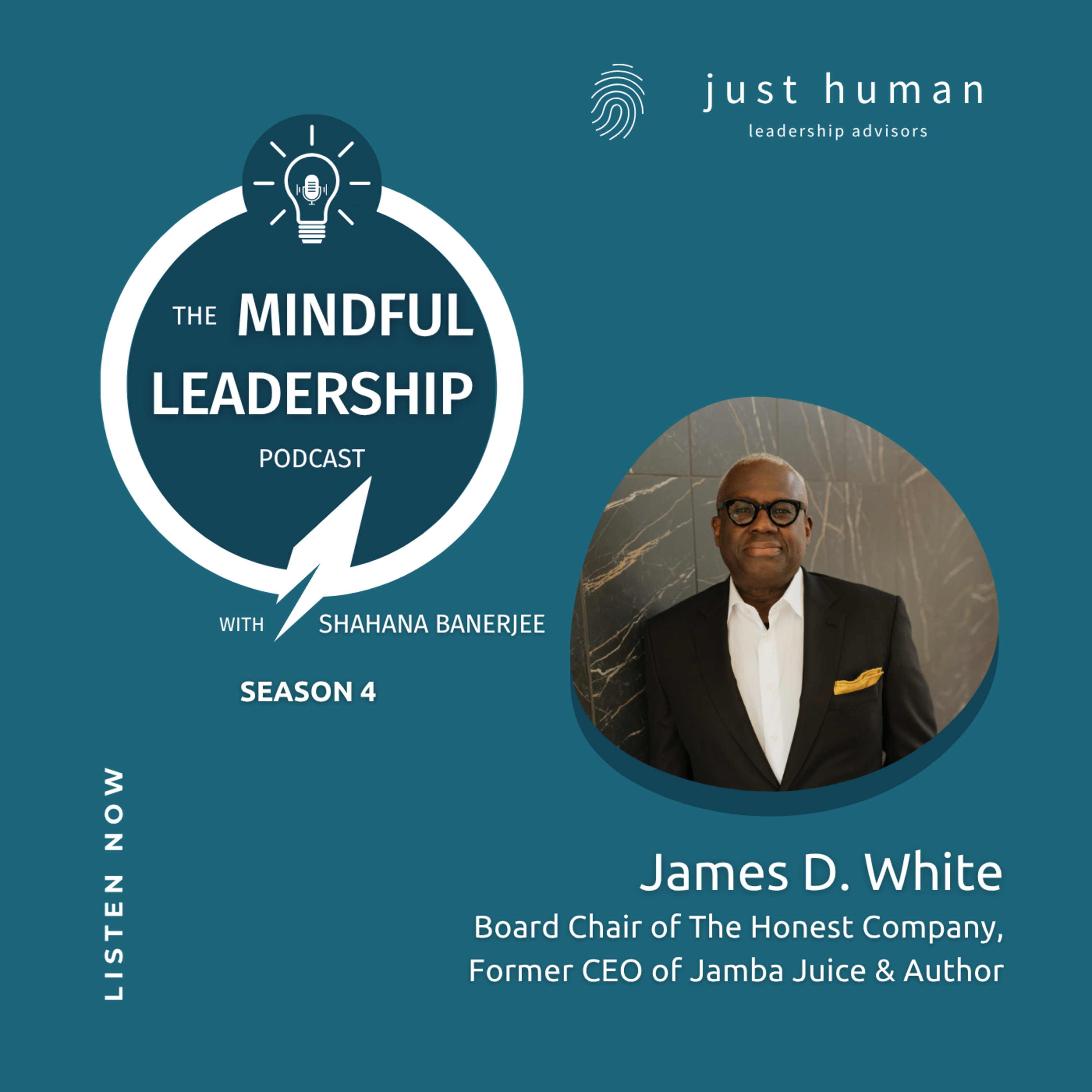 S4e04 Culture By Design with James White73 / 100
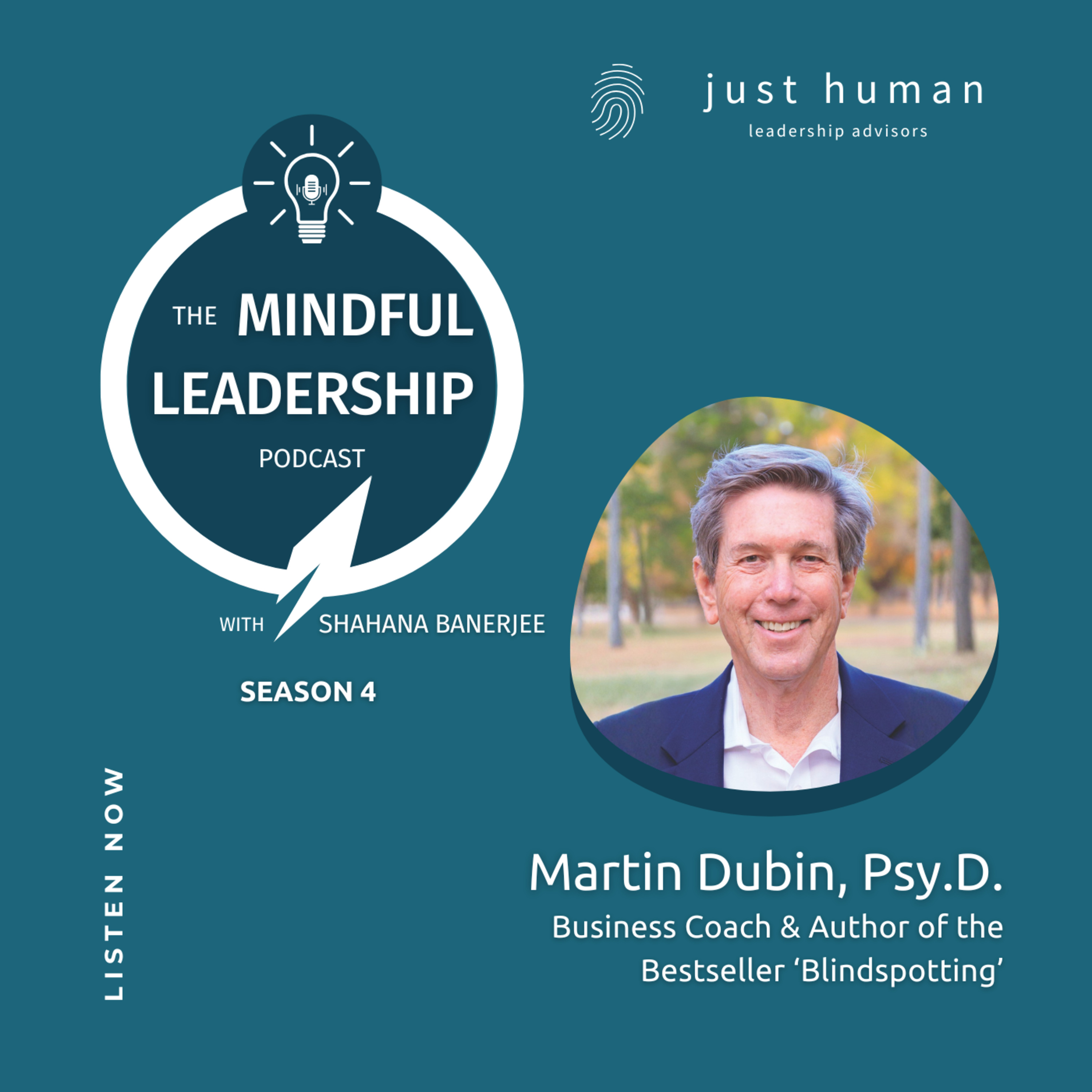 S4e03 Decoding Your Blindspots with Martin Dubin67 / 100
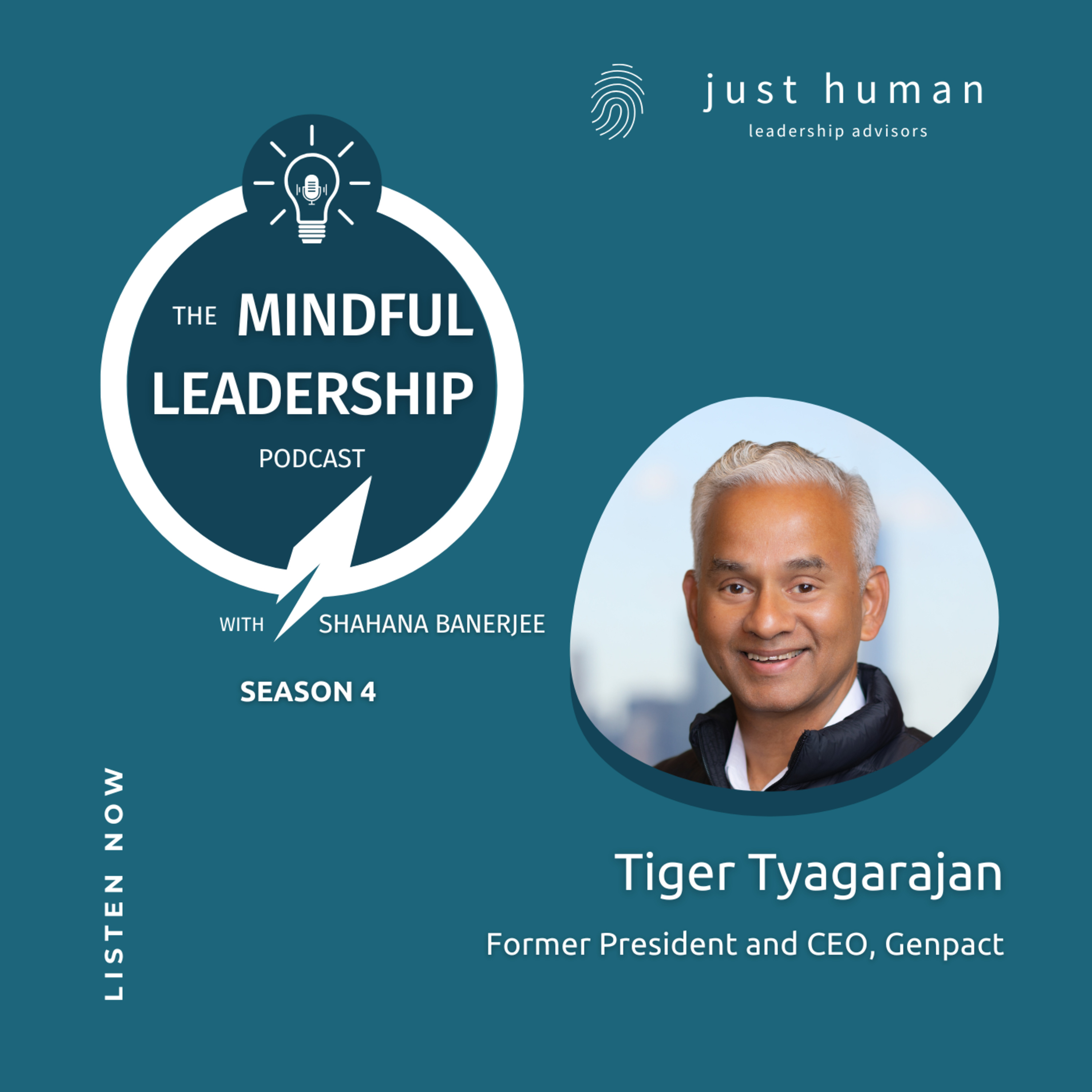 S4e02 Unrelenting Curiosity with Tiger Tyagarajan77 / 100
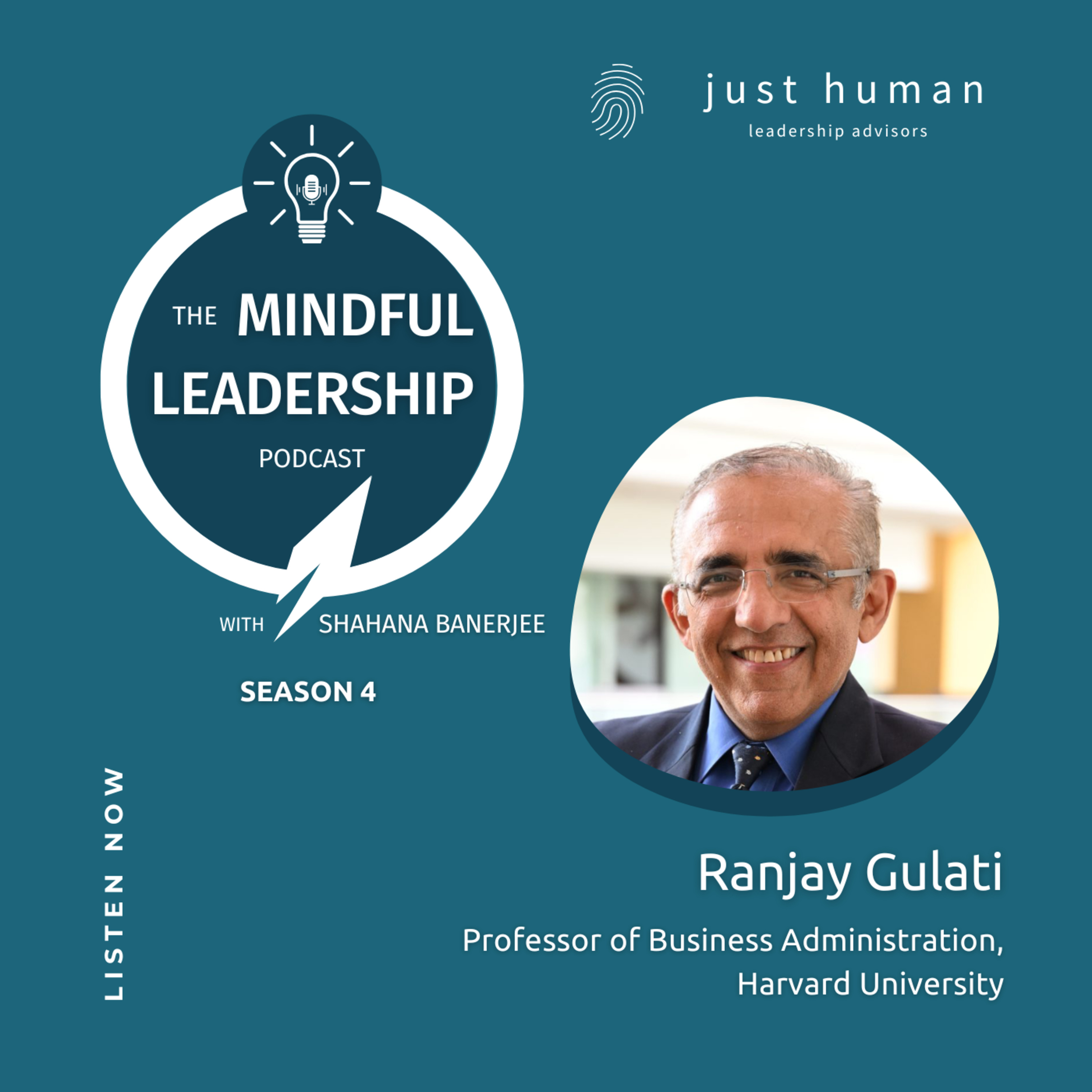 S4e01 How To Be Bold with Ranjay Gulati70 / 100
 S3e03 Joy at Work with Alex Liu61 / 100